

Preliminary evidence about the effects of meditation on interoceptive sensitivity and social cognition
Open accessThe DOI matches its Crossref record; 26 of the 26 references it cites were found in a registry or an index.
Abstract
Background: Interoception refers to the conscious perception of body signals. Mindfulness is a meditation practice that encourages individuals to focus on their internal experiences such as bodily sensations, thoughts, and emotions. In this study, we selected a behavioral measure of interoceptive sensitivity (heartbeat detection task, HBD) to compare the effect of meditation practice on interoceptive sensitivity among long term practitioners (LTP), short term meditators (STM, subjects that completed a Mindfulness-Based Stress Reduction (MBSR) program) and controls (non-meditators). All participants were examined with a battery of different tasks including mood state, executive function and social cognition tests (emotion recognition, empathy and theory of mind). Findings: Compared to controls, both meditators’ groups showed lower levels of anxiety and depression, but no improvement in executive function or social cognition performance was observed (except for lower scores compared to controls only in the personal distress dimension of empathy). More importantly, meditators’ performance did not differ from that of nonmeditators regarding cardiac interoceptive sensitivity. Conclusion: Results suggest no influence of meditation practice in cardiac interoception and in most related social cognition measures. These negative results could be partially due to the fact that awareness of heartbeat sensations is not emphasized during mindfulness/vipassana meditation and may not be the best index of the awareness supported by the practice of meditation.
Overview
The claims and statistics of this paper haven’t been checked yet.
Free: it reads the open-access text and checks the first 5 claims that cite a source we can check. Create a free account to check every claim.
Integrity signals
Registry
Cites
Statistics
Figures
Verification
Claims the paper makes
The claims and statistics of this paper haven’t been checked yet.
Free: it reads the open-access text and checks the first 5 claims that cite a source we can check. Create a free account to check every claim.
Claims other papers make about this one
Each is checked against this paper’s own text: does it say what the citing paper says it does?
The cited source says what the claim attributes to it.
In the citing paper
“Except for two cases [47,125] measuring only IAc, all studies measured IS mostly with MAIA.”
From Interoceptive Ability and Emotion Regulation in Mind–Body Interventions: An Integrative Review (2024) · cites this paper as [125]
The cited source says what the claim attributes to it.
In the citing paper
“Behavioural evidence has been mixed; while some studies have found that meditation experience is unrelated to cardiac accuracy (Khalsa et al., 2008; Melloni et al., 2013; Parkin et al., 2014), a recent study suggested that cardiac accuracy was improved following contemplative practice over a period of three months (Bornemann and Singer, 2017).”
From Atypical interoception as a common risk factor for psychopathology: A review (2021) · cites this paper as Melloni et al., 2013
The cited source says what the claim attributes to it.
In the citing paper
“The second study examining IAc, instead, showed no significant effects in IAc in meditators as assessed with a heartbeat detection task [125].”
From Interoceptive Ability and Emotion Regulation in Mind–Body Interventions: An Integrative Review (2024) · cites this paper as [125]
The cited source says what the claim attributes to it.
In the citing paper
“However, several studies have not found that interoception is improved in long-term meditators.”
From Brief structured respiration practices enhance mood and reduce physiological arousal (2023) · cites this paper as [50]
The cited source says what the claim attributes to it.
In the citing paper
“Most studies, however, found no improvement in the HBD task (Nielsen and Kaszniak, 2006; Khalsa et al., 2008; Melloni et al., 2013; Parkin et al., 2013, 2014; Bornemann et al., 2015).”
From Mindfulness, Interoception, and the Body: A Contemporary Perspective (2019) · cites this paper as Melloni et al., 2013
2 more claims about this paper
Create a free account to see every claim other papers make about this one.
Self-check
Percentages, sums and reported differences re-computed from the paper’s own numbers.
The self-check needs the paper’s full text.
Citations
Cites
Measuring individual differences in empathy: Evidence for a multidimensional approach.
Davis, M. H. (1983) · Journal of Personality and Social Psychology · doi:10.1037/0022-3514.44.1.113 · Cited by 10,272 · cited 1×
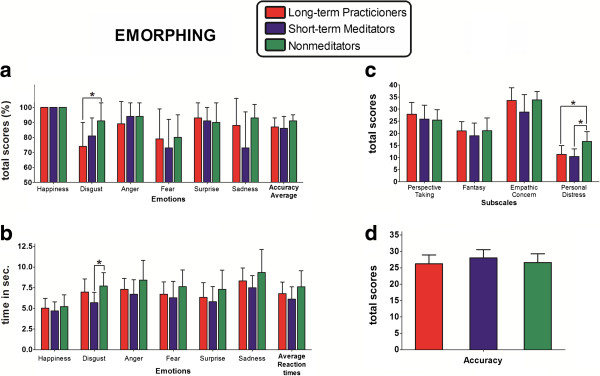
“Both meditators’ groups showed significantly lower empathy scores compared to controls only in the personal distress subscale, an index of emotional contagion by others’ distress [23].”
Background(2008) · Medical Entomology and Zoology · Cited by 7,477
How do you feel? Interoception: The sense of the physiological condition of the body
Craig, A. D. (2002) · Nature Reviews Neuroscience · doi:10.1038/nrn894 · Cited by 6,006 · cited 4×
“Moreover, given the relationship between interoception and social cognition [2,4,13,14], we included”
BackgroundInfluentialHölzel, B. K., Lazar, S. W., Gard, T., Schuman-Olivier, Z., Vago, D. R., & Ott, U. (2011) · Perspectives on Psychological Science · doi:10.1177/1745691611419671 · Cited by 3,024 · cited 1×
“Meditation is a form of mental training [5] encouraging individuals to focus on their internal experiences, such as bodily sensations, thoughts, and emotions [6].”
BackgroundOn the relationship between emotion and cognition
Pessoa, L. (2008) · Nature Reviews Neuroscience · doi:10.1038/nrn2317 · Cited by 2,350 · cited 1×
“Moreover, considering the interaction between executive functions (EF) and social cognition domains (emotional processing [15], ToM [16] and empathy [17]), EF abilities were also evaluated.”
BackgroundBoth of Us Disgusted in My Insula
Wicker, B., Keysers, C., Plailly, J., Royet, J.-P., Gallese, V., & Rizzolatti, G. (2003) · Neuron · doi:10.1016/s0896-6273(03)00679-2 · Cited by 2,185
The social neuroscience of empathy
Singer, T., & Lamm, C. (2009) · Annals of the New York Academy of Sciences · doi:10.1111/j.1749-6632.2009.04418.x · Cited by 1,981 · cited 1×
“Moreover, considering the interaction between executive functions (EF) and social cognition domains (emotional processing [15], ToM [16] and empathy [17]), EF abilities were also evaluated.”
BackgroundThe Psychology of Physical Symptoms
Pennebaker, J. W. (1982) · Springer eBooks · doi:10.1007/978-1-4613-8196-9 · Cited by 1,758
Vago, D. R., & Silbersweig, D. A. (2012) · Frontiers in Human Neuroscience · doi:10.3389/fnhum.2012.00296 · Cited by 1,310 · cited 1×
“Additionally, meditation practice promotes the development of prosocial behavior [8].”
BackgroundThe role of anterior insular cortex in social emotions
Lamm, C., & Singer, T. (2010) · Brain Structure and Function · doi:10.1007/s00429-010-0251-3 · Cited by 566 · cited 2×
“Moreover, given the relationship between interoception and social cognition [2,4,13,14], we included”
Background
Cited by
Items 101–127 of 127
The Relationship between Mindfulness, Proprioceptive Awareness, and Interoceptive Awareness
Ford, C. (2021) · TopSCHOLAR (Western Kentucky University) · Cited by 3
The Temporal Aspect of Bodily Experiences of Emotions: Where do You Feel The First Sensation?Preprint
de Carvalho, R. R., de Mello, C. B., Rocco, I. S., Noto, A. R., & Leite, J. R. S. A. (2022) · PsyArXiv (OSF Preprints) · doi:10.31234/osf.io/gdsxv
Takahashi, T., & Ogishima, H. (2021) · PsyArXiv (OSF Preprints) · doi:10.31234/osf.io/8efxv
The Temporal Aspect of Bodily Experiences of Emotions: Where do You Feel The First Sensation?Preprint
de Carvalho, R. R., de Mello, C. B., Rocco, I. S., Leite, J. R. S. A., & Noto, A. R. (2022) · PsyArXiv (OSF Preprints) · doi:10.31234/osf.io/8xb2y
Introduction à la pleine conscience
(2016) · Dunod eBooks · doi:10.3917/dunod.falle.2016.01.0231
Modalities and Dimensions of Interoception
Ferentzi, E. (2019) · Eötvös Loránd Tudományegyetem · doi:10.15476/elte.2019.045
Guerriero, L. E., Dundon, S. R., Joshi, S., Stromberg, A. J., Sunderam, S., & O’Hara, B. F. (2023) · Authorea · doi:10.22541/au.169772763.32913548/v1
The Role of Interoception in Lifestyle Factors: A Systematic ReviewPreprint
Mulder, J., Boelens, M., van der Velde, L. A., Brust, M., & Jong, J. C. K. (2024) · medRxiv · doi:10.1101/2024.10.02.24314756
USE OF MACROPHYTES IN ASSESSING THE TOXICITY OF A CORROSION INHIBITOR USED IN OIL PRODUCTION
Григорьевна, А. Т. (2024) · Scientific Research of the SCO Countries: Synergy and Integration · doi:10.34660/inf.2023.74.28.085
ECHINOCOCCOSIS IN CHILDREN: CLINIC, DIAGNOSTICS, TREATMENT
Миропольская, Н. Ю. (2024) · Scientific Research of the SCO Countries: Synergy and Integration · doi:10.34660/inf.2023.70.38.087
Окулова, И. И., Berezina, Y. A., & Domsky, I. (2024) · Scientific Research of the SCO Countries: Synergy and Integration · doi:10.34660/inf.2023.12.22.091
Якунина, Н. А. (2024) · Scientific Research of the SCO Countries: Synergy and Integration · doi:10.34660/inf.2023.99.55.096
Матвеева, В. А., & Иванович, П. А. (2024) · Scientific Research of the SCO Countries: Synergy and Integration · doi:10.34660/inf.2023.45.55.094
Tur, E. Y. (2024) · Scientific Research of the SCO Countries: Synergy and Integration · doi:10.34660/inf.2023.32.63.090
THE ROLE OF NEURAL CREST CELLS IN THE PATHOGENESIS OF HIP DYSPLASIA
Pakhomova, N. Y., Strokova, E. L., & Zaydman, A. M. (2024) · Scientific Research of the SCO Countries: Synergy and Integration · doi:10.34660/inf.2023.93.76.086
CHARACTERISTICS OF RECRYSTALLIZATION IN MULTI- LAYERED STEEL MATERIALS
Gavrilova, P. A., & Иванович, П. А. (2024) · Scientific Research of the SCO Countries: Synergy and Integration · doi:10.34660/inf.2023.76.40.093
THE IMPORTANT POLITICAL ROLE OF TAJIKISTAN ON THE GLOBAL LEVEL IN ADDRESSING WATER ISSUES
Madimarova, G. M. (2024) · Scientific Research of the SCO Countries: Synergy and Integration · doi:10.34660/inf.2023.89.10.084
NATURAL DISASTERS IN TAJIKISTAN AND MEASURES TO PREVENT AND ELIMINATE THEM
Gafurov, S., & Rajabzoda, P. K. (2024) · Scientific Research of the SCO Countries: Synergy and Integration · doi:10.34660/inf.2023.30.73.097
Алексеевич, Б. В., Koverina, D. S., Nigoyan, Y. V., Pankrashkina, I. S., & Chekinyova, M. A. (2024) · Scientific Research of the SCO Countries: Synergy and Integration · doi:10.34660/inf.2023.48.63.073
PHYTOCOMPOSITION FOR THE TREATMENT OF PERIODONTITIS ON THE BACKGROUND OF DIABETES MELLITUS
Zabrodnaya, V. K. (2024) · Scientific Research of the SCO Countries: Synergy and Integration · doi:10.34660/inf.2023.91.77.089
TRADITIONAL VALUES OF THE JEWS OF RUSSIA: PROBLEMS AND FEATURES OF PRESERVATION
Александровна, К. В., & Sheludko, A. S. (2024) · Scientific Research of the SCO Countries: Synergy and Integration · doi:10.34660/inf.2023.51.93.082
TEACHERS’ IDEAS ABOUT COGNITIVE COMMUNICATION WITH OLDER PRESCHOOL CHILDREN
Юрьевна, Б. Ю., & Dong, Y. (2024) · Scientific Research of the SCO Countries: Synergy and Integration · doi:10.34660/inf.2023.41.16.079
Павловна, Б. Т. (2024) · Scientific Research of the SCO Countries: Synergy and Integration · doi:10.34660/inf.2023.68.42.092
The Temporal Aspect of Bodily Experiences of Emotions: Where do you Feel the First Sensation?
de Carvalho, R. R., de Mello, C. B., Rocco, I. S., Noto, A. R., & Leite, J. R. (2025) · Psychological Studies · doi:10.1007/s12646-025-00834-5
“2018), showing that individuals who have practiced these types of meditative practices did not differ from control groups (non-practitioners or novice practitioners) (Khalsa et al., 2020; Melloni et al., 2013; Nielsen & Kaszniak, 2006; Parkin et al., 2014).”
Mesure de la conscience du corps et de l'impact sur la cognition de l'information corporelle
Verdonk, C. (2021) · theses.fr (ABES) · doi:10.70675/abc55e86zddc9z4a4ezaba1z2cc93cac3fb9 · Cited by 1
Sound propagation and quantum-limited damping in an ultracold two-dimensional Fermi gas
Bohlen, M. (2020) · theses.fr (ABES) · doi:10.70675/28e5341dzd84cz41fezb48bz2ea33c27b403
Metadata
- Authors
- Melloni, M., Sedeño, L., Couto, B., Reynoso, M., Gelormini, C., Favaloro, R., Canales-Johnson, A., Sigman, M., Manes, F., & Ibanez, A.
- Affiliations
- Consejo Nacional de Investigaciones Científicas y Técnicas (AR)
- Favaloro University (AR)
- Australian Research Council (AU)
- Venue
- Behavioral and Brain Functions
- Published
- 2013-12
- Volume
- 9
- Issue
- 1
- Pages
- 47-47
- ISSN
- 1744-9081 (ISSN-L)
- PMC
- PMC3878404
- OpenAlex
- W2147311516
- Cited by
- 127
- References
- 26
- Citations by year
- 2025: 6 · 2024: 27 · 2023: 9 · 2022: 7 · 2021: 13 · 2020: 10 · 2019: 17 · 2018: 7 · 2017: 13 · 2016: 9 · 2015: 7 · 2014: 2
- FWCI
- 6.68
- Type
- journal article
- Language
- en
- Open access
- gold
- doi.org
- Licence
- cc-by
- Locations
- Behavioral and Brain Functions (publishedVersion, cc-by)
- PubMed Central (publishedVersion, cc-by)
- PubMed (publishedVersion)
- Repositorio Digital Universidad Torcuato Di Tella (submittedVersion, cc-by)
- Americanae (AECID Library) (submittedVersion, cc-by)
- LA Referencia (Red Federada de Repositorios Institucionales de Publicaciones Científicas) (submittedVersion, cc-by)
- Funders
- James S. McDonnell Foundation
- Fundación INECO
- Consejo Nacional de Investigaciones Científicas y Técnicas (1130920, PICT 2012)
- Comisión Nacional de Investigación Científica y Tecnológica (1130920)
- Fondo para la Investigación Científica y Tecnológica (2012-0412, 2012‐1309, PICT 2012)
- Topics
- Social Sciences › Psychology › Clinical Psychology › Mindfulness and Compassion Interventions
- Health Sciences › Medicine › Psychiatry and Mental health › Psychosomatic Disorders and Their Treatments
- Health Sciences › Medicine › Cardiology and Cardiovascular Medicine › Heart Rate Variability and Autonomic Control
- Keywords
- meditation, mindfulness, interoception, interoceptive sensitivity, cardiac interoception, social cognition, emotion recognition, empathy, theory of mind, anxiety, depression, executive function, mindfulness-based stress reduction, long-term meditators
- MeSH terms
- Adult, Affect, Anxiety, Attention, Awareness, Depression, Emotions, Empathy, Female, Heart Rate, Humans, Male, Middle Aged, Sensation, Stress, Psychological, Meditation, Executive Function, Theory of Mind, Mindfulness
About these checks
Registry, retraction, Cites and statistics results are computed, not judged, with one exception: a printed reference that no index lists is read once by a model before it counts as a citation error. Claims are extracted by a model and kept only when their quote appears verbatim in the text; each cited source is then checked, with a model’s help, for whether it says what the claim relies on. Those verdicts can be wrong — read the claim’s quote and the cited source before relying on one.
Statistics and arithmetic are recomputed, not judged.
Confidence bands are shown only for fields calibrated on our annotated test set. None is calibrated yet, so no band is shown.
What counts as a claim ›How we measure confidence ›How we check this ›
Are you an author, or do you see a problem with this page? Request a review
Data sources
Bibliographic data: Semantic Scholar, OpenAlex, Crossref.
Contains information from the Semantic Scholar Academic Graph Datasets, made available under the ODC Attribution License (ODC-BY 1.0).
Semantic Scholar’s data is described in: Kinney, R., et al. (2023). The Semantic Scholar Open Data Platform. arXiv:2301.10140.
