

On the origin of the translation system and the genetic code in the RNA world by means of natural selection, exaptation, and subfunctionalization
Open accessThe DOI matches its Crossref record; 155 of the 157 references it cites were found in a registry or an index; none of the 132 sources its claims cite is checked for support yet.
Abstract
The origin of the translation system is... the hardest problem in evolutionary biology. The catch-22 aspect: high translation fidelity requires complex proteins, but complex proteins require high translation fidelity.
Overview
CoChat Summary
## TL;DR
This paper proposes a stepwise, RNA-world-based model for the origin of translation and the genetic code, arguing that translation arose by exaptation rather than selection for protein synthesis itself. The authors combine comparative genomics, aptamer/codon-anticodon data, and ribozyme experiments to outline a sequence of selectively advantageous transitions from RNA catalysis to modern translation.
## Key findings
- The authors argue that modern translation is too complex to have arisen in one step, noting the ribosome’s core includes at least 3 RNA molecules and 60–80 proteins, plus ~40 tRNA species, 18–20 aaRS, and at least 7–8 translation factors.
- Comparative genomics is used to infer that many protein folds and translation factors diversified before the modern translation system was complete; the paper states that the core translation machinery was already fully shaped in LUCA and that translation proteins are late arrivals relative to earlier fold diversification.
- The paper summarizes experimental support that ribozymes can catalyze all three elementary translation reactions: amino acid activation, tRNA aminoacylation, and transpeptidation; it also notes that the best self-aminoacylating ribozymes in vitro had rate and specificity greater than the respective aaRS.
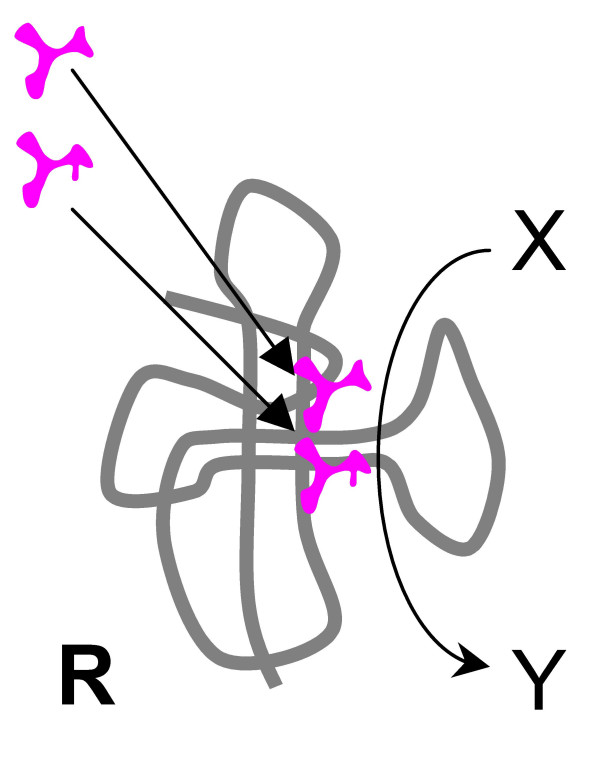
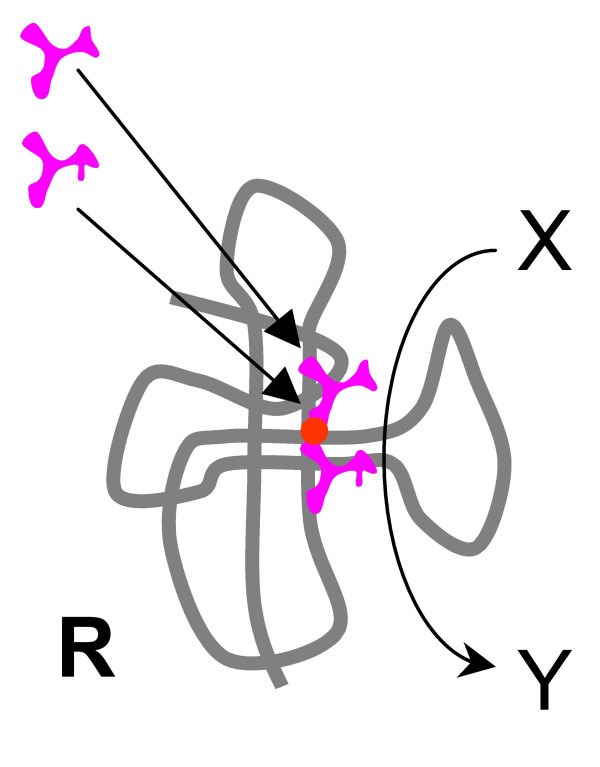
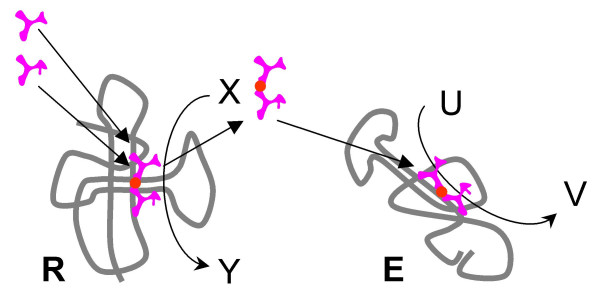
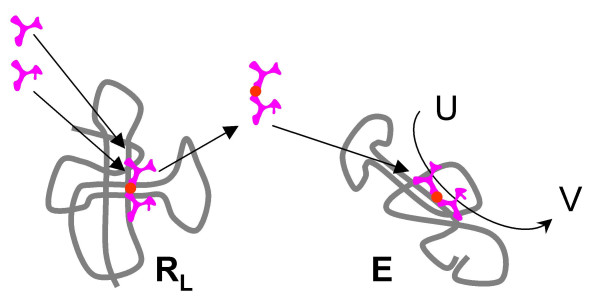
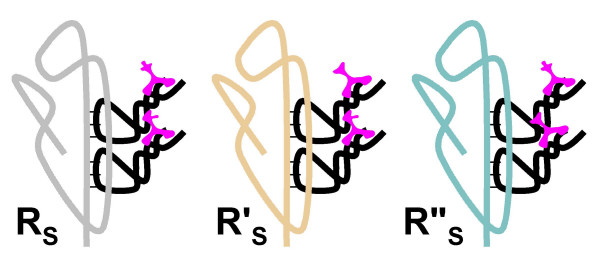
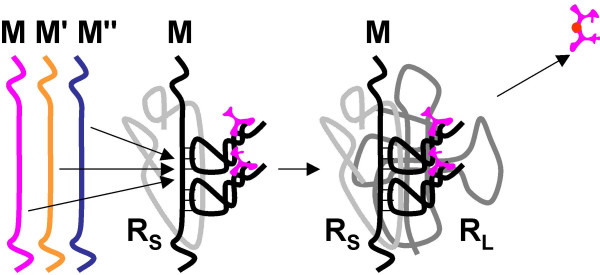
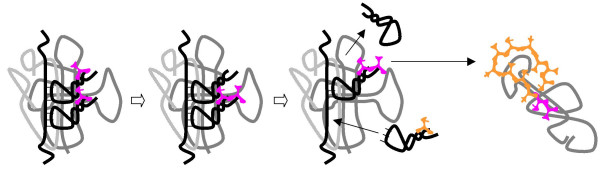
- The proposed scenario is a sequence of selective steps: amino acids stimulate ribozymes; a peptide ligase/protoribosome evolves; proto-tRNAs evolve self-charging and then specificity; an accessory RNA subunit increases binding/positioning; and translocation enables longer peptides and the “Protein Breakthrough.”
## Methods
- Conceptual/theoretical modeling rather than a direct empirical study: the paper builds alternative evolutionary scenarios for the origin of translation and the genetic code under the Continuity Principle.
- Evidence base: comparative genomics of translation components, experimental data on amino-acid/codon/anticodon recognition (including aptamer/SELEX results), and published ribozyme evolution/selection studies.
- Main analysis: stepwise reconstruction of three model variants for code origin—CRM (codon recognition), ARM (anticodon recognition), and FAM (frozen accident)—embedded in an RNA-world exaptation framework.
## Limitations
- The authors state that the scenarios are “sketchy and highly speculative,” that the required succession of evolutionary steps may be “far fetched,” and that the model is only a “best effort” conceptual framework.
- They explicitly note that the postulated complex RNA-mediated functions have not been demonstrated experimentally, and that the crucial adaptor-like molecules and their interactions with larger ribozymes remain hypothetical.
- Evident from the text: several conclusions rest on assumptions the authors themselves label as conjectural, including the existence of a complex RNA world, the hydrothermal-vent compartment setting, and unresolved details of amino-acid/proto-tRNA recognition.
Model-written summary. Check it against the paper before relying on it.
Integrity signals
Registry
Cites
Statistics
Figures
Verification
Claims the paper makes
0 Valid · 8 Not valid · 56 Not checked · 78 Own results and interpretations
A conclusion the paper draws from its own results — it cites no other source for it, so there is none to check. The quote shows it is in the paper.
In the paper
“The proposed scenario for the evolution of translation consists of the following steps: binding of amino acids to a ribozyme resulting in an enhancement of its catalytic activity;”
§ On the origin of the translation system and the genetic code in the RNA world by means of natural selection, exaptation, and subfunctionalization > Abstract > Results
plainstates a cause- Asserted: passes — The authors put it forward as true.
- Checkable: passes — It can be checked against evidence.
- Load-bearing: passes — The paper’s conclusions depend on it.
- Based: passes — The paper gives a reason why it holds.
- Rests on an assumption not shown here.
The paper states this without a source or data behind it here, so there is nothing to check it against. The quote shows it is in the paper.
In the paper
“Indeed, we are unaware of translation being possible without the involvement of ribosomes, the complete sets of tRNA and aminoacyl-tRNA synthetases (aaRS), and (at least, for translation to occur at a reasonable rate and accuracy) several translation factors.”
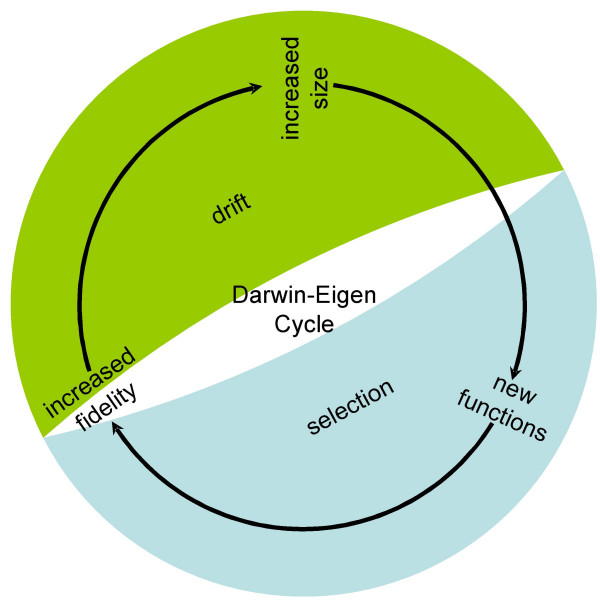
§ On the origin of the translation system and the genetic code in the RNA world by means of natural selection, exaptation, and subfunctionalization > Background > The Darwin-Eigen cycle, the emergence of biological complexity, and the continuity principle
hedgedstates a cause- Asserted: passes — The authors put it forward as true.
- Checkable: passes — It can be checked against evidence.
- Load-bearing: passes — The paper’s conclusions depend on it.
- Based: unclear — It is unclear why the paper says it holds.
A conclusion the paper draws from its own results — it cites no other source for it, so there is none to check. The quote shows it is in the paper.
In the paper
“evolution of the ability of the peptide ligase to assemble peptides using exogenous RNAs as template for complementary binding of charged proteo-tRNAs, yielding peptides with the potential to activate different ribozymes;”
§ On the origin of the translation system and the genetic code in the RNA world by means of natural selection, exaptation, and subfunctionalization > Abstract > Results
plainstates a cause- Asserted: passes — The authors put it forward as true.
- Checkable: passes — It can be checked against evidence.
- Load-bearing: passes — The paper’s conclusions depend on it.
- Based: passes — The paper gives a reason why it holds.
None of the sources cited for this claim could be matched to a paper, so there is nothing to check it against.
In the paper
“The origin of translation appears to be truly unique among all innovations in the history of life in that it involves the invention of a basic and highly non-trivial molecular-biological principle, the encoding of amino acid sequences in the sequences of nucleic acid bases via the triplet code[15,16].”
§ On the origin of the translation system and the genetic code in the RNA world by means of natural selection, exaptation, and subfunctionalization > Background > The Darwin-Eigen cycle, the emergence of biological complexity, and the continuity principle
What the sources say
- Not matchedcites [15]
The reference list we hold has no entry [15].
- Not matchedcites [16]
The reference list we hold has no entry [16].
hedged- Asserted: passes — The authors put it forward as true.
- Checkable: passes — It can be checked against evidence.
- Load-bearing: unclear — It is unclear whether the paper’s conclusions depend on it.
- Based: passes — The paper gives a reason why it holds.
- Not matched
A conclusion the paper draws from its own results — it cites no other source for it, so there is none to check. The quote shows it is in the paper.
In the paper
“joining of the peptide ligase with a distinct RNA molecule (predecessor of the small ribosomal subunit) carrying a built-in template for more efficient, complementary binding of charged proto-tRNAs;”
§ On the origin of the translation system and the genetic code in the RNA world by means of natural selection, exaptation, and subfunctionalization > Abstract > Results
plainstates a cause- Asserted: passes — The authors put it forward as true.
- Checkable: passes — It can be checked against evidence.
- Load-bearing: passes — The paper’s conclusions depend on it.
- Based: unclear — It is unclear why the paper says it holds.
71 more claims
Create a free account to see all 142 claims and every source verdict.
- Probably not a substantial claim. 45
- It may state two separate claims as one. 33
- The quote only partly states this claim. 2
Claims other papers make about this one
Each is checked against this paper’s own text: does it say what the citing paper says it does?
The source backs part of the claim, not all of it — or backs it for a different population, condition or comparison.
In the citing paper
“While still shrouded in mystery [175,176,177], the consequences of the development of protein synthesis were enormous, with proteins serving a wide range of functions, for example, structural support, transport, signaling, etc.”
From ‘Whole Organism’, Systems Biology, and Top-Down Criteria for Evaluating Scenarios for the Origin of Life (2021) · cites this paper as [177]
Experimental — accuracy not yet measuredThe source backs part of the claim, not all of it — or backs it for a different population, condition or comparison.
In the citing paper
“While the steps involved in the evolution of the complex process of translation are not well understood [175,176,177], but see [181], it is clear that the catalytic capacity afforded by protein synthesis dramatically increased rates of reaction. Thus, the rate at which energy could be extracted from the environment and the rate of evolution increased, probably by many orders of magnitude.”
From ‘Whole Organism’, Systems Biology, and Top-Down Criteria for Evaluating Scenarios for the Origin of Life (2021) · cites this paper as [177]
Experimental — accuracy not yet measuredIn the citing paper
“This bootstrapping process is analogous to what is thought to have driven the evolution of more complex genomes in the RNA world (3, 33).”
From An RNA polymerase ribozyme that synthesizes its own ancestor (2020) · cites this paper as [33]
Citations
Cites
The spandrels of San Marco and the Panglossian paradigm: a critique of the adaptationist programme
Gould, S. J., & Lewontin, R. C. (1979) · Proceedings of the Royal Society of London. Series B. Biological Sciences · doi:10.1098/rspb.1979.0086 · Cited by 7,770 · cited 1×
“Instead, the evolving system must have a selectable function(s) distinct from the modern one, a possibility recognized by Darwin [1] and emphasized by Gould in the concept of exaptation, that is, reassignment of function in the course of evolution [11,12].”
BackgroundThe Neutral Theory of Molecular Evolution
Kimura, M. (1979) · Scientific American · doi:10.1038/scientificamerican1179-98 · Cited by 7,666
Darwin, C., Burndy Library, Darwin, C., Edmonds & Remnants, & Henry Sotheran Ltd. (1859) · J. Murray eBooks · doi:10.5962/bhl.title.59991 · Cited by 6,984
The Neutral Theory of Molecular Evolution
Kimura, M. (1983) · Cambridge University Press eBooks · doi:10.1017/cbo9780511623486 · Cited by 6,347
Lodish, H. F. (1986) · Cited by 5,650
Selforganization of matter and the evolution of biological macromolecules
Eigen, M. (1971) · Die Naturwissenschaften · doi:10.1007/bf00623322 · Cited by 3,788 · cited 3×
“The theory of self-replicating systems that was developed, primarily, by Eigen and coworkers in the 1970ies [3] revealed an important limit (hereinafter the Eigen threshold) on the relationships between the reproduction fidelity and the amount of information contained in the system.”
BackgroundCentral Dogma of Molecular Biology
CRICK, F. (1970) · Nature · doi:10.1038/227561a0 · Cited by 3,444
Crick, F. (1958) · PubMed · Cited by 2,722
Gilbert, W. (1986) · Nature · doi:10.1038/319618a0 · Cited by 2,721
The RNA moiety of ribonuclease P is the catalytic subunit of the enzyme
Guerrier-Takada, C., Gardiner, K., Marsh, T., Pace, N., & Altman, S. (1983) · Cell · doi:10.1016/0092-8674(83)90117-4 · Cited by 2,684 · cited 1×
“This notion has been greatly boosted by the study of ribozymes (RNA enzymes), which was pioneered by Cech and coworkers' discovery, in 1982, of the autocatalytic cleavage of the Tetrahymena rRNA intron [38], and by the demonstration, in 1983, by Altman and coworkers, that RNAse P is a ribozyme [39].”
Background
Research works printed but not linked: 1
- Cold Spring Harbor Gesteland RF, Cech TR, Atkins JF The RNA World 2006 Cold Spring Harbor Laboratory Press
Cited by
Items 101–200 of 238
Spontaneous Mutual Ordering of Nucleic Acids and Proteins
Wills, P. R. (2014) · Origins of Life and Evolution of Biospheres · doi:10.1007/s11084-014-9396-z · Cited by 11
Emergence of ribozyme and tRNA-like structures from mineral-rich muddy pools on prebiotic earth
Roy, S., Bapat, N. V., Derr, J., Rajamani, S., & Sengupta, S. (2020) · Journal of Theoretical Biology · doi:10.1016/j.jtbi.2020.110446 · Cited by 12
The Origin of Life: Look Up and Look Down
Peters, J. W., & Williams, L. D. (2012) · Astrobiology · doi:10.1089/ast.2012.0818 · Cited by 16
“Koonin (Wolf and Koonin, 2007) and Gogarten (Fournier et al., 2010) showed that a high level of detail of early ribosomal evolution is accessible from analysis of sequence databases.”
InfluentialEmerging Frontiers in the Study of Molecular Evolution
Liberles, D. A., Chang, B. S. W., Geiler‐Samerotte, K., Goldman, A. D., Hey, J., Kaçar, B., Meyer, M. M., Murphy, W. J., Posada, D., & Storfer, A. T. (2020) · Journal of Molecular Evolution · doi:10.1007/s00239-020-09932-6 · Cited by 14
“Molecular evolution prior to LUCA is a burgeoning field that represents a cutting edge in the study of early evolution (Wolf and Koonin 2007).”
BackgroundHypothesis: Emergence of Translation as a Result of RNA Helicase Evolution
Zenkin, N. (2012) · Journal of Molecular Evolution · doi:10.1007/s00239-012-9503-6 · Cited by 13
“…peptide synthesis (peptidyl transferase), could have been advantageous to, and could have existed in the primordial RNA organism (Wolf and Koonin 2007, and references therein) In an attempt to deduce the function of the pre-translation system, one must take into account that it…”
BackgroundInfluentialFrom the Common Ancestor to the First Cells: The Code Theory
Barbieri, M. (2016) · Biological Theory · doi:10.1007/s13752-016-0236-4 · Cited by 13
On a quest of reverse translation
Vitas, M., & Dobovišek, A. (2016) · Foundations of Chemistry · doi:10.1007/s10698-016-9260-5 · Cited by 12
The ancient operational code is embedded in the amino acid substitution matrix and aaRS phylogenies
Shore, J. A., Holland, B. R., Sumner, J. G., Nieselt, K. (., & Wills, P. (. (2020) · Figshare · Cited by 11
Two perspectives on the origin of the standard genetic code
Sengupta, S., Aggarwal, N., & Bandhu, A. V. (2014) · Origins of Life and Evolution of Biospheres · doi:10.1007/s11084-014-9394-1 · Cited by 10
“Some interesting hypotheses have been put forward (Wolf and Koonin 2007; Bernhardt and Tate 2010) suggesting a successively advantageous step-wise mechanism for the evolution of the complex molecular machinery responsible for translation starting from functionally simpler components that existed in…”
BackgroundEarly divergence of translation initiation and elongation factors
Fer, E., McGrath, K. M., Guy, L., Hockenberry, A. J., & Kaçar, B. (2022) · Protein Science · doi:10.1002/pro.4393 · Cited by 12
“3–5 Deciphering the key steps in the emergence of translation is considered to be one of the hardest problems in biology.(5,6) Extant protein synthesis proceeds through four primary steps: initiation, elongation, termination, and ribosome recycling.”
Origins and Early Evolution of the Ribosome
Fox, G. E. (2016) · Evolution of the Protein Synthesis Machinery and Its Regulation · doi:10.1007/978-3-319-39468-8_3 · Cited by 10
Intellectual frameworks to understand complex biochemical systems at the origin of life
Seelig, B., & Chen, I. A. (2025) · Nature Chemistry · doi:10.1038/s41557-024-01698-4 · Cited by 16
Furukawa, R., Yokobori, S., Sato, R., Kumagawa, T., Nakagawa, M., Katoh, K., & Yamagishi, A. (2022) · Journal of Molecular Evolution · doi:10.1007/s00239-021-10043-z · Cited by 9
“Some researchers have proposed that in the early stages of the history of life, protein or peptide synthesis was established by RNA, i.e., ribozymes (Härtlein and Cusack 1995; Wolf and Koonin 2007; Koonin 2017; Lei and Burton 2020).”
Three Biopolymers and Origin of Life Scenarios
Agmon, I. (2024) · Life · doi:10.3390/life14020277 · Cited by 14
“It does not conform to the “continuity principle” that goes back to Darwin [1].”
BackgroundInfluentialReciprocal Nucleopeptides as the Ancestral Darwinian Self-Replicator
Banwell, E. F., Piette, B. M. A. G., Taormina, A., & Heddle, J. G. (2017) · Molecular Biology and Evolution · doi:10.1093/molbev/msx292 · Cited by 10
A Unifying Scenario on the Origin and Evolution of Cellular and Viral DomainsPreprint
BANDEA, C. I. (2009) · Nature Precedings · doi:10.1038/npre.2009.3888.1 · Cited by 14
“However, likely, the first RNA chains were synthesized for a different purpose that, nonetheless, required the same two critical properties [for a eloquent discussion of this exaptation phenomena in context of molecular evolution see (117)].”
BackgroundGutierrez-Rus, L. I., Gamiz-Arco, G., Gavira, J. A., Gaucher, E. A., Risso, V. A., & Sánchez‐Ruiz, J. M. (2023) · Molecular Biology and Evolution · doi:10.1093/molbev/msad126 · Cited by 9
Integrative Perspectives: In Quest of a Coherent Framework for Origins of Life on Earth
Egel, R. (2011) · Springer eBooks · doi:10.1007/978-3-642-21625-1_12 · Cited by 8
Mulkidjanian, A. Y. (2011) · Springer eBooks · doi:10.1007/978-3-642-21625-1_1 · Cited by 10
“The countdown of life, as argued by many authors (Eigen 1971; Orgel 1986; Lazcano and Miller 1996; Bada 2004; Orgel 2004; Wolf and Koonin 2007; Orgel 2008; Koonin 2009; Lazcano 2010), started to run with the emergence of the first replicating systems.”
BackgroundGriffith, R. W. (2009) · Origins of Life and Evolution of Biospheres · doi:10.1007/s11084-009-9169-2 · Cited by 11
“Weiner and Maizels 1987; Yarus et al. 2005; Wolf and Koonin 2007; Yakhnin 2007) but no compelling explanation has yet arisen.”
BackgroundBarbieri, M. (2025) · Biosemiotics · doi:10.1007/s12304-025-09597-y · Cited by 6
“When the transfer-RNAs reach the site of protein synthesis, however, they need to be kept at a close distance for a long enough time to allow the formation of a peptide bond (Wolf & Koonin, 2007; Fox, 2010).”
Evolution of the RNA world: From signals to codes
Spirov, A. V. (2023) · Biosystems · doi:10.1016/j.biosystems.2023.105043 · Cited by 8
Little Evidence the Standard Genetic Code Is Optimized for Resource Conservation
Rozhoňová, H., & Payne, J. L. (2021) · Molecular Biology and Evolution · doi:10.1093/molbev/msab236 · Cited by 9
Freire, M. Á. (2021) · Biosystems · doi:10.1016/j.biosystems.2021.104547 · Cited by 7
Genome Evolution from Random Ligation of RNAs of Autocatalytic Sets
Broecker, F. (2021) · International Journal of Molecular Sciences · doi:10.3390/ijms222413526 · Cited by 6
“Indeed, it has been proposed that the first template-directed peptides that evolved were cofactors of ribozymes [98].”
BackgroundGradual evolution of a homo- l -peptide world on homo- d -configured RNA and DNA
Węgrzyn, E., Mejdrová, I., & Carell, T. (2024) · Chemical Science · doi:10.1039/d4sc03384a · Cited by 7
On the motif distribution in random block-hierarchical networks
Avetisov, V. A., Nechaev, S. K., & Shkarin, A. (2010) · Physica A Statistical Mechanics and its Applications · doi:10.1016/j.physa.2010.09.016 · Cited by 7
Towards a Theory of Evolution as Multilevel LearningPreprint
Vanchurin, V., Wolf, Y. I., Katsnelson, M. I., & Koonin, E. V. (2021) · bioRxiv (Cold Spring Harbor Laboratory) · doi:10.1101/2021.11.03.466494 · Cited by 7
Self-citationAgmon, I. (2022) · International Journal of Molecular Sciences · doi:10.3390/ijms232415756 · Cited by 7
“This steric consideration, combined with the conformity to the continuity principle [18], suggests that the first proto-tRNA molecules engaged in primordial translation were already L-shaped.”
BackgroundSelf-empowerment of life through RNA networks, cells and viruses
Villarreal, L. P., & Witzany, G. (2023) · F1000Research · doi:10.12688/f1000research.130300.1 · Cited by 13
Dunn, I. S. (2011) · Journal of Theoretical Biology · doi:10.1016/j.jtbi.2011.06.009 · Cited by 6
Fidelity in Archaeal Information Processing
de Koning, B., Blombach, F., Brouns, S. J. J., & John van der, O. O. S. T. (2010) · Archaea · doi:10.1155/2010/960298 · Cited by 9
“The large amount of energy invested in gene expression implies that fidelity plays a major role in fitness.”
BackgroundOpinion: The Key Steps in the Origin of Life to the Formation of the Eukaryotic Cell
Brunk, C. F., & Marshall, C. R. (2024) · Life · doi:10.3390/life14020226 · Cited by 5
“…DNA sequences are transcribed into messenger RNA (mRNA) sequences; the mRNA is then translated into a protein sequence using transfer RNAs (tRNAs), where one end of the tRNA corresponds to the one of the codons of the genetic code, while the other end binds the corresponding amino acid [125].”
The Origin(s) of LUCA: Computer Simulation of a New Theory
Tang, S., & Gao, M. (2025) · Life · doi:10.3390/life15010075 · Cited by 7
“Consistent with the thesis that there were two phases of SGC evolution [38,46–52], we dictate that a vesicle or protocell must first get the 10 early AAs assigned with their respective codons, and only after can a vesicle or protocell get the 10 late AAs assigned with their codons (The ten early…”
A symbiotic origin of the ribosome?
Lynch, M., & Ellington, A. D. (2026) · PNAS Nexus · doi:10.1093/pnasnexus/pgag019 · Cited by 6
EPR-Proton Qubits’ Role in Evolution and Age-Related Disease
Grant Cooper, W. (2017) · Physical Science & Biophysics Journal · doi:10.23880/psbj-16000104 · Cited by 5
On the origin of the genetic code
Seki, M. (2023) · Genes & Genetic Systems · doi:10.1266/ggs.22-00085 · Cited by 4
Informatic Capabilities of Translation and Its Implications for the Origins of Life
Cuevas-Zuviría, B., Adam, Z. R., Goldman, A. D., & Kaçar, B. (2023) · Journal of Molecular Evolution · doi:10.1007/s00239-023-10125-0 · Cited by 5
“Thus, the emergence of translation during early evolutionary history may have allowed life to unmoor from the setting of its origin (Wolf and Koonin 2007; Gold-man et al. 2016).”
BackgroundCommon Peptides Study of Aminoacyl-tRNA Synthetases
Gottlieb, A., Frenkel‐Morgenstern, M., Safro, M. G., & Horn, D. (2011) · PLoS ONE · doi:10.1371/journal.pone.0020361 · Cited by 6
“Their key role in the heart of the translation process and their connection to the genetic code make them candidates for evolutionary studies, aiming to pinpoint the way mRNA translation has evolved throughout evolution [11,12,13,14,15,16].”
BackgroundSymmetrical distributions of aminoacyl-tRNA synthetases during the evolution of the genetic code
José, M. V., Bobadilla, J. R., Zamudio, G. S., & de Farías, S. T. (2023) · Theory in Biosciences · doi:10.1007/s12064-023-00394-0 · Cited by 5
“It has been proposed that in the early stages of the history of life, protein or peptide synthesis was established by RNA, i.e., ribozymes (Wolf and Koonin 2007).”
BackgroundThe Continuity Principle and the Evolution of Replication Fidelity
GARTE, S. J. (2020) · Acta Biotheoretica · doi:10.1007/s10441-020-09399-4 · Cited by 5
“The Continuity Principle (Wolpert 1994) in evolution has been described as the “…general Darwinian principle… [that] evolution must proceed via consecutive, manageable steps, each one associated with a demonstrable increase in fitness” (Wolf and Koonin 2007).”
BackgroundCellular and viral RNA polymerases: evolutionary insights into eukaryotic origins
Wong, K. Y., Feng, X., Wang, X., Ji, X., & Zhou, Z. (2025) · Trends in Microbiology · doi:10.1016/j.tim.2025.11.008 · Cited by 6
Ribosome‐Free Translation up to Pentapeptides via Template Walk on RNA Sequences
Reußwig, S. G., & Richert, C. (2024) · Angewandte Chemie International Edition · doi:10.1002/anie.202410317 · Cited by 4
The non-canonical nucleotides and prebiotic evolution
Ruzov, A. S., & Ermakov, A. S. (2025) · Biosystems · doi:10.1016/j.biosystems.2025.105411 · Cited by 4
Peptide markers of aminoacyl tRNA synthetases facilitate taxa counting in metagenomic data
Persi, E., Weingart, U., Freilich, S., & Horn, D. (2012) · BMC Genomics · doi:10.1186/1471-2164-13-65 · Cited by 7
“Their importance to the understanding of evolution has been often emphasized in the literature [6,7].”
BackgroundGarte, S. (2021) · BioCosmos · doi:10.2478/biocosmos-2021-0002 · Cited by 4
“[that] evolution must proceed via consecutive, manageable steps, each one associated with a demonstrable increase in fitness” (13,14).”
BackgroundCharacterization of Novel Functions and Topologies in RNA
Burton, A. S. (2000) · doi:10.15760/etd.363 · Cited by 4
Origins of Life: Chemistry and EvolutionPreprint
Matange, K., Rajaei, V., Schuster, G. B., Hud, N. V., Capera-Aragones, P., Frenkel‐Pinter, M., & Williams, L. D. (2023) · ChemRxiv · doi:10.26434/chemrxiv-2023-1jrcq · Cited by 3
Protein Fold Usages in Ribosomes: Another Glance to the Past
Tanoz, I., & Timsit, Y. (2024) · International Journal of Molecular Sciences · doi:10.3390/ijms25168806 · Cited by 4
“Ribosomes are also considered relics of the transition from the RNA world to the first peptide/RNA life forms [57–59], reflecting the co-evolution of translation players and the genetic code [60–62].”
BackgroundFactors in Protobiomonomer Selection for the Origin of the Standard Genetic Code
Saralov, A. I. (2021) · Acta Biotheoretica · doi:10.1007/s10441-021-09420-4 · Cited by 3
Rekadwad, B. N., Shouche, Y. S., & Jangid, K. (2023) · Archives of Microbiology · doi:10.1007/s00203-023-03694-7 · Cited by 3
“LUCA possesses transfer RNA (tRNA) as its genetic material and exhibits a remarkable capability to modify its genetic code (Wolf and Koonin 2007; Kim et al. 2018; 2019).”
BackgroundExpanding the Scope of Ribosome‐Mediated Biosynthesis in vitro using tRNA‐Aminoacylating Ribozyme
Cho, N., Jin, H., Jeon, H., Lee, K., & Lee, J. (2024) · Israel Journal of Chemistry · doi:10.1002/ijch.202300174 · Cited by 3
Disordered peptide-based design of intrinsically disordered polymers for biomedical applications
Coskuner‐Weber, O., Çaylı, F. N., & Uversky, V. N. (2025) · International Journal of Polymer Analysis and Characterization · doi:10.1080/1023666x.2025.2458470 · Cited by 3
“[96] Each tRNA molecule binds to a specific amino acid at one end, known as the amino acid attachment site.”
Milner‐White, E. J. (2011) · Springer eBooks · doi:10.1007/978-3-642-21625-1_7 · Cited by 3
Carels, N., & Ponce-de-León, M. (2015) · Bioinformatics and Biology Insights · doi:10.4137/bbi.s24021 · Cited by 3
Three phases in the evolution of the standard genetic code: how translation could get startedPreprint
van der Gulik, P. T. S. (2007) · arXiv (Cornell University) · doi:10.48550/arxiv.0711.0700 · Cited by 3
“…wrong to propose scenarios of “codon take-over”, it is in conflict with the principle of continuity and the primitive proteins are the key to get out of the paradox of impossible proteinless translation (described by Wolf and Koonin, 2007, and, as “the chicken-and-egg problem”, by Delarue, 2007).”
BackgroundResultInfluentialFrom peptides to DNA: All required steps can be catalyzed
Shi, L., Senissar, M., Leistner, K., Jers, C., & Mijakovic̀, I. (2026) · Proceedings of the National Academy of Sciences · doi:10.1073/pnas.2534387123 · Cited by 3
“As argued by Wolf & Koonin (1), the origin of translation of genetic information from nucleic acids to proteins in the RNA world is one of the most difficult problems in evolutionary biology.”
How did the Proteome Emerge From Pre-biotic Chemistry?
Carter, C. W. (2022) · Royal Society of Chemistry eBooks · doi:10.1039/9781839164798-00317 · Cited by 3
The First Nucleic Acid Strands May Have Grown on Peptides via Primeval Reverse Translation
Tozzi, A., & Mazzeo, M. (2023) · Acta Biotheoretica · doi:10.1007/s10441-023-09474-6 · Cited by 3
“Being the primeval translational mechanisms not as accurate and efficient as the modern triplet-based version (Wolf and Koonin 2007; Schiller 2016), the ancient peptides gave rise to polymerized strains of low-fidelity RNA.”
BackgroundMethodInfluentialAutocatalytic assembly of a chimeric aminoacyl-RNA synthetase ribozyme
Radakovic, A., Todisco, M., Mishra, A., & Szostak, J. W. (2025) · Science Advances · doi:10.1126/sciadv.adu3693 · Cited by 3
“One of the hallmarks of extant life is the mutual dependence of RNA and proteins in ribosomal translation ( 39 , 40 ), but how this universally conserved machinery emerged remains a mystery ( 41 , 42 ).”
The origin of biological information and programmed protein synthesis
Liu, D. (2013) · American Journal of Molecular Biology · doi:10.4236/ajmb.2013.34027 · Cited by 2
“Numerous attempts have been made to describe the evolution of translation and the ribosome, such as Crick [1], Woese [10], Noller [11], Poole [12], Fox and Naik [13], and Wolf and Koonin [5] just to name a few.”
BackgroundOceanic Arginine Translator: The Origin of Life and Early Evolution of the Genetic Code
Griffith, R. W. (2012) · Cellular origin and life in extreme habitats · doi:10.1007/978-94-007-2941-4_33 · Cited by 2
The Deciphering of the Genetic Code
Fry, M. (2016) · Elsevier eBooks · doi:10.1016/b978-0-12-802074-6.00010-2 · Cited by 2
Consequences of EPR–Proton Qubits Populating DNA
Cooper, W. G. (2018) · Advances in quantum chemistry · doi:10.1016/bs.aiq.2017.12.001 · Cited by 5
On the Origin of Genetically Coded Protein Synthesis
Коваленко, С. П. (2021) · Russian Journal of Bioorganic Chemistry · doi:10.1134/s1068162021060121 · Cited by 1
Trinity of G-tetrads and origin of translation
Kankia, B. I. (2022) · Biology Direct · doi:10.1186/s13062-022-00327-9 · Cited by 3
“Thus, the non-enzymatic production of a ribozyme represents the sequence of three problematic reactions unable to overcome the Eigen threshold and initiate the evolution of the extant translation apparatus [8].”
BackgroundMa, W., & Liang, Y. (2022) · Royal Society of Chemistry eBooks · doi:10.1039/9781839164798-00347 · Cited by 3
Accurate phenotypic self-replication as a necessary cause for biological evolution.
GARTE, S. J. (2024) · Biosystems · doi:10.1016/j.biosystems.2024.105154 · Cited by 2
The Evolutionary Transition of the RNA World to Obcells to Cellular-Based Life
O’Connor, P. B. F. (2024) · Journal of Molecular Evolution · doi:10.1007/s00239-024-10171-2 · Cited by 3
“Although the evolutionary development of the ribosome has been modelled with high confidence (Fox and Naik 2004; Bokov and Steinberg 2009; Hsiao et al. 2009; Petrov et al. 2015), the reason for its emergence remains elusive (Wolf and Koonin 2007).”
Giménez, J. A. M., & Tabarés‐Seisdedos, R. (2021) · Origins of Life and Evolution of Biospheres · doi:10.1007/s11084-021-09610-7 · Cited by 2
Bremer, J., Richter, C. P., Schwalbe, H., & Richert, C. (2022) · ChemBioChem · doi:10.1002/cbic.202200352 · Cited by 1
Jalasvuori, M. (2010) · Jyväskylä University Digital Archive (University of Jyväskylä) · Cited by 3
A Fundamentally New Perspective on the Origin and Evolution of LifePreprint
Liu, S. V. (2008) · arXiv (Cornell University) · doi:10.48550/arxiv.0811.3653 · Cited by 2
“Arguments have been made on what the earliest life form was (46-50).”
BackgroundOrigins of Life: Chemistry and EvolutionPreprint
Matange, K., Rajaei, V., Schuster, G. B., Hud, N. V., Menor-Salván, C. A., Capera-Aragones, P., Frenkel‐Pinter, M., & Williams, L. D. (2023) · ChemRxiv · doi:10.26434/chemrxiv-2023-1jrcq-v2 · Cited by 1
Emergent Chemical Reactivity and Complexity of RNA Condensates
Hauf, S., Nakamura, R., Cellini, B., Yokobayashi, Y., & Dindo, M. (2025) · Angewandte Chemie International Edition · doi:10.1002/anie.202511332 · Cited by 6
“As reported in Figure 3, ubiquitin (8.6 KDa, 76 aa) and the longer poly-Lys (15–30 KDa) are enriched within the RNA phase while amino acids are roughly equally distributed between both phases (Figure S10).”
InfluentialLife from Chemistry: A Critical Commentary on the State of Abiogenesis Research
GARTE, S. J. (2025) · BioCosmos · doi:10.2478/biocosmos-2025-0012 · Cited by 1
“Wolf and Koonin (2) considered the universal ribosomal translation system a good example of irreducible complexity.”
InfluentialKrupovìč, M., & Koonin, E. V. (2026) · PLoS Biology · doi:10.1371/journal.pbio.3003780 · Cited by 4
Self-citationCrucial steps to life: From chemical reactions to code using agents
Witzany, U. (2016) · Cited by 2
The origins of life: novel perspectives over an old problem
Ligrone, R. (2021) · Università degli Studi di Napoli Federico II · doi:10.6092/2724-4393/7877 · Cited by 2
“The origin of the genetic code is one of the most perplexing problems in evolutionary biology, so much so that little novel insight has emerged in the last decades, despite dramatic progress in molecular biology (Wolf and Koonin 2007; Koonin and Novozhilov 2009, 2017).”
BackgroundMierke, C. T. (2020) · Biological and medical physics, biomedical engineering · doi:10.1007/978-3-030-58532-7_11 · Cited by 1
Necessary and sufficient conditions for major evolutionary transitions
Boomsma, J. J. (2022) · Oxford University Press eBooks · doi:10.1093/oso/9780198746171.003.0004 · Cited by 1
Ribosome‐Free Translation up to Pentapeptides via Template Walk on RNA Sequences
Reußwig, S. G., & Richert, C. (2024) · Angewandte Chemie · doi:10.1002/ange.202410317 · Cited by 2
Ligrone, R. (2019) · Springer eBooks · doi:10.1007/978-3-030-16057-9_3 · Cited by 1
LUCA – letzter gemeinsamer Vorfahre allen Lebens
Mulkidjanian, A. Y., & Lankenau, D. (2011) · Wiley eBooks · doi:10.1002/9783527653935.ch7
It Takes Two to Evolve Too. The Hypothesis on Three Primary Communication Transitions in EvolutionPreprint
Kovalev, N. (2017) · Preprints.org · doi:10.20944/preprints201701.0016.v1
“The question of how genetic code emerged has no definite answer yet, and various existing hypotheses can be found in several publications [19-22].”
BackgroundLittle evidence the standard genetic code is optimized for resource conservationPreprint
Rozhoňová, H., & Payne, J. L. (2021) · bioRxiv (Cold Spring Harbor Laboratory) · doi:10.1101/2021.02.04.429873 · Cited by 1
Janzen, E., Shen, Y., Liu, Z., Blanco, C., & Chen, I. A. (2021) · bioRxiv (Cold Spring Harbor Laboratory) · doi:10.1101/2021.05.14.444235 · Cited by 1
Origin and Evolution of Translation: A Unifying Perspective Across TimePreprint
Fer, E., Cuevas-Zuviría, B., Goldman, A. D., Adam, Z. R., & Kaçar, B. (2023) · EcoEvoRxiv · doi:10.32942/x2q88x · Cited by 1
An Ode to the Code: Evidence for Fine-Tuning in the Standard Codon Table
Macosko, J. C., & Smelser, A. M. (2013) · doi:10.1142/9789814508728_0018
“Is there a law that can explain the SCT optimization? Several papers have considered this possibility [4, 11, 25].”
BackgroundPurificação de RNA por cromatografia de afinidade com histidina imobilizada
Martins, A. R. N. (2009) · Portuguese National Funding Agency for Science, Research and Technology (RCAAP Project by FCT)
Schumacher, H. T. (2009) · Kobra (Universitätsbibliothek Kassel) · Cited by 2
The DNA Habitat and its RNA Inhabitants
Villarreal, L. P., & Witzany, G. (2013) · PhilPapers (PhilPapers Foundation)
Small RNA-amino acid interactions and implications for the origin of translation
Turk, R. M. (2010) · CU Scholar (University of Colorado Boulder)
Barbieri, M. (2014) · Springer eBooks · doi:10.1007/978-3-319-14535-8_4
A Natural Origin of LifePreprint
Stout, T. R., & Matzko, G. (2018) · OSF Preprints (OSF Preprints) · doi:10.31219/osf.io/p5nw3
Prebiological Organization of Molecules in Models and in the Matter of the Origin of Life
Zhogol, R. A., & . (2018) · International Journal of Engineering & Technology · doi:10.14419/ijet.v7i3.14.17044
“[58] Wolf YI, Koonin EV (2007) On the origin of the translation system and the genetic code in the RNA world by means of natural selection, exaptation, and subfunctionalization.”
BackgroundTeleologia i pochodzenie ewolucji
Garte, S. (2021) · Filozoficzne Aspekty Genezy · doi:10.53763/fag.2018.15.158
The Origin(s) of Cell: Some Radical New HypothesesPreprint
Tang, S. (2020) · Preprints.org · doi:10.20944/preprints202002.0039.v1
Rawlings, B. (2004) · UTAS Research Repository · doi:10.25959/23245829
Происхождение генетического кода и трансляции в рамках современных концепций происхождения жизни
Кондратьева, Л. Г., Дьячкова, М. С., & Galchenko, A. V. (2022) · Biochemistry (Moscow) · doi:10.31857/s0320972522010043
Metadata
- Authors
- Wolf, Y. I., & Koonin, E. V.
- Affiliations
- National Institutes of Health (US)
- Corresponding author
- Koonin, Eugene V
- Venue
- Biology Direct
- Published
- 2007
- Volume
- 2
- Issue
- 1
- Pages
- 14
- ISSN
- 1745-6150 (ISSN-L)
- PMC
- PMC1894784
- OpenAlex
- W2144820252
- Cited by
- 235
- References
- 157
- Citations by year
- 2026: 10 · 2025: 17 · 2024: 12 · 2023: 16 · 2022: 28 · 2021: 19 · 2020: 10 · 2019: 11 · 2018: 8 · 2017: 10 · 2016: 8 · 2015: 10 · 2014: 9 · 2013: 10 · 2012: 8
- FWCI
- 4.77
- Type
- journal article
- Language
- en
- Open access
- gold
- doi.org
- Licence
- cc-by
- Locations
- Biology Direct (publishedVersion, cc-by)
- PubMed Central (publishedVersion, cc-by)
- PubMed (publishedVersion)
- DOAJ (DOAJ: Directory of Open Access Journals) (submittedVersion)
- Funders
- National Institutes of Health
- U.S. National Library of Medicine
- Topics
- Life Sciences › Biochemistry, Genetics and Molecular Biology › Molecular Biology › RNA and protein synthesis mechanisms
- Physical Sciences › Physics and Astronomy › Astronomy and Astrophysics › Origins and Evolution of Life
- Life Sciences › Biochemistry, Genetics and Molecular Biology › Genetics › Evolution and Genetic Dynamics
- Keywords
- origin of translation, origin of the genetic code, RNA world, exaptation, subfunctionalization, ribozymes, peptide ligase, natural selection, origin of life, translation fidelity, ribosomal RNA evolution, codon optimization
About these checks
Registry, retraction, Cites and statistics results are computed, not judged, with one exception: a printed reference that no index lists is read once by a model before it counts as a citation error. Claims are extracted by a model and kept only when their quote appears verbatim in the text; each cited source is then checked, with a model’s help, for whether it says what the claim relies on. Those verdicts can be wrong — read the claim’s quote and the cited source before relying on one.
A language model drew the claims from the paper on 2026-09-29, under version 3 of the claim definition (model deepseek-v4.1-flash, prompt extract-v3).
A second model labelled each claim on 2026-09-29 (model jev-1.13-20260917, definition revision gold-guideline-v0.2).
Statistics and arithmetic are recomputed, not judged.
Confidence bands are shown only for fields calibrated on our annotated test set. None is calibrated yet, so no band is shown.
What counts as a claim ›How we measure confidence ›How we check this ›
Are you an author, or do you see a problem with this page? Request a review
Data sources
Bibliographic data: Semantic Scholar, OpenAlex, Crossref.
Contains information from the Semantic Scholar Academic Graph Datasets, made available under the ODC Attribution License (ODC-BY 1.0).
Semantic Scholar’s data is described in: Kinney, R., et al. (2023). The Semantic Scholar Open Data Platform. arXiv:2301.10140.
