

CONSORT 2010 Statement: updated guidelines for reporting parallel group randomised trials
Open accessThe DOI matches its Crossref record; 41 of the 43 references it cites were found in a registry or an index, and 1 are not checked yet; 3 of the 20 sources its claims cite were checked for support.
Abstract
The CONSORT statement is used worldwide to improve the reporting of randomised controlled trials. Kenneth Schulz and colleagues describe the latest version, CONSORT 2010, which updates the reporting guideline based on new methodological evidence and accumulating experience. To encourage dissemination of the CONSORT 2010 Statement, this article is freely accessible on bmj.com and will also be published in the Lancet, Obstetrics and Gynecology, PLoS Medicine, Annals of Internal Medicine, Open Medicine, Journal of Clinical Epidemiology, BMC Medicine, and Trials.
Verified 2026-10-05 · 1 reference not checked yet
Overview
CoChat Summary
TL;DR
CONSORT 2010 updates the 2001 reporting guideline for parallel-group randomised trials, providing a 25-item checklist and a flow diagram to improve completeness, clarity, and transparency of trial reports. The revision is evolutionary, based on accumulated methodological evidence and CONSORT Group consensus.
Key findings
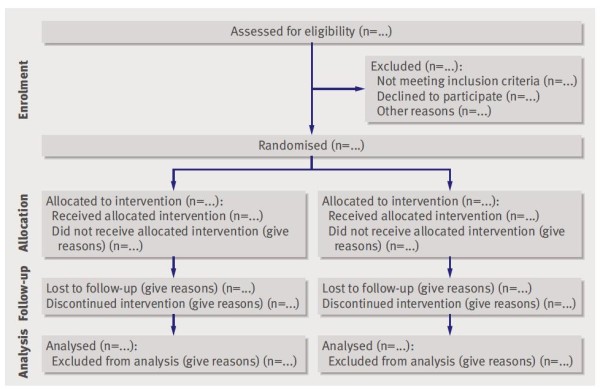
- CONSORT 2010 consists of this paper, a 25-item checklist (Table 1), and a flow diagram (Figure 1); the flow diagram was not modified except for one word.
- The update made evolutionary rather than revolutionary changes, kept existing item numbers except for some renumbering of items 2 to 5, and added new items or sub-items on topics including trial design, changes to methods or outcomes after trial commencement, blinding details, trial registration, protocol availability, and funding.
- The statement focuses on the most common design type—individually randomised, two-group, parallel trials—which the paper says accounts for over half of trials in the literature.
- The CONSORT database contains more than 700 studies, and more than 400 journals have explicitly supported the CONSORT statement.
Methods
- Design: consensus update of the 2001 CONSORT statement by the CONSORT Group, informed by methodological evidence and experience.
- Sample/process: 31 members met in Montebello, Canada, in January 2007; participants synthesised evidence on checklist items, the group deliberated each item, and the executive convened teleconferences and meetings, producing seven major iterations before feedback and finalisation.
- Main analysis: items deemed absolutely fundamental to reporting a randomised controlled trial were retained; the updated explanation and elaboration manuscript was drafted and iteratively revised by the group.
Limitations
- The paper states that CONSORT 2010 focuses predominantly on the two-group, parallel randomised controlled trial, and that other trial designs or situations require additional information and may need CONSORT extensions.
- The paper states that CONSORT 2010 does not include recommendations for designing, conducting, or analysing trials, and is not intended as an instrument to evaluate trial quality or to construct a “quality score.”
- The paper states a potential drawback: a reporting guideline might encourage some authors to report fictitiously what the guidance suggests rather than what was actually done; the text also makes evident that this is a guideline statement rather than a new empirical evaluation of CONSORT 2010’s effects.
Model-written summary. Check it against the paper before relying on it.
Integrity signals
Registry
Cites
Statistics
Figures
Verification
Claims the paper makes
3 Valid · 0 Not valid · 9 Not checked · 7 Own results and interpretations
Every source the paper cites for this claim was checked and supports it.
In the paper
“However, randomised trials can yield biased results if they lack methodological rigour [1].”
§ CONSORT 2010 Statement: updated guidelines for reporting parallel group randomised trials > Introduction
What the sources say
- Supportedcites [1] Jüni P Altman DG Egger M Systematic reviews in health care: assessing the quality of controlled clinical trials BMJ 2001 323 42 6 10.1136/bmj.323.7303.42 11440947 PMC1120670 source
The Conclusions section states there is ample evidence that many trials are methodologically weak and that deficiencies translate into biased findings, directly supporting the claim. The 'Empirical evidence of bias' section (and the introductory framing on internal validity being threatened by selection, performance, detection, and attrition bias) documents that inadequate concealment of allocation exaggerated treatment effects (combined ratio of odds ratios 0.70, 95% CI 0.62 to 0.80), i.e. biased results arising from lacking methodological rigour. (LLM, conf=0.90)
plainstates a possible cause- Asserted: passes — The authors put it forward as true.
- Checkable: passes — It can be checked against evidence.
- Load-bearing: passes — The paper’s conclusions depend on it.
- Based: passes — The paper gives a reason why it holds.
- Supported
The cited sources support only part of this claim — read each source’s verdict below.
In the paper
“While those statements improved the reporting quality for some randomised controlled trials, [9,10] many trial reports still remain inadequate [2].”
§ CONSORT 2010 Statement: updated guidelines for reporting parallel group randomised trials > Introduction
What the sources say
- Not checked yetcites [9] Plint AC Moher D Morrison A Schulz K Altman DG Hill C Gaboury Does the CONSORT checklist improve the quality of reports of randomised controlled trials? A systematic review Med J Aust 2006 185 263 7 16948622 source
- Partly supportedcites [10] Hopewell S Dutton S Yu L-M Chan A-W Altman DG The quality of reports of randomised trials in 2000 and 2006: a comparative study of articles indexed by PubMed BMJ 2010 340 c723 10.1136/bmj.c723 20332510 PMC2844941 sourceExperimental — accuracy not yet measured
Our copy supports the improvement half of the claim: the 'What this study adds' box (Discussion > Conclusions) states that 'Reporting of methodological details in publications of randomised trials has improved somewhat between 2000 and 2006,' and the Principal findings (Discussion) report 'clear evidence of improved reporting of several important aspects of trial methods.' The link to CONSORT is only inferential/hedged: the Introduction frames the aim as assessing 'whether the recommendations have led to improvements,' and the endorsement comparison (Results; Discussion > Comparison with other studies) shows significantly better reporting in CONSORT-endorsing journals, a finding the authors say 'should be viewed with a certain amount of caution' and attribute the explicit conclusion of adoption being 'associated with improved reporting' to another work (the systematic review at ref 23). So the causal phrasing 'improved the reporting quality' is stronger than this source states, and it concerns parallel-group trials indexed in PubMed published in 2000 and 2006. (LLM, conf=0.70)
plainstates a cause- Asserted: passes — The authors put it forward as true.
- Checkable: passes — It can be checked against evidence.
- Load-bearing: passes — The paper’s conclusions depend on it.
- Based: passes — The paper gives a reason why it holds.
The cited sources support only part of this claim — read each source’s verdict below.
In the paper
“Unfortunately, attempted assessments frequently fail because authors of many trial reports neglect to provide lucid and complete descriptions of that critical information [2-4].”
§ CONSORT 2010 Statement: updated guidelines for reporting parallel group randomised trials > Introduction
What the sources say
- Not checked yetcites [2] Chan AW Altman DG Epidemiology and reporting of randomised trials published in PubMed journals Lancet 2005 365 1159 62 10.1016/S0140-6736(05)71879-1 15794971 source
- Not checked yetcites [3] Glasziou P Meats E Heneghan C Shepperd S What is missing from descriptions of treatment in trials and reviews? BMJ 2008 336 1472 4 10.1136/bmj.39590.732037.47 18583680 PMC2440840 source
- Partly supportedcites [4] Dwan K Altman DG Arnaiz JA Bloom J Chan AW Cronin E Decullier E Easterbrook PJ Von Elm E Gamble C Ghersi D Ioannidis JP Simes J Williamson PR Systematic review of the empirical evidence of study publication bias and outcome reporting bias PLoS ONE 2008 3 e3081 10.1371/journal.pone.0003081 18769481 PMC2518111 sourceExperimental — accuracy not yet measured
The Results (Publication and trial findings; page unavailable) report that substantial proportions of trial outcomes were omitted or incompletely reported, supporting the claim about missing findings. The paper does not establish that attempted assessments frequently fail for this reason or that trial reports commonly lack clear descriptions of methodology. (LLM, conf=0.82)
plainstates a cause- Asserted: passes — The authors put it forward as true.
- Checkable: passes — It can be checked against evidence.
- Load-bearing: passes — The paper’s conclusions depend on it.
- Based: passes — The paper gives a reason why it holds.
In the paper
“While those statements improved the reporting quality for some randomised controlled trials, [9,10] many trial reports still remain inadequate [2].”
§ CONSORT 2010 Statement: updated guidelines for reporting parallel group randomised trials > Introduction
What the sources say
- Not checked yetcites [2] Chan AW Altman DG Epidemiology and reporting of randomised trials published in PubMed journals Lancet 2005 365 1159 62 10.1016/S0140-6736(05)71879-1 15794971 source
plain- Asserted: passes — The authors put it forward as true.
- Checkable: passes — It can be checked against evidence.
- Load-bearing: passes — The paper’s conclusions depend on it.
- Based: passes — The paper gives a reason why it holds.
In the paper
“That support seems warranted: when used by authors and journals, CONSORT seems to improve reporting [9].”
§ CONSORT 2010 Statement: updated guidelines for reporting parallel group randomised trials > Background to CONSORT
What the sources say
- Not checked yetcites [9] Plint AC Moher D Morrison A Schulz K Altman DG Hill C Gaboury Does the CONSORT checklist improve the quality of reports of randomised controlled trials? A systematic review Med J Aust 2006 185 263 7 16948622 source
hedgedstates a possible cause- Asserted: passes — The authors put it forward as true.
- Checkable: passes — It can be checked against evidence.
- Load-bearing: unclear — It is unclear whether the paper’s conclusions depend on it.
- Based: passes — The paper gives a reason why it holds.
7 more claims
Create a free account to see all 19 claims and to verify the 17 references still open.
- Probably not a substantial claim. 5
- It may state two separate claims as one. 3
Claims other papers make about this one
Each is checked against this paper’s own text: does it say what the citing paper says it does?
The source backs part of the claim, not all of it — or backs it for a different population, condition or comparison.
In the citing paper
“RCTs have specific governance characteristics (including prospective trial registration requirements), detailed protocols (including documentation of study medication), and checklists that have to be completed at submission to journals [9, 10].”
From Checklist to assess Trustworthiness in RAndomised Controlled Trials (TRACT checklist): concept proposal and pilot (2023) · cites this paper as [10]
Experimental — accuracy not yet measuredThe cited source says what the claim attributes to it.
In the citing paper
“The CONSORT checklist (Schulz et al., 2010) (Appendix A) and JARS guidelines (American Psychological Association, 2008) were applied in reporting the findings.”
From An online acceptance, commitment, and self-compassion based treatment to decrease psychological distress in people with type 2 diabetes: A feasibility randomised-controlled trial (2023) · cites this paper as Schulz et al., 2010
Citations
Cites
Preferred Reporting Items for Systematic Reviews and Meta-Analyses: the PRISMA statement
Moher, D., Liberati, A., Tetzlaff, J., Altman, D. G., & for the PRISMA Group (2009) · BMJ · doi:10.1136/bmj.b2535 · Cited by 83,823
Self-citationPreferred reporting items for systematic reviews and meta-analyses: the PRISMA Statement.
(2009) · PubMed Central · Cited by 44,859
Self-citationvon Elm, E., Altman, D. G., Egger, M., Pocock, S. J., Gøtzsche, P. C., Vandenbroucke, J. P., & Initiative, F. T. S. (2007) · PLoS Medicine · doi:10.1371/journal.pmed.0040296 · Cited by 23,020
Self-citationElm, E. V., Altman, D. G., Egger, M., Pocock, S. J., Gøtzsche, P. C., & Vandenbroucke, J. P. (2007) · BMJ · doi:10.1136/bmj.39335.541782.ad · Cited by 10,766
Self-citationMoher, D., Hopewell, S., Schulz, K. F., Montori, V., Gotzsche, P. C., Devereaux, P. J., Elbourne, D., Egger, M., & Altman, D. G. (2010) · BMJ · doi:10.1136/bmj.c869 · Cited by 8,883
Self-citationSchulz (1995) · doi:10.1001/jama.1995.03520290060030 · Cited by 5,634
Moher, D., Schulz, K. F., & Altman, D. G. (2001) · The Lancet · doi:10.1016/s0140-6736(00)04337-3 · Cited by 5,373
Self-citationMoher, D., Pham, B., Jones, A., Cook, D. J., Jadad, A. R., Moher, M., Tugwell, P., & Klassen, T. P. (1998) · The Lancet · doi:10.1016/s0140-6736(98)01085-x · Cited by 3,560
Self-citationConsort 2010 statement: extension to cluster randomised trials
Campbell, M. K., Piaggio, G., Elbourne, D. R., Altman, D. G., & for the CONSORT Group (2012) · BMJ · doi:10.1136/bmj.e5661 · Cited by 3,510
Self-citationAssessing the quality of controlled clinical trials
Jüni, P., Altman, D. G., & Egger, M. (2001) · BMJ · doi:10.1136/bmj.323.7303.42 · Cited by 3,309 · cited 1×
“However, randomised trials can yield biased results if they lack methodological rigour [1].”
Self-citation
Cited by
Items 1,401–1,500 of 1,835
Anwar, S., Arsalan, S. A., Zafar, H., Ahmed, A., Gillani, S. A., & Hanif, A. (2022) · South African Journal of Physiotherapy · doi:10.4102/sajp.v78i1.1611 · Cited by 10
Flake, J. K. (2021) · doi:10.31234/osf.io/vqjb8 · Cited by 58
Gois, P. H. F., Miao, V. Y., Saunderson, R. B., Wainstein, M., Jefferis, J., Hudson, R., Chandler, S. P., Mallitt, K., Wolley, M. J., Elford, B., et al. (2025) · Clinical Journal of the American Society of Nephrology · doi:10.2215/cjn.0000000702 · Cited by 5
Lei, Y., Yang, L., Yang, H., Li, M., Li, O., Bai, Y., Dong, T., Gao, F., & Wei, P. (2023) · BMC Complementary Medicine and Therapies · doi:10.1186/s12906-023-03842-y · Cited by 4
Hansen, C. K., Steingrimsdottir, G. E., Dam, M., et al. (2024) · Acta Anaesthesiologica Scandinavica · doi:10.1111/aas.14335 · Cited by 4
Li, W., Sun, X., Hua, Z., et al. (2024) · Journal of Clinical Anesthesia · doi:10.1016/j.jclinane.2024.111452 · Cited by 4
Rasing, S. P. A., Stikkelbroek, Y. A. J., den Hollander, W., Okorn, A., & Bodden, D. H. M. (2021) · Social Sciences · doi:10.3390/socsci10100373 · Cited by 9
Play-based training program for overcoming hospital fear in children
Özsavran, M., Baz, A., & Karakaya, C. (2025) · Journal of Pediatric Nursing · doi:10.1016/j.pedn.2025.02.016 · Cited by 4
Long, Y., Zhang, N., Wang, X., Tang, R., Guo, Q., Huang, J., & Du, L. (2024) · Journal of Evidence-Based Medicine · doi:10.1111/jebm.12589 · Cited by 6
Petro, C. C., Poulose, B. K., Rosen, M. J., et al. (2024) · Annals of Surgery Open · doi:10.1097/as9.0000000000000462 · Cited by 4
Turjeman, ., Poran, I., Daitch, V., Tau, N., Ayalon‐Dangur, I., Nashashibi, J., Yahav, D., Paul, M., & Leibovici, L. (2021) · Journal of Clinical Epidemiology · doi:10.1016/j.jclinepi.2021.09.006 · Cited by 4
Design and testing the validity of an inexpensive and accessible sham dry needling protocol
Byrne, A., Lodge, C. A., & Wallace, J. (2023) · Journal of Bodywork and Movement Therapies · doi:10.1016/j.jbmt.2023.04.011 · Cited by 4
Matthews, M., Carswell, C., Redmond, A., Bolton, S., Murphy, K., Mullan, R. N., McAneney, H., McKeaveney, C., & Noble, H. R. (2021) · Journal of Renal Care · doi:10.1111/jorc.12372 · Cited by 4
Volinn, E. (2023) · Journal of Evaluation in Clinical Practice · doi:10.1111/jep.13783 · Cited by 4
Yang‐Huang, J., Doñate-Martínez, A., Garcés, J., Campos, M. S. G., Valcárcel, R., Gas, M.-E., Fernandes, A., Camacho, M., Gama, A. F., Reppou, S. E., et al. (2022) · BMC Geriatrics · doi:10.1186/s12877-022-03508-3 · Cited by 7
Calazans, F. S., Ferreira, T. D. M. J., Ñaupari-Villasante, R., et al. (2024) · Dental Materials · doi:10.1016/j.dental.2023.12.011 · Cited by 4
Tsokou, A. M., Howells, A., & Stark, M. S. (2019) · Journal of Chemical Education · doi:10.1021/acs.jchemed.9b00262 · Cited by 5
Improving trustworthiness in research in Women's Health: A collective effort by OBGYN Editors
Berghella, V., Aviram, A., Chescheir, N. C., Costa, C. M. D., Dicker, P., Goggins, A., Gupta, J. K., D’Hooghe, T., Odibo, A. O., Papageorghiou, A. T., et al. (2023) · American Journal of Obstetrics & Gynecology MFM · doi:10.1016/j.ajogmf.2023.101085 · Cited by 4
Muijzer, M. B., Noordmans, H. J., Delbeke, H., Dickman, M. M., Nuijts, R. M. M. A., Dunker, S. L., Imhof, S. M., Wisse, R. P. L., Team Innovatie Research MTKF, researchprogram), O. R. (. I. M., et al. (2023) · Utrecht University Repository (Utrecht University) · Cited by 4
Patient self-management of warfarin therapy
(2011) · Cited by 4
Guerra‐Londono, C. E., Hand, W. R., Fleming, N., Davis, J., Treggiari, M. M., Dunkman, W. J., Kumar, S. S., Khanna, A. K., Yang, J.-T., & Domino, K. B. (2025) · BMC Anesthesiology · doi:10.1186/s12871-025-03336-z · Cited by 7
Gerber, M. T., Lyra, H. F., Erdmann, T. R., Bomfati, F., Gaspareto, P. B., & Filho, G. R. D. O. (2022) · BMC Anesthesiology · doi:10.1186/s12871-022-01908-x · Cited by 5
Yu, S.-Y., Luo, J.-J., Shan, K.-S., et al. (2022) · Frontiers in Public Health · doi:10.3389/fpubh.2022.819446 · Cited by 4
Functional Capacity and Self-Care in Post-COVID-19 Patients in a Recovery Program
Góis, A. R. D. S., Rodrigues, T. S., & Teles, R. B. D. A. (2024) · Aquichan · doi:10.5294/aqui.2024.24.3.3 · Cited by 4
Causal Effects of an Ecologically Valid Home Numeracy Intervention on Preschoolers' Numeracy Skills
Girard, C., Lamper, A. D., Callens, S., den Broek, D. V., & Smedt, B. D. (2025) · Child Development · doi:10.1111/cdev.70010 · Cited by 6
Occipital Nerve Block Compared With Acetaminophen and Caffeine for Headache Treatment in Pregnancy
Bushman, E. T., Blanchard, C. T., Cozzi, G. D., et al. (2023) · Obstetrics and Gynecology · doi:10.1097/aog.0000000000005386 · Cited by 4
Ontaneda, D., Fox, R., & Chataway, J. (2015) · UCL Discovery (University College London) · Cited by 4
Quantity and Quality Assessment of Randomized Controlled Trials in the Atopic Dermatitis
Park, H.-J., Kwon, J.-H., & Yoo, J.-H. (2014) · The Journal of Korean Medicine Ophthalmology and Otolaryngology and Dermatology · doi:10.6114/jkood.2014.27.4.045 · Cited by 4
Camacho‐Alonso, F., Águila, O. G., Ferrer-Díaz, P., Peñarrocha‐Oltra, D., Guerrero–Sánchez, Y., & Bernabeu‐Mira, J. C. (2024) · Journal of Functional Biomaterials · doi:10.3390/jfb15100279 · Cited by 7
Brown, J. A., Ringera, I. K., Luoga, E., Cheleboi, M., Kimera, N., Muhairwe, J. A., Kayembe, B. P., Hlasoa, M. M., Kabundi, L., Yav, C. W. D., et al. (2020) · BMC Infectious Diseases · doi:10.1186/s12879-020-05491-9 · Cited by 4
Thijs, K. M., Huisstede, B. M. A., Goedhart, E. A., & BACKX, F. J. G. (2017) · Injury Prevention · doi:10.1136/injuryprev-2017-042465 · Cited by 4
On the State of Reporting in Crowdsourcing Experiments and a Checklist to Aid Current Practices
Ramírez, J., Sayin, B., Baez, M., Casati, F., Cernuzzi, L., Benatallah, B., & Demartini, G. (2021) · Proceedings of the ACM on Human-Computer Interaction · doi:10.1145/3479531 · Cited by 4
Yavaş, K., & Kırca, A. Ş. (2025) · European Journal of Obstetrics & Gynecology and Reproductive Biology · doi:10.1016/j.ejogrb.2024.12.031 · Cited by 4
Conesa-Albaladejo, M., Espí‐López, G. V., Martínez-Graullera, E., & Arnal‐Gómez, A. (2025) · International journal of osteopathic medicine · doi:10.1016/j.ijosm.2025.100761 · Cited by 5
Weir, C. J., Assi, V., Na, L., Lewis, S. C., Murray, G. D., Langhorne, P., & Brady, M. (2019) · Journal of Stroke Medicine · doi:10.1177/2516608519873476 · Cited by 4
Bruni, A., Gallo, V., Parrini, S., Ferrillo, M., Garino, F., Deregibus, A., & Castroflorio, T. (2022) · Research Square · doi:10.21203/rs.3.rs-1961728/v1 · Cited by 3
Gamertsfelder, E., Delgado-Figueroa, N., Keestra, S., Silva, A. R., Borana, R., Siebert, M., & Brückner, T. (2023) · BMJ Evidence-Based Medicine · doi:10.1136/bmjebm-2023-112395 · Cited by 3
Siqueira, L. T. D., Vitor, J. D. S., Brasolotto, A. G., de Andrade, E. C., & Silvério, K. C. A. (2022) · Journal of Voice · doi:10.1016/j.jvoice.2022.08.006 · Cited by 7
Biscarrat, C., Deniel, G., Chivot, M., Yonis, H., Chauvelot, L., Mezidi, M., Richard, J., & Bitker, L. (2025) · Critical Care · doi:10.1186/s13054-025-05674-3 · Cited by 5
Assempoor, R., Abroy, A. S., Azarboo, A., et al. (2024) · BMC Pediatrics · doi:10.1186/s12887-024-05202-2 · Cited by 3
Sanders, J. P., Daley, A., Esliger, D., Roalfe, A. K., Colda, A., Turner, J., Hajdu, S., Potter, A., Humayun, M. A., Spiliotis, I., et al. (2024) · Trials · doi:10.1186/s13063-024-08513-y · Cited by 2
Livock, H., Barnes, J. D., Pouliot, C., LeBlanc, A. G., Saunders, T. J., Tremblay, M. S., Prud’homme, D., & Chaput, J. (2018) · Appetite · doi:10.1016/j.appet.2018.05.016 · Cited by 3
Gutierrez, G., Stephenson, C., Eadie, J., Moghimi, E., Omrani, M., Groll, D., Soares, C. N., Milev, R., Vazquez, G., Yang, M., et al. (2023) · JMIR Research Protocols · doi:10.2196/46157 · Cited by 3
Wood, L., Morrison, A. P., Birken, M., Dare, C. R. J., Guerin, E., Nyikavaranda, P., Malde‐Shah, N., Persaud, K., Ford, P., Nebo, C., et al. (2025) · EClinicalMedicine · doi:10.1016/j.eclinm.2025.103380 · Cited by 6
Law, A. K.-K., Hung, K. K. C., James, K., Kelly, A., & Graham, C. A. (2023) · Hong Kong Journal of Emergency Medicine · doi:10.1177/10249079231189376 · Cited by 5
OCT evaluation of orthodontic surface sealants: a 12-month follow-up randomized clinical trial
Şen, S., Erber, R., Orhan, G., et al. (2021) · Clinical Oral Investigations · doi:10.1007/s00784-020-03462-7 · Cited by 3
Horst, R., Witsch, L.-M., Hazunga, R., Namuziya, N., Syakantu, G., Ahmed, Y., Cherkaoui, O., Andreadis, P., Neuhann, F., & Barteit, S. (2023) · JMIR Medical Education · doi:10.2196/43699 · Cited by 3
Open challenges for the automatic synthesis of clinical trials
Sanchez-Graillet, O., Schmidt, D. M., Kullik, C., & Cimiano, P. (2025) · BMC Research Notes · doi:10.1186/s13104-025-07121-6 · Cited by 2
Booth, P., Hunyadvari, N., Dawkins, L., Moore, D., Rapinett, G., & Edmonds, C. J. (2021) · Journal of Cognitive Enhancement · doi:10.1007/s41465-021-00232-5 · Cited by 3
Dixon, M. R., Chastain, A. N., & Matthews, M. (2023) · lnternational Electronic Journal of Elementary Education · doi:10.26822/iejee.2023.300 · Cited by 5
Pourquoi et comment écrire et publier un article pour une revue radiologique
Soyer, P. A., Taourel, P., Trillaud, H., et al. (2011) · Journal de Radiologie · doi:10.1016/j.jradio.2011.02.005 · Cited by 3
CONSORT and Its Extensions for Reporting Clinical Trials
Hopewell, S., Boutron, I., & Moher, D. (2022) · Springer eBooks · doi:10.1007/978-3-319-52636-2_188 · Cited by 5
Self-citationSchene, A. H. (2014) · Journal of Depression & Anxiety · doi:10.4172/2167-1044.s2-001 · Cited by 2
Cusack, L., Jones, M., Desha, L. N., & Hoffmann, T. (2023) · Health Education Research · doi:10.1093/her/cyad029 · Cited by 3
Shah, A. R., Jindal, R. M., & Subramanyam, M. A. (2022) · Cureus · doi:10.7759/cureus.22530 · Cited by 7
Self-management interventions for people living with HIV/AIDS
Martin, S., Chinnock, P., Perales‐Puchalt, J., Lee, H.-Y., Lee, C. Y., Wu, Y., & Mavrodaris, A. (2014) · Cochrane Database of Systematic Reviews · doi:10.1002/14651858.cd008731.pub2 · Cited by 4
RetractedEffects of the dual-language immersion on students' academic performance
Steele, J., Slater, R. O., Zamarro, G., Miller, T., Li, J. S. Y., Burkhauser, S. V., & Bacon, M. (2023) · Journal of the Arkansas Academy of Science · doi:10.57912/23890824 · Cited by 3
Tsao, H., Tang, C., Cureton, A., Maskell, L., Trembath, M., Jones, P., & Snelling, P. J. (2025) · Emergency Medicine Australasia · doi:10.1111/1742-6723.70069 · Cited by 3
Quality of reporting clinical trials published in five leading Sri Lankan medical journals
Abeysena, C., & Poddalgoda, I. (2013) · Journal of Evidence-Based Medicine · doi:10.1111/jebm.12069 · Cited by 3
Kang, D., Ficarra, S., Wilson, R. L., Morgans, A. K., Nguyen, P. L., Rebbeck, T. R., Einstein, D. J., Uno, H., Mossanen, M., Hill, D. M., et al. (2025) · Contemporary Clinical Trials · doi:10.1016/j.cct.2025.107973 · Cited by 3
Cost‐effectiveness analysis of epidural morphine/ropivacaine treatment in patients with cancer pain
Vieira, L. B., de Barros, C. M., Price, P. U., et al. (2024) · Pain Practice · doi:10.1111/papr.13278 · Cited by 3
Women’s Involvement in Steady Exercise (WISE): Study Protocol for a Randomized Controlled Trial
Ferrando-Terradez, I., Dueñas, L., Parčina, I., Ćopić, N., Petronijević, S., Beltrami, G., Pezzoni, F., Valenzuela, C. S. M., Gijssel, M., Moliterni, S., et al. (2023) · Healthcare · doi:10.3390/healthcare11091279 · Cited by 7
Standards of Research for Clinical Trials in Low- and Middle-Income Countries
Bhutta, Z., & Offringa, M. (2015) · Optimizing Treatment for Children in the Developing World · doi:10.1007/978-3-319-15750-4_14 · Cited by 2
Wang, C. C., Whitehead, L., Cruickshank, T. M., Lo, J., Xia, J. C., & Wen, J. (2022) · PLoS ONE · doi:10.1371/journal.pone.0260846 · Cited by 3
Psychosocial Interventions for Pain Management in Breast Cancer Survivors: A RE-AIM Evaluation
Cox-Martin, E., Phimphasone‐Brady, P., Hoffecker, L., & Glasgow, R. E. (2022) · Journal of Clinical Psychology in Medical Settings · doi:10.1007/s10880-022-09874-9 · Cited by 4
How to write a clinical paper for publication
(2018) · doi:10.1016/j.mpsur.2018.07.004 · Cited by 3
Li, H., & Liu, H. (2022) · International Wound Journal · doi:10.1111/iwj.13833 · Cited by 2
RetractedBalduyck, J., Ameye, L., & Decleer, W. A. E. (2022) · Facts Views and Vision in ObGyn · doi:10.52054/fvvo.14.2.026 · Cited by 3
Research into evidence-based psychological interventions needs a stronger focus on replicability
Niemeyer, H., Knaevelsrud, C., van Aert, R. C. M., & Ehring, T. (2023) · Clinical Psychology in Europe · doi:10.32872/cpe.9997 · Cited by 3
Psychoprophylaxis - Antenatal preparation and actual use during labour
Bergström, M. (2010) · Figshare · Cited by 5
Bruillot, M., Pieper, A., Sourd, D., Roge, A., Ramain, E., Salah, S., Bosson, J., & Payen, J. (2025) · European Journal of Anaesthesiology · doi:10.1097/eja.0000000000002135 · Cited by 3
Monteiro, A. M., Rodrigues, S., Matos, S., Encarnação, S., Teixeira, J. E., Barbosa, T. M., Rodrigues, F. F., & Forte, P. M. (2023) · Applied Sciences · doi:10.3390/app13148044 · Cited by 4
Martín, M. S., Gea, A. I. P., Plana, M. P., Ibáñez‐López, F. J., & Navarro‐Mateu, F. (2023) · ESPIRAL CUADERNOS DEL PROFESORADO · doi:10.25115/ecp.v16i33.9334 · Cited by 7
Peritoneal Bridging Versus Nonclosure in Laparoscopic Ventral Hernia Repair
Ali, F., Sandblom, G., Forgo, B., et al. (2023) · Annals of Surgery Open · doi:10.1097/as9.0000000000000257 · Cited by 3
Wissenschaftliche Originalarbeiten
Rossaint, R., & Zwissler, B. (2011) · Der Anaesthesist · doi:10.1007/s00101-010-1844-1 · Cited by 3
Riley, S. P., Swanson, B. T., Brismée, J., Sawyer, S. F., & Dyer, E. J. (2019) · Journal of Manual & Manipulative Therapy · doi:10.1080/10669817.2019.1587134 · Cited by 3
Understanding randomised controlled trials: a guide for prescribers
Williamson, J., & Lloyd, M. (2019) · Journal of Prescribing Practice · doi:10.12968/jprp.2019.1.5.247 · Cited by 3
Jeemon, P., Salim, R., Ganapathi, S., Kanth, L. R. L., Punnoose, E., Abdullakutty, J., Mattumal, S., Joseph, J., Joseph, S., Venkateswaran, C., et al. (2022) · Wellcome Open Research · doi:10.12688/wellcomeopenres.18047.1 · Cited by 2
Deckert, A., Anders, S., Morales, I., De Allegri, M., Nguyen, H. T., Souares, A., McMahon, S., Meurer, M., Burk, R., Lou, D., et al. (2022) · doi:10.2196/preprints.44204 · Cited by 3
Cui, J., Lin, W., May, B. H., Luo, Q., Worsnop, C., Zhang, A. L., Guo, X., Lu, C., Li, Y., & Xue, C. C. (2023) · PLoS ONE · doi:10.1371/journal.pone.0292138 · Cited by 6
Treating Iron Deficiency (ID) Anemia in Heart Failure (HF) Patients with IV Iron: A Meta-Analysis
Ogugua, F., Aguilar, F., Gamam, A., Maqsood, M. H., Yoo, T. K., Kasmi, F., Alkowatli, O., & Lo, K. B. (2023) · Cureus · doi:10.7759/cureus.41895 · Cited by 4
TATOĞLU, N., & Ayyıldız, T. K. (2025) · Public Health Nursing · doi:10.1111/phn.13546 · Cited by 3
Gagnon, D. J., Burkholder, K. M., Weissman, A., Riker, R. R., Ryzhov, S. V., May, T., DiPalazzo, J., deKay, J. T., Knudsen, L., Moore, M. W., et al. (2025) · CHEST Journal · doi:10.1016/j.chest.2025.08.007 · Cited by 4
Cattin, G., Jenvrin, J., Hardouin, J.-B., Longo, C., & Montassier, E. (2022) · Trials · doi:10.1186/s13063-022-06943-0 · Cited by 3
Barzanji, A., Nasseri, K., Sadeghi, S., et al. (2022) · Advanced Biomedical Research · doi:10.4103/abr.abr_251_20 · Cited by 3
Matz, D., Engelhardt, S., Wiencierz, A., et al. (2024) · Journal of Clinical Medicine · doi:10.3390/jcm13226803 · Cited by 3
Abate, S. M., Ahmed, S., Mergia, G., & Basu, B. (2021) · International Journal of Surgery Open · doi:10.1016/j.ijso.2021.100396 · Cited by 5
Rahmel, T., Koniusch, A., Schwertner, M., et al. (2019) · BMJ Open · doi:10.1136/bmjopen-2018-026038 · Cited by 3
Houle, M., Tétreau, C., Châtillon, C.-É., Marchand, A.-A., & Descarreaux, M. (2022) · Trials · doi:10.1186/s13063-022-07011-3 · Cited by 3
Brix, A. T. H., Nymark, T., Schmal, H., et al. (2022) · BMC Musculoskeletal Disorders · doi:10.1186/s12891-022-06000-6 · Cited by 3
García-Estela, A., Angarita‐Osorio, N., Alonso, S., Polo, M., Roldán-Berengué, M., Messaggi-Sartor, M., Mur-Milà, E., Puertolas, L. V., Pérez, V., Duarte, E., et al. (2021) · International Journal of Environmental Research and Public Health · doi:10.3390/ijerph18126306 · Cited by 2
dos Santos, T. R., Billinger, S. A., Midgley, A. W., Michalski, A. C., Costa, V. A. B., Fonseca, G. F., & da Cunha, F. A. (2022) · Topics in Stroke Rehabilitation · doi:10.1080/10749357.2022.2035577 · Cited by 2
Yang, W. (2022) · Therapeutic Apheresis and Dialysis · doi:10.1111/1744-9987.13795 · Cited by 3
Davis, A., Fassassi, C., Dove, D., et al. (2022) · The Journal of Emergency Medicine · doi:10.1016/j.jemermed.2022.01.029 · Cited by 3
Silva, L. F. D., Porto, M. S. R., Sousa, A. B. D., et al. (2021) · Jornal Vascular Brasileiro · doi:10.1590/1677-5449.200164 · Cited by 2
El objetivo guía el diseño y el análisis
González, J. A. (2021) · Medicina Clínica Práctica · doi:10.1016/j.mcpsp.2021.100294 · Cited by 2
Letourneau, N., Anis, L., Cui, C., Graham, I. D., Ross, K., Nixon, K., Reimer, J., Pilipchuk, M., Wang, E., Lalonde, S., et al. (2025) · BMC Pediatrics · doi:10.1186/s12887-024-05232-w · Cited by 2
Winzer, E., Ludvik, B. H., Grabovac, I., Kruschitz, R., Schindler, K., Prager, G., Klammer, C., Hoppichler, F., Marculescu, R., & Wakolbinger, M. (2020) · Scientific Reports · doi:10.1038/s41598-020-75407-9 · Cited by 2
Metadata
- Authors
- the CONSORT Group, Schulz, K. F., Altman, D. G., & Moher, D.
- Affiliations
- Family Health International 360 (US)
- University of Ottawa (CA)
- Corresponding author
- Schulz, Kenneth F
- Venue
- Trials
- Published
- 2010-03-24
- Volume
- 11
- Issue
- 1
- Pages
- 32-32
- ISSN
- 1745-6215 (ISSN-L)
- PMC
- PMC2857832
- OpenAlex
- W2884313467
- Semantic Scholar
- 98910daf518f68f480fbbce09e96b8dcd6602bd3
- Cited by
- 1,871
- References
- 43
- Citations by year
- 2026: 51 · 2025: 107 · 2024: 158 · 2023: 172 · 2022: 242 · 2021: 224 · 2020: 130 · 2019: 99 · 2018: 97 · 2017: 98 · 2016: 84 · 2015: 115 · 2014: 79 · 2013: 69 · 2012: 65
- FWCI
- 69.77
- Type
- journal article
- Language
- en
- Open access
- gold
- doi.org
- Licence
- cc-by
- creativecommons.org/licenses/by/2.0 (tdm)
- Locations
- Trials (publishedVersion, cc-by)
- Europe PMC (PubMed Central) (publishedVersion, cc-by)
- PubMed Central (publishedVersion, cc-by)
- PubMed (publishedVersion)
- DOAJ (DOAJ: Directory of Open Access Journals) (submittedVersion, cc-by-sa)
- uO Research (University of Ottawa) (submittedVersion, public-domain)
- Funders
- University of Pennsylvania
- Johns Hopkins University
- University of Ottawa
- McMaster University
- Cancer Research UK
- National Institute for Health and Care Research
- University of Oxford
- Institut National de la Santé et de la Recherche Médicale
- Johns Hopkins Bloomberg School of Public Health
- Canadian Institutes of Health Research
- Medical Research Council
- Topics
- Social Sciences › Decision Sciences › Statistics, Probability and Uncertainty › Meta-analysis and systematic reviews
- Physical Sciences › Mathematics › Statistics and Probability › Statistical Methods in Clinical Trials
- Health Sciences › Medicine › Public Health, Environmental and Occupational Health › Clinical practice guidelines implementation
- Keywords
- CONSORT 2010, reporting guidelines, randomized controlled trials, trial reporting quality, reporting bias
- MeSH terms
- Publishing, Research Design, Randomized Controlled Trials as Topic
About these checks
Registry, retraction, Cites and statistics results are computed, not judged, with one exception: a printed reference that no index lists is read once by a model before it counts as a citation error. Claims are extracted by a model and kept only when their quote appears verbatim in the text; each cited source is then checked, with a model’s help, for whether it says what the claim relies on. Those verdicts can be wrong — read the claim’s quote and the cited source before relying on one.
The claim verdicts this report counts are experimental: their accuracy is not yet measured.
A language model drew the claims from the paper on 2026-10-05, under version 3 of the claim definition (model deepseek-v4.1-flash, prompt extract-v3).
A second model labelled each claim on 2026-10-05 (model jev-1.13-20260917, definition revision gold-guideline-v0.2).
Cited sources are checked with a language model’s help (qwen3.8-omni-flash and gpt-6-sol).
Statistics and arithmetic are recomputed, not judged.
Confidence bands are shown only for fields calibrated on our annotated test set. None is calibrated yet, so no band is shown.
What counts as a claim ›How we measure confidence ›How we check this ›
Are you an author, or do you see a problem with this page? Request a review
Data sources
Bibliographic data: Semantic Scholar, OpenAlex, Crossref.
Contains information from the Semantic Scholar Academic Graph Datasets, made available under the ODC Attribution License (ODC-BY 1.0).
Semantic Scholar’s data is described in: Kinney, R., et al. (2023). The Semantic Scholar Open Data Platform. arXiv:2301.10140.
