

The DOI matches its Crossref record; 154 of the 156 references it cites were found in a registry or an index.
Predictors of remission in depression to individual and combined treatments (PReDICT): study protocol for a randomized controlled trial
Open accessAbstract
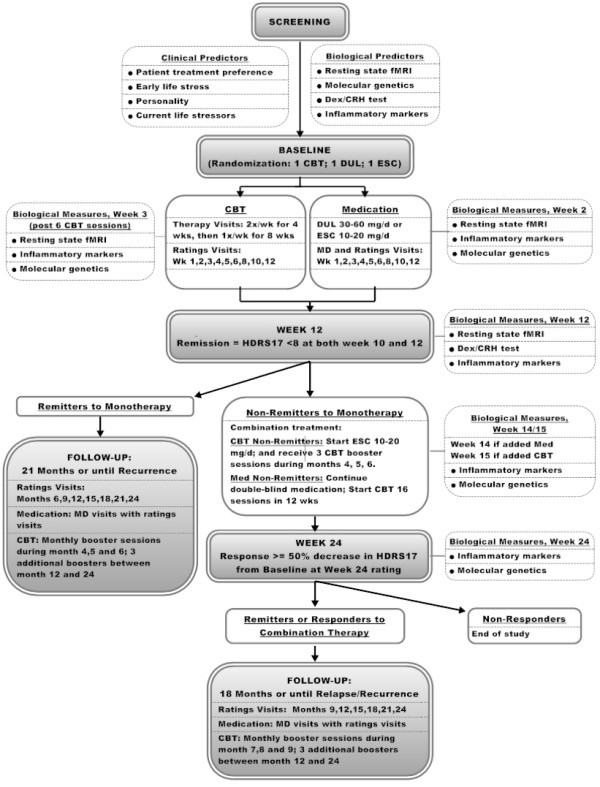
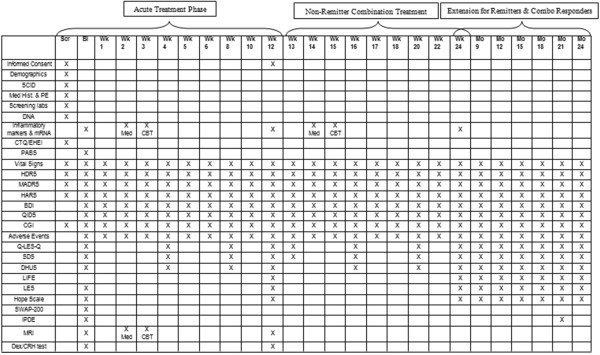
BACKGROUND: Limited controlled data exist to guide treatment choices for clinicians caring for patients with major depressive disorder (MDD). Although many putative predictors of treatment response have been reported, most were identified through retrospective analyses of existing datasets and very few have been replicated in a manner that can impact clinical practice. One major confound in previous studies examining predictors of treatment response is the patient's treatment history, which may affect both the predictor of interest and treatment outcomes. Moreover, prior treatment history provides an important source of selection bias, thereby limiting generalizability. Consequently, we initiated a randomized clinical trial designed to identify factors that moderate response to three treatments for MDD among patients never treated previously for the condition. METHODS/DESIGN: Treatment-naïve adults aged 18 to 65 years with moderate-to-severe, non-psychotic MDD are randomized equally to one of three 12-week treatment arms: (1) cognitive behavior therapy (CBT, 16 sessions); (2) duloxetine (30-60 mg/d); or (3) escitalopram (10-20 mg/d). Prior to randomization, patients undergo multiple assessments, including resting state functional magnetic resonance imaging (fMRI), immune markers, DNA and gene expression products, and dexamethasone-corticotropin-releasing hormone (Dex/CRH) testing. Prior to or shortly after randomization, patients also complete a comprehensive personality assessment. Repeat assessment of the biological measures (fMRI, immune markers, and gene expression products) occurs at an early time-point in treatment, and upon completion of 12-week treatment, when a second Dex/CRH test is also conducted. Patients remitting by the end of this acute treatment phase are then eligible to enter a 21-month follow-up phase, with quarterly visits to monitor for recurrence. Non-remitters are offered augmentation treatment for a second 12-week course of treatment, during which they receive a combination of CBT and antidepressant medication. Predictors of the primary outcome, remission, will be identified for overall and treatment-specific effects, and a statistical model incorporating multiple predictors will be developed to predict outcomes. DISCUSSION: The PReDICT study's evaluation of biological, psychological, and clinical factors that may differentially impact treatment outcomes represents a sizeable step toward developing personalized treatments for MDD. Identified predictors should help guide the selection of initial treatments, and identify those patients most vulnerable to recurrence, who thus warrant maintenance or combination treatments to achieve and maintain wellness.
Overview
The claims and statistics of this paper haven’t been checked yet.
Run the check — free, no account needed. It reads the open-access text and checks the sources it cites.
Integrity signals
Registry
Cites
Statistics
Figures
Verification
Claims the paper makes
The claims and statistics of this paper haven’t been checked yet.
Run the check — free, no account needed. It reads the open-access text and checks the sources it cites.
Claims other papers make about this one
Each is checked against this paper’s own text: does it say what the citing paper says it does?
In the citing paper
“They identify where an individual lies along a continuum of risk for illness progression (of the depressive illness or its underlying pathophysiology) and extension (additional complications beyond the syndrome of depression) 484,485 (Figure 8) and aid in reviewing the person's needs for intervention, including early intervention.”
From Time for united action on depression: a Lancet–World Psychiatric Association Commission (2022) · cites this paper as [484]
Self-check
Percentages, sums and reported differences re-computed from the paper’s own numbers.
The self-check needs the paper’s full text.
Citations
Cites
Statistical Power Analysis for the Behavioral Sciences
Muller, K. E., & Cohen, J. (1989) · Technometrics · doi:10.2307/1270020 · Cited by 99,603
Statistical power analysis for the behavioral sciences
Cohen, J. (1990) · Computers Environment and Urban Systems · doi:10.1016/0198-9715(90)90050-4 · Cited by 65,417
Regression shrinkage and selection via the lasso
Tibshirani, R. (1996) · Journal of the Royal Statistical Society Series B: Statistical Methodology · doi:10.1111/j.2517-6161.1996.tb02080.x · Cited by 51,482 · cited 1×
“phase will use various variable selection methods (for example, recursive partitioning [130,131]), as well as differ-”
An inventory for measuring depression
BECK, A. T. (1961) · Archives of General Psychiatry · doi:10.1001/archpsyc.1961.01710120031004 · Cited by 38,032 · cited 5×
“Abbreviations ACTH: Adrenocorticotropic hormone; AFSP: American Foundation for Suicide Prevention; AUC: Area under the curve; BDI: Beck Depression Inventory; BOLD: Blood oxygen level-dependent; BT: Behavioral therapy; CBT: Cognitive behavioral therapy; CGI-I: Clinical Global Impression of Improvement; CGI-S: Clinical…”
InfluentialClassification and Regression Trees.
Gordon, A. D., Breiman, L., Friedman, J. H., Olshen, R. A., & Stone, C. J. (1984) · Biometrics · doi:10.2307/2530946 · Cited by 23,867
Classification and Regression Trees.
Ryzin, J. V., Breiman, L., Friedman, J. H., Olshen, R. A., & Stone, C. J. (1986) · Journal of the American Statistical Association · doi:10.2307/2288003 · Cited by 21,030
Kessler, R. C., Berglund, P., Demler, O., Jin, R., Merikangas, K. R., & Walters, E. E. (2005) · Archives of General Psychiatry · doi:10.1001/archpsyc.62.6.593 · Cited by 20,391 · cited 1×
“females as males suffering from the disorder [1].”
A new depression scale designed to be sensitive to change
Montgomery, S. A., & Åsberg, M. (1979) · British Journal of Psychiatry · doi:10.1192/bjp.134.4.382 · Cited by 13,962 · cited 1×
“[52,53], Hamilton Anxiety Rating Scale (HARS) [54], and”
The assessment of anxiety states by rating
HAMILTON, M. (1959) · British Journal of Medical Psychology · doi:10.1111/j.2044-8341.1959.tb00467.x · Cited by 11,455 · cited 8×
“Abbreviations ACTH: Adrenocorticotropic hormone; AFSP: American Foundation for Suicide Prevention; AUC: Area under the curve; BDI: Beck Depression Inventory; BOLD: Blood oxygen level-dependent; BT: Behavioral therapy; CBT: Cognitive behavioral therapy; CGI-I: Clinical Global Impression of Improvement; CGI-S: Clinical…”
InfluentialCook, R. J., Dickens, B. M., & Fathalla, M. F. (2003) · Oxford University Press eBooks · doi:10.1093/acprof:oso/9780199241323.003.0025 · Cited by 10,825
Research works printed but not linked: 4
- National Committee for Quality Assurance: The State of Health Care Quality 2007. 2007, Washington, DC: National Committee for Quality Assurance, 20-21.
- First MB, Spitzer RL, Gibbon M, Williams JB: Structured Clinical Interview for DSM-IV Axis I Disorders-Patient Edition (SCID-I/P, Version 2.0). 1995, New York: Biometrics Research Department, New York State Psychiatric Institute
- Concepcion G, De la Cruz A: Structured Clinical Interview for DSM-IV-TR Axis I Disorders, Research Version, Patient Edition, (SCID-I/P), Spanish Translation. 2005, New York: Biometrics Research: New York State Psychiatric Institute
- Ritchie JC, Glover B, Ramsey C, Scott-Harrell P: A routine UPLC-MS//MS assay for the newer antidepressants. Ther Drug Monit. 2009, 31: 646-
Cited by
Sorted by citations
Time for united action on depression: a Lancet–World Psychiatric Association Commission
Herrman, H., Patel, V., Kieling, C., Berk, M., Buchweitz, C., Cuijpers, P., Furukawa, T. A., Kessler, R. C., Kohrt, B. A., Maj, M., et al. (2022) · The Lancet · doi:10.1016/s0140-6736(21)02141-3 · Cited by 1,104
Self-citationPsychological therapies for people with borderline personality disorder.
Stoffers-Winterling, J. M., Völlm, B. A., Rücker, G., Timmer, A., Huband, N., & Lieb, K. (2012) · Cochrane Database of Systematic Reviews · doi:10.1002/14651858.cd005652.pub2 · Cited by 895
Toward a Neuroimaging Treatment Selection Biomarker for Major Depressive Disorder
McGrath, C. L., Kelley, M. E., Holtzheimer, P. E., Dunlop, B. W., Craighead, W. E., Franco, A. R., Craddock, R. C., & Mayberg, H. S. (2013) · JAMA Psychiatry · doi:10.1001/jamapsychiatry.2013.143 · Cited by 561
Self-citationDeRubeis, R. J., Cohen, Z. D., Forand, N. R., Fournier, J. C., Gelfand, L. A., & Lorenzo-Luaces, L. (2014) · PLoS ONE · doi:10.1371/journal.pone.0083875 · Cited by 509
Treatment selection in depression.
Cohen, Z. D., & DeRubeis, R. J. (2018) · Annual Review of Clinical Psychology · doi:10.1146/annurev-clinpsy-050817-084746 · Cited by 435
Psychological therapies for people with borderline personality disorder
Storebø, O. J., Stoffers-Winterling, J. M., Völlm, B. A., Kongerslev, M. T., Mattivi, J. T., Jørgensen, M. S., Faltinsen, E., Todorovac, A., Sales, C. P., Callesen, H. E., et al. (2020) · Cochrane Database of Systematic Reviews · doi:10.1002/14651858.cd012955.pub2 · Cited by 450
Candidate biomarkers in psychiatric disorders: state of the field
Abi‐Dargham, A., Moeller, S. J., Ali, F., DeLorenzo, C., Domschke, K., Horga, G., Jutla, A., Kotov, R., Paulus, M. P., Rubio, J. M., et al. (2023) · World Psychiatry · doi:10.1002/wps.21078 · Cited by 421
Dunlop, B. W., Rajendra, J. K., Craighead, W. E., Kelley, M. E., McGrath, C. L., Choi, K. S., Kinkead, B., Nemeroff, C. B., & Mayberg, H. S. (2017) · American Journal of Psychiatry · doi:10.1176/appi.ajp.2016.16050518 · Cited by 342
“Studies The design of the Emory Predictors of Remission in Depression to Individual andCombinedTreatments (PReDICT) study has been published previously (39), and the clinical results of the trial are presented elsewhere (10).”
Self-citationTrivedi, M. H., McGrath, P. J., Fava, M., Parsey, R. V., Kurian, B. T., Phillips, M. L., Oquendo, M. A., Bruder, G., Pizzagalli, D., Toups, M., et al. (2016) · Journal of Psychiatric Research · doi:10.1016/j.jpsychires.2016.03.001 · Cited by 286
Syed, S. A., Beurel, E., Loewenstein, D., Lowell, J. A., Craighead, W. E., Dunlop, B. W., Mayberg, H. S., Dhabhar, F. S., Dietrich, W. D., Keane, R. W., et al. (2018) · Neuron · doi:10.1016/j.neuron.2018.08.001 · Cited by 214
Self-citationUsing patient self-reports to study heterogeneity of treatment effects in major depressive disorder
Kessler, R. C., van Loo, H. M., Wardenaar, K. J., Bossarte, R. M., Brenner, L. A., Ebert, D. D., de Jonge, P., Nierenberg, A. A., Rosellini, A. J., Sampson, N. A., et al. (2016) · Epidemiology and Psychiatric Sciences · doi:10.1017/s2045796016000020 · Cited by 193
Next-Generation Treatments for Mental Disorders
Insel, T. R. (2012) · Science Translational Medicine · doi:10.1126/scitranslmed.3004873 · Cited by 164
Treating major depression with yoga: A prospective, randomized, controlled pilot trial
Prathikanti, S., Rivera, R., Cochran, A., Tungol, J. G., Fayazmanesh, N., & Weinmann, E. (2017) · PLOS ONE · doi:10.1371/journal.pone.0173869 · Cited by 157
Luedtke, A., Sadikova, E., & Kessler, R. C. (2019) · Clinical Psychological Science · doi:10.1177/2167702618815466 · Cited by 143
Amin, N., Liu, J., Bonnechère, B., MahmoudianDehkordi, S., Arnold, M., Batra, R., Chiou, Y., Fernandes, M., Ikram, M. A., Kraaij, R., et al. (2023) · JAMA Psychiatry · doi:10.1001/jamapsychiatry.2023.0685 · Cited by 155
Dunlop, B. W., Kelley, M. E., Aponte‐Rivera, V., Mletzko, T., Kinkead, B. L., Ritchie, J., Nemeroff, C. B., Craighead, W. E., Mayberg, H. S., & for the PReDICT Team (2017) · American Journal of Psychiatry · doi:10.1176/appi.ajp.2016.16050517 · Cited by 148
Self-citationCraighead, W. E., & Dunlop, B. W. (2011) · Annual Review of Psychology · doi:10.1146/annurev.psych.121208.131653 · Cited by 130
Self-citationMetabolomic and inflammatory signatures of symptom dimensions in major depression
Brydges, C. R., Bhattacharyya, S., Dehkordi, S. M., Milaneschi, Y., Penninx, B., Jansen, R., Kristal, B. S., Han, X., Arnold, M., Kastenmüller, G., et al. (2022) · Brain, Behavior, and Immunity · doi:10.1016/j.bbi.2022.02.003 · Cited by 108
Self-citationGorka, S. M., Young, C. B., Klumpp, H., Kennedy, A. E., Francis, J., Ajilore, O., Langenecker, S. A., Shankman, S. A., Craske, M. G., Stein, M. B., et al. (2019) · Neuropsychopharmacology · doi:10.1038/s41386-019-0407-7 · Cited by 104
Brydges, C. R., Fiehn, O., Mayberg, H. S., Schreiber, H. L., Dehkordi, S. M., Bhattacharyya, S., Cha, J., Choi, K. S., Craighead, W. E., Krishnan, R. R., et al. (2021) · Scientific Reports · doi:10.1038/s41598-021-99845-1 · Cited by 104
Self-citationClinical classification in mental health at the cross-roads: which direction next?
Hickie, I. B., Scott, J. L., Hermens, D. F., Scott, E. M., Naismith, S. L., Guastella, A. J., Glozier, N., & McGorry, P. D. (2013) · BMC Medicine · doi:10.1186/1741-7015-11-125 · Cited by 88
López, J. P., Brivio, E., Santambrogio, A., Donno, C. D., Kos, A., Peters, M., Rost, N., Czamara, D., Brückl, T. M., Roeh, S., et al. (2021) · Science Advances · doi:10.1126/sciadv.abe4497 · Cited by 85
Self-citationNeuroimaging for psychotherapy research: current trends.
Weingarten, C. P., & Strauman, T. J. (2015) · Psychotherapy Research · doi:10.1080/10503307.2014.883088 · Cited by 81
Kim, N., Huh, H.-J., & Chae, J. (2015) · Comprehensive Psychiatry · doi:10.1016/j.comppsych.2015.04.009 · Cited by 83
Biomarkers Predicting Antidepressant Treatment Response: How Can We Advance the Field?
Labermaier, C., Masana, M., & Müller, M. B. (2013) · Disease Markers · doi:10.1155/2013/984845 · Cited by 80
MahmoudianDehkordi, S., Bhattacharyya, S., Brydges, C. R., Jia, W., Fiehn, O., Rush, A. J., Dunlop, B. W., & Kaddurah-Daouk, R. (2022) · Frontiers in Neuroscience · doi:10.3389/fnins.2022.937906 · Cited by 75
Biomarkers for Psychiatric Disorders: Where Are We Standing?
Martins‐de‐Souza, D. (2013) · Disease Markers · doi:10.1155/2013/321071 · Cited by 78
Dunlop, B. W., LoParo, D., Kinkead, B. L., Mletzko, T., Cole, S. P., Nemeroff, C. B., Mayberg, H. S., & Craighead, W. E. (2019) · American Journal of Psychiatry · doi:10.1176/appi.ajp.2018.18091075 · Cited by 69
“The design and results of the acute phase treatment of the PReDICT study have been published (23, 24).”
Self-citationThe neuroscience of depression: Implications for assessment and intervention
Singh, M. K., & Gotlib, I. H. (2014) · Behaviour Research and Therapy · doi:10.1016/j.brat.2014.08.008 · Cited by 75
Reconciling Variable Findings of White Matter Integrity in Major Depressive Disorder
Choi, K. S., Holtzheimer, P. E., Franco, A. R., Kelley, M. E., Dunlop, B. W., Hu, X. P., & Mayberg, H. S. (2013) · Neuropsychopharmacology · doi:10.1038/npp.2013.345 · Cited by 69
Self-citationConnectome signatures of neurocognitive abnormalities in euthymic bipolar I disorder
Ajilore, O., Vizueta, N., Walshaw, P. D., Zhan, L., Leow, A., & Altshuler, L. L. (2015) · Journal of Psychiatric Research · doi:10.1016/j.jpsychires.2015.05.017 · Cited by 63
“Such major limitations not only exist in our understanding of bipolar disorder, but also in mood disorders in general (to address such limitations in MDD, e.g., the PReDICT trial is recently launched to identify predictors of treatment response and future recurrence) (Dunlop et al., 2012).”
Dunlop, B. W., Cha, J., Choi, K. S., Rajendra, J. K., Nemeroff, C. B., Craighead, W. E., & Mayberg, H. S. (2023) · American Journal of Psychiatry · doi:10.1176/appi.ajp.21070727 · Cited by 56
Self-citationCristancho, P., Lenard, E., Lenze, E. J., Miller, J. P., Brown, P. J., Roose, S. P., Montes-Garcia, C., Blumberger, D. M., Mulsant, B. H., Lavretsky, H., et al. (2019) · The American Journal of Geriatric Psychiatry · doi:10.1016/j.jagp.2019.04.005 · Cited by 54
Walsh, E. C., Carl, H., Eisenlohr-Moul, T. A., Minkel, J. D., Crowther, A., Moore, T. M., Gibbs, D. E., Petty, C., Bizzell, J., Smoski, M. J., et al. (2016) · Neuropsychopharmacology · doi:10.1038/npp.2016.179 · Cited by 56
Circulating metabolites modulated by diet are associated with depression
van der Spek, A., Stewart, I. D., Kühnel, B., Pietzner, M., Alshehri, T., Gauß, K. F., Hysi, P. G., MahmoudianDehkordi, S., Heinken, A., Luik, A. I., et al. (2023) · Molecular Psychiatry · doi:10.1038/s41380-023-02180-2 · Cited by 60
Self-citationConnectome-based models can predict early symptom improvement in major depressive disorder
Ju, Y., Horien, C. L., Chen, W., Guo, W., Lu, X., Sun, J., Dong, Q., Liu, B., Liu, J., Yan, D., et al. (2020) · Journal of Affective Disorders · doi:10.1016/j.jad.2020.04.028 · Cited by 51
O’Connell, C. P., Goldstein‐Piekarski, A. N., Nemeroff, C. B., Schatzberg, A. F., DeBattista, C., Carrillo‐Roa, T., Binder, E. B., Dunlop, B. W., Craighead, W. E., Mayberg, H. S., et al. (2017) · American Journal of Psychiatry · doi:10.1176/appi.ajp.2017.17020172 · Cited by 52
“The SNPs that were significantly associated with treatment response in the initial iSPOT-D cohort were then validated using an independent sample of patients from the Predictors of Remission in Depression to Individual and Combined Treatments (PReDICT) trial (Dunlop et al., 2012).”
Self-citationKappelmann, N., Rein, M., Fietz, J., Mayberg, H. S., Craighead, W. E., Dunlop, B. W., Nemeroff, C. B., Keller, M. B., Klein, D. N., Arnow, B. A., et al. (2020) · BMC Medicine · doi:10.1186/s12916-020-01623-9 · Cited by 51
Self-citationCombined effects of genotype and childhood adversity shape variability of DNA methylation across age
Czamara, D., Tissink, E., Tuhkanen, J., Martins, J., Awaloff, Y., Drake, A. J., Khulan, B., Palotie, A. V., Winter, S., Nemeroff, C. B., et al. (2021) · Translational Psychiatry · doi:10.1038/s41398-020-01147-z · Cited by 48
Self-citationAhmed, A. T., Frye, M. A., Rush, A. J., Biernacka, J. M., Craighead, W. E., McDonald, W. M., Bobo, W. V., Riva‐Posse, P., Tye, S. J., Mayberg, H. S., et al. (2018) · Journal of Affective Disorders · doi:10.1016/j.jad.2018.05.005 · Cited by 44
Self-citationKelley, M. E., Dunlop, B. W., Nemeroff, C. B., Lori, A., Carrillo‐Roa, T., Binder, E. B., Kutner, M., Aponte‐Rivera, V., Craighead, W. E., & Mayberg, H. S. (2018) · Depression and Anxiety · doi:10.1002/da.22832 · Cited by 48
Self-citationFu, C. H. Y., Antoniades, M., Erus, G., García, J., Yong Fan, A., Arnone, D., Arnott, S. R., Chen, T., Choi, K. S., Fatt, C. C., et al. (2024) · Nature Mental Health · doi:10.1038/s44220-023-00187-w · Cited by 38
Self-citationBIOMARKER STUDIES AND THE FUTURE OF PERSONALIZED TREATMENT FOR DEPRESSION
Oquendo, M. A., McGrath, P. J., & Weissman, M. M. (2014) · Depression and Anxiety · doi:10.1002/da.22300 · Cited by 38
Neuroimaging for precision medicine in psychiatry
Williams, L. M., & Whitfield, S. (2024) · Neuropsychopharmacology · doi:10.1038/s41386-024-01917-z · Cited by 42
Somatic symptoms in treatment‐naïve Hispanic and non‐Hispanic patients with major depression
Dunlop, B. W., Still, S., LoParo, D., Aponte‐Rivera, V., Johnson, B. N., Schneider, R. L., Nemeroff, C. B., Mayberg, H. S., & Craighead, W. E. (2019) · Depression and Anxiety · doi:10.1002/da.22984 · Cited by 43
Self-citationTrivedi, M. H., Fatt, C. C., Jha, M. K., Cooper, C. M., Trombello, J. M., Mason, B. L., Hughes, J. L., Gadad, B. S., Czysz, A. H., Toll, R. T., et al. (2019) · Journal of Psychiatric Research · doi:10.1016/j.jpsychires.2019.12.004 · Cited by 36
Haddock, S. A., Weiler, L. M., Trump, L. J., & Henry, K. L. (2016) · Journal of Marital and Family Therapy · doi:10.1111/jmft.12184 · Cited by 44
Menke, A., Arloth, J., Best, J., Namendorf, C., Gerlach, T., Czamara, D., Lucae, S., Dunlop, B. W., Crowe, T. M., Garlow, S. J., et al. (2016) · Psychoneuroendocrinology · doi:10.1016/j.psyneuen.2016.04.003 · Cited by 35
Self-citationCarrillo‐Roa, T., Labermaier, C., Weber, P. C., Herzog, D. P., Lareau, C. A., Santarelli, S., Wagner, K. V., Rex‐Haffner, M., Harbich, D., Scharf, S. H., et al. (2017) · PLoS Biology · doi:10.1371/journal.pbio.2002690 · Cited by 42
Self-citationAponte‐Rivera, V., Dunlop, B. W., Ramirez, C. L., Kelley, M. E., Schneider, R. L., Blastos, B., Larson, J. C., Mercado, F., Mayberg, H. S., & Craighead, W. E. (2013) · Depression and Anxiety · doi:10.1002/da.22153 · Cited by 31
Self-citationFournier, J. C. J., Chase, H. W., Almeida, J., & Phillips, M. L. (2014) · PLoS ONE · doi:10.1371/journal.pone.0105169 · Cited by 31
Sundermann, B., Feder, S. C., Wersching, H., Teuber, A., Schwindt, W., Kugel, H., Heindel, W. L., Arolt, V., Berger, K., & Pfleiderer, B. (2016) · Journal of Neural Transmission · doi:10.1007/s00702-016-1673-8 · Cited by 34
Tai, H.-H., Cha, J., Vedaei, F., Dunlop, B. W., Craighead, W. E., Mayberg, H. S., & Choi, K. S. (2021) · Frontiers in Psychiatry · doi:10.3389/fpsyt.2021.718539 · Cited by 30
Self-citationBhattacharyya, S., Dunlop, B. W., MahmoudianDehkordi, S., Ahmed, A. T., Louie, G., Frye, M. A., Weinshilboum, R. M., Krishnan, R. R., Rush, A. J., Mayberg, H. S., et al. (2019) · Frontiers in Neuroscience · doi:10.3389/fnins.2019.00926 · Cited by 27
Self-citationERICH3: vesicular association and antidepressant treatment response
Liu, D., Zhuang, Y., Zhang, L., Gao, H., Neavin, D. R., Carrillo‐Roa, T., Wang, Y., Yu, J., Qin, S., Kim, D. C., et al. (2020) · Molecular Psychiatry · doi:10.1038/s41380-020-00940-y · Cited by 27
“The possible association between the ERICH3 rs11580409 SNP genotype and antidepressant treatment responses in the STAR*D [4], ISPC [9], PReDICT [31, 32], and PGRNAMPS [8, 33] studies was determined using logistic regression after adjusting for age, gender, and race.”
InfluentialSelf-citationLee, C. T., Palacios, J. E., Richards, D., Hanlon, A. K., Lynch, K., Harty, S., Claus, N., Swords, L., O’Keane, V., Stephan, K. E., et al. (2023) · BMC Psychiatry · doi:10.1186/s12888-022-04462-5 · Cited by 24
Behavioral activation for major depression in adolescents: Results from a pilot study.
Ritschel, L. A., Ramirez, C. L., Cooley, J. L., & Craighead, W. E. (2016) · Clinical Psychology Science and Practice · doi:10.1111/cpsp.12140 · Cited by 23
Self-citationPrediction of treatment outcomes in major depressive disorder
Dunlop, B. W. (2015) · Expert Review of Clinical Pharmacology · doi:10.1586/17512433.2015.1075390 · Cited by 22
Self-citationDunlop, B. W., Cha, J., Choi, K. S., Nemeroff, C. B., Craighead, W. E., & Mayberg, H. S. (2023) · Neuropsychopharmacology · doi:10.1038/s41386-023-01653-w · Cited by 22
Self-citationSelective Serotonin Reuptake Inhibitor Pharmaco-Omics: Mechanisms and Prediction
Nguyen, T. T. L., Liu, D., Ho, M., Athreya, A. P., & Weinshilboum, R. M. (2021) · Frontiers in Pharmacology · doi:10.3389/fphar.2020.614048 · Cited by 25
Fu, C. H. Y., Erus, G., Yong Fan, A., Antoniades, M., Arnone, D., Arnott, S. R., Chen, T., Choi, K. S., Fatt, C. C., Frey, B. N., et al. (2023) · BMC Psychiatry · doi:10.1186/s12888-022-04509-7 · Cited by 24
Self-citationKang, J., Bowman, F. D., Mayberg, H. S., & Liu, H. (2016) · NeuroImage · doi:10.1016/j.neuroimage.2016.06.042 · Cited by 23
Self-citationDunlop, B. W., Cole, S. P., Nemeroff, C. B., Mayberg, H. S., & Craighead, W. E. (2017) · Journal of Affective Disorders · doi:10.1016/j.jad.2017.12.035 · Cited by 20
“A uthor M anuscript A uthor M anuscript A uthor M anuscript A uthor M anuscript Abstract Background—Major depressive disorder (MDD) is a heterogeneous condition and individual patients are likely to be differentially responsive to specific treatments.”
InfluentialSelf-citationDunlop, B. W., Polychroniou, P. E., Rakofsky, J. J., Nemeroff, C. B., Craighead, W. E., & Mayberg, H. S. (2018) · Psychological Medicine · doi:10.1017/s0033291718002568 · Cited by 20
Self-citationPrompiengchai, S., & Dunlop, K. (2024) · Neuropsychopharmacology · doi:10.1038/s41386-024-01907-1 · Cited by 23
A Bayesian Hierarchical Framework for Modeling Brain Connectivity for Neuroimaging Data
Chen, S., Bowman, F. D., & Mayberg, H. S. (2015) · Biometrics · doi:10.1111/biom.12433 · Cited by 19
Self-citationToll-like receptor 4 methylation grade is linked to depressive symptom severity
Rasmusson, A. J., Gallwitz, M., Soltanabadi, B., Ciuculete, D. M., Mengel‐From, J., Christensen, K., Nygaard, M., Soerensen, M., Boström, A. E. D., Fredriksson, R., et al. (2021) · Translational Psychiatry · doi:10.1038/s41398-021-01481-w · Cited by 17
Self-citationPannu, A. S., & Goyal, R. K. (2024) · Current Drug Safety · doi:10.2174/0115748863301630240417071353 · Cited by 21
Recall accuracy for the symptoms of a major depressive episode among clinical trial participants
Dunlop, B. W., Granros, M., Lechner, A., Mletzko, T., Nemeroff, C. B., Mayberg, H. S., & Craighead, W. E. (2019) · Journal of Psychiatric Research · doi:10.1016/j.jpsychires.2019.03.008 · Cited by 16
Self-citationKennedy, J. C., Dunlop, B. W., Craighead, L. W., Nemeroff, C. B., Mayberg, H. S., & Craighead, W. E. (2018) · Journal of Consulting and Clinical Psychology · doi:10.1037/ccp0000279 · Cited by 19
Self-citationEvaluating the Strength of Structural Connectivity Underlying Brain Functional Networks
Kemmer, P. B., Wang, Y., Bowman, F. D., Mayberg, H. S., & Guo, Y. (2018) · Brain Connectivity · doi:10.1089/brain.2018.0615 · Cited by 18
Self-citationSchroeder, F. A., Chonde, D. B., Riley, M. M., Moseley, C. K., Granda, M. L., Wilson, C. M., Wagner, F. F., Zhang, Y., Gale, J. P., Holson, E. B., et al. (2013) · Neuroscience Letters · doi:10.1016/j.neulet.2013.06.016 · Cited by 14
Promising new pharmacological targets for depression: The search for efficacy
Tsugiyama, L. E., de Moraes, R. C. M., Moraes, Y. A. C., & de Oliveira, J. F. (2023) · Drug Discovery Today · doi:10.1016/j.drudis.2023.103804 · Cited by 14
Song, E. J., Tozzi, L., & Williams, L. M. (2024) · Biological Psychiatry · doi:10.1016/j.biopsych.2024.03.016 · Cited by 15
Polychroniou, P. E., Mayberg, H. S., Craighead, W. E., Rakofsky, J. J., Aponte‐Rivera, V., Haroon, E., & Dunlop, B. W. (2018) · Behavioral Sciences · doi:10.3390/bs8070064 · Cited by 13
Self-citationInvestigation of MORC1 DNA methylation as biomarker of early life stress and depressive symptoms
Thomas, M., Coope, A., Falkenberg, C., Dunlop, B. W., Czamara, D., Provençal, N., Craighead, W. E., Mayberg, H. S., Nemeroff, C. B., Binder, E. B., et al. (2019) · Journal of Psychiatric Research · doi:10.1016/j.jpsychires.2019.10.019 · Cited by 15
Self-citationLangenecker, S. A., Klumpp, H., Peters, A. T., Crane, N. A., DelDonno, S. R., Bessette, K. L., Ajilore, O., Leow, A., Shankman, S. A., Walker, S. J., et al. (2019) · Progress in Neuro-Psychopharmacology and Biological Psychiatry · doi:10.1016/j.pnpbp.2018.07.001 · Cited by 11
Prediction of individual patient outcomes to psychotherapy vs medication for major depression
LoParo, D., Dunlop, B. W., Nemeroff, C. B., Mayberg, H. S., & Craighead, W. E. (2025) · npj Mental Health Research · doi:10.1038/s44184-025-00119-9 · Cited by 13
Self-citationDunlop, B. W., McCabe, B., Eudicone, J. M., Sheehan, J. J., & Baker, R. A. (2014) · Human Psychopharmacology Clinical and Experimental · doi:10.1002/hup.2428 · Cited by 12
Self-citationOlder Adults' Perspectives on Clinical Research: A Focus Group and Survey Study
Lenze, E. J., Ramsey, A. T., Brown, P. J., Reynolds, C. F., Mulsant, B. H., Lavretsky, H., & Roose, S. P. (2016) · American Journal of Geriatric Psychiatry · doi:10.1016/j.jagp.2016.07.022 · Cited by 12
Getting Personalized: Brain Scan Biomarkers for Guiding Depression Interventions
Williams, L. M. (2017) · American Journal of Psychiatry · doi:10.1176/appi.ajp.2017.17030314 · Cited by 12
Assessing in-session rumination and its effects on CBT for depression
Kennedy, J. C., Dunlop, B. W., Craighead, L. W., Nemeroff, C. B., Mayberg, H. S., & Craighead, W. E. (2022) · Behaviour Research and Therapy · doi:10.1016/j.brat.2022.104209 · Cited by 11
Self-citationSalem, H., Huynh, T., Topolski, N., Mwangi, B., Trivedi, M. H., Soares, J. C., Rush, A. J., & Selvaraj, S. (2022) · Journal of Affective Disorders · doi:10.1016/j.jad.2022.12.076 · Cited by 12
Blom, J. M. C., Barisone, E., Bertolotti, M., Caprino, D., Cellini, M., Clerici, C. A., Colliva, C., Favara-Scacco, C., Giuseppe, S. D., Jankovic, M., et al. (2022) · Children · doi:10.3390/children9121878 · Cited by 11
Godlewska, B. R. (2020) · Current Behavioral Neuroscience Reports · doi:10.1007/s40473-020-00198-2 · Cited by 15
Cha, J., Raj, D., Choi, K. S., Rajendra, J. K., Nemeroff, C. B., Felger, J. C., Craighead, W. E., Mayberg, H. S., & Dunlop, B. W. (2025) · Biological Psychiatry · doi:10.1016/j.biopsych.2025.06.026 · Cited by 12
Self-citationBhattacharyya, S., MahmoudianDehkordi, S., Sniatynski, M. J., Belenky, M., Marur, V. R., Rush, A. J., Craighead, W. E., Mayberg, H. S., Dunlop, B. W., Kristal, B. S., et al. (2025) · Journal of Affective Disorders · doi:10.1016/j.jad.2025.01.064 · Cited by 8
Self-citationDeveloping Clinically Interpretable Neuroimaging Biotypes in Psychiatry
Ahn, J., Foland‐Ross, L. C., Akiki, T. J., Boyar, L., Wydler, I., Bostian, C. M., Zhang, X., Yang, H., Ellsay, A., Ma, E. W., et al. (2025) · Biological Psychiatry · doi:10.1016/j.biopsych.2025.08.019 · Cited by 11
“These findings are consistent with the PReDICT trial (63), in which remitters to behavioral therapy showed greater resting-state connectivity in networks tied to cognitive control (97).”
Gray, J. P., Manuello, J., Alexander‐Bloch, A. F., Leonardo, C. D., Franklin, C. G., Choi, K. S., Cauda, F., Costa, T., Blangero, J., Glahn, D. C., et al. (2022) · Neuroinformatics · doi:10.1007/s12021-022-09614-2 · Cited by 8
Self-citationThomas, P. J., Leow, A., Klumpp, H., Phan, K. L., & Ajilore, O. (2023) · Biological Psychiatry Cognitive Neuroscience and Neuroimaging · doi:10.1016/j.bpsc.2023.06.008 · Cited by 8
Thomas, P. J., Panchamukhi, S., Nathan, J., Francis, J., Langenecker, S. A., Gorka, S. M., Leow, A., Klumpp, H., Phan, K. L., & Ajilore, O. (2020) · Psychiatry Research Neuroimaging · doi:10.1016/j.pscychresns.2020.111064 · Cited by 7
Development of a Bayesian multimodal model to detect biomarkers in neuroimaging studies
Bhaumik, D. K., Wang, Y., Yen, P., & Ajilore, O. (2023) · Frontiers in Neuroimaging · doi:10.3389/fnimg.2023.1147508 · Cited by 7
Furman, B. W., Craighead, W. E., Mayberg, H. S., Mletzko, T., Nemeroff, C. B., & Dunlop, B. W. (2024) · Psychiatry Research · doi:10.1016/j.psychres.2024.115859 · Cited by 5
Self-citationRamos-Grille, I., Aragay, N., Valero, S., Garrido, G., Santacana, M., Guillamat, R., Vallès, V., & Gomà‐i‐Freixanet, M. (2020) · Current Psychology · doi:10.1007/s12144-020-01005-7 · Cited by 5
Biomarkers in Psychiatric Drug Development: From Precision Medicine to Novel Therapeutics
Carreon, R. L., Rivas-Grajales, A. M., Murphy, N., Mathew, S. J., & Jha, M. K. (2023) · Advances in neurobiology · doi:10.1007/978-3-031-21054-9_12 · Cited by 4
The Causes, Prevention and Treatment of Adolescent Depression: A Review
Li, J., Zhou, S., & Zhu, M. (2021) · Advances in Social Science, Education and Humanities Research/Advances in social science, education and humanities research · doi:10.2991/assehr.k.211220.009 · Cited by 4
Berg, J. M., Kennedy, J. C., Dunlop, B. W., Ramirez, C. L., Stewart, L. M., Nemeroff, C. B., Mayberg, H. S., & Craighead, W. E. (2017) · Personalized Medicine in Psychiatry · doi:10.1016/j.pmip.2016.12.005 · Cited by 4
Self-citationBrain Imaging and the Prediction of Treatment Outcomes in Mood and Anxiety Disorders
Leah, M., Klimes‐Dougan, B., & Kathryn, R. (2013) · InTech eBooks · doi:10.5772/55446 · Cited by 3
PSYCHOPHARMACOLOGY AND THE FUTURE OF PERSONALIZED TREATMENT
Nemeroff, C. B. (2014) · Depression and Anxiety · doi:10.1002/da.22303 · Cited by 5
Self-citationMahmoudianDehkordi, S., Bhattacharyya, S., Brydges, C. R., Jia, W. P., Fiehn, O., Rush, A. J., Dunlop, B. W., & Kaddurah-Daouk, R. F. (2022) · bioRxiv (Cold Spring Harbor Laboratory) · doi:10.1101/2022.04.04.485514 · Cited by 4
Self-citation
Metadata
- Authors
- Dunlop, B. W., Binder, E. B., Cubells, J. F., Goodman, M. M., Kelley, M. E., Kinkead, B., Kutner, M., Nemeroff, C. B., Newport, D. J., Owens, M. J., Pace, T. W. W., Ritchie, J. C., Rivera, V. A., Westen, D., Craighead, W. E., & Mayberg, H. S.
- Affiliations
- Emory University (US)
- University of Miami (US)
- Corresponding author
- Dunlop, Boadie W
- ORCID
- Venue
- Trials
- Published
- 2012-07-09
- Volume
- 13
- Issue
- 1
- Pages
- 106-106
- ISSN
- 1745-6215 (ISSN-L)
- PMC
- PMC3539869
- OpenAlex
- W2140592967
- Cited by
- 136
- References
- 156
- Citations by year
- 2025: 8 · 2024: 10 · 2023: 15 · 2022: 12 · 2021: 9 · 2020: 18 · 2019: 12 · 2018: 10 · 2017: 8 · 2016: 9 · 2015: 5 · 2014: 7 · 2013: 10 · 2012: 2
- FWCI
- 5.60
- Type
- journal article
- Language
- en
- Open access
- gold
- doi.org
- Licence
- Locations
- Trials (publishedVersion, cc-by)
- PubMed Central (publishedVersion, cc-by)
- PubMed (publishedVersion)
- DOAJ (DOAJ: Directory of Open Access Journals) (submittedVersion)
- MPG.PuRe (Max Planck Society) (submittedVersion)
- Funders
- Eli Lilly and Company
- National Institutes of Health (5r01mh080880-05, UL1TR000454, RR0039, MH077083, RR025008, MH080880, RO1 MH080880)
- National Institute of Mental Health (K23MH086690, R01-MH080880, P50MH077083)
- National Center for Research Resources (UL1RR025008, RR025008, M01RR000039)
- National Center for Advancing Translational Sciences
- Topics
- Health Sciences › Medicine › Pharmacology (medical) › Treatment of Major Depression
- Social Sciences › Psychology › Experimental and Cognitive Psychology › Anxiety, Depression, Psychometrics, Treatment, Cognitive Processes
- Social Sciences › Psychology › Clinical Psychology › Psychotherapy Techniques and Applications
- Keywords
- major depressive disorder, predictors of treatment response, remission, cognitive behavioral therapy, duloxetine, escitalopram, treatment-naive patients, treatment selection, personalized treatment, recurrence, dexamethasone/corticotropin-releasing hormone test, resting-state fMRI, immunological markers, gene expression, personality, combination therapy, antidepressant augmentation
- MeSH terms
- Duloxetine Hydrochloride, Adolescent, Adult, Aged, Antidepressive Agents, Brain, Major Depressive Disorder, Drug Therapy, Combination, Female, Genetic Testing, Humans, Magnetic Resonance Imaging, Male, Middle Aged, Personality, Predictive Value of Tests, Remission Induction, Research Design, Thiophenes, Citalopram, Biomarkers, Treatment Outcome, Antidepressive Agents, Second-Generation, Young Adult
About these checks
Registry, retraction, Cites and statistics results are computed, not judged, with one exception: a printed reference that no index lists is read once by a model before it counts as a citation error. Claims are extracted by a model and kept only when their quote appears verbatim in the text; each cited source is then checked, with a model’s help, for whether it says what the claim relies on. Those verdicts can be wrong — read the claim’s quote and the cited source before relying on one.
Statistics and arithmetic are recomputed, not judged.
Confidence bands are shown only for fields calibrated on our annotated test set. None is calibrated yet, so no band is shown.
What counts as a claim ›How we measure confidence ›How we check this ›
Are you an author, or do you see a problem with this page? Request a review
