

The DOI matches its Crossref record; 154 of the 156 references it cites were found in a registry or an index.
Predictors of remission in depression to individual and combined treatments (PReDICT): study protocol for a randomized controlled trial
Open accessAbstract
BACKGROUND: Limited controlled data exist to guide treatment choices for clinicians caring for patients with major depressive disorder (MDD). Although many putative predictors of treatment response have been reported, most were identified through retrospective analyses of existing datasets and very few have been replicated in a manner that can impact clinical practice. One major confound in previous studies examining predictors of treatment response is the patient's treatment history, which may affect both the predictor of interest and treatment outcomes. Moreover, prior treatment history provides an important source of selection bias, thereby limiting generalizability. Consequently, we initiated a randomized clinical trial designed to identify factors that moderate response to three treatments for MDD among patients never treated previously for the condition. METHODS/DESIGN: Treatment-naïve adults aged 18 to 65 years with moderate-to-severe, non-psychotic MDD are randomized equally to one of three 12-week treatment arms: (1) cognitive behavior therapy (CBT, 16 sessions); (2) duloxetine (30-60 mg/d); or (3) escitalopram (10-20 mg/d). Prior to randomization, patients undergo multiple assessments, including resting state functional magnetic resonance imaging (fMRI), immune markers, DNA and gene expression products, and dexamethasone-corticotropin-releasing hormone (Dex/CRH) testing. Prior to or shortly after randomization, patients also complete a comprehensive personality assessment. Repeat assessment of the biological measures (fMRI, immune markers, and gene expression products) occurs at an early time-point in treatment, and upon completion of 12-week treatment, when a second Dex/CRH test is also conducted. Patients remitting by the end of this acute treatment phase are then eligible to enter a 21-month follow-up phase, with quarterly visits to monitor for recurrence. Non-remitters are offered augmentation treatment for a second 12-week course of treatment, during which they receive a combination of CBT and antidepressant medication. Predictors of the primary outcome, remission, will be identified for overall and treatment-specific effects, and a statistical model incorporating multiple predictors will be developed to predict outcomes. DISCUSSION: The PReDICT study's evaluation of biological, psychological, and clinical factors that may differentially impact treatment outcomes represents a sizeable step toward developing personalized treatments for MDD. Identified predictors should help guide the selection of initial treatments, and identify those patients most vulnerable to recurrence, who thus warrant maintenance or combination treatments to achieve and maintain wellness.
Overview
The claims and statistics of this paper haven’t been checked yet.
Run the check — free, no account needed. It reads the open-access text and checks the sources it cites.
Integrity signals
Registry
Cites
Statistics
Figures
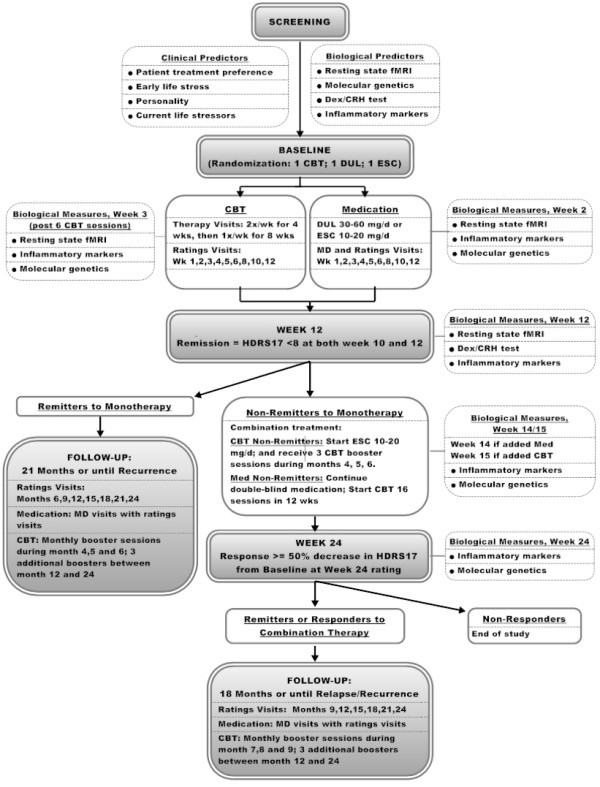
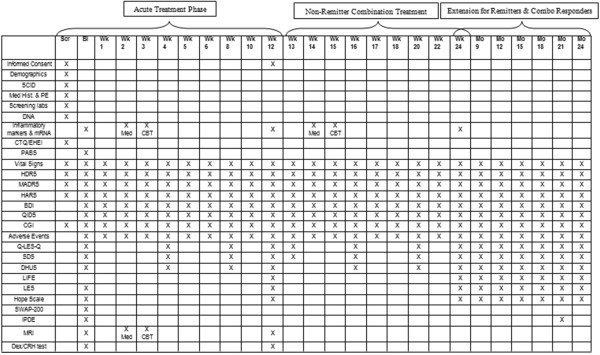
Verification
Claims the paper makes
The claims and statistics of this paper haven’t been checked yet.
Run the check — free, no account needed. It reads the open-access text and checks the sources it cites.
Claims other papers make about this one
Each is checked against this paper’s own text: does it say what the citing paper says it does?
In the citing paper
“They identify where an individual lies along a continuum of risk for illness progression (of the depressive illness or its underlying pathophysiology) and extension (additional complications beyond the syndrome of depression) 484,485 (Figure 8) and aid in reviewing the person's needs for intervention, including early intervention.”
From Time for united action on depression: a Lancet–World Psychiatric Association Commission (2022) · cites this paper as [484]
Self-check
Percentages, sums and reported differences re-computed from the paper’s own numbers.
The self-check needs the paper’s full text.
Citations
Cites
Statistical Power Analysis for the Behavioral Sciences
Muller, K. E., & Cohen, J. (1989) · Technometrics · doi:10.2307/1270020 · Cited by 99,603
Statistical power analysis for the behavioral sciences
Cohen, J. (1990) · Computers Environment and Urban Systems · doi:10.1016/0198-9715(90)90050-4 · Cited by 65,417
Regression shrinkage and selection via the lasso
Tibshirani, R. (1996) · Journal of the Royal Statistical Society Series B: Statistical Methodology · doi:10.1111/j.2517-6161.1996.tb02080.x · Cited by 51,482 · cited 1×
“phase will use various variable selection methods (for example, recursive partitioning [130,131]), as well as differ-”
An inventory for measuring depression
BECK, A. T. (1961) · Archives of General Psychiatry · doi:10.1001/archpsyc.1961.01710120031004 · Cited by 38,032 · cited 5×
“Abbreviations ACTH: Adrenocorticotropic hormone; AFSP: American Foundation for Suicide Prevention; AUC: Area under the curve; BDI: Beck Depression Inventory; BOLD: Blood oxygen level-dependent; BT: Behavioral therapy; CBT: Cognitive behavioral therapy; CGI-I: Clinical Global Impression of Improvement; CGI-S: Clinical…”
InfluentialClassification and Regression Trees.
Gordon, A. D., Breiman, L., Friedman, J. H., Olshen, R. A., & Stone, C. J. (1984) · Biometrics · doi:10.2307/2530946 · Cited by 23,867
Classification and Regression Trees.
Ryzin, J. V., Breiman, L., Friedman, J. H., Olshen, R. A., & Stone, C. J. (1986) · Journal of the American Statistical Association · doi:10.2307/2288003 · Cited by 21,030
Kessler, R. C., Berglund, P., Demler, O., Jin, R., Merikangas, K. R., & Walters, E. E. (2005) · Archives of General Psychiatry · doi:10.1001/archpsyc.62.6.593 · Cited by 20,391 · cited 1×
“females as males suffering from the disorder [1].”
A new depression scale designed to be sensitive to change
Montgomery, S. A., & Åsberg, M. (1979) · British Journal of Psychiatry · doi:10.1192/bjp.134.4.382 · Cited by 13,962 · cited 1×
“[52,53], Hamilton Anxiety Rating Scale (HARS) [54], and”
The assessment of anxiety states by rating
HAMILTON, M. (1959) · British Journal of Medical Psychology · doi:10.1111/j.2044-8341.1959.tb00467.x · Cited by 11,455 · cited 8×
“Abbreviations ACTH: Adrenocorticotropic hormone; AFSP: American Foundation for Suicide Prevention; AUC: Area under the curve; BDI: Beck Depression Inventory; BOLD: Blood oxygen level-dependent; BT: Behavioral therapy; CBT: Cognitive behavioral therapy; CGI-I: Clinical Global Impression of Improvement; CGI-S: Clinical…”
InfluentialCook, R. J., Dickens, B. M., & Fathalla, M. F. (2003) · Oxford University Press eBooks · doi:10.1093/acprof:oso/9780199241323.003.0025 · Cited by 10,825
Cognitive Therapy for Depression
(2012) · PsycEXTRA Dataset · doi:10.1037/e675542012-001 · Cited by 9,678
Voxel-Based Morphometry—The Methods
Ashburner, J., & Friston, K. J. (2000) · NeuroImage · doi:10.1006/nimg.2000.0582 · Cited by 8,676 · cited 1×
“The anatomic imaging will be conducted for anatomic reference in fMRI data analysis and volumetric analysis [85].”
Molecular Mechanisms of Depression: Perspectives on New Treatment Strategies
Lang, U. E., & Borgwardt, S. (2013) · Cellular Physiology and Biochemistry · doi:10.1159/000350094 · Cited by 8,526
Development of a Rating Scale for Primary Depressive Illness
Hamilton, M. (1967) · British Journal of Social and Clinical Psychology · doi:10.1111/j.2044-8260.1967.tb00530.x · Cited by 8,410 · cited 1×
“items [49,50] using a structured interview guide [51], Montgomery-Asberg Depression Rating Scale (MADRS)”
Selective Cortical Undercutting As a Means of Modifying and Studying Frontal Lobe Function in Man
Scoville, W. B. (1949) · Journal of neurosurgery · doi:10.3171/jns.1949.6.1.0065 · Cited by 7,374
Pencina, M. J., D' Agostino, R. B., D' Agostino, R. B., & Vasan, R. S. (2008) · Statistics in Medicine · doi:10.1002/sim.2929 · Cited by 6,493 · cited 1×
“C statistic or ROC [132], net reclassification improvement [133]), to determine the best set of predictors that are”
Functional connectivity in the resting brain: a network analysis of the default mode hypothesis
Greicius, M. D., Krasnow, B., Reiss, A. L., & Menon, V. (2003) · Proceedings of the National Academy of Sciences · doi:10.1073/pnas.0135058100 · Cited by 6,358 · cited 1×
“Functional magnetic resonance imaging Recent developments in image acquisition and data analysis now suggest that resting state studies can be reliably acquired using blood oxygen level-dependent (BOLD) fMRI [77-79].”
A Meta-Analysis of Cytokines in Major Depression
Dowlati, Y., Herrmann, N., Swardfager, W., Liu, H., Sham, L., Reim, E. K., & Lanctôt, K. L. (2010) · Biological Psychiatry · doi:10.1016/j.biopsych.2009.09.033 · Cited by 4,729
Cognitive Therapy of Depression
HOLLON, S. D., & BECK, A. T. (1979) · Cognitive-Behavioral Interventions · doi:10.1016/b978-0-12-404480-7.50012-5 · Cited by 4,685
Trivedi, M. H., Rush, A. J., Wisniewski, S. R., Nierenberg, A. A., Warden, D., Ritz, L., Norquist, G., Howland, R. H., Lebowitz, B., McGrath, P. J., et al. (2006) · American Journal of Psychiatry · doi:10.1176/appi.ajp.163.1.28 · Cited by 3,879
Rush, A. J., Trivedi, M. H., Ibrahim, H. M., Carmody, T. J., Arnow, B., Klein, D. N., Markowitz, J. C., Ninan, P. T., Kornstein, S., Manber, R., et al. (2003) · Biological Psychiatry · doi:10.1016/s0006-3223(02)01866-8 · Cited by 3,829
The will and the ways: Development and validation of an individual-differences measure of hope.
Snyder, C. R., Harris, C., Anderson, J. R., Holleran, S. A., Irving, L. M., Sigmon, S. T., Yoshinobu, L., Gibb, J., Langelle, C., & Harney, P. (1991) · Journal of Personality and Social Psychology · doi:10.1037/0022-3514.60.4.570 · Cited by 3,774 · cited 1×
“The self-report Goals scale [125] and Combined Hassles and Uplifts scale [126] assess current levels of hopelessness and frustration and are collected at baseline and at intervals throughout the acute and follow-up phases.”
Regression Shrinkage and Selection via The Lasso: A Retrospective
Tibshirani, R. J. (2011) · Journal of the Royal Statistical Society Series B (Statistical Methodology) · doi:10.1111/j.1467-9868.2011.00771.x · Cited by 3,601
Investigations into resting-state connectivity using independent component analysis
Beckmann, C. F., DeLuca, M., Devlin, J. T., & Smith, S. M. (2005) · Philosophical Transactions of the Royal Society B: Biological Sciences · doi:10.1098/rstb.2005.1634 · Cited by 3,398
Complete genome sequence of the model actinomycete Streptomyces coelicolor A3(2)
Bentley, S. D., Chater, K. F., Cerdeño-Tárraga, A. M., Challis, G. L., Thomson, N. R., James, K., Harris, D. E., Quail, M. A., Kieser, H. M., Harper, D., et al. (2002) · Nature · doi:10.1038/417141a · Cited by 3,226
The TIMI Risk Score for Unstable Angina/Non–ST Elevation MI
Antman, E. M., Cohen, M. C., Bernink, P. J. L. M., McCabe, C. H., Horacek, T., Papuchis, G., Mautner, B., Corbalán, R., Radley, D. R., & Braunwald, E. (2000) · JAMA · doi:10.1001/jama.284.7.835 · Cited by 3,221 · cited 1×
“as well as those who suffer a recurrence [129].”
Cytokines sing the blues: inflammation and the pathogenesis of depression
Raison, C. L., Capuron, L., & Miller, A. H. (2006) · Trends in Immunology · doi:10.1016/j.it.2005.11.006 · Cited by 3,009 · cited 1×
“Cytokines appear capable of inhibiting glucocorticoid receptor functioning [112] and of diminishing CNS serotonin signaling capacity by reducing tryptophan bioavailability and by increasing presynaptic serotonin reuptake activity [113,114].”
Assessing the impact of life changes: Development of the Life Experiences Survey.
Sarason, I. G., Johnson, J. H., & Siegel, J. M. (1978) · Journal of Consulting and Clinical Psychology · doi:10.1037/0022-006x.46.5.932 · Cited by 2,788 · cited 4×
“BDI, Beck Depression Inventory; CGI, Clinical Global Impression; CTQ, Childhood Trauma Questionnaire: Dex/CRH, Dexamethasone Corticotropin Releasing Hormone test; DHUS, Daily Hassles and Uplifts Scale; DNA, Deoxyribonucleic acid; EHEI, Early Home Environment Interview; HARS, Hamilton Anxiety Rating Scale; HDRS, Hamilt…”
InfluentialAssociations of depression with C-reactive protein, IL-1, and IL-6: a meta-analysis.
Howren, M. B., Lamkin, D. M., & Suls, J. (2009) · Psychosomatic Medicine · doi:10.1097/psy.0b013e3181907c1b · Cited by 2,766 · cited 1×
“acute phase reactants, especially C-reactive protein (CRP) [103-105].”
Drevets, W. C., Price, J. L., & Furey, M. L. (2008) · Brain Structure and Function · doi:10.1007/s00429-008-0189-x · Cited by 2,241 · cited 3×
“Imaging predictors have included pre-treatment patterns of regional glucose metabolism and blood flow measured with positron emission tomography (PET) [36], as well as structural and functional magnetic resonance imaging (fMRI) studies [37].”
Greicius, M. D., Flores, B. H., Menon, V., Glover, G. H., Solvason, H. B., Kenna, H., Reiss, A. L., & Schatzberg, A. F. (2007) · Biological Psychiatry · doi:10.1016/j.biopsych.2006.09.020 · Cited by 2,214 · cited 1×
“Using such methods, decreased low-frequency correlations have been reported in depression [80-82].”
The Corticosteroid Receptor Hypothesis of Depression
Holsboer, F. (2000) · Neuropsychopharmacology · doi:10.1016/s0893-133x(00)00159-7 · Cited by 2,181 · cited 1×
“Reduced GR sensitivity diminishes the ability of dexamethasone to suppress the HPA axis at the level of the pituitary, and it also reduces the inhibition of CRH and arginine vasopressin release from the paraventricular nuclei of the hypothalamus, consequently enhancing the stimulatory effects of the exogenously admini…”
Wilamowska (2010) · doi:10.1001/archpsyc.1988.01800320058007 · Cited by 2,115 · cited 1×
“items [49,50] using a structured interview guide [51], Montgomery-Asberg Depression Rating Scale (MADRS)”
Frank, E. (1991) · Archives of General Psychiatry · doi:10.1001/archpsyc.1991.01810330075011 · Cited by 1,959 · cited 1×
“Although it is widely considered that current interventions benefit approximately 60% of MDD patients, only about 30% to 40% of patients show full remission of their symptoms as defined by the MacArthur criteria (for example, a 17-item Hamilton Depression Rating Scale (HDRS) score <8) [14,15].”
(1993) · PubMed · Cited by 1,900
Presentation of multivariate data for clinical use: The Framingham Study risk score functions
SULLIVAN, L. M., Massaro, J. M., & D’Agostino, R. B. (2004) · Statistics in Medicine · doi:10.1002/sim.1742 · Cited by 1,756 · cited 1×
“The building of the prognostic model will use established techniques [134] to cre-”
Pine, D. S., Cohen, P., Gurley, D., Brook, J., & Ma, Y. (1998) · Archives of General Psychiatry · doi:10.1001/archpsyc.55.1.56 · Cited by 1,753 · cited 1×
“The initial onset of MDD occurs most frequently between the ages of 15 years and 29 years, and recent studies have found that approximately 50% of teenagers who are diagnosed with MDD experience a second episode by the age of 25 years [4,5].”
Cipriani, A., Furukawa, T. A., Salanti, G., Geddes, J. R., Higgins, J. P., Churchill, R., Watanabe, N., Nakagawa, A., Omori, I. M., McGuire, H., et al. (2009) · The Lancet · doi:10.1016/s0140-6736(09)60046-5 · Cited by 1,654 · cited 1×
“[69,70].”
Keller, M. B. (1987) · Archives of General Psychiatry · doi:10.1001/archpsyc.1987.01800180050009 · Cited by 1,643 · cited 5×
“BDI, Beck Depression Inventory; CGI, Clinical Global Impression; CTQ, Childhood Trauma Questionnaire: Dex/CRH, Dexamethasone Corticotropin Releasing Hormone test; DHUS, Daily Hassles and Uplifts Scale; DNA, Deoxyribonucleic acid; EHEI, Early Home Environment Interview; HARS, Hamilton Anxiety Rating Scale; HDRS, Hamilt…”
InfluentialThe impact of daily stress on health and mood: psychological and social resources as mediators
DeLongis, A., Folkman, S., & Lazarus, R. S. (1988) · Journal of Personality and Social Psychology · doi:10.1037/0022-3514.54.3.486 · Cited by 1,621 · cited 1×
“The self-report Goals scale [125] and Combined Hassles and Uplifts scale [126] assess current levels of hopelessness and frustration and are collected at baseline and at intervals throughout the acute and follow-up phases.”
Validity of the Childhood Trauma Questionnaire in an Adolescent Psychiatric Population
BERNSTEIN, D. P., AHLUVALIA, T., POGGE, D., & HANDELSMAN, L. (1997) · Journal of the American Academy of Child & Adolescent Psychiatry · doi:10.1097/00004583-199703000-00012 · Cited by 1,574 · cited 4×
“BDI, Beck Depression Inventory; CGI, Clinical Global Impression; CTQ, Childhood Trauma Questionnaire: Dex/CRH, Dexamethasone Corticotropin Releasing Hormone test; DHUS, Daily Hassles and Uplifts Scale; DNA, Deoxyribonucleic acid; EHEI, Early Home Environment Interview; HARS, Hamilton Anxiety Rating Scale; HDRS, Hamilt…”
InfluentialGuy, W. L. (2025) · Springer Reference Medizin · doi:10.1007/978-3-662-65186-5_300379 · Cited by 1,441
Greenland, P. (2007) · Statistics in Medicine · doi:10.1002/sim.2976 · Cited by 1,300
Regulation of the Hypothalamic-Pituitary-Adrenal Axis by Cytokines: Actions and Mechanisms of Action
TURNBULL, A. V., & RIVIER, C. L. (1999) · Physiological Reviews · doi:10.1152/physrev.1999.79.1.1 · Cited by 1,297 · cited 1×
“Relevant to the pathophysiology of major depression, proinflammatory cytokines are potent activators of corticotropin-releasing hormone (CRH) pathways (that is, the HPA axis and sympathetic nervous system) [111].”
Handbook of Psychiatric Measures
Salzman, C. (2001) · American Journal of Psychiatry · doi:10.1176/appi.ajp.158.8.1343 · Cited by 1,172
Mayberg, H. S. (2003) · British Medical Bulletin · doi:10.1093/bmb/65.1.193 · Cited by 1,166 · cited 4×
“regional glucose metabolism and blood flow measured with positron emission tomography (PET) [36], as well as”
InfluentialSelf-citationParoxetine for the prevention of depression induced by high-dose interferon alfa.
Musselman, D. L., Lawson, D. H., Gumnick, J. F., Manatunga, A. K., Penna, S., Goodkin, R. S., Greiner, K., Nemeroff, C. B., & Miller, A. H. (2001) · New England Journal of Medicine · doi:10.1056/nejm200103293441303 · Cited by 1,120 · cited 1×
“For example, 40% to 50% of patients receiving chronic treatment with interferon-alpha (which induces the production/release of IL-6, IL-1b, and TNF-alpha) develop clinically important depressive symptoms or meet criteria for major depression within 3 to 6 months of treatment initiation [110].”
Self-citationA Guide to Treatments that Work
Nathan, P. E., & Gorman, J. M. (2007) · Oxford University Press eBooks · doi:10.1093/med/9780195304145.001.0001 · Cited by 1,082
Loranger, A. W. (1994) · Archives of General Psychiatry · doi:10.1001/archpsyc.1994.03950030051005 · Cited by 1,069
Risk for recurrence in depression
Burcusa, S. L., & Iacono, W. G. (2007) · Clinical Psychology Review · doi:10.1016/j.cpr.2007.02.005 · Cited by 1,023 · cited 1×
“One particularly problematic aspect of MDD is the increased likelihood for recurrence following each successive episode [6] with an ultimate mean of approximately 5 years between episodes [7].”
Cognitive Therapy vs Medications in the Treatment of Moderate to Severe Depression
DeRubeis, R. J., Hollon, S. D., Amsterdam, J. D., Shelton, R. C., Young, P. R., Salomon, R. M., O’Reardon, J. P., Lovett, M. L., Gladis, M. M., Brown, L. L., et al. (2005) · Archives of General Psychiatry · doi:10.1001/archpsyc.62.4.409 · Cited by 989 · cited 1×
“Clinical predictors have included diagnostic subtype [21,22], severity of depression [23], chronicity [15], symptom profiles [24], patient treatment preference [25], early life stress [19], personality profiles [26], previous treatment [27], psychomotor speed [28], and comorbid diagnoses [29].”
Liu, Y., Ho, R. C.-M., & Mak, A. (2012) · Journal of Affective Disorders · doi:10.1016/j.jad.2011.08.003 · Cited by 948
Fava, M., Rush, A. J., Alpert, J. E., Balasubramani, G. K., Wisniewski, S. R., Carmin, C. N., Biggs, M. M., Zisook, S., Leuchter, A., Howland, R., et al. (2008) · American Journal of Psychiatry · doi:10.1176/appi.ajp.2007.06111868 · Cited by 927 · cited 1×
“Clinical predictors have included diagnostic subtype [21,22], severity of depression [23], chronicity [15], symptom profiles [24], patient treatment preference [25], early life stress [19], personality profiles [26], previous treatment [27], psychomotor speed [28], and comorbid diagnoses [29].”
Recurrence after recovery from major depressive disorder during 15 years of observational follow-up
Mueller, T. I., Leon, A. C., Keller, M. B., Solomon, D. A., Endicott, J., Coryell, W., Warshaw, M., & Maser, J. D. (1999) · American Journal of Psychiatry · doi:10.1176/ajp.156.7.1000 · Cited by 897 · cited 1×
“One particularly problematic aspect of MDD is the increased likelihood for recurrence following each successive episode [6] with an ultimate mean of approximately 5 years between episodes [7].”
Handbook of Psychiatric Measures
Rush, A. J., First, M. B., & Blacker, D. (2000) · Medical Entomology and Zoology · Cited by 846
Nemeroff, C. B., Heim, C. M., Thase, M. E., Klein, D. N., Rush, A. J., Schatzberg, A. F., Ninan, P. T., McCullough, J. P., Weiss, P. M., Dunner, D. L., et al. (2003) · Proceedings of the National Academy of Sciences · doi:10.1073/pnas.2336126100 · Cited by 829 · cited 2×
“Clinical predictors have included diagnostic subtype [21,22], severity of depression [23], chronicity [15], symptom profiles [24], patient treatment preference [25], early life stress [19], personality profiles [26], previous treatment [27], psychomotor speed [28], and comorbid diagnoses [29].”
Self-citationDepression and Risk of Stroke Morbidity and Mortality: A Meta-analysis and Systematic Review
Pan, A., Sun, Q., Okereke, O. I., Rexrode, K. M., & Hu, F. B. (2011) · JAMA · doi:10.1001/jama.2011.1282 · Cited by 819 · cited 1×
“Furthermore, MDD is associated with an increased risk of medical disorders, including cardiovascular and endocrine diseases [8-10].”
Subthreshold Depression in Adolescence and Mental Health Outcomes in Adulthood
Fergusson, D. M., Horwood, L. J., Ridder, E. M., & Beautrais, A. L. (2005) · Archives of General Psychiatry · doi:10.1001/archpsyc.62.1.66 · Cited by 792 · cited 1×
“The initial onset of MDD occurs most frequently between the ages of 15 years and 29 years, and recent studies have found that approximately 50% of teenagers who are diagnosed with MDD experience a second episode by the age of 25 years [4,5].”
Anand, A., Li, Y., Wang, Y., Wu, J., Gao, S., Bukhari, L., Mathews, V. P., Kalnin, A., & Lowe, M. J. (2005) · Biological Psychiatry · doi:10.1016/j.biopsych.2005.02.021 · Cited by 787 · cited 1×
“Using such methods, decreased low-frequency correlations have been reported in depression [80-82].”
Mood and the mundane: Relations between daily life events and self-reported mood.
Clark, L. A., & Watson, D. (1988) · Journal of Personality and Social Psychology · doi:10.1037/0022-3514.54.2.296 · Cited by 784 · cited 1×
“The Positive and Negative Affective Scale will be administered before and after the scanning session to assess emotional states at the time of the fMRI [88].”
Judd, L. L., Akiskal, H. S., Maser, J. D., Zeller, P. J., Endicott, J., Coryell, W., Paulus, M. P., Kunovac, J. L., Leon, A. C., Mueller, T. I., et al. (1998) · Archives of General Psychiatry · doi:10.1001/archpsyc.55.8.694 · Cited by 775 · cited 1×
“[16] and experience greater functional disability [17].”
Depressed Affect, Hopelessness, and the Risk of Ischemic Heart Disease in a Cohort of U.S. Adults
Anda, R. F., Williamson, D. F., Jones, D., Macera, C., Eaker, E. D., Glassman, A. H., & Marks, J. S. (1993) · Epidemiology · doi:10.1097/00001648-199307000-00003 · Cited by 770 · cited 1×
“Furthermore, MDD is associated with an increased risk of medical disorders, including cardiovascular and endocrine diseases [8-10].”
Pace, T. W. W., Negi, L. T., Adame, D. D., Cole, S. P., Sivilli, T. I., Brown, T. D., Issa, M. J., & Raison, C. L. (2009) · Psychoneuroendocrinology · doi:10.1016/j.psyneuen.2008.08.011 · Cited by 748 · cited 1×
“The mean inter- and intra-assay coefficients of variation for control samples in this assay are reliably 10% or less [116].”
Self-citationDepressive disorders and immunity: 20 years of progress and discovery
Irwin, M. R., & Miller, A. H. (2007) · Brain, Behavior, and Immunity · doi:10.1016/j.bbi.2007.01.010 · Cited by 676 · cited 1×
“Cytokines appear capable of inhibiting glucocorticoid receptor functioning [112] and of diminishing CNS serotonin signaling capacity by reducing tryptophan bioavailability and by increasing presynaptic serotonin reuptake activity [113,114].”
The combined dexamethasone/CRH test: A refined laboratory test for psychiatric disorders
Heuser, I., Yassouridis, A., & Holsboer, F. (1994) · Journal of Psychiatric Research · doi:10.1016/0022-3956(94)90017-5 · Cited by 662 · cited 2×
“Use of the Dex/CRH test in several studies has demonstrated HPA axis dysregulation during a major depressive episode, and normalization of the axis after recovery [95,97,98].”
Johansen-Berg, H., Gutman, D. A., Behrens, T. E. J., Matthews, P. M., Rushworth, M. F. S., Katz, E., Lozano, A. M., & Mayberg, H. S. (2008) · Cerebral Cortex · doi:10.1093/cercor/bhm167 · Cited by 561
Self-citationPersonality disorder and the outcome of depression: Meta-analysis of published studies
Newton-Howes, G., Tyrer, P., & Johnson, T. (2006) · British Journal of Psychiatry · doi:10.1192/bjp.188.1.13 · Cited by 537 · cited 1×
“Clinical predictors have included diagnostic subtype [21,22], severity of depression [23], chronicity [15], symptom profiles [24], patient treatment preference [25], early life stress [19], personality profiles [26], previous treatment [27], psychomotor speed [28], and comorbid diagnoses [29].”
Health Care Costs of Primary Care Patients With Recognized Depression
Simon, G. E. (1995) · Archives of General Psychiatry · doi:10.1001/archpsyc.1995.03950220060012 · Cited by 520 · cited 1×
“Although it is difficult to ascertain the financial burden of MDD, one well-conducted study in the US found that among primary care patients, healthcare costs of individuals suffering from MDD were twice those of individuals without MDD [3]; these differences resulted largely from increased healthcare costs associated…”
(2004) · Journal international de bioéthique et d éthique des sciences · doi:10.3917/jib.151.0124 · Cited by 500
Williams, J. B. W., & Kobak, K. A. (2008) · British Journal of Psychiatry · doi:10.1192/bjp.bp.106.032532 · Cited by 463
Nierenberg, A. A., Husain, M. M., Trivedi, M. H., Fava, M., Warden, D., Wisniewski, S. R., Miyahara, S., & Rush, A. J. (2010) · Psychological Medicine · doi:10.1017/s0033291709006011 · Cited by 458 · cited 1×
“[16] and experience greater functional disability [17].”
Kirchheiner, J., Brøsen, K., Dahl, M., Gram, L. F., Kasper, S. F., Roots, I., Sjöqvist, F., Spina, E., & Brockmöller, J. (2001) · Acta Psychiatrica Scandinavica · doi:10.1034/j.1600-0447.2001.00299.x · Cited by 422 · cited 1×
“So far, except for some polymorphisms directly influencing the pharmacokinetics of antidepressant drugs [40], no consistently replicated (and thus clinically relevant) candidates have emerged from candidate gene or genome-wide association studies [41].”
Disease state prediction from resting state functional connectivity
Craddock, R. C., Holtzheimer, P. E., Hu, X. P., & Mayberg, H. S. (2009) · Magnetic Resonance in Medicine · doi:10.1002/mrm.22159 · Cited by 411 · cited 3×
“The DTI images will be used to refine selection of regions-of-interest (ROI) for model-based analyses [82,86,87].”
Self-citation(2002) · Nursing Ethics · doi:10.1191/0969733002ne486xx · Cited by 396
Alesci, S., Martinez, P. E., Kelkar, S., Ilias, I., Ronsaville, D. S., Listwak, S. J., Ayala, A. R., Licinio, J., Gold, H. K., Kling, M. A., et al. (2005) · The Journal of Clinical Endocrinology & Metabolism · doi:10.1210/jc.2004-1667 · Cited by 372 · cited 1×
“between clinically depressed patients and matched controls [106] or whether they arise from large population-based”
Personalized Medicine for Depression: Can We Match Patients With Treatments?
Simon, G. E., & Perlis, R. H. (2010) · American Journal of Psychiatry · doi:10.1176/appi.ajp.2010.09111680 · Cited by 365 · cited 2×
“Previous efforts attempting to identify predictors of treatment response have typically been post-hoc analyses of datasets designed to test other hypotheses [18].”
Genome-Wide Pharmacogenetics of Antidepressant Response in the GENDEP Project
Uher, R., Perroud, N. A., Ng, M., Hauser, J., Henigsberg, N., Maier, W., Mors, O. N., Placentino, A., Rietschel, M., Souery, D., et al. (2010) · American Journal of Psychiatry · doi:10.1176/appi.ajp.2009.09070932 · Cited by 357 · cited 1×
“In addition, few previous studies have investigated genetic polymorphisms as differential predictors for different types of antidepressant treatments [43].”
Feeley, M., DeRubeis, R. J., & Gelfand, L. A. (1999) · Journal of Consulting and Clinical Psychology · doi:10.1037//0022-006x.67.4.578 · Cited by 349 · cited 1×
“These skills, when accompanied by affective arousal and practiced in the context of extra homework assignments, are an important engine of symptom resolution [74].”
Catecholamine Metabolism, Depressive Illness, and Drug Response
Maas, J. W. (1972) · Archives of General Psychiatry · doi:10.1001/archpsyc.1972.01750210060012 · Cited by 342 · cited 3×
“Abbreviations ACTH: Adrenocorticotropic hormone; AFSP: American Foundation for Suicide Prevention; AUC: Area under the curve; BDI: Beck Depression Inventory; BOLD: Blood oxygen level-dependent; BT: Behavioral therapy; CBT: Cognitive behavioral therapy; CGI-I: Clinical Global Impression of Improvement; CGI-S: Clinical…”
Ising, M., Horstmann, S., Kloiber, S., Lucae, S., Binder, E. B., Kern, N., Künzel, H. E., Pfennig, A., Uhr, M., & Holsboer, F. (2007) · Biological Psychiatry · doi:10.1016/j.biopsych.2006.07.039 · Cited by 341 · cited 1×
“Biochemical and endocrinology predictors include hypothalamic-pituitary-adrenal (HPA) axis measures [33],”
Self-citationCytokines and Glucocorticoid Receptor Signaling
Pace, T. W. W., & Miller, A. H. (2009) · Annals of the New York Academy of Sciences · doi:10.1111/j.1749-6632.2009.04984.x · Cited by 339
Self-citationInflammatory markers in late-life depression: Results from a population-based study
Bremmer, M. A., Beekman, A. T. F., Deeg, D. J. H., Penninx, B. W. J. H., Dik, M. G., Hack, C. E., & Hoogendijk, W. J. G. (2007) · Journal of Affective Disorders · doi:10.1016/j.jad.2007.07.002 · Cited by 326 · cited 1×
“studies [107,108].”
Papakostas, G. I., Thase, M. E., Fava, M., Nelson, J. C., & Shelton, R. C. (2007) · Biological Psychiatry · doi:10.1016/j.biopsych.2007.03.027 · Cited by 308 · cited 1×
“A similar proportion of MDD patients respond acutely to any single class of antidepressant medications [66].”
Ising, M., Lucae, S., Binder, E. B., Bettecken, T., Uhr, M., Ripke, S., Kohli, M. A., Hennings, J. M., Horstmann, S., Kloiber, S. M., et al. (2009) · Archives of General Psychiatry · doi:10.1001/archgenpsychiatry.2009.95 · Cited by 308
Self-citationMicrostructural White Matter Abnormalities and Remission of Geriatric Depression
Alexopoulos, G. S., Murphy, C. F., Gunning‐Dixon, F. M., Latoussakis, V., Kanellopoulos, D., Klimstra, S., Lim, K. O., & Hoptman, M. J. (2008) · American Journal of Psychiatry · doi:10.1176/appi.ajp.2007.07050744 · Cited by 303 · cited 1×
“is truly a distinct neurobiological entity [144].”
Standardizing the Hamilton Depression Rating Scale: past, present, and future
Williams, J. B. W. (2001) · European Archives of Psychiatry and Clinical Neuroscience · doi:10.1007/bf03035120 · Cited by 298 · cited 1×
“items [49,50] using a structured interview guide [51], Montgomery-Asberg Depression Rating Scale (MADRS)”
Nemeroff, C. B., & Owens, M. J. (2002) · Nature Neuroscience · doi:10.1038/nn943 · Cited by 284 · cited 1×
“required to achieve NET inhibition [142,143].”
Self-citationThe combined dexamethasone/CRH test as a potential surrogate marker in depression
Ising, M., Kunzel, H. E., Binder, E. B., Nickel, T., Modell, S., & Holsboer, F. (2005) · Progress in Neuro-Psychopharmacology and Biological Psychiatry · doi:10.1016/j.pnpbp.2005.03.014 · Cited by 275 · cited 2×
“In many patients with MDD, however, this test induces substantial increases in plasma ACTH and cortisol concentrations [94].”
Self-citationFAWCETT, J. A., Epstein, P., Fiester, S. J., Elkin, I., & Autry, J. H. (1987) · PubMed · Cited by 273
Long-term economic costs of psychological problems during childhood
Smith, J. P., & Smith, G. C. (2010) · Social Science & Medicine · doi:10.1016/j.socscimed.2010.02.046 · Cited by 264 · cited 1×
“In sum, MDD frequently begins during the teenage and early adult years, and it continues over the life span causing substantial negative social, economic, and health effects [11].”
Heim, C. (2009) · Frontiers in Behavioral Neuroscience · doi:10.3389/neuro.08.041.2009 · Cited by 245
Depressive Symptoms and the Risk of Type 2 Diabetes
Golden, S. H., Williams, J. E., Ford, D. E., Yeh, H., Sanford, C. P., Nieto, F. J., & Brancati, F. L. (2004) · Diabetes Care · doi:10.2337/diacare.27.2.429 · Cited by 238
Skodol, A. E., Grilo, C. M., Keyes, K. M., Geier, T., Grant, B. F., & Hasin, D. S. (2011) · American Journal of Psychiatry · doi:10.1176/appi.ajp.2010.10050695 · Cited by 225 · cited 1×
“Personality Prior research suggests that personality variables, including personality disorders (PDs), predict the longitudinal course of MDD in treatment-seeking patients [117,118], although data on personality predictors of response to specific treatments are sparse [119].”
Bruder, G. E., Stewart, J. W., Tenke, C. E., McGrath, P. J., Leite, P., Bhattacharya, N., & Quitkin, F. M. (2001) · Biological Psychiatry · doi:10.1016/s0006-3223(00)01016-7 · Cited by 223
Holsboer, F., von Bardeleben, U., Wiedemann, K., Müller, O. A., & Stalla, G. K. (1987) · Biological Psychiatry · doi:10.1016/0006-3223(87)90237-x · Cited by 221 · cited 1×
“Neuroendocrine function The Dex/CRH test has been used to assess HPA axis function in depressed patients [93].”
Kennedy, S. H., Andersen, H. F., & Lam, R. W. M. (2006) · Journal of Psychiatry and Neuroscience · doi:10.1139/jpn.0615 · Cited by 217
Kunugi, H., Ida, I., Owashi, T., Kimura, M., Inoue, Y., Nakagawa, S., Yabana, T., Urushibara, T., Kanai, R., Aihara, M., et al. (2006) · Neuropsychopharmacology · doi:10.1038/sj.npp.1300868 · Cited by 200 · cited 1×
“Use of the Dex/CRH test in several studies has demonstrated HPA axis dysregulation during a major depressive episode, and normalization of the axis after recovery [95,97,98].”
Leuchter, A. F., Cook, I. A., Marangell, L. B., Gilmer, W. S., Burgoyne, K. S., Howland, R. H., Trivedi, M. H., Zisook, S., Jain, R., McCracken, J. T., et al. (2009) · Psychiatry Research · doi:10.1016/j.psychres.2009.06.004 · Cited by 181
Bagby, R. M., Quilty, L. C., Segal, Z. V., McBride, C., Kennedy, S. H., & Costa, P. T. (2008) · The Canadian Journal of Psychiatry · doi:10.1177/070674370805300605 · Cited by 180 · cited 1×
“emotional avoidance) [121,122].”
Reports of the childhood home environment in early-onset dysthymia and episodic major depression.
Lizardi, H., Klein, D. N., Ouimette, P. C., Riso, L. P., Anderson, R. L., & Donaldson, S. K. (1995) · Journal of Abnormal Psychology · doi:10.1037//0021-843x.104.1.132 · Cited by 179
Menke, A., Arloth, J., Pütz, B., Weber, P., Klengel, T., Mehta, D., Gonik, M., Rex-Haffner, M., Rubel, J., Uhr, M., et al. (2012) · Neuropsychopharmacology · doi:10.1038/npp.2011.331 · Cited by 177 · cited 1×
“profiles [91].”
Self-citationKocsis, J. H., Leon, A. C., Markowitz, J. C., Manber, R., Arnow, B. A., Klein, D. N., & Thase, M. E. (2009) · The Journal of Clinical Psychiatry · doi:10.4088/jcp.08m04371 · Cited by 172 · cited 1×
“Clinical predictors have included diagnostic subtype [21,22], severity of depression [23], chronicity [15], symptom profiles [24], patient treatment preference [25], early life stress [19], personality profiles [26], previous treatment [27], psychomotor speed [28], and comorbid diagnoses [29].”
Comprehensive Analysis of Remission (COMPARE) with Venlafaxine versus SSRIs
Nemeroff, C. B., Entsuah, R., Benattia, I., Demitrack, M. A., Sloan, D. M., & Thase, M. E. (2007) · Biological Psychiatry · doi:10.1016/j.biopsych.2007.06.027 · Cited by 161 · cited 6×
“To maximize generalizability and feasibility, we chose our medication treatments from the classes of antidepressants most commonly used to treat depression; those classes are SSRIs, SNRIs, and bupropion.”
InfluentialSelf-citationDepression and C-Reactive Protein: Population-Based Health 2000 Study
Elovainio, M., Aalto, A.-M., Kivimäki, M., Pirkola, S., Sundvall, J., Lönnqvist, J., & Reunanen, A. (2009) · Psychosomatic Medicine · doi:10.1097/psy.0b013e31819e333a · Cited by 157
Konarski, J. Z., Kennedy, S. H., Segal, Z. V., Lau, M. A., Bieling, P., McIntyre, R. S., & Mayberg, H. S. (2009) · Journal of Psychiatry and Neuroscience · doi:10.1139/jpn.0923 · Cited by 155
Self-citationSuarez, E. C. (2004) · Psychosomatic Medicine · doi:10.1097/01.psy.0000138281.73634.67 · Cited by 151 · cited 1×
“the association between immune activation and depression appears to be robust enough to be detectable in the context of mild depressive symptoms that do not meet criteria for major depression [109].”
Neural modeling and functional brain imaging: an overview
Horwitz, B., Friston, K. J., & Taylor, J. G. (2000) · Neural Networks · doi:10.1016/s0893-6080(00)00062-9 · Cited by 148 · cited 1×
“Functional magnetic resonance imaging Recent developments in image acquisition and data analysis now suggest that resting state studies can be reliably acquired using blood oxygen level-dependent (BOLD) fMRI [77-79].”
Cardiovascular toxicity due to venlafaxine poisoning in adults: a review of 235 consecutive cases
Howell, C., Wilson, A. D., & Waring, W. S. (2007) · British Journal of Clinical Pharmacology · doi:10.1111/j.1365-2125.2007.02849.x · Cited by 144 · cited 1×
“than duloxetine [141].”
Drug interactions with newer antidepressants: role of human cytochromes P450.
Greenblatt, D. J., Moltke, L. L., Harmatz, J. S., & Shader, R. I. (1998) · PubMed · Cited by 141
Westen, D., & Shedler, J. (2007) · Journal of Abnormal Psychology · doi:10.1037/0021-843x.116.4.810 · Cited by 135 · cited 1×
“edition (SWAP-II), an instrument developed for use by clinically expert observers (much like the HRSD for depression), which yields dimensional DSM-IV PD diagnoses, empirically-derived PD syndromes, empirically-derived traits, and empirically-derived scales that describe patients whose MDD did and did not respond to v…”
Self-citationBobes, J., Badia, X. C., Luque, A., García, M., González, M. P., & Dal−Ré, R. (1999) · PubMed · Cited by 131
Juckel, G., Pogarell, O. M., Augustin, H., Mulert, C., Muller-Siecheneder, F., Frodl, T., Mavrogiorgou, P., & Hegerl, U. (2007) · The Journal of Clinical Psychiatry · doi:10.4088/jcp.v68n0806 · Cited by 126 · cited 1×
“Physiologic predictors have included auditory evoked potentials [30], event-related potentials [31], and quantitative electroencephalograms [32].”
Comprehensive Analysis of Remission (COMPARE) with Venlafaxine versus SSRIs
Nemeroff, C. B., Entsuah, R., Benattia, I., Demitrack, M. A., Sloan, D. M., & Thase, M. E. (2010) · FOCUS The Journal of Lifelong Learning in Psychiatry · doi:10.1176/foc.8.4.foc592 · Cited by 126
Self-citationLeuchter, A. F., Cook, I. A., Gilmer, W. S., Marangell, L. B., Burgoyne, K. S., Howland, R. H., Trivedi, M. H., Zisook, S., Jain, R. K., D, M. F. M., et al. (2009) · Psychiatry Research · doi:10.1016/j.psychres.2009.04.004 · Cited by 125 · cited 1×
“Physiologic predictors have included auditory evoked potentials [30], event-related potentials [31], and quantitative electroencephalograms [32].”
Bhagwagar, Z., & Cowen, P. J. (2008) · Psychological Medicine · doi:10.1017/s0033291707001250 · Cited by 124 · cited 1×
“Previous treatment with psychotherapy or medication may impact subsequent response to treatment and may produce persisting biological, behavioral, cognitive, and emotional changes [137].”
Pharmacogenomics of antidepressant drugs
Horstmann, S., & Binder, E. B. (2009) · Pharmacology & Therapeutics · doi:10.1016/j.pharmthera.2009.06.007 · Cited by 121 · cited 1×
“Numerous attempts at identifying genetic polymorphisms as predictors of treatment for MDD have been made [39].”
Self-citationBinder, E. B., Kunzel, H. E., Nickel, T., Kern, N., Pfennig, A., Majer, M., Uhr, M., Ising, M., & Holsboer, F. (2008) · Psychoneuroendocrinology · doi:10.1016/j.psyneuen.2008.08.018 · Cited by 118 · cited 1×
“Sustained non-suppression of the HPA axis in MDD patients undergoing the Dex/CRH test predicts a worse prognosis for treatment response [94,99].”
Self-citationPapakostas, G. I., Stahl, S. M., Krishen, A., Seifert, C. A., Tucker, V. L., Goodale, E. P., & D, M. F. M. (2008) · The Journal of Clinical Psychiatry · doi:10.4088/jcp.v69n0812 · Cited by 117 · cited 1×
“Unlike SSRIs and SNRIs, bupropion does not have an FDA-indication for the treatment of anxiety disorders, and is associated with poorer response than SSRIs in treating depressed patients with high levels of anxiety [138].”
Ilardi, S. S., Craighead, W. E., & Evans, D. D. (1997) · Journal of Consulting and Clinical Psychology · doi:10.1037//0022-006x.65.3.381 · Cited by 115 · cited 1×
“Personality Prior research suggests that personality variables, including personality disorders (PDs), predict the longitudinal course of MDD in treatment-seeking patients [117,118], although data on personality predictors of response to specific treatments are sparse [119].”
Self-citationIlardi, S. S., Craighead, W. E., & Evans, D. D. (1997) · Journal of Consulting and Clinical Psychology · doi:10.1037/0022-006x.65.3.381 · Cited by 115
Self-citationEfficacy of Duloxetine and Selective Serotonin Reuptake Inhibitors
Thase, M. E., Pritchett, Y., Ossanna, M. J., Swindle, R. W., Xu, J., & Detke, M. J. (2007) · Journal of Clinical Psychopharmacology · doi:10.1097/jcp.0b013e31815a4412 · Cited by 113 · cited 1×
“ence in remission rates between medication classes [68].”
Psychomotor slowing as a predictor of fluoxetine nonresponse in depressed outpatients
Taylor, B. P., Bruder, G. E., Stewart, J. W., McGrath, P. J., Halperin, J., Ehrlichman, H., & Quitkin, F. M. (2006) · American Journal of Psychiatry · doi:10.1176/appi.ajp.163.1.73 · Cited by 109 · cited 1×
“Clinical predictors have included diagnostic subtype [21,22], severity of depression [23], chronicity [15], symptom profiles [24], patient treatment preference [25], early life stress [19], personality profiles [26], previous treatment [27], psychomotor speed [28], and comorbid diagnoses [29].”
Westen, D., Shedler, J., Bradley, B., & DeFife, J. A. (2011) · American Journal of Psychiatry · doi:10.1176/appi.ajp.2011.11020274 · Cited by 106 · cited 1×
“match a given diagnosis [120]); or as dimensional traits (for example, neuroticism, emotional dysregulation, or”
Self-citationBagby, R., Psych, C., Quilty, L., & Ryder, A. C. (2008) · Canadian journal of psychiatry. Revue canadienne de psychiatrie · doi:10.1177/070674370805300104 · Cited by 106
Psychosocial Treatments for Major Depressive Disorder
Craighead, W. E., Sheets, E. S., Brosse, A. L., & Ilardi, S. S. (2007) · Oxford University Press eBooks · doi:10.1093/med:psych/9780195304145.003.0010 · Cited by 100
Self-citationMagnetic resonance imaging and prediction of outcome in patients with major depressive disorder
MacQUEEN, G. M. (2009) · Journal of Psychiatry and Neuroscience · doi:10.1139/jpn.0945 · Cited by 93
The combined DEX-CRH test in treatment course and long-term outcome of major depression
Hatzinger, M., Hemmeter, U., Baumann, K., Brand, S., & Holsboer‐Trachsler, E. (2002) · Journal of Psychiatric Research · doi:10.1016/s0022-3956(02)00021-3 · Cited by 90 · cited 1×
“Use of the Dex/CRH test in several studies has demonstrated HPA axis dysregulation during a major depressive episode, and normalization of the axis after recovery [95,97,98].”
Gene Expression Studies in Major Depression
Mehta, D., Menke, A., & Binder, E. B. (2010) · Current Psychiatry Reports · doi:10.1007/s11920-010-0100-3 · Cited by 89 · cited 1×
“and test whether they can be used to predict or monitor treatment response [92].”
Self-citationDetecting low‐frequency functional connectivity in fMRI using a self‐organizing map (SOM) algorithm
Peltier, S. J., Polk, T. A., & Noll, D. C. (2003) · Human Brain Mapping · doi:10.1002/hbm.10144 · Cited by 87 · cited 1×
“Functional magnetic resonance imaging Recent developments in image acquisition and data analysis now suggest that resting state studies can be reliably acquired using blood oxygen level-dependent (BOLD) fMRI [77-79].”
Predictors of response to antidepressants
Nierenberg, A. A. (2003) · Psychiatric Clinics of North America · doi:10.1016/s0193-953x(02)00105-3 · Cited by 84 · cited 1×
“However, the issue of clinical importance is much more paramount in a study of this nature (that is, while statistically significant predictors are of interest, it is also necessary to determine if the predictors of interest result in a large enough absolute or relative difference in response between those with and wi…”
Dunlop, B. W., Kelley, M. E., Mletzko, T., Velasquez, C. M., Craighead, W. E., & Mayberg, H. S. (2011) · Journal of Psychiatric Research · doi:10.1016/j.jpsychires.2011.11.003 · Cited by 80 · cited 3×
“BDI, Beck Depression Inventory; CGI, Clinical Global Impression; CTQ, Childhood Trauma Questionnaire: Dex/CRH, Dexamethasone Corticotropin Releasing Hormone test; DHUS, Daily Hassles and Uplifts Scale; DNA, Deoxyribonucleic acid; EHEI, Early Home Environment Interview; HARS, Hamilton Anxiety Rating Scale; HDRS, Hamilt…”
Self-citationJames, G. A., Kelley, M. E., Craddock, R. C., Holtzheimer, P. E., Dunlop, B. W., Nemeroff, C. B., Mayberg, H. S., & Hu, X. P. (2009) · NeuroImage · doi:10.1016/j.neuroimage.2008.12.049 · Cited by 74 · cited 1×
“The DTI images will be used to refine selection of regions-of-interest (ROI) for model-based analyses [82,86,87].”
Self-citationAubry, J., Gervasoni, N., Osiek, C., Perret, G., Rossier, M. F., Bertschy, G., & Bondolfi, G. (2006) · Journal of Psychiatric Research · doi:10.1016/j.jpsychires.2006.07.007 · Cited by 69 · cited 1×
“Some data also suggest that this test may predict the risk of depressive relapse [100].”
Owens, M. J., Krulewicz, S., Simon, J. S., Sheehan, D. V., Thase, M. E., Carpenter, D. J., Plott, S. J., & Nemeroff, C. B. (2008) · Neuropsychopharmacology · doi:10.1038/npp.2008.47 · Cited by 68 · cited 1×
“required to achieve NET inhibition [142,143].”
Self-citationPharmacogenetics of antidepressant response
Keers, R., & Aitchison, K. J. (2010) · Expert Review of Neurotherapeutics · doi:10.1586/ern.10.186 · Cited by 67
Paroxetine binding to the rat norepinephrine transporter in vivo
Owens, M. J., Knight, D. L., & Nemeroff, C. B. (2000) · Biological Psychiatry · doi:10.1016/s0006-3223(99)00314-5 · Cited by 63 · cited 4×
“Finally, at low doses venlafaxine acts primarily through SERT inhibition, with higher doses required to achieve NET inhibition [142,143].”
InfluentialSelf-citationPharmocoepigenetics: a new approach to predicting individual drug responses and targeting new drugs
Baer‐Dubowska, W., Majchrzak‐Celińska, A., & Cichocki, M. (2011) · Pharmacological Reports · doi:10.1016/s1734-1140(11)70498-4 · Cited by 63 · cited 1×
“DNA is also collected for future investigation of epigenetic modifications, including DNA methylation [90].”
Predictive Value of Symptoms of Atypical Depression
McGrath, P. J., Stewart, J. W., Harrison, W. M., Ocepek‐Welikson, K., Rabkin, J. G., NUNES, E. N., Wager, S., TRICAMO, E., Quitkin, F. M., & Klein, D. F. (1992) · Journal of Clinical Psychopharmacology · doi:10.1097/00004714-199206000-00009 · Cited by 63 · cited 1×
“Clinical predictors have included diagnostic subtype [21,22], severity of depression [23], chronicity [15], symptom profiles [24], patient treatment preference [25], early life stress [19], personality profiles [26], previous treatment [27], psychomotor speed [28], and co-morbid diagnoses [29].”
Symptom Clusters as Predictors of Late Response to Antidepressant Treatment
Trivedi, M. H., Morris, D. W., Grannemann, B. D., & Mahadi, S. (2005) · The Journal of Clinical Psychiatry · doi:10.4088/jcp.v66n0816 · Cited by 55 · cited 1×
“Clinical predictors have included diagnostic subtype [21,22], severity of depression [23], chronicity [15], symptom profiles [24], patient treatment preference [25], early life stress [19], personality profiles [26], previous treatment [27], psychomotor speed [28], and comorbid diagnoses [29].”
Genome-wide association studies of antidepressant outcome: A brief review
Laje, G., & McMahon, F. J. (2010) · Progress in Neuro-Psychopharmacology and Biological Psychiatry · doi:10.1016/j.pnpbp.2010.11.031 · Cited by 49 · cited 1×
“So far, except for some polymorphisms directly influencing the pharmacokinetics of antidepressant drugs [40], no consistently replicated (and thus clinically relevant) candidates have emerged from candidate gene or genome-wide association studies [41].”
Westen, D., Waller, N. G., Shedler, J., & Blagov, P. S. (2012) · Journal of Personality Disorders · doi:10.1521/pedi_2012_26_059 · Cited by 30
Self-citationA Novel System for the Determination of Antidepressant Concentrations in Human Breast Milk
Hostetter, A. L., Stowe, Z. N., Cox, M. C., & Ritchie, J. (2004) · Therapeutic Drug Monitoring · doi:10.1097/00007691-200402000-00011 · Cited by 29
Self-citationHunter, A. M., Cook, I. A., & Leuchter, A. F. (2010) · Journal of Clinical Psychopharmacology · doi:10.1097/jcp.0b013e3181faa474 · Cited by 21 · cited 1×
“Clinical predictors have included diagnostic subtype [21,22], severity of depression [23], chronicity [15], symptom profiles [24], patient treatment preference [25], early life stress [19], personality profiles [26], previous treatment [27], psychomotor speed [28], and comorbid diagnoses [29].”
Recurrence of MDD: A prospective study of personality pathology and cognitive distortions.
Craighead, W. E., Sheets, E. S., Craighead, L. W., & Madsen, J. W. (2010) · Personality Disorders Theory Research and Treatment · doi:10.1037/a0020456 · Cited by 20 · cited 2×
“PDs or PD criteria met [117]; as dimensional representations of syndromes (for example, personality prototypes,”
Self-citationTreatment Response in Depressed Patients with Enhanced Ca Mobilization Stimulated by Serotonin
Kusumi, I. (2000) · Neuropsychopharmacology · doi:10.1016/s0893-133x(00)00149-4 · Cited by 19 · cited 1×
“urinary 3-methoxy-4-hydroxyphenylglycol (MHPG) [34], and serotonergic measures in serum/platelets [35].”
Pharmacological Treatments for Unipolar Depression
Prendes-Alvarez, S., Schatzberg, A. F., & Nemeroff, C. B. (2015) · Oxford University Press eBooks · doi:10.1093/med:psych/9780199342211.003.0011 · Cited by 19
Self-citationData Modeling and Database Design
Umanath, N. S., & Scamell, R. W. (2007) · Cited by 16
Pharmacological Treatments for Unipolar Depression
Nemeroff, C. B., & Schatzberg, A. F. (2007) · Oxford University Press eBooks · doi:10.1093/med:psych/9780195304145.003.0009 · Cited by 14
Self-citation[Critical study of reliability and validity of Beck's inventory measuring depression].
López, C., Esteban Chamorro, T., & Useros Serrano, E. (1976) · PubMed · Cited by 12
Dunlop, B. W., & Aaron, M. (2010) · Current Psychiatry Reviews · doi:10.2174/157340010790596526 · Cited by 5 · cited 1×
“Clinical predictors have included diagnostic subtype [21,22], severity of depression [23], chronicity [15], symptom profiles [24], patient treatment preference [25], early life stress [19], personality profiles [26], previous treatment [27], psychomotor speed [28], and comorbid diagnoses [29].”
Self-citationTolerability of the dexamethasone–corticotropin releasing hormone test in major depressive disorder
Dunlop, B. W., Betancourt, Y., Binder, E. B., Heim, C. C., Holsboer, F., Ising, M., McKenzie, M., Mletzko, T., Pfister, H., Nemeroff, C. B., et al. (2010) · Journal of Psychiatric Research · doi:10.1016/j.jpsychires.2010.04.020 · Cited by 4 · cited 1×
“The Dex/CRH test is well tolerated in medically healthy subjects [101].”
Self-citationA comparison of fMRI and electrophysiology in the anesthetized macaque monkey
Disbrow, E. A., Roberts, T. P. L., Slutsky, D. A., Rowley, H. A., & Krubitzer, L. A. (2000) · NeuroImage · doi:10.1016/s1053-8119(00)91735-x · Cited by 2
Harrell, F., Jr. (1996) · doi:10.1002/(sici)1097-0258(19960229)15:4
Research works printed but not linked: 4
- National Committee for Quality Assurance: The State of Health Care Quality 2007. 2007, Washington, DC: National Committee for Quality Assurance, 20-21.
- First MB, Spitzer RL, Gibbon M, Williams JB: Structured Clinical Interview for DSM-IV Axis I Disorders-Patient Edition (SCID-I/P, Version 2.0). 1995, New York: Biometrics Research Department, New York State Psychiatric Institute
- Concepcion G, De la Cruz A: Structured Clinical Interview for DSM-IV-TR Axis I Disorders, Research Version, Patient Edition, (SCID-I/P), Spanish Translation. 2005, New York: Biometrics Research: New York State Psychiatric Institute
- Ritchie JC, Glover B, Ramsey C, Scott-Harrell P: A routine UPLC-MS//MS assay for the newer antidepressants. Ther Drug Monit. 2009, 31: 646-
Cited by
Sorted by citations
Time for united action on depression: a Lancet–World Psychiatric Association Commission
Herrman, H., Patel, V., Kieling, C., Berk, M., Buchweitz, C., Cuijpers, P., Furukawa, T. A., Kessler, R. C., Kohrt, B. A., Maj, M., et al. (2022) · The Lancet · doi:10.1016/s0140-6736(21)02141-3 · Cited by 1,104
Self-citationPsychological therapies for people with borderline personality disorder.
Stoffers-Winterling, J. M., Völlm, B. A., Rücker, G., Timmer, A., Huband, N., & Lieb, K. (2012) · Cochrane Database of Systematic Reviews · doi:10.1002/14651858.cd005652.pub2 · Cited by 895
Toward a Neuroimaging Treatment Selection Biomarker for Major Depressive Disorder
McGrath, C. L., Kelley, M. E., Holtzheimer, P. E., Dunlop, B. W., Craighead, W. E., Franco, A. R., Craddock, R. C., & Mayberg, H. S. (2013) · JAMA Psychiatry · doi:10.1001/jamapsychiatry.2013.143 · Cited by 561
Self-citationDeRubeis, R. J., Cohen, Z. D., Forand, N. R., Fournier, J. C., Gelfand, L. A., & Lorenzo-Luaces, L. (2014) · PLoS ONE · doi:10.1371/journal.pone.0083875 · Cited by 509
Treatment selection in depression.
Cohen, Z. D., & DeRubeis, R. J. (2018) · Annual Review of Clinical Psychology · doi:10.1146/annurev-clinpsy-050817-084746 · Cited by 435
Metadata
- Authors
- Dunlop, B. W., Binder, E. B., Cubells, J. F., Goodman, M. M., Kelley, M. E., Kinkead, B., Kutner, M., Nemeroff, C. B., Newport, D. J., Owens, M. J., Pace, T. W. W., Ritchie, J. C., Rivera, V. A., Westen, D., Craighead, W. E., & Mayberg, H. S.
- Affiliations
- Emory University (US)
- University of Miami (US)
- Corresponding author
- Dunlop, Boadie W
- ORCID
- Venue
- Trials
- Published
- 2012-07-09
- Volume
- 13
- Issue
- 1
- Pages
- 106-106
- ISSN
- 1745-6215 (ISSN-L)
- PMC
- PMC3539869
- OpenAlex
- W2140592967
- Cited by
- 136
- References
- 156
- Citations by year
- 2025: 8 · 2024: 10 · 2023: 15 · 2022: 12 · 2021: 9 · 2020: 18 · 2019: 12 · 2018: 10 · 2017: 8 · 2016: 9 · 2015: 5 · 2014: 7 · 2013: 10 · 2012: 2
- FWCI
- 5.60
- Type
- journal article
- Language
- en
- Open access
- gold
- doi.org
- Licence
- Locations
- Trials (publishedVersion, cc-by)
- PubMed Central (publishedVersion, cc-by)
- PubMed (publishedVersion)
- DOAJ (DOAJ: Directory of Open Access Journals) (submittedVersion)
- MPG.PuRe (Max Planck Society) (submittedVersion)
- Funders
- Eli Lilly and Company
- National Institutes of Health (5r01mh080880-05, UL1TR000454, RR0039, MH077083, RR025008, MH080880, RO1 MH080880)
- National Institute of Mental Health (K23MH086690, R01-MH080880, P50MH077083)
- National Center for Research Resources (UL1RR025008, RR025008, M01RR000039)
- National Center for Advancing Translational Sciences
- Topics
- Health Sciences › Medicine › Pharmacology (medical) › Treatment of Major Depression
- Social Sciences › Psychology › Experimental and Cognitive Psychology › Anxiety, Depression, Psychometrics, Treatment, Cognitive Processes
- Social Sciences › Psychology › Clinical Psychology › Psychotherapy Techniques and Applications
- Keywords
- major depressive disorder, predictors of treatment response, remission, cognitive behavioral therapy, duloxetine, escitalopram, treatment-naive patients, treatment selection, personalized treatment, recurrence, dexamethasone/corticotropin-releasing hormone test, resting-state fMRI, immunological markers, gene expression, personality, combination therapy, antidepressant augmentation
- MeSH terms
- Duloxetine Hydrochloride, Adolescent, Adult, Aged, Antidepressive Agents, Brain, Major Depressive Disorder, Drug Therapy, Combination, Female, Genetic Testing, Humans, Magnetic Resonance Imaging, Male, Middle Aged, Personality, Predictive Value of Tests, Remission Induction, Research Design, Thiophenes, Citalopram, Biomarkers, Treatment Outcome, Antidepressive Agents, Second-Generation, Young Adult
About these checks
Registry, retraction, Cites and statistics results are computed, not judged, with one exception: a printed reference that no index lists is read once by a model before it counts as a citation error. Claims are extracted by a model and kept only when their quote appears verbatim in the text; each cited source is then checked, with a model’s help, for whether it says what the claim relies on. Those verdicts can be wrong — read the claim’s quote and the cited source before relying on one.
Statistics and arithmetic are recomputed, not judged.
Confidence bands are shown only for fields calibrated on our annotated test set. None is calibrated yet, so no band is shown.
What counts as a claim ›How we measure confidence ›How we check this ›
Are you an author, or do you see a problem with this page? Request a review
