

A process for Decision-making after Pilot and feasibility Trials (ADePT): development following a feasibility study of a complex intervention for pelvic organ prolapse
Open accessThe DOI matches its Crossref record; 70 of the 71 references it cites were found in a registry or an index.
Abstract
BACKGROUND: Current Medical Research Council (MRC) guidance on complex interventions advocates pilot trials and feasibility studies as part of a phased approach to the development, testing, and evaluation of healthcare interventions. In this paper we discuss the results of a recent feasibility study and pilot trial for a randomized controlled trial (RCT) of pelvic floor muscle training for prolapse (ClinicalTrials.gov: NCT01136889). The ways in which researchers decide to respond to the results of feasibility work may have significant repercussions for both the nature and degree of tension between internal and external validity in a definitive trial. METHODS: We used methodological issues to classify and analyze the problems that arose in the feasibility study. Four centers participated with the aim of randomizing 50 women. Women were eligible if they had prolapse of any type, of stage I to IV, and had a pessary successfully fitted. Postal questionnaires were administered at baseline, 6 months, and 7 months post-randomization. After identifying problems arising within the pilot study we then sought to locate potential solutions that might minimize the trade-off between a subsequent explanatory versus pragmatic trial. RESULTS: The feasibility study pointed to significant potential problems in relation to participant recruitment, features of the intervention, acceptability of the intervention to participants, and outcome measurement. Finding minimal evidence to support our decision-making regarding the transition from feasibility work to a trial, we developed a systematic process (A process for Decision-making after Pilot and feasibility Trials (ADePT)) which we subsequently used as a guide. The process sought to: 1) encourage the systematic identification and appraisal of problems and potential solutions; 2) improve the transparency of decision-making processes; and 3) reveal the tensions that exist between pragmatic and explanatory choices. CONCLUSIONS: We have developed a process that may aid researchers in their attempt to identify the most appropriate solutions to problems identified within future pilot and feasibility RCTs. The process includes three key steps: a decision about the type of problem, the identification of all solutions (whether addressed within the intervention, trial design or clinical context), and a systematic appraisal of these solutions.
Overview
The claims and statistics of this paper haven’t been checked yet.
Free: it reads the open-access text and checks the first 5 claims that cite a source we can check. Create a free account to check every claim.
Integrity signals
Registry
Cites
Statistics
Figures
Verification
Claims the paper makes
The claims and statistics of this paper haven’t been checked yet.
Free: it reads the open-access text and checks the first 5 claims that cite a source we can check. Create a free account to check every claim.
Claims other papers make about this one
Each is checked against this paper’s own text: does it say what the citing paper says it does?
The source backs part of the claim, not all of it — or backs it for a different population, condition or comparison.
In the citing paper
“As such, the establishment of progression criteria and the interpretation of pilot and feasibility study findings in the context of such criteria require stakeholder input [27].”
From Guidance for conducting feasibility and pilot studies for implementation trials (2020) · cites this paper as [27]
Experimental — accuracy not yet measuredThe source backs part of the claim, not all of it — or backs it for a different population, condition or comparison.
In the citing paper
“In many instances, the progression of implementation pilot studies will often require the input and agreement of stakeholders [27].”
From Guidance for conducting feasibility and pilot studies for implementation trials (2020) · cites this paper as [27]
Experimental — accuracy not yet measuredThe cited source says what the claim attributes to it.
In the citing paper
“Bugge et al recently provided further guidance on decision making after a pilot trial.”
From CONSORT 2010 statement: extension to randomised pilot and feasibility trials. (2016) · cites this paper as [52]
In the citing paper
“There is guidance on how to make this decision, which encourages the systematic identification and appraisal of problems and potential solutions and improves the transparency of decision-making processes [48].”
From Maximising the impact of qualitative research in feasibility studies for randomised controlled trials: guidance for researchers (2015) · cites this paper as [48]
Self-check
Percentages, sums and reported differences re-computed from the paper’s own numbers.
The self-check needs the paper’s full text.
Citations
Cites
Developing and evaluating complex interventions: the new Medical Research Council guidance
Craig, P., Dieppe, P., Macintyre, S., Michie, S., Nazareth, I., & Petticrew, M. (2008) · BMJ · doi:10.1136/bmj.a1655 · Cited by 10,995
Garber, C. E., Blissmer, B., Deschenes, M. R., Franklin, B. A., Lamonte, M. J., Lee, I.-M., Nieman, D. C., & Swain, D. P. (2011) · Medicine & Science in Sports & Exercise · doi:10.1249/mss.0b013e318213fefb · Cited by 9,319
Audit and feedback: effects on professional practice and healthcare outcomes
Ivers, N., Jamtvedt, G., Flottorp, S., Young, J. M., Odgaard-Jensen, J., French, S. D., O'Brien, M. A., Johansen, M., Grimshaw, J., & Oxman, A. D. (2012) · Cochrane Database of Systematic Reviews · doi:10.1002/14651858.cd000259.pub3 · Cited by 5,485
The standardization of terminology of female pelvic organ prolapse and pelvic floor dysfunction
Bump, R. C., Mattiasson, A., Bø, K., Brubaker, L. P., DeLancey, J. O. L., Klarskov, P., Shull, B. L., & Smith, A. R. B. (1996) · American Journal of Obstetrics and Gynecology · doi:10.1016/s0002-9378(96)70243-0 · Cited by 4,275
Framework for design and evaluation of complex interventions to improve health
Campbell, M. (2000) · BMJ · doi:10.1136/bmj.321.7262.694 · Cited by 3,474 · cited 1×
“The 2000 version of the MRC framework for complex interventions suggests a linear process in which feasibility and pilot testing are conducted after a period of modeling and intervention definition, thus the intervention is largely defined [42,43].”
MethodDesign and analysis of pilot studies: recommendations for good practice
Lancaster, G. A., Dodd, S., & Williamson, P. R. (2004) · Journal of Evaluation in Clinical Practice · doi:10.1111/j..2002.384.doc.x · Cited by 2,572
Developing and Evaluating Complex Interventions: New Guidance
Craig, P., Dieppe, P. A., MacIntyre, S., Michie, S., Nazareth, I., & Petticrew, M. P. (2006) · UCL Discovery (University College London) · Cited by 1,979
Forsetlund, L., Bjørndal, A., Rashidian, A., Jamtvedt, G., O'Brien, M. A., Wolf, F. M., Davis, D., Odgaard-Jensen, J., & Oxman, A. D. (2009) · Cochrane Database of Systematic Reviews · doi:10.1002/14651858.cd003030.pub2 · Cited by 1,849 · cited 1×
“Additional file 1: Worked example using ADePT [51-69].”
MethodTunis (2003) · doi:10.1001/jama.290.12.1624 · Cited by 1,724
What is a pilot or feasibility study? A review of current practice and editorial policy
Arain, M., Campbell, M. J., Cooper, C. L., & Lancaster, G. A. (2010) · BMC Medical Research Methodology · doi:10.1186/1471-2288-10-67 · Cited by 1,483 · cited 2×
“This includes feasibility studies (asking questions about whether the study can be done) and pilot trials (a miniature version of the main trial), which aim to test aspects of study design and processes for the implementation of a larger main trial in the future [2,9,10].”
Background
Research works printed but not linked: 1
- Hagen S Glazener C Cook J Herbison P Toozs-Hobson P Further Properties of the Pelvic Organ Prolapse Symptom Score: Minimally Important Change and Test-retest Reliability 2010 Toronto: Proceedings of the 40th Annual Meeting of the International Continence Society
Cited by
CONSORT 2010 statement: extension to randomised pilot and feasibility trials.
Eldridge, S. M., Chan, C. L., Campbell, M. J., Bond, C. M., Hopewell, S., Thabane, L., & Lancaster, G. A. (2016) · BMJ · doi:10.1136/bmj.i5239 · Cited by 3,404
“Bugge et al have recently provided further guidance on decision making following a pilot trial.[51] In addition to the possibility of making changes to the trial protocol, investigators should also be aware that estimates of rates in pilot trials may be subject to considerable uncertainty so that it is best to be caut…”
CONSORT 2010 statement: extension to randomised pilot and feasibility trials
on behalf of the PAFS consensus group, Eldridge, S. M., Chan, C. L., Campbell, M. J., Bond, C. M., Hopewell, S., Thabane, L., & Lancaster, G. A. (2016) · Pilot and Feasibility Studies · doi:10.1186/s40814-016-0105-8 · Cited by 2,843
Eldridge, S. M., Lancaster, G. A., Campbell, M. J., Thabane, L., Hopewell, S., Coleman, C. L., & Bond, C. M. (2016) · PLOS ONE · doi:10.1371/journal.pone.0150205 · Cited by 1,581
“For example, Bugge et al in developing the ADEPT framework refer to the NIHR definitions and suggest that feasibility studies ask questions about ‘whether the study can be done’ while pilot trials are ‘(a miniature version of the main trial), which aim to test aspects of study design and processes for the implementati…”
MethodGuidance for conducting feasibility and pilot studies for implementation trials
Pearson, N., Naylor, P.-J., Ashe, M. C., Fernandez, M., Yoong, S. L., & Wolfenden, L. (2020) · Pilot and Feasibility Studies · doi:10.1186/s40814-020-00634-w · Cited by 475
O’Cathain, A., Hoddinott, P., Lewin, S., Thomas, K. J., Young, B., Adamson, J., Jansen, Y. J., Mills, N., Moore, G., & Donovan, J. L. (2015) · Pilot and Feasibility Studies · doi:10.1186/s40814-015-0026-y · Cited by 458
Haywood, K., Whitehead, L., Nadkarni, V. M., Achana, F., Beesems, S., Böttiger, B. W., Brooks, A., Castrén, M., Ong, M. E., Hazinski, M. F., et al. (2018) · Circulation · doi:10.1161/cir.0000000000000562 · Cited by 362
Self-citationPilot and feasibility studies come of age!
Lancaster, G. A. (2015) · Pilot and Feasibility Studies · doi:10.1186/2055-5784-1-1 · Cited by 260
“[22] have put forward a process for decision-making after pilot and feasibility trials (ADePT).”
MethodHaywood, K., Whitehead, L., Nadkarni, V. M., Achana, F., Beesems, S., Böttiger, B. W., Brooks, A., Castrén, M., Ong, M. E. H., Hazinski, M. F., et al. (2018) · Resuscitation · doi:10.1016/j.resuscitation.2018.03.022 · Cited by 227
Self-citationMellor, K., Albury, C., Dutton, S. J., Eldridge, S., & Hopewell, S. (2023) · Pilot and Feasibility Studies · doi:10.1186/s40814-023-01291-5 · Cited by 145
“Bugge et al suggest that solutions to problems faced during the pilot trial might be identified through literature searching; debate/ brainstorming within the research team; and, if available, through analysis of existing feasibility study data [24].”
MethodRole of feasibility and pilot studies in randomised controlled trials: a cross-sectional study
Blatch-Jones, A. J., Pek, W., Kirkpatrick, E., & Ashton-Key, M. (2018) · BMJ Open · doi:10.1136/bmjopen-2018-022233 · Cited by 139
Fraser, J. H., Fahlman, D., Arscott, J., & Guillot, I. (2018) · The International Review of Research in Open and Distributed Learning · doi:10.19173/irrodl.v19i1.3326 · Cited by 222
“For example, Bugge et al. (2013) noted that feasibility studies are designed to “ask questions about whether the study can be done” and they agreed that pilot trials are “a miniature version of the main trial, which aim to test aspects of study design and processes for the implementation of a…”
BackgroundLearmonth, Y. C., Adamson, B., Kinnett-Hopkins, D., Bohri, M., & Motl, R. W. (2016) · Contemporary Clinical Trials · doi:10.1016/j.cct.2016.11.012 · Cited by 118
Evaluating complex interventions: Perspectives and issues for health behaviour change interventions
Tarquinio, C., Kivits, J., Minary, L., Coste, J., & Alla, F. (2015) · Psychology & Health · doi:10.1080/08870446.2014.953530 · Cited by 83
“, 2004) so as to maximise the likelihood of delivering a definitive trial that is high in terms of both internal validity and external validity (Bugge et al., 2013).”
Pessaries (mechanical devices) for managing pelvic organ prolapse in women
Bugge, C., Adams, E. J., Gopinath, D., Stewart, F., Dembinsky, M., Sobiesuo, P., & Kearney, R. (2020) · Cochrane Database of Systematic Reviews · doi:10.1002/14651858.cd004010.pub4 · Cited by 80
“Bugge 2013a Bugge C, Hagen S, Thakar R. Vaginal pessaries for pelvic organ prolapse and urinary incontinence: a multiprofessional survey of practice.”
BackgroundResultInfluentialSelf-citationStrawbridge, R., Tsapekos, D., Hodsoll, J. P., Mantingh, T., Yalın, N., McCrone, P., Boadu, J., Macritchie, K., Cella, M., Reeder, C., et al. (2019) · Bipolar Disorders · doi:10.1111/bdi.12968 · Cited by 79
A Review on Risk Management in Information Systems: Risk Policy, Control and Fraud Detection
Taherdoost, H. (2021) · Electronics · doi:10.3390/electronics10243065 · Cited by 66
“These practices can significantly contribute to the higher security and mitigated risks associated with conventional access routes [43,44].”
BackgroundFeasibility and acceptability of a patient-reported outcome intervention in chronic heart failure
Kane, P. M., Daveson, B. A., Ryan, K., Ellis-Smith, C. I., Mahon, N., McAdam, B. F., McQuillan, R., Tracey, C., Howley, C., O’Gara, G., et al. (2017) · BMJ Supportive & Palliative Care · doi:10.1136/bmjspcare-2017-001355 · Cited by 67
“34 IPOS, Integrated Palliative care Outcome Scale; LFTU, lost to follow-up; NYHA, New York Heart Association. design.”
BackgroundMethodInfluentialPrevention and management of pelvic organ prolapse
Giarenis, I., & Robinson, D. (2014) · F1000Prime Reports · doi:10.12703/p6-77 · Cited by 75
“Combining pessary management with PFMT was evaluated in a feasibility study (PEPPY), but conclusions could not be drawn due to the small sample size [28].”
Tsianakas, V., Harris, J., Ream, E., Hemelrijck, M. V., Purushotham, A. D., Mucci, L. A., Green, J. S. A., Fewster, J., & Armes, J. (2017) · BMJ Open · doi:10.1136/bmjopen-2016-013719 · Cited by 66
“Widowed 0 (0) 1 (5) 1 (2) Divorced/separated 4 (19) 1 (5) 5 (12) Single 5 (24) 2 (10) 7 (17) Employment status Employed (full or part-time) 4 (20) 6 (29) 10 (24) Sick leave 3 (15) 2 (10) 5 (12) Retired 10 (50) 10 (48) 20 (49) Unemployed 2 (10) 3 (14) 5 (12) Disabled and unable to work 1 (5) 0 (0) 1 (2) Highest educati…”
A brief summary of pilot and feasibility studies: Exploring terminology, aims, and methods
Donald, G. (2018) · European Journal of Integrative Medicine · doi:10.1016/j.eujim.2018.10.017 · Cited by 53
Toomey, E. C., Matthews, J. J., Guérin, S., & Hurley, D. A. (2016) · Physical Therapy · doi:10.2522/ptj.20150446 · Cited by 57
Mellor, K., Eddy, S., Peckham, N., Bond, C. M., Campbell, M. J., Lancaster, G., Thabane, L., Eldridge, S. M., Dutton, S., & Hopewell, S. (2021) · BMJ Open · doi:10.1136/bmjopen-2020-048178 · Cited by 53
Sosnowski, K., Mitchell, M. L., White, H. T., Morrison, L., Sutton, J., Sharratt, J., & Lin, F. F. (2018) · Pilot and Feasibility Studies · doi:10.1186/s40814-017-0224-x · Cited by 56
“This important preparatory stage aims to deliver an RCT that is both robust (internal validity) and generalizable in a real world context (external validity) [31].”
BackgroundYoung, H. M. L., Goodliffe, S., Madhani, M., Phelps, K., Regen, E., Locke, A., Burton, J. O., Singh, S., Smith, A., & Conroy, S. (2019) · International Journal of Environmental Research and Public Health · doi:10.3390/ijerph16193756 · Cited by 59
“Thus, experience of living with a health condition, and balancing trial feasibility with future ‘real-world’ effectiveness need to be considered alongside trial design, the nature of the intervention studied and the characteristics of the population of interest, in order to develop meaningful progression criteria [1,7…”
BackgroundMethodInfluentialSupporting medication adherence for adults with cystic fibrosis: a randomised feasibility study
Hind, D., Drabble, S. J., Arden, M. A., Mandefield, L., Waterhouse, S., Maguire, C., Cantrill, H., Robinson, L., Beever, D., Scott, A. J., et al. (2019) · BMC Pulmonary Medicine · doi:10.1186/s12890-019-0834-6 · Cited by 40
“Based on a modified version of the approach taken by Bugge, we tabulated issues and solutions [29].”
Web-Based Weight Loss Intervention for Men With Type 2 Diabetes: Pilot Randomized Controlled Trial
Haste, A., Adamson, A. J., McColl, E., Araujo-Soares, V., & Bell, R. (2017) · JMIR Diabetes · doi:10.2196/diabetes.7430 · Cited by 39
“Comparison With Prior Work To address problems identified in pilot studies, solutions should relate to study context, trial design, the intervention, or all 3 of these, and whether these could be effective or feasible within trial or real-world settings [46].”
Hobson, E., Baird, W. O., Bradburn, M. J., Cooper, C. L., Mawson, S., Quinn, A., Shaw, P. J., Walsh, T., & McDermott, C. J. (2019) · BMJ Open · doi:10.1136/bmjopen-2018-028525 · Cited by 44
Carswell, C., Reid, J., Walsh, I., McAneney, H., & Noble, H. R. (2019) · Pilot and Feasibility Studies · doi:10.1186/s40814-018-0389-y · Cited by 40
Hilari, K., Behn, N., Marshall, J., Simpson, A., Thomas, S., Northcott, S., Flood, C., McVicker, S. J., Jofre‐Bonet, M., Moss, B., et al. (2019) · Pilot and Feasibility Studies · doi:10.1186/s40814-019-0397-6 · Cited by 38
“King’s Clinical Trials Unit (KCTU) will provide the randomisation service via their web-based service held on a secure server in accordance with KCTU standard operating procedures.”
MethodInfluentialEvaluation of a sound environment intervention in an ICU: A feasibility study
Johansson, L., Lindahl, B., Knutsson, S. E. M., Ögren, M., Waye, K. P., & Ringdal, M. (2017) · Australian Critical Care · doi:10.1016/j.aucc.2017.04.001 · Cited by 35
on behalf of the PrAISED Study Group, Goldberg, S. E., van der Wardt, V., Brand, A., Burgon, C., Bajwa, R. K., Hoare, Z., Logan, P., & Harwood, R. (2019) · BMC Geriatrics · doi:10.1186/s12877-019-1379-5 · Cited by 38
Murphy, P. J., Noone, C., D’Eath, M., Casey, D., Doherty, S. A., Jaarsma, T., Murphy, A. W., O'Donnell, M. J., Fallon, N., Gillespie, P., et al. (2018) · Pilot and Feasibility Studies · doi:10.1186/s40814-018-0278-4 · Cited by 35
“There were challenges in the applying the reporting framework [12] and the ADePT process [13].”
MethodLarsen, L. B., Sønderlund, A. L., Søndergaard, J., Thomsen, J. L., Halling, A., Hvidt, N. C., Hvidt, E. A., Mønsted, T., Pedersen, L. B., Roos, E. M., et al. (2018) · BMC Family Practice · doi:10.1186/s12875-018-0820-8 · Cited by 29
“suggest a three step process to establish the best possible foundation on which to make a decision to advance a full-scale randomized study [54].”
BackgroundRedsell, S. A., Rose, J., Weng, S. F., Ablewhite, J., Swift, J. A., Siriwardena, A. N., Nathan, D., Wharrad, H. J., Atkinson, P., Watson, V., et al. (2017) · BMJ Open · doi:10.1136/bmjopen-2017-017694 · Cited by 33
Johnston, B. M., Gaffney, M., Pringle, J., & Buchanan, D. (2015) · International Journal of Palliative Nursing · doi:10.12968/ijpn.2015.21.2.71 · Cited by 32
Watson, E. K., Shinkins, B., Matheson, L., Burns, R., Frith, E., Neal, D. E., Hamdy, F. C., Walter, F. M., Weller, D., Wilkinson, C., et al. (2017) · European Journal of Oncology Nursing · doi:10.1016/j.ejon.2017.12.002 · Cited by 30
Brady, F., Chisholm, A., Walsh, E., Ottisova, L., Bevilacqua, L., Mason, C., von Werthern, M., Cannon, T., Curry, C., Komolafe, K., et al. (2021) · BJPsych Open · doi:10.1192/bjo.2021.1029 · Cited by 25
Sarkadi, A., Warner, G., Salari, R., Fängström, K., Durbeej, N., Lampa, E., Baghdasaryan, Z., Osman, F., Löfving, S. G., Aronsson, A., et al. (2020) · Trials · doi:10.1186/s13063-019-3814-5 · Cited by 27
Fuller, B. M., Roberts, B. W., Mohr, N. M., Faine, B. A., Drewry, A. M., Wessman, B. T., Ablordeppey, E., Pappal, R. D., Stephens, R. J., Sewatsky, T., et al. (2022) · Critical Care Medicine · doi:10.1097/ccm.0000000000005558 · Cited by 26
Wilson, G., Wray, C., McGovern, R., Newbury‐Birch, D., McColl, E., Crosland, A., Speed, C., Cassidy, P., Tomson, D., Haining, S. A., et al. (2014) · Trials · doi:10.1186/1745-6215-15-235 · Cited by 24
Hoskins, G., Williams, B., Abhyankar, P., Donnan, P. T., Duncan, E., Pinnock, H., Pol, M. M. V. D., Rauchhaus, P., Taylor, A., & Sheikh, A. (2016) · Trials · doi:10.1186/s13063-016-1684-7 · Cited by 26
Self-citationMartin-McGill, K. J., Marson, A. G., Smith, C. T., & Jenkinson, M. D. (2017) · Pilot and Feasibility Studies · doi:10.1186/s40814-017-0209-9 · Cited by 23
Lin, L. K., Wang, X., Wang, W., Zhou, X., & Hargreaves, J. (2020) · Antibiotics · doi:10.3390/antibiotics9050212 · Cited by 21
Addison, M. T., McGovern, R., Angus, C., Becker, F., Brennan, A., Brown, H., Coulton, S., Crowe, L., Gilvarry, E. A., Hickman, M., et al. (2018) · Alcohol and Alcoholism · doi:10.1093/alcalc/agy039 · Cited by 23
Paterson, C., Karatzias, T., Harper, S. F., Dougall, N. J., Dickson, A., & Hutton, P. (2018) · British Journal of Clinical Psychology · doi:10.1111/bjc.12209 · Cited by 22
Randell, R., Alvarado, N., McVey, L., Greenhalgh, J., West, R. M., Farrin, A. J., Gale, C. P., Parslow, R. C., Keen, J., Elshehaly, M., et al. (2020) · BMJ Open · doi:10.1136/bmjopen-2019-033208 · Cited by 24
The use of a synthetic shoulder patch for large and massive rotator cuff tears – a feasibility study
Cowling, P. D., Hackney, R. G., Dube, B., Grainger, A. J., Biglands, J. D., Stanley, M., Song, D., Conaghan, P. G., & Kingsbury, S. R. (2020) · BMC Musculoskeletal Disorders · doi:10.1186/s12891-020-03227-z · Cited by 20
Rondung, E., Leiler, A., Sarkadi, A., Bjärtå, A., Lampa, E., Löfving, S. G., Calam, R., Oppedal, B., Keeshin, B., & Warner, G. (2022) · Pilot and Feasibility Studies · doi:10.1186/s40814-022-00998-1 · Cited by 18
“In order to do so, A process for Decision-making after Pilot and feasibility Trials (ADePT) [32] was used.”
MethodAlderson, H., Kaner, E., McColl, E., Howel, D., Fouweather, T., McGovern, R., Copello, A. G., Brown, H., McArdle, P., Smart, D., et al. (2020) · PLoS ONE · doi:10.1371/journal.pone.0238286 · Cited by 23
“The progression criteria to move from pilot to full trial were divided into three categories (green, red and amber) as outlined by Bugge 2013 [40] and assessed in Table 7 of the results section.”
MethodPoolman, M., Roberts, J. L., Wright, S., Hendry, A., Goulden, N., Holmes, E. A. F., Byrne, A., Perkins, P., Hoare, Z., Nelson, A., et al. (2020) · Health Technology Assessment · doi:10.3310/hta24250 · Cited by 26
Drew, B. T., Conaghan, P. G., Smith, T. O., Selfe, J., & Redmond, A. C. (2017) · BMC Musculoskeletal Disorders · doi:10.1186/s12891-017-1698-7 · Cited by 23
Ge, J., Wei, X. J., Zhang, H. Z., & Fang, G. Y. (2021) · Actas Urológicas Españolas · doi:10.1016/j.acuro.2020.01.012 · Cited by 16
Young, C., Mohebbi, M., Staudacher, H. M., Berk, M., Jacka, F. N., & O'Neil, A. E. (2021) · International Review of Psychiatry · doi:10.1080/09540261.2020.1854193 · Cited by 20
“Feasibility of the intervention was analysed in accordance with the Algorithm for Decision making after Pilot and feasibility Trials (ADePT), proposed by Bugge et al. (2013).”
MethodPowell, A. E., Hoare, S. E., Modi, R. N., Williams, K. M., Dymond, A., Chapman, C., Griffin, S. J., Mant, J., & Burt, J. (2022) · Trials · doi:10.1186/s13063-022-06308-7 · Cited by 23
Duncan, E., & Fitzpatrick, D. (2016) · BMC Emergency Medicine · doi:10.1186/s12873-016-0078-1 · Cited by 15
“However, a process to support decision making following feasibility and piloting stages of an intervention, known as AdePT, has recently been developed [21].”
BackgroundMcHale, C., Cruickshank, S., Torrens, C., Armes, J., Fenlon, D., Banks, E., Kelsey, T., & Humphris, G. M. (2020) · Pilot and Feasibility Studies · doi:10.1186/s40814-020-00610-4 · Cited by 17
“trials (ADePT) [38] will be used to evaluate the evidence from this pilot trial.”
MethodMaxwell, M., Hibberd, C. J., Aitchison, P., Calveley, E., Pratt, R. J., Dougall, N. J., Hoy, C., Mercer, S. W., & Cameron, I. M. (2018) · Health Services and Delivery Research · doi:10.3310/hsdr06040 · Cited by 21
Hankonen, N. E., Absetz, P., & Araújo‐Soares, V. (2020) · Health Psychology and Behavioral Medicine · doi:10.1080/21642850.2020.1813036 · Cited by 20
“We distinguished systematically issues requiring modification within the intervention as well as in the research procedures (Bugge et al., 2013).”
Hind, D., Drabble, S. J., Arden, M. A., Mandefield, L., Waterhouse, S., Maguire, C., Cantrill, H., Robinson, L., Beever, D., Scott, A. J., et al. (2020) · BMJ Open · doi:10.1136/bmjopen-2020-039089 · Cited by 18
Hayes, C. B., Ciblis, A. S., Darker, C. D., Dougall, N. J., Vance, J., O’Connell, N., Dobbie, F., Loudon, K., Burke, E., Devane, D., et al. (2019) · Pilot and Feasibility Studies · doi:10.1186/s40814-019-0511-9 · Cited by 15
Haines, M. R. (2020) · Pilot and Feasibility Studies · doi:10.1186/s40814-020-00571-8 · Cited by 14
“Another option is to increase the complexity of the trial to include two components: intervention and incentive versus intervention alone [7].”
BackgroundDefining Preliminary Research for Digital Game-Based Learning Evaluation: Best Practices
Pauline-Graf, D., & Mandel, S. E. (2019) · International Journal of Educational Methodology · doi:10.12973/ijem.5.4.623 · Cited by 19
“However, Vate-U-Lan’s (2015) feasibility study that involves qualitative and quantitative survey questions to investigate attitudes toward the practice of gamebased learning must rather include the question about “whether a study can be done” (Bugge et al., 2013, p. 353).”
BackgroundWarner, G., Durbeej, N., Salari, R., Fängström, K., Lampa, E., Baghdasaryan, Z., Osman, F., Löfving, S. G., Aronsson, A., Feldman, I., et al. (2020) · BMJ Open · doi:10.1136/bmjopen-2019-035459 · Cited by 14
“A process for Decision-making after Pilot and feasibility Trials (ADePT) 54 will be used to support systematic decision-making in moving forward with the trial.”
MethodSiouta, N., Heylen, A., Aertgeerts, B., Clément, P. M., Cleemput, J. V., Janssens, W., & Menten, J. J. (2019) · Pilot and Feasibility Studies · doi:10.1186/s40814-019-0420-y · Cited by 14
Abboah‐Offei, M., Bristowe, K., Vanderpuye, N. A., Ansa, G. A., Oppong-Agyei, Y. D., Abas, M., Higginson, I. J., & Harding, R. (2020) · AIDS Care · doi:10.1080/09540121.2020.1739217 · Cited by 13
“The proportion of PLWH approached who consented (conversion to consent) was 87% (Bugge et al., 2013).”
BackgroundMethodBeardmore‐Gray, A., Vousden, N., Silverio, S. A., Charantimath, U., Katageri, G., Bellad, M. B., Chinkoyo, S., Vwalika, B., Goudar, S. S., Sandall, J., et al. (2021) · Reproductive Health · doi:10.1186/s12978-021-01159-y · Cited by 12
Rondung, E., Humphries, S., Olsson, E. M. G., Sundelin, R., Norlund, F., Held, C., Spaak, J., Tornvall, P., & Lyngå, P. (2022) · Internet Interventions · doi:10.1016/j.invent.2022.100562 · Cited by 13
“Analysis of issues encountered either by the progression criteria or in qualitative analyses was inspired by A process for Decision-making after Pilot and feasibility Trials (ADePT; Bugge et al., 2013).”
MethodDudley, R. E. J., Dodgson, G., Common, S., Ogundimu, E. O., Liley, J., O'Grady, L., Watson, F., Gibbs, C., Arnott, B., Fernyhough, C., et al. (2024) · Journal of Psychiatric Research · doi:10.1016/j.jpsychires.2024.04.031 · Cited by 11
An intervention to improve outcomes of falls in dementia: the DIFRID mixed-methods feasibility study
Allan, L. M., Wheatley, A., Smith, A. M., Flynn, E., Homer, T. M., Robalino, S., Beyer, F. R., Fox, C., Howel, D., Barber, R., et al. (2019) · Health Technology Assessment · doi:10.3310/hta23590 · Cited by 17
Day, C., Briskman, J., Crawford, M., Foote, L., Harris, L., Boadu, J., McCrone, P., McMurran, M., Michelson, D., Moran, P., et al. (2020) · BMJ Open · doi:10.1136/bmjopen-2019-033637 · Cited by 15
Hutchinson, A., Allgar, V. L., Cohen, J., Currow, D. C., Griffin, S. C., Hart, S. P., Hird, K., Hodge, A., Mason, S. M., Northgraves, M. J., et al. (2022) · ERJ Open Research · doi:10.1183/23120541.00257-2022 · Cited by 11
“The ADePT process [29] will be used to inform a large-scale trial design.”
Dudley, R. E. J., Dodgson, G., Common, S., O’Grady, L., Watson, F., Gibbs, C., Arnott, B., Fernyhough, C., Alderson‐Day, B., Ogundimu, E. O., et al. (2022) · BMJ Open · doi:10.1136/bmjopen-2022-061827 · Cited by 13
Day, C., Briskman, J., Crawford, M., Foote, L., Harris, L., Boadu, J., McCrone, P., McMurran, M., Michelson, D., Moran, P., et al. (2020) · Health Technology Assessment · doi:10.3310/hta24140 · Cited by 13
McFadden, A., Fitzpatrick, B., Shinwell, S., Tosh, K., Donnan, P. T., WALLACE, L. M., Johnson, E. A., MacGillivray, S. A., Gavine, A. J., Farré, A., et al. (2021) · Health Technology Assessment · doi:10.3310/hta25740 · Cited by 13
Sandreva, T., Larsen, M. N., Rasmussen, M. K., Nielsen, T. L., von Sydow, C. D., Schmidt, T. A., & Fischer, T. K. (2024) · Journal of Telemedicine and Telecare · doi:10.1177/1357633x241254572 · Cited by 10
“The study design was informed by a feasibility framework suggested by Shanyinde et al. and Bugge et al. 23,24 Before commencing this study, DPID ’ s clinical staff received comprehensive information and training on the In fl uenzer protocol as an integral part of the initial implementation strategy.”
on behalf of the INVESTIGATE studies group, Hilton, P., Armstrong, N., Brennand, C., Howel, D., Shen, J., Bryant, A., Tincello, D. G., Lucas, M. G., Buckley, B. S., et al. (2015) · Trials · doi:10.1186/s13063-015-0928-2 · Cited by 10
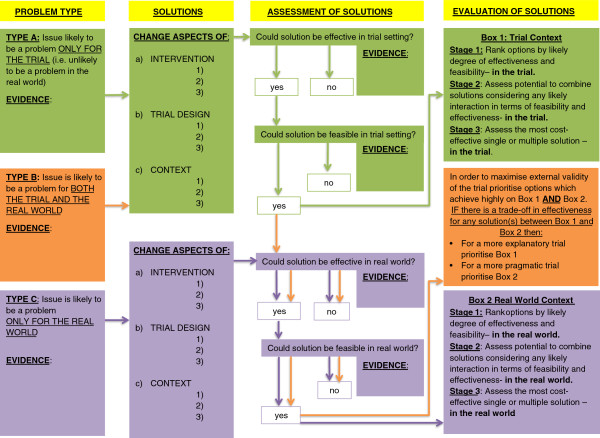
“In terms of the ADePT approach, the problems identified related to aspects of trial process and were therefore classified as Type A - issues likely to be a problem only for a trial, but not in the real world [45].”
BackgroundMethodBailey, S., Boivin, J., Cheong, Y. C., Bailey, C., Kitson-Reynolds, E., & Macklon, N. (2020) · Reproductive BioMedicine Online · doi:10.1016/j.rbmo.2020.01.022 · Cited by 11
Bronchiectasis Information and Education: a randomised, controlled feasibility trial
Hester, K. L. M., Ryan, V., Newton, J. L., Rapley, T., & Soyza, A. D. (2020) · Trials · doi:10.1186/s13063-020-4134-5 · Cited by 11
A feasibility study of the Redesigning Daily Occupations (ReDO TM -10) programme in an Irish context
Fox, J., Erlandsson, L., & Shiel, A. (2021) · Scandinavian Journal of Occupational Therapy · doi:10.1080/11038128.2021.1882561 · Cited by 11
“In this section, the feasibility of ReDO-10 in the Irish primary care context will be discussed from two perspectives: (a) the feasibility of a future randomizedcontrolled trial (RCT) of ReDO-10 in this context and (b) the feasibility of future implementation of this programme more generally in Irish primary care [53].”
BackgroundKane, P. M., Murtagh, F. E., Ryan, K., Brice, M., Mahon, N., McAdam, B. F., McQuillan, R., O’Gara, G., Raleigh, C., Tracey, C., et al. (2017) · Palliative Medicine · doi:10.1177/0269216317706426 · Cited by 10
Williams, B., Hibberd, C. J., Baldie, D. J., Duncan, E., Elders, A., Maxwell, M., Rattray, J. E., Cowie, J., Strachan, H., & Jones, M. C. (2020) · BMJ Quality & Safety · doi:10.1136/bmjqs-2019-009821 · Cited by 10
Self-citationMcGregor, G., Hee, S. W., Eftekhari, H., Holliday, N., Pearce, G., Sandhu, H. K., Simmonds, J. V., Joshi, S., Kavi, L., Bruce, J., et al. (2020) · Pilot and Feasibility Studies · doi:10.1186/s40814-020-00702-1 · Cited by 11
Ge, J., Wei, X. J., Zhang, H. Z., & Fang, G. Y. (2020) · Actas Urológicas Españolas (English Edition) · doi:10.1016/j.acuroe.2020.12.002 · Cited by 17
Morrissey, E. C., Byrne, M., Casey, B., Casey, D., Gillespie, P., Hobbins, A. P., Lowry, M., McCarthy, E., Newell, J., Roshan, D., et al. (2022) · Pilot and Feasibility Studies · doi:10.1186/s40814-022-00986-5 · Cited by 10
“A process for Decision-making after Pilot and feasibility Trials (ADePT) involves examining 14 methodological issues that are pertinent to feasibility research, such as recruitment, retention, randomisation, acceptability of processes and outcomes, intervention fidelity and estimation of costs [28].”
BackgroundMethodKirwan, C., Hynes, L., Hart, N. D., Mulligan, S., Leathem, C. S., McQuillan, L., Maxwell, M., Carr, E., Roche, K. F., Walkin, S., et al. (2022) · Pilot and Feasibility Studies · doi:10.1186/s40814-022-01107-y · Cited by 10
“We utilised the process of Decision-making after Pilot and feasibility Trials (ADePT) to structure the reporting on methodological issues and to allow identification of appropriate modifications for a future trial design [5].”
MethodInfluentialKaushal, T., Satapathy, S. S., Bakhshi, S., Sagar, R., & Chadda, R. K. (2021) · Archives de Pédiatrie · doi:10.1016/j.arcped.2021.11.004 · Cited by 10
Johnson, L., Burridge, J. H., Demain, S. H., & Ewings, S. M. (2019) · JMIR Research Protocols · doi:10.2196/14222 · Cited by 9
“We will use a recognized framework to guide this process [23] through the systematic and transparent identification and appraisal of potential problems and solutions relating to fidelity.”
MethodMelia, R., Francis, K., Duggan, J., Bogue, J., O’Sullivan, M., Young, K. L., Chambers, D., McInerney, S. J., O'Dea, E., & Bernert, R. A. (2023) · JMIR Research Protocols · doi:10.2196/44205 · Cited by 8
““A process for Decision-making after Pilot and feasibility Trials” (ADePT) by Bugge and Williams [55] examines the “methodological issues” identified in a feasibility study that may hinder or facilitate progression to a definitive trial.”
BackgroundTaylor, P. J., Adeyemi, I., Marlow, K., Cottam, S., Airnes, Z., Hartley, S., Howells, V., Dunn, B. D., Elliott, R. A., Hann, M., et al. (2024) · Pilot and Feasibility Studies · doi:10.1186/s40814-024-01526-z · Cited by 14
“A major challenge for expensive RCTs is recruitment and retention [46].”
BackgroundBeck, A. K., Baker, A., Jones, S. H., Lobban, F. A., KAY‐LAMBKIN, F. J., Attia, J. R., & Banfield, M. (2018) · BMJ Open · doi:10.1136/bmjopen-2017-019203 · Cited by 10
Finlay‐jones, A. L., Davis, J. A., O’Donovan, A., Kottampally, K., Ashley, R., Silva, D. T., Ohan, J. L., Prescott, S. L., & Downs, J. A. (2020) · JMIR Research Protocols · doi:10.2196/19803 · Cited by 8
“Feasibility metrics will address the ADePT (a process for decision making after pilot and feasibility trials) framework [79].”
Whittaker, A., Elliott, L., Taylor, J. S., Dawe, S., Harnett, P. H., Stoddart, A., Littlewood, P., Robertson, R., Farquharson, B., & Strachan, H. (2022) · Public Health Research · doi:10.3310/yowk7214 · Cited by 15
Rowe, A., Titterington, J., & Taggart, L. (2019) · Pilot and Feasibility Studies · doi:10.1186/s40814-019-0468-8 · Cited by 11
“[98]: (1) adapt the intervention, (2) adjust the context within which the intervention would be delivered, (3)”
BackgroundManikam, L., Allaham, S., Patil, P., Naman, M., Ong, Z. L., Demel, I., Batura, N., Llewellyn, C. H., Hayward, A. C., Lakshman, R., et al. (2023) · BMJ Open · doi:10.1136/bmjopen-2022-063885 · Cited by 6
“31 All statistical analyses will be done by an independent statistician who would be blinded.”
MethodMcHale, C., Cruickshank, S., Brown, T. J., Torrens, C., Armes, J., Fenlon, D., Banks, E., Kelsey, T., & Humphris, G. M. (2024) · Pilot and Feasibility Studies · doi:10.1186/s40814-023-01431-x · Cited by 9
“Following the completion of data collection, A Process for Decision-making and Pilot and Feasibility Trials (ADePT) [25] was conducted to assess the overall fidelity of the study’s methodological conduct, including the design and implementation of study procedures.”
MethodMellor, K., Dutton, S., Hopewell, S., & Albury, C. (2022) · Trials · doi:10.1186/s13063-022-06063-9 · Cited by 6
“during the pilot trial, to facilitate transparent decision-making [21].”
BackgroundTaggart, L., Johnston, A., Mulhall, P., Hassiotis, A., MURPHY, M. H., Slater, P. F., & Fitzpatrick, B. (2022) · Contemporary Clinical Trials · doi:10.1016/j.cct.2022.106856 · Cited by 8
McGovern, R., Stamp, E., Javanbakht, M., McColl, E., Hickman, M., & Kaner, E. (2018) · Pilot and Feasibility Studies · doi:10.1186/s40814-018-0305-5 · Cited by 7
“of 59–50% of consented participants at 12 months; 59–30% of participants receiving a randomised intervention), a process for decision making after pilot and feasibility trials (ADePT) [54] will be followed, systematically appraising the problems and potential solutions within the linked process evaluation.”
BackgroundMcGregor, G., Evans, B., Sandhu, H. K., Bruce, J., Devi, G., Hayat, S. A., Hee, S. W., Heine, P., Holliday, N., Joshi, S., et al. (2025) · BMJ Open · doi:10.1136/bmjopen-2024-090197 · Cited by 7
Crispi, V., Peat, S., Bolton, W. S., Chapman, S. J., Rousseau, N. S., Mushtaq, F., & Mathew, R. K. (2025) · Journal of Neuro-Oncology · doi:10.1007/s11060-025-05047-4 · Cited by 5
Metadata
- Authors
- Bugge, C., Williams, B., Hagen, S., Logan, J., Glazener, C., Pringle, S., & Sinclair, L.
- Affiliations
- University of Stirling (GB)
- Glasgow Caledonian University (GB)
- University of Aberdeen (GB)
- NHS Greater Glasgow and Clyde (GB)
- Corresponding author
- Bugge, Carol
- Venue
- Trials
- Published
- 2013
- Volume
- 14
- Issue
- 1
- Pages
- 353
- ISSN
- 1745-6215 (ISSN-L)
- PMC
- PMC3819659
- OpenAlex
- W2118255840
- Cited by
- 175
- References
- 71
- Citations by year
- 2026: 7 · 2025: 15 · 2024: 21 · 2023: 9 · 2022: 20 · 2021: 14 · 2020: 34 · 2019: 14 · 2018: 15 · 2017: 9 · 2016: 8 · 2015: 5 · 2014: 4
- FWCI
- 10.26
- Type
- journal article
- Language
- en
- Open access
- gold
- doi.org
- Licence
- cc-by
- Locations
- Trials (publishedVersion, cc-by)
- Europe PMC (PubMed Central) (publishedVersion, cc-by)
- PubMed Central (publishedVersion, cc-by)
- PubMed (publishedVersion)
- ENLIGHTEN (Jurnal Bimbingan dan Konseling Islam) (acceptedVersion)
- ResearchOnline (Glasgow Caledonian University) (acceptedVersion, cc-by)
- Aberdeen University Research Archive (Aberdeen University) (submittedVersion)
- Stirling Online Research Repository (University of Stirling) (submittedVersion, cc-by)
- Research Output (Edinburgh Napier University) (submittedVersion, cc-by)
- Edinburgh Napier Research Repository (Edinburgh Napier University) (submittedVersion, cc-by)
- ResearchOnline (submittedVersion, cc-by)
- Funders
- Wellbeing of Women
- Topics
- Health Sciences › Health Professions › General Health Professions › Health Policy Implementation Science
- Physical Sciences › Mathematics › Statistics and Probability › Statistical Methods in Clinical Trials
- Social Sciences › Sociology and Political Science › Delphi Technique in Research
- Keywords
- complex interventions, pelvic organ prolapse, pelvic floor muscle training, feasibility study, pilot trial, participant recruitment, treatment acceptability, outcome measurement, decision-making, trial design, research transparency
- MeSH terms
- Combined Modality Therapy, Feasibility Studies, Female, Humans, Pessaries, Pilot Projects, Surveys and Questionnaires, Research Design, Scotland, Time Factors, Treatment Outcome, Evidence-Based Medicine, Physical Therapy Modalities, Pelvic Organ Prolapse
About these checks
Registry, retraction, Cites and statistics results are computed, not judged, with one exception: a printed reference that no index lists is read once by a model before it counts as a citation error. Claims are extracted by a model and kept only when their quote appears verbatim in the text; each cited source is then checked, with a model’s help, for whether it says what the claim relies on. Those verdicts can be wrong — read the claim’s quote and the cited source before relying on one.
Statistics and arithmetic are recomputed, not judged.
Confidence bands are shown only for fields calibrated on our annotated test set. None is calibrated yet, so no band is shown.
What counts as a claim ›How we measure confidence ›How we check this ›
Are you an author, or do you see a problem with this page? Request a review
Data sources
Bibliographic data: Semantic Scholar, OpenAlex, Crossref.
Contains information from the Semantic Scholar Academic Graph Datasets, made available under the ODC Attribution License (ODC-BY 1.0).
Semantic Scholar’s data is described in: Kinney, R., et al. (2023). The Semantic Scholar Open Data Platform. arXiv:2301.10140.
