

Introduction to glycopathology: the concept, the tools and the perspectives
Open accessThe DOI matches its Crossref record; 111 of the 112 references it cites were found in a registry or an index.
Abstract
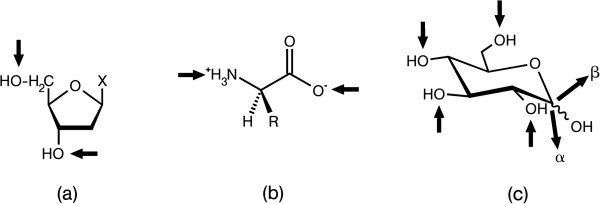
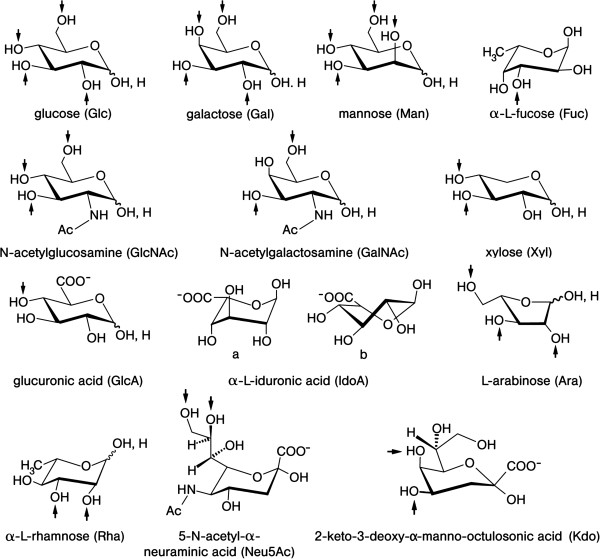
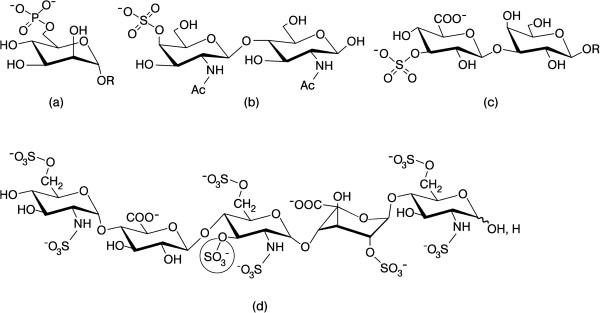
Analyzing the flow of biological information is a fundamental challenge for basic sciences. The emerging results will then lend themselves to the development of new approaches for medical applications. Toward this end, the products of protein/lipid glycosylation deserve special attention. The covalent attachment of sugars to these carriers means much more than just a change of the carriers' physicochemical properties. In principle, the ubiquitous presence of glycoconjugates and the close inspection of the particular structural 'talents' of carbohydrates provide suggestive evidence for information coding by sugars. In fact, the theoretical number of 'words' (oligomers) formed by 'letters' (monosaccharides) is by far higher than by using nucleotides or amino acids. In other words, glycans harbor an unsurpassed coding capacity. The cyto- and histochemical detection of dynamic changes in the profile of cellular glycans (glycome, the equivalent of the proteome) by sugar receptors such as antibodies used as tools underscores the suitability of carbohydrates for such a task. The resulting staining patterns can be likened to a molecular fingerprint. By acting as ligand (counterreceptor) for endogenous receptors (tissue lectins), glycan epitopes become partners in a specific recognition pair, and the sugar-encoded information can then be translated into effects, e.g. in growth regulation. Of note, expression of both sides of such a pair, i.e. lectin and cognate glycan, can physiologically be orchestrated for optimal efficiency. Indeed, examples how to prevent autoimmune diseases by regulatory T cells and restrict carcinoma growth by a tumor suppressor attest occurrence of co-regulation. In consequence, these glycans have potential to establish a new class of functional biomarkers, and mapping presence of their receptors is warranted. In this review, the cyto- and histochemical methods, which contribute to explore information storage and transfer within the sugar code, are described. This introduction to the toolbox is flanked by illustrating the application of each type of tool in histopathology, with focus on adhesion/growth-regulating galectins. Together with an introduction to fundamental principles of the sugar code, the review is designed to guide into this field and to inspire respective research efforts. VIRTUAL SLIDES: The virtual slides for this article can be found here: http://www.diagnosticpathology.diagnomx.eu/vs/1670639891114983.
Overview
The claims and statistics of this paper haven’t been checked yet.
Free: it reads the open-access text and checks the first 5 claims that cite a source we can check. Create a free account to check every claim.
Integrity signals
Registry
Cites
Statistics
Figures

Verification
Claims the paper makes
The claims and statistics of this paper haven’t been checked yet.
Free: it reads the open-access text and checks the first 5 claims that cite a source we can check. Create a free account to check every claim.
Claims other papers make about this one
Each is checked against this paper’s own text: does it say what the citing paper says it does?
The cited source says what the claim attributes to it.
In the citing paper
“This glycanic coding system is template-free, also having a large capacity due to the huge theoretical number of mono-, oligo-, or poly-saccharides in nature (much higher than that formed by nucleotides) [140].”
From GANAB and N-Glycans Substrates Are Relevant in Human Physiology, Polycystic Pathology and Multiple Sclerosis: A Review (2022) · cites this paper as [140]
Self-check
Percentages, sums and reported differences re-computed from the paper’s own numbers.
The self-check needs the paper’s full text.
Citations
Cites
Antimicrobial Autophagy: A Conserved Innate Immune Response in Drosophila
Moy, R. H., & Cherry, S. (2013) · Journal of Innate Immunity · doi:10.1159/000350326 · Cited by 3,539
Spiro, R. G. (2002) · Glycobiology · doi:10.1093/glycob/12.4.43r · Cited by 1,409 · cited 4×
“The formation of at least 41 bonds between sugar and protein, with eight amino acids and 13 sugars involved, highlights the wide diversity of these types of conjugation in Nature [9].”
BackgroundInfluentialGalectinomics: finding themes in complexity
Cooper, D. (2002) · Biochimica et Biophysica Acta (BBA) - General Subjects · doi:10.1016/s0304-4165(02)00310-0 · Cited by 585 · cited 2×
“C-type lectins and galectins, gives an impression on the ways sequences in the carbohydrate recognition domains (CRD) and their spatial modes of presentation can diverge including occurrence of single nucleotide polymorphisms in lectin genes [35-39].”
BackgroundFrom lectin structure to functional glycomics: principles of the sugar code
Gabius, H.-J., André, S., Jiménez-Barbero, J., Romero, A., & Solís, D. (2011) · Trends in Biochemical Sciences · doi:10.1016/j.tibs.2011.01.005 · Cited by 483 · cited 2×
“In total, structural and topological factors of glycans on six levels cooperate to let lectins find their natural counterreceptors [41].”
BackgroundSelf-citationLectin cytochemistry and histochemistry.
Damjanov, I. (1987) · PubMed · Cited by 426
Diversity of cell glycoconjugates shown histochemically: a perspective.
Spicer, S. S., & Schulte, B. A. (1992) · Journal of Histochemistry & Cytochemistry · doi:10.1177/40.1.1370305 · Cited by 420 · cited 5×
“Thus, results from glycocyto- and histochemistry give direction for the next step to take in analyzing the glycan-based communication, i.e. to purify the tissue lectins and work with lectin-specific antibodies (please see third section in Table 4), here illustrated exemplarily for galectins as example. istochemical an…”
BackgroundMethodInfluentialGlycosciences: Status and Perspectives
Gabius, H., & Gabius, S. (2002) · Medical Entomology and Zoology · Cited by 384
Self-citationThe sugar code : fundamentals of glycosciences
Gabius, H. (2009) · Cited by 366
Self-citationThe sugar code: functional lectinomics
Gabius, H. (2002) · Biochimica et Biophysica Acta (BBA) - General Subjects · doi:10.1016/s0304-4165(02)00306-9 · Cited by 336 · cited 1×
“Necessarily, an intricate enzymatic machinery for glycan assembly and remodeling (by glycosyltransferases, glycosidases and substitution-introducing enzymes such as sulfotransferases [4-8,10]) has developed to realize the actually presented set of glycans on cells (glycome) from the panel of theoretically possible gly…”
BackgroundSelf-citationNeoglycoconjugates : preparation and applications
Lee, Y. C., & Lee, R. T. (1994) · Cited by 290
Research works printed but not linked: 9
- Merzendorfer H Gabius H-J Chitin: structure, function and metabolism The Sugar Code. Fundamentals of glycosciences 2009 Weinheim, Germany: Wiley-VCH 217 229
- Buddecke E Gabius H-J Proteoglycans The Sugar Code. Fundamentals of glycosciences 2009 Weinheim, Germany: Wiley-VCH 199 216
- Kopitz J Gabius H-J Glycolipids The Sugar Code. Fundamentals of glycosciences 2009 Weinheim, Germany: Wiley-VCH 177 198
- Patsos G Corfield A Gabius H-J O-Glycosylation: structural diversity and function The Sugar Code. Fundamentals of glycosciences 2009 Weinheim, Germany: Wiley-VCH 111 137
- Zuber C Roth J Gabius H-J N-Glycosylation The Sugar Code. Fundamentals of glycosciences 2009 Weinheim, Germany: Wiley-VCH 87 110
- Nakagawa H Gabius H-J Analytical aspects: analysis of protein-bound glycans The Sugar Code. Fundamentals of glycosciences 2009 Weinheim, Germany: Wiley-VCH 71 83
- Gready JN Zelensky AN Gabius H-J Routes in lectin evolution: case study on the C-type lectin-like domains The Sugar Code. Fundamentals of glycosciences 2009 Weinheim, Germany: Wiley-VCH 329 346
- Oscarson S Gabius H-J The chemist’s way to synthesize glycosides The Sugar Code. Fundamentals of glycosciences 2009 Weinheim, Germany: Wiley-VCH 31 51
- André S Kopitz J Kaltner H Villalobo A Gabius H-J Gabius H-J Glycans as functional markers in malignancy? The Sugar Code. Fundamentals of glycosciences 2009 Weinheim, Germany: Wiley-VCH 419 432
Cited by
Galectin-3 Activation and Inhibition in Heart Failure and Cardiovascular Disease: An Update
Suthahar, N., Meijers, W. C., Silljé, H. H. W., Ho, J. E., Liu, F.-T., & de Boer, R. A. (2018) · Theranostics · doi:10.7150/thno.22196 · Cited by 309
“Due to the structural variability and complexity of carbohydrates, glycocodes carry a substantial amount of information and are able to influence a broad spectrum of biological activities by regulating various cellular processes [66].”
BackgroundGlycan variation and evolution in the eukaryotes
Corfield, A. P., & Berry, M. (2015) · Trends in Biochemical Sciences · doi:10.1016/j.tibs.2015.04.004 · Cited by 149
Lectins: Getting Familiar with Translators of the Sugar Code
André, S., Kaltner, H., Manning, J. C., Murphy, P. V., & Gabius, H. (2015) · Molecules · doi:10.3390/molecules20021788 · Cited by 105
“With medical relevance, studies on human tumors with more than one antibody further validate this network concept (for recent review, please see [104]).”
Self-citationLipid glycosylation: a primer for histochemists and cell biologists
Kopitz, J. (2016) · Histochemistry and Cell Biology · doi:10.1007/s00418-016-1518-4 · Cited by 104
Toegel, S., Bieder, D., André, S., Kayser, K., Walzer, S. M., Hobusch, G. M., Windhager, R., & Gabius, H. (2014) · Histochemistry and Cell Biology · doi:10.1007/s00418-014-1234-x · Cited by 67
Self-citationNanotechnology in Glycomics: Applications in Diagnostics, Therapy, Imaging, and Separation Processes
Dosekova, E., Filip, J., Bertók, T., Both, P., Kasák, P., & Tkáč, J. (2016) · Medicinal Research Reviews · doi:10.1002/med.21420 · Cited by 65
Zhang, C.-W., Zhang, J., Yang, X. F., Du, W., Yu, Z.-L., Lv, Z., & Mou, X. (2022) · Expert Opinion on Drug Delivery · doi:10.1080/17425247.2022.2081320 · Cited by 50
Computational Biology and Chemistry
Behzadi, P., & Bernabò, N. (2019) · IntechOpen eBooks · doi:10.5772/intechopen.83539 · Cited by 40
ARL15 modulates magnesium homeostasis through N-glycosylation of CNNMs
Zolotarov, Y., Ma, C., González‐Recio, I., Hardy, S., Franken, G. A. C., Uetani, N., Latta, F., Kostantin, E., Boulais, J., Thibault, M.-P., et al. (2021) · Cellular and Molecular Life Sciences · doi:10.1007/s00018-021-03832-8 · Cited by 34
Lectin Histochemistry: Historical Perspectives, State of the Art, and the Future
Brooks, S. A. (2017) · Methods in molecular biology · doi:10.1007/978-1-4939-6788-9_6 · Cited by 34
Kunej, T. (2019) · OMICS A Journal of Integrative Biology · doi:10.1089/omi.2019.0149 · Cited by 30
“It has a large coding capacity since the theoretical number of oligomers formed by monosaccharides is much higher than that formed by using nucleotides or amino acids (Gabius and Kayser, 2014).”
Lee, J., Warnken, U. H., Schnölzer, M., Gebert, J. F., & Kopitz, J. (2015) · Protein Science · doi:10.1002/pro.2741 · Cited by 29
De Masi, R., & Orlando, S. (2022) · International Journal of Molecular Sciences · doi:10.3390/ijms23137373 · Cited by 20
POSTBIOTIC AND OTHER PROTECTIVE MOLECULES RECOGNIZING AND BINDING GLYCOCONJUGATES IN MUCOSAL ORGANS
Лахтин, В. М., Лахтин, М. В., Davydkin, V., Melikhova, A., Davydkin, I. Y., & Zhilenkova, O. G. (2020) · ASJ · doi:10.31618/asj.2707-9864.2020.1.43.47 · Cited by 19
Emerging role of tissue lectins as microenvironmental effectors in tumors and wounds.
Smetana, K., Szabó, P., Gál, P., André, S., Gabius, H., Kodet, O., & Dvořánková, B. (2015) · PubMed · doi:10.14670/hh-30.293 · Cited by 19
Self-citationWang, F., Singh, S., Xu, W., Helmich, K. E., Miller, M. D., Cao, H., Bingman, C. A., Thorson, J. S., & Phillips, G. N. (2015) · ACS Chemical Biology · doi:10.1021/acschembio.5b00244 · Cited by 14
Modifications in Biomacromolecules
Zhan, X., & Jabbari, A. (2022) · Biochemistry · doi:10.5772/intechopen.97318 · Cited by 13
Díaz, M., González, N., Zanuzzi, C., Najle, R., & Barbeito, C. (2017) · Biotechnic & Histochemistry · doi:10.1080/10520295.2016.1185668 · Cited by 12
“Lectins are valuable tools for detecting and characterizing glycoconjugates and examining changes that occur on cell surfaces during physiological and pathological processes (Sharon and Lis 2004, Gabius and Kayser 2014).”
BackgroundLectin Histochemistry: Historical Perspectives, State of the Art, and Future Directions
Brooks, S. A. (2022) · Methods in molecular biology · doi:10.1007/978-1-0716-2675-7_6 · Cited by 12
André, S., Singh, T., Lacal, J. C., Smetana, K., & Gabius, H. (2014) · Folia Biologica · doi:10.14712/fb2014060030095 · Cited by 11
Self-citationKim, C. (2020) · Springer eBooks · doi:10.1007/978-981-15-5815-3 · Cited by 11
O-Glycosylation of α-1-Acid Glycoprotein of Human Milk Is Lactation Stage Related
Orczyk‐Pawiłowicz, M., Berghausen-Mazur, M., Hirnle, L., & Kątnik‐Prastowska, I. (2015) · Breastfeeding Medicine · doi:10.1089/bfm.2015.0049 · Cited by 11
“In particular, binding of lectins to ELISA plate-isolated glycoproteins and other lectin-based methods allow rapid and exhaustive analysis and are useful for detecting even weak interactions due to multivalent glycotope–lectin interactions.(11,12,29,31) Additionally, the results obtained using lectinbased methods are…”
The Two Faces of Galectin-3: Roles in Various Pathological Conditions
Radosavljevic, G. D., Pantic, J. M., Jovanović, I., Lukić, M. L., & Arsenijević, N. (2016) · Serbian Journal of Experimental and Clinical Research · doi:10.1515/sjecr-2016-0011 · Cited by 10
“, glycoconjugate or protein) responsible for target selectivity (111) will be the basis for not only developing rational antiinflammatory and antitumoural approaches but also for taking advantage of the protective functions of Galectin-3 in metabolic abnormalities or primary biliary cirrhosis.”
BackgroundSeminal Plasma Glycoproteins as Potential Ligands of Lectins Engaged in Immunity Regulation
Olejnik, B., & Ferens-Sieczkowska, M. (2022) · International Journal of Environmental Research and Public Health · doi:10.3390/ijerph191710489 · Cited by 10
Selection of Galectin‐Binding Ligands from Synthetic Glycopeptide Libraries
Kovalová, A., Prouza, V., Zavřel, M., Hájek, M., Dzijak, R., Magdolenová, A., Pohl, R., Vobůrka, Z., Parkan, K., & Vrábel, M. (2023) · ChemPlusChem · doi:10.1002/cplu.202300567 · Cited by 5
Systems Glycobiology: Past, Present, and Future
Yıldız, S. Y. (2020) · IntechOpen eBooks · doi:10.5772/intechopen.92267 · Cited by 3
“As a result, many new medical implications will be enabled by glycobiology and glycopathology [29].”
BackgroundThe Kentucky plan: an innovative approach to professional doctoral education in public health.
Lee, J. M., & Scutchfield, F. D. (2001) · PubMed · Cited by 3
Sour Consequences of Aberrant Glycosylation in Cancer Development
Festari, M. F., da Costa, V., García, I., Cedrés, M. E., & Freire, T. (2024) · Interdisciplinary cancer research · doi:10.1007/16833_2024_371 · Cited by 1
Lutsyk, A. D., Yashchenko, А. М., Antonyuk, V., & Bilyy, R. O. (2017) · Proceedings of the Shevchenko Scientific Society Medical Sciences · doi:10.25040/ntsh2017.02.010 · Cited by 1
Glycosylation on Spermatozoa, a Promise for the Journey to the Oocyte
Wang, S., Li, Y., Xin, A., Yang, Y., Tao, S., Gu, Y., & Shi, H. (2024) · Biochemistry · doi:10.5772/intechopen.106438 · Cited by 1
Strus, K. I., Chelpanova, I. V., Onysko, R., Dasyuk, I., Poliiants, A., Yashchenko, А. М., Dasyuk, T., & Lutsyk, A. D. (2024) · Romanian Journal of Morphology and Embryology · doi:10.47162/rjme.65.3.09 · Cited by 1
Monestier, M. (2015) · theses.fr (ABES) · doi:10.70675/6d9f7b4azbb7bz4956z9847zdd87624cb752 · Cited by 1
Sugars and Proteins: the role of dynamics in molecular interactions
Unione, L. (2016) · LA Referencia (Red Federada de Repositorios Institucionales de Publicaciones Científicas)
Computational studies of carbohydrate-protein interactions
Lacetera, A. (2017) · LA Referencia (Red Federada de Repositorios Institucionales de Publicaciones Científicas)
Chicken (Gallus gallus) as model for network analysis of adhesion-/growth-regulatory galectins
Caballero, G. G. (2018) · Elektronische Hochschulschriften der LMU München (Ludwig-Maximilians-Universität München) · doi:10.5282/edoc.22012
Strus, K. I., Chelpanova, I. V., Onysko, R., Poliiants, A., Yashchenko, А. М., Dasyuk, T., & Lutsyk, A. D. (2025) · European Journal of Anatomy · doi:10.52083/fvqf7063
Discovery of novel glycomimetic ligands for Siglec-8
Girardi, B. (2021) · edoc (University of Basel) · doi:10.5451/unibas-ep96042
Elucidating the Immune Functions of Glycans Through Synthesis-Based Approaches
Fukase, K., Shimoyama, A., & Manabe, Y. (2026) · Springer eBooks · doi:10.1007/978-981-95-5335-8_7
Metadata
- Authors
- Gabius, H.-J., & Kayser, K.
- Affiliations
- Ludwig-Maximilians-Universität München (DE)
- Charité – Universitätsmedizin Berlin (DE)
- Corresponding author
- Gabius, Hans-Joachim
- ORCID
- Gabius, Hans-Joachim
- Venue
- Diagnostic Pathology
- Published
- 2014-01-20
- Volume
- 9
- Issue
- 1
- Pages
- 4-4
- ISSN
- 1746-1596 (ISSN-L)
- PMC
- PMC4029355
- OpenAlex
- W2106712940
- Cited by
- 31
- References
- 112
- Citations by year
- 2026: 1 · 2024: 2 · 2023: 1 · 2022: 6 · 2021: 1 · 2020: 3 · 2019: 2 · 2018: 1 · 2017: 3 · 2016: 3 · 2015: 5 · 2014: 2
- FWCI
- 0.41
- Type
- journal article
- Language
- en
- Open access
- gold
- doi.org
- Licence
- cc-by
- Locations
- Diagnostic Pathology (publishedVersion, cc-by)
- Europe PMC (PubMed Central) (publishedVersion, cc-by)
- PubMed Central (publishedVersion, cc-by)
- PubMed (publishedVersion)
- Open access LMU (Ludwid Maxmilian's Universitat Munchen) (submittedVersion)
- Funders
- European Commission (317297)
- Topics
- Life Sciences › Biochemistry, Genetics and Molecular Biology › Molecular Biology › Glycosylation and Glycoproteins Research
- Physical Sciences › Chemistry › Organic Chemistry › Carbohydrate Chemistry and Synthesis
- Life Sciences › Immunology and Microbiology › Immunology › Galectins and Cancer Biology
- Keywords
- glycosylation, glycomics, lectins, galectins, carbohydrate epitopes, sugar receptors, cytochemistry, histochemistry, biomarkers, tumor suppressor, autoimmune disease, growth regulation, virtual slides
- MeSH terms
- Animals, Glycolipids, Glycoproteins, Glycosylation, Humans
About these checks
Registry, retraction, Cites and statistics results are computed, not judged, with one exception: a printed reference that no index lists is read once by a model before it counts as a citation error. Claims are extracted by a model and kept only when their quote appears verbatim in the text; each cited source is then checked, with a model’s help, for whether it says what the claim relies on. Those verdicts can be wrong — read the claim’s quote and the cited source before relying on one.
Statistics and arithmetic are recomputed, not judged.
Confidence bands are shown only for fields calibrated on our annotated test set. None is calibrated yet, so no band is shown.
What counts as a claim ›How we measure confidence ›How we check this ›
Are you an author, or do you see a problem with this page? Request a review
Data sources
Bibliographic data: Semantic Scholar, OpenAlex, Crossref.
Contains information from the Semantic Scholar Academic Graph Datasets, made available under the ODC Attribution License (ODC-BY 1.0).
Semantic Scholar’s data is described in: Kinney, R., et al. (2023). The Semantic Scholar Open Data Platform. arXiv:2301.10140.
