

Audit and feedback and clinical practice guideline adherence: Making feedback actionable
Open accessThe DOI matches its Crossref record; 34 of the 34 references it cites were found in a registry or an index.
Abstract
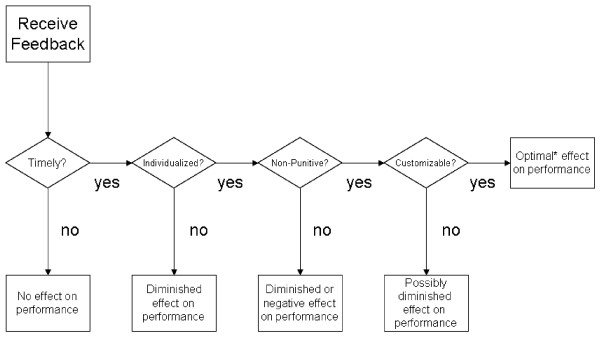
BACKGROUND: As a strategy for improving clinical practice guideline (CPG) adherence, audit and feedback (A&F) has been found to be variably effective, yet A&F research has not investigated the impact of feedback characteristics on its effectiveness. This paper explores how high performing facilities (HPF) and low performing facilities (LPF) differ in the way they use clinical audit data for feedback purposes. METHOD: Descriptive, qualitative, cross-sectional study of a purposeful sample of six Veterans Affairs Medical Centers (VAMCs) with high and low adherence to six CPGs, as measured by external chart review audits. One-hundred and two employees involved with outpatient CPG implementation across the six facilities participated in one-hour semi-structured interviews where they discussed strategies, facilitators and barriers to implementing CPGs. Interviews were analyzed using techniques from the grounded theory method. RESULTS: High performers provided timely, individualized, non-punitive feedback to providers, whereas low performers were more variable in their timeliness and non-punitiveness and relied on more standardized, facility-level reports. The concept of actionable feedback emerged as the core category from the data, around which timeliness, individualization, non-punitiveness, and customizability can be hierarchically ordered. CONCLUSION: Facilities with a successful record of guideline adherence tend to deliver more timely, individualized and non-punitive feedback to providers about their adherence than facilities with a poor record of guideline adherence. Consistent with findings from organizational research, feedback intervention characteristics may influence the feedback's effectiveness at changing desired behaviors.
Overview
The claims and statistics of this paper haven’t been checked yet.
Free: it reads the open-access text and checks the first 5 claims that cite a source we can check. Create a free account to check every claim.
Integrity signals
Registry
Cites
Statistics
Figures
Verification
Claims the paper makes
The claims and statistics of this paper haven’t been checked yet.
Free: it reads the open-access text and checks the first 5 claims that cite a source we can check. Create a free account to check every claim.
Claims other papers make about this one
Each is checked against this paper’s own text: does it say what the citing paper says it does?
The cited source says what the claim attributes to it.
In the citing paper
“This fits well with previous qualitative work comparing high and low performing hospitals finding that feedback with a punitive tone seems to be less effective (Hysong 2006).”
From Audit and feedback: effects on professional practice and healthcare outcomes (2012) · cites this paper as Hysong 2006
In the citing paper
“The effectiveness of A&F may be influenced by the characteristics of the targeted behavior, the recipients, their context, and the components of the A&F intervention itself [9,15,16].”
From No more ‘business as usual’ with audit and feedback interventions: towards an agenda for a reinvigorated intervention (2014) · cites this paper as [15]
In the citing paper
“Conversely, feedback is less effective when it comes from a regulatory body, agreeing with qualitative work suggesting that feedback perceived to be potentially punitive appeared less effective than a supportive approach [15,20].”
From No more ‘business as usual’ with audit and feedback interventions: towards an agenda for a reinvigorated intervention (2014) · cites this paper as [15]
Self-check
Percentages, sums and reported differences re-computed from the paper’s own numbers.
The self-check needs the paper’s full text.
Citations
Cites
1 retracted
O'Brien, M. A., Oxman, A. D., Davis, D., Haynes, R. B., Freemantle, N., & Harvey, E. (1998) · Cochrane Database of Systematic Reviews · doi:10.1002/14651858.cd000260 · Cited by 123
Retracted(1998) · Sage eBooks · Cited by 38,631
The Discovery of Grounded Theory: Strategies for Qualitative Research
Glaser, B. G., & Strauss, A. L. (2017) · Aldine (Routledge reprint) · doi:10.4324/9780203793206 · Cited by 25,789
The Discovery of Grounded Theory
Glaser, B. G., & Strauss, A. L. (2017) · The Discovery of Grounded Theory · doi:10.4324/9780203793206-1 · Cited by 8,344
Kluger, A. N., & DeNisi, A. (1996) · Psychological Bulletin · doi:10.1037/0033-2909.119.2.254 · Cited by 5,882 · cited 5×
“Third is non-punitiveness – feedback delivered in a non-punitive way is less likely to be resisted by the recipient regardless of content [15,23,24], thus”
BackgroundInfluentialAudit and feedback: effects on professional practice and healthcare outcomes
Ivers, N., Jamtvedt, G., Flottorp, S., Young, J. M., Odgaard-Jensen, J., French, S. D., O'Brien, M. A., Johansen, M., Grimshaw, J., & Oxman, A. D. (2012) · Cochrane Database of Systematic Reviews · doi:10.1002/14651858.cd000259.pub3 · Cited by 5,485
Effectiveness and efficiency of guideline dissemination and implementation strategies
Grimshaw, J., Thomas, R., MacLennan, G., Fraser, C., Ramsay, C., Vale, L., Whitty, P., Eccles, M., Matowe, L., Shirran, L., et al. (2004) · Health Technology Assessment · doi:10.3310/hta8060 · Cited by 3,044 · cited 2×
“Grimshaw and colleagues[5] reported a median effect size of A&F of +7% compared to no intervention using dichotomous process measures, with effect sizes ranging from 1.”
BackgroundMethodAudit and feedback: effects on professional practice and health care outcomes
Jamtvedt, G., Young, J. M., Kristoffersen, D. T., O'Brien, M. A., & Oxman, A. D. (2006) · Cochrane Database of Systematic Reviews · doi:10.1002/14651858.cd000259.pub2 · Cited by 912 · cited 3×
“Along similar lines, Jamtvedt and colleagues [6] reported a median adjusted relative risk of non-compliance of .”
BackgroundEffectiveness and efficiency of guideline dissemination and implementation strategies
Grimshaw, J. M., Thomas, R. E., MacLennan, G., Fraser, C., Ramsay, C. R., Vale, L., Whitty, P., Eccles, M. P., Matowe, L., Shirran, L., et al. (2005) · International Journal of Technology Assessment in Health Care · doi:10.1017/s0266462305290190 · Cited by 864
DeShon, R. P., Kozlowski, S. W. J., Schmidt, A. M., Milner, K. R., & Wiechmann, D. (2004) · Journal of Applied Psychology · doi:10.1037/0021-9010.89.6.1035 · Cited by 606 · cited 2×
“Timely feedback has long been positively associated with feedback effectiveness in the organizational literature,[13] as has the need for individualized feedback[21,22].”
Background
Research works printed but not linked: 2
- Pugh JA Knowledge management and clinical practice guideline implementation [Final Report] CPI 99129-1 2001 San Antonio, TX, Veterans Evidence-Based Implementation Dissemination Center
- Muhr T Atlas ti – Short User's Manual [42 Build 061] 2001 Berlin, Germany, Scientific Software Development
Cited by
Items 201–300 of 385
de Bekker, P. J. G. M., de Weerdt, V., Vink, M. D. H., van der Kolk, A. B., Donker, M. H., & van der Hijden, E. J. E. (2022) · BMJ Open Quality · doi:10.1136/bmjoq-2022-002006 · Cited by 10
How do healthcare providers use national audit data for improvement?
Antonacci, G., Whitney, J. C., Harris, M. J., & Reed, J. E. (2023) · BMC Health Services Research · doi:10.1186/s12913-023-09334-6 · Cited by 11
“The value of interpreting NCA feedback data alongside other routinely collected data and the importance of frequent feedback are mirrored in the wider A&F literature.[2, 36, 37, 39, 48, 51].”
BackgroundWright, R., Howell, E. E., Landis, R., Wright, S. M., Kisuule, F., & Minter‐Jordan, M. (2009) · Journal of Hospital Medicine · doi:10.1002/jhm.532 · Cited by 9
Shulman, R. M., Zenlea, I. S., Shah, B. R., Clarson, C. L., Harrington, J., Landry, A., Punthakee, Z., Palmert, M. R., Mukerji, G., Austin, P. C., et al. (2019) · BMC Health Services Research · doi:10.1186/s12913-019-4690-0 · Cited by 9
“AF interventions have a positive but variable effect on performance [26, 27].”
BackgroundBarriers to recording calf health data on dairy farms in Ontario
Edwards, K. Y., LeBlanc, S. J., DeVries, T. J., Steele, M. A., Costa, J. H. C., & Renaud, D. L. (2023) · JDS Communications · doi:10.3168/jdsc.2023-0398 · Cited by 11
“This strategy has been demonstrated to be effective when feedback is timely, individualized, and nonpuni-tive (Hysong et al., 2006).”
BackgroundBruinsma, J., Loukas, V. S., Kassiotis, T., Heger, I., Rosenberg, A., Visser, L. N. C., Mangialasche, F., Fotiadis, D. I., Hanke, S., & Crutzen, R. (2024) · Journal of Alzheimer s Disease · doi:10.3233/jad-231369 · Cited by 9
“Providingtimely,individualized, non-punitive,andactionablefeedbackmayfurther encouragehealthylifestyleimprovementsbymak-ingindividualsawareoftheirownbehaviorandby providingspecificcuestoaction[49,50].”
Medication assessment tool to detect care issues from routine data: a pilot study in primary care
Dreischulte, T., Johnson, J., McAnaw, J. J., Geurts, M. M. E., de Gier, J. J., & Hudson, S. A. (2013) · International Journal of Clinical Pharmacy · doi:10.1007/s11096-013-9828-2 · Cited by 8
“Third, analysis at the level of individual criteria provides ‘actionable’ information to providers by pointing to specific MTM tasks that require attention [43].”
BackgroundFaculty Development in Feedback Provision
Mitchell, J., & Jones, S. B. (2016) · International Anesthesiology Clinics · doi:10.1097/aia.0000000000000109 · Cited by 9
Campbell, S., Goltz, H. H., Njue-Marendes, S., & Dang, B. N. (2016) · The Permanente Journal · doi:10.7812/tpp/15-154 · Cited by 8
Webster, F., Patel, J., Rice, K., Baxter, N. N., Paszat, L., Rabeneck, L., & Tinmouth, J. (2016) · Canadian Journal of Gastroenterology and Hepatology · doi:10.1155/2016/4983790 · Cited by 8
“Characteristics of feedback that direct the attention towards the task which have been shown to be associated with more effective feedback include individualized, frequent, and nonpunitive feedback [5, 19].”
Quality improvement and emergency laparotomy care: what have we learnt from recent major QI efforts?
Stephens, T., Johnston, C., & Hare, S. (2019) · Clinical Medicine · doi:10.7861/clinmed.2019.0251 · Cited by 10
Qualitätsentwicklung in der vertragsärztlichen Versorgung: ein Baukasten mit vielfältigen Ansätzen
Diel, F., & Rochau, M. L. (2022) · Bundesgesundheitsblatt - Gesundheitsforschung - Gesundheitsschutz · doi:10.1007/s00103-022-03496-0 · Cited by 7
Fadem, S. J., Crabtree, B. F., O’Malley, D. M., Mikesell, L., Ferrante, J. M., Toppmeyer, D., Ohman‐Strickland, P., Hemler, J. R., Howard, J., Bator, A., et al. (2023) · BMC Family Practice · doi:10.1186/s12875-023-02186-3 · Cited by 8
“…this, multi-component implementation strategies (Table 2) will be tailored to the unique needs of each clinic; these may include practice facilitation, [60–67] expert consultation, [68, 69] collaborative learning events, [60, 70–72] audit and feedback, [73, 74] and a learning evaluation [75].”
BackgroundZucker, J. E., Purpura, L. J., Sani, F., Huang, S., Schluger, A., Ruperto, K., Slowkowski, J., Olender, S., Scherer, M., Castor, D., et al. (2022) · AIDS Patient Care and STDs · doi:10.1089/apc.2021.0225 · Cited by 7
“26,27 30 We describe the effect of implementing individualized provider feedback, including peer comparisons, in the setting of a physician champion and an HIV/HCV testing response tea in a quaternary ED that had opt-out HIV screening and a robust linkage to care program.”
Using the TRIP Model to Disseminate an IT-Based Pressure Ulcer Intervention
Tschannen, D. J., Talsma, A., Gombert, J. M., & Mowry, J. L. (2010) · Western Journal of Nursing Research · doi:10.1177/0193945910379436 · Cited by 7
“To be effective, feedback needs to be timely, individualized, and given in a nonpunitive manner (Hysong et al., 2006).”
BackgroundLommatzsch, S. T. (2020) · Therapeutic Advances in Respiratory Disease · doi:10.1177/1753466620905272 · Cited by 8
“4, 6 Immunoprophylaxis CFRB and NCFRB. Immunoprophylaxis prevents disease via passive or active immunity.”
BackgroundSippo, D. A., Sullivan, A. M., Cohen, A., Mercaldo, S., Bahl, M., & Lehman, C. D. (2020) · Journal of the American College of Radiology · doi:10.1016/j.jacr.2020.05.036 · Cited by 7
Mørkrid, K., Bogale, B., Abbas, E., Khader, K. A., Ward, I. A., Attalh, A., Awwad, T., Baniode, M., Frost, K. S., Frost, M. J., et al. (2021) · Trials · doi:10.1186/s13063-020-04980-1 · Cited by 7
Establishing a primary care audit and feedback implementation laboratory: a consensus study
Alderson, S. L., Bald, A., Carder, P., Farrin, A. J., & Foy, R. (2021) · Implementation Science Communications · doi:10.1186/s43058-020-00103-8 · Cited by 7
“High-performing health systems tend to feature audit and feedback as an evidence-based, scalable, and relatively inexpensive strategy to encourage uptake of best practice [12].”
BackgroundTransfusion Medicine Informatics
Schneider, T., & Jackups, R. (2021) · Clinics in Laboratory Medicine · doi:10.1016/j.cll.2021.07.011 · Cited by 9
Landis‐Lewis, Z., Flynn, A. J., Janda, A. M., & Shah, N. J. (2022) · JMIR Research Protocols · doi:10.2196/34990 · Cited by 7
“Using causal pathway models [53] (Figure 4) to model requirements and preferences as preconditions and moderators that affect intervention success, we gain the capability to prioritize messages based on theoretical mechanisms [17-19,29,32,87] and visual communication factors [21,27,77,78,88] together with what is know…”
BackgroundNatan, O. B., Stein, M., & Reisfeld, S. (2022) · Infection Control and Hospital Epidemiology · doi:10.1017/ice.2022.224 · Cited by 7
Homb, N. M., Sheybani, S., Derby, D. C., & Wood, K. (2014) · Journal of Chiropractic Education · doi:10.7899/jce-13-29 · Cited by 7
Improving utilization of antimicrobial drugs among physician assistants in the ED
Kiyatkin, D., Wright, S. M., Zenilman, J. M., & Kisuule, F. (2011) · JAAPA · doi:10.1097/01720610-201110000-00007 · Cited by 7
Study protocol: identifying and delivering point-of-care information to improve care coordination
Hysong, S. J., Che, X., Weaver, S. J., & Petersen, L. A. (2015) · Implementation Science · doi:10.1186/s13012-015-0335-9 · Cited by 7
“Additionally, their results highlighted timely, individualized, and customizable feedback and tracking tools as essential for both successful referral team coordination [5] and improved quality of care [6].”
BackgroundSelf-citationAudit and Feedback Features Impact Effectiveness on Care Quality
Hysong, S. J. (2009) · Cited by 7
Self-citationWeiss, K., Simon, A., Graf, N. M., Schöpe, J., Oertel, J., & Linsler, S. (2016) · Child s Nervous System · doi:10.1007/s00381-016-3279-8 · Cited by 7
“This problem has to be solved by prospective Plan-Do-CheckAct cycles and root cause analysis with timely and actionable feedback [12, 14].”
BackgroundIkeda, D. J., Hollander, L., Weigl, S., Sawicki, S., Belanger, D., West, N., Magnani, N. B., Wells, C., Gordon, P. C., Morne, J. E., et al. (2018) · Open Forum Infectious Diseases · doi:10.1093/ofid/ofy254 · Cited by 7
Blanchard, C., Duboski, V., Graham, J., Webster, L., Kern, M. S., Wright, E. A., & Gionfriddo, M. R. (2021) · Research in Social and Administrative Pharmacy · doi:10.1016/j.sapharm.2021.02.017 · Cited by 7
McGlacken-Byrne, S. M., Murphy, N., & Barry, S. (2024) · BMJ Open Quality · doi:10.1136/bmjoq-2023-002629 · Cited by 6
Acing the Joint Commission Regulatory Visit: Running an Effective and Compliant Safety Program
Siewert, B., Hochman, M. G., Eisenberg, R. L., Swedeen, S., & Brook, O. R. (2018) · Radiographics · doi:10.1148/rg.2018180134 · Cited by 6
Pedersen, M. S., Landheim, A. S., Møller, M., & Lien, L. (2019) · Archives of Psychiatric Nursing · doi:10.1016/j.apnu.2019.10.009 · Cited by 7
Pyne, J. M., Fischer, E. P., Mittal, D., & Owen, R. R. (2017) · The Journal of Nervous and Mental Disease · doi:10.1097/nmd.0000000000000766 · Cited by 5
Guérin, E., Garber, B. G., & Lee, J. E. C. (2021) · Journal of Military Veteran and Family Health · doi:10.3138/jmvfh-2020-0016 · Cited by 6
Quigley, M., Zoungas, S., Zimbudzi, E., Wischer, N., Andrikopoulos, S., & Green, S. (2022) · BMC Health Services Research · doi:10.1186/s12913-022-07652-9 · Cited by 5
Standardizing Medication Reconciliation in a Pediatric Emergency Department
Sheth, S. K., Bialostozky, M., Hollenbach, K. A., Heitzman, L., O’Crump, D., Mishra, S., Langley, G., Santiago, K., Saleh, F., Billman, G. F., et al. (2024) · PEDIATRICS · doi:10.1542/peds.2023-061964 · Cited by 7
Montgomery, K. A., Ratcliffe, S. J., Baluarte, H. J., Murphy, K. M., Willi, S. M., & Lipman, T. H. (2013) · Nursing Clinics of North America · doi:10.1016/j.cnur.2013.01.003 · Cited by 5
Antibiotic Stewardship in der Kinder- und Jugendmedizin
Simon, A., von Both, U., Hufnagel, M., & Hübner, J. (2016) · Monatsschrift Kinderheilkunde · doi:10.1007/s00112-016-0196-6 · Cited by 5
Michael, S., Gompels, M. M., Sabin, C. A., Curtis, H., & May, M. (2017) · BMC Health Services Research · doi:10.1186/s12913-017-2426-6 · Cited by 5
“An audit, as with all types of evaluation, should be planned in such way that it will give credible information about the outcomes of interest [2, 3].”
BackgroundBarriers and facilitators to the implementation of clinical practice guidelines in sonography
Maric, J., Childs, J. T., & Esterman, A. (2019) · Sonography · doi:10.1002/sono.12179 · Cited by 6
Dryden, E. M., Hyde, J. K., Wormwood, J. B., Wu, J., Calloway, R., Cutrona, S. L., Elwyn, G. J., Fix, G. M., Orner, M. B., Shimada, S. L., et al. (2020) · Journal of General Internal Medicine · doi:10.1007/s11606-020-06062-z · Cited by 6
Fleming, N., Wilson, J., Crawford, S. L., & Feeney, S. (2021) · The Journal for Nurse Practitioners · doi:10.1016/j.nurpra.2021.04.002 · Cited by 5
Verdini, N. P., Gelblum, D. Y., Vertosick, E., Ostroff, J. S., Vickers, A. J., Gomez, D. R., & Gillespie, E. F. (2023) · International Journal of Radiation Oncology*Biology*Physics · doi:10.1016/j.ijrobp.2023.09.025 · Cited by 5
What scientific inferences can be made with randomized implementation rollout trials
Brown, C. H., Smith, J. D., Haegerich, T. M., Simon, G. E., Cero, I., Aarons, G. A., Prado, G. J., Wyman, P. A., Kane, J. M., Robinson, D. G., et al. (2025) · Implementation Science · doi:10.1186/s13012-025-01465-0 · Cited by 4
“…first subclass compares an existing implementation strategy, often considered a baseline or implementation-as-usual, against either an alternative strategy (e.g., existing clinical training versus an external facilita - tion [87]) or an additive component (e.g., adding audit and feedback [88]).”
Hamilton, C., Filia, K., Lloyd, S., Prober, S., & Duncan, E. (2022) · PLoS ONE · doi:10.1371/journal.pone.0271023 · Cited by 4
Keizer, J., Bente, B. E., al Naiemi, N., van Gemert‐Pijnen, J. E. W. C., & Jong, N. B.-D. (2022) · Journal of Medical Internet Research · doi:10.2196/33531 · Cited by 6
Waddell, K., Gaither, S. L., Rockwell, N., Tofil, N. M., & Rutledge, C. (2023) · Pediatric Emergency Care · doi:10.1097/pec.0000000000002961 · Cited by 4
A MIXED-METHODS STUDY ON THE ROLE OF FEEDBACK IN AN INTERPROFESSIONAL HEALTHCARE TEAM
Dalo, S., & Sibbald, S. L. (2023) · Performance Improvement Quarterly · doi:10.56811/piq-22-0032 · Cited by 6
Shade, S. B., Sackett, N. B., Khamarko, K., Koester, K. A., Bie, J., Newberry, J. L., Beal, J. A., Culyba, R. J., Jacobson, K. R., Kinder, A., et al. (2012) · American Journal of Medical Quality · doi:10.1177/1062860612453756 · Cited by 4
“Previous research suggests that clinicians are most receptive to chart audit feedback when critiques are nonjudgmental and recommendations are specific and delivered in writing.(15) In the present study, we used chart review, interactive feedback sessions with clinic staff, and follow-up in writing.”
BackgroundVariation in quality report viewing by providers and correlation with NICU quality metrics
Wahid, N. A., Bennett, M. V., Gould, J. B., Profit, J., Danielsen, B. H., & Lee, H. C. (2017) · Journal of Perinatology · doi:10.1038/jp.2017.44 · Cited by 4
No benefit of chlamydia screening in primary care?
Adamson, P. C., & Klausner, J. D. (2018) · The Lancet · doi:10.1016/s0140-6736(18)32465-6 · Cited by 4
Kröplin, J., Zauner, E.-U., Dopp, H., Forberger, A., Schön, G., Bschorer, R., Heese, O., & Ritz, J. (2020) · Innovative Surgical Sciences · doi:10.1515/iss-2020-0024 · Cited by 4
“[40] found the delivery of feedback in high performance facilities to be timely, individualized and non-punitive.”
BackgroundTianviwat, S., Hintao, J., Chongsuvivatwong, V., & Thitasomakul, S. (2016) · Community Dental Health · doi:10.1922/cdh_3654tianviwat06 · Cited by 5
“The intervention was designed based on the model and strategy suggested by Hysong et al. (2006) and Hy-song (2009).”
Doctors' experiences with a quality assurance programme
Seip, B., Frich, J. C., & Hoff, G. S. (2012) · Clinical Governance An International Journal · doi:10.1108/14777271211273189 · Cited by 7
Rigorous Method to Assess Quality and Generalizability of Clinical Practice Guidelines
Farghali, A. A., Alkhawaja, R., Madi, L., El‐Bardissy, A., Hamdy, H. M., & Wilby, K. J. (2014) · The Canadian Journal of Hospital Pharmacy · doi:10.4212/cjhp.v67i5.1397 · Cited by 4
Colorectal cancer care knowledge mapping: identifying priorities for knowledge translation research
Gagliardi, A. R., Wright, F. C., Grunfeld, E., & Davis, D. (2008) · Cancer Causes & Control · doi:10.1007/s10552-008-9126-9 · Cited by 4
“A mixedmethod study examining adherence with practice guidelines on diabetes, depression, tobacco use cessation, ischemic heart disease, cardiopulmonary disease, and hypertension in Veterans Affairs Medical Centers found that high-performing hospitals provided timely, individualized, non-punitive performance feedback…”
MethodMeidani, Z., Nabovati, E., Zare, S., Moosavi, G. A., Masoud, A., Omidvar, A., & Holl, F. (2021) · Informatics in Medicine Unlocked · doi:10.1016/j.imu.2021.100767 · Cited by 4
Lipstick on a pig: Understanding efforts to redesign audit and feedback reports for primary care.Preprint
Rouleau, G., Reis, C., Ivers, N. M., & Desveaux, L. (2022) · Research Square · doi:10.21203/rs.3.rs-1350094/v1 · Cited by 5
Cyber Terrorism in Health Information Systems: A Systematic Review and Bibliometric Analysis
Rai, S., Sharma, R., Mishra, D., & Pathak, N. (2024) · Advances in electronic government, digital divide, and regional development book series · doi:10.4018/979-8-3693-5976-1.ch011 · Cited by 4
Dan Beverly Fu, D., Kong, X.-T., Veenema, T. G., Bota, D. A., & Koirala, B. (2022) · Journal of the Advanced Practitioner in Oncology · doi:10.6004/jadpro.2022.13.8.4 · Cited by 3
“…provider alerts (Carey et al., 2009; Durieux et al., 2000; Loy et al., 2016; Nelson et al., 2016), and the auditfeedback strategy (Affronti et al., 2014; Carey et al., 2009; Hysong et al., 2006; Jamtvedt et al., 2006; Loy et al., 2016), the guideline adherence rate was increased in this project.”
InfluentialAars, O. K., Godager, G., Kaarbøe, O. M., & Moger, T. A. (2024) · Journal of Behavioral and Experimental Economics · doi:10.1016/j.socec.2024.102178 · Cited by 3
Chang, C., Fleires, A., Alshaikhli, A. M., Carrera, H. M. A., Gavilanes, D., Cabral-Amador, F. J., Cantu, J. R., Bazan, D. Z., Oliveira, K. O., Verduzco, R., et al. (2024) · BMJ Open Quality · doi:10.1136/bmjoq-2023-002480 · Cited by 3
“25 26 There are multihospital settings in which inpatient hyperglycaemia was improved in both critical care and non-critical care patients with multiple interventions one of which being ‘feedback of metrics’.”
BackgroundCarey, M. L., Paul, C. L., Sanson‐Fisher, R., & Buchan, H. (2012) · Figshare · doi:10.5750/ijpcm.v2i3.246 · Cited by 3
Jordans, C. C. E., Rokx-Niemantsverdriet, L., Struik, J. L., van der Waal, E. C., van der Voorn, P. V. J. M., Bakker, N., Verbon, A., Bindels, P., & Rokx, C. (2024) · BMC Family Practice · doi:10.1186/s12875-024-02666-0 · Cited by 3
“Real-time peer-to-peer feedback facilitates actionable feedback [27], which could likely explain the low effect.”
The impact of a GP clinical audit on the provision of smoking cessation advice
McKay‐Brown, L., Bishop, N., Balmford, J., Borland, R., Kirby, C. N., & Piterman, L. (2008) · Asia Pacific Family Medicine · doi:10.1186/1447-056x-7-4 · Cited by 3
“The timing of feedback delivery and the credibility of the feedback source are also important factors [11].”
Toala, F. G. T. (2017) · Revista Brasileira de Medicina de Família e Comunidade · doi:10.5712/rbmfc12(39)1417 · Cited by 3
Lloyd, M., Watmough, S. D., O’Brien, S., Furlong, N. J., & Hardy, K. J. (2017) · Research in Social and Administrative Pharmacy · doi:10.1016/j.sapharm.2017.11.008 · Cited by 3
“Difficulties in delivering timely feedback were reported because of working patterns or annual leave whilst untimely feedback can limit memory recall.(36) Further feedback modalities such as e-mailed feedback(37,38) could be explored in these situations, although they do not reflect the principles of effective feedbac…”
BackgroundGoldschmidt, P., & Congdon, A. C. (2018) · Journal of School Administration Research and Development · doi:10.32674/jsard.v3i1.1928 · Cited by 5
Benhamou, D., Ecoffey, C., Calmus, S., Capuano, F., Dahlet, M., & Fouchard, A. (2017) · Anaesthesia Critical Care & Pain Medicine · doi:10.1016/j.accpm.2017.10.007 · Cited by 3
Addressing the Practice Context in Evidence-Based Practice Implementation: Leadership and Climate
Shuman, C. J. (2017) · Deep Blue (University of Michigan) · Cited by 8
Audit and Feedback on Pediatric Emergency Department Performance Measures: A Stepped-Wedge Trial
Chamberlain, J. M., Simon, N.-J. E., Bajaj, L., Alessandrini, E. A., Grundmeier, R. W., Gorelick, M. H., Nielsen, B., Olsen, C. S., Ramgopal, S., Zorc, J. J., et al. (2025) · Hospital Pediatrics · doi:10.1542/hpeds.2025-008440 · Cited by 2
Randomized controlled trial of tailored audit with feedback in VHA long-term care settings
Kononowech, J., Scott, W., Landis‐Lewis, Z., & Sales, A. E. (2023) · Implementation Science Communications · doi:10.1186/s43058-023-00510-7 · Cited by 2
“This is in line with prior research that has found feedback perceived to be punitive is often less effective [28].”
Resultde Weerdt, V., Ybema, S. B., Repping, S., van der Hijden, E. J. E., & Willems, H. C. (2024) · BMJ Open · doi:10.1136/bmjopen-2023-081063 · Cited by 2
O’Malley, D. M., Crabtree, B. F., Kaloth, S., Ohman‐Strickland, P., Ferrante, J. M., Hudson, S. V., & Kinney, A. Y. (2024) · BMC Family Practice · doi:10.1186/s12875-024-02496-0 · Cited by 2
“…systems to provide regular audit/feedback to the clinic, patient educational materials in English and Spanish and dissemination materials for clinical meetings to orient other clinic members to the change process being implemented to optimize CRC screening for patients with diabetes [50, 51].”
BackgroundMasso, M. R. (2011) · Research Online (University of Wollongong) · Cited by 3
Weekly clinical synopsis: Piloting an innovative clinical teaching strategy
Charania, N. A. M. A., Hagerty, B. M., Dansel, L. A., & Wilson, C. M. (2014) · Journal of Nursing Education and Practice · doi:10.5430/jnep.v5n3p71 · Cited by 2
Improving Medical Oncology Quality Through Peer-to-Peer Consultation
McCrone, D., Gill, D., Tran, C., & Flocco, J. (2014) · Journal of Oncology Practice · doi:10.1200/jop.2013.001107 · Cited by 2
Thomas, G. W., Pennathur, P. R., Falk, D. M., Myers, J., Ayres, B. S., & Polgreen, P. M. (2015) · IIE Transactions on Healthcare Systems Engineering · doi:10.1080/19488300.2014.993005 · Cited by 2
Dohan, M. S., Xenodemetropoulos, T., & Tan, J. (2012) · International Journal of Healthcare Information Systems and Informatics · doi:10.4018/jhisi.2012040103 · Cited by 2
Choosing Opioid Policies Our Patients Can Live With
Stolbach, A. I., & Nelson, L. S. (2016) · Academic Emergency Medicine · doi:10.1111/acem.13040 · Cited by 3
Reporting unit context data to stakeholders in long-term care: a practical approach
Cranley, L. A., Lo, T., Weeks, L. E., Hoben, M., Ginsburg, L. R., Doupe, M. B., Anderson, R. A., Wagg, A., Boström, A., Estabrooks, C. A., et al. (2022) · Implementation Science Communications · doi:10.1186/s43058-022-00369-0 · Cited by 2
“Guided by Roger’s innovation attributes [16], we also asked leaders to comment on each method’s understandability, meaningfulness, relevance, and usefulness to leadership teams.”
BackgroundMethodCawthorne, K.-R., & Cooke, R. P. D. (2021) · Clinical Infectious Diseases · doi:10.1093/cid/ciaa1922 · Cited by 2
Dewan, M. L., Wolfe, H. A., & Stalets, E. L. (2021) · Pediatric Critical Care Medicine · doi:10.1097/pcc.0000000000002779 · Cited by 2
Afreen, S., & Rahman, M. S. (2015) · Bangladesh Journal of Physiology and Pharmacology · doi:10.3329/bjpp.v30i2.22676 · Cited by 1
„Antibiotic Stewardship“: Zwingend für die Pädiatrie
Simon, A., von Both, U., Hufnagel, M., & Hübner, J. (2016) · Deutsches Ärzteblatt · doi:10.3238/persinfek.2016.05.27.07 · Cited by 1
Soresi, J., Murray, K., Marshall, T., & Preen, D. B. (2024) · Health Informatics Journal · doi:10.1177/14604582241262707 · Cited by 1
Delaforce, A., & Moore, D. (2024) · International Journal of Evidence-Based Healthcare · doi:10.1097/xeb.0000000000000448 · Cited by 1
“15 It is important to make good use of white space as cluttering the report with too much information can distract the reader and conceal the messages you are trying to convey.”
Audit and group feedback in nursing home physician groups: lessons learned from a qualitative study
Yeung, G. Y. C., Albers, C. A. W., Smalbrugge, M., de Bruijne, M. C., Jepma, P., & Joling, K. J. (2025) · BMC Health Services Research · doi:10.1186/s12913-025-12355-y · Cited by 1
“Other research suggests that individual – as opposed to team-wide – feedback, increases recipients’ acceptance and intention to develop action plans [31, 47, 48].”
Exploring equity in audit and feedback trials: Secondary analysis of a systematic review
Ladak, Z., Williams, C., Ojo, T., Renee, C., Senthilmurugan, A., Willis, T. A., Rentes, V. C., Dabbagh, A., Shepherd, H. A., Khan, T., et al. (2026) · PLoS ONE · doi:10.1371/journal.pone.0339361 · Cited by 1
García-Fernández, J., Delgado‐Hito, P., Segura-Encinas, V., Rosell-Ruiz, N., & Romero‐García, M. (2026) · Journal of Pediatric Nursing · doi:10.1016/j.pedn.2026.05.003 · Cited by 1
Li, J. Z., Lao, Y., & Jiang, H. (2026) · Health Policy and Technology · doi:10.1016/j.hlpt.2026.101294 · Cited by 2
Understanding Audit and Feedback to Support Falls Prevention and Pain Management in Home Health Care
Gifford, W., Davies, B., Rowan, M. S., Egan, M. Y., Lefebre, N., & Brehaut, J. (2015) · Home Health Care Management & Practice · doi:10.1177/1084822315599954 · Cited by 1
“Research suggests that A&F as a strategy for affecting change in health care is complex with a number of factors affecting effectiveness.2,6-9 The mechanisms by which A&F works as an intervention are based on the premise that by providing summaries of data on key process indicators and health outcomes, clinicians and…”
BackgroundMethodResultInfluentialPowell, B. J. (2014) · Open Scholarship Institutional Repository (Washington University in St. Louis) · doi:10.7936/k7571943 · Cited by 1
“Yet the literature suggests that audit and feedback and fidelity monitoring is much more effective if it is delivered in a non-punitive manner (Hysong et al., 2006; Ivers et al., 2014; Kluger & Van Dijk, 2010).”
BackgroundAchieving the Meaningful Use Standard: A Model for Implementing Change Within Medical Practices
Fryefield, D. C., Staggs, S. G., Herman, W. H., Stickler, A., Ahmad, A., Patt, D. A., & Beveridge, R. A. (2014) · Journal of Oncology Practice · doi:10.1200/jop.2013.001105 · Cited by 1
Benishek, L. E., Hughes, A. M., Gregory, M. E., Sonesh, S. C., Salas, E., & Lazzara, E. H. (2014) · Scholarly Commons (Embry–Riddle Aeronautical University) · Cited by 4
How do I audit and receive feedback on my clinical practice?
Marsden, J. (2011) · Canadian Journal of Emergency Medicine · doi:10.2310/8000.2011.110447 · Cited by 1
“Davis and colleagues found that a better approach includes external feedback such as A&F.1 In a recent survey of 297 emergency physicians, a significant majority indicated that they receive very little feedback on their practice, but almost all (97.3”
BackgroundInfluentialHow bedside feedback improves head-of-bed angle compliance for intubated patients
Thomas, G. W. (2017) · IISE Transactions on Healthcare Systems Engineering · doi:10.1080/24725579.2017.1281851 · Cited by 1
Methodological Issues in Outcome Evaluation of Complex Interventions Aiming at Lifestyle Change
Galanti, M. R., Engström, K., Forsell, Y., Månsdotter, A., & Möller, J. (2016) · Cambridge University Press eBooks · doi:10.1017/9781316104453.009 · Cited by 1
Klein, A., Hermes-Moll, K., Osburg, S., Walawgo, T., Mödder, M., & Baumann, W. (2018) · Zeitschrift für Evidenz Fortbildung und Qualität im Gesundheitswesen · doi:10.1016/j.zefq.2017.12.001 · Cited by 1
Haider, T., Dunstan, D. A., & Bhullar, N. (2019) · Australian Psychologist · doi:10.1111/ap.12395 · Cited by 1
Metadata
- Authors
- Hysong, S. J., Best, R. G., & Pugh, J. A.
- Affiliations
- Michael E. DeBakey VA Medical Center (US)
- Lockheed Martin (United States) (US)
- The University of Texas at San Antonio Health Science Center (US)
- Corresponding author
- Hysong, Sylvia J
- Venue
- Implementation Science
- Published
- 2006-04-28
- Volume
- 1
- Issue
- 1
- Pages
- 9-9
- ISSN
- 1748-5908 (ISSN-L)
- PMC
- PMC1479835
- OpenAlex
- W2139258049
- Cited by
- 371
- References
- 34
- Citations by year
- 2026: 8 · 2025: 10 · 2024: 27 · 2023: 20 · 2022: 26 · 2021: 31 · 2020: 22 · 2019: 24 · 2018: 24 · 2017: 26 · 2016: 26 · 2015: 20 · 2014: 27 · 2013: 17 · 2012: 16
- FWCI
- 8.36
- Type
- journal article
- Language
- en
- Open access
- gold
- doi.org
- Licence
- Locations
- Implementation Science (publishedVersion, cc-by)
- PubMed Central (publishedVersion, cc-by)
- PubMed (publishedVersion)
- DOAJ (DOAJ: Directory of Open Access Journals) (submittedVersion)
- Funders
- U.S. Department of Veterans Affairs
- Health Services Research and Development
- University of Texas Health Science Center at San Antonio
- Topics
- Health Sciences › Medicine › Public Health, Environmental and Occupational Health › Clinical practice guidelines implementation
- Health Sciences › Health Professions › General Health Professions › Health Policy Implementation Science
- Health Sciences › Health Professions › General Health Professions › Health Sciences Research and Education
- Keywords
- audit and feedback, clinical practice guideline adherence, actionable feedback, feedback characteristics, personalized feedback, guideline implementation, Veterans Affairs hospitals, provider behavior change
About these checks
Registry, retraction, Cites and statistics results are computed, not judged, with one exception: a printed reference that no index lists is read once by a model before it counts as a citation error. Claims are extracted by a model and kept only when their quote appears verbatim in the text; each cited source is then checked, with a model’s help, for whether it says what the claim relies on. Those verdicts can be wrong — read the claim’s quote and the cited source before relying on one.
Statistics and arithmetic are recomputed, not judged.
Confidence bands are shown only for fields calibrated on our annotated test set. None is calibrated yet, so no band is shown.
What counts as a claim ›How we measure confidence ›How we check this ›
Are you an author, or do you see a problem with this page? Request a review
Data sources
Bibliographic data: Semantic Scholar, OpenAlex, Crossref.
Contains information from the Semantic Scholar Academic Graph Datasets, made available under the ODC Attribution License (ODC-BY 1.0).
Semantic Scholar’s data is described in: Kinney, R., et al. (2023). The Semantic Scholar Open Data Platform. arXiv:2301.10140.
