

Audit and feedback and clinical practice guideline adherence: Making feedback actionable
Open accessThe DOI matches its Crossref record; 34 of the 34 references it cites were found in a registry or an index.
Abstract
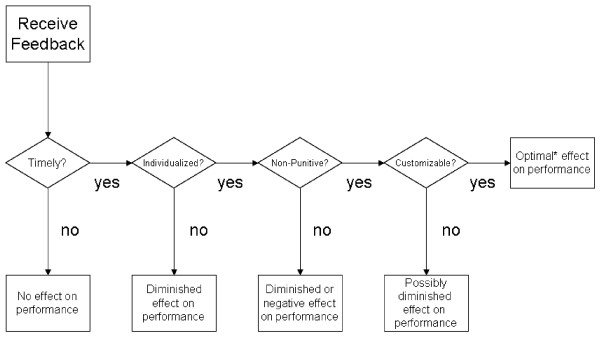
BACKGROUND: As a strategy for improving clinical practice guideline (CPG) adherence, audit and feedback (A&F) has been found to be variably effective, yet A&F research has not investigated the impact of feedback characteristics on its effectiveness. This paper explores how high performing facilities (HPF) and low performing facilities (LPF) differ in the way they use clinical audit data for feedback purposes. METHOD: Descriptive, qualitative, cross-sectional study of a purposeful sample of six Veterans Affairs Medical Centers (VAMCs) with high and low adherence to six CPGs, as measured by external chart review audits. One-hundred and two employees involved with outpatient CPG implementation across the six facilities participated in one-hour semi-structured interviews where they discussed strategies, facilitators and barriers to implementing CPGs. Interviews were analyzed using techniques from the grounded theory method. RESULTS: High performers provided timely, individualized, non-punitive feedback to providers, whereas low performers were more variable in their timeliness and non-punitiveness and relied on more standardized, facility-level reports. The concept of actionable feedback emerged as the core category from the data, around which timeliness, individualization, non-punitiveness, and customizability can be hierarchically ordered. CONCLUSION: Facilities with a successful record of guideline adherence tend to deliver more timely, individualized and non-punitive feedback to providers about their adherence than facilities with a poor record of guideline adherence. Consistent with findings from organizational research, feedback intervention characteristics may influence the feedback's effectiveness at changing desired behaviors.
Overview
The claims and statistics of this paper haven’t been checked yet.
Free: it reads the open-access text and checks the first 5 claims that cite a source we can check. Create a free account to check every claim.
Integrity signals
Registry
Cites
Statistics
Figures
Verification
Claims the paper makes
The claims and statistics of this paper haven’t been checked yet.
Free: it reads the open-access text and checks the first 5 claims that cite a source we can check. Create a free account to check every claim.
Claims other papers make about this one
Each is checked against this paper’s own text: does it say what the citing paper says it does?
The cited source says what the claim attributes to it.
In the citing paper
“This fits well with previous qualitative work comparing high and low performing hospitals finding that feedback with a punitive tone seems to be less effective (Hysong 2006).”
From Audit and feedback: effects on professional practice and healthcare outcomes (2012) · cites this paper as Hysong 2006
In the citing paper
“The effectiveness of A&F may be influenced by the characteristics of the targeted behavior, the recipients, their context, and the components of the A&F intervention itself [9,15,16].”
From No more ‘business as usual’ with audit and feedback interventions: towards an agenda for a reinvigorated intervention (2014) · cites this paper as [15]
In the citing paper
“Conversely, feedback is less effective when it comes from a regulatory body, agreeing with qualitative work suggesting that feedback perceived to be potentially punitive appeared less effective than a supportive approach [15,20].”
From No more ‘business as usual’ with audit and feedback interventions: towards an agenda for a reinvigorated intervention (2014) · cites this paper as [15]
Self-check
Percentages, sums and reported differences re-computed from the paper’s own numbers.
The self-check needs the paper’s full text.
Citations
Cites
1 retracted
O'Brien, M. A., Oxman, A. D., Davis, D., Haynes, R. B., Freemantle, N., & Harvey, E. (1998) · Cochrane Database of Systematic Reviews · doi:10.1002/14651858.cd000260 · Cited by 123
Retracted(1998) · Sage eBooks · Cited by 38,631
The Discovery of Grounded Theory: Strategies for Qualitative Research
Glaser, B. G., & Strauss, A. L. (2017) · Aldine (Routledge reprint) · doi:10.4324/9780203793206 · Cited by 25,789
The Discovery of Grounded Theory
Glaser, B. G., & Strauss, A. L. (2017) · The Discovery of Grounded Theory · doi:10.4324/9780203793206-1 · Cited by 8,344
Kluger, A. N., & DeNisi, A. (1996) · Psychological Bulletin · doi:10.1037/0033-2909.119.2.254 · Cited by 5,882 · cited 5×
“Third is non-punitiveness – feedback delivered in a non-punitive way is less likely to be resisted by the recipient regardless of content [15,23,24], thus”
BackgroundInfluentialAudit and feedback: effects on professional practice and healthcare outcomes
Ivers, N., Jamtvedt, G., Flottorp, S., Young, J. M., Odgaard-Jensen, J., French, S. D., O'Brien, M. A., Johansen, M., Grimshaw, J., & Oxman, A. D. (2012) · Cochrane Database of Systematic Reviews · doi:10.1002/14651858.cd000259.pub3 · Cited by 5,485
Effectiveness and efficiency of guideline dissemination and implementation strategies
Grimshaw, J., Thomas, R., MacLennan, G., Fraser, C., Ramsay, C., Vale, L., Whitty, P., Eccles, M., Matowe, L., Shirran, L., et al. (2004) · Health Technology Assessment · doi:10.3310/hta8060 · Cited by 3,044 · cited 2×
“Grimshaw and colleagues[5] reported a median effect size of A&F of +7% compared to no intervention using dichotomous process measures, with effect sizes ranging from 1.”
BackgroundMethodAudit and feedback: effects on professional practice and health care outcomes
Jamtvedt, G., Young, J. M., Kristoffersen, D. T., O'Brien, M. A., & Oxman, A. D. (2006) · Cochrane Database of Systematic Reviews · doi:10.1002/14651858.cd000259.pub2 · Cited by 912 · cited 3×
“Along similar lines, Jamtvedt and colleagues [6] reported a median adjusted relative risk of non-compliance of .”
BackgroundEffectiveness and efficiency of guideline dissemination and implementation strategies
Grimshaw, J. M., Thomas, R. E., MacLennan, G., Fraser, C., Ramsay, C. R., Vale, L., Whitty, P., Eccles, M. P., Matowe, L., Shirran, L., et al. (2005) · International Journal of Technology Assessment in Health Care · doi:10.1017/s0266462305290190 · Cited by 864
DeShon, R. P., Kozlowski, S. W. J., Schmidt, A. M., Milner, K. R., & Wiechmann, D. (2004) · Journal of Applied Psychology · doi:10.1037/0021-9010.89.6.1035 · Cited by 606 · cited 2×
“Timely feedback has long been positively associated with feedback effectiveness in the organizational literature,[13] as has the need for individualized feedback[21,22].”
Background
Research works printed but not linked: 2
- Pugh JA Knowledge management and clinical practice guideline implementation [Final Report] CPI 99129-1 2001 San Antonio, TX, Veterans Evidence-Based Implementation Dissemination Center
- Muhr T Atlas ti – Short User's Manual [42 Build 061] 2001 Berlin, Germany, Scientific Software Development
Cited by
Audit and feedback: effects on professional practice and healthcare outcomes
Ivers, N., Jamtvedt, G., Flottorp, S., Young, J. M., Odgaard-Jensen, J., French, S. D., O'Brien, M. A., Johansen, M., Grimshaw, J., & Oxman, A. D. (2012) · Cochrane Database of Systematic Reviews · doi:10.1002/14651858.cd000259.pub3 · Cited by 5,485
Barriers and Strategies in Guideline Implementation—A Scoping Review
Fischer, F., Lange, K., Klose, K., Greiner, W., & Kraemer, A. (2016) · Healthcare · doi:10.3390/healthcare4030036 · Cited by 900
“[49] Review n/a Disease-specific: Hypertension [50] Study Australia Disease-specific: Vascular diseases [51] Study USA Generic [52] Study USA Generic [53] Study USA Disease-specific: Angina [54] Review Germany Generic [55] Study Spain Disease-specific: Hypertension [20] Study Netherlands Generic [56] Study Netherlands…”
BackgroundWinstone, N. E., Nash, R. A., Parker, M., & Rowntree, J. (2017) · Educational Psychologist · doi:10.1080/00461520.2016.1207538 · Cited by 884
Boyce, M. B., Browne, J. P., & Greenhalgh, J. (2014) · BMJ Quality & Safety · doi:10.1136/bmjqs-2013-002524 · Cited by 505
The FRAME-IS: a framework for documenting modifications to implementation strategies in healthcare
Miller, C. J., Barnett, M. L., Baumann, A. A., Gutner, C. A., & Wiltsey-Stirman, S. (2021) · Implementation Science · doi:10.1186/s13012-021-01105-3 · Cited by 490
“, audit and feedback [12]) to more intensive strategies that include multiple components and may act on more than one level of a health system (e.”
BackgroundHow can we improve guideline use? A conceptual framework of implementability
Gagliardi, A. R., Brouwers, M. C., Palda, V. A., Lemieux-Charles, L., & Grimshaw, J. M. (2011) · Implementation Science · doi:10.1186/1748-5908-6-26 · Cited by 472
“While the concept of implementability is not new, the proposed framework is unique because it includes features that may be relevant not only to individuals, but to the managers and policy makers that govern the environment within which individuals function, and because it offers a novel way to improve guideline use b…”
BackgroundInfection Prevention and Control Guideline for Cystic Fibrosis: 2013 Update
Saiman, L., Siegel, J. D., LiPuma, J. J., Brown, R. F., Bryson, E. A., Chambers, M. J., Downer, V. S., Fliege, J., Hazle, L. A., Jain, M., et al. (2014) · Infection Control & Hospital Epidemiology · doi:10.1086/676882 · Cited by 387
Ivers, N. M., Sales, A., Colquhoun, H., Michie, S., Foy, R., Francis, J. J., & Grimshaw, J. M. (2014) · Implementation Science · doi:10.1186/1748-5908-9-14 · Cited by 400
“Examining mechanisms of action and qualitative studies prior to trials may help identify barriers and facilitators to change that can inform intervention design [15].”
BackgroundInfluentialIvers, N. M., Grimshaw, J. M., Jamtvedt, G., Flottorp, S., O’Brien, M. A., French, S. D., Young, J., & Odgaard-Jensen, J. (2014) · Journal of General Internal Medicine · doi:10.1007/s11606-014-2913-y · Cited by 382
“We acknowledge that many other potential variables, including the clinical topic and context, likely impact the effectiveness of the intervention.(19,20) Amongst the 98 comparisons, there were 41 comparisons testing audit and feedback alone and 57 comparisons testing audit and feedback as the core, essential part of a…”
BackgroundBrown, B., Gude, W. T., Blakeman, T., van der Veer, S. N., Ivers, N., Francis, J. J., Lorencatto, F., Presseau, J., Peek, N., & Daker-White, G. (2019) · Implementation Science · doi:10.1186/s13012-019-0883-5 · Cited by 387
A Review of Challenges and Opportunities in Machine Learning for Health
Ghassemi, M., Naumann, T., Schulam, P., Beam, A. L., Chen, I. Y., & Ranganath, R. (2018) · PubMed · doi:10.48550/arxiv.1806.00388 · Cited by 248
Dang, B. N., Westbrook, R. A., Njue, S. M., & Giordano, T. P. (2017) · BMC Medical Education · doi:10.1186/s12909-017-0868-5 · Cited by 278
Meta-Analysis: Audit and Feedback Features Impact Effectiveness on Care Quality
Hysong, S. J. (2009) · Medical Care · doi:10.1097/mlr.0b013e3181893f6b · Cited by 306
Self-citationBogale, B., Mørkrid, K., O’Donnell, B., Ghanem, B., Abu Ward, I., Abu Khader, K., Isbeih, M., Frost, M., Baniode, M., Hijaz, T., et al. (2020) · BMC Medical Informatics and Decision Making · doi:10.1186/s12911-019-1002-x · Cited by 234
Trautner, B. W., Grigoryan, L., Petersen, N. J., Hysong, S., Cadena, J., Patterson, J. E., & Naik, A. D. (2015) · JAMA Internal Medicine · doi:10.1001/jamainternmed.2015.1878 · Cited by 193
Self-citationPagoto, S. L., Spring, B., Coups, E. J., Mulvaney, S., Coutu, M., & Ozakinci, G. (2007) · Journal of Clinical Psychology · doi:10.1002/jclp.20376 · Cited by 183
Colquhoun, H. L., Carroll, K., Eva, K. W., Grimshaw, J. M., Ivers, N., Michie, S., Sales, A., & Brehaut, J. C. (2017) · Implementation Science · doi:10.1186/s13012-017-0646-0 · Cited by 123
“Our category scheme (relevant to the recipient, the behavior, the content, and the delivery of the A&F) is one way to frame important A&F elements; others have organized them differently [2, 4, 24, 26, 27].”
BackgroundMethodAudit and feedback: effects on professional practice
Ivers, N., Yogasingam, S., Lacroix, M., Brown, K. A., Antony, J., Soobiah, C., Simeoni, M., Willis, T. A., Crawshaw, J., Antonopoulou, V., et al. (2025) · Cochrane Database of Systematic Reviews · doi:10.1002/14651858.cd000259.pub4 · Cited by 78
Schembre, S. M., Liao, Y., Robertson, M. C., Dunton, G. F., Kerr, J., Haffey, M. E., Burnett, T., Basen-Engquist, K., & Hicklen, R. S. (2018) · Journal of Medical Internet Research · doi:10.2196/jmir.8701 · Cited by 154
“Hysong and colleagues [57] examined the use of feedback for improving clinical”
BackgroundThe Evidence for Evidence-Based Practice Implementation
Titler, M. G. (2008) · Cited by 173
A thematic analysis of theoretical models for translational science in nursing: Mapping the field
Mitchell, S. A., Fisher, C. A., Hastings, C. E., Silverman, L. B., & Wallen, G. R. (2010) · Nursing Outlook · doi:10.1016/j.outlook.2010.07.001 · Cited by 138
User-centered design to improve clinical decision support in primary care
Brunner, J., Chuang, E., Goldzweig, C., Cain, C. L., Sugar, C., & Yano, E. M. (2017) · International Journal of Medical Informatics · doi:10.1016/j.ijmedinf.2017.05.004 · Cited by 117
Payne, V. L., & Hysong, S. J. (2016) · BMC Health Services Research · doi:10.1186/s12913-016-1486-3 · Cited by 127
Self-citationHaynes, A. S., Rowbotham, S. J., Redman, S., Brennan, S., Williamson, A. B., & Moore, G. (2018) · Health Research Policy and Systems · doi:10.1186/s12961-018-0277-1 · Cited by 118
“This is supported by calls more generally for collaborative needs assessment as a precursor to local tailoring of interventions [172, 173], as this is likely to identify goals that are locally meaningful, make implementation plans more actionable, actively engage participants in translating data, and increase their in…”
The top ten: best practice recommendations for aphasia
Simmons-Mackie, N., Worrall, L., Murray, L. L., Enderby, P., Rose, M. L., Paek, E. J., & Klippi, A. (2017) · Aphasiology · doi:10.1080/02687038.2016.1180662 · Cited by 96
“Based on the search of influential English language publications, websites and databases, and on the quality review by Rohde et al. (2013), nine national stroke and/ or aphasia guidelines were identified to serve as the primary source documents for developing the Aphasia United best practice recommendations (Appendix…”
BackgroundeRegistries: Electronic registries for maternal and child health
Frøen, J. F., Myhre, S. L., Frost, M. J., Chou, D., Mehl, G., Say, L., Cheng, S., Fjeldheim, I., Friberg, I. K., French, S., et al. (2016) · BMC Pregnancy and Childbirth · doi:10.1186/s12884-016-0801-7 · Cited by 94
“The Model of Actionable Feedback further proposes that in order to be actionable, feedback must be timely, individualized, non-punitive and meaningful [96, 97].”
BackgroundUsing quality indicators in anaesthesia: feeding back data to improve care
Benn, J., Arnold, G., Wei, I., Riley, C., & Aleva, F. E. (2012) · British Journal of Anaesthesia · doi:10.1093/bja/aes173 · Cited by 106
Strategies to reduce diagnostic errors: a systematic review
Abimanyi-Ochom, J., Bohingamu Mudiyanselage, S., Catchpool, M., Firipis, M., Wanni Arachchige Dona, S., & Watts, J. J. (2019) · BMC Medical Informatics and Decision Making · doi:10.1186/s12911-019-0901-1 · Cited by 91
Davey, P., Peden, C., Charani, E., Marwick, C., & Michie, S. (2015) · International Journal of Antimicrobial Agents · doi:10.1016/j.ijantimicag.2014.11.014 · Cited by 77
“The ‘model of actionable feedback’ [40] emphasises that feedback should be timely, individualised, non-punitive and customised.”
BackgroundMethodInfluentialUsing audit and feedback to health professionals to improve the quality and safety of health care
Flottorp, S. A., Jamtvedt, G., Gibis, B., & McKee, M. (2010) · Cited by 142
Improving quality of care through improved audit and feedback
Hysong, S. J., Teal, C. R., Khan, M. J., & Haidet, P. (2012) · Implementation Science · doi:10.1186/1748-5908-7-45 · Cited by 82
“…content and format as specified in Kluger and DeNisi, 1996 (e.g., correct solution information, frequency); feedback characteristics as specified in Hysong et al., 2006 (i.e., timeliness, punitiveness, individualization, customizability); attitudes and mental models about EPRP (e.g.,…”
BackgroundSelf-citationProblems of Clinical Nurse Performance Appraisal System: A Qualitative Study
Nikpeyma, N., Saeedi, Z. A., Azargashb, E., & Majd, H. A. (2013) · Asian Nursing Research · doi:10.1016/j.anr.2013.11.003 · Cited by 89
“Hysong, Best, and Pugh (2006) also reported that the absence of the trainedmanagers is the greatest weakness of the employee appraisal system in hospitals.”
BackgroundGagliardi, A. R., Fenech, D. S., Eskicioglu, C., Nathens, A. B., & McLeod, R. S. (2009) · Europe PMC (PubMed Central) · Cited by 82
Feedback as a strategy to change behaviour: the devil is in the details
Larson, E., Patel, S. J., Evans, D. J., & Saiman, L. M. (2011) · Journal of Evaluation in Clinical Practice · doi:10.1111/j.1365-2753.2011.01801.x · Cited by 64
Aboumatar, H. J., Chang, B. H., Danaf, J. A., Shaear, M., Namuyinga, R. J., Elumalai, S., Marsteller, J. A., & Pronovost, P. J. (2015) · Medical Care · doi:10.1097/mlr.0000000000000396 · Cited by 74
Titler, M. G., Herr, K., Brooks, J. M., Xie, X., Ardery, G., Schilling, M. L., Marsh, J. L., Everett, L. Q., & Clarke, W. R. (2009) · Health Services Research · doi:10.1111/j.1475-6773.2008.00913.x · Cited by 69
“PGA and A/F have consistently shown a positive effect on changing practice behavior of providers (Bradley et al. 2004; Horbar et al. 2004; Hysong, Best, and Pugh 2006; Jamtvedt et al. 2006).”
BackgroundCohen, D. J., Balasubramanian, B. A., Gordon, L., Marino, M., Ono, S., Solberg, L. I., Crabtree, B. F., Stange, K. C., Davis, M., Miller, W. L., et al. (2015) · Implementation Science · doi:10.1186/s13012-016-0449-8 · Cited by 57
Overcoming the obstacles of implementing infection prevention and control guidelines
Birgand, G., Johansson, A. F., Szilágyi, E., & Lucet, J. C. (2015) · Clinical Microbiology and Infection · doi:10.1016/j.cmi.2015.09.005 · Cited by 60
“New mechanisms of governance have been designed to avoid mistrust or fearfulness, to decentralize actions and cope with the increased complexity of society [16].”
BackgroundKeogh, S. J., Long, D. A., & Horn, D. V. (2015) · BMJ Open · doi:10.1136/bmjopen-2014-006428 · Cited by 57
“Potential solutions to these issues included ongoing staff education and timely feedback related to the guideline to continuously reinforce importance, ease of use and troubleshoot issues.(52) In addition to surveying staff opinion, it is also important to conduct periodic chart audits to quantify guideline fidelity.”
BackgroundDisparities in Feedback Provision to Emergency Medical Services Professionals
Cash, R. E., Crowe, R. P., Rodriguez, S. A., & Panchal, A. R. (2017) · Prehospital Emergency Care · doi:10.1080/10903127.2017.1328547 · Cited by 57
Monitoring hand hygiene: Meaningless, harmful, or helpful?
Larson, E. (2013) · American Journal of Infection Control · doi:10.1016/j.ajic.2012.09.029 · Cited by 57
Sarkies, M., Francis‐Auton, E., Long, J. C., Roberts, N., Westbrook, J. I., Lévesque, J., Watson, D. E., Hardwick, R., Sutherland, K., Disher, G. J., et al. (2023) · Implementation Science · doi:10.1186/s13012-023-01324-w · Cited by 63
“However, feedback needs to describe both desirable and achievable processes and behavioural changes [69], as recipients must believe they have control over that behaviour and commit to change to avoid the risk of recipients rationalising the status quo [70].”
BackgroundHysong, S. J., Kell, H. J., Petersen, L. A., Campbell, B. A., & Trautner, B. W. (2016) · BMJ Quality & Safety · doi:10.1136/bmjqs-2015-004796 · Cited by 56
Self-citationSrigley, J. R., Lankshear, S., Brierley, J., McGowan, T. S., Divaris, D. X. G., Yurcan, M., Rossi, R., Yardley, T., King, M. J., Ross, J., et al. (2013) · Journal of Oncology Practice · doi:10.1200/jop.2012.000818 · Cited by 55
A qualitative study of the variable effects of audit and feedback in the ICU
Sinuff, T., Muscedere, J., Rozmovits, L., Dale, C., & Scales, D. C. (2015) · BMJ Quality & Safety · doi:10.1136/bmjqs-2015-003978 · Cited by 59
Rogal, S. S., Yakovchenko, V., Waltz, T. J., Powell, B. J., Gonzalez, R., Park, A., Chartier, M., Ross, D., Morgan, T. R., Kirchner, J. E., et al. (2019) · Implementation Science · doi:10.1186/s13012-019-0881-7 · Cited by 52
Döpp, C. M. E., Graff, M. J. L., Rikkert, M. G. M. O., der Sanden, M. W. G. N., & Vernooij-Dassen, M. J. F. J. (2013) · Implementation Science · doi:10.1186/1748-5908-8-131 · Cited by 57
“To facilitate implementation in the long run, the development of an organizational structure to facilitate and monitor implementation of evidence-based interventions is recommended [37].”
Conway, L. J., Riley, L., Saiman, L. M., Cohen, B., Alper, P., & Larson, E. (2014) · The Joint Commission Journal on Quality and Patient Safety · doi:10.1016/s1553-7250(14)40053-9 · Cited by 60
Translating Research into Practice
Titler, M. G. (2007) · AJN American Journal of Nursing · doi:10.1097/01.naj.0000277823.51806.10 · Cited by 65
Jeffs, L. P., Beswick, S., Lo, J., Lai, Y., Chhun, A., & Campbell, H. (2014) · BMJ Quality & Safety · doi:10.1136/bmjqs-2013-002595 · Cited by 55
Development of an Antimicrobial Stewardship Intervention Using a Model of Actionable Feedback
Patel, S. J., Saiman, L. M., Duchon, J. M., Evans, D. J., Ferng, Y., & Larson, E. (2012) · Interdisciplinary Perspectives on Infectious Diseases · doi:10.1155/2012/150367 · Cited by 49
“as they identified a group of factors that enabled organizational feedback to avoid these administrative constraints and function more like the individual feedback process described in the selfregulation model [7].”
BackgroundIvers, N. M., Barnsley, J. M., Upshur, R. E. G., Tu, K., Shah, B. R., Grimshaw, J., & Zwarenstein, M. (2014) · Europe PMC (PubMed Central) · Cited by 49
The University of North Carolina at Chapel Hill University Libraries (2014) · Schizophrenia Bulletin · doi:10.1093/schbul/sbt170 · Cited by 50
Everett, L. Q., & Sitterding, M. (2010) · Western Journal of Nursing Research · doi:10.1177/0193945910383056 · Cited by 48
Use of Quality Improvement Strategies Among Small to Medium-Size US Primary Care Practices
Balasubramanian, B. A., Marino, M., Cohen, D. J., Ward, R. L., Preston, A., Springer, R. J., Lindner, S., Edwards, S. T., McConnell, K. J., Crabtree, B. F., et al. (2018) · The Annals of Family Medicine · doi:10.1370/afm.2172 · Cited by 51
Johnson, M. S., & Bakas, T. (2010) · Journal of Neuroscience Nursing · doi:10.1097/jnn.0b013e3181ce5a48 · Cited by 53
“According to Hysong, Best, and Pugh (2006), organizations that provided timely, individualized, nonpunitive, and customizable feedback have been found to have better adherence to clinical practice guidelines.”
BackgroundGaube, S., Tsivrikos, D., Dollinger, D., & Lermer, E. (2018) · PLoS ONE · doi:10.1371/journal.pone.0197465 · Cited by 53
Ivers, N. M., Tu, K., Young, J., Francis, J. J., Barnsley, J., Shah, B. R., Upshur, R. E., Moineddin, R., Grimshaw, J. M., & Zwarenstein, M. (2013) · Implementation Science · doi:10.1186/1748-5908-8-142 · Cited by 34
“Qualitative work conducted in the Veterans Affairs health system in the USA also indicates that high performing healthcare organizations tend to deliver feedback with more actionable information [40].”
BackgroundHancock, S., Ryan, O., Marion, V., Kramer, S. F., Kelly, P., Breen, S. J., & Cadilhac, D. A.-M. (2020) · BMJ Open · doi:10.1136/bmjopen-2020-038190 · Cited by 49
Cavazos, J., NAIK, A. D., Woofter, A., & Abraham, N. S. (2008) · Alimentary Pharmacology & Therapeutics · doi:10.1111/j.1365-2036.2008.03791.x · Cited by 45
Titler, M. G., Conlon, P. F., Reynolds, M. A., Ripley, R. T., Tsodikov, A. D., Wilson, D. S., & Montie, M. (2015) · Applied Nursing Research · doi:10.1016/j.apnr.2015.12.004 · Cited by 52
Reynolds, M., Jheeta, S., Benn, J. J., Sanghera, I., Jacklin, A., Ingle, D., & Franklin, B. D. (2016) · BMJ Quality & Safety · doi:10.1136/bmjqs-2015-004717 · Cited by 45
Green, L. A., Wyszewianski, L., Lowery, J. C., Kowalski, C. P., & Krein, S. L. (2007) · Implementation Science · doi:10.1186/1748-5908-2-41 · Cited by 44
“[21], in a qualitative study in the VA system, found that high- and low-performing sites with respect to guideline concordant care carried out audit and feedback interventions differently.”
Lambe, K. A., Lydon, S., Madden, C., McSharry, J., Marshall, R., Boylan, R., Hehir, A., Byrne, M., Tujjar, O., & O'Connor, P. E. (2020) · BMC Health Services Research · doi:10.1186/s12913-020-05215-4 · Cited by 52
Multimodal environmental cleaning strategies to prevent healthcare-associated infections
Browne, K., & MITCHELL, B. G. (2023) · Antimicrobial Resistance and Infection Control · doi:10.1186/s13756-023-01274-4 · Cited by 48
“Feedback should be timely, individualized, non-punitive and customizable [50].”
Gachau, S., Ayieko, P., Gathara, D., Mwaniki, P., Ogero, M. O., Akech, S., Maina, M., Agweyu, A., Oliwa, J. N., Julius, T., et al. (2017) · BMJ Global Health · doi:10.1136/bmjgh-2017-000468 · Cited by 46
“32 To promote change, and in keeping with Hysong’s rearticulation of feedback intervention theory, 31 we aimed to provide timely, individualised (to hospitals), non-punitive and to a degree customisable feedback, 2 to team leaders.”
MethodAudit and feedback interventions to improve endoscopist performance: Principles and effectiveness
Tinmouth, J., Patel, J., Hilsden, R. J., Ivers, N. M., & Llovet, D. (2016) · Best Practice & Research Clinical Gastroenterology · doi:10.1016/j.bpg.2016.04.002 · Cited by 45
“A second study identified characteristics of Veterans Affairs Medical Centers with high and low compliance with clinical practice guidelines [17].”
BackgroundChallenges in implementing electronic hand hygiene monitoring systems
Conway, L. J. (2016) · American Journal of Infection Control · doi:10.1016/j.ajic.2015.11.031 · Cited by 45
Alostaz, Z., Rose, L., Mehta, S., Johnston, L. J., & Dale, C. (2021) · Intensive and Critical Care Nursing · doi:10.1016/j.iccn.2021.103153 · Cited by 44
Braganza, M. Z., & Kilbourne, A. M. (2020) · Journal of General Internal Medicine · doi:10.1007/s11606-020-06143-z · Cited by 41
de Vos, M. L. G., van der Veer, S. N., Graafmans, W. C., de Keizer, N. F., Jager, K. J., Westert, G. P., & van der Voort, P. H. J. (2013) · BMJ Quality & Safety · doi:10.1136/bmjqs-2012-001375 · Cited by 45
Undertreatment of Tobacco Use Relative to Other Chronic Conditions
Bernstein, S. L., Yu, S., Post, L. A., Dziura, J. D., & Rigotti, N. A. (2013) · American Journal of Public Health · doi:10.2105/ajph.2012.301112 · Cited by 39
Evidence Based Practice in Long Term Care Settings
Specht, J. K. P. (2013) · Journal of Korean Academy of Nursing · doi:10.4040/jkan.2013.43.2.145 · Cited by 39
Requirements for a quality dashboard: Lessons from National Clinical Audits.
Randell, R., Alvarado, N., McVey, L., Ruddle, R. A., Doherty, P., Gale, C. P., Mamas, M. A., & Dowding, D. (2019) · PubMed · Cited by 39
Online Plain Language Tool and Health Information Quality: A Randomized Clinical Trial
Ayre, J., Bonner, C., Muscat, D. M., Cvejic, E., Mac, O. A., Mouwad, D., Shepherd, H. L., Aslani, P., Dunn, A. G., & McCaffery, K. J. (2024) · JAMA Network Open · doi:10.1001/jamanetworkopen.2024.37955 · Cited by 38
McInnes, E., Phillips, R., Middleton, S., & Gould, D. J. (2014) · BMC Infectious Diseases · doi:10.1186/preaccept-6695611611337601 · Cited by 44
Experiencing patient-experience surveys: a qualitative study of the accounts of GPs
Edwards, A., Evans, R., White, P., & Elwyn, G. J. (2011) · British Journal of General Practice · doi:10.3399/bjgp11x567072 · Cited by 41
Gude, W. T., Roos-Blom, M.-J., van der Veer, S. N., de Jonge, E., Peek, N. B., Dongelmans, D. A., & de Keizer, N. F. (2017) · Implementation Science · doi:10.1186/s13012-017-0594-8 · Cited by 39
Twohig, P. A., Rivington, J. R., Gunzler, D. D., Daprano, J., & Margolius, D. (2019) · BMC Health Services Research · doi:10.1186/s12913-019-4327-3 · Cited by 37
Trautner, B. W., Kelly, P. A., Petersen, N. J., Hysong, S. J., Kell, H. J., Liao, K. S., PATTERSON, J. E., & Naik, A. D. (2011) · Implementation Science · doi:10.1186/1748-5908-6-41 · Cited by 36
“More specific information about elements of effective audit and feedback emerges from a qualitative survey of the Department of Veterans Affairs (VA) facilities with either high or low adherence to six clinical practice guidelines [20].”
BackgroundSelf-citationA quality improvement programme to increase compliance with an anti-infective prescribing policy
Thakkar, K. K., Gilchrist, M. J., Dickinson, E. J., Benn, J. J., Franklin, B. D., Jacklin, A., on behalf of the Anti-infective Policy Implementation Group, Adeniran, S. O., Ali, A., Brannigan, E., et al. (2011) · Journal of Antimicrobial Chemotherapy · doi:10.1093/jac/dkr207 · Cited by 35
Examining Clinical Performance Feedback in Patient-Aligned Care Teams
Hysong, S. J., Knox, M. K., & Haidet, P. (2014) · Journal of General Internal Medicine · doi:10.1007/s11606-013-2707-7 · Cited by 34
Self-citationStakeholder preferences for cancer care performance indicators
Gagliardi, A. R., Lemieux‐Charles, L., Brown, A. D., Sullivan, T., & Goel, V. (2008) · International Journal of Health Care Quality Assurance · doi:10.1108/09526860810859030 · Cited by 34
“Interviews with employees on the adherence to several clinical practice guidelines at high-performing hospitals revealed that data in this format was considered to be more “actionable” ( Hysong et al. , 2006”
Agins, B., Ikeda, D. J., Reid, M. J. A., Goosby, E., Pai, M., & Cattamanchi, A. (2019) · The Lancet Infectious Diseases · doi:10.1016/s1473-3099(19)30420-7 · Cited by 34
Patel, T. G., POGACH, L. M., & Barth, R. H. (2009) · American Journal of Kidney Diseases · doi:10.1053/j.ajkd.2008.07.051 · Cited by 34
Feedback on prescribing errors to junior doctors: exploring views, problems and preferred methods
Bertels, J., Almoudaris, A. M., Cortoos, P., Jacklin, A., & Franklin, B. D. (2013) · International Journal of Clinical Pharmacy · doi:10.1007/s11096-013-9759-y · Cited by 38
Almatar, M. A., Peterson, G. M., Thompson, A. J., McKenzie, D., Anderson, T. L., & Zaidi, S. T. R. (2016) · PLoS ONE · doi:10.1371/journal.pone.0159467 · Cited by 35
“[31], where they found providing feedback less often than once a month rendered it ineffective regarding influencing guideline concordance.”
BackgroundPatel, S., Rajkomar, A., Harrison, J. D., Prasad, P. A., Valencia, V. E., Ranji, S. R., & Mourad, M. (2018) · BMJ Quality & Safety · doi:10.1136/bmjqs-2017-007393 · Cited by 34
Borgert, M. J., Binnekade, J. M., Paulus, F., Goossens, A., Vroom, M. B., & Dongelmans, D. A. (2016) · International Journal for Quality in Health Care · doi:10.1093/intqhc/mzw071 · Cited by 34
Smits, P. A., & Champagne, F. (2020) · Health Research Policy and Systems · doi:10.1186/s12961-020-0525-z · Cited by 35
Cifra, C. L., Sittig, D. F., & Singh, H. (2021) · BMJ Quality & Safety · doi:10.1136/bmjqs-2020-012464 · Cited by 34
The cycle of change: implementing best-evidence clinical practice
Carey, M. L., Buchan, H., & Sanson‐Fisher, R. (2008) · International Journal for Quality in Health Care · doi:10.1093/intqhc/mzn049 · Cited by 38
“If given non-punitively, feedback may be most effective given at the individual rather than group level [31].”
BackgroundBrown, B. C., Balatsoukas, P., Williams, R., Sperrin, M., & Buchan, I. E. (2017) · Journal of Biomedical Informatics · doi:10.1016/j.jbi.2017.11.008 · Cited by 31
“Users must take action based on the information from e-A&F systems in order for improvements in patient care and safety to take place [37].”
BackgroundIvers, N. M., Tu, K., Francis, J., Barnsley, J., Shah, B., Upshur, R., Kiss, A., Grimshaw, J. M., & Zwarenstein, M. (2010) · Implementation Science · doi:10.1186/1748-5908-5-98 · Cited by 27
“Previous qualitative studies have isolated timeliness, customizability, and a non-punitive tone as key criteria for ‘actionable’ feedback [53].”
Improving adherence to cardiovascular guidelines: realistic transition from paper to patient
Mahtta, D., Rodríguez, F., Jneid, H. M., Levine, G. N., & Virani, S. S. (2020) · Expert Review of Cardiovascular Therapy · doi:10.1080/14779072.2020.1717335 · Cited by 29
“proven to be effective in improving guideline adherence but also having positive effects on patient-centered outcomes [68,69].”
BackgroundChang, E. T., Oberman, R. S., Cohen, A. N., Taylor, S. L., Gumm, E., Mardian, A. S., Toy, S., Revote, A., Lewkowitz, B., & Yano, E. M. (2020) · Journal of General Internal Medicine · doi:10.1007/s11606-020-06255-6 · Cited by 27
Fillipo, R., Pruka, K., Carvalho, M., Horn, M. E., Moore, J., Ramger, B., & Clewley, D. J. (2022) · Implementation Science Communications · doi:10.1186/s43058-022-00305-2 · Cited by 28
“One study [45] suggests this strategy is most effective when employed in a timely, personalized, and non-punitive manner.”
BackgroundClinical audits to improve critical care: Part 2: Analyse, benchmark and feedback
Ray‐Barruel, G., Ullman, A. J., Rickard, C. M., & Cooke, M. L. (2017) · Australian Critical Care · doi:10.1016/j.aucc.2017.04.002 · Cited by 27
Stander, J., Grimmer, K. A., & Brink, Y. (2019) · Journal of Evaluation in Clinical Practice · doi:10.1111/jep.13182 · Cited by 28
The Effects of Social Influence on Nurses' Hand Hygiene Behaviors
Piras, S. E., Minnick, A. F., Lauderdale, J. L., Dietrich, M. S., & Vogus, T. J. (2018) · JONA The Journal of Nursing Administration · doi:10.1097/nna.0000000000000602 · Cited by 31
Metadata
- Authors
- Hysong, S. J., Best, R. G., & Pugh, J. A.
- Affiliations
- Michael E. DeBakey VA Medical Center (US)
- Lockheed Martin (United States) (US)
- The University of Texas at San Antonio Health Science Center (US)
- Corresponding author
- Hysong, Sylvia J
- Venue
- Implementation Science
- Published
- 2006-04-28
- Volume
- 1
- Issue
- 1
- Pages
- 9-9
- ISSN
- 1748-5908 (ISSN-L)
- PMC
- PMC1479835
- OpenAlex
- W2139258049
- Cited by
- 371
- References
- 34
- Citations by year
- 2026: 8 · 2025: 10 · 2024: 27 · 2023: 20 · 2022: 26 · 2021: 31 · 2020: 22 · 2019: 24 · 2018: 24 · 2017: 26 · 2016: 26 · 2015: 20 · 2014: 27 · 2013: 17 · 2012: 16
- FWCI
- 8.36
- Type
- journal article
- Language
- en
- Open access
- gold
- doi.org
- Licence
- Locations
- Implementation Science (publishedVersion, cc-by)
- PubMed Central (publishedVersion, cc-by)
- PubMed (publishedVersion)
- DOAJ (DOAJ: Directory of Open Access Journals) (submittedVersion)
- Funders
- U.S. Department of Veterans Affairs
- Health Services Research and Development
- University of Texas Health Science Center at San Antonio
- Topics
- Health Sciences › Medicine › Public Health, Environmental and Occupational Health › Clinical practice guidelines implementation
- Health Sciences › Health Professions › General Health Professions › Health Policy Implementation Science
- Health Sciences › Health Professions › General Health Professions › Health Sciences Research and Education
- Keywords
- audit and feedback, clinical practice guideline adherence, actionable feedback, feedback characteristics, personalized feedback, guideline implementation, Veterans Affairs hospitals, provider behavior change
About these checks
Registry, retraction, Cites and statistics results are computed, not judged, with one exception: a printed reference that no index lists is read once by a model before it counts as a citation error. Claims are extracted by a model and kept only when their quote appears verbatim in the text; each cited source is then checked, with a model’s help, for whether it says what the claim relies on. Those verdicts can be wrong — read the claim’s quote and the cited source before relying on one.
Statistics and arithmetic are recomputed, not judged.
Confidence bands are shown only for fields calibrated on our annotated test set. None is calibrated yet, so no band is shown.
What counts as a claim ›How we measure confidence ›How we check this ›
Are you an author, or do you see a problem with this page? Request a review
Data sources
Bibliographic data: Semantic Scholar, OpenAlex, Crossref.
Contains information from the Semantic Scholar Academic Graph Datasets, made available under the ODC Attribution License (ODC-BY 1.0).
Semantic Scholar’s data is described in: Kinney, R., et al. (2023). The Semantic Scholar Open Data Platform. arXiv:2301.10140.
