

A conceptual framework for implementation fidelity
Open accessThe DOI matches its Crossref record; 40 of the 41 references it cites were found in a registry or an index; 3 of the 55 sources its claims cite were checked for support.
Abstract
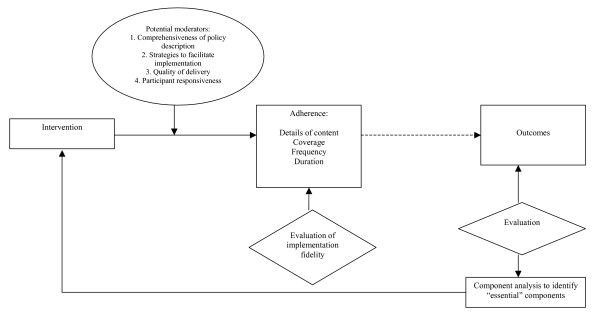
Implementation fidelity refers to the degree to which an intervention or programme is delivered as intended. Only by understanding and measuring whether an intervention has been implemented with fidelity can researchers and practitioners gain a better understanding of how and why an intervention works, and the extent to which outcomes can be improved. The authors undertook a critical review of existing conceptualisations of implementation fidelity and developed a new conceptual framework for understanding and measuring the process. The resulting theoretical framework requires testing by empirical research. Implementation fidelity is an important source of variation affecting the credibility and utility of research. The conceptual framework presented here offers a means for measuring this variable and understanding its place in the process of intervention implementation.
Overview
CoChat Summary
## TL;DR
The paper proposes a new conceptual framework for implementation fidelity, arguing that fidelity is not just adherence but is also shaped by intervention complexity, facilitation strategies, quality of delivery, and participant responsiveness. It is based on a critical review of the literature, and the authors call for empirical testing of the framework.
## Key findings
- Implementation fidelity is defined as the degree to which an intervention or programme is delivered as intended, and the paper argues it is an important source of variation affecting the credibility and utility of research.
- The framework identifies adherence as the bottom-line measure of fidelity, with subcategories of content, frequency, duration, and coverage (dose).
- The authors argue that fidelity may be moderated by four factors: intervention complexity, facilitation strategies, quality of delivery, and participant responsiveness.
- The paper notes that most implementation-fidelity studies focus only on adherence, while few measure quality of delivery or participant responsiveness; it also says such research rarely reports high implementation fidelity and often falls short of the ideal.
## Methods
- The paper reports a critical review of existing conceptualisations of implementation fidelity and relevant empirical studies, reviews, and theoretical pieces.
- The literature search used the databases Applied Social Sciences Index and Abstracts, CINAHL, International Bibliography of the Social Sciences, MEDLINE, and the Social Science Citation Index, plus scanned references and conference abstracts/presentations.
- The review focused principally on research published from 2002 to 2007.
## Limitations
- The authors explicitly state that the framework is theoretical and requires testing by empirical research.
- They also state that no study has yet measured the moderating effect of facilitation strategies on implementation fidelity, and that the role of quality of delivery as a moderator has not been explored in the literature to date.
- Evident from the text: the paper is a critical review rather than a primary empirical study, so it does not provide new data testing the framework.
Model-written summary. Check it against the paper before relying on it.
Integrity signals
Registry
Cites
Statistics
Figures
Verification
Claims the paper makes
3 Valid · 2 Not valid · 19 Not checked · 32 Own results and interpretations
Every source the paper cites for this claim was checked and supports it.
In the paper
“a study of guidelines intended for General Practitioners (GPs) found that detailed and clear recommendations were almost twice as likely to be followed as vague and non-specific recommendations [23].”
§ A conceptual framework for implementation fidelity > Background > A conceptual framework: elements and relationships
What the sources say
- Supportedcites [23] Grol R Dalhuijsen J Thomas S Veld C Rutten G Mokkink H Attributes of clinical guidelines that influence use of guidelines in general practice: observational study Brit Med J 1998 317 858 861 9748183 PMC31096 source
Table 1 reports that general practitioners followed vague, non-specific recommendations in 36% of decisions, versus 67% for recommendations that were not vague or non-specific—about 1.9 times as often. It also reports 67% compliance for recommendations described concretely and precisely, supporting the claim's characterization as detailed and clear. Page numbers were not available in our copy. (LLM, conf=0.94)
plainstates an association- Asserted: passes — The authors put it forward as true.
- Checkable: passes — It can be checked against evidence.
- Load-bearing: passes — The paper’s conclusions depend on it.
- Based: passes — The paper gives a reason why it holds.
- Supported
None of the sources cited for this claim have been checked yet.
In the paper
“It has been demonstrated that the fidelity with which an intervention is implemented affects how well it succeeds [1-5].”
§ A conceptual framework for implementation fidelity > Background
What the sources say
- Not checked — no full text of the sourcecites [1] Dusenbury L Brannigan R Falco M Hansen W A review of research on fidelity of implementation: Implications for drug abuse prevention in school settings Health Educ Res 2003 18 237 256 12729182 10.1093/her/18.2.237 source
- Not checked — no full text of the sourcecites [2] Dane A Schneider B Program integrity in primary and early secondary prevention: Are implementation effects out of control Clin Psychol Rev 1998 18 23 45 9455622 10.1016/S0272-7358(97)00043-3 source
- Not checked — no full text of the sourcecites [3] Elliot D Mihalic S Issues in disseminating and replicating effective prevention programs Prev Sci 2004 5 47 53 15058912 10.1023/B:PREV.0000013981.28071.52 source
- Not matchedcites [4] Mihalic S The importance of implementation fidelity Emotional & Behavioral Disorders in Youth 2004 4 83 86 and 99–105.
Its entry has no title and year that we can search by.
- Not checked yetcites [5] Mihalic S The importance of implementation fidelity Blueprints Violence Prevention Initiative 2002 Boulder, Colorado
states a cause- Asserted: passes — The authors put it forward as true.
- Checkable: passes — It can be checked against evidence.
- Load-bearing: passes — The paper’s conclusions depend on it.
- Based: passes — The paper gives a reason why it holds.
None of the sources cited for this claim have been checked yet.
In the paper
“Implementation fidelity acts as a potential moderator of the relationship between interventions and their intended outcomes.”
§ A conceptual framework for implementation fidelity > Background
What the sources say
- Not checked — no full text of the sourcecites [1] Dusenbury L Brannigan R Falco M Hansen W A review of research on fidelity of implementation: Implications for drug abuse prevention in school settings Health Educ Res 2003 18 237 256 12729182 10.1093/her/18.2.237 source
- Not checked — no full text of the sourcecites [2] Dane A Schneider B Program integrity in primary and early secondary prevention: Are implementation effects out of control Clin Psychol Rev 1998 18 23 45 9455622 10.1016/S0272-7358(97)00043-3 source
- Not checked — no full text of the sourcecites [3] Elliot D Mihalic S Issues in disseminating and replicating effective prevention programs Prev Sci 2004 5 47 53 15058912 10.1023/B:PREV.0000013981.28071.52 source
- Not matchedcites [4] Mihalic S The importance of implementation fidelity Emotional & Behavioral Disorders in Youth 2004 4 83 86 and 99–105.
Its entry has no title and year that we can search by.
- Not checked yetcites [5] Mihalic S The importance of implementation fidelity Blueprints Violence Prevention Initiative 2002 Boulder, Colorado
hedgedstates a possible cause- Asserted: passes — The authors put it forward as true.
- Checkable: passes — It can be checked against evidence.
- Load-bearing: passes — The paper’s conclusions depend on it.
- Based: passes — The paper gives a reason why it holds.
In the paper
“Unless such an evaluation is made, it cannot be determined whether a lack of impact is due to poor implementation or inadequacies inherent in the programme itself, a so-called Type III error [11]”
§ A conceptual framework for implementation fidelity > Background
What the sources say
- Not checked — no full text of the sourcecites [11] Dobson L Cook T Avoiding Type III error in program evaluation: results from a field experiment Evaluation and Program Planning 1980 3 269 276 10.1016/0149-7189(80)90042-7 source
plainstates a cause- Asserted: passes — The authors put it forward as true.
- Checkable: passes — It can be checked against evidence.
- Load-bearing: passes — The paper’s conclusions depend on it.
- Based: passes — The paper gives a reason why it holds.
None of the sources cited for this claim have been checked yet.
In the paper
“two studies examining programmes to help people with mental health issues obtain employment found that employment outcomes among their study groups were weakest for those in poorly implemented programmes [6,7].”
§ A conceptual framework for implementation fidelity > Background
What the sources say
- Not checked — no full text of the sourcecites [6] McGrew J Griss M Concurrent and predictive validity of two scales to assess the fidelity of implementation of supported employment Psychiatr Rehab J 2005 29 41 47 10.2975/29.2005.41.47 16075696 source
- Not checked yetcites [7] Resnick B Neale M Rosenheck R Impact of public support payments, intensive psychiatric community care, and program fidelity on employment outcomes for people with severe mental illness J Nerv Ment Dis 2003 191 139 144 12637839 10.1097/00005053-200303000-00001 source
plainstates an association- Asserted: passes — The authors put it forward as true.
- Checkable: passes — It can be checked against evidence.
- Load-bearing: passes — The paper’s conclusions depend on it.
- Based: passes — The paper gives a reason why it holds.
22 more claims
Create a free account to see all 56 claims and to verify the 10 references still open.
- Probably not a substantial claim. 21
- It may state two separate claims as one. 8
Claims other papers make about this one
Each is checked against this paper’s own text: does it say what the citing paper says it does?
The source backs part of the claim, not all of it — or backs it for a different population, condition or comparison.
In the citing paper
“They are key indicators of whether a program is appropriate/acceptable for the intended audience and context, whether there are enough resources to support delivery, and whether it is being used (Carroll et al., 2007).”
From Intervention Programs Targeting the Mental Health, Professional Burnout, and/or Wellbeing of School Teachers: Systematic Review and Meta-Analyses (2023) · cites this paper as Carroll et al., 2007
Experimental — accuracy not yet measuredThe source backs part of the claim, not all of it — or backs it for a different population, condition or comparison.
In the citing paper
“They acknowledged that adaptations are likely to occur in real-world implementation, but the question on how to address this issue while measuring fidelity remained unanswered.”
From A modified theoretical framework to assess implementation fidelity of adaptive public health interventions (2015) · cites this paper as [15]
Experimental — accuracy not yet measuredThe cited source says what the claim attributes to it.
In the citing paper
“Fidelity and adherence are important in the translation of research to practice when implementing programs in the real-world.”
From Intervention Programs Targeting the Mental Health, Professional Burnout, and/or Wellbeing of School Teachers: Systematic Review and Meta-Analyses (2023) · cites this paper as Carroll et al., 2007
The cited source says what the claim attributes to it.
In the citing paper
“Evidence from a review of eHealth innovations [12] indicates that centralised diffusion systems such as those considered here were more effective in disseminating authoritative evidence and preserving the ‘fidelity’ [20] of interventions, but less successful in terms of adopter engagement, partly because of strict limits on the extent to which implementation could be modified to address the”
From Beyond pilotitis: taking digital health interventions to the national level in China and Uganda (2017) · cites this paper as [20]
The cited source says what the claim attributes to it.
In the citing paper
“The modified Carroll et al.’s framework we propose may permit a comprehensive assessment of the implementation fidelity-adaptation balance required when implementing adaptive interventions, but more empirical research is needed to validate it.”
From A modified theoretical framework to assess implementation fidelity of adaptive public health interventions (2015) · cites this paper as [15]
5 more claims about this paper
Create a free account to see every claim other papers make about this one.
Citations
Cites
Bellg, A. J., Treatment Fidelity Workgroup of the NIH Behavior Change Consortium, Borrelli, B., Resnick, B., Hecht, J., Minicucci, D. S., Ory, M., Ogedegbe, G., Orwig, D., Ernst, D., et al. (2004) · Health Psychology · doi:10.1037/0278-6133.23.5.443 · Cited by 2,620
Dusenbury, L. (2003) · Health Education Research · doi:10.1093/her/18.2.237 · Cited by 1,671
Dane, A. V., & Schneider, B. H. (1998) · Clinical Psychology Review · doi:10.1016/s0272-7358(97)00043-3 · Cited by 1,557
Reeves, M. (1993) · Cited by 903
Grol, R., Dalhuijsen, J., Thomas, S., Veld, C. I. ‘., Rutten, G., & Mokkink, H. (1998) · BMJ · doi:10.1136/bmj.317.7162.858 · Cited by 877 · cited 1×
“For example, a study of guidelines intended for General Practitioners (GPs) found that detailed and clear recommendations were almost twice as likely to be followed as vague and non-specific recommendations [23].”
Issues in Disseminating and Replicating Effective Prevention Programs
Elliott, D. S., & Mihalic, S. (2004) · Prevention Science · doi:10.1023/b:prev.0000013981.28071.52 · Cited by 794 · cited 6×
“Such strategies included the provision of manuals, guidelines, training, monitoring and feedback, capacity building, and incentives [ 3 ,6,8,17].”
InfluentialProcess evaluation on quality improvement interventions
Hulscher, M. E. J. L. (2003) · Quality and Safety in Health Care · doi:10.1136/qhc.12.1.40 · Cited by 348
Drug therapy in the elderly: what doctors believe and patients actually do
Barat, I., Andreasen, F., & Damsgaard, E. M. S. (2001) · British Journal of Clinical Pharmacology · doi:10.1046/j.0306-5251.2001.01401.x · Cited by 334 · cited 3×
“For example, it has been found that implementation fidelity of prescribed drug interventions for elderly people in the community can be low because these patients deliberately fail to comply with their prescribed regimens [ 31-33 ].”
InfluentialForgatch, M. S., Patterson, G. R., & DeGarmo, D. S. (2005) · Behavior Therapy · doi:10.1016/s0005-7894(05)80049-8 · Cited by 320
The fidelity‐adaptation debate: Implications for the implementation of public sector social programs
Blakely, C. H., Mayer, J. P., Gottschalk, R. G., Schmitt, N., Davidson, W. S., Roitman, D. B., & Emshoff, J. G. (1987) · American Journal of Community Psychology · doi:10.1007/bf00922697 · Cited by 297 · cited 2×
“Indeed, the proadaptation perspective implies that successful interventions are those that adapt to local needs [22].”
Research works printed but not linked: 3
- Medical Research Council A framework for the development and evaluation of RCTs for complex interventions to improve health 2000 London: Medical Research Council
- Rogers EM Diffusion of Innovation 2003 Fifth New York, NY: Free Press
- Herzog S Wright P Addressing the fidelity of personal and social responsibility model implementation Res Q Exerc Sport 2005 A 76
Cited by
Items 1,201–1,300 of 2,543
The dissemination of healthy diet programme; Krachtvoer for Dutch prevocational schools
Bessems, K. M. H. H. (2011) · Research Publications (Maastricht University) · doi:10.26481/dis.20111124kb · Cited by 11
Angelini, E., Wolf, A., Wijk, H., Brisby, H., & Baranto, A. (2024) · BMC Health Services Research · doi:10.1186/s12913-024-10769-8 · Cited by 6
Verma, M., Grudzen, C. R., Izumi, S., Wenger, N. S., El-Jawahri, A. R., Ejem, D., & Aslakson, R. A. (2024) · Medical Care · doi:10.1097/mlr.0000000000002037 · Cited by 7
Replication in educational interventions: developing a tool to measure and promote fidelity
Nuñes, T., Stylianides, G. J., Lea, R. G., & Matthews, L. (2024) · International Journal of Research & Method in Education · doi:10.1080/1743727x.2024.2420336 · Cited by 12
Consulting the experts: young people's experiences of a school-based mental health literacy program
Marinucci, A., Grové, C., Allen, K., & Hsu, B. N. (2025) · Australian Journal of Psychology · doi:10.1080/00049530.2025.2478089 · Cited by 7
Umaña‐Taylor, A. J., Martinez‐Fuentes, S., Sladek, M. R., Baldeh, M., Hill, H. C., Ramanadhan, S., Etienne, K., Foint, S., Ison, A., Jones, S. M., et al. (2025) · Journal of Community Psychology · doi:10.1002/jcop.70025 · Cited by 5
Alexander, C. F., Hall, S. E., Salt, A., Spittle, A. J., Morgan, C., Grisbrook, T. L., Alishum, A., Amery, N., Davidson, S., Thornton, A., et al. (2025) · The Journal of Pediatrics · doi:10.1016/j.jpeds.2025.114710 · Cited by 6
Weaver, S. J., Verhoeven, D. C., Castro, K. M., Adjei, B. A., & Geiger, A. M. (2022) · JNCI Cancer Spectrum · doi:10.1093/jncics/pkac008 · Cited by 6
Steed, L., Wileman, V., Sohanpal, R., Kelly, M. J., Pinnock, H., & Taylor, S. J. (2022) · BMC Medical Research Methodology · doi:10.1186/s12874-022-01642-5 · Cited by 7
Jensen, M. P., Krølner, R. F., Jørgensen, M. B., Bast, L. S., & Andersen, S. (2023) · Global Implementation Research and Applications · doi:10.1007/s43477-023-00084-5 · Cited by 6
Chuang, E., Bunger, A. C., Smith, R., Girth, A. M., Phillips, R., Miech, E. J., Lancaster, K. E., Martin, J. K., Gadel, F., Himmeger, M., et al. (2024) · Implementation Science Communications · doi:10.1186/s43058-024-00666-w · Cited by 8
Guidance for intervention fidelity in nondrug, nonsurgical trials: a scoping review
Sousa, F., Zhu, M., Farlie, M. K., Haines, T. P., Borrelli, B., Carroll, C., Mathews, C., Ribeiro, D. C., Fritz, J. M., Underwood, M. R., et al. (2025) · Journal of Clinical Epidemiology · doi:10.1016/j.jclinepi.2025.111868 · Cited by 8
Self-citationGitlin, L. N., Marx, K., Roth, D. L., Anderson, K. A., Dabelko‐Schoeny, H., Scerpella, D. L., Parker, L. J., Koeuth, S., & Gaugler, J. E. (2025) · Innovation in Aging · doi:10.1093/geroni/igaf074 · Cited by 5
An Ecological Perspective on Scaling: Balancing Structural and Individual Adaptivities
Hung, D. W. L., Lee, S., Teh, L. W., Kwan, Y. M., Vishnumahanti, S., & Widiastuti, A. (2013) · Education innovation series · doi:10.1007/978-981-4560-17-7_16 · Cited by 5
Janevic, M. R., STOLL, S. C., Lara, M., Ramos-Valencia, G., Bryant-Stephens, T. C., Persky, V., Uyeda, K. E., Lesch, J. K., & Malveaux, F. J. (2016) · Preventing Chronic Disease · doi:10.5888/pcd13.160129 · Cited by 5
O'Reilly, S. L. (2016) · Nutrition & Dietetics · doi:10.1111/1747-0080.12308 · Cited by 5
The Struggle for Teacher Professionalism in a Mandated Literacy Curriculum
Costello, M., & Costello, D. (2017) · McGill Journal of Education / Revue des sciences de l'éducation de McGill · doi:10.7202/1038605ar · Cited by 10
Implementation of a Text-Based Content Intervention in Secondary Social Studies Classes
Wanzek, J., & Vaughn, S. R. (2016) · New Directions for Child and Adolescent Development · doi:10.1002/cad.20176 · Cited by 8
Modelling cost benefit of community-oriented primary care in rural South Africa
Bennett, R., Marcus, T. S., Abbott, G., & Hugo, J. F. M. (2020) · African Journal of Primary Health Care & Family Medicine · doi:10.4102/phcfm.v12i1.2225 · Cited by 5
Browne, J., Palacios, J., Madero-Cabib, I., Dintrans, P. V., Quilodrán, R., Ceriani, A., & Meza, D. (2021) · Journal of Long-Term Care · doi:10.31389/jltc.72 · Cited by 6
Pemovska, T., Jovanović, N., Radojičić, T., Arënliu, A., Kulenović, A. D., Novotni, A., Stevović, L. I., Marić, N., Bajraktarov, S., & Francis, J. (2021) · GLOBAL PSYCHIATRY ARCHIVES · doi:10.52095/gp.2020.1407 · Cited by 4
Tanzer, J. R., Redding, C. A., Mikhalyuk, I., Bennett, B., Lamoureux, B., Achin, D., Bassett, S. S., Martin, R. A., & Stein, L. A. R. (2021) · Community Mental Health Journal · doi:10.1007/s10597-020-00763-9 · Cited by 6
Taliep, N., Ismail, G., Bulbulia, S., & in collaboration with Building Bridges NPO (2021) · International Journal of Injury Control and Safety Promotion · doi:10.1080/17457300.2021.1995441 · Cited by 5
Connor, K. I., Siebens, H. C., Mittman, B. S., Ganz, D. A., Barry, F., McNeese‐Smith, D. K., Cheng, E. M., & Vickrey, B. G. (2022) · BMC Neurology · doi:10.1186/s12883-021-02481-5 · Cited by 7
Feldman, P. H., McDonald, M. V., Onorato, N., Stein, J. M., & Williams, O. A. (2022) · Pilot and Feasibility Studies · doi:10.1186/s40814-022-00979-4 · Cited by 5
Teshome, D. F., Alemu, S., Ayele, T. A., Atnafu, A., & Gelaye, K. A. (2022) · BMJ Open · doi:10.1136/bmjopen-2021-051178 · Cited by 6
Gullick, J. G., Wu, J., Chew, D. P., Gale, C. P., Yan, A. T.-K., Goodman, S. G., Waters, D., Hyun, K. K., & Brieger, D. B. (2022) · BMC Health Services Research · doi:10.1186/s12913-022-07750-8 · Cited by 6
Logan, V., Bamsey, A., Carter, N., Hughes, D., Turner, A., & Jordan, S. E. (2022) · Pharmacy · doi:10.3390/pharmacy10030052 · Cited by 7
Hartveit, M., Hovlid, E., Øvretveit, J., Aßmus, J., Bond, G. R., Joa, I., Heiervang, K. S., Stensrud, B., Høifødt, T. S., Biringer, E., et al. (2022) · BMC Health Services Research · doi:10.1186/s12913-022-08168-y · Cited by 8
Lowry, S., Goff, L. M., Irwin, S., Brady, O., Curran, N., Lelliott, Z., Sevdalis, N., & Walker, A. (2022) · BMJ Open · doi:10.1136/bmjopen-2022-067161 · Cited by 5
Bustillos, S., Norton, C. L., & Tamplin, E. (2022) · Child and Adolescent Social Work Journal · doi:10.1007/s10560-022-00903-y · Cited by 7
Aye, T. T., Nguyen, H. T., Brenner, S., Robyn, P. J., Tapsoba, L. D. G., Lohmann, J., & Allegri, M. D. (2022) · International Journal of Health Policy and Management · doi:10.34172/ijhpm.2022.6767 · Cited by 6
Alvarez-Monjarás, M., Lotmore, M., Razzaque, R., Hopfenbeck, M. S., & Pilling, S. (2023) · Frontiers in Psychology · doi:10.3389/fpsyg.2023.1076791 · Cited by 7
The impact of treatment preferences: A narrative review
Sidani, S. (2023) · Journal of Evaluation in Clinical Practice · doi:10.1111/jep.13855 · Cited by 6
Weaver, R. G., Armstrong, B., Adams, E. L., Beets, M. W., White, J., Flory, K., Wilson, D. K., McLain, A. C., & Tennie, B. (2023) · Pilot and Feasibility Studies · doi:10.1186/s40814-023-01312-3 · Cited by 5
Shogren, K. A., Pace, J. R., Hicks, T. A., Raley, S. K., & Lane, K. L. (2023) · Psychology in the Schools · doi:10.1002/pits.23068 · Cited by 8
Masrie, A., Shawel, S., Tamire, A., et al. (2023) · HIV/AIDS - Research and Palliative Care · doi:10.2147/hiv.s422516 · Cited by 5
Tafvelin, S., Schwarz, U. V. T., & Stenling, A. (2023) · Scandinavian Journal of Work and Organizational Psychology · doi:10.16993/sjwop.184 · Cited by 5
Batten, M., Koerner, J., Kosari, S., Naunton, M., Lewis, J. M., & Strickland, K. (2023) · BMC Health Services Research · doi:10.1186/s12913-023-10172-9 · Cited by 7
Štolcová, K., Hanuš, M., & Řezníčková, D. (2023) · Geografie · doi:10.37040/geografie.2023.016 · Cited by 8
Evaluation Capacity Building Through Community-University Partnership
Suiter, S. V., Morgan, K. Y., & Eccleston, S. (2024) · American Journal of Evaluation · doi:10.1177/10982140231209499 · Cited by 12
Ahmad, S. Z., Ivers, N. M., Zenlea, I. S., Parsons, J. A., Shah, B. R., Mukerji, G., Punthakee, Z., & Shulman, R. M. (2024) · Implementation Science Communications · doi:10.1186/s43058-024-00563-2 · Cited by 8
Lehikoinen, H., Väisänen, P., Havu‐Nuutinen, S., Lappalainen, K., & Niemivirta, M. (2024) · Instructional Science · doi:10.1007/s11251-024-09678-4 · Cited by 12
Ekhammar, A., Larsson, M. E. H., Samsson, K. S., & Bernhardsson, S. (2024) · BMC Health Services Research · doi:10.1186/s12913-024-11758-7 · Cited by 5
Baird, J., Dhuria, P., Payne, H., et al. (2024) · International Journal of Behavioral Nutrition and Physical Activity · doi:10.1186/s12966-024-01679-3 · Cited by 5
Campione, E., Wampler, M., & Newell, A. (2025) · PM&R · doi:10.1002/pmrj.13304 · Cited by 7
Kemp, A. M., & O’Brien, K. H. (2025) · American Journal of Speech-Language Pathology · doi:10.1044/2024_ajslp-24-00100 · Cited by 5
Talen, A. D., van Meeteren, N. L. U., Barten, D., Pereboom, I., Krijnen, W. P., Jager‐Wittenaar, H., Bongers, B. C., & van der Sluis, G. (2025) · Perioperative Medicine · doi:10.1186/s13741-024-00481-w · Cited by 6
Kingsbery, C. R., Beach, K. D., Gesel, S. A., Wood, C. L., Washburn, E. K., & Connors, T. (2025) · Education Sciences · doi:10.3390/educsci15020244 · Cited by 10
Fosco, S. L. D., Schussler, D. L., Brown, M. A., Mahfouz, J., Levit‐Binnun, N., Cantrell, T., Cherkowski, S. L., Frazier, T., Jennings, P. A., & Krisch, K. (2025) · Psychology in the Schools · doi:10.1002/pits.23453 · Cited by 9
del Castillo, J. A. G., & Alfaro, I. R. (2011) · Cited by 5
Davis, D. L. (2014) · Lincoln (University of Nebraska) · Cited by 8
Morris, R. L., Brand, C. A., Hill, K., Ayton, D., Redfern, J., Nyman, S. R., Lowthian, J. A., Hill, A., Etherton‐Beer, C., Flicker, L. A., et al. (2014) · Injury Prevention · doi:10.1136/injuryprev-2014-041453 · Cited by 8
Blending Quality Improvement and Research Methods for Implementation Science, Part I
Granger, B. B., & Shah, B. R. (2015) · AACN Advanced Critical Care · doi:10.1097/nci.0000000000000090 · Cited by 5
Implementation fidelity in computerised assessment of book reading
Topping, K. J. (2017) · Computers & Education · doi:10.1016/j.compedu.2017.09.009 · Cited by 14
Jensen, J. F., Overgaard, D., Bestle, M. H., Christensen, D. F., Rattray, J. E., & Egerod, I. (2019) · Journal of Advanced Nursing · doi:10.1111/jan.13949 · Cited by 6
study, O. B. O. T. R., Scantlebury, A., Cockayne, S., Fairhurst, C. M., Rodgers, S., Torgerson, D. J., Hewitt, C. E., & Adamson, J. (2020) · Trials · doi:10.1186/s13063-020-04274-6 · Cited by 5
Learning person-centred consultation skills in clinical medicine: A randomised controlled case study
Louw, M., & Hugo, J. F. M. (2020) · South African Family Practice · doi:10.4102/safp.v62i1.5109 · Cited by 6
Walker, A., Boaz, A., & Hurley, M. (2020) · Disability and Rehabilitation · doi:10.1080/09638288.2020.1803997 · Cited by 6
Evaluating an explicit instruction teacher observation protocol through a validity argument approach
Johnson, E. S., Zheng, Y. Z., Crawford, A., & Moylan, L. A. (2020) · The Journal of Experimental Education · doi:10.1080/00220973.2020.1811194 · Cited by 5
Perry, M. L., El-Askari, L. M., Hammer, L. B., & Brown, N. D. (2020) · Occupational Health Science · doi:10.1007/s41542-020-00075-0 · Cited by 5
Facilitators and Challenges to Health Promotion in Black and Latino Churches
Maxwell, A. E., Vargas, C., Santifer, R. H., Chang, L. C., Crespi, C. M., & Lucas‐Wright, A. (2020) · Journal of Racial and Ethnic Health Disparities · doi:10.1007/s40615-020-00929-x · Cited by 9
Qualitative Approaches to the Study of Substance and Behavioral Addictions
Simpson, K. A., & Bluthenthal, R. N. (2020) · Cambridge University Press eBooks · doi:10.1017/9781108632591.013 · Cited by 11
Firestone, M., Syrette, J., Brant, T. T., Laing, M., & Teekens, S. (2021) · International Journal of Indigenous Health · doi:10.32799/ijih.v16i2.33173 · Cited by 8
Neugebauer, S. R., Coyne, M. D., McCoach, D. B., & Ware, S. M. (2021) · Early Childhood Research Quarterly · doi:10.1016/j.ecresq.2021.02.004 · Cited by 11
What matters when exploring fidelity when using health IT to reduce disparities?
Handley, M. A., Landeros, J., Wu, C., Najmabadi, A., Vargas, D., & Athavale, P. (2021) · BMC Medical Informatics and Decision Making · doi:10.1186/s12911-021-01476-z · Cited by 6
Young, J. B., Green, J. R., Godfrey, M., Smith, J., Cheater, F., Hulme, C. T., Collinson, M., Hartley, S., Anwar, S., Fletcher, M., et al. (2021) · Programme Grants for Applied Research · doi:10.3310/pgfar09040 · Cited by 6
Boeckmann, M., Dogar, O. F., Saeed, S., Majidulla, A., Swami, S., Khan, A., Siddiqi, K., & Kotz, D. (2021) · Tobacco Induced Diseases · doi:10.18332/tid/133054 · Cited by 6
How Patient-Centered Medical Homes Integrate Dental Services Into Primary Care: A Scoping Review
Gupta, A., Akiya, K., Glickman, R. M., Silver, D., & Pagán, J. A. (2021) · Medical Care Research and Review · doi:10.1177/10775587211030376 · Cited by 6
Implementation Leadership in School Nutrition: A Qualitative Study
Machado, S. S., Brewster, A. L., Shapiro, V. B., Ritchie, L. D., Magee, K., & Madsen, K. A. (2021) · Journal of Nutrition Education and Behavior · doi:10.1016/j.jneb.2021.08.011 · Cited by 9
Griffin, E., McHugh, S., Jeffers, A., Gunnell, D., Arensman, E., Perry, I. J., Cully, G., McElroy, B., Maxwell, M., Chang, S., et al. (2021) · BMJ Open · doi:10.1136/bmjopen-2021-055962 · Cited by 6
Nielsen, B., Tse, T., Haslam, B. S., & Carey, L. M. (2022) · Disability and Rehabilitation · doi:10.1080/09638288.2022.2052977 · Cited by 5
Holmes, J. A., Fletcher-Smith, J. C., Merchán-Baeza, J. A., Phillips, J. S., & Radford, K. (2022) · Pilot and Feasibility Studies · doi:10.1186/s40814-022-01111-2 · Cited by 5
Stanley, N., Devaney, J., Kurdi, Z., Ozdemir, U., Barter, C., Monks, C. P., Edwards, R. T., Batool, F., Charles, J. M., Farrelly, N., et al. (2023) · Child Abuse & Neglect · doi:10.1016/j.chiabu.2023.106109 · Cited by 9
Buckingham, S. L., Schroeder, T. U., & Hutchinson, J. R. (2023) · American Journal of Orthopsychiatry · doi:10.1037/ort0000683 · Cited by 11
Allemand, L., Niemela, M. R., Merikukka, M., & Salmela‐Aro, K. (2023) · Frontiers in Psychology · doi:10.3389/fpsyg.2023.1183704 · Cited by 11
Kurikulum informatiky a digitálních technologií z pohledu učitelů 2. stupně základních škol
Bučková, H., & Dostál, J. (2020) · doi:10.5507/pdf.20.24459035 · Cited by 5
van Es, C. M., Boelen, P. A., Zwaanswijk, M., Brake, H. T., & Mooren, T. T. M. (2021) · Journal of Marital and Family Therapy · doi:10.1111/jmft.12539 · Cited by 5
Sweeney‐Magee, M., Kale, D., Galton, S., Hamill, A., & Gilbert, H. M. (2016) · Implementation Science · doi:10.1186/s13012-016-0498-z · Cited by 9
Hyland, L. (2014) · Maynooth University ePrints and eTheses Archive (Maynooth University) · Cited by 13
Helmond, P. (2013) · Utrecht University Repository (Utrecht University) · Cited by 7
Dekker, I., Schippers, M. C., & van Schooten, E. (2021) · SSRN Electronic Journal · doi:10.2139/ssrn.3778544 · Cited by 5
Moore, G. F. (2010) · ORCA Online Research @Cardiff (Cardiff University) · Cited by 7
The Consolidated Framework for Implementation Research: Application to Education
Walters, W., Barber, W., & Jutras, M. (2025) · Education Sciences · doi:10.3390/educsci15050613 · Cited by 10
Dalton, K., Lyall-Watson, S., Young, A., Bade, S. A., & Simons, M. (2025) · Journal of Hand Therapy · doi:10.1016/j.jht.2025.05.006 · Cited by 4
Bates, S. M., & Anderson‐Butcher, D. (2025) · Psychology of sport and exercise · doi:10.1016/j.psychsport.2025.103000 · Cited by 9
Mobile crisis effectiveness: a systematic review and associated functions and forms framework
Peters, R. L., Fine, J., Newton, H., Dalack, G. W., Watson, A. C., & Lich, K. H. (2025) · BMC Health Services Research · doi:10.1186/s12913-025-13806-2 · Cited by 8
O’Leary, K. J., Johnson, J. K., Williams, M. V., Estrella, R., Hanrahan, K., Leykum, L. K., Smith, G. R., Goldstein, J. D., Kim, J. S., Thompson, S. A. J., et al. (2023) · Annals of Internal Medicine · doi:10.7326/m23-0953 · Cited by 7
Computational Thinking Pedagogical + Framework for Early Childhood Education
Malallah, S., Shamir, L., Hsu, W. W. Y., Weese, J. L., & Alfailakawi, S. (2024) · ASEE Annual Conference & Exposition · doi:10.18260/1-2--43286 · Cited by 5
Lory, C., & Gregori, E. V. (2024) · Behavioral Disorders · doi:10.1177/01987429241237712 · Cited by 7
Abramson, J., Szatkowski, L., Bains, M., Orton, E., Budge, H., Spruce, M., & Ojha, S. (2024) · BMJ Open · doi:10.1136/bmjopen-2023-078633 · Cited by 6
Several methods for assessing research waste in reviews with a systematic search: a scoping review
Rosengaard, L. O., Andersen, M. Z., Rosenberg, J., & Fonnes, S. (2024) · PeerJ · doi:10.7717/peerj.18466 · Cited by 7
Phan, M. L., Renshaw, T. L., Rodríguez, M. M. D., McClain, M. B., Moo, E. L., Humphries, A., & Parker, B. (2025) · Contemporary School Psychology · doi:10.1007/s40688-025-00540-z · Cited by 16
Kuroda, Y., Fujita, K., Sugimoto, T., Uchida, K., Yokoyama, Y., Shimazu, T., Saito, J., Arai, H., & Sakurai, T. (2025) · Journal of Alzheimer s Disease · doi:10.1177/13872877251315042 · Cited by 5
Developing an implementation fidelity measure for a family healthy weight program
Golden, C. A., Estabrooks, P. A., Heelan, K. A., Bartee, R. T., Porter, G. C., Pereira, E. L., Abbey, B. M., Michaud, T. L., & Hill, J. L. (2025) · International Journal of Behavioral Nutrition and Physical Activity · doi:10.1186/s12966-025-01755-2 · Cited by 6
Durling, J. M., Begeny, J. C., Wang, J., O'Neal, C. S., & Musti‐Rao, S. (2025) · Journal of School Psychology · doi:10.1016/j.jsp.2025.101466 · Cited by 4
Barriers, Facilitators, and Time Costs of Implementing a Pediatric Clinical Pathway Intervention
Aziz, S. M., Bonsmith, K. D., Gonzales, R., et al. (2025) · Hospital Pediatrics · doi:10.1542/hpeds.2024-008120 · Cited by 4
Docherty, B., Sheridan, N., & Kenealy, T. W. (2015) · Primary Health Care Research & Development · doi:10.1017/s1463423615000511 · Cited by 4
A formative evaluation of the recovery public works programme in Blantyre City, Malawi
Khembo, F., & Chapman, S. (2016) · Evaluation and Program Planning · doi:10.1016/j.evalprogplan.2016.10.012 · Cited by 8
It is a Working Hypothesis: Searching for Truth in a Post-Truth World (part I)
Shields, P. M., Rangarajan, N., & Casula, M. (2019) · Социологические исследования · doi:10.31857/s013216250007107-0 · Cited by 5
Metadata
- Authors
- Carroll, C., Patterson, M., Wood, S., Booth, A., Rick, J., & Balain, S.
- Affiliations
- University of Sheffield (GB)
- Corresponding author
- Carroll, Christopher
- Venue
- Implementation Science
- Published
- 2007-11-30
- Volume
- 2
- Issue
- 1
- Pages
- 40-40
- ISSN
- 1748-5908 (ISSN-L)
- PMC
- PMC2213686
- OpenAlex
- W2167997731
- Cited by
- 2,559
- References
- 41
- Citations by year
- 2026: 224 · 2025: 237 · 2024: 245 · 2023: 232 · 2022: 212 · 2021: 284 · 2020: 249 · 2019: 169 · 2018: 105 · 2017: 121 · 2016: 96 · 2015: 104 · 2014: 100 · 2013: 72 · 2012: 43
- FWCI
- 23.60
- Type
- journal article
- Language
- en
- Open access
- gold
- doi.org
- Licence
- Locations
- Implementation Science (publishedVersion, cc-by)
- PubMed Central (publishedVersion, cc-by)
- PubMed (publishedVersion)
- White Rose Research Online (University of Leeds, The University of Sheffield, University of York) (acceptedVersion)
- DOAJ (DOAJ: Directory of Open Access Journals) (submittedVersion)
- Leicester Research Archive (University of Leicester) (submittedVersion)
- Funders
- Fondazione Italiana per la ricerca sulle Malattie del Pancreas
- Topics
- Health Sciences › Health Professions › General Health Professions › Health Policy Implementation Science
- Social Sciences › Public Administration › Evaluation and Performance Assessment
- Social Sciences › Sociology and Political Science › Delphi Technique in Research
- Keywords
- implementation fidelity, conceptual framework, intervention delivery, fidelity assessment, research credibility, intervention effectiveness, implementation process
About these checks
Registry, retraction, Cites and statistics results are computed, not judged, with one exception: a printed reference that no index lists is read once by a model before it counts as a citation error. Claims are extracted by a model and kept only when their quote appears verbatim in the text; each cited source is then checked, with a model’s help, for whether it says what the claim relies on. Those verdicts can be wrong — read the claim’s quote and the cited source before relying on one.
The claim verdicts this report counts are experimental: their accuracy is not yet measured.
A language model drew the claims from the paper on 2026-10-10, under version 3 of the claim definition (model deepseek-v4.1-flash, prompt extract-v3).
A second model labelled each claim on 2026-10-10 (model jev-1.13-20260917, definition revision gold-guideline-v0.2).
Cited sources are checked with a language model’s help (gpt-6-sol).
Statistics and arithmetic are recomputed, not judged.
Confidence bands are shown only for fields calibrated on our annotated test set. None is calibrated yet, so no band is shown.
What counts as a claim ›How we measure confidence ›How we check this ›
Are you an author, or do you see a problem with this page? Request a review
Data sources
Bibliographic data: Semantic Scholar, OpenAlex, Crossref.
Contains information from the Semantic Scholar Academic Graph Datasets, made available under the ODC Attribution License (ODC-BY 1.0).
Semantic Scholar’s data is described in: Kinney, R., et al. (2023). The Semantic Scholar Open Data Platform. arXiv:2301.10140.
