

A conceptual framework for implementation fidelity
Open accessThe DOI matches its Crossref record; 40 of the 41 references it cites were found in a registry or an index; 3 of the 55 sources its claims cite were checked for support.
Abstract
Implementation fidelity refers to the degree to which an intervention or programme is delivered as intended. Only by understanding and measuring whether an intervention has been implemented with fidelity can researchers and practitioners gain a better understanding of how and why an intervention works, and the extent to which outcomes can be improved. The authors undertook a critical review of existing conceptualisations of implementation fidelity and developed a new conceptual framework for understanding and measuring the process. The resulting theoretical framework requires testing by empirical research. Implementation fidelity is an important source of variation affecting the credibility and utility of research. The conceptual framework presented here offers a means for measuring this variable and understanding its place in the process of intervention implementation.
Overview
CoChat Summary
## TL;DR
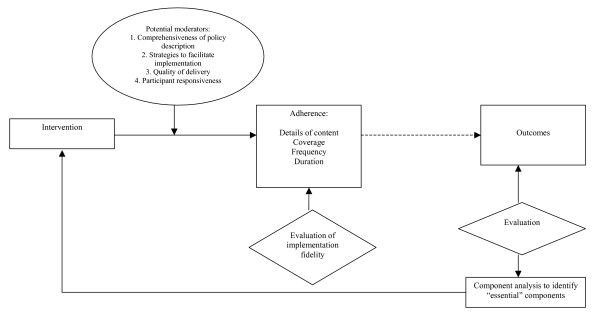
The paper proposes a new conceptual framework for implementation fidelity, arguing that fidelity is not just adherence but is also shaped by intervention complexity, facilitation strategies, quality of delivery, and participant responsiveness. It is based on a critical review of the literature, and the authors call for empirical testing of the framework.
## Key findings
- Implementation fidelity is defined as the degree to which an intervention or programme is delivered as intended, and the paper argues it is an important source of variation affecting the credibility and utility of research.
- The framework identifies adherence as the bottom-line measure of fidelity, with subcategories of content, frequency, duration, and coverage (dose).
- The authors argue that fidelity may be moderated by four factors: intervention complexity, facilitation strategies, quality of delivery, and participant responsiveness.
- The paper notes that most implementation-fidelity studies focus only on adherence, while few measure quality of delivery or participant responsiveness; it also says such research rarely reports high implementation fidelity and often falls short of the ideal.
## Methods
- The paper reports a critical review of existing conceptualisations of implementation fidelity and relevant empirical studies, reviews, and theoretical pieces.
- The literature search used the databases Applied Social Sciences Index and Abstracts, CINAHL, International Bibliography of the Social Sciences, MEDLINE, and the Social Science Citation Index, plus scanned references and conference abstracts/presentations.
- The review focused principally on research published from 2002 to 2007.
## Limitations
- The authors explicitly state that the framework is theoretical and requires testing by empirical research.
- They also state that no study has yet measured the moderating effect of facilitation strategies on implementation fidelity, and that the role of quality of delivery as a moderator has not been explored in the literature to date.
- Evident from the text: the paper is a critical review rather than a primary empirical study, so it does not provide new data testing the framework.
Model-written summary. Check it against the paper before relying on it.
Integrity signals
Registry
Cites
Statistics
Figures
Verification
Claims the paper makes
3 Valid · 2 Not valid · 19 Not checked · 32 Own results and interpretations
Every source the paper cites for this claim was checked and supports it.
In the paper
“a study of guidelines intended for General Practitioners (GPs) found that detailed and clear recommendations were almost twice as likely to be followed as vague and non-specific recommendations [23].”
§ A conceptual framework for implementation fidelity > Background > A conceptual framework: elements and relationships
What the sources say
- Supportedcites [23] Grol R Dalhuijsen J Thomas S Veld C Rutten G Mokkink H Attributes of clinical guidelines that influence use of guidelines in general practice: observational study Brit Med J 1998 317 858 861 9748183 PMC31096 source
Table 1 reports that general practitioners followed vague, non-specific recommendations in 36% of decisions, versus 67% for recommendations that were not vague or non-specific—about 1.9 times as often. It also reports 67% compliance for recommendations described concretely and precisely, supporting the claim's characterization as detailed and clear. Page numbers were not available in our copy. (LLM, conf=0.94)
plainstates an association- Asserted: passes — The authors put it forward as true.
- Checkable: passes — It can be checked against evidence.
- Load-bearing: passes — The paper’s conclusions depend on it.
- Based: passes — The paper gives a reason why it holds.
- Supported
None of the sources cited for this claim have been checked yet.
In the paper
“It has been demonstrated that the fidelity with which an intervention is implemented affects how well it succeeds [1-5].”
§ A conceptual framework for implementation fidelity > Background
What the sources say
- Not checked — no full text of the sourcecites [1] Dusenbury L Brannigan R Falco M Hansen W A review of research on fidelity of implementation: Implications for drug abuse prevention in school settings Health Educ Res 2003 18 237 256 12729182 10.1093/her/18.2.237 source
- Not checked — no full text of the sourcecites [2] Dane A Schneider B Program integrity in primary and early secondary prevention: Are implementation effects out of control Clin Psychol Rev 1998 18 23 45 9455622 10.1016/S0272-7358(97)00043-3 source
- Not checked — no full text of the sourcecites [3] Elliot D Mihalic S Issues in disseminating and replicating effective prevention programs Prev Sci 2004 5 47 53 15058912 10.1023/B:PREV.0000013981.28071.52 source
- Not matchedcites [4] Mihalic S The importance of implementation fidelity Emotional & Behavioral Disorders in Youth 2004 4 83 86 and 99–105.
Its entry has no title and year that we can search by.
- Not checked yetcites [5] Mihalic S The importance of implementation fidelity Blueprints Violence Prevention Initiative 2002 Boulder, Colorado
states a cause- Asserted: passes — The authors put it forward as true.
- Checkable: passes — It can be checked against evidence.
- Load-bearing: passes — The paper’s conclusions depend on it.
- Based: passes — The paper gives a reason why it holds.
None of the sources cited for this claim have been checked yet.
In the paper
“Implementation fidelity acts as a potential moderator of the relationship between interventions and their intended outcomes.”
§ A conceptual framework for implementation fidelity > Background
What the sources say
- Not checked — no full text of the sourcecites [1] Dusenbury L Brannigan R Falco M Hansen W A review of research on fidelity of implementation: Implications for drug abuse prevention in school settings Health Educ Res 2003 18 237 256 12729182 10.1093/her/18.2.237 source
- Not checked — no full text of the sourcecites [2] Dane A Schneider B Program integrity in primary and early secondary prevention: Are implementation effects out of control Clin Psychol Rev 1998 18 23 45 9455622 10.1016/S0272-7358(97)00043-3 source
- Not checked — no full text of the sourcecites [3] Elliot D Mihalic S Issues in disseminating and replicating effective prevention programs Prev Sci 2004 5 47 53 15058912 10.1023/B:PREV.0000013981.28071.52 source
- Not matchedcites [4] Mihalic S The importance of implementation fidelity Emotional & Behavioral Disorders in Youth 2004 4 83 86 and 99–105.
Its entry has no title and year that we can search by.
- Not checked yetcites [5] Mihalic S The importance of implementation fidelity Blueprints Violence Prevention Initiative 2002 Boulder, Colorado
hedgedstates a possible cause- Asserted: passes — The authors put it forward as true.
- Checkable: passes — It can be checked against evidence.
- Load-bearing: passes — The paper’s conclusions depend on it.
- Based: passes — The paper gives a reason why it holds.
In the paper
“Unless such an evaluation is made, it cannot be determined whether a lack of impact is due to poor implementation or inadequacies inherent in the programme itself, a so-called Type III error [11]”
§ A conceptual framework for implementation fidelity > Background
What the sources say
- Not checked — no full text of the sourcecites [11] Dobson L Cook T Avoiding Type III error in program evaluation: results from a field experiment Evaluation and Program Planning 1980 3 269 276 10.1016/0149-7189(80)90042-7 source
plainstates a cause- Asserted: passes — The authors put it forward as true.
- Checkable: passes — It can be checked against evidence.
- Load-bearing: passes — The paper’s conclusions depend on it.
- Based: passes — The paper gives a reason why it holds.
None of the sources cited for this claim have been checked yet.
In the paper
“two studies examining programmes to help people with mental health issues obtain employment found that employment outcomes among their study groups were weakest for those in poorly implemented programmes [6,7].”
§ A conceptual framework for implementation fidelity > Background
What the sources say
- Not checked — no full text of the sourcecites [6] McGrew J Griss M Concurrent and predictive validity of two scales to assess the fidelity of implementation of supported employment Psychiatr Rehab J 2005 29 41 47 10.2975/29.2005.41.47 16075696 source
- Not checked yetcites [7] Resnick B Neale M Rosenheck R Impact of public support payments, intensive psychiatric community care, and program fidelity on employment outcomes for people with severe mental illness J Nerv Ment Dis 2003 191 139 144 12637839 10.1097/00005053-200303000-00001 source
plainstates an association- Asserted: passes — The authors put it forward as true.
- Checkable: passes — It can be checked against evidence.
- Load-bearing: passes — The paper’s conclusions depend on it.
- Based: passes — The paper gives a reason why it holds.
22 more claims
Create a free account to see all 56 claims and to verify the 10 references still open.
- Probably not a substantial claim. 21
- It may state two separate claims as one. 8
Claims other papers make about this one
Each is checked against this paper’s own text: does it say what the citing paper says it does?
The source backs part of the claim, not all of it — or backs it for a different population, condition or comparison.
In the citing paper
“They are key indicators of whether a program is appropriate/acceptable for the intended audience and context, whether there are enough resources to support delivery, and whether it is being used (Carroll et al., 2007).”
From Intervention Programs Targeting the Mental Health, Professional Burnout, and/or Wellbeing of School Teachers: Systematic Review and Meta-Analyses (2023) · cites this paper as Carroll et al., 2007
Experimental — accuracy not yet measuredThe source backs part of the claim, not all of it — or backs it for a different population, condition or comparison.
In the citing paper
“They acknowledged that adaptations are likely to occur in real-world implementation, but the question on how to address this issue while measuring fidelity remained unanswered.”
From A modified theoretical framework to assess implementation fidelity of adaptive public health interventions (2015) · cites this paper as [15]
Experimental — accuracy not yet measuredThe cited source says what the claim attributes to it.
In the citing paper
“Fidelity and adherence are important in the translation of research to practice when implementing programs in the real-world.”
From Intervention Programs Targeting the Mental Health, Professional Burnout, and/or Wellbeing of School Teachers: Systematic Review and Meta-Analyses (2023) · cites this paper as Carroll et al., 2007
The cited source says what the claim attributes to it.
In the citing paper
“Evidence from a review of eHealth innovations [12] indicates that centralised diffusion systems such as those considered here were more effective in disseminating authoritative evidence and preserving the ‘fidelity’ [20] of interventions, but less successful in terms of adopter engagement, partly because of strict limits on the extent to which implementation could be modified to address the”
From Beyond pilotitis: taking digital health interventions to the national level in China and Uganda (2017) · cites this paper as [20]
The cited source says what the claim attributes to it.
In the citing paper
“The modified Carroll et al.’s framework we propose may permit a comprehensive assessment of the implementation fidelity-adaptation balance required when implementing adaptive interventions, but more empirical research is needed to validate it.”
From A modified theoretical framework to assess implementation fidelity of adaptive public health interventions (2015) · cites this paper as [15]
5 more claims about this paper
Create a free account to see every claim other papers make about this one.
Citations
Cites
Bellg, A. J., Treatment Fidelity Workgroup of the NIH Behavior Change Consortium, Borrelli, B., Resnick, B., Hecht, J., Minicucci, D. S., Ory, M., Ogedegbe, G., Orwig, D., Ernst, D., et al. (2004) · Health Psychology · doi:10.1037/0278-6133.23.5.443 · Cited by 2,620
Dusenbury, L. (2003) · Health Education Research · doi:10.1093/her/18.2.237 · Cited by 1,671
Dane, A. V., & Schneider, B. H. (1998) · Clinical Psychology Review · doi:10.1016/s0272-7358(97)00043-3 · Cited by 1,557
Reeves, M. (1993) · Cited by 903
Grol, R., Dalhuijsen, J., Thomas, S., Veld, C. I. ‘., Rutten, G., & Mokkink, H. (1998) · BMJ · doi:10.1136/bmj.317.7162.858 · Cited by 877 · cited 1×
“For example, a study of guidelines intended for General Practitioners (GPs) found that detailed and clear recommendations were almost twice as likely to be followed as vague and non-specific recommendations [23].”
Issues in Disseminating and Replicating Effective Prevention Programs
Elliott, D. S., & Mihalic, S. (2004) · Prevention Science · doi:10.1023/b:prev.0000013981.28071.52 · Cited by 794 · cited 6×
“Such strategies included the provision of manuals, guidelines, training, monitoring and feedback, capacity building, and incentives [ 3 ,6,8,17].”
InfluentialProcess evaluation on quality improvement interventions
Hulscher, M. E. J. L. (2003) · Quality and Safety in Health Care · doi:10.1136/qhc.12.1.40 · Cited by 348
Drug therapy in the elderly: what doctors believe and patients actually do
Barat, I., Andreasen, F., & Damsgaard, E. M. S. (2001) · British Journal of Clinical Pharmacology · doi:10.1046/j.0306-5251.2001.01401.x · Cited by 334 · cited 3×
“For example, it has been found that implementation fidelity of prescribed drug interventions for elderly people in the community can be low because these patients deliberately fail to comply with their prescribed regimens [ 31-33 ].”
InfluentialForgatch, M. S., Patterson, G. R., & DeGarmo, D. S. (2005) · Behavior Therapy · doi:10.1016/s0005-7894(05)80049-8 · Cited by 320
The fidelity‐adaptation debate: Implications for the implementation of public sector social programs
Blakely, C. H., Mayer, J. P., Gottschalk, R. G., Schmitt, N., Davidson, W. S., Roitman, D. B., & Emshoff, J. G. (1987) · American Journal of Community Psychology · doi:10.1007/bf00922697 · Cited by 297 · cited 2×
“Indeed, the proadaptation perspective implies that successful interventions are those that adapt to local needs [22].”
Research works printed but not linked: 3
- Medical Research Council A framework for the development and evaluation of RCTs for complex interventions to improve health 2000 London: Medical Research Council
- Rogers EM Diffusion of Innovation 2003 Fifth New York, NY: Free Press
- Herzog S Wright P Addressing the fidelity of personal and social responsibility model implementation Res Q Exerc Sport 2005 A 76
Cited by
Damschroder, L. J., Aron, D. C., Keith, R. E., Kirsh, S. R., Alexander, J. A., & Lowery, J. C. (2009) · Implementation Science · doi:10.1186/1748-5908-4-50 · Cited by 14,496
Hoffmann, T. C., Glasziou, P. P., Boutron, I., Milne, R., Perera, R., Moher, D., Altman, D. G., Barbour, V., Macdonald, H., Johnston, M., et al. (2014) · BMJ · doi:10.1136/bmj.g1687 · Cited by 10,548
Process evaluation of complex interventions: Medical Research Council guidance
Moore, G. F., Audrey, S., Barker, M., Bond, L., Bonell, C., Hardeman, W., Moore, L., O'Cathain, A., Tinati, T., Wight, D., et al. (2015) · BMJ · doi:10.1136/bmj.h1258 · Cited by 6,204
Peters, D. H., Adam, T., Alonge, O., Agyepong, I. A., & Tran, N. (2014) · British Journal of Sports Medicine · doi:10.1136/bmj.f6753 · Cited by 1,109
Clarifying differences between review designs and methods
Gough, D., Thomas, J., & Oliver, S. (2012) · Systematic Reviews · doi:10.1186/2046-4053-1-28 · Cited by 1,063
Implementation fidelity in community‐based interventions
Breitenstein, S. M., Gross, D., Garvey, C. A., Hill, C., Fogg, L., & Resnick, B. (2010) · Research in Nursing & Health · doi:10.1002/nur.20373 · Cited by 709
on behalf of the GrandStand, S. S. A. T. G. O. T. M. R. G., Leask, C. F., Sandlund, M., Skelton, D. A., Altenburg, T. M., Cardon, G., Chinapaw, M. J. M., De Bourdeaudhuij, I., Verloigne, M., & Chastin, S. F. M. (2019) · Research Involvement and Engagement · doi:10.1186/s40900-018-0136-9 · Cited by 673
O’Connor, S., Hanlon, P., O’Donnell, C. A., Garcia, S., Glanville, J., & Mair, F. S. (2016) · BMC Medical Informatics and Decision Making · doi:10.1186/s12911-016-0359-3 · Cited by 636
Psychotherapeutic benefits of compassion-focused therapy: an early systematic review
Leaviss, J., & Uttley, L. (2015) · Psychological Medicine · doi:10.1017/s0033291714002141 · Cited by 546
Guidance for conducting feasibility and pilot studies for implementation trials
Pearson, N., Naylor, P.-J., Ashe, M. C., Fernandez, M., Yoong, S. L., & Wolfenden, L. (2020) · Pilot and Feasibility Studies · doi:10.1186/s40814-020-00634-w · Cited by 475
Kalolo, A., Gautier, L., Radermacher, R., Srivastava, S., Meshack, M., & De Allegri, M. (2021) · BMC Public Health · doi:10.1186/s12889-020-10013-y · Cited by 429
A guiding framework and approach for implementation research in substance use disorders treatment.
Damschroder, L. J., & Hagedorn, H. J. (2011) · Psychology of Addictive Behaviors · doi:10.1037/a0022284 · Cited by 427
Systematic evaluation of implementation fidelity of complex interventions in health and social care
Hasson, H. (2010) · Implementation Science · doi:10.1186/1748-5908-5-67 · Cited by 417
Burton, A., Burgess, C., Dean, S., Koutsopoulou, G. Z., & Hugh‐Jones, S. (2017) · Stress and Health · doi:10.1002/smi.2673 · Cited by 412
“This lack of detail Stress and Health (2016) © 2016 John Wiley & Sons, Ltd. makes it difficult to differentiate between programmes and prohibits analysis of which components are most strongly predictive of positive outcomes (Carroll et al., 2007).”
Music-based therapeutic interventions for people with dementia
van der Steen, J. T., van Soest-Poortvliet, M. C., van der Wouden, J. C., Bruinsma, M. S., Scholten, R. J., & Vink, A. C. (2017) · Cochrane Database of Systematic Reviews · doi:10.1002/14651858.cd003477.pub3 · Cited by 408
Bergs, J., Hellings, J., Cleemput, I., Zurel, Ö., De Troyer, V, Van Hiel, M., Demeere, J.-L., Claeys, D., & Vandijck, D. (2014) · British Journal of Surgery · doi:10.1002/bjs.9381 · Cited by 390
Music-based therapeutic interventions for people with dementia
van der Steen, J. T., Smaling, H. J., van der Wouden, J. C., Bruinsma, M. S., Scholten, R. J., & Vink, A. C. (2018) · Cochrane Database of Systematic Reviews · doi:10.1002/14651858.cd003477.pub4 · Cited by 355
Huijg, J. M., Gebhardt, W. A., Dusseldorp, E., Verheijden, M. W., van der Zouwe, N., Middelkoop, B. J., & Crone, M. R. (2014) · Implementation Science · doi:10.1186/1748-5908-9-33 · Cited by 352
Luangasanatip, N., Hongsuwan, M., Limmathurotsakul, D., Lubell, Y., Lee, A. S., Harbarth, S., Day, N. P. J., Graves, N., & Cooper, B. S. (2015) · BMJ · doi:10.1136/bmj.h3728 · Cited by 330
Human-centered design for global health equity
Holeman, I., & Kane, D. (2020) · Information Technology for Development · doi:10.1080/02681102.2019.1667289 · Cited by 285
Capacity-Building Family-Systems Intervention Practices
Dunst, C. J., & Trivette, C. M. (2009) · Journal of Family Social Work · doi:10.1080/10522150802713322 · Cited by 283
A systematic review of hand hygiene improvement strategies: a behavioural approach
Huis, A., van Achterberg, T., de Bruin, M., Grol, R., Schoonhoven, L., & Hulscher, M. (2012) · Implementation Science · doi:10.1186/1748-5908-7-92 · Cited by 267
Nielsen, K. (2013) · Human Relations · doi:10.1177/0018726713477164 · Cited by 265
Applying Self-Compassion in Sport: An Intervention With Women Athletes
Mosewich, A. D., Crocker, P. R. E., Kowalski, K. C., & DeLongis, A. (2013) · Journal of Sport and Exercise Psychology · doi:10.1123/jsep.35.5.514 · Cited by 259
Cohen, D. J., Crabtree, B. F., Etz, R. S., Balasubramanian, B. A., Donahue, K. E., Leviton, L. C., Clark, E. C., Isaacson, N. F., Stange, K. C., & Green, L. W. (2008) · American Journal of Preventive Medicine · doi:10.1016/j.amepre.2008.08.005 · Cited by 248
Toomey, E., Hardeman, W., Hankonen, N., Byrne, M., McSharry, J., Matvienko-Sikar, K., & Lorencatto, F. (2020) · Health Psychology and Behavioral Medicine · doi:10.1080/21642850.2020.1738935 · Cited by 243
Walton, H., Spector, A., Tombor, I., & Michie, S. (2017) · British Journal of Health Psychology · doi:10.1111/bjhp.12260 · Cited by 238
Hill-Taylor, B., Walsh, K. A., Stewart, S., Hayden, J., Byrne, S., & Sketris, I. S. (2016) · Journal of Clinical Pharmacy and Therapeutics · doi:10.1111/jcpt.12372 · Cited by 238
Pérez, D., Van der Stuyft, P., Zabala, M. D. C., Castro, M., & Lefèvre, P. (2015) · Implementation Science · doi:10.1186/s13012-016-0457-8 · Cited by 237
Harn, B., Parisi, D., & Stoolmiller, M. (2013) · Exceptional Children · doi:10.1177/001440291307900204 · Cited by 290
Lillard, A. S. (2012) · Journal of School Psychology · doi:10.1016/j.jsp.2012.01.001 · Cited by 224
Behaviour Centred Design: towards an applied science of behaviour change
Aunger, R., & Curtis, V. (2016) · Health Psychology Review · doi:10.1080/17437199.2016.1219673 · Cited by 221
Implementation Research: Finding Common Ground on What, How, Why, Where, and Who
Century, J., & Cassata, A. (2016) · Review of Research in Education · doi:10.3102/0091732x16665332 · Cited by 220
Carroll, C., Rick, J., Pilgrim, H., Cameron, J., & Hillage, J. (2010) · Disability and Rehabilitation · doi:10.3109/09638280903186301 · Cited by 214
Self-citationBeyond pilotitis: taking digital health interventions to the national level in China and Uganda
Huang, F., Blaschke, S., & Lucas, H. (2017) · Globalization and Health · doi:10.1186/s12992-017-0275-z · Cited by 182
Digital Delivery Methods of Parenting Training Interventions: A Systematic Review
Breitenstein, S. M., Gross, D., & Christophersen, R. (2014) · Worldviews on Evidence-Based Nursing · doi:10.1111/wvn.12040 · Cited by 206
Iliffe, S., Kendrick, D., Morris, R., Masud, T., Gage, H., Skelton, D., Dinan, S., Bowling, A., Griffin, M., Haworth, D., et al. (2014) · Health Technology Assessment · doi:10.3310/hta18490 · Cited by 207
Context and implementation: A concept analysis towards conceptual maturity
Pfadenhauer, L. M., Mozygemba, K., Gerhardus, A., Hofmann, B., Booth, A., Lysdahl, K. B., Tummers, M., Burns, J., & Rehfuess, E. A. (2015) · Zeitschrift für Evidenz, Fortbildung und Qualität im Gesundheitswesen · doi:10.1016/j.zefq.2015.01.004 · Cited by 189
Self-citationImplementing a surgical checklist: More than checking a box
Levy, S. M., Senter, C. E., Hawkins, R. B., Zhao, J. Y., Doody, K., Kao, L. S., Lally, K. P., & Tsao, K. (2012) · Surgery · doi:10.1016/j.surg.2012.05.034 · Cited by 194
Hasson, H., Blomberg, S., & Dunér, A. (2012) · Implementation Science · doi:10.1186/1748-5908-7-23 · Cited by 194
Nelson, M. C., Cordray, D. S., Hulleman, C. S., Darrow, C. L., & Sommer, E. C. (2012) · The Journal of Behavioral Health Services & Research · doi:10.1007/s11414-012-9295-x · Cited by 190
Holopainen, R., Simpson, P., Piirainen, A., Karppinen, J., Schütze, R., Smith, A., O'Sullivan, P., & Kent, P. (2020) · Pain · doi:10.1097/j.pain.0000000000001809 · Cited by 180
Raine, R., Fitzpatrick, R., Barratt, H., Bevan, G., Black, N., Boaden, R., Bower, P., Campbell, M., Denis, J.-L., Devers, K., et al. (2016) · Health Services and Delivery Research · doi:10.3310/hsdr04160 · Cited by 186
Ramsey, K., Hingora, A., Kante, M., Jackson, E., Exavery, A., Pemba, S., Manzi, F., Baynes, C., Helleringer, S., & Phillips, J. F. (2013) · BMC Health Services Research · doi:10.1186/1472-6963-13-s2-s6 · Cited by 184
Work engagement interventions can be effective: a systematic review
Knight, C., Patterson, M., & Dawson, J. (2019) · European Journal of Work and Organizational Psychology · doi:10.1080/1359432x.2019.1588887 · Cited by 182
Self-citationLachner, A., Fabian, A., Franke, U., Preiß, J., Jacob, L., Führer, C., Küchler, U., Paravicini, W., Randler, C., & Thomas, P. (2021) · Computers & Education · doi:10.1016/j.compedu.2021.104304 · Cited by 179
Stains, M., & Vickrey, T. (2017) · CBE—Life Sciences Education · doi:10.1187/cbe.16-03-0113 · Cited by 177
Schloemer, T., & Schröder-Bäck, P. (2018) · Implementation Science · doi:10.1186/s13012-018-0751-8 · Cited by 172
Single-Case Experimental Designs to Evaluate Novel Technology-Based Health Interventions
Dallery, J., Cassidy, R. N., & Raiff, B. R. (2013) · Journal of Medical Internet Research · doi:10.2196/jmir.2227 · Cited by 169
Hamre, B. K., Justice, L. M., Pianta, R. C., Kilday, C., Sweeney, B., Downer, J. T., & Leach, A. (2010) · Early Childhood Research Quarterly · doi:10.1016/j.ecresq.2009.07.002 · Cited by 170
Using implementation science theories and frameworks in global health
Ridde, V., Pérez, D., & Robert, E. (2020) · BMJ Global Health · doi:10.1136/bmjgh-2019-002269 · Cited by 169
Bridging the gap between research and practice: Predicting what will work locally
Joyce, K. E., & Cartwright, N. (2020) · American Educational Research Journal · doi:10.3102/0002831219866687 · Cited by 169
Paton, F., Chambers, D., Wilson, P., Eastwood, A., Craig, D., Fox, D., Jayne, D., & McGinnes, E. (2014) · BMJ Open · doi:10.1136/bmjopen-2014-005015 · Cited by 164
Yamada, J., Shorkey, A., Barwick, M., Widger, K., & Stevens, B. J. (2015) · BMJ Open · doi:10.1136/bmjopen-2014-006808 · Cited by 161
Slaughter, S. E., Hill, J. N., & Snelgrove-Clarke, E. (2015) · Implementation Science · doi:10.1186/s13012-015-0320-3 · Cited by 160
Fidelity is not easy! Challenges and guidelines for assessing fidelity in complex interventions
Ginsburg, L. R., Hoben, M., Easterbrook, A., Anderson, R. A., Estabrooks, C. A., & Norton, P. G. (2021) · Trials · doi:10.1186/s13063-021-05322-5 · Cited by 157
Moir, T. (2018) · Frontiers in Education · doi:10.3389/feduc.2018.00061 · Cited by 217
Borrego, M., Cutler, S., Prince, M., Henderson, C., & Froyd, J. E. (2013) · Journal of Engineering Education · doi:10.1002/jee.20020 · Cited by 155
Porter, S., McConnell, T., McLaughlin, K., Lynn, F., Cardwell, C., Braiden, H., Boylan, J., Holmes, V., & the Music in Mind Study Group (2017) · Journal of Child Psychology and Psychiatry · doi:10.1111/jcpp.12656 · Cited by 153
Walker, M. F., Hoffmann, T. C., Brady, M. C., Dean, C. M., Eng, J. J., Farrin, A. J., Felix, C., Forster, A., Langhorne, P., Lynch, E. A., et al. (2017) · International Journal of Stroke · doi:10.1177/1747493017711815 · Cited by 154
Hoffmann, T., Glasziou, P., Boutron, I., Milne, R., Perera, R., Moher, D., Altman, D., Barbour, V., Macdonald, H., Johnston, M., et al. (2016) · Das Gesundheitswesen · doi:10.1055/s-0041-111066 · Cited by 153
A CONCEPTUAL FRAMEWORK FOR STUDYING THE SOURCES OF VARIATION IN PROGRAM EFFECTS
Weiss, M. J., Bloom, H. S., & Brock, T. (2014) · Journal of Policy Analysis and Management · doi:10.1002/pam.21760 · Cited by 174
Measuring Implementation Fidelity in a Community-Based Parenting Intervention
Breitenstein, S. M., Fogg, L., Garvey, C., Hill, C., Resnick, B., & Gross, D. (2010) · Nursing Research · doi:10.1097/nnr.0b013e3181dbb2e2 · Cited by 146
Feagans Gould, L., Dariotis, J. K., Greenberg, M. T., & Mendelson, T. (2016) · Mindfulness · doi:10.1007/s12671-015-0395-6 · Cited by 144
Nykänen, M., Puro, V., Tiikkaja, M., Kannisto, H., Lantto, E., Simpura, F., Uusitalo, J., Lukander, K., Räsänen, T., Heikkilä, T., et al. (2020) · Journal of Safety Research · doi:10.1016/j.jsr.2020.09.015 · Cited by 143
Scoping review of toolkits as a knowledge translation strategy in health
Barac, R., Stein, S., Bruce, B. S., & Barwick, M. A. (2014) · BMC Medical Informatics and Decision Making · doi:10.1186/s12911-014-0121-7 · Cited by 174
Nery, S. V., Pickering, A. J., Abate, E., Asmare, A., Barrett, L. C., Benjamin‐Chung, J., Bundy, D. A. P., Clasen, T., Clements, A., Colford, J. M., et al. (2019) · Parasites & Vectors · doi:10.1186/s13071-019-3532-6 · Cited by 172
Patient-centered care: clarification of its specific elements to facilitate interprofessional care
Sidani, S., & Fox, M. T. (2013) · Journal of Interprofessional Care · doi:10.3109/13561820.2013.862519 · Cited by 186
Kemp, C. G., Jarrett, B. A., Kwon, C.-S., Song, L., Jetté, N., Sapag, J. C., Bass, J., Murray, L., Rao, D., & Baral, S. (2019) · BMC Medicine · doi:10.1186/s12916-018-1237-x · Cited by 138
Fidelity: An Essential Component of Evidence-Based Practice in Speech-Language Pathology
Kaderavek, J. N., & Justice, L. M. (2010) · American Journal of Speech-Language Pathology · doi:10.1044/1058-0360(2010/09-0097 · Cited by 137
Lawton, R., O'Hara, J. K., Sheard, L., Armitage, G., Cocks, K., Buckley, H., Corbacho, B., Reynolds, C., Marsh, C., Moore, S. G., et al. (2017) · BMJ Quality & Safety · doi:10.1136/bmjqs-2016-005570 · Cited by 156
von Thiele Schwarz, U., Aarons, G. A., & Hasson, H. (2019) · BMC Health Services Research · doi:10.1186/s12913-019-4668-y · Cited by 134
Mars, T., Ellard, D., Carnes, D., Homer, K., Underwood, M., & Taylor, S. J. C. (2013) · BMJ Open · doi:10.1136/bmjopen-2013-003555 · Cited by 132
Incorporating feasibility protocols in intervention research
Gadke, D. L., Kratochwill, T. R., & Gettinger, M. (2021) · Journal of School Psychology · doi:10.1016/j.jsp.2020.11.004 · Cited by 132
on behalf of the EPOCH trial group, Stephens, T., Peden, C. J., Pearse, R. M., Shaw, S. E., Abbott, T. E. F., Jones, E. L., Kocman, D., & Martin, G. P. (2018) · Implementation Science · doi:10.1186/s13012-018-0823-9 · Cited by 138
Li, J., Li, C., Puts, M., Wu, Y.-C., Lyu, M.-M., Yuan, B., & Zhang, J.-P. (2023) · International Journal of Nursing Studies · doi:10.1016/j.ijnurstu.2023.104447 · Cited by 127
Stichter, J. P., Laffey, J. M., Galyen, K., & Herzog, M. J. (2013) · Journal of Autism and Developmental Disorders · doi:10.1007/s10803-013-1881-0 · Cited by 146
Barnet, B., Liu, J., DeVoe, M., DUGGAN, A. K., Gold, M. A., & Pecukonis, E. V. (2009) · The Annals of Family Medicine · doi:10.1370/afm.1014 · Cited by 143
Li, T., Higgins, J. P., & Deeks, J. J. (2019) · Cochrane Handbook for Systematic Reviews of Interventions · doi:10.1002/9781119536604.ch5 · Cited by 127
Rohwer, A., Pfadenhauer, L., Burns, J., Brereton, L., Gerhardus, A., Booth, A., Oortwijn, W., & Rehfuess, E. (2017) · Journal of Clinical Epidemiology · doi:10.1016/j.jclinepi.2016.06.012 · Cited by 121
Self-citationDunst, C. J., Trivette, C. M., & Raab, M. (2013) · Journal of Early Intervention · doi:10.1177/1053815113502235 · Cited by 150
Meng, Z., Hui, W., Cai, Y., Liu, J., & Wu, H. (2020) · Health Policy · doi:10.1016/j.healthpol.2020.01.007 · Cited by 124
Using Research Evidence to Inform and Evaluate Early Childhood Intervention Practices
Dunst, C. J., & Trivette, C. M. (2008) · Topics in Early Childhood Special Education · doi:10.1177/0271121408329227 · Cited by 151
Approaches for Informing Optimal Dose of Behavioral Interventions
Voils, C. I., King, H. A., Maciejewski, M. L., Allen, K. D., Yancy, W. S., & Shaffer, J. A. (2014) · Annals of Behavioral Medicine · doi:10.1007/s12160-014-9618-7 · Cited by 117
Schepers, S. A., Nicolaas, S. M. S., Haverman, L., Wensing, M., Meeteren, A. Y. N. S., Veening, M. A., Caron, H. N., Hoogerbrugge, P. M., Kaspers, G. J. L., Verhaak, C. M., et al. (2016) · Psycho-Oncology · doi:10.1002/pon.4242 · Cited by 118
Preventing Patient-to-Worker Violence in Hospitals: Outcome of a Randomized Controlled Intervention
Arnetz, J. E., Hamblin, L. E., Russell, J., Upfal, M. J., LUBORSKY, M. R., Janisse, J. J., & Essenmacher, L. (2016) · Journal of Occupational and Environmental Medicine · doi:10.1097/jom.0000000000000909 · Cited by 150
Lambert, J. D., Greaves, C. J., Farrand, P. A., Cross, R., Haase, A. M., & Taylor, A. H. (2017) · BMC Public Health · doi:10.1186/s12889-017-4778-6 · Cited by 141
Bessa, C., Hastie, P. A., Araújo, R., & Mesquita, I. (2019) · PubMed Central · Cited by 228
Low, S., Smolkowski, K., & Cook, C. (2016) · Prevention Science · doi:10.1007/s11121-016-0670-3 · Cited by 112
Richter, A., Sjunnestrand, M., Strandh, M. R., & Hasson, H. (2022) · International Journal of Environmental Research and Public Health · doi:10.3390/ijerph19063489 · Cited by 198
Beames, J. R., Spanos, S., Roberts, A., McGillivray, L., Li, S., Newby, J. M., O’Dea, B., & Werner-Seidler, A. (2023) · Educational Psychology Review · doi:10.1007/s10648-023-09720-w · Cited by 109
Moullin, J. C., Sabater-Hernández, D., & Benrimoj, S. I. (2016) · BMC Health Services Research · doi:10.1186/s12913-016-1689-7 · Cited by 108
“It would be recommended that monitoring and evaluation of clinical outcomes, formative evaluations and implementation outcomes be prioritised, by researchers and policy-makers, to facilitate external policy support and the services’ sustainability [58–61].”
Kapologwe, N., Kalolo, A., Kibusi, S. M., Chaula, Z., Nswilla, A., Teuscher, T. M., Aung, K., & Borghi, J. (2019) · Health Research Policy and Systems · doi:10.1186/s12961-018-0400-3 · Cited by 124
Gamarra, J. M., Luciano, M. T., Gradus, J. L., & Wiltsey Stirman, S. (2015) · Crisis · doi:10.1027/0227-5910/a000345 · Cited by 107
Evans, R., Murphy, S., & Scourfield, J. (2015) · Prevention Science · doi:10.1007/s11121-015-0552-0 · Cited by 136
A systematic review of the effectiveness of discharge care bundles for patients with COPD
Ospina, M. B., Mrklas, K., Deuchar, L., Rowe, B. H., Leigh, R., Bhutani, M., & Stickland, M. K. (2016) · Thorax · doi:10.1136/thoraxjnl-2016-208820 · Cited by 117
Bennett, M., Hughes, N., & Johnson, M. I. (2011) · Pain · doi:10.1016/j.pain.2010.12.009 · Cited by 112
Fidelity of implementation: development and testing of a measure
Keith, R. E., Hopp, F. P., Subramanian, U., Wiitala, W., & Lowery, J. C. (2010) · Implementation Science · doi:10.1186/1748-5908-5-99 · Cited by 103
Downer, J. T., LoCasale‐Crouch, J., Hamre, B. K., & Pianta, R. C. (2009) · Early Education and Development · doi:10.1080/10409280802688626 · Cited by 119
Smith, J. D., Dishion, T. J., Shaw, D. S., & Wilson, M. N. (2013) · Journal of Consulting and Clinical Psychology · doi:10.1037/a0033950 · Cited by 116
Metadata
- Authors
- Carroll, C., Patterson, M., Wood, S., Booth, A., Rick, J., & Balain, S.
- Affiliations
- University of Sheffield (GB)
- Corresponding author
- Carroll, Christopher
- Venue
- Implementation Science
- Published
- 2007-11-30
- Volume
- 2
- Issue
- 1
- Pages
- 40-40
- ISSN
- 1748-5908 (ISSN-L)
- PMC
- PMC2213686
- OpenAlex
- W2167997731
- Cited by
- 2,559
- References
- 41
- Citations by year
- 2026: 224 · 2025: 237 · 2024: 245 · 2023: 232 · 2022: 212 · 2021: 284 · 2020: 249 · 2019: 169 · 2018: 105 · 2017: 121 · 2016: 96 · 2015: 104 · 2014: 100 · 2013: 72 · 2012: 43
- FWCI
- 23.60
- Type
- journal article
- Language
- en
- Open access
- gold
- doi.org
- Licence
- Locations
- Implementation Science (publishedVersion, cc-by)
- PubMed Central (publishedVersion, cc-by)
- PubMed (publishedVersion)
- White Rose Research Online (University of Leeds, The University of Sheffield, University of York) (acceptedVersion)
- DOAJ (DOAJ: Directory of Open Access Journals) (submittedVersion)
- Leicester Research Archive (University of Leicester) (submittedVersion)
- Funders
- Fondazione Italiana per la ricerca sulle Malattie del Pancreas
- Topics
- Health Sciences › Health Professions › General Health Professions › Health Policy Implementation Science
- Social Sciences › Public Administration › Evaluation and Performance Assessment
- Social Sciences › Sociology and Political Science › Delphi Technique in Research
- Keywords
- implementation fidelity, conceptual framework, intervention delivery, fidelity assessment, research credibility, intervention effectiveness, implementation process
About these checks
Registry, retraction, Cites and statistics results are computed, not judged, with one exception: a printed reference that no index lists is read once by a model before it counts as a citation error. Claims are extracted by a model and kept only when their quote appears verbatim in the text; each cited source is then checked, with a model’s help, for whether it says what the claim relies on. Those verdicts can be wrong — read the claim’s quote and the cited source before relying on one.
The claim verdicts this report counts are experimental: their accuracy is not yet measured.
A language model drew the claims from the paper on 2026-10-10, under version 3 of the claim definition (model deepseek-v4.1-flash, prompt extract-v3).
A second model labelled each claim on 2026-10-10 (model jev-1.13-20260917, definition revision gold-guideline-v0.2).
Cited sources are checked with a language model’s help (gpt-6-sol).
Statistics and arithmetic are recomputed, not judged.
Confidence bands are shown only for fields calibrated on our annotated test set. None is calibrated yet, so no band is shown.
What counts as a claim ›How we measure confidence ›How we check this ›
Are you an author, or do you see a problem with this page? Request a review
Data sources
Bibliographic data: Semantic Scholar, OpenAlex, Crossref.
Contains information from the Semantic Scholar Academic Graph Datasets, made available under the ODC Attribution License (ODC-BY 1.0).
Semantic Scholar’s data is described in: Kinney, R., et al. (2023). The Semantic Scholar Open Data Platform. arXiv:2301.10140.
