

The DOI matches its Crossref record; 101 of the 101 references it cites were found in a registry or an index.
Knowledge translation of research findings
Open accessAbstract
BACKGROUND: One of the most consistent findings from clinical and health services research is the failure to translate research into practice and policy. As a result of these evidence-practice and policy gaps, patients fail to benefit optimally from advances in healthcare and are exposed to unnecessary risks of iatrogenic harms, and healthcare systems are exposed to unnecessary expenditure resulting in significant opportunity costs. Over the last decade, there has been increasing international policy and research attention on how to reduce the evidence-practice and policy gap. In this paper, we summarise the current concepts and evidence to guide knowledge translation activities, defined as T2 research (the translation of new clinical knowledge into improved health). We structure the article around five key questions: what should be transferred; to whom should research knowledge be transferred; by whom should research knowledge be transferred; how should research knowledge be transferred; and, with what effect should research knowledge be transferred? DISCUSSION: We suggest that the basic unit of knowledge translation should usually be up-to-date systematic reviews or other syntheses of research findings. Knowledge translators need to identify the key messages for different target audiences and to fashion these in language and knowledge translation products that are easily assimilated by different audiences. The relative importance of knowledge translation to different target audiences will vary by the type of research and appropriate endpoints of knowledge translation may vary across different stakeholder groups. There are a large number of planned knowledge translation models, derived from different disciplinary, contextual (i.e., setting), and target audience viewpoints. Most of these suggest that planned knowledge translation for healthcare professionals and consumers is more likely to be successful if the choice of knowledge translation strategy is informed by an assessment of the likely barriers and facilitators. Although our evidence on the likely effectiveness of different strategies to overcome specific barriers remains incomplete, there is a range of informative systematic reviews of interventions aimed at healthcare professionals and consumers (i.e., patients, family members, and informal carers) and of factors important to research use by policy makers. SUMMARY: There is a substantial (if incomplete) evidence base to guide choice of knowledge translation activities targeting healthcare professionals and consumers. The evidence base on the effects of different knowledge translation approaches targeting healthcare policy makers and senior managers is much weaker but there are a profusion of innovative approaches that warrant further evaluation.
Overview
The claims and statistics of this paper haven’t been checked yet.
Run the check — free, no account needed. It reads the open-access text and checks the sources it cites.
Integrity signals
Registry
Cites
Statistics
Figures
Verification
Claims the paper makes
The claims and statistics of this paper haven’t been checked yet.
Run the check — free, no account needed. It reads the open-access text and checks the sources it cites.
Claims other papers make about this one
Each is checked against this paper’s own text: does it say what the citing paper says it does?
The cited source says what the claim attributes to it.
In the citing paper
“Often, research is not translated into practice [41]”
In the citing paper
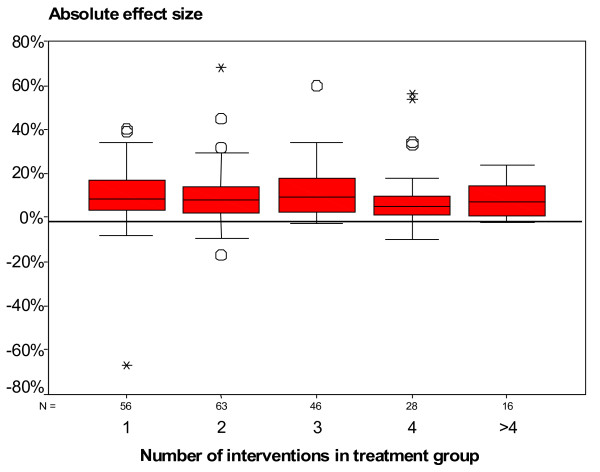
“Grimshaw et al. (34) note that while median absolute effect sizes across implementation strategies are similar (see Table 1), the variation in observed effects within each strategy category suggests that effects may vary based upon whether or not they address determinants (barriers and facilitators).”
From Enhancing the Impact of Implementation Strategies in Healthcare: A Research Agenda (2019) · cites this paper as [34]
In the citing paper
“the variation in observed effects within each strategy category suggests that effects may vary based upon whether or not they address determinants (barriers and facilitators).”
From Enhancing the Impact of Implementation Strategies in Healthcare: A Research Agenda (2019) · cites this paper as [34]
In the citing paper
“Grimshaw et al. (34) provide one possible explanation, emphasizing that the general lack of an a priori rationale for the selection of components (i.e., discrete strategies) in multifaceted implementation strategies makes it difficult to determine how these decisions were made.”
From Enhancing the Impact of Implementation Strategies in Healthcare: A Research Agenda (2019) · cites this paper as [34]
In the citing paper
“Despite the attractiveness of this argument, however, the effects of attempts to translate research evidence into practice and improve performance remain inconsistent (Grimshaw 2004; Grimshaw 2012; McGlynn 2003).”
From Tailored interventions to address determinants of practice (2015) · cites this paper as Grimshaw 2012
In the citing paper
“the transfer of such evidence into routine practice often does not happen as desired [1-3].”
From Discriminant content validity of a theoretical domains framework questionnaire for use in implementation research (2014) · cites this paper as [1]
In the citing paper
“The larger effect sizes may be attributable to the use of a multi-strategic approach to addressing multiple reported barriers to care delivery [25, 31, 51], or to the greater duration and the intensity of intervention implementation support provided.”
From Increasing the provision of preventive care by community healthcare services: a stepped wedge implementation trial (2017) · cites this paper as [51]
Self-check
Percentages, sums and reported differences re-computed from the paper’s own numbers.
The self-check needs the paper’s full text.
Citations
Cites
Ahmed, A., Jorna, T., & Bhandari, S. (2016) · The Nephron journals/Nephron journals · doi:10.1159/000447068 · Cited by 11,782
Genetics of Food Intake Self-Regulation in Childhood: Literature Review and Research Opportunities
Faith, M. S., Carnell, S., & Kral, T. V. E. (2013) · Human Heredity · doi:10.1159/000353879 · Cited by 7,633
Decision aids for people facing health treatment or screening decisions
Stacey, D., Légaré, F., Lewis, K., Barry, M. J., Bennett, C. L., Eden, K. B., Holmes-Rovner, M., Llewellyn-Thomas, H., Lyddiatt, A., Thomson, R., et al. (2017) · Cochrane Database of Systematic Reviews · doi:10.1002/14651858.cd001431.pub5 · Cited by 6,685
The ALLHAT Officers and Coordinators for the ALLHAT Collaborative Research Group (2002) · JAMA: The Journal of the American Medical Association · doi:10.1001/jama.288.23.2981 · Cited by 5,664
Audit and feedback: effects on professional practice and healthcare outcomes
Ivers, N., Jamtvedt, G., Flottorp, S., Young, J. M., Odgaard-Jensen, J., French, S. D., O'Brien, M. A., Johansen, M., Grimshaw, J., & Oxman, A. D. (2012) · Cochrane Database of Systematic Reviews · doi:10.1002/14651858.cd000259.pub3 · Cited by 5,485
Self-citationThe quality of health care delivered to adults in the United States
McGlynn, E. A., Asch, S. M., Adams, J., Keesey, J., Hicks, J., DeCristofaro, A., & Kerr, E. A. (2003) · New England Journal of Medicine · doi:10.1056/nejmsa022615 · Cited by 5,079
Lost in knowledge translation: Time for a map?
Graham, I. D., Logan, J., Harrison, M. B., Straus, S. E., Tetroe, J., Caswell, W., & Robinson, N. (2006) · Journal of Continuing Education in the Health Professions · doi:10.1002/chp.47 · Cited by 4,705
From best evidence to best practice: effective implementation of change in patients' care
Grol, R., & Grimshaw, J. (2003) · The Lancet · doi:10.1016/s0140-6736(03)14546-1 · Cited by 4,531
Self-citationUpdate on Key Emerging Challenges in Cystic Fibrosis
Jennings, M. T., Riekert, K. A., & Boyle, M. (2014) · Medical Principles and Practice · doi:10.1159/000357646 · Cited by 3,671
Chaudhry, B., Wang, J., Wu, S., Maglione, M., Mojica, W., Roth, E., Morton, S. C., & Shekelle, P. G. (2006) · Annals of Internal Medicine · doi:10.7326/0003-4819-144-10-200605160-00125 · Cited by 3,159
Research works printed but not linked: 12
- Tarde G: The law of imitiation. 1903, HOLT, New York
- Grimshaw J, Eccles MP: Knowledge Translation Of Research Findings. Effective Dissemination of Findings from Research. Edited by: Jonson E. 2008, Institute of Health Economics, Edmonton
- Davies H, Powell A, Rushmer R: Healthcare professionals' views on clinician engagement in quality improvement: A literature review. Health Foundation. 2007
- Grol R, Wensing M, Eccles MP: Improving patient care: implementing change in clinical practice. 2004, Elsevier, Oxford
- Ballini L, Bero L, Eccles MP, Grimshaw J, Gruen RL, Lewin S: Effective Practice and Organisation of Care Group. The Cochrane Library About The Cochrane Collaboration (Cochrane Review Groups (CRGs). 2011
- Doumit G: Opinion leaders: Effectiveness, Identification, Stability, Specificity, and Mechanism of Action. 2006, PhD Thesis. University Of Ottawa
- Cochrane Effective Practice and Organisation of Care group: Data collection checklist. EPOC measures for review authors. 2002
- Prictor M, Hill S, Car J, Edwards A, Glenton C: Horey D et al. 2010, Cochrane Consumers and Communications Group, About The Cochrane Collaboration (Cochrane Review Groups (CRGs))
- Lavis J, Hammill AC, Gildiner A, McDonagh RJ, Wilson MG, Ross SE, Ouimet M, Stoddart GL: A systematic review of the factors that influence the use of research evidence by public policymakers: Report submitted to the Canadian Population Health Initiative. 2005, Hamilton, Canada
- Lavis J, Oxman A, Lewin S, Fretheim A: SUPPORT Tools for evidence-informed health Policymaking (STP). Health Research Policy and Systems. 2009, 7: I1-10.1186/1478-4505-7-S1-I1. · DOI
- Canadian Health Services Research Foundation: Issues in Linkage and Exchange between Researchers and Decision Makers. 1999
- Lomas J: Improving research dissemination and uptake in the health sector: Beyond the sound of one hand clapping. 1997, ONT, Mcmaster University, Hamilton, 4-8-2011
Cited by
Sorted by citations
Traumatic brain injury: integrated approaches to improve prevention, clinical care, and research
Maas, A. I. R., Menon, D. K., Adelson, P. D., Andelic, N., Bell, M. J., Belli, A., Bragge, P., Brazinova, A., Büki, A., Chesnut, R. M., et al. (2017) · The Lancet Neurology · doi:10.1016/s1474-4422(17)30371-x · Cited by 2,609
Self-citationImplementation strategies: recommendations for specifying and reporting
Proctor, E. K., Powell, B. J., & McMillen, J. C. (2013) · Implementation Science · doi:10.1186/1748-5908-8-139 · Cited by 2,585
Waltz, T. J., Powell, B. J., Fernández, M. E., Abadie, B., & Damschroder, L. J. (2019) · Implementation Science · doi:10.1186/s13012-019-0892-4 · Cited by 1,136
Barriers and Strategies in Guideline Implementation—A Scoping Review
Fischer, F., Lange, K., Klose, K., Greiner, W., & Kraemer, A. (2016) · Healthcare · doi:10.3390/healthcare4030036 · Cited by 960
Enhancing the Impact of Implementation Strategies in Healthcare: A Research Agenda
Powell, B. J., Fernandez, M. E., Williams, N. J., Aarons, G. A., Beidas, R. S., Lewis, C. C., McHugh, S. M., & Weiner, B. J. (2019) · Frontiers in Public Health · doi:10.3389/fpubh.2019.00003 · Cited by 775
Metadata
- Authors
- Grimshaw, J. M., Eccles, M. P., Lavis, J. N., Hill, S. J., & Squires, J. E.
- Affiliations
- University of Ottawa (CA)
- Newcastle University (GB)
- McMaster University (CA)
- La Trobe University (AU)
- Ottawa Hospital Research Institute (CA)
- Corresponding author
- Grimshaw, Jeremy M
- Venue
- Implementation Science
- Published
- 2012-05-31
- Volume
- 7
- Issue
- 1
- Pages
- 50-50
- ISSN
- 1748-5908 (ISSN-L)
- PMC
- PMC3462671
- OpenAlex
- W2161459327
- Cited by
- 2,407
- References
- 100
- Citations by year
- 2026: 94 · 2025: 131 · 2024: 228 · 2023: 176 · 2022: 243 · 2021: 239 · 2020: 178 · 2019: 179 · 2018: 183 · 2017: 170 · 2016: 175 · 2015: 179 · 2014: 140 · 2013: 74 · 2012: 12
- FWCI
- 230.10
- Type
- journal article
- Language
- en
- Open access
- gold
- doi.org
- Licence
- Locations
- Implementation Science (publishedVersion, cc-by)
- Europe PMC (PubMed Central) (publishedVersion, cc-by)
- PubMed Central (publishedVersion, cc-by)
- PubMed (publishedVersion)
- DOAJ (DOAJ: Directory of Open Access Journals) (submittedVersion, cc-by-sa)
- Figshare (submittedVersion, cc-by)
- uO Research (University of Ottawa) (submittedVersion, public-domain)
- La Trobe University (cc-by)
- Funders
- Hill's Pet Nutrition
- Canadian Institutes of Health Research
- Medical Research Council
- National Health and Medical Research Council
- Topics
- Health Sciences › Health Professions › General Health Professions › Health Policy Implementation Science
- Health Sciences › Health Professions › General Health Professions › Health Sciences Research and Education
- Health Sciences › Medicine › Public Health, Environmental and Occupational Health › Clinical practice guidelines implementation
- Keywords
- knowledge translation, knowledge-practice gap, evidence-policy gap, target audience, barriers and facilitators, healthcare workers, research utilization
- MeSH terms
- Humans, Policy Making, Review Literature as Topic, Health Behavior, Information Storage and Retrieval, Databases as Topic, Information Dissemination, Translational Research, Biomedical, Knowledge Management
About these checks
Registry, retraction, Cites and statistics results are computed, not judged, with one exception: a printed reference that no index lists is read once by a model before it counts as a citation error. Claims are extracted by a model and kept only when their quote appears verbatim in the text; each cited source is then checked, with a model’s help, for whether it says what the claim relies on. Those verdicts can be wrong — read the claim’s quote and the cited source before relying on one.
Statistics and arithmetic are recomputed, not judged.
Confidence bands are shown only for fields calibrated on our annotated test set. None is calibrated yet, so no band is shown.
What counts as a claim ›How we measure confidence ›How we check this ›
Are you an author, or do you see a problem with this page? Request a review
