

The DOI matches its Crossref record; 28 of the 28 references it cites were found in a registry or an index.
Explaining Matching Michigan: an ethnographic study of a patient safety program
Open accessAbstract
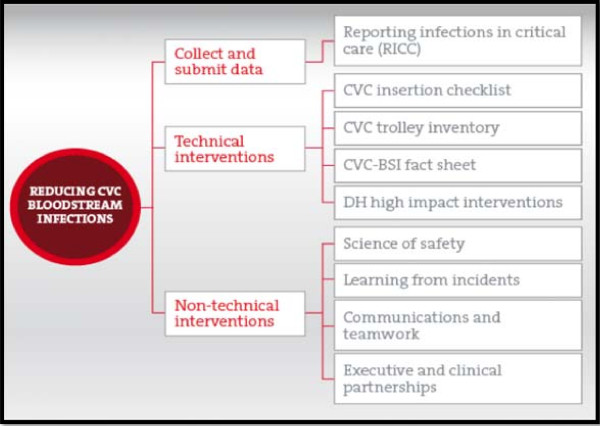
BACKGROUND: Quality and safety improvement initiatives in healthcare often display two disconcerting effects. The first is a failure to outperform the secular trend. The second is the decline effect, where an initially promising intervention appears not to deliver equally successful results when attempts are made to replicate it in new settings. Matching Michigan, a patient safety program aimed at decreasing central line infections in over 200 intensive care units (ICUs) in England, may be an example of both. We aimed to explain why these apparent effects may have occurred. METHODS: We conducted interviews with 98 staff and non-participant observation on 19 ICUs; 17 of these units were participating in Matching Michigan. We undertook further telephone interviews with 29 staff who attended program training events and we analyzed relevant documents. RESULTS: One Matching Michigan unit transformed its practices and culture in response to the program; five boosted existing efforts, and 11 made little change. Matching Michigan's impact may have been limited by features of program design and execution; it was not an exact replica of the original project. Outer and inner contexts strongly modified the program's effects. The outer context included previous efforts to tackle central line infections superimposed on national infection control policies that were perceived by some as top-down and punitive. This undermined engagement in the program and made it difficult to persuade participants that the program was necessary. Individual ICUs' histories and local context were also highly consequential: their past experience of quality improvement, the extent to which they were able to develop high quality data collection and feedback systems, and the success of local leaders in developing consensus and coalition all influenced the program's impact on local practices. CONCLUSIONS: Improved implementation of procedural good practice may occur through many different routes, of which program participation is only one. The 'phenotype' of compliance may therefore arise through different 'genotypes.' When designing and delivering interventions to improve quality and safety, risks of decline effects and difficulties in demonstrating added value over the secular trend might be averted by improved understanding of program mechanisms and contexts of implementation.
Overview
The claims and statistics of this paper haven’t been checked yet.
Run the check — free, no account needed. It reads the open-access text and checks the sources it cites.
Integrity signals
Registry
Cites
Statistics
Figures
Verification
Claims the paper makes
The claims and statistics of this paper haven’t been checked yet.
Run the check — free, no account needed. It reads the open-access text and checks the sources it cites.
Claims other papers make about this one
Each is checked against this paper’s own text: does it say what the citing paper says it does?
In the citing paper
“Initiatives to improve quality and safety in healthcare all too frequently result in limited changes for the better or no meaningful changes at all, and the few that are successful are often hard to sustain or replicate in new contexts.1”
From Demystifying theory and its use in improvement (2015) · cites this paper as [1]
Self-check
Percentages, sums and reported differences re-computed from the paper’s own numbers.
The self-check needs the paper’s full text.
Citations
Cites
The Discovery of Grounded Theory: Strategies for Qualitative Research
Glaser, B. G., & Strauss, A. L. (2017) · Aldine (Routledge reprint) · doi:10.4324/9780203793206 · Cited by 25,789
Diffusion of Innovations in Service Organizations: Systematic Review and Recommendations
GREENHALGH, T., ROBERT, G., MACFARLANE, F., BATE, P., & KYRIAKIDOU, O. (2004) · The Milbank Quarterly · doi:10.1111/j.0887-378x.2004.00325.x · Cited by 7,448 · cited 1×
“But a long history of failed or partial implementation makes it clear that evidence-based procedures and guidelines rarely directly impact on practice without facilitating mechanisms [9].”
BackgroundAn Intervention to Decrease Catheter-Related Bloodstream Infections in the ICU
Pronovost, P., Needham, D., Berenholtz, S., Sinopoli, D., Chu, H., Cosgrove, S., Sexton, B., Hyzy, R., Welsh, R., Roth, G., et al. (2006) · New England Journal of Medicine · doi:10.1056/nejmoa061115 · Cited by 4,387
Gottlieb, R. (1987) · The New Yorker · Cited by 1,311
Reconsidering Community-Based Health Promotion: Promise, Performance, and Potential
Merzel, C., & D’Afflitti, J. (2003) · American Journal of Public Health · doi:10.2105/ajph.93.4.557 · Cited by 713 · cited 1×
“A similar effect is often seen in community health promotion programs [26].”
BackgroundExplaining Michigan: Developing an Ex Post Theory of a Quality Improvement Program
DIXON-WOODS, M., BOSK, C. L., AVELING, E. L., GOESCHEL, C. A., & PRONOVOST, P. J. (2011) · Milbank Quarterly · doi:10.1111/j.1468-0009.2011.00625.x · Cited by 603 · cited 6×
“They suggest that program fidelity needs to be assessed holistically, with a focus on mechanisms of change as well as program components [10].”
BackgroundMethodInfluentialSelf-citationHolland, K. (2008) · Nurse Education in Practice · doi:10.1016/j.nepr.2008.07.004 · Cited by 589
Bosk, C. L., Dixon‐Woods, M., Goeschel, C. A., & Pronovost, P. J. (2009) · The Lancet · doi:10.1016/s0140-6736(09)61440-9 · Cited by 455
Self-citationThe Tension between Needing to Improve Care and Knowing How to Do It
Auerbach, A. D., Landefeld, C. S., & Shojania, K. G. (2007) · New England Journal of Medicine · doi:10.1056/nejmsb070738 · Cited by 416 · cited 1×
“Health systems worldwide face the frustration of a mass of evidence repeatedly showing problems in the quality and safety of patient care, but much less compelling evidence on how such problems can be tackled effectively [1-3].”
BackgroundStrategies for Cultural Change
(1994) · Elsevier eBooks · doi:10.1016/c2013-0-04535-5 · Cited by 345
Research works printed but not linked: 3
- Wachter RM: Understanding patient safety (2nd. edition): New York. 2012, London: McGraw-Hill Medical
- Darzi A: High Quality Care for All: NHS next stage review. 2008, London: Department of Health
- Glaser B, Strauss A: The discovery of grounded theory: Hawthorne. 1967, NY: Aldine Publishing Company
Cited by
Sorted by citations
Hoffmann, T. C., Glasziou, P. P., Boutron, I., Milne, R., Perera, R., Moher, D., Altman, D. G., Barbour, V., Macdonald, H., Johnston, M., et al. (2014) · BMJ · doi:10.1136/bmj.g1687 · Cited by 10,548
Self-citationDemystifying theory and its use in improvement
Davidoff, F., Dixon-Woods, M., Leviton, L., & Michie, S. (2015) · BMJ Quality & Safety · doi:10.1136/bmjqs-2014-003627 · Cited by 714
Self-citationSpreading and scaling up innovation and improvement
Greenhalgh, T., & Papoutsi, C. (2019) · BMJ · doi:10.1136/bmj.l2068 · Cited by 382
An open letter toThe BMJeditors on qualitative research
Greenhalgh, T., Annandale, E. C., Ashcroft, R. E., Barlow, J. G., Black, N. A., Bleakley, A., Boaden, R., Braithwaite, J., Britten, N., Carnevale, F. A., et al. (2016) · BMJ · doi:10.1136/bmj.i563 · Cited by 378
Self-citationGoodman, D., Ogrinc, G. S., Davies, L., Baker, G. R., Barnsteiner, J., Foster, T. C., Gali, K., Hilden, J. M., Horwitz, L. I., Kaplan, H. C., et al. (2016) · BMJ Quality & Safety · doi:10.1136/bmjqs-2015-004480 · Cited by 398
“… 66”
Does quality improvement improve quality?
Dixon‐Woods, M., & Martin, G. P. (2016) · Future Hospital Journal · doi:10.7861/futurehosp.3-3-191 · Cited by 327
Self-citationIsta, E., van der Hoven, B., Kornelisse, R. F., van der Starre, C., Vos, M. D., Boersma, E. H., & Helder, O. K. (2016) · The Lancet Infectious Diseases · doi:10.1016/s1473-3099(15)00409-0 · Cited by 301
The influence of contextual factors on healthcare quality improvement initiatives: a realist review
Coles, E., Anderson, J., Maxwell, M., Harris, F. M., Gray, N. M., Milner, G., & MacGillivray, S. (2020) · Systematic Reviews · doi:10.1186/s13643-020-01344-3 · Cited by 246
“2013, UK [43] Adult intensive care units Reducing central line bloodstream infections; improvements in patient safety and reduce 30 day mortality.”
BackgroundInfluentialBack to basics: checklists in aviation and healthcare
Clay‐Williams, R., & Colligan, L. (2015) · BMJ Quality & Safety · doi:10.1136/bmjqs-2015-003957 · Cited by 196
How to improve healthcare improvement—an essay by Mary Dixon-Woods
Dixon‐Woods, M. (2019) · BMJ · doi:10.1136/bmj.l5514 · Cited by 209
Self-citationConn, L. G., McKenzie, M., Pearsall, E., & Mcleod, R. (2015) · Implementation Science · doi:10.1186/s13012-015-0289-y · Cited by 171
“These findings are aligned with those of other multisited implementation studies in which similar champion characteristics and contexts are found to be necessary mechanisms for driving local practice change [39, 40].”
ResultEffect of an automated notification system for deteriorating ward patients on clinical outcomes
Subbe, C. P., Duller, B., & Bellomo, R. (2017) · Critical Care · doi:10.1186/s13054-017-1635-z · Cited by 190
“surgical, obstetric and pediatric patients) and in other health care settings to tease out how much our findings are context dependent [29].”
BackgroundRaine, R., Fitzpatrick, R. M., Barratt, H., Bevan, G., Black, N. A., Boaden, R., Bower, P., Campbell, M., Denis, J., Devers, K. J., et al. (2016) · Health Services and Delivery Research · doi:10.3310/hsdr04160 · Cited by 197
Self-citationAnalysis of cluster randomised stepped wedge trials with repeated cross-sectional samples
Hemming, K., Taljaard, M., & Forbes, A. (2017) · Trials · doi:10.1186/s13063-017-1833-7 · Cited by 166
Hoffmann, T., Glasziou, P., Boutron, I., Milne, R., Perera, R., Moher, D., Altman, D. G., Barbour, V., Macdonald, H., Johnston, M., et al. (2016) · Das Gesundheitswesen · doi:10.1055/s-0041-111066 · Cited by 163
Self-citationLorencatto, F., Charani, E., Sevdalis, N., Tarrant, C., & Davey, P. G. (2018) · Journal of Antimicrobial Chemotherapy · doi:10.1093/jac/dky222 · Cited by 156
Self-citationAveling, E.-L., McCulloch, P., & Dixon-Woods, M. (2013) · BMJ Open · doi:10.1136/bmjopen-2013-003039 · Cited by 152
“But attempts to change the status quo in these settings should be informed by a sound evidence base, attention to unintended consequences and recognition of the influence of local histories.(32) Though the volume of research on patient safety in low-income countries is now increasing,(33) 34 little is known about whic…”
BackgroundSelf-citationImpact of the World Health Organization Surgical Safety Checklist on Patient Safety
Haugen, A. S., Sevdalis, N., & Søfteland, E. (2019) · Anesthesiology · doi:10.1097/aln.0000000000002674 · Cited by 172
Charani, E., Smith, I., Skodvin, B., Perozziello, A., Lucet, J.-C., Lescure, F.-X., Birgand, G., Poda, A., Ahmad, R., Singh, S., et al. (2019) · PLOS ONE · doi:10.1371/journal.pone.0209847 · Cited by 139
“The influence of hierarchies and peer influence on antibiotic prescribing in hospitals[5,10], with the need for tailoring interventions to the context in which they are to be implemented and ensure local ownership[11].”
BackgroundPayne, V., Hall, M., Prieto, J. A., & Johnson, M. (2017) · Archives of Disease in Childhood Fetal & Neonatal · doi:10.1136/archdischild-2017-313362 · Cited by 131
Applying ethnography to the study of context in healthcare quality and safety
Leslie, M., Paradis, E., Gropper, M. A., Reeves, S., & Kitto, S. C. (2013) · BMJ Quality & Safety · doi:10.1136/bmjqs-2013-002335 · Cited by 130
Self-citationon behalf of the EPOCH trial group, Stephens, T., Peden, C. J., Pearse, R. M., Shaw, S. E., Abbott, T. E. F., Jones, E. L., Kocman, D., & Martin, G. P. (2018) · Implementation Science · doi:10.1186/s13012-018-0823-9 · Cited by 127
“Building and maintaining effective social relationships is time-consuming and challenging, and the uptake of ‘non-technical’ and ‘socio-adaptive’ interventions can be low amongst health professionals [18].”
BackgroundLeite, H., Bateman, N., & Radnor, Z. (2019) · Production Planning & Control · doi:10.1080/09537287.2019.1623426 · Cited by 130
“…from manufacturing plants to improve quality and safety in healthcare settings has been a challenge so as a consequence the results sometimes are considered superficial, with no meaningful changes, low rates of success and difficult to replicate (Davidoff et al. 2015; Dixon-Woods et al. 2013).”
What are effective strategies for the implementation of care bundles on ICUs: a systematic review
Borgert, M. J., Goossens, A., & Dongelmans, D. A. (2015) · Implementation Science · doi:10.1186/s13012-015-0306-1 · Cited by 117
“The context in which a programme for quality improvement is launched contributes to different outcomes [83, 85].”
BackgroundAbimbola, S., Patel, B., Peiris, D., Patel, A., Harris, M., Usherwood, T., & Greenhalgh, T. (2019) · BMC Medicine · doi:10.1186/s12916-019-1463-x · Cited by 102
Pannick, S., Sevdalis, N., & Athanasiou, T. (2015) · BMJ Quality & Safety · doi:10.1136/bmjqs-2015-004453 · Cited by 114
Antibiotic Stewardship—Twenty Years in the Making
Charani, E., & Holmes, A. H. (2019) · Antibiotics · doi:10.3390/antibiotics8010007 · Cited by 112
“In unsuccessful units, efforts had not been made to engage with and persuade senior consultants to adopt the program [51].”
BackgroundPronovost, P. J., Watson, S. R., Goeschel, C. A., Hyzy, R. C., & Berenholtz, S. M. (2015) · American Journal of Medical Quality · doi:10.1177/1062860614568647 · Cited by 113
“Nevertheless, in the England study, control hospitals achieved results similar to those in intervention hospitals, and the validity of the CLABSI measures varied among hospitals.(17,18) There is limited evidence assessing the long-term sustainability of quality improvement projects.”
ResultWoodcock, T. M., Adeleke, Y., Goeschel, C. A., Pronovost, P. J., & Dixon‐Woods, M. (2020) · BMC Medical Research Methodology · doi:10.1186/s12874-019-0886-6 · Cited by 102
Self-citationCorso, E., Hind, D., Beever, D., Fuller, G., Wilson, M. J. A., Wrench, I., & Chambers, D. (2017) · BMC Pregnancy and Childbirth · doi:10.1186/s12884-017-1265-0 · Cited by 94
de Kraker, M. E. A., Abbas, M., Huttner, B. D., & Harbarth, S. (2017) · Clinical Microbiology and Infection · doi:10.1016/j.cmi.2017.05.019 · Cited by 93
Fifteen years after To Err is Human: a success story to learn from
Pronovost, P. J., Cleeman, J. I., Wright, D., & Srinivasan, A. (2015) · BMJ Quality & Safety · doi:10.1136/bmjqs-2015-004720 · Cited by 86
Framework for direct observation of performance and safety in healthcare
Catchpole, K. C., Neyens, D. M., Abernathy, J. H., Allison, D., Joseph, A., & Reeves, S. T. (2017) · BMJ Quality & Safety · doi:10.1136/bmjqs-2016-006407 · Cited by 81
van der Kooi, T. I. I., Sax, H., Pittet, D., van Dissel, J., BENTHEM, B. H. B. V., Walder, B., Cartier, V., Clack, L., de Greeff, S. C., Wolkewitz, M., et al. (2017) · Intensive Care Medicine · doi:10.1007/s00134-017-5007-6 · Cited by 81
Wears, R. L., & Sutcliffe, K. M. (2019) · Oxford University Press eBooks · doi:10.1093/oso/9780190271268.001.0001 · Cited by 88
Clack, L., Zingg, W., Saint, S. K., Casillas, A., Touveneau, S., Jantarada, F. D. L., Willi, U., van der Kooi, T. I. I., Damschroder, L. J., Forman, J. H., et al. (2018) · BMJ Quality & Safety · doi:10.1136/bmjqs-2017-007675 · Cited by 83
“Dixon-Woods et al conducted a qualitative assessment 38 of the ‘Matching Michigan’ project to reduce ICU-acquired CRBSI in England, 36 based on an originally successful intervention conducted in Michigan, USA.”
MethodDavey, P. G., Peden, C., Charani, E., Marwick, C., & Michie, S. (2015) · International Journal of Antimicrobial Agents · doi:10.1016/j.ijantimicag.2014.11.014 · Cited by 80
“ICUs implementing the same checklist in the UK revealed marked differences between the few ICUs that achieved a reduction in central line-associated bloodstream infections versus the majority that did not [44,45].”
BackgroundResultGilhooly, D., Green, S. A., McCann, C., Black, N. A., & Moonesinghe, R. (2019) · Implementation Science · doi:10.1186/s13012-019-0894-2 · Cited by 82
“Measurement of compliance is an important aspect of care bundle implementation: [3] it is not sufficient to introduce a change and expect it to be fully adopted into routine practice and to attribute improved outcomes to them [39].”
BackgroundMyths and realities of training in obstetric emergencies.
Draycott, T. J., Collins, K. J., Crofts, J. F., Siassakos, D., Winter, C., Weiner, C. P., & Donald, F. (2015) · Best Practice & Research Clinical Obstetrics & Gynaecology · doi:10.1016/j.bpobgyn.2015.07.003 · Cited by 64
Making implementation science more real
Sarkies, M., Francis‐Auton, E., Long, J. C., Pomare, C., Hardwick, R., & Braithwaite, J. (2022) · BMC Medical Research Methodology · doi:10.1186/s12874-022-01661-2 · Cited by 66
“But in Explaining Matching Michigan [21], one of the enrolled ICUs achieved its outcomes by changing practices and culture in line with the intervention; five strengthened existing practices and 11 did not respond to the package of interventional initiatives.”
Hospital checklists are meant to save lives — so why do they often fail?
Anthes, E. (2015) · Nature · doi:10.1038/523516a · Cited by 64
How collaborative are quality improvement collaboratives: a qualitative study in stroke care
Carter, P., Ozierański, P., McNicol, S., Power, M., & Dixon‐Woods, M. (2014) · Implementation Science · doi:10.1186/1748-5908-9-32 · Cited by 64
“Given that improvements can be achieved without collaboration [53], and that one study in a single organization reported impressive results in improving stroke care over a four year period [54], it is therefore sensible for a full assessment of the benefits and costs of collaborative working to be made at the outset o…”
BackgroundSelf-citationOvercoming Challenges In Codifying And Replicating Complex Health Care Interventions
Horton, T., Illingworth, J. H., & Warburton, W. (2018) · Health Affairs · doi:10.1377/hlthaff.2017.1161 · Cited by 63
Developing a Measure of Value in Health Care
Lee, K. H. K., Austin, J. M., & Pronovost, P. J. (2015) · Value in Health · doi:10.1016/j.jval.2014.12.009 · Cited by 64
“[8] Dixon-Woods M, Leslie M, Tarrant C, Bion J.”
BackgroundThe Coming of Age of Implementation Science and Research in Critical Care Medicine
Barr, J., Paulson, S. S., Kamdar, B. B., Ervin, J. N., Lane-Fall, M. B., Liu, V. X., & Kleinpell, R. M. (2021) · Critical Care Medicine · doi:10.1097/ccm.0000000000005131 · Cited by 58
Unpacking the black box of improvement
Ramaswamy, R., Reed, J. E., Livesley, N., Boguslavsky, V., García‐Elorrio, E., Sax, S., Diarra, H., Kimble, L. E., & Parry, G. J. (2018) · International Journal for Quality in Health Care · doi:10.1093/intqhc/mzy009 · Cited by 58
“[6] developed an ex-post theory to explain why a quality improvement project to reduce central venous catheter bloodstream infection was successfully implemented in the context of a cohort of hospitals in Michigan.”
BackgroundA qualitative study of speaking out about patient safety concerns in intensive care units
Tarrant, C., Leslie, M., Bion, J., & Dixon‐Woods, M. (2017) · Social Science & Medicine · doi:10.1016/j.socscimed.2017.09.036 · Cited by 69
“This paper reports data from an ethnographic study of a national programme (Dixon-Woods et al., 2013) to reduce central venous catheter bloodstream infections (CVC-BSIs) in intensive care unit (Bion et al.”
BackgroundSelf-citationBradley, E. H., Brewster, A. L., McNatt, Z., Linnander, E. L., Cherlin, E. J., Fosburgh, H., Ting, H. H., & Curry, L. A. (2017) · BMJ Quality & Safety · doi:10.1136/bmjqs-2017-006574 · Cited by 57
Tank, T. 2. G. I.-T., Zingg, W., Storr, J., Park, B. J., Ahmad, R., Tarrant, C., Castro‐Sánchez, E., Tomczyk, S. M., Kilpatrick, C., Allegranzi, B., et al. (2019) · Antimicrobial Resistance and Infection Control · doi:10.1186/s13756-019-0527-1 · Cited by 58
Self-citationWhite, M. C., Peven, K., Clancy, O., Okonkwo, I., Bakolis, I., Russ, S., Leather, A. J. M., & Sevdalis, N. (2020) · Annals of Surgery · doi:10.1097/sla.0000000000003944 · Cited by 56
“In 2013, a similar null outcome was reported for the ‘‘Matching Michigan’’ national improvement which aimed to reduce central venous catheter infections across 223 UK intensive care units.(73,74) Both examples used an intervention with a strong evidence base, but failed to effectively implement the intervention at sca…”
ResultOvercoming the obstacles of implementing infection prevention and control guidelines
Birgand, G., Johansson, A. F., Szilágyi, E., & Lucet, J. C. (2015) · Clinical Microbiology and Infection · doi:10.1016/j.cmi.2015.09.005 · Cited by 51
“Based on the principle that HCAI surveillance should form the cornerstone of IPC, these networks are necessary for helping to implement guidelines at the local level and reduce HCAI rates [18].”
BackgroundInfluentialModels for Intensive Care Training. A European Perspective
Bion, J., & Rothen, H. U. (2014) · American Journal of Respiratory and Critical Care Medicine · doi:10.1164/rccm.201311-2058cp · Cited by 51
Self-citationPresseau, J., Byrne-Davis, L. M. T., Hotham, S., Lorencatto, F., Potthoff, S., Atkinson, L., Bull, E. R., Dima, A. L., van Dongen, A., French, D., et al. (2021) · Health Psychology Review · doi:10.1080/17437199.2020.1866638 · Cited by 60
“Improving patient care is not easy and when successful can result in small changes that are hard to maintain and replicate (Dixon-Woods et al., 2013).”
BackgroundFrom spreading to embedding innovation in health care: Implications for theory and practice
Scarbrough, H., & Kyratsis, Y. (2021) · Health Care Management Review · doi:10.1097/hmr.0000000000000323 · Cited by 61
“Comparative analysis of the U.S. and U.K. cases is revealing (Dixon-Woods et al., 2011, 2013).”
BackgroundMethodInfluentialUnrestricted drinking before surgery: an iterative quality improvement study
Rüggeberg, A., & Nickel, E. A. (2022) · Anaesthesia · doi:10.1111/anae.15855 · Cited by 50
“It may be perceived as ``what you have done so far may be wrong ́ ́ or ``people do not appreciate what you have been doing for the last years ́ ́ [17].”
BackgroundInfluentialStapley, E., Sharples, E., Lachman, P. I., Lakhanpaul, M., Wolpert, M., & Deighton, J. (2017) · International Journal for Quality in Health Care · doi:10.1093/intqhc/mzx162 · Cited by 52
“3 translate easily into other contexts [9].”
Portela, M. C., Lima, S. M. L., Martins, M. S., & Travassos, C. (2016) · Cadernos de Saúde Pública · doi:10.1590/0102-311x00105815 · Cited by 64
Brewster, L., Aveling, E., Martin, G. P., Tarrant, C., & Dixon‐Woods, M. (2015) · BMJ Quality & Safety · doi:10.1136/bmjqs-2014-003732 · Cited by 48
“33 In accordance with the rationale behind the concordat approach, we do not advocate that other collaborations simply adopt this example of a concordat ‘ as is ’ .”
BackgroundSelf-citationBreckenridge, J. P., Gray, N., Toma, M., Ashmore, S., Glassborow, R., Stark, C. R., & Renfrew, M. J. (2019) · BMJ Open Quality · doi:10.1136/bmjoq-2018-000553 · Cited by 57
“InTroducTIon Initiating and sustaining effective change in healthcare is a continuing challenge, with even the most successful improvements often being difficult to sustain or replicate in other contexts.(1) Key figures in improvement science have emphasised the importance of learning from the psychological, social an…”
BackgroundBrewster, L., Tarrant, C., & Dixon‐Woods, M. (2016) · Journal of Hospital Infection · doi:10.1016/j.jhin.2016.01.021 · Cited by 46
Self-citationColeman, K. J., Magnan, S. J., Neely, C., Solberg, L. I., Beck, A. L., Trevis, J., Heim, C., Williams, M., Katzelnick, D. J., Unützer, J., et al. (2016) · General Hospital Psychiatry · doi:10.1016/j.genhosppsych.2016.05.007 · Cited by 44
Lane-Fall, M. B., L., J. L. P., Massa, S., Collard, M. L., Peifer, H. G., Taranti, L. J. D., Linehan, M., Fleisher, L. A., & Barg, F. K. (2018) · The Joint Commission Journal on Quality and Patient Safety · doi:10.1016/j.jcjq.2018.02.004 · Cited by 44
The Positive Deviance Approach
Baxter, R., & Lawton, R. (2022) · Cambridge University Press eBooks · doi:10.1017/9781009237130 · Cited by 44
Yanchus, N. J., Ohler, L., Crowe, E., Teclaw, R. F., & Osatuke, K. (2017) · Journal of research in nursing · doi:10.1177/1744987117710305 · Cited by 50
“Overall, environmental, behavioural and organisational contexts of care delivery are broadly acknowledged to influence both the quality and safety of the care delivered (Berenholtz et al., 2014; Dixon-Woods et al., 2013; Edmondson et al., 2016; Kalisch et al., 2007).”
BackgroundTaylor, N. J., Healey, E., Morrow, A., Greening, S., Wakefield, C. E., Warwick, L., Williams, R., & Tucker, K. (2020) · Implementation Science Communications · doi:10.1186/s43058-020-00054-0 · Cited by 41
“and generalisability of interventions problematic [2].”
Bonaconsa, C., Mbamalu, O. N., Mendelson, M., Boutall, A., Warden, C., Rayamajhi, S., Pennel, T. C., Hampton, M. I., Joubert, I., Tarrant, C., et al. (2021) · BMJ Quality & Safety · doi:10.1136/bmjqs-2020-012372 · Cited by 40
Self-citationEliminating Infections in the ICU: CLABSI
Latif, A., Halim, M. S., & Pronovost, P. J. (2015) · Current Infectious Disease Reports · doi:10.1007/s11908-015-0491-8 · Cited by 42
Approaches to Spread, Scale-Up, and Sustainability
Papoutsi, C., Greenhalgh, T., & Marjanovic, S. (2024) · Cambridge University Press eBooks · doi:10.1017/9781009326049 · Cited by 38
Tarrant, C., O’Donnell, B., Martin, G. P., Bion, J., Hunter, A., & Rooney, K. (2016) · Implementation Science · doi:10.1186/s13012-016-0518-z · Cited by 46
“One problem is often a lack of understanding of how interventions actually work and what is required to make them work [29, 30].”
BackgroundSelf-citationA mixed-methods study of challenges experienced by clinical teams in measuring improvement
Woodcock, T. M., Liberati, E. G., & Dixon‐Woods, M. (2019) · BMJ Quality & Safety · doi:10.1136/bmjqs-2018-009048 · Cited by 39
Self-citationStokes, T., Tumilty, E., Doolan‐Noble, F., & Gauld, R. D. C. (2018) · BMJ Open · doi:10.1136/bmjopen-2018-025094 · Cited by 38
“Others have similarly shown the importance of the local context in determining whether local implementation works or fails when rolling out a national quality improvement programme in secondary care.(24) We therefore consider that the implication of our work for future implementers of HealthPathways and similar comple…”
BackgroundMiddleton, S., Lydtin, A., Comerford, D., Cadilhac, D. A.-M., McElduff, P., Dale, S., Hill, K. M., Longworth, M., Ward, J., Cheung, N. W., et al. (2016) · BMJ Open · doi:10.1136/bmjopen-2016-011568 · Cited by 38
“While central venous catheter bloodstream infections dropped in the UK ICUs, the Matching Michigan study was not an exact replica of the original Michigan Keystone project, particularly in terms of implementation of the intervention.(16) As reported elsewhere,(17) our team previously developed a successful implementat…”
ResultCommissioning mental health services
Kisely, S. R. (1997) · Journal of Epidemiology & Community Health · doi:10.1136/jech.51.3.342-b · Cited by 40
Sendlhofer, G., Lumenta, D. B., Leitgeb, K., Kober, B., Jantscher, L., Schanbacher, M., Berghold, A., Pregartner, G., Brunner, G. A., Tax, C., et al. (2016) · PLoS ONE · doi:10.1371/journal.pone.0149212 · Cited by 37
“Nevertheless, in order to prove team performance with respect to SSC-usage, audits in an OR are needed to further investigate the possible disconnection between physical completion of the SSC and actual compliance to checklist items.”
BackgroundInfluentialSheard, L., Marsh, C., Mills, T., Peacock, R., Langley, J., Partridge, R., Gwilt, I., & Lawton, R. (2019) · Health Services and Delivery Research · doi:10.3310/hsdr07360 · Cited by 37
de Mheen, P. J. M., & van Bodegom‐Vos, L. (2015) · BMJ Quality & Safety · doi:10.1136/bmjqs-2014-003787 · Cited by 38
Szymczak, J. E. (2018) · BMJ Quality & Safety · doi:10.1136/bmjqs-2018-008512 · Cited by 35
Leadership and management for infection prevention and control: what do we have and what do we need?
Gould, D. J., Gallagher, R., & Allen, D. A. (2016) · Journal of Hospital Infection · doi:10.1016/j.jhin.2016.07.005 · Cited by 34
Opportunities for system level improvement in antibiotic use across the surgical pathway
Charani, E., Ahmad, R., Tarrant, C., Birgand, G., Leather, A. J. M., Mendelson, M., Moonesinghe, R., Sevdalis, N., Singh, S. K., & Holmes, A. H. (2017) · International Journal of Infectious Diseases · doi:10.1016/j.ijid.2017.04.020 · Cited by 34
Self-citationSubbe, C. P., Tellier, G., & Barach, P. R. (2021) · BMJ Open · doi:10.1136/bmjopen-2020-047446 · Cited by 36
Mann, C., Shaw, A. R. G., Guthrie, B., Wye, L., Man, M., Hollinghurst, S. P., Brookes, S. T., Bower, P., Mercer, S. W., & Salisbury, C. (2016) · BMJ Open · doi:10.1136/bmjopen-2016-011260 · Cited by 32
“If there is a clear trend towards initiatives that are very similar to 3D, any improvements in care resulting from 3D may be matched by those that occur as a result of ‘secular trends’.(29) It is also expected that the various components of the intervention may not be uniformly implemented across practices, in part du…”
BackgroundClinical Communities at Johns Hopkins Medicine: An Emerging Approach to Quality Improvement
Gould, L. J., Wachter, P., Aboumatar, H. J., Blanding, R. J., Brotman, D. J., Bullard, J. E., Gilmore, M. M., Golden, S. H., Howell, E. E., Ishii, L. E., et al. (2015) · The Joint Commission Journal on Quality and Patient Safety · doi:10.1016/s1553-7250(15)41050-5 · Cited by 33
de Neef, M., Bakker, L., Dijkstra, S., Raymakers-Janssen, P. A. M. A., Vileito, A., & Ista, E. (2019) · Pediatric Critical Care Medicine · doi:10.1097/pcc.0000000000001862 · Cited by 33
Ziemann, A., Brown, L., Sadler, E., Ocloo, J. E., Boaz, A., & Sandall, J. (2019) · Systematic Reviews · doi:10.1186/s13643-019-1180-8 · Cited by 34
Emergent barriers to the lean healthcare journey: baronies, tribalism and scepticism
Leite, H., Williams, S., Radnor, Z., & Bateman, N. (2022) · Production Planning & Control · doi:10.1080/09537287.2022.2054386 · Cited by 38
“Dixon-Woods et al. (2013) argue that this challenge often brings some disconcerting effects, such as failure to outperform the secular trend and the decline effect when improvements do not deliver equal, successful results during replication in the new context.”
BackgroundResultAveling, E., Martin, G. P., Herbert, G., & Armstrong, N. (2016) · Social Science & Medicine · doi:10.1016/j.socscimed.2016.11.026 · Cited by 32
“Even where interventions prove successful in one context, attempts to replicate positive impacts elsewhere are variable in their results (Dixon-Woods et al., 2013), and often disappointing (Lomas, 2005).”
BackgroundHowells, K., Burrows, M., Amp, M., Brennan, R., Yeung, W.-L., Jackson, S., Dickinson, J., Draper, J., Campbell, S., Ashcroft, D. M., et al. (2021) · International Journal for Equity in Health · doi:10.1186/s12939-020-01364-4 · Cited by 32
Sheard, L., Marsh, C., O'Hara, J. K., Armitage, G., Wright, J., & Lawton, R. (2017) · BMJ Open · doi:10.1136/bmjopen-2016-014558 · Cited by 32
Papoutsi, C., Poots, A. J., Clements, J. T. C., Wyrko, Z., Offord, N., & Reed, J. E. (2017) · Age and Ageing · doi:10.1093/ageing/afx194 · Cited by 32
“However, their use has not always been met with success and transferability across settings has been questioned [7, 8].”
BackgroundMorton, K., MacNeill, S., Sanderson, E., Dixon, P., King, A. J. L., Jenkins, S., Metcalfe, C. D., Shaw, A., Chalder, M., Benger, J. R., et al. (2019) · BMJ Open Respiratory Research · doi:10.1136/bmjresp-2019-000425 · Cited by 31
White, M. C., Daya, L., Karel, F. K. B., White, G., Abid, S., Fitzgerald, A., Mballa, G. A. E., Sevdalis, N., & Leather, A. J. M. (2019) · Anesthesia & Analgesia · doi:10.1213/ane.0000000000004586 · Cited by 30
“Surgical count completed 132 (41)a 51 (16)a 52 (16)a 35 (11)a 48 (15)a 6 (2)a 102 (56)b 60 (33)b 13 (7)b 4 (2)b 3 (2)b 1 (1)b”
InfluentialSegurança do Paciente: criando organizações de saúde seguras
Sousa, P. J. D. S., & Junior, W. V. M. (2014) · Editora FIOCRUZ eBooks · doi:10.7476/9788575415948 · Cited by 32
Collaborative, O. B. O. T. C. C., Subbe, C. P., Kellett, J. G., Barach, P. R., Chaloner, C., Cleaver, H., Cooksley, T., Korsten, E. H. H. M., Croke, E., Davis, E. R., et al. (2017) · BMC Health Services Research · doi:10.1186/s12913-017-2288-y · Cited by 29
“Medical checklists are more likely to follow a predictable course if they make clinical sense to providers, have clearly defined endpoints [38] and actively engage the teams using them [39].”
Segurança do paciente: criando organizações de saúde seguras
Sousa, P., & Mendes, W. (2019) · Editora FIOCRUZ eBooks · doi:10.7476/9788575416426 · Cited by 62
Gould, D. J., Hale, R., Waters, E., & Allen, D. A. (2016) · Journal of Hospital Infection · doi:10.1016/j.jhin.2016.09.015 · Cited by 29
Shojania, K. G., & de Mheen, P. J. M. (2015) · BMJ Quality & Safety · doi:10.1136/bmjqs-2015-004461 · Cited by 33
Haynes, A. S., Brennan, S., Redman, S., Williamson, A. B., Makkar, S. R., Gallego, G., & Butow, P. N. (2017) · Health Research Policy and Systems · doi:10.1186/s12961-017-0234-4 · Cited by 28
“This may be especially important for interventions where participants have involvement in the tailoring and/or delivery of an intervention, since their attitudes towards its content, form and goals are likely to have profound impacts on what is delivered and how it is received [19, 20].”
BackgroundTroughton, R., Mariano, V., Campbell, A., Hettiaratchy, S. P., Holmes, A. H., & Birgand, G. (2019) · Antimicrobial Resistance and Infection Control · doi:10.1186/s13756-019-0565-8 · Cited by 28
Central-line-associated bloodstream infection burden among Dutch neonatal intensive care units
Jansen, S. J., Broer, S. D. L., Hemels, M. A. C., Visser, D. H., Antonius, T. A. J., Heijting, I., Bergman, K. A., Termote, J. U. M., Hütten, M. C., van der Sluijs, J. P. F., et al. (2023) · Journal of Hospital Infection · doi:10.1016/j.jhin.2023.11.020 · Cited by 27
“Mock before you block”: an in‐built action‐check to prevent wrong‐side anaesthetic nerve blocks
Pandit, J. J., Matthews, J., & Pandit, M. (2016) · Anaesthesia · doi:10.1111/anae.13664 · Cited by 27
Metadata
- Authors
- Dixon-Woods, M., Leslie, M., Tarrant, C., & Bion, J.
- Affiliations
- Johns Hopkins University (US)
- University of Leicester (GB)
- Queen Elizabeth Hospital Birmingham (GB)
- Venue
- Implementation Science
- Published
- 2013-06-20
- Volume
- 8
- Issue
- 1
- Pages
- 70-70
- ISSN
- 1748-5908 (ISSN-L)
- PMC
- PMC3704826
- OpenAlex
- W2153352637
- Cited by
- 291
- References
- 28
- Citations by year
- 2026: 3 · 2025: 4 · 2024: 18 · 2023: 21 · 2022: 23 · 2021: 18 · 2020: 25 · 2019: 57 · 2018: 21 · 2017: 25 · 2016: 29 · 2015: 30 · 2014: 12 · 2013: 4
- FWCI
- 45.28
- Type
- journal article
- Language
- en
- Open access
- gold
- doi.org
- Licence
- Locations
- Implementation Science (publishedVersion, cc-by)
- Europe PMC (PubMed Central) (publishedVersion, cc-by)
- PubMed Central (publishedVersion, cc-by)
- PubMed (publishedVersion)
- Figshare (submittedVersion, cc-by)
- Leicester Research Archive (University of Leicester) (submittedVersion, cc-by)
- Funders
- Wellcome Trust (097899, 097899/A/11/Z)
- Topics
- Health Sciences › Health Professions › General Health Professions › Health Policy Implementation Science
- Health Sciences › Medicine › Public Health, Environmental and Occupational Health › Patient Safety and Medication Errors
- Health Sciences › Medicine › Public Health, Environmental and Occupational Health › Healthcare Quality and Management
- Keywords
- patient safety programs, central line-associated bloodstream infection, intensive care unit, quality improvement, decline effect, secular trends, program implementation, context effects, infection control, employee engagement, local leadership, intervention replication
- MeSH terms
- Anthropology, Cultural, Catheterization, Central Venous, Critical Care, Cross Infection, England, Humans, Infection Control, Catheter-Related Infections, Quality Improvement, Patient Safety
About these checks
Registry, retraction, Cites and statistics results are computed, not judged, with one exception: a printed reference that no index lists is read once by a model before it counts as a citation error. Claims are extracted by a model and kept only when their quote appears verbatim in the text; each cited source is then checked, with a model’s help, for whether it says what the claim relies on. Those verdicts can be wrong — read the claim’s quote and the cited source before relying on one.
Statistics and arithmetic are recomputed, not judged.
Confidence bands are shown only for fields calibrated on our annotated test set. None is calibrated yet, so no band is shown.
What counts as a claim ›How we measure confidence ›How we check this ›
Are you an author, or do you see a problem with this page? Request a review
