

The DOI matches its Crossref record; 40 of the 40 references it cites were found in a registry or an index.
Clinical and molecular characterization of 40 patients with classic Ehlers-Danlos syndrome: Identification of 18 COL5A1 and 2 COL5A2 novel mutations
Open accessAbstract
Background: Classic Ehlers–Danlos syndrome (cEDS) is a rare autosomal dominant connective tissue disorder that is primarily characterized by skin hyperextensibility, abnormal wound healing/atrophic scars, and joint hypermobility. A recent study demonstrated that more than 90% of patients who satisfy all of these major criteria harbor a type V collagen (COLLV) defect. Methods: This cohort included 40 patients with cEDS who were clinically diagnosed according to the Villefranche nosology. The flowchart that was adopted for mutation detection consisted of sequencing the COL5A1 gene and, if no mutation was detected, COL5A2 analysis. In the negative patients the presence of large genomic rearrangements in COL5A1 was investigated using MLPA, and positive results were confirmed via SNP-array analysis. Results: We report the clinical and molecular characterization of 40 patients from 28 families, consisting of 14 pediatric patients and 26 adults. A family history of cEDS was present in 9 patients. The majority of the patients fulfilled all the major diagnostic criteria for cEDS; atrophic scars were absent in 2 females, skin hyperextensibility was not detected in a male and joint hypermobility was negative in 8 patients (20% of the entire cohort). Wide inter- and intra-familial phenotypic heterogeneity was observed. We identified causal mutations with a detection rate of approximately 93%. In 25/28 probands, COL5A1 or COL5A2 mutations were detected. Twenty-one mutations were in the COL5A1 gene, 18 of which were novel (2 recurrent). Of these, 16 mutations led to nonsense-mediated mRNA decay (NMD) and to COLLV haploinsufficiency and 5 mutations were structural. Two novel COL5A2 splice mutations were detected in patients with the most severe phenotypes. The known p. (Arg312Cys) mutation in the COL1A1 gene was identified in one patient with vascular-like cEDS. Conclusions: Our findings highlight that the three major criteria for cEDS are useful and sufficient for cEDS clinical diagnosis in the large majority of the patients. The borderline patients for whom these criteria fail can be diagnosed when minor signs of connective tissue diseases and family history are present and when genetic testing reveals a defect in COLLV. Our data also confirm that COL5A1 and COL5A2 are the major, if not the only, genes involved in cEDS.
Overview
The claims and statistics of this paper haven’t been checked yet.
Run the check — free, no account needed. It reads the open-access text and checks the sources it cites.
Integrity signals
Registry
Cites
Statistics
Figures
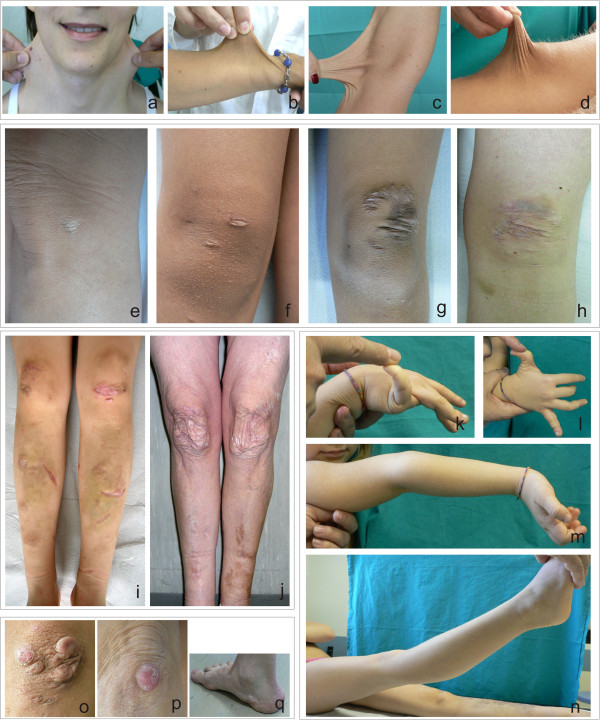
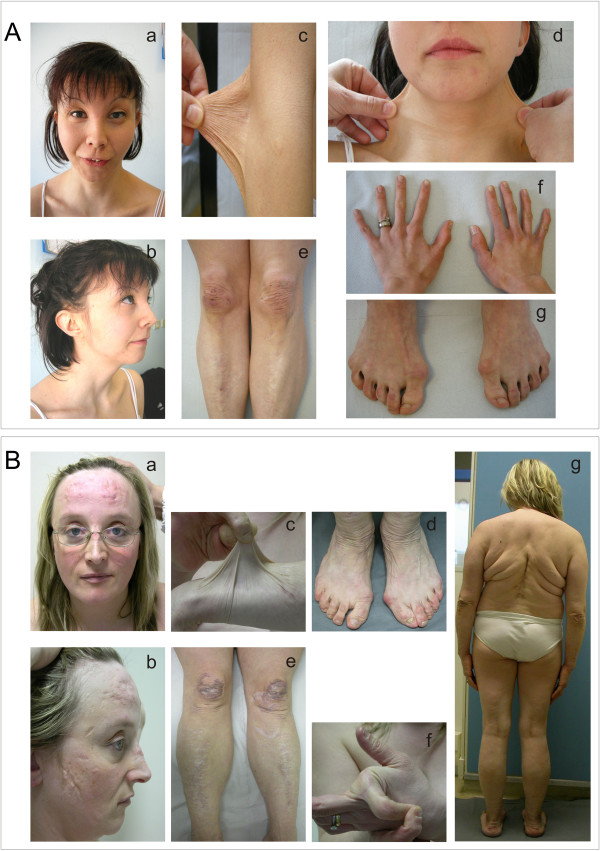
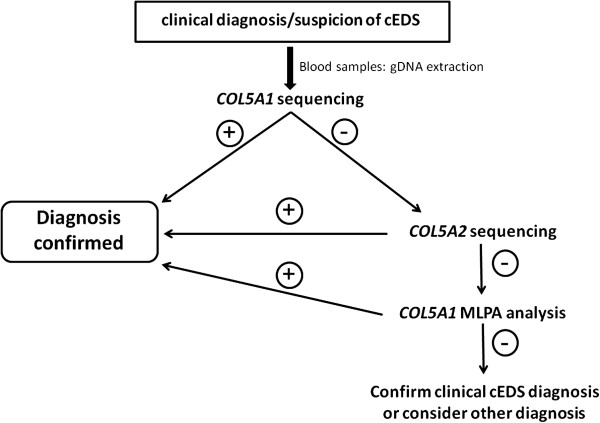
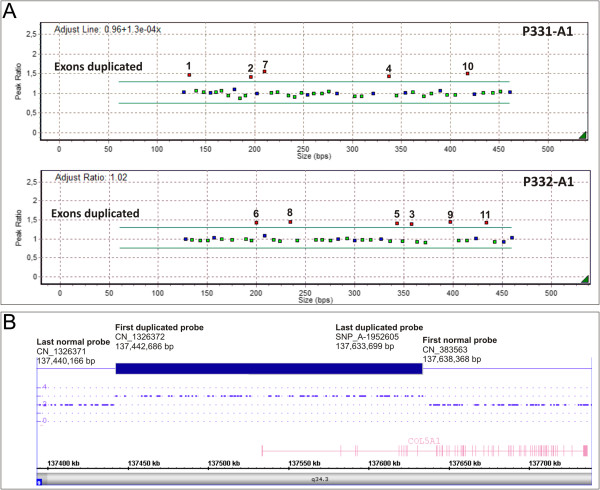
Verification
Claims the paper makes
The claims and statistics of this paper haven’t been checked yet.
Run the check — free, no account needed. It reads the open-access text and checks the sources it cites.
Claims other papers make about this one
Each is checked against this paper’s own text: does it say what the citing paper says it does?
The cited source says what the claim attributes to it.
In the citing paper
“Most patients harbor point mutations or chromosomal rearrangements in COL5A1 or COL5A2 genes encoding the collagen V [40,41].”
From Cellular and Molecular Mechanisms in the Pathogenesis of Classical, Vascular, and Hypermobile Ehlers‒Danlos Syndromes (2019) · cites this paper as [41]
The cited source says what the claim attributes to it.
In the citing paper
“Morethan 90% of cEDS patients harbor a heterozygous mutation in one of the genes encoding type V collagen ( COL5A1 and COL5A2 ) [Symoens et al., 2012; Ritelli et al., 2013; Zoppi et al., 2015]”
From The 2017 international classification of the Ehlers–Danlos syndromes (2017) · cites this paper as Ritelli et al., 2013
The cited source says what the claim attributes to it.
In the citing paper
“The p.(Arg312Cys) mutation has subsequently been identified in two other individuals with EDS and complications of vascular fragility [Ritelli et al., 2013;Gaines et al., 2015].”
From The Ehlers–Danlos syndromes, rare types (2017) · cites this paper as Ritelli et al., 2013
The cited source says what the claim attributes to it.
In the citing paper
“Patients with the p.(Arg312Cys) mutation are particularly at risk for vascular events, highlighting the benefit of molecular confirmation in classical EDS patients for management purposes.”
From The Ehlers–Danlos syndromes, rare types (2017) · cites this paper as Ritelli et al., 2013
In the citing paper
“cEDS and vEDS are caused respectively by defects in collagen V and collagen III, whereas the molecular basis of hEDS is unknown.”
From Cellular and Molecular Mechanisms in the Pathogenesis of Classical, Vascular, and Hypermobile Ehlers‒Danlos Syndromes (2019) · cites this paper as [41]
In the citing paper
“Collagen V haploinsufficiency is the most common molecular defect caused by COL5A1 null alleles, whereas rare COL5A1 variants and the majority of COL5A2 mutations reported so far affect collagen V structural integrity by exerting a dominant negative effect [40,41].”
From Cellular and Molecular Mechanisms in the Pathogenesis of Classical, Vascular, and Hypermobile Ehlers‒Danlos Syndromes (2019) · cites this paper as [41]
In the citing paper
“Collagen V haploinsufficiency is the most common molecular defect caused by COL5A1 null alleles, whereas rare COL5A1 variants and the majority of COL5A2 mutations reported so far affect collagen V structural integrity by exerting a dominant negative effect [40,41].”
From Cellular and Molecular Mechanisms in the Pathogenesis of Classical, Vascular, and Hypermobile Ehlers‒Danlos Syndromes (2019) · cites this paper as [41]
Self-check
Percentages, sums and reported differences re-computed from the paper’s own numbers.
The self-check needs the paper’s full text.
Citations
Cites
Venselaar, H., Beek, T. A. H. T., Kuipers, R. K. P., Hekkelman, M. L., & Vriend, G. (2010) · BMC Bioinformatics · doi:10.1186/1471-2105-11-548 · Cited by 1,201
Type V collagen: heterotypic type I/V collagen interactions in the regulation of fibril assembly
Birk, D. E. (2001) · Micron · doi:10.1016/s0968-4328(00)00043-3 · Cited by 438 · cited 2×
“nents that are involved in the maintenance of ECM architecture [12-16].”
BackgroundA recessive form of the Ehlers-Danlos syndrome caused by tenascin-X deficiency
Schalkwijk, J., Zweers, M. C., Steijlen, P. M., Dean, W. B., Taylor, G., van Vlijmen, I. M., van Haren, B., Miller, W. L., & Bristow, J. (2001) · New England Journal of Medicine · doi:10.1056/nejmoa002939 · Cited by 391 · cited 1×
“Moreover, the associated phenotypes exhibit certain differences from those of COLLV-associated cEDS [11,36,37].”
The Ehlers–Danlos syndrome, a disorder with many faces
De Paepe, A., & Malfait, F. (2012) · Clinical Genetics · doi:10.1111/j.1399-0004.2012.01858.x · Cited by 379 · cited 4×
“Aortic ring dilatation, large-size arterial aneurysms and dissections, intracranial aneurysms, and arterio-venous fistulas have rarely been observed [3-9].”
BackgroundInfluentialSteinmann, B., Royce, P. M., & Superti‐Furga, A. (2002) · Connective Tissue and Its Heritable Disorders · doi:10.1002/0471221929.ch9 · Cited by 358
Clinical and genetic aspects of Ehlers-Danlos syndrome, classic type
Malfait, F., WENSTRUP, R. J., & Paepe, A. D. (2010) · Genetics in Medicine · doi:10.1097/gim.0b013e3181eed412 · Cited by 303
The Human Collagen Mutation Database 1998
Dalgleish, R. (1998) · Nucleic Acids Research · doi:10.1093/nar/26.1.253 · Cited by 219
Classical Ehlers-Danlos Syndrome Caused by a Mutation in Type I Collagen
Nuytinck, L., Freund, M., Lagae, L., Pierard, G. E., Hermanns-Le, T., & De Paepe, A. (2000) · The American Journal of Human Genetics · doi:10.1086/302859 · Cited by 169 · cited 2×
“Moreover, the associated phenotypes exhibit certain differences from those of COLLV-associated cEDS [11,36,37].”
BackgroundMalfait, F., Symoens, S., De Backer, J., Hermanns-Lê, T., Sakalihasan, N., Lapière, C. M., Coucke, P., & De Paepe, A. (2007) · Human Mutation · doi:10.1002/humu.20455 · Cited by 167 · cited 2×
“young adulthood [36,38].”
Mutations in the COL5A1 gene are causal in the Ehlers-Danlos syndromes I and II.
Paepe, A. D., Nuytinck, L., Haußer, I., Anton‐Lamprecht, I., & Naeyaert, J. M. (1997) · Europe PMC (PubMed Central) · Cited by 165
Research works printed but not linked: 1
- Levy HP: Ehlers-Danlos syndrome, hypermobility type. GeneReviews™ [Internet]. Seattle (WA). Edited by: Pagon RA, Bird TD, Dolan CR, Stephens K, Adam MP. 1993, Seattle: University of Washington, updated 2012 Sep 13
Cited by
Sorted by citations
The 2017 international classification of the Ehlers–Danlos syndromes
Malfait, F., Francomano, C., Byers, P., Belmont, J., Berglund, B., Black, J., Bloom, L., Bowen, J. M., Brady, A. F., Burrows, N. P., et al. (2017) · American Journal of Medical Genetics Part C: Seminars in Medical Genetics · doi:10.1002/ajmg.c.31552 · Cited by 1,936
“• Molecular basis More than 90% of cEDS patients harbor a heterozygous mutation in one of the genes encoding type V collagen (COL5A1 and COL5A2) [Symoens et al., 2012; Ritelli et al., 2013; Zoppi et al., 2015] (see also “Ehlers–Danlos Syndrome, Classical Type,” by Bowen et al., this issue).”
BackgroundSelf-citationLattouf, R., Younes, R., Lutomski, D., Naaman, N., Godeau, G., Senni, K., & Changotade, S. (2014) · Journal of Histochemistry & Cytochemistry · doi:10.1369/0022155414545787 · Cited by 524
“COL5A1/COL5A2 mutations (Symoens et al. 2012; Ritelli et al. 2013).”
Malfait, F., Castori, M., Francomano, C. A., Giunta, C., Kosho, T., & Byers, P. H. (2020) · Nature Reviews Disease Primers · doi:10.1038/s41572-020-0194-9 · Cited by 346
The Ehlers–Danlos syndromes, rare types
Brady, A. F., Demirdas, S., Fournel‐Gigleux, S., Ghali, N., Giunta, C., Kapferer‐Seebacher, I., Kosho, T., Mendoza‐Londono, R., Pope, M. F., Rohrbach, M., et al. (2017) · American Journal of Medical Genetics Part C Seminars in Medical Genetics · doi:10.1002/ajmg.c.31550 · Cited by 258
“[Nuytinck et al., 2000; Malfait et al., 2007; Ritelli et al., 2013; Gaines et al., 2015].”
BackgroundEhlers-Danlos syndrome, classical type
Bowen, J. M., Sobey, G. J., Burrows, N. P., Colombi, M., Lavallee, M. E., Malfait, F., & Francomano, C. A. (2017) · American Journal of Medical Genetics Part C: Seminars in Medical Genetics · doi:10.1002/ajmg.c.31548 · Cited by 184
“Advances in molecular testing have allowed more type V collagen abnormalities to be identified, and recent reports indicate that the majority of patients with classical EDS do have a mutation in either COL5A1 or COL5A2 [Symoens et al., 2012; Ritelli et al., 2013].”
BackgroundInfluentialSelf-citationAlcaide-Ruggiero, L., Molina-Hernández, V., Granados, M., & Domínguez, J. M. (2021) · International Journal of Molecular Sciences · doi:10.3390/ijms222413329 · Cited by 152
“It is a rare autosomal dominant connective tissue disorder that is primarily characterized by skin hyperextensibility, abnormal wound healing/atrophic scars, and joint hypermobility [91].”
BackgroundGensemer, C., Burks, R., Kautz, S. A., Judge, D. P., Lavallee, M. E., & Norris, R. A. (2020) · Developmental Dynamics · doi:10.1002/dvdy.220 · Cited by 163
Colombi, M., Dordoni, C., Chiarelli, N., & Ritelli, M. (2015) · American Journal of Medical Genetics Part C: Seminars in Medical Genetics · doi:10.1002/ajmg.c.31429 · Cited by 127
“Concerning articular involvement, cEDS patients suffer from chronic and/or generalized joint pain; however, in the majority of the cases it does not need chronic pharmacological treatment [Ritelli et al., 2013].”
BackgroundInfluentialSelf-citationVascular aspects of the Ehlers-Danlos Syndromes
Malfait, F. (2018) · Matrix Biology · doi:10.1016/j.matbio.2018.04.013 · Cited by 113
Ehlers–Danlos syndrome: how to diagnose and when to perform genetic tests
Sobey, G. (2015) · Archives of Disease in Childhood · doi:10.1136/archdischild-2013-304822 · Cited by 98
Vascular phenotypes in nonvascular subtypes of the Ehlers-Danlos syndrome: a systematic review
D’hondt, S., Damme, T. V., & Malfait, F. (2017) · Genetics in Medicine · doi:10.1038/gim.2017.138 · Cited by 92
Chiarelli, N., Ritelli, M., Zoppi, N., & Colombi, M. (2019) · Genes · doi:10.3390/genes10080609 · Cited by 82
“Most patients harbor point mutations or chromosomal rearrangements in COL5A1 or COL5A2 genes encoding the collagen V [40,41].”
BackgroundSelf-citationGenetics of Valvular Heart Disease
LaHaye, S., Lincoln, J., & Garg, V. (2014) · Current Cardiology Reports · doi:10.1007/s11886-014-0487-2 · Cited by 77
Connective tissue, Ehlers–Danlos syndrome(s), and head and cervical pain
Castori, M., Morlino, S., Ghibellini, G., Celletti, C., Camerota, F., & Grammatico, P. (2015) · American Journal of Medical Genetics Part C Seminars in Medical Genetics · doi:10.1002/ajmg.c.31426 · Cited by 69
“The extreme clinical variability of cEDS and EDS-HT [Castori, 2012a; Ritelli et al., 2013], and the lack of a reliable diagnostic test for the EDS-HT [Mayer et al., 2013] underestimate the prevalence of EDSs.”
BackgroundMorlino, S., Micale, L., Ritelli, M., Rohrbach, M., Zoppi, N., Vandersteen, A., MacKay, S. B., Agolini, E., Cocciadiferro, D., Sasaki, E., et al. (2019) · Clinical Genetics · doi:10.1111/cge.13683 · Cited by 56
“COL1A1-cEDS is a rare form of classical EDS with a propensity to arterial fragility and selectively associated with three recurrent Arginine-residues variants.(1,2) A recent report describes COL1A1-cEDS cases without severe vascular involvement; a fact that complicates genotype-phenotype correlations.”
BackgroundSelf-citationZanetti, C., & Krause, D. S. (2020) · Experimental Hematology · doi:10.1016/j.exphem.2020.07.010 · Cited by 51
Li, J., Ritelli, M., Ma, C. S., Rao, G., Habib, T., Corvilain, E., Bougarn, S., Cypowyj, S., Grodecká, L., Lévy, R., et al. (2019) · Science Immunology · doi:10.1126/sciimmunol.aax7965 · Cited by 54
“(B) In vitro scratch assay with primary fibroblasts from a healthy control (C), P2, a patient with hEDS (56), and a patient with cEDS (93).”
BackgroundMethodInfluentialSelf-citationZoppi, N., Chiarelli, N., Binetti, S., Ritelli, M., & Colombi, M. (2018) · Biochimica et Biophysica Acta (BBA) - Molecular Basis of Disease · doi:10.1016/j.bbadis.2018.01.005 · Cited by 49
Self-citationHigh prevalence of radiological vertebral fractures in adult patients with Ehlers–Danlos syndrome
Mazziotti, G., Dordoni, C., Doga, M., Galderisi, F., Venturini, M., Calzavara‐Pinton, P., Maroldi, R., Giustina, A., & Colombi, M. (2015) · Bone · doi:10.1016/j.bone.2015.12.007 · Cited by 51
Self-citationBiallelic B3GALT6 mutations cause spondylodysplastic Ehlers–Danlos syndrome
Damme, T. V., Pang, X., Guillemyn, B., Gulberti, S., Syx, D., Rycke, R. M. D., Kaye, O., de Die-Smulders, C. E. M., Pfundt, R., Kariminejad, A., et al. (2018) · Human Molecular Genetics · doi:10.1093/hmg/ddy234 · Cited by 52
Marfan Syndrome: Enhanced Diagnostic Tools and Follow-up Management Strategies
Marelli, S., Micaglio, E., Taurino, J., Salvi, P., Rurali, E., Perrucci, G. L., Dolci, C., Udugampolage, N. S., Caruso, R., Gentilini, D., et al. (2023) · Diagnostics · doi:10.3390/diagnostics13132284 · Cited by 52
“More than 90% of patients harbor a heterozygous mutation in one of the genes encoding type V collagen (COL5A1 and COL5A2) [86].”
BackgroundRitelli, M., Venturini, M., Cinquina, V., Chiarelli, N., & Colombi, M. (2020) · Orphanet Journal of Rare Diseases · doi:10.1186/s13023-020-01470-0 · Cited by 47
“Eight additional affected family members from 2 previously described pedigrees [6, 7] were also reported.”
BackgroundInfluentialSelf-citationColombi, M., Dordoni, C., Venturini, M., Zanca, A., Calzavara‐Pinton, P., & Ritelli, M. (2016) · American Journal of Medical Genetics Part A · doi:10.1002/ajmg.a.38035 · Cited by 43
“Overall we add 11 patients, that is, six from the present family and five from the family of the proband previously published [Ritelli et al., 2013], carrying the p.”
BackgroundInfluentialSelf-citationCastori, M., Dordoni, C., Morlino, S., Sperduti, I., Ritelli, M., Valiante, M., Chiarelli, N., Zanca, A., Celletti, C., Venturini, M., et al. (2015) · American Journal of Medical Genetics Part C: Seminars in Medical Genetics · doi:10.1002/ajmg.c.31425 · Cited by 40
Self-citationZhang, X., Zhao, G., Ya, Z., Wang, J., Wang, Y., Cheng, L., Sun, M., & Rui, Y. (2018) · Biochemical and Biophysical Research Communications · doi:10.1016/j.bbrc.2018.08.094 · Cited by 39
Søborg, M.-L. K., Leganger, J., Rosenberg, J., & Burcharth, J. (2016) · Digestive Surgery · doi:10.1159/000449106 · Cited by 38
Zoppi, N., Chiarelli, N., Ritelli, M., & Colombi, M. (2018) · International Journal of Molecular Sciences · doi:10.3390/ijms19040982 · Cited by 37
“Briefly, cEDS is characterized by abnormal skin involvement and generalized JHM (gJHM) [90,91], and is mainly caused by mutations in the COL5A1 and COL5A2 genes encoding the type V collagen (COLLV) [92,93]. vEDS is characterized by a clinical history of arterial rupture, dissection or aneurysm, rupture of the large in…”
BackgroundInfluentialSelf-citationRitelli, M., Chiarelli, N., Zoppi, N., Dordoni, C., Quinzani, S., Traversa, M., Venturini, M., Calzavara-Pinton, P., & Colombi, M. (2015) · Molecular Genetics and Metabolism Reports · doi:10.1016/j.ymgmr.2014.11.005 · Cited by 37
“Altogether, in SEMDJL1, progeroid type 2 of EDS, and “pleiotropic EDSlike CTD”, a total of 17 recessive B3GALT6mutations have been identified: in particular, 11 (2 recurrent) mutations are missense substitutions of highly conserved amino acids within the catalytic galactosyltransferase domain of GalT-II with a predict…”
BackgroundInfluentialSelf-citationChiarelli, N., Carini, G., Zoppi, N., Ritelli, M., & Colombi, M. (2019) · PLOS ONE · doi:10.1371/journal.pone.0211647 · Cited by 35
Self-citationRitelli, M., Cinquina, V., Venturini, M., Pezzaioli, L., Formenti, A. M., Chiarelli, N., & Colombi, M. (2019) · Genes · doi:10.3390/genes10020135 · Cited by 33
“Arg312Cys) were amplified by PCR and directly sequenced using an ABI PRISM® 3130XL Genetic Analyzer (Life Technologies, Carlsbad, CA, USA), as previously reported [4].”
BackgroundMethodInfluentialSelf-citationColombi, M., Dordoni, C., Venturini, M., Ciaccio, C., Morlino, S., Chiarelli, N., Zanca, A., Calzavara‐Pinton, P., Zoppi, N., Castori, M., et al. (2017) · Clinical Genetics · doi:10.1111/cge.13052 · Cited by 34
“The influence of age on JHM became more evident during the reassessment of the BS at the follow-up (approximately 5 years after first examination) in 12 previously reported patients.(5) In 9 of them, a decrease of the BS was demonstrated and in 4 of them the BS was <5 (Table S2).”
BackgroundMethodResultInfluentialSelf-citationGaines, R., Tinkle, B. T., Halandras, P. M., Al-Nouri, O., Crisostomo, P., & Cho, J. S. (2015) · Annals of Vascular Surgery · doi:10.1016/j.avsg.2014.10.036 · Cited by 34
Orthopedic considerations and surgical outcomes in Ehlers–Danlos syndromes
Yonko, E. A., LoTurco, H. M., Carter, E. M., & Raggio, C. (2021) · American Journal of Medical Genetics Part C Seminars in Medical Genetics · doi:10.1002/ajmg.c.31958 · Cited by 32
Morlino, S., Dordoni, C., Sperduti, I., Venturini, M., Celletti, C., Camerota, F., Colombi, M., & Castori, M. (2017) · American Journal of Medical Genetics Part A · doi:10.1002/ajmg.a.38106 · Cited by 29
“However, supplementary molecular studies were carried out in a few patients andmost cases were limited to the exclusion of point mutations and intragenic rearrangements of COL5A1 and COL5A2 as previously stated [Ritelli et al., 2013].”
BackgroundSelf-citationWu, M., Sun, Q., Mo, C., Pang, J., Hou, J., Pang, L., Lu, H., Dang, Y., Fang, S., Tang, D., et al. (2019) · Oncology Reports · doi:10.3892/or.2019.7147 · Cited by 29
“However, previous studies indicated that COL5A1 is predicted to have a notable role in BC (42,43).”
BackgroundColman, M., Syx, D., Wandele, I. D., Dhooge, T., Symoens, S., & Malfait, F. (2021) · Human Mutation · doi:10.1002/humu.24258 · Cited by 28
“This detection rate was 82.0% which is lower than the 90% detection ratio previously reported (Ritelli et al., 2013; Symoens et al., 2012).”
BackgroundResultInfluentialGhali, N., Baker, D., Brady, A. F., Burrows, N., Cervi, E., Cilliers, D. D., Frank, M., Germain, D. P., HULMES, D. J. S., Jacquemont, M., et al. (2019) · Genetics in Medicine · doi:10.1038/s41436-019-0470-9 · Cited by 28
Li, Z., Zhou, C., Tan, L., Chen, P., Cao, Y., Li, C., Li, X., Yan, J., Zeng, H., Wang, D.-W., et al. (2016) · Science China Life Sciences · doi:10.1007/s11427-016-0333-3 · Cited by 27
A novel missense mutation of COL5A2 in a patient with Ehlers–Danlos syndrome
Watanabe, M., Nakagawa, R., Naruto, T., Kohmoto, T., Suga, K., Goji, A., Kagami, S., Masuda, K., & Imoto, I. (2016) · Human Genome Variation · doi:10.1038/hgv.2016.30 · Cited by 24
COL5A1 Variants Cause Aortic Dissection by Activating TGF‐β‐Signaling Pathway
Chen, P., Yu, B., Li, Z., Chen, Y., Sun, Y., & Wang, D. W. (2021) · Journal of the American Heart Association · doi:10.1161/jaha.120.019276 · Cited by 23
“17 In 2018, a study reported that the knockout of Col5a2 in mice resulted in aortic aneurysms and dissections.”
Colman, M., Castori, M., Micale, L., Ritelli, M., Colombi, M., Ghali, N., van Dijk, F., Marsili, L., Weeks, A., Vandersteen, A., et al. (2022) · Clinical and Experimental Rheumatology · doi:10.55563/clinexprheumatol/kzkq6y · Cited by 22
Self-citationMarfan Syndrome and Related Heritable Thoracic Aortic Aneurysms and Dissections
Backer, J. F. A. D., Renard, M., Campens, L., Mosquera, L. M., Paepe, A. D., Coucke, P. J., Callewaert, B. L., & Kodolitsch, Y. V. (2015) · Current Pharmaceutical Design · doi:10.2174/1381612821666150826093152 · Cited by 19
Compendium of causative genes and their encoded proteins for common monogenic disorders
Apgar, T. L., & Sanders, C. R. (2021) · Protein Science · doi:10.1002/pro.4183 · Cited by 21
Ritelli, M., Morlino, S., Giacopuzzi, E., Carini, G., Cinquina, V., Chiarelli, N., Majore, S., Colombi, M., & Castori, M. (2016) · American Journal of Medical Genetics Part A · doi:10.1002/ajmg.a.38004 · Cited by 18
“Within such a variability, our family testifies that hemizygous FLNA mutations may occasionally mimic typical EDS also comprising generalized joint hypermobility, atrophic papyraceous scarring, capillary fragility, soft, hyperextensible skin, and acquired cutis laxa [Ritelli et al., 2013].”
BackgroundSelf-citationAdham, S., Dupuis‐Girod, S., Charpentier, E., Mazzella, J., Jeunemaı̂tre, X., & Legrand, A. (2019) · Clinical Genetics · doi:10.1111/cge.13643 · Cited by 17
“However, not all patients with this variant are prone to acute arterial events, highlighting the difficulty to identify such variant in individuals with a cEDS presentation free from arterial complications.(2,15,20) Phenotypic heterogeneity suggests that acute arterial events are not discriminating enough in individua…”
BackgroundMethodInfluentialPaladin, L., Tosatto, S. C. E., & Minervini, G. (2015) · FEBS Letters · doi:10.1016/j.febslet.2015.11.022 · Cited by 17
“Different subtypes are frequently characterized by wide clinical heterogeneity, even in related subjects harboring the same mutation [3,4].”
BackgroundInfluentialSkeletal fragility: an emerging complication of Ehlers–Danlos syndrome
Formenti, A. M., Doga, M., Frara, S., Ritelli, M., Colombi, M., Banfi, G., & Giustina, A. (2019) · Endocrine · doi:10.1007/s12020-018-1822-y · Cited by 17
Self-citationColombi, M., Dordoni, C., Cinquina, V., Venturini, M., & Ritelli, M. (2018) · European Journal of Medical Genetics · doi:10.1016/j.ejmg.2017.10.005 · Cited by 16
Self-citationJunkiert-Czarnecka, A., Pilarska-Deltow, M., Bąk, A., Heise, M., Latos‐Bieleńska, A., Zaremba, J., Bartoszewska-Kubiak, A., & Haus, O. (2022) · Current Issues in Molecular Biology · doi:10.3390/cimb44040099 · Cited by 16
“In Ritelli et al., an investigation among 40 patients, one of the duplications of exons 1–11 in COL5A1 was detected (probe for COL5A2 were not available) [16].”
BackgroundInfluentialDuong, J., Rideout, A. L., MacKay, S. B., Beis, J., Parkash, S., Schwarze, U., Horne, S. G., & Vandersteen, A. (2019) · European Journal of Medical Genetics · doi:10.1016/j.ejmg.2019.103730 · Cited by 17
Bioinformatic Analysis of Key Genes and Pathways Related to Keloids
Bi, S., Liu, R., Wu, B., He, L., & Gu, J. (2021) · BioMed Research International · doi:10.1155/2021/5897907 · Cited by 15
Molecular Basis of Pathogenic Variants in the Fibrillar Collagens
Richards, A. J., & Snead, M. P. (2022) · Genes · doi:10.3390/genes13071199 · Cited by 15
Understanding the basis of Ehlers–Danlos syndrome in the era of the next-generation sequencing
Cortini, F., Villa, C., Marinelli, B., Combi, R., Pesatori, A. C., & Bassotti, A. (2019) · Archives of Dermatological Research · doi:10.1007/s00403-019-01894-0 · Cited by 15
Liu, L., Cai, L., Liu, C., Yu, S., Li, B., Pan, L., Zhao, J., Zhao, Y., Li, W., & Yan, X. (2020) · Frontiers in Genetics · doi:10.3389/fgene.2020.585259 · Cited by 15
Ehlers-Danlos Syndromes, Joint Hypermobility and Hypermobility Spectrum Disorders
Micale, L., Fusco, C., & Castori, M. (2021) · Advances in experimental medicine and biology · doi:10.1007/978-3-030-80614-9_9 · Cited by 17
Angwin, C., Brady, A. F., Colombi, M., Ferguson, D. J. P., Pollitt, R. C., Pope, F. M., Ritelli, M., Symoens, S., Ghali, N., & van Dijk, F. S. (2019) · Genes · doi:10.3390/genes10100762 · Cited by 15
“In patients who satisfy the main criteria of cEDS according to the Villefranche criteria [4], the variant detection rate in either COL5A1 or COL5A2 is over 90% [5,6].”
BackgroundSelf-citationJunkiert-Czarnecka, A., Pilarska-Deltow, M., Bąk, A., Heise, M., & Haus, O. (2019) · Advances in Dermatology and Allergology · doi:10.5114/ada.2018.79440 · Cited by 12
“In the Polish cEDS patients we analyzed, mutations were localized only in N-propeptide and α-helix domain.”
BackgroundInfluentialNext generation diagnostics of heritable connective tissue disorders
Salam, A., Simpson, M. A., Stone, K. L., Takeichi, T., Nanda, A., Akiyama, M., & McGrath, J. A. (2013) · Matrix Biology · doi:10.1016/j.matbio.2013.06.004 · Cited by 12
Koolen-de Vries Syndrome: Clinical Report of an Adult and Literature Review
Ciaccio, C., Dordoni, C., Ritelli, M., & Colombi, M. (2016) · Cytogenetic and Genome Research · doi:10.1159/000452724 · Cited by 12
“Notably, cutaneous signs typical of cEDS (skin hyperextensibility, atrophic scars) [Ritelli et al., 2013] were absent and the patient did not fulfill the criteria to pose a clinical diagnosis of the disorder [Beighton et al., 1998].”
BackgroundSelf-citationGariballa, N., Mohamed, F. E., Badawi, S., & Ali, B. R. (2024) · Journal of Biomedical Science · doi:10.1186/s12929-024-01054-1 · Cited by 11
“These mutations exhibit a dominant-negative effects that disrupt the formation of heterotypic fibrils and the interactions between collagen 5 and other constituents of the extracellular matrix [43, 150].”
BackgroundJacinto, J. G. P., Häfliger, I. M., Veiga, I. B., Letko, A., Benazzi, C., Bolcato, M., & Drögemüller, C. (2020) · Animals · doi:10.3390/ani10112002 · Cited by 12
“COLLV is thought to regulate the diameter of these fibrils by retention of its large N-propeptide domain, which projects above the surface of the collagen fibril [35].”
BackgroundInfluentialBurrows, N. (2019) · Wiley eBooks · doi:10.1002/9781119142812.ch93 · Cited by 11
Hui, D., Mehrabi, S., Quimby, A., Chen, T., Chen, S., Park, J., Li, B.-L., Ruckenstein, M., Rader, D., Ritchie, M., et al. (2023) · PLoS Genetics · doi:10.1371/journal.pgen.1010584 · Cited by 7
van Dijk, F. S., Mancini, G. M. S., Maugeri, A., & Cobben, J. M. (2017) · European Journal of Medical Genetics · doi:10.1016/j.ejmg.2017.07.011 · Cited by 10
Hsu, J. S., So, M., Tang, C. S.-M., Karim, A., Porsch, R. M., Wong, C. W. Y., Yu, M., Yeung, F., Xia, H., Zhang, R., et al. (2017) · Human Molecular Genetics · doi:10.1093/hmg/ddx406 · Cited by 10
Ma, N., Zhu, Z., Liu, J., Peng, Y., Zhao, X., Tang, W., Jia, Z., Xi, H., Gao, B., Wang, H., et al. (2021) · Molecular Genetics & Genomic Medicine · doi:10.1002/mgg3.1632 · Cited by 9
“More than 90% of cEDS patients harbor a heterozygous mutation in the COL5A1 (MIM:120215) or COL5A2 (MIM:120190) gene, which encode the proα1(V) chain and proα2(V) chain of type V collagen respectively (Ritelli et al., 2013; Symoens et al., 2012).”
BackgroundInfluentialRETRACTED: lncRNA BZRAP1‐AS1 alleviates rheumatoid arthritis by regulating miR‐1286/COL5A2 axis
Zhu, J., Tu, S., & Qu, Q. (2021) · Immunity Inflammation and Disease · doi:10.1002/iid3.558 · Cited by 9
RetractedIwata, Y., Hasebe, Y., Hasegawa, S., Nakata, S., Yagami, A., Matsunaga, K., Sugiura, K., & Akamatsu, H. (2017) · Acta Dermato Venereologica · doi:10.2340/00015555-2624 · Cited by 9
“Furthermore, patients with classic Ehlers–Danlos syndrome, in which mutations affecting type V collagen genes result in a non-functional COL5A1 and COL5A2 allele (14, 15), is characterized by impaired wound healing with abnormal scars (15, 16).”
BackgroundAwad, A. A., Yappalparvi, A., Khatib, M. N., Roopashree, R., Kaur, M., Srivastava, M., Barwal, A., Prasad, G. V. S., Rajput, P., Syed, R., et al. (2025) · Orphanet Journal of Rare Diseases · doi:10.1186/s13023-025-03854-6 · Cited by 10
Germain, D. P. (2017) · Annales de Dermatologie et de Vénéréologie · doi:10.1016/j.annder.2017.06.017 · Cited by 8
Identification of key genes in atrial fibrillation using bioinformatics analysis
Liu, Y., Tang, R., Zhao, Y., Jiang, X., Wang, Y., & Gu, T. (2020) · BMC Cardiovascular Disorders · doi:10.1186/s12872-020-01653-4 · Cited by 8
“Mutations in this gene are associated with Ehlers-Danlos syndrome [20, 21].”
BackgroundGong, Z., Wang, H., & Lin, Z. (2021) · Clinical and Experimental Dermatology · doi:10.1111/ced.14568 · Cited by 6
Que, Y., Ding, T., Wang, H., Xu, S., He, P., Shen, Q., Cao, K., Luo, Y., & Hu, Y. S. (2025) · Journal of Cellular and Molecular Medicine · doi:10.1111/jcmm.70424 · Cited by 6
“COL5A2 may be associated with the aggressiveness and metastasis of osteosarcoma, affecting immune cells in the tumour microenvironment [58].”
Gonosomal Mosaicism for a Novel COL5A1 Pathogenic Variant in Classic Ehlers-Danlos Syndrome
Micale, L., Foiadelli, T., Russo, F., Cinque, L., Bassanese, F., Granatiero, M., Fusco, C., Savasta, S., & Castori, M. (2021) · Genes · doi:10.3390/genes12121928 · Cited by 6
“On examination, the girl was found to be overweight (weight 75–90th centile; BMI 75th centile—CDC charts [11], with generalized joint hypermobility (Beighton score: 9/9) (Figure 1a), skin hyperextensibility, multiple atrophic and post-surgical dystrophic scars (Figure 1b), multiple ecchymoses in her lower limbs, absen…”
BackgroundGenetic diagnosis of the Ehlers-Danlos syndromes
Zschocke, J., Demirdas, S., & van Dijk, F. S. (2024) · Medizinische Genetik · doi:10.1515/medgen-2024-2061 · Cited by 6
de Morais, J., Velosa, A. P. P., Andrade, P. C., Frediani, D., Carrasco, S., Queiroz, Z. A. D. J., Martin, P., Saito, R. D. F., Contini, V. E., Goldenstein‐Schainberg, C., et al. (2022) · International Journal of Molecular Sciences · doi:10.3390/ijms232012654 · Cited by 6
“Based on these data, we hypothesized that the loss of α1(V)3 chain expression across the dermoepidermal interface could explain the skin thickening in early-SSc, contrasting with the skin hyperdistensibility in Ehlers–Danlos syndrome [20].”
BackgroundHermanns‐Lê, T., Pierard, G., Piérard-Franchimont, C., & Delvenne, P. (2014) · Gynecology · doi:10.7243/2052-6210-2-1 · Cited by 6
“Hypertrophic scars are occasionally observed in EDS classic type [6].”
BackgroundInfluentialXu, X., Wang, Z., & Zan, T. (2019) · Medicine · doi:10.1097/md.0000000000017138 · Cited by 5
“2499+2T>C), respectively.([10]) The patient harboring a COL5A2 mutation (c.”
Nikolaeva, E. A., & Semyachkina, A. N. (2021) · Rossiyskiy Vestnik Perinatologii i Pediatrii (Russian Bulletin of Perinatology and Pediatrics) · doi:10.21508/1027-4065-2021-66-1-22-30 · Cited by 5
Collagens in the Physiopathology of the Ehlers–Danlos Syndromes
Malfait, F., Vroman, R., Colman, M., & Syx, D. (2021) · Biology of extracellular matrix · doi:10.1007/978-3-030-67592-9_3 · Cited by 4
Fett, J., Dimori, M., Carroll, J. L., & Morello, R. (2022) · Physiological Reports · doi:10.14814/phy2.15275 · Cited by 5
“Classical EDS is most often caused by heterozygous pathogenic variants in COL5A1, leading to haploinsufficiency and a quantitative reduction in α1(V), the alpha 1 chain of type V collagen (Ritelli et al., 2013; Schwarze et al., 2000; Symoens et al., 2012; Wenstrup et al., 2000).”
BackgroundSuspicious Scars: Physical Child Abuse vs Ehlers-Danlos Syndrome
Vadysinghe, A. N., Wickramashinghe, C. U., Nanayakkara, D. N., & Kaluarachchi, C. I. (2018) · Autopsy and Case Reports · doi:10.4322/acr.2018.008 · Cited by 5
“Hypermobility of joints affects both small and large joints.12 However, a cohort study done by Ritelli et al.13 demonstrated that joint hypermobility was absent in 20% cases of classic EDS.”
BackgroundPingel, J., Andersen, J. D., Christiansen, S. L., Børsting, C., Morling, N., Lorentzen, J., Kirk, H., Doessing, S., Wong, C., & Nielsen, J. B. (2018) · American Journal of Medical Genetics Part B Neuropsychiatric Genetics · doi:10.1002/ajmg.b.32693 · Cited by 5
“Variants in COL5 are traditionally associated with Ehlers–Danlos syndrome, (Malfait & De Paepe, 2014; Ritelli et al., 2013).”
BackgroundGenetics of the Ehlers–Danlos syndrome: More than collagen disorders
Van Damme, T., Syx, D., Coucke, P., Symoens, S., De Paepe, A., & Malfait, F. (2015) · Expert Opinion on Orphan Drugs · doi:10.1517/21678707.2015.1022528 · Cited by 4
“A recent comprehensive study indicates that over 90% of patients fulfilling all major Villefranche criteria for classic EDS have mutations in the type V collagen-encoding genes, COL5A1 and COL5A2, but so far no clear genotype--phenotype correlations have emerged [38,39].”
BackgroundRitelli, M., Cinquina, V., Venturini, M., & Colombi, M. (2020) · Molecular Genetics & Genomic Medicine · doi:10.1002/mgg3.1422 · Cited by 4
“Classical EDS (cEDS, MIM #130000, #130010), a heritable connective tissue disorder (HCTD) with an estimated prevalence of 1/20,000, is mainly characterized by cutaneous and articular involvement, but the clinical picture variably involves multiple organ systems (Bowen et al., 2017; Colombi, Dordoni, Venturini, Ciaccio…”
BackgroundMethodInfluentialSelf-citationLavanya, K., Mahtani, K., Abbott, J., Jain, A., Selvam, P., Atwal, H., Farres, H., & Atwal, P. S. (2022) · American Journal of Medical Genetics Part A · doi:10.1002/ajmg.a.62745 · Cited by 4
Skin Ultrastructural Clues on the Impact of Ehlers-Danlos Syndrome in Women
Hermanns‐Lê, T. (2016) · Journal of Dermatological Research · doi:10.17554/j.issn.2413-8223.2016.01.9 · Cited by 4
Geenen, R., & Lumley (2018) · Utrecht University Repository (Utrecht University) · doi:10.3233/978-1-61499-878-5-i
Hiatal hernia, mitral valve prolapse and defecatory disorders: An underlying rectal prolapse?
Shalaby, M., Polisca, P., Missori, G., & Sileri, P. (2016) · Techniques in Coloproctology · doi:10.1007/s10151-016-1442-6 · Cited by 4
“[3] studied the clinical and molecular characterization of 40 patients with the classic type of EDS: 6 patients had MVP and 2 patients had RP.”
BackgroundOrthopedic aspects of collagen disorders
LaMont, L. E., & Doyle, S. M. (2013) · Current Opinion in Pediatrics · doi:10.1097/mop.0000000000000035 · Cited by 4
RNA-binding protein LARP6 coordinates hepatic stellate cell activation and liver fibrosis
Kim, H. Y., Mizrahi, O., Lee, W., Rosenthal, S. B., Han, C., Yee, B. A., Blue, S. M., Diaz, J., Jonnalagadda, J., Street, L. A., et al. (2026) · Journal of Clinical Investigation · doi:10.1172/jci197923 · Cited by 3
“We found that LARP6 binds to LOXL2 (49), PLOD3 (50), COL5A1 , COL5A2 (51, 52), and COL18A1 (53), all part of collagen fibril organization and extracellular matrix pathways, and associated with fibrosis progression.”
Castori, M., & Colombi, M. (2015) · Journal de Réadaptation Médicale Pratique et Formation en Médecine Physique et de Réadaptation · doi:10.1016/j.jrm.2015.08.003 · Cited by 3
Self-citationClassic Ehlers-Danlos syndrome and cardiac transplantation - Is there a connection?
Butler, M. G. (2020) · World Journal of Cardiology · doi:10.4330/wjc.v12.i8.368 · Cited by 3
Lin, M., Chang, C., Ting, J., Chang, J., Chou, W., Huang, K.-J., Cheng, G. L., Chang, H., & Chang, W. (2022) · Journal of Personalized Medicine · doi:10.3390/jpm12020198 · Cited by 3
Kuroda, Y., Ohashi, I., Naruto, T., Ida, K., Enomoto, Y., Saito, T., Nagai, J., & Kurosawa, K. (2018) · Congenital Anomalies · doi:10.1111/cga.12277 · Cited by 3
“In this patient, the whole exon deletions (from exons 2 to 11) were estimated to be in-frame alteration affecting the function of type V collagen (Ritelli et al. 2013).”
BackgroundClassic Ehlers–Danlos Syndrome in a Son and Father with a Heart Transplant Performed in the Father
Sen, P., & Butler, M. G. (2018) · Journal of Pediatric Genetics · doi:10.1055/s-0038-1673643 · Cited by 3
Ng, K. K. K., Cheung, C. Y. Y., Lee, C., Fong, C. H.-Y., Kwok, K. H. M., Li, K. K. W., Gangwani, R. A., Wong, I. Y., Woo, Y. C., Chow, W.-S., et al. (2020) · Investigative Ophthalmology & Visual Science · doi:10.1167/iovs.61.10.7 · Cited by 3
Cortini, F., Villa, C., Marinelli, B., Franchetti, S., Seia, M., Pesatori, A. C., Montano, N., & Bassotti, A. (2018) · Meta Gene · doi:10.1016/j.mgene.2018.08.012 · Cited by 2
Chiu, W.-C., Chen, S., Lo, M.-C., & Kuo, H.-T. (2020) · BMC Pediatrics · doi:10.1186/s12887-020-02386-1 · Cited by 3
“termination codon (PTC) [14, 15], which generates unstable mutant COL5A1 mRNA that is rapidly degraded, resulting in the overall reduction of type V collagen [15].”
BackgroundInfluentialClinical and genetic parallels of the classification and diagnosis of Ehlers-Danlos syndrome
Nadyrshina, D. D., Тюрин, А. В., Хуснутдинова, Э. К., & Хусаинова, Р. И. (2021) · Nauchno-prakticheskii zhurnal «Medicinskaia genetika» · doi:10.25557/2073-7998.2021.06.14-26 · Cited by 2
Metadata
- Authors
- Ritelli, M., Dordoni, C., Venturini, M., Chiarelli, N., Quinzani, S., Traversa, M., Zoppi, N., Vascellaro, A., Wischmeijer, A., Manfredini, E., Garavelli, L., Calzavara-Pinton, P., & Colombi, M.
- Affiliations
- University of Brescia (IT)
- Azienda Socio Sanitaria Territoriale degli Spedali Civili di Brescia (IT)
- IRCCS Azienda Ospedliero-Universitaria di Bologna Policlinico di Sant'Orsola (IT)
- Azienda Socio Sanitaria Territoriale Grande Ospedale Metropolitano Niguarda (IT)
- Santa Maria Nuova Hospital (IT)
- Corresponding author
- Colombi, Marina
- ORCID
- Venue
- Orphanet Journal of Rare Diseases
- Published
- 2013-04-12
- Volume
- 8
- Issue
- 1
- Pages
- 58-58
- ISSN
- 1750-1172 (ISSN-L)
- PMC
- PMC3653713
- OpenAlex
- W2065067440
- Cited by
- 134
- References
- 40
- Citations by year
- 2026: 8 · 2025: 7 · 2024: 6 · 2023: 3 · 2022: 8 · 2021: 15 · 2020: 14 · 2019: 15 · 2018: 14 · 2017: 12 · 2016: 12 · 2015: 9 · 2014: 9 · 2013: 2
- FWCI
- 7.08
- Type
- journal article
- Language
- en
- Open access
- gold
- doi.org
- Licence
- cc-by
- Locations
- Orphanet Journal of Rare Diseases (publishedVersion, cc-by)
- Europe PMC (PubMed Central) (publishedVersion, cc-by)
- PubMed Central (publishedVersion, cc-by)
- PubMed (publishedVersion)
- Institutional Research Information System (Università degli Studi di Brescia) (submittedVersion, other-oa)
- Funders
- Regione Lombardia
- Topics
- Life Sciences › Biochemistry, Genetics and Molecular Biology › Genetics › Connective tissue disorders research
- Life Sciences › Biochemistry, Genetics and Molecular Biology › Genetics › Genomics and Rare Diseases
- Life Sciences › Biochemistry, Genetics and Molecular Biology › Genetics › Dermatological and Skeletal Disorders
- Keywords
- type V collagen, novel mutations, nonsense-mediated mRNA decay, splicing mutation, phenotypic heterogeneity, connective tissue diseases, vascular Ehlers-Danlos syndrome
- MeSH terms
- Adolescent, Adult, Child, Collagen, Ehlers-Danlos Syndrome, Family, Female, Humans, Male, Mutation, Collagen Type V, Haploinsufficiency, Nonsense Mediated mRNA Decay
About these checks
Registry, retraction, Cites and statistics results are computed, not judged, with one exception: a printed reference that no index lists is read once by a model before it counts as a citation error. Claims are extracted by a model and kept only when their quote appears verbatim in the text; each cited source is then checked, with a model’s help, for whether it says what the claim relies on. Those verdicts can be wrong — read the claim’s quote and the cited source before relying on one.
Statistics and arithmetic are recomputed, not judged.
Confidence bands are shown only for fields calibrated on our annotated test set. None is calibrated yet, so no band is shown.
What counts as a claim ›How we measure confidence ›How we check this ›
Are you an author, or do you see a problem with this page? Request a review
