

Recommendations for the management of tyrosinaemia type 1
Open accessThe DOI matches its Crossref record; 45 of the 49 references it cites were found in a registry or an index; 2 of the 53 sources its claims cite were checked for support.
Abstract
The management of tyrosinaemia type 1 (HT1, fumarylacetoacetase deficiency) has been revolutionised by the introduction of nitisinone but dietary treatment remains essential and the management is not easy. In this review detailed recommendations for the management are made based on expert opinion, published case reports and investigational studies as the evidence base is limited and there are no prospective controlled studies. The added value of this paper is that it summarises in detail current clinical knowledge about HT1 and makes recommendations for the management.
Overview
CoChat Summary
## TL;DR
This paper provides expert-opinion recommendations for managing tyrosinaemia type 1, emphasizing rapid nitisinone initiation plus lifelong dietary treatment and close monitoring. It is not based on prospective controlled studies, and the authors explicitly frame the advice as recommendations rather than formal guidelines.
## Key findings
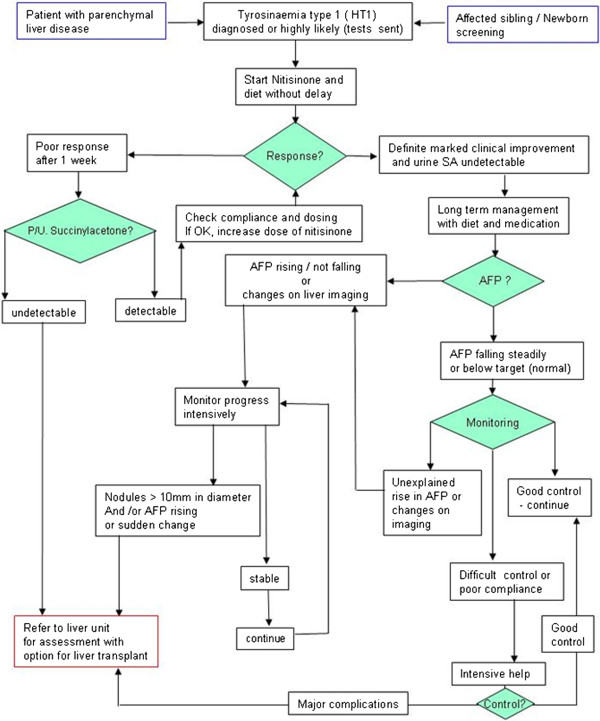
- Nitisinone has “revolutionised” management, and the recommended immediate dose is 1 mg/kg/day once daily; for acute severe liver failure, 2 mg/kg/day for 48 hours is recommended.
- Response is usually rapid: coagulation improves within 48 hours, all patients should respond within a week, and succinylacetone in blood and urine should no longer be detectable after the first 24 hours.
- Long-term risk remains important even on treatment, especially hepatocellular carcinoma (HCC); the paper recommends hepatic imaging at least every 6 months, with MRI/CT every year if the liver is uniform, or every 3–6 months if nodules are present.
- Dietary management targets plasma tyrosine at 200–400 μmol/l up to about age 12, with some centres allowing up to 500 μmol/l; the paper notes that the safety of allowing higher levels later is not known.
## Methods
- The paper is an expert consensus review developed by an ad hoc working group of clinicians from Europe and Canada with extensive HT1 experience.
- The authors state that the literature was reviewed, but evidence was insufficient for formal guidelines; the recommendations were drafted, revised in a workshop, circulated, and iterated until agreement.
- The recommendations are grounded in published case reports, investigational studies, expert opinion, and unpublished data, with the authors explicitly noting that there were no prospective controlled studies.
## Limitations
- Stated in the paper: the evidence base is limited, there are no prospective controlled studies, and the output is therefore recommendations rather than formal guidelines.
- Stated in the paper: several management targets are uncertain, including the optimal plasma nitisinone concentration, the target plasma tyrosine/phenylalanine levels, and the safety of higher tyrosine levels after age 12.
- Evident from the text: this is an expert consensus/review, so its recommendations depend heavily on specialist opinion and indirect evidence rather than comparative trials.
Model-written summary. Check it against the paper before relying on it.
Integrity signals
Registry
Cites
Statistics
Figures
Verification
Claims the paper makes
2 Valid · 25 Not valid · 36 Not checked · 21 Own results and interpretations
The cited sources support only part of this claim — read each source’s verdict below.
In the paper
“Patients may present in infancy, childhood or as adults [1,8].”
§ Recommendations for the management of tyrosinaemia type 1 > Clinical presentation and diagnosis > Timing of presentation
What the sources say
- Not checked — no full text of the sourcecites [1] Chakrapani A Gissen P McKiernan P Saudubray J-M, Berghe G, Walter JH Disorders of Tyrosine Metabolism Inborn Metabolic Diseases 2012 5 Heidelberg: Springer 275 276 Chapter 18 source
- Partly supportedcites [8] van Spronsen FJ Thomasse Y Smit GP Leonard JV Clayton PT Fidler V Berger R Heymans HS Hereditary tyrosinemia type I: a new clinical classification with difference in prognosis on dietary treatment Hepatology 1994 20 1187 1191 10.1002/hep.1840200513 7927251 sourceExperimental — accuracy not yet measured
The Abstract (p.1) of our copy supports presentation in infancy and childhood: the acute form 'manifests severe liver disease before 6 mo of age', the subacute form begins 'in the second half of the first year', and the chronic form manifests 'after 1 yr of age'; the Results and Discussion likewise stratify onset as <2 mo, 2-6 mo and >6 mo, with HCC occurring at 'almost 2 to 12 yr of age'. However, nothing in our copy states that patients may present as adults — the only mention of adults is in the title of a cited reference (Kvittingen et al., renal failure in adult patients, ref. 20), not a finding the paper reports or relies on. The 'or as adults' part of the triad is therefore not supported by this source. (LLM, conf=0.72)
hedged- Asserted: passes — The authors put it forward as true.
- Checkable: passes — It can be checked against evidence.
- Load-bearing: unclear — It is unclear whether the paper’s conclusions depend on it.
- Based: passes — The paper gives a reason why it holds.
The sources with a verdict support this claim; the rest weren’t checked yet, have no full text we could read, or their verdicts aren’t rated yet.
In the paper
“start nitisinone (NTBC, Orfadin®,) in a dose of 1 mg/kg/d once a day as the half life is 54 hrs [19,20].”
§ Recommendations for the management of tyrosinaemia type 1 > Immediate management
What the sources say
- Supportedcites [19] Hall MG Wilks MF Provan WM Eksborg S Lumholtz B Pharmacokinetics and pharmacodynamics of NTBC (2-(2-nitro-4-fluoromethylbenzoyl)-1,3-cyclohexanedione) and mesotrione, inhibitors of 4-hydroxyphenyl pyruvate dioxygenase (HPPD) following a single dose to healthy male volunteers Br J Clin Pharmacol 2001 52 169 177 10.1046/j.0306-5251.2001.01421.x 11488774 PMC2014534 source
The Discussion states that NTBC (nitisinone) has a plasma half-life of approximately 54 hours. The study measured this after a single dose in healthy male volunteers; it does not establish the once-daily dosing recommendation, which is outside the claim being judged. (LLM, conf=0.95)
- Not checked — no full text of the sourcecites [20] Schlune A Thimm E Herebian D Spiekerkoetter U Single dose NTBC treatment of hereditary tyrosinaemia type 1 J Inherited Metab Dis 2012 35 831 836 10.1007/s10545-012-9450-9 22307209 source
plain- Asserted: passes — The authors put it forward as true.
- Checkable: passes — It can be checked against evidence.
- Load-bearing: passes — The paper’s conclusions depend on it.
- Based: passes — The paper gives a reason why it holds.
- Supported
In the paper
“These patients are particularly susceptible to infections [9].”
§ Recommendations for the management of tyrosinaemia type 1 > Clinical presentation and diagnosis > Timing of presentation
What the sources say
- Not checked — no full text of the sourcecites [9] Epov L Srugo I Kassis I Bar-Joseph G Mandel H Kugelman A 'Sick', irritable infant with fever, vomiting, bloody stool and abdominal distention (Case Presentation). Diagnosis: Hereditary tyrosinaemia type I presenting as E.coli septicaemia. Acta Paediatr 2010 99 1437 1438 10.1111/j.1651-2227.2010.01901.x 20937068 source
plainstates an association- Asserted: passes — The authors put it forward as true.
- Checkable: passes — It can be checked against evidence.
- Load-bearing: unclear — It is unclear whether the paper’s conclusions depend on it.
- Based: passes — The paper gives a reason why it holds.
In the paper
“Although biochemical abnormalities may be identified shortly after birth [14], babies with HT1 are rarely symptomatic in the first days of life.”
§ Recommendations for the management of tyrosinaemia type 1 > Clinical presentation and diagnosis > Timing of presentation
What the sources say
- Not checked — no full text of the sourcecites [14] Schlump JU Mayatepek E Spiekerkoetter U Significant increase of succinylacetone within the first 12 h of life in hereditary tyrosinemia type 1 Eur J Pediatr 2010 169 569 572 10.1007/s00431-009-1074-1 19813022 source
plain- Asserted: passes — The authors put it forward as true.
- Checkable: passes — It can be checked against evidence.
- Load-bearing: unclear — It is unclear whether the paper’s conclusions depend on it.
- Based: passes — The paper gives a reason why it holds.
A result the paper states — it cites no source for it, so there is none to check. The quote shows it is in the paper.
In the paper
“The presentation can be variable, even within one family.”
§ Recommendations for the management of tyrosinaemia type 1 > Clinical presentation and diagnosis > Timing of presentation
plain- Asserted: passes — The authors put it forward as true.
- Checkable: passes — It can be checked against evidence.
- Load-bearing: unclear — It is unclear whether the paper’s conclusions depend on it.
- Based: passes — The paper gives a reason why it holds.
27 more claims
Create a free account to see all 84 claims and to verify the 6 references still open.
- It may state two separate claims as one. 35
- Probably not a substantial claim. 33
- The quote only partly states this claim. 1
Claims other papers make about this one
Each is checked against this paper’s own text: does it say what the citing paper says it does?
The cited source says what the claim attributes to it.
In the citing paper
“Occasionally, nodules are present before initiation of NTBC-treatment but regress on repeated imaging following treatment [18].”
From Cross-sectional study of 168 patients with hepatorenal tyrosinaemia and implications for clinical practice (2014) · cites this paper as [18]
In the citing paper
“All of these complications have been shown to be preventable with NTBC therapy.11, 32, 50, 51”
From Diagnosis and treatment of tyrosinemia type I: a US and Canadian consensus group review and recommendations (2017) · cites this paper as [11]
Citations
Cites
Treatment of hereditary tyrosinaemia type I by inhibition of 4-hydroxyphenylpyruvate dioxygenase
LINDSTEDT, S. (1992) · The Lancet · doi:10.1016/0140-6736(92)92685-9 · Cited by 631 · cited 1×
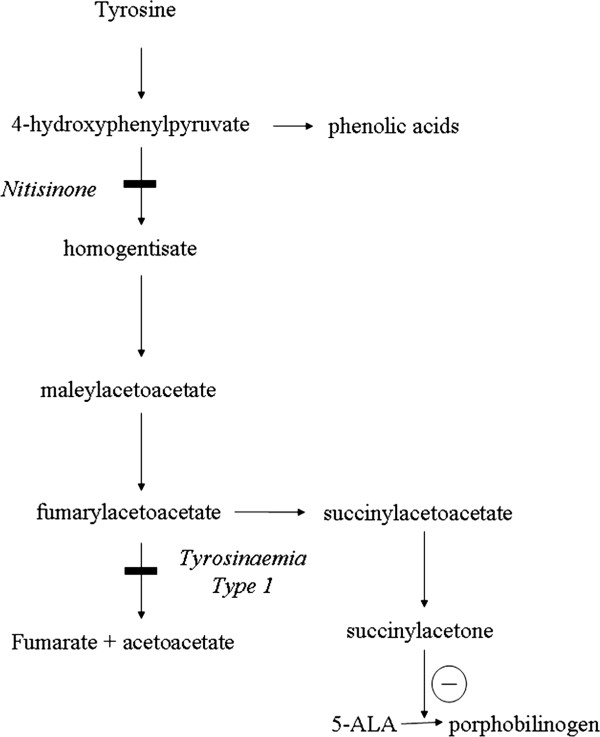
“; licensee BioMed Centra Commons Attribution License (http://creativec reproduction in any medium, provided the or Nitisinone is a compound that has revolutionised the management of tyrosinaemia type 1 [3,4].”
BackgroundParikh, T., Drew, S. J., Lee, V. S., Wong, S., Hecht, E. M., Babb, J. S., & Taouli, B. (2008) · Radiology · doi:10.1148/radiol.2463070432 · Cited by 560 · cited 1×
“Diffusion-weighted imaging may help to distinguish well-differentiated hepatocellular carcinomas from benign nodules [17,18], C Dionisi Vici and L Monti unpublished.”
BackgroundInborn Metabolic Diseases: Diagnosis and Treatment
(2012) · doi:10.1007/978-3-642-15720-2 · Cited by 377
Inborn Metabolic Diseases: Diagnosis and Treatment
(2006) · Springer eBooks · doi:10.1007/978-3-540-28785-8 · Cited by 361
Tyrosinaemia type I and NTBC (2‐(2‐nitro‐4‐trifluoromethylbenzoyl)‐1,3‐cyclohexanedione)
Holme, E., & Lindstedt, S. (1998) · Journal of Inherited Metabolic Disease · doi:10.1023/a:1005410820201 · Cited by 264
NTBC treatment in tyrosinaemia type I: Long‐term outcome in French patients
Masurel‐Paulet, A., Poggi‐Bach, J., Rolland, M. ‐., Bernard, O., Guffon, N., Dobbelaere, D., Sarles, J., de Baulny, H. O., & Touati, G. (2008) · Journal of Inherited Metabolic Disease · doi:10.1007/s10545-008-0793-1 · Cited by 212 · cited 1×
“Many patients on nitisinone have learning difficulties [35] and it is widely thought that this is associated with the increased tyrosine concentrations.”
BackgroundVan Spronsen, F. J., Thomasse, Y., Smit, P. G. A., Leonard, J. V., Clayton, P. T., Fidler, V., Berger, R., & Heymans, H. S. A. (1994) · Hepatology · doi:10.1002/hep.1840200513 · Cited by 193
Self-citationGenetic epidemiology of hereditary tyrosinemia in Quebec and in Saguenay-Lac-St-Jean.
(1990) · Europe PMC (PubMed Central) · Cited by 163
Coenegrachts, K., Delanote, J., Ter Beek, L., Haspeslagh, M., Bipat, S., Stoker, J., Van Kerkhove, F., Steyaert, L., Rigauts, H., & W Casselman, J. (2007) · The British Journal of Radiology · doi:10.1259/bjr/33156643 · Cited by 149
Effect of nitisinone (NTBC) treatment on the clinical course of hepatorenal tyrosinemia in Québec
Larochelle, J., Alvarez, F., Bussières, J.-F., Chevalier, I., Dallaire, L., Dubois, J., Faucher, F., Fenyves, D., Goodyer, P., Grenier, A., et al. (2012) · Molecular Genetics and Metabolism · doi:10.1016/j.ymgme.2012.05.022 · Cited by 137
Self-citation
Research works printed but not linked: 1
- Larochelle J Alvarez F Bussières JF Chevalier I Dallaire L Dubois J Faucher F Fenyves D Goodyer P Grenier A Holme E Laframboise R Lambert M Lindstedt S Maranda B Melançon S Merouani A Mitchell J Parizeault G Pelletier L Phan V Rinaldo P Scott CR Scriver C Mitchell GA Effect of nitisinone (NTBC) treatment on the clinical course of hepatorenal tyrosinemia in Québec Mol Genet Metab 2012 107 49 54 10.1016/j.ymgme.2012.05.022 22885033 · DOI · Paper page
Cited by
Items 101–200 of 226
Lucia, S. D., Pichard, S., Iléa, A., et al. (2016) · European Journal of Paediatric Neurology · doi:10.1016/j.ejpn.2016.02.015 · Cited by 8
Tyrosinemia type 1 in pediatric nephrology: Not always straightforward
dos Santos, S. B., Bertholet‐Thomas, A., Butin, M., Dubourg, L. D., Fouilhoux, A., & Bacchetta, J. (2021) · Archives de Pédiatrie · doi:10.1016/j.arcped.2021.03.002 · Cited by 9
Olsson, B., Ranganath, L. R., Arnoux, J., Imrich, R., Milan, A. M., & Rudebeck, M. (2021) · JIMD Reports · doi:10.1002/jmd2.12255 · Cited by 7
“In those patients it is recommended to keep s-Tyr below 500 μmol/L, or even as low as 200-400 μmol/L up to the age of 12 years.(12) Except for the study by Introne et al,(4) in which 20 patients with AKU received nitisinone for three years, there is no previous experience with long-term nitisinone in adult patients no…”
BackgroundMayrink, F. D., Dorneles, G. P., da Silva, I. M., & Areda, C. A. (2025) · Molecular Genetics and Metabolism · doi:10.1016/j.ymgme.2025.109099 · Cited by 7
NMR Spectroscopy Study of Enol–Enol Tautomerism of Nitisinone in Solutions
Kuz’mina, N. E., Моисеев, С. В., & Лутцева, А. И. (2021) · Pharmaceutical Chemistry Journal · doi:10.1007/s11094-021-02434-9 · Cited by 7
Influence of nitisinone and its metabolites on l-tyrosine metabolism in a model system
Płonka, J., Babiuch, M., & Barchañska, H. (2021) · Chemosphere · doi:10.1016/j.chemosphere.2021.131592 · Cited by 7
Hereditary Tyrosinemia Type 1 in Jordan: A Retrospective Study
Megdadi, N. A., Almigdad, A. K., Alakil, M. O., Alqiam, S. M., Rababah, S. G., & Dwiari, M. A. (2021) · International Journal of Pediatrics · doi:10.1155/2021/3327277 · Cited by 8
Disorders of Tyrosine Metabolism
Chakrapani, A., Gissen, P., & McKiernan, P. J. (2022) · Springer eBooks · doi:10.1007/978-3-662-63123-2_17 · Cited by 9
Self-citationHajji, H., Imbard, A., Spraul, A., Taibi, L., Barbier, V., Habès, D., Brassier, A., Arnoux, J., Bouchereau, J., Pichard, S., et al. (2022) · Molecular Genetics and Metabolism Reports · doi:10.1016/j.ymgmr.2022.100933 · Cited by 9
Hepatorenal Tyrosinaemia: Impact of a Simplified Diet on Metabolic Control and Clinical Outcome
Bärhold, F., Meyer, U., Neugebauer, A.-K., Thimm, E., Lier, D., Rosenbaum‐Fabian, S., Och, U., Fekete, A., Möslinger, D., Rohde, C., et al. (2020) · Nutrients · doi:10.3390/nu13010134 · Cited by 7
“Several clinical recommendations were published (e.g., De Laet et al. (2013), Mayorandan et al. (2014), Chinsky et al. (2017)) in an attempt to standardize the treatment of Tyr 1.”
MethodHolme, E., & Mitchell, G. A. (2013) · Springer eBooks · doi:10.1007/978-3-642-40337-8_2 · Cited by 11
Self-citationHereditary tyrosinemia type Ⅰ: newborn screening, diagnosis and treatment
Tang, Y. Y., & Kong, Y. (2021) · Journal of Zhejiang University (Medical Sciences) · doi:10.3724/zdxbyxb-2021-0255 · Cited by 11
Fuenzalida, K. M., Leal-Witt, M. J., Guerrero, P., Hamilton, V., V, Salazar, M. F., Peñaloza, F., Arias, C., & Cornejo, V. (2021) · Journal of Clinical Medicine · doi:10.3390/jcm10245832 · Cited by 6
Ranganath, L. R., Milan, A. M., Hughes, A. T., Davison, A. S., Khedr, M., Norman, B. P., Bou–Gharios, G., Gallagher, J. A., Gornall, M., Jackson, R., et al. (2022) · Molecular Genetics and Metabolism Reports · doi:10.1016/j.ymgmr.2022.100846 · Cited by 6
Neurological Crises after Discontinuation of Nitisinone (NTBC) Treatment in Tyrosinemia.
Honar, N., Shakibazad, N., Shirazi, Z. S., Dehghani, S. M., & Inaloo, S. (2017) · PubMed Central · Cited by 6
First Scandinavian case of successful pregnancy during nitisinone treatment for type 1 tyrosinemia
Aitokari, L., Nevalainen, P. I., Kurppa, K., & Hiltunen, P. (2020) · Journal of Pediatric Endocrinology and Metabolism · doi:10.1515/jpem-2019-0540 · Cited by 7
Chen, T., Barzi, M., Furey, N., Kim, H. R., Pankowicz, F. P., Legras, X. D., Elsea, S. H., Hurley, A. E., Yang, D., Wheeler, D. A., et al. (2025) · JHEP Reports · doi:10.1016/j.jhepr.2025.101327 · Cited by 8
Ex vivo gene editing and cell therapy for hereditary tyrosinemia type 1
Ates, I., Stuart, C., Rathbone, T., Barzi, M., He, G., Major, A. M., Shankar, V., Lyman, R. A., Angner, S. S., Mackay, T. F. C., et al. (2024) · Hepatology Communications · doi:10.1097/hc9.0000000000000424 · Cited by 6
“against hepatocellular carcinoma in patients with late diagnosis (48, 49).”
BackgroundGuffon, N., Bröijersén, A., Palmgren, I., Rudebeck, M., & Olsson, B. (2017) · JIMD Reports · doi:10.1007/8904_2017_29 · Cited by 6
“Moreover, once-daily dosing is advised in recent recommendations (de Laet et al. 2013), but the suitability of switching from twice- to once-daily dosing has not been properly documented; there is, however, one small study including nine patients reporting that once-daily dosing may be as effective…”
BackgroundŠikonja, J., Brecelj, J., Tanšek, M. Ž., Lampret, B. R., Torkar, A. D., Klemenčič, S., Lipovec, N., Kralj, V. S., Bertok, S., Kovač, J., et al. (2021) · Molecular Genetics and Metabolism Reports · doi:10.1016/j.ymgmr.2021.100836 · Cited by 6
“We strived to keep tyrosine concentrations in a strict range of 200–400 μmol/L derived from proposed ranges in the literature [9,12,23,34].”
MethodGugelmo, G., Lenzini, L., Francini‐Pesenti, F., Fasan, I., Spinella, P., Valentini, R., Miraval, A., Avogaro, A., & Vitturi, N. (2022) · Nutrients · doi:10.3390/nu14030467 · Cited by 6
Zöggeler, T., Ramoser, G., Höller, A., Jörg‐Streller, M., Janzen, N., Ramoni, A., Scholl‐Bürgi, S., & Karall, D. (2021) · Journal of Pediatric Endocrinology and Metabolism · doi:10.1515/jpem-2021-0465 · Cited by 5
Evaluation of Neonatal Screening Programs for Tyrosinemia Type 1 Worldwide
Kuypers, A., Bouva, M. J., Loeber, J. G., Boelen, A., Dekkers, E., Pétritis, K., Pickens, C. A., Representatives, T. I., van Spronsen, F. J., & Heiner-Fokkema, M. R. (2024) · International Journal of Neonatal Screening · doi:10.3390/ijns10040082 · Cited by 7
Ilgaz, F., Höller, A., Marsaux, C. F. M., Banta-Wright, S. A., Coşkun, T., Dingess, K. A., Jörg‐Streller, M., Newby, C., Singh, R. H., Stahl, B., et al. (2025) · Journal of Inherited Metabolic Disease · doi:10.1002/jimd.70001 · Cited by 6
“For TYR [149, 150] or HCU [151], guidelines only briefly mention how HMF can be possible as part of dietary management without giving an active recommendation (Table S11).”
Angileri, F., Morrow, G., Scoazec, J., Gadot, N., Roy, V., Huang, S., Wu, T., & Tanguay, R. M. (2016) · Scientific Reports · doi:10.1038/srep27464 · Cited by 5
Yeo, M., Turner, C., Dalton, N. R., Rahman, Y., & Vara, R. (2020) · Annals of Clinical Biochemistry International Journal of Laboratory Medicine · doi:10.1177/0004563220961760 · Cited by 4
Neonatal hyperinsulinism in transient and classical forms of tyrosinemia
Sethuram, S., Sperling, M. A., Gujral, J., & Romero, C. J. (2021) · Orphanet Journal of Rare Diseases · doi:10.1186/s13023-020-01642-y · Cited by 6
“Hereditary Tyrosinemia Type 1 (HT1, OMIM # 276700) is a rare autosomal recessive disorder with an estimated incidence of 1:100,000 [4].”
BackgroundUK Dietary Practices for Tyrosinaemias: Time for Change
Daly, A., Adam, S., Allen, H., Ash, J., Dale, C., Dixon, M., Dunlop, C., Ellerton, C., Evans, S., Firman, S. J., et al. (2022) · Nutrients · doi:10.3390/nu14245202 · Cited by 5
Delsoglio, M., Capener, R., MacDonald, A., Daly, A., Ashmore, C., Donald, S., Gaff, L., VanDorp, L., Skeath, R., Ellerton, C., et al. (2023) · Nutrients · doi:10.3390/nu15163598 · Cited by 5
Gramer, G., Wortmann, S. B., Fang‐Hoffmann, J., Kohlmüller, D., Okun, J. G., Prokisch, H., Meitinger, T., & Hoffmann, G. F. (2024) · International Journal of Neonatal Screening · doi:10.3390/ijns10010017 · Cited by 4
Heme as an initial treatment for severe decompensation in tyrosinemia type 1
Neeleman, R. A., Wilson, J. H. P., Williams, M., & Langendonk, J. G. (2019) · Genetics in Medicine · doi:10.1038/s41436-019-0658-z · Cited by 4
Kawabata, K., Kido, J., Yoshida, T., Matsumoto, S., & Nakamura, K. (2022) · Molecular Genetics and Metabolism Reports · doi:10.1016/j.ymgmr.2022.100892 · Cited by 5
Tyrosinemia type I: Case series with response to treatment to NTBC
Shah, I., & Shah, F. (2016) · Indian Journal of Gastroenterology · doi:10.1007/s12664-016-0650-3 · Cited by 4
Clinical trials examining treatments for inborn errors of amino acid metabolism
Goldstein, A. C., & Vockley, J. (2016) · Expert Opinion on Orphan Drugs · doi:10.1080/21678707.2017.1275565 · Cited by 4
“These treatment recommendations are based on anecdotal reports, case studies, and the open labeled trial; there are no prospective controlled studies [19].”
BackgroundNasir, S., Raza, M., Siddiqui, S. I., Saleem, A., & Abbas, A. (2020) · Cureus · doi:10.7759/cureus.11541 · Cited by 4
Disorders of Tyrosine Metabolism
Chakrapani, A., Gissen, P., & McKiernan, P. J. (2016) · Springer eBooks · doi:10.1007/978-3-662-49771-5_17 · Cited by 6
Self-citationOverview of European Practices for Management of Tyrosinemia Type 1: Towards European Guidelines
Dijkstra, A. M., Das, A. M., Maiorana, A., Heiner-Fokkema, M. R., & van Spronsen, F. J. (2025) · Journal of Inherited Metabolic Disease · doi:10.1002/jimd.70089 · Cited by 7
“Five recommendations papers for diagnosis and treatment of TT1 have been published between 2012 and 2025 [11–13, 15, 17].”
InfluentialFuenzalida, K. M., Leal-Witt, M. J., Acevedo, A., Muñoz, M., Gudenschwager, C., Arias, C., Cabello, J. F., la Marca, G., Rizzo, C., Pietrobattista, A., et al. (2025) · International Journal of Molecular Sciences · doi:10.3390/ijms26083839 · Cited by 3
Self-citationA stability indicating HPLC method for the determination of nitisinone in capsules
Souri, E., Lahiji, F., Nourhashemi, T., & Jalalizadeh, H. (2015) · Indian Journal of Pharmaceutical Sciences · doi:10.4103/0250-474x.159674 · Cited by 3
“1), is a reversible inhibitor of 4-hydroxyphenylpyruvate dioxygenase, which is used for the treatment of hereditary tyrosinemia type I[1].”
BackgroundClinical experience with hepatorenal tyrosinemia from a single Egyptian center
El-Karaksy, H. M., Abdullatif, H. M., Ghobrial, C., Mogahed, E. A., Yasin, N. A. E., Talal, N., & Rashed, M. S. (2022) · PLoS ONE · doi:10.1371/journal.pone.0268017 · Cited by 4
“Although the quality of life after successful liver transplantation is usually good, however, there are the risk of surgery and immunosuppression [8].”
BackgroundRokaitė, R., Čibirkaitė, A., Zeleckytė, V., et al. (2024) · Medicina · doi:10.3390/medicina60010135 · Cited by 3
van Spronsen, F. J., Burlina, A., & Dionisi‐Vici, C. (2022) · Springer eBooks · doi:10.1007/978-3-030-67727-5_21 · Cited by 6
Self-citationMetabolic Diseases of the Liver
Sundaram, S. S., & Sokol, R. J. (2015) · Wiley eBooks · doi:10.1002/9781118512074.ch102 · Cited by 4
Crisis neuropática por suspensión de nitisinona en una paciente con tirosinemia: informe de un caso
Ibarra‐González, I., Belmont‐Martínez, L., Cervantes‐Bustamante, R., Zárate-Mondragón, F. E., López, S. G., Fernández‐Lainez, C., Revilla-Estivil, N., & Vela-Amieva, M. B. (2017) · Acta Pediátrica de México · doi:10.18233/apm38no5pp322-3291472 · Cited by 2
Hereditary tyrosinemia type 1 in children
Васильевна, В. Г., Nikitin, A. V., & Андреевна, С. Т. (2019) · Rossiyskiy Vestnik Perinatologii i Pediatrii (Russian Bulletin of Perinatology and Pediatrics) · doi:10.21508/1027-4065-2019-64-5-69-83 · Cited by 2
Hannah‐Shmouni, F., MacNeil, L., Lara‐Corrales, I., et al. (2019) · Molecular Genetics and Metabolism Reports · doi:10.1016/j.ymgmr.2019.100534 · Cited by 2
Al-Hinai, A., Al-Murshedi, F. M., Al‐Nabhani, D., et al. (2021) · Sultan Qaboos University medical journal · doi:10.18295/squmj.2021.21.02.023 · Cited by 2
“Hyponatraemia secondary to SIADH in this patient was diagnosed based on the following criteria:4 (1) hypo-osmolality; (2) inappropriately concentrated urine (>100 mOsm/ kg H2O, although usually higher than serum); (3) natriuresis >30 mEq/L (depending on sodium intake); (4) reversal of renal sodium wasting and correcti…”
Clinical Spectrum of Hereditary Tyrosinemia Type 1 in a Cohort of Pakistani Children
Khan, S. A., Fakih, M., Taufiq, N., Ahmerin, A., Bangash, A., & Malik, M. I. (2024) · Clinical Medicine Insights Pediatrics · doi:10.1177/11795565241236176 · Cited by 5
ZULFIQAR, M., RAFIQUE, S., HABIB, A., et al. (2024) · Biological and Clinical Sciences Research Journal · doi:10.54112/bcsrj.v2024i1.780 · Cited by 2
The Outbreak of Highly Contagious Conjunctivitis (Pink Eye) in Major Cities of Pakistan
Nawaz, S., Zeeshan, M., Ayaz, H., et al. (2024) · The Open Infectious Diseases Journal · doi:10.2174/0118742793285298240408052559 · Cited by 2
Chiong, M. A. D., & Basas, A. A. (2025) · Journal of Religion and Health · doi:10.1007/s10943-025-02318-2 · Cited by 2
“The primary treatment is nitisinone or NTBC [2-(2-nitro-4-trif-luoromethyl benzoyl)-1,3-cyclohexadiene}, which prevents the harmful buildup of metabolites (de Laet et al., 2013).”
Renal Manifestations of Metabolic Disorders in Children
Emma, F., Hoff, W. V., & Dionisi‐Vici, C. (2015) · Springer eBooks · doi:10.1007/978-3-662-43596-0_46 · Cited by 3
Self-citationTirosinemia de tipo I, aciertos y errores
Ardila, S., Echeverri-Peña, O. Y., Guevara, J., Espinosa, E., & Barrera, L. A. (2014) · Pediatría · doi:10.1016/s0120-4912(15)30136-1 · Cited by 3
Evaluation of dynamic thiol/disulfide homeostasis in hereditary tyrosinemia type 1 patients
Zeybek, A. Ç. A., Kıykım, E., Neşelioğlu, S., Iscan, H. Z., Zübarioğlu, T., Cansever, M. Ş., & Erel, Ö. (2021) · Pediatric Research · doi:10.1038/s41390-021-01770-6 · Cited by 2
Vara, R., & Rahman, Y. (2022) · In clinical practice · doi:10.1007/978-3-030-98808-1_7 · Cited by 2
Mutation spectrum of Tyrosinemia type I in Iran, A retrospective cohort study
Beyzaei, Z., Goudarzi, Z., Dehghani, S. M., Moravej, H., Imanieh, M. H., Ataollahi, M., Heidari, M., & Geramizadeh, B. (2024) · European Journal of Medical Genetics · doi:10.1016/j.ejmg.2024.104970 · Cited by 2
Successive Drug Therapy for a Very Rare Autosomal Diseases
Al-Noaemi, M. C., & Daghriri, H. A. (2020) · IntechOpen eBooks · doi:10.5772/intechopen.89583 · Cited by 2
Metabolic and Nutritional Disorders Relevant in Dermatology
Wollina, U., Bagherani, N., & Smoller, B. R. (2021) · Springer eBooks · doi:10.1007/978-3-319-53811-2_24 · Cited by 2
Peripheral Neuropathy in Inherited Metabolic Disease
Patterson, M. C., & Percy, A. K. (2014) · Elsevier eBooks · doi:10.1016/b978-0-12-417044-5.00019-6 · Cited by 4
Daly, A., Evans, S., Pinto, A., Ashmore, C., & MacDonald, A. (2024) · Molecular Genetics and Metabolism Reports · doi:10.1016/j.ymgmr.2024.101119 · Cited by 1
“Target blood tyrosine ranges were 200 to 400 umol/L for children as recommended by an international working group on HT1 [18], with recommended early morning fasted Phe > 50 μ mol/L although this is not Fig.”
Barretta, F., Uomo, F., Verde, A., Fisco, M., Gallo, G., Albano, L., Crisci, D., Mazzaccara, C., Strisciuglio, P., Ruoppolo, M., et al. (2025) · Genes · doi:10.3390/genes16091009 · Cited by 1
“Nitisinone (NTBC) and tyrosine/phenylanine-restricted diet significantly decreases the acute complications of HT-1 and should be started as soon as possible [2].”
Ren, R., Zhao, S., Jia, H., Li, H., Wu, L., Tian, J., Zhu, Y., Tang, J., Guo, X., Wang, C., et al. (2025) · Journal of genetics and genomics/Journal of Genetics and Genomics · doi:10.1016/j.jgg.2025.10.002 · Cited by 1
Dobrijević, D., Pastor, K., & Stojsic, M. (2026) · Children · doi:10.3390/children13080998 · Cited by 3
Minoura, H., Iwai, M., Taniuchi, Y., Katashima, M., & Takahashi, H. (2015) · Folia Pharmacologica Japonica · doi:10.1254/fpj.146.342 · Cited by 1
Urinary Succinylacetone Analysis by Gas Chromatography-Mass Spectrometry (GC-MS)
Chen, H., & Yu, C. (2015) · Methods in molecular biology · doi:10.1007/978-1-4939-3182-8_30 · Cited by 2
Girl With Tyrosinemia Type 1 and Executive Dysfunctions Treated With Methylphenidate
Simons, A., Eyskens, F. J. M., Raets, E., et al. (2018) · Journal of Inborn Errors of Metabolism and Screening · doi:10.1177/2326409818785397 · Cited by 1
“Before the treatment with 2-(2-nitro-4-trifluoromethylbenyol)-1,3-cyclohexanedione (NTBC), which prevents the accumulation of toxic metabolites by inhibiting the tyrosine catabolism upstream from the primary enzymatic defect, patients have severe liver dysfunction, renal tubulopathy, cardiomyopathy, porphyria-like syn…”
BackgroundA simple RP-HPLC method for determination of nitisinone in pharmaceuticals
Mustafa, Z., Arsova‐Sarafinovska, Z., Shishovska, M. A., & Grozdanova, A. (2019) · Macedonian Pharmaceutical Bulletin · doi:10.33320/10.33320/maced.pharm.bull.2019.65.02.007 · Cited by 1
Gürbüz, B. B., Aykan, H. H., Çıkı, K., Karagöz, T., Hs, S., Dursun, A., Tokatlı, A., & Coşkun, T. (2021) · Çukurova medical journal (Online)/Çukurova medical journal · doi:10.17826/cumj.984072 · Cited by 1
Chen, H. (2015) · Springer eBooks · doi:10.1007/978-1-4614-6430-3_279-1 · Cited by 1
Emotional and behavioural functioning in children with tyrosinaemia type 1
Pohorecka, M., Biernacki, M., Jakubowska-Winecka, A., Leszczynska-Iwanicka, K., Rokicki, D., Pokora, P., Perkowska, B., Pajdowska, M., & Biernacka, M. (2024) · Pediatric Endocrinology Diabetes and Metabolism · doi:10.5114/pedm.2024.138666 · Cited by 1
“Initially, following the discovery of the effectiveness of nitisi-none in TT1, papers on the outcomes of treatment in affected children focused mainly on metabolic control [6–8].”
BackgroundBender, J. G., Ribeiro, R. T., Zemniaçak, Â. B., Palavro, R., Marschner, R. A., Wajner, S. M., Castro, E. T., Leipnitz, G., Wajner, M., & Amaral, A. U. (2024) · Cell Biochemistry and Function · doi:10.1002/cbf.70010 · Cited by 1
“However, some patients remain unresponsive to NTBC and liver transplantation should be considered [4].”
Barth syndrome: a rare cause of cardiomyopathy in neonates
Dalal, N., Naranje, K., Moriangthem, A., et al. (2024) · BMJ Case Reports · doi:10.1136/bcr-2024-260799 · Cited by 1
Diagnostic tools and strategies for assessing disease progression in Alkaptonuria
Ranganath, L., Psarelli, E. E., Cox, T. F., et al. (2015) · Expert Opinion on Orphan Drugs · doi:10.1517/21678707.2015.1042859 · Cited by 1
“Nitisinone is life-saving in hereditary tyrosinaemia 1 and has been in use for over 20 years [87,88]; young adults treated with nitisinone have been found to have learning difficulties and impairment of cognition may be an issue [89].”
Warner, S., & Kelly, D. A. (2021) · Elsevier eBooks · doi:10.1016/b978-0-323-67293-1.00077-3 · Cited by 1
van Spronsen, F. J., & van Rijn, M. (2017) · Oxford University Press eBooks · doi:10.1093/acprof:oso/9780199398911.003.0040 · Cited by 1
Hepatic-Based Inborn Errors of Metabolism
Lund, T. (2015) · EMJ Hepatology · doi:10.33590/emjhepatol/10313902 · Cited by 1
Mass spectrometry for screening of metabolic disorders
Nazim, W. S., Fateen, E., Gouda, A. S., Radwan, A. M., Al-Sharkawi, M., & Elbaz, A. F. (2023) · Journal of The Arab Society for Medical Research · doi:10.4103/jasmr.jasmr_29_22 · Cited by 1
Le dépistage néonatal face au défi des progrès de la biologie
Feillet, F., Chabrol, B., Sarles, J., & Roussey, M. (2014) · Archives de Pédiatrie · doi:10.1016/j.arcped.2014.06.001 · Cited by 1
McKiernan, P. J. (2017) · doi:10.1002/9781119046936.ch9 · Cited by 1
Self-citationNelwan, M. (2013) · Journals & Books Hosting (International Knowledge Sharing Platform)
A Rapid Screening Test on Dried Blood for the Neonatal Diagnosis of Tyrosinemia Type I
Bodaghkhan, F., Geramizadeh, B., Rajeh, A. A., Haghighat, M., Dehghani, S. M., Honar, N., Zahmatkeshan, M., & Imanieh, M. H. (2016) · Iranian Journal of Pediatrics · doi:10.5812/ijp.4624 · Cited by 3
Inherited Metabolic Disorders and the Liver
Lemonde, H. A., & Champion, M. (2015) · Springer eBooks · doi:10.1007/978-3-319-17169-2_64
Essabar, L., Rghouda, H., Dahri, S., Chabraoui, L., Chat, L., & Kriouile, Y. (2016) · Journal of Biosciences and Medicines · doi:10.4236/jbm.2016.412016
“The characteristic renal disease is a tubular disorder with a Fanconi syndrome; the typical features include aminoaciduria, glycosuria, phosphaturia, renal tubular acidosis and hypophosphataemic rickets [5].”
BackgroundKostovski, A., Zdraveska, N., Tesařová, M., & Zeman, J. (2017) · Srpski arhiv za celokupno lekarstvo · doi:10.2298/sarh161013084k
Comment on Pancreatitis in type 1 Tyrosinemia
Rahmoune, H., Boutrid, N., Amrane, M., et al. (2017) · Balkan Medical Journal · doi:10.4274/balkanmedj.2016.1209
“In fact, nitisinone 2-(2-nitro-4-trifluoromethylbenzyol)-1,3 cyclohexanedione, NTBC) is a potent inhibitor of 4-hydroxyphenylpyruvate dioxygenase, an enzyme that is upstream of fumarylacetoacetase, and most patients present a rapid decrease in the concentrations of succinylacetone (2) when under NTBC.”
BackgroundFDG PET/CT of a Tyrosinemia Child with Metastatic Hepatocellular Carcinoma
Omar, Y. (2017) · Journal of Cancer Prevention & Current Research · doi:10.15406/jcpcr.2017.08.00296
Pathology and Treatment of Liver Diseases in Newborns
Maggiore, G., Riva, S., & Sciveres, M. (2016) · Neonatology · doi:10.1007/978-3-319-18159-2_224-1
Maladies hépatiques d’origine métabolique
Sissaoui, S., Arnoux, J. B., & de Lonlay, P. (2018) · Elsevier eBooks · doi:10.1016/b978-2-294-75788-4.00015-9
Tirosinemia de tipo 1 en un lactante
Dinza, P. A. H., Rodríguez, C. A., & Camacho, O. A. (2018) · MEDISAN
Eight-month-old girl with feeding difficulties and an enlarged liver
O’Sullivan, D. M., Linnane, B. M., Hughes, J., et al. (2019) · Archives of Disease in Childhood Education & Practice · doi:10.1136/archdischild-2017-314102
BIOCHEMICAL AND MOLECULAR GENETIC DIAGNOSIS OF TYROSINEMIA, TYPE 1 IN RUSSIAN PATIENTS
Mazanova, N. N., Savostyanov, K. V., Namazova-Baranova, L. S., Aa, B., Pushkov, A., Murav’eva, L. V., & Sukhozhenko, A. V. (2019) · Russian Pediatric Journal · doi:10.18821/1560-9561-2017-20-2-68-73
Chinsky, J. M., Ficicioglu, C. H., & Scott, C. R. (2019) · Genetics in Medicine · doi:10.1038/s41436-019-0659-y
Tyrosinemia Type 1 – A case report
Islam, F., Mazumder, W., Karim, A. B., Biswas, S. A., Rashid, R., Hasan, M. S., & Begum, F. (2020) · Bangladesh Journal of Child Health · doi:10.3329/bjch.v43i3.49577
Tyrosinemia type 1: Remaining challenges after introduction of NTBC
van Ginkel, W. G. (2020) · University of Groningen research database (University of Groningen / Centre for Information Technology) · doi:10.33612/diss.137426908
Varughese, B., Madrewar, D., Polipalli, S. K., & Kapoor, S. (2021) · Indian Journal of Clinical Biochemistry · doi:10.1007/s12291-020-00944-z
Mitchell, G. A., Russo, P., Dubois, J., Halac, U., & Álvarez, F. (2021) · Cambridge University Press eBooks · doi:10.1017/9781108918978.031 · Cited by 1
Self-citationMetabolic and Nutritional Disorders Relevant in Dermatology
Wollina, U., Bagherani, N., & Smoller, B. R. (2021) · Springer eBooks · doi:10.1007/978-3-319-45134-3_24-1
“Porphyria-like syndrome, pain, weakness, autonomic changes such as hypertension, acute progressive ascending motor neuropathy, and respiratory distress are neurological features in the affected cases (de Laet et al. 2013).”
BackgroundInfluentialTyrosinemia Type 1- A Rare Inborn Error of Metabolism
Wanvat, A. (2021) · Journal of Medical Science And clinical Research · doi:10.18535/jmscr/v9i8.28
Liver-Based Inherited Metabolic Disorders
Vara, R. (2021) · Springer eBooks · doi:10.1007/978-3-030-80068-0_67 · Cited by 1
Metadata
- Authors
- de Laet, C., Dionisi-Vici, C., Leonard, J. V., McKiernan, P., Mitchell, G., Monti, L., de Baulny, H. O., Pintos-Morell, G., & Spiekerkötter, U.
- Affiliations
- University College London (GB)
- Birmingham Children's Hospital (GB)
- Centre Hospitalier Universitaire Sainte-Justine (CA)
- Bambino Gesù Children's Hospital (IT)
- Corresponding author
- Leonard, James V
- Venue
- Orphanet Journal of Rare Diseases
- Published
- 2013-01-11
- Volume
- 8
- Issue
- 1
- Pages
- 8-8
- ISSN
- 1750-1172 (ISSN-L)
- PMC
- PMC3558375
- OpenAlex
- W2097721154
- Semantic Scholar
- 5d5e15a07fbab403a889841bf40c6bc0f93682bd
- Cited by
- 227
- References
- 49
- Citations by year
- 2026: 3 · 2025: 14 · 2024: 18 · 2023: 12 · 2022: 14 · 2021: 25 · 2020: 17 · 2019: 22 · 2018: 17 · 2017: 33 · 2016: 15 · 2015: 18 · 2014: 15 · 2013: 3
- FWCI
- 1.69
- Type
- journal article
- Language
- en
- Open access
- gold
- doi.org
- Licence
- cc-by
- Locations
- Orphanet Journal of Rare Diseases (publishedVersion, cc-by)
- Europe PMC (PubMed Central) (publishedVersion, cc-by)
- PubMed Central (publishedVersion, cc-by)
- PubMed (publishedVersion)
- Dépôt institutionnel de l'Université libre de Bruxelles (Université Libre de Bruxelles) (submittedVersion, other-oa)
- DOAJ (DOAJ: Directory of Open Access Journals) (submittedVersion)
- UCL Discovery (University College London) (submittedVersion)
- Funders
- Swedish Orphan Biovitrum
- Topics
- Life Sciences › Biochemistry, Genetics and Molecular Biology › Clinical Biochemistry › Metabolism and Genetic Disorders
- Life Sciences › Biochemistry, Genetics and Molecular Biology › Biochemistry › Amino Acid Enzymes and Metabolism
- Health Sciences › Medicine › Genetics (clinical) › Lysosomal Storage Disorders Research
- Keywords
- nitisinone, dietary therapy, inborn errors of metabolism, management recommendations, hyperphenylalaninemia
- MeSH terms
- Cyclohexanones, Female, Humans, Infant, Newborn, Nitrobenzoates, Pregnancy, Psychometrics, Bone Density, Neonatal Screening, Liver Transplantation, Tyrosinemias
About these checks
Registry, retraction, Cites and statistics results are computed, not judged, with one exception: a printed reference that no index lists is read once by a model before it counts as a citation error. Claims are extracted by a model and kept only when their quote appears verbatim in the text; each cited source is then checked, with a model’s help, for whether it says what the claim relies on. Those verdicts can be wrong — read the claim’s quote and the cited source before relying on one.
The claim verdicts this report counts are experimental: their accuracy is not yet measured.
A language model drew the claims from the paper on 2026-10-10, under version 3 of the claim definition (model deepseek-v4.1-flash, prompt extract-v3).
A second model labelled each claim on 2026-10-10 (model jev-1.13-20260917, definition revision gold-guideline-v0.2).
Cited sources are checked with a language model’s help (qwen3.8-omni-flash and gpt-6-sol).
Statistics and arithmetic are recomputed, not judged.
Confidence bands are shown only for fields calibrated on our annotated test set. None is calibrated yet, so no band is shown.
What counts as a claim ›How we measure confidence ›How we check this ›
Are you an author, or do you see a problem with this page? Request a review
Data sources
Bibliographic data: Semantic Scholar, OpenAlex, Crossref.
Contains information from the Semantic Scholar Academic Graph Datasets, made available under the ODC Attribution License (ODC-BY 1.0).
Semantic Scholar’s data is described in: Kinney, R., et al. (2023). The Semantic Scholar Open Data Platform. arXiv:2301.10140.
