

The DOI matches its Crossref record; 85 of the 85 references it cites were found in a registry or an index.
Tau oligomers impair memory and induce synaptic and mitochondrial dysfunction in wild-type mice
Open accessAbstract
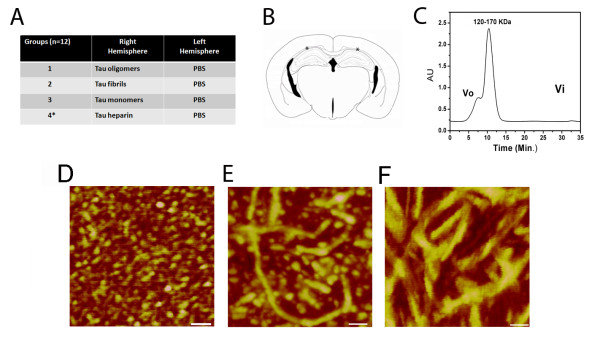
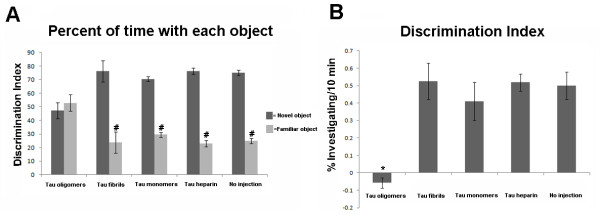
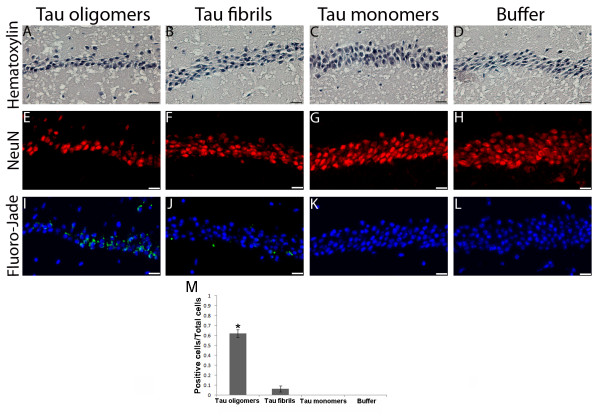
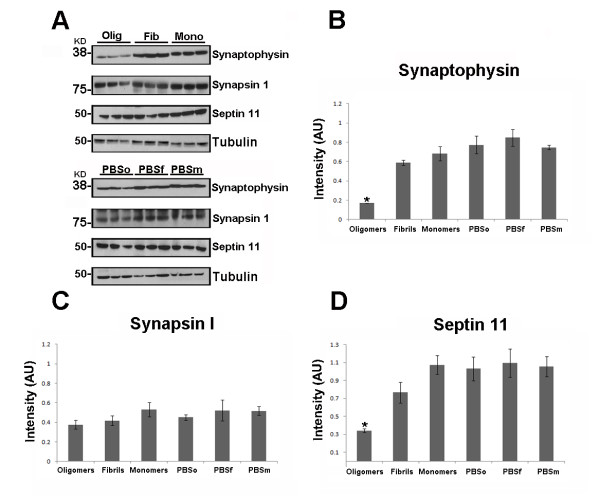
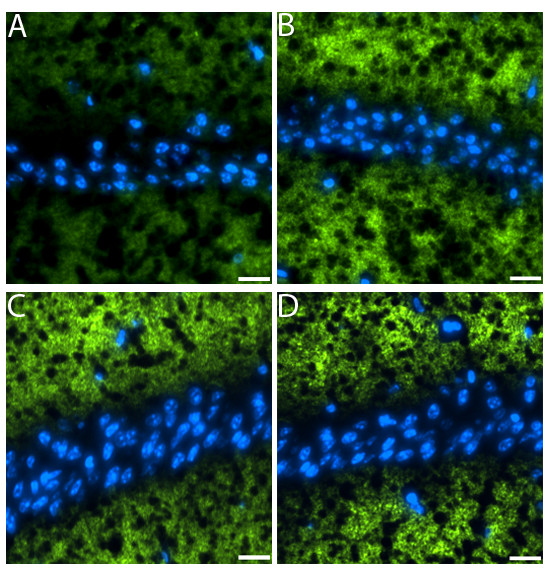
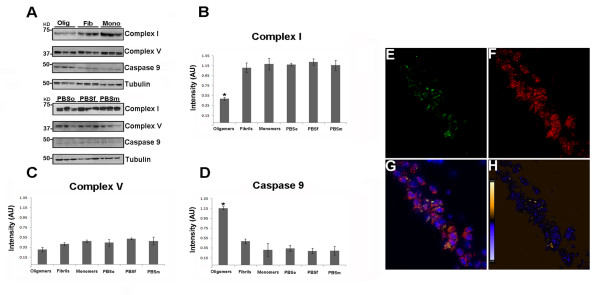
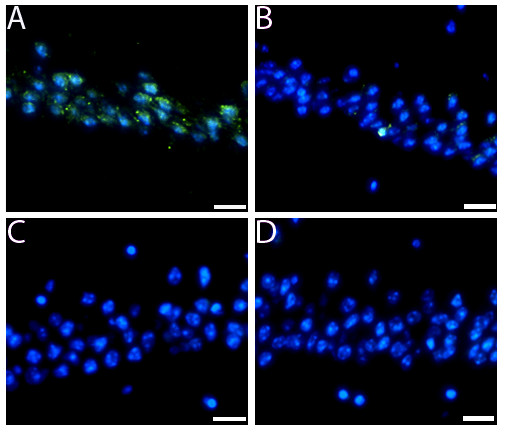
Background: The correlation between neurofibrillary tangles of tau and disease progression in the brains of Alzheimer's disease (AD) patients remains an area of contention. Innovative data are emerging from biochemical, cell-based and transgenic mouse studies that suggest that tau oligomers, a pre-filament form of tau, may be the most toxic and pathologically significant tau aggregate. Results: Here we report that oligomers of recombinant full-length human tau protein are neurotoxic in vivo after subcortical stereotaxic injection into mice. Tau oligomers impaired memory consolidation, whereas tau fibrils and monomers did not. Additionally, tau oligomers induced synaptic dysfunction by reducing the levels of synaptic vesicle-associated proteins synaptophysin and septin-11. Tau oligomers produced mitochondrial dysfunction by decreasing the levels of NADH-ubiquinone oxidoreductase (electron transport chain complex I), and activated caspase-9, which is related to the apoptotic mitochondrial pathway. Conclusions: This study identifies tau oligomers as an acutely toxic tau species in vivo, and suggests that tau oligomers induce neurodegeneration by affecting mitochondrial and synaptic function, both of which are early hallmarks in AD and other tauopathies. These results open new avenues for neuroprotective intervention strategies of tauopathies by targeting tau oligomers.
Overview
The claims and statistics of this paper haven’t been checked yet.
Run the check — free, no account needed. It reads the open-access text and checks the sources it cites.
Integrity signals
Registry
Cites
Statistics
Figures
Verification
Claims the paper makes
The claims and statistics of this paper haven’t been checked yet.
Run the check — free, no account needed. It reads the open-access text and checks the sources it cites.
Claims other papers make about this one
Each is checked against this paper’s own text: does it say what the citing paper says it does?
In the citing paper
“our laboratory and others found that smaller, soluble tau oligomers (TauO) —not NFTs—are the most toxic tau species. 9 , 10 , 11”
From Senescence, brain inflammation, and oligomeric tau drive cognitive decline in Alzheimer's disease: Evidence from clinical and preclinical studies (2024) · cites this paper as [10]
Self-check
Percentages, sums and reported differences re-computed from the paper’s own numbers.
The self-check needs the paper’s full text.
Citations
Cites
Neuropathological stageing of Alzheimer-related changes.
Braak, H., & Braak, E. (1991) · Acta Neuropathologica · doi:10.1007/bf00308809 · Cited by 16,123 · cited 1×
“Most research has focused on NFTs because of the reported correlation between NFTs and disease progression in the brains of AD patients [8-10].”
BackgroundSoluble protein oligomers in neurodegeneration: lessons from the Alzheimer's amyloid β-peptide
Haass, C., & Selkoe, D. J. (2007) · Nature Reviews Molecular Cell Biology · doi:10.1038/nrm2101 · Cited by 4,744
Terry, R. D., Masliah, E., Salmon, D. P., Butters, N., DeTeresa, R., Hill, R., Hansen, L. A., & Katzman, R. (1991) · Annals of Neurology · doi:10.1002/ana.410300410 · Cited by 4,397
Braak, H., Alafuzoff, I., Arzberger, T., Kretzschmar, H., & Del Tredici, K. (2006) · Acta Neuropathologica · doi:10.1007/s00401-006-0127-z · Cited by 3,172
Lee, V. M.-Y., Goedert, M., & Trojanowski, J. Q. (2001) · Annual Review of Neuroscience · doi:10.1146/annurev.neuro.24.1.1121 · Cited by 2,480
Synapse Loss and Microglial Activation Precede Tangles in a P301S Tauopathy Mouse Model
Yoshiyama, Y., Higuchi, M., Zhang, B., Huang, S.-M., Iwata, N., Saido, T. C., Maeda, J., Suhara, T., Trojanowski, J. Q., & Lee, V. M.-Y. (2007) · Neuron · doi:10.1016/j.neuron.2007.01.010 · Cited by 2,208
Tau-mediated neurodegeneration in Alzheimer’s disease and related disorders
Ballatore, C., Lee, V. M.-Y., & Trojanowski, J. Q. (2007) · Nature Reviews Neuroscience · doi:10.1038/nrn2194 · Cited by 2,174
Tau Suppression in a Neurodegenerative Mouse Model Improves Memory Function
SantaCruz, K., Lewis, J., Spires, T., Paulson, J., Kotilinek, L., Ingelsson, M., Guimaraes, A., DeTure, M., Ramsden, M., McGowan, E., et al. (2005) · Science · doi:10.1126/science.1113694 · Cited by 2,014
Transmission and spreading of tauopathy in transgenic mouse brain
Clavaguera, F., Bolmont, T., Crowther, R. A., Abramowski, D., Frank, S., Probst, A., Fraser, G., Stalder, A. K., Beibel, M., Staufenbiel, M., et al. (2009) · Nature Cell Biology · doi:10.1038/ncb1901 · Cited by 1,803
The distribution of tau in the mammalian central nervous system.
Binder, L. I., Frankfurter, A., & Rebhun, L. I. (1985) · The Journal of cell biology · doi:10.1083/jcb.101.4.1371 · Cited by 1,588
Cited by
Sorted by citations
Items 501–600 of 636
Amyloid and tau pathologies cross-talk to promote Alzheimeŕs disease: novel mechanistic insights
Ávila, J., Hernández, F., & Perry, G. L. (2025) · Neuroscience · doi:10.1016/j.neuroscience.2025.07.025 · Cited by 3
Haque, M. A., Montalbano, M., Khan, S., Puangmalai, N., Bhatt, N. N., Shchankin, N., Jerez, C., & Kayed, R. (2025) · Biochimica et Biophysica Acta (BBA) - Molecular Basis of Disease · doi:10.1016/j.bbadis.2025.167995 · Cited by 2
Self-citationProfiling the impact of different tau species on glial cell biology
Gomez, I. A., Yan, Y., Lilley, M. T., Chen, Y., Daughrity, L. M., Arnas, A. M., Shi, J., Kachergus, J. M., Thompson, E. A., Jansen‐West, K. R., et al. (2025) · Frontiers in Cell and Developmental Biology · doi:10.3389/fcell.2025.1622138 · Cited by 2
A high-throughput drug screening assay for anti-tau aggregation using split GFP and flow cytometry
Ibrahium, O. M. H., Ademoye, T. A., Fortin, J. S., & Ostafe, R. (2025) · Scientific Reports · doi:10.1038/s41598-025-21680-5 · Cited by 2
Hossen, F., Hung, J., Odeh, H., Sun, G. Y., & Lee, J. C. (2025) · Frontiers in Aging Neuroscience · doi:10.3389/fnagi.2025.1671986 · Cited by 2
Santiago-Ruiz, A. N., Hugelier, S., Correa, G. L., Bond, C., Lee, E. B., & Lakadamyali, M. (2025) · Advanced Science · doi:10.1002/advs.202509773 · Cited by 3
Pathological tau alters head direction signaling and induces spatial disorientation
Jiang, S., Hijazi, S., Sárkány, B., Gautsch, V. G., LaChance, P. A., Hasselmo, M. E., Bannerman, D. M., & Viney, T. J. (2025) · Cell Reports · doi:10.1016/j.celrep.2025.116610 · Cited by 6
Sex-specific effects of acetylation on tauopathy in aging htau mice
Sabir, U., Csubak, B. A., Ilchenko, S., ANSARI, M. Y. K., Kanaan, N. M., Tsai, T., Srinivasan, D., Dengler-Crish, C. M., & Kasumov, T. (2026) · Scientific Reports · doi:10.1038/s41598-026-41691-0 · Cited by 2
Yuan, S., Essepian, N., Roberts, R., Sherman, E., Gniadzik, W. M., Wang, Q., Erisir, A., & Jiang, L. (2026) · Acta Neuropathologica · doi:10.1007/s00401-026-03018-1 · Cited by 3
P4–423: Small‐molecule lead identification for inhibition of tau oligomer formation
Moe, J. G., Hendrix, J. A., Lopez, P., Kilkuskie, R. E., Vroegop, S. M., & Davidowitz, E. J. (2013) · Alzheimer s & Dementia · doi:10.1016/j.jalz.2013.08.256 · Cited by 2
In situ seeding assay: A novel technique for direct tissue localization of bioactive tau
Perbet, R., de Gérando, A. M., Glynn, C. A., Donahue, C., Gaona, A., Taddei, R. N., Gómez‐Isla, T., Lathuilière, A., & Hyman, B. T. (2024) · Journal of Neuropathology & Experimental Neurology · doi:10.1093/jnen/nlae059 · Cited by 2
Meftah, S., Durrant, C. S., & Spires‐Jones, T. L. (2024) · Science Translational Medicine · doi:10.1126/scitranslmed.adq6489 · Cited by 2
Miguel, L., Frébourg, T., Campion, D., & Lecourtois, M. (2020) · Journal of Alzheimer s Disease · doi:10.3233/jad-190906 · Cited by 2
Sabaté, R. (2014) · Prion · doi:10.4161/pri.29238 · Cited by 2
Targeting the Hsp90/Aha1 Complex for the Treatment of Tauopathies
Shelton, L. B. (2018) · Digital Commons - University of South Florida (University of South Florida) · Cited by 2
Kim, Y. K., Lim, S., Shin, S., Lee, H. E., Song, J. Y., Sung, Y., Lee, G., Yu, B.-Y., Aziz, H., Lukianenko, N., et al. (2020) · doi:10.21203/rs.3.rs-128169/v1 · Cited by 2
Arroyo‐García, L. E., Bachiller, S., Boza‐Serrano, A., Moreno, A. R., Deierborg, T., Andrade‐Talavera, Y., & Fisahn, A. (2021) · Research Square · doi:10.21203/rs.3.rs-1193198/v1 · Cited by 2
Pathogenic tau inhibits synaptic plasticity by blocking eIF4B-mediated local protein synthesisPreprint
Kauwe, G., Lokitiyakul, D., Wong, I. L., Schneider, K., Sridhar, V., Sellegounder, D., Ngwala, Y. Y., Yao, L., Chen, J. H., Pareja-Navarro, K. A., et al. (2025) · bioRxiv (Cold Spring Harbor Laboratory) · doi:10.1101/2025.09.11.675671 · Cited by 2
Tau-Centric Therapies for Treating Alzheimer’s Disease
Quraishe, S., Cowan, C. M., & Mudher, A. K. (2017) · Elsevier eBooks · doi:10.1016/b978-0-12-803690-7.00005-3 · Cited by 1
Cogs in the autophagic machine—equipped to combat dementia-prone neurodegenerative diseases
de Wet, S., Theart, R. P., & Loos, B. (2023) · Frontiers in Molecular Neuroscience · doi:10.3389/fnmol.2023.1225227 · Cited by 1
Effect of PHF-1 hyperphosphorylation on the seeding activity of C-terminal Tau fragments
Hajjar, L. E., Boll, E., Cantrelle, F., Bridot, C., Landrieu, I., & Smet‐Nocca, C. (2025) · Scientific Reports · doi:10.1038/s41598-025-91867-3 · Cited by 1
Saffron’s promise: a systematic review of its role in Alzheimer's treatment
Norouzi, A., Jabraeilipour, A., Doustar, N., Sahrai, H., Saberivand, M., Mosaddeghi-Heris, R., Shahabifard, H., Talebi, M., Sanaie, S., & Naseri, A. (2025) · The Egyptian Journal of Neurology Psychiatry and Neurosurgery · doi:10.1186/s41983-025-00950-z · Cited by 1
Post-mortem human Alzheimer´s brain metallome depends on Braak stages and brain regions
Parra‐Martínez, C., Leblic, B. C., Rodrigo-Lara, H., Fernández‐Vega, I., Márquez, C. G., Rábano, A., & García‐Barrera, T. (2025) · Scientific Reports · doi:10.1038/s41598-025-08143-7 · Cited by 1
Arar, S. H., Haque, M. A., Kayed, A., Khan, S., Bhatt, N. N., Zhao, Y., & Kayed, R. (2025) · ACS Chemical Neuroscience · doi:10.1021/acschemneuro.5c00122 · Cited by 1
Self-citationMan, V. H., He, X., Nguyen, P. H., Gao, J., & Wang, J. (2025) · ACS Chemical Neuroscience · doi:10.1021/acschemneuro.5c00734 · Cited by 1
Kara, B., Beck, J. S., Fu, Z., Hickey, S. L., Kanaan, N. M., Mufson, E. J., Ginsberg, S. D., & Counts, S. (2025) · Acta Neuropathologica Communications · doi:10.1186/s40478-025-02080-2 · Cited by 1
Pathological and Functional Brain Amyloids: A New Concept Explaining the Differences
Galkin, A. P., Mitkevich, V. A., Makarov, A. А., Valina, A. A., & Sysoev, E. I. (2025) · International Journal of Molecular Sciences · doi:10.3390/ijms262110459 · Cited by 1
Selective vulnerability of human synapses to soluble tau oligomers
Kadamangudi, S., Sánchez-Sánchez, L., Kayed, R., Limón, A., & Taglialatela, G. (2026) · Journal of Alzheimer s Disease · doi:10.1177/13872877261416539 · Cited by 2
Self-citationZhao, Y., Chen, W., & Zhou, F. (2026) · Experimental Neurology · doi:10.1016/j.expneurol.2026.115729 · Cited by 1
HSP90 is involved in curcumin-mediated inhibition of tau aggregation
Kam, M. K., Kim, J. W., Choi, J.-Y., Koh, Y. H., & Jo, C. (2026) · Biochemical and Biophysical Research Communications · doi:10.1016/j.bbrc.2026.154140 · Cited by 1
Profiling Protein Aggregate Size Using Single-Molecule Array Technology
Böken, D., Wu, Y., Zhang, J., Xia, Z., Beltran-Lobo, P., Croft, C. L., Weerasekera, S., Heslegrave, A., Zetterberg, H., Keshavan, A., et al. (2026) · Analytical Chemistry · doi:10.1021/acs.analchem.6c03315 · Cited by 1
Tau protein as a regulator of mitochondrial function and dynamics
Tsakiri, E. N., Campos‐Marques, C., Ploumi, C., Skourti, K., Roussos, A., Mytilinaiou, E., Vamvaka-Iakovou, A., Ferreira, I. L., Dioli, C., Gianniou, D. D., et al. (2026) · Proceedings of the National Academy of Sciences · doi:10.1073/pnas.2521642123 · Cited by 1
Tau Oligomers as Potential Drug Target for Alzheimer Disease (AD) Treatment
Kayed, R. (2011) · InTech eBooks · doi:10.5772/16682 · Cited by 1
Self-citationFrom Protein Tangles to Genetic Variants: The Central Role of Tau in Neurodegenerative Disease
Julia, H., & Wade‐Martins, R. (2011) · InTech eBooks · doi:10.5772/29839 · Cited by 1
Alzheimer’s Disease and Mechanism-Based Attempts to Enhance Cognition
Draffin, J. E., Knafo, S., & Heneka, M. T. (2015) · Elsevier eBooks · doi:10.1016/b978-0-12-417042-1.00009-7 · Cited by 1
Stephens, G. S., You, J. C., Fu, C.-H., & Chin, J. (2017) · Elsevier eBooks · doi:10.1016/b978-0-12-809324-5.21126-7 · Cited by 1
Collins‐Praino, L. E. (2022) · Elsevier eBooks · doi:10.1016/b978-0-12-823036-7.00001-3 · Cited by 1
The Cellular Prion Protein as Universal Receptor for Amyloid Proteins
Celauro, L., & Legname, G. (2025) · The Receptors · doi:10.1007/978-3-031-81991-9_18 · Cited by 1
Assessing mitochondrial number and morphology in a C. elegans model of human tauopathy
Tsakiri, E. N., Niforos-Garcia, G., Ackley, B. D., & Palikaras, K. (2025) · Methods in cell biology · doi:10.1016/bs.mcb.2025.05.002 · Cited by 1
NDUFA12L mitochondrial complex-I assembly factor: Implications for taupathies
Salama, M., & Mohamed, W. M. Y. (2015) · Applied & Translational Genomics · doi:10.1016/j.atg.2015.05.003 · Cited by 1
Tau Conformers in FTLD-MAPT Undergo Liquid-liquid Phase Separation and Perturb the Nuclear EnvelopePreprint
Kang, S., Han, Z. Z., Daude, N., McNamara, E., Wohlgemuth, S. L., Safar, J., Mok, S., & Westaway, D. A. (2020) · doi:10.21203/rs.3.rs-81447/v1 · Cited by 1
Santiago-Ruiz, A. N., Hugelier, S., Bond, C. R., Lee, E. B., & Lakadamyali, M. (2024) · bioRxiv (Cold Spring Harbor Laboratory) · doi:10.1101/2024.04.24.590893 · Cited by 1
Essepian, N., Yuan, S., Roberts, R., Sherman, E., Gniadzik, W., Wang, Q., Erişir, A., & Jiang, L. (2025) · bioRxiv (Cold Spring Harbor Laboratory) · doi:10.1101/2025.05.21.655370 · Cited by 1
Simonetti, F., Zhong, W., Hutten, S., Uliana, F., Schifferer, M., Rezaei, A., Ramirez, L. M., Hochmair, J., Sankar, R., Gopalan, A. B., et al. (2025) · bioRxiv (Cold Spring Harbor Laboratory) · doi:10.1101/2025.07.07.662960 · Cited by 1
Tau isoform imbalance and aggregation are pathological hallmarks of X-linked dystonia-parkinsonismPreprint
Reyes, C. J., Domingo, A., Penney, E. B., Norenberg, E. P., Han, J., Murcar, M. G., Vaine, C. A., Bravo‐Vasquez, N., Tran, H., Quittot, N., et al. (2026) · medRxiv · doi:10.64898/2026.07.23.26358614 · Cited by 1
A path based approach to quantifying the progression of Alzheimer's disease
Kanel, P., & Liu, X. (2015) · IEEE International Conference on Bioinformatics and Biomedicine (BIBM) · doi:10.1109/bibm.2015.7359826
Functional implications of tau-fyn interactions in Alzheimer's disease
Lau, H. W. D. (2015)
Approach for Alzheimer's Disease
Tian, H. (2014)
Immunotherapy for the Treatment of Alzheimer’s Disease
Farooqui, A. A. (2017) · Elsevier eBooks · doi:10.1016/b978-0-12-809937-7.00009-4
Perspective, Summary, and Directions for Future Research on Alzheimer’s Disease
Farooqui, A. A. (2017) · Elsevier eBooks · doi:10.1016/b978-0-12-809937-7.00010-0
Successful aggregation of Tau protein labelled on its native cysteinesPreprint
Radli, M., Verdonschot, R. E., Ferrari, L., & Rüdiger, S. (2017) · bioRxiv (Cold Spring Harbor Laboratory) · doi:10.1101/211904
Potential Neuroprotective Strategies for Concussion and Chronic Traumatic Encephalopathy
Farooqui, A. A. (2018) · Elsevier eBooks · doi:10.1016/b978-0-12-813596-9.00009-2
Mitochondria as a Therapeutic Target for Alzheimer's Disease
Hung, C. H.-L., Cheng, S. S., Lee, S. M., & Chang, R. C. (2015) · Wiley eBooks · doi:10.1002/9781119017127.ch15
The molecular mechanism of Hsp90-induced oligomerization of TauPreprint
Weickert, S., Wawrzyniuk, M., John, L., Rüdiger, S., & Drescher, M. (2019) · bioRxiv (Cold Spring Harbor Laboratory) · doi:10.1101/614289
Tau proteolysis mechanisms and relevance for tauopathies
Quinn, J. P. (2019) · Research Explorer (The University of Manchester)
Effects of anle138b treatment on amyloid-β neurotoxicity
Thomas, C. (2020) · eDiss (Georg-August-Universität Göttingen) · doi:10.53846/goediss-8233
Jiang, L., Lin, W., Zhang, C., Verma, M., Kwan, J., van Vliet, E., Ash, P. E. A., Cruz, A. L., Boudeau, S., Maziuk, B. F., et al. (2020) · bioRxiv (Cold Spring Harbor Laboratory) · doi:10.1101/2020.12.03.409334
Self-citationJiang, L., Lin, W., Zhang, C., Verma, M., Kwan, J., van Vliet, E., Ash, P. E. A., Cruz, A. L., Boudeau, S., Maziuk, B. F., et al. (2020) · SSRN Electronic Journal · doi:10.2139/ssrn.3751054
Self-citationMitochondrial perturbation drives tau oligomers pathology in Alzheimer’s diseasePreprint
Du, F., Yu, Q., Chen, D., Yan, S. F., & Yan, S. S. (2020) · doi:10.21203/rs.3.rs-40746/v1
Crichton, R. R., & Ward, R. J. (2013) · doi:10.1002/9781118553480.ch15
Functional Applications of Stable Tau Oligomers in Cell Biology and Electrophysiology Studies
Hill, E., Moffat, K. G., Wall, M. J., Zetterberg, H., Blennow, K., & Karikari, T. K. (2022) · Methods in molecular biology · doi:10.1007/978-1-0716-2597-2_11
A Validated Method to Prepare Stable Tau Oligomers
Hill, E., Moffat, K. G., Wall, M. J., Zetterberg, H., Blennow, K., & Karikari, T. K. (2022) · Methods in molecular biology · doi:10.1007/978-1-0716-2597-2_14
Saleeb, R. S., Leighton, C., Lee, J., O’Shaughnessy, J., Jeacock, K., Chappard, A., Cumberland, R., Ball, S. R., Sunde, M., Clarke, D. J., et al. (2023) · bioRxiv (Cold Spring Harbor Laboratory) · doi:10.1101/2023.06.27.546642
Annadurai, N., Kubíčková, A., Frydrych, I., Hajdúch, M., & Das, V. (2023) · bioRxiv (Cold Spring Harbor Laboratory) · doi:10.1101/2023.08.26.554940
Malik, N., Miah, M.-U., Galgani, A., McAleese, K. E., Walker, L., LeBeau, F. E. N., Attems, J., Outeiro, T. F., Thomas, A. J., & Koss, D. J. (2023) · bioRxiv (Cold Spring Harbor Laboratory) · doi:10.1101/2023.09.27.559720
Each big journey starts with a first step: Importance of oligomerization
Agha, M. M., Aziziyan, F., & Uversky, V. N. (2024) · Progress in molecular biology and translational science · doi:10.1016/bs.pmbts.2024.03.011
A Comprehensive Review on Alzheimer’s Disease; Pathophysiology and Treatment
Nandini, N., & Cyriac, K. S. (2024) · International Journal of Pharmaceutical Sciences Review and Research · doi:10.47583/ijpsrr.2024.v84i06.007
Towards mechanism-based tau-targeted therapies
Bakota, L., & Brandt, R. (2025) · Neural Regeneration Research · doi:10.4103/nrr.nrr-d-24-01240
Chan, D., Spires‐Jones, T. L., Provenzano, F. A., Glennon, E. B. C., & Duff, K. (2025) · Oxford University Press eBooks · doi:10.1093/med/9780190065324.003.0020
Napolitano, L., Vadukul, D. M., Bigi, A., Cecchi, C., Chiti, F., Cascella, R., & Aprile, F. A. (2025) · bioRxiv (Cold Spring Harbor Laboratory) · doi:10.1101/2025.08.29.672921
Disease-specific tau polymorphs define unique protein interaction networks across proteinopathiesPreprint
Puangmalai, N., Bhatt, N. N., Suthprasertporn, N., Miranda-Morales, E. G., Shchankin, N., Samples, M., Balci, A. E., Liew, J. Y., Montalbano, M., Zhao, Y., et al. (2025) · bioRxiv (Cold Spring Harbor Laboratory) · doi:10.1101/2025.09.09.675096
Self-citationEarly synaptic pathology is associated with small tau aggregates in Alzheimer’s diseasePreprint
Fertan, E., Kedia, S., Meisl, G., Cotton, M. W., Quaegebeur, A., Spillantini, M. G., & Klenerman, D. (2025) · bioRxiv (Cold Spring Harbor Laboratory) · doi:10.1101/2025.09.13.676039 · Cited by 1
Quittot, N., Sivasankaran, D., Böken, D., Chen, Y., Chun, J. E., Wiedmer, A. E., Derosla, V., Martins, M., Brooks, F. A., Meisl, G., et al. (2025) · bioRxiv (Cold Spring Harbor Laboratory) · doi:10.1101/2025.09.24.678227
Ye, J., Yue, R.-Z., Li, C., Wu, L., Guo, X., Zhao, Y., Wan, H., Wang, J.-Z., Gu, B., & Xiao, S. (2025) · Research Square · doi:10.21203/rs.3.rs-7655539/v1
Antibodies targeting amyloid-β and Tau oligomers in Alzheimer’s disease
Chinnathambi, S., Rangappa, N., & Chandrashekar, M. (2025) · Advances in protein chemistry and structural biology · doi:10.1016/bs.apcsb.2025.10.002
Protein Misfolding and Aggregation in the Pathogenesis of Alzheimer’s Disease
Kim, J., & Kim, H. (2025) · Gyemyeong uidae haksulji · doi:10.46308/kmj.2025.00164
Coomans, E. M., Schoonhoven, D. N., Tuncel, H., Verfaillie, S. C. J., Wolters, E. E., Boellaard, R., Ossenkoppele, R., den Braber, A., Scheper, W., Schober, P. R., et al. (2021) · Figshare · doi:10.6084/m9.figshare.13725141
Kang, S.-G., Han, Z. Z., Daude, N., McNamara, E., Wohlgemuth, S. L., Molina‐Porcel, L., Safar, J., Mok, S.-A., & Westaway, D. A. (2021) · Figshare · doi:10.6084/m9.figshare.16599642
Kang, S.-G., Han, Z. Z., Daude, N., McNamara, E., Wohlgemuth, S. L., Molina‐Porcel, L., Safar, J., Mok, S.-A., & Westaway, D. A. (2021) · Figshare · doi:10.6084/m9.figshare.16599624
Therapeutics immunotargets for Tauopathy
Chinnathambi, S., & Rangappa, N. (2025) · Advances in protein chemistry and structural biology · doi:10.1016/bs.apcsb.2025.10.015
Facal, C. L., Páez-Paz, I., Pereyra, A. E., Gaguine, C., Clerici-Delville, R., Foltran, R. B., Soiza‐Reilly, M., & Avale, M. E. (2026) · Molecular Therapy — Nucleic Acids · doi:10.1016/j.omtn.2026.102843
Leucettinib-21 decreases dosage effects of DYRK1A in human trisomy 21 iPSC-derived neural cellsPreprint
West, N. R., Lindberg, M. F., Dairou, J., MacGregor, S., Puthireddy, S., Meijer, L., & Bhattacharyya, A. (2026) · bioRxiv (Cold Spring Harbor Laboratory) · doi:10.64898/2026.02.05.704014
Regional correlates of tau pathology and synaptic function in primary age-related tauopathy
Kadamangudi, S., Sánchez-Sánchez, L., Limón, A., & Taglialatela, G. (2026) · Journal of Alzheimer s Disease · doi:10.1177/13872877261416524
Heo, S., Cha, M., Zhung, W., Kim, J., Keereewan, S., Cho, I., Park, M., Seo, W., Shin, H., Yoon, S., et al. (2026) · Nature Communications · doi:10.1038/s41467-026-69662-z · Cited by 2
Zakaria, M. K., Hazalin, N. A. M. N., Chellammal, H. S. J., & Singh, G. K. S. (2026) · Neuroscience and Behavioral Physiology · doi:10.1007/s11055-026-01943-y
Jia, N., Guan, H., Zuo, Y., Jeong, Y. Y., Amireddy, N., Rajapaksha, G., Gonzalez, C. U., Jaber, N., Lee, Y.-K., Nissenbaum, M., et al. (2026) · bioRxiv · doi:10.64898/2026.03.23.713823
Yakubu, A. O., Atafo, G. I., Nwaze, C. E., Bakare, T. Y., Adeniyi, T. O., Alare, K., Oladele, A. B., & Solagbade, O. S. (2026) · NeuroMarkers. · doi:10.1016/j.neumar.2026.100167 · Cited by 1
Les nanotubes comme nouvelle voie de transfert et de propagation de la protéine Tau pathologique
Tardivel, M. (2017) · theses.fr (ABES) · doi:10.70675/0cfcd049z970ez4f2dz8417z195cfabdc00d
Souchet, B. (2018) · theses.fr (ABES) · doi:10.70675/5510ef76zecf1z41f2z9496z015aa6a093be
Vautheny, A. (2019) · theses.fr (ABES) · doi:10.70675/1812d71aze8d9z48d6z87d1z5a23a4e81953
Study of the Neuron-Astrocyte Relationship in a Rodent Model of Tauopathy
de Gérando, A. M. (2019) · theses.fr (ABES) · doi:10.70675/04658671zaca3z4fefza24dz2f5a011bebfe
Abdelouahab, O. B. (2021) · theses.fr (ABES) · doi:10.70675/97f4885fz3f5cz4234zb8e2ze3fa7c4e3d41
Caractérisation d'anticorps à domaine unique dirigés contre la protéine Tau
Danis, C. (2018) · theses.fr (ABES) · doi:10.70675/c783a062zb57bz4024z85d0z509baaed8a1b
Metadata
- Authors
- Lasagna-Reeves, C. A., Castillo-Carranza, D. L., Sengupta, U., Clos, A. L., Jackson, G. R., & Kayed, R.
- Affiliations
- The University of Texas Medical Branch at Galveston (US)
- Corresponding author
- Kayed, Rakez
- Venue
- Molecular Neurodegeneration
- Published
- 2011-06-06
- Volume
- 6
- Issue
- 1
- Pages
- 39-39
- ISSN
- 1750-1326 (ISSN-L)
- PMC
- PMC3224595
- OpenAlex
- W1968276382
- Cited by
- 633
- References
- 84
- Citations by year
- 2026: 52 · 2025: 67 · 2024: 46 · 2023: 53 · 2022: 52 · 2021: 51 · 2020: 57 · 2019: 43 · 2018: 44 · 2017: 35 · 2016: 27 · 2015: 33 · 2014: 27 · 2013: 28 · 2012: 12
- FWCI
- 15.93
- Type
- journal article
- Language
- en
- Open access
- gold
- doi.org
- Licence
- cc-by
- Locations
- Molecular Neurodegeneration (publishedVersion, cc-by)
- Europe PMC (PubMed Central) (publishedVersion, cc-by)
- PubMed Central (publishedVersion, cc-by)
- PubMed (publishedVersion)
- DOAJ (DOAJ: Directory of Open Access Journals) (submittedVersion)
- Funders
- Alzheimer's Drug Discovery Foundation
- Mitchell Center for Neurodegenerative Diseases, University of Texas Medical Branch
- Topics
- Life Sciences › Neuroscience › Cellular and Molecular Neuroscience › Alzheimer's disease research and treatments
- Health Sciences › Medicine › Psychiatry and Mental health › Dementia and Cognitive Impairment Research
- Life Sciences › Neuroscience › Neurology › Neuroinflammation and Neurodegeneration Mechanisms
- Keywords
- tau oligomers, tauopathy, Alzheimer's disease, neurotoxicity, memory consolidation, synaptic dysfunction, synaptophysin, mitochondrial dysfunction, complex I, caspase-9, apoptosis, neurofibrillary tangles, stereotactic injection, neurodegeneration
About these checks
Registry, retraction, Cites and statistics results are computed, not judged, with one exception: a printed reference that no index lists is read once by a model before it counts as a citation error. Claims are extracted by a model and kept only when their quote appears verbatim in the text; each cited source is then checked, with a model’s help, for whether it says what the claim relies on. Those verdicts can be wrong — read the claim’s quote and the cited source before relying on one.
Statistics and arithmetic are recomputed, not judged.
Confidence bands are shown only for fields calibrated on our annotated test set. None is calibrated yet, so no band is shown.
What counts as a claim ›How we measure confidence ›How we check this ›
Are you an author, or do you see a problem with this page? Request a review
