

Bacteria and tumours: causative agents or opportunistic inhabitants?
Open accessThe DOI matches its Crossref record; 93 of the 95 references it cites were found in a registry or an index.
Abstract
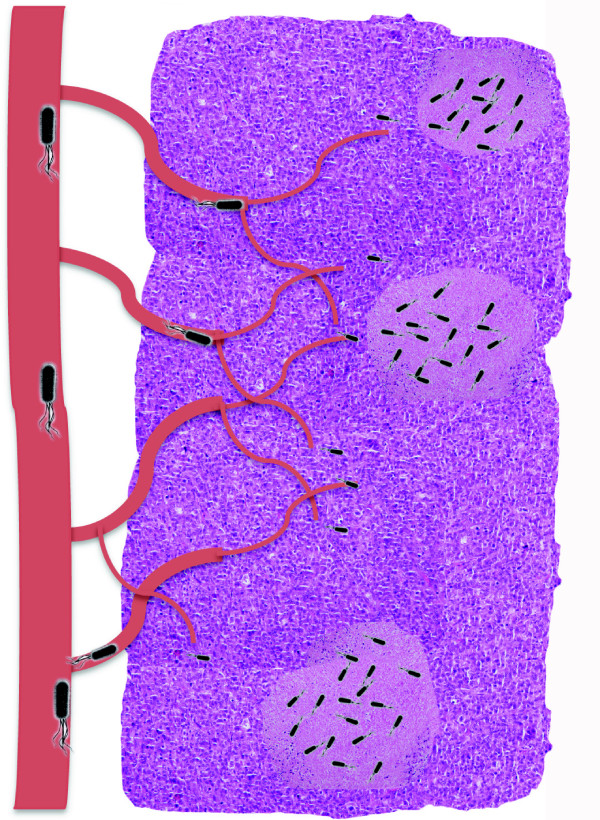
Associations between different bacteria and various tumours have been reported in patients for decades. Studies involving characterisation of bacteria within tumour tissues have traditionally been in the context of tumourigenesis as a result of bacterial presence within healthy tissues, and in general, dogma holds that such bacteria are causative agents of malignancy (directly or indirectly). While evidence suggests that this may be the case for certain tumour types and bacterial species, it is plausible that in many cases, clinical observations of bacteria within tumours arise from spontaneous infection of established tumours. Indeed, growth of bacteria specifically within tumours following deliberate systemic administration has been demonstrated for numerous bacterial species at preclinical and clinical levels. We present the available data on links between bacteria and tumours, and propose that besides the few instances in which pathogens are playing a pathogenic role in cancer, in many instances, the prevalent relationship between solid tumours and bacteria is opportunistic rather than causative, and discuss opportunities for exploiting tumour-specific bacterial growth for cancer treatment.
Overview
The claims and statistics of this paper haven’t been checked yet.
Free: it reads the open-access text and checks the first 5 claims that cite a source we can check. Create a free account to check every claim.
Integrity signals
Registry
Cites
Statistics
Figures
Verification
Claims the paper makes
The claims and statistics of this paper haven’t been checked yet.
Free: it reads the open-access text and checks the first 5 claims that cite a source we can check. Create a free account to check every claim.
Claims other papers make about this one
Each is checked against this paper’s own text: does it say what the citing paper says it does?
The cited source says what the claim attributes to it.
In the citing paper
“As tumors develop, their disorganized, leaky vasculature may allow circulating bacteria to enter, and the immunosuppressed environment may provide a refuge for them (61, 62).”
From The human tumor microbiome is composed of tumor type–specific intracellular bacteria (2020) · cites this paper as [61]
Self-check
Percentages, sums and reported differences re-computed from the paper’s own numbers.
The self-check needs the paper’s full text.
Citations
Cites
Identification of Herpesvirus-Like DNA Sequences in AIDS-Sssociated Kaposi's Sarcoma
Chang, Y., Cesarman, E., Pessin, M. S., Lee, F., Culpepper, J., Knowles, D. M., & Moore, P. S. (1994) · Science · doi:10.1126/science.7997879 · Cited by 5,654 · cited 1×
“Several viruses can integrate into the human genome and directly initiate tumourigenesis, such as human papillomavirus (HPV) in cervical cancer and herpesvirus in Kaposi’s sarcoma [1,2].”
Helicobacter pylori Infection and the Development of Gastric Cancer
Uemura, N., Okamoto, S., Yamamoto, S., Matsumura, N., Yamaguchi, S., Yamakido, M., Taniyama, K., Sasaki, N., & Schlemper, R. J. (2001) · New England Journal of Medicine · doi:10.1056/nejmoa001999 · Cited by 4,465 · cited 2×
“pylori which is the strongest known risk factor for gastric cancer [41].”
Immunotherapy of Diffuse Gliomas: Biological Background, Current Status and Future Developments
Grauer, O. M., Wesseling, P., & Adema, G. J. (2009) · Brain Pathology · doi:10.1111/j.1750-3639.2009.00315.x · Cited by 4,007
Fusobacterium nucleatum infection is prevalent in human colorectal carcinoma
Castellarin, M., Warren, R. L., Freeman, J. D., Dreolini, L., Krzywinski, M., Strauss, J., Barnes, R., Watson, P., Allen-Vercoe, E., Moore, R. A., et al. (2012) · Genome Research · doi:10.1101/gr.126516.111 · Cited by 2,043
Genomic analysis identifies association of Fusobacterium with colorectal carcinoma
Kostic, A. D., Gevers, D., Pedamallu, C. S., Michaud, M., Duke, F., Earl, A. M., Ojesina, A. I., Jung, J., Bass, A. J., Tabernero, J., et al. (2012) · Genome Research · doi:10.1101/gr.126573.111 · Cited by 1,960 · cited 3×
“Fusobacterium nucleatum Prevalent (?) [35,36]”
Helicobacter pylori: gastric cancer and beyond
Polk, D. B., & Peek, R. M. (2010) · Nature Reviews Cancer · doi:10.1038/nrc2857 · Cited by 1,158 · cited 1×
“In other cases, the development of cancer is indirect, such as with Helicobacter pylori, which contributes to both gastric cancer and mucosa-associated lymphoid tissue (MALT) lymphoma due to chronic inflammation caused by the bacteria [3,4].”
A SARCOMA OF THE FOWL TRANSMISSIBLE BY AN AGENT SEPARABLE FROM THE TUMOR CELLS
Rous, P. (1911) · Journal of Experimental Medicine · doi:10.1084/jem.13.4.397 · Cited by 1,051 · cited 1×
“In 1911 Francis Peyton Rous was the first to discover that cancer could be transmitted by a virus (later known as Rous sarcoma virus), but it wasn’t until years later that his results were accepted by the scientific community [10,11].”
Berg, R. D., & Garlington, A. W. (1979) · Infection and Immunity · doi:10.1128/iai.23.2.403-411.1979 · Cited by 841 · cited 2×
“Although the importance of host immune function and the bacterium’s intestinal population size have been implicated as significant contributory factors, the precise mechanisms involved remains unknown [5,66,69,71].”
Helicobacter pylori in Health and Disease
Cover, T. L., & Blaser, M. J. (2009) · Gastroenterology · doi:10.1053/j.gastro.2009.01.073 · Cited by 713 · cited 1×
“In other cases, the development of cancer is indirect, such as with Helicobacter pylori, which contributes to both gastric cancer and mucosa-associated lymphoid tissue (MALT) lymphoma due to chronic inflammation caused by the bacteria [3,4].”
Variations of oral microbiota are associated with pancreatic diseases including pancreatic cancer
Farrell, J. J., Zhang, L., Zhou, H., Chia, D., Elashoff, D., Akin, D., Paster, B. J., Joshipura, K., & Wong, D. T. W. (2012) · Gut · doi:10.1136/gutjnl-2011-300784 · Cited by 662 · cited 5×
“chronic inflammation and neoplasia [72].”
Influential
Research works printed but not linked: 3
- Busch W Aus der Sitzung der medicinischen Section 1867 Berlin: Klin Wochenschr 137(5)
- Coley W Late results of the treatment of inoperable sarcoma by the mixed toxins of Erysipelas and Bacillus prodigosus Am J Med Sci 1906 131 375 430
- Villesquez EJ Le Parasitisme Latent des Cellules du Sang chez l’ Homme, en Particulier dans le Sang des Cancreeux 1955 Paris, France: Librarie Maloine
Cited by
Items 101–190 of 190
Yu, D. S., Wang, T., Liang, D., Mei, Y., Zou, W., & Guo, S. (2021) · Frontiers in Oncology · doi:10.3389/fonc.2021.651350 · Cited by 12
“It is also prevalent in oral cancer (33).”
BackgroundA New Treatment Landscape for RCC: Association of the Human Microbiome with Improved Outcomes in RCC
Piao, X., Byun, Y. J., Zheng, C.-M., Song, S. J., Kang, H. W., Kim, W. T., & Yun, S. J. (2023) · Cancers · doi:10.3390/cancers15030935 · Cited by 12
Bacteriophages: unlocking a new frontier in breast cancer management by defeating oncogenic bacteria
Ramadan, Y. N., Rashed, Z. I., Ahmed, R. F., Salem, H. A., Alshareef, H. M., Ahmed-Abakur, E. H., Alanazi, F. E., Elfadil, H., & Hetta, H. F. (2025) · Future Journal of Pharmaceutical Sciences · doi:10.1186/s43094-025-00825-3 · Cited by 11
“Possible pathways involve deleterious changes in host physiological processes such as inflammation and hormone stimulation, and antigen-triggered lymphoproliferation that boosts the proliferation of epithelial cells [126].”
Antimycobacterial and Anticancer Properties of Myrtus communis Leaf Extract
Mir, M. A., Memish, L. A., Elbehairi, S. E. I., Bashir, N., Saif, F., Shati, A. A., Alfaifi, M. Y., Alamri, A. M., Alkahtani, S. A., & Ahmad, I. S. (2024) · Pharmaceuticals · doi:10.3390/ph17070872 · Cited by 11
Myckatyn, T. M., & Parikh, R. P. (2017) · Plastic & Reconstructive Surgery · doi:10.1097/prs.0000000000003712 · Cited by 11
Plotkin, B. J., Davis, J. W., Strizzi, L., Lee, P., Christoffersen-Cebi, J., Kacmar, J., Rivero, O. J., Elsayed, N., Zanghi, N., Ito, B., et al. (2017) · Tissue and Cell · doi:10.1016/j.tice.2017.12.004 · Cited by 10
Brain Tumors and Beyond: Multi-Compartment Microbiome and Mycobiome Analysis
Sípos, L., Banczerowski, P., Juhász, J., Fedorcsák, I., Berényi, G., Makra, N., Dunai, Z. A., Szabó, D., & Erőss, L. (2025) · International Journal of Molecular Sciences · doi:10.3390/ijms26030991 · Cited by 9
“Our preliminary data with low patient numbers do not establish whether intratumor bacteria or fungi play a causal role in the development of cancer or whether their presence simply reflects infections of established tumors [31–33].”
Bacterial-Mediated In Situ Engineering of Tumour-Associated Macrophages for Cancer Immunotherapy
Kuhl, G. C., & Tangney, M. (2025) · Cancers · doi:10.3390/cancers17050723 · Cited by 9
“The TME in a broad spectrum of human cancers is increasingly being proposed to feature unique microbiota, potentially playing a role in tumour progression and the development of resistance to anticancer therapies [151,152].”
Self-citationProspect of bacteria for tumor diagnosis and treatment
Xu, Y., Zhao, C., Ma, X., & Zhang, H. (2022) · Life Sciences · doi:10.1016/j.lfs.2022.121215 · Cited by 9
Marcelo, G. A., Galhano, J., Robalo, T. T., Cruz, M. M., Marcos, M. D., Martínez‐Máñez, R., Duarte, M. P., Capelo, J. L., Lodeiro, C., & Oliveira, E. (2022) · International Journal of Molecular Sciences · doi:10.3390/ijms232012287 · Cited by 8
Guilford, F. T., & Yu, S. C. H. (2019) · PubMed · Cited by 8
A novel tumor-targeting strain of Xenorhabdus stockiae exhibits potent biological activities
Zhang, C., Chen, H., Hüttel, S., Hu, S., Zhang, W., Ding, X., Yin, J., Yin, Y., Müller, R., Xia, L., et al. (2022) · Frontiers in Bioengineering and Biotechnology · doi:10.3389/fbioe.2022.984197 · Cited by 8
Drug delivery systems for enhanced tumour treatment by eliminating intra-tumoral bacteria
Liu, Z., Ma, Y., Ye, J.-X., Li, G., Kang, X., Xie, W., & Wang, X. (2024) · Journal of Materials Chemistry B · doi:10.1039/d3tb02362a · Cited by 7
Future Perspectives: Microbiome, Cancer and Therapeutic Promise
Banerjee, S., & Robertson, E. S. (2019) · Current cancer research · doi:10.1007/978-3-030-04155-7_17 · Cited by 7
Nieciecki, V., Blum, F. C., Johnson, R. C., Testerman, T. L., McAvoy, T. J., King, M. C., Gushchin, V., Whitmire, J. M., Frey, K. G., Glang, L. A., et al. (2025) · mSphere · doi:10.1128/msphere.00652-24 · Cited by 6
“It has been hypothesized that leaky vasculature may allow microbes to enter the tumor, where they are able to persist in the immunosuppressed microenvironment (10, 11).”
Burke, C., Glynn, T. J., Jahangir, C. A., Murphy, C. L., Buckley, N. E., Tangney, M., Rahman, A., & Gallagher, W. M. (2025) · Expert Review of Molecular Diagnostics · doi:10.1080/14737159.2025.2465743 · Cited by 6
“Amongst the myriad of microorganisms at play within the TME, bacteria have been heralded as key players in modulating and shaping the solid tumor landscape [16] whether or not they are present within the TME on an opportunistic or causative basis [17].”
Self-citationThe oncobiome; what, so what, now what?
Abbas, M., & Tangney, M. (2025) · Microbiome Research Reports · doi:10.20517/mrr.2024.89 · Cited by 7
Self-citationAnaerobic Growth and Maintenance of Mammalian Cell Lines
Plotkin, B. J., Sigar, I. M., Swartzendruber, J. A., & Kaminski, A. (2018) · Journal of Visualized Experiments · doi:10.3791/58049 · Cited by 6
Bacterial Systems for Gene Delivery to Systemic Tumors
Cummins, J., Cronin, M. A., van Pijkeren, J. P., Gahan, C. G. M., & Tangney, M. (2014) · Methods in molecular biology · doi:10.1007/978-1-4939-0363-4_13 · Cited by 6
Self-citationVoorde, J. V., Liekens, S., Gago, F., & Balzarini, J. M. (2014) · Nucleosides Nucleotides & Nucleic Acids · doi:10.1080/15257770.2013.851394 · Cited by 6
“tumor environment[7] or to changes in cellular defense mechanisms against microorganisms, specifically observed in tumors.”
BackgroundAsaftei, M., Lucidi, M., Anton, S. R., Tranca, D. E., Hristu, R., Wu, A., Yang, Y., Stanciu, G. A., Lazăr, V., Ioniţă, M., et al. (2025) · Materials Today Communications · doi:10.1016/j.mtcomm.2025.111962 · Cited by 5
8th International Conference on Oncolytic Virus Therapeutics
Guinn, B., Braidwood, L., Parker, A. L., Peng, K.-W., & Seymour, L. W. (2014) · Human Gene Therapy · doi:10.1089/hum.2014.118 · Cited by 5
“The Tangney lab has also recently shown that a range of bacteria exists within tumors and adjacent tissue in cancer patients (Cummins and Tangney, 2013).”
Nowak, P. J., & Zasowska‐Nowak, A. (2018) · Medycyna Paliatywna · doi:10.5114/pm.2018.83271 · Cited by 5
“Podobny efekt mogą wywoływać stany nadmiernego rozwoju flory beztlenowej w jamie ustnej, takie jak paradontoza i próchnica zębów [4, 14] oraz rozpadające się guzy nowotworowe zlokalizowane w obrębie dróg oddechowych, gardła lub jamy ustnej, będące rezerwuarem bakterii beztlenowych [33].”
BackgroundVoorde, J. V., Balzarini, J. M., & Liekens, S. (2014) · Journal of Antimicrobial Chemotherapy · doi:10.1093/jac/dku201 · Cited by 5
How Plants Can Contribute to the Supply of Anticancer Compounds
Buyel, J. F. (2017) · Springer eBooks · doi:10.1007/978-3-319-53880-8_2 · Cited by 5
“More often, cancer can be caused by viruses (Cummins and Tangney 2013; Weinberg 2006), including Human papillomavirus (HPV) (Chen et al.”
BackgroundZhang, R., Li, Z., Liu, X., Qiu, Z., Li, Y., Gao, C., & Guo, C. (2026) · Frontiers in Immunology · doi:10.3389/fimmu.2025.1653727 · Cited by 4
Bacterial population dynamics during colonization of solid tumors
Sayin, S., ElGamel, M., Rosener, B., Brehm, M. A., Mugler, A., & Mitchell, A. (2025) · Molecular Systems Biology · doi:10.1038/s44320-025-00175-5 · Cited by 4
“…composition in speci fi c “ natural ” microbiome sites and the species identi fi ed in tumors in speci fi c body sites (Bullman et al, 2017; Boesch et al, 2022) and suggest translocation events of bacteria between organs (Schorr et al, 2023) or into the blood stream (Cummins and Tangney, 2013).”
Environmental insults and compensative responses: when microbiome meets cancer
Nagpal, S., & Mande, S. S. (2023) · Discover Oncology · doi:10.1007/s12672-023-00745-9 · Cited by 4
Voorde, J. V., Balzarini, J. M., & Liekens, S. (2014) · Technische Universität Dortmund Eldorado (Technische Universität Dortmund) · doi:10.17877/de290r-15593 · Cited by 4
“As suggested by Cummins and Tangney (2013), the preferential colonization of cancer cells by prokaryotes may be attributed to an increased nutrient availability at the tumor site (e.g. due to necrosis) or bacterial chemotaxis.”
BackgroundBiofilm mediated integrin activation and directing acceleration of colorectal cancer
Saravanan, V., Gopalakrishnan, V., Mahendran, M. I. M. S., Vaithianathan, R., Srinivasan, S., Boopathy, V., & Krishnamurthy, S. (2024) · Apmis · doi:10.1111/apm.13466 · Cited by 3
“Adhe-sions have been shown to compromise host defence mechanisms against pathogen removal and are implicated in the production of biofilms (20).”
InfluentialChen, J.-C., Hsu, M.-H., Hu, S., & Lin, Y. (2025) · International Journal of Molecular Sciences · doi:10.3390/ijms26199457 · Cited by 3
“It is possible that the relationship is bidirectional [78].”
Bacteria modulate tumor-associated macrophages to combat cancer
Chen, Z., Li, J., Wang, J. J., Bai, Y., Zhang, Z., Chen, G., Cao, X. T., & Jin, D. (2025) · Critical Reviews in Oncology/Hematology · doi:10.1016/j.critrevonc.2025.104983 · Cited by 3
Characterizing and Exploiting Tumor Microenvironments to Optimize Treatment Outcomes
Allott, E. H., Dean, K. A., Robson, T., & Meaney, C. L. (2021) · Cancers · doi:10.3390/cancers13225752 · Cited by 3
Oncogenic processes: a neglected parameter in the evolutionary ecology of animals
Thomas, F., Asselin, K., MacDonald, N., Brazier, L., Meliani, J., Újvári, B., & Dujon, A. M. (2024) · Comptes Rendus Biologies · doi:10.5802/crbiol.159 · Cited by 3
Microbiome in urologic neoplasms: focusing on tumor immunity
Zou, J., Xu, B., Gao, H., Luo, P., Chen, T., & Duan, H. (2024) · Frontiers in Immunology · doi:10.3389/fimmu.2024.1507355 · Cited by 3
Jafari, B., Rashid, F. M., Safarov, S. S., Ospanov, M., Yelibayeva, N. S., Abilov, Z. A., Turmukhanova, M. Z., Kalugin, S., Ehlers, P., Umar, M. I., et al. (2018) · ChemistrySelect · doi:10.1002/slct.201802426 · Cited by 3
Microbiome typing in uveal melanoma is associated with plaque radiotherapy
Chen, Y., Luo, J., Li, H., Fang, R., Zhang, R., Liu, Y., Xiu, J., Xu, J., Li, Y., & Wei, W. (2023) · Medicine in Microecology · doi:10.1016/j.medmic.2023.100079 · Cited by 2
The human microbiome reshapes the breast cancer immune-metabolic-hormonal microenvironment
Wang, Q., 张富荣, Xin, Y., Yang, R., Tang, Z., Wu, Z., & Ming, J. (2026) · Frontiers in Immunology · doi:10.3389/fimmu.2026.1774211 · Cited by 2
“…routes of bacterial colonization in tumors, potentially involving chemoattraction to necrotic areas, “ leaky ” vasculature, or local immune suppression, remain an active area of investigation, as do the precise origins and functional roles of intracellular bacteria in breast oncogenesis (46, 47).”
Microbiome therapeutics for the cancer management
Punetha, A., & Punetha, A. K. (2023) · Elsevier eBooks · doi:10.1016/b978-0-323-99336-4.00012-4 · Cited by 2
Microfluidics in Microbiome and Cancer Research
Udayasuryan, B., Slade, D. J., & Verbridge, S. S. (2019) · Wiley eBooks · doi:10.1002/9783527818341.ch9 · Cited by 3
Cancer death scenario: A brief concept on cancer related deaths
Raj, M., Priya, M., Singh, H. K., & Swain, S. (2024) · Indian Journal of Pharmacy and Pharmacology · doi:10.18231/j.ijpp.2023.043 · Cited by 2
Malek, A., Mostafa, K., Rahman, S., & Hossain, S. (2024) · International Journal of Basic & Clinical Pharmacology · doi:10.18203/2319-2003.ijbcp20240374 · Cited by 2
Altaikyzy, A., Fan, H., & Xie, Y. (2018) · International Conference on Intelligent Informatics and Biomedical Sciences (ICIIBMS) · doi:10.1109/iciibms.2018.8550011 · Cited by 2
“As human body is a microbiome for an enormous number of bacteria, these bacteria are capable to induce the inflammation and production of carcinogenic and mutagenic compounds that consequently cause tumorigenesis([5-12]).”
BackgroundEvaluation of Oral Microflora in Precancerous Lesions
(2017) · International Journal of Science and Research (IJSR) · doi:10.21275/art20178878 · Cited by 1
Al-Mattar, M. A., Al-Zaher, M., Al-Salman, J. S., Mohamed, Z. A., Marhoon, A. Z., & Al-Ghasra, Z. (2024) · American Journal of Case Reports · doi:10.12659/ajcr.943914 · Cited by 1
“This makes it a prime example of indirect cancer development [1].”
BackgroundInfluentialSUSTENTABILIDAD AMBIENTAL: UNA VISIÓN INTERDISCIPLINARIA DE LOS DAAD-ALUMNI EN MÉXICO.
Ávila-Akerberg, V. (2018) · Institutional Repository (Universidad Autónoma del Estado de México) · Cited by 1
Sohel, M., Aktar, S., Khatun, S., Hamidu, S., Nity, N. U., Kumar, S., Hossain, M. S., Sarker, M. R., Das, S. R., Dey, B. R., et al. (2026) · BioMed Research International · doi:10.1155/bmri/6359088 · Cited by 1
“For example, beginning in 1868, two patients with sarcoma were identified as infected with Streptococcus , and infection with S. pyogenes was detected in a patient with neck cancer [10].”
Genetically Modified Bacteria as Targeted Agent for Cancer
Jin, S., Whang, Y. M., & Chang, I. H. (2016) · Journal of Urologic Oncology · doi:10.22465/kjuo.2016.14.2.54 · Cited by 1
Chandra, P., Nath, S., & Kumar, S. (2017) · Indian Journal of Nuclear Medicine · doi:10.4103/ijnm.ijnm_71_17 · Cited by 1
The Microenvironment of Chronic Disease
Gomberg, S. (2020) · Springer eBooks · doi:10.1007/978-3-030-30730-1_27 · Cited by 1
Periodontal disease and cancer: Periodontal medicine in the multi-omics era
Nagai, A., & Sakagami, R. (2020) · 日本歯周病学会会誌 · doi:10.2329/perio.62.218 · Cited by 1
Putative pathways fueling anaerobic mitochondrial respiration
Plotkin, B. J., Sigar, I. M., Kaminski, A., & Konaklieva, M. I. (2022) · World Journal of Advanced Research and Reviews · doi:10.30574/wjarr.2022.14.2.0464 · Cited by 1
The role of infections in the causation of cancer in Kenya
Tuei, V. C., Maiyoh, G. K., & Ndombera, F. T. (2022) · Cancer Causes & Control · doi:10.1007/s10552-022-01625-3 · Cited by 1
Rosalina, R., Irawan, C., Tambunan, J. A. M., Hanafi, H., Utami, A., Ningsih, D. R., & Fadilah, F. (2023) · Egyptian Journal of Chemistry · doi:10.21608/ejchem.2023.186779.7440 · Cited by 1
Li, B., Huang, Z., Wang, Y., Xue, J., Xia, Y., Xu, Y., Yang, H., Liang, N., & Li, S. (2024) · PubMed Central · doi:10.3779/j.issn.1009-3419.2023.101.33 · Cited by 1
Evidence for the presence of Borrelia burgdorferi in invasive breast cancer tissues
Patel, N. J., Thippani, S., Jathan, J., Gaur, G., Sawant, J. Y., Pandya, J. M., & Sapi, E. (2024) · European Journal of Microbiology and Immunology · doi:10.1556/1886.2024.00021 · Cited by 1
Crawford, J. M. (2017) · Faculty Opinions – Post-Publication Peer Review of the Biomedical Literature · doi:10.3410/f.731185202.793538117 · Cited by 1
State of cancer in Bangladesh: An introductory review on microbiological perspective
Munshi, S. K., Nur, I. T., & Noor, R. (2016) · Stamford Journal of Microbiology · doi:10.3329/sjm.v5i1.26918
Development of tumour imaging and therapy strategies utilising unengineered bacteria
Stanton, R. M. (2015) · Arrow@dit (Dublin Institute of Technology)
Investigating the Role of Anaerobic Bacteria in Colorectal Carcinoma
Coker, O. (2016) · RIT Scholar Works (Rochester Institute of Technology)
Penicillin: Promise, Problems and Practice in Wartime Edinburgh
Gardiner, S. (2016) · The Journal of the Royal College of Physicians of Edinburgh · doi:10.4997/jrcpe.2016.312
Singh, R., & Gupta, S. (2018) · Therapeutic Delivery · doi:10.4155/tde-2018-0010
Lim, Y. (2019) · Queensland University of Technology · doi:10.5204/thesis.eprints.130735
The Analysis of Bacterial Colonization in NPC Patients
Sari, I. K. (2020) · Journal of Endocrinology Tropical Medicine and Infectiouse Disease (JETROMI) · doi:10.32734/jetromi.v2i1.3250
Plotkin, B. J., Sigar, I. M., & Kaminski, A. (2021) · bioRxiv (Cold Spring Harbor Laboratory) · doi:10.1101/2021.05.24.445475
Investigation of orally administrable bacteria for cancer therapy
Hogan, G. E. (2021) · Cork Open Research Archive (University College Cork, Ireland)
Interactoma da cavidade oral em cancro oral
Mendes, C. A. C. (2014) · Portuguese National Funding Agency for Science, Research and Technology (RCAAP Project by FCT)
Yang, J., & Xu, H. (2020) · Faculty Opinions – Post-Publication Peer Review of the Biomedical Literature · doi:10.3410/f.738032617.793577444
Oral Microbiome in Oral Squamous Cell Carcinoma
Kheur, S. M., Acharya, A., Kheur, M., Jain, V. K., & Hazarey, V. K. (2022) · Springer eBooks · doi:10.1007/978-981-19-0592-6_7
sharma, M., Srivastav, V., & Bhat, M. (2023) · Microbial Biosystems · doi:10.21608/mb.2023.211416.1071
A comparative study of gut microbiota in the healthy elderly and the elderly with colorectal cancer
Iadsee, N. (2021) · Chula Digiverse · doi:10.58837/chula.the.2021.246
Kanser Tedavisinde Bakteri Destekli İlaç Taşıyıcı Sistemler
ÖZTÜRK, M., & Pehlivan, S. B. (2024) · Hacettepe University Journal of the Faculty of Pharmacy · doi:10.52794/hujpharm.1392635
Dysbiosis of Blood and Intestinal Microbiomes in Patients with Lung CancerPreprint
Zhang, X., Zhao, F., Chen, Y., Wang, L., Yang, W., Shan, J., & Wang, X. (2024) · SSRN Electronic Journal · doi:10.2139/ssrn.4780212
Mousa, W. K., Ali, A., Abdelmoteleb, R. W. A., Shami, R. A., Alramadan, N., Moutraji, S. A., & Ghemrawi, R. (2025) · Targeted Cancer Therapy Connect · doi:10.69709/ciconnect.2025.154988
Kaur, C., Kesheri, M., & Kanchan, S. (2025) · Springer eBooks · doi:10.1007/978-981-96-7067-3_11
Davis, J. R., & Tedesco, N. S. (2025) · JBJS Case Connector · doi:10.2106/jbjs.cc.25.00167
Irawan, C., Elya, B., Hanafi, M., & Saputri, F. C. (2023) · International Journal of Agriculture and Biology · doi:10.17957/ijab/15.2048
A Possible Mechanism for the Spontaneous Regression of TumorsPreprint
Noe, G. (2021) · Preprints.org · doi:10.20944/preprints202104.0516.v1
De-tangling predictors of microbial colonization in lung cancer patients
Metwally, M., El-Shinnawy, O., Rashed, H. G., Khalil, N. O., Hussien, T. H. Y., & Hashem, S. (2026) · Egyptian Journal of Chest Diseases and Tuberculosis · doi:10.4103/ecdt.ecdt_22_25
Bacterial colonization of skin profile and their relation with non-melanoma skin cancers
Alzubaidy, Z. S., Alaubydi, M. A., & Alsaadi, A. (2026) · AIP conference proceedings · doi:10.1063/5.0320199
Targeting tumour-associated microbiota: a new strategy to hit tumour cells in the lung and breast
Bernardo, G. (2026) · Open Research Online (The Open University) · doi:10.21954/ou.ro.00108964
Development of lipid-based nanoparticles for chemo-attraction and targeting of Helicobacter pylori
Nguyen, V. H. (2022) · theses.fr (ABES) · doi:10.70675/04253af0zeb4dz4b9az9649z297af4a9c40b
Bacteriobots: Bacterial Microrobots and Their Potential in Cancer Diagnosis and Therapy
Ikryannikova, L. N. (2026) · Biomedical Chemistry Research and Methods · doi:10.18097/bmcrm00301
Kambouris, M. E. (2026) · Advanced sciences and technologies for security applications · doi:10.1007/978-3-032-25690-4_2
Thwarting the biothreat in the 21st century: means and methods
Kambouris, M. E., Velegraki, A., & Patrinos, G. P. (2026) · Future Microbiology · doi:10.1080/17460913.2026.2691666
Chen, L., Bian, G., Qi, F., Cao, Y., Liao, X., Li, Q., Liang, H., Zhao, Z., Liu, X., Hoang, B. H., et al. (2026) · The Innovation Medicine · doi:10.59717/j.xinn-med.2026.100242
Zhang, C., Chen, H., Hüttel, S., Hu, S., Zhang, W., Ding, X., Yin, J., Yin, Y., Müller, R., Xia, L., et al. (2022) · doi:10.3389/fbioe.2022.984197.s001
Zeng, B., Tan, J., Guo, G., Li, Z., Yang, L., Lao, X., Wang, D., Ma, J., Zhang, S., Liao, G., et al. (2022) · doi:10.3389/fcimb.2022.942328.s001
Metadata
- Authors
- Cummins, J., & Tangney, M.
- Affiliations
- University College Cork (IE)
- Corresponding author
- Tangney, Mark
- ORCID
- Tangney, Mark
- Venue
- Infectious Agents and Cancer
- Published
- 2013-03-28
- Volume
- 8
- Issue
- 1
- Pages
- 11-11
- ISSN
- 1750-9378 (ISSN-L)
- PMC
- PMC3668256
- OpenAlex
- W2131289262
- Cited by
- 178
- References
- 95
- Citations by year
- 2026: 9 · 2025: 17 · 2024: 16 · 2023: 15 · 2022: 16 · 2021: 10 · 2020: 18 · 2019: 12 · 2018: 14 · 2017: 21 · 2016: 10 · 2015: 8 · 2014: 10 · 2013: 2
- FWCI
- 8.75
- Type
- journal article
- Language
- en
- Open access
- gold
- doi.org
- Licence
- cc-by
- creativecommons.org/licenses/by/2.0 (tdm)
- Locations
- Infectious Agents and Cancer (publishedVersion, cc-by)
- Europe PMC (PubMed Central) (publishedVersion, cc-by)
- PubMed Central (publishedVersion, cc-by)
- PubMed (publishedVersion)
- Arrow@dit (Dublin Institute of Technology) (acceptedVersion)
- Cork Open Research Archive (University College Cork, Ireland) (submittedVersion, cc-by)
- Lenus, The Irish Health Repository (Dr Steevens Hospital Library) (submittedVersion)
- Funders
- Health Research Board
- European Commission (255466)
- Topics
- Life Sciences › Biochemistry, Genetics and Molecular Biology › Biotechnology › Bacterial Cancer Therapy
- Life Sciences › Biochemistry, Genetics and Molecular Biology › Cancer Research › Cancer, Hypoxia, and Metabolism
- Life Sciences › Biochemistry, Genetics and Molecular Biology › Molecular Biology › Gut microbiota and health
- Keywords
- cancer therapy, tumor microenvironment
About these checks
Registry, retraction, Cites and statistics results are computed, not judged, with one exception: a printed reference that no index lists is read once by a model before it counts as a citation error. Claims are extracted by a model and kept only when their quote appears verbatim in the text; each cited source is then checked, with a model’s help, for whether it says what the claim relies on. Those verdicts can be wrong — read the claim’s quote and the cited source before relying on one.
Statistics and arithmetic are recomputed, not judged.
Confidence bands are shown only for fields calibrated on our annotated test set. None is calibrated yet, so no band is shown.
What counts as a claim ›How we measure confidence ›How we check this ›
Are you an author, or do you see a problem with this page? Request a review
Data sources
Bibliographic data: Semantic Scholar, OpenAlex, Crossref.
Contains information from the Semantic Scholar Academic Graph Datasets, made available under the ODC Attribution License (ODC-BY 1.0).
Semantic Scholar’s data is described in: Kinney, R., et al. (2023). The Semantic Scholar Open Data Platform. arXiv:2301.10140.
