

Discriminating between rival biochemical network models: three approaches to optimal experiment design
Open accessThe DOI matches its Crossref record; 47 of the 47 references it cites were found in a registry or an index.
Abstract
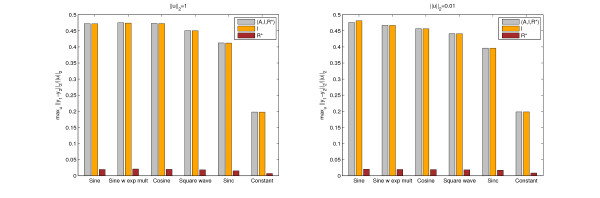
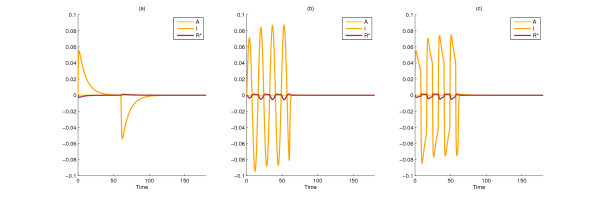
Background: The success of molecular systems biology hinges on the ability to use computational models to design predictive experiments, and ultimately unravel underlying biological mechanisms. A problem commonly encountered in the computational modelling of biological networks is that alternative, structurally different models of similar complexity fit a set of experimental data equally well. In this case, more than one molecular mechanism can explain available data. In order to rule out the incorrect mechanisms, one needs to invalidate incorrect models. At this point, new experiments maximizing the difference between the measured values of alternative models should be proposed and conducted. Such experiments should be optimally designed to produce data that are most likely to invalidate incorrect model structures. Results: In this paper we develop methodologies for the optimal design of experiments with the aim of discriminating between different mathematical models of the same biological system. The first approach determines the 'best' initial condition that maximizes the L 2 (energy) distance between the outputs of the rival models. In the second approach, we maximize the L 2-distance of the outputs by designing the optimal external stimulus (input) profile of unit L 2-norm. Our third method uses optimized structural changes (corresponding, for example, to parameter value changes reflecting gene knock-outs) to achieve the same goal. The numerical implementation of each method is considered in an example, signal processing in starving Dictyostelium amœbæ. Conclusions: Model-based design of experiments improves both the reliability and the efficiency of biochemical network model discrimination. This opens the way to model invalidation, which can be used to perfect our understanding of biochemical networks. Our general problem formulation together with the three proposed experiment design methods give the practitioner new tools for a systems biology approach to experiment design.
Overview
The claims and statistics of this paper haven’t been checked yet.
Free: it reads the open-access text and checks the first 5 claims that cite a source we can check. Create a free account to check every claim.
Integrity signals
Registry
Cites
Statistics
Figures
Verification
Claims the paper makes
The claims and statistics of this paper haven’t been checked yet.
Free: it reads the open-access text and checks the first 5 claims that cite a source we can check. Create a free account to check every claim.
Claims other papers make about this one
Each is checked against this paper’s own text: does it say what the citing paper says it does?
The cited source says what the claim attributes to it.
In the citing paper
“The approach we presented here yields the potential for model discrimination or checking the target of our analysis [48], [51], and, for example, choose experimental designs that maximize our ability to distinguish between competing alternative hypotheses or models.”
From Maximizing the information content of experiments in systems biology (2013) · cites this paper as [51]
The cited source says what the claim attributes to it.
In the citing paper
“The topic of optimal design of dynamic experiments in biological systems is receiving increased attention [144–152].”
From Reverse engineering and identification in systems biology: strategies, perspectives and challenges (2014) · cites this paper as [149]
Self-check
Percentages, sums and reported differences re-computed from the paper’s own numbers.
The self-check needs the paper’s full text.
Citations
Cites
Using SeDuMi 1.02, A Matlab toolbox for optimization over symmetric cones
Sturm, J. F. (1999) · Optimization Methods and Software · doi:10.1080/10556789908805766 · Cited by 7,377
Zhou, K. (1998) · Cited by 3,824
Dissipative dynamical systems part I: General theory
Willems, J. C. (1972) · Archive for Rational Mechanics and Analysis · doi:10.1007/bf00276493 · Cited by 3,250 · cited 1×
“Our approach avoids simulations and concentrates on finding an upper bound on || y || 2 using so-called storage functions [26,27] and sum of squares algorithmic relaxations of the resulting optimization problem.”
MethodDoyle, J. C., Francis, B. A., & Tannenbaum, A. (1992) · Cited by 3,085
Applied Optimal Control: Optimization, Estimation, and Control
Bryson, A. E., Ho, Y.-C., & Siouris, G. M. (1979) · IEEE Transactions on Systems, Man, and Cybernetics · doi:10.1109/tsmc.1979.4310229 · Cited by 2,582 · cited 1×
“In fact, even the first order condition of optimality is a 2( n 1 + n 2 )-variable differential equation with boundary conditions at both ends of the time interval [28].”
BackgroundMathematical Biology: II: Spatial Models and Biomedical Applications
(2003) · Interdisciplinary Applied Mathematics · doi:10.1007/b98869 · Cited by 2,293
Fundamentals of Enzyme Kinetics
(1979) · Elsevier eBooks · doi:10.1016/c2013-0-04130-8 · Cited by 2,059
Structured semidefinite programs and semialgebraic geometry methods in robustness and optimization
Parrilo, P. A. (2000) · doi:10.7907/2k6y-ch43 · Cited by 1,802
Understanding the control of metabolism
(1997) · Choice Reviews Online · doi:10.5860/choice.34-6252 · Cited by 1,231
The Regulation of Cellular Systems
Heinrich, R., & Schuster, S. (1996) · Springer eBooks · doi:10.1007/978-1-4613-1161-4 · Cited by 1,193 · cited 1×
“As a result, quantitative mathematical models are now routinely used in order to describe and analyze the complex dynamics generated by protein interactions [3], metabolic pathways [4,5], regulation of gene expression [6], and other biochemical processes.”
Background
Cited by
Reverse engineering and identification in systems biology: strategies, perspectives and challenges
Villaverde, A. F., & Banga, J. R. (2014) · Journal of The Royal Society Interface · doi:10.1098/rsif.2013.0505 · Cited by 229
“In [149], three different approaches were considered, each of which optimized initial conditions, input profiles or parameter values corresponding to structural changes in the system.”
BackgroundMaximizing the information content of experiments in systems biology
Liepe, J., Filippi, S., Komorowski, M., & Stumpf, M. P. H. (2013) · PLoS Computational Biology · doi:10.1371/journal.pcbi.1002888 · Cited by 170
“The approach we presented here yields the potential for model discrimination or checking the target of our analysis [48,51], and, for example, choose experimental designs that maximize our ability to distinguish between competing alternative hypotheses or models.”
BackgroundInput design for active fault diagnosis
Heirung, T. A. N., & Mesbah, A. (2019) · Annual Reviews in Control · doi:10.1016/j.arcontrol.2019.03.002 · Cited by 107
Erguler, K., & Stumpf, M. P. H. (2011) · Molecular BioSystems · doi:10.1039/c0mb00107d · Cited by 91
A review of active learning approaches to experimental design for uncovering biological networks
Sverchkov, Y., & Craven, M. W. (2017) · PLoS Computational Biology · doi:10.1371/journal.pcbi.1005466 · Cited by 103
Model‐based design of experiments for cellular processes
Chakrabarty, A., Buzzard, G. T., & Rundell, A. E. (2013) · WIREs Systems Biology and Medicine · doi:10.1002/wsbm.1204 · Cited by 56
“92,93 Several papers explored different aspects of the central dogma with gene transcription and translation as well as gene regulation for autoregulation, 94 p53, 95 heat shock, 96 SNF1, 97 and tRNA proofreading.”
BackgroundOptimal experiment design for model selection in biochemical networks
Vanlier, J., Tiemann, C. A., Hilbers, P. A. J., & van Riel, N. A. W. (2014) · BMC Systems Biology · doi:10.1186/1752-0509-8-20 · Cited by 55
Simultaneous model discrimination and parameter estimation in dynamic models of cellular systems
Rodriguez-Fernández, M., Rehberg, M., Kremling, A., & Banga, J. R. (2013) · BMC Systems Biology · doi:10.1186/1752-0509-7-76 · Cited by 50
“The related topic of optimal experimental design for parameter estimation [3,13] and for model discrimination [14-16] is receiving increased attention in recent years.”
BackgroundValidation and invalidation of systems biology models using robustness analysis
Bates, D. G., & Cosentino, C. (2011) · IET Systems Biology · doi:10.1049/iet-syb.2010.0072 · Cited by 43
Optimal design of stimulus experiments for robust discrimination of biochemical reaction networks
Flassig, R. J., & Sundmacher, K. (2012) · Bioinformatics · doi:10.1093/bioinformatics/bts585 · Cited by 31
“An OESD aiming at model discrimination for biological systems has been addressed by few authors (Apgar et al ., 2008; Melykuti et al ., 2010; Skanda and Lebiedz, 2010).”
MethodParameter-free model discrimination criterion based on steady-state coplanarity
Harrington, H. A., Ho, K. L., Thorne, T., & Stumpf, M. P. H. (2012) · Proceedings of the National Academy of Sciences · doi:10.1073/pnas.1117073109 · Cited by 34
“The intermediate regime comprises techniques that can leverage partial knowledge, for instance, constraints on certain parameter values or qualitative features of the dynamics [39].”
BackgroundFeedback Control Architecture and the Bacterial Chemotaxis Network
Hamadeh, A., Roberts, M. A. J., August, E., McSharry, P., Maini, P. K., Armitage, J. P., & Papachristodoulou, A. (2011) · PLoS Computational Biology · doi:10.1371/journal.pcbi.1001130 · Cited by 33
“After constructing these four models, we carried out experiments to differentiate between them, by finding the optimal initial conditions of the cells in the assay so as to maximize the difference between the outputs of the different models [20,24].”
MethodSelf-citationSouri, M., Elahi, S., & Soltani, M. (2024) · Expert Opinion on Drug Delivery · doi:10.1080/17425247.2024.2323211 · Cited by 28
“Undeniably, achieving the optimal design of intricate systems necessitates numerous iterations and experimentation, often entailing substantial expenses in development [37].”
BackgroundBayesian design strategies for synthetic biology
Barnes, C. P., Silk, D., & Stumpf, M. P. H. (2011) · Interface Focus · doi:10.1098/rsfs.2011.0056 · Cited by 33
New opportunities for optimal design of dynamic experiments in systems and synthetic biology
Braniff, N., & Ingalls, B. (2018) · Current Opinion in Systems Biology · doi:10.1016/j.coisb.2018.02.005 · Cited by 31
Numerical algebraic geometry for model selection and its application to the life sciences
Gross, E. L., Davis, B., Ho, K. L., Bates, D. J., & Harrington, H. A. (2016) · Journal of The Royal Society Interface · doi:10.1098/rsif.2016.0256 · Cited by 26
“This combination of numerical algebraic geometry and the KKT equations was first employed in [9].”
Salerno, L., Cosentino, C., Merola, A., Bates, D. G., & Amato, F. (2013) · BMC Systems Biology · doi:10.1186/1752-0509-7-39 · Cited by 25
Optimization of Time-Course Experiments for Kinetic Model Discrimination
Lages, N., CORDEIRO, C. A., Silva, M. S., Freire, A. P., & Ferreira, A. E. N. (2012) · PLoS ONE · doi:10.1371/journal.pone.0032749 · Cited by 21
“By choosing this measure of divergence and given its statistical properties in estimation problems, we follow the idea of maximizing the difference between predictions of models to an extent such that discrimination can be achieved despite measurement errors [4].”
BackgroundMethodInfluentialBiological signal generators: integrating synthetic biology tools and in silico control
Scott, T. D., Sweeney, K., & McClean, M. N. (2019) · Current Opinion in Systems Biology · doi:10.1016/j.coisb.2019.02.007 · Cited by 18
“There has been extensive research in engineering and systems biology devoted to the design of optimal stimuli for discrimination between models of complex systems [7, 11].”
BackgroundTrajectory enclosures for nonlinear systems with uncertain initial conditions and parameters
August, E., Lu, J., & Koeppl, H. (2012) · Proceedings of the ... American Control Conference/Proceedings of the American Control Conference · doi:10.1109/acc.2012.6314741 · Cited by 17
“Consequently, model selection techniques are necessary to invalidate as many of these models as possible [13].”
MethodSelf-citationSevlever, F., Bella, J. P. D., & Ventura, A. C. (2020) · PLoS Computational Biology · doi:10.1371/journal.pcbi.1007929 · Cited by 18
“This article deals with a problem that is within the broad problematic of model discrimination in systems biology [30], meaning that structurally different computational models fit a set of experimental data equally well, resulting in more than one molecular mechanism being able to explain available data.”
BackgroundStochastic models for single‐cell data: Current challenges and the way forward
Hsu, I. S., & Moses, A. M. (2021) · FEBS Journal · doi:10.1111/febs.15760 · Cited by 24
“First, because the number of possible model structures is large, there may be many models that can explain data equally well [70].”
BackgroundValidation-based model selection for 13C metabolic flux analysis with uncertain measurement errors
Sundqvist, N., Grankvist, N., Watrous, J. D., Jain, M., Nilsson, R., & Cedersund, G. (2022) · PLoS Computational Biology · doi:10.1371/journal.pcbi.1009999 · Cited by 16
Combining test statistics and models in bootstrapped model rejection: it is a balancing act
Johansson, R., Strålfors, P., & Cedersund, G. (2014) · BMC Systems Biology · doi:10.1186/1752-0509-8-46 · Cited by 14
A robust optimization approach to experimental design for model discrimination of dynamical systems
Skanda, D., & Lebiedz, D. (2012) · Mathematical Programming · doi:10.1007/s10107-012-0532-0 · Cited by 14
“2 Discriminating design for two models describing signal sensing in dictyostelium discoideum The second test case is the discrimination of two models describing the chemotactic response in the amoeba Dictyostelium discoideum as presented in [33] using the framework presented in Section 2 and 3.”
MethodA loop shaping approach for designing biological circuits
Dolan, J. A., Anderson, J., & Papachristodoulou, A. (2012) · IEEE Conference on Decision and Control (CDC) · doi:10.1109/cdc.2012.6426405 · Cited by 12
“Almost all aspects of the modelling of biological phenomena have been studied using control theory tools, including: network determination [4], stability and robustness analysis [5], verification and invalidation [6] and optimal experiment design [7].”
Self-citationDesigning Experiments to Discriminate Families of Logic Models
Videla, S., Konokotina, I., Alexopoulos, L. G., Sáez-Rodríguez, J., Schaub, T. H., Siegel, A., & Guziołowski, C. (2015) · Frontiers in Bioengineering and Biotechnology · doi:10.3389/fbioe.2015.00131 · Cited by 12
“On the one hand, in the context of quantitative models, this problem has been approached via methods for both parameter estimation andmodel discrimination (Kremling et al., 2004; Vatcheva et al., 2005; Mélykúti et al., 2010; Busetto et al., 2013; Stegmaier et al., 2013; Meyer et al., 2014).”
MethodDonckels, B. M. R., Pauw, D. J. W. D., Vanrolleghem, P. A., & Baets, B. D. (2011) · Chemometrics and Intelligent Laboratory Systems · doi:10.1016/j.chemolab.2011.06.008 · Cited by 18
Identification of gene regulation models from single-cell data
Weber, L., Raymond, W., & Munsky, B. E. (2018) · Physical Biology · doi:10.1088/1478-3975/aabc31 · Cited by 17
Experimental design schemes for learning Boolean network models
Atias, N., Gershenzon, M., Labazin, K., & Sharan, R. (2014) · Bioinformatics · doi:10.1093/bioinformatics/btu451 · Cited by 13
“Contact: roded@post.tau.ac.il”
Structured model reduction for dynamical networked systems
Papachristodoulou, A., Chang, Y.-C., August, E., & Anderson, J. (2010) · IEEE Conference on Decision and Control (CDC) · doi:10.1109/cdc.2010.5718017 · Cited by 12
“in [ 30 ]. However it is worth emphasizing that for a large, complicated network, constructing S(e) will be computationally challenging [31], given currently available computational tools.”
BackgroundSelf-citationMartin-Casas, M., & Mesbah, A. (2016) · IEEE Life Sciences Letters · doi:10.1109/lls.2016.2644645 · Cited by 10
Rodríguez, L. C., González‐Nicolás, A., Ingalls, B., Streck, T., Nowak, W., Xiao, S., & Pagel, H. (2021) · European Journal of Soil Science · doi:10.1111/ejss.13211 · Cited by 9
“In our case, we use prospective OD to identify experimental designs that maximise the observed difference between competing models of AT degradation (Mélykúti et al., 2010).”
BackgroundMethodLyapunov-based economic model predictive control for online model discrimination
Oyama, H., & Durand, H. (2022) · Computers & Chemical Engineering · doi:10.1016/j.compchemeng.2022.107769 · Cited by 8
Approach of analytical quality by design and regulatory need
Mahapatra, A., & Meyyanathan, S. N. (2022) · International Journal of Health Sciences · doi:10.53730/ijhs.v6ns5.9208 · Cited by 9
“extraction of variable parameters toevaluate robustness.[84]”
Johansson, R. (2017) · Linköping studies in science and technology. Dissertations · doi:10.3384/diss.diva-141614 · Cited by 5
Designing Optimal Experiments to Discriminate Interaction Graph Models
Thiele, S., Heise, S., Hessenkemper, W., Bongartz, H., Fensky, M., Schaper, F., & Klamt, S. (2018) · IEEE Transactions on Computational Biology and Bioinformatics · doi:10.1109/tcbb.2018.2812184 · Cited by 4
“Previous work on this subject dealt with the design of experiments that give insight into the model structure and parameter values [8], [9], [10], [11], [12].”
BackgroundCrossPlan: systematic planning of genetic crosses to validate mathematical models
Pratapa, A., Adames, N. R., Kraikivski, P., Franzese, N., Tyson, J. J., Peccoud, J., & Murali, T. M. (2018) · Bioinformatics · doi:10.1093/bioinformatics/bty072 · Cited by 3
“…et al. , 2005), to estimate the kinetic parameters of an ordinary differential equation (ODE) model (Bandara et al. , 2009; Kreutz and Timmer, 2009; Pauwels et al. , 2014) or to resolve model ambiguity (Apgar et al. , 2008; Harrington et al. , 2012; Kremling et al. , 2004; Melykuti et al. , 2010).”
BackgroundSet-based Experiment Design for Model Discrimination Using Bilevel Optimization
Rudolph, N., Streif, S., & Findeisen, R. (2016) · IFAC-PapersOnLine · doi:10.1016/j.ifacol.2016.12.142 · Cited by 3
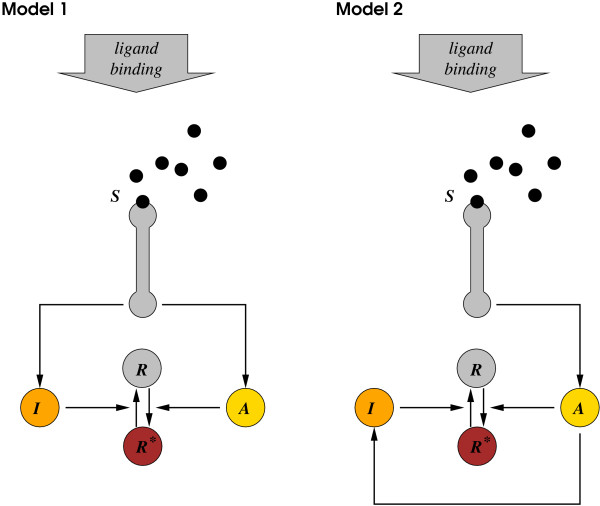
“Two models exist that can describe adaptation of D. discoideum to chemostatic signals, see M´elyk´uti et al. (2010) and Fig.”
BackgroundMethodInfluentialAugust, E. (2012) · Journal of Computational Biology · doi:10.1089/cmb.2011.0134 · Cited by 3
Self-citationOptimal input design for model discrimination
Keesman, K. J., & Walter, E. (2012) · IFAC Proceedings Volumes · doi:10.3182/20120711-3-be-2027.00126 · Cited by 3
Optimal parameter identification of synthetic gene networks using harmony search algorithm
Zhang, W., Li, W., Zhang, J., & Wang, N. (2019) · PLoS ONE · doi:10.1371/journal.pone.0213977 · Cited by 2
Suzuki, S. K., Errede, B., Dohlman, H. G., & Elston, T. C. (2020) · bioRxiv (Cold Spring Harbor Laboratory) · doi:10.1101/2020.04.20.051599 · Cited by 2
Experiment design for early molecular events in HIV infection
Jagarapu, A., Cannon, L., & Zurakowski, R. (2017) · Proceedings of the ... American Control Conference/Proceedings of the American Control Conference · doi:10.23919/acc.2017.7962941 · Cited by 1
“One study used maximizing distance (L-2 norm) between the outputs of rival models by varying initial conditions, external inputs and structural changes [23].”
Computing enclosures for uncertain biochemical systems
August, E., & Koeppl, H. (2012) · IET Systems Biology · doi:10.1049/iet-syb.2011.0091 · Cited by 1
Self-citationSet-based parameter estimation for symmetric network motifs
Rumschinski, P., Laila, D. S., & Findeisen, R. (2011) · IFAC Proceedings Volumes · doi:10.3182/20110828-6-it-1002.03108 · Cited by 2
“…, seems to be more promising in this situation and it has attracted a lot of attention in recent research [Anderson and Papachristodoulou, 2009, Melykuti et al., 2010] A quite recent approach capable of giving conclusive answers to the model invalidation was presented in [Borchers et al.,…”
Modelling Pathogen Response of the Human Immune System in a Reduced State Space
Tajvar, P., Forlin, R., Brodin, P., & Dimarogonas, D. V. (2023) · IEEE Conference on Decision and Control (CDC) · doi:10.1109/cdc49753.2023.10383825 · Cited by 2
“For example in [13], the steady state of the gene network is obtained as the attractor of the identified boolean network; this can be used in studying related signalling pathways with slower dynamics [19], [20].”
BackgroundThe Stochastic System Identification Toolkit (SSIT) to model, fit, predict, and design experimentsPreprint
Popinga, A., Forman, J. R., Svetlov, D., Vo, H. D., & Munsky, B. E. (2026) · bioRxiv (Cold Spring Harbor Laboratory) · doi:10.64898/2026.02.20.707039 · Cited by 1
Mélykúti, B. (2010) · Oxford University Research Archive (ORA) (University of Oxford) · doi:10.5287/ora-2zbye6bye · Cited by 2
Self-citationHealth monitoring of Gas turbine engines: Framework design and strategies
Relan, R. (2015) · White Rose eTheses Online (University of Leeds, The University of Sheffield, University of York)
LMI based loop shaping control of biological circuits
Bajaria, P., Pandey, A., Yerudkar, A., Kazi, F., & Singh, N. M. (2014) · Mediterranean Conference on Control and Automation (MED) · doi:10.1109/med.2014.6961550
“Various biological phenomena such as retroactivity [5], network determination [6], reverse engineering [7], stability and robustness analysis [8], validation and invalidation [9][10] and optimal experiment design [11] have been studied using control engineering.”
Omony, J., Mach-Aigner, A. R., de Graaff, L. H., Straten, G. V., & van Boxtel, A. J. B. (2011) · Computational Methods in Systems Biology · doi:10.1145/2037509.2037514 · Cited by 1
Efficient Synthesis of Mutants Using Genetic Crosses
Pratapa, A., Jalihal, A. P., Ravi, S. S., & Murali, T. M. (2018) · ACM International Conference on Bioinformatics, Computational Biology, and Health Informatics (ACM-BCB) · doi:10.1145/3233547.3233556
“, to distinguish between Boolean network models that fit the available data equally [3, 5, 11, 28, 29], to estimate the kinetic parameters of an ODE-based model [4, 15, 20], or to resolve model ambiguity [2, 10, 14, 16].”
BackgroundNew applications in chemometrics
Thijssen, P. C., & Hadjiloucas, S. (2020) · Elsevier eBooks · doi:10.1016/b978-0-08-102603-8.00011-0
Ventura, A. C., & Rotstein, H. G. (2025) · SIAM Journal on Applied Dynamical Systems · doi:10.1137/23m1593814
Reasoning on the response of logical signaling networks with answer set programming
Videla, S. (2014) · theses.fr (ABES) · doi:10.70675/030d8117z792cz4f88za192z1fbc72999790
“De plus, motivé par [Mélykúti et al., 2010], une caractéristique de notre travail est”
BackgroundMethodResultInfluential
Metadata
- Authors
- Mélykúti, B., August, E., Papachristodoulou, A., & El-Samad, H.
- Affiliations
- University of Oxford (GB)
- Corresponding author
- Papachristodoulou, Antonis
- Venue
- BMC Systems Biology
- Published
- 2010-04-01
- Volume
- 4
- Issue
- 1
- Pages
- 38-38
- ISSN
- 1752-0509 (ISSN-L)
- PMC
- PMC2873315
- OpenAlex
- W2139417466
- Cited by
- 58
- References
- 47
- Citations by year
- 2026: 1 · 2025: 1 · 2024: 1 · 2023: 1 · 2022: 3 · 2021: 2 · 2020: 3 · 2019: 3 · 2018: 5 · 2017: 3 · 2016: 3 · 2015: 2 · 2014: 6 · 2013: 6 · 2012: 9
- FWCI
- 3.13
- Type
- journal article
- Language
- en
- Open access
- gold
- doi.org
- Licence
- cc-by
- Locations
- BMC Systems Biology (publishedVersion, cc-by)
- Europe PMC (PubMed Central) (publishedVersion, cc-by)
- PubMed Central (publishedVersion, cc-by)
- PubMed (publishedVersion)
- Repository for Publications and Research Data (ETH Zurich) (publishedVersion, cc-by)
- Opin vísindi (Opin vísindi) (submittedVersion, cc-by-nc-sa)
- DOAJ (DOAJ: Directory of Open Access Journals) (submittedVersion)
- eScholarship (California Digital Library) (submittedVersion)
- ETH Zürich Research Collection (cc-by)
- Funders
- National Science Foundation (0943385)
- David and Lucile Packard Foundation
- University of Oxford
- University of California, San Francisco
- Engineering and Physical Sciences Research Council (EP/E05708X/1)
- Topics
- Life Sciences › Biochemistry, Genetics and Molecular Biology › Molecular Biology › Gene Regulatory Network Analysis
- Social Sciences › Decision Sciences › Management Science and Operations Research › Optimal Experimental Design Methods
- Physical Sciences › Engineering › Control and Systems Engineering › Control Systems and Identification
- Keywords
- optimal experiment design, model discrimination, biochemical network models, model invalidation, Euclidean distance, initial condition optimization, gene knockout, signal processing
- MeSH terms
- Algorithms, Animals, Biochemistry, Computer Simulation, Dictyostelium, Models, Theoretical, Research Design, Models, Statistical, Signal Transduction, Systems Biology
About these checks
Registry, retraction, Cites and statistics results are computed, not judged, with one exception: a printed reference that no index lists is read once by a model before it counts as a citation error. Claims are extracted by a model and kept only when their quote appears verbatim in the text; each cited source is then checked, with a model’s help, for whether it says what the claim relies on. Those verdicts can be wrong — read the claim’s quote and the cited source before relying on one.
Statistics and arithmetic are recomputed, not judged.
Confidence bands are shown only for fields calibrated on our annotated test set. None is calibrated yet, so no band is shown.
What counts as a claim ›How we measure confidence ›How we check this ›
Are you an author, or do you see a problem with this page? Request a review
Data sources
Bibliographic data: Semantic Scholar, OpenAlex, Crossref.
Contains information from the Semantic Scholar Academic Graph Datasets, made available under the ODC Attribution License (ODC-BY 1.0).
Semantic Scholar’s data is described in: Kinney, R., et al. (2023). The Semantic Scholar Open Data Platform. arXiv:2301.10140.
