

Discriminating between rival biochemical network models: three approaches to optimal experiment design
Open accessThe DOI matches its Crossref record; 47 of the 47 references it cites were found in a registry or an index.
Abstract
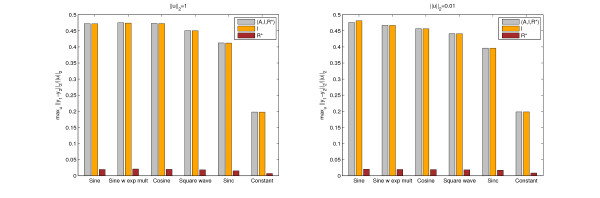
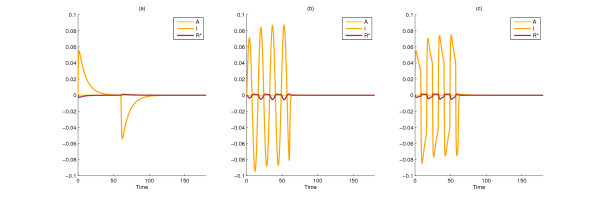
Background: The success of molecular systems biology hinges on the ability to use computational models to design predictive experiments, and ultimately unravel underlying biological mechanisms. A problem commonly encountered in the computational modelling of biological networks is that alternative, structurally different models of similar complexity fit a set of experimental data equally well. In this case, more than one molecular mechanism can explain available data. In order to rule out the incorrect mechanisms, one needs to invalidate incorrect models. At this point, new experiments maximizing the difference between the measured values of alternative models should be proposed and conducted. Such experiments should be optimally designed to produce data that are most likely to invalidate incorrect model structures. Results: In this paper we develop methodologies for the optimal design of experiments with the aim of discriminating between different mathematical models of the same biological system. The first approach determines the 'best' initial condition that maximizes the L 2 (energy) distance between the outputs of the rival models. In the second approach, we maximize the L 2-distance of the outputs by designing the optimal external stimulus (input) profile of unit L 2-norm. Our third method uses optimized structural changes (corresponding, for example, to parameter value changes reflecting gene knock-outs) to achieve the same goal. The numerical implementation of each method is considered in an example, signal processing in starving Dictyostelium amœbæ. Conclusions: Model-based design of experiments improves both the reliability and the efficiency of biochemical network model discrimination. This opens the way to model invalidation, which can be used to perfect our understanding of biochemical networks. Our general problem formulation together with the three proposed experiment design methods give the practitioner new tools for a systems biology approach to experiment design.
Overview
The claims and statistics of this paper haven’t been checked yet.
Free: it reads the open-access text and checks the first 5 claims that cite a source we can check. Create a free account to check every claim.
Integrity signals
Registry
Cites
Statistics
Figures
Verification
Claims the paper makes
The claims and statistics of this paper haven’t been checked yet.
Free: it reads the open-access text and checks the first 5 claims that cite a source we can check. Create a free account to check every claim.
Claims other papers make about this one
Each is checked against this paper’s own text: does it say what the citing paper says it does?
The cited source says what the claim attributes to it.
In the citing paper
“The approach we presented here yields the potential for model discrimination or checking the target of our analysis [48], [51], and, for example, choose experimental designs that maximize our ability to distinguish between competing alternative hypotheses or models.”
From Maximizing the information content of experiments in systems biology (2013) · cites this paper as [51]
The cited source says what the claim attributes to it.
In the citing paper
“The topic of optimal design of dynamic experiments in biological systems is receiving increased attention [144–152].”
From Reverse engineering and identification in systems biology: strategies, perspectives and challenges (2014) · cites this paper as [149]
Self-check
Percentages, sums and reported differences re-computed from the paper’s own numbers.
The self-check needs the paper’s full text.
Citations
Cites
Using SeDuMi 1.02, A Matlab toolbox for optimization over symmetric cones
Sturm, J. F. (1999) · Optimization Methods and Software · doi:10.1080/10556789908805766 · Cited by 7,377
Zhou, K. (1998) · Cited by 3,824
Dissipative dynamical systems part I: General theory
Willems, J. C. (1972) · Archive for Rational Mechanics and Analysis · doi:10.1007/bf00276493 · Cited by 3,250 · cited 1×
“Our approach avoids simulations and concentrates on finding an upper bound on || y || 2 using so-called storage functions [26,27] and sum of squares algorithmic relaxations of the resulting optimization problem.”
MethodDoyle, J. C., Francis, B. A., & Tannenbaum, A. (1992) · Cited by 3,085
Applied Optimal Control: Optimization, Estimation, and Control
Bryson, A. E., Ho, Y.-C., & Siouris, G. M. (1979) · IEEE Transactions on Systems, Man, and Cybernetics · doi:10.1109/tsmc.1979.4310229 · Cited by 2,582 · cited 1×
“In fact, even the first order condition of optimality is a 2( n 1 + n 2 )-variable differential equation with boundary conditions at both ends of the time interval [28].”
BackgroundMathematical Biology: II: Spatial Models and Biomedical Applications
(2003) · Interdisciplinary Applied Mathematics · doi:10.1007/b98869 · Cited by 2,293
Fundamentals of Enzyme Kinetics
(1979) · Elsevier eBooks · doi:10.1016/c2013-0-04130-8 · Cited by 2,059
Structured semidefinite programs and semialgebraic geometry methods in robustness and optimization
Parrilo, P. A. (2000) · doi:10.7907/2k6y-ch43 · Cited by 1,802
Understanding the control of metabolism
(1997) · Choice Reviews Online · doi:10.5860/choice.34-6252 · Cited by 1,231
The Regulation of Cellular Systems
Heinrich, R., & Schuster, S. (1996) · Springer eBooks · doi:10.1007/978-1-4613-1161-4 · Cited by 1,193 · cited 1×
“As a result, quantitative mathematical models are now routinely used in order to describe and analyze the complex dynamics generated by protein interactions [3], metabolic pathways [4,5], regulation of gene expression [6], and other biochemical processes.”
BackgroundSome NP-complete problems in quadratic and nonlinear programming
Murty, K. G., & Kabadi, S. N. (1987) · Mathematical Programming · doi:10.1007/bf02592948 · Cited by 1,003
Dissipative dynamical systems Part II: Linear systems with quadratic supply rates
Willems, J. C. (1972) · Archive for Rational Mechanics and Analysis · doi:10.1007/bf00276494 · Cited by 991 · cited 1×
“Our approach avoids simulations and concentrates on finding an upper bound on || y || 2 using so-called storage functions [26,27] and sum of squares algorithmic relaxations of the resulting optimization problem.”
MethodApplied optimal control: Optimization, estimation, and control
Tsypkin, Y. Z. (1970) · Automatica · doi:10.1016/0005-1098(70)90033-6 · Cited by 951
Defining Network Topologies that Can Achieve Biochemical Adaptation
Ma, W., Trusina, A., El-Samad, H., Lim, W. A., & Tang, C. (2009) · Cell · doi:10.1016/j.cell.2009.06.013 · Cited by 919 · cited 1×
“Recent work investigating perfect adaptation demonstrated that despite the diversity of biochemical enzymatic networks, only a finite set of core circuits with defined topological features can execute a desired function [33].”
BackgroundSelf-citationA Course in Robust Control Theory
Dullerud, G. E., & Paganini, F. (2000) · Texts in Applied Mathematics · doi:10.1007/978-1-4757-3290-0 · Cited by 769
Computational Modeling of Genetic and Biochemical Networks
(2001) · The MIT Press eBooks · doi:10.7551/mitpress/2018.001.0001 · Cited by 439 · cited 1×
“As a result, quantitative mathematical models are now routinely used in order to describe and analyze the complex dynamics generated by protein interactions [3], metabolic pathways [4,5], regulation of gene expression [6], and other biochemical processes.”
BackgroundModels of Eukaryotic Gradient Sensing: Application to Chemotaxis of Amoebae and Neutrophils
Levchenko, A., & Iglesias, P. A. (2002) · Biophysical Journal · doi:10.1016/s0006-3495(02)75373-3 · Cited by 422
Gutfreund, H. (1980) · FEBS Letters · doi:10.1016/0014-5793(80)80546-1 · Cited by 386
Firoozian, R. (2009) · Mechanical Engineering Series · doi:10.1007/978-0-387-85460-1_1 · Cited by 312 · cited 1×
“See [29] for more details.”
Krull, W. (1999) · De Gruyter eBooks · doi:10.1515/9783110801026 · Cited by 271
Systems biology: experimental design
Kreutz, C., & Timmer, J. (2009) · The FEBS Journal · doi:10.1111/j.1742-4658.2008.06843.x · Cited by 257 · cited 1×
“Kreutz and Timmer [19] gave a review of approaches to parameter estimation and model discrimination (discussing the Akaike Information Criterion, the likelihood ratio test, and alternative forms of the sum of squared differences between two models ’ outputs).”
System Modeling in Cellular Biology: From Concepts to Nuts and Bolts
Szállási, Z., Stelling, J., & Periwal, V. (2007) · Medical Entomology and Zoology · Cited by 236
Understanding the control of metabolism
de Castro, I. N. (1997) · Biochemical Education · doi:10.1016/s0307-4412(97)87557-7 · Cited by 236
System Modeling in Cellular Biology: From Concepts to Nuts and Bolts
(2006) · The MIT Press eBooks · doi:10.7551/mitpress/9780262195485.001.0001 · Cited by 187 · cited 1×
“Mathematical modelling has become an indispensable tool for modern systems biology [1,2].”
MethodSDPT3 — a Matlab software package for semidefinite-quadratic-linear programming, version 3.0
Tütüncü, R. H., Toh, K.-C., & Todd, M. J. (2001) · Cited by 168
Weinert, H. L. (1979) · ZAMM ‐ Journal of Applied Mathematics and Mechanics / Zeitschrift für Angewandte Mathematik und Mechanik · doi:10.1002/zamm.19790590826 · Cited by 149
Optimal Experimental Design for Parameter Estimation of a Cell Signaling Model
Bandara, S., Schlöder, J. P., Eils, R., Bock, H. G., & Meyer, T. (2009) · PLoS Computational Biology · doi:10.1371/journal.pcbi.1000558 · Cited by 135 · cited 1×
“In this context, experiments are designed such that the resulting data are most informative about model structure or parameter values - see, for example, [7] and [8-10], respectively.”
MethodKremling, A., Fischer, S., Gadkar, K., Doyle, F. J., Sauter, T., Bullinger, E., Allgöwer, F., & Gilles, E. D. (2004) · Genome Research · doi:10.1101/gr.1226004 · Cited by 127 · cited 2×
“This approach is reminiscent of but different from the second method in [21] - there, the difference between phase shifts is maximized, whereas in our method the difference between amplitudes is maximized.”
MethodComputational procedures for optimal experimental design in biological systems
Balsa-Canto, E., Alonso, A. A., & Banga, J. R. (2008) · IET Systems Biology · doi:10.1049/iet-syb:20070069 · Cited by 124
Haaster, P. V., & van der Heijden, P. R. (1983) · The Journal of Cell Biology · doi:10.1083/jcb.96.2.347 · Cited by 116
Stimulus Design for Model Selection and Validation in Cell Signaling
Apgar, J. F., Toettcher, J. E., Endy, D., White, F. M., & Tidor, B. (2008) · PLoS Computational Biology · doi:10.1371/journal.pcbi.0040030 · Cited by 79 · cited 1×
“Tidor and co-workers [20] developed dynamic model-based controllers that drive the output along a prescribed target trajectory (usually a constant output).”
BackgroundCasey, F. P., Baird, D., Feng, Q., Gutenkunst, R. N., Waterfall, J. J., Myers, C. R., Brown, K. S., Cerione, R. A., & Sethna, J. P. (2007) · IET Systems Biology · doi:10.1049/iet-syb:20060065 · Cited by 77 · cited 1×
“Several groups considered statistically-orientated frameworks for optimal structure identification [11] or for parameter identification [11,12].”
BackgroundOn validation and invalidation of biological models
Anderson, J., & Papachristodoulou, A. (2009) · BMC Bioinformatics · doi:10.1186/1471-2105-10-132 · Cited by 74 · cited 2×
“These methods are tailored to generate maximally informative data that can be used to invalidate models of gene regulatory pathways by ruling out certain connectivities in their underlying bio-chemical reaction networks [15].”
BackgroundMethodSelf-citationSensitivity analysis and robust experimental design of a signal transduction pathway system
Yue, H., Brown, M., He, F., Jia, J., & Kell, D. B. (2008) · International Journal of Chemical Kinetics · doi:10.1002/kin.20369 · Cited by 73 · cited 1×
“[13] examine optimally designed parameter estimation methods that are robust to model uncertainties (robust experiment design).”
BackgroundChen, B. H., & Asprey, S. P. (2003) · Industrial & Engineering Chemistry Research · doi:10.1021/ie0203025 · Cited by 72 · cited 3×
“Although similar in principle, our investigation follows a direction distinctly different and more practical from the work in [17]: we use deterministic models that do not take account of measurement noise directly.”
MethodResultInfluentialCornish-Bowden, A.:Fundamentals of Enzyme Kinetics
Wilhelmová, N. (1996) · Biologia Plantarum · doi:10.1007/bf02896674 · Cited by 69
Optimal Identification of Biochemical Reaction Networks
Feng, X.-J., & Rabitz, H. (2004) · Biophysical Journal · doi:10.1016/s0006-3495(04)74201-0 · Cited by 58 · cited 1×
“In this context, experiments are designed such that the resulting data are most informative about model structure or parameter values - see, for example, [7] and [8-10], respectively.”
MethodScalable analysis of nonlinear systems using convex optimization
Papachristodoulou, A. (2005) · PhDT · doi:10.7907/5yg6-jg32 · Cited by 56
Self-citationEfficient, sparse biological network determination
August, E., & Papachristodoulou, A. (2009) · BMC Systems Biology · doi:10.1186/1752-0509-3-25 · Cited by 54
Self-citationIterative Reconstruction of Transcriptional Regulatory Networks: An Algorithmic Approach
Barrett, C. L., & Palsson, B. O. (2006) · PLoS Computational Biology · doi:10.1371/journal.pcbi.0020052 · Cited by 52 · cited 1×
“In this context, experiments are designed such that the resulting data are most informative about model structure or parameter values - see, for example, [7] and [8-10], respectively.”
MethodAn anticipatory approach to optimal experimental design for model discrimination
Donckels, B. M. R., Pauw, D. J. W. D., Baets, B. D., Maertens, J., & Vanrolleghem, P. A. (2008) · Chemometrics and Intelligent Laboratory Systems · doi:10.1016/j.chemolab.2008.08.002 · Cited by 41 · cited 1×
“[18] separated the uncertainty of the model predictions and the uncertainty of the measurements and used these to design the next experiment such that it is most informative.”
MethodComputational Modeling of Genetic and Biochemical Networks (Computational Molecular Biology)
Bower, J. M., & Bolouri, H. (2004) · The MIT Press eBooks · Cited by 29
A New Computational Tool for Establishing Model Parameter Identifiability
August, E., & Papachristodoulou, A. (2009) · Journal of Computational Biology · doi:10.1089/cmb.2008.0211 · Cited by 27 · cited 1×
“Tests exist to identify such cases [22].”
Self-citationRoberts, M. A. J., August, E., Hamadeh, A., Maini, P. K., McSharry, P., Armitage, J. P., & Papachristodoulou, A. (2009) · BMC Systems Biology · doi:10.1186/1752-0509-3-105 · Cited by 26
Self-citationBardsley, W. G., Wood, R. M. W., & Melikhova, E. M. (1996) · Computers & Chemistry · doi:10.1016/0097-8485(95)00074-7 · Cited by 21 · cited 1×
“[16] investigated the problem of how measurements should be spaced in time to perform an optimally discriminating experiment between two models, and how many of them are required.”
BackgroundPapachristodoulou, A., & El‐Samad, H. (2007) · Proceedings of the ... American Control Conference/Proceedings of the American Control Conference · doi:10.1109/acc.2007.4283109 · Cited by 15 · cited 2×
“We approached the problem in a unified framework, developing methodologies for initial conditions design (see also [23]), for the design of dynamic stimulus profiles, and for parameter modifications.”
MethodSelf-citationMethods to Identify Cellular Architecture and Dynamics from Experimental Data
Gunawan, R., Gadkar, K. G., & Doyle, F. J. (2006) · The MIT Press eBooks · doi:10.7551/mitpress/9780262195485.003.0011 · Cited by 7
Cited by
Reverse engineering and identification in systems biology: strategies, perspectives and challenges
Villaverde, A. F., & Banga, J. R. (2014) · Journal of The Royal Society Interface · doi:10.1098/rsif.2013.0505 · Cited by 229
“In [149], three different approaches were considered, each of which optimized initial conditions, input profiles or parameter values corresponding to structural changes in the system.”
BackgroundMaximizing the information content of experiments in systems biology
Liepe, J., Filippi, S., Komorowski, M., & Stumpf, M. P. H. (2013) · PLoS Computational Biology · doi:10.1371/journal.pcbi.1002888 · Cited by 170
“The approach we presented here yields the potential for model discrimination or checking the target of our analysis [48,51], and, for example, choose experimental designs that maximize our ability to distinguish between competing alternative hypotheses or models.”
BackgroundInput design for active fault diagnosis
Heirung, T. A. N., & Mesbah, A. (2019) · Annual Reviews in Control · doi:10.1016/j.arcontrol.2019.03.002 · Cited by 107
Erguler, K., & Stumpf, M. P. H. (2011) · Molecular BioSystems · doi:10.1039/c0mb00107d · Cited by 91
A review of active learning approaches to experimental design for uncovering biological networks
Sverchkov, Y., & Craven, M. W. (2017) · PLoS Computational Biology · doi:10.1371/journal.pcbi.1005466 · Cited by 103
Metadata
- Authors
- Mélykúti, B., August, E., Papachristodoulou, A., & El-Samad, H.
- Affiliations
- University of Oxford (GB)
- Corresponding author
- Papachristodoulou, Antonis
- Venue
- BMC Systems Biology
- Published
- 2010-04-01
- Volume
- 4
- Issue
- 1
- Pages
- 38-38
- ISSN
- 1752-0509 (ISSN-L)
- PMC
- PMC2873315
- OpenAlex
- W2139417466
- Cited by
- 58
- References
- 47
- Citations by year
- 2026: 1 · 2025: 1 · 2024: 1 · 2023: 1 · 2022: 3 · 2021: 2 · 2020: 3 · 2019: 3 · 2018: 5 · 2017: 3 · 2016: 3 · 2015: 2 · 2014: 6 · 2013: 6 · 2012: 9
- FWCI
- 3.13
- Type
- journal article
- Language
- en
- Open access
- gold
- doi.org
- Licence
- cc-by
- Locations
- BMC Systems Biology (publishedVersion, cc-by)
- Europe PMC (PubMed Central) (publishedVersion, cc-by)
- PubMed Central (publishedVersion, cc-by)
- PubMed (publishedVersion)
- Repository for Publications and Research Data (ETH Zurich) (publishedVersion, cc-by)
- Opin vísindi (Opin vísindi) (submittedVersion, cc-by-nc-sa)
- DOAJ (DOAJ: Directory of Open Access Journals) (submittedVersion)
- eScholarship (California Digital Library) (submittedVersion)
- ETH Zürich Research Collection (cc-by)
- Funders
- National Science Foundation (0943385)
- David and Lucile Packard Foundation
- University of Oxford
- University of California, San Francisco
- Engineering and Physical Sciences Research Council (EP/E05708X/1)
- Topics
- Life Sciences › Biochemistry, Genetics and Molecular Biology › Molecular Biology › Gene Regulatory Network Analysis
- Social Sciences › Decision Sciences › Management Science and Operations Research › Optimal Experimental Design Methods
- Physical Sciences › Engineering › Control and Systems Engineering › Control Systems and Identification
- Keywords
- optimal experiment design, model discrimination, biochemical network models, model invalidation, Euclidean distance, initial condition optimization, gene knockout, signal processing
- MeSH terms
- Algorithms, Animals, Biochemistry, Computer Simulation, Dictyostelium, Models, Theoretical, Research Design, Models, Statistical, Signal Transduction, Systems Biology
About these checks
Registry, retraction, Cites and statistics results are computed, not judged, with one exception: a printed reference that no index lists is read once by a model before it counts as a citation error. Claims are extracted by a model and kept only when their quote appears verbatim in the text; each cited source is then checked, with a model’s help, for whether it says what the claim relies on. Those verdicts can be wrong — read the claim’s quote and the cited source before relying on one.
Statistics and arithmetic are recomputed, not judged.
Confidence bands are shown only for fields calibrated on our annotated test set. None is calibrated yet, so no band is shown.
What counts as a claim ›How we measure confidence ›How we check this ›
Are you an author, or do you see a problem with this page? Request a review
Data sources
Bibliographic data: Semantic Scholar, OpenAlex, Crossref.
Contains information from the Semantic Scholar Academic Graph Datasets, made available under the ODC Attribution License (ODC-BY 1.0).
Semantic Scholar’s data is described in: Kinney, R., et al. (2023). The Semantic Scholar Open Data Platform. arXiv:2301.10140.
