

Parameter adaptations during phenotype transitions in progressive diseases
Open accessThe DOI matches its Crossref record; 65 of the 66 references it cites were found in a registry or an index.
Abstract
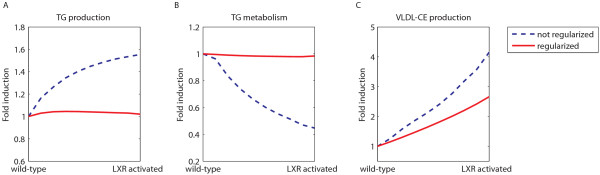
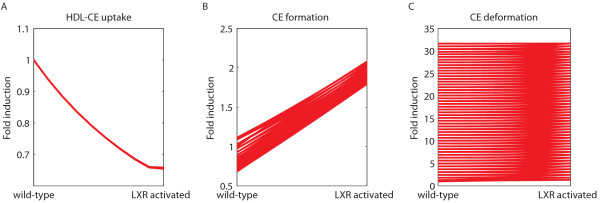
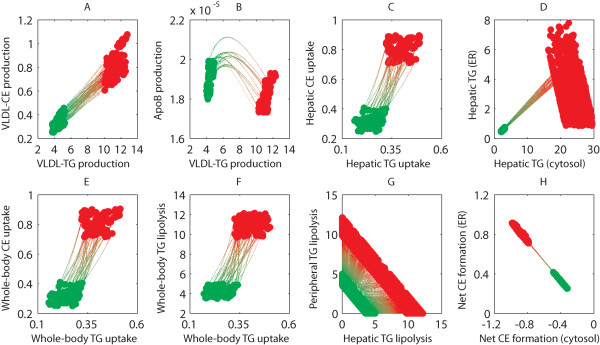
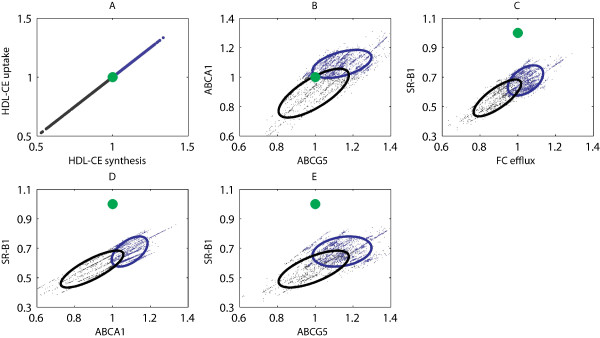
BACKGROUND: The study of phenotype transitions is important to understand progressive diseases, e.g., diabetes mellitus, metabolic syndrome, and cardiovascular diseases. A challenge remains to explain phenotype transitions in terms of adaptations in molecular components and interactions in underlying biological systems. RESULTS: Here, mathematical modeling is used to describe the different phenotypes by integrating experimental data on metabolic pools and fluxes. Subsequently, trajectories of parameter adaptations are identified that are essential for the phenotypical changes. These changes in parameters reflect progressive adaptations at the transcriptome and proteome level, which occur at larger timescales. The approach was employed to study the metabolic processes underlying liver X receptor induced hepatic steatosis. Model analysis predicts which molecular processes adapt in time after pharmacological activation of the liver X receptor. Our results show that hepatic triglyceride fluxes are increased and triglycerides are especially stored in cytosolic fractions, rather than in endoplasmic reticulum fractions. Furthermore, the model reveals several possible scenarios for adaptations in cholesterol metabolism. According to the analysis, the additional quantification of one cholesterol flux is sufficient to exclude many of these hypotheses. CONCLUSIONS: We propose a generic computational approach to analyze biological systems evolving through various phenotypes and to predict which molecular processes are responsible for the transition. For the case of liver X receptor induced hepatic steatosis the novel approach yields information about the redistribution of fluxes and pools of triglycerides and cholesterols that was not directly apparent from the experimental data. Model analysis provides guidance which specific molecular processes to study in more detail to obtain further understanding of the underlying biological system.
Overview
The claims and statistics of this paper haven’t been checked yet.
Free: it reads the open-access text and checks the first 5 claims that cite a source we can check. Create a free account to check every claim.
Integrity signals
Registry
Cites
Statistics
Figures
Verification
Claims the paper makes
The claims and statistics of this paper haven’t been checked yet.
Free: it reads the open-access text and checks the first 5 claims that cite a source we can check. Create a free account to check every claim.
Claims other papers make about this one
Each is checked against this paper’s own text: does it say what the citing paper says it does?
The check wasn’t confident either way, so it gives no verdict — never disputed.
In the citing paper
“Additionally relying on measurements that were performed in vitro can lead to inaccuracies [35] due to differences in the biochemical environment and regulatory mechanisms that were not accounted for [16].”
From Parameter uncertainty in biochemical models described by ordinary differential equations (2013) · cites this paper as [16]
Experimental — accuracy not yet measured
Self-check
Percentages, sums and reported differences re-computed from the paper’s own numbers.
The self-check needs the paper’s full text.
Citations
Cites
Multiple comparisons among means
Dunn, O. J. (1961) · Journal of the American Statistical Association · doi:10.1080/01621459.1961.10482090 · Cited by 5,006 · cited 1×
“05, adjusted by Bonferroni correction to account for the number of comparisons being performed (number of model outputs), was used [35].”
MethodType 2 diabetes as an inflammatory disease
Donath, M. Y., & Shoelson, S. E. (2011) · Nature Reviews Immunology · doi:10.1038/nri2925 · Cited by 3,737 · cited 1×
“Cardiovascular and metabolic diseases such as diabetes mellitus and metabolic syndrome are progressive in time [1-5].”
BackgroundComputational systems biology.
Kitano, H. (2002) · Nature · doi:10.1038/nature01254 · Cited by 2,209
An oxysterol signalling pathway mediated by the nuclear receptor LXRα
Janowski, B. A., Willy, P. J., Devi, T. R., Falck, J. R., & Mangelsdorf, D. J. (1996) · Nature · doi:10.1038/383728a0 · Cited by 1,591 · cited 1×
“LXRs, when ligand-activated by oxysterols, heterodimerize with the retinoid X receptor (RXR) and bind to LXR responsive elements on the DNA [27], where they induce the transcription of lipogenic genes such as SREBP-1C, FAS, ABCA1, and ACC1.”
BackgroundRole of LXRs in control of lipogenesis
Schultz, J. R., Tu, H., Luk, A., Repa, J. J., Medina, J. C., Li, L., Schwendner, S., Wang, S., Thoolen, M., Mangelsdorf, D. J., et al. (2000) · Genes & Development · doi:10.1101/gad.850400 · Cited by 1,499 · cited 2×
“Model predictions indicate that the production of apolipoprotein B decreases slightly, which was also observed by [29,30,46].”
BackgroundRaue, A., Kreutz, C., Maiwald, T., Bachmann, J., Schilling, M., Klingmüller, U., & Timmer, J. (2009) · Bioinformatics · doi:10.1093/bioinformatics/btp358 · Cited by 1,442 · cited 1×
“To assess the uncertainty associated with model predictions, differences between feasible parameter sets must be examined [32-34].”
BackgroundUniversally Sloppy Parameter Sensitivities in Systems Biology Models
Gutenkunst, R. N., Waterfall, J. J., Casey, F. P., Brown, K. S., Myers, C. R., & Sethna, J. P. (2007) · PLoS Computational Biology · doi:10.1371/journal.pcbi.0030189 · Cited by 1,261 · cited 1×
“To assess the uncertainty associated with model predictions, differences between feasible parameter sets must be examined [32-34].”
BackgroundReciprocal regulation of inflammation and lipid metabolism by liver X receptors
Joseph, S. B., Castrillo, A., Laffitte, B. A., Mangelsdorf, D. J., & Tontonoz, P. (2003) · Nature Medicine · doi:10.1038/nm820 · Cited by 1,158 · cited 1×
“The approach, which is applicable to a multitude of biological systems, is demonstrated on the basis of a case involving the activation of the liver X receptor (LXR), a promising drug target for atherosclerotic therapies [25,26].”
BackgroundCases, S., Smith, S. J., Zheng, Y.-W., Myers, H. M., Lear, S. R., Sande, E., Novak, S., Collins, C., Welch, C. B., Lusis, A. J., et al. (1998) · Proceedings of the National Academy of Sciences · doi:10.1073/pnas.95.22.13018 · Cited by 1,123 · cited 1×
“A relevant follow-up study would be to determine whether these differences are associated with alterations in diglyceride acyltransferase activities (DGAT1 and DGAT2), which play a crucial role in the biosynthesis and deposition of triglycerides [56-59].”
BackgroundThematic review series: Glycerolipids. DGAT enzymes and triacylglycerol biosynthesis
Yen, C.-L. E., Stone, S. J., Koliwad, S., Harris, C., & Farese, R. V. (2008) · Journal of Lipid Research · doi:10.1194/jlr.r800018-jlr200 · Cited by 1,105
Schoeberl, B., Eichler-Jonsson, C., Gilles, E. D., & Müller, G. (2002) · Nature Biotechnology · doi:10.1038/nbt0402-370 · Cited by 950 · cited 1×
“These range from seconds in signal transduction and metabolic network models to hours for genetic networks [20-24].”
BackgroundZhang, C.-Y., Baffy, G., Perret, P., Krauss, S., Peroni, O., Grujic, D., Hagen, T., Vidal-Puig, A. J., Boss, O., Kim, Y.-B., et al. (2001) · Cell · doi:10.1016/s0092-8674(01)00378-6 · Cited by 917 · cited 1×
“, obesity, insulin resistance, and diabetes [9-12].”
Obesity resistance and multiple mechanisms of triglyceride synthesis in mice lacking Dgat
Smith, S. J., Cases, S., Jensen, D. R., Chen, H. C., Sande, E., Tow, B., Sanan, D. A., Raber, J., Eckel, R. H., & Farese, R. V. (2000) · Nature Genetics · doi:10.1038/75651 · Cited by 896 · cited 1×
“A relevant follow-up study would be to determine whether these differences are associated with alterations in diglyceride acyltransferase activities (DGAT1 and DGAT2), which play a crucial role in the biosynthesis and deposition of triglycerides [56-59].”
BackgroundNetwork‐based global inference of human disease genes
Wu, X., Jiang, R., Zhang, M. Q., & Li, S. (2008) · Molecular Systems Biology · doi:10.1038/msb.2008.27 · Cited by 660 · cited 1×
“In systems biology mathematical modeling is applied to integrate different sources of experimental data of a phenotype and to investigate the complex interactions of underlying biological systems [13-19].”
BackgroundSirT1 Gain of Function Increases Energy Efficiency and Prevents Diabetes in Mice
Banks, A. S., Kon, N., Knight, C., Matsumoto, M., Gutiérrez-Juárez, R., Rossetti, L., Gu, W., & Accili, D. (2008) · Cell Metabolism · doi:10.1016/j.cmet.2008.08.014 · Cited by 637 · cited 1×
“, obesity, insulin resistance, and diabetes [9-12].”
Modeling the Heart--from Genes to Cells to the Whole Organ
Noble, D. (2002) · Science · doi:10.1126/science.1069881 · Cited by 622 · cited 1×
“As such, one of the central and formidable challenges in systems biology is to develop multiscale computational models and methods that can be used to study molecular mechanisms underlying progressive diseases [60-65].”
BackgroundDissociation of Hepatic Steatosis and Insulin Resistance in Mice Overexpressing DGAT in the Liver
Monetti, M., Levin, M. C., Watt, M. J., Sajan, M. P., Marmor, S., Hubbard, B. K., Stevens, R. D., Bain, J. R., Newgard, C. B., Farese, R. V., et al. (2007) · Cell Metabolism · doi:10.1016/j.cmet.2007.05.005 · Cited by 511 · cited 1×
“A relevant follow-up study would be to determine whether these differences are associated with alterations in diglyceride acyltransferase activities (DGAT1 and DGAT2), which play a crucial role in the biosynthesis and deposition of triglycerides [56-59].”
BackgroundGrefhorst, A., Elzinga, B. M., Voshol, P. J., Plo¨sch, T., Kok, T., Bloks, V. W., van der Sluijs, F. H., Havekes, L. M., Romijn, J. A., Verkade, H. J., et al. (2002) · Journal of Biological Chemistry · doi:10.1074/jbc.m204887200 · Cited by 498 · cited 9×
“This flux prediction was not directly measured, but is in good agreement with gene expression data showing increased hepatic levels of the VLDL and LDL receptor [29].”
BackgroundMethodResultInfluentialIntegration from proteins to organs: the Physiome Project
Hunter, P. J., & Borg, T. K. (2003) · Nature Reviews Molecular Cell Biology · doi:10.1038/nrm1054 · Cited by 485 · cited 1×
“As such, one of the central and formidable challenges in systems biology is to develop multiscale computational models and methods that can be used to study molecular mechanisms underlying progressive diseases [60-65].”
BackgroundOu, J., Tu, H., Shan, B., Luk, A., DeBose-Boyd, R. A., Bashmakov, Y., Goldstein, J. L., & Brown, M. S. (2001) · Proceedings of the National Academy of Sciences · doi:10.1073/pnas.111138698 · Cited by 480 · cited 1×
“61 nmol/mg liver) was observed by [29], which is partly caused by an induction of lipogenic genes [29,30,46-50].”
BackgroundPathology of Nonalcoholic Fatty Liver Disease
Yeh, M. M., & Brunt, E. M. (2007) · American Journal of Clinical Pathology · doi:10.1309/rtpm1py6ygbl2g2r · Cited by 469 · cited 1×
“Cardiovascular and metabolic diseases such as diabetes mellitus and metabolic syndrome are progressive in time [1-5].”
BackgroundBow ties, metabolism and disease
Csete, M., & Doyle, J. (2004) · Trends in biotechnology · doi:10.1016/j.tibtech.2004.07.007 · Cited by 468
The liver X receptor gene team: Potential new players in atherosclerosis
Repa, J. J., & Mangelsdorf, D. J. (2002) · Nature Medicine · doi:10.1038/nm1102-1243 · Cited by 388 · cited 1×
“The approach, which is applicable to a multitude of biological systems, is demonstrated on the basis of a case involving the activation of the liver X receptor (LXR), a promising drug target for atherosclerotic therapies [25,26].”
Backgroundde Luca, C., Kowalski, T. J., Zhang, Y., Elmquist, J. K., Lee, C., Kilimann, M. W., Ludwig, T., Liu, S.-M., & Chua, S. C. (2005) · Journal of Clinical Investigation · doi:10.1172/jci24059 · Cited by 383 · cited 1×
“, obesity, insulin resistance, and diabetes [9-12].”
Metabolic syndrome: from epidemiology to systems biology
Lusis, A. J., Attie, A. D., & Reue, K. (2008) · Nature Reviews Genetics · doi:10.1038/nrg2468 · Cited by 344 · cited 1×
“In systems biology mathematical modeling is applied to integrate different sources of experimental data of a phenotype and to investigate the complex interactions of underlying biological systems [13-19].”
BackgroundIlan, Y., Maron, R., Tukpah, A.-M., Maioli, T. U., Murugaiyan, G., Yang, K., Wu, H. Y., & Weiner, H. L. (2010) · Proceedings of the National Academy of Sciences · doi:10.1073/pnas.0908771107 · Cited by 327 · cited 1×
“, obesity, insulin resistance, and diabetes [9-12].”
Systems biology: parameter estimation for biochemical models
Ashyraliyev, M., Fomekong‐Nanfack, Y., Kaandorp, J. A., & Blom, J. G. (2009) · The FEBS Journal · doi:10.1111/j.1742-4658.2008.06844.x · Cited by 323 · cited 2×
“Another way to obtain parameter values, which was employed here, is to estimate them by minimizing the difference between experimental data and corresponding model simulations [31].”
MethodMobilisation of triacylglycerol stores
Gibbons, G. F., Islam, K., & Pease, R. J. (2000) · Biochimica et Biophysica Acta (BBA) - Molecular and Cell Biology of Lipids · doi:10.1016/s1388-1981(99)00182-1 · Cited by 297 · cited 1×
“This is confirmed by several studies indicating that a large part of secreted VLDL triglycerides are derived via lipolysis of cytosolic triglyceride storage pools [51-55].”
BackgroundWiggins, D., & Gibbons, G. F. (1992) · Biochemical Journal · doi:10.1042/bj2840457 · Cited by 230 · cited 1×
“This is confirmed by several studies indicating that a large part of secreted VLDL triglycerides are derived via lipolysis of cytosolic triglyceride storage pools [51-55].”
BackgroundAtherosclerosis in CKD: differences from the general population
Drüeke, T. B., & Massy, Z. A. (2010) · Nature Reviews Nephrology · doi:10.1038/nrneph.2010.143 · Cited by 227 · cited 1×
“Cardiovascular and metabolic diseases such as diabetes mellitus and metabolic syndrome are progressive in time [1-5].”
BackgroundSystems-level interactions between insulin–EGF networks amplify mitogenic signaling
Borisov, N., Aksamitiene, E., Kiyatkin, A., Legewie, S., Berkhout, J., Maiwald, T., Kaimachnikov, N. P., Timmer, J., Hoek, J. B., & Kholodenko, B. N. (2009) · Molecular Systems Biology · doi:10.1038/msb.2009.19 · Cited by 222 · cited 1×
“These range from seconds in signal transduction and metabolic network models to hours for genetic networks [20-24].”
BackgroundThe LXR ligand T0901317 induces severe lipogenesis in the db/db diabetic mouse
Chisholm, J. W., Hong, J., Mills, S. A., & Lawn, R. M. (2003) · Journal of Lipid Research · doi:10.1194/jlr.m300135-jlr200 · Cited by 192 · cited 12×
“Miao B, Zondlo S, Gibbs S, Cromley D, Hosagrahara V, Kirchgessner T, Billheimer J, Mukherjee R: Raising HDL cholesterol without inducing hepatic steatosis and hypertriglyceridemia by a selective LXR modulator.”
BackgroundInfluentialMiao, B., Zondlo, S., Gibbs, S., Cromley, D., Hosagrahara, V. P., Kirchgessner, T. G., Billheimer, J., & Mukherjee, R. (2004) · Journal of Lipid Research · doi:10.1194/jlr.m300450-jlr200 · Cited by 186 · cited 11×
“Miao B, Zondlo S, Gibbs S, Cromley D, Hosagrahara V, Kirchgessner T, Billheimer J, Mukherjee R: Raising HDL cholesterol without inducing hepatic steatosis and hypertriglyceridemia by a selective LXR modulator.”
BackgroundInfluentialRole of triglyceride-rich lipoproteins in diabetic nephropathy
Rutledge, J. C., Ng, K. F., Aung, H. H., & Wilson, D. W. (2010) · Nature Reviews Nephrology · doi:10.1038/nrneph.2010.59 · Cited by 181 · cited 1×
“Cardiovascular and metabolic diseases such as diabetes mellitus and metabolic syndrome are progressive in time [1-5].”
BackgroundSystems biology and the virtual physiological human
Kohl, P., & Noble, D. (2009) · Molecular Systems Biology · doi:10.1038/msb.2009.51 · Cited by 173 · cited 1×
“As such, one of the central and formidable challenges in systems biology is to develop multiscale computational models and methods that can be used to study molecular mechanisms underlying progressive diseases [60-65].”
BackgroundOsono, Y., Woollett, L. A., Herz, J., & Dietschy, J. M. (1995) · Journal of Clinical Investigation · doi:10.1172/jci117760 · Cited by 169 · cited 1×
“Data was included containing rate measurements of hepatic cholesterol production, hepatic cholesterol uptake via HDL, and cholesterol uptake by peripheral tissues [36].”
BackgroundThe smallest chemical reaction system with bistability
Wilhelm, T. (2009) · BMC Systems Biology · doi:10.1186/1752-0509-3-90 · Cited by 167 · cited 1×
“In latter cases it could be relevant to explore switch-like interpolation schemes and investigate whether the computational model can exhibit bistable behavior [41-45].”
BackgroundSystems biology of persistent infection: tuberculosis as a case study
Young, D. B., Stark, J., & Kirschner, D. E. (2008) · Nature Reviews Microbiology · doi:10.1038/nrmicro1919 · Cited by 165 · cited 1×
“In systems biology mathematical modeling is applied to integrate different sources of experimental data of a phenotype and to investigate the complex interactions of underlying biological systems [13-19].”
BackgroundThe contribution of animal models to the study of obesity
Speakman, J. R., Hambly, C., Mitchell, S. E., & Król, E. (2008) · Laboratory Animals · doi:10.1258/la.2007.006067 · Cited by 164 · cited 1×
“Most research is carried out using mouse models, having many practical advantages such as short generation times, reduced genetic variation, and the possibility to apply gene manipulation technology [6-8].”
BackgroundHigh Fat Feeding Induces Hepatic Fatty Acid Elongation in Mice
Oosterveer, M. H., van Dijk, T. H., Tietge, U. J. F., Boer, T., Havinga, R., Stellaard, F., Groen, A. K., Kuipers, F., & Reijngoud, D.-J. (2009) · PLoS ONE · doi:10.1371/journal.pone.0006066 · Cited by 155 · cited 1×
“Mass isotopomer distribution analyses indicate that the metabolic fluxes are expected to be in the μM/h range [38,39].”
BackgroundNutritional Systems Biology Modeling: From Molecular Mechanisms to Physiology
de Graaf, A. A., Freidig, A. P., De Roos, B., Jamshidi, N., Heinemann, M., Rullmann, J. A. C., Hall, K. D., Adiels, M., & van Ommen, B. (2009) · PLoS Computational Biology · doi:10.1371/journal.pcbi.1000554 · Cited by 153 · cited 1×
“As such, one of the central and formidable challenges in systems biology is to develop multiscale computational models and methods that can be used to study molecular mechanisms underlying progressive diseases [60-65].”
BackgroundA compartment model of VEGF distribution in blood, healthy and diseased tissues
Stefanini, M. O., Wu, F. T. H., Gabhann, F. M., & Popel, A. S. (2008) · BMC Systems Biology · doi:10.1186/1752-0509-2-77 · Cited by 149 · cited 1×
“In systems biology mathematical modeling is applied to integrate different sources of experimental data of a phenotype and to investigate the complex interactions of underlying biological systems [13-19].”
BackgroundMetabolic Syndrome and Robustness Tradeoffs
Kitano, H., Oda, K., Kimura, T., Matsuoka, Y., Csete, M., Doyle, J., & Muramatsu, M. (2004) · Diabetes · doi:10.2337/diabetes.53.suppl_3.s6 · Cited by 146 · cited 1×
“In latter cases it could be relevant to explore switch-like interpolation schemes and investigate whether the computational model can exhibit bistable behavior [41-45].”
BackgroundYang, L. Y., Kuksis, A., Myher, J. J., & Steiner, G. (1995) · Journal of Lipid Research · doi:10.1016/s0022-2275(20)39761-3 · Cited by 141
Gene-selective modulation by a synthetic oxysterol ligand of the liver X receptor
Quinet, E. M., Savio, D. A., Halpern, A. R., Chen, L., Miller, C. P., & Nambi, P. (2004) · Journal of Lipid Research · doi:10.1194/jlr.m400257-jlr200 · Cited by 139 · cited 11×
“Miao B, Zondlo S, Gibbs S, Cromley D, Hosagrahara V, Kirchgessner T, Billheimer J, Mukherjee R: Raising HDL cholesterol without inducing hepatic steatosis and hypertriglyceridemia by a selective LXR modulator.”
BackgroundInfluentialCedersund, G., & Roll, J. (2009) · The FEBS Journal · doi:10.1111/j.1742-4658.2008.06845.x · Cited by 127 · cited 1×
“To assess the uncertainty associated with model predictions, differences between feasible parameter sets must be examined [32-34].”
BackgroundVoshol, P. J., Rensen, P. C. N., van Dijk, K. W., Romijn, J. A., & Havekes, L. M. (2009) · Biochimica et Biophysica Acta (BBA) - Molecular and Cell Biology of Lipids · doi:10.1016/j.bbalip.2008.12.015 · Cited by 119 · cited 1×
“Most research is carried out using mouse models, having many practical advantages such as short generation times, reduced genetic variation, and the possibility to apply gene manipulation technology [6-8].”
BackgroundMinamino, T., & Komuro, I. (2008) · Nature Clinical Practice Cardiovascular Medicine · doi:10.1038/ncpcardio1324 · Cited by 109 · cited 1×
“Cardiovascular and metabolic diseases such as diabetes mellitus and metabolic syndrome are progressive in time [1-5].”
BackgroundGibbons, G. F., Bartlett, S. M., Sparks, C. E., & Sparks, J. D. (1992) · Biochemical Journal · doi:10.1042/bj2870749 · Cited by 109 · cited 1×
“This is confirmed by several studies indicating that a large part of secreted VLDL triglycerides are derived via lipolysis of cytosolic triglyceride storage pools [51-55].”
BackgroundComputational prediction of cancer-gene function
Hu, P., Bader, G. D., Wigle, D. A., & Emili, A. (2006) · Nature reviews. Cancer · doi:10.1038/nrc2036 · Cited by 99 · cited 1×
“In systems biology mathematical modeling is applied to integrate different sources of experimental data of a phenotype and to investigate the complex interactions of underlying biological systems [13-19].”
BackgroundWiegman, C. H., Bandsma, R. H. J., Ouwens, M., van der Sluijs, F. H., Havinga, R., Boer, T., Reijngoud, D.-J., Romijn, J. A., & Kuipers, F. (2003) · Diabetes · doi:10.2337/diabetes.52.5.1081 · Cited by 99
Okazaki, H., Goldstein, J. L., Brown, M. S., & Liang, G. (2010) · Journal of Biological Chemistry · doi:10.1074/jbc.m109.079459 · Cited by 95 · cited 10×
“It was assumed that metabolic adaptations upon LXR activation proceed linearly in time [40].”
BackgroundInfluentialMillar, J. S., Stone, S. J., Tietge, U. J. F., Tow, B., Billheimer, J. T., Wong, J. S., Hamilton, R. L., Farese, R. V., & Rader, D. J. (2006) · Journal of Lipid Research · doi:10.1194/jlr.m600213-jlr200 · Cited by 91 · cited 2×
“Information about the deposition and production of hepatic triglycerides in cytoplasmic and microsomal fractions was included [37].”
BackgroundThe liver X receptor: Control of cellular lipid homeostasis and beyond
Oosterveer, M. H., Grefhorst, A., Groen, A. K., & Kuipers, F. (2010) · Progress in Lipid Research · doi:10.1016/j.plipres.2010.03.002 · Cited by 87 · cited 1×
“As a consequence, LXRs have emerged as promising drug targets for pharmacological LXR agonists to treat metabolic diseases like atherosclerosis and type 2 diabetes [28].”
BackgroundNavratil, V., de Chassey, B., Combe, C., & Lotteau, V. (2011) · BMC Systems Biology · doi:10.1186/1752-0509-5-13 · Cited by 86
Lankester, D. L., Brown, A. M., & Zammit, V. A. (1998) · Journal of Lipid Research · doi:10.1016/s0022-2275(20)32177-5 · Cited by 84
Knock Out, Knock In, Knock Down — Genetically Manipulated Mice and the Nobel Prize
Manis, J. P. (2007) · New England Journal of Medicine · doi:10.1056/nejmp0707712 · Cited by 82 · cited 1×
“Most research is carried out using mouse models, having many practical advantages such as short generation times, reduced genetic variation, and the possibility to apply gene manipulation technology [6-8].”
BackgroundTheoretical and experimental analysis links isoform-specific ERK signalling to cell fate decisions
Schilling, M., Maiwald, T., Hengl, S., Winter, D., Kreutz, C., Kolch, W., Lehmann, W. D., Timmer, J., & Klingmüller, U. (2009) · Molecular Systems Biology · doi:10.1038/msb.2009.91 · Cited by 79 · cited 1×
“These range from seconds in signal transduction and metabolic network models to hours for genetic networks [20-24].”
BackgroundMultistationarity in the activation of a MAPK: Parametrizing the relevant region in parameter space
Conradi, C., Flockerzi, D., & Raisch, J. (2007) · Mathematical Biosciences · doi:10.1016/j.mbs.2007.10.004 · Cited by 66
Model-Based Hypothesis Testing of Key Mechanisms in Initial Phase of Insulin Signaling
Cedersund, G., Roll, J., Ulfhielm, E., Danielsson, A., Tidefelt, H., & Strålfors, P. (2008) · PLoS Computational Biology · doi:10.1371/journal.pcbi.1000096 · Cited by 44
A systems biology framework for modeling metabolic enzyme inhibition of Mycobacterium tuberculosis
Fang, X. D., Wallqvist, A., & Reifman, J. (2009) · BMC Systems Biology · doi:10.1186/1752-0509-3-92 · Cited by 38
Mathematical modeling and analysis of insulin clearance in vivo
Koschorreck, M., & Gilles, E. D. (2008) · BMC Systems Biology · doi:10.1186/1752-0509-2-43 · Cited by 35 · cited 1×
“These range from seconds in signal transduction and metabolic network models to hours for genetic networks [20-24].”
BackgroundTowards whole‐body systems physiology
Kuepfer, L. (2010) · Molecular Systems Biology · doi:10.1038/msb.2010.70 · Cited by 33 · cited 1×
“As such, one of the central and formidable challenges in systems biology is to develop multiscale computational models and methods that can be used to study molecular mechanisms underlying progressive diseases [60-65].”
BackgroundGrefhorst, A., & Parks, E. J. (2009) · Journal of Lipid Research · doi:10.1194/jlr.m800505-jlr200 · Cited by 29 · cited 14×
“Miao B, Zondlo S, Gibbs S, Cromley D, Hosagrahara V, Kirchgessner T, Billheimer J, Mukherjee R: Raising HDL cholesterol without inducing hepatic steatosis and hypertriglyceridemia by a selective LXR modulator.”
BackgroundInfluentialMultistability of signal transduction motifs
Sáez-Rodríguez, J., Hammerle-Fickinger, A., Dalal, O., Klamt, S., Gilles, E. D., & Conradi, C. (2008) · IET Systems Biology · doi:10.1049/iet-syb:20070012 · Cited by 17 · cited 1×
“In latter cases it could be relevant to explore switch-like interpolation schemes and investigate whether the computational model can exhibit bistable behavior [41-45].”
Background
Cited by
Regulation of cholesterol homeostasis
van der Wulp, M. Y. M., Verkade, H. J., & Groen, A. K. (2013) · Molecular and Cellular Endocrinology · doi:10.1016/j.mce.2012.06.007 · Cited by 205
“More recently, Tiemann et al. published a quite elaborate computational model that includes both TG and cholesterol metabolism and adequately predicts the levels of both plasma cholesterol and TG levels in wild type mice with and without activation of LXR (Tiemann et al., 2011).”
BackgroundInfluentialParameter uncertainty in biochemical models described by ordinary differential equations
Vanlier, J., Tiemann, C. A., Hilbers, P. A. J., & van Riel, N. A. W. (2013) · Mathematical Biosciences · doi:10.1016/j.mbs.2013.03.006 · Cited by 116
Self-citationA bayesian approach to targeted experiment design
Vanlier, J., Tiemann, C. A., Hilbers, P. A. J., & van Riel, N. A. W. (2012) · Bioinformatics · doi:10.1093/bioinformatics/bts092 · Cited by 98
“We employ a Bayesian approach involving importance sampling of the posterior predictive distribution to predict the efficacy of a new measurement at reducing the uncertainty of a selected prediction.”
MethodSelf-citationModeling autism: a systems biology approach
Randolph-Gips, M. M., & Srinivasan, P. N. (2012) · Journal of Clinical Bioinformatics · doi:10.1186/2043-9113-2-17 · Cited by 52
“Frameworks have been developed for parameter adjustments during phenotype transitions [169].”
Optimal experiment design for model selection in biochemical networks
Vanlier, J., Tiemann, C. A., Hilbers, P. A. J., & van Riel, N. A. W. (2014) · BMC Systems Biology · doi:10.1186/1752-0509-8-20 · Cited by 55
“Developing computational models of biochemical networks is complicated by the complexity of their interaction mechanisms [1-8].”
Self-citation
Metadata
- Authors
- Tiemann, C. A., Vanlier, J., Hilbers, P. A., & van Riel, N. A.
- Affiliations
- Eindhoven University of Technology (NL)
- Corresponding author
- Tiemann, Christian A
- ORCID
- Hilbers, Peter AJ
- Venue
- BMC Systems Biology
- Published
- 2011
- Volume
- 5
- Issue
- 1
- Pages
- 174
- ISSN
- 1752-0509 (ISSN-L)
- PMC
- PMC3354367
- OpenAlex
- W1999787554
- Cited by
- 22
- References
- 66
- Citations by year
- 2022: 2 · 2021: 1 · 2019: 2 · 2018: 3 · 2017: 1 · 2016: 1 · 2015: 2 · 2014: 3 · 2013: 3 · 2012: 4
- FWCI
- 1.30
- Type
- journal article
- Language
- en
- Open access
- gold
- doi.org
- Licence
- cc-by
- Locations
- BMC Systems Biology (publishedVersion, cc-by)
- Europe PMC (PubMed Central) (publishedVersion, cc-by)
- PubMed Central (publishedVersion, cc-by)
- PubMed (publishedVersion)
- TU/e Research Portal (publishedVersion, other-oa)
- TU/e Research Portal (submittedVersion)
- TU/e Research Portal (submittedVersion, other-oa)
- Funders
- Universiteit van Amsterdam
- Topics
- Life Sciences › Biochemistry, Genetics and Molecular Biology › Molecular Biology › Gene Regulatory Network Analysis
- Life Sciences › Biochemistry, Genetics and Molecular Biology › Molecular Biology › Microbial Metabolic Engineering and Bioproduction
- Life Sciences › Biochemistry, Genetics and Molecular Biology › Molecular Biology › Bioinformatics and Genomic Networks
- Keywords
- phenotype transition, progressive disease, parameter adaptation, metabolic flux analysis, liver X receptor, hepatic steatosis, triglyceride metabolism, cholesterol metabolism, metabolic pools, metabolic modeling
- MeSH terms
- Liver X Receptors, Animals, Computer Simulation, Fatty Liver, Mice, Inbred C57BL, Models, Biological, Phenotype, Computational Biology, Systems Biology, Mice, Metabolic Networks and Pathways, Orphan Nuclear Receptors
About these checks
Registry, retraction, Cites and statistics results are computed, not judged, with one exception: a printed reference that no index lists is read once by a model before it counts as a citation error. Claims are extracted by a model and kept only when their quote appears verbatim in the text; each cited source is then checked, with a model’s help, for whether it says what the claim relies on. Those verdicts can be wrong — read the claim’s quote and the cited source before relying on one.
Statistics and arithmetic are recomputed, not judged.
Confidence bands are shown only for fields calibrated on our annotated test set. None is calibrated yet, so no band is shown.
What counts as a claim ›How we measure confidence ›How we check this ›
Are you an author, or do you see a problem with this page? Request a review
Data sources
Bibliographic data: Semantic Scholar, OpenAlex, Crossref.
Contains information from the Semantic Scholar Academic Graph Datasets, made available under the ODC Attribution License (ODC-BY 1.0).
Semantic Scholar’s data is described in: Kinney, R., et al. (2023). The Semantic Scholar Open Data Platform. arXiv:2301.10140.
