

The DOI matches its Crossref record; 91 of the 92 references it cites were found in a registry or an index, and 1 are not checked yet.
Six rapid assessments of alcohol and other substance use in populations displaced by conflict
Open accessAbstract
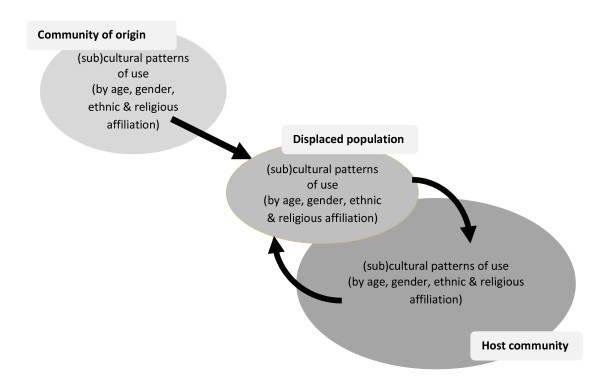
BACKGROUND: Substance use among populations displaced by conflict is a neglected area of public health. Alcohol, khat, benzodiazepine, opiate, and other substance use have been documented among a range of displaced populations, with wide-reaching health and social impacts. Changing agendas in humanitarian response-including increased prominence of mental health and chronic illness-have so far failed to be translated into meaningful interventions for substance use. METHODS: Studies were conducted from 2006 to 2008 in six different settings of protracted displacement, three in Africa (Kenya, Liberia, northern Uganda) and three in Asia (Iran, Pakistan, and Thailand). We used intervention-oriented qualitative Rapid Assessment and Response methods, adapted from two decades of experience among non-displaced populations. The main sources of data were individual and group interviews conducted with a culturally representative (non-probabilistic) sample of community members and service providers. RESULTS: Widespread use of alcohol, particularly artisanally-produced alcohol, in Kenya, Liberia, Uganda, and Thailand, and opiates in Iran and Pakistan was believed by participants to be linked to a range of health, social and protection problems, including illness, injury (intentional and unintentional), gender-based violence, risky behaviour for HIV and other sexually transmitted infection and blood-borne virus transmission, as well as detrimental effects to household economy. Displacement experiences, including dispossession, livelihood restriction, hopelessness and uncertain future may make communities particularly vulnerable to substance use and its impact, and changing social norms and networks (including the surrounding population) may result in changed - and potentially more harmful-patterns of use. Limited access to services, including health services, and exclusion from relevant host population programmes, may exacerbate the harmful consequences. CONCLUSIONS: The six studies show the feasibility and value of conducting rapid assessments in displaced populations. One outcome of these studies is the development of a UNHCR/WHO field guide on rapid assessment of alcohol and other substance use among conflict-affected populations. More work is required on gathering population-based epidemiological data, and much more experience is required on delivering effective interventions. Presentation of these findings should contribute to increased awareness, improved response, and more vigorous debate around this important but neglected area.
Overview
The claims and statistics of this paper haven’t been checked yet.
Run the check — free, no account needed. It reads the open-access text and checks the sources it cites.
Integrity signals
Registry
Cites
Statistics
Figures
Verification
Claims the paper makes
The claims and statistics of this paper haven’t been checked yet.
Run the check — free, no account needed. It reads the open-access text and checks the sources it cites.
Claims other papers make about this one
Each is checked against this paper’s own text: does it say what the citing paper says it does?
In the citing paper
“alcohol and drug misuse are neglected issues”
From Mental health and psychosocial support in humanitarian settings: linking practice and research (2011) · cites this paper as [87]
Self-check
Percentages, sums and reported differences re-computed from the paper’s own numbers.
The self-check needs the paper’s full text.
Citations
Cites
Pharmacological interventions for somatoform disorders in adults
Kleinstäuber, M., Witthöft, M., Steffanowski, A., van Marwijk, H., Hiller, W., & Lambert, M. J. (2014) · Cochrane Database of Systematic Reviews · doi:10.1002/14651858.cd010628.pub2 · Cited by 11,369
Bulletin of the World Health Organization
van der Sande, M. A. B., Walraven, G. E. L., Milligan, P. J., BANYA, W. A. S., CEESAY, S. M., Nyan, O. A., & McAdam, K. P. W. J. (2001) · Bulletin of the World Health Organization · Cited by 7,097
Rehm, J., Mathers, C., Popova, S., Thavorncharoensap, M., Teerawattananon, Y., & Patra, J. (2009) · The Lancet · doi:10.1016/s0140-6736(09)60746-7 · Cited by 3,870
Disease Control Priorities in Developing Countries
Jamison, D., Mosley, W. H., Measham, A., & Bobadilla, J. L. (1993) · World Bank, Washington, DC eBooks · doi:10.1596/0-1952-0990-7 · Cited by 3,714
Disease control priorities in developing countries
(2006) · Choice Reviews Online · doi:10.5860/choice.44-0343 · Cited by 3,636
Bulletin of the World Health Organization
Frick, K. D., Lynch, M. C., West, S. K., Muñoz, B., & Mkocha, H. A. (2003) · Bulletin of the World Health Organization · Cited by 2,656
Steel, Z., Chey, T., Silove, D., Marnane, C., Bryant, R. A., & van Ommeren, M. (2009) · JAMA · doi:10.1001/jama.2009.1132 · Cited by 2,246
Methadone maintenance therapy versus no opioid replacement therapy for opioid dependence
Mattick, R. P., Breen, C., Kimber, J., & Davoli, M. (2009) · Cochrane Database of Systematic Reviews · doi:10.1002/14651858.cd002209.pub2 · Cited by 1,654
Room, R., Babor, T., & Rehm, J. (2005) · The Lancet · doi:10.1016/s0140-6736(05)17870-2 · Cited by 1,625
Disease control priorities in developing countries
Frenk, J. M. (2006) · Salud Pública de México · doi:10.1590/s0036-36342006000600011 · Cited by 1,615
Research works printed but not linked: 14
- World Health Organization: ICD10-International statistical classification of diseases and related health problems, 10th revision, version for 2007 Geneva. 2007
- United Nations Office on Drugs and Crime: Aghanistan Community Drug Profile #5: An assessment of problem drug use in Kabul City. Kabul. 2003
- World Health Organization: The Rapid Assessment and Response Guide on Injecting Drug Use (IDU-RAR) (draft for field-testing) Geneva. 1998
- World Health Organization/United Nations Children's Fund: Rapid Assessment and Response Guide on Psychoactive Substance Use Among Especially Vulnerable Young People (EVYP-RAR) Geneva. 1998
- World Health Organization: Rapid Assessment and Response Technical Guide (TG-RAR) Geneva. 2001
- SEARCH (Suchtprävention fur Flüchtlinge und Asylbewerber): Rapid Assessment and Response' (RAR) on Problematic Substance Use among Refugees, Asylum Seekers and Illegal Immigrants. 2002, Munster
- Stimson GV, Fitch C, Rhodes T, Keetley K: The Rapid Assessment and Response Guide on Injecting Drug Use (IDU-RAR. 2003, Geneva: World Health Organization
- United Nations Office on Drugs and Crime: Addiction, Crime and Insurgency: The transnational threat of Afghan opium. Addiction, Crime and Insurgency: The transnational threat of Afghan opium. Vienna. 2009
- Rehm J, Room R, Graham K, Monteiro M, Gmel G, Sempos CT: The relationship of average volume of alcohol consumption and patterns of drinking to burden of disease: an overview. Addiction. 2003, 98: 1209-1228. 10.1046/j.1360-0443.2003.00467.x. · DOI · Paper page
- Inter-Agency Standing Committee: Guidelines on Mental Health and Psychosocial Support in Emergency Settings Geneva. 2007
- Jacobsen K: The Economic Life of Refugees. 2005, West Hartford: Kumarian Press
- Active Learning Network for Accountability and Performance in Humanitarian Action (ALNAP): Participation by Crisis-Affected Populations in Humanitarian Action: A Handbook for Practitioners. 2003, London: ODI
- Hoffman P, Weiss TG: Humanitarianism and practitioners: Social science matters. Humantarianism in Question: Politics, Power, Ethics. Edited by: Barnett M, Weiss TG. 2008, Ithaca: Cornell University Press, 264-285.
- United Nations High Commissioner for Refugees, World Health Organization: Rapid assessment of alcohol and other substance use among conflict-affected and displaced populations: a field guide Geneva. 2008
Cited by
Sorted by citations
Items 101–159 of 159
Bitanihirwe, B. K. Y., Ssewanyana, D., & Ddumba-Nyanzi, I. (2021) · Frontiers in Public Health · doi:10.3389/fpubh.2021.714812 · Cited by 8
Logie, C. H., Okumu, M., Admassu, Z., Mackenzie, F., Tailor, L. S., Kortenaar, J., Perez‐Brumer, A., Ahmed, R., Batte, S., Hakiza, R., et al. (2024) · Journal of Migration and Health · doi:10.1016/j.jmh.2024.100215 · Cited by 9
A Systematic Review of the Methods Used in Rapid Approaches to Research and Evaluation
Clark, S. E., Juan, N. V. S., Moniz, T., Appleton, R., Barnett, P., & Vindrola‐Padros, C. (2025) · Evaluation Review · doi:10.1177/0193841x251338536 · Cited by 7
Ross, N., Brown, C. G., & Johnstone, M. (2022) · International Journal of Mental Health and Addiction · doi:10.1007/s11469-022-00779-0 · Cited by 7
Haddad, S., Shawa, M., Kane, J. C., Bwalya, B., Sienkiewicz, M. E., Kilbane, G., Chibemba, V., Chiluba, P., Mtongo, N., Metz, K. L., et al. (2023) · Conflict and Health · doi:10.1186/s13031-023-00538-5 · Cited by 9
Das, A. M., Chitnis, N., Burri, C., Paris, D. H., Patel, S. K., Spencer, S. E. F., Miaka, E. M., & Castaño, S. (2021) · PLoS neglected tropical diseases · doi:10.1371/journal.pntd.0009992 · Cited by 8
Substance Use Disorders in Conflict-Displaced Populations
Ezard, N., Manji, H. K., & Busse, A. (2020) · Springer eBooks · doi:10.1007/978-3-030-36391-8_103 · Cited by 7
Self-citationThe Spatial Concentration of Peacekeeping Personnel and Public Health During Intrastate Conflicts
Reeder, B. W. (2018) · International Peacekeeping · doi:10.1080/13533312.2018.1446756 · Cited by 6
Ventevogel, P., Pereira, X., Verghis, S., & Silove, D. M. (2019) · Oxford University Press eBooks · doi:10.1093/oso/9780198814733.003.0006 · Cited by 6
Weil, A. A., Cameron, C. M., Soumerai, J. D., Dierberg, K. L., Mouwon, A. G., Kraemer, D. R., Lewy, D., Lee, P. T., Kraemer, J. D., & Siedner, M. J. (2014) · The International Journal of Alcohol and Drug Research · doi:10.7895/ijadr.v3i2.147 · Cited by 6
Garboś, S., & Swiecicka, D. (2015) · Chemosphere · doi:10.1016/j.chemosphere.2015.06.064 · Cited by 6
Alcohol use among Bhutanese refugees in Nepal
Hewlett, M., Merry, L. A., Mishra, A., Islam, R., Wali, R. M., & Gagnon, A. J. (2015) · International Journal of Migration Health and Social Care · doi:10.1108/ijmhsc-05-2014-0017 · Cited by 5
Systematic Review of Gender and Humanitarian Situations Across Africa
Nwoke, C., & Cochrane, L. (2022) · Africa Spectrum · doi:10.1177/00020397221128322 · Cited by 8
Njingu, A. E., Jabbossung, F. E., Nyuydzedze, S. S., Nembulefac, D. K., & Ayongi, E. N. S. (2022) · Journal of Public Health and Epidemiology · doi:10.5897/jphe2022.1383 · Cited by 5
Logie, C. H., Loutet, M. G., Okumu, M., Coelho, M., Lukone, S. O., Kisubi, N., Latif, M., McAlpine, A., & Kyambadde, P. (2023) · AIDS Care · doi:10.1080/09540121.2023.2277151 · Cited by 6
A Decision Support System for Pediatric Diagnosis
Iheme, P., Omoregbe, N. A., Misra, S., Ayeni, F., & Adeloye, D. (2018) · Lecture notes of the Institute for Computer Sciences, Social Informatics and Telecommunications Engineering · doi:10.1007/978-3-319-72965-7_17 · Cited by 5
Khan, M. F., Jeannetot, D. Y. B., Olleri, K. S., Bakker, M. I., Musani, A. S., Moneim, A. R. I. A., Hatahit, W., & Zwanikken, P. A. C. (2021) · Conflict and Health · doi:10.1186/s13031-021-00402-4 · Cited by 5
Ahmed, M. (2021) · Palgrave studies in impact finance · doi:10.1007/978-3-030-83209-4_4 · Cited by 5
Tol, W. A., Barbui, C., Galappatti, A., Silove, D. M., Betancourt, T. S., de Souza, R. R., Golaz, A., & van Ommeren, M. (2011) · Cited by 5
Baker, M., Bardosh, K., Fitch, E. R., Mbabazi, P. S., Mwingira, U., Direny, A. N., Dean, L., Sutherland, E., & Krentel, A. (2021) · International Health · doi:10.1093/inthealth/ihab059 · Cited by 4
Im, H., George, N., & Swan, L. E. T. (2022) · Global Public Health · doi:10.1080/17441692.2022.2106378 · Cited by 6
Amarasena, L., Zwi, K. J., Hu, N., Lingam, R., & Raman, S. (2023) · BMJ Open · doi:10.1136/bmjopen-2022-064497 · Cited by 4
Psychotherapy for refugees and other populations exposed to conflict
Silove, D. M., Tay, A. K., & Rees, S. J. (2019) · Elsevier eBooks · doi:10.1016/b978-0-12-814932-4.00016-1 · Cited by 4
Harms to children from the financial effects of others’ drinking
Laslett, A., Mojica‐Perez, Y., Waleewong, O., Hạnh, H. T. M., & Jiang, H. (2021) · International Journal of Drug Policy · doi:10.1016/j.drugpo.2021.103254 · Cited by 4
Making Sense of Indigenous Youth Night Patrols
Sims, M., Cooper, T., Barclay, E. M., & Scott, J. (2017) · Administration & Society · doi:10.1177/0095399717700225 · Cited by 4
Greene, M. C. (2022) · Addiction · doi:10.1111/add.16094 · Cited by 4
Güler, M., & Demircan, D. (2021) · İstanbul Aydın Üniversitesi Sosyal Bilimler Dergisi · doi:10.17932/iau.iausbd.2021.021/iausbd_v14i1001 · Cited by 3
Greene, M. C., Andersen, L. S., Leku, M. R., Au, T. M., Akellot, J., Upadhaya, N., Odokonyero, R. F., White, R. G., Ventevogel, P., García‐Moreno, C., et al. (2024) · Cambridge Prisms Global Mental Health · doi:10.1017/gmh.2024.103 · Cited by 3
Political Violence, Interstate Rivalry, and the Diffusion of Public Health Crises
Reeder, B. W., & Reeder, M. R. (2014) · Social Science Quarterly · doi:10.1111/ssqu.12108 · Cited by 3
Alcohol use disorders among Myanmar migrant workers in Thailand
Gaitan, D., Shwe, V. D. T., Bajcevic, P., & Gagnon, A. J. (2019) · International Journal of Migration Health and Social Care · doi:10.1108/ijmhsc-11-2018-0075 · Cited by 3
Laslett, A., Cook, M., Ramsoomar, L., Morojele, N. K., & Waleewong, O. (2024) · The International Journal of Alcohol and Drug Research · doi:10.7895/ijadr.471 · Cited by 3
Bala, N. A., Azman, A., & Singh, P. S. J. (2021) · Research Square · doi:10.21203/rs.3.rs-519687/v1 · Cited by 3
Andersen, L. S., van der Boor, C., Nadkarni, A., Taban, D., Massazza, A., Fuhr, D. C., Roberts, B., Upadhaya, N., Tol, W. A., & Kinyanda, E. (2024) · SSM - Mental Health · doi:10.1016/j.ssmmh.2024.100366 · Cited by 2
Bolarinwa, O. A., Odimegwu, C. O., Mohammed, A., Gayawan, E., & Phiri, M. (2025) · Discover Social Science and Health · doi:10.1007/s44155-025-00238-w · Cited by 2
Rethinking Alcohol and Conflict: The Politics of Alcohol in Post-war Sri Lanka and Nepal
Walton, O., Karn, S., & Lokuge, G. (2021) · Civil Wars · doi:10.1080/13698249.2021.1995682 · Cited by 2
Im, H., Swan, L. E. T., & George, N. (2023) · International Journal of Mental Health and Addiction · doi:10.1007/s11469-023-01145-4 · Cited by 1
Wahhab, H. A., Abu‐Dahab, R., & Wazaify, M. (2025) · Journal of Ethnicity in Substance Abuse · doi:10.1080/15332640.2025.2577715 · Cited by 1
Substance Use in Populations Displaced by Conflict
Ezard, N. (2014) · Springer eBooks · doi:10.1007/978-88-470-5322-9_138 · Cited by 1
Self-citationBrickley, B., Moore, S., Keresztes, N., Brand, A., Bower, M., Bonson, J., McEntee, A., Bartram, A., Bovopoulos, N., McPhie, S., et al. (2024) · Harm Reduction Journal · doi:10.1186/s12954-024-01092-w · Cited by 1
Qualitative Evidence on Psychological Trauma
Buchanan, M. J., & Keats, P. A. (2015) · Handbooks in health, work, and disability · doi:10.1007/978-1-4939-2920-7_10 · Cited by 1
McCleary, J. S., Horn, T. L., Toe, P. W., Dwee, E., & Sniffen, S. (2018) · Advances in Social Work · doi:10.18060/21654 · Cited by 1
Systematic Review of Human Poisoning and Toxic Exposures in Myanmar
Cook, M. A., Jagpal, P. S., Pwint, K. H., San, L. L., Thein, S. S. K., Pyone, T., Thit, W. M. M., Bradberry, S., & Collins, S. (2021) · International Journal of Environmental Research and Public Health · doi:10.3390/ijerph18073576 · Cited by 1
Clark, S. E., Juan, N. V. S., Moniz, T., Appleton, R., Barnett, P., & Vindrola‐Padros, C. (2023) · medRxiv · doi:10.1101/2023.12.20.23300284 · Cited by 1
Luitel, N. P., Jordans, M. J. D., Murphy, A., Roberts, B., & McCambridge, J. (2016)
Revitalizing the HIV Response in Pakistan
Beyrer, C., Singh, S., Ambrosio, M., & Semini, I. (2012) · World Bank, Washington, DC eBooks · doi:10.1596/27222
Maintaining Health on the Move: Access and Availability for Displaced People
Cole, J. (2020) · Springer eBooks · doi:10.1007/978-3-030-47178-1_25
Campbell, A., Egan, J. A., Murphy, P. G., & Blair, C. (2021) · Wellcome Open Research · doi:10.12688/wellcomeopenres.16644.1
"Disabled Afghan Refugees in Iran: Beginning for the Future"
Ahangari, A. (2022) · Biomedical Journal of Scientific & Technical Research · doi:10.26717/bjstr.2022.41.006627
Chatiza, K., & Nyevera, T. (2024) · Local and urban governance · doi:10.1007/978-3-031-49857-2_7
Comiskey, C. M. (2024) · Advances in mental health and addiction · doi:10.1007/978-3-031-65917-1_6
Ndlovu, J. N., Andersen, L. S., Leku, M. R., Upadhaya, N., Skovdal, M., Augustinavicius, J., & Tol, W. A. (2025) · PLOS mental health. · doi:10.1371/journal.pmen.0000079
Nadkarni, A., van der Boor, C., Ndlovu, J. N., Taban, D., Tol, W. A., Roberts, B., Weiss, H. A., Akellot, J., Singh, S., Neuman, M., et al. (2025) · Journal of Migration and Health · doi:10.1016/j.jmh.2025.100361
Sanduka, D., Igbaria, S., Khatib, O., Saifi, M., Saudi, L., Hanani, A. A., & Damiri, B. (2025) · Medicine · doi:10.1097/md.0000000000046614
Additional file 1 of Priorities for addressing substance use disorder in humanitarian settings
Greene, M. C., Haddad, S., Busse, A., Ezard, N., Ventevogel, P., Demis, L. Y., Inoue, S., Gumm, J.-C., Campello, G., Tol, W. A., et al. (2021) · Figshare · doi:10.6084/m9.figshare.16674914
Self-citationHertner, L., Stylianopoulos, P., Heinz, A., Kluge, U., Schäfer, I., & Penka, S. (2024) · Figshare · doi:10.6084/m9.figshare.26562691
Brickley, B., Moore, S., Keresztes, N., Brand, A., Bower, M., Bonson, J., McEntee, A., Bartram, A., Bovopoulos, N., McPhie, S., et al. (2024) · Figshare · doi:10.6084/m9.figshare.27071932
Prevalence of Substance use Among In-Transit Migrants at the Mexico-United States Border
Bojorquez, I., Goldenberg, S. M., Vera, A., Sepúlveda, J., & Strathdee, S. A. (2026) · Journal of Immigrant and Minority Health · doi:10.1007/s10903-026-02021-8
Metadata
- Authors
- Ezard, N., Oppenheimer, E., Burton, A., Schilperoord, M., Macdonald, D., Adelekan, M., Sakarati, A., & van Ommeren, M.
- Affiliations
- Office of the United Nations High Commissioner for Refugees (CH)
- Royal Blackburn Teaching Hospital (GB)
- Corresponding author
- Schilperoord, Marian
- Venue
- Conflict and Health
- Published
- 2011-02-11
- Volume
- 5
- Issue
- 1
- Pages
- 1-1
- ISSN
- 1752-1505 (ISSN-L)
- PMC
- PMC3050731
- OpenAlex
- W2112278442
- Cited by
- 160
- References
- 92
- Citations by year
- 2026: 2 · 2025: 7 · 2024: 10 · 2023: 8 · 2022: 11 · 2021: 24 · 2020: 6 · 2019: 9 · 2018: 18 · 2017: 12 · 2016: 8 · 2015: 15 · 2014: 11 · 2013: 12 · 2012: 4
- FWCI
- 7.23
- Type
- journal article
- Language
- en
- Open access
- gold
- doi.org
- Licence
- cc-by
- Locations
- Conflict and Health (publishedVersion, cc-by)
- PubMed Central (publishedVersion, cc-by)
- PubMed (publishedVersion)
- LSHTM Research Online (London School of Hygiene and Tropical Medicine) (acceptedVersion)
- DOAJ (DOAJ: Directory of Open Access Journals) (submittedVersion, cc-by-sa)
- Greater South Information System
- Topics
- Health Sciences › Medicine › Epidemiology › Substance Abuse Treatment and Outcomes
- Health Sciences › Health Professions › General Health Professions › Health and Conflict Studies
- Social Sciences › Psychology › Clinical Psychology › Migration, Health and Trauma
- Keywords
- alcohol consumption, substance use, internally displaced persons, protracted displacement, humanitarian response, opiates, khat, benzodiazepines, HIV risk behavior, gender-based violence, household economy, health care access, rapid assessment, social norms, Kenya, Liberia, Northern Uganda, Iran, Pakistan, Thailand
About these checks
Registry, retraction, Cites and statistics results are computed, not judged, with one exception: a printed reference that no index lists is read once by a model before it counts as a citation error. Claims are extracted by a model and kept only when their quote appears verbatim in the text; each cited source is then checked, with a model’s help, for whether it says what the claim relies on. Those verdicts can be wrong — read the claim’s quote and the cited source before relying on one.
Statistics and arithmetic are recomputed, not judged.
Confidence bands are shown only for fields calibrated on our annotated test set. None is calibrated yet, so no band is shown.
What counts as a claim ›How we measure confidence ›How we check this ›
Are you an author, or do you see a problem with this page? Request a review
