

Using workshops to develop theories of change in five low and middle income countries: lessons from the programme for improving mental health care (PRIME)
Open accessThe DOI matches its Crossref record; 35 of the 35 references it cites were found in a registry or an index.
Abstract
BACKGROUND: The Theory of Change (ToC) approach has been used to develop and evaluate complex health initiatives in a participatory way in high income countries. Little is known about its use to develop mental health care plans in low and middle income countries where mental health services remain inadequate. AIMS: ToC workshops were held as part of formative phase of the Programme for Improving Mental Health Care (PRIME) in order 1) to develop a structured logical and evidence-based ToC map as a basis for a mental health care plan in each district; (2) to contextualise the plans; and (3) to obtain stakeholder buy-in in Ethiopia, India, Nepal, South Africa and Uganda. This study describes the structure and facilitator's experiences of ToC workshops. METHODS: The facilitators of the ToC workshops were interviewed and the interviews were recorded, transcribed and analysed together with process documentation from the workshops using a framework analysis approach. RESULTS: Thirteen workshops were held in the five PRIME countries at different levels of the health system. The ToC workshops achieved their stated goals with the contributions of different stakeholders. District health planners, mental health specialists, and researchers contributed the most to the development of the ToC while service providers provided detailed contextual information. Buy-in was achieved from all stakeholders but valued more from those in control of resources. CONCLUSIONS: ToC workshops are a useful approach for developing ToCs as a basis for mental health care plans because they facilitate logical, evidence based and contextualised plans, while promoting stakeholder buy in. Because of the existing hierarchies within some health systems, strategies such as limiting the types of participants and stratifying the workshops can be used to ensure productive workshops.
Overview
The claims and statistics of this paper haven’t been checked yet.
Free: it reads the open-access text and checks the first 5 claims that cite a source we can check. Create a free account to check every claim.
Integrity signals
Registry
Cites
Statistics
Figures
Verification
Claims the paper makes
The claims and statistics of this paper haven’t been checked yet.
Free: it reads the open-access text and checks the first 5 claims that cite a source we can check. Create a free account to check every claim.
Self-check
Percentages, sums and reported differences re-computed from the paper’s own numbers.
The self-check needs the paper’s full text.
Citations
Cites
Developing and evaluating complex interventions: the new Medical Research Council guidance
Craig, P., Dieppe, P., Macintyre, S., Michie, S., Nazareth, I., & Petticrew, M. (2008) · BMJ · doi:10.1136/bmj.a1655 · Cited by 10,995 · cited 2×
“[29] including multiple groups of stakeholders and organisational levels targeted by the intervention.”
BackgroundMethodQualitative research in health care: Analysing qualitative data
Pope, C. (2000) · BMJ · doi:10.1136/bmj.320.7227.114 · Cited by 8,131
REVIEW OF COMMUNITY-BASED RESEARCH: Assessing Partnership Approaches to Improve Public Health
Israel, B. A., Schulz, A. J., Parker, E. A., & Becker, A. B. (1998) · Annual Review of Public Health · doi:10.1146/annurev.publhealth.19.1.173 · Cited by 5,893 · cited 1×
“Engaging key stakeholders in participatory planning for mental health services is critical to develop such services and resources, get local and national stakeholder buy-in, and develop plans that are contextually appropriate [5,6].”
BackgroundQualitative data analysis for applied policy research
(2002) · Analyzing Qualitative Data · doi:10.4324/9780203413081-14 · Cited by 4,964 · cited 1×
“A framework analysis approach was used to analyse the process documentation and interview transcripts [33].”
MethodQualitative data analysis for applied policy research
Ritchie, J., & Spencer, L. (2010) · Analyzing qualitative data · doi:10.4324/9780203413081_chapter_9 · Cited by 4,800
Thornicroft, G., Brohan, E., Rose, D., Sartorius, N., & Leese, M. (2009) · The Lancet · doi:10.1016/s0140-6736(08)61817-6 · Cited by 1,189 · cited 1×
“This is particularly important in the context of mental health services in LMIC where stigma is high [37], human resources for health are limited [38], funding is minimal [2] and political priority is low [1].”
BackgroundBarriers to improvement of mental health services in low-income and middle-income countries
Saraceno, B., van Ommeren, M., Batniji, R., Cohen, A., Gureje, O., Mahoney, J., Sridhar, D., & Underhill, C. (2007) · The Lancet · doi:10.1016/s0140-6736(07)61263-x · Cited by 1,088 · cited 2×
“This is particularly important in the context of mental health services in LMIC where stigma is high [37], human resources for health are limited [38], funding is minimal [2] and political priority is low [1].”
BackgroundHuman resources for mental health care: current situation and strategies for action
Kakuma, R., Minas, H., van Ginneken, N., Dal Poz, M. R., Desiraju, K., Morris, J. E., Saxena, S., & Scheffler, R. M. (2011) · The Lancet · doi:10.1016/s0140-6736(11)61093-3 · Cited by 979 · cited 1×
“This is particularly important in the context of mental health services in LMIC where stigma is high [37], human resources for health are limited [38], funding is minimal [2] and political priority is low [1].”
BackgroundPurposeful Program Theory: Effective Use of Theories of Change and Logic Models
Funnell, S., & Rogers, P. (2011) · RMIT Research Repository (RMIT University Library) · Cited by 897
Lund, C., Tomlinson, M., De Silva, M., Fekadu, A., Shidhaye, R., Jordans, M., Petersen, I., Bhana, A., Kigozi, F., Prince, M., et al. (2012) · PLoS Medicine · doi:10.1371/journal.pmed.1001359 · Cited by 584 · cited 2×
“Undoubtedly the initial success PRIME has had in facilitating the bottom up planning process was directly influenced by the participation of Ministry of Health partners in the consortium formalised through Memoranda of Understanding and ongoing policy engagement [27].”
BackgroundSelf-citation
Research works printed but not linked: 9
- WHO Mental Health Atlas 2011 2011 Italy: World Health Organisation
- Andersen A A Community Builder's Approach to Theory of Change: a Practical Guide to Theory Development 2004 New York: The Aspen Insitute
- James C Theory of Change Reviews: A report commissioned by Comic Relief 2011 London: Comic Relief
- Taplin DH Clark H Collins I Colby DC Theory of Change Technical Papers: A series of papers to support devlopment of Theories of Change based on practice in the field 2013 New York: ActKnowledge
- James C Theory of Change: A Guide for Small and Diaspora NGOs The Peer Learning Programme for Small and Diaspora Organisations 2013
- Taplin DH Rasic M Facilitator's Source Book: Source Bookf for facilitators leading Theory of Change development sessions 2012 New York: ActKnowledge
- Centers for Disease Control and Prevention. Office of the Director OoSaI, & National Center for Infectious Diseases, Division of Bacterial and Mycotic Diseases Introduction to program evaluation for public health programs: Evaluating appropriate antibiotic use programs 2006 Atlanta, GA: Centers for Disease Control and Prevention
- QRS NVIVO 2011 92 Victoria: QRS
- Institute A Voices from the field: Learning from the Early Work of Comprehensive Community Initiatives 1997 Washington DC: Aspen Institute
Cited by
De Silva, M. J., Breuer, E., Lee, L., Asher, L., Chowdhary, N., Lund, C., & Patel, V. (2014) · Trials · doi:10.1186/1745-6215-15-267 · Cited by 738
“However, as this process is structured around the components of the ToC and has a efined output, it is an efficient way to conduct discussions with stakeholders [36].”
BackgroundMethodInfluentialSelf-citationUsing theory of change to design and evaluate public health interventions: a systematic review
Breuer, E., Lee, L., De Silva, M., & Lund, C. (2015) · Implementation Science · doi:10.1186/s13012-016-0422-6 · Cited by 425
“For example, some ToCs are developed through a series of workshops and meetings with a wide range of stakeholders including service users [11, 12] whereas others are developed by evaluators and funders using programme documentation [13, 14].”
BackgroundSelf-citationHerba, C. M., Glover, V., Ramchandani, P. G., & Rondon, M. B. (2016) · The Lancet Psychiatry · doi:10.1016/s2215-0366(16)30148-1 · Cited by 324
Petersen, I., Fairall, L., Bhana, A., Kathree, T., Selohilwe, O., Brooke-Sumner, C., Faris, G., Breuer, E., Sibanyoni, N., Lund, C., et al. (2016) · British Journal of Psychiatry · doi:10.1192/bjp.bp.114.153726 · Cited by 170
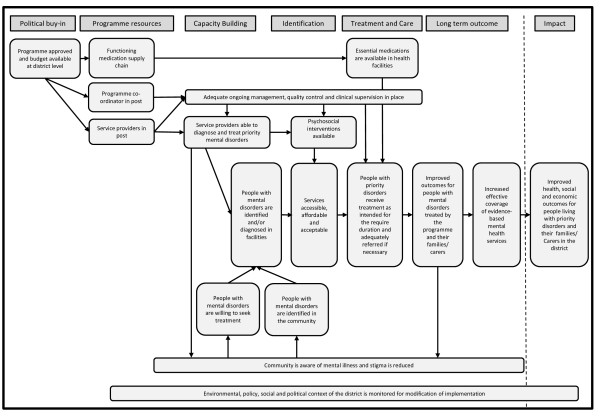
“19 Discussion in the ToC workshops centred on how key outcomes identified in the cross-country ToC map 20 could be achieved in the district for each priority condition.”
Self-citationDevelopment of a scalable mental healthcare plan for a rural district in Ethiopia
Fekadu, A., Hanlon, C., Medhin, G., Alem, A., Selamu, M., Giorgis, T. W., Shibre, T., Teferra, S., Tegegn, T., Breuer, E., et al. (2016) · British Journal of Psychiatry · doi:10.1192/bjp.bp.114.153676 · Cited by 147
“Details of the methods are described elsewhere 21 and in elsewhere in this supplement.”
Self-citationBreuer, E., De Silva, M. J., Shidaye, R., Petersen, I., Nakku, J., Jordans, M. J. D., Fekadu, A., & Lund, C. (2016) · British Journal of Psychiatry · doi:10.1192/bjp.bp.114.153841 · Cited by 111
“27 In brief, between two and four ToC workshops were held in each PRIME country with a median of 15 (interquartile range 13–22) stakeholders per workshop including policy makers, district-level health planners and management, mental health specialists, researchers, service providers and, in some…”
InfluentialSelf-citationEvaluation of district mental healthcare plans: The PRIME consortium methodology
De Silva, M. J., Rathod, S. D., Hanlon, C., Breuer, E., Chisholm, D., Fekadu, A., Jordans, M., Kigozi, F., Petersen, I., Shidhaye, R., et al. (2016) · British Journal of Psychiatry · doi:10.1192/bjp.bp.114.153858 · Cited by 106
Self-citationHanlon, C., Fekadu, A., Jordans, M., Kigozi, F., Petersen, I., Shidhaye, R., Honikman, S., Lund, C., Prince, M., Raja, S., et al. (2016) · British Journal of Psychiatry · doi:10.1192/bjp.bp.114.153767 · Cited by 96
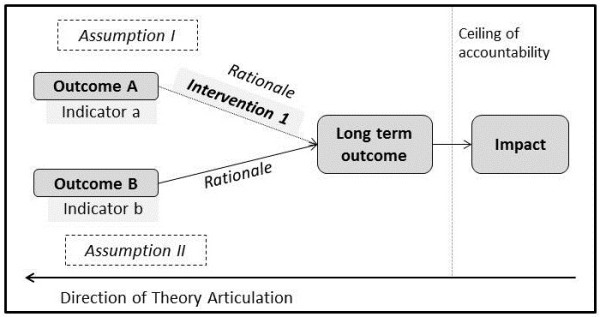
“20,21 The resulting ToC maps identified the key goals to be achieved by the MHCP, the underlying assumptions and indicators for evaluating the success of implementation at every step along the way.”
Self-citationHow to achieve the desired outcomes of advance care planning in nursing homes: a theory of change
Gilissen, J., Pivodic, L., Gastmans, C., Stichele, R. V., Deliëns, L., Breuer, E., & den Block, L. V. (2018) · BMC Geriatrics · doi:10.1186/s12877-018-0723-5 · Cited by 106
“We organised two half-day ToC workshops with stakeholders (June 29 and July 13 2015) following the methodology outlined in the available ToC manuals [42, 43].”
MethodSelf-citationBarriers and drivers to stakeholder engagement in global mental health projects
Murphy, J., Qureshi, O., Endale, T., Esponda, G. M., Pathare, S., Eaton, J., Silva, M. J. D., & Ryan, G. K. (2021) · International Journal of Mental Health Systems · doi:10.1186/s13033-021-00458-y · Cited by 106
“Methods such as Theory of Change workshops [24] may facilitate engagement of policy makers and other stakeholders in program planning and priority setting from the outset [20].”
Stakeholder analysis of the Programme for Improving Mental health carE (PRIME): baseline findings
Makan, A. J., Fekadu, A., Murhar, V., Luitel, N. P., Kathree, T., Ssebunya, J., & Lund, C. (2015) · International Journal of Mental Health Systems · doi:10.1186/s13033-015-0020-z · Cited by 81
Self-citationDavies, T., & Lund, C. (2017) · Global Mental Health · doi:10.1017/gmh.2017.3 · Cited by 71
“…inclusion and maximum buy-in, we recommend including a range of stakeholders, such as ‘ mental health specialists, researchers, policy makers, district level health planners and management, and service providers ’ (Breuer et al. 2014, p. 5) keep the hierarchical nature of health systems in view.”
InfluentialSelf-citationTrani, J., Ballard, E., Bakhshi, P., & Hovmand, P. S. (2016) · Conflict and Health · doi:10.1186/s13031-016-0089-2 · Cited by 81
“In both approaches, solutions to address the problem take into account the context, in particular existing needs, difficulties such as power relations, barriers to intervention and possible remedies to problems [60].”
Abayneh, S., Lempp, H., Alem, A., Kohrt, B. A., Fekadu, A., & Hanlon, C. (2020) · International Journal of Mental Health Systems · doi:10.1186/s13033-020-00383-6 · Cited by 67
Self-citationChibanda, D., Verhey, R., Munetsi, E., Cowan, F. M., & Lund, C. (2016) · International Journal of Mental Health Systems · doi:10.1186/s13033-016-0050-1 · Cited by 67
“Although the use of ToC in mental health programs is in it’s infancy [14, 16], it’s use in settings with complex bureaucratic procedures can be of great value as it brings together stakeholders, increasing the probability that such complex interventions will be more successful.”
BackgroundMethodInfluentialSelf-citationDevelopment of a district mental healthcare plan in Uganda
Kigozi, F. N., Kizza, D., Nakku, J., Ssebunnya, J., Ndyanabangi, S., Nakiganda, B., Lund, C., & Patel, V. (2016) · British Journal of Psychiatry · doi:10.1192/bjp.bp.114.153742 · Cited by 56
“17 The MHCP was subsequently developed using the generated ToC map that has been published elsewhere in this supplement.”
Self-citationA guide to systems-level, participatory, theory-informed implementation research in global health
Seward, N., Hanlon, C., Hinrichs, S., Lund, C., Murdoch, J., Salisbury, T. T., Verhey, R., Shidhaye, R. R., Thornicroft, G., Araya, R., et al. (2021) · BMJ Global Health · doi:10.1136/bmjgh-2021-005365 · Cited by 68
Self-citationDeveloping a mental health care plan in a low resource setting: the theory of change approach
Hailemariam, M., Fekadu, A., Selamu, M., Alem, A., Medhin, G., Giorgis, T. W., DeSilva, M., & Breuer, E. (2015) · BMC Health Services Research · doi:10.1186/s12913-015-1097-4 · Cited by 57
“A cross-country evaluation to the PRIME ToC workshops indicated that heterogeneity of participants might hinder balanced participation [17].”
BackgroundMethodInfluentialSelf-citationBarriers and drivers to service delivery in global mental health projects
Qureshi, O., Endale, T., Ryan, G. K., Esponda, G. M., Iyer, S. N., Eaton, J., Silva, M. J. D., & Murphy, J. (2021) · International Journal of Mental Health Systems · doi:10.1186/s13033-020-00427-x · Cited by 58
Petagna, M., Marley, C., Guerra, C., Calia, C., & Reid, C. L. (2022) · Community Mental Health Journal · doi:10.1007/s10597-022-00981-3 · Cited by 58
“, 2017), which characterises the mainstreaming of mhGAP approaches to adult mental health in some settings (Breuer et al., 2014; Kohrt et al., 2019).”
BackgroundPaina, L., Wilkinson, A., Tetui, M., Kiracho, E. E., Barman, D., Ahmed, T., Mahmood, S. S., Bloom, G., Knezovich, J., George, A. S., et al. (2017) · Health Research Policy and Systems · doi:10.1186/s12961-017-0272-y · Cited by 55
“As such, ToCs are most frequently used to illustrate and test assumptions and hypothesised pathways of change [4 – 12], to guide data collection [13], or to explain impact or changes discovered through the final evaluation [3, 14 – 16].”
BackgroundMutiso, V., Gitonga, I., Musau, A., Musyimi, C. W., Nandoya, E., Rebello, T. J., Pike, K. M., & Ndetei, D. M. (2018) · International Journal of Mental Health Systems · doi:10.1186/s13033-018-0234-y · Cited by 47
Partnerships in a Global Mental Health Research Programme—the Example of PRIME
Breuer, E., Hanlon, C., Bhana, A., Chisholm, D., Silva, M. J. D., Fekadu, A., Honikman, S., Jordans, M. J. D., Kathree, T., Kigozi, F. N., et al. (2018) · Global Social Welfare · doi:10.1007/s40609-018-0128-6 · Cited by 47
Self-citationProcess evaluation of a district mental healthcare plan in Nepal: a mixed-methods case study
Luitel, N. P., Breuer, E., Adhikari, A., Kohrt, B. A., Lund, C., Komproe, I. H., & Jordans, M. J. D. (2020) · BJPsych Open · doi:10.1192/bjo.2020.60 · Cited by 41
Self-citationBemme, D. (2019) · Culture Medicine and Psychiatry · doi:10.1007/s11013-019-09637-6 · Cited by 44
“The long-term impact the group set out to achieve, located behind the ‘‘ceiling of accountability,’’ was defined as ‘‘improved health, social and economic outcomes in people living with the priority mental disorders in the selected districts of Prime’’ (Breuer et al. 2014).”
BackgroundMental health services in Cambodia, challenges and opportunities in a post-conflict setting
Jegannathan, B., Kullgren, G., & Deva, P. (2014) · Asian Journal of Psychiatry · doi:10.1016/j.ajp.2014.12.006 · Cited by 42
“health care system leading to better integration of mental health services with the existing health care system (Breuer et al., 2014; Hernandez and Hodges, 2006) and is worth giving a try in lowincome post-conflict countries such as Cambodia.”
BackgroundDuBow, W. M., & Litzler, E. (2018) · American Journal of Evaluation · doi:10.1177/1098214018778132 · Cited by 37
“But on the whole, there is little relatively little information on how evaluators used a theory of change to evaluate program implementation (Breuer et al., 2014; Coryn et al., 2011) There is little published about how evaluators develop a theory of change and even less about how the theory of change was utilized by p…”
BackgroundChibanda, D., Abas, M., Musesengwa, R., Merritt, C., Sorsdahl, K. R., Mangezi, W. O., Bandawe, C., Cowan, F. M., Araya, R., Gomo, E., et al. (2020) · Cambridge Prisms Global Mental Health · doi:10.1017/gmh.2019.32 · Cited by 37
“In recent years, it has been used extensively in planning, implementing and evaluating mental health initiatives (Breuer et al., 2014; De Silva et al., 2014; Hailemariam et al., 2015; Chibanda et al., 2016a).”
MethodSelf-citationMethodological approaches to situational analysis in global mental health: a scoping review
Murphy, J., Michalak, E. E., Colquhoun, H. L., Woo, C., Ng, C. H., Parikh, S. V., Culpepper, L., Dewa, C. S., Greenshaw, A. J., He, Y., et al. (2019) · Cambridge Prisms Global Mental Health · doi:10.1017/gmh.2019.9 · Cited by 33
“Theory of Change methodology is used by the PRIME program to map pathways to developing mental health plans and to encourage stakeholder engagement (Breuer et al., 2014).”
MethodBreuer, E., Subba, P., Luitel, N. P., Jordans, M. J. D., Silva, M. J. D., Marchal, B., & Lund, C. (2018) · BMJ Global Health · doi:10.1136/bmjgh-2018-001023 · Cited by 30
Self-citationBreuer, E., Comas‐Herrera, A., Freeman, E., Albanese, E., Alladi, S., Amour, R., Evans-Lacko, S. E., Ferri, C. P., Govia, I., Astudillo‐García, C. I., et al. (2021) · Dementia · doi:10.1177/14713012211029105 · Cited by 28
“AToC is often developed through workshops (Breuer et al. 2014) with all the key stakeholders in the issue being addressed.”
BackgroundSelf-citationSemrau, M., Ali, O., Deribe, K., Mengiste, A., Tesfaye, A., Kinfe, M., Bremner, S. A., Hounsome, N., Kelly‐Hope, L. A., MacGregor, H., et al. (2020) · BMJ Open · doi:10.1136/bmjopen-2020-037675 · Cited by 27
“46 Study design EnDPoINT’s aims are to facilitate effective access to physical health, mental health and psychosocial care for people with lower limb lymphoedema caused by podo-coniosis, LF and leprosy in selected districts in Awi zone in Ethiopia through integration and scale-up of a holistic care…”
BackgroundSelf-citationPathways towards scaling up Problem Management Plus in Turkey: a theory of change workshop
Fuhr, D. C., Acartürk, C., Uygun, E., McGrath, M., İlkkurşun, Z., Kaykha, S., Sondorp, E., Sijbrandij, M., Ventevogel, P., Cuijpers, P. J., et al. (2020) · Conflict and Health · doi:10.1186/s13031-020-00278-w · Cited by 26
Buck, E. D. J. D., Hannes, K., Cargo, M., Remoortel, H. V., Veegaete, A. V., Mosler, H., Govender, T., Vandekerckhove, P. G., & Young, T. (2017) · International Journal of Environmental Health Research · doi:10.1080/09603123.2017.1415306 · Cited by 28
“This approach has been used in other domains as well, for example for the development of a mental health care plan (Breuer et al. 2014; Hailemariam et al. 2015), in interagency planning in child mental health (Hernandez and Hodges 2006), in community nutrition education (Medeiros et al.”
MethodBreuer, E., Silva, M. J. D., & Lund, C. (2018) · Cambridge Prisms Global Mental Health · doi:10.1017/gmh.2018.13 · Cited by 28
“In PRIME, this is due to multiple reasons: (1) the large number of stakeholders involved in the workshops in countries [median 15 (interquartile range 13–22)] making extended consultation difficult; (2) the finalisation of the ToC by PRIME researchers after the workshop; (3) hierarchies within the health service makin…”
BackgroundSelf-citationBunn, M., Christopher, E., Smith, C. P., McCoy, J., Hanneke, R., King, M., Ellis, B. H., Cardeli, E., & Weine, S. M. (2023) · Terrorism and Political Violence · doi:10.1080/09546553.2023.2169143 · Cited by 24
“…To address some of the shortcomings identified above, there is a clear need for the development of an R&R theory of change and logic model that can be used as a planning tool for implementing programs 145 and provide a framework for evaluation as is put forth in the companion paper to this review.”
MethodHiltensperger, R., Ryan, G. K., Ben-Dor, I. A., Charles, A., Epple, E., Kalha, J., Korde, P., Kotera, Y., Mpango, R. S., Moran, G. S., et al. (2024) · BMC Health Services Research · doi:10.1186/s12913-024-10990-5 · Cited by 20
“Further, strong hierarchical structures in the provision of mental health services also may add to challenges when involving different groups of stakeholders in a project [8, 10].”
BackgroundMethodResultInfluentialSelf-citationCo‐design of dementia prevention program for Aboriginal Australians (DAMPAA)
Mateo‐Arriero, I., Lalović, A., Dowden, G., Markey, L., Cox, K. L., Flicker, L. A., Bessarab, D. C., Thompson, S., Kickett, C., Woods, D., et al. (2023) · Alzheimer s & Dementia · doi:10.1002/alz.13032 · Cited by 18
Abas, M., Nhiwatiwa, S. M., Mangezi, W. O., Jack, H. E., Piette, A., Cowan, F. M., Barley, E. A., Chingono, A., Iversen, A. C., & Chibanda, D. (2014) · International Review of Psychiatry · doi:10.3109/09540261.2014.924487 · Cited by 19
“It will also potentially increase availability of psychiatrists equipped to take on public health and supervisory roles, which will be critical as task-shifting of mental healthcare to non-specialist health workers is scaled up in many countries (Breuer et al., 2014).”
BackgroundMukherjee, A., Yatirajula, S. K., Kallakuri, S., Paslawar, S., Lempp, H. K., Raman, U., Essue, B. M., Sagar, R., Singh, R., Peiris, D., et al. (2024) · Child and Adolescent Psychiatry and Mental Health · doi:10.1186/s13034-024-00704-4 · Cited by 17
“Several mental health interventions have used ToC during intervention development, during the pilot phase and to refine the intervention [12, 25, 26].”
Marchal, B., Abejirinde, I. O., Sulaberidze, L., Chikovani, I., Uchaneishvili, M., Shengelia, N., Diaconu, K., Vassall, A., Zoidze, A., Giralt, A. N., et al. (2021) · BMJ Open · doi:10.1136/bmjopen-2020-047948 · Cited by 14
Contingent universality: The epistemic politics of global mental health
Bemme, D. (2023) · Transcultural Psychiatry · doi:10.1177/13634615231189565 · Cited by 16
Chen, F., Hu, Z., Li, Q., Zheng, X., Li, M., Salcher‐Konrad, M., Comas‐Herrera, A., Knapp, M. R. J., & Cheng, S. (2025) · International Journal of Geriatric Psychiatry · doi:10.1002/gps.70054 · Cited by 12
Votruba, N., Grant, J., & Thornicroft, G. (2021) · Health Research Policy and Systems · doi:10.1186/s12961-020-00651-4 · Cited by 14
Seward, N., Garman, E. C., Davies, T., Hanlon, C., MacBeth, A. M., Stewart, R. C., Waqas, A., Araya, R., & Lund, C. (2025) · Journal of Affective Disorders · doi:10.1016/j.jad.2025.03.159 · Cited by 11
Self-citationA theory of change roadmap for universal health coverage in India
Chaudhuri, A., Biswas, N., Kumar, S., Jyothi, A., Gopinath, R., Mor, N., John, P., Narayan, T., Chatterjee, M., & Patel, V. (2022) · Frontiers in Public Health · doi:10.3389/fpubh.2022.1040913 · Cited by 10
Barnhart, D. A., Semrau, K. E. A., Zigler, C. M., Molina, R. L., Delaney, M. M., Hirschhorn, L. R., & Spiegelman, D. L. (2020) · Implementation Science Communications · doi:10.1186/s43058-020-00014-8 · Cited by 13
A theory of change for community-initiated mental health care in the United States
Breuer, E., Morris, A., Blanke, L., Pearsall, M., Rodriguez, R., Miller, B. F., Naslund, J. A., Saxena, S., Balsari, S., & Patel, V. (2023) · Cambridge Prisms Global Mental Health · doi:10.1017/gmh.2023.49 · Cited by 13
“…it is a flexible (Prinsen and Nijhof, 2015) but structured participatory method which involves diverse stakeholders who provide a rich understanding of the context, potential barriers and facilitators, feasibility of the proposed program and promotes buy-in from stakeholders (Breuer et al., 2014).”
Self-citationBabatunde, G. B., van Rensburg, A. J., Bhana, A., & Petersen, I. (2022) · Child and Adolescent Psychiatry and Mental Health · doi:10.1186/s13034-022-00484-9 · Cited by 11
“It helps reveal fundamental factors that predict the success and failure of the interventions [11], and the participatory process assists stakeholders to articulate their ideas and identify their different priorities.”
BackgroundSelf-citationVotruba, N., Praveen, D., Mellers, L., Rajan, E., Thout, S. R., Arora, V., Malik, Y. K., Kashyap, A., Majumdar, S., Hirst, J. E., et al. (2023) · Frontiers in Global Women s Health · doi:10.3389/fgwh.2023.1143880 · Cited by 10
Teoria da mudança para implementação de apoio matricial em saúde mental
Treichel, C. A. D. S., Silva, M. C., Presotto, R. F., Leme, K. E. F., dos Reis, M. F. L., Amorim, S. G. S., Lourencetti, A. L. S., Saidel, M. G. B., & Campos, R. T. O. (2023) · Acta Paulista de Enfermagem · doi:10.37689/acta-ape/2023aospe022473 · Cited by 9
Mbwayo, A., Kumar, M., Mathai, M., Mutavi, T. N., Nungari, J., Gathara, R., McKay, M. M., Ssewamala, F. M., Hoagwood, K., Petersen, I., et al. (2021) · Global Social Welfare · doi:10.1007/s40609-021-00204-9 · Cited by 9
“A uthor M anuscript A uthor M anuscript A uthor M anuscript A uthor M anuscript collaboration ((AFFIRM, 2013; Breuer et al., 2014; Center for Global Mental Health, 2011; PRIME, 2015).”
BackgroundSelf-citationSmart local energy systems as a societal project: Developing a Theory of Change
Fell, M. J., Vigurs, C., Maidment, C., & Shipworth, D. (2023) · Smart Energy · doi:10.1016/j.segy.2023.100109 · Cited by 9
“This is often achieved through desk research and identification of key stakeholders, followed by one or more stakeholder workshops [29].”
BackgroundSsebunnya, J., Mugisha, J., Mpango, R. S., Kyohangirwe, L., Taasi, G., Sentongo, H., Kaleebu, P., Patel, V., & Kinyanda, E. (2021) · PLoS ONE · doi:10.1371/journal.pone.0259425 · Cited by 9
Arseneault, L., Bryan, B. T., Canning, T., Okundi, M., Stephens, A., Triantafillopoulou, E., Yu, D., Bolivar, M., Mansoori, P., Milligan, L., et al. (2025) · International Journal of Epidemiology · doi:10.1093/ije/dyaf128 · Cited by 8
Development of a psychological intervention for people with bipolar disorder in rural Ethiopia
Demissie, M., Hanlon, C., Ng, L. C., Mayston, R., Abayneh, S., & Fekadu, A. (2021) · BJPsych Open · doi:10.1192/bjo.2021.999 · Cited by 7
Self-citationParticipatory Approaches in Dissemination and Implementation Science
Ramanadhan, S., Davis, M. M., Donaldson, T., Miller, E., & Minkler, M. (2023) · Oxford University Press eBooks · doi:10.1093/oso/9780197660690.003.0010 · Cited by 13
Five Challenges in the Design and Conduct of IS Trials for HIV Prevention and Treatment
Hargreaves, J., Hassan, S., Schellenberg, J., Hayes, R., Webster, J., & Lewis, J. J. (2019) · JAIDS Journal of Acquired Immune Deficiency Syndromes · doi:10.1097/qai.0000000000002192 · Cited by 9
“15,16 But timing is critical: many evaluation opportunities are lost because the demands on implementers to move forward do not allow sufficient time for evaluators to engage, or because researchers’ time-intensive processes of writing protocols and seeking and receiving ethical approvals work…”
Williams, J., Sevdalis, N., & Gaughran, F. (2019) · Pilot and Feasibility Studies · doi:10.1186/s40814-019-0396-7 · Cited by 7
“Focus groups are a useful method in developing and strengthening ToCs by enhancing stakeholder engagement and allowing the researcher to better understand the context of the intervention [25].”
MethodZhou, Y., Wang, A., Ellis-Smith, C. I., Braybrook, D. E., Feng, H., & Harding, R. (2025) · Health Expectations · doi:10.1111/hex.70291 · Cited by 6
Ojagbemi, A., Daley, S., Feeney, Y., Elugbadebo, O. O., Kola, L., & Gureje, O. (2023) · International Journal of Geriatric Psychiatry · doi:10.1002/gps.6019 · Cited by 6
Roadmap for change in sex and gender inequities in brain health: A global perspective
Brugulat‐Serrat, A., Chen, Y. S., Demnitz, N., Ashour, A. A., Adrion, E., Ilinca, S., Kinchin, I., Almirall‐Sánchez, A., Öz, D., Karanja, W., et al. (2022) · International Journal of Geriatric Psychiatry · doi:10.1002/gps.5710 · Cited by 6
“able and scalable, ToC is now considered as a powerful tool for strategy building, monitoring, evaluation and iterative learning.(19,20)”
MethodConsensus Methods for Health Research in a Global Setting
Carter, S. A., Tong, A., Craig, J. C., Teixeira-Pinto, A. M., & Manera, K. (2023) · Springer eBooks · doi:10.1007/978-3-031-25110-8_65 · Cited by 5
Lalović, A., Dowden, G., Markey, L., Bynder, M., Yappo, L., Cox, K. L., Mateo‐Arriero, I., Flicker, L. A., Bessarab, D. C., Thompson, S., et al. (2024) · BMJ Open · doi:10.1136/bmjopen-2024-088281 · Cited by 5
Burnett, C., Bestall, J., Burke, S., Hewison, J., Morgan, E., Murray, R. L., Pawson, R., Sloss, A., Greenwood-Wilson, S., Williams, G. F., et al. (2023) · Radiography · doi:10.1016/j.radi.2023.04.006 · Cited by 4
van der Boor, C., Andersen, L. S., Massazza, A., Tol, W. A., Taban, D., Roberts, B., Ssebunnya, J., Kinyanda, E., May, C. R., Nadkarni, A., et al. (2024) · Cambridge Prisms Global Mental Health · doi:10.1017/gmh.2023.93 · Cited by 4
“The benefits of using ToC work-shops to develop a logical plan for scaling up mental health programs, contextualizing the programs and getting stakeholder buy-in has previously been highlighted in other resource-poor settings (Breuer et al., 2014; Fuhr et al., 2020; Babatunde et al., 2022).”
BackgroundInfluentialScott, H. M., Gaczkowska, I., Braybrook, D. E., Harðardóttir, D., Fraser, L., Ellis-Smith, C. I., & Harding, R. (2025) · Palliative Medicine · doi:10.1177/02692163251331165 · Cited by 3
“The workshops followed a structured format informed by STRiDE guidance 40 with adaptations to support participation 37 that is, shorter small group workshops to better accommodate parent/ carers balancing caring responsibilities and to provide greater privacy.”
Girit, S., Mueller‐Stierlin, A. S., Hiltensperger, R., Wenzel, L., Lohner, M., Mahlke, C., Nixdorf, R., & Puschner, B. (2022) · PPmP - Psychotherapie · Psychosomatik · Medizinische Psychologie · doi:10.1055/a-1827-4040 · Cited by 3
“An allen Workshops waren zudem wissenschaftliche Mitarbeiter/-innen des UPSIDES Projektes präsent, sodass womöglich offene Diskussionen zwischen den Teilnehmern/-innen nur eingeschränkt geführt werden konnten [23].”
BackgroundInfluentialLaw, K. K., Trieu, K., Madz, J., Coyle, D. H., Glover, K., Tian, M., Xin, Y., Simmons, D. S., Wong, J., & Wu, J. H. Y. (2024) · International Journal of Environmental Research and Public Health · doi:10.3390/ijerph21101330 · Cited by 6
“Similarly, other multi-stakeholder health research studies have reported sample sizes ranging from 16 to 30 participants [61–63].”
BackgroundSustainable electricity for sustainable health? A case study in North-western Zambia
Caperon, L., & Brand-Correa, L. I. (2020) · Journal of Energy in Southern Africa · doi:10.17159/2413-3051/2020/v31i4a8362 · Cited by 3
“technique for eliciting authentic research contributions (Green & Thorogood, 2009; Breuer et al., 2014; Carr et al., 2003; Cote-Arsenault & MorrisonBeedy, 2005; Kitzinger, 1995; Tausch & Menold, 2016; Chambers, 2012).”
BackgroundKinfe, M., Semrau, M., Mengiste, A., Ali, O., Ajeme, T., Bremner, S. A., Hounsome, N., Anagnostopoulou, V., Brewster, M., Rugema, L., et al. (2026) · BMC Family Practice · doi:10.1186/s12875-026-03259-9 · Cited by 2
“…two of the four phases of the MRC framework: the development and piloting phases, since for these two phases, there is good evidence for the practical feasibility and usefulness of an embedded ‘ToC’ approach [42], whereas this is not yet the case for the phases on implementation and evaluation.”
Self-citationKinfe, M., Semrau, M., Mengiste, A., Ali, O., Ajeme, T., Bremner, S., Hounsome, N., Anagnostopoulou, V., Brewster, M., Rugema, L., et al. (2024) · ASEAN Journal of Psychiatry · doi:10.54615/2231-7805.18.s11.001 · Cited by 3
Self-citationPasschier, R. V., Owens, S., Wickremsinhe, M., Bismilla, N., & Ebuenyi, I. D. (2019) · Cambridge Prisms Global Mental Health · doi:10.1017/gmh.2018.35 · Cited by 2
“The workshop and interviews had three aims: (1) to conceptualise a contextually relevant and informed digital screening tool as an intervention; (2) to initiate buy-in from key stakeholders; and (3) to construct a ‘ToC map’ as a visual depiction of the pathways to change (Breuer et al. 2014).”
BackgroundMethodInfluentialCollaborative care models: A global perspective
Wagenaar, B. H., Petersen, I., Rao, D., & Chwastiak, L. (2019) · Elsevier eBooks · doi:10.1016/b978-0-12-814932-4.00007-0 · Cited by 2
Self-citationConger, L. R., Jagannathan, A., Breuer, E., Amudhan, S., Thirthalli, J., & Ponnuchamy, L. (2024) · Social Psychiatry and Psychiatric Epidemiology · doi:10.1007/s00127-024-02797-w · Cited by 1
“One limitation of our ToC process is that the stakeholders (including HWSMI) did not develop the ToC [51, 52].”
Self-citationBreuer, E., Kadi, S., Kahlert, R., Champeix, C., Soler, A., Grbevska, T., Ondas, K., Comas‐Herrera, A., Oliva, S., Diez, S., et al. (2025) · Journal of Long-Term Care · doi:10.31389/jltc.306 · Cited by 2
Self-citationTransformation in Bildung und Hochschule
:null (2025) · Verlag Barbara Budrich eBooks · doi:10.2307/jj.29126494 · Cited by 1
Baird, S. A., Damush, T. M., Rattray, N. A., Penney, L., Miech, E. J., Homoya, B. J., Ferguson, J., Myers, L. J., & Bravata, D. M. (2025) · Frontiers in Health Services · doi:10.3389/frhs.2025.1580653 · Cited by 1
Makhakhe, N. F., & Khumalo, G. (2025) · International Journal of Environmental Research and Public Health · doi:10.3390/ijerph22121862 · Cited by 2
“…mapping process to assist the stakeholders in having a shared understanding of how the program will be implemented, how change will be achieved through the intervention, and the various detailed activities that need to take place for that change to be realized, as outlined by Breuer et al. [31].”
Aellah, G., Roemer-Mahler, A., & Zaman, S. (2026) · International Journal for Equity in Health · doi:10.1186/s12939-026-02823-0 · Cited by 1
Lewin, A. B., & Storch, E. A. (2014) · Journal of Cognitive Psychotherapy · doi:10.1891/0889-8391.28.3.151 · Cited by 1
“…economic unsteadiness, limited human resources, and generally low fiscal investment contribute to disparaging availability of mental health services within low- and middle-income countries (Breuer et al., 2014; Kakuma et al., 2011; Lund, Petersen, Kleintjes, & Bhana, 2012; Saraceno et al., 2007).”
BackgroundConsensus Methods for Health Research in a Global Setting
Carter, S. A., Tong, A., Craig, J. C., Teixeira-Pinto, A. M., & Manera, K. (2023) · Springer eBooks · doi:10.1007/978-3-030-96778-9_65-2 · Cited by 1
The Social Organization of the Right to Mental Health and Development: An Institutional Ethnography
Jakubec, S. L. (2015) · Libraries and Cultural Resources (University of Calgary) · doi:10.11575/prism/28381 · Cited by 1
Makhakhe, N. F. (2021) · ResearchSpace (University of KwaZulu-Natal) · Cited by 2
Review: A theory of change for community-initiated mental health care in the United States — R0/PR3
(2023) · Cambridge Prisms Global Mental Health · doi:10.1017/gmh.2023.49.pr3
Patel, V. (2023) · Cambridge Prisms Global Mental Health · doi:10.1017/gmh.2023.49.pr12
Breuer, E., Morris, A., Blanke, L., et al. (2023) · Cambridge Prisms Global Mental Health · doi:10.1017/gmh.2023.49.pr13
Breuer, E., Morris, A., Blanke, L., et al. (2023) · Cambridge Prisms Global Mental Health · doi:10.1017/gmh.2023.49.pr14
Breuer, E. (2025) · Psicologia - Teoria e Prática · doi:10.5935/1980-6906/eptpic17746.en
“The ToC of a future intervention and its implementation strategies is usually developed in workshops which include people with lived experience, health professionals, future program implementers and managers (Breuer et al., 2014; Kokota et al., 2023).”
Self-citationMatlala, L. S. (2025) · Kurdish Studies · doi:10.53555/ks.v13i2.3962
Votruba, N., Grant, J., & Thornicroft, G. (2021) · Figshare · doi:10.6084/m9.figshare.14196450
Mukherjee, A., Yatirajula, S. K., Kallakuri, S., Paslawar, S., Lempp, H. K., Raman, U., Essue, B. M., Sagar, R., Singh, R., Peiris, D., et al. (2024) · Figshare · doi:10.6084/m9.figshare.26670420
Hiltensperger, R., Ryan, G. K., Ben-Dor, I. A., Charles, A., Epple, E., Kalha, J., Korde, P., Kotera, Y., Mpango, R. S., Moran, G. S., et al. (2024) · Figshare · doi:10.6084/m9.figshare.26708690
Self-citationVotruba, N., Grant, J., & Thornicroft, G. (2021) · Figshare · doi:10.6084/m9.figshare.14196453
Hiltensperger, R., Ryan, G. K., Ben-Dor, I. A., Charles, A., Epple, E., Kalha, J., Korde, P., Kotera, Y., Mpango, R. S., Moran, G. S., et al. (2024) · Figshare · doi:10.6084/m9.figshare.26708687
Self-citationAn interdisciplinary multi level approach to advance human rights in and through sport
Yelamos, G. (2023) · Maynooth University ePrints and eTheses Archive (Maynooth University)
Mokitimi, S. (2021) · Open University of Cape Town (University of Cape Town)
Delecour, T. (2024) · Osuva (University of Vaasa)
Metadata
- Authors
- Breuer, E., De Silva, M. J., Fekadu, A., Luitel, N. P., Murhar, V., Nakku, J., Petersen, I., & Lund, C.
- Affiliations
- University of Cape Town (ZA)
- King's College London (GB)
- Sangath (IN)
- Butabika Hospital (UG)
- University of KwaZulu-Natal (ZA)
- Corresponding author
- Breuer, Erica
- ORCID
- Venue
- International Journal of Mental Health Systems
- Published
- 2014-04-30
- Volume
- 8
- Issue
- 1
- Pages
- 15-15
- ISSN
- 1752-4458 (ISSN-L)
- PMC
- PMC4012094
- OpenAlex
- W2107101220
- Cited by
- 93
- References
- 35
- Citations by year
- 2026: 3 · 2025: 7 · 2024: 10 · 2023: 16 · 2022: 5 · 2021: 12 · 2020: 7 · 2019: 6 · 2018: 6 · 2017: 4 · 2016: 3 · 2015: 10 · 2014: 4
- FWCI
- 8.84
- Type
- journal article
- Language
- en
- Open access
- gold
- doi.org
- Licence
- cc-by
- Locations
- International Journal of Mental Health Systems (publishedVersion, cc-by)
- Europe PMC (PubMed Central) (publishedVersion, cc-by)
- PubMed Central (publishedVersion, cc-by)
- PubMed (publishedVersion)
- LSHTM Research Online (London School of Hygiene and Tropical Medicine) (acceptedVersion)
- Research Portal (King's College London) (submittedVersion)
- Open University of Cape Town (University of Cape Town) (submittedVersion, cc-by)
- Greater South Information System
- Funders
- Government of the United Kingdom
- Topics
- Social Sciences › Public Administration › Evaluation and Performance Assessment
- Health Sciences › Health Professions › General Health Professions › Health Policy Implementation Science
- Social Sciences › Psychology › Clinical Psychology › Psychiatric care and mental health services
- Keywords
- theory of change, mental health service planning, stakeholder buy-in, participatory planning, district health planning, workshop facilitation
About these checks
Registry, retraction, Cites and statistics results are computed, not judged, with one exception: a printed reference that no index lists is read once by a model before it counts as a citation error. Claims are extracted by a model and kept only when their quote appears verbatim in the text; each cited source is then checked, with a model’s help, for whether it says what the claim relies on. Those verdicts can be wrong — read the claim’s quote and the cited source before relying on one.
Statistics and arithmetic are recomputed, not judged.
Confidence bands are shown only for fields calibrated on our annotated test set. None is calibrated yet, so no band is shown.
What counts as a claim ›How we measure confidence ›How we check this ›
Are you an author, or do you see a problem with this page? Request a review
Data sources
Bibliographic data: Semantic Scholar, OpenAlex, Crossref.
Contains information from the Semantic Scholar Academic Graph Datasets, made available under the ODC Attribution License (ODC-BY 1.0).
Semantic Scholar’s data is described in: Kinney, R., et al. (2023). The Semantic Scholar Open Data Platform. arXiv:2301.10140.
