

Microplate-based high throughput screening procedure for the isolation of lipid-rich marine microalgae
Open accessThe DOI matches its Crossref record; 35 of the 37 references it cites were found in a registry or an index.
Abstract
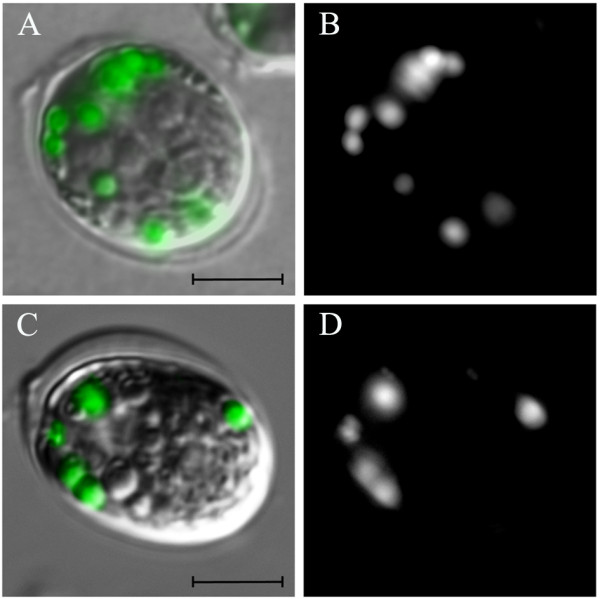
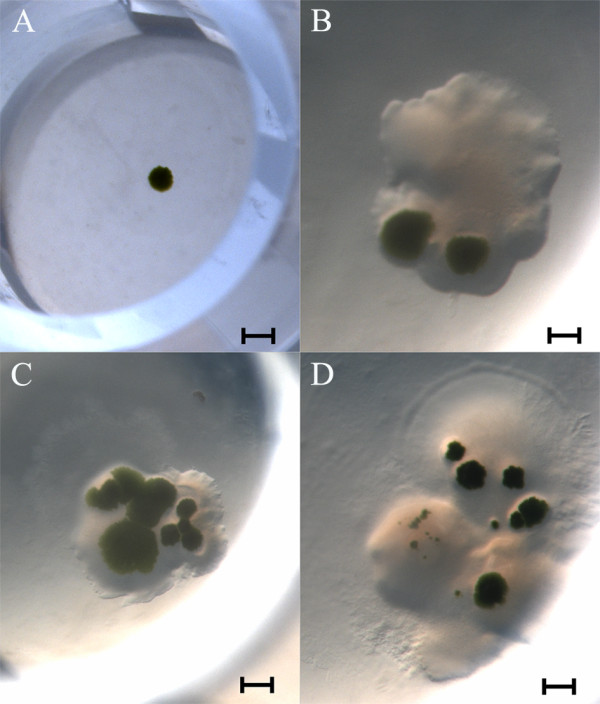
We describe a new selection method based on BODIPY (4,4-difluoro-1,3,5,7-tetramethyl-4-bora-3a,4a-diaza-s-indacene) staining, fluorescence activated cell sorting (FACS) and microplate-based isolation of lipid-rich microalgae from an environmental sample. Our results show that direct sorting onto solid medium upon FACS can save about 3 weeks during the scale-up process as compared with the growth of the same cultures in liquid medium. This approach enabled us to isolate a biodiverse collection of several axenic and unialgal cultures of different phyla.
Overview
The claims and statistics of this paper haven’t been checked yet.
Free: it reads the open-access text and checks the first 5 claims that cite a source we can check. Create a free account to check every claim.
Integrity signals
Registry
Cites
Statistics
Figures
Verification
Claims the paper makes
The claims and statistics of this paper haven’t been checked yet.
Free: it reads the open-access text and checks the first 5 claims that cite a source we can check. Create a free account to check every claim.
Claims other papers make about this one
Each is checked against this paper’s own text: does it say what the citing paper says it does?
In the citing paper
“Use of DMSO as a solvent for Nile red [24,39,41,50,95] and BODIPY 505/515 [20,21,25,43,46,48,49,51,61,64] makes it possible to exploit this permeation property.”
From The use of fluorescent Nile red and BODIPY for lipid measurement in microalgae (2015) · cites this paper as [43]
Self-check
Percentages, sums and reported differences re-computed from the paper’s own numbers.
The self-check needs the paper’s full text.
Citations
Cites
A RAPID METHOD OF TOTAL LIPID EXTRACTION AND PURIFICATION
Bligh, E. G., & Dyer, W. J. (1959) · Canadian Journal of Biochemistry and Physiology · doi:10.1139/o59-099 · Cited by 54,751
16S ribosomal DNA amplification for phylogenetic study
Weisburg, W. G., Barns, S. M., Pelletier, D. A., & Lane, D. J. (1991) · Journal of Bacteriology · doi:10.1128/jb.173.2.697-703.1991 · Cited by 11,934
Microalgae for biodiesel production and other applications: A review
Mata, T. M., Martins, A. A., & Caetano, N. S. (2010) · Renewable and Sustainable Energy Reviews · doi:10.1016/j.rser.2009.07.020 · Cited by 5,685 · cited 1×
“Although many culture collections of microalgae have been established, the variety of unknown species and strains present in the environment with potential application in the production of biofuels and/or as a source of bioactive compounds is very high [8,10,11].”
BackgroundValuable Products from Biotechnology of Microalgae
Pulz, O., & Gross, W. (2004) · Applied Microbiology and Biotechnology · doi:10.1007/s00253-004-1647-x · Cited by 2,132 · cited 2×
“The rise of interest in these microscopic organisms for biotechnological applications is due to the unique biochemical features and their vast biodiversity, which to date is almost entirely unexploited [6].”
BackgroundAn outlook on microalgal biofuels
Wijffels, R. H., & Barbosa, M. J. (2010) · Science · doi:10.1126/science.1189003 · Cited by 1,886
Lin, S. (2005) · Journal of Phycology · doi:10.1111/j.1529-8817.2005.00114.x · Cited by 1,332
(2005) · Choice Reviews Online · doi:10.5860/choice.43-0925 · Cited by 1,290
Microbial Ecology and Evolution: A Ribosomal RNA Approach
Olsen, G. J., Lane, D. J., Giovannoni, S. J., Pace, N. R., & Stahl, D. A. (1986) · Annual Review of Microbiology · doi:10.1146/annurev.mi.40.100186.002005 · Cited by 1,078
Use of algae as biofuel sources
Demirbas, A. (2010) · Energy Conversion and Management · doi:10.1016/j.enconman.2010.06.010 · Cited by 734
The promise and challenges of microalgal‐derived biofuels
Pienkos, P. T., & Darzins, A. (2009) · Biofuels, Bioproducts and Biorefining · doi:10.1002/bbb.159 · Cited by 602 · cited 1×
“Although biodiesel production from microalgae is a proven technology, it still faces several technical and economical constraints that need to be addressed [3,4] in order to scale up production and thus lower the final production costs [5].”
BackgroundInnovative natural functional ingredients from microalgae
Plaza, M., Herrero, M., Cifuentes, A., & Ibáñez, E. (2009) · Journal of Agricultural and Food Chemistry · doi:10.1021/jf901070g · Cited by 509 · cited 2×
“Although many culture collections of microalgae have been established, the variety of unknown species and strains present in the environment with potential application in the production of biofuels and/or as a source of bioactive compounds is very high [8,10,11].”
BackgroundBioprospecting for hyper-lipid producing microalgal strains for sustainable biofuel production
Mutanda, T., Ramesh, D., Karthikeyan, S., Kumari, S., Anandraj, A., & Bux, F. (2011) · Bioresource Technology · doi:10.1016/j.biortech.2010.06.077 · Cited by 471 · cited 1×
“Although several techniques for microalgae isolation have been described previously, such as single-cell isolation in liquid and solid media, serial dilutions, medium enrichment, gravimetric separation, micromanipulation and atomized cell spray [12,13], flow cytometry has”
MethodTraditional Microalgae Isolation Techniques
Andersen, R. A., & Kawachi, M. (2005) · Algal Culturing Techniques · doi:10.1016/b978-012088426-1/50007-x · Cited by 408 · cited 2×
“In fact, some strains and even entire algal taxa (for example, dinoflagellates) hardly grow on agar growth medium [12].”
BackgroundMethodWalker, T. L., Purton, S., Becker, D. K., & Collet, C. (2005) · Plant Cell Reports · doi:10.1007/s00299-005-0004-6 · Cited by 299
Screening of marine microalgae for biodiesel feedstock
Doan, T. T. Y., Sivaloganathan, B., & Obbard, J. P. (2011) · Biomass and Bioenergy · doi:10.1016/j.biombioe.2011.02.021 · Cited by 247
Phytoplankton Cell Counting by Flow Cytometry
Marie, D., Simon, N., & Vaulot, D. (2005) · Algal Culturing Techniques · doi:10.1016/b978-012088426-1/50018-4 · Cited by 231
Visualizing "green oil" in live algal cells
Cooper, M. S., Hardin, W. R., Petersen, T. W., & Cattolico, R. A. (2010) · Journal of Bioscience and Bioengineering · doi:10.1016/j.jbiosc.2009.08.004 · Cited by 215 · cited 2×
“It has recently been shown that BODIPY is able to stain lipid bodies in photosynthetic unicellular organisms, allowing the establishment of lipid-rich microalgal cultures [26], and also the development of selection programs to improve lipid production as demonstrated with the Nile red dye [14,15].”
BackgroundMethodVeldhuis, M. J. W., & Kraay, G. W. (2000) · Scientia Marina · doi:10.3989/scimar.2000.64n2121 · Cited by 199
Ördög, V., Stirk, W. A., Lenobel, R., Bancířová, M., Strnad, M., van Staden, J., Szigeti, J., & Németh, L. (2004) · Journal of Applied Phycology · doi:10.1023/b:japh.0000047789.34883.aa · Cited by 187
Fabregas, J., Abalde, J., Herrero, C., Cabezas, B., & Veiga, M. (1984) · Aquaculture · doi:10.1016/0044-8486(84)90101-7 · Cited by 184
CytoBuoy: a step forward towards using flow cytometry in operational oceanography
Dubelaar, G. B. J., & Gerritzen, P. L. (2000) · Scientia Marina · doi:10.3989/scimar.2000.64n2255 · Cited by 158
Flow cytometry as a tool for the study of phytoplankton
Dubelaar, G. B. J., & Jonker, R. R. (2000) · Scientia Marina · doi:10.3989/scimar.2000.64n2135 · Cited by 144
Montero, M. F., Aristizábal, M., & García Reina, G. (2011) · Journal of Applied Phycology · doi:10.1007/s10811-010-9623-6 · Cited by 112 · cited 3×
“It has recently been shown that BODIPY is able to stain lipid bodies in photosynthetic unicellular organisms, allowing the establishment of lipid-rich microalgal cultures [26], and also the development of selection programs to improve lipid production as demonstrated with the Nile red dye [14,15].”
BackgroundMethodJayarao, B. M., Doré, J. J. E., Baumbach, G. A., Matthews, K. R., & Oliver, S. P. (1991) · Journal of Clinical Microbiology · doi:10.1128/jcm.29.12.2774-2778.1991 · Cited by 89
Probing the physiological state of phytoplankton at the single-cell level
Jochem, F. J. (2000) · Scientia Marina · doi:10.3989/scimar.2000.64n2183 · Cited by 82
Molecular identification of Dunaliella sp. utilizing the 18S rDNA gene
Olmos, J., Paniagua, J., & Contreras, R. (2000) · Letters in Applied Microbiology · doi:10.1046/j.1472-765x.2000.00672.x · Cited by 74
The production of clonal and axenic cultures of microalgae using fluorescence-activated cell sorting
Sensen, C. W., Heimann, K., & Melkonian, M. (1993) · European Journal of Phycology · doi:10.1080/09670269300650151 · Cited by 67
Stakeholder perceptions of biofuels from microalgae
Oltra, C. (2011) · Energy Policy · doi:10.1016/j.enpol.2011.01.009 · Cited by 64
Flow Cytometry: Principles and Instrumentation
Nunez, R. (2001) · Current Issues in Molecular Biology · doi:10.21775/cimb.003.039 · Cited by 56
Enhanced lipid production in Nannochloropsis sp. using fluorescence-activated cell sorting
YEN DOAN, T.-T., & OBBARD, J. P. (2011) · GCB Bioenergy · doi:10.1111/j.1757-1707.2010.01076.x · Cited by 54 · cited 3×
“It has recently been shown that BODIPY is able to stain lipid bodies in photosynthetic unicellular organisms, allowing the establishment of lipid-rich microalgal cultures [26], and also the development of selection programs to improve lipid production as demonstrated with the Nile red dye [14,15].”
BackgroundMethodFlow sorting in aquatic ecology
Reckermann, M. (2000) · Scientia Marina · doi:10.3989/scimar.2000.64n2235 · Cited by 47
Hofstraat, J. W., de Vreeze, M. E. J., van Zeijl, W. J. M., Peperzak, L., Peeters, J. C. H., & Balfoort, H. W. (1991) · Journal of Fluorescence · doi:10.1007/bf00865249 · Cited by 47
Viable cell sorting of dinoflagellates by multiparametric flow cytometry
Sinigalliano, C. D., Winshell, J., Guerrero, M. A., Scorzetti, G., Fell, J. W., Eaton, R. W., Brand, L., & Rein, K. S. (2009) · Phycologia · doi:10.2216/08-51.1 · Cited by 46
Algae and cyanobacteria: isolation, culture and long-term maintenance
Acreman, J. (1994) · Journal of Industrial Microbiology & Biotechnology · doi:10.1007/bf01584008 · Cited by 38
Bio-activity of Algae Belonging to Bhusawal region, Maharashtra
Patil, K., Patil, V. A., Mahajan, S., & Mahajan, R. (2011) · Current Botany · Cited by 14
Research works printed but not linked: 1
- Gouveia L Batista AP Sousa I Raymundo A Bandarra NM Papadopoulos KN Microalgae in novel food products Food Chemistry Research Developments 2008 Hauppauge, NY: Nova Science Publishers, Inc. 1 37
Cited by
The use of fluorescent Nile red and BODIPY for lipid measurement in microalgae
Rumin, J., Bonnefond, H., Saint-Jean, B., Rouxel, C., Sciandra, A., Bernard, O., Cadoret, J.-P., & Bougaran, G. (2015) · Biotechnology for Biofuels · doi:10.1186/s13068-015-0220-4 · Cited by 386
“Use of DMSO as a solvent for Nile red [24,39,41,50,95] and BODIPY 505/515 [20,21,25,43,46,48,49,51,61,64] makes it possible to exploit this permeation property.”
BackgroundMethodInfluentialAlgal biofuels: Challenges and opportunities
Leite, G. B., Abdelaziz, A. E. M., & Hallenbeck, P. C. (2013) · Bioresource Technology · doi:10.1016/j.biortech.2013.02.007 · Cited by 274
Ren, H.-Y., Liu, B.-F., Ma, C., Zhao, L., & Ren, N.-Q. (2013) · Biotechnology for Biofuels · doi:10.1186/1754-6834-6-143 · Cited by 226
“Nowadays, biodiesel production technology from microalgae is widely considered as a potential and efficient method since a number of advantages, such as the simple cellular structure of microalgae, short production cycle, high intracellular lipid content, and fast growth rate [8,9].”
Lei, A., Chen, H., Shen, G., Hu, Z., Chen, L., & Wang, J. (2012) · Biotechnology for Biofuels · doi:10.1186/1754-6834-5-18 · Cited by 210
Freshwater microalgae harvested via flocculation induced by pH decrease
Liu, J., Zhu, Y., Tao, Y., Zhang, Y., Li, A., Li, T., Sang, M., & Zhang, C. (2013) · Biotechnology for Biofuels · doi:10.1186/1754-6834-6-98 · Cited by 205
Metadata
- Authors
- Pereira, H., Barreira, L., Mozes, A., Florindo, C., Polo, C., Duarte, C. V., Custódio, L., & Varela, J.
- Affiliations
- Centro de Ciências do Mar do Algarve (PT)
- University of Algarve (PT)
- Corresponding author
- Varela, João
- Venue
- Biotechnology for Biofuels
- Published
- 2011-12
- Volume
- 4
- Issue
- 1
- Pages
- 61-61
- ISSN
- 1754-6834 (ISSN-L)
- PMC
- PMC3287250
- OpenAlex
- W2105002747
- Cited by
- 146
- References
- 37
- Citations by year
- 2026: 3 · 2025: 10 · 2024: 5 · 2023: 8 · 2022: 15 · 2021: 16 · 2020: 19 · 2019: 6 · 2018: 6 · 2017: 10 · 2016: 13 · 2015: 12 · 2014: 8 · 2013: 12 · 2012: 3
- FWCI
- 3.05
- Type
- journal article
- Language
- en
- Open access
- gold
- doi.org
- Licence
- cc-by
- Locations
- Biotechnology for Biofuels (publishedVersion, cc-by)
- PubMed Central (publishedVersion, cc-by)
- PubMed (publishedVersion)
- DOAJ (DOAJ: Directory of Open Access Journals) (submittedVersion, cc-by-sa)
- Portuguese National Funding Agency for Science, Research and Technology (RCAAP Project by FCT) (submittedVersion, other-oa)
- Funders
- Centro de Ciências do Mar
- Fundação para a Ciência e a Tecnologia (SFRH/BPD/65116/2009, /2009)
- Topics
- Physical Sciences › Energy › Renewable Energy, Sustainability and the Environment › Algal biology and biofuel production
- Life Sciences › Biochemistry, Genetics and Molecular Biology › Molecular Biology › Microbial Metabolic Engineering and Bioproduction
- Life Sciences › Biochemistry, Genetics and Molecular Biology › Biochemistry › Lipid metabolism and biosynthesis
- Keywords
- BODIPY staining, fluorescence-activated cell sorting, high-throughput screening, axenic culture
About these checks
Registry, retraction, Cites and statistics results are computed, not judged, with one exception: a printed reference that no index lists is read once by a model before it counts as a citation error. Claims are extracted by a model and kept only when their quote appears verbatim in the text; each cited source is then checked, with a model’s help, for whether it says what the claim relies on. Those verdicts can be wrong — read the claim’s quote and the cited source before relying on one.
Statistics and arithmetic are recomputed, not judged.
Confidence bands are shown only for fields calibrated on our annotated test set. None is calibrated yet, so no band is shown.
What counts as a claim ›How we measure confidence ›How we check this ›
Are you an author, or do you see a problem with this page? Request a review
Data sources
Bibliographic data: Semantic Scholar, OpenAlex, Crossref.
Contains information from the Semantic Scholar Academic Graph Datasets, made available under the ODC Attribution License (ODC-BY 1.0).
Semantic Scholar’s data is described in: Kinney, R., et al. (2023). The Semantic Scholar Open Data Platform. arXiv:2301.10140.
