

Ultra low concentration deltamethrin loaded patch development and evaluation of its repellency against dengue vector Aedes (S) albopictus
Open accessThe DOI matches its Crossref record; 32 of the 33 references it cites were found in a registry or an index.
Abstract
Background: Mosquito repellents and emanators confer protection against mosquito bites through spatial action of emanated vapours which are released into the adjoining environment. Synthetic insecticides released into the environment in ultra low volume vapour phase deter the mosquitoes from biting humans in a protected space. Methods: Formulation patches were prepared using the solvent evaporation method over a backing membrane and using Dibutylphthalate (DBT) as a plasticizer. The effect of formulation variables on the deltamethrin release from the patch matrices were studied under accelerated conditions, whereas, HPLC was used for quantitative estimation of deltamethrin. The prepared patch formulations were subjected to physicochemical studies, such as, deltamethrin content, thickness, weight variation, percent moisture content, moisture uptake, surface area and surface pH determination. Deltamethrin-polymer interaction and compatibility was ascertained using DSC and FT-IR, while surface morphology and deltamethrin distribution in the patch were studied using SEM technique. Repellent activity of the patch formulations was evaluated against Ae. albopictus mosquitoes. Results: Blends of polymeric combinations of polyvinylpyrrolidone (PVP) and ethyl-cellulose (EC) with admixture of deltamethrin provided prolonged repellent activity against Ae. albopictus mosquitoes. Physicochemical characterisation indicated the suitability of deltamethrin patch formulation with the polymeric combinations of PVP and EC. Patches were very effective against laboratory reared Ae. albopictus mosquitoes. No significant difference was observed between the performance of test patches and commercially available repellent cream Mosqshield®. Conclusion: Deltamethrin loaded patches provided effective repellency against Ae. albopictus mosquitoes. The study emphasised that deltamethrin released to the environment in low concentration could be an excellent spatial repellent against hematophagous mosquitoes.
Overview
The claims and statistics of this paper haven’t been checked yet.
Free: it reads the open-access text and checks the first 5 claims that cite a source we can check. Create a free account to check every claim.
Integrity signals
Registry
Cites
Statistics
Figures
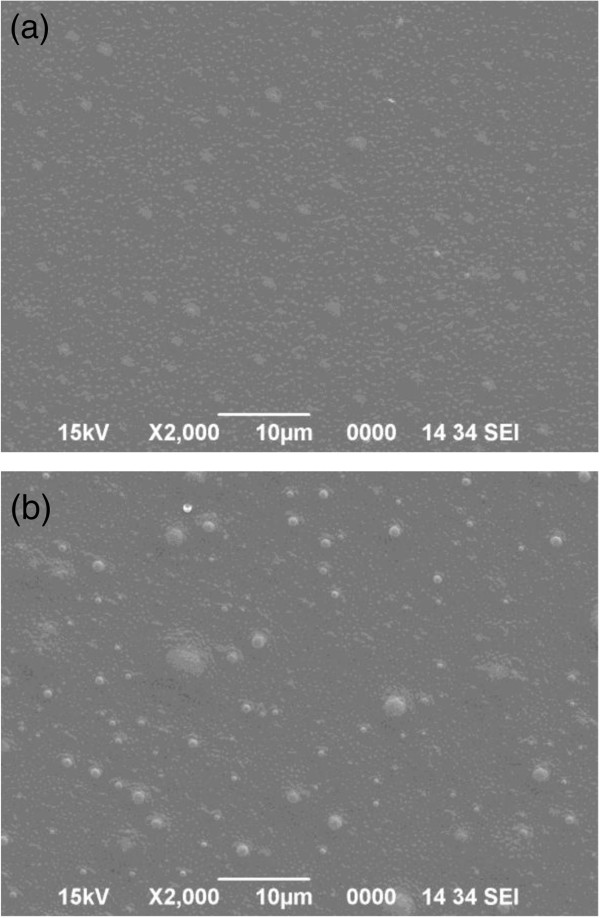
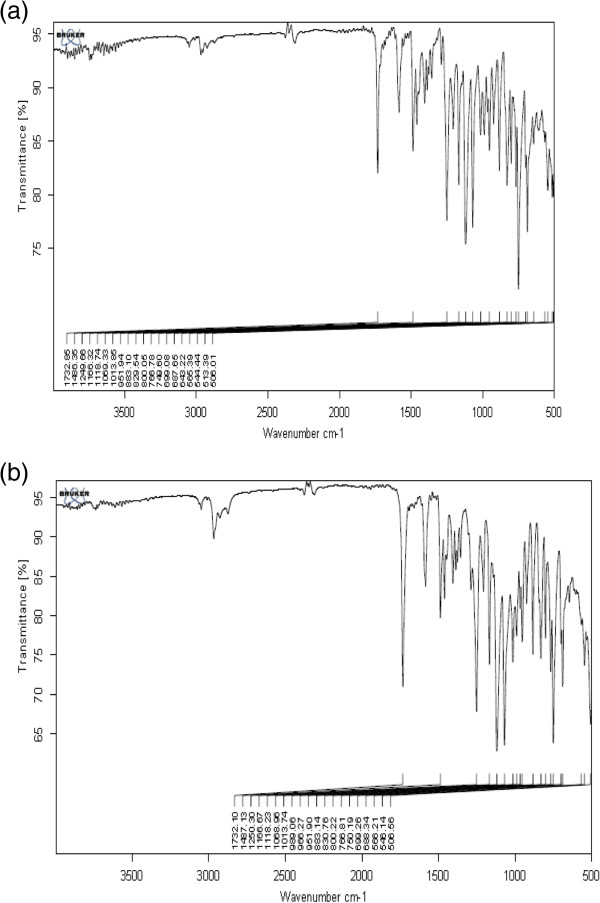
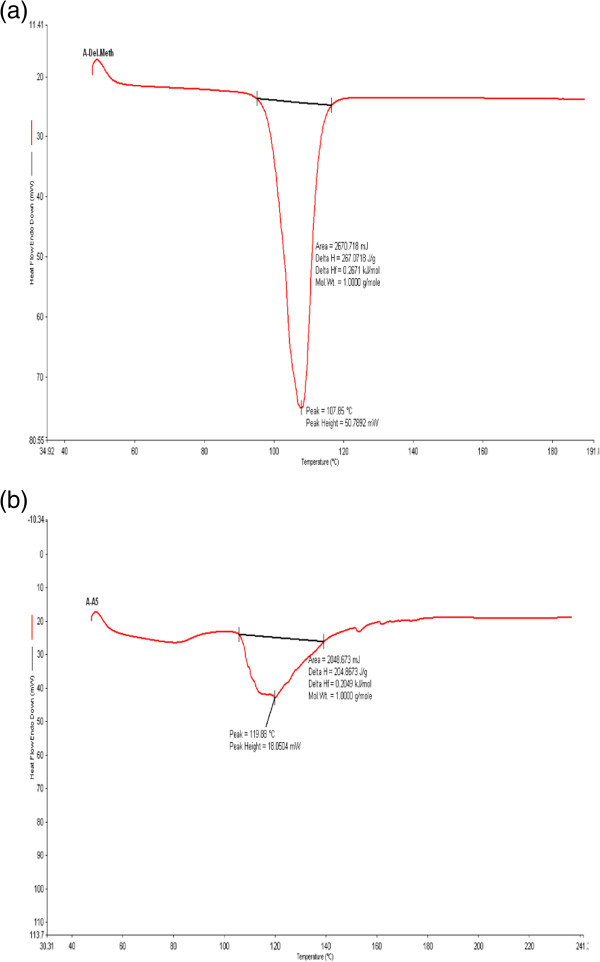
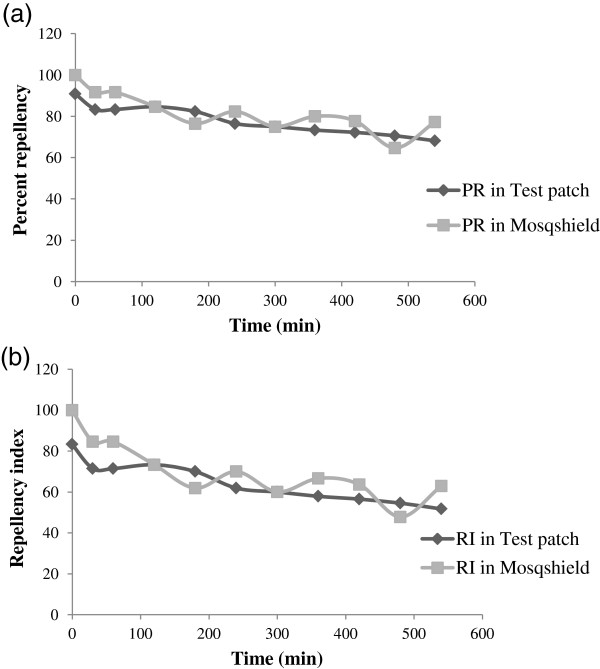
Verification
Claims the paper makes
The claims and statistics of this paper haven’t been checked yet.
Free: it reads the open-access text and checks the first 5 claims that cite a source we can check. Create a free account to check every claim.
Claims other papers make about this one
Each is checked against this paper’s own text: does it say what the citing paper says it does?
The source backs part of the claim, not all of it — or backs it for a different population, condition or comparison.
In the citing paper
“In addition to their insecticidal effect, pyrethroids have both spatial repellent and contact irritant effects,[17–19] though excitorepellency is probably the most important effect when pyrethroids are used on clothing.”
From Pyrethroid insecticides maintain repellent effect on knock-down resistant populations of Aedes aegypti mosquitoes (2018) · cites this paper as [17]
Experimental — accuracy not yet measured
Self-check
Percentages, sums and reported differences re-computed from the paper’s own numbers.
The self-check needs the paper’s full text.
Citations
Cites
Mechanisms of solute release from porous hydrophilic polymers
Korsmeyer, R. W., Gurny, R., Doelker, E., Buri, P., & Peppas, N. A. (1983) · International Journal of Pharmaceutics · doi:10.1016/0378-5173(83)90064-9 · Cited by 5,258
Comparative Efficacy of Insect Repellents against Mosquito Bites
Fradin, M. S., & Day, J. F. (2002) · New England Journal of Medicine · doi:10.1056/nejmoa011699 · Cited by 888 · cited 2×
“However, some studies have suggested that synthetic insecticide based products are highly effective in repelling the mosquitoes and other hematophagous insects [8,16,30,31].”
BackgroundKorsmeyer, R. W., Gurny, R., Doelker, E., Buri, P., & Peppas, N. A. (1983) · Journal of Pharmaceutical Sciences · doi:10.1002/jps.2600721021 · Cited by 776
Defining Challenges and Proposing Solutions for Control of the Virus Vector Aedes aegypti
Morrison, A. C., Zielinski-Gutierrez, E., Scott, T. W., & Rosenberg, R. (2008) · PLoS Medicine · doi:10.1371/journal.pmed.0050068 · Cited by 473 · cited 1×
“aegypti is more common and potential dengue vector [21,28].”
Background(1993) · Springer eBooks · doi:10.1007/978-94-011-1554-4 · Cited by 470
Mosquitoes and Mosquito Repellents: A Clinician's Guide
Fradin, M. S. (1998) · Annals of Internal Medicine · doi:10.7326/0003-4819-128-11-199806010-00013 · Cited by 451 · cited 1×
“The ideal repellent compound would prevent bites from a broad range of insect species, remain effective for a comparatively longer time, cause no irritation to skin or mucous membranes, possess no systemic toxicity, be totally greaseless and odourless and safe to all age groups including infants [11,12].”
BackgroundSafety of pyrethroid‐treated mosquito nets
Zaim, M., Aitio, A., & Nakashima, N. (2000) · Medical and Veterinary Entomology · doi:10.1046/j.1365-2915.2000.00211.x · Cited by 366 · cited 1×
“Deltamethrin, first synthesized in 1974 and marketed in 1977, is considered to be a relatively safe synthetic mosquito repellent and widely used in tropical countries [18,19].”
BackgroundThe pesticide manual, a world compendium.
Worthing, C. R. (1979) · British Crop Protection Council eBooks · Cited by 250
Aedes albopictus and the reemergence of Dengue
Rezza, G. (2012) · BMC Public Health · doi:10.1186/1471-2458-12-72 · Cited by 225 · cited 4×
“Background More than two billion people, mostly in tropical countries, are at risk of mosquito-borne diseases, such as malaria, dengue, Japanese encephalitis and filariasis [1,2].”
BackgroundInfluentialERLANGER, T. E., KEISER, J., & UTZINGER, J. (2008) · Medical and Veterinary Entomology · doi:10.1111/j.1365-2915.2008.00740.x · Cited by 221 · cited 1×
“The emergency interventions in dengue outbreaks rely on the indoor thermal fogging and outdoor ULV application of suitable insecticides [21,27].”
BackgroundOgoma, S. B., Ngonyani, H., Simfukwe, E. T., Mseka, A., Moore, J., & Killeen, G. F. (2012) · Parasites & Vectors · doi:10.1186/1756-3305-5-54 · Cited by 107 · cited 1×
“The most common mosquito repellent formulations available in the market containing DEET (N, N-diethyl-3-methylbenzamide), DEPA and deltamethrin have shown excellent repellency against mosquitoes and other biting insects [8,14-17].”
BackgroundDengue vector prevalence and virus infection in a rural area in south India
Tewari, S. C., Thenmozhi, V., Katholi, C. R., Manavalan, R., Munirathinam, A., & Gajanana, A. (2004) · Tropical Medicine & International Health · doi:10.1111/j.1365-3156.2004.01103.x · Cited by 105 · cited 1×
“albopictus received considerable attention in India after recent reports indicating its potential role in disease transmission in various parts of the country [2,4-6].”
BackgroundEvaluation of commercial products for personal protection against mosquitoes
Revay, E. E., Junnila, A., Xue, R., Kline, D. L., Bernier, U. R., Kravchenko, V. D., Qualls, W. A., Ghattas, N., & Müller, G. C. (2012) · Acta Tropica · doi:10.1016/j.actatropica.2012.10.009 · Cited by 78 · cited 2×
“Many of the mosquito repellents, though available in the market and advertised to be effective repellents, are unpleasant and ineffective in repelling the mosquitoes [10].”
BackgroundYap, H. H., Jahangir, K., Chong, A. S., Adanan, C. R., Chong, N. L., Malik, Y., & Rohaizat, B. (1998) · PubMed · Cited by 75
Walker, T. W., Robert, L. L., Copeland, R. A., Githeko, A. K., Wirtz, R. A., Githure, J., & Klein, T. A. (1996) · PubMed · Cited by 54
Gupta, R. K., & Rutledge, L. C. (1989) · PubMed · Cited by 54
Dutta, P., & Mahanta, J. (2006) · Cited by 54
Guillaumot, L., Ofanoa, R., Swillen, L., Singh, N. P., Bossin, H., & Schaffner, F. (2012) · Parasites & Vectors · doi:10.1186/1756-3305-5-247 · Cited by 51 · cited 2×
“albopictus are well known vectors responsible for the transmission of dengue fever in many countries [2,3,26].”
BackgroundEfficacy of repellent products against caged and free flying Anopheles stephensi mosquitoes.
Trongtokit, Y., Curtis, C. F., & Rongsriyam, Y. (2005) · PubMed · Cited by 46
Maia, M. F., Abonuusum, A., Lorenz, L. M., Clausen, P.-H., Bauer, B., Garms, R., & Kruppa, T. F. (2012) · PLoS ONE · doi:10.1371/journal.pone.0045794 · Cited by 45 · cited 3×
“However, some studies have suggested that synthetic insecticide based products are highly effective in repelling the mosquitoes and other hematophagous insects [8,16,30,31].”
BackgroundNovel Carboxamides as Potential Mosquito Repellents
KATRITZKY, A. R., Wang, Z., Slavov, S. H., Dobchev, D. A., Hall, C. D., Tsikolia, M., Bernier, U. R., Elejalde, N. M., Clark, G. G., & Linthicum, K. J. (2010) · Journal of Medical Entomology · doi:10.1603/me09284 · Cited by 42 · cited 1×
“The ideal repellent compound would prevent bites from a broad range of insect species, remain effective for a comparatively longer time, cause no irritation to skin or mucous membranes, possess no systemic toxicity, be totally greaseless and odourless and safe to all age groups including infants [11,12].”
BackgroundStudies on the teratogenic effects of deltamethrin in rats.
Abdel-Khalik, M. M., Hanafy, M. S., & Abdel-Aziz, M. I. (1993) · PubMed · Cited by 39
Schleier, J. J., Peterson, R. K. D., Irvine, K. M., Marshall, L. A., Weaver, D. K., & Preftakes, C. J. (2012) · The Science of The Total Environment · doi:10.1016/j.scitotenv.2012.07.059 · Cited by 37 · cited 1×
“Application of ultra low volume (ULV) insecticides has proved effective in managing high densities of adult vector mosquitoes [22].”
BackgroundManda, H., Shah, P., Polsomboon, S., Chareonviriyaphap, T., Castro-Llanos, F., Morrison, A., Burrus, R. G., Grieco, J. P., & Achee, N. L. (2013) · PLoS Neglected Tropical Diseases · doi:10.1371/journal.pntd.0002074 · Cited by 34
Kweka, E. J., Munga, S., Mahande, A. M., Msangi, S., Mazigo, H. D., Adrias, A. Q., & Matias, J. R. (2012) · Parasites & Vectors · doi:10.1186/1756-3305-5-189 · Cited by 30 · cited 2×
“Use of repellents as personal protection measures against the insect bites is the most accepted method to control insect vector borne diseases currently [7-9].”
BackgroundFirst evidence of chikungunya virus infection in Assam, Northeast India
Dutta, P., Khan, S. A., Khan, A. M., Borah, J., Chowdhury, P., & Mahanta, J. (2011) · Transactions of the Royal Society of Tropical Medicine and Hygiene · doi:10.1016/j.trstmh.2011.02.004 · Cited by 29 · cited 1×
“albopictus received considerable attention in India after recent reports indicating its potential role in disease transmission in various parts of the country [2,4-6].”
BackgroundRepellent Activity of Some Essential Oils AgainstSimuliumSpecies in India
Hazarika, S., Dhiman, S. K., Rabha, B., Rk, B., & Singh, L. (2012) · Journal of Insect Science · doi:10.1673/031.012.0501 · Cited by 28 · cited 2×
“Use of repellents as personal protection measures against the insect bites is the most accepted method to control insect vector borne diseases currently [7-9].”
BackgroundSelf-citationKalyanasundaram, M., & Mathew, N. (2006) · Journal of Medical Entomology · doi:10.1603/0022-2585(2006)43[518:npdasa]2.0.co;2 · Cited by 28
Pupal productivity of dengue vectors in Kolkata, India: implications for vector management.
Banerjee, S., Aditya, G., & Saha, G. K. (2013) · PubMed Central · Cited by 25
Self-citationSunil, D., Bipul, R., Pronobesh, C., Das, N. G., Hazarika, S., Bhola, R. K., Vijay, V., & Lokendra, S. (2012) · PubMed · Cited by 13
Efficacy of Deltamethrin and Cyfluthrin Impregnated Cloth over Uniform against Mosquito Bites
Bhatnagar, A., & Mehta, V. (2007) · Medical Journal Armed Forces India · doi:10.1016/s0377-1237(07)80052-9 · Cited by 6 · cited 1×
“Other studies have indicated that many of the synthetic repellents while applied along with the other repellents provide more protection against mosquitoes as compared to applied singly [33].”
BackgroundStudies on Deltamethrin Treated Mosquito Net
Tyagi, A., Sharma, T., Singh, M. P., Fatma, K. H. T., Rawat, V. S., Aggarwal, M., & Khandal, R. K. (2010) · Journal of Chemistry · doi:10.1155/2010/272051 · Cited by 4
Insect repellants in urban settings.
Peterson, C. (2003) · PubMed · Cited by 2
Research works printed but not linked: 1
- Wyatt DA Taking poorly water soluble compounds through discovery, in: recent advances in the formulations and development of poorly soluble drugs Bull Tech Gattefosse 1999 92 31 39
Cited by
Mosquito repellents: An insight into the chronological perspectives and novel discoveries
Islam, J., Zaman, K., Duarah, S., Raju, P. S., & Chattopadhyay, P. (2016) · Acta Tropica · doi:10.1016/j.actatropica.2016.12.031 · Cited by 121
Self-citationBowman, N. M., Akialis, K., Cave, G., Barrera, R., Apperson, C. S., & Meshnick, S. R. (2018) · PLoS ONE · doi:10.1371/journal.pone.0196410 · Cited by 72
Chattopadhyay, P., Dhiman, S., Borah, S., Rabha, B., Chaurasia, A. K., & Veer, V. (2015) · Acta Tropica · doi:10.1016/j.actatropica.2015.03.027 · Cited by 60
Self-citationKala, S., Sogan, N., Naik, S. N., Agarwal, A., & Kumar, J. (2020) · Scientific Reports · doi:10.1038/s41598-020-70889-z · Cited by 49
Charlwood, J. D., Nenhep, S., Protopopoff, N., Sovannaroth, S., MORGAN, J. C., & Hemingway, J. (2016) · Medical and Veterinary Entomology · doi:10.1111/mve.12168 · Cited by 36
“One way of doing this might be to use repellents to prevent mosquitoes from biting and hence a number of products have been developed with this in mind (Kweka et al., 2012; Chattopadhyay et al., 2013; Revay et al., 2013).”
Background
Metadata
- Authors
- Chattopadhyay, P., Dhiman, S., Devi, K. A., Banerjee, S., Rabha, B., Chaurasia, A., & Veer, V.
- Affiliations
- Defence Research Laboratory (IN)
- Corresponding author
- Dhiman, Sunil
- Venue
- Parasites & Vectors
- Published
- 2013-09-28
- Volume
- 6
- Issue
- 1
- Pages
- 284-284
- ISSN
- 1756-3305 (ISSN-L)
- PMC
- PMC3849721
- OpenAlex
- W2160617000
- Cited by
- 20
- References
- 33
- Citations by year
- 2024: 4 · 2023: 2 · 2022: 1 · 2021: 4 · 2020: 1 · 2018: 1 · 2017: 1 · 2016: 3 · 2015: 2 · 2014: 1
- FWCI
- 2.41
- Type
- journal article
- Language
- en
- Open access
- gold
- doi.org
- Licence
- cc-by
- Locations
- Parasites & Vectors (publishedVersion, cc-by)
- Europe PMC (PubMed Central) (publishedVersion, cc-by)
- PubMed Central (publishedVersion, cc-by)
- PubMed (publishedVersion)
- Funders
- Defence Research and Development Organisation
- Ministry of Defence
- Topics
- Life Sciences › Agricultural and Biological Sciences › Plant Science › Insect Pest Control Strategies
- Health Sciences › Medicine › Public Health, Environmental and Occupational Health › Dengue and Mosquito Control Research
- Life Sciences › Agricultural and Biological Sciences › Agronomy and Crop Science › Polymer-Based Agricultural Enhancements
- Keywords
- deltamethrin, spatial repellents, Aedes albopictus, polyvinylpyrrolidone, ethyl cellulose, solvent evaporation, dengue vector control
- MeSH terms
- Aedes, Animals, Chemistry, Pharmaceutical, Chromatography, High Pressure Liquid, Dengue, Disease Vectors, Female, Humans, Insect Bites and Stings, Insect Repellents, Nitriles, Pyrethrins, Spectroscopy, Fourier Transform Infrared, Chemical Phenomena
About these checks
Registry, retraction, Cites and statistics results are computed, not judged, with one exception: a printed reference that no index lists is read once by a model before it counts as a citation error. Claims are extracted by a model and kept only when their quote appears verbatim in the text; each cited source is then checked, with a model’s help, for whether it says what the claim relies on. Those verdicts can be wrong — read the claim’s quote and the cited source before relying on one.
Statistics and arithmetic are recomputed, not judged.
Confidence bands are shown only for fields calibrated on our annotated test set. None is calibrated yet, so no band is shown.
What counts as a claim ›How we measure confidence ›How we check this ›
Are you an author, or do you see a problem with this page? Request a review
Data sources
Bibliographic data: Semantic Scholar, OpenAlex, Crossref.
Contains information from the Semantic Scholar Academic Graph Datasets, made available under the ODC Attribution License (ODC-BY 1.0).
Semantic Scholar’s data is described in: Kinney, R., et al. (2023). The Semantic Scholar Open Data Platform. arXiv:2301.10140.
