

Field trial on a novel control method for the dengue vector, Aedes aegypti by the systematic use of Olyset® Net and pyriproxyfen in Southern Vietnam
Open accessThe DOI matches its Crossref record, with a small difference in title or year; 40 of the 41 references it cites were found in a registry or an index.
Abstract
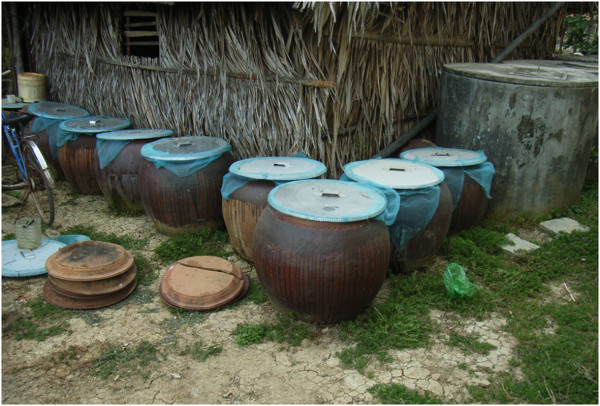
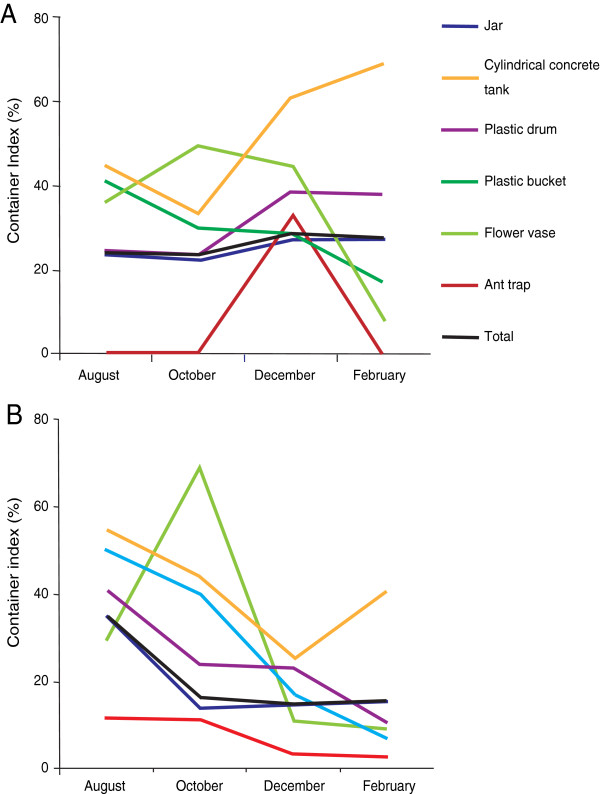
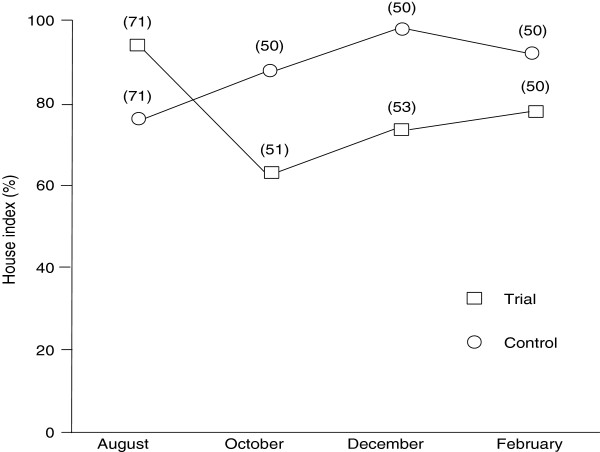
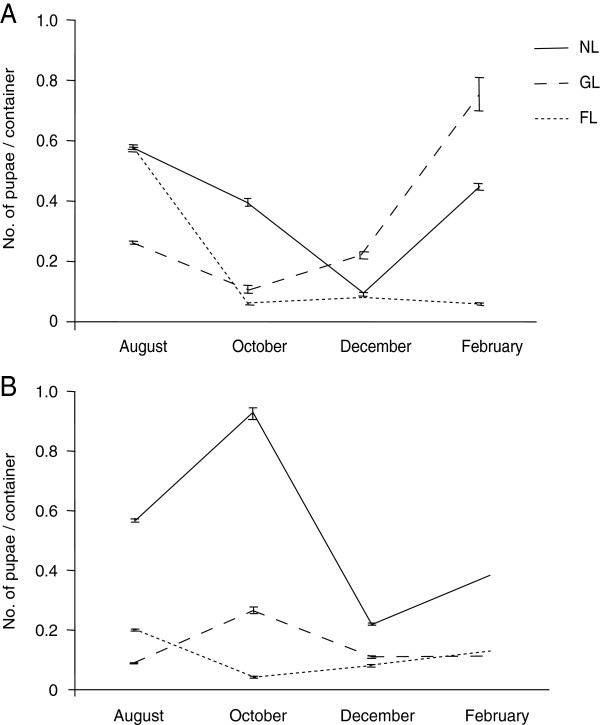
BACKGROUND: Jars, tanks, and drums provide favorable rearing/breeding sites for Aedes aegypti in Vietnam. However, the use of insecticides to control mosquitoes at such breeding sites has not been approved in Vietnam since they are also often sources of drinking water, making larval vector control difficult. Mosquito nets pre-treated with long-lasting insecticide treated nets (LLITNs) form an effective measure for malaria control. We examined changes in the abundance of immature Aedes aegypti to evaluate the efficacy of covering ceramic jars with lids comprising one type of LLITN, Olyset® Net, in inhibiting oviposition by adult females, and to evaluate the effect of treating other breeding containers, such as flower vases, inside and around the outside of houses with a slow-release pyriproxyfen formulation to kill pupae. METHODS: We selected 313 households for the trial and 363 households for the control in Tan Chanh, Long An province, Vietnam. In the trial area, Olyset® Net lids were used to cover five major types of water container (ceramic jars, cylindrical concrete tanks, other concrete tanks, plastic drums, and plastic buckets), while pyriproxyfen was used to treat flower vases and ant traps. We also monitored dengue virus transmission by measuring anti-dengue IgM and IgG levels in healthy residents in both control and trial areas to estimate the effectiveness of Olyset® Net at controlling the dengue vector, Aedes aegypti. RESULTS: The container-index and house-index for immature Ae. aegypti fell steeply one month after treatment in the trial area. Lids with Olyset® Net that fit container openings clearly seemed to reduce the presence of immature Ae. aegypti as the density of pupae decreased 1 month after treatment in the trial area. Pyriproxyfen was also effective at killing pupae in the water containers in the trial area. Although the dengue seroconversion rate was not influenced by Olyset® Net, it was lower in two-five year old children when compared to older children and adults in both control and trial areas. CONCLUSIONS: Our study showed that the treatment by Olyset® Net and pyriproxyfen had a strong negative effect on the prevalence of immature Ae. aegypti, which persisted for at least 5 months after treatment.
Overview
The claims and statistics of this paper haven’t been checked yet.
Free: it reads the open-access text and checks the first 5 claims that cite a source we can check. Create a free account to check every claim.
Integrity signals
Registry
Cites
Statistics
Figures
Verification
Claims the paper makes
The claims and statistics of this paper haven’t been checked yet.
Free: it reads the open-access text and checks the first 5 claims that cite a source we can check. Create a free account to check every claim.
Claims other papers make about this one
Each is checked against this paper’s own text: does it say what the citing paper says it does?
The source backs part of the claim, not all of it — or backs it for a different population, condition or comparison.
In the citing paper
“A substantial number of reports demonstrated impacts on vector indices of insecticide-treated materials (ITMs), deployed as window or door curtains [54, 75, 77, 82, 104, 105], although they were effective only where houses with fewer and smaller windows and doors [75–77, 104] and where coverage of the intervention was particularly high [77].”
From Is Dengue Vector Control Deficient in Effectiveness or Evidence?: Systematic Review and Meta-analysis (2016) · cites this paper as [82]
Experimental — accuracy not yet measuredThe cited source says what the claim attributes to it.
In the citing paper
“while the odds of the presence of immature stage Aedes were reduced in the intervention group, through the combined use of Olyset net covers for waters jars and pyriproxyfen for a period of 5 months (S2 Fig) [82].”
From Is Dengue Vector Control Deficient in Effectiveness or Evidence?: Systematic Review and Meta-analysis (2016) · cites this paper as [82]
Self-check
Percentages, sums and reported differences re-computed from the paper’s own numbers.
The self-check needs the paper’s full text.
Citations
Cites
An Introduction to Generalized Linear Models.
Chang, P. C., & Dobson, A. J. (1991) · Journal of the American Statistical Association · doi:10.2307/2290548 · Cited by 2,509
Gubler, D. J. (2002) · Trends in Microbiology · doi:10.1016/s0966-842x(01)02288-0 · Cited by 1,523
Aëdes Aegypti The Yellow Fever Mosquito: Its Life History, Bionomics and Structure
Christophers, S. R. (1960) · Virtual Defense Library (Ministerio de Defensa) · Cited by 715
Innis, B. L., Nisalak, A., Nimmannitya, S., Kusalerdchariya, S., Chongswasdi, V., Suntayakorn, S., Puttisri, P., & Hoke, C. H. (1989) · The American Journal of Tropical Medicine and Hygiene · doi:10.4269/ajtmh.1989.40.418 · Cited by 711
Dengue/Dengue Hemorrhagic Fever: The Emergence of a Global Health Problem
Gubler, D. J., & Clark, G. G. (1995) · Emerging Infectious Diseases · doi:10.3201/eid0102.952004 · Cited by 657
An Introduction to Generalized Linear Models, Second Edition
Dobson, A. (2001) · Chapman & Hall/CRC Texts in Statistical Science · doi:10.1201/9781420057683 · Cited by 416
Aedes aegypti and Aedes aegypti-Borne Disease Control in the 1990s: Top Down or Bottom Up
Gubler, D. J. (1989) · The American Journal of Tropical Medicine and Hygiene · doi:10.4269/ajtmh.1989.40.571 · Cited by 405
Newton, E. A. C., & Reiter, P. (1992) · The American Journal of Tropical Medicine and Hygiene · doi:10.4269/ajtmh.1992.47.709 · Cited by 305
Halstead, S. B., Scanlon, J. E., Umpaivit, P., & Udomsakdi, S. (1969) · The American Journal of Tropical Medicine and Hygiene · doi:10.4269/ajtmh.1969.18.997 · Cited by 303
Kroeger, A., Lenhart, A., Ochoa, M., Villegas, E., Levy, M., Alexander, N., & McCall, P. J. (2006) · BMJ · doi:10.1136/bmj.332.7552.1247 · Cited by 255 · cited 2×
“There have been a few studies in which vector populations have been successfully suppressed by covering the breeding containers [14], thereby creating a physical barrier that prevents female mosquitoes from entering the containers [15].”
Background
Research works printed but not linked: 7
- 20. WHO: The use of impregnated bed nets and other materials for vector-borne disease control. Geneva, Switzerland: WHO/VBC/89; 1989:981.
- 22. WHO: Review of Olyset Net; Bifenthrin 10% WP. Report of the Fifth WHOPES Working Group Meeting; 2001.
- 26. Department of Health Long An Province: National dengue surveillance of Long An province. Tan An, Vietnam: Long An Province: 2008.
- 27. Department of Health Long An Province, Department of Health Long An Province: National dengue surveillance of Long An province. Tan An, Vietnam: Long An Province: 2009.
- 28. Goverment of Vietnam: Natonal target program for rural water supply and sanitation (2006-2010). Goverment of Viet Nam: 2005.
- 36. Focks DA, Alexander N: Multicountry study of Aedes aegypti pupal productivity survey methodology: Findings and recommendations. Dengue Bulletin 2007, 31:192-200.
- 39. Tien TKT HD, Tien NT, Quang LC: Predictive indicators for forecasting epidemics of dengue/dengue haemorrhagic fever through epidemiological, virological and entomological surveillance. Dengue Bulletin 1999, 23:34-39.
Cited by
Bowman, L. R., Donegan, S., & McCall, P. J. (2016) · PLOS Neglected Tropical Diseases · doi:10.1371/journal.pntd.0004551 · Cited by 449
Alternative strategies for mosquito-borne arbovirus control
Achee, N. L., Grieco, J. P., Vatandoost, H., Seixas, G., Pinto, J., Ching-NG, L., Martins, A. J., Juntarajumnong, W., Corbel, V., Gouagna, C., et al. (2019) · PLOS Neglected Tropical Diseases · doi:10.1371/journal.pntd.0006822 · Cited by 353
Evidence-based vector control? Improving the quality of vector control trials
Wilson, A. L., Boelaert, M., Kleinschmidt, I., Pinder, M., Scott, T. W., Tusting, L. S., & Lindsay, S. W. (2015) · Trends in Parasitology · doi:10.1016/j.pt.2015.04.015 · Cited by 157
Pyriproxyfen is metabolized by P450s associated with pyrethroid resistance in An. gambiae
Yunta, C., Grisales, N., Nász, S., Hemmings, K., Pignatelli, P., Voice, M., Ranson, H., & Paine, M. J. I. (2016) · Insect Biochemistry and Molecular Biology · doi:10.1016/j.ibmb.2016.09.001 · Cited by 114
Use of pyriproxyfen in control of Aedes mosquitoes: A systematic review
Hustedt, J. C., Boyce, R. M., Bradley, J., Hii, J., & Alexander, N. D. E. (2020) · PLoS neglected tropical diseases · doi:10.1371/journal.pntd.0008205 · Cited by 109
Community effectiveness of pyriproxyfen as a dengue vector control method: A systematic review
Maoz, D., Ward, T., Samuel, M., Müller, P., Runge‐Ranzinger, S., Toledo, J., Boyce, R. M., Velayudhan, R., & Horstick, O. (2017) · PLoS neglected tropical diseases · doi:10.1371/journal.pntd.0005651 · Cited by 86
Meta-analysis of studies on chemical, physical and biological agents in the control of Aedes aegypti
Lima, E. P., Goulart, M. O. F., & Rolim Neto, M. L. (2015) · BMC Public Health · doi:10.1186/s12889-015-2199-y · Cited by 72
“3 times greater than in those with covers [10].”
BackgroundInfluentialGenchi, C., Bowman, D., & Drake, J. (2014) · Parasites & Vectors · doi:10.1186/1756-3305-7-206 · Cited by 67
Che‐Mendoza, A., Guillermo-May, G., Herrera‐Bojórquez, J., Barrera-Pérez, M. A., Dzul-Manzanilla, F., Gutiérrez-Castro, C., Arredondo‐Jiménez, J. I., Sánchez-Tejeda, G., Vazquez‐Prokopec, G. M., Ranson, H., et al. (2015) · Transactions of the Royal Society of Tropical Medicine and Hygiene · doi:10.1093/trstmh/tru189 · Cited by 65
Environmental risk assessment (ERA) of pyriproxyfen in non-target aquatic organisms
Moura, J. A. D. S., & de Souza-Santos, L. P. (2020) · Aquatic Toxicology · doi:10.1016/j.aquatox.2020.105448 · Cited by 50
Quantitative Outcomes of a One Health approach to Study Global Health Challenges
Falzon, L. C., Lechner, I., Chantziaras, I., Collineau, L., Courcoul, A., Filippitzi, M., Laukkanen‐Ninios, R., Peroz, C., Ferreira, J. P., Postma, M., et al. (2018) · EcoHealth · doi:10.1007/s10393-017-1310-5 · Cited by 46
Interventions against Aedes/dengue at the household level: a systematic review and meta-analysis
Montenegro-Quiñonez, C. A., Louis, V. R., Horstick, O., Velayudhan, R., Dambach, P., & Runge‐Ranzinger, S. (2023) · EBioMedicine · doi:10.1016/j.ebiom.2023.104660 · Cited by 101
Toxicity and fate of chiral insecticide pyriproxyfen and its metabolites in zebrafish (Danio rerio)
Wei, Y., Cui, J., Zhai, W., Liu, X., Zhou, Z., Wang, P., & Liu, D. (2021) · Environmental Pollution · doi:10.1016/j.envpol.2021.116894 · Cited by 34
Jiménez-Alejo, A., Morales-Pérez, A., Nava-Aguilera, E., Flores-Moreno, M., Apreza-Aguilar, S., Carranza-Alcaraz, W., Cortés-Guzmán, A. J., Fernández‐Salas, I., Ledogar, R. J., Cockcroft, A., et al. (2017) · BMC Public Health · doi:10.1186/s12889-017-4294-8 · Cited by 30
Pinchoff, J., Silva, M., Spielman, K. L., & Hutchinson, P. (2021) · Parasites & Vectors · doi:10.1186/s13071-021-04668-8 · Cited by 33
Mosquitoes and Mosquito-Borne Diseases in Vietnam
Huynh, L. N., Tran, L. B., Nguyen, H. S., Ho, V. H., Parola, P., & Nguyen, X. Q. (2022) · Insects · doi:10.3390/insects13121076 · Cited by 26
Saleh, F., Kitau, J., Konradsen, F., Kampango, A., Abassi, R. A., & Schiøler, K. L. (2020) · PLoS neglected tropical diseases · doi:10.1371/journal.pntd.0008949 · Cited by 26
Overgaard, H. J., Pientong, C., Thaewnongiew, K., Bangs, M. J., Ekalaksananan, T., Aromseree, S., Phanitchat, T., Phanthanawiboon, S., Fustec, B., Corbel, V., et al. (2018) · Trials · doi:10.1186/s13063-018-2490-1 · Cited by 22
Multigenerational effects of the insecticide Pyriproxyfen and recovery in Daphnia magna
Salesa, B., Gavilá, J. T., Sancho, E., & Ferrando, M. D. (2023) · The Science of The Total Environment · doi:10.1016/j.scitotenv.2023.164013 · Cited by 17
Seccacini, E., Juan, L. W., Zerba, E. N., & Licastro, S. (2014) · Parasitology Research · doi:10.1007/s00436-014-3998-2 · Cited by 16
Herrera‐Bojórquez, J., Trujillo‐Peña, E., Vadillo-Sánchez, J., Riestra-Morales, M., Che‐Mendoza, A., Delfín‐González, H., Pavía‐Ruz, N., Arredondo‐Jiménez, J. I., Santamaría, E., Flores, A. E., et al. (2019) · Journal of Medical Entomology · doi:10.1093/jme/tjz176 · Cited by 16
Vythilingam, I., Sam, J. I.-C., Chan, Y. F., Khaw, L. T., & Sulaiman, W. Y. W. (2016) · Frontiers in Microbiology · doi:10.3389/fmicb.2016.01452 · Cited by 14
Vien, Q. M., Mai, T. T. X., Tam, N. L. M., Nghĩa, L. T., Komada, K., & Murakami, H. (2018) · Journal of Epidemiology · doi:10.2188/jea.je20170090 · Cited by 13
Ligsay, A. D., Regencia, Z. J. G., Tambio, K. J. M., Aytona, M. J. M., Generale, A. J. A., Alejandro, G. J. D., Tychuaco, J. S., Llagas, L. A. D. L., Baja, E. S., & Paul, R. E. L. (2023) · Tropical Medicine and Infectious Disease · doi:10.3390/tropicalmed8010066 · Cited by 7
Evaluating pesticide-induced toxicity in Cyprinus carpio using hemato-biochemical biomarkers
Yaseen, M., Ullah, H., Mubarik, M. S., Jadoon, W. A., Ghayyur, S., Iftikhar, M., & Ghayyur, S. (2025) · Ecotoxicology · doi:10.1007/s10646-025-02929-1 · Cited by 8
Renault, D., Derocles, S. A. P., Haubrock, P. J., Simard, F., Cuthbert, R. N., & Moro, C. V. (2023) · Biological Invasions · doi:10.1007/s10530-023-03158-5 · Cited by 11
Santos, V. S. V., & Pereira, B. B. (2025) · Journal of Toxicology and Environmental Health Part B · doi:10.1080/10937404.2025.2570725 · Cited by 6
Sulistiawati, S., Masulun, M. J., Ramadhany, A. K., Hanafie, A. N., Alfiani, R. F., Husnah, S. E., Puteri, A. I. S., & Mahestari, A. N. (2023) · Pharmacognosy Journal · doi:10.5530/pj.2023.15.180 · Cited by 9
Romero-Vivas, C. M., Potes, D., Arango-Padilla, P., García, C. E. R., & Falconar, A. K. I. (2024) · BMC Public Health · doi:10.1186/s12889-024-19554-y · Cited by 5
12. Classic and novel tools for mosquito control worldwide
Bueno‐Marí, R., Drago, A., Montalvo, T., Dutto, M., & Becker, N. (2022) · Wageningen Academic Publishers eBooks · doi:10.3920/978-90-8686-931-2_12 · Cited by 5
Potential control measures for pyrethroid-resistant malaria vectors
Kawada, H. (2017) · Acta Horticulturae · doi:10.17660/actahortic.2017.1169.10 · Cited by 2
Self-citationAbdi, A. A., Juarez, J. G., Harris, T., Magalhães, T., & Hamer, G. L. (2026) · PLoS neglected tropical diseases · doi:10.1371/journal.pntd.0013914 · Cited by 1
Ohba, S., Huynh, T. T. T., Kawada, H., Le, L. L., Ngọc, H. T., Hoang, S. L., & Takagi, M. (2015) · Japanese Journal of Infectious Diseases · doi:10.7883/yoken.jjid.2014.448 · Cited by 1
Self-citationKawada, H. (2014) · Medical Entomology and Zoology · doi:10.7601/mez.65.45
Self-citationOgino, K., Hara, H., Araki, O., Takai, K., & Kanazawa, T. (2019) · Medical Entomology and Zoology · doi:10.7601/mez.70.199
Febriana, I. H., Ansariadi, A., Ishak, H., Maria, I. L., Aminuddin, R., & Pamantouw, A. (2022) · Open Access Macedonian Journal of Medical Sciences · doi:10.3889/oamjms.2022.9391 · Cited by 1
Pinchoff, J., Silva, M., Spielman, K. L., & Hutchinson, P. (2021) · Figshare · doi:10.6084/m9.figshare.14252281
Low, G. K. K., 柯玉玲, Samson, E., Rane, P., Horstick, O., & Montenegro-Quiñonez, C. A. (2026) · Tropical Medicine & International Health · doi:10.1111/tmi.70213
Metadata
- Authors
- Tsunoda, T., Kawada, H., Huynh, T. T. T., Le Luu, L., Le, S. H., Tran, H. N., Vu, H. T. Q., Le, H. M., Hasebe, F., Tsuzuki, A., & Takagi, M.
- Affiliations
- Nagasaki University (JP)
- Institut Pasteur in Ho Chi Minh City (VN)
- National Institute Of Hygiene And Epidemiology (VN)
- Corresponding author
- Tsunoda, Takashi
- Venue
- Parasites & Vectors
- Published
- 2013-01-11
- Volume
- 6
- Issue
- 1
- Pages
- 6-6
- ISSN
- 1756-3305 (ISSN-L)
- PMC
- PMC3558445
- OpenAlex
- W2164768085
- Semantic Scholar
- 44f41569ee4ca122b5ef67d4c72b852437c31faf
- Cited by
- 39
- References
- 41
- Citations by year
- 2026: 2 · 2025: 2 · 2024: 1 · 2023: 5 · 2022: 3 · 2021: 3 · 2020: 4 · 2019: 3 · 2018: 3 · 2017: 3 · 2016: 3 · 2015: 4 · 2014: 3
- FWCI
- 3.40
- Type
- journal article
- Language
- en
- Open access
- gold
- doi.org
- Licence
- cc-by
- creativecommons.org/licenses/by/2.0 (tdm)
- Locations
- Parasites & Vectors (publishedVersion, cc-by)
- Europe PMC (PubMed Central) (publishedVersion, cc-by)
- PubMed Central (publishedVersion, cc-by)
- PubMed (publishedVersion)
- DOAJ (DOAJ: Directory of Open Access Journals) (submittedVersion, cc-by-sa)
- Institutional Repositories DataBase (IRDB) (submittedVersion, cc-by-nc-nd)
- Nagasaki University's Academic Output SITE (Nagasaki University) (submittedVersion, cc-by-nc-nd)
- Greater South Information System
- Funders
- Japan Society for the Promotion of Science (24659210)
- Topics
- Health Sciences › Medicine › Public Health, Environmental and Occupational Health › Mosquito-borne diseases and control
- Health Sciences › Medicine › Public Health, Environmental and Occupational Health › Dengue and Mosquito Control Research
- Health Sciences › Medicine › Public Health, Environmental and Occupational Health › Malaria Research and Control
- Keywords
- Aedes aegypti, dengue vector control, Olyset Net, long-lasting insecticidal nets, pyriproxyfen, larval source management, oviposition inhibition, container breeding sites, dengue seroprevalence, household water containers
- MeSH terms
- Adolescent, Aedes, Animals, Antibodies, Viral, Child, Child, Preschool, Dengue, Female, Humans, Immunoglobulin G, Immunoglobulin M, Infant, Insect Vectors, Male, Mosquito Control, Pyridines, Vietnam, Seroepidemiologic Studies, Insecticide-Treated Bednets
About these checks
Registry, retraction, Cites and statistics results are computed, not judged, with one exception: a printed reference that no index lists is read once by a model before it counts as a citation error. Claims are extracted by a model and kept only when their quote appears verbatim in the text; each cited source is then checked, with a model’s help, for whether it says what the claim relies on. Those verdicts can be wrong — read the claim’s quote and the cited source before relying on one.
Statistics and arithmetic are recomputed, not judged.
Confidence bands are shown only for fields calibrated on our annotated test set. None is calibrated yet, so no band is shown.
What counts as a claim ›How we measure confidence ›How we check this ›
Are you an author, or do you see a problem with this page? Request a review
Data sources
Bibliographic data: Semantic Scholar, OpenAlex, Crossref.
Contains information from the Semantic Scholar Academic Graph Datasets, made available under the ODC Attribution License (ODC-BY 1.0).
Semantic Scholar’s data is described in: Kinney, R., et al. (2023). The Semantic Scholar Open Data Platform. arXiv:2301.10140.
