

The DOI matches its Crossref record; 36 of the 36 references it cites were found in a registry or an index.
Autophagy activation and enhanced mitophagy characterize the Purkinje cells of pcd mice prior to neuronal death
Open accessAbstract
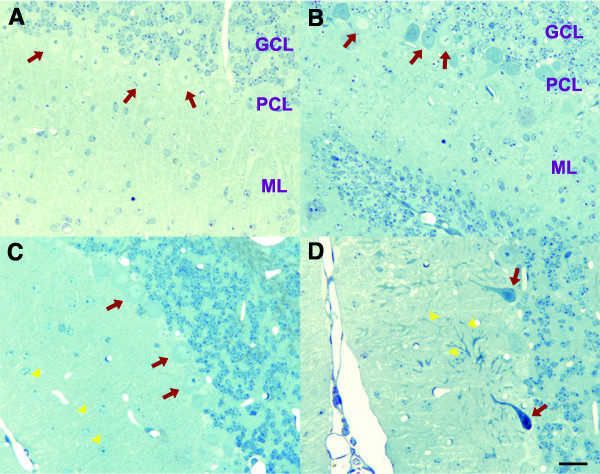
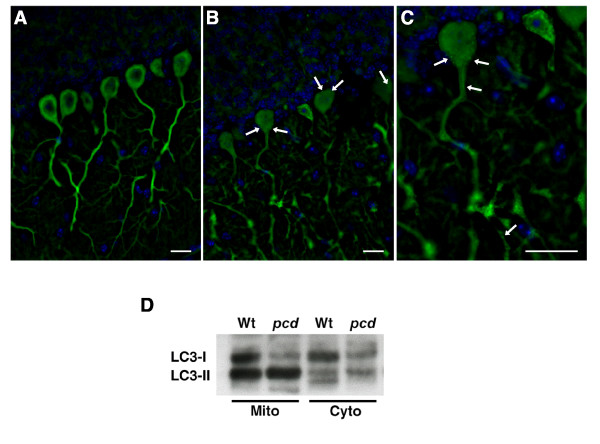
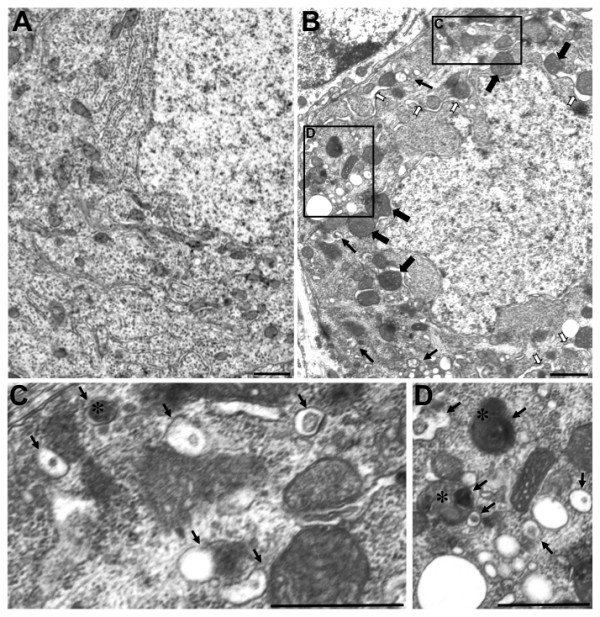
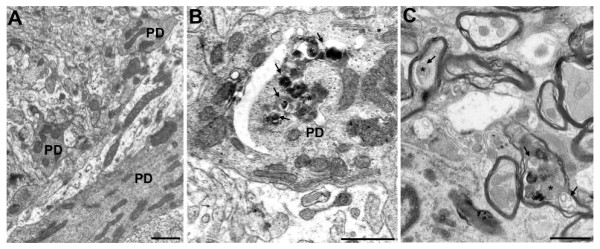
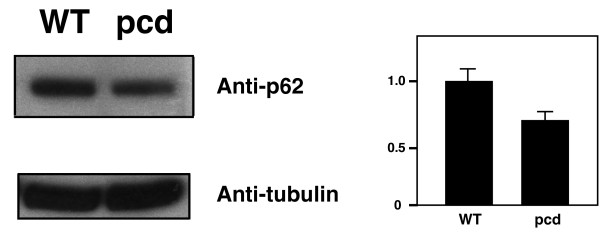
Purkinje cells are a class of specialized neurons in the cerebellum, and are among the most metabolically active of all neurons, as they receive immense synaptic stimulation, and provide the only efferent output from the cerebellum. Degeneration of Purkinje cells is a common feature of inherited ataxias in humans and mice. To understand Purkinje neuron degeneration, investigators have turned to naturally occurring Purkinje cell degeneration phenotypes in mice to identify key regulatory proteins and cellular pathways. The Purkinje cell degeneration (pcd) mouse is a recessive mutant characterized by complete and dramatic post-natal, cell autonomous Purkinje neuron degeneration and death. As the basis of Purkinje cell death in pcd is unresolved, and contradictory data has emerged for the role of autophagy in Purkinje cell degeneration, we studied the mechanism of Purkinje cell death in pcd mice. BAX null status did not suppress Purkinje neuron death in pcd mice, indicating that classic apoptosis is not responsible for Purkinje cell loss. Interestingly, LC3 Western blot analysis and GFP-LC3 immunostaining of degenerating pcd cerebellum revealed activation of the autophagy pathway. Ultrastructural studies confirmed increased autophagy pathway activity in Purkinje cells, and yielded evidence for mitophagy, in agreement with LC3 immunoblotting of cerebellar fractions. As p62 levels were decreased in pcd cerebellum, our findings suggest that pcd Purkinje cell neurons can execute effective autophagy. However, our results support a role for dysregulated autophagy activation in pcd, and suggest that increased or aberrant mitophagy contributes to the Purkinje cell degeneration in pcd mice.
Overview
The claims and statistics of this paper haven’t been checked yet.
Run the check — free, no account needed. It reads the open-access text and checks the sources it cites.
Integrity signals
Registry
Cites
Statistics
Figures
Verification
Claims the paper makes
The claims and statistics of this paper haven’t been checked yet.
Run the check — free, no account needed. It reads the open-access text and checks the sources it cites.
Claims other papers make about this one
Each is checked against this paper’s own text: does it say what the citing paper says it does?
The cited source says what the claim attributes to it.
In the citing paper
“Purkinje cell degeneration models such as pcd mice display motor abnormalities that were similar to those observed in B6.Clec16aGT/GT and Clec16aCURT/CURT mice3031 and staining with the Purkinje cell marker calbindin confirmed loss of these cells in B6.Clec16aGT/GT mice (Fig. 2d) at 8 weeks of age that was dramatically increased by 47 weeks of age (Supplementary Fig. 2e).”
From Clec16a is Critical for Autolysosome Function and Purkinje Cell Survival (2016) · cites this paper as [30]
Self-check
Percentages, sums and reported differences re-computed from the paper’s own numbers.
The self-check needs the paper’s full text.
Citations
Cites
Autophagy in the Pathogenesis of Disease
Levine, B., & Kroemer, G. (2008) · Cell · doi:10.1016/j.cell.2007.12.018 · Cited by 7,069
LC3, a mammalian homologue of yeast Apg8p, is localized in autophagosome membranes after processing.
Kabeya, Y., Mizushima, N., Ueno, T., Yamamoto, A., Kirisako, T., Noda, T., Kominami, E., Ohsumi, Y., & Yoshimori, T. (2000) · The EMBO Journal · doi:10.1093/emboj/19.21.5720 · Cited by 6,605
Suppression of basal autophagy in neural cells causes neurodegenerative disease in mice
Hara, T., Nakamura, K., Matsui, M., Yamamoto, A., Nakahara, Y., Suzuki-Migishima, R., Yokoyama, M., Mishima, K., Saito, I., Okano, H., et al. (2006) · Nature · doi:10.1038/nature04724 · Cited by 3,882
Loss of autophagy in the central nervous system causes neurodegeneration in mice
Komatsu, M., Waguri, S., Chiba, T., Murata, S., Iwata, J.-I., Tanida, I., Ueno, T., Koike, M., Uchiyama, Y., Kominami, E., et al. (2006) · Nature · doi:10.1038/nature04723 · Cited by 3,500
Autophagy in Health and Disease: A Double-Edged Sword
Shintani, T., & Klionsky, D. J. (2004) · Science · doi:10.1126/science.1099993 · Cited by 2,559
Mizushima, N., Yamamoto, A., Matsui, M., Yoshimori, T., & Ohsumi, Y. (2004) · Molecular Biology of the Cell · doi:10.1091/mbc.e03-09-0704 · Cited by 2,105
Extensive Involvement of Autophagy in Alzheimer Disease: An Immuno-Electron Microscopy Study
Nixon, R. A., Wegiel, J., Kumar, A., Yu, W. H., Peterhoff, C., Cataldo, A., & Cuervo, A. M. (2005) · Journal of Neuropathology & Experimental Neurology · doi:10.1093/jnen/64.2.113 · Cited by 1,588
Selective degradation of mitochondria by mitophagy
Kim, I., Rodriguez-Enriquez, S., & Lemasters, J. J. (2007) · Archives of Biochemistry and Biophysics · doi:10.1016/j.abb.2007.03.034 · Cited by 1,558
Regulation of an ATG7 - beclin 1 Program of Autophagic Cell Death by Caspase-8
Yu, L., Alva, A. S., Su, H. C., Dutt, P., Freundt, E. C., Welsh, S. J., Baehrecke, E. H., & Lenardo, M. J. (2004) · Science · doi:10.1126/science.1096645 · Cited by 1,249
Autophagy: dual roles in life and death?
Baehrecke, E. H. (2005) · Nature Reviews Molecular Cell Biology · doi:10.1038/nrm1666 · Cited by 986
Macroautophagy—a novel β-amyloid peptide-generating pathway activated in Alzheimer's disease
Yu, W. H., Cuervo, A. M., Kumar, A., Peterhoff, C. M., Schmidt, S. D., Lee, J.-H., Mohan, P. S., Mercken, M., Farmery, M. R., Tjernberg, L. O., et al. (2005) · The Journal of Cell Biology · doi:10.1083/jcb.200505082 · Cited by 967
Dagda, R. K., Cherra, S. J., Kulich, S. M., Tandon, A., Park, D., & Chu, C. T. (2009) · Journal of Biological Chemistry · doi:10.1074/jbc.m808515200 · Cited by 954
Methods for Monitoring Autophagy from Yeast to Human
Klionsky, D. J., Cuervo, A. M., & Seglen, P. O. (2007) · Autophagy · doi:10.4161/auto.3678 · Cited by 656
Komatsu, M., Wang, Q. J., Holstein, G. R., Friedrich, V. L., Iwata, J.-I., Kominami, E., Chait, B. T., Tanaka, K., & Yue, Z. (2007) · Proceedings of the National Academy of Sciences · doi:10.1073/pnas.0701311104 · Cited by 614
Purkinje cell degeneration, a new neurological mutation in the mouse.
Mullen, R. J., Eicher, E. M., & Sidman, R. L. (1976) · Proceedings of the National Academy of Sciences · doi:10.1073/pnas.73.1.208 · Cited by 611
Neurodegeneration in Lurcher mice caused by mutation in δ2 glutamate receptor gene
Zuo, J., De Jager, P. L., Takahashi, K. A., Jiang, W., Linden, D. J., & Heintz, N. (1997) · Nature · doi:10.1038/42009 · Cited by 554
Widespread Elimination of Naturally Occurring Neuronal Death inBax-Deficient Mice
White, F. A., Keller-Peck, C. R., Knudson, C. M., Korsmeyer, S. J., & Snider, W. D. (1998) · Journal of Neuroscience · doi:10.1523/jneurosci.18-04-01428.1998 · Cited by 436
Autophagy in neurodegenerative disease: friend, foe or turncoat?
Nixon, R. A. (2006) · Trends in Neurosciences · doi:10.1016/j.tins.2006.07.003 · Cited by 321
A Novel Protein Complex Linking the δ2 Glutamate Receptor and Autophagy
Yue, Z., Horton, A., Bravin, M., DeJager, P. L., Selimi, F., & Heintz, N. (2002) · Neuron · doi:10.1016/s0896-6273(02)00861-9 · Cited by 306
Eskelinen, E., Schmidt, C. K., Neu, S., Willenborg, M., Fuertes, G., Salvador-Montoliu, N., Tanaka, Y., Lüllmann‐Rauch, R., Hartmann, D., Heeren, J., et al. (2004) · Molecular Biology of the Cell · doi:10.1091/mbc.e04-02-0103 · Cited by 272
Purkinje cell degeneration ( pcd ) Phenotypes Caused by Mutations in the Axotomy-Induced Gene, Nna1
Fernandez‐Gonzalez, A., Spada, A. R. L., Treadaway, J., Higdon, J., Harris, B. S., Sidman, R. L., Morgan, J. I., & Zuo, J. (2002) · Science · doi:10.1126/science.1068912 · Cited by 247
Custer, S. K., Garden, G. A., Gill, N., Rueb, U., Libby, R. T., Schultz, C., Guyenet, S. J., Deller, T., Westrum, L. E., Sopher, B. L., et al. (2006) · Nature Neuroscience · doi:10.1038/nn1750 · Cited by 237
Self-citationNishiyama, J., Miura, E., Mizushima, N., Watanabe, M., & Yuzaki, M. (2007) · Autophagy · doi:10.4161/auto.4964 · Cited by 159
Cataldo, A. M., Peterhoff, C. M., Schmidt, S. D., Terio, N. B., Duff, K., Beard, M. E., Mathews, P. M., & Nixon, R. A. (2004) · Journal of Neuropathology & Experimental Neurology · doi:10.1093/jnen/63.8.821 · Cited by 157
Site of pcd gene action and Purkinje cell mosaicism in cerebella of chimaeric mice
Mullen, R. J. (1977) · Nature · doi:10.1038/270245a0 · Cited by 133
LaVail, M. M., Blanks, J. C., & Mullen, R. J. (1982) · The Journal of Comparative Neurology · doi:10.1002/cne.902120302 · Cited by 118
Nnal‐like proteins are active metallocarboxypeptidases of a new and diverse M14 subfamily
de la Vega, M. R., Sevilla, R. G., Hermoso, A., Lorenzo, J., Tanco, S., Díez, A., Fricker, L. D., Bautista, J. M., & Avilés, F. X. (2007) · The FASEB Journal · doi:10.1096/fj.06-7330com · Cited by 118
Harris, A. E., Morgan, J. I., Pecot, M., Soumare, A., Osborne, A., & Soares, H. D. (2000) · Molecular and Cellular Neuroscience · doi:10.1006/mcne.2000.0900 · Cited by 115
Different Fates of Mitochondria: Alternative Ways for Degradation?
Mijaljica, D., Prescott, M., & Devenish, R. J. (2007) · Autophagy · doi:10.4161/auto.3011 · Cited by 103
O’Gorman, S., & Sidman, R. L. (1985) · The Journal of Comparative Neurology · doi:10.1002/cne.902340302 · Cited by 89
Neurodegeneration inLurcherMice Occurs via Multiple Cell Death Pathways
Doughty, M. L., Jager, P. L. D., Korsmeyer, S. J., & Heintz, N. (2000) · Journal of Neuroscience · doi:10.1523/jneurosci.20-10-03687.2000 · Cited by 86
Lurcher GRID2-Induced Death and Depolarization Can Be Dissociated in Cerebellar Purkinje Cells
Selimi, F., Lohof, A. M., Heitz, S., Lalouette, A., Jarvis, C. I., Bailly, Y. J. R., & Mariani, J. (2003) · Neuron · doi:10.1016/s0896-6273(03)00093-x · Cited by 75
Selimi, F., Vogel, M. W., & Mariani, J. (2000) · Journal of Neuroscience · doi:10.1523/jneurosci.20-14-05339.2000 · Cited by 60
Chakrabarti, L., Eng, J., Martinez, R. A., Jackson, S. M., Huang, J., Possin, D. E., Sopher, B. L., & Spada, A. R. L. (2008) · Vision Research · doi:10.1016/j.visres.2008.05.026 · Cited by 39
Self-citationChakrabarti, L., Neal, J. T., Miles, M., Martinez, R. A., Smith, A. C., Sopher, B. L., & Spada, A. R. L. (2006) · Mammalian Genome · doi:10.1007/s00335-005-0096-x · Cited by 38
Self-citationHandel, M. A., & Dawson, M. (1981) · Gamete Research · doi:10.1002/mrd.1120040303 · Cited by 36
Cited by
Sorted by citations
Mechanisms of mitophagy: PINK1, Parkin, USP30 and beyond
Bingol, B., & Sheng, M. (2016) · Free Radical Biology and Medicine · doi:10.1016/j.freeradbiomed.2016.04.015 · Cited by 340
Shehata, M., Matsumura, H., Okubo-Suzuki, R., Ohkawa, N., & Inokuchi, K. (2012) · The Journal of Neuroscience · doi:10.1523/jneurosci.4533-11.2012 · Cited by 285
BNIP3 Interacting with LC3 Triggers Excessive Mitophagy in Delayed Neuronal Death in Stroke
Shi, R., Zhu, S., Li, V., Gibson, S. B., Xu, X., & Kong, J. (2014) · CNS Neuroscience & Therapeutics · doi:10.1111/cns.12325 · Cited by 282
The Role of Mitophagy in Innate Immunity
Gkikas, I., Palikaras, K., & Tavernarakis, N. (2018) · Frontiers in Immunology · doi:10.3389/fimmu.2018.01283 · Cited by 248
Mitochondrial diseases: from molecular mechanisms to therapeutic advances
Wen, H., Deng, H., Li, B., Chen, J., Zhu, J., Zhang, X., Yoshida, S., & Zhou, Y. (2025) · Signal Transduction and Targeted Therapy · doi:10.1038/s41392-024-02044-3 · Cited by 284
Metadata
- Authors
- Chakrabarti, L., Eng, J., Ivanov, N., Garden, G. A., & La Spada, A. R.
- Affiliations
- University of Washington (US)
- Venue
- Molecular Brain
- Published
- 2009-07-29
- Volume
- 2
- Issue
- 1
- Pages
- 24-24
- ISSN
- 1756-6606 (ISSN-L)
- PMC
- PMC2729476
- OpenAlex
- W2028695079
- Cited by
- 112
- References
- 36
- Citations by year
- 2026: 2 · 2025: 4 · 2024: 7 · 2023: 5 · 2022: 1 · 2021: 4 · 2020: 8 · 2019: 5 · 2018: 7 · 2017: 1 · 2016: 15 · 2015: 5 · 2014: 13 · 2013: 13 · 2012: 10
- FWCI
- 4.95
- Type
- journal article
- Language
- en
- Open access
- gold
- doi.org
- Licence
- cc-by
- Locations
- Molecular Brain (publishedVersion, cc-by)
- PubMed Central (publishedVersion, cc-by)
- PubMed (publishedVersion)
- DOAJ (DOAJ: Directory of Open Access Journals) (submittedVersion, cc-by-sa)
- Funders
- National Institutes of Health (EY-01730, HD02274)
- Intellectual and Developmental Disabilities Research Center
- National Eye Institute (EY 18106, EY-01730, R01EY014997, R21EY018106, P30EY001730, EY 14997)
- National Institute of Neurological Disorders and Stroke (R01NS052535)
- Eunice Kennedy Shriver National Institute of Child Health and Human Development (P30HD02274, P30HD002274)
- Topics
- Life Sciences › Biochemistry, Genetics and Molecular Biology › Cell Biology › Autophagy in Disease and Therapy
- Life Sciences › Neuroscience › Cellular and Molecular Neuroscience › Genetic Neurodegenerative Diseases
- Life Sciences › Biochemistry, Genetics and Molecular Biology › Molecular Biology › Cell death mechanisms and regulation
- Keywords
- Purkinje cells, Purkinje cell degeneration, autophagy, mitophagy, neuronal cell death, Bax, apoptosis, LC3, p62, cerebellum, hereditary ataxia, neurodegeneration
- MeSH terms
- Animals, Ataxia, Autophagy, Dendrites, Endoplasmic Reticulum, Mice, Neurologic Mutants, Mitochondria, Nerve Degeneration, Phagosomes, Phenotype, Purkinje Cells, bcl-2-Associated X Protein, Mice
About these checks
Registry, retraction, Cites and statistics results are computed, not judged, with one exception: a printed reference that no index lists is read once by a model before it counts as a citation error. Claims are extracted by a model and kept only when their quote appears verbatim in the text; each cited source is then checked, with a model’s help, for whether it says what the claim relies on. Those verdicts can be wrong — read the claim’s quote and the cited source before relying on one.
Statistics and arithmetic are recomputed, not judged.
Confidence bands are shown only for fields calibrated on our annotated test set. None is calibrated yet, so no band is shown.
What counts as a claim ›How we measure confidence ›How we check this ›
Are you an author, or do you see a problem with this page? Request a review
