

The Mu story: how a maverick phage moved the field forward
Open accessThe DOI matches its Crossref record; 78 of the 78 references it cites were found in a registry or an index.
Abstract
This article traces the pioneering contributions of phage Mu to our current knowledge of how movable elements move/transpose. Mu provided the first molecular evidence of insertion elements in E. coli, postulated by McClintock to control gene activity in maize in the pre-DNA era. An early Mu-based model successfully explained all the DNA rearrangements associated with transposition, providing a blueprint for navigating the deluge of accumulating reports on transposable element activity. Amplification of the Mu genome via transposition meant that its transposition frequencies were orders of magnitude greater than any rival, so it was only natural that the first in vitro system for transposition was established for Mu. These experiments unraveled the chemistry of the phosphoryl transfer reaction of transposition, and shed light on the nucleoprotein complexes within which they occur. They hastened a similar analysis of other transposons and ushered in the structural era where many transpososomes were crystallized. While it was a lucky break that the mechanism of HIV DNA integration turned out to be similar to that of Mu, it is no accident that current drugs for HIV integrase inhibitors owe their discovery to trailblazing experiments done with Mu. Shining the light on how movable elements restructure genomes, Mu has also given of itself generously to understanding the genome.
Overview
The claims and statistics of this paper haven’t been checked yet.
Free: it reads the open-access text and checks the first 5 claims that cite a source we can check. Create a free account to check every claim.
Integrity signals
Registry
Cites
Statistics
Figures
Verification
Claims the paper makes
The claims and statistics of this paper haven’t been checked yet.
Free: it reads the open-access text and checks the first 5 claims that cite a source we can check. Create a free account to check every claim.
Self-check
Percentages, sums and reported differences re-computed from the paper’s own numbers.
The self-check needs the paper’s full text.
Citations
Cites
The origin and behavior of mutable loci in maize
McClintock, B. (1950) · Proceedings of the National Academy of Sciences · doi:10.1073/pnas.36.6.344 · Cited by 1,747 · cited 1×
“At Cold Spring Harbor, Bukhari also came face to face with Barbara McClintock, whose work was vital to his thinking [6].”
(2007) · Wiley eBooks · doi:10.1128/9781555817954 · Cited by 1,291
Dyda, F., Hickman, A. B., Jenkins, T. M., Engelman, A., Craigie, R., & Davies, D. R. (1994) · Science · doi:10.1126/science.7801124 · Cited by 810 · cited 1×
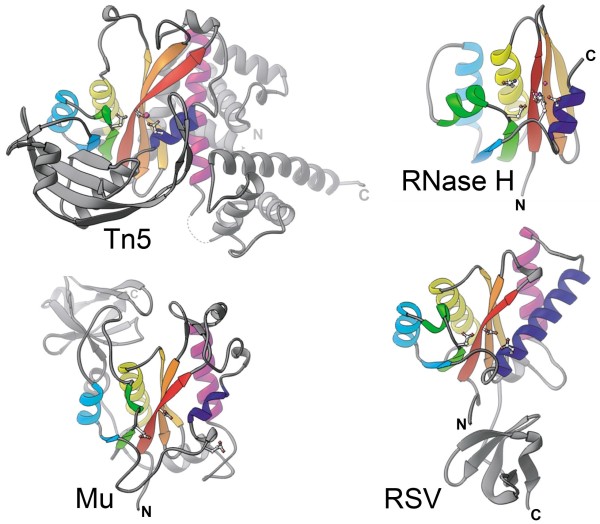
“The catalytic core domains of both MuA and retroviral integrases were the first to be crystallized and showed a striking similarity in their active sites and overall RNase H structural fold [30-33] (Figure 4).”
Retroviral intasome assembly and inhibition of DNA strand transfer
Hare, S., Gupta, S. S., Valkov, E., Engelman, A., & Cherepanov, P. (2010) · Nature · doi:10.1038/nature08784 · Cited by 678 · cited 3×
“Structures of intasomes captured at various stages of the integration of the retrovirus PFV (prototype foamy virus), also show a trans arrangement of catalytic subunits, with target DNA accommodated in a severely bent conformation in the strand transfer complex [27,34].”
HIV-1 DNA integration: Mechanism of viral DNA cleavage and DNA strand transfer
Engelman, A., Mizuuchi, K., & Craigie, R. (1991) · Cell · doi:10.1016/0092-8674(91)90297-c · Cited by 655 · cited 1×
“The similarities between the phosphoryl transfer steps of Mu and HIV integration are remarkable, both occurring by a one-step mechanism without involvement of a covalent protein-DNA intermediate [29].”
Summa, V., Petrocchi, A., Bonelli, F., Crescenzi, B., Donghi, M., Ferrara, M., Fiore, F., Gardelli, C., Gonzalez Paz, O., Hazuda, D. J., et al. (2008) · Journal of Medicinal Chemistry · doi:10.1021/jm800245z · Cited by 633 · cited 1×
“Over the years, a plethora of HIV integrase inhibitors have been discovered, but raltegravir is the first drug developed by Merck targeted to the integrase to be approved by the FDA (Federal Drug Administration) [41].”
Kulkosky, J., Jones, K. S., Katz, R. A., Mack, J. P., & Skalka, A. M. (1992) · Molecular and Cellular Biology · doi:10.1128/mcb.12.5.2331 · Cited by 571 · cited 1×
“A comparison of a large number of retroviral INs, prokaryotic and eukaryotic transposases as well as the RAG recombinase involved in immunoglobulin VDJ rearrangements, led to identification of conserved D,D (35)E motifs that were shown to be important for integration; these residues coordinate the metal ions required…”
DNA: Insertion Elements, Plasmids, and Episomes.
Bukhari, A. I., Shapiro, J. A., & Adhya, S. L. (1977) · Medical Entomology and Zoology · Cited by 562
Shapiro, J. A. (1979) · Proceedings of the National Academy of Sciences · doi:10.1073/pnas.76.4.1933 · Cited by 510 · cited 1×
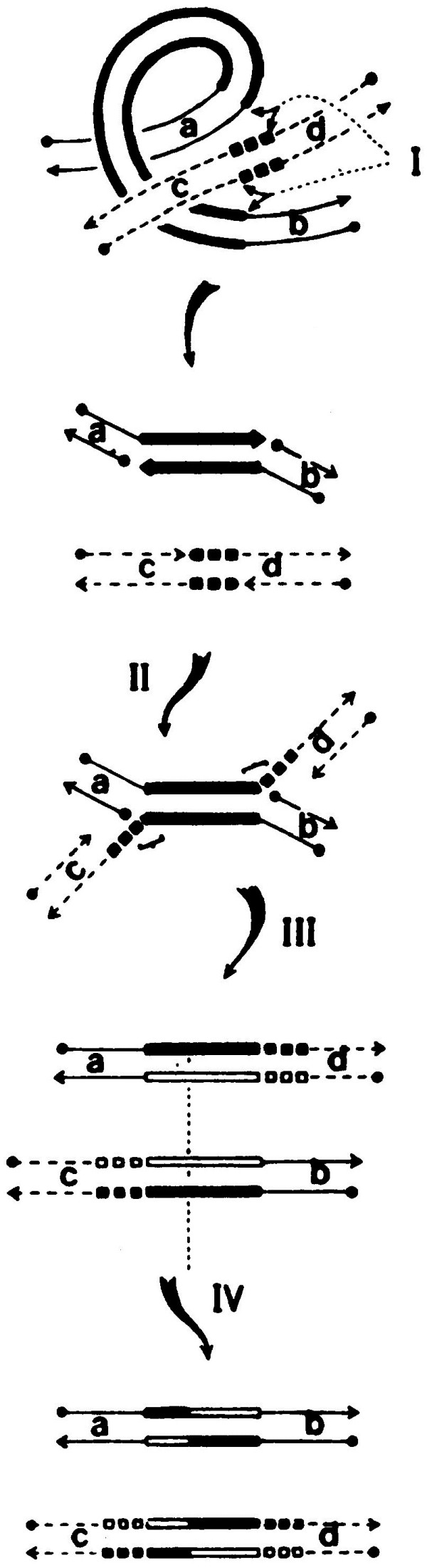
“In 1979, Jim Shapiro proposed an elegant and parsimonious model for transposition [12] (Figure 2).”
Three-Dimensional Structure of the Tn 5 Synaptic Complex Transposition Intermediate
Davies, D. R., Goryshin, I. Y., Reznikoff, W. S., & Rayment, I. (2000) · Science · doi:10.1126/science.289.5476.77 · Cited by 427 · cited 4×
“Davies DR, Goryshin IY, Reznikoff WS, Rayment I: Three-dimensional structure of the Tn5 synaptic complex transposition intermediate.”
InfluentialBACTERIOPHAGE-INDUCED MUTATION IN ESCHERICHIA COLI
Taylor, A. L. (1963) · Proceedings of the National Academy of Sciences · doi:10.1073/pnas.50.6.1043 · Cited by 367
The outs and ins of transposition: from Mu to Kangaroo
Curcio, M. J., & Derbyshire, K. M. (2003) · Nature Reviews Molecular Cell Biology · doi:10.1038/nrm1241 · Cited by 321 · cited 1×
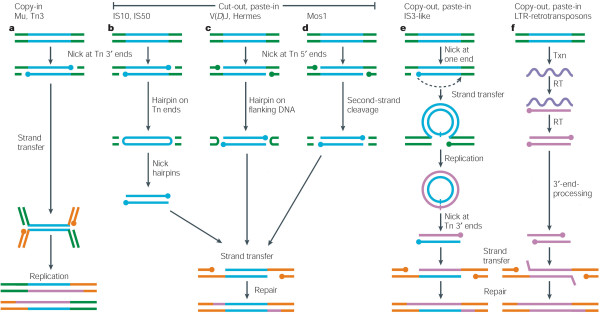
“always ends in these strands joining to the target, with or without intervening steps of hairpin formation or replication (see [14]).”
The mechanism of retroviral integration from X-ray structures of its key intermediates
Maertens, G. N., Hare, S., & Cherepanov, P. (2010) · Nature · doi:10.1038/nature09517 · Cited by 296 · cited 1×
“Structures of intasomes captured at various stages of the integration of the retrovirus PFV (prototype foamy virus), also show a trans arrangement of catalytic subunits, with target DNA accommodated in a severely bent conformation in the strand transfer complex [27,34].”
TARGET SITE SELECTION IN TRANSPOSITION
Craig, N. L. (1997) · Annual Review of Biochemistry · doi:10.1146/annurev.biochem.66.1.437 · Cited by 290 · cited 1×
“Only one other transposon, Tn7, encodes additional target selection proteins [53], while two – Tn7 and Tn3 family – display target immunity that resembles Mu cisimmunity [54-56].”
Disassembly of the Mu transposase tetramer by the ClpX chaperone.
Levchenko, I., Luo, L., & Baker, T. A. (1995) · Genes & Development · doi:10.1101/gad.9.19.2399 · Cited by 274 · cited 1×
“In a highly choreographed series of steps, the molecular chaperone ClpX interacts with the Cterminal IIIβ domain of MuA to unfold one of two catalytic subunits, weakening the overall interaction of the transpososome with DNA and allowing exchange with protein factors that ultimately load the restart primosome at the M…”
Surette, M. G., Buch, S. J., & Chaconas, G. (1987) · Cell · doi:10.1016/0092-8674(87)90566-6 · Cited by 230 · cited 1×
“The other two papers came from George Chaconas’s lab, which trapped ‘transpososomes’ in the act of cleavage or strand transfer [19].”
Rice, P., & Kiyoshi, M. (1995) · Cell · doi:10.1016/0092-8674(95)90308-9 · Cited by 222 · cited 1×
“The catalytic core domains of both MuA and retroviral integrases were the first to be crystallized and showed a striking similarity in their active sites and overall RNase H structural fold [30-33] (Figure 4).”
Comparative architecture of transposase and integrase complexes.
Rice, P. A., & Baker, T. A. (2001) · Nature Structural Biology · doi:10.1038/86166 · Cited by 215 · cited 1×
“The catalytic core domains of both MuA and retroviral integrases were the first to be crystallized and showed a striking similarity in their active sites and overall RNase H structural fold [30-33] (Figure 4).”
Transposon-Based Strategies for Microbial Functional Genomics and Proteomics
Hayes, F. (2003) · Annual Review of Genetics · doi:10.1146/annurev.genet.37.110801.142807 · Cited by 198 · cited 1×
“These Mu manipulations were the prototype for a myriad different ways in which transposons have been harnessed as tools for genetic engineering, cleverly using them to deconstruct the genomes they reconstructed [2,76-78].”
Lavoie, B. D., Chan, B. S., Allison, R. G., & Chaconas, G. (1991) · The EMBO Journal · doi:10.1002/j.1460-2075.1991.tb07856.x · Cited by 176 · cited 1×
“stability, with a catalytic core comprised of a tetramer [20].”
In vitro transposition of bacteriophage Mu: A biochemical approach to a novel replication reaction
Mizuuchi, K. (1983) · Cell · doi:10.1016/0092-8674(83)90111-3 · Cited by 170 · cited 1×
“We intended to use these convenient substrates to set up in vitro transposition reactions in our own labs, when we were blindsided by Kiyoshi Mizuuchi, who had been studying the biochemistry of phage λ integrative recombination, and who published the first successful protocol for observing transposition in vitro using…”
The Take and Give Between Retrotransposable Elements and their Hosts
Beauregard, A., Curcio, M. J., & Belfort, M. (2008) · Annual Review of Genetics · doi:10.1146/annurev.genet.42.110807.091549 · Cited by 168 · cited 1×
“great deal of diversity [2,14,79].”
Random Insertion of Mu-1 DNA within a Single Gene
Bukhari, A. I., & Zipser, D. (1972) · Nature New Biology · doi:10.1038/newbio236240a0 · Cited by 165 · cited 1×
“The first of Bukhari’s many pioneering contributions was the demonstration that Mu could insert randomly at many sites within a single bacterial gene [7].”
Polynucleotidyl transfer reactions in transpositional DNA recombination.
Mizuuchi, K. (1992) · Journal of Biological Chemistry · doi:10.1016/s0021-9258(19)36600-1 · Cited by 155 · cited 1×
“Both these steps involve metal-ion mediated activation of nucleophiles - water in the first step and the free 3’-OHs of DNA in the second step – and are direct phosphoryl transfer reactions that do not involve covalent protein-DNA intermediates [17].”
Target immunity of Mu transposition reflects a differential distribution of Mu B protein
Adzuma, K., & Mizuuchi, K. (1988) · Cell · doi:10.1016/0092-8674(88)90387-x · Cited by 152 · cited 1×
“Two kinds of target immunity have been uncovered: cisimmunity prevents regions in the immediate vicinity of Mu ends from being used as targets, and depends on removal of MuB from these regions [49-51]; Mu genomeimmunity prevents Mu from transposing into itself, and appears to operate by a different mechanism where MuB…”
Lavoie, B. D., & Chaconas, G. (1996) · Current topics in microbiology and immunology · doi:10.1007/978-3-642-79795-8_4 · Cited by 146 · cited 4×
“mote target immunity, which prevents some segments of DNA from receiving Mu transpositions (see [42]).”
BackgroundInfluentialRichardson, J. M., Colloms, S. D., Finnegan, D. J., & Walkinshaw, M. D. (2009) · Cell · doi:10.1016/j.cell.2009.07.012 · Cited by 145 · cited 2×
“The trans feature of transposase-mediated catalysis is also proving to be widespread among mobile elements [24-27].”
Barabas, O., Ronning, D. R., Guynet, C., Hickman, A. B., Ton-Hoang, B., Chandler, M., & Dyda, F. (2008) · Cell · doi:10.1016/j.cell.2007.12.029 · Cited by 143
The Mu transpososome structure sheds light on DDE recombinase evolution
Montaño, S. P., Pigli, Y. Z., & Rice, P. A. (2012) · Nature · doi:10.1038/nature11602 · Cited by 137
Kruklitis, R. J., Welty, D. J., & Nakai, H. (1996) · The EMBO Journal · doi:10.1002/j.1460-2075.1996.tb00428.x · Cited by 137 · cited 1×
“In a highly choreographed series of steps, the molecular chaperone ClpX interacts with the Cterminal IIIβ domain of MuA to unfold one of two catalytic subunits, weakening the overall interaction of the transpososome with DNA and allowing exchange with protein factors that ultimately load the restart primosome at the M…”
Retroviral Integrase, Putting the Pieces Together
Andrake, M. D., & Skalka, A. M. (1996) · Journal of Biological Chemistry · doi:10.1074/jbc.271.33.19633 · Cited by 134 · cited 1×
“The catalytic core domains of both MuA and retroviral integrases were the first to be crystallized and showed a striking similarity in their active sites and overall RNase H structural fold [30-33] (Figure 4).”
Sequence Analysis at IS1 Insertion Sites: Models for Transposition
Grindley, N. D. F., & Sherratt, D. J. (1979) · Cold Spring Harbor Symposia on Quantitative Biology · doi:10.1101/sqb.1979.043.01.142 · Cited by 129 · cited 1×
“Those in the target were staggered, as first proposed by Grindley and Sherratt to explain target site duplications associated with IS element transposition [13].”
The expanding universe of transposon technologies for gene and cell engineering
Ivics, Z., & Izsvák, Z. (2010) · Mobile DNA · doi:10.1186/1759-8753-1-25 · Cited by 129
Levchenko, I., Yamauchi, M., & Baker, T. A. (1997) · Genes & Development · doi:10.1101/gad.11.12.1561 · Cited by 126 · cited 1×
“In a highly choreographed series of steps, the molecular chaperone ClpX interacts with the Cterminal IIIβ domain of MuA to unfold one of two catalytic subunits, weakening the overall interaction of the transpososome with DNA and allowing exchange with protein factors that ultimately load the restart primosome at the M…”
State of prophage Mu DNA upon induction.
Ljungquist, E., & Bukhari, A. I. (1977) · Proceedings of the National Academy of Sciences · doi:10.1073/pnas.74.8.3143 · Cited by 125 · cited 1×
“using the emerging technology of restriction analysis and Southern DNA hybridization [10].”
Insertion mutations in microorganisms
Starlinger, P., & Saedler, H. (1972) · Biochimie · doi:10.1016/s0300-9084(72)80102-0 · Cited by 122 · cited 1×
“coli, whose reversion patterns were inconsistent with those of point mutations, leading eventually to the recognition that they were insertions of Insertion Sequence (IS) elements [5].”
Reversal of mutator phage Mu integration
Bukhari, A. I. (1975) · Journal of Molecular Biology · doi:10.1016/0022-2836(75)90183-7 · Cited by 117
A rapid in vitro assay for HIV DNA integration
Craigie, R., Mizuuchi, K., Bushman, F. D., & Engelman, A. (1991) · Nucleic Acids Research · doi:10.1093/nar/19.10.2729 · Cited by 114 · cited 1×
“Modeled after the Mu in vitro system, convenient HIV integration assays were developed that could be carried out in the wells of micro-titer plates for screening large numbers of potential inhibitors of HIV DNA integration [40].”
The Interwoven Architecture of the Mu Transposase Couples DNA Synapsis to Catalysis
Aldaz, H., Schuster, E. F., & Baker, T. A. (1996) · Cell · doi:10.1016/s0092-8674(00)81102-2 · Cited by 98 · cited 1×
“Another trio of Mu papers established that only two subunits in the multi-subunit MuA transpososome were responsible for catalysis, and that these subunits act in trans, ensuring that the reaction was not initiated until both ends were paired and all the players were in place [21-23].”
Structural domains in phage Mu transposase: identification of the site-specific DNA-binding domain.
Nakayama, C., Teplow, D. B., & Harshey, R. M. (1987) · Proceedings of the National Academy of Sciences · doi:10.1073/pnas.84.7.1809 · Cited by 97 · cited 1×
“The first was the elucidation of the domain organization of the transposase MuA protein [18], which helped in assigning specific functions to each domain, ultimately paving the way for use of these domains in structural studies.”
Self-citationPeters, J. E., & Craig, N. L. (2001) · Genes & Development · doi:10.1101/gad.870201 · Cited by 97
Savilahti, H., & Mizuuchi, K. (1996) · Cell · doi:10.1016/s0092-8674(00)81103-4 · Cited by 95 · cited 1×
“Another trio of Mu papers established that only two subunits in the multi-subunit MuA transpososome were responsible for catalysis, and that these subunits act in trans, ensuring that the reaction was not initiated until both ends were paired and all the players were in place [21-23].”
Mobile DNA and evolution in the 21st century
Shapiro, J. A. (2010) · Mobile DNA · doi:10.1186/1759-8753-1-4 · Cited by 93 · cited 1×
“The more difficult questions are how these elements contribute to evolution at the level of the organism and whether we owe them our very existence [1].”
Watson, M. A., & Chaconas, G. (1996) · Cell · doi:10.1016/s0092-8674(00)81121-6 · Cited by 91 · cited 1×
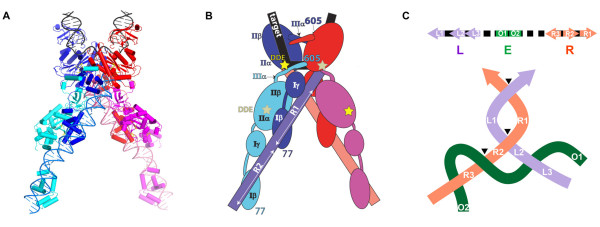
“It acts as a scaffold during transpososome assembly [43], directing an ordered interaction with the two Mu ends to generate a highly intertwined 3-site synapse which traps 5 DNA supercoils [38,44-46] (Figure 5C).”
Identification of a transposon Tn3 sequence required for transposition immunity.
Lee, C., Bhagwat, A. A., & Heffron, F. (1983) · Proceedings of the National Academy of Sciences · doi:10.1073/pnas.80.22.6765 · Cited by 86 · cited 1×
“Only one other transposon, Tn7, encodes additional target selection proteins [53], while two – Tn7 and Tn3 family – display target immunity that resembles Mu cisimmunity [54-56].”
Basu, A., Schoeffler, A. J., Berger, J. M., & Bryant, Z. D. (2012) · Nature Structural & Molecular Biology · doi:10.1038/nsmb.2278 · Cited by 85 · cited 1×
“It is the strongest gyrase binding site known, initiating a striking SGS-dependent increase in processivity of the gyrase reaction [58,59].”
Involvement of phage Mu-1 early functions in Mu-mediated chromosomal rearrangements
Faelen, M., Huisman, O., & Toussaint, A. (1978) · Nature · doi:10.1038/271580a0 · Cited by 85 · cited 1×
“The second seminal paper was by Michel Faelen and Arianne Toussaint, who showed that Mu can join unrelated DNA segments, duplicating itself in the process [11].”
Casadaban, M. J. (1975) · Proceedings of the National Academy of Sciences · doi:10.1073/pnas.72.3.809 · Cited by 83 · cited 1×
“No discussion of Mu can be complete without citing the pioneering contributions of Malcolm Casadaban, who generated a variety of Mu derivatives as probes for genome transcription and translation, as cloning vehicles, as mobile sources of transcriptional promoters, and as movable primers for DNA sequencing ([74,75]; th…”
Pato, M. L., Howe, M. M., & Higgins, N. P. (1990) · Proceedings of the National Academy of Sciences · doi:10.1073/pnas.87.22.8716 · Cited by 83
Chaconas, G., Harshey, R. M., Sarvetnick, N., & Bukhari, A. I. (1981) · Journal of Molecular Biology · doi:10.1016/0022-2836(81)90551-9 · Cited by 80
Self-citationNamgoong, S. Y., & Harshey, R. M. (1998) · The EMBO Journal · doi:10.1093/emboj/17.13.3775 · Cited by 77 · cited 1×
“Another trio of Mu papers established that only two subunits in the multi-subunit MuA transpososome were responsible for catalysis, and that these subunits act in trans, ensuring that the reaction was not initiated until both ends were paired and all the players were in place [21-23].”
Self-citationInvolvement of the invertible G segment in bacteriophage Mu tail fiber biosynthesis
Grundy, F. J., & Howf, M. M. (1984) · Virology · doi:10.1016/0042-6822(84)90299-x · Cited by 77 · cited 1×
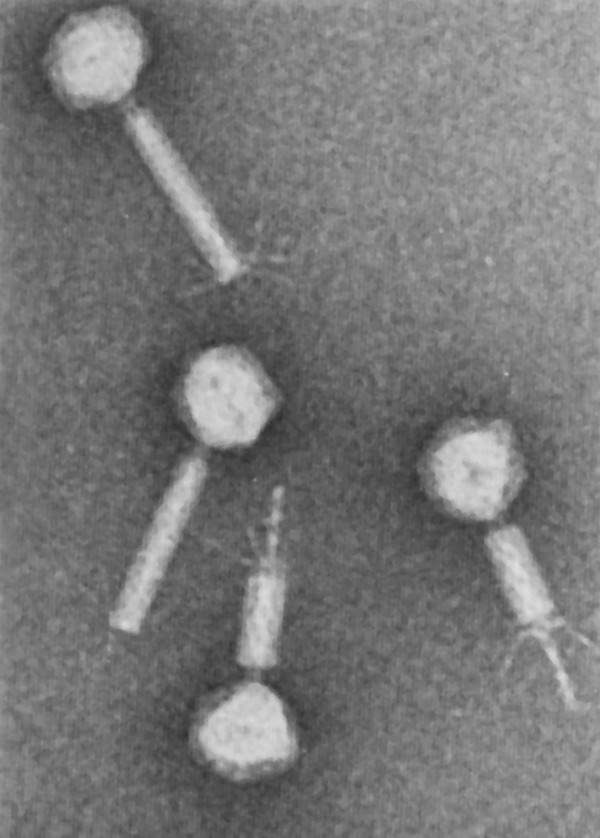
“This image is reproduced with permission from Martha Howe [4].”
Path of DNA within the Mu Transpososome
Pathania, S., Jayaram, M., & Harshey, R. M. (2002) · Cell · doi:10.1016/s0092-8674(02)00728-6 · Cited by 76 · cited 1×
“It acts as a scaffold during transpososome assembly [43], directing an ordered interaction with the two Mu ends to generate a highly intertwined 3-site synapse which traps 5 DNA supercoils [38,44-46] (Figure 5C).”
Self-citationWu, Z., & Chaconas, G. (1995) · The EMBO Journal · doi:10.1002/j.1460-2075.1995.tb00053.x · Cited by 55 · cited 1×
“This pathway is not yet reproduced in vitro, but in vivo results show that the flap removal activity is contributed by MuA itself [71,72].”
Handoff from recombinase to replisome: Insights from transposition
Nakai, H., Doseeva, V., & Jones, J. M. (2001) · Proceedings of the National Academy of Sciences · doi:10.1073/pnas.111007898 · Cited by 55 · cited 1×
“Transition of the oligomeric MuA tightly bound to the ends, to a replication-ready configuration, has been mainly dissected in Hiroshi Nakai and Tania Baker’s laboratories [62] (Nakai, like Bukhari, was also a graduate student in Larry Taylor’s lab, where he first became interested in Mu replication [63]).”
Pribil, P. A., & Haniford, D. B. (2003) · Journal of Molecular Biology · doi:10.1016/s0022-2836(03)00588-6 · Cited by 51
Jones, J. M., & Nakai, H. (1997) · The EMBO Journal · doi:10.1093/emboj/16.22.6886 · Cited by 48
The Mu strong gyrase‐binding site promotes efficient synapsis of the prophage termini
Pato, M. L., & Banerjee, M. (1996) · Molecular Microbiology · doi:10.1046/j.1365-2958.1996.00115.x · Cited by 46 · cited 1×
“Mu genome [60,61].”
Phage Mu transposition immunity reflects supercoil domain structure of the chromosome
Manna, D., & Higgins, N. P. (1999) · Molecular Microbiology · doi:10.1046/j.1365-2958.1999.01377.x · Cited by 45 · cited 1×
“Two kinds of target immunity have been uncovered: cisimmunity prevents regions in the immediate vicinity of Mu ends from being used as targets, and depends on removal of MuB from these regions [49-51]; Mu genomeimmunity prevents Mu from transposing into itself, and appears to operate by a different mechanism where MuB…”
Kobryn, K., Watson, M. A., Allison, R. G., & Chaconas, G. (2002) · Molecular Cell · doi:10.1016/s1097-2765(02)00596-8 · Cited by 41 · cited 1×
“It acts as a scaffold during transpososome assembly [43], directing an ordered interaction with the two Mu ends to generate a highly intertwined 3-site synapse which traps 5 DNA supercoils [38,44-46] (Figure 5C).”
The Mu Transpososome Through a Topological Lens
Harshey, R. M., & Jayaram, M. (2006) · Critical Reviews in Biochemistry and Molecular Biology · doi:10.1080/10409230600946015 · Cited by 40 · cited 1×
“E crossings - as indicated (see [37]).”
Self-citationHan, Y.-W., & Mizuuchi, K. (2010) · Molecular Cell · doi:10.1016/j.molcel.2010.06.013 · Cited by 33 · cited 1×
“Two kinds of target immunity have been uncovered: cisimmunity prevents regions in the immediate vicinity of Mu ends from being used as targets, and depends on removal of MuB from these regions [49-51]; Mu genomeimmunity prevents Mu from transposing into itself, and appears to operate by a different mechanism where MuB…”
Chromosomal Integration Mechanism of Infecting Mu Virion DNA
Au, T. K., Agrawal, P., & Harshey, R. M. (2006) · Journal of Bacteriology · doi:10.1128/jb.188.5.1829-1834.2006 · Cited by 33 · cited 1×
“The initial single strand cleavages at Mu ends and joining to target DNA are the same as in the Shapiro model; however, rather than replication, the transposition intermediate is resolved by removal of 5’ flaps attached to Mu ends, followed by repair of the integrant [70].”
Self-citationPathania, S., Jayaram, M., & Harshey, R. M. (2003) · The EMBO Journal · doi:10.1093/emboj/cdg354 · Cited by 32 · cited 1×
“It acts as a scaffold during transpososome assembly [43], directing an ordered interaction with the two Mu ends to generate a highly intertwined 3-site synapse which traps 5 DNA supercoils [38,44-46] (Figure 5C).”
Self-citationDNA repair by the cryptic endonuclease activity of Mu transposase
Choi, W., & Harshey, R. M. (2010) · Proceedings of the National Academy of Sciences · doi:10.1073/pnas.0912615107 · Cited by 32 · cited 1×
“This pathway is not yet reproduced in vitro, but in vivo results show that the flap removal activity is contributed by MuA itself [71,72].”
Self-citationMu Insertions Are Repaired by the Double-Strand Break Repair Pathway of Escherichia coli
Jang, S., Sandler, S. J., & Harshey, R. M. (2012) · PLoS Genetics · doi:10.1371/journal.pgen.1002642 · Cited by 29
Self-citationThe AAA+ ClpX machine unfolds a keystone subunit to remodel the Mu transpososome
Abdelhakim, A. H., Sauer, R. T., & Baker, T. A. (2010) · Proceedings of the National Academy of Sciences · doi:10.1073/pnas.0910905106 · Cited by 28 · cited 1×
“In a highly choreographed series of steps, the molecular chaperone ClpX interacts with the Cterminal IIIβ domain of MuA to unfold one of two catalytic subunits, weakening the overall interaction of the transpososome with DNA and allowing exchange with protein factors that ultimately load the restart primosome at the M…”
Oram, M., Howells, A. J., Maxwell, A., & Pato, M. L. (2003) · Molecular Microbiology · doi:10.1046/j.1365-2958.2003.03690.x · Cited by 26
Separate structural and functional domains of Tn4430 transposase contribute to target immunity
Lambin, M., Nicolas, É., Oger, C. A., Nguyen, N., Prozzi, D., & Hallet, B. (2012) · Molecular Microbiology · doi:10.1111/j.1365-2958.2012.07967.x · Cited by 25 · cited 1×
“Only one other transposon, Tn7, encodes additional target selection proteins [53], while two – Tn7 and Tn3 family – display target immunity that resembles Mu cisimmunity [54-56].”
Translation factor IF2 at the interface of transposition and replication by the PriA‐PriC pathway
North, S. H., Kirtland, S. E., & Nakai, H. (2007) · Molecular Microbiology · doi:10.1111/j.1365-2958.2007.06022.x · Cited by 24 · cited 1×
“In a highly choreographed series of steps, the molecular chaperone ClpX interacts with the Cterminal IIIβ domain of MuA to unfold one of two catalytic subunits, weakening the overall interaction of the transpososome with DNA and allowing exchange with protein factors that ultimately load the restart primosome at the M…”
Immunity of replicating Mu to self-integration: a novel mechanism employing MuB protein
Ge, J., Lou, Z., & Harshey, R. M. (2010) · Mobile DNA · doi:10.1186/1759-8753-1-8 · Cited by 22 · cited 1×
“Two kinds of target immunity have been uncovered: cisimmunity prevents regions in the immediate vicinity of Mu ends from being used as targets, and depends on removal of MuB from these regions [49-51]; Mu genomeimmunity prevents Mu from transposing into itself, and appears to operate by a different mechanism where MuB…”
Self-citationGenome mapping and protein coding region identification using bacteriophage Mu
Groisman, E. A., Pagratis, N. C., & Casadaban, M. J. (1991) · Gene · doi:10.1016/0378-1119(91)90026-8 · Cited by 21 · cited 1×
“No discussion of Mu can be complete without citing the pioneering contributions of Malcolm Casadaban, who generated a variety of Mu derivatives as probes for genome transcription and translation, as cloning vehicles, as mobile sources of transcriptional promoters, and as movable primers for DNA sequencing ([74,75]; th…”
Yin, Z., Jayaram, M., Pathania, S., & Harshey, R. M. (2004) · Journal of Biological Chemistry · doi:10.1074/jbc.m411679200 · Cited by 20
Self-citationYin, Z., Suzuki, A., Lou, Z., Jayaram, M., & Harshey, R. M. (2007) · Journal of Molecular Biology · doi:10.1016/j.jmb.2007.06.086 · Cited by 19 · cited 2×
“R-E interactions initiate assembly and are essential [38].”
Self-citationReplication of Mu prophages lacking the central strong gyrase site
Pato, M. L. (2004) · Research in Microbiology · doi:10.1016/j.resmic.2004.03.006 · Cited by 12
Enhancer-independent Mu transposition from two topologically distinct synapses
Yin, Z., & Harshey, R. M. (2005) · Proceedings of the National Academy of Sciences · doi:10.1073/pnas.0506873102 · Cited by 10 · cited 1×
“incorrect Mu ends in a cell where multiple copies of Mu are accumulating [48].”
Self-citationHost DNA replication forks are not preferred targets for bacteriophage Mu transposition
Nakai, H., & Taylor, A. L. (1985) · Journal of Bacteriology · doi:10.1128/jb.163.1.282-290.1985 · Cited by 7 · cited 1×
“Transition of the oligomeric MuA tightly bound to the ends, to a replication-ready configuration, has been mainly dissected in Hiroshi Nakai and Tania Baker’s laboratories [62] (Nakai, like Bukhari, was also a graduate student in Larry Taylor’s lab, where he first became interested in Mu replication [63]).”
Crystal structure of the bacteriophage Mu transpososome
Montaño, S. P., Pigli, Y. Z., & Rice, P. A. (2012) · Worldwide Protein Data Bank · doi:10.2210/pdb4fcy/pdb · Cited by 1 · cited 3×
“The figures in (A) and (B) are reproduced with permission from Phoebe Rice [35].”
BackgroundMethodInfluential
Research works printed but not linked: 2
- 40. DNA supercoiling. J Biol Chem 2005, 280:6149-6156.
- 77. Berg CM, Berg DE, Groisman EA: Transposable elements and genetic engineering of bacteria. In Mobile DNA. Edited by Berg DE, Howe MM. Washington, DC: American Society for Microbiology; 1989:879-925.
Cited by
A new perspective on lysogeny: prophages as active regulatory switches of bacteria
Feiner, R., Argov, T., Rabinovich, L., Sigal, N., Borovok, I., & Herskovits, A. A. (2015) · Nature Reviews Microbiology · doi:10.1038/nrmicro3527 · Cited by 488
Lesbats, P., Engelman, A. N., & Cherepanov, P. (2016) · Chemical Reviews · doi:10.1021/acs.chemrev.6b00125 · Cited by 233
Landscape of mobile genetic elements and their antibiotic resistance cargo in prokaryotic genomes
Khedkar, S., Smyshlyaev, G., Letunic, I., Maistrenko, O. M., Coelho, L. P., Orakov, A., Forslund, S. K., Hildebrand, F., Luetge, M., Schmidt, T. S. B., et al. (2022) · Nucleic Acids Research · doi:10.1093/nar/gkac163 · Cited by 181
Transposons: the agents of antibiotic resistance in bacteria
Babakhani, S., & Oloomi, M. (2018) · Journal of Basic Microbiology · doi:10.1002/jobm.201800204 · Cited by 175
“After the bacteriophages’ discovery, the complexity and role of phages has more been determined in the gene transmission [122].”
BackgroundThe Tn 3 -family of Replicative Transposons
Nicolas, E., Lambin, M., Dandoy, D., Galloy, C., Nguyen, N., Oger, C. A., & Hallet, B. (2015) · Microbiology Spectrum · doi:10.1128/microbiolspec.mdna3-0060-2014 · Cited by 140
“…between the transposase (MuA and TnsAB, respectively) and an additional element-encoded protein (MuB and TnsC) that function as a molecular “ match-maker ” between the transpososome and the target (117, 118, 204 – 206) (see also the chapters by R. M. Harshey and J.E. Peters in this volume).”
Background
Metadata
- Authors
- Harshey, R. M.
- Affiliations
- The University of Texas at Austin (US)
- Corresponding author
- Harshey, Rasika M
- ORCID
- Harshey, Rasika M
- Venue
- Mobile DNA
- Published
- 2012
- Volume
- 3
- Issue
- 1
- Pages
- 21
- ISSN
- 1759-8753 (ISSN-L)
- PMC
- PMC3562280
- OpenAlex
- W2119450302
- Cited by
- 52
- References
- 78
- Citations by year
- 2026: 1 · 2025: 3 · 2024: 2 · 2023: 3 · 2022: 1 · 2021: 8 · 2020: 2 · 2019: 1 · 2018: 3 · 2017: 7 · 2016: 3 · 2015: 12 · 2014: 4 · 2013: 2
- FWCI
- 3.46
- Type
- journal article
- Language
- en
- Open access
- gold
- doi.org
- Licence
- cc-by
- Locations
- Mobile DNA (publishedVersion, cc-by)
- Europe PMC (PubMed Central) (publishedVersion, cc-by)
- PubMed Central (publishedVersion, cc-by)
- PubMed (publishedVersion)
- DOAJ (DOAJ: Directory of Open Access Journals) (submittedVersion, cc-by-sa)
- Texas ScholarWorks (Texas Digital Library) (submittedVersion, cc-by)
- Funders
- National Institutes of Health
- National Institute of General Medical Sciences (R01GM033247)
- Topics
- Life Sciences › Biochemistry, Genetics and Molecular Biology › Genetics › Bacterial Genetics and Biotechnology
- Life Sciences › Immunology and Microbiology › Virology › Bacteriophages and microbial interactions
- Life Sciences › Biochemistry, Genetics and Molecular Biology › Genetics › Chromosomal and Genetic Variations
- Keywords
- bacteriophage Mu, transposable elements, insertion elements, Escherichia coli, transposition mechanism, phosphoryl transfer, transpososome, transposon amplification, HIV integrase, integrase inhibitors, genome rearrangement
About these checks
Registry, retraction, Cites and statistics results are computed, not judged, with one exception: a printed reference that no index lists is read once by a model before it counts as a citation error. Claims are extracted by a model and kept only when their quote appears verbatim in the text; each cited source is then checked, with a model’s help, for whether it says what the claim relies on. Those verdicts can be wrong — read the claim’s quote and the cited source before relying on one.
Statistics and arithmetic are recomputed, not judged.
Confidence bands are shown only for fields calibrated on our annotated test set. None is calibrated yet, so no band is shown.
What counts as a claim ›How we measure confidence ›How we check this ›
Are you an author, or do you see a problem with this page? Request a review
Data sources
Bibliographic data: Semantic Scholar, OpenAlex, Crossref.
Contains information from the Semantic Scholar Academic Graph Datasets, made available under the ODC Attribution License (ODC-BY 1.0).
Semantic Scholar’s data is described in: Kinney, R., et al. (2023). The Semantic Scholar Open Data Platform. arXiv:2301.10140.
