

Intake of green tea inhibited increase of salivary chromogranin A after mental task stress loads
Open accessThe DOI matches its Crossref record; 32 of the 32 references it cites were found in a registry or an index.
Abstract
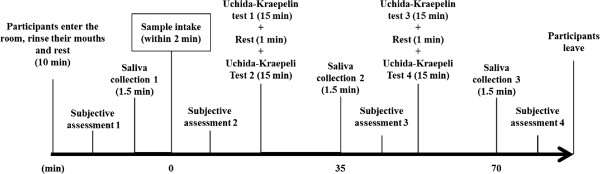
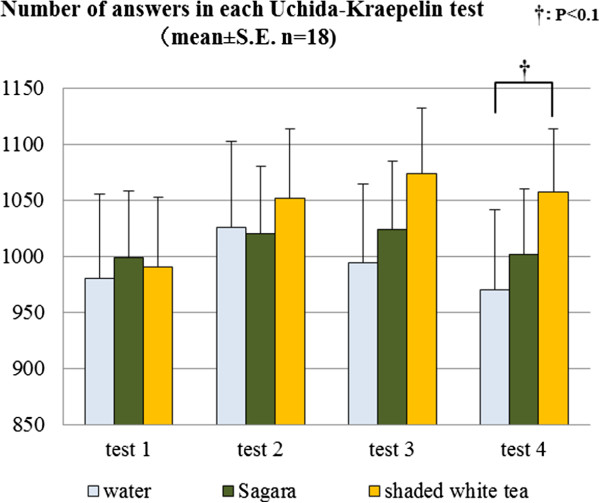
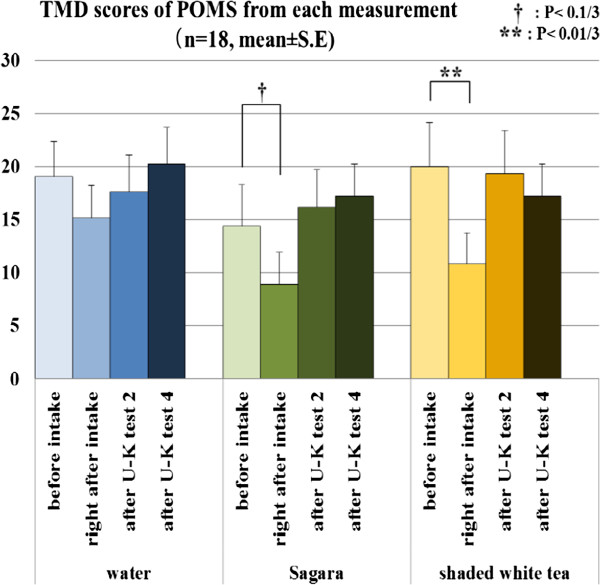
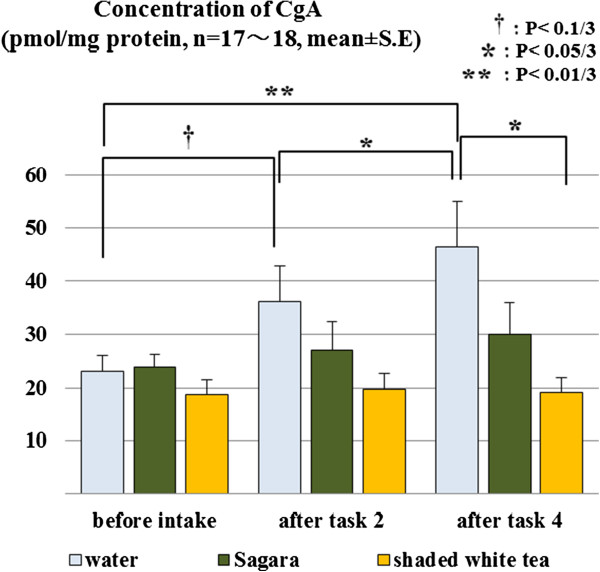
BACKGROUND: Green tea has become renowned for its health benefits. In this study, we investigated the anti-stress effect of two kinds of green tea against a mental stress task load. METHODS: Warm water, ordinary green tea (Sagara), and shaded white tea, which contains more amino acid components than Sagara, were used as test samples in a randomized cross-over design study. Eighteen students (nine male and nine female) participated in three experimental trials on different days at intervals of seven days. Saliva was collected before beverage intake and after performing the mental stress load tasks. Concentration of chromogranin A (CgA) in the saliva was used as an index of autonomic nervous system activity. RESULTS: CgA level increased after the mental tasks, but intake of green tea inhibited this increase; the anti-stress effect was even greater after consumption of shaded white tea. Intake of shaded white tea also lowered Total Mood Disturbance (TMD) score on the Profile of Mood States (POMS); subjects in this condition tended to perform more calculations in the arithmetic task than those in the warm water treatment condition. CONCLUSIONS: Salivary CgA concentration levels increased after mental stress load tasks, but ingestion of green tea inhibited this increase. This anti-stress effect was larger after the consumption of shaded white tea than after Sagara. Shaded white tea intake also lowered TMD score (POMS) and tended to improve performance on an arithmetic task compared to warm water, suggesting that shaded white tea might also improve mood during and after mental stress load.
Overview
The claims and statistics of this paper haven’t been checked yet.
Free: it reads the open-access text and checks the first 5 claims that cite a source we can check. Create a free account to check every claim.
Integrity signals
Registry
Cites
Statistics
Figures
Verification
Claims the paper makes
The claims and statistics of this paper haven’t been checked yet.
Free: it reads the open-access text and checks the first 5 claims that cite a source we can check. Create a free account to check every claim.
Claims other papers make about this one
Each is checked against this paper’s own text: does it say what the citing paper says it does?
The cited source says what the claim attributes to it.
In the citing paper
“However, we found only three studies [28,30,37] that have investigated the effects of green tea intake on parameters of anxiety and stress.”
From Psychotropic effects of L-theanine and its clinical properties: from the management of anxiety and stress to a potential use in schizophrenia (2019) · cites this paper as [30]
Self-check
Percentages, sums and reported differences re-computed from the paper’s own numbers.
The self-check needs the paper’s full text.
Citations
Cites
EEG alpha and theta oscillations reflect cognitive and memory performance: a review and analysis
Klimesch, W. (1999) · Brain Research Reviews · doi:10.1016/s0165-0173(98)00056-3 · Cited by 6,889 · cited 1×
“Alpha activity is indicative of a state of wakeful relaxation, and is associated with decreased anxiety and improved performance under stress [26,27].”
Über das Elektrenkephalogramm des Menschen
Berger, H. (1929) · Archiv für Psychiatrie und Nervenkrankheiten · doi:10.1007/bf01797193 · Cited by 4,235
Relaxation and immunity enhancement effects of γ‐Aminobutyric acid (GABA) administration in humans
Abdou, A. M., Higashiguchi, S., Horie, K., Kim, M., Hatta, H., & Yokogoshi, H. (2006) · BioFactors · doi:10.1002/biof.5520260305 · Cited by 407 · cited 6×
“Theanine, a popular functional food ingredient, has received attention for its multiple roles in the central nervous system (CNS) and autonomic nervous system (ANS).”
InfluentialSelf-citationL-Theanine—a unique amino acid of green tea and its relaxation effect in humans
Juneja, L. (1999) · Trends in Food Science & Technology · doi:10.1016/s0924-2244(99)00044-8 · Cited by 363 · cited 2×
“caffeine and catechins, amino acid components such as theanine have also been reported to have positive effects on brain activity such as memory and learning ability [3,29].”
l-theanine reduces psychological and physiological stress responses
Kimura, K., Ozeki, M., Juneja, L. R., & Ohira, H. (2007) · Biological Psychology · doi:10.1016/j.biopsycho.2006.06.006 · Cited by 349 · cited 1×
“it could reduce stress by inhibiting cortical neuron excitation [5].”
The Effects of L-Theanine, Caffeine and Their Combination on Cognition and Mood
Haskell, C. F., Kennedy, D. O., Milne, A. L., Wesnes, K. A., & Scholey, A. B. (2008) · Biological Psychology · doi:10.1016/j.biopsycho.2007.09.008 · Cited by 280 · cited 1×
“At the same time, previous studies have indicated that theanine interacted with caffeine, and the combination promoted better effects than either alone [28].”
Zhao, Y., Chen, P., Lin, L., Harnly, J. M., Yu, L. (., & Li, Z. (2011) · Food Chemistry · doi:10.1016/j.foodchem.2010.11.055 · Cited by 212 · cited 1×
“7 μm particle size [15].”
Yokogoshi, H., Kato, Y., Sagesaka, Y. M., Takihara-Matsuura, T., Kakuda, T., & Takeuchi, N. (1995) · Bioscience, Biotechnology, and Biochemistry · doi:10.1271/bbb.59.615 · Cited by 192
Self-citationThe Acute Physiological and Mood Effects of Tea and Coffee
Quinlan, P. T., Lane, J., Moore, K. L., Aspen, J., Rycroft, J. A., & O'Brien, D. C. (2000) · Pharmacology Biochemistry and Behavior · doi:10.1016/s0091-3057(00)00192-1 · Cited by 181 · cited 1×
“reported that tea and coffee produced mild autonomic stimulation and an elevation in mood but there were no effects of caffeine dose [22].”
(2008) · PubMed · Cited by 154
Research works printed but not linked: 2
- Nakane H Salivary chromogranin A as index of psychosomatic stress response R&D Review of Toyota CRDL 1999 34 17 22 (in Japanese)
- Fuchinoue Y Fuchinoue H A Compendium of Japanese Tea 1999 Tokyo, Japan: Rural Culture Association (in Japanese)
Cited by
Kubala, E., Strzelecka, P., Grzegocka, M., Lietz–Kijak, D., Gronwald, H., Skomro, P., & Kijak, E. (2018) · BioMed Research International · doi:10.1155/2018/6572381 · Cited by 194
“Their studies showed that concentration of CgA in saliva increased after mental stress, but drinking green tea can inhibit the growth [107].”
BackgroundMechanisms Underlying the Anti-Depressive Effects of Regular Tea Consumption
Rothenberg, D. O., & Zhang, L. (2019) · Nutrients · doi:10.3390/nu11061361 · Cited by 149
“Green Tea, Shade-Grown White Tea Lowered CgA levels following stress load task for both tea types, more effect for Shade-Grown White Tea [42]”
BackgroundMethodSurgeons' and surgical trainees' acute stress in real operations or simulation: A systematic review
Georgiou, K., Larentzakis, A., & Papavassiliou, A. G. (2017) · The Surgeon · doi:10.1016/j.surge.2017.06.003 · Cited by 69
“It has been shown that salivary chromogranin A (sCgA) changes rapidly in response to various psychological stressors.(44,54,55) In contrast, other studies suggest that sCgA levels may not be an accurate index for evaluating ANS activity.”
BackgroundLopes Sakamoto, F., Metzker Pereira Ribeiro, R., Amador Bueno, A., & Oliveira Santos, H. (2019) · Pharmacological Research · doi:10.1016/j.phrs.2019.104395 · Cited by 49
“However, we found only three studies [28,30,37] that have investigated the effects of green tea intake on parameters of anxiety and stress.”
BackgroundFeng, M., Zheng, X., Wan, J., Pan, W., Xie, X., Hu, B., Wang, Y., Wen, H., & Cai, S. (2021) · Food & Function · doi:10.1039/d0fo02921a · Cited by 30
Black tea aroma inhibited increase of salivary chromogranin-A after arithmetic tasks
Yoto, A., Fukui, N., Kaneda, C., Torita, S., Goto, K., Nanjo, F., & Yokogoshi, H. (2018) · Journal of PHYSIOLOGICAL ANTHROPOLOGY · doi:10.1186/s40101-018-0163-0 · Cited by 23
“Discussion We assumed that salivary CgA concentration levels are increased by mental stress load tasks [4, 19], and tea aroma samples may be able to reduce this increase due to the activities of their anti-stress components.”
BackgroundSelf-citationIto, T., Miyamoto, H., Kumagai, Y., Udagawa, M., Shinmyo, T., Mori, K., Ogawa, K., Miyamoto, H., & Kodama, H. (2016) · Journal of Bioscience and Bioengineering · doi:10.1016/j.jbiosc.2015.10.014 · Cited by 20
Valdiglesias, V., Maseda, A., Lorenzo‐López, L., Pásaro, E., Millán-Calentí, J. C., & Laffón, B. (2016) · Journal of Alzheimer s Disease · doi:10.3233/jad-160893 · Cited by 26
“Whereas expected decreases in sCgA [25, 26, 29, 32, 33, 38], or attenuation of sCgA increases [28, 30] were observed in some studies, others report raises in sCgA concentrations [27, 31, 34– 36], and mostly explain the increase as related to positive eustress or stress relieving characteristics of the performed activi…”
Payne, E. R., Aceves-Martins, M., Dubost, J., Greyling, A., & de Roos, B. (2025) · Nutrition Reviews · doi:10.1093/nutrit/nuaf054 · Cited by 19
“Two studies 41,42 reported “overall mood” from the CRVAS, and 2 studies 34,35 reported total mood disturbance from the Profile of Mood States (POMS) questionnaire.”
Lekamge, S., Nakachi, M., Sato, S., Ito, K., & Nomura, S. (2017) · International Journal of Affective Engineering · doi:10.5057/ijae.ijae-d-17-00001 · Cited by 10
Alleviation of acute stress response by black pepper aroma administration
Dilrukshi, E. A. C., Nishiyama, Y., Ito, K., & Nomura, S. (2024) · Journal of PHYSIOLOGICAL ANTHROPOLOGY · doi:10.1186/s40101-023-00352-1 · Cited by 8
“…ginger [8], Hiba [1], and Melissa officinalis (lemon balm) extract [9]; relieved stress with lemon [10], peppermint [11], black tea [12], green tea [13] and blended essential oil with sandalwood and lavender [14]; improved sleep quality with lavender [2, 15, 16] and Rosa damascene [17]; induced…”
BackgroundCavanah, A. M., Robinson, L. A., Mattingly, M. L., & Frugé, A. D. (2025) · Biomedicines · doi:10.3390/biomedicines13071656 · Cited by 7
“Further animal studies have found suppression of adrenal hypertrophy and brain inflammation in mice that were provided a CE/TA (caffeine, EGCG, L-theanine, arginine) ratio of 2 to 8, as well as maintenance of Npas 4, typically reduced in depression and anxiety, at a CE/TA ratio of 4 [7,43].”
InfluentialMinné, D., Stromin, J., Docrat, T. F., Engel-Hills, P. C., & Marnewick, J. L. (2023) · Clinical Nutrition ESPEN · doi:10.1016/j.clnesp.2023.06.008 · Cited by 10
Nakayama, R., Nishi, D., Satô, M., Ito, A., Uchiyama, K., Higuchi, Y., Takahashi, H., & Ohinata, K. (2023) · Nutrients · doi:10.3390/nu15153491 · Cited by 7
Effects of green tea and roasted green tea on human responses
Kurosaka, C., Tagata, C., Nakagawa, S., Kobayashi, M., & Miyake, S. (2024) · Scientific Reports · doi:10.1038/s41598-024-59383-y · Cited by 7
“Furthermore, an experiment investigating the effects of odor stimuli from water and two types of green tea shows that the aroma of green tea increases feelings of relaxation and vitality following exposure to stress 15,16 .”
BackgroundFujimaki, K., Takemoto, H., & Morinobu, S. (2016) · Psychiatry Research Neuroimaging · doi:10.1016/j.pscychresns.2016.01.005 · Cited by 7
dos Santos, S. V. M., Dalri, R. D. C. D. M. B., Bardaquim, V. A., & Robazzi, M. L. D. C. C. (2018) · Revista Brasileira de Medicina do Trabalho · doi:10.5327/z1679443520180234 · Cited by 7
Mátyus, R. O., Szikora, Z., Bodó, D., Vargáné Szabó, B., Csupor, É., Csupor, D., & Tóth, B. (2025) · Journal of Clinical Medicine · doi:10.3390/jcm14217710 · Cited by 6
Lamloum, N. S., Soliman, H. A., Ahmed, R. R., Ahmed, O. M., Abdel-Maksoud, M. A., Kotob, M. H., & Zaky, M. Y. (2023) · Journal of Functional Foods · doi:10.1016/j.jff.2023.105876 · Cited by 6
Mukherjee, D., Palit, P., Roychoudhury, S., Kundu, S. K., & Mandal, S. C. (2018) · Elsevier eBooks · doi:10.1016/b978-0-08-102081-4.00014-9 · Cited by 9
FURUSHIMA, D., SUGIYAMA, I., NOMURA, Y., UNNO, K., & YAMADA, H. (2022) · Journal of Nutritional Science and Vitaminology · doi:10.3177/jnsv.68.540 · Cited by 4
Kurosaka, C., Miyake, S., Kobayashi, M., Tagata, C., & Tatsumi, Y. (2025) · PLoS ONE · doi:10.1371/journal.pone.0328394 · Cited by 3
The next stage of physiological anthropology
Yasukouchi, A. (2023) · Journal of PHYSIOLOGICAL ANTHROPOLOGY · doi:10.1186/s40101-023-00320-9 · Cited by 3
Derbyshire, E. J., Bond, T., & Ellis, J. (2023) · Nutrition and Food Technology Open Access · doi:10.16966/2470-6086.182 · Cited by 4
“Yoto, et al. (2014) found that salivary chromogranin A levels increased after mental stress load tasks and green tea ingestion inhibited this [32].”
BackgroundSalivary Chromogranin A: A Novel Diagnostic Bio-Marker for Alzheimer's Disease
Alagendran, S., Prabhu, S. V., Pushpa, N., Ponraj, M., Rajasekaran, M., Fernandez-Saavedra, G., & Archunan, G. (2022) · International Journal of Advanced Research in Science Communication and Technology · doi:10.48175/ijarsct-2825 · Cited by 2
Kamarunzaman, N. N. Z., Sayec, M. L., Li, Y., Cheok, A., Wu, H., Zhang, Z., Xu, Y., Mesnage, R., Dalrymple, K., Pariante, C. M., et al. (2026) · Clinical Nutrition · doi:10.1016/j.clnu.2026.106677 · Cited by 3
Stress Reduction Effect of Aroma of Whey Fermented Liquid
Izawa, N., Shibata, S., Yamaguchi, R., Hanamizu, T., Sone, T., & Ito, M. (2021) · Journal of Society of Cosmetic Chemists of Japan · doi:10.5107/sccj.55.162 · Cited by 1
Salivary chromogranin A levels relate to fatigability after waking up
Taniguchi, K., Okumura, N., Jinno, N., Seiyama, A., & Shimouchi, A. (2024) · MethodsX · doi:10.1016/j.mex.2024.103085 · Cited by 1
dos Santos, S. V. M. (2020) · Digital Library of Theses and Dissertations (Universidade de São Paulo) · doi:10.11606/t.22.2020.tde-17122019-162041
Tea for Minds and Hearts: A Scoping Review
Derbyshire, E. J., Bond, T., & Jenkins, G. (2022) · Nutrition and Food Technology Open Access · doi:10.16966/2470-6086.176
ASSOCIAÇÃO DA CROMOGRANINA A COM A ANSIEDADE E O ESTRESSE EM PROFISSIONAIS DE ENFERMAGEM
dos Santos, S. V. M., da Silva, L. A., Terra, F. D. S., Viana, A. G., de Souza, A. V., Espíndola, F. S., Teixeira, R. R., & Robazzi, M. L. D. C. C. (2023) · Ciencia y enfermería/Ciencia y enfermería · doi:10.29393/ce29-21acsm80021
Metadata
- Authors
- Yoto, A., Murao, S., Nakamura, Y., & Yokogoshi, H.
- Affiliations
- Shizuoka University (JP)
- Chubu University (JP)
- Corresponding author
- Yoto, Ai
- ORCID
- Yoto, Ai
- Venue
- Journal of Physiological Anthropology
- Published
- 2014-07-17
- Volume
- 33
- Issue
- 1
- Pages
- 20-20
- ISSN
- 1880-6791 (ISSN-L)
- 1880-6805
- PMC
- PMC4118660
- OpenAlex
- W2105882430
- Cited by
- 31
- References
- 32
- Citations by year
- 2026: 1 · 2025: 4 · 2024: 3 · 2023: 6 · 2022: 3 · 2021: 2 · 2020: 1 · 2019: 2 · 2018: 4 · 2017: 2 · 2016: 3
- FWCI
- 1.24
- Type
- journal article
- Language
- en
- Open access
- gold
- doi.org
- Locations
- Journal of PHYSIOLOGICAL ANTHROPOLOGY (publishedVersion)
- Europe PMC (PubMed Central) (publishedVersion, cc-by)
- PubMed Central (publishedVersion, cc-by)
- PubMed (publishedVersion)
- Topics
- Life Sciences › Agricultural and Biological Sciences › Food Science › Tea Polyphenols and Effects
- Health Sciences › Medicine › Complementary and alternative medicine › Medicinal Plants and Bioactive Compounds
- Health Sciences › Medicine › Pharmacology (medical) › Coffee research and impacts
- Keywords
- green tea, chromogranin A, salivary biomarkers, psychological stress, stress response, autonomic nervous system, mood disturbance, total mood disturbance, arithmetic performance
- MeSH terms
- Adult, Affect, Female, Humans, Male, Saliva, Stress, Psychological, Tea, Cross-Over Studies, Plant Preparations, Chromogranin A, Young Adult
About these checks
Registry, retraction, Cites and statistics results are computed, not judged, with one exception: a printed reference that no index lists is read once by a model before it counts as a citation error. Claims are extracted by a model and kept only when their quote appears verbatim in the text; each cited source is then checked, with a model’s help, for whether it says what the claim relies on. Those verdicts can be wrong — read the claim’s quote and the cited source before relying on one.
Statistics and arithmetic are recomputed, not judged.
Confidence bands are shown only for fields calibrated on our annotated test set. None is calibrated yet, so no band is shown.
What counts as a claim ›How we measure confidence ›How we check this ›
Are you an author, or do you see a problem with this page? Request a review
Data sources
Bibliographic data: Semantic Scholar, OpenAlex, Crossref.
Contains information from the Semantic Scholar Academic Graph Datasets, made available under the ODC Attribution License (ODC-BY 1.0).
Semantic Scholar’s data is described in: Kinney, R., et al. (2023). The Semantic Scholar Open Data Platform. arXiv:2301.10140.
