

The DOI matches its Crossref record; 166 of the 168 references it cites were found in a registry or an index.
The biodiversity hypothesis and allergic disease: world allergy organization position statement
Open accessAbstract
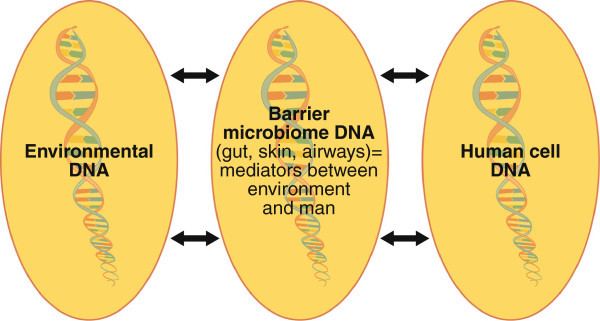
Biodiversity loss and climate change secondary to human activities are now being associated with various adverse health effects. However, less attention is being paid to the effects of biodiversity loss on environmental and commensal (indigenous) microbiotas. Metagenomic and other studies of healthy and diseased individuals reveal that reduced biodiversity and alterations in the composition of the gut and skin microbiota are associated with various inflammatory conditions, including asthma, allergic and inflammatory bowel diseases (IBD), type1 diabetes, and obesity. Altered indigenous microbiota and the general microbial deprivation characterizing the lifestyle of urban people in affluent countries appear to be risk factors for immune dysregulation and impaired tolerance. The risk is further enhanced by physical inactivity and a western diet poor in fresh fruit and vegetables, which may act in synergy with dysbiosis of the gut flora. Studies of immigrants moving from non-affluent to affluent regions indicate that tolerance mechanisms can rapidly become impaired in microbe-poor environments. The data on microbial deprivation and immune dysfunction as they relate to biodiversity loss are evaluated in this Statement of World Allergy Organization (WAO). We propose that biodiversity, the variability among living organisms from all sources are closely related, at both the macro- and micro-levels. Loss of the macrodiversity is associated with shrinking of the microdiversity, which is associated with alterations of the indigenous microbiota. Data on behavioural means to induce tolerance are outlined and a proposal made for a Global Allergy Plan to prevent and reduce the global allergy burden for affected individuals and the societies in which they live.
Overview
The claims and statistics of this paper haven’t been checked yet.
Run the check — free, no account needed. It reads the open-access text and checks the sources it cites.
Integrity signals
Registry
Cites
Statistics
Figures
Verification
Claims the paper makes
The claims and statistics of this paper haven’t been checked yet.
Run the check — free, no account needed. It reads the open-access text and checks the sources it cites.
Claims other papers make about this one
Each is checked against this paper’s own text: does it say what the citing paper says it does?
The cited source says what the claim attributes to it.
In the citing paper
“Similarly, the biodiversity hypothesis highlights the role of natural environments in shaping the human microbiome [38], enhancing immune balance, and reducing inflammation-related diseases [38,39,40].”
Self-check
Percentages, sums and reported differences re-computed from the paper’s own numbers.
The self-check needs the paper’s full text.
Citations
Cites
An obesity-associated gut microbiome with increased capacity for energy harvest
Turnbaugh, P. J., Ley, R. E., Mahowald, M. A., Magrini, V., Mardis, E. R., & Gordon, J. I. (2006) · Nature · doi:10.1038/nature05414 · Cited by 12,444
A human gut microbial gene catalogue established by metagenomic sequencing
MetaHIT Consortium, Qin, J., Li, R., Raes, J., Arumugam, M., Burgdorf, K. S., Manichanh, C., Nielsen, T., Pons, N., Levenez, F., et al. (2010) · Nature · doi:10.1038/nature08821 · Cited by 11,624
Pattern Recognition Receptors and Inflammation
Takeuchi, O., & Akira, S. (2010) · Cell · doi:10.1016/j.cell.2010.01.022 · Cited by 8,895
Diversity of the Human Intestinal Microbial Flora
Eckburg, P. B., Bik, E. M., Bernstein, C. N., Purdom, E., Dethlefsen, L., Sargent, M., Gill, S. R., Nelson, K. E., & Relman, D. A. (2005) · Science · doi:10.1126/science.1110591 · Cited by 7,913
A core gut microbiome in obese and lean twins
Turnbaugh, P. J., Hamady, M., Yatsunenko, T., Cantarel, B. L., Duncan, A., Ley, R. E., Sogin, M. L., Jones, W. J., Roe, B. A., Affourtit, J. P., et al. (2009) · Nature · doi:10.1038/nature07540 · Cited by 7,823
Linking long-term dietary patterns with gut microbial enterotypes
Wu, G. D., Chen, J., Hoffmann, C., Bittinger, K., Chen, Y.-Y., Keilbaugh, S. A., Bewtra, M., Knights, D., Walters, W. A., Knight, R., et al. (2011) · Science · doi:10.1126/science.1208344 · Cited by 6,513
De Filippo, C., Cavalieri, D., Di Paola, M., Ramazzotti, M., Poullet, J. B., Massart, S., Collini, S., Pieraccini, G., & Lionetti, P. (2010) · Proceedings of the National Academy of Sciences · doi:10.1073/pnas.1005963107 · Cited by 5,579
Hay fever, hygiene, and household size.
Strachan, D. P. (1989) · BMJ · doi:10.1136/bmj.299.6710.1259 · Cited by 5,054
The gut microbiota shapes intestinal immune responses during health and disease
Round, J. L., & Mazmanian, S. K. (2009) · Nature Reviews Immunology · doi:10.1038/nri2515 · Cited by 5,029
Global Biodiversity: Indicators of Recent Declines
Butchart, S. H. M., Walpole, M., Collen, B., van Strien, A., Scharlemann, J. P. W., Almond, R. E. A., Baillie, J. E. M., Bomhard, B., Brown, C., Bruno, J., et al. (2010) · Science · doi:10.1126/science.1187512 · Cited by 4,892
Cited by
Sorted by citations
Sandifer, P. A., Sutton‐Grier, A. E., & Ward, B. (2015) · Ecosystem Services · doi:10.1016/j.ecoser.2014.12.007 · Cited by 1,275
Akdiş, C. A. (2021) · Nature reviews. Immunology · doi:10.1038/s41577-021-00538-7 · Cited by 1,066
Allergic diseases and asthma: a global public health concern and a call to action
Pawankar, R. (2014) · World Allergy Organization Journal · doi:10.1186/1939-4551-7-12 · Cited by 840
Self-citationPathways linking biodiversity to human health: A conceptual framework
Marselle, M. R., Hartig, T., Cox, D. T. C., de Bell, S., Knapp, S., Lindley, S. J., Mas, M. T., Böhning‐Gaese, K., Braubach, M., Cook, P. A., et al. (2021) · Environment International · doi:10.1016/j.envint.2021.106420 · Cited by 654
Sözener, Z. Ç., Öztürk, B. Ö., Çerçi, P., Türk, M., Akın, B. G., Akdiş, M., Altıner, S., Yücel, Ü. Ö., Öğülür, İ., Mitamura, Y., et al. (2022) · Allergy · doi:10.1111/all.15240 · Cited by 455
Metadata
- Authors
- Haahtela, T., Holgate, S., Pawankar, R., Akdis, C. A., Benjaponpitak, S., Caraballo, L., Demain, J., Portnoy, J., & von Hertzen, L.
- Affiliations
- Helsinki University Hospital (FI)
- University of Southampton (GB)
- Nippon Medical School (JP)
- Mahidol University (TH)
- Universidad de Cartagena (CO)
- University of Washington (US)
- University of Missouri–Kansas City (US)
- Corresponding author
- Haahtela, Tari
- ORCID
- Venue
- World Allergy Organization Journal
- Publisher
- Elsevier BV
- Published
- 2013
- Volume
- 6
- Issue
- 1
- Pages
- 3
- ISSN
- 1939-4551 (ISSN-L)
- PMC
- PMC3646540
- OpenAlex
- W2105617257
- Cited by
- 426
- References
- 168
- Citations by year
- 2026: 30 · 2025: 24 · 2024: 39 · 2023: 37 · 2022: 36 · 2021: 40 · 2020: 38 · 2019: 33 · 2018: 30 · 2017: 29 · 2016: 27 · 2015: 31 · 2014: 23 · 2013: 7
- FWCI
- 13.15
- Type
- journal article
- Language
- en
- Open access
- gold
- doi.org
- Licence
- Locations
- World Allergy Organization Journal (publishedVersion, cc-by-nc-nd)
- Europe PMC (PubMed Central) (publishedVersion, cc-by)
- PubMed Central (publishedVersion, cc-by)
- PubMed (publishedVersion)
- Zurich Open Repository and Archive (University of Zurich) (acceptedVersion, cc-by)
- DOAJ (DOAJ: Directory of Open Access Journals) (submittedVersion, cc-by-sa)
- Työväentutkimus Vuosikirja (submittedVersion)
- Zurich Open Repository and Archive (University of Zurich) (submittedVersion, cc-by)
- Zurich Open Repository and Archive (University of Zurich)
- Funders
- National Institute for Health and Care Research (NF-SI-0510-10021)
- Topics
- Life Sciences › Biochemistry, Genetics and Molecular Biology › Molecular Biology › Gut microbiota and health
- Health Sciences › Medicine › Pulmonary and Respiratory Medicine › Asthma and respiratory diseases
- Health Sciences › Medicine › Immunology and Allergy › Allergic Rhinitis and Sensitization
- Keywords
- biodiversity loss, allergic diseases, gut microbiota, skin microbiome, dysbiosis, immune tolerance, immune dysregulation, asthma, inflammatory bowel disease, type 1 diabetes, obesity, climate change, urban lifestyle, immigrant health, allergy prevention
About these checks
Registry, retraction, Cites and statistics results are computed, not judged, with one exception: a printed reference that no index lists is read once by a model before it counts as a citation error. Claims are extracted by a model and kept only when their quote appears verbatim in the text; each cited source is then checked, with a model’s help, for whether it says what the claim relies on. Those verdicts can be wrong — read the claim’s quote and the cited source before relying on one.
Statistics and arithmetic are recomputed, not judged.
Confidence bands are shown only for fields calibrated on our annotated test set. None is calibrated yet, so no band is shown.
What counts as a claim ›How we measure confidence ›How we check this ›
Are you an author, or do you see a problem with this page? Request a review
