

Increased midgestational IFN-γ, IL-4 and IL-5 in women bearing a child with autism: A case-control study
Open accessThe DOI matches its Crossref record; 61 of the 61 references it cites were found in a registry or an index.
Abstract
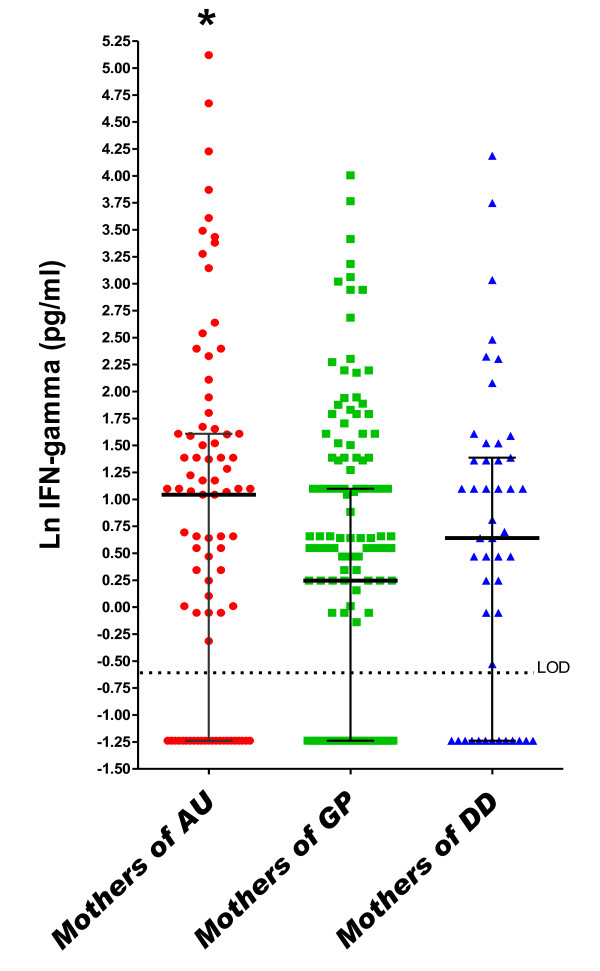
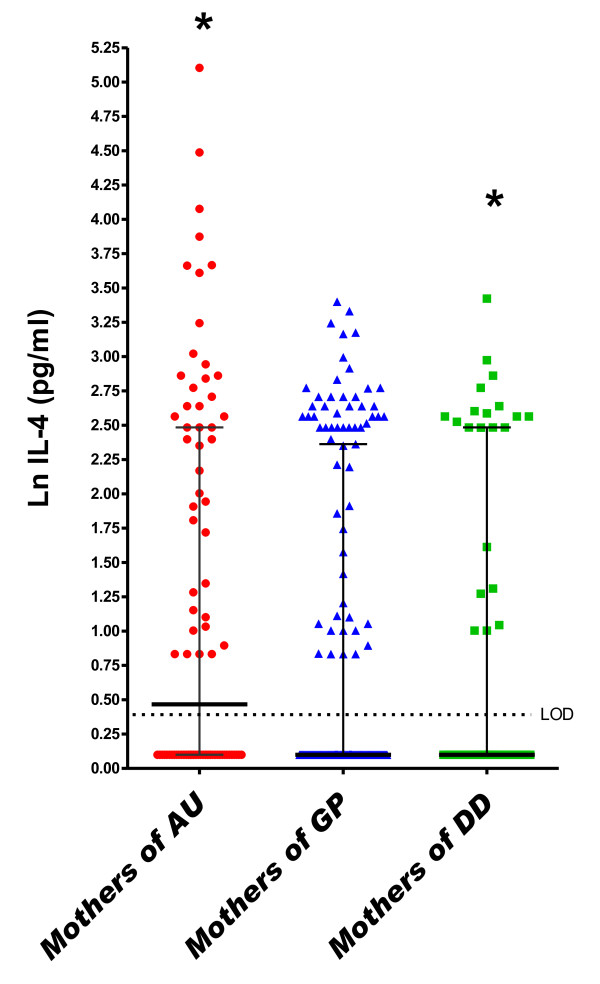
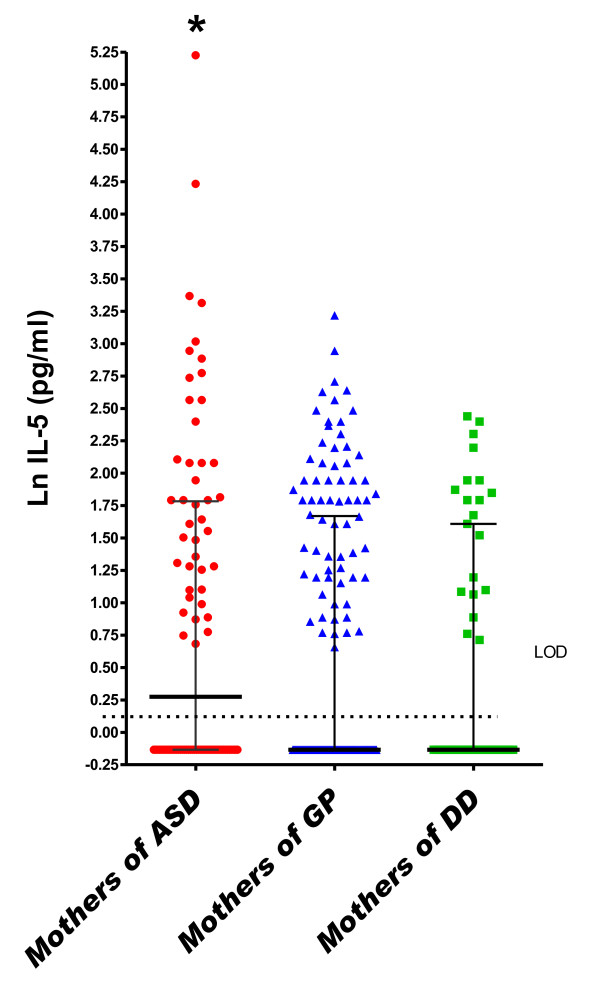
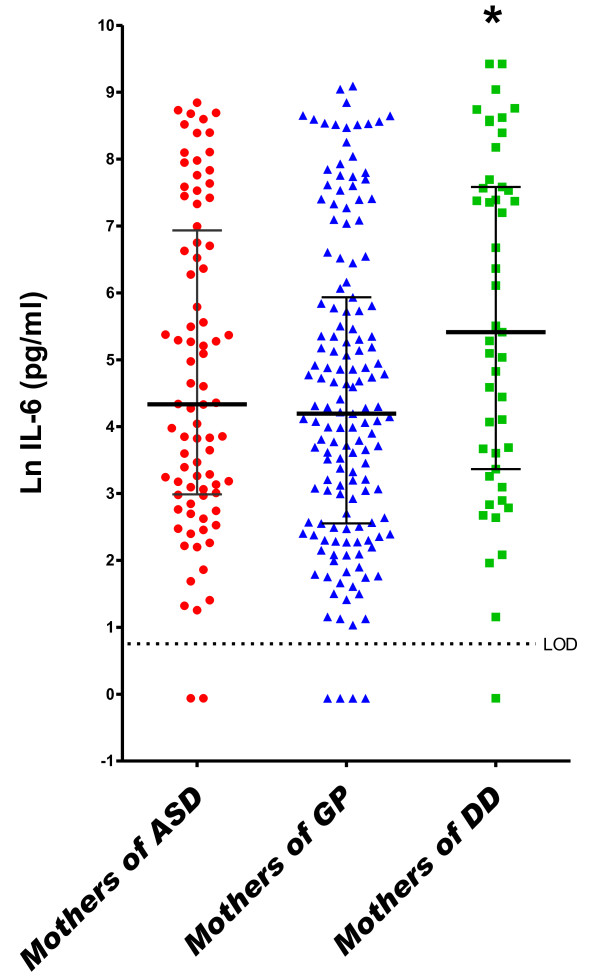
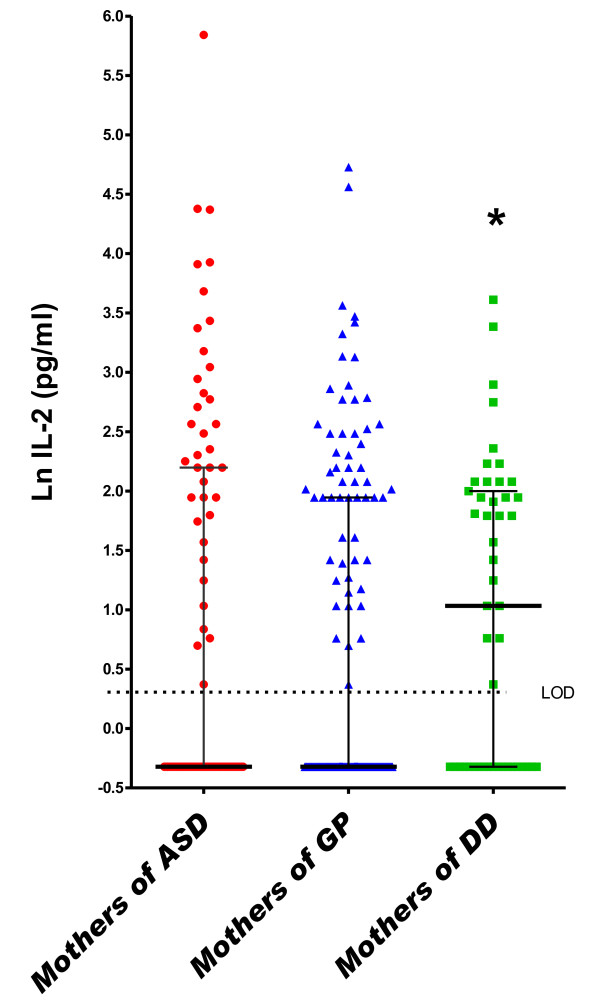
Background: Immune anomalies have been documented in individuals with autism spectrum disorders (ASDs) and their family members. It is unknown whether the maternal immune profile during pregnancy is associated with the risk of bearing a child with ASD or other neurodevelopmental disorders. Methods: Using Luminex technology, levels of 17 cytokines and chemokines were measured in banked serum collected from women at 15 to 19 weeks of gestation who gave birth to a child ultimately diagnosed with (1) ASD ( n = 84), (2) a developmental delay (DD) but not autism ( n = 49) or (3) no known developmental disability (general population (GP); n = 159). ASD and DD risk associated with maternal cytokine and chemokine levels was estimated by using multivariable logistic regression analysis. Results: Elevated concentrations of IFN-γ, IL-4 and IL-5 in midgestation maternal serum were significantly associated with a 50% increased risk of ASD, regardless of ASD onset type and the presence of intellectual disability. By contrast, elevated concentrations of IL-2, IL-4 and IL-6 were significantly associated with an increased risk of DD without autism. Conclusion: The profile of elevated serum IFN-γ, IL-4 and IL-5 was more common in women who gave birth to a child subsequently diagnosed with ASD. An alternative profile of increased IL-2, IL-4 and IL-6 was more common for women who gave birth to a child subsequently diagnosed with DD without autism. Further investigation is needed to characterize the relationship between these divergent maternal immunological phenotypes and to evaluate their effect on neurodevelopment.
Overview
The claims and statistics of this paper haven’t been checked yet.
Free: it reads the open-access text and checks the first 5 claims that cite a source we can check. Create a free account to check every claim.
Integrity signals
Registry
Cites
Statistics
Figures
Verification
Claims the paper makes
The claims and statistics of this paper haven’t been checked yet.
Free: it reads the open-access text and checks the first 5 claims that cite a source we can check. Create a free account to check every claim.
Claims other papers make about this one
Each is checked against this paper’s own text: does it say what the citing paper says it does?
The source backs part of the claim, not all of it — or backs it for a different population, condition or comparison.
In the citing paper
“Definitive evidence that maternal infection during pregnancy is a risk factor for ASD in offspring was obtained through more recent studies of the Danish health registry90.”
From Immune mediators in the brain and peripheral tissues in autism spectrum disorder (2015) · cites this paper as [90]
Experimental — accuracy not yet measuredThe source backs part of the claim, not all of it — or backs it for a different population, condition or comparison.
In the citing paper
“Maternal immune activation (MIA) via infection during pregnancy is known to increase risk for autism spectrum disorder (ASD).”
From Maternal immune activation dysregulation of the fetal brain transcriptome and relevance to the pathophysiology of autism spectrum disorder (2018) · cites this paper as [26]
Experimental — accuracy not yet measuredThe check wasn’t confident either way, so it gives no verdict — never disputed.
In the citing paper
“Second, elevated maternal CRP may not be specific to childhood autism among developmental disorders.”
From Elevated maternal C-reactive protein and autism in a national birth cohort (2014) · cites this paper as [15]
Experimental — accuracy not yet measuredIn the citing paper
“In fact, recent studies suggest that dysregulated levels of various inflammatory markers in maternal sera (Goines et al., 2011) or amniotic fluid (Abdallah et al., 2011a, b) during pregnancy are associated with increased risk of ASD.”
From Maternal hospitalization with infection during pregnancy and risk of autism spectrum disorders (2015) · cites this paper as Goines et al., 2011
In the citing paper
“Data from more than a million children born between the years of 1980 and 2005 revealed an almost 3-fold increase in the rate of ASD in children born to mothers who were hospitalized for viral infection in the first trimester and in children of women who experienced an episode of fever lasting a week or more before gestational week 3290,91.”
From Immune mediators in the brain and peripheral tissues in autism spectrum disorder (2015) · cites this paper as [90]
Self-check
Percentages, sums and reported differences re-computed from the paper’s own numbers.
The self-check needs the paper’s full text.
Citations
Cites
Diagnostic and Statistical Manual of Mental Disorders
American Psychiatric Association (2013) · doi:10.1176/appi.books.9780890425596 · Cited by 116,369
Diagnostic and Statistical Manual of Mental Disorders
Williams, J. B. W., & First, M. (2013) · Encyclopedia of Social Work · doi:10.1093/acrefore/9780199975839.013.104 · Cited by 109,519
Lord, C., Risi, S., Lambrecht, L., Cook, E. H., Leventhal, B. L., DiLavore, P. C., Pickles, A., & Rutter, M. (2000) · Journal of Autism and Developmental Disorders · doi:10.1023/a:1005592401947 · Cited by 7,520 · cited 1×
“There are no clear biological markers for ASD, and current diagnosis relies entirely on behavioral criteria [2,3].”
BackgroundDiagnostic and Statistical Manual of Mental Disorders, 5th Edition
(2013) · American Psychiatric Association Publishing eBooks · doi:10.1176/appi.books.9780890425596.893619 · Cited by 4,383
Wegmann, T. G., Lin, H., Guilbert, L., & Mosmann, T. R. (1993) · Immunology Today · doi:10.1016/0167-5699(93)90235-d · Cited by 2,852 · cited 5×
“Finally, the risk for both ASD and DD increased with increasing levels of IL-10 relative to GP controls, but risk estimates were of borderline significance (Table 3).”
BackgroundInfluentialMaternal Immune Activation Alters Fetal Brain Development through Interleukin-6
Smith, S. E. P., Li, J., Garbett, K., Mirnics, K., & Patterson, P. H. (2007) · The Journal of Neuroscience · doi:10.1523/jneurosci.2178-07.2007 · Cited by 1,605 · cited 4×
“Mouse models have shown that prenatal exposure to IL6 or mimics of infectious agents such as LPS or poly(I:C) can induce behavioral changes and brain abnormalities among offspring [18,19,21,48].”
BackgroundInfluentialPrenatal Infection and Schizophrenia: A Review of Epidemiologic and Translational Studies
Brown, A. S., & Derkits, E. J. (2010) · American Journal of Psychiatry · doi:10.1176/appi.ajp.2009.09030361 · Cited by 1,269 · cited 1×
“Epidemiological studies have suggested that prenatal infections may be related to neurological disorders such as schizophrenia and autism [33,34].”
BackgroundPrevalence of Autism in a US Metropolitan Area
Yeargin-Allsopp, M., Rice, C., Karapurkar, T., Doernberg, N., Boyle, C., & Murphy, C. (2003) · JAMA · doi:10.1001/jama.289.1.49 · Cited by 1,248 · cited 1×
“After subjects were ascertained from the Regional Center Orange County, ASD and DD diagnoses were verified by trained medical record abstractors following a protocol initially developed by the Metropolitan Atlanta Developmental Disabilities Surveillance Program [23].”
MethodMaternal influenza infection causes marked behavioral and pharmacological changes in the offspring
Shi, L., Fatemi, S. H., Sidwell, R. W., & Patterson, P. H. (2003) · The Journal of Neuroscience · doi:10.1523/jneurosci.23-01-00297.2003 · Cited by 1,025 · cited 2×
“offspring behavior and brain histopathology [17,19, 35-37].”
BackgroundMaternal Infection Requiring Hospitalization During Pregnancy and Autism Spectrum Disorders
Atladóttir, H. Ó., Thorsen, P., Østergaard, L., Schendel, D. E., Lemcke, S., Abdallah, M., & Parner, E. T. (2010) · Journal of Autism and Developmental Disorders · doi:10.1007/s10803-010-1006-y · Cited by 916 · cited 1×
“Epidemiological studies have suggested that prenatal infections may be related to neurological disorders such as schizophrenia and autism [33,34].”
Background
Cited by
Items 301–367 of 367
Bairwa, S. C., Shaw, C., Kuo, M., Yoo, J., Tomljenovic, L., & Eidi, H. (2021) · Brain Behavior & Immunity - Health · doi:10.1016/j.bbih.2021.100267 · Cited by 2
“Elevated levels of cytokines and their association with severity of diagnostic features in ASD (Ashwood et al., 2011c; Hashim et al., 2013) have also been documented.”
BackgroundInfluentialThe maternal epigenome as a window into the in utero environment that the foetus experiences
Holuka, C., Merz, M. P., Grova, N., & Turner, J. D. (2023) · Medical Hypotheses · doi:10.1016/j.mehy.2023.111191 · Cited by 2
Gestational diabetes mellitus as a risk factor for neuropsychiatric pathology in offspring
Evsyukova, I. I. (2024) · Journal of obstetrics and women s diseases · doi:10.17816/jowd624209 · Cited by 3
Rose, D. R., & Ashwood, P. (2015) · Contemporary clinical neuroscience · doi:10.1007/978-1-4939-2190-4_6 · Cited by 2
Self-citationСамойлова, Ю. Г., Матвеева, М. В., & Galyukova, D. E. (2024) · Neuroscience and Behavioral Physiology · doi:10.1007/s11055-024-01633-7 · Cited by 1
“There is also evidence that increased interferon γ (IFN-γ ), IL-4, and IL-5 concentrations in maternal serum in mid-pregnancy are signi fi cantly associated with a 50% increase in the risk of ASD [14].”
Immunoinflammatory Mechanisms in Sex-Dependent Vulnerability to Neuropsychiatric Disorders
Macêdo, D. S., Torres, D., Gomes, N. S., Soares, M. V. R., Lós, D. B., & Fiorenza, N. G. (2024) · Integrated science · doi:10.1007/978-3-031-72079-6_4 · Cited by 1
Jayasinghe, I. U., Jones, H. F., Graham, E. S., Eggleton, K. S., Dale, R. C., & Alsweiler, J. M. (2025) · Campbell Systematic Reviews · doi:10.1002/cl2.70053 · Cited by 1
“In humans, several population birth cohort studies have shown that maternal inflammatory proteins, including cytokines, may be associated with the neurodeve-lopment of their offspring (Abdallah et al. 2013; Gilman et al. 2017; Goines et al. 2011).”
Associations between Prenatal Perceived Stress and Child Autism-Related Traits in the ECHO Cohort
Grosvenor, L. P., McGrath, M., Douglas, J., Ames, J., Amutah‐Onukagha, N., Avalos, L. A., Baker, B. H., Brennan, P. A., Christalin, N., Ferrara, A. M., et al. (2026) · The Journal of Pediatrics · doi:10.1016/j.jpeds.2026.115054 · Cited by 1
Self-citationImran, M. A., Mohebbi, M., Wright, C. R., Williams, R. J., Saffery, R., Craig, J. M., & Stephenson, G. (2026) · Pediatric Research · doi:10.1038/s41390-026-05308-6 · Cited by 1
Seasonality of Influences on Disorders of Psychological Development: A Synopsis
Ratajczak, H. V., & Sothern, R. B. (2014) · North American Journal of Medicine and Science · Cited by 1
Ansari, M. A., Bakheet, S. A., AL-Ayadhi, L. Y., Khan, M. R., Attia, S. M., & Ahmad, S. F. (2019) · Research in Autism · doi:10.1016/j.rasd.2019.101500 · Cited by 2
As the pandemic wanes, will autism diagnoses rise in its wake?
Askham, A. V. (2022) · The Transmitter · doi:10.53053/unyj4981 · Cited by 1
Introduction to Neuropathology
Casanova, M. F., Patterson, P. H., & London, E. (2013) · Springer eBooks · doi:10.1007/978-1-4614-6843-1_1 · Cited by 1
de Jesus, A. J. B. (2020) · Digital Library of Theses and Dissertations (Universidade de São Paulo) · doi:10.11606/t.10.2020.tde-27082020-174347 · Cited by 2
Kaur, T., Sharma, N., Jakati, S., Bagga, N., Mitra, S., Katamtreddy Bhargavi, K., Jalali, S., & Kaur, I. (2023) · bioRxiv (Cold Spring Harbor Laboratory) · doi:10.1101/2023.02.13.528236 · Cited by 3
“In the gestational environment these histopathological changes can cause or effect levels of inflammation (Goines et al., 2011), hyperoxia and hypoxia (Burstyn et al.”
BackgroundWassman, E. R., Martin, M. M., Schauer, J. D., de Water, J. V., & Paul, M. S. (2026) · medRxiv · doi:10.64898/2026.10.23.26366366 · Cited by 1
Wassman, E. R., Martin, M. M., Schauer, J. D., de Water, J. V., & Paul, M. S. (2026) · medRxiv · doi:10.64898/2026.10.23.26366364 · Cited by 1
Mantha, K. (2013) · Scholarship@Western (Western University)
Flinkkilä, E. (2015) · Helda - University of Helsinki Institutional Repository
BTBR T~(+)tf/J Mouse: An Ideal Animal Model for Autism Spectrum Disorders
Wang, B. (2014) · International Journal of Psychiatry and Neurology · doi:10.12677/ijpn.2014.33003
Characterizing the adhesive properties of cytokine receptor IL17Ra during brain development
Park, A. (2016) · Wellesley College Digital RepositoryWellesley (Wellesley College)
Maternal Autoantibodies in Autism Spectrum Disorder
Jones, K. L., & de Water, J. V. (2014) · WORLD SCIENTIFIC eBooks · doi:10.1142/9789814602167_0017 · Cited by 1
Ornoy, A. (2015) · Reproductive Toxicology · doi:10.1016/j.reprotox.2015.06.013
Rôle des acides gras polyinsaturés n-3 dans le développement cérébral normal et pathologique
Leyrolle, Q. (2018) · theses.fr (ABES) · doi:10.70675/fdca5023zf0e0z4e14za647z153137b2be38
Suárez, S. S. (2015) · Acceda (Universidad de Las Palmas de Gran Canaria) · Cited by 4
Batinić, B. (2017) · FarFar (University of Belgrade, Faculty of Pharmacy)
Is it Time to Begin Prenatal/Neonatal Screening for Autism Risk?
Crawford, S. (2019) · Global Journal of Pediatrics & Neonatal Care · doi:10.33552/gjpnc.2019.01.000514
“identified a group of clinically significant maternal autoantibody biomarkers linked to autism risk [37,38].”
BackgroundWarre-Cornish, K. M., Perfect, L., Nagy, R., Reid, M. J., Mueller, A., Evans, A., Ghevaert, C., McAlonan, G. M., Loth, E., Murphy, D., et al. (2019) · bioRxiv (Cold Spring Harbor Laboratory) · doi:10.1101/789321
Serotonin in cortical development: implications for autism spectrum disorder
Höhmann, C. F., Lange, M. S., & Blue, M. E. (2020) · Handbook of behavioral neuroscience · doi:10.1016/b978-0-444-64125-0.00046-3
Inflammation and accumulating risk for developing psychiatric disorders
Money, K. M. (2016)
Sterling, K. (2020) · York University Digital Library (York University)
Epigenomic and Transcriptomic Changes in the Onset of Disease
Naler, L. B. (2021) · VTechWorks (Virginia Tech)
Is Autism Spectrum Disorder Related to Immune Dysfunction(s)?
Lejuste, F., Tamouza, R., & Leboyer, M. (2021) · Springer eBooks · doi:10.1007/978-3-030-71229-7_13
Hall, H. A., Speyer, L. G., Lombardo, M. V., Murray, A. L., & Auyeung, B. (2020) · PsyArXiv (OSF Preprints) · doi:10.31234/osf.io/hnbjg
Evsyukova, I. I. (2022) · Human Physiology · doi:10.1134/s0362119722030057
Rates of Developmental Disabilities Vary Across Birth Months in a Tropical Climate
Maylott, S. E., Fasano, R. M., Moffitt, J., Boland, C. L., Burdette, E. T., Nahin, E. R., Simpson, E. A., & Delgado, C. F. (2023) · The Journal of Special Education · doi:10.1177/00224669221148726
Prevalence of Asthma in Children with Autism and Attention Deficit Hyperactivity Disorder
Lateef, A. G. A. E., Arafa, S. G., Darwish, M., Zaki, M. S., & Atta, H. A. (2023) · International Journal of Medical Arts · doi:10.21608/ijma.2023.194142.1625 · Cited by 1
“Pre-bronchodilator measurements have been performed on all participants using standard baseline data for IOS did not reveal any signs of airflow limitation, and those with and without asthma did not vary significantly from one another given that those with asthma were receiving treatment.”
MethodIs autism spectrum disorder an inflammation?
Naralan, Y. S., Gül, A. H., & Altunkaynak, K. (2023) · Ideggyógyászati Szemle · doi:10.18071/isz.76.0212
Prenatal Programming of Monocyte Chemotactic Protein-1 Signaling in Autism Susceptibility
Camacho‐Morales, A., & Cárdenas‐Tueme, M. (2024) · Molecular Neurobiology · doi:10.1007/s12035-024-03940-z
“Maternal inflammation leads to elevated proinflammatory cytokines such as IFN gamma, and IL-4, IL-5, and IL-6 might affect the fetal brain development and subsequent cognitive disease outcomes [75].”
Offspring behavioral outcomes following maternal allergic asthma in the IL-4-deficient mouse
Schwartzer, J. J., Church, J. S., Russo, J. N., & Ragoonaden, S. (2024) · Journal of Neuroimmunology · doi:10.1016/j.jneuroim.2024.578341
Asaka, M. K., Nishimura, T., Kuwabara, H., Itoh, H., Takahashi, N., & Tsuchiya, K. J. (2024) · PLoS ONE · doi:10.1371/journal.pone.0301982 · Cited by 1
Kato, D., Okuno, A., Ishikawa, T., Itakura, S., Oguchi, S., Kasahara, Y., Kanenishi, K., Kitadai, Y., Kimura, Y., Shimojo, N., et al. (2025) · JMIR Pediatrics and Parenting · doi:10.2196/58337
“However, mothers whose children later receive neurodevelopmental diagnoses have been reported to have significantly higher levels of various inflammatory cytokines and chemokines, such as IL-1α, IL-4, IL-6, and interferon [IFN]-γ in serum during midpregnancy [34,35].”
Huang, J. V., & Dehghan, A. (2024) · Springer eBooks · doi:10.1007/978-3-031-32046-0_9-1 · Cited by 1
Women in Psychiatry 2023: Autism
(2025) · Frontiers research topics · doi:10.3389/978-2-8325-6235-2
Huang, J. V., & Dehghan, A. (2025) · Springer eBooks · doi:10.1007/978-3-031-73363-5_9
Gouveia, G. R., Camilo, C., Simões, S. N., Braga, C., Martinez, R. C. R., Camoezi, F., Moreira, L. P. B., Euclydes, V. L. V., Vilela, L., Pereira, J. P., et al. (2025) · Journal of Reproductive Immunology · doi:10.1016/j.jri.2025.104806
Sullivan, D. L. (2015) · ScholarWorks (Walden University)
Volk, H. E., Park, B., Hollingue, C., Jones, K. L., Ashwood, P., Windham, G. C., Lurman, F., Alexeeff, S., Kharrazi, M., Pearl, M., et al. (2020) · Figshare · doi:10.6084/m9.figshare.13466855
Self-citationHall, M. B. (2024) · Library, Museums and Press - UDSpace (University of Delaware) · doi:10.58088/at11-n282
Fernández, M. M. (2023) · UNED repository · Cited by 1
Maternal Allergic Asthma and the Impacts on Offspring Neurodevelopment
Tamayo, J. M. (2023) · eScholarship (California Digital Library)
Musillo, C. (2023) · IRIS Research product catalog (Sapienza University of Rome)
Kamdem Tchuendem, L. (2023) · Papyrus : Institutional Repository (Université de Montréal) · doi:10.71781/4612
Ozaki, K., Wake, H., & Yamada, H. (2021) · Reproductive Immunology and Biology · doi:10.3192/jsirib.36.11
Gigase, F. A. J., Zarchev, M. G., Muetzel, R. L., Cecil, C. A. M., Ospina, L. H., Hillegers, M. H. J., Birnbaum, R., de Witte, L. D., & Bergink, V. (2025) · Journal of Medicine and HealthCare · doi:10.47363/jmhc/2025(7)321
Paraschivescu, C. (2019) · theses.fr (ABES) · doi:10.70675/0de24a19z64d3z4a48z9f05z8dbe30d63fdf
Ellul, P. (2024) · theses.fr (ABES) · doi:10.70675/34f32d70zca59z43a9zba64z497f716246ae
Microglia Regulatory and T‐Helper Cytokine Profiles in Autism Spectrum Disorder
Akan, Z., Turğut, F. S., Öztürk, M., Kolbaşı, B., Unal, E., & Mete, N. (2026) · International Journal of Developmental Neuroscience · doi:10.1002/jdn.70135 · Cited by 1
Nutor, C., Dunlop, A. L., & Brennan, P. A. (2026) · Journal of Neurodevelopmental Disorders · doi:10.1186/s11689-026-09709-w
“For example, elevated levels of maternal inflammatory cytokines during pregnancy are associated with increased risk of ASD in offspring [32].”
Complement gene expression in the fetal brain after maternal immune activation in a rodent model
Correia, É. P. (2025) · Portuguese National Funding Agency for Science, Research and Technology (RCAAP Project by FCT)
Cattaneo, A., Norata, G. D., & Benedetto, M. G. D. (2024) · Archivio Istituzionale della Ricerca (Universita Degli Studi Di Milano)
O’Brien, K., & Blair, P. (2026) · Springer eBooks · doi:10.1007/978-3-032-14521-5_10
Hata, N., Hirai, T., Umeda, N., Xiao, X., Morisseau, C. H. P., Hammock, B. D., Harada, T., Okumura, A., Nakayasu, C., Tsuchiya, K. J., et al. (2026) · Journal of Psychiatric Research · doi:10.1016/j.jpsychires.2026.09.023
Imran, M. A., Islam, M. R., Wright, C. R., Williams, R. J., & Stephenson, G. L. (2026) · Neuroscience & Biobehavioral Reviews · doi:10.1016/j.neubiorev.2026.107019
Shateri, A. (2026) · Frontiers in Psychiatry · doi:10.3389/fpsyt.2026.1973963
Metadata
- Authors
- Goines, P. E., Croen, L. A., Braunschweig, D., Yoshida, C. K., Grether, J., Hansen, R., Kharrazi, M., Ashwood, P., & Van de Water, J.
- Affiliations
- University of California, Davis (US)
- Kaiser Permanente (US)
- California Department of Public Health (US)
- Venue
- Molecular Autism
- Published
- 2011-08-02
- Volume
- 2
- Issue
- 1
- Pages
- 13-13
- ISSN
- 2040-2392 (ISSN-L)
- PMC
- PMC3170586
- OpenAlex
- W2137386978
- Cited by
- 351
- References
- 61
- Citations by year
- 2026: 15 · 2025: 15 · 2024: 29 · 2023: 30 · 2022: 29 · 2021: 21 · 2020: 36 · 2019: 26 · 2018: 29 · 2017: 20 · 2016: 23 · 2015: 21 · 2014: 19 · 2013: 18 · 2012: 18
- FWCI
- 9.26
- Type
- journal article
- Language
- en
- Open access
- gold
- doi.org
- Licence
- cc-by
- Locations
- Molecular Autism (publishedVersion, cc-by)
- Europe PMC (PubMed Central) (publishedVersion, cc-by)
- PubMed Central (publishedVersion, cc-by)
- PubMed (publishedVersion)
- DOAJ (DOAJ: Directory of Open Access Journals) (submittedVersion)
- Funders
- Autism Speaks (AS2514)
- U.S. Environmental Protection Agency (R-829388)
- California Department of Public Health
- Tobacco-Related Disease Research Program (8RT‐0115)
- National Institutes of Health (R829388, ES11269)
- National Institute of Mental Health
- National Institute of Environmental Health Sciences (R01ES016669)
- Topics
- Life Sciences › Neuroscience › Cognitive Neuroscience › Autism Spectrum Disorder Research
- Life Sciences › Neuroscience › Biological Psychiatry › Tryptophan and brain disorders
- Life Sciences › Immunology and Microbiology › Immunology › Reproductive System and Pregnancy
- Keywords
- autism spectrum disorder, developmental delay, interferon-gamma, IL-4, IL-5, interleukin-2, interleukin-6, chemokines, neurodevelopmental risk, pregnancy
About these checks
Registry, retraction, Cites and statistics results are computed, not judged, with one exception: a printed reference that no index lists is read once by a model before it counts as a citation error. Claims are extracted by a model and kept only when their quote appears verbatim in the text; each cited source is then checked, with a model’s help, for whether it says what the claim relies on. Those verdicts can be wrong — read the claim’s quote and the cited source before relying on one.
Statistics and arithmetic are recomputed, not judged.
Confidence bands are shown only for fields calibrated on our annotated test set. None is calibrated yet, so no band is shown.
What counts as a claim ›How we measure confidence ›How we check this ›
Are you an author, or do you see a problem with this page? Request a review
Data sources
Bibliographic data: Semantic Scholar, OpenAlex, Crossref.
Contains information from the Semantic Scholar Academic Graph Datasets, made available under the ODC Attribution License (ODC-BY 1.0).
Semantic Scholar’s data is described in: Kinney, R., et al. (2023). The Semantic Scholar Open Data Platform. arXiv:2301.10140.
