

Increased midgestational IFN-γ, IL-4 and IL-5 in women bearing a child with autism: A case-control study
Open accessThe DOI matches its Crossref record; 61 of the 61 references it cites were found in a registry or an index.
Abstract
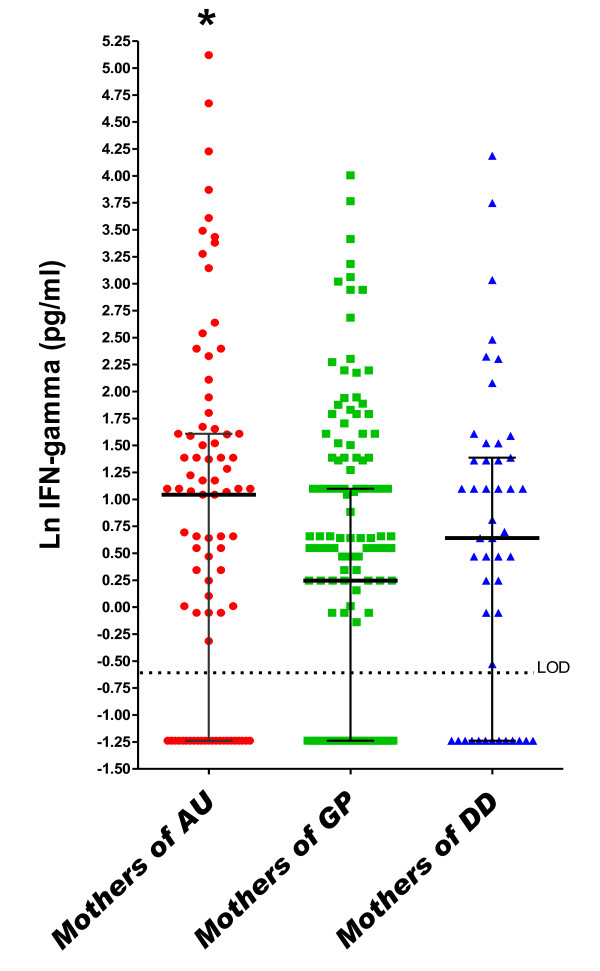
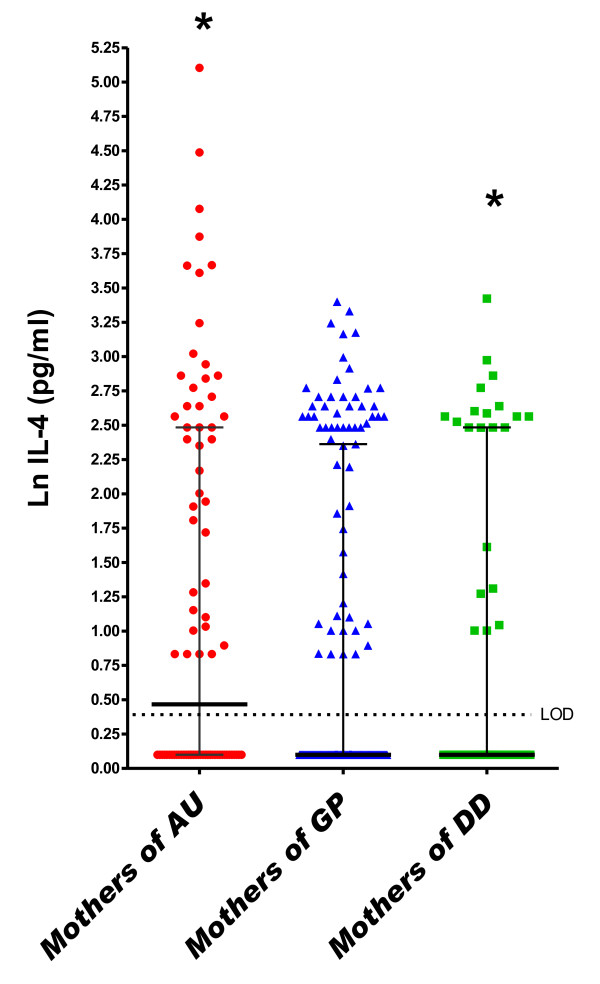
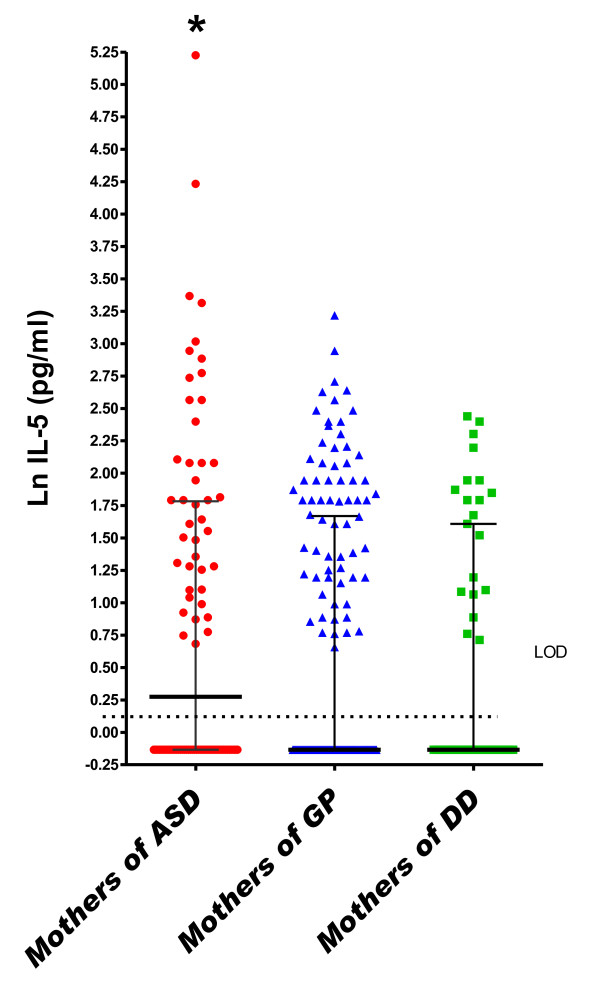
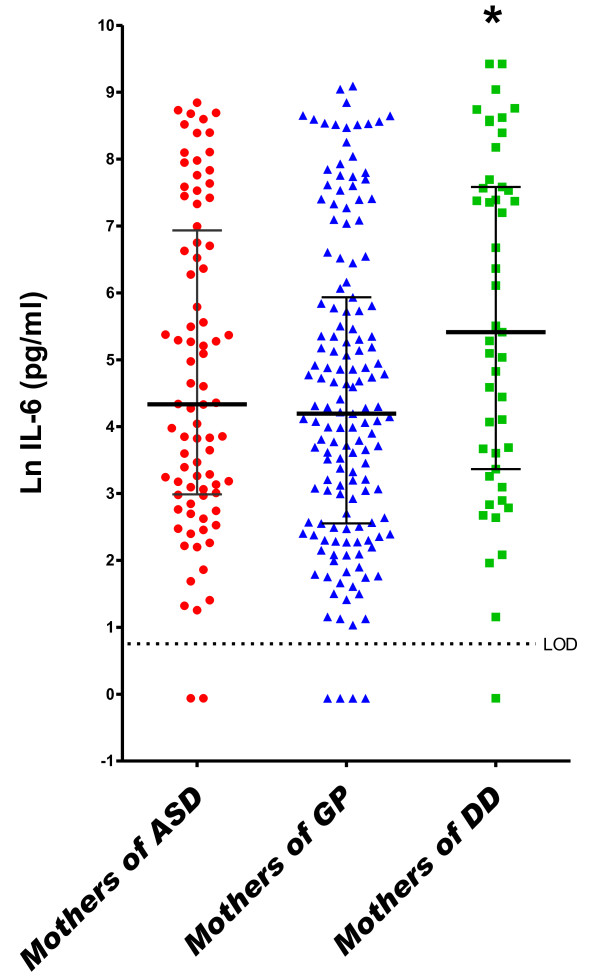
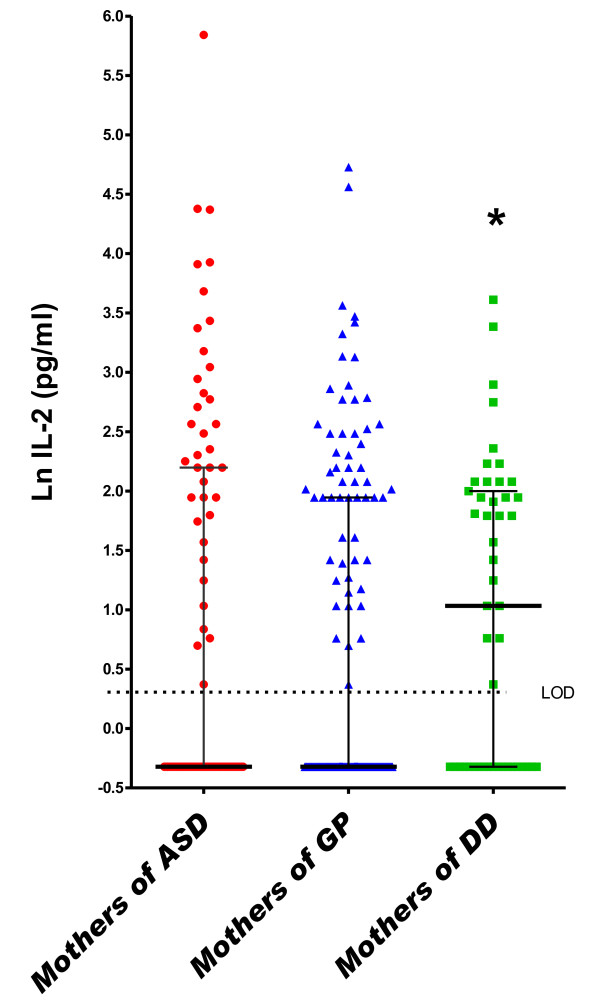
Background: Immune anomalies have been documented in individuals with autism spectrum disorders (ASDs) and their family members. It is unknown whether the maternal immune profile during pregnancy is associated with the risk of bearing a child with ASD or other neurodevelopmental disorders. Methods: Using Luminex technology, levels of 17 cytokines and chemokines were measured in banked serum collected from women at 15 to 19 weeks of gestation who gave birth to a child ultimately diagnosed with (1) ASD ( n = 84), (2) a developmental delay (DD) but not autism ( n = 49) or (3) no known developmental disability (general population (GP); n = 159). ASD and DD risk associated with maternal cytokine and chemokine levels was estimated by using multivariable logistic regression analysis. Results: Elevated concentrations of IFN-γ, IL-4 and IL-5 in midgestation maternal serum were significantly associated with a 50% increased risk of ASD, regardless of ASD onset type and the presence of intellectual disability. By contrast, elevated concentrations of IL-2, IL-4 and IL-6 were significantly associated with an increased risk of DD without autism. Conclusion: The profile of elevated serum IFN-γ, IL-4 and IL-5 was more common in women who gave birth to a child subsequently diagnosed with ASD. An alternative profile of increased IL-2, IL-4 and IL-6 was more common for women who gave birth to a child subsequently diagnosed with DD without autism. Further investigation is needed to characterize the relationship between these divergent maternal immunological phenotypes and to evaluate their effect on neurodevelopment.
Overview
The claims and statistics of this paper haven’t been checked yet.
Free: it reads the open-access text and checks the first 5 claims that cite a source we can check. Create a free account to check every claim.
Integrity signals
Registry
Cites
Statistics
Figures
Verification
Claims the paper makes
The claims and statistics of this paper haven’t been checked yet.
Free: it reads the open-access text and checks the first 5 claims that cite a source we can check. Create a free account to check every claim.
Claims other papers make about this one
Each is checked against this paper’s own text: does it say what the citing paper says it does?
The source backs part of the claim, not all of it — or backs it for a different population, condition or comparison.
In the citing paper
“Definitive evidence that maternal infection during pregnancy is a risk factor for ASD in offspring was obtained through more recent studies of the Danish health registry90.”
From Immune mediators in the brain and peripheral tissues in autism spectrum disorder (2015) · cites this paper as [90]
Experimental — accuracy not yet measuredThe source backs part of the claim, not all of it — or backs it for a different population, condition or comparison.
In the citing paper
“Maternal immune activation (MIA) via infection during pregnancy is known to increase risk for autism spectrum disorder (ASD).”
From Maternal immune activation dysregulation of the fetal brain transcriptome and relevance to the pathophysiology of autism spectrum disorder (2018) · cites this paper as [26]
Experimental — accuracy not yet measuredThe check wasn’t confident either way, so it gives no verdict — never disputed.
In the citing paper
“Second, elevated maternal CRP may not be specific to childhood autism among developmental disorders.”
From Elevated maternal C-reactive protein and autism in a national birth cohort (2014) · cites this paper as [15]
Experimental — accuracy not yet measuredIn the citing paper
“In fact, recent studies suggest that dysregulated levels of various inflammatory markers in maternal sera (Goines et al., 2011) or amniotic fluid (Abdallah et al., 2011a, b) during pregnancy are associated with increased risk of ASD.”
From Maternal hospitalization with infection during pregnancy and risk of autism spectrum disorders (2015) · cites this paper as Goines et al., 2011
In the citing paper
“Data from more than a million children born between the years of 1980 and 2005 revealed an almost 3-fold increase in the rate of ASD in children born to mothers who were hospitalized for viral infection in the first trimester and in children of women who experienced an episode of fever lasting a week or more before gestational week 3290,91.”
From Immune mediators in the brain and peripheral tissues in autism spectrum disorder (2015) · cites this paper as [90]
Self-check
Percentages, sums and reported differences re-computed from the paper’s own numbers.
The self-check needs the paper’s full text.
Citations
Cites
Diagnostic and Statistical Manual of Mental Disorders
American Psychiatric Association (2013) · doi:10.1176/appi.books.9780890425596 · Cited by 116,369
Diagnostic and Statistical Manual of Mental Disorders
Williams, J. B. W., & First, M. (2013) · Encyclopedia of Social Work · doi:10.1093/acrefore/9780199975839.013.104 · Cited by 109,519
Lord, C., Risi, S., Lambrecht, L., Cook, E. H., Leventhal, B. L., DiLavore, P. C., Pickles, A., & Rutter, M. (2000) · Journal of Autism and Developmental Disorders · doi:10.1023/a:1005592401947 · Cited by 7,520 · cited 1×
“There are no clear biological markers for ASD, and current diagnosis relies entirely on behavioral criteria [2,3].”
BackgroundDiagnostic and Statistical Manual of Mental Disorders, 5th Edition
(2013) · American Psychiatric Association Publishing eBooks · doi:10.1176/appi.books.9780890425596.893619 · Cited by 4,383
Wegmann, T. G., Lin, H., Guilbert, L., & Mosmann, T. R. (1993) · Immunology Today · doi:10.1016/0167-5699(93)90235-d · Cited by 2,852 · cited 5×
“Finally, the risk for both ASD and DD increased with increasing levels of IL-10 relative to GP controls, but risk estimates were of borderline significance (Table 3).”
BackgroundInfluentialMaternal Immune Activation Alters Fetal Brain Development through Interleukin-6
Smith, S. E. P., Li, J., Garbett, K., Mirnics, K., & Patterson, P. H. (2007) · The Journal of Neuroscience · doi:10.1523/jneurosci.2178-07.2007 · Cited by 1,605 · cited 4×
“Mouse models have shown that prenatal exposure to IL6 or mimics of infectious agents such as LPS or poly(I:C) can induce behavioral changes and brain abnormalities among offspring [18,19,21,48].”
BackgroundInfluentialPrenatal Infection and Schizophrenia: A Review of Epidemiologic and Translational Studies
Brown, A. S., & Derkits, E. J. (2010) · American Journal of Psychiatry · doi:10.1176/appi.ajp.2009.09030361 · Cited by 1,269 · cited 1×
“Epidemiological studies have suggested that prenatal infections may be related to neurological disorders such as schizophrenia and autism [33,34].”
BackgroundPrevalence of Autism in a US Metropolitan Area
Yeargin-Allsopp, M., Rice, C., Karapurkar, T., Doernberg, N., Boyle, C., & Murphy, C. (2003) · JAMA · doi:10.1001/jama.289.1.49 · Cited by 1,248 · cited 1×
“After subjects were ascertained from the Regional Center Orange County, ASD and DD diagnoses were verified by trained medical record abstractors following a protocol initially developed by the Metropolitan Atlanta Developmental Disabilities Surveillance Program [23].”
MethodMaternal influenza infection causes marked behavioral and pharmacological changes in the offspring
Shi, L., Fatemi, S. H., Sidwell, R. W., & Patterson, P. H. (2003) · The Journal of Neuroscience · doi:10.1523/jneurosci.23-01-00297.2003 · Cited by 1,025 · cited 2×
“offspring behavior and brain histopathology [17,19, 35-37].”
BackgroundMaternal Infection Requiring Hospitalization During Pregnancy and Autism Spectrum Disorders
Atladóttir, H. Ó., Thorsen, P., Østergaard, L., Schendel, D. E., Lemcke, S., Abdallah, M., & Parner, E. T. (2010) · Journal of Autism and Developmental Disorders · doi:10.1007/s10803-010-1006-y · Cited by 916 · cited 1×
“Epidemiological studies have suggested that prenatal infections may be related to neurological disorders such as schizophrenia and autism [33,34].”
Background
Cited by
Items 101–200 of 367
Bauman, M. D., & de Water, J. V. (2020) · Neurobiology of Disease · doi:10.1016/j.nbd.2020.104864 · Cited by 69
Inflammation and Mitochondrial Dysfunction in Autism Spectrum Disorder
Gevezova, M., Sarafian, V. S., Anderson, G., & Maes, M. H. J. (2020) · CNS & Neurological Disorders - Drug Targets · doi:10.2174/1871527319666200628015039 · Cited by 72
Autism Spectrum Disorder: Signaling Pathways and Prospective Therapeutic Targets
Baranova, J., Dragunas, G., Botelho, M. C. S., Ayub, A. L. P., Bueno-Alves, R., Alencar, R. R., Papaiz, D. D., Sogayar, M. C., Ulrich, H., & Correa, R. G. (2020) · Cellular and Molecular Neurobiology · doi:10.1007/s10571-020-00882-7 · Cited by 71
Patterson, P. H. (2011) · Brain Behavior and Immunity · doi:10.1016/j.bbi.2011.09.008 · Cited by 63
“In addition, elevated levels of cytokines in maternal serum are associated with autism in the offspring (Goines et al., 2011).”
Prenatal Inflammation, Infections and Mental Disorders
Flinkkilä, E., Keski‐Rahkonen, A., MARTTUNEN, M. J., & Raevuori, A. (2016) · Psychopathology · doi:10.1159/000448054 · Cited by 73
CIFASD, A. T., Bodnar, T. S., Raineki, C., Wertelecki, W., Yevtushok, L., Plotka, L., Granovska, I. V., Zymak‐Zakutnya, N., Pashtepa, A. O., Wells, A., et al. (2020) · Journal of Neuroinflammation · doi:10.1186/s12974-020-1717-8 · Cited by 69
Ross, H. E., Guo, Y., Coleman, K. B., Ousley, O., & Miller, A. H. (2013) · Brain Behavior and Immunity · doi:10.1016/j.bbi.2012.12.021 · Cited by 65
“In addition, elevated concentrations of maternal IFNγ , during mid-gestation, have been associated with a 50% increased risk of autism diagnosis (Goines et al., 2011).”
BackgroundGestational cytokine concentrations and neurocognitive development at 7 years
Ghassabian, A., Albert, P. S., Hornig, M., Yeung, E., Cherkerzian, S., Goldstein, R. B., Buka, S. L., Goldstein, J. M., & Gilman, S. E. (2018) · Translational Psychiatry · doi:10.1038/s41398-018-0112-z · Cited by 56
Kordulewska, N. K., Kostyra, E., Piskorz-Ogórek, K., Moszyńska, M., Cieślińska, A., Fiedorowicz, E., & Jarmołowska, B. (2019) · Journal of Neuroimmunology · doi:10.1016/j.jneuroim.2019.577066 · Cited by 63
Beversdorf, D. Q., Stevens, H. E., Margolis, K. G., & de Water, J. V. (2019) · Current Pharmaceutical Design · doi:10.2174/1381612825666191119093335 · Cited by 71
Maeyama, K., Tomioka, K., Nagase, H., Yoshioka, M., Takagi, Y., Kato, T., Mizobuchi, M., Kitayama, S., Takada, S., Nagai, M., et al. (2017) · Journal of Autism and Developmental Disorders · doi:10.1007/s10803-017-3412-x · Cited by 71
Prenatal and neonatal peripheral blood mercury levels and autism spectrum disorders
Yau, V. M., Green, P. G., Alaimo, C. P., Yoshida, C. K., Lutsky, M., Windham, G. C., DeLorenze, G. N., Kharrazi, M., Grether, J. K., & Croen, L. (2014) · Environmental Research · doi:10.1016/j.envres.2014.04.034 · Cited by 62
Self-citationImbalance between the anti- and pro-inflammatory milieu in blood leukocytes of autistic children
Ahmad, S. F., Nadeem, A., Ansari, M. A., Bakheet, S. A., Attia, S. M., Zoheir, K. M. A., AL-Ayadhi, L. Y., Alzahrani, M. Z., Alsaad, A. M. S., Alotaibi, M. R., et al. (2016) · Molecular Immunology · doi:10.1016/j.molimm.2016.12.019 · Cited by 61
Mahic, M., Mjaaland, S., Bøvelstad, H. M., Gunnes, N., Susser, E., Bresnahan, M., Øyen, A.-S., Levin, B., Che, X., Hirtz, D., et al. (2017) · mSphere · doi:10.1128/msphere.00016-17 · Cited by 56
A Non-inflammatory Role for Microglia in Autism Spectrum Disorders
Edmonson, C. A., Ziats, M. N., & Rennert, O. M. (2016) · Frontiers in Neurology · doi:10.3389/fneur.2016.00009 · Cited by 61
Ye, F., Gao, X., Wang, Z., Cao, S., Liang, G., He, D., Lv, Z., Wang, L., Xu, P., & Zhang, Q. (2021) · Synthetic and Systems Biotechnology · doi:10.1016/j.synbio.2021.03.003 · Cited by 62
“IFN is a cytokine related to ASD that is exposed during fetal development [32].”
BackgroundMusillo, C., Berry, A., & Cirulli, F. (2022) · Neuroscience & Biobehavioral Reviews · doi:10.1016/j.neubiorev.2022.104624 · Cited by 58
“An ever increasing body of evidence shows that children of obese women are characterized by an increased risk of schizophrenia, ASDs and cognitive delay (Aye et al., 2014; Brown et al., 2004; Buka et al., 2001; Goines et al., 2011; Van Der Burg et al., 2016).”
The impact of maternal high-fat diet consumption on neural development and behavior of offspring
Sullivan, E. L., Nousen, E. K., Chamlou, K. A., & Grove, K. L. (2012) · International Journal of Obesity Supplements · doi:10.1038/ijosup.2012.15 · Cited by 53
“Goines PE, Croen LA, Braunschweig D, Yoshida CK, Grether J, Hansen R, Kharrazi M, Ashwood P, Van de Water J. Increased midgestational IFN-gamma, IL-4 and IL-5 in women bearing a child with autism: A case-control study.”
BackgroundAdıgüzel, E., Çiçek, B., Ünal, G., Aydın, M. F., & Keti, D. B. (2022) · Physiology & Behavior · doi:10.1016/j.physbeh.2022.113961 · Cited by 56
Prenatal stress impacts foetal neurodevelopment: Temporal windows of gestational vulnerability
Collins, J. M., Keane, J. M., Deady, C., Khashan, A. S., McCarthy, F. P., O’Keeffe, G. W., Clarke, G. A., Cryan, J. F., Caputi, V., & O’Mahony, S. M. (2024) · Neuroscience & Biobehavioral Reviews · doi:10.1016/j.neubiorev.2024.105793 · Cited by 55
Behavioral impact of maternal allergic-asthma in two genetically distinct mouse strains
Schwartzer, J. J., Careaga, M., Coburn, M. A., Rose, D. R., Hughes, H. K., & Ashwood, P. (2017) · Brain, Behavior, and Immunity · doi:10.1016/j.bbi.2016.09.007 · Cited by 52
Self-citationMaternal cytomegalovirus sero‐positivity and autism symptoms in children
Slawinski, B. L., Talge, N. M., Ingersoll, B. R., Smith, A. L., Essalmi, A. G., Kerver, J. M., Paneth, N., & Racicot, K. E. (2018) · American Journal of Reproductive Immunology · doi:10.1111/aji.12840 · Cited by 58
Batinić, B., Santrač, A., Divović, B., Stamenić, T. T., Stanković, T., Obradović, A. L., Joksimovic, S. M., & Savić, M. M. (2015) · Behavioural Brain Research · doi:10.1016/j.bbr.2015.11.025 · Cited by 58
Ginsberg, Y., Khatib, N., Weiner, Z., & Beloosesky, R. (2017) · Rambam Maimonides Medical Journal · doi:10.5041/rmmj.10305 · Cited by 55
Liu, D., Gao, Q., Wang, Y., & Xiong, T. (2022) · Placenta · doi:10.1016/j.placenta.2022.07.014 · Cited by 50
Autism spectrum disorder in children born preterm—role of exposure to perinatal inflammation
Meldrum, S. J., Strunk, T., Currie, A., Prescott, S. L., Simmer, K., & Whitehouse, A. J. O. (2013) · Frontiers in Neuroscience · doi:10.3389/fnins.2013.00123 · Cited by 45
“Intrauterine inflammation is increasingly being recognized as a key contributor to adverse neurological outcomes in infants born preterm (Goines et al., 2011).”
BackgroundAllergic fetal priming leads to developmental, behavioral and neurobiological changes in mice
Schwartzer, J. J., Careaga, M., Chang, C., Onore, C. E., & Ashwood, P. (2015) · Translational Psychiatry · doi:10.1038/tp.2015.40 · Cited by 47
Self-citationZhang, J., Luo, W., Huang, P., Peng, L., & Huang, Q. (2018) · Journal of Psychiatric Research · doi:10.1016/j.jpsychires.2018.09.002 · Cited by 49
The Contribution of Inflammation to Autism Spectrum Disorders: Recent Clinical Evidence
Prata, J., Machado, A. S., von Doellinger, O., Almeida, M. I., Barbosa, M. A., Coelho, R. C., & Santos, S. G. (2019) · Methods in molecular biology · doi:10.1007/978-1-4939-9554-7_29 · Cited by 48
T cell populations in children with autism spectrum disorder and co-morbid gastrointestinal symptoms
Rose, D. R., Yang, H., Careaga, M., Angkustsiri, K., Van de Water, J., & Ashwood, P. (2020) · Brain, Behavior, & Immunity - Health · doi:10.1016/j.bbih.2020.100042 · Cited by 35
“…titers (Croonenberghs et al., 2002b; Heuer et al., 2008; Enstrom et al., 2009a) and the presence of autoantibodies to brain or CNS proteins (Singh et al. 1993, 1997; Singer et al., 2006; Cabanlit et al., 2007; Braunschweig et al., 2008; Wills et al., 2009; Goines et al., 2011a; Frye et al., 2016).”
BackgroundSelf-citationSzabó, D., Tod, P., Gölöncsér, F., Román, V., Lendvai, B., Otrokocsi, L., & Sperlágh, B. (2022) · Brain Behavior and Immunity · doi:10.1016/j.bbi.2022.01.015 · Cited by 51
“During maternal infection, the level of pro-inflammatory cytokines increases in the plasma, which probably transduces temporary and long-lasting changes in fetal neurodevelopment (Goines et al., 2011; Jones et al., 2017).”
BackgroundSato, A., Kotajima‐Murakami, H., Tanaka, M., Katoh, Y., & Ikeda, K. (2022) · Frontiers in Psychiatry · doi:10.3389/fpsyt.2022.821455 · Cited by 55
Maternal obesity and offspring cognition: the role of inflammation
Monthé‐Drèze, C., Rifas‐Shiman, S. L., Gold, D. R., Oken, E., & Sen, S. (2018) · Pediatric Research · doi:10.1038/s41390-018-0229-z · Cited by 49
Ahmad, S. F., Nadeem, A., Ansari, M. A., Bakheet, S. A., Alshammari, M. A., & Attia, S. M. (2018) · Neurochemistry International · doi:10.1016/j.neuint.2018.09.006 · Cited by 46
“Previous findings also showed a significant increase in IFN-γ levels in ASD patients supporting its involvement in neuroinflammation (Patel et al., 2016; Ashwood et al., 2011; Vargas et al., 2005; Goines et al., 2011).”
Between Dysbiosis, Maternal Immune Activation and Autism: Is There a Common Pathway?
Suprunowicz, M., Tomaszek, N., Urbaniak, A., Zackiewicz, K., Modzelewski, S., & Waszkiewicz, N. (2024) · Nutrients · doi:10.3390/nu16040549 · Cited by 44
Maternal obesity and risk of cerebral palsy in children: a systematic review and meta‐analysis
Zhang, J., Peng, L., Chang, Q., Xu, R., Zhong, N. A., Huang, Q., Zhong, M., & Yu, Y. (2018) · Developmental Medicine & Child Neurology · doi:10.1111/dmcn.13982 · Cited by 51
Xie, S. L., Heuvelman, H., Magnusson, C., Rai, D., Lyall, K., Newschaffer, C. J., Dalman, C., Lee, B. K., & Abel, K. M. (2017) · Paediatric and Perinatal Epidemiology · doi:10.1111/ppe.12413 · Cited by 53
Sciara, A., Beasley, B., Crawford, J. D., Anderson, E. P., Carrasco, T., Zheng, S., Ordway, G. A., & Chandley, M. (2020) · Autism Research · doi:10.1002/aur.2284 · Cited by 44
“Interestingly, mothers with elevated IFNγ, IL-4, and IL5 cytokine levels [Goines et al., 2011] and those with increased TNFɑ levels in amniotic fluid [Abdallah et al., 2013] had an increased risk for an ASD diagnosis in the child.”
Polańska, K., Kałużny, P., Aubert, A. M., Bernard, J. Y., Duijts, L., Marroun, H. E., Hanke, W., Hébert, J. R., Heude, B., Jankowska, A., et al. (2020) · Biological Psychiatry · doi:10.1016/j.biopsych.2020.10.008 · Cited by 50
A microglia-containing cerebral organoid model to study early life immune challenges
Buonfiglioli, A., Kübler, R., Missall, R. D., de Jong, R., Chan, S., Haage, V. C., Wendt, S., Lin, A. J., Mattei, D., Graziani, M., et al. (2024) · Brain Behavior and Immunity · doi:10.1016/j.bbi.2024.11.008 · Cited by 45
Ansari, M. A., Attia, S. M., Nadeem, A., Bakheet, S. A., Raish, M., Khan, T. H., Al‐Shabanah, O. A., & Ahmad, S. F. (2017) · Molecular and Cellular Neuroscience · doi:10.1016/j.mcn.2017.04.012 · Cited by 44
“High levels of the proinflammatory cytokine IFNγ have been observed in the mothers of children with ASD, which indicates an atypical immune state during gestation (Goines et al., 2011).”
Mesleh, A. G., Abdulla, S. A., & El‐Agnaf, O. M. A. (2021) · Journal of Personalized Medicine · doi:10.3390/jpm11010041 · Cited by 48
“Moreover, mothers of individuals who were later diagnosed with autism showed an elevated level of serum IFN-γ, as well as interleukins (IL-4 and IL-5) during mid-gestation [70].”
BackgroundThe use of iPSC technology for modeling Autism Spectrum Disorders
Russo, F. B., Brito, A., de Freitas, A. M., Castanha, A. G., Freitas, B. C. D., & Beltrão-Braga, P. C. B. (2019) · Neurobiology of Disease · doi:10.1016/j.nbd.2019.104483 · Cited by 43
Schwartzer, J. J., Koenig, C. M., & Berman, R. F. (2013) · Neurotoxicology and Teratology · doi:10.1016/j.ntt.2012.08.007 · Cited by 39
Microbiome programming of brain development: implications for neurodevelopmental disorders
Forssberg, H. (2019) · Developmental Medicine & Child Neurology · doi:10.1111/dmcn.14208 · Cited by 46
“Elevated levels of cytokines in the amniotic fluid was associated with increased risk of ASD,(17) and the mothers of children with ASD had elevated serum cytokine levels when analysed in retrospect.(18) These results suggest that early activation of the immune system (e.”
BackgroundEndogenous Retroviruses Activity as a Molecular Signature of Neurodevelopmental Disorders
Balestrieri, E., Matteucci, C., Cipriani, C., Grelli, S., Ricceri, L., Calamandrei, G., & Vallebona, P. S. (2019) · International Journal of Molecular Sciences · doi:10.3390/ijms20236050 · Cited by 41
Yates, E. F., & Mulkey, S. B. (2024) · Pediatric Research · doi:10.1038/s41390-024-03145-z · Cited by 41
“33 Another study reported a possible link between immune activation in the gestational parent and offspring intelligence and executive function.”
Cohort-guided insights into gene–environment interactions in autism spectrum disorders
Lipkin, W. I., Bresnahan, M. A., & Susser, E. (2023) · Nature Reviews Neurology · doi:10.1038/s41582-022-00764-0 · Cited by 41
Maternal Immune Activation and Autism in Offspring: What Is the Evidence for Causation?
Gardner, R. M., Brynge, M., Sjöqvist, H., Dalman, C., & Karlsson, H. (2024) · Biological Psychiatry · doi:10.1016/j.biopsych.2024.11.009 · Cited by 43
Potential Cytokine Biomarkers in Autism Spectrum Disorders
Rose, D. R., & Ashwood, P. (2014) · Biomarkers in Medicine · doi:10.2217/bmm.14.39 · Cited by 40
Self-citationAhmad, S. F., Ansari, M. A., Nadeem, A., Bakheet, S. A., Alshammari, M. A., Khan, M. R., Alsaad, A. M. S., & Attia, S. M. (2018) · Cellular Signalling · doi:10.1016/j.cellsig.2018.09.006 · Cited by 38
Microglia M2A Polarization as Potential Link between Food Allergy and Autism Spectrum Disorders
Kalkman, H. O., & Feuerbach, D. (2017) · Pharmaceuticals · doi:10.3390/ph10040095 · Cited by 38
“during the 15th and the 19th week of gestation who gave birth to children who were ultimately diagnosed with ASD [46].”
BackgroundSal-Sarria, S., Conejo, N. M., & González‐Pardo, H. (2024) · Neuroscience & Biobehavioral Reviews · doi:10.1016/j.neubiorev.2024.105844 · Cited by 36
“…due to their ability to mimic the behavioral and pathophysiological symptoms of conditions such as schizophrenia and autism, prenatal infections are commonly used as animal models for these disorders (Suvisaari et al., 1999; Brown and Derkits, 2010; Atlad ´ ottir et al., 2010; Goines et al., 2011).”
Zupo, R., Castellana, F., Boero, G., Matera, E., Colacicco, G., Piscitelli, P., Clodoveo, M. L., Rondanelli, M., Panza, F., Lozupone, M., et al. (2023) · Nutritional Neuroscience · doi:10.1080/1028415x.2023.2197709 · Cited by 37
“…an increase in maternal immunoglobulin antibodies (IL-4, IL-5, IL-6, IL-8), CRP, and anti-in fl ammatory cytokines, and/or TNF-α during pregnancy is associated with delayed neurodeve-lopment of o ff spring, as well as internalizing and externalizing problems, and autism spectrum disorders [59 – 61].”
BackgroundThe influence of asthma on neuroinflammation and neurodevelopment: From epidemiology to basic models
Tamayo, J. M., Osman, H. C., Schwartzer, J. J., & Ashwood, P. (2023) · Brain Behavior and Immunity · doi:10.1016/j.bbi.2023.12.003 · Cited by 36
“For instance, elevations of three cytokines associated with a human allergic asthma response IFN-γ , IL-4 and IL-5, during mid-pregnancy were found to be associated with mothers bearing a child with ASD (Goines et al., 2011).”
Self-citationChe, X., Hornig, M., Bresnahan, M., Stoltenberg, C., Magnus, P. M., Surén, P., Mjaaland, S., Reichborn-Kjennerud, T., Susser, E., & Lipkin, W. I. (2022) · Molecular Psychiatry · doi:10.1038/s41380-021-01415-4 · Cited by 38
“…explored for CB samples: one restricting the study population to those not born by Caesarean section, one restricting to those whose mothers did not experience preeclampsia or eclampsia during the pregnancy, and one restricting to those with gestational ages between weeks 37 and 41 of gestation.”
Ahmad, S. F., Ansari, M. A., Nadeem, A., Bakheet, S. A., AL-Ayadhi, L. Y., & Attia, S. M. (2017) · Progress in Neuro-Psychopharmacology and Biological Psychiatry · doi:10.1016/j.pnpbp.2017.10.001 · Cited by 33
“Immune changes in autism are complex, and modifications in the prenatal immune environment might increase the risk for autistic children (Goines et al., 2011).”
BackgroundSowell, K., Uriu‐Adams, J. Y., de Water, J. V., Chambers, C., Coles, C. D., Kable, J. A., Yevtushok, L., Zymak‐Zakutnya, N., Wertelecki, W., & Keen, C. L. (2017) · Alcohol · doi:10.1016/j.alcohol.2017.08.006 · Cited by 36
“Similarly, epidemiological studies have associated high maternal cytokines (Ashwood et al., 2011; Goines et al., 2011) in mid-gestation with an elevated risk for ASD and more specifically, a higher risk of having an autistic child with intellectual disability than without intellectual disability…”
InfluentialMaldonado‐Ruiz, R., Garza‐Ocañas, L., & Camacho‐Morales, A. (2019) · Neurochemistry International · doi:10.1016/j.neuint.2019.03.009 · Cited by 33
“Interestingly, the midgestational maternal cytokine profile of elevated IL-6 and IL-2 was associated with having a child sharing other developmental disorders, but not ASD, whereas elevated serum IFN-γ, IL-4 and IL-5 in women correlate with an ASD child (Goines et al., 2011; Jones et al., 2017), suggests a differentia…”
Critical Role of the Maternal Immune System in the Pathogenesis of Autism Spectrum Disorder
Ravaccia, D., & Ghafourian, T. (2020) · Biomedicines · doi:10.3390/biomedicines8120557 · Cited by 43
“On this basis, two studies looked at the immune profile of MCAD by looking at mid-gestational cytokine and chemokine levels [98,99].”
BackgroundCross-genetic determination of maternal and neonatal immune mediators during pregnancy
Traglia, M., Croen, L., Jones, K. L., Heuer, L. S., Yolken, R. H., Kharrazi, M., DeLorenze, G. N., Ashwood, P., de Water, J. V., & Weiss, L. A. (2018) · Genome Medicine · doi:10.1186/s13073-018-0576-8 · Cited by 34
Self-citationDistinct effects of interleukin-6 and interferon-γ on differentiating human cortical neurons
Kathuria, A., Lopez-Lengowski, K., Roffman, J. L., & Karmacharya, R. (2022) · Brain Behavior and Immunity · doi:10.1016/j.bbi.2022.04.007 · Cited by 32
McLellan, J., Kim, D. H. J., Bruce, M. R., Ramirez-Celis, A., & de Water, J. V. (2022) · Frontiers in Psychiatry · doi:10.3389/fpsyt.2022.834910 · Cited by 38
“In addition, IFN-γ, which is involved in neuronal differentiation and synaptic formation, was shown to be higher in mothers of children with ASD during the second trimester (25, 28), potentially suggesting disrupted synaptic connectivity.”
BackgroundAnderson, G., & Maes, M. H. J. (2014) · Current Neuropharmacology · doi:10.2174/1570159x11666131120223757 · Cited by 34
Bilder, D. A., Esplin, M. S., Coon, H., Burghardt, P., Clark, E. A. S., Fraser, A., Smith, K. R., Worsham, W., Chappelle, K., Rayner, T., et al. (2019) · Journal of Autism and Developmental Disorders · doi:10.1007/s10803-019-04162-2 · Cited by 31
Ryan, A. M., & Bauman, M. D. (2022) · Biological Psychiatry Cognitive Neuroscience and Neuroimaging · doi:10.1016/j.bpsc.2022.02.012 · Cited by 32
“Likewise, quantification of cytokines, chemokines, and other inflammatory markers obtained from archived maternal sera (52,53) and amniotic fluid (54,55) lends further support to the link between maternal infection and increased ASD risk, though not all studies have found positive associations (56).”
Kaminski, V. D. L., Michita, R. T., Ellwanger, J. H., Veit, T. D., Schuch, J. B., Riesgo, R. D. S., Roman, T., & Chies, J. A. B. (2023) · Heliyon · doi:10.1016/j.heliyon.2023.e15593 · Cited by 30
Newborn Screening for Autism: in Search of Candidate Biomarkers
Mizejewski, G. J., Lindau‐Shepard, B., & Pass, K. A. (2013) · Biomarkers in Medicine · doi:10.2217/bmm.12.108 · Cited by 30
Koks, N., Ghassabian, A., Greaves‐Lord, K., Hofman, A., Jaddoe, V. W. V., Verhulst, F. C., & Tiemeier, H. W. (2015) · Paediatric and Perinatal Epidemiology · doi:10.1111/ppe.12261 · Cited by 31
Maternal Allergic Asthma Induces Prenatal Neuroinflammation
Tamayo, J. M., Rose, D. R., Church, J. S., Schwartzer, J. J., & Ashwood, P. (2022) · Brain Sciences · doi:10.3390/brainsci12081041 · Cited by 34
“These combined cytokine signals may be the central mechanistic factors that link MAA to the behavioral deficits—and shape brain chemistry and neurocircuitry—observed in our previous studies of this model [20,22,24].”
BackgroundInfluentialSelf-citationFunctional genomics of human brain development and implications for autism spectrum disorders
Ziats, M. N., Grosvenor, L. P., & Rennert, O. M. (2015) · Translational Psychiatry · doi:10.1038/tp.2015.153 · Cited by 32
Month of Conception and Learning Disabilities: A Record-Linkage Study of 801,592 Children
Mackay, D., Smith, G. C. S., Cooper, S., Wood, R., King, A., Clark, D. N., & Pell, J. P. (2016) · American Journal of Epidemiology · doi:10.1093/aje/kww096 · Cited by 33
“In a further case-control study, investigators found that both ASD and developmental delay were associated with elevated second trimester levels of a number of cytokines in the mother’s blood (23).”
BackgroundLyall, K., Ames, J., Pearl, M., Traglia, M., Weiss, L. A., Windham, G. C., Kharrazi, M., Yoshida, C. K., Yolken, R. H., Volk, H. E., et al. (2021) · Molecular Autism · doi:10.1186/s13229-021-00429-7 · Cited by 30
Self-citationMaternal Mid-Gestation Cytokine Dysregulation in Mothers of Children with Autism Spectrum Disorder
Casey, S., Carter, M., Looney, A.-M., Livingstone, V., Moloney, G. M., O’Keeffe, G. W., Taylor, R. S., Kenny, L. C., McCarthy, F. P., McCowan, L. M. E., et al. (2021) · Journal of Autism and Developmental Disorders · doi:10.1007/s10803-021-05271-7 · Cited by 29
Amnuaylojaroen, T., Parasin, N., & Saokaew, S. (2024) · Reproductive Toxicology · doi:10.1016/j.reprotox.2024.108582 · Cited by 31
Broccoli for the brain: a review of the neuroprotective mechanisms of sulforaphane
Bessetti, R. N., & Litwa, K. (2025) · Frontiers in Cellular Neuroscience · doi:10.3389/fncel.2025.1601366 · Cited by 27
“Epidemiological data has linked maternal immune infection (MIA) during pregnancy to risk of ASD development in human offspring (Jones et al., 2017; Brown et al., 2014; Goines et al., 2011).”
Ahmad, S. F., Ansari, M. A., Nadeem, A., Bakheet, S. A., AL-Ayadhi, L. Y., Alasmari, A. F., Alanazi, M. M., Al‐Mazroua, H. A., & Attia, S. M. (2020) · International Immunopharmacology · doi:10.1016/j.intimp.2020.106466 · Cited by 30
Singer, A. B., Aylsworth, A. S., Cordero, C., Croen, L., DiGuiseppi, C. G., Fallin, M. D., Herring, A. H., Hooper, S. R., Pretzel, R. E., Schieve, L. A., et al. (2017) · Paediatric and Perinatal Epidemiology · doi:10.1111/ppe.12404 · Cited by 30
“29, 30 There are several potential non-causal explanations for the observed inverse associations between light alcohol use during pregnancy and ASD.”
Self-citationMeasurement in Saliva From Neurotypical Adults of Biomarkers Pertinent to Autism Spectrum Disorders
Ratajczak, H. V., & Sothern, R. B. (2015) · Future Science OA · doi:10.4155/fso.15.70 · Cited by 28
Paracetamol (Acetaminophen) and its Effect on the Developing Mouse Brain
Philippot, G., Hosseini, K., Yakub, A., Mhajar, Y., Hamid, M., Buratovic, S., & Fredriksson, R. (2022) · Frontiers in Toxicology · doi:10.3389/ftox.2022.867748 · Cited by 31
Ahmad, S. F., Ansari, M. A., Nadeem, A., Bakheet, S. A., Almutairi, M. M., & Attia, S. M. (2017) · Journal of Neuroimmunology · doi:10.1016/j.jneuroim.2017.08.002 · Cited by 26
“Immunological dysfunction in autism is complex and may be connected to modifications of the prenatal immune environment, which could result in increased risk of autism spectrum disorders (Goines et al., 2011).”
Granja, M. G., Oliveira, A. C. D. R., de Figueiredo, C. S., Gomes, A. P., Ferreira, É. C., Giestal‐de‐Araujo, E., & Castro-Faria-Neto, H. C. (2021) · NeuroImmunoModulation · doi:10.1159/000515556 · Cited by 31
Are there early inflammatory biomarkers that affect neurodevelopment in infancy?
Voltas, N., Arija, V., Hernández‐Martínez, C., Jiménez‐Feijoo, R., Ferré, N., & Canals, J. (2017) · Journal of Neuroimmunology · doi:10.1016/j.jneuroim.2017.01.017 · Cited by 25
Maternal Levels of Cytokines in Early Pregnancy and Risk of Autism Spectrum Disorders in Offspring
Brynge, M., Gardner, R. M., Sjöqvist, H., Lee, B. K., Dalman, C., & Karlsson, H. (2022) · Frontiers in Public Health · doi:10.3389/fpubh.2022.917563 · Cited by 26
“In a recent case-control study, Carter et al. (26) investigated the association between eight maternal cytokines measured at 20 weeks of gestation in 25 mothers to ASD-cases and 50 mothers to controls, matched by infant sex, gestational age, birthweight and maternal BMI.”
MethodResultInfluentialDesbonnet, L., Konkoth, A. A., Laighneach, A., McKernan, D. P., Holleran, L., McDonald, C., Morris, D. W., Donohoe, G. J., & Kelly, J. P. (2022) · Behavioural Brain Research · doi:10.1016/j.bbr.2022.113930 · Cited by 23
Enhanced Expression of Human Endogenous Retroviruses, TRIM28 and SETDB1 in Autism Spectrum Disorder
Tovo, P., Davico, C., Marcotulli, D., Vitiello, B., Daprà, V., Calvi, C., Montanari, P., Carpino, A., Galliano, I., & Bergallo, M. (2022) · International Journal of Molecular Sciences · doi:10.3390/ijms23115964 · Cited by 23
“The aberrant expression of HERV elements, in particular of SYN1, SYN2, and MSRV, in ASD children might thus contribute to their immune dysfunctions and to the inflammatory and autoimmune-driven brain damage [10,11,13].”
BackgroundParaschivescu, C., Barbosa, S., Lorivel, T., Glaichenhaus, N., & Davidovic, L. (2020) · PLoS ONE · doi:10.1371/journal.pone.0231609 · Cited by 26
“interleukin (IL)-1α, IL-4, IL-5 or IL-6 in maternal blood during pregnancy are associated with increased ASD risk [7, 8].”
BackgroundPrenatal Immune Stress: Its Impact on Brain Development and Neuropsychiatric Disorders
Vasistha, N. A., & Sawa, A. (2025) · Annual Review of Neuroscience · doi:10.1146/annurev-neuro-112723-024048 · Cited by 24
Mukhtar, I. (2024) · Progress in Neuro-Psychopharmacology and Biological Psychiatry · doi:10.1016/j.pnpbp.2024.111135 · Cited by 22
Ahmad, S. F., Ansari, M. A., Nadeem, A., Bakheet, S. A., AL-Ayadhi, L. Y., Alotaibi, M. R., Alhoshani, A., Alshammari, M. A., & Attia, S. M. (2018) · Molecular Immunology · doi:10.1016/j.molimm.2018.12.020 · Cited by 25
Thürmann, L., Herberth, G., Rolle-Kampczyk, U. E., Röder, S. W., Borte, M., von Bergen�, M., Lehmann, I., & Trump, S. (2019) · Frontiers in Immunology · doi:10.3389/fimmu.2019.01658 · Cited by 22
Development, phenotypes of immune cells in BTBR TItpr3/J mice
Uddin, M. N., Yao, Y., MANLEY, K. M., & Lawrence, D. A. (2020) · Cellular Immunology · doi:10.1016/j.cellimm.2020.104223 · Cited by 23
Zhu, Y., Mordaunt, C. E., Durbin-Johnson, B. P., Caudill, M. A., Malysheva, O., Miller, J. W., Green, R., James, S. J., Melnyk, S. B., Fallin, M. D., et al. (2020) · Autism Research · doi:10.1002/aur.2428 · Cited by 28
“…differentially expressed genes common between ASD and Non-TD revealed enrichment for the interferon-gamma mediated signaling pathway, which has been previously found to be elevated in mothers of children with ASD and other neurodevelopmental disorders [Goines et al., 2011; Krakowiak et al., 2017].”
BackgroundThe gut microbiome shapes social behaviour across animal species
Griffiths, J. A., Nirmalkar, K., Wu, W., Krajmalnik‐Brown, R., & Mazmanian, S. K. (2025) · Nature Reviews Microbiology · doi:10.1038/s41579-025-01262-y · Cited by 23
Chen, R., Routh, B. N., Gaudet, A. D., & Fonken, L. K. (2023) · Journal of Biological Rhythms · doi:10.1177/07487304231178950 · Cited by 21
TH1/Treg ratio may be a marker of autism in children with immune dysfunction
Nie, Z.-Q., Han, D., Zhang, K., Li, M., Kwon, H., Im, S., Xu, L., Yang, J., Li, Z., Huang, X., et al. (2022) · Research in Autism · doi:10.1016/j.rasd.2022.102085 · Cited by 23
Self-citationGrether, J. K., Ashwood, P., de Water, J. V., Yolken, R. H., Anderson, M., Torres, A. R., Westover, J. B., Sweeten, T. L., Hansen, R. L., Kharrazi, M., et al. (2016) · Frontiers in Neuroscience · doi:10.3389/fnins.2016.00218 · Cited by 24
Self-citationAutism Spectrum Disorder: What Do We Know and Where Do We Go?
Leisman, G., & Melillo, R. J. (2025) · Brain Sciences · doi:10.3390/brainsci15091010 · Cited by 25
“Elevated plasma levels of IL-1 β , IL-6, and monocyte chemoattractant protein-1 (MCP-1) correlate with greater behavioral impairment and regression histories in children with ASD [100,101].”
Teng, P., Li, Y., Ku, L., Wang, F., Goldsmith, D. R., Wen, Z., Yao, B., & Feng, Y. (2023) · Brain Behavior and Immunity · doi:10.1016/j.bbi.2023.06.009 · Cited by 20
“Specifically, IFN- is increased in the mid-pregnancy maternal serum and circulatory IFN-γ levels are elevated in neonates subsequently diagnosed with ASD (Chen et al., 2021; Goines et al., 2011; Heuer et al., 2019).”
BackgroundGenome-Wide Changes in Protein Translation Efficiency Are Associated with Autism
Rogozin, I. B., Gertz, E. M., Baranov, P. V., Poliakov, E., & Schäffer, A. A. (2018) · Genome Biology and Evolution · doi:10.1093/gbe/evy146 · Cited by 29
“Mothers of autistic children have, on average, above normal levels of some important cytokines, such as interferon c (Goines et al. 2011).”
Metadata
- Authors
- Goines, P. E., Croen, L. A., Braunschweig, D., Yoshida, C. K., Grether, J., Hansen, R., Kharrazi, M., Ashwood, P., & Van de Water, J.
- Affiliations
- University of California, Davis (US)
- Kaiser Permanente (US)
- California Department of Public Health (US)
- Venue
- Molecular Autism
- Published
- 2011-08-02
- Volume
- 2
- Issue
- 1
- Pages
- 13-13
- ISSN
- 2040-2392 (ISSN-L)
- PMC
- PMC3170586
- OpenAlex
- W2137386978
- Cited by
- 351
- References
- 61
- Citations by year
- 2026: 15 · 2025: 15 · 2024: 29 · 2023: 30 · 2022: 29 · 2021: 21 · 2020: 36 · 2019: 26 · 2018: 29 · 2017: 20 · 2016: 23 · 2015: 21 · 2014: 19 · 2013: 18 · 2012: 18
- FWCI
- 9.26
- Type
- journal article
- Language
- en
- Open access
- gold
- doi.org
- Licence
- cc-by
- Locations
- Molecular Autism (publishedVersion, cc-by)
- Europe PMC (PubMed Central) (publishedVersion, cc-by)
- PubMed Central (publishedVersion, cc-by)
- PubMed (publishedVersion)
- DOAJ (DOAJ: Directory of Open Access Journals) (submittedVersion)
- Funders
- Autism Speaks (AS2514)
- U.S. Environmental Protection Agency (R-829388)
- California Department of Public Health
- Tobacco-Related Disease Research Program (8RT‐0115)
- National Institutes of Health (R829388, ES11269)
- National Institute of Mental Health
- National Institute of Environmental Health Sciences (R01ES016669)
- Topics
- Life Sciences › Neuroscience › Cognitive Neuroscience › Autism Spectrum Disorder Research
- Life Sciences › Neuroscience › Biological Psychiatry › Tryptophan and brain disorders
- Life Sciences › Immunology and Microbiology › Immunology › Reproductive System and Pregnancy
- Keywords
- autism spectrum disorder, developmental delay, interferon-gamma, IL-4, IL-5, interleukin-2, interleukin-6, chemokines, neurodevelopmental risk, pregnancy
About these checks
Registry, retraction, Cites and statistics results are computed, not judged, with one exception: a printed reference that no index lists is read once by a model before it counts as a citation error. Claims are extracted by a model and kept only when their quote appears verbatim in the text; each cited source is then checked, with a model’s help, for whether it says what the claim relies on. Those verdicts can be wrong — read the claim’s quote and the cited source before relying on one.
Statistics and arithmetic are recomputed, not judged.
Confidence bands are shown only for fields calibrated on our annotated test set. None is calibrated yet, so no band is shown.
What counts as a claim ›How we measure confidence ›How we check this ›
Are you an author, or do you see a problem with this page? Request a review
Data sources
Bibliographic data: Semantic Scholar, OpenAlex, Crossref.
Contains information from the Semantic Scholar Academic Graph Datasets, made available under the ODC Attribution License (ODC-BY 1.0).
Semantic Scholar’s data is described in: Kinney, R., et al. (2023). The Semantic Scholar Open Data Platform. arXiv:2301.10140.
