

Increased midgestational IFN-γ, IL-4 and IL-5 in women bearing a child with autism: A case-control study
Open accessThe DOI matches its Crossref record; 61 of the 61 references it cites were found in a registry or an index.
Abstract
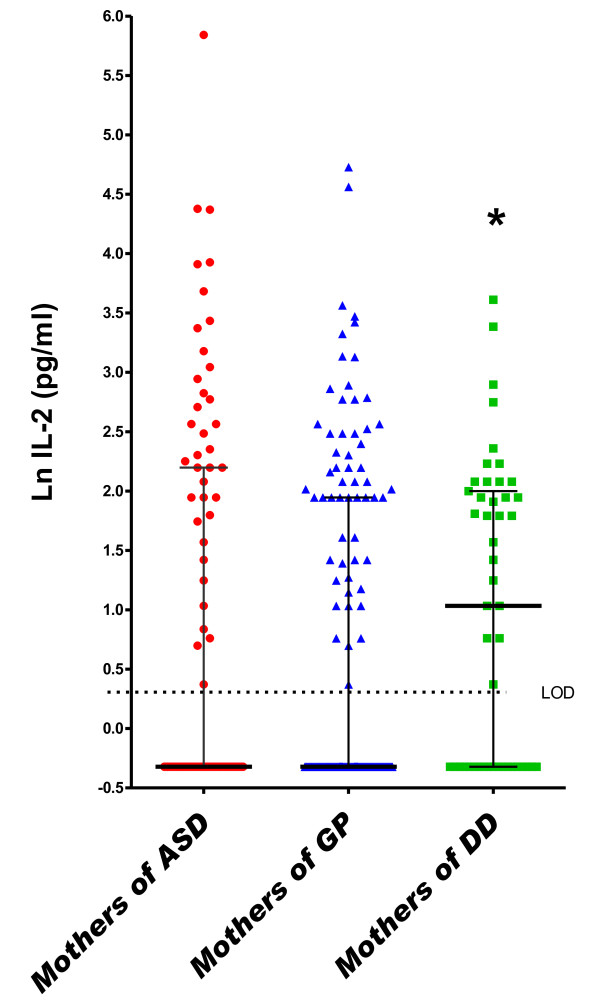
Background: Immune anomalies have been documented in individuals with autism spectrum disorders (ASDs) and their family members. It is unknown whether the maternal immune profile during pregnancy is associated with the risk of bearing a child with ASD or other neurodevelopmental disorders. Methods: Using Luminex technology, levels of 17 cytokines and chemokines were measured in banked serum collected from women at 15 to 19 weeks of gestation who gave birth to a child ultimately diagnosed with (1) ASD ( n = 84), (2) a developmental delay (DD) but not autism ( n = 49) or (3) no known developmental disability (general population (GP); n = 159). ASD and DD risk associated with maternal cytokine and chemokine levels was estimated by using multivariable logistic regression analysis. Results: Elevated concentrations of IFN-γ, IL-4 and IL-5 in midgestation maternal serum were significantly associated with a 50% increased risk of ASD, regardless of ASD onset type and the presence of intellectual disability. By contrast, elevated concentrations of IL-2, IL-4 and IL-6 were significantly associated with an increased risk of DD without autism. Conclusion: The profile of elevated serum IFN-γ, IL-4 and IL-5 was more common in women who gave birth to a child subsequently diagnosed with ASD. An alternative profile of increased IL-2, IL-4 and IL-6 was more common for women who gave birth to a child subsequently diagnosed with DD without autism. Further investigation is needed to characterize the relationship between these divergent maternal immunological phenotypes and to evaluate their effect on neurodevelopment.
Overview
The claims and statistics of this paper haven’t been checked yet.
Free: it reads the open-access text and checks the first 5 claims that cite a source we can check. Create a free account to check every claim.
Integrity signals
Registry
Cites
Statistics
Figures
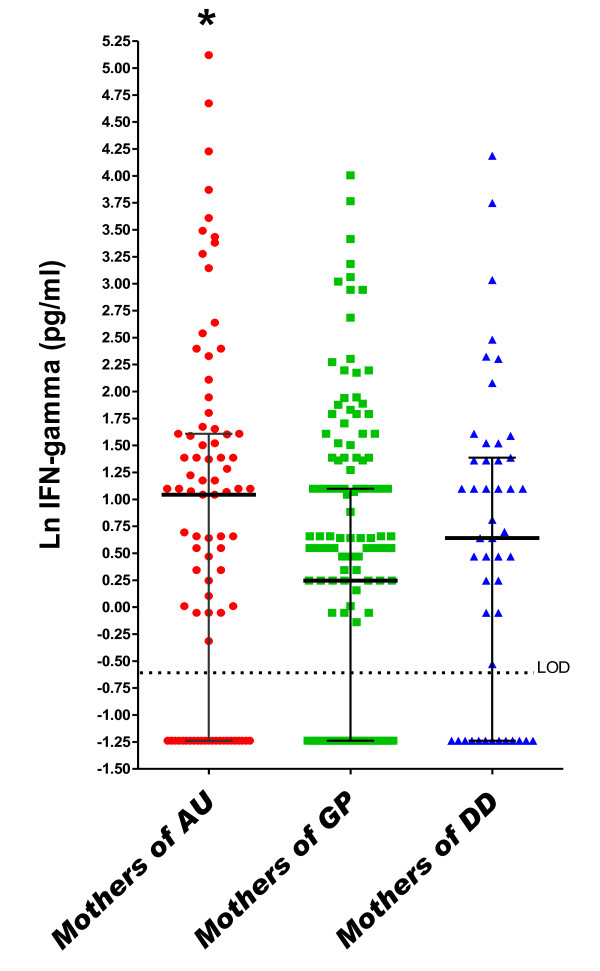
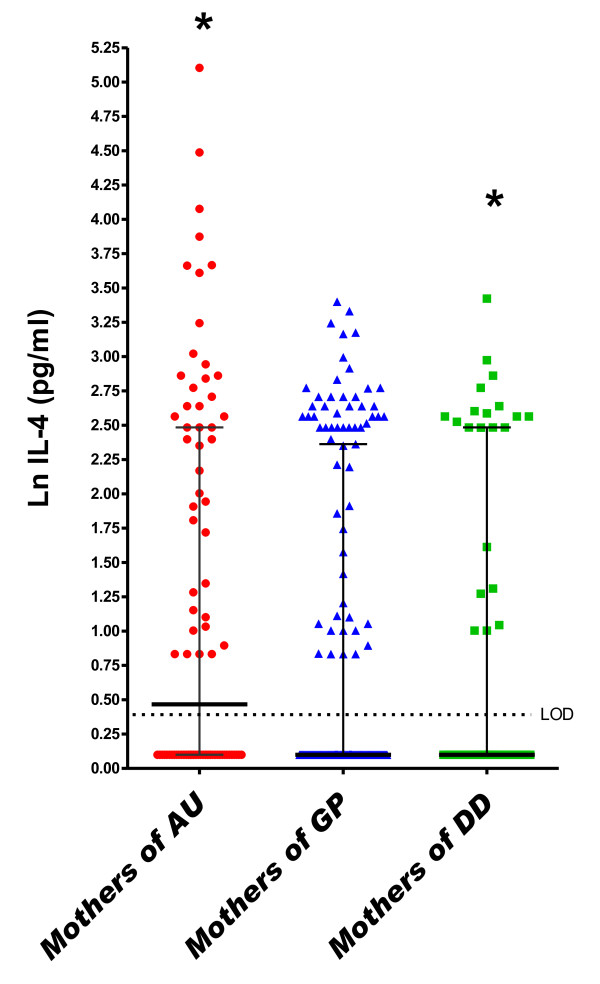
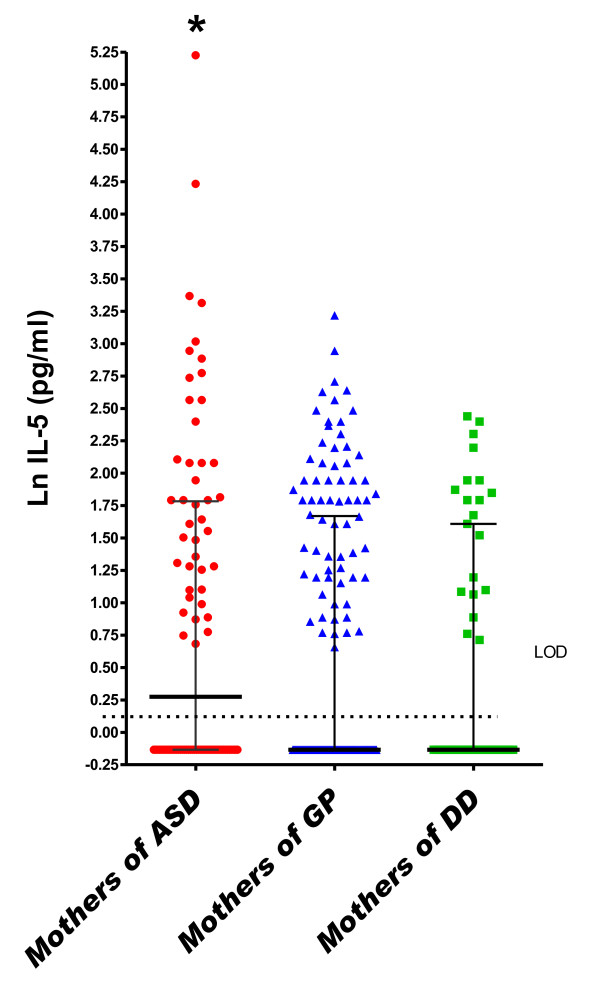
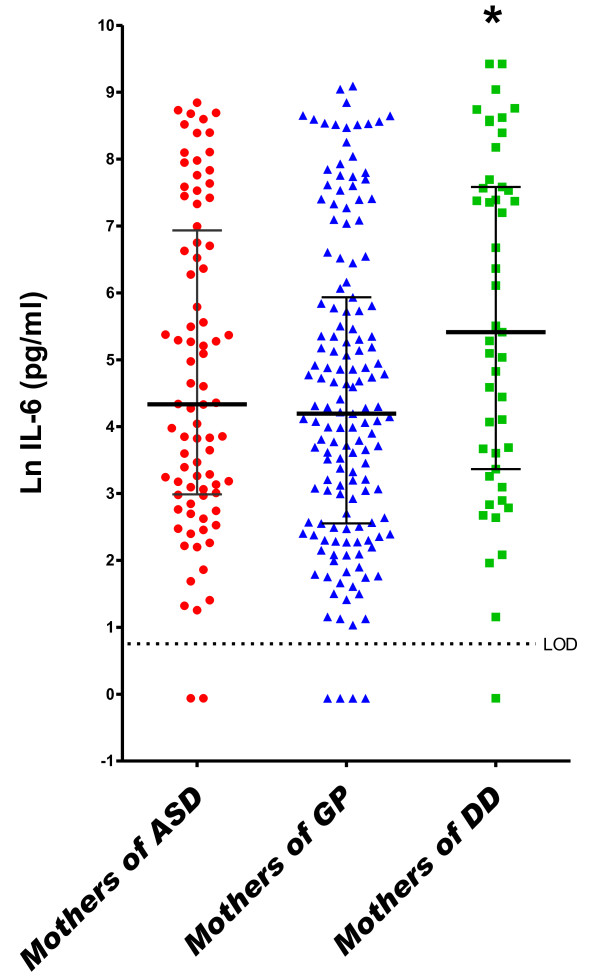
Verification
Claims the paper makes
The claims and statistics of this paper haven’t been checked yet.
Free: it reads the open-access text and checks the first 5 claims that cite a source we can check. Create a free account to check every claim.
Claims other papers make about this one
Each is checked against this paper’s own text: does it say what the citing paper says it does?
The source backs part of the claim, not all of it — or backs it for a different population, condition or comparison.
In the citing paper
“Definitive evidence that maternal infection during pregnancy is a risk factor for ASD in offspring was obtained through more recent studies of the Danish health registry90.”
From Immune mediators in the brain and peripheral tissues in autism spectrum disorder (2015) · cites this paper as [90]
Experimental — accuracy not yet measuredThe source backs part of the claim, not all of it — or backs it for a different population, condition or comparison.
In the citing paper
“Maternal immune activation (MIA) via infection during pregnancy is known to increase risk for autism spectrum disorder (ASD).”
From Maternal immune activation dysregulation of the fetal brain transcriptome and relevance to the pathophysiology of autism spectrum disorder (2018) · cites this paper as [26]
Experimental — accuracy not yet measuredThe check wasn’t confident either way, so it gives no verdict — never disputed.
In the citing paper
“Second, elevated maternal CRP may not be specific to childhood autism among developmental disorders.”
From Elevated maternal C-reactive protein and autism in a national birth cohort (2014) · cites this paper as [15]
Experimental — accuracy not yet measuredIn the citing paper
“In fact, recent studies suggest that dysregulated levels of various inflammatory markers in maternal sera (Goines et al., 2011) or amniotic fluid (Abdallah et al., 2011a, b) during pregnancy are associated with increased risk of ASD.”
From Maternal hospitalization with infection during pregnancy and risk of autism spectrum disorders (2015) · cites this paper as Goines et al., 2011
In the citing paper
“Data from more than a million children born between the years of 1980 and 2005 revealed an almost 3-fold increase in the rate of ASD in children born to mothers who were hospitalized for viral infection in the first trimester and in children of women who experienced an episode of fever lasting a week or more before gestational week 3290,91.”
From Immune mediators in the brain and peripheral tissues in autism spectrum disorder (2015) · cites this paper as [90]
Self-check
Percentages, sums and reported differences re-computed from the paper’s own numbers.
The self-check needs the paper’s full text.
Citations
Cites
Diagnostic and Statistical Manual of Mental Disorders
American Psychiatric Association (2013) · doi:10.1176/appi.books.9780890425596 · Cited by 116,369
Diagnostic and Statistical Manual of Mental Disorders
Williams, J. B. W., & First, M. (2013) · Encyclopedia of Social Work · doi:10.1093/acrefore/9780199975839.013.104 · Cited by 109,519
Lord, C., Risi, S., Lambrecht, L., Cook, E. H., Leventhal, B. L., DiLavore, P. C., Pickles, A., & Rutter, M. (2000) · Journal of Autism and Developmental Disorders · doi:10.1023/a:1005592401947 · Cited by 7,520 · cited 1×
“There are no clear biological markers for ASD, and current diagnosis relies entirely on behavioral criteria [2,3].”
BackgroundDiagnostic and Statistical Manual of Mental Disorders, 5th Edition
(2013) · American Psychiatric Association Publishing eBooks · doi:10.1176/appi.books.9780890425596.893619 · Cited by 4,383
Wegmann, T. G., Lin, H., Guilbert, L., & Mosmann, T. R. (1993) · Immunology Today · doi:10.1016/0167-5699(93)90235-d · Cited by 2,852 · cited 5×
“Finally, the risk for both ASD and DD increased with increasing levels of IL-10 relative to GP controls, but risk estimates were of borderline significance (Table 3).”
BackgroundInfluentialMaternal Immune Activation Alters Fetal Brain Development through Interleukin-6
Smith, S. E. P., Li, J., Garbett, K., Mirnics, K., & Patterson, P. H. (2007) · The Journal of Neuroscience · doi:10.1523/jneurosci.2178-07.2007 · Cited by 1,605 · cited 4×
“Mouse models have shown that prenatal exposure to IL6 or mimics of infectious agents such as LPS or poly(I:C) can induce behavioral changes and brain abnormalities among offspring [18,19,21,48].”
BackgroundInfluentialPrenatal Infection and Schizophrenia: A Review of Epidemiologic and Translational Studies
Brown, A. S., & Derkits, E. J. (2010) · American Journal of Psychiatry · doi:10.1176/appi.ajp.2009.09030361 · Cited by 1,269 · cited 1×
“Epidemiological studies have suggested that prenatal infections may be related to neurological disorders such as schizophrenia and autism [33,34].”
BackgroundPrevalence of Autism in a US Metropolitan Area
Yeargin-Allsopp, M., Rice, C., Karapurkar, T., Doernberg, N., Boyle, C., & Murphy, C. (2003) · JAMA · doi:10.1001/jama.289.1.49 · Cited by 1,248 · cited 1×
“After subjects were ascertained from the Regional Center Orange County, ASD and DD diagnoses were verified by trained medical record abstractors following a protocol initially developed by the Metropolitan Atlanta Developmental Disabilities Surveillance Program [23].”
MethodMaternal influenza infection causes marked behavioral and pharmacological changes in the offspring
Shi, L., Fatemi, S. H., Sidwell, R. W., & Patterson, P. H. (2003) · The Journal of Neuroscience · doi:10.1523/jneurosci.23-01-00297.2003 · Cited by 1,025 · cited 2×
“offspring behavior and brain histopathology [17,19, 35-37].”
BackgroundMaternal Infection Requiring Hospitalization During Pregnancy and Autism Spectrum Disorders
Atladóttir, H. Ó., Thorsen, P., Østergaard, L., Schendel, D. E., Lemcke, S., Abdallah, M., & Parner, E. T. (2010) · Journal of Autism and Developmental Disorders · doi:10.1007/s10803-010-1006-y · Cited by 916 · cited 1×
“Epidemiological studies have suggested that prenatal infections may be related to neurological disorders such as schizophrenia and autism [33,34].”
Background
Cited by
Items 201–300 of 367
Irwin, J. L., Yeates, A. J., Mulhern, M. S., McSorley, E. M., Strain, J., Watson, G. E., Grzesik, K., Thurston, S. W., Love, T., Smith, T. H., et al. (2018) · Molecular Neurobiology · doi:10.1007/s12035-018-1424-y · Cited by 22
Ahmad, S. F., Ansari, M. A., Nadeem, A., Bakheet, S. A., Alanazi, A. Z., Alsanea, S., Sobeai, H. M. A., Almutairi, M. M., Mahmood, H. M., & Attia, S. M. (2019) · Brain Research Bulletin · doi:10.1016/j.brainresbull.2019.07.006 · Cited by 20
The progress of chemokines and chemokine receptors in autism spectrum disorders
Ye, J.-R., Wang, H., Cui, L., Chu, S., & Chen, N. (2021) · Brain Research Bulletin · doi:10.1016/j.brainresbull.2021.05.024 · Cited by 21
Aberrant IL-17 Levels in Rodent Models of Autism Spectrum Disorder: A Systematic Review
Thawley, A., Veneziani, L. P., Rabelo‐da‐Ponte, F. D., Riederer, I., Mendes‐da‐Cruz, D. A., & Bambini-Júnior, V. (2022) · Frontiers in Immunology · doi:10.3389/fimmu.2022.874064 · Cited by 20
Zhou, J., Teng, Y., Zhang, F., Ru, X., Li, P., Wang, J., Yan, S., Zhu, P., Tao, F., & Huang, K. (2022) · Brain Behavior and Immunity · doi:10.1016/j.bbi.2022.05.017 · Cited by 21
Maternal serum cytokine levels and risk of bipolar disorder
Cheslack‐Postava, K., Cremers, S., Bao, Y., Shen, L., Schaefer, C. A., & Brown, A. S. (2016) · Brain Behavior and Immunity · doi:10.1016/j.bbi.2016.07.160 · Cited by 22
“, 2005), and Luminex assays for cytokines have been successfully applied in numerous clinical and population-based studies focusing on pregnancy (Curry et al., 2009; Ekelund et al., 2008; Goines et al., 2011; Kramer et al., 2010).”
BackgroundAhmad, S. F., Ansari, M. A., Nadeem, A., Bakheet, S. A., Alshammari, M. A., & Attia, S. M. (2018) · Brain Research Bulletin · doi:10.1016/j.brainresbull.2018.08.020 · Cited by 20
Błażewicz, A., Szymańska, I., Astel, A. M., Stenzel-Bembenek, A., Dolliver, W. R., & Makarewicz, A. (2020) · Nutrients · doi:10.3390/nu12092594 · Cited by 20
Kelly, R. S., Lee‐Sarwar, K. A., Chen, Y., Laranjo, N., Fichorova, R. N., Chu, S. H., Prince, N., Lasky-Su, J. A., Weiss, S. T., & Litonjua, A. A. (2022) · International Journal of Molecular Sciences · doi:10.3390/ijms232315249 · Cited by 20
Unnisa, A., Greig, N. H., & Kamal, M. A. (2022) · Current Neuropharmacology · doi:10.2174/1570159x21666221221142743 · Cited by 18
“Methyl mercury Maternal immune activation (MIA) Polyinosinic: polycytidylic acid (poly I: C) [27] [28-30] [31]”
Toward a better understanding of T cell dysregulation in autism: An integrative review
Moreno, R. J., Amara, R. A., & Ashwood, P. (2024) · Brain Behavior and Immunity · doi:10.1016/j.bbi.2024.10.009 · Cited by 19
“Cytokines related to type 2 response associated with allergies and asthma such as IL-4 are also increased in ASD (Krakowiak, 2017; Nie, 2023; Goines, 2011).”
Self-citationThe Role of the IL-33/ST2 Immune Pathway in Autoimmunity: New Insights and Perspectives
Ramezani, F. M., Babaie, F., Aslani, S., Hemmatzadeh, M., Mohammadi, F. S., Shabgah, A. G., Jadidi‐Niaragh, F., Ezzatifar, F., & Mohammadi, H. (2021) · Immunological Investigations · doi:10.1080/08820139.2021.1878212 · Cited by 20
“Interestingly, high serum levels of IL-4 and IL-5 in pregnant women have been associated with the birth of autistic children (Goines et al. 2011).”
BackgroundAhmad, S. F., Nadeem, A., Ansari, M. A., Bakheet, S. A., AL-Ayadhi, L. Y., & Attia, S. M. (2018) · Progress in Neuro-Psychopharmacology and Biological Psychiatry · doi:10.1016/j.pnpbp.2018.04.011 · Cited by 19
“, 2001), and IFN-γ levels mid-gestation have been associated with increased risk of ASD symptoms (Goines et al., 2011).”
InfluentialLaufer, B. I., Hasegawa, Y., Zhang, Z., Hogrefe, C. E., Rosso, L. A. D., Haapanen, L. A. D., Hwang, H., Bauman, M. D., de Water, J. V., Taha, A. Y., et al. (2022) · Nature Communications · doi:10.1038/s41467-022-33162-7 · Cited by 18
Neuroimmune mechanisms in autism etiology - untangling a complex problem using human cellular models
Vacharasin, J. M., Ward, J. A., McCord, M. M., Cox, K., Imitola, J., & Lizarraga, S. B. (2024) · Oxford Open Neuroscience · doi:10.1093/oons/kvae003 · Cited by 17
The early life exposome and autism risk: a role for the maternal microbiome?
Gesù, C. M. D., & Buffington, S. A. (2024) · Gut Microbes · doi:10.1080/19490976.2024.2385117 · Cited by 21
“Similarly, analyses of serum 218,219 and amniotic fluid 206,220 from mothers who gave birth to autistic children reveal an increase in proinflammatory cytokine and chemokine levels, when compared to control subjects.”
BackgroundImmune activity at birth and later psychopathology in childhood
Barbosa, S., Khalfallah, O., Forhan, A., Galéra, C., Heude, B., Glaichenhaus, N., & Davidovic, L. (2020) · Brain Behavior & Immunity - Health · doi:10.1016/j.bbih.2020.100141 · Cited by 22
Hanson, K. L., Weir, R. K., Iosif, A., de Water, J. V., Carter, C. S., McAllister, A. K., Bauman, M. D., & Schumann, C. M. (2023) · Brain Behavior and Immunity · doi:10.1016/j.bbi.2023.01.003 · Cited by 19
The need for a comprehensive molecular characterization of autism spectrum disorders
Broek, J. A. C., Brombacher, E., Stelzhammer, V., Guest, P. C., Rahmoune, H., & Bahn, S. (2013) · The International Journal of Neuropsychopharmacology · doi:10.1017/s146114571300117x · Cited by 19
“, 2012) IL-4 2 , 0 , 2↔ Serum, plasma 4 (Schwarz et al., 2010; Ashwood et al., 2011; Goines et al., 2011) IL-5 3 , 0 , 1↔ Serum, plasma 4 (Schwarz et al.”
InfluentialBhat, R. S., Alonazi, M. A., Al-Daihan, S., & El-Ansary, A. K. (2023) · Metabolites · doi:10.3390/metabo13020310 · Cited by 17
“Studies have shown that prenatal IFN-γ imbalances can be linked to autism [54].”
BackgroundLan, X.-Y., Gu, Y., Li, M., Song, T.-J., Zhai, F.-J., Zhang, Y., Zhan, J., Böckers, T. M., Yue, X.-N., Wang, J., et al. (2023) · Frontiers in Cell and Developmental Biology · doi:10.3389/fcell.2023.1054381 · Cited by 17
Jones, H. F., Ho, A. C. C., Sharma, S., Mohammad, S. S., Kothur, K., Patel, S., Brilot, F., Guastella, A. J., Dale, R. C., & Immune‐Neurodevelopment (Imm‐Nd) Study Group (2019) · Developmental Medicine & Child Neurology · doi:10.1111/dmcn.14167 · Cited by 17
“In humans, maternal interleukin-6 levels are associated with altered neuronal connectivity and working memory in newborn infants, and elevated maternal mid-gestational levels of interleukin-4, interleukin-5, and interferon-gamma have been associated with autism in offspring.(19,20) The transfer of maternal autoantibod…”
BackgroundLudvigsson, J. F., Winell, H., Sandin, S., Cnattingius, S., Stephansson, O., & Pasternak, B. (2020) · Annals of Internal Medicine · doi:10.7326/m20-0167 · Cited by 16
Matrone, C., & Ferretti, G. (2023) · Neuroscience & Biobehavioral Reviews · doi:10.1016/j.neubiorev.2023.105338 · Cited by 15
Nour‐Eldine, W., Manaph, N. P. A., Ltaief, S. M., Aati, N. A., Mansoori, M. H., Abdulla, S. A. A., & Al‐Shammari, A. R. (2024) · Frontiers in Psychiatry · doi:10.3389/fpsyt.2024.1333534 · Cited by 15
Park, B. Y., Yao, R., Tierney, E., Brucato, M. F., Hong, X., Wang, G., Ji, Y., Pearson, C., Fallin, M. D., Wang, X., et al. (2020) · Annals of Epidemiology · doi:10.1016/j.annepidem.2020.08.009 · Cited by 16
Carter, M., Casey, S., O’Keeffe, G. W., Gibson, L., Gallagher, L., & Murray, D. M. (2022) · Frontiers in Psychiatry · doi:10.3389/fpsyt.2022.823096 · Cited by 19
Spreng, A., Brüll, M., Leisner, H., Suciu, I., & Leist, M. (2022) · Cells · doi:10.3390/cells11172644 · Cited by 17
Aldossari, A. A., Ansari, M. A., Nadeem, A., Attia, S. M., Bakheet, S. A., AL-Ayadhi, L. Y., Alanazi, M. M., Shahid, M., Alwetaid, M. Y., Hussein, M. H., et al. (2023) · International Journal of Molecular Sciences · doi:10.3390/ijms24087475 · Cited by 15
“Previous studies showed that prenatal IFN-γ imbalances could be linked to autism [31].”
BackgroundResultTamayo, J. M., Osman, H. C., Schwartzer, J. J., Pinkerton, K. E., & Ashwood, P. (2023) · Journal of Neuroinflammation · doi:10.1186/s12974-023-02930-7 · Cited by 20
“…an immune response in pregnant mice, we have previously reported systemic elevations in interleukin-4 (IL-4) and IL-5 in dams [109, 115] that parallel clinical reports associating increased IL-4 and IL-5 in mid-pregnancy maternal serum samples of mothers with children later diagnosed with ASD [40].”
BackgroundSelf-citationCarter, M., Casey, S., O’Keeffe, G. W., Gibson, L., & Murray, D. M. (2021) · Scientific Reports · doi:10.1038/s41598-021-01662-z · Cited by 18
Autismo e hipoperfusão cerebral Autism and cerebral hyperoperfusion
da Silva, J. L. G., Clemente, R. M., da Silva, J. L. G., Ramos, B. S. D. M., & Barroso, L. K. V. (2021) · Brazilian Journal of Health Review · doi:10.34119/bjhrv4n1-175 · Cited by 16
The role of maternal immune activation in immunological and neurological pathogenesis of autism
Liu, K., Huang, Y., Zhu, Y., Zhao, Y., & Kong, X. (2022) · Journal of Neurorestoratology · doi:10.1016/j.jnrt.2022.100030 · Cited by 14
Bilder, D. A., Worsham, W., SULLIVAN, S. A., Esplin, M. S., Burghardt, P. R., Fraser, A. M., & Bakian, A. V. (2023) · Molecular Autism · doi:10.1186/s13229-023-00562-5 · Cited by 15
Maternal Immunity in Autism Spectrum Disorders: Questions of Causality, Validity, and Specificity
Ji‐Xu, A., & Vincent, A. C. (2020) · Journal of Clinical Medicine · doi:10.3390/jcm9082590 · Cited by 17
“Both TNFα and type I and II interferons are increased in the maternal plasma and the blood of individuals with ASD [39,40] and are involved in microglial dysfunction and neurogenesis modulation [14,41,42].”
BackgroundAhmad, S. F., Ansari, M. A., Nadeem, A., Bakheet, S. A., AL-Ayadhi, L. Y., Alsaad, A. M. S., Assiri, M. A., Al‐Mazroua, H. A., & Attia, S. M. (2020) · Journal of Neuroimmunology · doi:10.1016/j.jneuroim.2020.577430 · Cited by 14
Alterations in Plasma Cytokine Levels in Korean Children with Autism Spectrum Disorder
Shim, S., Ha, S., Choi, J. H., Kwon, H., & Cheon, K.-A. A. (2024) · Yonsei Medical Journal · doi:10.3349/ymj.2023.0362 · Cited by 13
“28 However, another study, analyzing cytokine production against dietary proteins, reported excessive levels of TNF-α and IFN-γ produced by PBMCs, but not IL-5, in children with ASD.”
BackgroundAhmad, S. F., Ansari, M. A., Nadeem, A., Bakheet, S. A., AL-Ayadhi, L. Y., Alotaibi, M. R., Alhoshani, A., Alhosaini, K. A., & Attia, S. M. (2018) · International Immunopharmacology · doi:10.1016/j.intimp.2018.10.027 · Cited by 17
Yu, J., Ghassabian, A., Chen, Z., Goldstein, R. B., Hornig, M., Buka, S. L., Goldstein, J. M., & Gilman, S. E. (2020) · Brain Behavior and Immunity · doi:10.1016/j.bbi.2020.09.003 · Cited by 14
“Our result was consistent with studies that reported a lack of significant associations between IL-1β, IL-6, TNF-α, or IL-10 and cognitive functioning or autism risk (Dozmorov et al., 2018; Goines et al., 2011) but inconsistent with those who either found higher maternal prenatal IL-6, IL-1β, IL-8, TNF-α, or IL-10 ass…”
ResultIrwin, J. L., McSorley, E. M., Yeates, A. J., Mulhern, M. S., Strain, J., Watson, G. E., Grzesik, K., Thurston, S. W., Love, T., Smith, T. H., et al. (2019) · Journal of Neuroimmunology · doi:10.1016/j.jneuroim.2019.577023 · Cited by 15
“Immunol 39, 531– 536. doi:10.1016/S0161-5890(02)00210-9 [PubMed: 12431386] Gilmore JH, Fredrik Jarskog L, Vadlamudi S, Lauder JM, 2004 Prenatal infection and risk for schizophrenia: IL-1beta, IL-6, and TNFalpha inhibit cortical neuron dendrite development.”
BackgroundInfluentialMaternal atopic conditions and autism spectrum disorder: a systematic review
Şeker, A., Gurakuqi, A. Q., Tabaku, M., Javate, K. R., & Carcani-Rathwell, I. (2023) · European Child & Adolescent Psychiatry · doi:10.1007/s00787-023-02285-7 · Cited by 14
“Such a hypothesis is further supported by studies demonstrating increased cytokine levels in midg-estational serum of mothers of offspring with ASD [53], as well as in amniotic fluid [54], and newborn blood spots of children eventually diagnosed with ASD [55], although levels of specific cytokines…”
Rapid Communication: Plasma Interleukin-35 in Children with Autism
Rose, D. R., & Ashwood, P. (2019) · Brain Sciences · doi:10.3390/brainsci9070152 · Cited by 12
Self-citationAl‐Mazroua, H. A., Nadeem, A., Ansari, M. A., Attia, S. M., Albekairi, T. H., Bakheet, S. A., Alobaidi, A. F., Alhosaini, K. A., Alqarni, S. A., Ibrahim, K. E., et al. (2022) · Immunology Letters · doi:10.1016/j.imlet.2022.03.001 · Cited by 12
Nielsen, T. C., Nassar, N., Shand, A., Jones, H. F., Han, V. X., Patel, S., Guastella, A. J., Dale, R. C., & Lain, S. J. (2023) · Paediatric and Perinatal Epidemiology · doi:10.1111/ppe.13022 · Cited by 14
Mast Cells in Autism Spectrum Disorder—The Enigma to Be Solved?
Kovacheva, E., Gevezova, M., Maes, M. H. J., & Sarafian, V. S. (2024) · International Journal of Molecular Sciences · doi:10.3390/ijms25052651 · Cited by 12
“Increased levels of IFN γ , IL-4 and IL-5 in maternal serum are significantly associated with an increased ASD risk in the newborn [123].”
BackgroundMicroglia alter sex-specific cerebellar myelination following placental hormone loss
Salzbank, J., Lacaille, H., Gaby, J., O’Reilly, J. J., Kissner, M. D., Vacher, C., & Penn, A. A. (2025) · Nature Communications · doi:10.1038/s41467-025-64814-z · Cited by 12
Li, K., Hu, Z., Ou, J., & Xia, K. (2019) · Global Clinical and Translational Research · doi:10.36316/gcatr.01.0006 · Cited by 12
[Research advances in immunological dysfunction in children with autism spectrum disorders].
Wang, T., Du, L., Shan, L., & Jia, F. (2014) · PubMed · Cited by 16
Kadam, S. D., French, B. M., Kim, S.-T., Morris-Berry, C. M., Zimmerman, A. W., Blue, M. E., & Singer, H. S. (2013) · Journal of Experimental Neuroscience · doi:10.4137/jen.s12979 · Cited by 10
Tillmann, K. E., Schaer, R., Mueller, F. S., Mueller, K., Voelkl, B., Weber‐Stadlbauer, U., & Pollak, D. D. (2024) · Translational Psychiatry · doi:10.1038/s41398-024-03014-7 · Cited by 10
Singer, A. B., Windham, G. C., Croen, L., Daniels, J. L., Lee, B. K., Qian, Y., Schendel, D., Fallin, M. D., & Burstyn, I. (2016) · Journal of Autism and Developmental Disorders · doi:10.1007/s10803-016-2882-6 · Cited by 11
“Links between ASD and differences in cytokine levels in maternal serum during pregnancy (Goines et al. 2011; Jones et al. 2016) and amniotic fluid (Abdallah et al. 2013) have been reported.”
BackgroundSelf-citationCharacterization of an Animal Model of Autism and Social Interaction
Iwata, K. (2018) · Methods in molecular biology · doi:10.1007/978-1-4939-8994-2_14 · Cited by 10
Assiri, M. A., Albekairi, T. H., Ansari, M. A., Nadeem, A., Attia, S. M., Bakheet, S. A., Shahid, M., Aldossari, A. A., Almutairi, M. M., Almanaa, T. N., et al. (2023) · International Journal of Molecular Sciences · doi:10.3390/ijms242216218 · Cited by 13
“Furthermore, it has been shown that mothers of children with ASD had an increase in IFN-γ cytokine levels [17].”
BackgroundMethodFairthorne, J., Langridge, A., Bourke, J., & Leonar, H. (2013) · InTech eBooks · doi:10.5772/54488 · Cited by 9
“[130] In this study, the concentration of serum cytokines at mid-pregnancy in the mothers of children with ASD with ID, developmental disabilities other than ASD and typically developing children were compared.”
BackgroundMethodInfluentialVolta, B. J., Bustos, P. L., González, C., Natale, M. A., Perrone, A. E., Milduberger, N., Laucella, S. A., & Búa, J. (2021) · The Journal of Infectious Diseases · doi:10.1093/infdis/jiab057 · Cited by 9
Jain, S., Allen, I. E., Song, D., & Piao, X. (2023) · Frontiers in Pediatrics · doi:10.3389/fped.2023.1277697 · Cited by 11
Crosstalk Between Mitochondrial DNA and Immune Response: Focus on Autism Spectrum Disorder
Qu, W., Yan, G., Du, Y., Zhou, X., Huang, C., Li, B., Zhou, J., & Li, Q. (2024) · Molecular Neurobiology · doi:10.1007/s12035-024-04637-z · Cited by 8
“Elevated maternal serum concentrations of IFN-γ (an immunostimulant cytokine secreted by NK cells and T cells), IL-4, and IL-5 during the second trimester are visibly linked to a 50% increased risk of ASD [20].”
The Placenta as a Research Biospecimen
Ryan, J. G., Davis, R., & Bloch, J. R. (2012) · Journal of Obstetric, Gynecologic & Neonatal Nursing · doi:10.1111/j.1552-6909.2012.01420.x · Cited by 8
“developmental delays without autism (Goines et al., 2011)”
BackgroundInfluential(2019) · Global Clinical and Translational Research · doi:10.20900/gctr20190004 · Cited by 8
Increased maternal cytokine production and congenital heart defects
Blossom, S. J., Rau, J. L., Best, T. H., Bornemeier, R. A., & Hobbs, C. A. (2013) · Journal of Reproductive Immunology · doi:10.1016/j.jri.2012.12.004 · Cited by 8
Immuno-psychiatrie et pandémie de SARS-CoV-2 : liens et possibles conséquences
Daaboul, J., Tamouza, R., & Leboyer, M. (2020) · L Encéphale · doi:10.1016/j.encep.2020.07.002 · Cited by 8
“Alors que Goines et al. (2011) décrivent une augmentation du risque de TSA chez le fœtus corrélée à des taux sériques maternels d’IFN- , d’IL-4 et d’IL-5 élevés, mesurés dans une période allant de 15 à 19 semaines de gestation [30], Jones et al. (2017) montrent une augmentation des marqueurs…”
Lee, A. C., Cherkerzian, S., Olson, I. E., Ahmed, S., Chowdhury, N. H., Khanam, R., Rahman, S., Andrews, C., Baqui, A. H., Fawzi, W. W., et al. (2021) · Nutrients · doi:10.3390/nu13113792 · Cited by 9
“Fetal and neonatal inflammation leads to white matter brain injury and has been linked with altered neonatal functional connectivity [19,20], abnormal behavior, and autism [21].”
BackgroundMaternal‐Fetal Impact of Respiratory Viral Infections: Immune Mechanisms and Clinical Outcomes
Parish, M. A., & Klein, S. L. (2026) · Immunological Reviews · doi:10.1111/imr.70099 · Cited by 8
Perkembangan Otak dan Kognitif Anak: Peran Penting Sistem Imun pada Usia Dini
Suryawan, A., & Endaryanto, A. (2021) · Sari Pediatri · doi:10.14238/sp23.4.2021.279-84 · Cited by 11
Alwetaid, M. Y., Almanaa, T. N., Bakheet, S. A., Ansari, M. A., Nadeem, A., Attia, S. M., Hussein, M. H., & Ahmad, S. F. (2023) · Brain Sciences · doi:10.3390/brainsci13111519 · Cited by 8
“Previous research has indicated that there is an increase in IFN-γ levels among both children diagnosed with ASD [65] and women who have children with ASD [66].”
Trivalent inactivated influenza vaccine (IIV3) during pregnancy and six-month infant development
Avalos, L. A., Ferber, J. R., Zerbo, O., Naleway, A. L., Bulkley, J. E., Thompson, M. G., Cragan, J. D., Williams, J. L., Odouli, R., Kauffman, T. L., et al. (2020) · Vaccine · doi:10.1016/j.vaccine.2020.01.059 · Cited by 7
Costa, A. N., Ferguson, B. J., Hawkins, E., Coman, A., Schauer, J. D., Ramirez-Celis, A., Hecht, P. M., Bruce, D., Tilley, M. R., Talebizadeh, Z., et al. (2023) · Metabolites · doi:10.3390/metabo13050663 · Cited by 7
“Dramatic fluctuations in cytokine and chemokine levels can alter neurodevelopment, potentially resulting in an ASD diagnosis [10,33].”
BackgroundCouch, A. C. M., Brown, A. M., Raimundo, C., Solomon, S., Taylor, M., Sichlinger, L., Matulevičiūtė, R., Srivastava, D. P., & Vernon, A. C. (2024) · Brain Behavior and Immunity · doi:10.1016/j.bbi.2024.08.007 · Cited by 6
Maternal Prepregnancy Obesity and Offspring Intelligence Quotient at 5 Years: A Multicohort Analysis
Dow, C., Lorthe, E., Bernard, J. Y., Galéra, C., Marchand‐Martin, L., Tafflet, M., Ancel, P., Charles, M.-A. A., & Heude, B. (2025) · Paediatric and Perinatal Epidemiology · doi:10.1111/ppe.13157 · Cited by 6
“Perinatal inflammation is a risk factor for changes in brain gene expression, abnormalities in brain structure and function, and neuropsychiatric disorders [4, 43–46].”
Cytokine Dynamics in Autism: Analysis of BMAC Therapy Outcomes
Maric, D. M., Vojvodić, D., Maric, D. L., Velikic, G. S., Radomir, M., Sokolovac, I., Štefik, D., Ivkovic, N., Šušnjević, S., Puletić, M., et al. (2023) · International Journal of Molecular Sciences · doi:10.3390/ijms242015080 · Cited by 7
Umbilical Cord Biomarkers in Autism Determination
Steinman, G., & Mankuta, D. (2014) · Biomarkers in Medicine · doi:10.2217/bmm.13.145 · Cited by 6
Andonotopo, W., Bachnas, M. A., Dewantiningrum, J., Pramono, B. A., Sanjaya, I. N. H., Darmawan, E., Akbar, M. I. A., Aldiansyah, D., Yeni, C. M., Bernolian, N., et al. (2025) · Journal of Perinatal Medicine · doi:10.1515/jpm-2025-0242 · Cited by 5
“Observational cohorts report that elevated mid-gestational cytokines – particularly in fl ammatory mediators – associate with increased neurodevelopmental risk [15, 16].”
McLellan, J., Croen, L., Iosif, A., Ashwood, P., Yoshida, C. K., Berger, K. P., & de Water, J. V. (2024) · Cerebral Cortex · doi:10.1093/cercor/bhae082 · Cited by 5
Self-citationDissecting the Roles of LncRNAs in the Development of Periventricular White Matter Damage
Wang, X., Liu, H., Liao, X., Qiao, L., Zhu, L., Wu, S., Zhou, Y., Zhang, Y., Li, B., Lin, L., et al. (2021) · Frontiers in Genetics · doi:10.3389/fgene.2021.641526 · Cited by 6
Maternal immune dysregulation and autism spectrum disorder
Ramirez-Celis, A., Kim, D. H. J., & de Water, J. V. (2023) · Elsevier eBooks · doi:10.1016/b978-0-12-824421-0.00010-2 · Cited by 8
Akintunde, M. E., Lin, Y., Krakowiak, P., Pessah, I. N., Hertz‐Picciotto, I., Puschner, B., Ashwood, P., & de Water, J. V. (2023) · Brain Behavior & Immunity - Health · doi:10.1016/j.bbih.2023.100697 · Cited by 6
“For cytokine/ chemokine concentrations that fell below the limit of detection (LOD) ( ≤ 10%), we assigned the value of LOD/2 as previously described (Akintunde et al., 2015; Goines et al., 2011b).”
MethodSelf-citationSamoilova, I. G., Матвеева, М. В., & Galyukova, D. E. (2024) · S S Korsakov Journal of Neurology and Psychiatry · doi:10.17116/jnevro202412401155 · Cited by 5
Dedoni, S., Avdoshina, V., Olianas, M. C., & Onali, P. (2025) · Frontiers in Bioscience-Landmark · doi:10.31083/fbl28245 · Cited by 5
O’Brien, K., & Blair, P. (2021) · Springer eBooks · doi:10.1007/978-3-030-78559-8_10 · Cited by 4
Murphy, V. E., Whalen, O. M., Williams, E. J., Gibson, P. G., Campbell, L., Karayanidis, F., Mallise, C. A., Woolard, A. J., Robijn, A. L., Mattes, J., et al. (2024) · Brain Behavior & Immunity - Health · doi:10.1016/j.bbih.2024.100845 · Cited by 4
“Two such studies examined mid-pregnancy maternal serum cytokine levels (Goines et al., 2011; Carter et al., 2021), and both identified alterations in serum interleukin (IL)-4 in mothers whose children go on to have autism diagnosed in early life.”
BackgroundDysregulation of Amino Acid Transporters in a Rat Model of TLR7-Mediated Maternal Immune Activation
McColl, E. R., Henderson, J. T., & Piquette‐Miller, M. (2023) · Pharmaceutics · doi:10.3390/pharmaceutics15071857 · Cited by 5
“IL-6 is known to be involved in MIA-mediated neurodevelopmental changes in mice [27,28] and elevated maternal IL-6 during pregnancy is associated with increased risk of developmental delay in humans [29].”
BackgroundZwierko, B., Jaroch, A., Bracha, M., Mruk, B., & Walecki, J. M. (2026) · Frontiers in Neuroscience · doi:10.3389/fnins.2026.1787670 · Cited by 3
“Elevated concentrations of IFN-γ , IL-4, and IL-5 were observed in the serum of women at 15–19 weeks of gestation who later gave birth to a child diagnosed with ASD compared to women who gave birth to normal children (Goines et al., 2011).”
Analytical Validation of an ELISA Assay for Maternal Autoantibody-Related Autism
McInerney, M., HURLEY, B. L., Barkow, J. C., Menning, K., Nicolace, J., Schauer, J. D., de Water, J. V., & Wassman, E. R. (2026) · Diagnostics · doi:10.3390/diagnostics16111665 · Cited by 3
“Early developmental risk for autism is shaped not only by genetics, but also by environmental factors, including dysregulation of the maternal immune system during gestation [2–4].”
Sanchez-Martin, I., Kukreja, B., Henderson, P., Lin, Q., DiMartino, D., Bagan, V., Park, J., Kalish, B. T., & Cheadle, L. (2026) · Science Advances · doi:10.1126/sciadv.aeg0779 · Cited by 3
“We further show that these disruptions only occur in the placentas of embryos exhibiting developmental abnormalities downstream of MIA.”
Potential Cytokine Biomarkers in Intellectual Disability
Benmakhlouf, Y., Zian, Z., Nourouti, N. G., Barakat, A., & Mechita, M. B. (2020) · Endocrine Metabolic & Immune Disorders - Drug Targets · doi:10.2174/1871530320666200628024944 · Cited by 3
Xu, X., Wu, D., Hou, S., Zhu, J., Li, J., & Tang, J. (2017) · PubMed Central · doi:10.22038/ijbms.2017.9270 · Cited by 7
From bedside to bench and back: Translating ASD models
Drozd, H. P., Karathanasis, S. F., Molosh, A. I., Lukkes, J. L., Clapp, D. W., & Shekhar, A. (2018) · Progress in brain research · doi:10.1016/bs.pbr.2018.10.003 · Cited by 4
Fontes‐Dutra, M., Rabelo, B. F., Santos‐Terra, J., Deckmann, I., Schwingel, G. B., & Gottfried, C. (2020) · Progress in inflammation research · doi:10.1007/978-3-030-39335-9_11 · Cited by 3
Mast cells and neuroinflammation in pathogenesis of neurologic and psychiatric diseases
Grigor’ev, I. P., & Korzhevsky, D. E. (2021) · Medical academic journal · doi:10.17816/maj63228 · Cited by 2
Mattei, D., Güneykaya, D., Ugursu, B., & Buonfiglioli, A. (2025) · Handbook of clinical neurology · doi:10.1016/b978-0-443-19102-2.00028-4 · Cited by 2
Bielska, E., Matuszewska, M., Wójcik, P., Wilkaniec, A., Cieślik, M., Gąssowska-Dobrowolska, M., Sulejczak, D., Czapski, G. A., & Adamczyk, A. (2025) · International Journal of Molecular Sciences · doi:10.3390/ijms262110778 · Cited by 3
“Elevated maternal and fetal cytokine levels have been associated with increased risk of ASD and psychosis [28–30].”
Zhao, Y., Yuan, B., Ma, W., Peng, B., Zhang, Y., & Yi, W. (2026) · Med · doi:10.1016/j.medj.2026.101034 · Cited by 2
Autism Spectrum Disorder: Integrating Genetic and Environmental Risk
Kamijo, S., Miwa, H., & Ikeda, K. (2026) · Cells · doi:10.3390/cells15110985 · Cited by 3
“In a case–control study, high maternal cytokine levels during midgestation are associated with roughly a 50% increase in ASD susceptibility [106].”
A Developmental Neuroimmune Cascade Model of Autism Spectrum Disorder
Leisman, G., Melillo, R. J., & Alfasi, R. (2026) · International Journal of Molecular Sciences · doi:10.3390/ijms27125185 · Cited by 2
“Innate immune pathways, including Toll-like receptor and NOD signaling, may further modulate inflammatory responses relevant to ASD [129].”
Circadian rhythms in microglia mediate early life synaptic development in a sex-specific manner
Routh, B. N., Gibson, C. R., Yang, C. C., Doan, L., Gaudet, A. D., Hofmann, H. A., Mangieri, R. A., & Fonken, L. K. (2026) · Cell Reports · doi:10.1016/j.celrep.2026.117834 · Cited by 2
Inflammatory potential of diet and health outcomes in pregnancy, infancy, and childhood
Phillips, C. M., Andrews, C., Brigham, E. P., Chen, L., Han, Y., Hanson, C., Litonjua, A. A., Monthé‐Drèze, C., Polańska, K., & Sen, S. (2022) · Elsevier eBooks · doi:10.1016/b978-0-12-822130-3.00004-1 · Cited by 4
Jain, S., Oltman, S. P., Rogers, E. E., Ryckman, K. K., Petersen, M. A., Baer, R. J., Rand, L., Piao, X., & Jelliffe‐Pawlowski, L. L. (2023) · Journal of Perinatology · doi:10.1038/s41372-023-01820-3 · Cited by 2
“These fi ndings support previous animal and epidemiologic studies identifying several maternal pro-in fl ammatory cytokines as critical mediators of MIA and secondary disease phenotypes in offspring [9, 19 – 23 , 39].”
ResultImmune Involvement in Autism Spectrum Disorder as a Basis for Animal Models
Hsiao, E. Y. (2012) · Autism - Open Access · doi:10.4172/2165-7890.s1-003 · Cited by 4
“Moreover, elevation of the cytokines IFN-γ, IL-4 and IL-5 in maternal blood, and TNFα and MCP-1 in amniotic fluid is linked to risk for ASD [11-14].”
BackgroundNew Genetic Approaches for Early Diagnosis and Treatment of Autism Spectrum Disorders
Alagöz, M., Kherad, N., Gavaz, M., & Yüksel, A. (2019) · Review Journal of Autism and Developmental Disorders · doi:10.1007/s40489-019-00167-w · Cited by 2
AS ALTERAÇÕES GENÉTICAS E A NEUROFISIOLOGIA DO AUTISMO
Kerche, L. E., Camparoto, M. L., & Rodrigues, F. V. (2020) · SaBios-Revista de Saúde e Biologia · Cited by 18
Metadata
- Authors
- Goines, P. E., Croen, L. A., Braunschweig, D., Yoshida, C. K., Grether, J., Hansen, R., Kharrazi, M., Ashwood, P., & Van de Water, J.
- Affiliations
- University of California, Davis (US)
- Kaiser Permanente (US)
- California Department of Public Health (US)
- Venue
- Molecular Autism
- Published
- 2011-08-02
- Volume
- 2
- Issue
- 1
- Pages
- 13-13
- ISSN
- 2040-2392 (ISSN-L)
- PMC
- PMC3170586
- OpenAlex
- W2137386978
- Cited by
- 351
- References
- 61
- Citations by year
- 2026: 15 · 2025: 15 · 2024: 29 · 2023: 30 · 2022: 29 · 2021: 21 · 2020: 36 · 2019: 26 · 2018: 29 · 2017: 20 · 2016: 23 · 2015: 21 · 2014: 19 · 2013: 18 · 2012: 18
- FWCI
- 9.26
- Type
- journal article
- Language
- en
- Open access
- gold
- doi.org
- Licence
- cc-by
- Locations
- Molecular Autism (publishedVersion, cc-by)
- Europe PMC (PubMed Central) (publishedVersion, cc-by)
- PubMed Central (publishedVersion, cc-by)
- PubMed (publishedVersion)
- DOAJ (DOAJ: Directory of Open Access Journals) (submittedVersion)
- Funders
- Autism Speaks (AS2514)
- U.S. Environmental Protection Agency (R-829388)
- California Department of Public Health
- Tobacco-Related Disease Research Program (8RT‐0115)
- National Institutes of Health (R829388, ES11269)
- National Institute of Mental Health
- National Institute of Environmental Health Sciences (R01ES016669)
- Topics
- Life Sciences › Neuroscience › Cognitive Neuroscience › Autism Spectrum Disorder Research
- Life Sciences › Neuroscience › Biological Psychiatry › Tryptophan and brain disorders
- Life Sciences › Immunology and Microbiology › Immunology › Reproductive System and Pregnancy
- Keywords
- autism spectrum disorder, developmental delay, interferon-gamma, IL-4, IL-5, interleukin-2, interleukin-6, chemokines, neurodevelopmental risk, pregnancy
About these checks
Registry, retraction, Cites and statistics results are computed, not judged, with one exception: a printed reference that no index lists is read once by a model before it counts as a citation error. Claims are extracted by a model and kept only when their quote appears verbatim in the text; each cited source is then checked, with a model’s help, for whether it says what the claim relies on. Those verdicts can be wrong — read the claim’s quote and the cited source before relying on one.
Statistics and arithmetic are recomputed, not judged.
Confidence bands are shown only for fields calibrated on our annotated test set. None is calibrated yet, so no band is shown.
What counts as a claim ›How we measure confidence ›How we check this ›
Are you an author, or do you see a problem with this page? Request a review
Data sources
Bibliographic data: Semantic Scholar, OpenAlex, Crossref.
Contains information from the Semantic Scholar Academic Graph Datasets, made available under the ODC Attribution License (ODC-BY 1.0).
Semantic Scholar’s data is described in: Kinney, R., et al. (2023). The Semantic Scholar Open Data Platform. arXiv:2301.10140.
