

The DOI matches its Crossref record; 68 of the 68 references it cites were found in a registry or an index.
Autism spectrum disorder and low vitamin D at birth: a sibling control study
Open accessAbstract
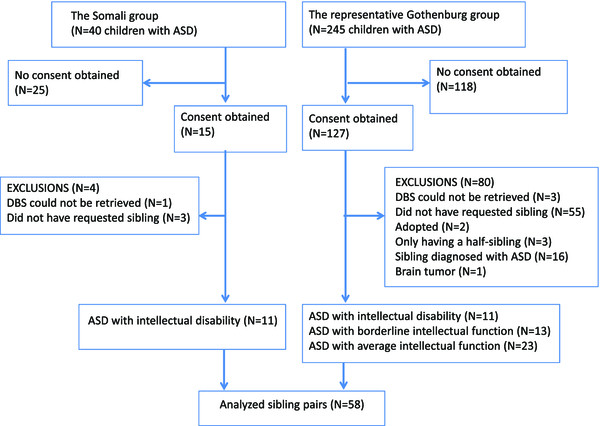
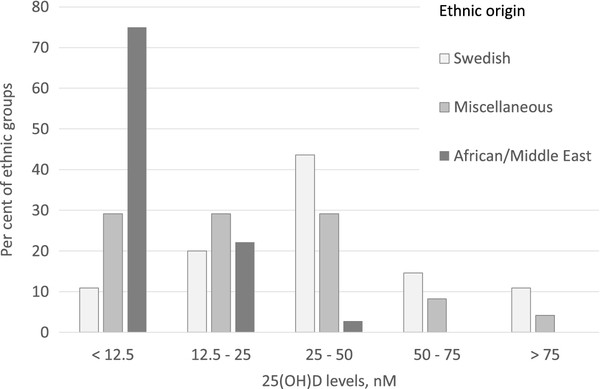
BACKGROUND: Insufficient vitamin D activity has attracted increasing interest as a possible underlying risk factor in disorders of the central nervous system, including autism. METHODS: In this study, 25-hydroxyvitamin D (25(OH)D) was analysed in 58 Sweden-born sibling pairs, in which one child had autism spectrum disorder (ASD) and the other did not. The study group consisted of two representative samples; 47 Gothenburg sibling pairs with mixed ethnicities and 11 Stockholm sibling pairs with Somali background. 25(OH)D levels were analysed in the stored dried blood spots taken in the neonatal period for metabolic screening. RESULTS: The collapsed group of children with ASD had significantly lower vitamin D levels (M = 24.0 nM, SD = 19.6) as compared with their siblings (M = 31.9 nM, SD = 27.7), according to a paired samples t-test (P = 0.013). The difference was - most likely - not only accounted for by a difference in season of birth between ASD and non-ASD siblings since the mean 25(OH)D levels differed with similar effect size between the sibling pairs born during winter and summer, respectively. All children with African/Middle East background, both the children with ASD and their non-ASD siblings, had vitamin D deficiency. CONCLUSIONS: The findings suggest that low prenatal vitamin D may act as a risk factor for ASD, however, there is a need for replication with larger samples. Future research should study whether or not adequate supplementation of vitamin D to pregnant women might lower the risk for ASD in the offspring.
Overview
The claims and statistics of this paper haven’t been checked yet.
Run the check — free, no account needed. It reads the open-access text and checks the sources it cites.
Integrity signals
Registry
Cites
Statistics
Figures
Verification
Claims the paper makes
The claims and statistics of this paper haven’t been checked yet.
Run the check — free, no account needed. It reads the open-access text and checks the sources it cites.
Claims other papers make about this one
Each is checked against this paper’s own text: does it say what the citing paper says it does?
The source backs part of the claim, not all of it — or backs it for a different population, condition or comparison.
In the citing paper
“Furthermore, inclusion of older siblings may confound the findings by younger parental age, and inclusion of apparently healthy younger siblings, on the other hand, may run the risk of including siblings with ASD who may develop ASD later in life in the control group [78,108].”
From Vitamin D and Autism Spectrum Disorder: A Literature Review (2016) · cites this paper as [78]
Experimental — accuracy not yet measuredThe cited source says what the claim attributes to it.
In the citing paper
“Of 14 studies, nine reported significant differences in 25(OH)D concentrations between cases and controls [78,81,108,109,110,111,112,117,118], one borderline difference [114], and four found no significant differences among study groups [79,113,115,116].”
From Vitamin D and Autism Spectrum Disorder: A Literature Review (2016) · cites this paper as [78]
In the citing paper
“For instance, Fennell et al. (2015) did not find any seasonal deviations for ASD populations from the typically developing controls of Middle Eastern/African origin, though the season of birth difference was significant in cases and controls of Swedish origin (38% in spring vs. 18% in summer; p < 0.05) [78].”
From Vitamin D and Autism Spectrum Disorder: A Literature Review (2016) · cites this paper as [78]
In the citing paper
“On the other hand, the authors did not find any differences between cases and controls of Middle Eastern/African origin.”
From Vitamin D and Autism Spectrum Disorder: A Literature Review (2016) · cites this paper as [78]
In the citing paper
“Season of birth which corresponded to the season of blood sampling in this study was not controlled for in statistical analysis.”
From Vitamin D and Autism Spectrum Disorder: A Literature Review (2016) · cites this paper as [78]
In the citing paper
“It should be also noted that season of birth was not significantly different between cases and controls in the latter ethnic groups, but it was significantly different across groups of Scandinavian and other European origins (10% vs. 35% of cases and controls in summer, respectively).”
From Vitamin D and Autism Spectrum Disorder: A Literature Review (2016) · cites this paper as [78]
In the citing paper
“Using siblings or family members as controls to minimize confounding by socio-demographic factors, Fernell et al. (2015) reported significantly lower mean 25(OH)D concentration at birth in autistic children of Scandinavian and other European origins than their non-ASD sibling controls [78].”
From Vitamin D and Autism Spectrum Disorder: A Literature Review (2016) · cites this paper as [78]
In the citing paper
“The lack of association in Middle Eastern and African group may in part, be attributed to the small sample size and very low mean 25(OH)D concentrations in these two ethnic groups, 11.5 ± 7.1 and 7.0 ± 5.0 nmol/L, respectively.”
From Vitamin D and Autism Spectrum Disorder: A Literature Review (2016) · cites this paper as [78]
Self-check
Percentages, sums and reported differences re-computed from the paper’s own numbers.
The self-check needs the paper’s full text.
Citations
Cites
Common genetic determinants of vitamin D insufficiency: a genome-wide association study
Wang, T. J., Zhang, F., Richards, J. B., Kestenbaum, B. R., van Meurs, J. B. J., Berry, D. J., Kiel, D. P., Streeten, E. A., Ohlsson, C., Koller, D. L., et al. (2010) · The Lancet · doi:10.1016/s0140-6736(10)60588-0 · Cited by 1,562
Distribution of the vitamin D receptor and 1α-hydroxylase in human brain
Eyles, D. W., Smith, S., Kinobe, R., Hewison, M., & McGrath, J. J. (2005) · Journal of Chemical Neuroanatomy · doi:10.1016/j.jchemneu.2004.08.006 · Cited by 1,444
Self-citationAutism risk factors: genes, environment, and gene-environment interactions
Chaste, P., & Leboyer, M. (2012) · Dialogues in Clinical Neuroscience · doi:10.31887/dcns.2012.14.3/pchaste · Cited by 807
Hyppönen, E., & Power, C. (2007) · The American Journal of Clinical Nutrition · doi:10.1093/ajcn/85.3.860 · Cited by 756
Gillberg, C. (2010) · Research in Developmental Disabilities · doi:10.1016/j.ridd.2010.06.002 · Cited by 742 · cited 1×
“ASD frequently coexists with other cognitive/behavioural/neurological disorders, including intellectual disability, language disorder, attention-deficit/ hyperactivity disorder (ADHD) and epilepsy, that is, disorders comprised under the ESSENCE concept (Early Symptomatic Syndromes Eliciting Neurodevelopmental Clinical…”
BackgroundSelf-citationEyles, D. W., Burne, T. H. J., & McGrath, J. J. (2012) · Frontiers in Neuroendocrinology · doi:10.1016/j.yfrne.2012.07.001 · Cited by 726
Self-citationVitamin d3 and brain development
Eyles, D. W., Brown, J., Mackay‐Sim, A., McGrath, J. J., & Feron, F. P. (2003) · Neuroscience · doi:10.1016/s0306-4522(03)00040-x · Cited by 552
Self-citationMaternal infection and immune involvement in autism
Patterson, P. H. (2011) · Trends in Molecular Medicine · doi:10.1016/j.molmed.2011.03.001 · Cited by 520
AUTISM IN THALIDOMIDE EMBRYOPATHY: A POPULATION STUDY
Strömland, K., Nordin, V., Miller, M. T., Åkerström, B., & Gillberg, C. (1994) · Developmental Medicine & Child Neurology · doi:10.1111/j.1469-8749.1994.tb11856.x · Cited by 453
Self-citationVitamin D hormone regulates serotonin synthesis. Part 1: Relevance for autism
Patrick, R. P., & Ames, B. N. (2014) · The FASEB Journal · doi:10.1096/fj.13-246546 · Cited by 414
Cited by
Sorted by citations
Items 101–163 of 163
A review of prevalence studies of Autism Spectrum Disorder by latitude and solar irradiance impact
Syed, S., Moore, K., & March, E. (2017) · Medical Hypotheses · doi:10.1016/j.mehy.2017.09.012 · Cited by 10
Neonatal and regressive forms of autism: Diseases with similar symptoms but a different etiology
Barbeau, W. E. (2017) · Medical Hypotheses · doi:10.1016/j.mehy.2017.09.015 · Cited by 9
van Wees, S. H., & Dini, S. (2023) · Global Public Health · doi:10.1080/17441692.2023.2257771 · Cited by 10
Hastie, C. E., Mackay, D., Clemens, T. L., Cherrie, M. P. C., King, A., Dibben, C. J. L., & Pell, J. P. (2019) · Scientific Reports · doi:10.1038/s41598-019-45562-9 · Cited by 8
Theoharides, T. C. (2017) · Clinical Therapeutics · doi:10.1016/j.clinthera.2017.03.002 · Cited by 8
Javadfar, Z., Soltani, S., Khamoushi, F., Sharifi, M., Moradi, S., Rezaeian, S., Foroughi, A., Cheshmeh, S., Taghaddosi, M., & Bahrehmand, F. (2025) · BMC Pediatrics · doi:10.1186/s12887-025-05985-y · Cited by 7
Reduced growth during early infancy in very low birth weight children with autism spectrum disorder
Ikejiri, K., Hosozawa, M., Mitomo, S., Tanaka, K., & Shimizu, T. (2016) · Early Human Development · doi:10.1016/j.earlhumdev.2016.05.001 · Cited by 9
Abdullahi, I., Sadka, N., Gilbert, M., & Barbaro, J. (2023) · Brain Sciences · doi:10.3390/brainsci13060903 · Cited by 6
Engstrand, R. Z., Klang, N., Hirvikoski, T., Allodi, M. W., & Roll‐Pettersson, L. (2018) · Review Journal of Autism and Developmental Disorders · doi:10.1007/s40489-018-0147-3 · Cited by 7
Santos, J. X., Rasga, C., & Vicente, A. M. (2021) · IntechOpen eBooks · doi:10.5772/intechopen.95758 · Cited by 6
Wang, X., Li, Q., Lyu, Z., & Wu, Y. (2025) · Biological and Pharmaceutical Bulletin · doi:10.1248/bpb.b25-00008 · Cited by 5
Kim, J. (2024) · Journal of korean Academy of Child and Adolescent Psychiatry · doi:10.5765/jkacap.230063 · Cited by 6
Migration and Autism Diagnosis
Crafa, D. (2017) · InTech eBooks · doi:10.5772/65981 · Cited by 6
Vitamin D Brain Development and Function
Eyles, D. W., & McGrath, J. J. (2017) · Elsevier eBooks · doi:10.1016/b978-0-12-809965-0.00033-1 · Cited by 5
Self-citationAl-Amin, M. M., Sullivan, R., Alexander, S., Carter, D. A., Bradford, D., & Burne, T. H. J. (2022) · AIMS neuroscience · doi:10.3934/neuroscience.2022004 · Cited by 5
Vitamin D deficiency and autism; a review on recent findings
Sotodehasl, N., Tamadon, M. R., & Malek, F. (2017) · Journal of Parathyroid Disease · doi:10.15171/jpd.2018.04 · Cited by 5
Child Health: Is It Really Assisted Reproductive Technology that We Need to Be Concerned About?
Kim, K., Purdue‐Smithe, A., Bell, G. A., Zolton, J. R., Ghassabian, A., Vafai, Y., Robinson, S. L., Mumford, S. L., & Yeung, E. H. (2018) · Seminars in Reproductive Medicine · doi:10.1055/s-0038-1675778 · Cited by 5
Associations Between Vitamin D and Core Symptoms in ASD: An Umbrella Review
Jiang, Y., Dang, W., Sui, L., Gao, T., Kong, X., Guo, J., Liu, S., Hong, N., & Jiang, Z. (2024) · Nutrition and Dietary Supplements · doi:10.2147/nds.s470462 · Cited by 5
Alabdali, A. N., Bacha, A. G. B., Alonazi, M. A., Abuaish, S., Almotairi, A. R., AL-Ayadhi, L. Y., & El-Ansary, A. K. (2025) · Frontiers in Molecular Neuroscience · doi:10.3389/fnmol.2025.1553438 · Cited by 4
Postpartum Depression Increases the Risk of Autism Diagnosis in the Offspring
Peltier, M. R., Fassett, M. J., Mensah, N. A., Khadka, N., Yeh, M., Chiu, V. Y., Oyelese, Y., & Getahun, D. (2024) · JAACAP Open · doi:10.1016/j.jaacop.2024.02.008 · Cited by 4
Gillberg, C., Allely, C. S., Bourgeron, T., Coleman, M., Fernell, E., Hadjikhani, N. K., & Sarovic, D. (2019) · Cambridge University Press eBooks · doi:10.1017/9781108297769.007 · Cited by 5
Self-citationCentomo, C., Stoppa, P., & Cavanna, A. E. (2025) · Archives of Medicine and Health Sciences · doi:10.4103/amhs.amhs_143_25 · Cited by 3
Rao, J., Wang, X., Zhou, P., Xiang, Y., Xi, L., & Li, C. (2026) · BMC Medicine · doi:10.1186/s12916-026-04853-5 · Cited by 3
DIETARY APPROACHES AND NUTRITIONAL SUPPLEMENTS IN THE MANAGEMENT OF AUTISM SPECTRUM DISORDER
Adıgüzel, E., & Çiçek, B. (2023) · Editora Científica Digital eBooks · doi:10.37885/230613484 · Cited by 3
Zayed, K. S., Alhakeem, M. A., & ALkaabi, Z. S. M. (2023) · Human Gene · doi:10.1016/j.humgen.2023.201192 · Cited by 3
Azhari, S. A. (2023) · Journal of Pharmaceutical Research International · doi:10.9734/jpri/2023/v35i107353 · Cited by 3
Autismo: aspectos nutrológicos das dietas e possível etiologia
Anderle, T., & de Mello, E. D. (2018) · International Journal of Nutrology · doi:10.1055/s-0038-1670668 · Cited by 4
Vitamin D and Calcium in Children 0-36 Months: A Scoping Review of Health Outcomes
Chung, M., Ruan, M., Cara, K. C., Yao, Q., Penkert, L. P., & Chen, J. (2020) · Journal of the American College of Nutrition · doi:10.1080/07315724.2020.1774822 · Cited by 3
Gao, Q., Liu, L., Li, H., Tang, Y., Chen, Y., Wang, Y., & Qian, Q. (2015) · Journal of Attention Disorders · doi:10.1177/1087054715608441 · Cited by 3
[Research advances in the role of vitamin D in autism spectrum disorders].
Shan, L., Hu, X., Wang, B., & Jia, F. (2016) · PubMed Central · doi:10.7499/j.issn.1008-8830.2016.02.016 · Cited by 3
Unveiling Critical Periods of Brain Development in Autism Spectrum Disorder
Babu, C. V. S., & Shunmugapriya, K. (2024) · Advances in medical technologies and clinical practice book series · doi:10.4018/979-8-3693-2703-6.ch014 · Cited by 2
Mohamed, Z. A., Thokerunga, E., Tang, C., Jimale, A. O., & Fan, J. (2022) · Open Journal of Psychiatry · doi:10.4236/ojpsych.2022.123020 · Cited by 2
Prenatal Vitamin D Deficiency and Maternal and Fetal Health Outcomes
Tsenkova-Toncheva, L., Hristova-Atanasova, E., Iskrov, G. G., & Stefanov, R. S. (2024) · Cureus · doi:10.7759/cureus.69508 · Cited by 2
Sultan, S., Alhejin, N., Serafi, R., Alrahi, M. A., Afifi, G., Al-Adawi, L., Serafi, M. R., & Madhoun, N. E. (2025) · Psychiatry International · doi:10.3390/psychiatryint6010022 · Cited by 3
Nutraceutical approaches for Autism Spectrum Disorder treatment
Dobrachinski, F., Ribeiro, K. A., Bezerra, I. C., da Silva, A. J., Pereira, C. M. M., Vellasques, K., Padilha, H. A., Haas, S. E., Ávila, D. S., & Gubert, P. (2025) · Behavioural Brain Research · doi:10.1016/j.bbr.2025.115653 · Cited by 2
Hasegawa, N., Yamada, T., & Mochizuki, M. (2020) · International Journal of Nursing & Clinical Practices · doi:10.15344/2394-4978/2020/318 · Cited by 2
Developmental Outcomes of Prematurity: Autism Spectrum Disorder
Sobotka, S. A., Francis, A., & Msall, M. E. (2016) · NeoReviews · doi:10.1542/neo.17-6-e318 · Cited by 2
Vitamin D and Autism Spectrum Disorder
Vegelin, M., Teodorowicz, G., & Savelkoul, H. F. J. (2021) · IntechOpen eBooks · doi:10.5772/intechopen.96928 · Cited by 2
Vitamins D and B12, Altered Synaptic Plasticity and Extracellular Matrix
Echeverry, M. B., Takada, S. H., Arruda, B. P., Cardoso, D. S., Martins, P. P., Ikebara, J. M., Santos, A. V. S., & Silva, V. R. C. T. D. (2021) · IntechOpen eBooks · doi:10.5772/intechopen.100055 · Cited by 1
Vitamin D, brain development and function
Eyles, D. W., Cui, X., & McGrath, J. J. (2023) · Elsevier eBooks · doi:10.1016/b978-0-323-91386-7.00040-4 · Cited by 1
Self-citationEnvironmental Risk Factors for Autism
Mathew, L., Kauffman, E. M., Schmidt, R. J., Hertz‐Picciotto, I., & Lyall, K. (2018) · Springer eBooks · doi:10.1007/978-1-4614-6435-8_102054-2 · Cited by 1
Pilot application of the BPSConnect model: bio-psycho-social correlation in children with ASDPreprint
Linares, R., Castellanos, S. L., Vallespin, N. M., Azurmendi, M. L., Guerrero, A. T., & Crespo, M. L. (2025) · medRxiv · doi:10.1101/2025.09.24.25336461 · Cited by 1
Vitamin D Deficiency and Manifestation of the Disease: Revisiting the Significance
Giri, A. (2017) · Journal of Medical Science And clinical Research · doi:10.18535/jmscr/v5i6.163
25-Hydroxyvitamin D and Its Impact on Pregnancy Outcomes and Gestational Diabetes in China
Zhou, J., Cao, X., & Xiao, H. (2017) · Springer eBooks · doi:10.1007/978-3-319-56440-1_8
Kawa, R. (2018) · Wydawnictwa Uniwersytetu Warszawskiego eBooks · doi:10.31338/uw.9788323535478.pp.125-140
Hasegawa, N., Mochizuki, M., Yamada, T., Morimoto, S., & Nagaya, I. (2020) · International Journal of Nursing & Clinical Practices · doi:10.15344/2394-4978/2020/326
The Effect of Vitamin D Deficiency on The Nervous System and Cardiovascular System
Esmaeili, H. (2021) · Novel Approaches in Drug Designing & Development · doi:10.19080/napdd.2021.05.555672
Data Analysis of Autism Disorder and Micronutrition using PubMed Abstracts
Choe, S.-Y., Lee, D., & Jeong, H.-S. (2021) · International journal of Nutrition Pharmacology Neurological Diseases · doi:10.4103/ijnpnd.ijnpnd_104_20
Hasani, P. A. M., Mokhtaree, M., Rezaeian, M., & Jalaladdini, A. (2021) · Trends in Medical Sciences · doi:10.5812/tms.113794
(2017) · CRC Press eBooks · doi:10.1201/9781315268828-7
Evaluation of Serum Vitamin D in Children with Autism Spectrum Disorder
Afroz, S., Begum, S., Shahjadi, S., Siddiqi, U. R., & Mahruba, S. N. (2022) · Bangladesh Medical Research Council Bulletin · doi:10.3329/bmrcb.v47i1.55795
Rates of Developmental Disabilities Vary Across Birth Months in a Tropical Climate
Maylott, S. E., Fasano, R. M., Moffitt, J., Boland, C. L., Burdette, E. T., Nahin, E. R., Simpson, E. A., & Delgado, C. F. (2023) · The Journal of Special Education · doi:10.1177/00224669221148726
Research Progress on the Effect of Nutrient Therapy on Clinical Symptoms of Autism Spectrum Disorder
马, 慧. (2023) · Advances in Clinical Medicine · doi:10.12677/acm.2023.132236
Autismo: uma abordagem multiprofissional
Borges, F. D. S. S., Cavalcante, F. P., Brilhante, F. D. F., Portela, J. G., Costa, L. F. L. D., Fernandes, L. M. C., Fontenele, L. A., Diniz, M. A. N., Sousa, M. D. D. A., Fonseca, M. C. S. D., et al. (2023) · Editora Científica Digital eBooks · doi:10.37885/978-65-5360-414-8
Zhang, Z., Ren, P., Zhao, C., Chen, M., Li, H., & Xiang, W. (2024) · Research Square · doi:10.21203/rs.3.rs-3920120/v1
Oliveira, K. L. X., Silva, A. P. C., de Oliveira, D. F., Paniago, F. D. O. A., Torres, G. B., Lobo, I. R., Vital, M. V., Andrade, M. C. R., Freitas, M. E. S. G., de Oliveira, M. V., et al. (2024) · Brazilian Journal of Implantology and Health Sciences · doi:10.36557/2674-8169.2024v6n2p1228-1242
Russell-Jones, G. J. (2024) · Journal of Medical - Clinical Research & Reviews · doi:10.33425/2639-944x.1378
Singh, S., Basera, P., Agarwal, P., Arya, A., Ali, W., Rohatgi, K., & Ozair, A. (2025) · doi:10.22541/au.173809129.93733113/v1
Roychoudhury, S., Tang, S., Hasan, S. U., Fonseca, K., Lodha, A. K., Alshaikh, B. N., Awad, E. A., & Yusuf, K. (2025) · Frontiers in Pediatrics · doi:10.3389/fped.2025.1492429
Adams, J. B., Kirby, J. K., Sorensen, J. C., Pollard, E. L., & AUDHYA, T. K. (2022) · Figshare · doi:10.6084/m9.figshare.20290992
Additional file 1 of Developmental vitamin D deficiency increases foetal exposure to testosterone
Ali, A. A., Cui, X., Pértile, R. A. N., Li, X., Medley, G., Alexander, S., Whitehouse, A. W., McGrath, J. J., & Eyles, D. W. (2020) · Figshare · doi:10.6084/m9.figshare.13357521
Self-citationAl-Sheapany, A. A., Al-Obeidi, A. M., & Mohammed, G. A. (2026) · مجلة جامعة صنعاء للطب والعلوم الصحية · doi:10.59628/jchm.v20i3.2716
SAHMUROVA, A. (2026) · International Journal of Social Sciences · doi:10.52096/usbd.10.48.16
Metadata
- Authors
- Fernell, E., Bejerot, S., Westerlund, J., Miniscalco, C., Simila, H., Eyles, D., Gillberg, C., & Humble, M. B.
- Affiliations
- Skaraborg Hospital (SE)
- Örebro University (SE)
- Stockholm University (SE)
- University of Gothenburg (SE)
- The University of Queensland (AU)
- Corresponding author
- Fernell, Elisabeth
- ORCID
- Venue
- Molecular Autism
- Published
- 2015
- Volume
- 6
- Issue
- 1
- Pages
- 3
- ISSN
- 2040-2392 (ISSN-L)
- PMC
- PMC4396835
- OpenAlex
- W2135493800
- Cited by
- 160
- References
- 68
- Citations by year
- 2026: 1 · 2025: 9 · 2024: 10 · 2023: 16 · 2022: 11 · 2021: 9 · 2020: 23 · 2019: 13 · 2018: 18 · 2017: 29 · 2016: 17 · 2015: 4
- FWCI
- 18.00
- Type
- journal article
- Language
- en
- Open access
- gold
- doi.org
- Licence
- cc-by
- Locations
- Molecular Autism (publishedVersion, cc-by)
- PubMed Central (publishedVersion, cc-by)
- PubMed (publishedVersion)
- ENLIGHTEN (Jurnal Bimbingan dan Konseling Islam) (acceptedVersion)
- Örebro University (Örebro University) (submittedVersion, other-oa)
- Funders
- Vetenskapsrådet (523-2011-3646)
- LifeWatch – Niclas Öberg Foundation
- Topics
- Health Sciences › Medicine › Endocrinology, Diabetes and Metabolism › Vitamin D Research Studies
- Life Sciences › Neuroscience › Cognitive Neuroscience › Autism Spectrum Disorder Research
- Health Sciences › Medicine › Endocrinology, Diabetes and Metabolism › Sexual Differentiation and Disorders
- Keywords
- autism spectrum disorder, vitamin D deficiency, 25-hydroxyvitamin D, prenatal vitamin D, neonatal dried blood spots, sibling pairs, season of birth, Somali children, vitamin D supplementation in pregnancy, risk factors
About these checks
Registry, retraction, Cites and statistics results are computed, not judged, with one exception: a printed reference that no index lists is read once by a model before it counts as a citation error. Claims are extracted by a model and kept only when their quote appears verbatim in the text; each cited source is then checked, with a model’s help, for whether it says what the claim relies on. Those verdicts can be wrong — read the claim’s quote and the cited source before relying on one.
Statistics and arithmetic are recomputed, not judged.
Confidence bands are shown only for fields calibrated on our annotated test set. None is calibrated yet, so no band is shown.
What counts as a claim ›How we measure confidence ›How we check this ›
Are you an author, or do you see a problem with this page? Request a review
