

The DOI matches its Crossref record; 61 of the 61 references it cites were found in a registry or an index.
Differential response of skeletal muscles to mTORC1 signaling during atrophy and hypertrophy
Open accessAbstract
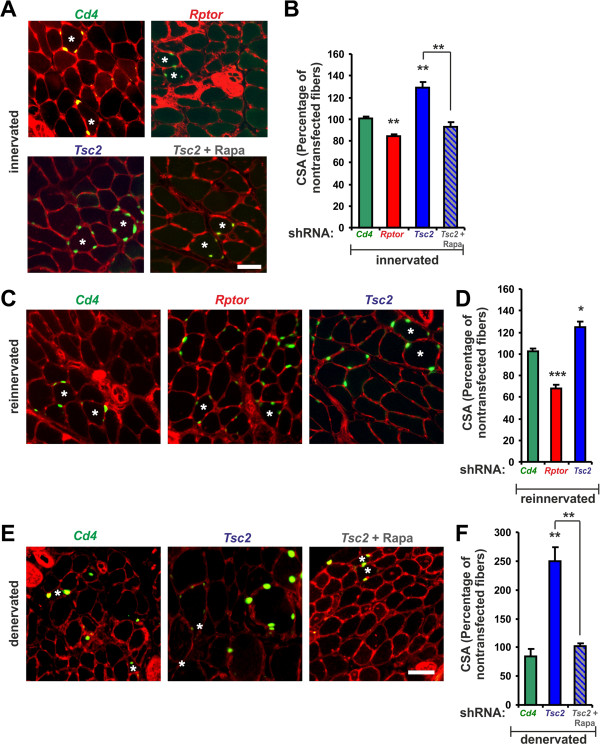
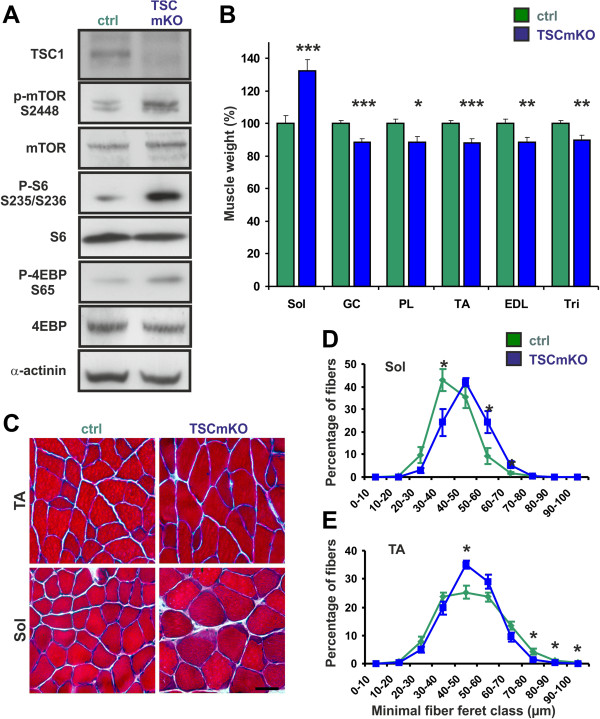
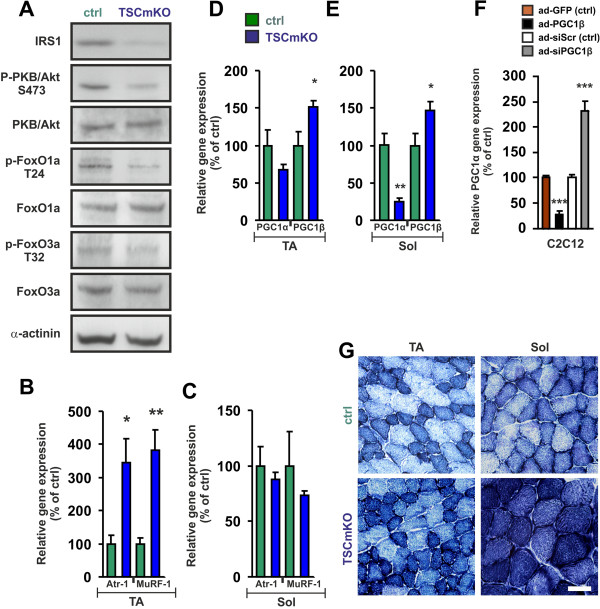
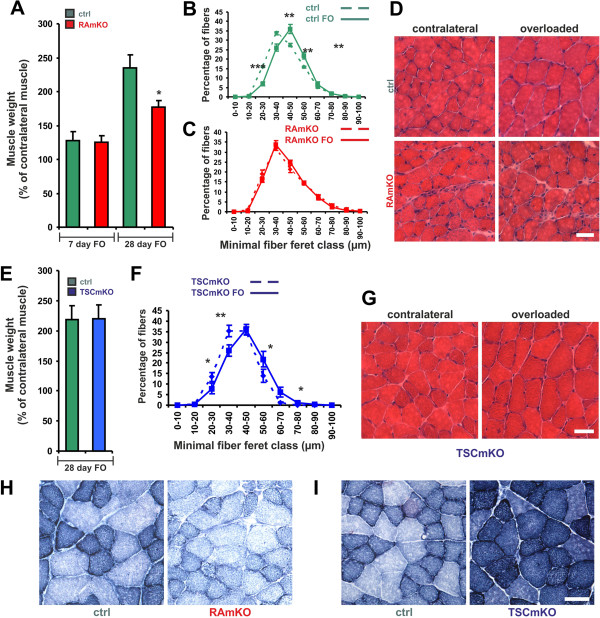
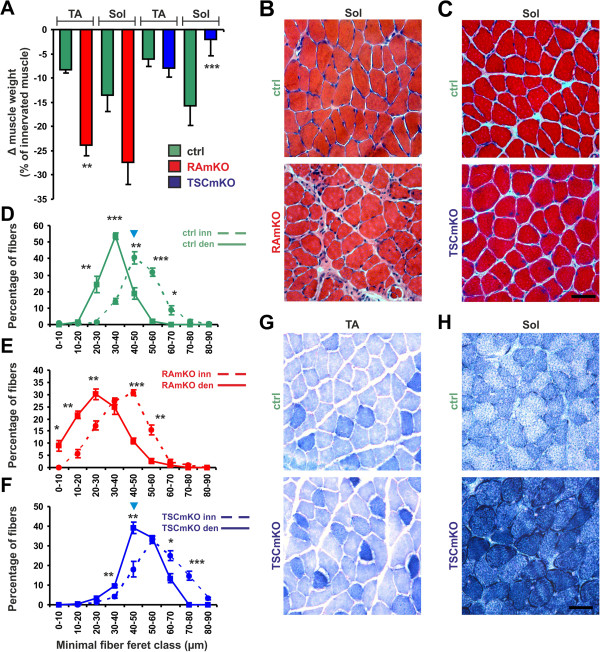
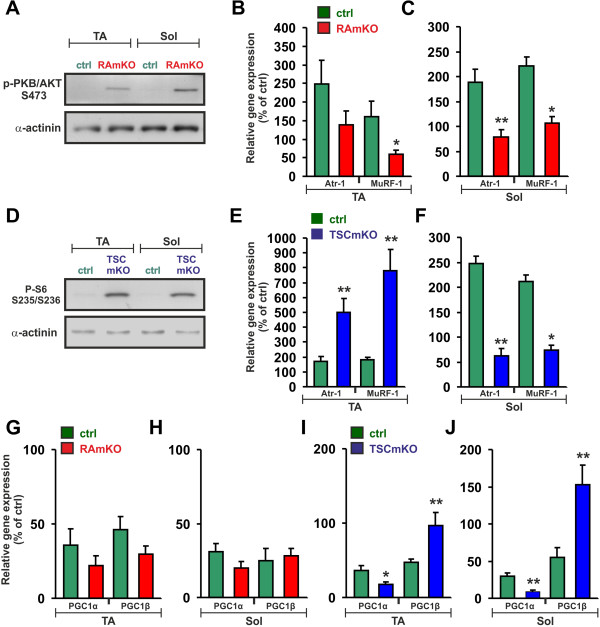
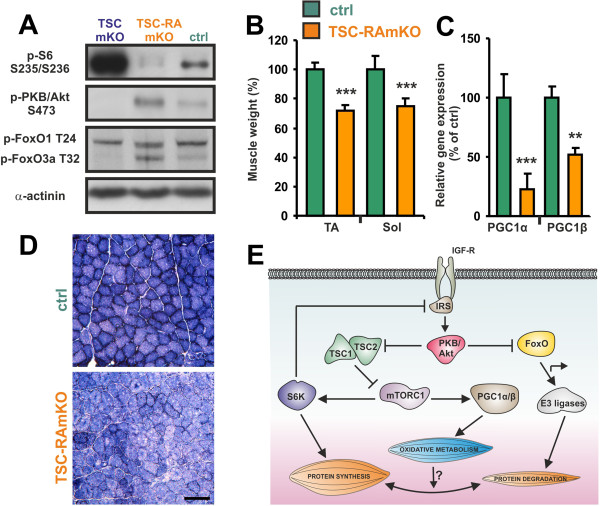
BACKGROUND: Skeletal muscle mass is determined by the balance between protein synthesis and degradation. Mammalian target of rapamycin complex 1 (mTORC1) is a master regulator of protein translation and has been implicated in the control of muscle mass. Inactivation of mTORC1 by skeletal muscle-specific deletion of its obligatory component raptor results in smaller muscles and a lethal dystrophy. Moreover, raptor-deficient muscles are less oxidative through changes in the expression PGC-1α, a critical determinant of mitochondrial biogenesis. These results suggest that activation of mTORC1 might be beneficial to skeletal muscle by providing resistance to muscle atrophy and increasing oxidative function. Here, we tested this hypothesis by deletion of the mTORC1 inhibitor tuberous sclerosis complex (TSC) in muscle fibers. METHOD: Skeletal muscles of mice with an acute or a permanent deletion of raptor or TSC1 were examined using histological, biochemical and molecular biological methods. Response of the muscles to changes in mechanical load and nerve input was investigated by ablation of synergistic muscles or by denervation . RESULTS: Genetic deletion or knockdown of raptor, causing inactivation of mTORC1, was sufficient to prevent muscle growth and enhance muscle atrophy. Conversely, short-term activation of mTORC1 by knockdown of TSC induced muscle fiber hypertrophy and atrophy-resistance upon denervation, in both fast tibialis anterior (TA) and slow soleus muscles. Surprisingly, however, sustained activation of mTORC1 by genetic deletion of Tsc1 caused muscle atrophy in all but soleus muscles. In contrast, oxidative capacity was increased in all muscles examined. Consistently, TSC1-deficient soleus muscle was atrophy-resistant whereas TA underwent normal atrophy upon denervation. Moreover, upon overloading, plantaris muscle did not display enhanced hypertrophy compared to controls. Biochemical analysis indicated that the atrophy response of muscles was based on the suppressed phosphorylation of PKB/Akt via feedback inhibition by mTORC1 and subsequent increased expression of the E3 ubiquitin ligases MuRF1 and atrogin-1/MAFbx. In contrast, expression of both E3 ligases was not increased in soleus muscle suggesting the presence of compensatory mechanisms in this muscle. CONCLUSIONS: Our study shows that the mTORC1- and the PKB/Akt-FoxO pathways are tightly interconnected and differentially regulated depending on the muscle type. These results indicate that long-term activation of the mTORC1 signaling axis is not a therapeutic option to promote muscle growth because of its strong feedback induction of the E3 ubiquitin ligases involved in protein degradation.
Overview
The claims and statistics of this paper haven’t been checked yet.
Run the check — free, no account needed. It reads the open-access text and checks the sources it cites.
Integrity signals
Registry
Cites
Statistics
Figures
Verification
Claims the paper makes
The claims and statistics of this paper haven’t been checked yet.
Run the check — free, no account needed. It reads the open-access text and checks the sources it cites.
Self-check
Percentages, sums and reported differences re-computed from the paper’s own numbers.
The self-check needs the paper’s full text.
Citations
Cites
mTOR Signaling in Growth Control and Disease
Laplante, M., & Sabatini, D. M. (2012) · Cell · doi:10.1016/j.cell.2012.03.017 · Cited by 8,509
TOR signaling in growth and metabolism
Wullschleger, S., Loewith, R., & Hall, M. N. (2006) · Cell · doi:10.1016/j.cell.2006.01.016 · Cited by 5,787
Sandri, M., Sandri, C., Gilbert, A., Skurk, C., Calabria, E., Picard, A., Walsh, K., Schiaffino, S., Lecker, S. H., & Goldberg, A. L. (2004) · Cell · doi:10.1016/s0092-8674(04)00400-3 · Cited by 3,012
Bodine, S. C., Stitt, T. N., Gonzalez, M., Kline, W. O., Stover, G. L., Bauerlein, R., Zlotchenko, E., Scrimgeour, A., Lawrence, J. C., Glass, D. J., et al. (2001) · Nature Cell Biology · doi:10.1038/ncb1101-1014 · Cited by 2,752
Sarbassov, D. D., Ali, S. M., Kim, D.-H., Guertin, D. A., Latek, R. R., Erdjument-Bromage, H., Tempst, P., & Sabatini, D. M. (2004) · Current Biology · doi:10.1016/j.cub.2004.06.054 · Cited by 2,665
Transcriptional co-activator PGC-1α drives the formation of slow-twitch muscle fibres
Lin, J., Wu, H., Tarr, P. T., Zhang, C.-Y., Wu, Z., Boss, O., Michael, L. F., Puigserver, P., Isotani, E., Olson, E. N., et al. (2002) · Nature · doi:10.1038/nature00904 · Cited by 2,546
Mammalian TOR complex 2 controls the actin cytoskeleton and is rapamycin insensitive
Jacinto, E., Loewith, R., Schmidt, A., Lin, S., Rüegg, M. A., Hall, A., & Hall, M. N. (2004) · Nature Cell Biology · doi:10.1038/ncb1183 · Cited by 2,097
Puigserver, P., & Spiegelman, B. M. (2003) · Endocrine Reviews · doi:10.1210/er.2002-0012 · Cited by 2,076
Stitt, T. N., Drujan, D., Clarke, B. A., Panaro, F., Timofeyva, Y., Kline, W. O., Gonzalez, M., Yancopoulos, G. D., & Glass, D. J. (2004) · Molecular Cell · doi:10.1016/s1097-2765(04)00211-4 · Cited by 1,964
FoxO3 Controls Autophagy in Skeletal Muscle In Vivo
Mammucari, C., Milan, G., Romanello, V., Masiero, E., Rudolf, R., Del Piccolo, P., Burden, S. J., Di Lisi, R., Sandri, C., Zhao, J., et al. (2007) · Cell Metabolism · doi:10.1016/j.cmet.2007.11.001 · Cited by 1,953
Cited by
Sorted by citations
Items 101–152 of 152
Rovina, R. L., da Rocha, A. L., Marafon, B. B., Pauli, J. R., de Moura, L. P., Cintra, D. E., Ropelle, E. R., & da Silva, A. S. R. (2021) · Frontiers in Physiology · doi:10.3389/fphys.2021.626096 · Cited by 10
Lee, E. H., & Neppl, R. L. (2021) · Genes · doi:10.3390/genes12050688 · Cited by 11
Marshall, R. N., Morgan, P. T., Smeuninx, B., Quinlan, J. I., Brook, M. S., Atherton, P. J., Smith, K., Wilkinson, D. J., & Breen, L. (2022) · Medicine & Science in Sports & Exercise · doi:10.1249/mss.0000000000003061 · Cited by 9
Kim, M., Jung, H. Y., Kim, B., & Jo, C. (2024) · Food Science of Animal Resources · doi:10.5851/kosfa.2024.e27 · Cited by 9
Exogenous Nucleotides Supplementation Attenuates Age‐Related Sarcopenia
Wu, X., Liu, R., Zhu, N., Wang, X., Wei, C., An, X., Xu, M., & Li, Y. (2025) · Journal of Cachexia Sarcopenia and Muscle · doi:10.1002/jcsm.70002 · Cited by 8
Smith, M., Hoffman, N. J., Jose, A. T. S., Burke, L. M., & Opar, D. A. (2025) · Sports Medicine · doi:10.1007/s40279-025-02174-w · Cited by 10
Fallone, L., Pouxvielh, K., Arbez, L., Rousseaux, N., Picq, L., Drouillard, A., Mathieu, A., Nombel, A., Benezech, S., Bourdonnay, E., et al. (2025) · Science Signaling · doi:10.1126/scisignal.adq8778 · Cited by 8
Yao, Z., Jiang, Z., Liu, X., Zhang, L., Guo, S., Chen, Y., Luo, L., Ma, S., Wang, P., & Shyh‐Chang, N. (2025) · Advanced Science · doi:10.1002/advs.202505989 · Cited by 8
Iannuzzo, F., Cicatiello, A. G., Sagliocchi, S., Schiano, E., Nappi, A., Miro, C., Stornaiuolo, M., Mollica, A., Tenore, G. C., Dentice, M., et al. (2024) · International Journal of Molecular Sciences · doi:10.3390/ijms25020902 · Cited by 7
Seibert, T. A., Shi, L., Althouse, S. K., Hoffman, R. L., Schneider, B. P., Russ, K. A., Altherr, C. A., Warden, S. J., Guise, T. A., Coggan, A. R., et al. (2024) · Scientific Reports · doi:10.1038/s41598-024-51751-y · Cited by 7
Kalenta, H., Kilroe, S. P., Romsdahl, T. B., Marchant, E. D., Maroto, R., Linares, J. J., Russell, W. K., & Rasmussen, B. B. (2025) · Journal of Applied Physiology · doi:10.1152/japplphysiol.00987.2024 · Cited by 6
mTORC1 in the Control of Myogenesis and Adult Skeletal Muscle Mass
Wallace, M. A., Hughes, D. C., & Baar, K. (2016) · Elsevier eBooks · doi:10.1016/b978-0-12-802733-2.00025-6 · Cited by 9
Uda, M., Yoshihara, T., Ichinoseki‐Sekine, N., & Baba, T. (2024) · Physiological Reports · doi:10.14814/phy2.15969 · Cited by 6
Hu, Y., Xie, Y., Tang, Y., Liu, J., Mbokane, E. M., Dawood, R. A.-S., Luo, J., Li, D., & Cao, Q. (2025) · Fishes · doi:10.3390/fishes11010010 · Cited by 5
Dual transgene amelioration of Lama2-null muscular dystrophy
McKee, K. K., & Yurchenco, P. D. (2023) · Matrix Biology · doi:10.1016/j.matbio.2023.03.001 · Cited by 5
Effect of different sources of dietary protein on muscle hypertrophy in functionally overloaded mice
Aoyama, S., Hirooka, R., Shimoda, T., & Shibata, S. (2019) · Biochemistry and Biophysics Reports · doi:10.1016/j.bbrep.2019.100686 · Cited by 5
Autophagy as a therapeutic linchpin in metabolic diseases and obesity-associated diabetes
Vakili, O., Klionsky, D. J., Reiter, R. J., Ren, J., Deshpande, A., Ahn, K. S., Cho, W., Hushmandi, K., & Kumar, A. P. (2026) · Autophagy · doi:10.1080/15548627.2026.2636096 · Cited by 7
Making sense of MYC in skeletal muscle: location, duration, and magnitude
Jones, R. G., Edman, S., Serrano, N., Wen, Y., McCarthy, J. J., Fry, C. S., von Walden, F., & Murach, K. A. (2025) · American Journal of Physiology-Cell Physiology · doi:10.1152/ajpcell.00528.2025 · Cited by 4
Zhao, Y.-C. (2025) · Frontiers in Medicine · doi:10.3389/fmed.2025.1635219 · Cited by 6
Effects of day-time feeding on murine skeletal muscle growth and synthesis
Aoyama, S., Kojima, S., Sasaki, K., Shimoda, T., Takahashi, K., Hirooka, R., Tahara, Y., & Shibata, S. (2019) · Journal of Nutrition & Intermediary Metabolism · doi:10.1016/j.jnim.2019.100099 · Cited by 4
Cai, X., Zhu, C., Xu, Y., Jing, Y., Yuan, Y., Wang, L., Wang, S., Zhu, X., Gao, P., Zhang, Y., et al. (2020) · Scientific Reports · doi:10.1038/s41598-020-72330-x · Cited by 4
RetractedSarcopenia e quimioterapia: efeitos do 5-fluorouracil e a importância do exercício físico
Fabiano, L. C., & Buttow, N. C. (2024) · Cuadernos de Educación y Desarrollo · doi:10.55905/cuadv16n11-017 · Cited by 3
Maroto, R., Graber, T. G., Romsdahl, T. B., Kudlicki, A. S., Russell, W. K., & Rasmussen, B. B. (2023) · Journal of Nutrition · doi:10.1016/j.tjnut.2023.10.016 · Cited by 4
Dungan, C. M. (2017) · The Journal of Physiology · doi:10.1113/jp274154 · Cited by 3
Swiderski, K., Naim, T., Trieu, J., Chee, A., Herold, M. J., Kueh, A. J., Goodman, C. A., Gregorevic, P., & Lynch, G. S. (2024) · Physiological Reports · doi:10.14814/phy2.16145 · Cited by 3
Skeletal Muscle mTORC1 Activation Increases Energy Expenditure and Reduces Longevity in MicePreprint
Stephenson, E. J., Redd, J. R., Snyder, D., Tran, Q. T., Lu, B., Peloquin, M., Mulcahy, M. C., Harvey, I. C., Fisher, K., Han, J. C., et al. (2019) · bioRxiv (Cold Spring Harbor Laboratory) · doi:10.1101/720540 · Cited by 4
Zeng, Z., Zhou, C., Yin, W., Chen, T., Han, T., Xie, Y., & Zhou, A. (2025) · Frontiers in Physiology · doi:10.3389/fphys.2025.1658993 · Cited by 3
Skeletal Muscle Homeostasis and Aging in Drosophila
Puppa, M., & Demontis, F. (2015) · Healthy ageing and longevity · doi:10.1007/978-3-319-18326-8_5 · Cited by 2
In Situ Immunofluorescent Staining of Autophagy in Muscle Stem Cells
Castagnetti, F., Fiacco, E., Imbriano, C., & Latella, L. (2017) · Journal of Visualized Experiments · doi:10.3791/55908 · Cited by 2
mTOR in Metabolic and Endocrine Disorders
Swierczynska, M. M., & Hall, M. N. (2016) · Elsevier eBooks · doi:10.1016/b978-0-12-802733-2.00008-6 · Cited by 2
Aoyama, S., Kim, H., Tanaka, M., Shimoda, T., Chijiki, H., Kojima, S., Sasaki, K., Hirooka, R., Takahashi, K., Takahashi, M., et al. (2019) · SSRN Electronic Journal · doi:10.2139/ssrn.3345547 · Cited by 2
Clark, A. R., Adams, A. T., McKinley, T. O., Natoli, R. M., Dearth, C. L., & Goldman, S. M. (2025) · Journal of Surgical Research · doi:10.1016/j.jss.2025.11.043 · Cited by 1
Metformin exacerbates diabetic amyotrophy via oxidative stress and gut microbiota alterations
Wang, H., Cao, Z., Yousaf, W., Haseeb, A., Wang, Z., & Zheng, J. (2026) · Frontiers in Microbiology · doi:10.3389/fmicb.2026.1778515 · Cited by 1
Yang, S., Yue, N., & Zeng, X. (2015) · International Journal of Morphology · doi:10.4067/s0717-95022015000300027 · Cited by 1
The Role of BiP Co-chaperone SIL1 in Marinesco-Sjögren Syndrome Pathogenesis
Ichhaporia, V. P. (2018) · doi:10.21007/etd.cghs.2018.0470 · Cited by 1
Tryon, L. D., Vainshtein, A., Memme, J. M., Crilly, M. J., & Hood, D. A. (2016) · Integrative Medicine Research · doi:10.1016/j.imr.2014.08.006
Ham, A. S., Chojnowska, K., Tintignac, L. A. J., Lin, S., Schmidt, A., Ham, D. J., Sinnreich, M., & Rüegg, M. A. (2019) · bioRxiv (Cold Spring Harbor Laboratory) · doi:10.1101/738294
Okun, J. G., Rusu, P. M., Chan, A. Y., Yap, Y. W., Sharkie, T., Schumacher, J., Schmidt, K. V., Zota, A., Hille, S. S., Jungmann, A., et al. (2020) · bioRxiv (Cold Spring Harbor Laboratory) · doi:10.1101/2020.05.25.115709
Tras las huellas de "El segundo sexo" en el pensamiento feminista contemporáneo
Fernández, S. C. (2002) · Dialnet (Universidad de la Rioja)
Cicatiello, A. G., Sagliocchi, S., Nappi, A., Cicco, E. D., Miro, C., Murolo, M., Stornaiuolo, M., & Dentice, M. (2021) · SSRN Electronic Journal · doi:10.2139/ssrn.3919938
Novel Interventions for Heat/Exercise Induced Sudden Death and Fatigue
Hamilton, S. L. (2014) · Defense Technical Information Center (DTIC) · doi:10.21236/ada612845
Ham, D. J., Semeraro, M., Berger, B. M., Lin, S., Maino, E., Oliveri, F., & Rüegg, M. A. (2024) · bioRxiv (Cold Spring Harbor Laboratory) · doi:10.1101/2024.03.13.584777
mTORC1-dependent SOCE activity regulates synaptic gene expression and muscle response to denervationPreprint
Prola, A., Dupont, O.-N., Rajendran, J., Chabry, F., Koenig, S., Frieden, M., & Castets, P. (2024) · bioRxiv (Cold Spring Harbor Laboratory) · doi:10.1101/2024.04.01.587665
Pahlevanzadeh, M., Shabani, R., & Elmieh, A. (2024) · مجله دانشگاه علوم پزشکی جیرفت. · doi:10.61186/jjums.11.1.1512
Akgün, A. N., Karaçağlar, E., Hasırcı, S. H., Sayın, B., Sezgin, A., & Haberal, M. A. (2025) · Experimental and Clinical Transplantation · doi:10.6002/ect.2024.0041
Kanzaki, K., & Wada, M. (2025) · The Journal of Nutritional Physiology · doi:10.1016/j.jnphys.2025.100011
Maintien de la fonction musculaire : Exercice en hémodialyse : rôles physiologiques de eIF3f
Pavlin, L. (2021) · theses.fr (ABES) · doi:10.70675/47a22f7bz4659z43a7za47dzc83eaf9b4b66
Smith, M., Belhaj, M. R., Timmins, R. G., Maniar, N., Whitehead, T. S., Opar, D. A., & Hoffman, N. J. (2026) · Scandinavian Journal of Medicine and Science in Sports · doi:10.1111/sms.70343
Giourmas, N., Lalunio, H., Calzoni, M., Bagaric, R. M., Goodman, C. A., & Hayes, A. (2026) · The Journal of Physiology · doi:10.1113/jp291639
Metadata
- Authors
- Bentzinger, C. F., Lin, S., Romanino, K., Castets, P., Guridi, M., Summermatter, S., Handschin, C., Tintignac, L. A., Hall, M. N., & Rüegg, M. A.
- Affiliations
- University of Basel (CH)
- Corresponding author
- Rüegg, Markus A
- ORCID
- Venue
- Skeletal Muscle
- Published
- 2013-03-06
- Volume
- 3
- Issue
- 1
- Pages
- 6-6
- ISSN
- 2044-5040 (ISSN-L)
- PMC
- PMC3622636
- OpenAlex
- W2149451793
- Cited by
- 153
- References
- 61
- Citations by year
- 2026: 4 · 2025: 13 · 2024: 14 · 2023: 8 · 2022: 10 · 2021: 14 · 2020: 11 · 2019: 16 · 2018: 11 · 2017: 8 · 2016: 11 · 2015: 10 · 2014: 14 · 2013: 8
- FWCI
- 6.42
- Type
- journal article
- Language
- en
- Open access
- gold
- doi.org
- Licence
- cc-by
- Locations
- Skeletal Muscle (publishedVersion, cc-by)
- Europe PMC (PubMed Central) (publishedVersion, cc-by)
- PubMed Central (publishedVersion, cc-by)
- PubMed (publishedVersion)
- edoc (University of Basel) (acceptedVersion)
- Archive ouverte UNIGE (University of Geneva) (submittedVersion, cc-by)
- HAL (submittedVersion, cc-by)
- edoc (University of Basel)
- Funders
- National Science Foundation
- Schweizerischer Nationalfonds zur Förderung der Wissenschaftlichen Forschung
- Topics
- Life Sciences › Biochemistry, Genetics and Molecular Biology › Molecular Biology › Muscle Physiology and Disorders
- Health Sciences › Nursing › Nutrition and Dietetics › Muscle metabolism and nutrition
- Life Sciences › Biochemistry, Genetics and Molecular Biology › Molecular Biology › PI3K/AKT/mTOR signaling in cancer
- Keywords
- mTORC1 signaling, skeletal muscle atrophy, muscle hypertrophy, raptors, tuberous sclerosis complex 1, denervation, muscle overload, oxidative capacity, PGC-1α, mitochondrial biogenesis, Akt signaling, FOXO, MuRF1, atrogin-1/MAFbx, E3 ubiquitin ligase, muscle fiber type, soleus muscle
About these checks
Registry, retraction, Cites and statistics results are computed, not judged, with one exception: a printed reference that no index lists is read once by a model before it counts as a citation error. Claims are extracted by a model and kept only when their quote appears verbatim in the text; each cited source is then checked, with a model’s help, for whether it says what the claim relies on. Those verdicts can be wrong — read the claim’s quote and the cited source before relying on one.
Statistics and arithmetic are recomputed, not judged.
Confidence bands are shown only for fields calibrated on our annotated test set. None is calibrated yet, so no band is shown.
What counts as a claim ›How we measure confidence ›How we check this ›
Are you an author, or do you see a problem with this page? Request a review
