

Facial emotion processing in major depression: a systematic review of neuroimaging findings
Open accessThe DOI matches its Crossref record; 110 of the 110 references it cites were found in a registry or an index.
Abstract
Background: Cognitive models of depression suggest that major depression is characterized by biased facial emotion processing, making facial stimuli particularly valuable for neuroimaging research on the neurobiological correlates of depression. The present review provides an overview of functional neuroimaging studies on abnormal facial emotion processing in major depression. Our main objective was to describe neurobiological differences between depressed patients with major depressive disorder (MDD) and healthy controls (HCs) regarding brain responsiveness to facial expressions and, furthermore, to delineate altered neural activation patterns associated with mood-congruent processing bias and to integrate these data with recent functional connectivity results. We further discuss methodological aspects potentially explaining the heterogeneity of results. Methods: A Medline search was performed up to August 2011 in order to identify studies on emotional face processing in acutely depressed patients compared with HCs. A total of 25 studies using functional magnetic resonance imaging were reviewed. Results: The analysis of neural activation data showed abnormalities in MDD patients in a common face processing network, pointing to mood-congruent processing bias (hyperactivation to negative and hypoactivation to positive stimuli) particularly in the amygdala, insula, parahippocampal gyrus, fusiform face area, and putamen. Furthermore, abnormal activation patterns were repeatedly found in parts of the cingulate gyrus and the orbitofrontal cortex, which are extended by investigations implementing functional connectivity analysis. However, despite several converging findings, some inconsistencies are observed, particularly in prefrontal areas, probably caused by heterogeneities in paradigms and patient samples. Conclusions: Further studies in remitted patients and high-risk samples are required to discern whether the described abnormalities represent state or trait characteristics of depression.
Overview
The claims and statistics of this paper haven’t been checked yet.
Free: it reads the open-access text and checks the first 5 claims that cite a source we can check. Create a free account to check every claim.
Integrity signals
Registry
Cites
Statistics
Figures
Verification
Claims the paper makes
The claims and statistics of this paper haven’t been checked yet.
Free: it reads the open-access text and checks the first 5 claims that cite a source we can check. Create a free account to check every claim.
Claims other papers make about this one
Each is checked against this paper’s own text: does it say what the citing paper says it does?
The source backs part of the claim, not all of it — or backs it for a different population, condition or comparison.
In the citing paper
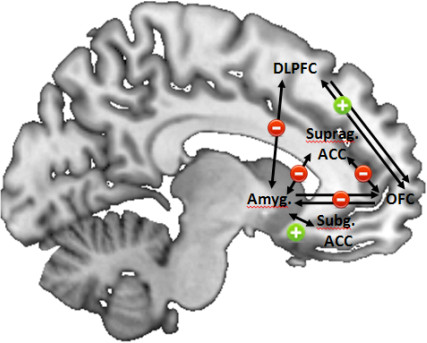
“an increased connectivity between subgenual parts of the ACC (subACC) and the amygdala, causing mutually enhancing abnormal emotion processing during observation of fearful faces, may represent a neural mechanism for the abnormally increased representation of social threat, which is particularly prevalent in depressed in patients with a comorbid social anxiety disorder (de Almeida et al., 2011;Stu”
From Social functioning in major depressive disorder (2016) · cites this paper as Stuhrmann et al., 2011
Experimental — accuracy not yet measuredThe source backs part of the claim, not all of it — or backs it for a different population, condition or comparison.
In the citing paper
“Nega ve affec ve bias, as measured by the amygdala ac vity in response to nega ve emo onal faces, is thought to track the course of depression, being heightened in people in the acute depressive phase ([21-24]; though note [25]).”
From Amygdala Reactivity, Antidepressant Discontinuation, and Relapse (2024) · cites this paper as [22]
Experimental — accuracy not yet measuredThe source backs part of the claim, not all of it — or backs it for a different population, condition or comparison.
In the citing paper
“Of note, deficient recruitment of PFC (particularly, dlPFC) regions has been coupled with hyperactivity in paralimbic (e.g., pgACC, sgACC) and limbic (e.g., amygdala) regions critically implicated in automatic processing of emotional cues (for review, see [16,157]).”
From Prefrontal cortex and depression (2022) · cites this paper as [157]
Experimental — accuracy not yet measuredThe source backs part of the claim, not all of it — or backs it for a different population, condition or comparison.
In the citing paper
“This effect was attributed to a likely overall enhancement of threat reactivity, consistent with increased activation in this region associated with enhanced negative reactivity in MDD [157,183].”
From Prefrontal cortex and depression (2022) · cites this paper as [157]
Experimental — accuracy not yet measuredThe cited source says what the claim attributes to it.
In the citing paper
“during emotion processing, MDD patients showed abnormalities in a common face processing network, indicating mood-congruent processing bias (hyperactivity to negative and hypoactivity to positive stimuli) particularly in the amygdala, insula, parahippocampal gyrus, fusiform face area, and putamen (Stuhrmann et al., 2011).”
From Social functioning in major depressive disorder (2016) · cites this paper as Stuhrmann et al., 2011
Self-check
Percentages, sums and reported differences re-computed from the paper’s own numbers.
The self-check needs the paper’s full text.
Citations
Cites
Cognitive and emotional influences in anterior cingulate cortex
Bush, G., Luu, P., & Posner, M. I. (2000) · Trends in Cognitive Sciences · doi:10.1016/s1364-6613(00)01483-2 · Cited by 6,259 · cited 1×
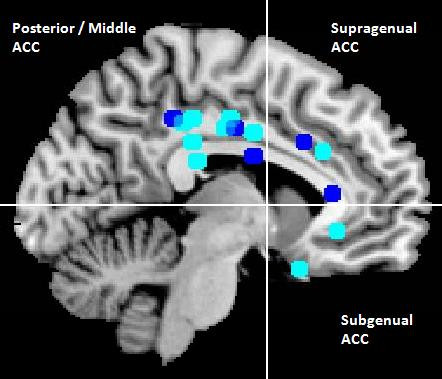
“While the subgenual ACC seems to be involved in the generation and recognition of emotional states, the supragenual/dorsal ACC seems to be crucial for emotion regulation [25,93,94].”
BackgroundThe distributed human neural system for face perception
Haxby, J. V., Hoffman, E. A., & Gobbini, M. I. (2000) · Trends in Cognitive Sciences · doi:10.1016/s1364-6613(00)01482-0 · Cited by 4,891 · cited 3×
“In a larger context these regions are hypothesized to be part of an extended emotional face processing system [20] Stuhrmann et al.”
BackgroundDeep Brain Stimulation for Treatment-Resistant Depression
Mayberg, H. S., Lozano, A. M., Voon, V., McNeely, H. E., Seminowicz, D., Hamani, C., Schwalb, J. M., & Kennedy, S. H. (2005) · Neuron · doi:10.1016/j.neuron.2005.02.014 · Cited by 4,059 · cited 1×
“Of particular concern in the pathophysiology of affective disorders is the role of the ACC [23,44].”
BackgroundFunctional neuroanatomy of emotion: A meta-analysis of emotion activation studies in PET and fMRI
Phan, K. L., Wager, T., Taylor, S. F., & Liberzon, I. (2002) · NeuroImage · doi:10.1006/nimg.2002.1087 · Cited by 3,502 · cited 1×
“The amygdala plays a pivotal role in emotion processing and in the perception and processing of emotional salience in facial expressions (for reviews see [52-54]).”
BackgroundContributions of anterior cingulate cortex to behaviour
Devinsky, O., Morrell, M. J., & Vogt, B. A. (1995) · Brain · doi:10.1093/brain/118.1.279 · Cited by 3,377 · cited 1×
“While the subgenual ACC seems to be involved in the generation and recognition of emotional states, the supragenual/dorsal ACC seems to be crucial for emotion regulation [25,93,94].”
BackgroundThe amygdala: vigilance and emotion
Davis, M., & Whalen, P. J. (2001) · Molecular Psychiatry · doi:10.1038/sj.mp.4000812 · Cited by 2,882 · cited 1×
“The amygdala plays a pivotal role in emotion processing and in the perception and processing of emotional salience in facial expressions (for reviews see [52-54]).”
BackgroundFunctional and effective connectivity in neuroimaging: a synthesis
Friston, K. J. (1994) · Human Brain Mapping · doi:10.1002/hbm.460020107 · Cited by 2,452 · cited 1×
“Connectivity analysis in functional neuroimaging can be subdivided into two general classes: functional connectivity (FC), which examines simple correlations between neural activity in two anatomically distinct brain areas; and effective connectivity (EC), which measures the directional influence that one neural syste…”
BackgroundCognition and Depression: Current Status and Future Directions
Gotlib, I. H., & Joormann, J. (2010) · Annual Review of Clinical Psychology · doi:10.1146/annurev.clinpsy.121208.131305 · Cited by 2,420 · cited 1×
“Finally, one should notice that facial processing is only one aspect of altered cognitive/emotional processing among several others in MDD described by behavioral (for review see [104]) and neuroimaging (for review see [7]) studies.”
BackgroundNeurobiology of emotion perception I: the neural basis of normal emotion perception
Phillips, M. L., Drevets, W. C., Rauch, S. L., & Lane, R. (2003) · Biological Psychiatry · doi:10.1016/s0006-3223(03)00168-9 · Cited by 2,173 · cited 1×
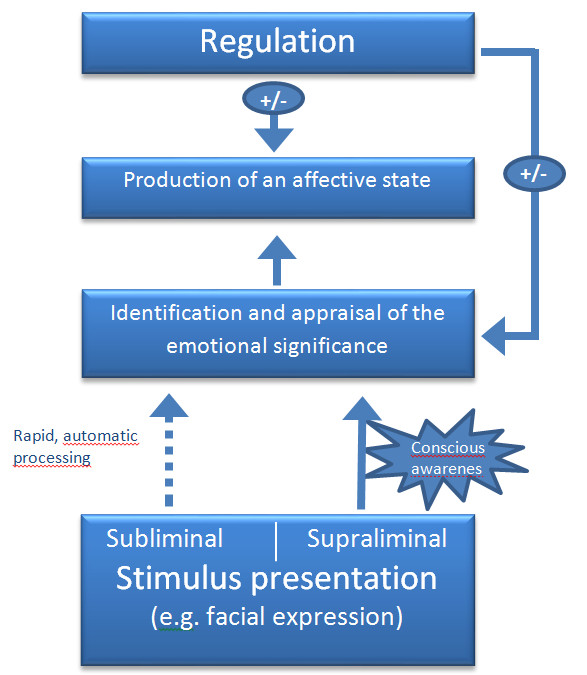
“[15], extended about separate pathways for stimulus presentation with or without conscious awareness.”
BackgroundCognitive vulnerability to emotional disorders
Mathews, A., & MacLeod, C. (2005) · Annual Review of Clinical Psychology · doi:10.1146/annurev.clinpsy.1.102803.143916 · Cited by 2,100 · cited 1×
“In a large body of behavioral studies, depression has been characterized by mood congruent emotion processing biases in different aspects of cognition [2-5].”
Background
Cited by
Items 401–436 of 436
A Meta-Analysis of fMRI Studies on Emotion Processing in Major Depressive Disorder
Morocco, M. (2020) · San José State University ScholarWorks (San Jose State University) · doi:10.31979/etd.jdd2-m4k3 · Cited by 2
Neuroimaging in Seasons and Winter Depression
Dajic, I., Praschak-Rieder, N., Lanzenberger, R. R., Spindelegger, C., Kasper, S. F., & Willeit, M. (2020) · Springer eBooks · doi:10.1007/978-3-030-57231-0_6
O papel moderador do sexo na relação entre acurácia da percepção de emoções e sintomas depressivos
Pinto, A. L. D. C. B., & da Silva-Filho, J. H. (2022) · Interação em Psicologia · doi:10.5380/riep.v26i1.75794
Neurobiologia del cervello sociale nei disturbi d'ansia e dell'umore - Mini-review
Porcelli, S. (2023) · QUADERNI DI PSICOTERAPIA COGNITIVA · doi:10.3280/qpc51-2022oa15181
Cognitive Neural Mechanism of Emotion Regulation in Depression Susceptible Groups
姚, 莉. (2023) · Advances in Psychology · doi:10.12677/ap.2023.135232
Ustyuzhanin, D. V., Rangus, S. R., Usmanova, I., Kazan (Volga Region) Federal Univesity. Kazan, R., Agliullina, A. A., Kazan (Volga Region) Federal Univesity. Kazan, R., Il'yasov, K. A., Kazan (Volga Region) Federal Univesity. Kazan, R., Prosvetov, А. O., & Фаридович, Б. Р. (2023) · Russian Electronic Journal of Radiology · doi:10.21569/2222-7415-2023-13-2-24-37
Buimer, E. E. L. (2023) · Utrecht University Repository (Utrecht University) · doi:10.33540/1936
Relation between Self-Focused Attention and Sensitivity to Distortions of Own Face
Bocharov, A. V., Savostyanov, A. N., Rudych, P. D., Сапрыгин, А. Е., Tamozhnikov, S. S., & Knyazev, G. G. (2024) · Experimental Psychology (Russia) · doi:10.17759/exppsy.2024170304
Thomas, C., Vats, G., Johnson, A., George, A., George, T. S., Cherian, R. K., Srivastava, P., & Yarra, C. (2024) · International Conference on Speech Database and Assessments · doi:10.1109/o-cocosda64382.2024.10800549 · Cited by 1
“Further, cross-cultural studies have highlighted differences in emotional perception across cultures, which suggests that cultural norms and values influence how emotions are experienced and interpreted [10] [11].”
Jassim, N., Hagan, C. C., Holt, R., Goodyer, I. M., & Suckling, J. (2025) · Psychiatry Research Neuroimaging · doi:10.1016/j.pscychresns.2025.112019
Wu, Y., Zhong, J., Yan, S., Zhang, S., Zhang, L., Yao, Z., Zhang, X., Wang, J., Chao, J., Hu, B., et al. (2025) · Information Sciences · doi:10.1016/j.ins.2025.122759
Zhang, L., Han, Y., Ding, Y., Li, T., Li, H., Liu, F., Li, P., Yuan, Y., Guo, W., & Ou, Y. (2025) · Psychiatry Research · doi:10.1016/j.psychres.2025.116901
Miskowiak, K. W., Ozenne, B., Kjærstad, H. L., Fisher, P. M., Beaman, E. E., Dam, V. H., Ysbæk-Nielsen, A. T., Knudsen, G. M., Kessing, L. V., Macoveanu, J., et al. (2025) · Neuropsychopharmacology · doi:10.1038/s41386-025-02291-0 · Cited by 1
Depression Detection from Multilingual Interviews Based on Textual and Audio Feature Fusion
Wang, M., & Jiang, D. (2025) · IEEE International Conference on Bioinformatics and Biomedicine (BIBM) · doi:10.1109/bibm66473.2025.11356969
“Recent researches have revealed significant differences in facial expressions, head movements, speech, and other aspects between depressed individuals and non-depressed ones [7]– [9].”
Negative affect interacts with perceptual affective biases
Murray, T., & Lawson, R. (2026) · Journal of Psychopharmacology · doi:10.1177/02698811251409143
“Low-level biases occur in early, automatic stages of processing, such as the perceptual encoding of emotional stimuli, and are thought to result from altered processing in visual processing regions and the amygdala (Stuhrmann et al., 2011).”
Multimodal EEG study of emotional face processing in major depressive disorder
Zhang, Y., Wang, D., Zhu, L., Cao, Z., Zheng, Y., Wang, L., & An, C. (2026) · Behavioural Brain Research · doi:10.1016/j.bbr.2026.116107
Scala, M., Dukart, J., Simone, G. D., Fanelli, G., Iturra, R. A., Bordignon, S., Fabbri, C., & Serretti, A. (2026) · Neuropsychobiology · doi:10.1159/000550903 · Cited by 1
“In MDD, attentional biases favor negative emotions, with amygdala hyperactivation and abnormal activity in the ACC and OFC [16–20].”
What is the relation between major depressive disorder and amygdala reactivity?
Hao, Y., Xu, C., Kweon, H., & Farah, M. J. (2026) · Journal of Affective Disorders · doi:10.1016/j.jad.2026.121602
Ma, Y., Zhou, Y., Fu, H., Lin, X., Huang, M., Zhang, Y., Li, Y., Liu, Y., Zhou, W., Chen, R., et al. (2026) · Annals of General Psychiatry · doi:10.1186/s12991-026-00655-4
“…functional connectivity between hippocampal/parahippocampal (vHC/PHG) and fusiform gyrus (FG) represents a novel finding, highlighting a critical neural circuit involved in both facial emotion processing and cognitive functions such as language comprehension and semantic integration [28, 43, 44].”
Neurobiological effects of microbial treatments within psychiatry: a systematic review
Sgarbossa, C., Forth, E., Squires, S. D., Groth, A., Farid, M., Gallant, K., Desai, D., Redfearn, W., & Milev, R. V. (2026) · Frontiers in Psychiatry · doi:10.3389/fpsyt.2026.1745964 · Cited by 2
“Previous work has documented that individuals with depression can exhibit hyperactivity in structures associated with the limbic system, such as the putamen region and amygdala (64).”
Neural Circuit Taxonomy and Precision Psychiatry in Major Depression
Yun, J., & Kim, Y. (2026) · Advances in experimental medicine and biology · doi:10.1007/978-981-95-6872-7_3
Faimann, P. G., Harrison, B. J., Davey, C. G., Steward, T., & Jamieson, A. J. (2026) · Biological Psychiatry Cognitive Neuroscience and Neuroimaging · doi:10.1016/j.bpsc.2026.05.010
Cui, B. H., & Bex, P. J. (2026) · bioRxiv (Cold Spring Harbor Laboratory) · doi:10.64898/2026.06.01.729421
Lee, S. W., Kim, S., Kim, H., Chang, Y., & Lee, S. J. (2026) · Brain Imaging and Behavior · doi:10.1007/s11682-026-01166-2
“These find - ings suggest that ACC dysfunction may contribute to biased emotional processing (Stuhrmann et al., 2011), impaired attentional shifting, and reduced reward sensitivity in depression.”
Ma, Y., Zhang, W., Hu, B., Yang, X., Qin, S., & Lin, X. (2026) · Behavioral Sciences · doi:10.3390/bs16071193
“…in FC involving two seed regions: significant group disparities emerged in FCs with seed regions in the right IOG (a core area for facial emotion processing; Fairhall & Ishai, 2007) and left PreCG (critical for facial perception and emotion recognition; Leshin et al., 2024; Stuhrmann et al., 2011).”
Bottaro, F., Enrico, P., Cabasino, C., Caprioli, F., Brambilla, P., & Delvecchio, G. (2026) · Journal of Affective Disorders · doi:10.1016/j.jad.2026.122287
Deep learning reveals a neurocomputational mechanism predicting depression risk in adolescents
Lu, H., Yan, X., Becker, B., Heinz, A., Sahakian, B. J., Langley, C., Zuo, Z., Cao, L., Zhang, Z., Robinson, L., et al. (2026) · Science Advances · doi:10.1126/sciadv.aed0772
“While association-based studies of the human brain have cataloged numerous neural correlates ( 5 ), the field suffers from a crucial bottleneck: the absence of mechanistically interpretable biomarkers that can predict individual risk ( 6 ).”
Emotional processing biases in the longitudinal course of major depressive disorder
Hierl, K., Wollweber, L., Lemke, H., Esser, L., Abati, C., Grotegerd, D., Dohm, K., Kraus, A., Leehr, E. J., Kjærstad, H. L., et al. (2026) · Journal of Affective Disorders · doi:10.1016/j.jad.2026.122362
Self-citationRelationship between attributional style and personality traits androle of gender differences
Saylık, R. (2017) · International Journal of Applied Business and Management Studies · doi:10.68099/ijabms.2017.248
Pfeiffer, P., Zavaliangos‐Petropulu, A., Taraku, B., Schneider, J., Norris, V., Kozikowski, S. D., Woods, R., Boucher, M., Jog, M., & Narr, K. L. (2026) · Biological Psychiatry Cognitive Neuroscience and Neuroimaging · doi:10.1016/j.bpsc.2026.09.014
Oxytocin selectively enhances the recognition of infant sadness in postpartum depression
van der Straaten, M., Mulders, P. C. R., Beijers, R., Tendolkar, I., Cima, M., & Riem, M. M. E. (2026) · Women s Health · doi:10.1177/17455057261499422
关慕贞, Wang, Z., Liu, N., Tang, N., Xie, Y., & Wang, H. (2026) · Journal of Psychiatric Research · doi:10.1016/j.jpsychires.2026.10.027
Disorders of social functioning
Votinov, M. (2026) · Elsevier eBooks · doi:10.1016/b978-0-443-34080-2.00013-5
A method of reducing model space for dynamic causal modelling
Whittaker, J. R. (2013) · Research Explorer (The University of Manchester)
Metadata
- Authors
- Stuhrmann, A., Suslow, T., & Dannlowski, U.
- Affiliations
- University of Münster (DE)
- Corresponding author
- Dannlowski, Udo
- Venue
- Biology of Mood & Anxiety Disorders
- Published
- 2011-11-07
- Volume
- 1
- Issue
- 1
- Pages
- 10-10
- ISSN
- 2045-5380 (ISSN-L)
- PMC
- PMC3384264
- OpenAlex
- W2139628377
- Cited by
- 440
- References
- 109
- Citations by year
- 2026: 23 · 2025: 24 · 2024: 33 · 2023: 32 · 2022: 23 · 2021: 42 · 2020: 27 · 2019: 37 · 2018: 30 · 2017: 26 · 2016: 33 · 2015: 38 · 2014: 38 · 2013: 29 · 2012: 4
- FWCI
- 1.95
- Type
- journal article
- Language
- en
- Open access
- hybrid
- doi.org
- Licence
- cc-by
- Locations
- Biology of Mood & Anxiety Disorders (publishedVersion, cc-by)
- Europe PMC (PubMed Central) (publishedVersion, cc-by)
- PubMed Central (publishedVersion, cc-by)
- PubMed (publishedVersion)
- Topics
- Life Sciences › Neuroscience › Cognitive Neuroscience › Face Recognition and Perception
- Life Sciences › Neuroscience › Cognitive Neuroscience › Neural and Behavioral Psychology Studies
- Social Sciences › Psychology › Experimental and Cognitive Psychology › Anxiety, Depression, Psychometrics, Treatment, Cognitive Processes
- Keywords
- major depressive disorder, emotional face processing, amygdala, insula, parahippocampal gyrus, fusiform face area, putamen, cingulate gyrus, orbitofrontal cortex, functional connectivity, brain activation patterns
About these checks
Registry, retraction, Cites and statistics results are computed, not judged, with one exception: a printed reference that no index lists is read once by a model before it counts as a citation error. Claims are extracted by a model and kept only when their quote appears verbatim in the text; each cited source is then checked, with a model’s help, for whether it says what the claim relies on. Those verdicts can be wrong — read the claim’s quote and the cited source before relying on one.
Statistics and arithmetic are recomputed, not judged.
Confidence bands are shown only for fields calibrated on our annotated test set. None is calibrated yet, so no band is shown.
What counts as a claim ›How we measure confidence ›How we check this ›
Are you an author, or do you see a problem with this page? Request a review
Data sources
Bibliographic data: Semantic Scholar, OpenAlex, Crossref.
Contains information from the Semantic Scholar Academic Graph Datasets, made available under the ODC Attribution License (ODC-BY 1.0).
Semantic Scholar’s data is described in: Kinney, R., et al. (2023). The Semantic Scholar Open Data Platform. arXiv:2301.10140.
