

The effect of moderate gestational alcohol consumption during pregnancy on speech and language outcomes in children: a systematic review
Open accessThe DOI matches its Crossref record; 30 of the 31 references it cites were found in a registry or an index; 1 of the 20 sources its claims cite were checked for support.
Abstract
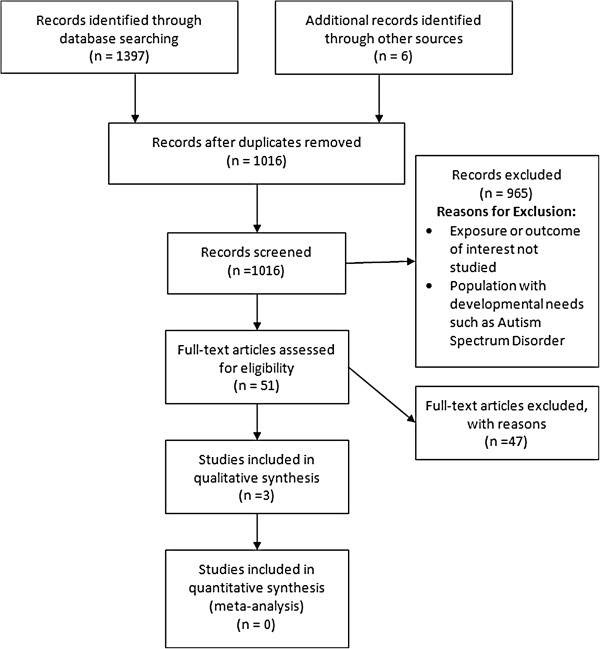
BACKGROUND: Consensus has not been reached on safe alcohol consumption recommendations during pregnancy. The National Institutes for Care and Health Excellence (NICE) in the UK suggest that one to two drinks not more than twice per week is safe. However, the speech and language effects of even low levels of alcohol use among offspring are unknown. The aim of this study was to review systematically the evidence on studies of the effect of low to moderate levels of alcohol consumption during pregnancy (up to 70 grams of alcohol per week) compared to abstinence on speech and language outcomes in children. METHODS: Using medical subject headings, PubMed, Web of knowledge, Scopus, Embase, Cinahl and the Cochrane Library were searched from their inception up to March 2012. Case control and cohort studies were included. Two assessors independently reviewed titles, abstracts and full articles, extracted data and assessed quality. RESULTS: A total of 1,397 titles and abstracts were reviewed of which 51 full texts were retrieved. Three cohort studies totaling 10,642 women met the inclusion criteria. All three studies, (United States (2) and Australia (1)) indicated that language was not impaired as a result of low to moderate alcohol consumption during pregnancy. Two studies were judged to be of low quality based on a six-item bias classification tool. Due to heterogeneity, results could not be meta-analyzed. CONCLUSION: Studies included in this review do not provide sufficient evidence to confirm or refute an association between low to moderate alcohol use during pregnancy and speech and language outcomes in children. High quality, population based studies are required to establish the safety of low to moderate levels of alcohol use such as those set out by the NICE guidelines in the UK.
Overview
CoChat Summary
## TL;DR
This systematic review found only 3 cohort studies (10,642 women total) on low-to-moderate alcohol use in pregnancy and speech/language outcomes in children. Across those studies, the authors found no clear evidence of impaired language, but the evidence was too limited and heterogeneous to confirm or refute safety.
## Key findings
- The search screened 1,397 titles/abstracts, retrieved 51 full texts, and included 3 cohort studies totaling 10,642 women.
- All 3 studies (from the United States (2) and Australia (1)) indicated that language was not impaired by low-to-moderate alcohol consumption during pregnancy.
- In the Australian cohort, the odds of language delay were 0.97 for first-trimester low drinking, 0.87 for second trimester, and 0.84 for third trimester; all confidence intervals crossed 1 and were not statistically significant.
- In the U.S. cohort by Faden and Graubard, there was no dose–response relationship between mean drinks per day and the 7-item language scale; in Greene et al., significant differences in expressive and receptive language at 1, 2, and 3 years were not evident across the alcohol exposure levels reported.
## Methods
- Systematic review of case-control and cohort studies published in English in peer-reviewed journals up to 1 March 2012, comparing low/moderate prenatal alcohol exposure (defined as <10 g/day or 70 g/week) with abstinence.
- Searched Embase, PubMed, CINAHL, Scopus, Web of Knowledge, and the Cochrane Library from inception; also hand-searched reference lists and contacted authors for additional information.
- Two assessors independently screened, extracted data, and assessed study quality using a six-bias tool; meta-analysis was not performed because of heterogeneity.
## Limitations
- The paper states that the evidence base was very small: only 3 studies, and 2 were judged low quality; the authors conclude there is insufficient evidence to confirm or refute an association.
- Attrition bias was present in all 3 studies, and the review also notes selection, confounding, and analytic bias; these likely reduced validity.
- Evident from the text: studies were heterogeneous in exposure measurement, outcome measures, timing, and populations, which prevented meta-analysis and makes the overall inference uncertain.
Model-written summary. Check it against the paper before relying on it.
Integrity signals
Registry
Cites
Statistics
Figures
Verification
Claims the paper makes
1 Valid · 0 Not valid · 19 Not checked · 17 Own results and interpretations
Every source the paper cites for this claim was checked and supports it.
In the paper
“magnetic resonance imaging (MRI) studies have shown that prenatal alcohol exposure can impact on many areas of the brain involved in speech and language development, including the corpus collosum [22].”
§ The effect of moderate gestational alcohol consumption during pregnancy on speech and language outcomes in children: a systematic review > Background
What the sources say
- Supportedcites [22] Lebel C Roussotte F Sowell ER Imaging the impact of prenatal alcohol exposure on the structure of the developing human brain Neuropsychol Rev 2011 21 102 118 10.1007/s11065-011-9163-0 21369875 PMC3098972 source
The Abstract (p. 1) states that the review covers structural MRI studies showing effects of prenatal alcohol exposure that are 'widespread, affecting almost the entire brain,' with malformations of the corpus callosum among the most common findings, and Regional Abnormalities names the corpus callosum and frontal lobes as the most significantly affected. The Brain-Behavior Relationships section links several of these affected regions to verbal/language function (callosal displacement and verbal learning, hippocampal volume and verbal recall, frontal cortical thickness and CVLT performance), supporting the citing sentence's characterisation of the impacted areas as speech- and language-related. The 'speech and language development' framing is the citing authors' own gloss, but the substance of the attribution is in our copy. (LLM, conf=0.85)
plainstates a possible cause- Asserted: passes — The authors put it forward as true.
- Checkable: passes — It can be checked against evidence.
- Load-bearing: unclear — It is unclear whether the paper’s conclusions depend on it.
- Based: passes — The paper gives a reason why it holds.
- Supported
None of the sources cited for this claim have been checked yet.
In the paper
“All three studies, (United States (2) and Australia (1)) indicated that language was not impaired as a result of low to moderate alcohol consumption during pregnancy.”
- Also stated in: § Discussion · plain
“Poorer language development was not observed in infants exposed to low or moderate alcohol levels [30,31] or was not associated with mean number of drinks per day [29].”
§ The effect of moderate gestational alcohol consumption during pregnancy on speech and language outcomes in children: a systematic review > Abstract > Results
plain- Asserted: passes — The authors put it forward as true.
- Checkable: passes — It can be checked against evidence.
- Load-bearing: passes — The paper’s conclusions depend on it.
- Based: passes — The paper gives a reason why it holds.
- Also stated in: § Discussion · plain
None of the sources cited for this claim have been checked yet.
In the paper
“while analytic bias, though present in both Faden and Graubard [29] and Greene et al. [31], was relatively low.”
§ The effect of moderate gestational alcohol consumption during pregnancy on speech and language outcomes in children: a systematic review > Results > Quality assessment
What the sources say
- Not checked yetcites [29] Faden VB Graubard BI Maternal substance use during pregnancy and developmental outcome at age three J Subst Abuse 2000 12 329 340 10.1016/S0899-3289(01)00052-9 11452837 source
- Not checked yetcites [31] Greene T Ernhart CB Martier S Sokol R Ager J Prenatal alcohol exposure and language development Alcohol Clin Exp Res 1990 14 937 945 10.1111/j.1530-0277.1990.tb01842.x 2088132 source
plain- Asserted: passes — The authors put it forward as true.
- Checkable: passes — It can be checked against evidence.
- Load-bearing: unclear — It is unclear whether the paper’s conclusions depend on it.
- Based: passes — The paper gives a reason why it holds.
A result the paper reports from its own data — it cites no other source for it, so there is none to check. The quote shows it is in the paper.
In the paper
“In addition, selection, confounding and analytic bias were also present.”
§ The effect of moderate gestational alcohol consumption during pregnancy on speech and language outcomes in children: a systematic review > Results > Quality assessment
plain- Asserted: passes — The authors put it forward as true.
- Checkable: passes — It can be checked against evidence.
- Load-bearing: passes — The paper’s conclusions depend on it.
- Based: passes — The paper gives a reason why it holds.
A result the paper reports from its own data — it cites no other source for it, so there is none to check. The quote shows it is in the paper.
In the paper
“Three cohort studies were included, totaling 10,642 women.”
§ The effect of moderate gestational alcohol consumption during pregnancy on speech and language outcomes in children: a systematic review > Results > Search results
plainn = 10,642- Asserted: passes — The authors put it forward as true.
- Checkable: passes — It can be checked against evidence.
- Load-bearing: unclear — It is unclear whether the paper’s conclusions depend on it.
- Based: passes — The paper gives a reason why it holds.
12 more claims
Create a free account to see all 37 claims and to verify the 19 references still open.
- It may state two separate claims as one. 14
- Probably not a substantial claim. 9
Claims other papers make about this one
Each is checked against this paper’s own text: does it say what the citing paper says it does?
In the citing paper
“Clinical trial registries are a critical source of information for systematic reviewers who use these registries to augment bibliographic database searches when compiling relevant evidence from clinical trials [17–19].”
From A systematic review of the processes used to link clinical trial registrations to their published results (2017) · cites this paper as [17]
In the citing paper
“Prognostic research is of high value as it provides clinicians and patients with information regarding the course of a disease and potential outcomes, in addition to potentially providing useful information to deliver targeted therapy relating to specific prognostic factors [20, 34, 35].”
From What kind of systematic review should I conduct? A proposed typology and guidance for systematic reviewers in the medical and health sciences (2018) · cites this paper as [20]
In the citing paper
“Prognostic reviews are complex and methodology for these types of reviews is still under development, although a Cochrane methods group exists to support this approach [20].”
From What kind of systematic review should I conduct? A proposed typology and guidance for systematic reviewers in the medical and health sciences (2018) · cites this paper as [20]
Self-check
Percentages, sums and reported differences re-computed from the paper’s own numbers.
Each contradiction between two passages listed here was confirmed by an independent check.
Rated minor: it would not touch a result — a value no result rests on, a p-value that stays on the same side of the significance level, or a conflict that is clerical, resolved elsewhere in the paper, or outside its own findings.
In the paper
§ The effect of moderate gestational alcohol consumption during pregnancy on speech and language outcomes in children: a systematic review > Abstract > Background
“The National Institutes for Care and Health Excellence (NICE) in the UK suggest that one to two drinks not more than twice per week is safe.”
§ The effect of moderate gestational alcohol consumption during pregnancy on speech and language outcomes in children: a systematic review > Background
“However, the National Institute for Health and Care Excellence in the United Kingdom suggest that one to two units not more than once or twice per week is safe [27].”
Citations
Cites
May, P. A., Gossage, J. P., Kalberg, W. O., Robinson, L. K., Buckley, D., Manning, M., & Hoyme, H. E. (2009) · Developmental Disabilities Research Reviews · doi:10.1002/ddrr.68 · Cited by 906 · cited 1×
“Speech and language impairments are often one of the key features of neurologic damage in children with diagnoses of Fetal Alcohol Spectrum Disorders (FASD) which are as high as 5% in some regions of the United States and Europe [6-8].”
Fetal Alcohol Spectrum Disorders: Neuropsychological and Behavioral Features
Mattson, S. N., Crocker, N., & Nguyen, T. T. (2011) · Neuropsychology Review · doi:10.1007/s11065-011-9167-9 · Cited by 616 · cited 1×
“Speech and language impairments are often one of the key features of neurologic damage in children with diagnoses of Fetal Alcohol Spectrum Disorders (FASD) which are as high as 5% in some regions of the United States and Europe [6-8].”
Patra, J., Bakker, R., Irving, H., Jaddoe, V., Malini, S., & Rehm, J. (2011) · BJOG: An International Journal of Obstetrics & Gynaecology · doi:10.1111/j.1471-0528.2011.03050.x · Cited by 555 · cited 2×
“However, while the impact of alcohol consumption during pregnancy on birth outcomes [9], mental development [10] and neuropsychological outcomes [11] is well investigated, the effect of alcohol consumption during pregnancy on speech and language development especially at lower or moderate levels is unknown [12].”
Systematic review of effects of low–moderate prenatal alcohol exposure on pregnancy outcome
Henderson, J., Gray, R., & Brocklehurst, P. (2007) · BJOG: An International Journal of Obstetrics & Gynaecology · doi:10.1111/j.1471-0528.2006.01163.x · Cited by 461 · cited 1×
“Recent reviews have suggested that moderate drinking may not be harmful to birth weight, length of gestation or size for gestational age [9,21].”
McDonald, S. D., Han, Z., Mulla, S., Murphy, K. E., Beyene, J., & Ohlsson, A. (2009) · European Journal of Obstetrics & Gynecology and Reproductive Biology · doi:10.1016/j.ejogrb.2009.05.035 · Cited by 435 · cited 1×
“The quality of included studies was assessed by evaluating six types of bias to include a rapid assessment of selection, exposure, outcome, confounding, analytical and attrition biases (Table 3) developed by McDonald and colleagues [32] (see Additional file 2).”
Nelson, H. D., Nygren, P., Walker, M., & Panoscha, R. (2006) · Pediatrics · doi:10.1542/peds.2005-1467 · Cited by 427 · cited 1×
“Speech and language development is known to be an important overall developmental milestone in children and early speech and language delays can result in poorer educational outcomes and longer term adverse cognitive and behavioral outcomes throughout the life course [2].”
Jacobson, S. W., Chiodo, L. M., Sokol, R. J., & Jacobson, J. L. (2002) · Pediatrics · doi:10.1542/peds.109.5.815 · Cited by 375 · cited 1×
“[31] are shown to yield more valid information when examining neurodevelopmental outcomes [33].”
Flak, A. L., Su, S., Bertrand, J., Denny, C. H., Kesmodel, U. S., & Cogswell, M. E. (2014) · Alcoholism: Clinical and Experimental Research · doi:10.1111/acer.12214 · Cited by 352 · cited 1×
“However, while the impact of alcohol consumption during pregnancy on birth outcomes [9], mental development [10] and neuropsychological outcomes [11] is well investigated, the effect of alcohol consumption during pregnancy on speech and language development especially at lower or moderate levels is unknown [12].”
Screening for speech and language delay: a systematic review of the literature.
Law, Boyle, Harris, Harkness, & Nye (1998) · Health Technology Assessment · doi:10.3310/hta2090 · Cited by 319 · cited 1×
“Speech and language delays in infants and children occur when speech and language abilities are below that expected for a child’s chronological age, while still following the expected developmental sequence [1].”
Imaging the Impact of Prenatal Alcohol Exposure on the Structure of the Developing Human Brain
Lebel, C., Roussotte, F., & Sowell, E. R. (2011) · Neuropsychology Review · doi:10.1007/s11065-011-9163-0 · Cited by 290 · cited 2×
“MRI studies have shown that prenatal alcohol exposure can impact upon a number of regions of the brain involved in verbal communication development, such as the corpus collosum, by displacing it, producing shape variability or reducing volume, area and length [22].”
Research works printed but not linked: 3
- Royal College of Obstetricians and Gynecologists Alcohol consumption and the outcomes of pregnancy (RCOG Statement No 5) 2006 http://www.rcog.org.uk/womens-health/clinical-guidance/alcohol-consumption-and-outcomes-pregnancy
- Ministry of Health Alcohol and Pregnancy: A Practical Guide for Health Professionals 2010 Wellington: Ministry of Health
- National Institute for Care and Clinical Excellence (NICE) Antenatal Care: Routine Care for Healthy Pregnant Women: NICE Clinical Guidelines 62 2008
Cited by
Items 101–190 of 190
Uwamahoro, N. S., McRae, D. N., Zibrowski, E. M., Victor-Uadiale, I., Gilmore, B., Bergen, N., & Muhajarine, N. (2022) · BMJ Global Health · doi:10.1136/bmjgh-2022-009605 · Cited by 21
A quality improvement initiative to optimize dosing of surgical antimicrobial prophylaxis
Caruso, T. J., Wang, E., Schwenk, H. T., Scheinker, D., Yeverino, C., Tweedy, M., Maheru, M., & Sharek, P. J. (2017) · Pediatric Anesthesia · doi:10.1111/pan.13137 · Cited by 18
van den Heuvel, L. L., Wright, S. L., Suliman, S., Stalder, T., Kirschbaum, C., & Seedat, S. (2019) · Systematic Reviews · doi:10.1186/s13643-018-0936-x · Cited by 17
ADAPTED SERVQUAL: A Health Service Quality Scale Incorporating Indicators of Sanitation and Hygiene
Asiamah, N., Opuni, F. F., Aggrey, M., & Adu-Gyamfi, K. (2020) · Quality Management in Health Care · doi:10.1097/qmh.0000000000000269 · Cited by 17
Zhang, S., Li, Y., Ren, S., & Liu, T. (2021) · Current Psychology · doi:10.1007/s12144-021-01629-3 · Cited by 19
González‐Sáiz, F., Lozano, O. M., Trujols, J., Alcaraz, S., Siñol, N., & Cobos, J. P. D. L. (2017) · Drug and Alcohol Dependence · doi:10.1016/j.drugalcdep.2017.10.035 · Cited by 17
Modafinil for people with schizophrenia or related disorders
Ortiz‐Orendain, J., Covarrubias-Castillo, S. A., Vázquez‐Álvarez, A. O., Castiello, S., Quiñones, G. E. A., Seegers, M., & Colunga‐Lozano, L. E. (2019) · Cochrane Database of Systematic Reviews · doi:10.1002/14651858.cd008661.pub2 · Cited by 21
Newhouse, R. P., Janney, M. A., Gilbert, A., Agley, J. D., Bakoyannis, G., Ferren, M. D., Mullins, C. D., Johantgen, M., Schwindt, R. G., & Thoele, K. (2018) · Addiction Science & Clinical Practice · doi:10.1186/s13722-018-0130-4 · Cited by 17
Current management of adults receiving oral anti-cancer medications: A scoping review
Richmond, J. P., Kelly, M. G., Johnston, A., Murphy, P. J., & Murphy, A. W. (2021) · European Journal of Oncology Nursing · doi:10.1016/j.ejon.2021.102015 · Cited by 16
Kippin, N. R., Leitão, S., Watkins, R. E., & Finlay‐jones, A. L. (2021) · International Journal of Language & Communication Disorders · doi:10.1111/1460-6984.12644 · Cited by 15
“A further two systematic reviews specifically focused on PAE and communication skills among infants and young children, but are equivocal in their findings as to whether PAE, at varying levels, is associated with weaker communication outcomes (Hendricks et al. 2019, O’Keeffe et al. 2014).”
BackgroundLi, Z., Dawson, E., Moodie, J., Martin, J. E., Bagur, R., Cheng, D., Kiaii, B. B., & John‐Baptiste, A. (2019) · BMJ Open · doi:10.1136/bmjopen-2018-024163 · Cited by 15
Fuentes, J., Armijo-Olivo, S. L., da Costa, B. R., Ha, C., Saltaji, H., Arenti, C., Négrini, S., & Cummings, G. G. (2020) · American Journal of Physical Medicine & Rehabilitation · doi:10.1097/phm.0000000000001444 · Cited by 14
Pallin, N. D., Webb, J., Brown, L., Woznitza, N., Stewart-Lord, A., Charlesworth, L., Beeken, R. J., & Fisher, A. (2021) · Radiography · doi:10.1016/j.radi.2021.09.004 · Cited by 15
Bath Salt-Induced Psychosis: Nursing Assessment, Diagnosis, Treatment, and Outcomes
Stiles, B. M., Fish, A. F., Cook, C. A. L., & Silva, V. (2015) · Perspectives In Psychiatric Care · doi:10.1111/ppc.12101 · Cited by 14
Goffe, L., Hillier-Brown, F. C., Doherty, A., Wrieden, W. L., Lake, A. A., Araújo‐Soares, V., Summerbell, C., White, M., Adamson, A., & Adams, J. (2016) · International Journal of Behavioral Nutrition and Physical Activity · doi:10.1186/s12966-016-0429-z · Cited by 13
A Conditional Approach to Measure Mortality Reductions Due to Cancer Screening
Liu, Z. A., Hanley, J. A., Saarela, O., & Dendukuri, N. (2015) · International Statistical Review · doi:10.1111/insr.12088 · Cited by 13
Zielinski, L., Bhatt, M., Eisen, R. B., Perera, S., Bhatnagar, N., MacKillop, J. M., Steiner, M. S., Vaz, S. M., Thabane, L., & Samaan, Z. (2016) · Systematic Reviews · doi:10.1186/s13643-016-0317-2 · Cited by 14
McDonald, B. W., & Watson, P. E. (2020) · Nordic Studies on Alcohol and Drugs · doi:10.1177/1455072520905404 · Cited by 13
Coren, F., Brown, M. K., Ikeda, D. J., Tietz, D., Steinbock, C., Baim‐Lance, A. M., & Agins, B. (2021) · International Journal for Quality in Health Care · doi:10.1093/intqhc/mzab004 · Cited by 12
Domains of quality for clinical ethics case consultation: a mixed-method systematic review
Leslie, L., Cherry, R. F., Mulla, A., Abbott, J., Furfari, K., Glover, J. J., Harnke, B., & Wynia, M. K. (2016) · Systematic Reviews · doi:10.1186/s13643-016-0273-x · Cited by 13
Rajabiun, S., Cabral, H., Chen, C. A., Lloyd-Travaglini, C. A., Dugas, J. N., Amburgey, D., Fitzgerald, M., Lemon, S. C., Haas, J. S., Freund, K. M., et al. (2025) · Cancer · doi:10.1002/cncr.35671 · Cited by 10
Don’t Invite Everyone! Training Variables Impacting the Effectiveness of QPR Trainings
Peterson, A. L., Monahan, M. F., Bender, A. M., Gryglewicz, K., & Karver, M. S. (2020) · Administration and Policy in Mental Health and Mental Health Services Research · doi:10.1007/s10488-020-01078-3 · Cited by 13
Simón-Siles, S., Font-Farré, M., Guerra-Balic, M., Nishishinya-Aquino, M. B., & Oviedo, G. R. (2022) · BMJ Open · doi:10.1136/bmjopen-2021-058053 · Cited by 16
MBL2 gene polymorphisms in HHV-8 infection in people living with HIV/AIDS
de Morais, V. M. S., de Lima, E. L. S., Cahú, G. G. D. O. M., Lopes, T. R. R., Gonçales, J. P., Muniz, M. T. C., & Coêlho, M. R. C. D. (2018) · Retrovirology · doi:10.1186/s12977-018-0456-8 · Cited by 10
Olthof, M. I. A., Blankers, M., van Laar, M., & Goudriaan, A. E. (2021) · Trials · doi:10.1186/s13063-020-04962-3 · Cited by 12
Ell, K., Aranda, M., Wu, S., Oh, H., Lee, P.-J., & Guterman, J. J. (2015) · Contemporary Clinical Trials · doi:10.1016/j.cct.2015.11.012 · Cited by 10
What can be done to lessen morbidity associated with fetal alcohol spectrum disorders?
Mukherjee, R., Cook, P. A., Fleming, K. M., & Norgate, S. (2016) · Archives of Disease in Childhood · doi:10.1136/archdischild-2016-310822 · Cited by 11
Akhnif, E. H., Belmadani, A., Mataria, A., & Bigdeli, M. (2024) · Health Economics Review · doi:10.1186/s13561-024-00501-x · Cited by 9
Munye, T., Asferie, W. N., Ejigu, N., Birhane, B. M., Tiruneh, Y. M., Kassaw, A., Asnakew, S., Legas, G., Munie, B. M., Belay, B. M., et al. (2024) · BMJ Open · doi:10.1136/bmjopen-2024-087569 · Cited by 9
Psychological interventions for adults who are overweight or obese
Brennan, L., Murphy, K. D., Garcia, X. D. L. P., Ellis, M. E., Metzendorf, M., & McKenzie, J. E. (2016) · Cochrane Database of Systematic Reviews · doi:10.1002/14651858.cd012114 · Cited by 9
RetractedModified dietary fat intake for treatment of gallstone disease
Madden, A. M., Trivedi, D. P., Smeeton, N., & Culkin, A. (2017) · Cochrane Database of Systematic Reviews · doi:10.1002/14651858.cd012608 · Cited by 9
Harris, K., Mosler, G., & Grigg, J. (2019) · BMJ Open · doi:10.1136/bmjopen-2018-025867 · Cited by 12
Hulshof, T. A., Zuidema, S. U., van Meer, P. J. K., Wied, C. C. G., & Luijendijk, H. J. (2018) · International Journal of Methods in Psychiatric Research · doi:10.1002/mpr.1757 · Cited by 9
Harel, D., Levis, B., Sun, Y., Fischer, F. H., Ioannidis, J. P. A., Cuijpers, P. J., Patten, S. B., Ziegelstein, R. C., Markham, S., Benedetti, A., et al. (2021) · Methods · doi:10.1016/j.ymeth.2021.11.005 · Cited by 8
The Added Value of Configurational Meta‐analyses
Veri, F., & Barrowman, H. (2021) · Swiss Political Science Review · doi:10.1111/spsr.12485 · Cited by 8
Integrative review protocol for Indigenous youth participation in health equity promotion
Morton, D., Linton, J., & Hatala, A. R. (2022) · BMJ Open · doi:10.1136/bmjopen-2021-055568 · Cited by 10
Technological Advances in Nursing Care Delivery
Sullivan, D. (2015) · Nursing Clinics of North America · doi:10.1016/j.cnur.2015.07.005 · Cited by 9
Constructing and evaluating a master surgery schedule using a service-level approach
Deklerck, L., Akbarzadeh, B., & Maenhout, B. (2021) · Operational Research · doi:10.1007/s12351-021-00677-8 · Cited by 7
Mitigating workplace adversity through employee resilience
Douglas, S. K. (2020) · Strategic HR Review · doi:10.1108/shr-06-2020-0063 · Cited by 10
Sahker, E., Sakata, M., Toyomoto, R., Hwang, C., Yoshida, K., Luo, Y., Watanabe, N., & Furukawa, T. A. (2020) · BMJ Open · doi:10.1136/bmjopen-2019-036633 · Cited by 8
Davis, A. M., Darden, P. M., Snowden, J. N., Simon, A. E., McCulloh, R. J., Bimali, M., & Lee, J. Y. (2021) · Contemporary Clinical Trials · doi:10.1016/j.cct.2021.106476 · Cited by 8
Gómez-Escobar, L. G., Mora-Ochoa, H., Villanueva, A. V., Spineli, L. M., Sanclemente, G., Couban, R., García, E., Chapman, E., & Yepes-Núñez, J. J. (2020) · Systematic Reviews · doi:10.1186/s13643-020-01472-w · Cited by 6
Júnior, F. J. G. D. S., Silva, K. D. H. E., Sales, J. C. E. S., Costa, A. P. C., & Monteiro, C. F. D. S. (2021) · Interface - Comunicação Saúde Educação · doi:10.1590/interface.200386 · Cited by 6
Wambui, J., Karuri, E. G., Ojiambo, J. A., & Njage, P. M. K. (2016) · World Mycotoxin Journal · doi:10.3920/wmj2016.2109 · Cited by 6
Mannose-binding lectin concentrations in people living with HIV/AIDS infected by HHV-8
de Morais, V. M. S., Gonçales, J. P., Cahú, G. G. D. O. M., Tozetto‐Mendoza, T. R., & Coêlho, M. R. C. D. (2019) · BMC Immunology · doi:10.1186/s12865-018-0284-6 · Cited by 6
Instruments to assess the patient comfort during hospitalization: a psychometric review protocol
Lorente, S., Vives, J., & Losilla, J.-M. (2016) · Journal of Advanced Nursing · doi:10.1111/jan.13180 · Cited by 6
Post-transplant Psychosocial and Mental Health Care of the Liver Recipient
DiMartini, A. F., Golden, E., Matz, A., Dew, M. A., & Crone, C. C. (2018) · Springer eBooks · doi:10.1007/978-3-319-94914-7_15 · Cited by 9
Is ‘a little’ too much?: An exploration of women’s beliefs about alcohol use during pregnancy
Fletcher, T. M. D., Mullan, B. A., Novoradovskaya, E., & Finlay‐jones, A. L. (2021) · Psychology and Health · doi:10.1080/08870446.2021.1991342 · Cited by 6
“For example, while some evidence syntheses have found no effects of low-to-moderate prenatal alcohol exposure on speech and language outcomes (O’Keeffe et al., 2014) or preterm birth (Strandberg-Larsen et al., 2017) others have found that low-to-moderate prenatal alcohol exposure is associated with…”
BackgroundSherborne, V., Ejegi‐Memeh, S., Tod, A., Taylor, B. H., Hargreaves, S., & Gardiner, C. (2024) · BMJ Open · doi:10.1136/bmjopen-2023-075071 · Cited by 6
Fluoxetine for adult overweight or obese people
Meléndez, G., Serralde-Zúñiga, A. E., Garay, A. G. G., Rodríguez‐Carmona, Y., & Galicia, C. S. (2015) · Cochrane Database of Systematic Reviews · doi:10.1002/14651858.cd011688 · Cited by 5
Development and feasibility testing of the Pediatric Emergency Discharge Interaction Coding Scheme
Curran, J., Taylor, A., Chorney, J. M. L., Porter, S. C., Murphy, A. L., MacPhee, S., Bishop, A., & Haworth, R. (2017) · Health Expectations · doi:10.1111/hex.12512 · Cited by 5
A methodological review of patient healthcare-seeking journeys from symptom onset to receipt of care
Omenka, C. O., Sassi, A., Vasquez, N. A., Rana, N., Essar, M. Y., Ku, D., Diploma, H., Huria, L., Saqib, K., Das, R., et al. (2025) · BMJ Global Health · doi:10.1136/bmjgh-2024-016978 · Cited by 8
High-precision information retrieval for rapid clinical guideline updates
Borchert, F., Wullenweber, P., Oeser, A., Kreuzberger, N., Karge, T., Langer, T. G., Skoetz, N., Wieler, L. H., Schapranow, M.-P., & Arnrich, B. (2025) · npj Digital Medicine · doi:10.1038/s41746-025-01648-5 · Cited by 11
Chan, L. S., Macdonald, M. E., Carnevale, F. A., Steele, R. J., & Shrier, I. (2017) · Research Synthesis Methods · doi:10.1002/jrsm.1258 · Cited by 6
Evaluation of the InterRAI Early Years for Degree of Preterm Birth and Gross Motor Delay
Iantosca, J. A. M., & Stewart, S. L. (2022) · Frontiers in Psychology · doi:10.3389/fpsyg.2022.788290 · Cited by 5
DeRoo, L. A. (2014) · Norsk Epidemiologi · doi:10.5324/nje.v24i1-2.1817 · Cited by 5
Kim, T., Tian, Z., Liao, X., & Robinson, N. (2021) · European Journal of Integrative Medicine · doi:10.1016/j.eujim.2021.101605 · Cited by 4
Text messaging between clinicians and patients – Hve we got thngs unda cntrl?
Muller, M. D., Moyes, S. A., & Fulcher, M. L. (2016) · Journal of Primary Health Care · doi:10.1071/hc15061 · Cited by 3
Mobile phone text messaging for the prevention of sexually transmitted infections
Noura, M., Rahmani, A., Jahanfar, S., & Ellis, U. M. (2019) · Cochrane Database of Systematic Reviews · doi:10.1002/14651858.cd013454 · Cited by 3
Tulevien vanhempien alkoholinkäyttö raskausaikana
Komulainen, J., Lepistö, S., Helminen, M., Kylmä, J., & Paavilainen, E. (2017) · Sosiaalilääketieteellinen Aikakauslehti · doi:10.23990/sa.67756 · Cited by 9
Sung, S.-H., Sim, H.-J., Kim, E.-G., Sung, A. D., Park, J.-Y., Shin, B., Park, M.-J., Han, C.-H., & Park, J.-K. (2018) · Evidence-based Complementary and Alternative Medicine · doi:10.1155/2018/3987019 · Cited by 2
Computerized integer programming method: menu scheduling for critical illness patients
Lee, O. A., Sufahani, S. F., Wahab, M. H. A., Idrus, S. Z. S., Surono, S., & Ahmad, A. (2020) · IOP Conference Series Materials Science and Engineering · doi:10.1088/1757-899x/917/1/012057 · Cited by 3
Mulberry therapy for type 2 diabetes mellitus
ANDRADE, J. F. D., Silva, V., & Melnik, T. (2015) · Cochrane Database of Systematic Reviews · doi:10.1002/14651858.cd011697 · Cited by 2
RetractedApplying artificial intelligence in the science & technology cycle
Weber, R. O. (2019) · Information Services & Use · doi:10.3233/isu-190062 · Cited by 8
Zeng, X., Liao, Y., Wu, X., Xu, J., Da, C., Tan, Z., Feng, F., Yin, W., Wang, D., & Hu, X. (2020) · Trials · doi:10.1186/s13063-020-04452-6 · Cited by 2
Shorey, S., Ng, E. D., Law, E. C., Wong, J. C., Loke, K. Y., & Tam, W. (2021) · Cochrane Database of Systematic Reviews · doi:10.1002/14651858.cd013858 · Cited by 2
RetractedMadlala, S. S., Mabhida, S. E., & Hill, J. (2026) · BMJ Open · doi:10.1136/bmjopen-2025-111713 · Cited by 1
Odedra, R., Averill, P., Nijman, R., Wiemker, V., Hariharan, B., & Mayer, E. K. (2026) · Emergency Medicine Journal · doi:10.1136/emermed-2025-215617 · Cited by 1
Minimally invasive surgery (robotic or laparoscopic) versus laparotomy for advanced ovarian cancer
Uwins, C., Michael, A., Skene, S. S., Bhandoria, G. P., Wiggans, A. J., & Butler-Manuel, S. A. (2021) · Cochrane Database of Systematic Reviews · doi:10.1002/14651858.cd013872 · Cited by 1
Adjunctive bile acid sequestrant therapy for hyperthyroidism in adults
Salazar, C. A., Motta, F. A., Mejía, M. O., & Freitas, C. I. D. (2016) · Cochrane Database of Systematic Reviews · doi:10.1002/14651858.cd012260 · Cited by 1
RetractedPhotoacoustic effect invokes auditory response in infrared neuron stimulation
Yang, M., Guan, T. M., & He, Y. (2018) · Journal of Innovative Optical Health Sciences · doi:10.1142/s1793545818500402 · Cited by 1
Reducing clinical workload in the care prescription process: optimization of order sets
Gärtner, D., Zhang, Y., & Padman, R. (2018) · IMA Journal of Management Mathematics · doi:10.1093/imaman/dpy018 · Cited by 1
Moran, P. M., & Bunn, A. (2019) · British Journal of Guidance and Counselling · doi:10.1080/03069885.2019.1703900 · Cited by 1
Schlosser, K. C., Oliveira, A. S., Fagundes, M. B., Wagner, R. C., Mello, R. D. O., Barin, J. S., & da Silva, F. E. B. (2020) · Anais da Academia Brasileira de Ciências · doi:10.1590/0001-3765202020181307 · Cited by 1
Wang, S., Steinberg, L., Zhang, Y., Harris, C., & Kumar, A. (2021) · Current Problems in Cancer Case Reports · doi:10.1016/j.cpccr.2021.100084 · Cited by 1
Sharp, G. C., Arathimos, R., Reese, S. E., Page, C. M., Felix, J. F., Küpers, L. K., Rifas‐Shiman, S. L., Liu, C., Burrows, K., Zhao, S., et al. (2017) · bioRxiv (Cold Spring Harbor Laboratory) · doi:10.1101/167791 · Cited by 1
Chapter 52: Common Complementary and Alternative Medicine Health Systems
Ulbricht, C. E. (2015) · The American Pharmacists Association eBooks · doi:10.21019/9781582122250.ch52
Schölin, L. (2017) · Liverpool John Moores University · doi:10.24377/ljmu.t.00005255 · Cited by 1
“However, research has yet to established clear links between low levels of drinking and negative outcomes on pregnancy or child health and development (Falgreen Eriksen et al., 2012; Flak et al., 2013; O’Keeffe et al., 2014; Plant et al., 1986; Skagerbø et al., 2012;).”
BackgroundUtilizing Biomarkers to Assess Prevalence and Trends of Substance Use During Pregnancy in Canada
Delano, K. (2015) · TSpace (University of Toronto)
Modelling the Business Value of IT in Health Care: Technical and Sociotechnical Perspectives
Haddad, P., Schaffer, J. L., & Wickramasinghe, N. S. (2018) · Healthcare delivery in the information age · doi:10.1007/978-3-319-72287-0_10
Practising Socio-Emotional Intelligence
Devis-Rozental, C. (2018) · Springer eBooks · doi:10.1007/978-3-319-94036-6_8
Dual Pulsed Laser Stimulation to the Auditory Nerve in Vivo
Yang, M., Guan, T. M., & He, Y. (2018) · Frontiers in Optics · doi:10.1364/fio.2018.jw4a.122
Abstracts from the tri-service emergency medicine conference, 2015
Smith, J. E. (2016) · Journal of the Royal Army Medical Corps · doi:10.1136/jramc-2015-000611
Removal of intrauterine device as part of the treatment for women with pelvic inflammatory disease
Viveros-Carreño, D. A., Grillo‐Ardila, C. F., & Amaya-Guío, J. (2020) · Cochrane Database of Systematic Reviews · doi:10.1002/14651858.cd013618 · Cited by 1
Daly, R., O’Donnell, E., Barrett, L. A., & Füllgrabe, C. (2022) · medRxiv · doi:10.1101/2022.08.13.22278662
Abbott, P., Nixon, G., Stanley, I., & D’Ambruoso, L. (2023) · medRxiv · doi:10.1101/2023.06.19.23291616 · Cited by 1
Cheng, H., & Hill, J. E. (2025) · British Journal of Cardiac Nursing · doi:10.12968/bjca.2024.0068
Kono, Y., Tanaka-Sahker, M., Kikuchi, S., Luo, Y., Sakata, M., So, R., Wall, T. L., Furukawa, T. A., & Sahker, E. (2025) · medRxiv · doi:10.1101/2025.07.10.25331236 · Cited by 1
Powell, M., Pilkington, R. M., Hanly, M., Havard, A., Ahmed, T., Newton, B., Lynch, J. W., Cretikos, M. A., Williamson, A., Stewart, J., et al. (2026) · Journal of Epidemiology & Community Health · doi:10.1136/jech-2026-226050
Yem, S., Tun, S., & Kem, S. (2026) · BMJ Public Health · doi:10.1136/bmjph-2026-004922
Metadata
- Authors
- O’Keeffe, L. M., Greene, R. A., & Kearney, P. M.
- Affiliations
- University College Cork (IE)
- Cork University Hospital (IE)
- Corresponding author
- O’Keeffe, Linda M
- Venue
- Systematic Reviews
- Published
- 2014-01-02
- Volume
- 3
- Issue
- 1
- Pages
- 1-1
- ISSN
- 2046-4053 (ISSN-L)
- PMC
- PMC3892059
- OpenAlex
- W2136519218
- Cited by
- 192
- References
- 31
- Citations by year
- 2026: 4 · 2025: 5 · 2024: 3 · 2023: 2 · 2022: 8 · 2021: 31 · 2020: 23 · 2019: 22 · 2018: 17 · 2017: 27 · 2016: 27 · 2015: 20 · 2014: 3
- FWCI
- 3.76
- Type
- journal article
- Language
- en
- Open access
- gold
- doi.org
- Licence
- Locations
- Systematic Reviews (publishedVersion, cc-by)
- Europe PMC (PubMed Central) (publishedVersion, cc-by)
- PubMed Central (publishedVersion, cc-by)
- PubMed (publishedVersion)
- Explore Bristol Research (publishedVersion)
- Arrow@dit (Dublin Institute of Technology) (acceptedVersion)
- Lenus, The Irish Health Repository (Dr Steevens Hospital Library) (submittedVersion)
- Funders
- University College Cork
- Topics
- Health Sciences › Medicine › Pediatrics, Perinatology and Child Health › Prenatal Substance Exposure Effects
- Health Sciences › Medicine › Epidemiology › Substance Abuse Treatment and Outcomes
- Social Sciences › Psychology › Developmental and Educational Psychology › Language Development and Disorders
- Keywords
- prenatal alcohol exposure, speech outcomes, language outcomes, child development, fetal alcohol spectrum disorders
- MeSH terms
- Alcohol Drinking, Child, Female, Humans, Language Development, Language Disorders, Pregnancy, Prenatal Exposure Delayed Effects, Speech Disorders
About these checks
Registry, retraction, Cites and statistics results are computed, not judged, with one exception: a printed reference that no index lists is read once by a model before it counts as a citation error. Claims are extracted by a model and kept only when their quote appears verbatim in the text; each cited source is then checked, with a model’s help, for whether it says what the claim relies on. Those verdicts can be wrong — read the claim’s quote and the cited source before relying on one.
A language model drew the claims from the paper on 2026-10-11, under version 3 of the claim definition (model deepseek-v4.1-flash, prompt extract-v3).
A second model labelled each claim on 2026-10-11 (model jev-1.13-20260917, definition revision gold-guideline-v0.2).
Cited sources are checked with a language model’s help (qwen3.8-omni-flash).
Statistics and arithmetic are recomputed, not judged.
Confidence bands are shown only for fields calibrated on our annotated test set. None is calibrated yet, so no band is shown.
What counts as a claim ›How we measure confidence ›How we check this ›
Are you an author, or do you see a problem with this page? Request a review
Data sources
Bibliographic data: Semantic Scholar, OpenAlex, Crossref.
Contains information from the Semantic Scholar Academic Graph Datasets, made available under the ODC Attribution License (ODC-BY 1.0).
Semantic Scholar’s data is described in: Kinney, R., et al. (2023). The Semantic Scholar Open Data Platform. arXiv:2301.10140.
