

The effect of moderate gestational alcohol consumption during pregnancy on speech and language outcomes in children: a systematic review
Open accessThe DOI matches its Crossref record; 30 of the 31 references it cites were found in a registry or an index; 1 of the 20 sources its claims cite were checked for support.
Abstract
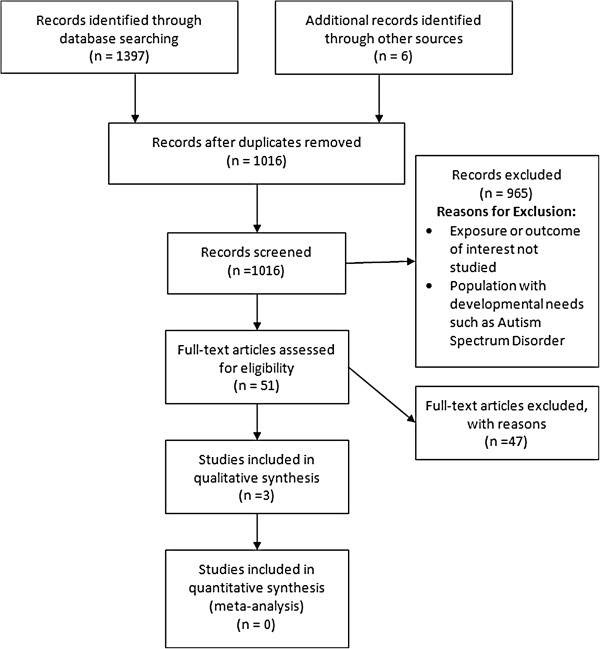
BACKGROUND: Consensus has not been reached on safe alcohol consumption recommendations during pregnancy. The National Institutes for Care and Health Excellence (NICE) in the UK suggest that one to two drinks not more than twice per week is safe. However, the speech and language effects of even low levels of alcohol use among offspring are unknown. The aim of this study was to review systematically the evidence on studies of the effect of low to moderate levels of alcohol consumption during pregnancy (up to 70 grams of alcohol per week) compared to abstinence on speech and language outcomes in children. METHODS: Using medical subject headings, PubMed, Web of knowledge, Scopus, Embase, Cinahl and the Cochrane Library were searched from their inception up to March 2012. Case control and cohort studies were included. Two assessors independently reviewed titles, abstracts and full articles, extracted data and assessed quality. RESULTS: A total of 1,397 titles and abstracts were reviewed of which 51 full texts were retrieved. Three cohort studies totaling 10,642 women met the inclusion criteria. All three studies, (United States (2) and Australia (1)) indicated that language was not impaired as a result of low to moderate alcohol consumption during pregnancy. Two studies were judged to be of low quality based on a six-item bias classification tool. Due to heterogeneity, results could not be meta-analyzed. CONCLUSION: Studies included in this review do not provide sufficient evidence to confirm or refute an association between low to moderate alcohol use during pregnancy and speech and language outcomes in children. High quality, population based studies are required to establish the safety of low to moderate levels of alcohol use such as those set out by the NICE guidelines in the UK.
Overview
CoChat Summary
## TL;DR
This systematic review found only 3 cohort studies (10,642 women total) on low-to-moderate alcohol use in pregnancy and speech/language outcomes in children. Across those studies, the authors found no clear evidence of impaired language, but the evidence was too limited and heterogeneous to confirm or refute safety.
## Key findings
- The search screened 1,397 titles/abstracts, retrieved 51 full texts, and included 3 cohort studies totaling 10,642 women.
- All 3 studies (from the United States (2) and Australia (1)) indicated that language was not impaired by low-to-moderate alcohol consumption during pregnancy.
- In the Australian cohort, the odds of language delay were 0.97 for first-trimester low drinking, 0.87 for second trimester, and 0.84 for third trimester; all confidence intervals crossed 1 and were not statistically significant.
- In the U.S. cohort by Faden and Graubard, there was no dose–response relationship between mean drinks per day and the 7-item language scale; in Greene et al., significant differences in expressive and receptive language at 1, 2, and 3 years were not evident across the alcohol exposure levels reported.
## Methods
- Systematic review of case-control and cohort studies published in English in peer-reviewed journals up to 1 March 2012, comparing low/moderate prenatal alcohol exposure (defined as <10 g/day or 70 g/week) with abstinence.
- Searched Embase, PubMed, CINAHL, Scopus, Web of Knowledge, and the Cochrane Library from inception; also hand-searched reference lists and contacted authors for additional information.
- Two assessors independently screened, extracted data, and assessed study quality using a six-bias tool; meta-analysis was not performed because of heterogeneity.
## Limitations
- The paper states that the evidence base was very small: only 3 studies, and 2 were judged low quality; the authors conclude there is insufficient evidence to confirm or refute an association.
- Attrition bias was present in all 3 studies, and the review also notes selection, confounding, and analytic bias; these likely reduced validity.
- Evident from the text: studies were heterogeneous in exposure measurement, outcome measures, timing, and populations, which prevented meta-analysis and makes the overall inference uncertain.
Model-written summary. Check it against the paper before relying on it.
Integrity signals
Registry
Cites
Statistics
Figures
Verification
Claims the paper makes
1 Valid · 0 Not valid · 19 Not checked · 17 Own results and interpretations
Every source the paper cites for this claim was checked and supports it.
In the paper
“magnetic resonance imaging (MRI) studies have shown that prenatal alcohol exposure can impact on many areas of the brain involved in speech and language development, including the corpus collosum [22].”
§ The effect of moderate gestational alcohol consumption during pregnancy on speech and language outcomes in children: a systematic review > Background
What the sources say
- Supportedcites [22] Lebel C Roussotte F Sowell ER Imaging the impact of prenatal alcohol exposure on the structure of the developing human brain Neuropsychol Rev 2011 21 102 118 10.1007/s11065-011-9163-0 21369875 PMC3098972 source
The Abstract (p. 1) states that the review covers structural MRI studies showing effects of prenatal alcohol exposure that are 'widespread, affecting almost the entire brain,' with malformations of the corpus callosum among the most common findings, and Regional Abnormalities names the corpus callosum and frontal lobes as the most significantly affected. The Brain-Behavior Relationships section links several of these affected regions to verbal/language function (callosal displacement and verbal learning, hippocampal volume and verbal recall, frontal cortical thickness and CVLT performance), supporting the citing sentence's characterisation of the impacted areas as speech- and language-related. The 'speech and language development' framing is the citing authors' own gloss, but the substance of the attribution is in our copy. (LLM, conf=0.85)
plainstates a possible cause- Asserted: passes — The authors put it forward as true.
- Checkable: passes — It can be checked against evidence.
- Load-bearing: unclear — It is unclear whether the paper’s conclusions depend on it.
- Based: passes — The paper gives a reason why it holds.
- Supported
None of the sources cited for this claim have been checked yet.
In the paper
“All three studies, (United States (2) and Australia (1)) indicated that language was not impaired as a result of low to moderate alcohol consumption during pregnancy.”
- Also stated in: § Discussion · plain
“Poorer language development was not observed in infants exposed to low or moderate alcohol levels [30,31] or was not associated with mean number of drinks per day [29].”
§ The effect of moderate gestational alcohol consumption during pregnancy on speech and language outcomes in children: a systematic review > Abstract > Results
plain- Asserted: passes — The authors put it forward as true.
- Checkable: passes — It can be checked against evidence.
- Load-bearing: passes — The paper’s conclusions depend on it.
- Based: passes — The paper gives a reason why it holds.
- Also stated in: § Discussion · plain
None of the sources cited for this claim have been checked yet.
In the paper
“while analytic bias, though present in both Faden and Graubard [29] and Greene et al. [31], was relatively low.”
§ The effect of moderate gestational alcohol consumption during pregnancy on speech and language outcomes in children: a systematic review > Results > Quality assessment
What the sources say
- Not checked yetcites [29] Faden VB Graubard BI Maternal substance use during pregnancy and developmental outcome at age three J Subst Abuse 2000 12 329 340 10.1016/S0899-3289(01)00052-9 11452837 source
- Not checked yetcites [31] Greene T Ernhart CB Martier S Sokol R Ager J Prenatal alcohol exposure and language development Alcohol Clin Exp Res 1990 14 937 945 10.1111/j.1530-0277.1990.tb01842.x 2088132 source
plain- Asserted: passes — The authors put it forward as true.
- Checkable: passes — It can be checked against evidence.
- Load-bearing: unclear — It is unclear whether the paper’s conclusions depend on it.
- Based: passes — The paper gives a reason why it holds.
A result the paper reports from its own data — it cites no other source for it, so there is none to check. The quote shows it is in the paper.
In the paper
“In addition, selection, confounding and analytic bias were also present.”
§ The effect of moderate gestational alcohol consumption during pregnancy on speech and language outcomes in children: a systematic review > Results > Quality assessment
plain- Asserted: passes — The authors put it forward as true.
- Checkable: passes — It can be checked against evidence.
- Load-bearing: passes — The paper’s conclusions depend on it.
- Based: passes — The paper gives a reason why it holds.
A result the paper reports from its own data — it cites no other source for it, so there is none to check. The quote shows it is in the paper.
In the paper
“Three cohort studies were included, totaling 10,642 women.”
§ The effect of moderate gestational alcohol consumption during pregnancy on speech and language outcomes in children: a systematic review > Results > Search results
plainn = 10,642- Asserted: passes — The authors put it forward as true.
- Checkable: passes — It can be checked against evidence.
- Load-bearing: unclear — It is unclear whether the paper’s conclusions depend on it.
- Based: passes — The paper gives a reason why it holds.
12 more claims
Create a free account to see all 37 claims and to verify the 19 references still open.
- It may state two separate claims as one. 14
- Probably not a substantial claim. 9
Claims other papers make about this one
Each is checked against this paper’s own text: does it say what the citing paper says it does?
In the citing paper
“Clinical trial registries are a critical source of information for systematic reviewers who use these registries to augment bibliographic database searches when compiling relevant evidence from clinical trials [17–19].”
From A systematic review of the processes used to link clinical trial registrations to their published results (2017) · cites this paper as [17]
In the citing paper
“Prognostic research is of high value as it provides clinicians and patients with information regarding the course of a disease and potential outcomes, in addition to potentially providing useful information to deliver targeted therapy relating to specific prognostic factors [20, 34, 35].”
From What kind of systematic review should I conduct? A proposed typology and guidance for systematic reviewers in the medical and health sciences (2018) · cites this paper as [20]
In the citing paper
“Prognostic reviews are complex and methodology for these types of reviews is still under development, although a Cochrane methods group exists to support this approach [20].”
From What kind of systematic review should I conduct? A proposed typology and guidance for systematic reviewers in the medical and health sciences (2018) · cites this paper as [20]
Self-check
Percentages, sums and reported differences re-computed from the paper’s own numbers.
Each contradiction between two passages listed here was confirmed by an independent check.
Rated minor: it would not touch a result — a value no result rests on, a p-value that stays on the same side of the significance level, or a conflict that is clerical, resolved elsewhere in the paper, or outside its own findings.
In the paper
§ The effect of moderate gestational alcohol consumption during pregnancy on speech and language outcomes in children: a systematic review > Abstract > Background
“The National Institutes for Care and Health Excellence (NICE) in the UK suggest that one to two drinks not more than twice per week is safe.”
§ The effect of moderate gestational alcohol consumption during pregnancy on speech and language outcomes in children: a systematic review > Background
“However, the National Institute for Health and Care Excellence in the United Kingdom suggest that one to two units not more than once or twice per week is safe [27].”
Citations
Cites
May, P. A., Gossage, J. P., Kalberg, W. O., Robinson, L. K., Buckley, D., Manning, M., & Hoyme, H. E. (2009) · Developmental Disabilities Research Reviews · doi:10.1002/ddrr.68 · Cited by 906 · cited 1×
“Speech and language impairments are often one of the key features of neurologic damage in children with diagnoses of Fetal Alcohol Spectrum Disorders (FASD) which are as high as 5% in some regions of the United States and Europe [6-8].”
Fetal Alcohol Spectrum Disorders: Neuropsychological and Behavioral Features
Mattson, S. N., Crocker, N., & Nguyen, T. T. (2011) · Neuropsychology Review · doi:10.1007/s11065-011-9167-9 · Cited by 616 · cited 1×
“Speech and language impairments are often one of the key features of neurologic damage in children with diagnoses of Fetal Alcohol Spectrum Disorders (FASD) which are as high as 5% in some regions of the United States and Europe [6-8].”
Patra, J., Bakker, R., Irving, H., Jaddoe, V., Malini, S., & Rehm, J. (2011) · BJOG: An International Journal of Obstetrics & Gynaecology · doi:10.1111/j.1471-0528.2011.03050.x · Cited by 555 · cited 2×
“However, while the impact of alcohol consumption during pregnancy on birth outcomes [9], mental development [10] and neuropsychological outcomes [11] is well investigated, the effect of alcohol consumption during pregnancy on speech and language development especially at lower or moderate levels is unknown [12].”
Systematic review of effects of low–moderate prenatal alcohol exposure on pregnancy outcome
Henderson, J., Gray, R., & Brocklehurst, P. (2007) · BJOG: An International Journal of Obstetrics & Gynaecology · doi:10.1111/j.1471-0528.2006.01163.x · Cited by 461 · cited 1×
“Recent reviews have suggested that moderate drinking may not be harmful to birth weight, length of gestation or size for gestational age [9,21].”
McDonald, S. D., Han, Z., Mulla, S., Murphy, K. E., Beyene, J., & Ohlsson, A. (2009) · European Journal of Obstetrics & Gynecology and Reproductive Biology · doi:10.1016/j.ejogrb.2009.05.035 · Cited by 435 · cited 1×
“The quality of included studies was assessed by evaluating six types of bias to include a rapid assessment of selection, exposure, outcome, confounding, analytical and attrition biases (Table 3) developed by McDonald and colleagues [32] (see Additional file 2).”
Nelson, H. D., Nygren, P., Walker, M., & Panoscha, R. (2006) · Pediatrics · doi:10.1542/peds.2005-1467 · Cited by 427 · cited 1×
“Speech and language development is known to be an important overall developmental milestone in children and early speech and language delays can result in poorer educational outcomes and longer term adverse cognitive and behavioral outcomes throughout the life course [2].”
Jacobson, S. W., Chiodo, L. M., Sokol, R. J., & Jacobson, J. L. (2002) · Pediatrics · doi:10.1542/peds.109.5.815 · Cited by 375 · cited 1×
“[31] are shown to yield more valid information when examining neurodevelopmental outcomes [33].”
Flak, A. L., Su, S., Bertrand, J., Denny, C. H., Kesmodel, U. S., & Cogswell, M. E. (2014) · Alcoholism: Clinical and Experimental Research · doi:10.1111/acer.12214 · Cited by 352 · cited 1×
“However, while the impact of alcohol consumption during pregnancy on birth outcomes [9], mental development [10] and neuropsychological outcomes [11] is well investigated, the effect of alcohol consumption during pregnancy on speech and language development especially at lower or moderate levels is unknown [12].”
Screening for speech and language delay: a systematic review of the literature.
Law, Boyle, Harris, Harkness, & Nye (1998) · Health Technology Assessment · doi:10.3310/hta2090 · Cited by 319 · cited 1×
“Speech and language delays in infants and children occur when speech and language abilities are below that expected for a child’s chronological age, while still following the expected developmental sequence [1].”
Imaging the Impact of Prenatal Alcohol Exposure on the Structure of the Developing Human Brain
Lebel, C., Roussotte, F., & Sowell, E. R. (2011) · Neuropsychology Review · doi:10.1007/s11065-011-9163-0 · Cited by 290 · cited 2×
“MRI studies have shown that prenatal alcohol exposure can impact upon a number of regions of the brain involved in verbal communication development, such as the corpus collosum, by displacing it, producing shape variability or reducing volume, area and length [22].”
Research works printed but not linked: 3
- Royal College of Obstetricians and Gynecologists Alcohol consumption and the outcomes of pregnancy (RCOG Statement No 5) 2006 http://www.rcog.org.uk/womens-health/clinical-guidance/alcohol-consumption-and-outcomes-pregnancy
- Ministry of Health Alcohol and Pregnancy: A Practical Guide for Health Professionals 2010 Wellington: Ministry of Health
- National Institute for Care and Clinical Excellence (NICE) Antenatal Care: Routine Care for Healthy Pregnant Women: NICE Clinical Guidelines 62 2008
Cited by
Shamseer, L., Moher, D., Clarke, M., Ghersi, D., Liberati, A., Petticrew, M., Shekelle, P., Stewart, L. A., & the PRISMA-P Group (2015) · BMJ · doi:10.1136/bmj.g7647 · Cited by 13,120
Sekhon, M., Cartwright, M., & Francis, J. J. (2017) · BMC Health Services Research · doi:10.1186/s12913-017-2031-8 · Cited by 3,938
Haddaway, N. R., Page, M. J., Pritchard, C. C., & McGuinness, L. A. (2022) · Campbell Systematic Reviews · doi:10.1002/cl2.1230 · Cited by 3,486
Munn, Z., Stern, C., Aromataris, E., Lockwood, C., & Jordan, Z. (2018) · BMC Medical Research Methodology · doi:10.1186/s12874-017-0468-4 · Cited by 1,164
Macronutrient and Micronutrient Intake during Pregnancy: An Overview of Recent Evidence
Mousa, A., Naqash, A., & Lim, S. (2019) · Nutrients · doi:10.3390/nu11020443 · Cited by 494
“Conversely, two other systematic reviews [88,92], one of which included 46 studies and >100,000 women [88], concluded that there was no convincing evidence of adverse effects from low to moderate prenatal alcohol exposure.”
BackgroundAdams, J., Hillier-Brown, F. C., Moore, H. J., Lake, A. A., Araujo-Soares, V., White, M., & Summerbell, C. (2016) · Systematic Reviews · doi:10.1186/s13643-016-0337-y · Cited by 486
Clark, B., Stewart, G. B., Panzone, L. A., Kyriazakis, I., & Frewer, L. J. (2016) · Journal of Agricultural and Environmental Ethics · doi:10.1007/s10806-016-9615-x · Cited by 369
Dudley, R., Taylor, P., Wickham, S., & Hutton, P. (2016) · Schizophrenia Bulletin · doi:10.1093/schbul/sbv150 · Cited by 353
Transmitting Trauma: A systematic review of vicarious racism and child health
Heard-Garris, N. J., Cale, M., Camaj, L., Hamati, M. C., & Dominguez, T. P. (2018) · Social Science & Medicine · doi:10.1016/j.socscimed.2017.04.018 · Cited by 352
Substance use during pregnancy
Forray, A. (2016) · F1000Research · doi:10.12688/f1000research.7645.1 · Cited by 311
Goh, S.-L., Persson, M. S. M., Stocks, J., Hou, Y., Welton, N. J., Lin, J., Hall, M. C., Doherty, M., & Zhang, W. (2019) · Sports Medicine · doi:10.1007/s40279-019-01082-0 · Cited by 239
Substance Use in the Perinatal Period
Forray, A., & Foster, D. (2015) · Current Psychiatry Reports · doi:10.1007/s11920-015-0626-5 · Cited by 172
Natural mentoring among older youth in and aging out of foster care: A systematic review
Thompson, A. E., Greeson, J. K. P., & Brunsink, A. M. (2016) · Children and Youth Services Review · doi:10.1016/j.childyouth.2015.12.006 · Cited by 172
Harris, K., Kneale, D., Lasserson, T. J., McDonald, V. M., Grigg, J., & Thomas, J. (2019) · Cochrane Database of Systematic Reviews · doi:10.1002/14651858.cd011651.pub2 · Cited by 158
Suicide Crisis Syndrome: A review of supporting evidence for a new suicide‐specific diagnosis
Schuck, A., Calati, R., Barzilay, S., Bloch‐Elkouby, S., & Galynker, I. (2019) · Behavioral Sciences & the Law · doi:10.1002/bsl.2397 · Cited by 153
Beraha, E. M., Salemink, E., Goudriaan, A. E., Bakker, A., de Jong, D., Smits, N., Zwart, J. W., van Geest, D., Bodewits, P., Schiphof, T., et al. (2016) · European Neuropsychopharmacology · doi:10.1016/j.euroneuro.2016.10.006 · Cited by 149
Online parent programs for children’s behavioral problems: a meta-analytic review
Thongseiratch, T., Leijten, P. H. O., & Meléndez‐Torres, G. J. (2020) · European Child & Adolescent Psychiatry · doi:10.1007/s00787-020-01472-0 · Cited by 168
Gentles, S. J., Charles, C., Nicholas, D. B., Ploeg, J., & McKibbon, K. A. (2016) · Systematic Reviews · doi:10.1186/s13643-016-0343-0 · Cited by 128
Kneale, D., Thomas, J., & Harris, K. (2015) · PLOS ONE · doi:10.1371/journal.pone.0142187 · Cited by 127
Overcoming gender inequality for climate resilient development
Andrijevic, M., Cuaresma, J. C., Lissner, T., Thomas, A., & Schleussner, C. (2020) · Nature Communications · doi:10.1038/s41467-020-19856-w · Cited by 165
Prenatal alcohol exposure and traumatic childhood experiences: A systematic review
Price, A. D., Cook, P. A., Norgate, S., & Mukherjee, R. (2017) · Neuroscience & Biobehavioral Reviews · doi:10.1016/j.neubiorev.2017.05.018 · Cited by 141
“, 2011) speech and language (O’Keeffe et al., 2014), executive functioning (Kingdon et al.”
BackgroundPhysical Activity for the Treatment of Adolescent Depression: A Systematic Review and Meta-Analysis
Oberste, M., Medele, M., Javelle, F., Lioba Wunram, H., Walter, D., Bloch, W., Bender, S., Fricke, O., Joisten, N., Walzik, D., et al. (2020) · Frontiers in Physiology · doi:10.3389/fphys.2020.00185 · Cited by 110
O'Keeffe, L. M., Kearney, P. M., McCarthy, F. P., Khashan, A. S., Greene, R. A., North, R. A., Poston, L., McCowan, L. M. E., Baker, P. N., Dekker, G. A., et al. (2015) · BMJ Open · doi:10.1136/bmjopen-2014-006323 · Cited by 106
Self-citationResilience moderates the relationship between ostracism and depression among Chinese adolescents
Niu, G., Sun, X., Tian, Y., Fan, C., & Zhou, Z. (2016) · Personality and Individual Differences · doi:10.1016/j.paid.2016.04.059 · Cited by 110
Pharmacological interventions for pruritus in adult palliative care patients
Siemens, W., Xander, C. J., Meerpohl, J. J., Buroh, S., Antes, G., Schwarzer, G., & Becker, G. (2016) · Cochrane Database of Systematic Reviews · doi:10.1002/14651858.cd008320.pub3 · Cited by 94
Sharp, G. C., Arathimos, R., Reese, S. E., Page, C. M., Felix, J. F., Küpers, L. K., Rifas‐Shiman, S. L., Liu, C., The Cohorts for Heart and Aging Research in Genomic Epidemiology plus (CHARGE +) methylation alcohol working group, Burrows, K., et al. (2017) · Epigenomics · doi:10.2217/epi-2017-0095 · Cited by 92
Swaringen, B. F., Gawlik, E., Kamenov, G. D., McTigue, N. E., Cornwell, D. A., & Bonzongo, J. J. (2021) · Environmental Research · doi:10.1016/j.envres.2021.112025 · Cited by 94
Chirgwin, H., Cairncross, S., Zehra, D., & Waddington, H. S. (2021) · Campbell Systematic Reviews · doi:10.1002/cl2.1194 · Cited by 130
van Hooft, S. M., Been-Dahmen, J., Ista, E., van Staa, A., & Boeije, H. (2016) · Journal of Advanced Nursing · doi:10.1111/jan.13189 · Cited by 107
Oberste, M., Javelle, F., Sharma, S., Joisten, N., Walzik, D., Bloch, W., & Zimmer, P. (2019) · Frontiers in Psychology · doi:10.3389/fpsyg.2019.02616 · Cited by 104
Quality of flow diagram in systematic review and/or meta-analysis
Vu-Ngoc, H., Elawady, S. S., Mehyar, G. M., Abdelhamid, A. H., Mattar, O. M., Halhouli, O., Vuong, N. L., Ali, C. D. M., Hassan, U. H., Kien, N. D., et al. (2018) · PLoS ONE · doi:10.1371/journal.pone.0195955 · Cited by 99
Lorenc, T., Felix, L., Petticrew, M., Melendez-Torres, G. J., Thomas, J., Thomas, S., O’Mara-Eves, A., & Richardson, M. (2016) · Systematic Reviews · doi:10.1186/s13643-016-0366-6 · Cited by 75
McEvoy, D. S., Sittig, D. F., Hickman, T.-T., Aaron, S., Ai, A., Amato, M., Bauer, D. W., Fraser, G. M., Harper, J., Kennemer, A., et al. (2017) · Journal of the American Medical Informatics Association · doi:10.1093/jamia/ocw114 · Cited by 75
Bloch-Elkouby, S., Barzilay, S., Gorman, B. S., Lawrence, O. C., Rogers, M. L., Richards, J., Cohen, L. J., Johnson, B. N., & Galynker, I. (2021) · Journal of Affective Disorders · doi:10.1016/j.jad.2021.08.048 · Cited by 72
Lawless, M., Tieu, M., Feo, R., & Kitson, A. A. (2021) · Social Science & Medicine · doi:10.1016/j.socscimed.2021.114393 · Cited by 97
Lim, A. W. Y., van Schalkwyk, M. C., Maani, N., & Petticrew, M. P. (2019) · Journal of Studies on Alcohol and Drugs · doi:10.15288/jsad.2019.80.524 · Cited by 71
“…include fetal alcohol spectrum disorder (FASD), which refers to the range of adverse health effects of prenatal exposure to alcohol, including brain damage, congenital anomalies, and cognitive, behavioral, emotional, and adaptive functioning deficits (O’Keeffe et al., 2014; Ruisch et al., 2018).”
BackgroundTylavsky, F. A., Koçak, M., Murphy, L. E., Graff, J. C., Palmer, F. B. S. C., Völgyi, E., Diaz-Thomas, A., & Ferry, R. J. (2015) · Nutrients · doi:10.3390/nu7125499 · Cited by 68
Twelve recommendations for integrating existing systematic reviews into new reviews: EPC guidance
Robinson, K. A., Chou, R., Berkman, N. D., Newberry, S. J., Fu, R. F., Hartling, L., Dryden, D. M., Butler, M. E., Foisy, M., Anderson, J., et al. (2015) · Journal of Clinical Epidemiology · doi:10.1016/j.jclinepi.2015.05.035 · Cited by 67
Mamluk, L., Jones, T., Ijaz, S., Edwards, H. B., Savović, J., Leach, V., Moore, T. H. M., von Hinke, S., Lewis, S. J., Donovan, J. L., et al. (2021) · International Journal of Epidemiology · doi:10.1093/ije/dyz272 · Cited by 65
Belvederi Murri, M., Caruso, R., Ounalli, H., Zerbinati, L., Berretti, E., Costa, S., Recla, E., Folesani, F., Kissane, D., Nanni, M. G., et al. (2020) · Journal of Affective Disorders · doi:10.1016/j.jad.2020.06.074 · Cited by 65
Rathbone, J., Albarqouni, L., Bakhit, M., Beller, E., Byambasuren, O., Hoffmann, T., Scott, A. M., & Glasziou, P. (2017) · Systematic Reviews · doi:10.1186/s13643-017-0629-x · Cited by 64
Khan, Z., Abdulkader, R. S., Heise, T. L., & Dreger, S. (2017) · Nicotine & Tobacco Research · doi:10.1093/ntr/ntx281 · Cited by 72
The Impact of THC and CBD in Schizophrenia: A Systematic Review
Ahmed, S., Roth, R. M., Stanciu, C. N., & Brunette, M. F. (2021) · Frontiers in Psychiatry · doi:10.3389/fpsyt.2021.694394 · Cited by 68
The use of micro-costing in economic analyses of surgical interventions: a systematic review
Potter, S., Davies, C. F., Davies, G. L., Rice, C. T., & Hollingworth, W. (2020) · Health Economics Review · doi:10.1186/s13561-020-0260-8 · Cited by 58
Mahmud, S., Kanaani, Z. A., Chemaitelly, H. S., Chaabna, K., Kouyoumjian, S. P., & Abu-Raddad, L. J. (2017) · Journal of Medical Virology · doi:10.1002/jmv.24921 · Cited by 56
The risk of tooth loss in patients with diabetes: A systematic review and meta‐analysis
Weijdijk, L. P. M., Žiūkaitė, L., van der Weijden, G. A., Bakker, E. W. P., & Slot, D. E. (2021) · International Journal of Dental Hygiene · doi:10.1111/idh.12512 · Cited by 63
Lee, Y. H., & Song, G. G. (2016) · Rheumatology International · doi:10.1007/s00296-016-3468-5 · Cited by 54
AHRQ series on complex intervention systematic reviews—paper 4: selecting analytic approaches
Viswanathan, M., McPheeters, M. L., Murad, M. H., Butler, M. E., Devine, E. E. (., Dyson, M. P., Guise, J.-M., Kahwati, L. C., Miles, J. N. V., & Morton, S. C. (2017) · Journal of Clinical Epidemiology · doi:10.1016/j.jclinepi.2017.06.014 · Cited by 48
Bashir, R., Bourgeois, F. T., & Dunn, A. G. (2017) · Systematic Reviews · doi:10.1186/s13643-017-0518-3 · Cited by 47
Mc Glanaghy, E., Turner, D., Davis, G. A., Sharpe, H., Dougall, N., Morris, P., Prentice, W., & Hutton, P. (2021) · Schizophrenia Research · doi:10.1016/j.schres.2020.12.036 · Cited by 46
Boerner, K. E., Eccleston, C., Chambers, C. T., & Keogh, E. (2016) · Pain · doi:10.1097/j.pain.0000000000000803 · Cited by 53
Burchett, H., Kneale, D., Blanchard, L., & Thomas, J. (2020) · Trials · doi:10.1186/s13063-020-4178-6 · Cited by 58
Yang, H., Lu, Z., Huo, C., Chen, Y., Cao, H., Xie, P., Zhou, H., Liu, D., Liu, J., & Yu, L. (2019) · Frontiers in Pharmacology · doi:10.3389/fphar.2019.01332 · Cited by 45
Visioning a hospitality-oriented patient experience (HOPE) framework in health care
Hunter‐Jones, P., Line, N. D., Zhang, J. J., Malthouse, E. C., Witell, L., & Hollis, B. (2020) · Journal of service management · doi:10.1108/josm-11-2019-0334 · Cited by 45
Pringle, J. L., Kelley, D., Kearney, S. M., Aldridge, A., Dowd, W. N., Johnjulio, W., Venkat, A., Madden, M., & Lovelace, J. (2017) · Medical Care · doi:10.1097/mlr.0000000000000859 · Cited by 46
Maier, A., Ovesen, J. L., Allen, C. L., York, R. G., Gadagbui, B. K.-M., Kirman, C. R., Poet, T. S., & Quiñones‐Rivera, A. (2015) · Regulatory Toxicology and Pharmacology · doi:10.1016/j.yrtph.2015.07.015 · Cited by 43
Thymectomy in nonthymomatous myasthenia gravis - systematic review and meta-analysis
Catâneo, A. J. M., Felisberto, G., & Catâneo, D. C. (2018) · Orphanet Journal of Rare Diseases · doi:10.1186/s13023-018-0837-z · Cited by 38
Fluoxetine for adults who are overweight or obese
Serralde-Zúñiga, A. E., Garay, A. G. G., Rodríguez‐Carmona, Y., & Meléndez, G. (2019) · Cochrane Database of Systematic Reviews · doi:10.1002/14651858.cd011688.pub2 · Cited by 43
Delaney, A., & Tamás, P. A. (2017) · Research Synthesis Methods · doi:10.1002/jrsm.1282 · Cited by 40
Lloyd, T., Conti, S., dos Santos, F. O., & Steventon, A. (2019) · BMJ Quality & Safety · doi:10.1136/bmjqs-2018-009130 · Cited by 45
Widmann, M., Apondi, B., Musau, A., Warsame, A. H., Isse, M., Mutiso, V., Veltrup, C., Ndetei, D., & Odenwald, M. (2017) · Social Psychiatry and Psychiatric Epidemiology · doi:10.1007/s00127-017-1368-y · Cited by 34
Bandoli, G., Hayes, S., & Delker, E. (2023) · Alcohol research · doi:10.35946/arcr.v43.1.01 · Cited by 42
Poblete, F., Barticevic, N. A., Zuzulich, M. S., Portilla, R., Castillo‐Carniglia, A., Sapag, J. C., Villarroel, L., Sena, B. F., & Galarce, M. (2017) · Addiction · doi:10.1111/add.13808 · Cited by 33
Grant, S., Pedersen, E. R., Osilla, K. C., Kulesza, M., & D’Amico, E. J. (2015) · Addiction · doi:10.1111/add.13136 · Cited by 34
Turri, J. A. O., Decimoni, T. C., Ferreira, L., Diniz, M. A., Haddad, L. B. D. P., & Campolina, A. G. (2017) · Arquivos de Gastroenterologia · doi:10.1590/s0004-2803.201700000-35 · Cited by 32
Costing evidence for health care decision-making in Austria: A systematic review
Mayer, S., Kiss, N., Łaszewska, A., & Simon, J. (2017) · PLoS ONE · doi:10.1371/journal.pone.0183116 · Cited by 36
Petersen, K. S., Clifton, P. M., Lister, N. B., & Keogh, J. B. (2016) · Atherosclerosis · doi:10.1016/j.atherosclerosis.2016.01.042 · Cited by 31
Asbaghi, O., Ashtary‐Larky, D., Mousa, A., Kelishadi, M. R., & Moosavian, S. P. (2021) · Advances in Nutrition · doi:10.1093/advances/nmab121 · Cited by 31
McLeod, M. C., Karampatakis, G. D., Heyligen, L., McGinley, A., & Franklin, B. D. (2019) · BMC Health Services Research · doi:10.1186/s12913-019-3986-4 · Cited by 32
McVeigh, J., MacLachlan, M., Coyle, C., & Kavanagh, B. (2018) · MAST. Maritime studies/Maritime studies · doi:10.1007/s40152-018-0129-1 · Cited by 44
Protecting Future Children from In‐Utero Harm
Wilkinson, D. J. C., Skene, L. L. C., de Crespigny, L., & Savulescu, J. (2016) · Bioethics · doi:10.1111/bioe.12238 · Cited by 27
Léon, L., Kasereka, S. K., Barin, F., Larsen, C., Weill-Barillet, L., Pascal, X., Chevaliez, S., Pillonel, J., Jauffret‐Roustide, M., & Strat, Y. L. (2016) · Epidemiology and Infection · doi:10.1017/s0950268816002934 · Cited by 34
Qualitative comparative analysis as a method for project studies: The case of energy infrastructure
Invernizzi, D. C., Locatelli, G., Brookes, N. J., & Davis, A. R. (2020) · Renewable and Sustainable Energy Reviews · doi:10.1016/j.rser.2020.110314 · Cited by 33
Assiri, K. I., Alyami, Y. D., Uyanik, J. M., & Romero‐Reyes, M. (2016) · Complementary Therapies in Medicine · doi:10.1016/j.ctim.2016.10.014 · Cited by 26
Kneale, D., Thomas, J., Bangpan, M., Waddington, H., & Gough, D. (2018) · Journal of Development Effectiveness · doi:10.1080/19439342.2018.1530278 · Cited by 26
Seco, M., Zhao, D. F., Byrom, M. J., Wilson, M. K., Vallely, M. P., Fraser, J. F., & Bannon, P. G. (2017) · International Journal of Cardiology · doi:10.1016/j.ijcard.2017.02.137 · Cited by 24
Iterative guided machine learning-assisted systematic literature reviews: A diabetes case study
Zimmerman, J., Soler, R. E., Lavinder, J., Murphy, S., Atkins, C., Hulbert, L., Lusk, R., & Ng, B. P. (2021) · Systematic Reviews · doi:10.1186/s13643-021-01640-6 · Cited by 24
Zhao, Y., Rokhani, F. Z., Ghazali, S. S., Devaraj, N. K., Su, J., & Chew, B.-H. (2021) · BMJ Open · doi:10.1136/bmjopen-2020-041452 · Cited by 28
Exploring the importance of evidence in local health and wellbeing strategies
Kneale, D., Rojas‐García, A., & Thomas, J. (2017) · Journal of Public Health · doi:10.1093/pubmed/fdx152 · Cited by 23
Tancred, T., Paparini, S., Meléndez‐Torres, G. J., Thomas, J., Fletcher, A., Campbell, R. M., & Bonell, C. P. (2018) · Systematic Reviews · doi:10.1186/s13643-018-0862-y · Cited by 32
Mårtensson, E., Blomberg, O., Pettman, D., Sörensdotter, R., von Essén, L., & Woodford, J. (2020) · BMJ Open · doi:10.1136/bmjopen-2019-036402 · Cited by 23
Systematic Review of Immigrant Women's Experiences With Perinatal Care in North America
Winn, A., Hetherington, E., & Tough, S. (2017) · Journal of Obstetric, Gynecologic & Neonatal Nursing · doi:10.1016/j.jogn.2017.05.002 · Cited by 27
Quality of life of women who practice dance: a systematic review protocol
Hernandes, J. C., Castro, V. C. D., Mendonça, M. E., & Porto, C. C. (2018) · Systematic Reviews · doi:10.1186/s13643-018-0750-5 · Cited by 22
Onodera, C. M. K., Coelho‐Júnior, H. J., Sampaio, R. A. C., Lana, J. F., Teixeira, L. F. M., Uchida, M. C., & Annichino‐Bizzacchi, J. M. (2020) · Gait & Posture · doi:10.1016/j.gaitpost.2020.08.121 · Cited by 22
Bestry, M., Symons, M., Larcombe, A. N., Muggli, E., Craig, J. M., Hutchinson, D. M., Halliday, J. L., & Martino, D. (2022) · Clinical Epigenetics · doi:10.1186/s13148-022-01231-9 · Cited by 28
Alcohol consumption during pregnancy and adverse neurodevelopmental outcomes
Vall, O., Salat‐Batlle, J., & García‐Algar, Ó. (2015) · Journal of Epidemiology & Community Health · doi:10.1136/jech-2014-203938 · Cited by 22
Communication and cognitive impairments and health care decision making in MND: A narrative review
Paynter, C., Cruice, M. N., Mathers, S., Gregory, H., & Vogel, A. P. (2019) · Journal of Evaluation in Clinical Practice · doi:10.1111/jep.13219 · Cited by 29
Impact of COVID-19 on supply chains: lessons learned and future research directions
Gupta, R., Rathore, B., & Biswas, B. N. (2021) · International Journal of Quality & Reliability Management · doi:10.1108/ijqrm-06-2021-0161 · Cited by 28
Banerjee, G., Edelman, E. J., Barry, D. T., Crystal, S., Gordon, K. S., Gordon, A. J., Gaither, J. R., Green, T. C., Kerns, R. D., Manhapra, A., et al. (2019) · Pain · doi:10.1097/j.pain.0000000000001606 · Cited by 25
Veroniki, A. A., Soobiah, C., Tricco, A. C., Elliott, M. J., & Straus, S. E. (2015) · BMJ Open · doi:10.1136/bmjopen-2014-007103 · Cited by 20
Antenatal determinants of early childhood talking delay and behavioural difficulties
D’Souza, S., Crawford, C. N., Buckley, J., Underwood, L., Peterson, E. R., Bird, A. L., Morton, S., & Waldie, K. E. (2019) · Infant Behavior and Development · doi:10.1016/j.infbeh.2019.101388 · Cited by 26
Tasker, A. J., & Braam, D. (2021) · PLoS ONE · doi:10.1371/journal.pone.0254746 · Cited by 25
Latent classes of resilience and psychological response among only‐child loss parents in China
Wang, A., Zhang, W., Zhang, J., Huang, F., Ye, M., Yao, S., Luo, Y., Li, Z., Zhang, J., & Su, P. (2016) · Stress and Health · doi:10.1002/smi.2715 · Cited by 20
Kamieniarz, A., Milert, A., Grzybowska-Ganszczyk, D., Opara, J. A., & Juras, G. (2020) · Complementary Therapies in Medicine · doi:10.1016/j.ctim.2020.102589 · Cited by 25
Zhang, K., Arora, P., Sati, N., Béliveau, A., Troke, N., Veroniki, A. A., Rodrigues, M., Rios, P. D. L., Zarin, W., & Tricco, A. C. (2019) · Journal of Clinical Epidemiology · doi:10.1016/j.jclinepi.2019.04.023 · Cited by 29
Su, Z. T., Huang, M. M., Matlaga, B. R., Hutfless, S. M., & Koo, K. (2021) · World Journal of Urology · doi:10.1007/s00345-021-03724-3 · Cited by 18
A Satisfaction Survey of Opioid-Dependent Patients with Methadone Maintenance Treatment
Aziz, Z., & Chong, N. J. (2014) · Journal of Substance Abuse Treatment · doi:10.1016/j.jsat.2014.12.008 · Cited by 18
Kurtz, S. P., Buttram, M. E., Pagano, M. E., & Surratt, H. L. (2017) · Journal of Substance Abuse Treatment · doi:10.1016/j.jsat.2017.05.008 · Cited by 19
Tallarico, S., Aloini, D., Dulmin, R., Lazzini, S., Mininno, V., & Pellegrini, L. (2021) · Journal of Multi-Criteria Decision Analysis · doi:10.1002/mcda.1764 · Cited by 19
Agafari, G. B., Mulu, A., Giday, M., Berhe, N., Jifar, M. S., Mihret, A., & Teklehaymanot, T. (2021) · Risk Management and Healthcare Policy · doi:10.2147/rmhp.s336776 · Cited by 16
Metadata
- Authors
- O’Keeffe, L. M., Greene, R. A., & Kearney, P. M.
- Affiliations
- University College Cork (IE)
- Cork University Hospital (IE)
- Corresponding author
- O’Keeffe, Linda M
- Venue
- Systematic Reviews
- Published
- 2014-01-02
- Volume
- 3
- Issue
- 1
- Pages
- 1-1
- ISSN
- 2046-4053 (ISSN-L)
- PMC
- PMC3892059
- OpenAlex
- W2136519218
- Cited by
- 192
- References
- 31
- Citations by year
- 2026: 4 · 2025: 5 · 2024: 3 · 2023: 2 · 2022: 8 · 2021: 31 · 2020: 23 · 2019: 22 · 2018: 17 · 2017: 27 · 2016: 27 · 2015: 20 · 2014: 3
- FWCI
- 3.76
- Type
- journal article
- Language
- en
- Open access
- gold
- doi.org
- Licence
- Locations
- Systematic Reviews (publishedVersion, cc-by)
- Europe PMC (PubMed Central) (publishedVersion, cc-by)
- PubMed Central (publishedVersion, cc-by)
- PubMed (publishedVersion)
- Explore Bristol Research (publishedVersion)
- Arrow@dit (Dublin Institute of Technology) (acceptedVersion)
- Lenus, The Irish Health Repository (Dr Steevens Hospital Library) (submittedVersion)
- Funders
- University College Cork
- Topics
- Health Sciences › Medicine › Pediatrics, Perinatology and Child Health › Prenatal Substance Exposure Effects
- Health Sciences › Medicine › Epidemiology › Substance Abuse Treatment and Outcomes
- Social Sciences › Psychology › Developmental and Educational Psychology › Language Development and Disorders
- Keywords
- prenatal alcohol exposure, speech outcomes, language outcomes, child development, fetal alcohol spectrum disorders
- MeSH terms
- Alcohol Drinking, Child, Female, Humans, Language Development, Language Disorders, Pregnancy, Prenatal Exposure Delayed Effects, Speech Disorders
About these checks
Registry, retraction, Cites and statistics results are computed, not judged, with one exception: a printed reference that no index lists is read once by a model before it counts as a citation error. Claims are extracted by a model and kept only when their quote appears verbatim in the text; each cited source is then checked, with a model’s help, for whether it says what the claim relies on. Those verdicts can be wrong — read the claim’s quote and the cited source before relying on one.
A language model drew the claims from the paper on 2026-10-11, under version 3 of the claim definition (model deepseek-v4.1-flash, prompt extract-v3).
A second model labelled each claim on 2026-10-11 (model jev-1.13-20260917, definition revision gold-guideline-v0.2).
Cited sources are checked with a language model’s help (qwen3.8-omni-flash).
Statistics and arithmetic are recomputed, not judged.
Confidence bands are shown only for fields calibrated on our annotated test set. None is calibrated yet, so no band is shown.
What counts as a claim ›How we measure confidence ›How we check this ›
Are you an author, or do you see a problem with this page? Request a review
Data sources
Bibliographic data: Semantic Scholar, OpenAlex, Crossref.
Contains information from the Semantic Scholar Academic Graph Datasets, made available under the ODC Attribution License (ODC-BY 1.0).
Semantic Scholar’s data is described in: Kinney, R., et al. (2023). The Semantic Scholar Open Data Platform. arXiv:2301.10140.
