

The DOI matches its Crossref record; 50 of the 51 references it cites were found in a registry or an index.
Co-occurrence of anaerobic bacteria in colorectal carcinomas
Open accessAbstract
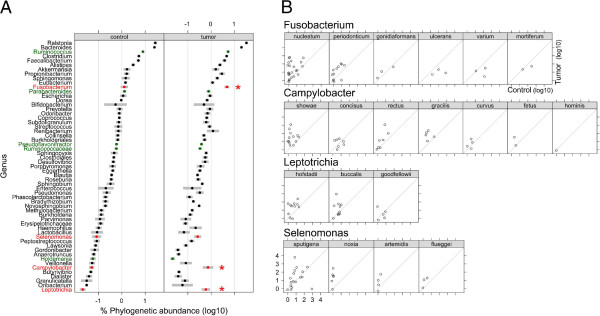
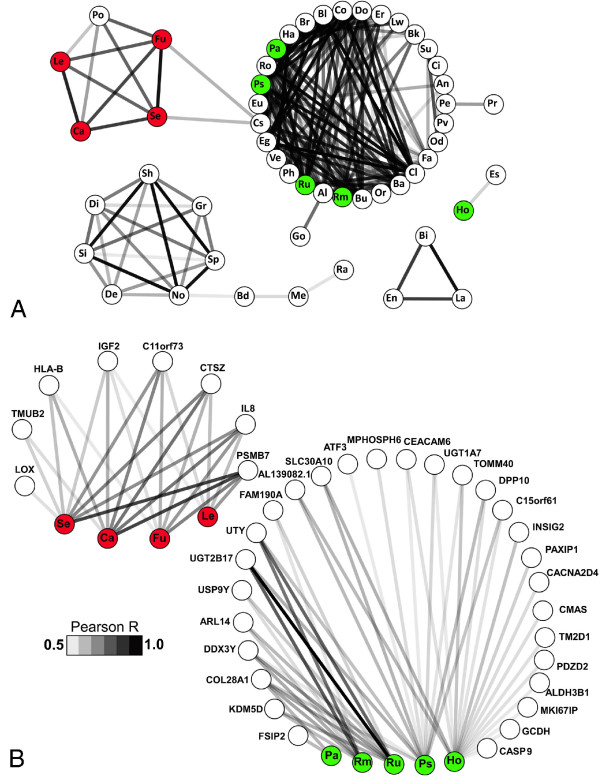
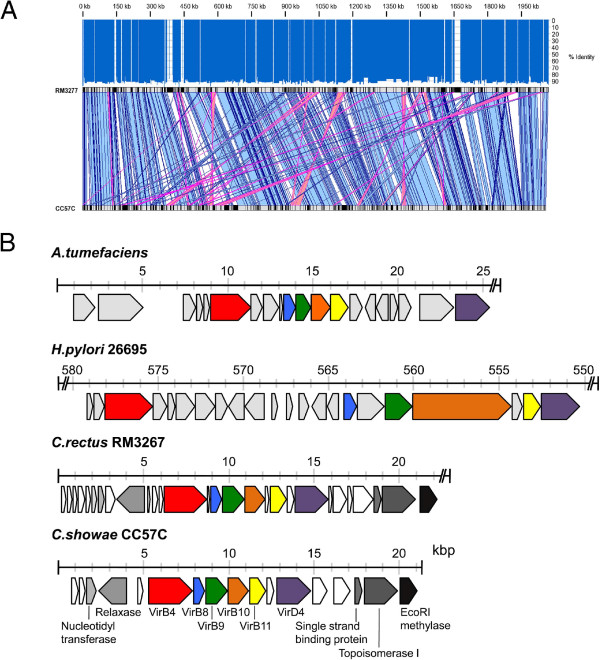
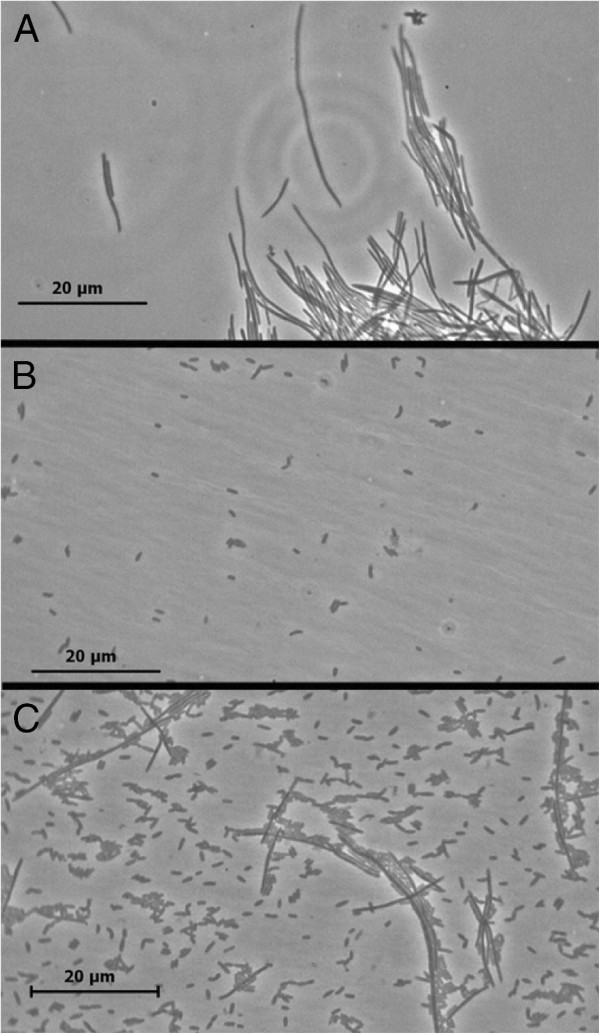
Background: Numerous cancers have been linked to microorganisms. Given that colorectal cancer is a leading cause of cancer deaths and the colon is continuously exposed to a high diversity of microbes, the relationship between gut mucosal microbiome and colorectal cancer needs to be explored. Metagenomic studies have shown an association between Fusobacterium species and colorectal carcinoma. Here, we have extended these studies with deeper sequencing of a much larger number (n = 130) of colorectal carcinoma and matched normal control tissues. We analyzed these data using co-occurrence networks in order to identify microbe-microbe and host-microbe associations specific to tumors. Results: We confirmed tumor over-representation of Fusobacterium species and observed significant co-occurrence within individual tumors of Fusobacterium, Leptotrichia and Campylobacter species. This polymicrobial signature was associated with over-expression of numerous host genes, including the gene encoding the pro-inflammatory chemokine Interleukin-8. The tumor-associated bacteria we have identified are all Gram-negative anaerobes, recognized previously as constituents of the oral microbiome, which are capable of causing infection. We isolated a novel strain of Campylobacter showae from a colorectal tumor specimen. This strain is substantially diverged from a previously sequenced oral Campylobacter showae isolate, carries potential virulence genes, and aggregates with a previously isolated tumor strain of Fusobacterium nucleatum. Conclusions: A polymicrobial signature of Gram-negative anaerobic bacteria is associated with colorectal carcinoma tissue.
Overview
The claims and statistics of this paper haven’t been checked yet.
Run the check — free, no account needed. It reads the open-access text and checks the sources it cites.
Integrity signals
Registry
Cites
Statistics
Figures
Verification
Claims the paper makes
The claims and statistics of this paper haven’t been checked yet.
Run the check — free, no account needed. It reads the open-access text and checks the sources it cites.
Claims other papers make about this one
Each is checked against this paper’s own text: does it say what the citing paper says it does?
In the citing paper
“CRCs have an increased enrichment of opportunistic pathogens and polymicrobial Gram-negative anaerobic bacteria91”
From The gut microbiota and host health: a new clinical frontier (2016) · cites this paper as [91]
Self-check
Percentages, sums and reported differences re-computed from the paper’s own numbers.
The self-check needs the paper’s full text.
Citations
Cites
Basic local alignment search tool
Altschul, S. F., Gish, W., Miller, W., Myers, E. W., & Lipman, D. J. (1990) · Journal of Molecular Biology · doi:10.1006/jmbi.1990.9999 · Cited by 98,669
Fast and accurate short read alignment with Burrows-Wheeler transform
Li, H., & Durbin, R. (2009) · Bioinformatics · doi:10.1093/bioinformatics/btp324 · Cited by 58,607
Fast and accurate long-read alignment with Burrows-Wheeler transform.
Li, H., & Durbin, R. (2010) · Bioinformatics · doi:10.1093/bioinformatics/btp698 · Cited by 12,063
A human gut microbial gene catalogue established by metagenomic sequencing
MetaHIT Consortium, Qin, J., Li, R., Raes, J., Arumugam, M., Burgdorf, K. S., Manichanh, C., Nielsen, T., Pons, N., Levenez, F., et al. (2010) · Nature · doi:10.1038/nature08821 · Cited by 11,624
Velvet: Algorithms for de novo short read assembly using de Bruijn graphsPreprint
Zerbino, D. R., & Birney, E. (2008) · Genome Research · doi:10.1101/gr.074492.107 · Cited by 9,587
Finishing the euchromatic sequence of the human genome
International Human Genome Sequencing Consortium (2004) · Nature · doi:10.1038/nature03001 · Cited by 4,971
Clonal Integration of a Polyomavirus in Human Merkel Cell Carcinoma
Feng, H., Shuda, M., Chang, Y., & Moore, P. S. (2008) · Science · doi:10.1126/science.1152586 · Cited by 3,208
The global health burden of infection‐associated cancers in the year 2002
Parkin, D. M. (2006) · International Journal of Cancer · doi:10.1002/ijc.21731 · Cited by 2,932
Integration of biological networks and gene expression data using Cytoscape
Cline, M. S., Smoot, M., Cerami, E., Kuchinsky, A., Landys, N., Workman, C., Christmas, R., Avila-Campilo, I., Creech, M., Gross, B., et al. (2007) · Nature Protocols · doi:10.1038/nprot.2007.324 · Cited by 2,507
The NIH Human Microbiome ProjectPreprint
The NIH HMP Working Group, Peterson, J. L., Garges, S., Giovanni, M. Y., McInnes, P., Wang, L., Schloss, J. A., Bonazzi, V. R., McEwen, J. E., Wetterstrand, K. A., et al. (2009) · Genome Research · doi:10.1101/gr.096651.109 · Cited by 2,168
Cited by
Sorted by citations
The gut microbiota, bacterial metabolites and colorectal cancer
Louis, P., Hold, G. L., & Flint, H. J. (2014) · Nature Reviews Microbiology · doi:10.1038/nrmicro3344 · Cited by 2,925
The gut microbiota and host health: a new clinical frontier
Marchesi, J. R., Adams, D. H., Fava, F., Hermes, G. D. A., Hirschfield, G. M., Hold, G., Quraishi, M. N., Kinross, J., Smidt, H., Tuohy, K. M., et al. (2016) · Gut · doi:10.1136/gutjnl-2015-309990 · Cited by 2,302
“For example, CRCs have an increased enrichment of opportunistic pathogens and polymicrobial Gram-negative anaerobic bacteria 91 but it is not yet clear whether these opportunistic pathogens merely bene fi t from the CRC microenvironment or in fl uence disease progression.”
BackgroundGlobal Epidemiology of Campylobacter Infection
Kaakoush, N. O., Castaño‐Rodríguez, N., Mitchell, H. M., & Man, S. M. (2015) · Clinical Microbiology Reviews · doi:10.1128/cmr.00006-15 · Cited by 1,542
Garrett, W. S. (2015) · Science · doi:10.1126/science.aaa4972 · Cited by 1,404
Potential of fecal microbiota for early-stage detection of colorectal cancer
Zeller, G., Tap, J., Voigt, A. Y., Sunagawa, S., Kultima, J. R., Costea, P. I., Amiot, A., Böhm, J., Brunetti, F., Habermann, N., et al. (2014) · Molecular Systems Biology · doi:10.15252/msb.20145645 · Cited by 1,375
Metadata
- Authors
- Warren, R. L., Freeman, D. J., Pleasance, S., Watson, P., Moore, R. A., Cochrane, K., Allen-Vercoe, E., & Holt, R. A.
- Affiliations
- BC Cancer Agency (CA)
- University of Guelph (CA)
- Corresponding author
- Holt, Robert A
- Venue
- Microbiome
- Published
- 2013-05-15
- Volume
- 1
- Issue
- 1
- Pages
- 16-16
- ISSN
- 2049-2618 (ISSN-L)
- PMC
- PMC3971631
- OpenAlex
- W2122131141
- Cited by
- 348
- References
- 50
- Citations by year
- 2026: 18 · 2025: 24 · 2024: 30 · 2023: 28 · 2022: 37 · 2021: 35 · 2020: 39 · 2019: 33 · 2018: 26 · 2017: 20 · 2016: 27 · 2015: 21 · 2014: 8 · 2013: 1
- FWCI
- 8.52
- Type
- journal article
- Language
- en
- Open access
- gold
- doi.org
- Licence
- cc-by
- Locations
- Microbiome (publishedVersion, cc-by)
- Europe PMC (PubMed Central) (publishedVersion, cc-by)
- PubMed Central (publishedVersion, cc-by)
- PubMed (publishedVersion)
- Summit (Simon Fraser University) (submittedVersion, cc-by)
- Funders
- Genome British Columbia (SOF128)
- Canadian Institutes of Health Research
- Topics
- Life Sciences › Biochemistry, Genetics and Molecular Biology › Molecular Biology › Gut microbiota and health
- Health Sciences › Dentistry › Periodontics › Oral microbiology and periodontitis research
- Health Sciences › Medicine › Infectious Diseases › Clostridium difficile and Clostridium perfringens research
- Keywords
- colorectal cancer, anaerobic bacteria, Fusobacterium, Campylobacter showae, Leptotrichia, host-microbe interactions, co-occurrence networks, interleukin-8, Gram-negative bacteria, gut microbiota, Fusobacterium nucleatum, virulence genes, oral microbiota
About these checks
Registry, retraction, Cites and statistics results are computed, not judged, with one exception: a printed reference that no index lists is read once by a model before it counts as a citation error. Claims are extracted by a model and kept only when their quote appears verbatim in the text; each cited source is then checked, with a model’s help, for whether it says what the claim relies on. Those verdicts can be wrong — read the claim’s quote and the cited source before relying on one.
Statistics and arithmetic are recomputed, not judged.
Confidence bands are shown only for fields calibrated on our annotated test set. None is calibrated yet, so no band is shown.
What counts as a claim ›How we measure confidence ›How we check this ›
Are you an author, or do you see a problem with this page? Request a review
