

The DOI matches its Crossref record; 2 of the 2 references it cites were found in a registry or an index.
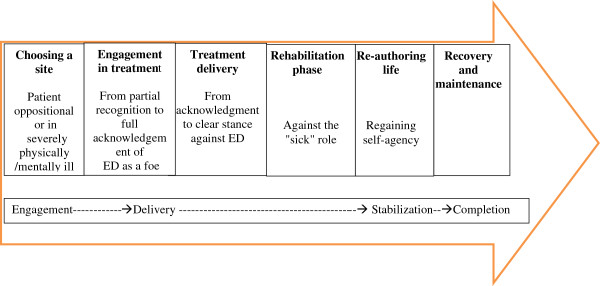
The journey from opposition to recovery from eating disorders: multidisciplinary model integrating narrative counseling and motivational interviewing in traditional approaches
Overview
The claims and statistics of this paper haven’t been checked yet.
Run the check — free, no account needed. It reads the open-access text and checks the sources it cites.
Integrity signals
Registry
Cites
Statistics
Figures
Verification
Claims the paper makes
The claims and statistics of this paper haven’t been checked yet.
Run the check — free, no account needed. It reads the open-access text and checks the sources it cites.
Claims other papers make about this one
Each is checked against this paper’s own text: does it say what the citing paper says it does?
In the citing paper
“Instead the narrative therapist stance supports the use of ‘co-research’ in using combined therapist and insider knowledge to develop flexible client-centred solutions [53, 61, 73, 74, 77, 87, 91, 93, 94, 96].”
From Paper 1: a systematic synthesis of narrative therapy treatment components for the treatment of eating disorders (2022) · cites this paper as [74]
In the citing paper
“Three of the articles indicated that clients were directly invited to guide the direction of therapy or contribute to the content of structured sessions, such as in group therapy programs [74, 79, 81].”
From Paper 1: a systematic synthesis of narrative therapy treatment components for the treatment of eating disorders (2022) · cites this paper as [74]
In the citing paper
“The process of deconstruction was described by many of the articles as mapping the influences the problem on the person's cognitive, affective, interpersonal, and behavioural experiences [59, 61, 74, 76, 81, 88].”
From Paper 1: a systematic synthesis of narrative therapy treatment components for the treatment of eating disorders (2022) · cites this paper as [74]
In the citing paper
“Likewise, Golan [74] concluded that the assumptions that underlie narrative therapy and motivational interviewing are able to empower the client in therapy and in their influence over the problem.”
From Paper 1: a systematic synthesis of narrative therapy treatment components for the treatment of eating disorders (2022) · cites this paper as [74]
In the citing paper
“Many of the studies used externalisation with the person’s language forms, including the use of metaphor and personification of the eating problem [59, 74, 76–83, 88, 90, 92–94, 97, 99, 101–103].”
From Paper 1: a systematic synthesis of narrative therapy treatment components for the treatment of eating disorders (2022) · cites this paper as [74]
In the citing paper
“This was done through developing and naming counter-narratives that more flexibly described the person’s experience [61, 74, 79, 85, 86, 90, 101–103].”
From Paper 1: a systematic synthesis of narrative therapy treatment components for the treatment of eating disorders (2022) · cites this paper as [74]
In the citing paper
“Two of the articles [74, 97] incorporated elements of the motivational interviewing intervention [98] into the intervention.”
From Paper 1: a systematic synthesis of narrative therapy treatment components for the treatment of eating disorders (2022) · cites this paper as [74]
In the citing paper
“Likewise, several articles emphasised that this process of deconstruction takes place on multiple levels, from broader social, political and cultural discourses (e.g., constructions of gender, medicalisation of EDs, the influence of media, etc.) to familial and individual factors (e.g., attachment narratives, parental scripts, etc.) [53, 74, 81, 87–89, 99, 100].”
From Paper 1: a systematic synthesis of narrative therapy treatment components for the treatment of eating disorders (2022) · cites this paper as [74]
In the citing paper
“These new-old stories [64] were thickened through linking these previously un-authored actions with the client’s values and personal aptitudes [74, 77, 79, 81] and the development of counter-narratives that stood in opposition to the problem narrative [59, 85].”
From Paper 1: a systematic synthesis of narrative therapy treatment components for the treatment of eating disorders (2022) · cites this paper as [74]
In the citing paper
“This included the practice of ‘double listening’ [61], whereby the clinician explored the impacts the problem has had on the person’s life, and noticed any unique outcomes that did not fit with the dominant problem story [59, 73, 74, 86, 99, 101].”
From Paper 1: a systematic synthesis of narrative therapy treatment components for the treatment of eating disorders (2022) · cites this paper as [74]
In the citing paper
“Likewise, other articles asserted that meaning is made through daily interactions in addition to therapy and proposed that narrative conversations explore opportunities to negotiate and perform aspects of identity [74, 76, 82, 86].”
From Paper 1: a systematic synthesis of narrative therapy treatment components for the treatment of eating disorders (2022) · cites this paper as [74]
In the citing paper
“Other articles used structured writing as a means of farewelling clients and concluding regular sessions, whilst providing them with a reminder of their developments and achievements throughout treatment [74, 75, 79, 93].”
From Paper 1: a systematic synthesis of narrative therapy treatment components for the treatment of eating disorders (2022) · cites this paper as [74]
In the citing paper
“Specifically, Scott, Hanstock & Patterson-Kane [102] and Golan [74] noted that client engagement with nutritional counselling and regular medical reviews were vital components of the treatment program [74, 102].”
From Paper 1: a systematic synthesis of narrative therapy treatment components for the treatment of eating disorders (2022) · cites this paper as [74]
In the citing paper
“Other articles included the use of rituals or celebratory ceremonies with loved ones where individuals celebrated their newly revised relationship with the problem and with themselves [74, 79, 95, 101, 103].”
From Paper 1: a systematic synthesis of narrative therapy treatment components for the treatment of eating disorders (2022) · cites this paper as [74]
In the citing paper
“Likewise, 3 of these papers employed a multidisciplinary approach to allow physical and mental health professionals to work together to ensure medical and psychological safety for the clients [74, 94, 102].”
From Paper 1: a systematic synthesis of narrative therapy treatment components for the treatment of eating disorders (2022) · cites this paper as [74]
Self-check
Percentages, sums and reported differences re-computed from the paper’s own numbers.
The self-check needs the paper’s full text.
Citations
Cites
Toward a Comprehensive Model of Change
Prochaska, J. O., & Diclemente, C. C. (1986) · Treating Addictive Behaviors · doi:10.1007/978-1-4613-2191-0_1 · Cited by 1,877 · cited 1×
“Our approach is innovative in that it presents a multilevel, multidisciplinary model that goes beyond that of Prochaska and Di Clemente’s [38].”
Fairburn, C. G., Cooper, Z., Doll, H. A., O’Connor, M. E., Bohn, K., Hawker, D. M., Wales, J. A., & Palmer, R. L. (2009) · American Journal of Psychiatry · doi:10.1176/appi.ajp.2008.08040608 · Cited by 829
Research works printed but not linked: 44
- American Psychiatric Association: Practice guidelines for the treatment of patients with eating disorders (3rd edition). Am J Psychiat. 2006, 163: 4-54.
- Goodsit A: Eating disorders: A self-psychological perspective. Handbook of psychotherapy for eating disorders. Edited by: Garner D, Garfinkel PE. 1977, New York: Guilford Press, 55-82.
- Kohut H: Preface to psychodynamics of drug dependence. Psychodynamics of drug dependence. Edited by: Blaine JD, Julius DA. 1977, Washington, DC: GPO, 64-71.
- Crisp AH: Anorexia nervosa: Let Me Be. 1980, London: Academic
- Strober M: Disorders of the self in anorexia nervosa: an organismic-developmental paradigm. Psychodynamic treatment of anorexia nervosa and bulimia. Edited by: Johnson C. 1991, New York, NY: Guilford Press, 354-373.
- Vitousek KB, Ewald LS: Self-representation in eating disorders: a cognitive perspective. The self in emotional disorders: cognitive and psychodynamic perspectives. Edited by: Segal ZV, Blatt SJ. 1993, New York, NY: Guilford Press, 221-266.
- Bion W: Attacks on linking. Melaine Klein today: developments in theory and practice. Edited by: Spillius E. 1959, London: Routledge, 87-101.
- Bruch H: Anorexia nervosa: therapy and theory. Am J Psychiat. 1982, 139: 1531-1549. · DOI
- Williams G: Internal landscape and foreign bodies eating disorders and other pathologies. 1997, London, UK: Duckworth
- Minuchin S, Rosman BL, Baker L: Psychosomatic families: anorexia nervosa in context. 1978, Cambridge, MA: Harvard University Press · DOI
- Ward A, Ramsay R, Turnbull R, Benedettini S, Treasure J: Attachment patterns in eating disorders: past in the present. Int J Eat Disorder. 2000, 28: 370-376. 10.1002/1098-108X(200012)28:4<370::AID-EAT4>3.0.CO;2-P. · DOI
- Polivy J, Herman CP: Causes of eating disorders. Ann Rev Psychol. 2002, 53: 187-213. 10.1146/annurev.psych.53.100901.135103. · DOI · Paper page
- Sanftner JL, Crowther JH: Variability in self-esteem, moods, shame and guilt in women who binge. Int J Eat Disorder. 1998, 23: 391-397. 10.1002/(SICI)1098-108X(199805)23:4<391::AID-EAT6>3.0.CO;2-D. · DOI
- Steinberg BE, Shaw RJ: Bulimia as a disturbance of narcissism: self-esteem and the capacity to self-soothe. Addict Behav. 1997, 2: 699-710. · DOI
- Striegel-Moore R: Risk factors for eating disorders. Ann NY Acad Sci. 1997, 817: 98-109. 10.1111/j.1749-6632.1997.tb48199.x. · DOI
- Malson H: Women under erasure: anorexic bodies in postmodern context. J Appl Soc Psychol. 1999, 9: 137-153. 10.1002/(SICI)1099-1298(199903/04)9:2<137::AID-CASP506>3.0.CO;2-I. · DOI
- Beumont PJV, Vandereycken W: Challenges and risks for health care professionals. Treating eating disorders: ethical, legal, and personal issues. Edited by: Vandereycken W, Beumont PJV. 1998, New York: New York University Press, 1-29.
- Pryor T, Johnson T, Wiederman MW, Boswell DL: The clinical significance of symptom denial among women with anorexia nervosa: Another disposable myth?. Eat Disord J Treat Prev. 1995, 3: 293-10.1080/10640269508250059. · DOI
- Blake W, Turnbull S, Treasure J: Stages and processes of change in eating disorders: implications for therapy. Clin Psychol Psychother. 1997, 4: 186-10.1002/(SICI)1099-0879(199709)4:3<186::AID-CPP128>3.0.CO;2-5. · DOI
- Watson TL, Bowers WA, Andersen AE: Involuntary Treatment of Eating Disorders Am J Psychiatry. 2000, 157: 1806-1810.
- American Dietetic Association: Position of the American dietetic association: nutrition intervention in the treatment of eating disorders. J Am Diet Assoc. 2011, 111: 1236-1241. 10.1016/j.jada.2011.06.016. · DOI
- Treasure J, Claudino AM, Zucker N: Eating disorders. Lancet. 2010, 375: 583-593. 10.1016/S0140-6736(09)61748-7. · DOI
- Vitousek K, Watson S, Wilson GT: Enhancing motivation for change in treatment resistant eating disorders. Clin Psychol Rev. 1998, 18: 391-420. 10.1016/S0272-7358(98)00012-9. · DOI
- Vanderlinden J: Do different psychopathological pathways into eating disorder necessitate different therapeutic goals and/or approaches?. Eur Eat Disorders Rev. 2010, 18: 161-164. 10.1002/erv.1022. · DOI
- Garfinkel PE, Moldofsky H, Garner DM: The outcome of anorexia nervosa: significance of clinical features, body image and behavior modification. Anorexia nervosa. Edited by: Vigersky RA. 1979, New York: Raven, 315-3.
- Golan M, Heyman N: Managing eating disorders in the natural environment: intensive vs. limited programs. Isr J Psychiatry Relat Sci. 2005, 42: 163-71.
- Golan M, Heyman N, Enten R: Treating bulimia nervosa with a stratified-care approach. ICAN: Infant, Child, & Adolescent Nutrition. 2009, 1: 45-10.1177/1941406408328537. · DOI
- White M, Epston D: Narrative means to therapeutic ends. 1990, Adelaide, Australia: Dulwich Centre Publications
- Maisel R, Epston D, Borden A: Biting the hand that starves you: inspiring resistance to anorexia/bulimia. 2005, New York, NY: Norton & Company
- Lock A, Epston D, Maisel R, de Faria N: Resisting anorexia/bulimia: Foucauldian perspectives in narrative therapy. Brit J Guid Couns. 2005, 33: 315-332. 10.1080/03069880500179459. · DOI · Paper page
- Miller W, Rollnick S: Motivational interviewing: preparing people to change. 2002, New York, NY: Guilford Press
- Rosenberg DB: Building motivational interviewing skills. A practitioner workbook. 2009, New York, NY: Guilford Press
- White M: The externalizing of the problem and the re-authoring of lives and relationships. Selected papers. Edited by: White M. 1988/9, Adelaide, Australia: Dulwich Centre Publications, 5-28.
- White M: Re-authoring lives: interviews & essays. 1995, Adelaide, Australia: Dulwich Centre Publications
- Leichner P: A new treatment approach to eating disorders in youth. BC Med J. 2005, 47: 1-
- Bryant-Waugh R: Pathways to recovery: promoting change within a developmental-systemic framework. Clin Child Psychol Psychiatry. 2006, 11: 213-24. 10.1177/1359104506061417. · DOI
- Klump KL, Bulik CM, Kaye WH, Treasure J, Tyson E: Academy for eating disorders position paper: eating disorders are serious mental illnesses. Int J Eat Disorder. 2009, 42: 97-103. 10.1002/eat.20589. · DOI
- Rosen DS, American Academy of Pediatrics Committee on Adolescence: Identification and management of eating disorders in children and adolescents. Pediatric. 2010, 12: 1240-1253. · DOI
- Nicholls D, Hudson L, Mahomed F: Managing anorexia nervosa. Arc Dis Child. 2009, 96: 977-982. · DOI
- Grieves L: Beginning to start: the Vancouver anti-anorexia, anti-bulimia league. GECKO: J Deconstruct Narrat Ther. 1977, 2: 78-88.
- White M: Current workshop notes. 2005, http://www.dulwichcentre.com.au ,
- White M: Maps of narrative practice. 2005, New York, NY: Norton & Company
- Rollnick S, Miller WR, Butler C: Motivational interviewing in health care: helping patients change behavior. 2008, New York, NY: Guilford Press
- Walter J, Peller L, Jane E: Becoming solution-focused in brief therapy. 1992, New York, NY: Brunner/Mazel
Cited by
Sorted by citations
Heywood, L., Conti, J., & Hay, P. (2022) · Journal of Eating Disorders · doi:10.1186/s40337-022-00635-5 · Cited by 24
Metadata
- Authors
- Golan, M.
- Venue
- Journal of Eating Disorders
- Published
- 2013-06-06
- Volume
- 1
- Issue
- 1
- ISSN
- 2050-2974
- PMC
- PMC4081798
- Cited by
- 11
- References
- 2
- Language
- en
About these checks
Registry, retraction, Cites and statistics results are computed, not judged, with one exception: a printed reference that no index lists is read once by a model before it counts as a citation error. Claims are extracted by a model and kept only when their quote appears verbatim in the text; each cited source is then checked, with a model’s help, for whether it says what the claim relies on. Those verdicts can be wrong — read the claim’s quote and the cited source before relying on one.
Statistics and arithmetic are recomputed, not judged.
Confidence bands are shown only for fields calibrated on our annotated test set. None is calibrated yet, so no band is shown.
What counts as a claim ›How we measure confidence ›How we check this ›
Are you an author, or do you see a problem with this page? Request a review
