

N-truncated Abeta starting with position four: early intraneuronal accumulation and rescue of toxicity using NT4X-167, a novel monoclonal antibody
Open accessThe DOI matches its Crossref record; 83 of the 83 references it cites were found in a registry or an index.
Abstract
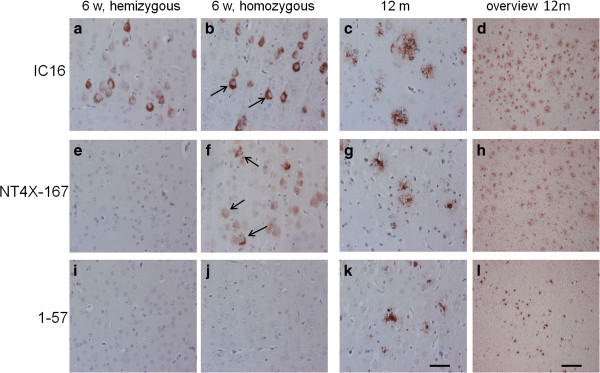
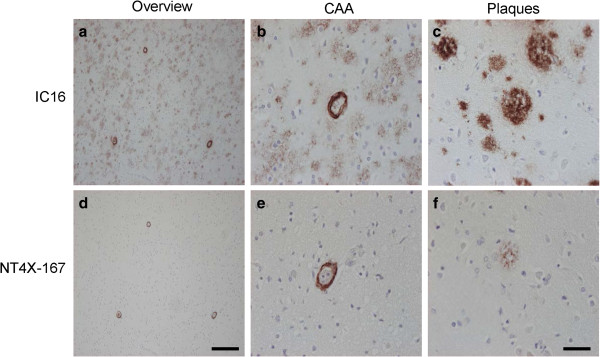
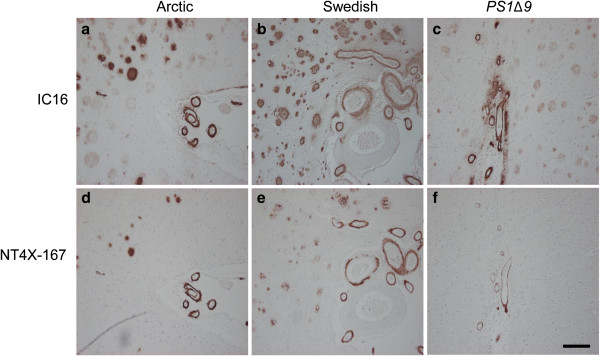
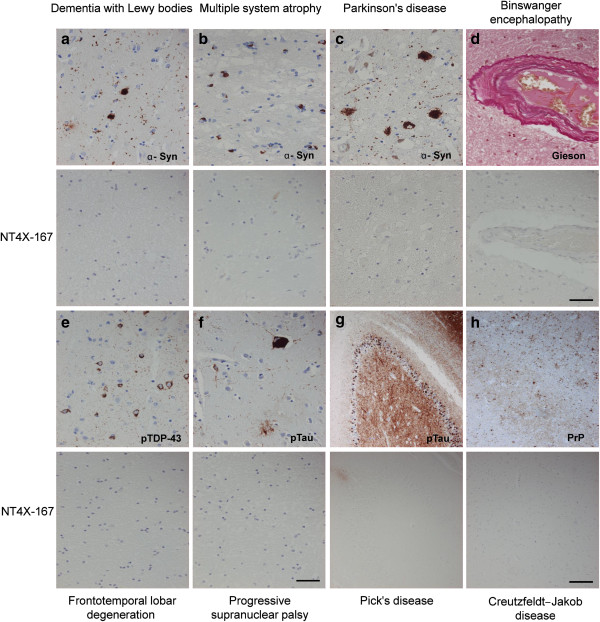
BACKGROUND: The amyloid hypothesis in Alzheimer disease (AD) considers amyloid β peptide (Aβ) deposition causative in triggering down-stream events like neurofibrillary tangles, cell loss, vascular damage and memory decline. In the past years N-truncated Aβ peptides especially N-truncated pyroglutamate AβpE3-42 have been extensively studied. Together with full-length Aβ1-42 and Aβ1-40, N-truncated AβpE3-42 and Aβ4-42 are major variants in AD brain. Although Aβ4-42 has been known for a much longer time, there is a lack of studies addressing the question whether AβpE3-42 or Aβ4-42 may precede the other in Alzheimer's disease pathology. RESULTS: Using different Aβ antibodies specific for the different N-termini of N-truncated Aβ, we discovered that Aβ4-x preceded AβpE3-x intraneuronal accumulation in a transgenic mouse model for AD prior to plaque formation. The novel Aβ4-x immunoreactive antibody NT4X-167 detected high molecular weight aggregates derived from N-truncated Aβ species. While NT4X-167 significantly rescued Aβ4-42 toxicity in vitro no beneficial effect was observed against Aβ1-42 or AβpE3-42 toxicity. Phenylalanine at position four of Aβ was imperative for antibody binding, because its replacement with alanine or proline completely prevented binding. Although amyloid plaques were observed using NT4X-167 in 5XFAD transgenic mice, it barely reacted with plaques in the brain of sporadic AD patients and familial cases with the Arctic, Swedish and the presenilin-1 PS1Δ9 mutation. A consistent staining was observed in blood vessels in all AD cases with cerebral amyloid angiopathy. There was no cross-reactivity with other aggregates typical for other common neurodegenerative diseases showing that NT4X-167 staining is specific for AD. CONCLUSIONS: Aβ4-x precedes AβpE3-x in the well accepted 5XFAD AD mouse model underlining the significance of N-truncated species in AD pathology. NT4X-167 therefore is the first antibody reacting with Aβ4-x and represents a novel tool in Alzheimer research.
Overview
The claims and statistics of this paper haven’t been checked yet.
Free: it reads the open-access text and checks the first 5 claims that cite a source we can check. Create a free account to check every claim.
Integrity signals
Registry
Cites
Statistics
Figures
Verification
Claims the paper makes
The claims and statistics of this paper haven’t been checked yet.
Free: it reads the open-access text and checks the first 5 claims that cite a source we can check. Create a free account to check every claim.
Self-check
Percentages, sums and reported differences re-computed from the paper’s own numbers.
The self-check needs the paper’s full text.
Citations
Cites
1 retracted
RETRACTED ARTICLE: A specific amyloid-β protein assembly in the brain impairs memory
Lesné, S., Koh, M. T., Kotilinek, L., Kayed, R., Glabe, C. G., Yang, A., Gallagher, M., & Ashe, K. H. (2006) · Nature · doi:10.1038/nature04533 · Cited by 2,769 · cited 1×
“Interestingly, injection of these purified oligomers into the ventricle of wildtype rats caused a dramatic drop in spatial memory performance [50].”
BackgroundRetractedAlzheimer's disease: the amyloid cascade hypothesis
Hardy, J. A., & Higgins, G. A. (1992) · Science · doi:10.1126/science.1566067 · Cited by 7,484 · cited 1×
“The “Amyloid Hypothesis” was proposed, therefore, based on the previously mentioned discovery [3,7].”
BackgroundGlenner, G. G., & Wong, C. W. (1984) · Biochemical and Biophysical Research Communications · doi:10.1016/s0006-291x(84)80190-4 · Cited by 5,404
Soluble protein oligomers in neurodegeneration: lessons from the Alzheimer's amyloid β-peptide
Haass, C., & Selkoe, D. J. (2007) · Nature Reviews Molecular Cell Biology · doi:10.1038/nrm2101 · Cited by 4,744 · cited 11×
“Mori H, Takio K, Ogawara M, Selkoe DJ: Mass spectrometry of purified amyloid beta protein in Alzheimer's disease.”
BackgroundInfluentialThe precursor of Alzheimer's disease amyloid A4 protein resembles a cell-surface receptor
Kang, J., Lemaire, H.-G., Unterbeck, A., Salbaum, J. M., Masters, C. L., Grzeschik, K.-H., Multhaup, G., Beyreuther, K., & Müller-Hill, B. (1987) · Nature · doi:10.1038/325733a0 · Cited by 4,619
Amyloid plaque core protein in Alzheimer disease and Down syndrome.
Masters, C. L., Simms, G., Weinman, N. A., Multhaup, G., McDonald, B. L., & Beyreuther, K. (1985) · Proceedings of the National Academy of Sciences · doi:10.1073/pnas.82.12.4245 · Cited by 4,431 · cited 6×
“In fact, analysis of amyloid deposits in AD brains revealed various N- and C-terminal variants [14,17,18].”
BackgroundResultInfluentialWalsh, D. M., Klyubin, I., Fadeeva, J. V., Cullen, W. K., Anwyl, R., Wolfe, M. S., Rowan, M. J., & Selkoe, D. J. (2002) · Nature · doi:10.1038/416535a · Cited by 4,291 · cited 1×
“Selkoe and others reported that toxic Aβ oligomers are primarily dimers and trimers of Aβ [28,61,62].”
BackgroundOakley, H., Cole, S. L., Logan, S., Maus, E., Shao, P., Craft, J., Guillozet-Bongaarts, A., Ohno, M., Disterhoft, J., Van Eldik, L., et al. (2006) · The Journal of Neuroscience · doi:10.1523/jneurosci.1202-06.2006 · Cited by 3,530 · cited 4×
“Transgenic mouse brain samples 5XFAD mice express the 695 amino acids isoform of the human amyloid precursor protein (APP695) carrying the Swedish/London/Florida mutations under the control of the murine Thy1-promoter [39].”
BackgroundMethodInfluentialBlennow, K., de Leon, M. J., & Zetterberg, H. (2006) · The Lancet · doi:10.1016/s0140-6736(06)69113-7 · Cited by 3,134
The molecular pathology of Alzheimer's disease
Selkoe, D. J. (1991) · Neuron · doi:10.1016/0896-6273(91)90052-2 · Cited by 2,708
Cited by
Behavioral and EEG changes in male 5xFAD mice
Schneider, F., Baldauf, K., Wetzel, W., & Reymann, K. G. (2014) · Physiology & Behavior · doi:10.1016/j.physbeh.2014.05.041 · Cited by 169
Bayer, T. A., & Wirths, O. (2014) · Acta Neuropathologica · doi:10.1007/s00401-014-1287-x · Cited by 165
“Using NT4X-167, an antibody recognizing the N-terminus of N-truncated Aβ species with a preference for Aβ4–x, strong intracellular staining could be detected in young 5XFAD transgenic mice [3]. very recently, a transgenic mouse model overexpressing Aβ4–42 without any mutations under the control of the murine neuron-sp…”
InfluentialSelf-citationFasae, K. D., Abolaji, A. O., Faloye, T. R., Odunsi, A. Y., Oyetayo, B. O., Enya, J. I., Rotimi, J. A., Akinyemi, R. O., Whitworth, A. J., & Aschner, M. (2021) · Journal of Trace Elements in Medicine and Biology · doi:10.1016/j.jtemb.2021.126779 · Cited by 154
Recent advances in the neurobiology and neuropharmacology of Alzheimer’s disease
Kumar, K., Kumar, A., Keegan, R. M., & Deshmukh, R. R. (2017) · Biomedicine & Pharmacotherapy · doi:10.1016/j.biopha.2017.12.053 · Cited by 179
Kehoe, P. G. (2018) · Journal of Alzheimer’s Disease · doi:10.3233/jad-171119 · Cited by 133
Are N- and C-terminally truncated Aβ species key pathological triggers in Alzheimer's disease?
Dunys, J., Valverde, A., & Checler, F. (2018) · Journal of Biological Chemistry · doi:10.1074/jbc.r118.003999 · Cited by 114
Luccarini, I., Grossi, C., Rigacci, S., Coppi, E., Pugliese, A. M., Pantano, D., la Marca, G., Dami, T. E., Berti, A., Stefani, M., et al. (2014) · Neurobiology of Aging · doi:10.1016/j.neurobiolaging.2014.08.029 · Cited by 121
“…identified within the cored and diffuse amyloid plaques in the AD brain starting with amino residue Ala-2, pyroglutamylated Glu-3, Phe-4, Arg-5, His-6, Asp-7, Ser-8, Gly-9, Tyr-10, and pyroglutamylated Glu-11 (Antonios et al., 2013; Bayer and Wirths, 2014; Lemere et al., 1996; Saido et al., 1995).”
Diesel engine exhaust accelerates plaque formation in a mouse model of Alzheimer’s disease
Hullmann, M., Albrecht, C., van Berlo, D., Gerlofs-Nijland, M. E., Wahle, T., Boots, A. W., Krutmann, J., Cassee, F. R., Bayer, T. A., & Schins, R. P. F. (2017) · Particle and Fibre Toxicology · doi:10.1186/s12989-017-0213-5 · Cited by 111
Self-citationThe Beta Amyloid Dysfunction (BAD) Hypothesis for Alzheimer’s Disease
Hillen, H. (2019) · Frontiers in Neuroscience · doi:10.3389/fnins.2019.01154 · Cited by 106
Pyroglutamate Aβ cascade as drug target in Alzheimer’s disease
Bayer, T. A. (2022) · Molecular Psychiatry · doi:10.1038/s41380-021-01409-2 · Cited by 94
“Both, active immunization with the TAPAS vaccine and passive immunization with the humanized TAPAS version of the murine precursor antibody [61, 62] had similar treatment effects.”
MethodSelf-citationAβ truncated species: Implications for brain clearance mechanisms and amyloid plaque deposition
Cabrera, E., Mathews, P., Mezhericher, E., Beach, T. G., Deng, J., Neubert, T. A., Rostagno, A., & Ghiso, J. (2018) · Biochimica et Biophysica Acta (BBA) - Molecular Basis of Disease · doi:10.1016/j.bbadis.2017.07.005 · Cited by 78
Neuron Loss in Alzheimer’s Disease: Translation in Transgenic Mouse Models
Wirths, O., & Zampar, S. (2020) · International Journal of Molecular Sciences · doi:10.3390/ijms21218144 · Cited by 75
“They develop deficits in spatial reference and object recognition memory, correlating with robust neuron loss in the CA1 pyramidal layer in a gene dose-dependent manner [65,103,104], as well as motor deficits [105] and reduced neurogenesis [106].”
BackgroundSelf-citationBouter, Y., López‐Noguerola, J. S., Tucholla, P., Crespi, G. A. N., Parker, M. W., Wiltfang, J., Miles, L. A., & Bayer, T. A. (2015) · Acta Neuropathologica · doi:10.1007/s00401-015-1489-x · Cited by 79
“5 mg/ml) and NT4X (1:200; 2 mg/ml) [4, 14, 44].”
Self-citationWirths, O., Walter, S., Kraus, I., Klafki, H. W., Stazi, M., Oberstein, T. J., Ghiso, J., Wiltfang, J., Bayer, T. A., & Weggen, S. (2017) · Alzheimer's Research & Therapy · doi:10.1186/s13195-017-0309-z · Cited by 64
Self-citationWalter, S., Jumpertz, T., Hüttenrauch, M., Ogorek, I., Gerber, H., Storck, S. E., Zampar, S., Dimitrov, M., Lehmann, S., Lepka, K., et al. (2019) · Acta Neuropathologica · doi:10.1007/s00401-018-1929-5 · Cited by 65
Self-citationAlzheimer therapy with an antibody against N-terminal Abeta 4-X and pyroglutamate Abeta 3-X
Antonios, G., Borgers, H., Richard, B. C., Brauß, A., Meißner, J., Weggen, S., Pena, V., Pillot, T., Davies, S. L., Bakrania, P., et al. (2015) · Scientific Reports · doi:10.1038/srep17338 · Cited by 61
Self-citationCuII Binding Properties of N-Truncated Aβ Peptides: In Search of Biological Function
Stefaniak, E., & Bal, W. (2019) · Inorganic Chemistry · doi:10.1021/acs.inorgchem.9b01399 · Cited by 62
Angiotensin-III is Increased in Alzheimer’s Disease in Association with Amyloid-β and Tau Pathology
Kehoe, P. G., Hibbs, E., Palmer, L. E., & Miners, J. S. (2017) · Journal of Alzheimer s Disease · doi:10.3233/jad-161265 · Cited by 53
“AP-A generates highly amyloidogenic and neurotoxic N-terminal truncated and pyroglutamated (A (cid:2) pE3) A (cid:2) 42 species that could also contribute directly to AD pathogenesis [40, 41].”
Lyons, B., Friedrich, M. G., Raftery, M. J., & Truscott, R. J. W. (2016) · Analytical Chemistry · doi:10.1021/acs.analchem.5b03891 · Cited by 46
Glutaminyl Cyclase, Diseases, and Development of Glutaminyl Cyclase Inhibitors
Xu, C., Wang, Y., & Wu, H. (2021) · Journal of Medicinal Chemistry · doi:10.1021/acs.jmedchem.1c00325 · Cited by 36
Effects of Aβ-derived peptide fragments on fibrillogenesis of Aβ
Abedin, F., Kandel, N., & Tatulian, S. A. (2021) · Scientific Reports · doi:10.1038/s41598-021-98644-y · Cited by 35
Bakrania, P., Hall, G., Bouter, Y., Bouter, C., Beindorff, N., Cowan, R. H., Davies, S. L., Price, J., Mpamhanga, C., Love, E. A., et al. (2021) · Molecular Psychiatry · doi:10.1038/s41380-021-01385-7 · Cited by 35
“The lead therapeutic antibody for clinical assessment is TAP01_04, which is a humanised variant of TAP01 retaining the high specificity and affinity of the mouse parent antibody [10, 35].”
BackgroundResultSelf-citationModified amyloid variants in pathological subgroups of β‐amyloidosis
Gerth, J., Kumar, S., Upadhaya, A. R., Ghebremedhin, E., Arnim, C. A. F. V., Thal, D. R., & Walter, J. (2018) · Annals of Clinical and Translational Neurology · doi:10.1002/acn3.577 · Cited by 32
Apolipoprotein D: a potential biomarker for cerebral amyloid angiopathy
Kuiperij, H. B., Hondius, D., Kersten, I., Versleijen, A. A. M., Rozemüller, A. J. M., Greenberg, S. M., Schreuder, F. H. B. M., Klijn, C. J. M., & Verbeek, M. M. (2019) · Neuropathology and Applied Neurobiology · doi:10.1111/nan.12595 · Cited by 29
Stefaniak, E., Atrián‐Blasco, E., Goch, W., Sabater, L., Hureau, C., & Bal, W. (2021) · Chemistry - A European Journal · doi:10.1002/chem.202004484 · Cited by 35
Guzmán, E. A., Bouter, Y., Richard, B. C., Lannfelt, L., Ingelsson, M., Paetau, A. E., Verkkoniemi‐Ahola, A., Wirths, O., & Bayer, T. A. (2014) · Molecular Neurodegeneration · doi:10.1186/1750-1326-9-13 · Cited by 34
“5 months of age immediately preceding extracellular plaque deposition occurring at the age of 2 months [51].”
BackgroundResultSelf-citationFroestl, W., Pfeifer, A., & Muhs, A. (2013) · Journal of Alzheimer s Disease · doi:10.3233/jad-121729 · Cited by 33
Antibody Engineering for Optimized Immunotherapy in Alzheimer's Disease
Sumner, I. L., Edwards, R. A., Asuni, A. A., & Teeling, J. L. (2018) · Frontiers in Neuroscience · doi:10.3389/fnins.2018.00254 · Cited by 24
“NT4X-167, an experimental antibody that recognizes phenylalanine at position four of Aβ4-x on monomeric and oligomeric Aβ4–x peptides rescued Aβ4-42 induced neuron death in vitro and in vivo (Antonios et al., 2013, 2015).”
BackgroundFeldman, H., for the ADCS VIVA-MIND Study Group, Messer, K. S., Qiu, Y., Sabbagh, M., Galasko, D., Turner, R. S., López, O. L., Smith, A., Durant, J., et al. (2024) · Journal of Alzheimer s Disease · doi:10.3233/jad-231126 · Cited by 23
“These have been shown to reduce amyloid plaque load and rescue memory deficits [50–53].”
BackgroundDifferential Modulation of the Aggregation of N‐Terminal Truncated Aβ using Cucurbiturils
Gao, L., Yang, W., Zhao, Y., Chen, Y., Hong, L., & Li, Y. (2018) · Chemistry - A European Journal · doi:10.1002/chem.201802655 · Cited by 21
Bayer, T. A. (2021) · Frontiers in Aging Neuroscience · doi:10.3389/fnagi.2021.710579 · Cited by 20
“Injecting Aβ4–42 into the lateral ventricles of wildtype mice induced working memory deficits after 4 days (Antonios et al., 2013, 2015).”
BackgroundMethodSelf-citationHierarchical binding of copperII to N-truncated Aβ4–16 peptide
Teng, X., Stefaniak, E., Girvan, P., Kotuniak, R., Płonka, D., Bal, W., & Ying, L. (2020) · Metallomics · doi:10.1039/c9mt00299e · Cited by 21
Kuhn, A. J., Chan, K., Sajimon, M., Yoo, S., Serrão, V. H. B., Lee, J., Abrams, B. S., Nowick, J. S., Uversky, V. N., Wheeler, C. J., et al. (2024) · Journal of the American Chemical Society · doi:10.1021/jacs.3c11511 · Cited by 16
Bernstein, H., Keilhoff, G., Dobrowolny, H., & Steiner, J. (2022) · Reviews in the Neurosciences · doi:10.1515/revneuro-2022-0026 · Cited by 11
The role of amyloid beta 4-42 in the etiology of Alzheimer's disease
Bouter, Y. (2015) · eDiss (Georg-August-Universität Göttingen) · doi:10.53846/goediss-4849 · Cited by 8
Self-citationImmunotherapy Against N-Truncated Amyloid-β Oligomers
Bayer, T. A., & Wirths, O. (2016) · Methods in pharmacology and toxicology · doi:10.1007/978-1-4939-3560-4_3 · Cited by 4
Self-citationPrediction of the 3D conformation of a small peptide vaccine targeting Aβ42 oligomers
Guan, Y., Mei, J., Gao, X., Wang, C., Jia, M., Ahmad, S., Muhammad, F. N., & Ai, H. (2024) · Physical Chemistry Chemical Physics · doi:10.1039/d4cp02078b · Cited by 3
“25,26 ACI-24 is the first A b -peptide vaccine for down syndrome AD, 24 with the first 15 amino acids (1–15) of A b 42 turned into a stacked b -sheet conformation anchoring on the surface of liposomes.”
BackgroundFunctional properties of microglia in mouse models of Alzheimer’s disease
Saiepour, N. (2017) · eDiss (Georg-August-Universität Göttingen) · doi:10.53846/goediss-6117 · Cited by 3
Self-citationOtt, F. W., Sichler, M. E., Bouter, C., Enayati, M., Wiltfang, J., Bayer, T. A., Beindorff, N., Löw, M. J., & Bouter, Y. (2025) · Journal of Alzheimer s Disease Reports · doi:10.1177/25424823241306770 · Cited by 2
“49 In brief, the sections were fi rst deparaf fi nized in xylene and then rehydrated through a graded ethanol series (100%, 95%, 70%).”
Self-citationNeglected N-Truncated Amyloid-β Peptide and Its Mixed Cu–Zn Complexes
Frączyk, T., & Cieplak, P. (2022) · The Protein Journal · doi:10.1007/s10930-022-10056-7 · Cited by 2
Amyloid beta 4-42 in Alzheimer’s disease: Target, Therapy, Mechanism
Antonios, G. (2016) · eDiss (Georg-August-Universität Göttingen) · doi:10.53846/goediss-5611 · Cited by 1
Self-citationIn Vitro and In Vivo Studies on Antibodies - N-terminally Truncated Abeta in the 5XFAD Mouse Model
Richard, B. C. (2015) · eDiss (Georg-August-Universität Göttingen) · doi:10.53846/goediss-5098
Self-citationBorgers, H. (2017) · eDiss (Georg-August-Universität Göttingen) · doi:10.53846/goediss-6363
Studie zur Rolle N-trunkierter Amyloid-β-Peptide bei der Alzheimer-Krankheit
Gießen, N. M.-E. (2019) · eDiss (Georg-August-Universität Göttingen) · doi:10.53846/goediss-7657 · Cited by 1
The role of N-truncated Aβ peptides in Alzheimer’s Disease
López‐Noguerola, J. S. (2018) · eDiss (Georg-August-Universität Göttingen) · doi:10.53846/goediss-6949 · Cited by 1
Zampar, S. (2021) · eDiss (Georg-August-Universität Göttingen) · doi:10.53846/goediss-9004
Duffin, J. (2019) · Faculty Opinions – Post-Publication Peer Review of the Biomedical Literature · doi:10.3410/f.736901473.793567387
Quantitative Analysen hippocampaler Interneuronen in zwei transgenen Alzheimer Mausmodellen
Giesers, N. K. (2022) · eDiss (Georg-August-Universität Göttingen) · doi:10.53846/goediss-9447
Henniges, P. (2023) · eDiss (Georg-August-Universität Göttingen) · doi:10.53846/goediss-9694
Ruoff, L. K., Bänfer, I. W. H., Liedtke, D. E., China, S. E., Wiltfang, J., Bayer, T. A., Bock, S., Spandau, F., Bouter, C., Beindorff, N., et al. (2025) · Pharmacology Biochemistry and Behavior · doi:10.1016/j.pbb.2025.174127
Self-citationDietrich, K. (2015) · eDiss (Georg-August-Universität Göttingen) · doi:10.53846/goediss-4863 · Cited by 1
del Valle, M. L., & Arienzo, D. (2026) · Ibrain · doi:10.1002/ibra.70016
“32,86 In addition, immunohistochemical staining of cortical sections of 5XFAD transgenic mice showed that NT4X ‐ 167 recognized intraneuronal A β in 6 ‐ week ‐ old homozygous 5XFAD mice.”
Valverde, A. (2020) · theses.fr (ABES) · doi:10.70675/f1b70734zf4e3z4870z8fbdz950d831642a7
BindingDB (2024) · UC San Diego · doi:10.7270/q2sn0f5x
Metadata
- Authors
- Antonios, G., Saiepour, N., Bouter, Y., Richard, B. C., Paetau, A., Verkkoniemi-Ahola, A., Lannfelt, L., Ingelsson, M., Kovacs, G. G., Pillot, T., Wirths, O., & Bayer, T. A.
- Affiliations
- University of Göttingen (DE)
- Helsinki University Hospital (FI)
- Uppsala University (SE)
- Corresponding author
- Bayer, Thomas A
- Venue
- Acta Neuropathologica Communications
- Published
- 2013
- Volume
- 1
- Issue
- 1
- Pages
- 56
- ISSN
- 2051-5960 (ISSN-L)
- PMC
- PMC3893517
- OpenAlex
- W2169902596
- Cited by
- 53
- References
- 83
- Citations by year
- 2026: 1 · 2025: 2 · 2024: 3 · 2023: 1 · 2022: 3 · 2021: 7 · 2020: 4 · 2019: 5 · 2018: 7 · 2017: 7 · 2016: 3 · 2015: 5 · 2014: 4 · 2013: 1
- FWCI
- 3.01
- Type
- journal article
- Language
- en
- Open access
- gold
- doi.org
- Licence
- cc-by
- Locations
- Acta Neuropathologica Communications (publishedVersion, cc-by)
- Europe PMC (PubMed Central) (publishedVersion, cc-by)
- PubMed Central (publishedVersion, cc-by)
- PubMed (publishedVersion)
- GoeScholar The Publication Server of the Georg-August-Universität Göttingen (Georg-August-Universität Göttingen) (submittedVersion, cc-by)
- Työväentutkimus Vuosikirja (submittedVersion)
- Topics
- Life Sciences › Neuroscience › Cellular and Molecular Neuroscience › Alzheimer's disease research and treatments
- Health Sciences › Medicine › Psychiatry and Mental health › Dementia and Cognitive Impairment Research
- Life Sciences › Neuroscience › Neurology › Neuroinflammation and Neurodegeneration Mechanisms
- Keywords
- amyloid-beta, monoclonal antibodies, amyloid plaques, 5xFAD mice, cerebral amyloid angiopathy, amyloid hypothesis, antibody specificity
- MeSH terms
- Aged, Aged, 80 and over, Alzheimer Disease, Animals, Antibodies, Monoclonal, Brain, Cell Survival, Cells, Cultured, Disease Models, Animal, Female, Humans, Male, Mice, Transgenic, Neurons, Amyloid beta-Peptides, Rats, Wistar, Epitope Mapping, Neuroprotective Agents, Neurodegenerative Diseases, Plaque, Amyloid
About these checks
Registry, retraction, Cites and statistics results are computed, not judged, with one exception: a printed reference that no index lists is read once by a model before it counts as a citation error. Claims are extracted by a model and kept only when their quote appears verbatim in the text; each cited source is then checked, with a model’s help, for whether it says what the claim relies on. Those verdicts can be wrong — read the claim’s quote and the cited source before relying on one.
Statistics and arithmetic are recomputed, not judged.
Confidence bands are shown only for fields calibrated on our annotated test set. None is calibrated yet, so no band is shown.
What counts as a claim ›How we measure confidence ›How we check this ›
Are you an author, or do you see a problem with this page? Request a review
Data sources
Bibliographic data: Semantic Scholar, OpenAlex, Crossref.
Contains information from the Semantic Scholar Academic Graph Datasets, made available under the ODC Attribution License (ODC-BY 1.0).
Semantic Scholar’s data is described in: Kinney, R., et al. (2023). The Semantic Scholar Open Data Platform. arXiv:2301.10140.
