

N-truncated Abeta starting with position four: early intraneuronal accumulation and rescue of toxicity using NT4X-167, a novel monoclonal antibody
Open accessThe DOI matches its Crossref record; 83 of the 83 references it cites were found in a registry or an index.
Abstract
BACKGROUND: The amyloid hypothesis in Alzheimer disease (AD) considers amyloid β peptide (Aβ) deposition causative in triggering down-stream events like neurofibrillary tangles, cell loss, vascular damage and memory decline. In the past years N-truncated Aβ peptides especially N-truncated pyroglutamate AβpE3-42 have been extensively studied. Together with full-length Aβ1-42 and Aβ1-40, N-truncated AβpE3-42 and Aβ4-42 are major variants in AD brain. Although Aβ4-42 has been known for a much longer time, there is a lack of studies addressing the question whether AβpE3-42 or Aβ4-42 may precede the other in Alzheimer's disease pathology. RESULTS: Using different Aβ antibodies specific for the different N-termini of N-truncated Aβ, we discovered that Aβ4-x preceded AβpE3-x intraneuronal accumulation in a transgenic mouse model for AD prior to plaque formation. The novel Aβ4-x immunoreactive antibody NT4X-167 detected high molecular weight aggregates derived from N-truncated Aβ species. While NT4X-167 significantly rescued Aβ4-42 toxicity in vitro no beneficial effect was observed against Aβ1-42 or AβpE3-42 toxicity. Phenylalanine at position four of Aβ was imperative for antibody binding, because its replacement with alanine or proline completely prevented binding. Although amyloid plaques were observed using NT4X-167 in 5XFAD transgenic mice, it barely reacted with plaques in the brain of sporadic AD patients and familial cases with the Arctic, Swedish and the presenilin-1 PS1Δ9 mutation. A consistent staining was observed in blood vessels in all AD cases with cerebral amyloid angiopathy. There was no cross-reactivity with other aggregates typical for other common neurodegenerative diseases showing that NT4X-167 staining is specific for AD. CONCLUSIONS: Aβ4-x precedes AβpE3-x in the well accepted 5XFAD AD mouse model underlining the significance of N-truncated species in AD pathology. NT4X-167 therefore is the first antibody reacting with Aβ4-x and represents a novel tool in Alzheimer research.
Overview
The claims and statistics of this paper haven’t been checked yet.
Free: it reads the open-access text and checks the first 5 claims that cite a source we can check. Create a free account to check every claim.
Integrity signals
Registry
Cites
Statistics
Figures
Verification
Claims the paper makes
The claims and statistics of this paper haven’t been checked yet.
Free: it reads the open-access text and checks the first 5 claims that cite a source we can check. Create a free account to check every claim.
Self-check
Percentages, sums and reported differences re-computed from the paper’s own numbers.
The self-check needs the paper’s full text.
Citations
Cites
1 retracted
RETRACTED ARTICLE: A specific amyloid-β protein assembly in the brain impairs memory
Lesné, S., Koh, M. T., Kotilinek, L., Kayed, R., Glabe, C. G., Yang, A., Gallagher, M., & Ashe, K. H. (2006) · Nature · doi:10.1038/nature04533 · Cited by 2,769 · cited 1×
“Interestingly, injection of these purified oligomers into the ventricle of wildtype rats caused a dramatic drop in spatial memory performance [50].”
BackgroundRetractedAlzheimer's disease: the amyloid cascade hypothesis
Hardy, J. A., & Higgins, G. A. (1992) · Science · doi:10.1126/science.1566067 · Cited by 7,484 · cited 1×
“The “Amyloid Hypothesis” was proposed, therefore, based on the previously mentioned discovery [3,7].”
BackgroundGlenner, G. G., & Wong, C. W. (1984) · Biochemical and Biophysical Research Communications · doi:10.1016/s0006-291x(84)80190-4 · Cited by 5,404
Soluble protein oligomers in neurodegeneration: lessons from the Alzheimer's amyloid β-peptide
Haass, C., & Selkoe, D. J. (2007) · Nature Reviews Molecular Cell Biology · doi:10.1038/nrm2101 · Cited by 4,744 · cited 11×
“Mori H, Takio K, Ogawara M, Selkoe DJ: Mass spectrometry of purified amyloid beta protein in Alzheimer's disease.”
BackgroundInfluentialThe precursor of Alzheimer's disease amyloid A4 protein resembles a cell-surface receptor
Kang, J., Lemaire, H.-G., Unterbeck, A., Salbaum, J. M., Masters, C. L., Grzeschik, K.-H., Multhaup, G., Beyreuther, K., & Müller-Hill, B. (1987) · Nature · doi:10.1038/325733a0 · Cited by 4,619
Amyloid plaque core protein in Alzheimer disease and Down syndrome.
Masters, C. L., Simms, G., Weinman, N. A., Multhaup, G., McDonald, B. L., & Beyreuther, K. (1985) · Proceedings of the National Academy of Sciences · doi:10.1073/pnas.82.12.4245 · Cited by 4,431 · cited 6×
“In fact, analysis of amyloid deposits in AD brains revealed various N- and C-terminal variants [14,17,18].”
BackgroundResultInfluentialWalsh, D. M., Klyubin, I., Fadeeva, J. V., Cullen, W. K., Anwyl, R., Wolfe, M. S., Rowan, M. J., & Selkoe, D. J. (2002) · Nature · doi:10.1038/416535a · Cited by 4,291 · cited 1×
“Selkoe and others reported that toxic Aβ oligomers are primarily dimers and trimers of Aβ [28,61,62].”
BackgroundOakley, H., Cole, S. L., Logan, S., Maus, E., Shao, P., Craft, J., Guillozet-Bongaarts, A., Ohno, M., Disterhoft, J., Van Eldik, L., et al. (2006) · The Journal of Neuroscience · doi:10.1523/jneurosci.1202-06.2006 · Cited by 3,530 · cited 4×
“Transgenic mouse brain samples 5XFAD mice express the 695 amino acids isoform of the human amyloid precursor protein (APP695) carrying the Swedish/London/Florida mutations under the control of the murine Thy1-promoter [39].”
BackgroundMethodInfluentialBlennow, K., de Leon, M. J., & Zetterberg, H. (2006) · The Lancet · doi:10.1016/s0140-6736(06)69113-7 · Cited by 3,134
The molecular pathology of Alzheimer's disease
Selkoe, D. J. (1991) · Neuron · doi:10.1016/0896-6273(91)90052-2 · Cited by 2,708
Amyloid deposition as the central event in the aetiology of Alzheimer’s disease
Hardy, J., & Allsop, D. (1991) · Trends in Pharmacological Sciences · doi:10.1016/0165-6147(91)90609-v · Cited by 2,538 · cited 2×
“Extracellular deposits of Aβ protein and the intracellular accumulation of phosphorylated tau protein are the basis of the neuropathological characterization of AD [1-3].”
BackgroundThe toxic Aβ oligomer and Alzheimer's disease: an emperor in need of clothes
Benilova, I., Karran, E., & De Strooper, B. (2012) · Nature Neuroscience · doi:10.1038/nn.3028 · Cited by 1,962 · cited 4×
“Martins IC, Kuperstein I, Wilkinson H, Maes E, Vanbrabant M, Jonckheere W, Van Gelder P, Hartmann D, D'Hooge R, De Strooper B, Schymkowitz J, Rousseau F: Lipids revert inert A[beta] amyloid fibrils to neurotoxic protofibrils that affect learning in mice.”
BackgroundInfluentialAβ Oligomers – a decade of discovery
Walsh, D. M., & Selkoe, D. J. (2007) · Journal of Neurochemistry · doi:10.1111/j.1471-4159.2006.04426.x · Cited by 1,938 · cited 2×
“Soluble oligomers are low molecular weight non-fibrillar structures, which are stable in aqueous solution and remain soluble even after high speed centrifugation [26].”
BackgroundPetkova, A. T., Ishii, Y., Balbach, J. J., Antzutkin, O. N., Leapman, R. D., Delaglio, F., & Tycko, R. (2002) · Proceedings of the National Academy of Sciences · doi:10.1073/pnas.262663499 · Cited by 1,845
Iwatsubo, T., Odaka, A., Suzuki, N., Mizusawa, H., Nukina, N., & Ihara, Y. (1994) · Neuron · doi:10.1016/0896-6273(94)90458-8 · Cited by 1,774
The role of apolipoprotein E in Alzheimer's disease
Kim, J., Basak, J. M., & Holtzman, D. M. (2009) · Neuron · doi:10.1016/j.neuron.2009.06.026 · Cited by 1,661 · cited 1×
“Loss of Aβ clearance instead of increased Aβ generation has been considered to be involved in the pathology of the sporadic variant of AD [52].”
BackgroundSoluble Amyloid β Peptide Concentration as a Predictor of Synaptic Change in Alzheimer's Disease
Lue, L.-F., Kuo, Y.-M., Roher, A. E., Brachova, L., Shen, Y., Sue, L., Beach, T., Kurth, J. H., Rydel, R. E., & Rogers, J. (1999) · The American Journal of Pathology · doi:10.1016/s0002-9440(10)65184-x · Cited by 1,530 · cited 2×
“While Aβ plaques are poor correlates for the clinical symptomatology in AD and Down syndrome patients, soluble oligomers are suggested to be good predictors for synaptic loss [29], neurofibrillary tangles [30] and clinical phenotype [46].”
BackgroundMullan, M., Crawford, F., Axelman, K., Houlden, H., Lilius, L., Winblad, B., & Lannfelt, L. (1992) · Nature Genetics · doi:10.1038/ng0892-345 · Cited by 1,513 · cited 6×
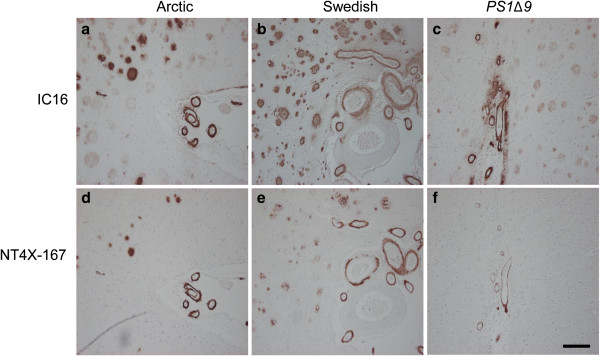
“In familial AD cases, NT4X-167 positive plaques were almost absent in patients with a mutation in presenilin-1 gene (PS1Δ9; [42]), and much weaker in cases with the Arctic [43,44] or Swedish [45] APP mutation compared to IC16 staining.”
BackgroundSelf-citationThe 'Arctic' APP mutation (E693G) causes Alzheimer's disease by enhanced Aβ protofibril formation
Nilsberth, C., Westlind-Danielsson, A., Eckman, C. B., Condron, M. M., Axelman, K., Forsell, C., Stenh, C., Luthman, J., Teplow, D. B., Younkin, S. G., et al. (2001) · Nature Neuroscience · doi:10.1038/nn0901-887 · Cited by 1,209 · cited 6×
“In familial AD cases, NT4X-167 positive plaques were almost absent in patients with a mutation in presenilin-1 gene (PS1Δ9; [42]), and much weaker in cases with the Arctic [43,44] or Swedish [45] APP mutation compared to IC16 staining.”
BackgroundSelf-citationStructural conversion of neurotoxic amyloid-β1–42 oligomers to fibrils
Ahmed, M., Davis, J., Aucoin, D., Sato, T., Ahuja, S., Aimoto, S., Elliott, J. I., Van Nostrand, W. E., & Smith, S. O. (2010) · Nature Structural & Molecular Biology · doi:10.1038/nsmb.1799 · Cited by 1,111 · cited 1×
“[72], who observed an N-terminal β-strand, previously assumed to be an unstructured region [73-77].”
BackgroundMasters, C. L., Multhaup, G., Simms, G., Pottgiesser, J., Martins, R. N., & Beyreuther, K. (1985) · The EMBO Journal · doi:10.1002/j.1460-2075.1985.tb04000.x · Cited by 1,042 · cited 1×
“One key discovery, the isolation and sequencing of the gene encoding the larger amyloid precursor protein (APP) [4], was made possible by the biochemical analysis of β-amyloid containing blood vessels (CAA, cerebral amyloid angiopathy) [5] and amyloid plaques consisting of Aβ [6].”
BackgroundClassification and basic pathology of Alzheimer disease
Duyckaerts, C., Delatour, B., & Potier, M.-C. (2009) · Acta Neuropathologica · doi:10.1007/s00401-009-0532-1 · Cited by 1,031 · cited 1×
“Extracellular deposits of Aβ protein and the intracellular accumulation of phosphorylated tau protein are the basis of the neuropathological characterization of AD [1-3].”
BackgroundMandelkow, E. (1998) · Trends in Cell Biology · doi:10.1016/s0962-8924(98)01368-3 · Cited by 953
Roher, A. E., Lowenson, J. D., Clarke, S., Woods, A. S., Cotter, R. J., Gowing, E., & Ball, M. J. (1993) · Proceedings of the National Academy of Sciences · doi:10.1073/pnas.90.22.10836 · Cited by 740 · cited 1×
“Besides Aβ peptides starting with aspartate as the first amino acid (Aβ1), several N-truncated and modified Aβ species have also been described [14-16,69].”
BackgroundMoechars, D., Dewachter, I., Lorent, K., Reversé, D., Baekelandt, V., Naidu, A., Tesseur, I., Spittaels, K., Haute, C. V. D., Checler, F., et al. (1999) · Journal of Biological Chemistry · doi:10.1074/jbc.274.10.6483 · Cited by 668 · cited 1×
“Since then, however, amyloid plaque load in the brain and cognitive impairment in suffering patients [8] or even in transgenic mouse models for AD [9,10] have not been found to be consistently correlated.”
BackgroundJawhar, S., Trawicka, A., Jenneckens, C., Bayer, T. A., & Wirths, O. (2012) · Neurobiology of Aging · doi:10.1016/j.neurobiolaging.2010.05.027 · Cited by 623 · cited 3×
“5XFAD mice used in the current study were backcrossed for more than eight generations to C57Bl/6J wild-type mice to obtain an incipient congenic line on a C57Bl/6J genetic background [40].”
BackgroundMethodSelf-citationWater-soluble Aβ(N-40, N-42) oligomers in normal and Alzheimer disease brains
Kuo, Y.-M., Emmerling, M. R., Vigo-Pelfrey, C., Kasunic, T. C., Kirkpatrick, J. B., Murdoch, G. H., Ball, M. J., & Roher, A. E. (1996) · Journal of Biological Chemistry · doi:10.1074/jbc.271.8.4077 · Cited by 618
Saido, T. C., Iwatsubo, T., Mann, D. M. A., Shimada, H., Ihara, Y., & Kawashima, S. (1995) · Neuron · doi:10.1016/0896-6273(95)90301-1 · Cited by 587 · cited 5×
“The aggregation tendency and stability of the AβpE3-x peptides is due to the formation of the lactam ring and loss of two negative charges and one positive charge [16].”
InfluentialChimon, S., Shaibat, M. A., Jones, C. R., Calero, D. C., Aizezi, B., & Ishii, Y. (2007) · Nature Structural & Molecular Biology · doi:10.1038/nsmb1345 · Cited by 544 · cited 1×
“[72], who observed an N-terminal β-strand, previously assumed to be an unstructured region [73-77].”
BackgroundSolution Structures of β Peptide and Its Constituent Fragments: Relation to Amyloid Deposition
Barrow, C. J., & Zagorski, M. G. (1991) · Science · doi:10.1126/science.1853202 · Cited by 537 · cited 1×
“Faster aggregation leads to earlier Aβ deposition, which is believed to promote its toxicity [20,21,66].”
BackgroundWang, H.-W., Pasternak, J. F., Kuo, H., Ristic, H., Lambert, M. P., Chromy, B., Viola, K. L., Klein, W. L., Stine, W. B., Krafft, G. A., et al. (2002) · Brain Research · doi:10.1016/s0006-8993(01)03058-x · Cited by 527 · cited 1×
“With regard to shortterm effects, oligomers have been shown to impair synaptic plasticity by blocking long term potentiation and reinforcing long term depression [51].”
BackgroundMiller, D. L., Papayannopoulos, I. A., Styles, J., Bobin, S. A., Lin, Y. Y., Biemann, K., & Iqbal, K. (1993) · Archives of Biochemistry and Biophysics · doi:10.1006/abbi.1993.1112 · Cited by 510 · cited 2×
“In fact, various N- and C-terminal variants have been described in conjunction with in vitro and in vivo analysis of amyloid deposits in AD [14,17,18].”
BackgroundMass spectrometry of purified amyloid beta protein in Alzheimer's disease.
Mori, H., Takio, K., Ogawara, M., & Selkoe, D. J. (1992) · Journal of Biological Chemistry · doi:10.1016/s0021-9258(18)41896-0 · Cited by 483 · cited 7×
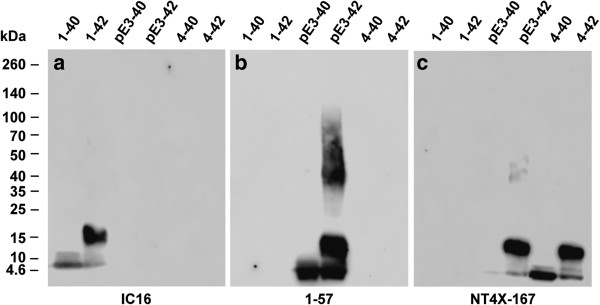
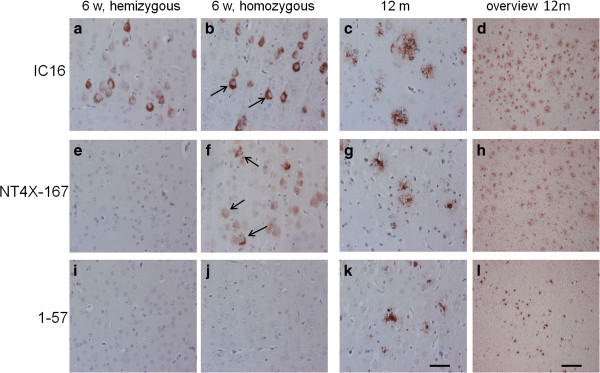
“IC16 recognized the N-terminus of full-length Aβ1–40 and Aβ1–42, but not any of the N-truncated peptides.”
BackgroundInfluentialNäslund, J., Schierhorn, A., Hellman, U., Lannfelt, L., Roses, A. D., Tjernberg, L. O., Silberring, J., Gandy, S. E., Winblad, B., & Greengard, P. (1994) · Proceedings of the National Academy of Sciences · doi:10.1073/pnas.91.18.8378 · Cited by 468 · cited 2×
“In addition to Aβ1 starting with aspartate as the first amino acid, several N-truncated and modified Aβ species have been characterized [14-16].”
BackgroundSelf-citationOligomerization of Alzheimer's β-Amyloid within Processes and Synapses of Cultured Neurons and Brain
Takahashi, R. H., Almeida, C. G., Kearney, P. F., Yu, F., Lin, M. T., Milner, T. A., & Gouras, G. K. (2004) · The Journal of Neuroscience · doi:10.1523/jneurosci.5167-03.2004 · Cited by 445 · cited 2×
“Occurring more often than their proliferation inside the extracellular space, Aβ oligomers develop preferentially within neuronal processes and synapses [27,28].”
BackgroundAmyloid seeds formed by cellular uptake, concentration, and aggregation of the amyloid-beta peptide
Hu, X., Crick, S. L., Bu, G., Frieden, C., Pappu, R. V., & Lee, J.-M. (2009) · Proceedings of the National Academy of Sciences · doi:10.1073/pnas.0911281106 · Cited by 426 · cited 1×
“At high concentrations, vesicular fulllength Aβ aggregates form high molecular weight oligomers which are capable of seeding amyloid fibril growth [49].”
BackgroundThe Oligomerization of Amyloid β-Protein Begins Intracellularly in Cells Derived from Human Brain
Walsh, D. M., Tseng, B. P., Rydel, R. E., Podlisny, M. B., & Selkoe, D. J. (2000) · Biochemistry · doi:10.1021/bi001048s · Cited by 401 · cited 3×
“Occurring more often than their proliferation inside the extracellular space, Aβ oligomers develop preferentially within neuronal processes and synapses [27,28].”
BackgroundCasas, C., Sergeant, N., Itier, J.-M., Blanchard, V., Wirths, O., van der Kolk, N., Vingtdeux, V., van de Steeg, E., Ret, G., Canton, T., et al. (2004) · The American Journal of Pathology · doi:10.1016/s0002-9440(10)63388-3 · Cited by 400 · cited 1×
“Early and transient intraneuronal accumulation of Aβ correlated with subsequent neuron loss also in diverse APP/Aβ transgenic mouse models and brain regions [34,41,54-57].”
BackgroundSelf-citationTomiyama, T., Matsuyama, S., Iso, H., Umeda, T., Takuma, H., Ohnishi, K., Ishibashi, K., Teraoka, R., Sakama, N., Yamashita, T., et al. (2010) · The Journal of Neuroscience · doi:10.1523/jneurosci.5825-09.2010 · Cited by 396 · cited 2×
“[33], who generated APP transgenic mice expressing the E693Δ mutation causing”
BackgroundAging and Alzheimer's Disease: Lessons From the Nun Study
Snowdon, D. A. (1997) · The Gerontologist · doi:10.1093/geront/37.2.150 · Cited by 367
Glutaminyl cyclase inhibition attenuates pyroglutamate Aβ and Alzheimer's disease–like pathology
Schilling, S., Zeitschel, U., Hoffmann, T., Heiser, U., Francke, M., Kehlen, A., Holzer, M., Hutter-Paier, B., Prokesch, M., Windisch, M., et al. (2008) · Nature Medicine · doi:10.1038/nm.1872 · Cited by 357 · cited 1×
“AβpE3-x formation is catalyzed by glutaminyl cyclase [79-82].”
BackgroundDifferences Between Vascular and Plaque Core Amyloid in Alzheimer's Disease
Prelli, F., Castano, E., Glenner, G. G., & Frangione, B. (1988) · Journal of Neurochemistry · doi:10.1111/j.1471-4159.1988.tb01087.x · Cited by 351 · cited 2×
“In fact, various N- and C-terminal variants have been described in conjunction with in vitro and in vivo analysis of amyloid deposits in AD [14,17,18].”
BackgroundWirths, O., Multhaup, G., & Bayer, T. A. (2004) · Journal of Neurochemistry · doi:10.1111/j.1471-4159.2004.02737.x · Cited by 350 · cited 1×
“A modified amyloid hypothesis was brought forth, wherein it has been suggested that intraneuronal Aβ accumulation precedes the extracellular formation of Aβ plaques and other AD pathological events [12].”
BackgroundSelf-citationCrook, R., Verkkoniemi, A., Perez-Tur, J., Mehta, N., Baker, M., Houlden, H., Farrer, M., Hutton, M., Lincoln, S., Hardy, J., et al. (1998) · Nature Medicine · doi:10.1038/nm0498-452 · Cited by 349 · cited 1×
“In familial AD cases, NT4X-167 positive plaques were almost absent in patients with a mutation in presenilin-1 gene (PS1Δ9; [42]), and much weaker in cases with the Arctic [43,44] or Swedish [45] APP mutation compared to IC16 staining.”
BackgroundSelf-citationPortelius, E., Bogdanovic, N., Gustavsson, M. K., Volkmann, I., Brinkmalm, G., Zetterberg, H., Winblad, B., & Blennow, K. (2010) · Acta Neuropathologica · doi:10.1007/s00401-010-0690-1 · Cited by 348 · cited 2×
“Using immunoprecipitation in combination with mass spectrometry, Portelius and colleagues [25] showed that Aβ1-40, Aβ1-42, pyroglutamate AβpE3-42 and Aβ4-42 can be detected in the hippocampus and cortex of AD patients.”
MethodKlyubin, I., Betts, V., Welzel, A. T., Blennow, K., Zetterberg, H., Wallin, A., Lemere, C. A., Cullen, W. K., Peng, Y., Wisniewski, T., et al. (2008) · The Journal of Neuroscience · doi:10.1523/jneurosci.5161-07.2008 · Cited by 321 · cited 1×
“Selkoe and others reported that toxic Aβ oligomers are primarily dimers and trimers of Aβ [28,61,62].”
BackgroundLipids revert inert Aβ amyloid fibrils to neurotoxic protofibrils that affect learning in mice
Martins, I. C., Kuperstein, I., Wilkinson, H., Maes, E., Vanbrabant, M., Jonckheere, W., Van Gelder, P., Hartmann, D., D'Hooge, R., De Strooper, B., et al. (2008) · The EMBO Journal · doi:10.1038/sj.emboj.7601953 · Cited by 311
Amino-terminal Deletions Enhance Aggregation of β-Amyloid Peptides in Vitro
Pike, C. J., Overman, M. J., & Cotman, C. W. (1995) · Journal of Biological Chemistry · doi:10.1074/jbc.270.41.23895 · Cited by 302 · cited 5×
“Faster aggregation leads to earlier Aβ deposition, which is believed to promote its toxicity [20,21,66].”
BackgroundInfluentialSchmitz, C., Rutten, B. P. F., Pielen, A., Schäfer, S., Wirths, O., Tremp, G., Czech, C., Blanchard, V., Multhaup, G., Rezaie, P., et al. (2004) · The American Journal of Pathology · doi:10.1016/s0002-9440(10)63235-x · Cited by 281 · cited 1×
“Since then, however, amyloid plaque load in the brain and cognitive impairment in suffering patients [8] or even in transgenic mouse models for AD [9,10] have not been found to be consistently correlated.”
BackgroundSelf-citationPotent amyloidogenicity and pathogenicity of Aβ43
Saito, T., Suemoto, T., Brouwers, N., Sleegers, K., Funamoto, S., Mihira, N., Matsuba, Y., Yamada, K., Nilsson, P., Takano, J., et al. (2011) · Nature Neuroscience · doi:10.1038/nn.2858 · Cited by 280
Amino- and carboxyl-terminal heterogeneity of β-amyloid peptides deposited in human brain
Saido, T. C., Yamao-Harigaya, W., Iwatsubo, T., & Kawashima, S. (1996) · Neuroscience Letters · doi:10.1016/0304-3940(96)12970-0 · Cited by 270 · cited 1×
“The suggestion that AβpE3-x precedes the deposition of unmodified Aβ (Aβ1-x) was also proposed by the authors based on their analysis of brain tissue from Down syndrome cases [24].”
Intraneuronal Aβ42 accumulation in Down syndrome brain: Original Articles
Mori, C., Spooner, E. T., Wisniewski, K. E., Wisniewski, T. M., Yamaguchi, H., Saido, T. C., Tolan, D. R., Selkoe, D. J., & Lemere, C. A. (2002) · Amyloid · doi:10.3109/13506120208995241 · Cited by 255 · cited 2×
“[58] studying the brain of Down syndrome patients between 3 to 73 years.”
BackgroundBayer (2010) · Frontiers in Aging Neuroscience · doi:10.3389/fnagi.2010.00008 · Cited by 252 · cited 1×
“Furthermore, memory impairment and pathological changes in many AD mouse models occur well before the onset of plaque deposition [47].”
BackgroundKuo, Y.-M., Kokjohn, T. A., Beach, T. G., Sue, L. I., Brune, D., Lopez, J. C., Kalback, W. M., Abramowski, D., Sturchler-Pierrat, C., Staufenbiel, M., et al. (2001) · Journal of Biological Chemistry · doi:10.1074/jbc.m007859200 · Cited by 246
Neurotoxic protein oligomers — what you see is not always what you get
Bitan, G., Fradinger, E. A., Spring, S. M., & Teplow, D. B. (2005) · Amyloid · doi:10.1080/13506120500106958 · Cited by 221 · cited 1×
“[64] have demonstrated that SDS can artificially induce oligomerization of Aβ.”
BackgroundPyroglutamate Amyloid-β (Aβ): A Hatchet Man in Alzheimer Disease
Jawhar, S., Wirths, O., & Bayer, T. A. (2011) · Journal of Biological Chemistry · doi:10.1074/jbc.r111.288308 · Cited by 218
Self-citationSergeant, N., Bombois, S., Ghestem, A., Drobecq, H., Kostanjevecki, V., Missiaen, C., Wattez, A., David, J., Vanmechelen, E., Sergheraert, C., et al. (2003) · Journal of Neurochemistry · doi:10.1046/j.1471-4159.2003.01818.x · Cited by 218
He, W., & Barrow, C. J. (1999) · Biochemistry · doi:10.1021/bi990563r · Cited by 216 · cited 2×
“He and Barrow [19] reported that, as compared to full-length Aβ, AβpE3-x peptides exhibited enhanced β-sheet formation and aggregation propensity in aqueous and hydrophobic media.”
BackgroundSolution State Characterization of Amyloid β-Derived Diffusible Ligands
Hepler, R. W., Grimm, K. M., Nahas, D. D., Breese, R., Dodson, E. C., Acton, P., Keller, P. M., Yeager, M., Wang, H., Shughrue, P., et al. (2006) · Biochemistry · doi:10.1021/bi061850f · Cited by 184 · cited 1×
“[65] were able to isolate monomers, trimers and tetramers as major bands derived from full-length Aβ oligomers, Aβ fibrils and Aβ monomers after SDSPAGE separation.”
BackgroundGlutaminyl cyclases unfold glutamyl cyclase activity under mild acid conditions
Schilling, S., Hoffmann, T., Manhart, S., Hoffmann, M., & Demuth, H.-U. (2004) · FEBS Letters · doi:10.1016/s0014-5793(04)00300-x · Cited by 176 · cited 1×
“AβpE3-x formation is catalyzed by glutaminyl cyclase [79-82].”
BackgroundBouter, Y., Dietrich, K., Wittnam, J. L., Rezaei-Ghaleh, N., Pillot, T., Papot-Couturier, S., Lefebvre, T., Sprenger, F., Wirths, O., Zweckstetter, M., et al. (2013) · Acta Neuropathologica · doi:10.1007/s00401-013-1129-2 · Cited by 175 · cited 9×
“Interestingly, as assessed using the Morris water maze test, the hippocampus-specific expression of Aβ4–42 alone correlated with age-dependent spatial reference memory deficits [34].”
BackgroundMethodResultSelf-citationWirths, O., Breyhan, H., Cynis, H., Schilling, S., Demuth, H.-U., & Bayer, T. A. (2009) · Acta Neuropathologica · doi:10.1007/s00401-009-0557-5 · Cited by 174 · cited 1×
“Early and transient intraneuronal accumulation of Aβ correlated with subsequent neuron loss also in diverse APP/Aβ transgenic mouse models and brain regions [34,41,54-57].”
BackgroundSelf-citationAβ43 is more frequent than Aβ40 in amyloid plaque cores from Alzheimer disease brains
Welander, H., Frånberg, J., Graff, C., Sundström, E., Winblad, B., & Tjernberg, L. O. (2009) · Journal of Neurochemistry · doi:10.1111/j.1471-4159.2009.06170.x · Cited by 148
Lewis, H., Beher, D., Cookson, N., Oakley, A., Piggott, M., Morris, C. M., Jaros, E., Perry, R., Ince, P., Kenny, R. A., et al. (2006) · Neuropathology and Applied Neurobiology · doi:10.1111/j.1365-2990.2006.00696.x · Cited by 144 · cited 1×
“[22] reported that Aβ4-42 is a relatively abundant species in AD, aged controls and vascular dementia patients.”
BackgroundChristensen, D. Z., Kraus, S. L., Flohr, A., Cotel, M.-C., Wirths, O., & Bayer, T. A. (2008) · Acta Neuropathologica · doi:10.1007/s00401-008-0451-6 · Cited by 126 · cited 2×
“Such transient appearance of intraneuronal accumulation of Aβ peptides in young APP transgenic has already been described earlier [41].”
BackgroundSelf-citationSoluble Amyloid β-Protein Is a Marker of Alzheimer Amyloid in Brain But Not in Cerebrospinal Fluid
Tabaton, M., Nunzi, M. G., Xue, R., Usiak, M., AUTILIO‐GAMBETTI, L., & Gambetti, P. L. (1994) · Biochemical and Biophysical Research Communications · doi:10.1006/bbrc.1994.1634 · Cited by 126 · cited 1×
“soluble oligomers are suggested to be good predictors for synaptic loss [29], neurofibrillary tangles [30] and clinical phenotype [31,32].”
BackgroundScheidt, H. A., Morgado, I., Rothemund, S., Huster, D., & Fändrich, M. (2011) · Angewandte Chemie International Edition · doi:10.1002/anie.201007265 · Cited by 123 · cited 1×
“[72], who observed an N-terminal β-strand, previously assumed to be an unstructured region [73-77].”
BackgroundPillot, T., Drouet, B., Queillé, S., Labeur, C., Vandekerckhove, J., Rosseneu, M., Pinçon‐Raymond, M., & Chambaz, J. (1999) · Journal of Neurochemistry · doi:10.1046/j.1471-4159.1999.0731626.x · Cited by 120
Self-citationBasun, H., Bogdanovic, N., Ingelsson, M., Almkvist, O., Näslund, J., Axelman, K., Bird, T. D., Nochlin, D., Schellenberg, G. D., Wahlund, L.-O., et al. (2008) · Archives of Neurology · doi:10.1001/archneur.65.4.499 · Cited by 115 · cited 6×
“In familial AD cases, NT4X-167 positive plaques were almost absent in patients with a mutation in presenilin-1 gene (PS1Δ9; [42]), and much weaker in cases with the Arctic [43,44] or Swedish [45] APP mutation compared to IC16 staining.”
BackgroundSelf-citationAminopeptidase A contributes to the N‐terminal truncation of amyloid β‐peptide
Sevalle, J., Amoyel, A., Robert, P., Fournié‐Zaluski, M., Roques, B., & Checler, F. (2009) · Journal of Neurochemistry · doi:10.1111/j.1471-4159.2009.05950.x · Cited by 108 · cited 1×
“Aminopeptidase A contributes to the N-terminal truncation of Aβ peptide producing Aβ2-x [78].”
BackgroundN-truncated amyloid-β oligomers induce learning impairment and neuronal apoptosis
Youssef, I., Florent‐Béchard, S., Malaplate, C., Koziel, V., Bihain, B. E., Olivier, J. L., Leininger‐Muller, B., Kriem, B., Oster, T., & Pillot, T. (2007) · Neurobiology of Aging · doi:10.1016/j.neurobiolaging.2007.03.005 · Cited by 107 · cited 2×
“[38] showed that Aβ1-42 and AβpE3-42 exhibited similar effects on neuronal cytotoxicity in primary cortical neurons and on memory impairment after intracerebroventricular injection in wildtype mice.”
BackgroundMethodSelf-citationPyroglutamate Abeta pathology in APP/PS1KI mice, sporadic and familial Alzheimer’s disease cases
Wirths, O., Bethge, T., Marcello, A., Harmeier, A., Jawhar, S., Lucassen, P. J., Multhaup, G., Brody, D. L., Esparza, T., Ingelsson, M., et al. (2010) · Journal of Neural Transmission · doi:10.1007/s00702-009-0314-x · Cited by 106
Self-citationJawhar, S., Wirths, O., Schilling, S., Graubner, S., Demuth, H.-U., & Bayer, T. A. (2011) · Journal of Biological Chemistry · doi:10.1074/jbc.m110.185819 · Cited by 104 · cited 1×
“AβpE3-x formation is catalyzed by glutaminyl cyclase [79-82].”
BackgroundSelf-citationIdentification of Low Molecular Weight Pyroglutamate Aβ Oligomers in Alzheimer Disease
Wirths, O., Erck, C., Martens, H., Harmeier, A., Geumann, C., Jawhar, S., Kumar, S., Multhaup, G., Walter, J., Ingelsson, M., et al. (2010) · Journal of Biological Chemistry · doi:10.1074/jbc.m110.178707 · Cited by 103 · cited 2×
“We have previously shown that passive immunization of 5XFAD mice with 9D5, a monoclonal antibody specifically detecting low molecular weight AβpE3-x aggregates, significantly reduced overall Aβ plaque load and AβpE3-x levels, and normalized behavioral deficits [59].”
BackgroundResultSelf-citationAlexandru, A., Jagla, W., Graubner, S., Becker, A., Bäuscher, C., Kohlmann, S., Sedlmeier, R., Raber, K. A., Cynis, H., Rönicke, R., et al. (2011) · The Journal of Neuroscience · doi:10.1523/jneurosci.1794-11.2011 · Cited by 102 · cited 1×
“Early and transient intraneuronal accumulation of Aβ correlated with subsequent neuron loss also in diverse APP/Aβ transgenic mouse models and brain regions [34,41,54-57].”
BackgroundInhibition of glutaminyl cyclase alters pyroglutamate formation in mammalian cells
Cynis, H., Schilling, S., Bodnár, M., Hoffmann, T., Heiser, U. F., Saido, T. C., & Demuth, H. (2006) · Biochimica et Biophysica Acta (BBA) - Proteins and Proteomics · doi:10.1016/j.bbapap.2006.08.003 · Cited by 90 · cited 1×
“AβpE3-x formation is catalyzed by glutaminyl cyclase [79-82].”
BackgroundDynamics of Amyloid β Fibrils Revealed by Solid-state NMR
Scheidt, H. A., Morgado, I., Rothemund, S., & Huster, D. (2011) · Journal of Biological Chemistry · doi:10.1074/jbc.m111.308619 · Cited by 90
Wittnam, J. L., Portelius, E., Zetterberg, H., Gustavsson, M. K., Schilling, S., Koch, B., Demuth, H.-U., Blennow, K., Wirths, O., & Bayer, T. A. (2012) · Journal of Biological Chemistry · doi:10.1074/jbc.m111.308601 · Cited by 77 · cited 1×
“AβpE3-42 is now an established factor contributing to AD pathology [53] and may even be aggravating the severity of the disease [70].”
BackgroundSelf-citationChristensen, D. Z., Bayer, T. A., & Wirths, O. (2010) · Neurobiology of Aging · doi:10.1016/j.neurobiolaging.2008.07.022 · Cited by 77
Self-citationStructural Basis of β‐Amyloid‐Dependent Synaptic Dysfunctions
Haupt, C., Leppert, J., Rönicke, R., Meinhardt, J., Yadav, J. K., Ramachandran, R., Ohlenschläger, O., Reymann, K. G., Görlach, M., & Fändrich, M. (2012) · Angewandte Chemie International Edition · doi:10.1002/anie.201105638 · Cited by 62 · cited 2×
“[72], who observed an N-terminal β-strand, previously assumed to be an unstructured region [73-77].”
BackgroundHahn, S., Brüning, T., Ness, J., Czirr, E., Baches, S., Gijsen, H., Korth, C., Pietrzik, C. U., Bulic, B., & Weggen, S. (2011) · Journal of Neurochemistry · doi:10.1111/j.1471-4159.2010.07118.x · Cited by 42 · cited 1×
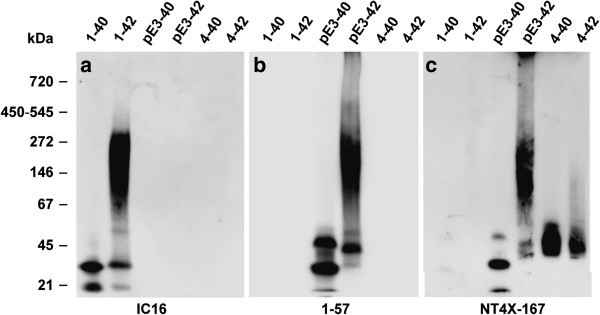
“Nitrocellulose membranes (GE Healthcare) were detected using the primary antibodies IC16 (1 mg/ml; diluted 1:1000) (generous gift by Sascha Weggen [35]), 1–57 (1 mg/ml; diluted 1:500) [36] and NT4X-167 (1 mg/ml; diluted 1:300).”
MethodPrice (1999) · doi:10.1002/1531-8249(199903)45:3
(1999) · doi:10.1002/1531-8249(199912)46:6<860::aid-ana8>3.0.co;2-m · cited 2×
“While Aβ plaques are poor correlates for the clinical symptomatology in AD and Down syndrome patients, soluble oligomers are suggested to be good predictors for synaptic loss [29], neurofibrillary tangles [30] and clinical phenotype [46].”
Background
Cited by
Behavioral and EEG changes in male 5xFAD mice
Schneider, F., Baldauf, K., Wetzel, W., & Reymann, K. G. (2014) · Physiology & Behavior · doi:10.1016/j.physbeh.2014.05.041 · Cited by 169
Bayer, T. A., & Wirths, O. (2014) · Acta Neuropathologica · doi:10.1007/s00401-014-1287-x · Cited by 165
“Using NT4X-167, an antibody recognizing the N-terminus of N-truncated Aβ species with a preference for Aβ4–x, strong intracellular staining could be detected in young 5XFAD transgenic mice [3]. very recently, a transgenic mouse model overexpressing Aβ4–42 without any mutations under the control of the murine neuron-sp…”
InfluentialSelf-citationFasae, K. D., Abolaji, A. O., Faloye, T. R., Odunsi, A. Y., Oyetayo, B. O., Enya, J. I., Rotimi, J. A., Akinyemi, R. O., Whitworth, A. J., & Aschner, M. (2021) · Journal of Trace Elements in Medicine and Biology · doi:10.1016/j.jtemb.2021.126779 · Cited by 154
Recent advances in the neurobiology and neuropharmacology of Alzheimer’s disease
Kumar, K., Kumar, A., Keegan, R. M., & Deshmukh, R. R. (2017) · Biomedicine & Pharmacotherapy · doi:10.1016/j.biopha.2017.12.053 · Cited by 179
Kehoe, P. G. (2018) · Journal of Alzheimer’s Disease · doi:10.3233/jad-171119 · Cited by 133
Metadata
- Authors
- Antonios, G., Saiepour, N., Bouter, Y., Richard, B. C., Paetau, A., Verkkoniemi-Ahola, A., Lannfelt, L., Ingelsson, M., Kovacs, G. G., Pillot, T., Wirths, O., & Bayer, T. A.
- Affiliations
- University of Göttingen (DE)
- Helsinki University Hospital (FI)
- Uppsala University (SE)
- Corresponding author
- Bayer, Thomas A
- Venue
- Acta Neuropathologica Communications
- Published
- 2013
- Volume
- 1
- Issue
- 1
- Pages
- 56
- ISSN
- 2051-5960 (ISSN-L)
- PMC
- PMC3893517
- OpenAlex
- W2169902596
- Cited by
- 53
- References
- 83
- Citations by year
- 2026: 1 · 2025: 2 · 2024: 3 · 2023: 1 · 2022: 3 · 2021: 7 · 2020: 4 · 2019: 5 · 2018: 7 · 2017: 7 · 2016: 3 · 2015: 5 · 2014: 4 · 2013: 1
- FWCI
- 3.01
- Type
- journal article
- Language
- en
- Open access
- gold
- doi.org
- Licence
- cc-by
- Locations
- Acta Neuropathologica Communications (publishedVersion, cc-by)
- Europe PMC (PubMed Central) (publishedVersion, cc-by)
- PubMed Central (publishedVersion, cc-by)
- PubMed (publishedVersion)
- GoeScholar The Publication Server of the Georg-August-Universität Göttingen (Georg-August-Universität Göttingen) (submittedVersion, cc-by)
- Työväentutkimus Vuosikirja (submittedVersion)
- Topics
- Life Sciences › Neuroscience › Cellular and Molecular Neuroscience › Alzheimer's disease research and treatments
- Health Sciences › Medicine › Psychiatry and Mental health › Dementia and Cognitive Impairment Research
- Life Sciences › Neuroscience › Neurology › Neuroinflammation and Neurodegeneration Mechanisms
- Keywords
- amyloid-beta, monoclonal antibodies, amyloid plaques, 5xFAD mice, cerebral amyloid angiopathy, amyloid hypothesis, antibody specificity
- MeSH terms
- Aged, Aged, 80 and over, Alzheimer Disease, Animals, Antibodies, Monoclonal, Brain, Cell Survival, Cells, Cultured, Disease Models, Animal, Female, Humans, Male, Mice, Transgenic, Neurons, Amyloid beta-Peptides, Rats, Wistar, Epitope Mapping, Neuroprotective Agents, Neurodegenerative Diseases, Plaque, Amyloid
About these checks
Registry, retraction, Cites and statistics results are computed, not judged, with one exception: a printed reference that no index lists is read once by a model before it counts as a citation error. Claims are extracted by a model and kept only when their quote appears verbatim in the text; each cited source is then checked, with a model’s help, for whether it says what the claim relies on. Those verdicts can be wrong — read the claim’s quote and the cited source before relying on one.
Statistics and arithmetic are recomputed, not judged.
Confidence bands are shown only for fields calibrated on our annotated test set. None is calibrated yet, so no band is shown.
What counts as a claim ›How we measure confidence ›How we check this ›
Are you an author, or do you see a problem with this page? Request a review
Data sources
Bibliographic data: Semantic Scholar, OpenAlex, Crossref.
Contains information from the Semantic Scholar Academic Graph Datasets, made available under the ODC Attribution License (ODC-BY 1.0).
Semantic Scholar’s data is described in: Kinney, R., et al. (2023). The Semantic Scholar Open Data Platform. arXiv:2301.10140.
