

Delirium in the ICU: an overview
Open accessThe DOI matches its Crossref record; 94 of the 96 references it cites were found in a registry or an index.
Abstract
Delirium is characterized by a disturbance of consciousness with accompanying change in cognition. Delirium typically manifests as a constellation of symptoms with an acute onset and a fluctuating course. Delirium is extremely common in the intensive care unit (ICU) especially amongst mechanically ventilated patients. Three subtypes have been recognized: hyperactive, hypoactive, and mixed. Delirium is frequently undiagnosed unless specific diagnostic instruments are used. The CAM-ICU is the most widely studied and validated diagnostic instrument. However, the accuracy of this tool may be less than ideal without adequate training of the providers applying it. The presence of delirium has important prognostic implications; in mechanically ventilated patients it is associated with a 2.5-fold increase in short-term mortality and a 3.2-fold increase in 6-month mortality. Nonpharmacological approaches, such as physical and occupational therapy, decrease the duration of delirium and should be encouraged. Pharmacological treatment for delirium traditionally includes haloperidol; however, more data for haloperidol are needed given the paucity of placebo-controlled trials testing its efficacy to treat delirium in the ICU. Second-generation antipsychotics have emerged as an alternative for the treatment of delirium, and they may have a better safety profile. Dexmedetomidine may prove to be a valuable adjunctive agent for patients with delirium in the ICU.
Overview
The claims and statistics of this paper haven’t been checked yet.
Free: it reads the open-access text and checks the first 5 claims that cite a source we can check. Create a free account to check every claim.
Integrity signals
Registry
Cites
Statistics
Figures
Verification
Claims the paper makes
The claims and statistics of this paper haven’t been checked yet.
Free: it reads the open-access text and checks the first 5 claims that cite a source we can check. Create a free account to check every claim.
Claims other papers make about this one
Each is checked against this paper’s own text: does it say what the citing paper says it does?
The source backs part of the claim, not all of it — or backs it for a different population, condition or comparison.
In the citing paper
“Furthermore, a proportion of those patients hospitalized with COVID-19 will have received mechanical ventilation, which by itself increases one's risk of delirium, 210”
From 2023 Alzheimer's disease facts and figures (2023) · cites this paper as [210]
Experimental — accuracy not yet measured
Self-check
Percentages, sums and reported differences re-computed from the paper’s own numbers.
The self-check needs the paper’s full text.
Citations
Cites
Schweickert, W. D., Pohlman, M. C., Pohlman, A. S., Nigos, C., Pawlik, A. J., Esbrook, C. L., Spears, L., Miller, M., Franczyk, M., Deprizio, D., et al. (2009) · The Lancet · doi:10.1016/s0140-6736(09)60658-9 · Cited by 3,339
Ely, E. W., Inouye, S. K., Bernard, G. R., Gordon, S., Francis, J., May, L., Truman, B., Speroff, T., Gautam, S., Margolin, R., et al. (2001) · JAMA · doi:10.1001/jama.286.21.2703 · Cited by 3,210 · cited 1×
“As an example, a study found an incidence of delirium of only 20% in nonintubated ICU patients [9], whereas another study found an incidence of 83% in mechanically ventilated patients [10].”
ResultDelirium as a Predictor of Mortality in Mechanically Ventilated Patients in the Intensive Care Unit
Ely, E. W. (2004) · JAMA · doi:10.1001/jama.291.14.1753 · Cited by 3,073 · cited 1×
“2-fold increase in 6-month mortality and a 2-fold increase in hospital stay duration [61].”
BackgroundA Multicomponent Intervention to Prevent Delirium in Hospitalized Older Patients
Inouye, S. K., Bogardus, S. T., Charpentier, P. A., Leo-Summers, L., Acampora, D., Holford, T. R., & Cooney, L. M. (1999) · New England Journal of Medicine · doi:10.1056/nejm199903043400901 · Cited by 2,917 · cited 1×
“sleep deprivation, visual impairment, cognitive impairment, and hearing impairment [68].”
BackgroundEly, E. W., Margolin, R., Francis, J., May, L., Truman, B., Dittus, R., Speroff, T., Gautam, S., Bernard, G. R., & Inouye, S. K. (2001) · Critical Care Medicine · doi:10.1097/00003246-200107000-00012 · Cited by 2,422 · cited 3×
“The incidence of delirium in the ICU ranges from 45% to 87% [6-8].”
BackgroundMethodGirard, T. D., Kress, J. P., Fuchs, B. D., Thomason, J. W., Schweickert, W. D., Pun, B. T., Taichman, D. B., Dunn, J. G., Pohlman, A. S., Kinniry, P. A., et al. (2008) · The Lancet · doi:10.1016/s0140-6736(08)60105-1 · Cited by 2,055 · cited 1×
“change in delirium in the assessable patients [72].”
BackgroundJacobi, J., Fraser, G. L., Coursin, D. B., Riker, R. R., Fontaine, D., Wittbrodt, E. T., Chalfin, D. B., Masica, M. F., Bjerke, H. S., Coplin, W. M., et al. (2002) · Critical Care Medicine · doi:10.1097/00003246-200201000-00020 · Cited by 1,895
Self-citationIntensive Care Delirium Screening Checklist: evaluation of a new screening tool
Bergeron, N., Dubois, M.-J., Dumont, M., Dial, S., & Skrobik, Y. (2001) · Intensive Care Medicine · doi:10.1007/s001340100909 · Cited by 1,487 · cited 4×
“In one study, CAM-ICU was prospectively compared with the Intensive Care Delirium Screening Checklist in 126 patients.”
InfluentialPandharipande, P. P., Pun, B. T., Herr, D. L., Maze, M., Girard, T. D., Miller, R. R., Shintani, A. K., Thompson, J. L., Jackson, J. C., Deppen, S. A., et al. (2007) · JAMA · doi:10.1001/jama.298.22.2644 · Cited by 1,451 · cited 1×
“1) in a randomized, controlled trial of 106 patients [79].”
BackgroundPandharipande, P., Shintani, A., Peterson, J., Pun, B. T., Wilkinson, G. R., Dittus, R. S., Bernard, G. R., & Ely, E. W. (2006) · Anesthesiology · doi:10.1097/00000542-200601000-00005 · Cited by 1,238 · cited 2×
“and statistically significant risk factor for development of delirium whereas other sedatives, such as propofol and opiates, had no statistically significant association with delirium [60].”
Background
Research works printed but not linked: 1
- Gaudreau JD Gagnon P Harel F Tremblay A Roy MA Fast, systematic, and continuous delirium assessment in hospitalized patients: the nursing delirium screening scale J Pain Symptom Manage 2005 29 4 368 375 10.1016/j.jpainsymman.2004.07.009 15857740 · DOI · Paper page
Cited by
Items 101–200 of 299
Sakaguchi, T., Watanabe, M., Kawasaki, C., Kuroda, I., Abe, H., Date, M., Ueda, Y., Yasumura, Y., & Koretsune, Y. (2017) · Journal of Cardiology · doi:10.1016/j.jjcc.2017.11.011 · Cited by 17
Role of acupuncture in critically ill patients: A systematic review
Formenti, P., Piuri, G., Bisatti, R., Pinciroli, R., & Umbrello, M. (2022) · Journal of Traditional and Complementary Medicine · doi:10.1016/j.jtcme.2022.10.005 · Cited by 19
Altered mental status in the neurocritical care unit
Behrouz, R., Godoy, D. A., Azarpazhooh, M. R., & Napoli, M. D. (2015) · Journal of Critical Care · doi:10.1016/j.jcrc.2015.07.021 · Cited by 17
“Characteristic features of delirium include impaired short-term memory, impaired attention, disorientation, development over a short period of time, and a fluctuating course [16].”
BackgroundRole of omega-3 fatty acids in the prevention of delirium in mechanically ventilated patients
Naghibi, T., Shafigh, N., & Mazloomzadeh, S. (2020) · Journal of Research in Medical Sciences · doi:10.4103/jrms.jrms_567_18 · Cited by 17
Fang, Y., Tang, X., Gao, Y., Xie, H. W., Shen, Y., Peng, M., Liu, J., Zhang, Y., Cui, Y., & Xie, K. (2025) · CNS Neuroscience & Therapeutics · doi:10.1111/cns.70201 · Cited by 15
Caldas, J. R., Panerai, R. B., Bor‐Seng‐Shu, E., Ferreira, G. S. R., Câmara, L., Passos, R. H., Salinet, A. S. M., de Azevedo, D. S., Oliveira, M. D. L., Galas, F. R. B. G., et al. (2019) · Annals of Intensive Care · doi:10.1186/s13613-019-0602-z · Cited by 15
Delirium in intensive care: violence, loss and humanity
Hume, V. J. (2020) · Medical Humanities · doi:10.1136/medhum-2020-011908 · Cited by 16
Dauvergne, J. E., Ferey, K., Croizard, V., Chauvin, M., Mainguy, N., Mathelier, N., Jehanno, A., Maugars, N., Badre, G., Maze, F., et al. (2023) · Nursing in Critical Care · doi:10.1111/nicc.12945 · Cited by 15
Bandyopadhyay, A., Yaddanapudi, L. N., Saini, V., Sahni, N., Grover, S., Puri, S., & Ashok, V. (2024) · Critical Care Science · doi:10.62675/2965-2774.20240144-en · Cited by 14
Editor’s Choice-The cardiovascular implications of sedatives in the cardiac intensive care unit
Zakaria, S., Kwong, H. J., Sevransky, J., Williams, M. S., & Chandra‐Strobos, N. (2017) · European Heart Journal Acute Cardiovascular Care · doi:10.1177/2048872617695231 · Cited by 15
McKenzie, C., Page, V. J., Strain, W. D., Blackwood, B., Ostermann, M., Taylor, D. M., Spronk, P. E., & McAuley, D. F. (2020) · Systematic Reviews · doi:10.1186/s13643-020-01380-z · Cited by 14
Петрова, Л. В., Moscow, R. F., Kostenko, E. G., & Ахматовна, Э. М. (2021) · Doctor Ru · doi:10.31550/1727-2378-2021-20-9-36-42 · Cited by 16
Use of Dexmedetomidine in Liver Transplant Recipients With Postoperative Agitated Delirium
Choi, J. Y., Kim, J. M., Kwon, C. H. D., Joh, J., Lee, S., Park, J. B., Ko, J. S., Gwak, M. S., Kim, G. S., Kim, S. J., et al. (2016) · Transplantation Proceedings · doi:10.1016/j.transproceed.2016.01.020 · Cited by 13
“When agitated delirium occurs in ICU patients, we can use sedative agents such as dexmedetomidine, haloperidol, and chlorpromazine [1].”
BackgroundMethodImpact of Therapeutic Music Listening on Intensive Care Unit Patients
Browning, S. G., Watters, R., & Thomson‐Smith, C. (2020) · Nursing Clinics of North America · doi:10.1016/j.cnur.2020.06.016 · Cited by 16
Dexmedetomidine and delirium in the ICU
McLaughlin, M., & Marik, P. E. (2016) · Annals of Translational Medicine · doi:10.21037/atm.2016.05.44 · Cited by 13
“Nonpharmacological interventions, such as physical and occupational therapy and control of noise pollution decrease delirium duration and are widely recommended (2).”
BackgroundSelf-citationDelirium severity in critical patients with COVID-19 from an Infectious Disease Intensive Care Unit
Dias, R., Caldas, J. P., Silva‐Pinto, A., Costa, A., Sarmento, A., & Santos, L. (2022) · International Journal of Infectious Diseases · doi:10.1016/j.ijid.2022.02.035 · Cited by 12
Positive Stimulation for Medically Sedated Patients
Head, J., Gray, V., Masud, F. N., & Townsend, J. D. (2022) · CHEST Journal · doi:10.1016/j.chest.2022.02.011 · Cited by 12
Concordance of Electronic Health Record (EHR) Data Describing Delirium at a VA Hospital.
Spuhl, J., Doing-Harris, K. M., Nelson, S. D., Estrada, N. A., Fiol, G. D., & Weir, C. R. (2014) · PubMed Central · Cited by 12
de la Varga-Martínez, O., Badenes, R., Gordaliza, C., Manso, S. D. M., Castillo, G., Aragon, C. A., Castro, M. F., dos Santos, A. C. A., Herrero, R. L., Pérez, R. N., et al. (2025) · Revista Española de Anestesiología y Reanimación (English Edition) · doi:10.1016/j.redare.2025.501805 · Cited by 11
Gregory, K. A. (2016) · Critical Care Nurse · doi:10.4037/ccn2016821 · Cited by 11
The Life Course Health Development Model: A theoretical research framework for paediatric delirium
Kalvas, L. B. (2019) · Journal of Clinical Nursing · doi:10.1111/jocn.14776 · Cited by 12
ICU-related PTSD – A review of PTSD and the potential effects of collaborative songwriting therapy
Noyes, E. M., & Schlesinger, J. J. (2017) · Journal of Critical Care · doi:10.1016/j.jcrc.2017.06.014 · Cited by 11
Management of delirium in a medical and surgical intensive care unit
Shivji, S., Stabler, S. N., Boyce, K., Haljan, G. J., & McGloin, R. (2020) · Journal of Clinical Pharmacy and Therapeutics · doi:10.1111/jcpt.13319 · Cited by 11
Smith, M. E., Tsai, S., & Peterson, E. (2024) · American Journal of Occupational Therapy · doi:10.5014/ajot.2025.050695 · Cited by 10
“…and cognitive function, and they are associated with poor health outcomes, including decreased ADL performance, cognitive impairment, longer hospital length of stay, and a higher mortality rate (Cavallazzi et al., 2012; Collinsworth et al., 2016; Green et al., 2019, Poulsen et al., 2021).”
Franzotti, S. A. D. S., Sloboda, D. A., Silva, J. R., Souza, E. A. S., Reboreda, J. Z., Ferretti‐Rebustini, R. E. D. L., & Nogueira, L. D. S. (2020) · Arquivos Brasileiros de Cardiologia · doi:10.36660/abc.20190120 · Cited by 10
Electroencephalography of mechanically ventilated patients at high risk of delirium
Eskioglou, E., Iaquaniello, C., Alvarez, V., Rüegg, S. J., Schindler, K. A., Rossetti, A. O., & Oddo, M. (2021) · Acta Neurologica Scandinavica · doi:10.1111/ane.13447 · Cited by 10
Lange, S., Mędrzycka-Dąbrowska, W. A., Friganović, A., Oomen, B., & Krupa, S. (2021) · International Journal of Environmental Research and Public Health · doi:10.3390/ijerph18168809 · Cited by 10
“Alack of regular screening may lead to undiagnosed delirium [16,58,59].”
BackgroundCao, Y., Song, Y., Ding, Y., Ni, J., Zhu, B., Shen, J., & Miao, L. (2023) · The Journal of Steroid Biochemistry and Molecular Biology · doi:10.1016/j.jsbmb.2023.106356 · Cited by 10
The pharmacist’s role in implementation of the ABCDEF bundle into clinical practice
Schmidt, L. E., Patel, S. R., & Stollings, J. L. (2020) · American Journal of Health-System Pharmacy · doi:10.1093/ajhp/zxaa247 · Cited by 11
Delirium in Intensive Care Units: Perceptions of Physicians and Nurses
Salameh, B. S., Alrazeeni, D. M., mansor, K., Abdallah, J., Ayed, A., & Salem, H. (2021) · Critical Care Nursing Quarterly · doi:10.1097/cnq.0000000000000376 · Cited by 9
Zitikyte, G., Roy, D. C., Tran, A., Fernando, S. M., Rosenberg, E., Kanji, S., Engels, P. T., Wells, G. A., & Vaillancourt, C. (2023) · Critical Care Explorations · doi:10.1097/cce.0000000000000875 · Cited by 9
The impact of the peri‐operative period on cognition in older individuals
Evered, L. A., SILBERT, B. S., & Scott, D. A. (2015) · Journal of Pharmacy Practice and Research · doi:10.1002/jppr.1069 · Cited by 9
Shamsizadeh, M., Jouzdani, A. F., & Rahimi‐Bashar, F. (2022) · Critical Care Research and Practice · doi:10.1155/2022/4826933 · Cited by 9
“comorbidities, medications, and many other risk factors, mechanically ventilated ICU patients are at high risk for the development of delirium [13, 14].”
BackgroundDelirium in hospitalised adults with acute burns – A systematic review
Stanley, G. H. M., Barber, A. R. J., O'Brien, A. M., Hamill, C., Boardman, G., Frear, C. C., Edgar, D. W., Seymour, H., & Wood, F. M. (2022) · Burns · doi:10.1016/j.burns.2022.05.023 · Cited by 10
Terapia ocupacional en unidad de cuidados intensivos
Moreno‐Chaparro, J., Cubillos-Mesa, C., & Duarte-Torres, S. C. (2017) · Revista de la Facultad de Medicina · doi:10.15446/revfacmed.v65n2.59342 · Cited by 9
Critical Care Nursing in the Philippines
Martinez, R. C. K. P., Rogado, M. I. C., Serondo, D. J. F., Soriano, G. P., & Ilano, K. C. S. (2021) · Critical Care Nursing Clinics of North America · doi:10.1016/j.cnc.2020.11.001 · Cited by 9
Delirium in critical care patients
Laske, R. A., & Stephens, B. (2015) · Nursing Critical Care · doi:10.1097/01.ccn.0000475514.04388.d9 · Cited by 9
González-López, A., Albaiceta, G. M., & Talbot, K. (2014) · Expert Review of Neurotherapeutics · doi:10.1586/14737175.2014.915743 · Cited by 9
“Consistent with studies on delirium in general, three such factors are commonly noted, though they are based only on correlational studies: (a) hypoxic ischemia in multiple brain areas, most consistently the hippocampus [8]; (b) systemic inflammation elevating brain levels of proinflammatory cytokines [21,22] and (c)…”
Backgroundvan Bochove-Waardenburg, M., van der Jagt, M., Ginkel, J. M. D. M., & Ista, E. (2023) · Intensive and Critical Care Nursing · doi:10.1016/j.iccn.2023.103398 · Cited by 8
de la Varga-Martínez, O., Badenes, R., Gordaliza, C., Manso, S. D. M., Castillo, G. E. L., Aragon, C. A., Castro, M. F., Santos, A. B. M., Herrero, R. L., Pérez, R. N., et al. (2025) · Revista Española de Anestesiología y Reanimación · doi:10.1016/j.redar.2025.501805 · Cited by 8
Potentials and Challenges of Pervasive Sensing in the Intensive Care Unit
Davoudi, A., Shickel, B., Tighe, P., Bihorac, A., & Rashidi, P. (2022) · Frontiers in Digital Health · doi:10.3389/fdgth.2022.773387 · Cited by 5
“For example, delirium prevalence in specialized ICUs can be as high as 87%, and sepsis prevalence can be as high as 39% (46, 47).”
BackgroundDelirium in the critically ill patient
Lorenzo, M., Aldecoa, C., & Rico, J. D. (2013) · Trends in Anaesthesia and Critical Care · doi:10.1016/j.tacc.2013.05.005 · Cited by 12
Intensive Care Unit Delirium, Clinical Observations, and Patients' Statements: A Case Study
Granberg‐Axéll, A., & Bergbom, I. (2020) · Dimensions of Critical Care Nursing · doi:10.1097/dcc.0000000000000424 · Cited by 8
Shiddapur, A., Kistler, C. E., Busby‐Whitehead, J., & Austin, C. A. (2021) · Critical Care Explorations · doi:10.1097/cce.0000000000000507 · Cited by 8
“Overall, 46% of our MICU cohort developed delirium, in agreement with previous studies, where the rate of delirium in ICUs has been reported to range from 20% to 80% (1, 2, 21).”
Association between delirium prediction scores and days spent with delirium
Heesakkers, H., Devlin, J. W., Slooter, A. J. C., & van den Boogaard, M. (2020) · Journal of Critical Care · doi:10.1016/j.jcrc.2020.03.008 · Cited by 9
Pediatric Delirium: a Review of Current Diagnosis and Management in the Intensive Care Setting
Gu, S., & Couloures, K. G. (2020) · Current Pediatrics Reports · doi:10.1007/s40124-020-00222-9 · Cited by 7
Sun, M., Chen, W., Wu, S., & Zhang, J. (2025) · BMC Geriatrics · doi:10.1186/s12877-025-05817-9 · Cited by 8
“While our study focuses on hyperactive delirium due to its higher diagnostic reliability in large datasets [20–22], future research should explore the differential impacts of delirium subtypes on long-term survival to better inform tailored clinical strategies.”
InfluentialSaida, I. B., Kortli, S., Amamou, B., Kacem, N., Ghardallou, M. E., Ely, E. W., Saad, H. B., & Boussarsar, M. (2020) · BMC Psychiatry · doi:10.1186/s12888-020-02622-z · Cited by 7
A bibliometric analysis on delirium in intensive care unit from 2013–2023
Ma, X., Wu, Q., Ran, Y., Cao, X., & Zheng, H. (2025) · Frontiers in Neurology · doi:10.3389/fneur.2025.1469725 · Cited by 6
Haloperidol for the treatment of delirium in ICU patients: a systematic review and meta‑analysis
Zhao, Y., Wáng, Q., Sun, B., Li, Y., Meng, C., & Miao, G. (2025) · European journal of medical research · doi:10.1186/s40001-025-02409-6 · Cited by 9
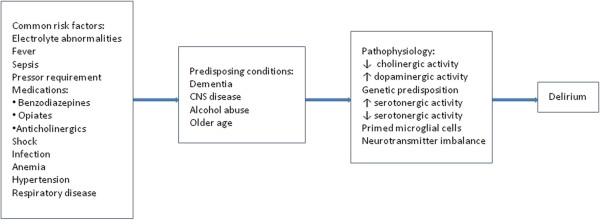
“Delirium may be related to the interaction of multiple factors that cause dysfunction of the brain’s neural networks [16].”
Awareness of Delirium by ICU Nurses
Asmar, I., Yaseen, K., Jaghama, M., Khawaja, Y. F., Alwredat, A. A., & Sadaqa, M. H. (2021) · Critical Care Nursing Quarterly · doi:10.1097/cnq.0000000000000359 · Cited by 6
The 3 Ds, and Newly Acquired Cognitive Impairment: Issues for the ICU Nurse
Mandebvu, F., & Kalman, M. (2015) · Critical Care Nursing Quarterly · doi:10.1097/cnq.0000000000000079 · Cited by 6
Hutchins, L. M., Shipman, A., Zimmerman, K. O., & Heath, T. S. (2021) · The Journal of Pediatric Pharmacology and Therapeutics · doi:10.5863/1551-6776-26.1.87 · Cited by 6
“J Pediatr Pharmacol Ther 2021;26(1):87–91”
Prevalence and management of ICU delirium—Time to think outside the box
Trivedi, N., Sarangi, A., Boriwala, H., Bhatt, V., & Rohatgi, S. (2024) · Discover Medicine · doi:10.1007/s44337-024-00139-y · Cited by 6
“In the ICU setting, delirium has a prevalence of approximately 14 to 28%, continuing to rise to upwards of 70 to 87% in the case of patients on mechanical ventilation [7].”
The Impact of Persistent Noise Exposure under Inflammatory Conditions
Cho, I., Kim, J., Jung, S., Kim, S. Y., Kim, E. J., Choo, S., Kam, E. H., & Koo, B. (2023) · Healthcare · doi:10.3390/healthcare11142067 · Cited by 5
“This could be the reason for the common occurrence of delirium in the ICU [2].”
BackgroundInfluentialDiscovery of Delirium Biomarkers through Minimally Invasive Serum Molecular Fingerprinting
Viegas, A., Araújo, R., Ramalhete, L., Rekowski, C. P. V., Fonseca, T. A. H., Bento, L. F. N., & Calado, C. R. C. (2024) · Metabolites · doi:10.3390/metabo14060301 · Cited by 5
“Despite the increase in the knowledge of biological mechanisms of diseases, delirium persists as an enduring challenge, particularly within Intensive Care Units (ICU), exerting substantial impacts on patient outcomes and placing immense strain on healthcare systems [1–3].”
BackgroundResultKumar, R., Haokip, H. R., Tamanna, & Bairwa, M. C. (2022) · Journal of Mental Health and Human Behaviour · doi:10.4103/jmhhb.jmhhb_228_21 · Cited by 5
Santos, E. J. F., Cardoso, D., Apóstolo, J., Neves, H. L., Cunha, M., & Rodrígues, M. A. (2015) · The JBI Database of Systematic Reviews and Implementation Reports · doi:10.11124/01938924-201513070-00008 · Cited by 5
Intensive Care and its Discontents
Hashmi, A. M., Han, J., & Demla, V. (2017) · Psychiatric Clinics of North America · doi:10.1016/j.psc.2017.05.011 · Cited by 7
Mohammed, S. O., Weji, B. G., & Worji, T. A. (2017) · International Journal of Medicine and Medical Sciences · doi:10.5897/ijmms2017.1307 · Cited by 7
Saikali, M., Tanios, A., & Saab, A. (2017) · Journal of Patient Safety · doi:10.1097/pts.0000000000000442 · Cited by 6
Mufti, H. N., Alshaltoni, R. S., AlGahtani, A., Jambi, F., Milyani, A., Acosta, L. Z., & Albugami, S. (2020) · Cureus · doi:10.7759/cureus.11211 · Cited by 5
Siniscalchi, C., Micco, P. D., Guerra, A., Nouvenne, A., Cerundolo, N., Parise, A., & Meschi, T. (2025) · Journal of Clinical Medicine · doi:10.3390/jcm14196726 · Cited by 4
“This subtype is known to be linked to greater illness severity, immobility, and complications such as aspiration pneumonia [16].”
Cost-effectiveness Analysis of Еarly Medical Rehabilitation of Patients with Cerebral Stroke
Shurupova, M. A., Aizenshtein, A. D., & Ivanova, G. Е. (2022) · Bulletin of Rehabilitation Medicine · doi:10.38025/2078-1962-2022-21-1-24-33 · Cited by 4
Reinforcement Learning Approach to Sedation and Delirium Management in the Intensive Care Unit
Eghbali, N., Alhanai, T., & Ghassemi, M. M. (2023) · IEEE-EMBS International Conference on Biomedical and Health Informatics (BHI ...) · doi:10.1109/bhi58575.2023.10313431 · Cited by 4
“It occurs in up to 87% of ICU patients during their admission [16].”
BackgroundInfluentialYamada, S., Sakuramoto, H., Aikawa, G., & Naya, K. (2023) · SAGE Open Nursing · doi:10.1177/23779608231218155 · Cited by 4
“…associated with prolonged ICU and hospital lengths of stay, prolonged duration of mechanical ventilation, increased risk of premature death, and cognitive impairment up to 18 months after hospital discharge (Cavallazzi et al., 2012; Kot fi s et al., 2018; Krewulak et al., 2020; Salluh et al., 2015).”
BackgroundMosharaf, M. P., Alam, K., Gow, J., & Mahumud, R. A. (2025) · SSM - Mental Health · doi:10.1016/j.ssmmh.2025.100408 · Cited by 4
Les hallucinations en neurologie
Fénelon, G. (2014) · Pratique Neurologique - FMC · doi:10.1016/j.praneu.2014.10.001 · Cited by 6
An Analysis of Prolonged, Continuous Ketamine Infusions
Schauer, S. G., Naylor, J. F., Davis, W. T., Borgman, M. A., & April, M. D. (2021) · Military Medicine · doi:10.1093/milmed/usaa481 · Cited by 5
López‐Hernández, J. C., de Saráchaga, A. J., Briseño‐Godínez, M. E., May-Mas, R. N., Bazán‐Rodríguez, L., León-Manríquez, E., Cruz-Pérez, J., Becerra-Hernández, I., & Vargas-Cañas, E. S. (2022) · International Journal of Neuroscience · doi:10.1080/00207454.2022.2082963 · Cited by 4
“…population demographics might differ from other populations studied. the prevalence of delirium in patients with any medical condition subjected to mechanical ventilation is high, with some incidence estimates around 83% [25]. there is seldom evidence on the prevalence of delirium in GBs patients.”
BackgroundComplex Hallucinations in Hospitalized Rehabilitation Patients With COVID-19
Tobita, M., Fanchiang, S.-P. C., Saldivar, A., Taylor, S., & Jordan, B. D. (2022) · Archives of Rehabilitation Research and Clinical Translation · doi:10.1016/j.arrct.2022.100234 · Cited by 4
Non-pharmacological Treatment of Intensive Care Unit Delirium
Ke, L. (2019) · American Journal of Nursing Science · doi:10.11648/j.ajns.20190803.17 · Cited by 4
“Cavallazzi et al. [2] note that the hypoactive is the most frequently especially among geriatrics and is characterized by the worst prognosis.”
BackgroundMethodInfluentialDanis, M. (2015) · The American Journal of Bioethics · doi:10.1080/15265161.2015.1011000 · Cited by 5
Viegas, A., Rekowski, C. P. V., Araújo, R., Ramalhete, L., Cordeiro, I. M., Manita, M., Baptista, M. V., Macedo, M. P., & Bento, L. F. N. (2025) · GeroScience · doi:10.1007/s11357-025-01809-0 · Cited by 3
ICU Delirium: Diagnosis, Risk Factors, and Management
Heeder, C., Azocar, R. J., & Tsai, A. (2015) · Current anesthesiology reports · doi:10.1007/s40140-015-0125-6 · Cited by 5
“Other neurotransmitters and markers potentially associated with delirium include serotonin, histamine, cortisol, GABA, glutamate, norepinephrine, and tryptophan [1, 2, 15].”
BackgroundInfluentialKnowledge on Intensive Care Delirium among Nurses at Hospital, Nepal
Shrestha, S., & Shrestha, S. (2017) · International Journal of Nursing Research and Practice (IJNRP) · doi:10.15509/ijnrp.2017.4.2.352 · Cited by 3
Cardiopulmonary Arrest Following a Single 25 mg Dose of Quetiapine: A Case Report
Chia, P. A., Lim, C. P., Ong, J., & Ong, S. G. K. (2020) · The Journal of Critical Care Medicine · doi:10.2478/jccm-2020-0035 · Cited by 3
Intervenção não farmacológica no manejo de delirium: uma revisão bibliográfica integrativa
Caetano, G. M., Niyama, B. T., de Almeida, M. H. M., Batista, M. P. P., & Ratier, A. P. P. (2021) · Cadernos Brasileiros de Terapia Ocupacional · doi:10.1590/2526-8910.ctoar2198 · Cited by 3
Hospital-treated deliberate self-poisoning patients: Drug-induced delirium and clinical outcomes
Gale, L., McGill, K., Twaddell, S. H., Whyte, I. M., Lewin, T. J., & Carter, G. L. (2021) · Australian & New Zealand Journal of Psychiatry · doi:10.1177/00048674211009608 · Cited by 3
“Since delirium is also commonly seen in ICU and ventilated patients (Cavallazzi et al., 2012), our classification of drug-induced delirium, in the ICU subgroup, might have been better classified as multifactorial delirium due to some contribution from end organ dysfunction, hypoxic injury, ventilation, sedation and ot…”
BackgroundWei, J., Liang, R., Gao, J., Cao, C., Dong, W., Ji, Y., Liu, S., Hua, T., Liu, Y., & Yang, M. (2025) · Nursing in Critical Care · doi:10.1111/nicc.70128 · Cited by 2
“…of delirium is intricate and speculative, involving multiple mechanisms that contribute to insufficient cerebral metabolic function, peripheral inflammation or neuroinflammation, imbalances in neurotransmitters and neuroanatomical substrates, and disrupted network connectivity [6, 7].”
Chang-xue, W., Wen, Z., Wang, Z., Chen, C., Han, Y., Xie, X., Wu, J., & Tian, M. (2025) · Cureus · doi:10.7759/cureus.91327 · Cited by 2
Vedsegaard, H. W., Schrader, A.-M., Rom, G., & Scheel, L. S. (2016) · Nordic journal of nursing research · doi:10.1177/2057158516643866 · Cited by 2
“Such an intervention using AI, where CDM is the focal point in relation to using the clinical guideline on delirium, needs further research in a greater variety of wards and hospitals, particularly in ICUs, where delirium develops in up to 87% of patients.(2) The results of the study could have implications for practi…”
MethodTaylor, C., Peakman, G., Mackinnon, L., Mohamadzade, N., Han, W., Mackie, L., Gandhi, J., Mitchell, O., Bateman-Champain, C., Hetherington, J., et al. (2024) · BMC Geriatrics · doi:10.1186/s12877-024-05273-x · Cited by 3
Optimizing Sedation Strategies in the Cardiac ICU: Induction, Maintenance and Weaning
Alhuneafat, L., Zacharia, E. M., Velangi, P. S., Bartos, J. A., & Gutiérrez, A. (2025) · Current Cardiology Reports · doi:10.1007/s11886-024-02161-z · Cited by 3
“Delirium, occurring in up to 20% of CICU patients, is associated with high morbidity and mortality therefore its prevention is crucial [32–34].”
Lee, S. Y., Huh, J. W., Hong, S.-B., Lim, C., & Ahn, J. H. (2025) · Therapeutics and Clinical Risk Management · doi:10.2147/tcrm.s520206 · Cited by 3
Aghakouchakzadeh, M., Izadpanah, M., Soltani, F., & Dianatkhah, M. (2017) · Jundishapur Journal of Natural Pharmaceutical Products · doi:10.5812/jjnpp.64305 · Cited by 2
“Furthermore, hypoactive delirium is the major delirium witnessed in older patients (32, 33, 35).”
BackgroundWessels, L. E., Wallace, J. D., Calvo, R. Y., Levko, T., Bowie, J. M., Butler, W. J., Bansal, V., Sise, C. B., Martin, M. J., & Sise, M. J. (2020) · The American Journal of Surgery · doi:10.1016/j.amjsurg.2020.02.033 · Cited by 2
Zhang, X., Xiao, Z., Gu, J., Chen, K., Wang, J., Xu, S., Xing, K.-K., & Chen, T. (2023) · Molecular Brain · doi:10.1186/s13041-023-00998-z · Cited by 2
Igwe, E. O., Ding, P., Nealon, J. R., Charlton, K. E., & Traynor, V. (2023) · Intensive and Critical Care Nursing · doi:10.1016/j.iccn.2023.103550 · Cited by 2
Critical Care Recovery Center: Can a Geriatric Model of Care Guide Recovery of ICU Survivors?
Wang, S., Lasiter, S., Zarzaur, B. L., Campbell, T. A., Boustani, M. A., & Khan, B. A. (2017) · Best practices in mental health · doi:10.70256/225774scgpma · Cited by 4
Bartels, U. E. (2016) · Zeitschrift für Herz- Thorax- und Gefäßchirurgie · doi:10.1007/s00398-016-0123-0 · Cited by 1
Managing agitation secondary to hyperactive delirium in deteriorating patients
Teece, A. (2021) · Nursing Standard · doi:10.7748/ns.2021.e11730 · Cited by 2
YOĞUN BAKIM HASTASINDA DELİRYUM YÖNETİMİNDE HEMŞİRELİK BAKIMI: KANITA DAYALI UYGULAMALAR
Ada, N., Kılıç, E., & Aktaş, Y. Y. (2025) · Doğu Karadeniz Sağlık Bilimleri Dergisi · doi:10.59312/ebshealth.1715196 · Cited by 1
Cassavaugh, J. M., Sennaraj, M., Chen, M., Liu, M., Janga, S. R., Schaefer, M. S., Hayes, M. M., Subramaniam, B., & Bose, S. (2026) · BJA Open · doi:10.1016/j.bjao.2026.100579 · Cited by 1
Clinical study of postoperative delirium in head and neck cancer with reconstructive surgery
Fukuda, Y., Hanai, N., Ozawa, T., Hirakawa, H., Suzuki, H., Koide, Y., Kimura, T., Beppu, S., Nakata, Y., Nishikawa, D., et al. (2013) · JOURNAL OF JAPAN SOCIETY FOR HEAD AND NECK SURGERY · doi:10.5106/jjshns.23.445 · Cited by 1
Postoperatif Deliryum Etiyolojisinde Tiroid Fırtınası: Olgu Sunumu
Girgin, N. K., İşçimen, R., Aydoğmuş, İ., Bora, S., Akkurt, A., & Kahveci, F. (2015) · Türk yoğun bakım derneği dergisi/Türk yoğun bakım dergisi · doi:10.4274/tybdd.13007 · Cited by 1
Association of rosuvastatin and delirium in severe sepsis with acute respiratory distress syndrome
Pourafkari, L., Nader, N. D., & Porhomayon, J. (2016) · Journal of Thoracic Disease · doi:10.21037/jtd.2016.05.82 · Cited by 1
Pediatric Delirium: Development of a Standard of Practice in a CVICU and PICU Setting
Gilliland, F. (2018) · UKnowledge (University of Kentucky) · Cited by 1
Sedation and delirium in the critically ill
Turnbull, E., & Whittle, R. (2018) · Surgery (Oxford) · doi:10.1016/j.mpsur.2018.09.022 · Cited by 1
Nagaratnam, K. (2018) · Springer eBooks · doi:10.1007/978-3-319-96998-5_32 · Cited by 1
Metadata
- Authors
- Cavallazzi, R., Saad, M., & Marik, P. E.
- Affiliations
- University of Louisville (US)
- Eastern Virginia Medical School (US)
- Corresponding author
- Marik, Paul E
- Venue
- Annals of Intensive Care
- Publisher
- Elsevier BV
- Published
- 2012
- Volume
- 2
- Issue
- 1
- Pages
- 49
- ISSN
- 2110-5820 (ISSN-L)
- PMC
- PMC3539890
- OpenAlex
- W2121044961
- Cited by
- 275
- References
- 96
- Citations by year
- 2026: 11 · 2025: 22 · 2024: 17 · 2023: 30 · 2022: 26 · 2021: 26 · 2020: 23 · 2019: 21 · 2018: 14 · 2017: 28 · 2016: 21 · 2015: 17 · 2014: 9 · 2013: 8 · 2012: 1
- FWCI
- 9.41
- Type
- journal article
- Language
- en
- Open access
- gold
- doi.org
- Licence
- cc-by
- www.elsevier.com/tdm/userlicense/1.0/ (tdm)
- www.elsevier.com/legal/tdmrep-license (tdm)
- creativecommons.org/licenses/by-nc-nd/4.0/ (vor, 5071 d)
- Locations
- Annals of Intensive Care (publishedVersion, cc-by)
- PubMed Central (publishedVersion, cc-by)
- PubMed (publishedVersion)
- Topics
- Health Sciences › Medicine › Critical Care and Intensive Care Medicine › Intensive Care Unit Cognitive Disorders
- Health Sciences › Medicine › Anesthesiology and Pain Medicine › Anesthesia and Sedative Agents
- Health Sciences › Medicine › Critical Care and Intensive Care Medicine › Nosocomial Infections in ICU
- Keywords
- delirium, intensive care unit, mechanically ventilated patients, hyperactive delirium, hypoactive delirium, mixed delirium, CAM-ICU, delirium diagnosis, mortality, non-pharmacological treatment, physical and occupational therapy, haloperidol, atypical antipsychotics, dexmedetomidine
About these checks
Registry, retraction, Cites and statistics results are computed, not judged, with one exception: a printed reference that no index lists is read once by a model before it counts as a citation error. Claims are extracted by a model and kept only when their quote appears verbatim in the text; each cited source is then checked, with a model’s help, for whether it says what the claim relies on. Those verdicts can be wrong — read the claim’s quote and the cited source before relying on one.
Statistics and arithmetic are recomputed, not judged.
Confidence bands are shown only for fields calibrated on our annotated test set. None is calibrated yet, so no band is shown.
What counts as a claim ›How we measure confidence ›How we check this ›
Are you an author, or do you see a problem with this page? Request a review
Data sources
Bibliographic data: Semantic Scholar, OpenAlex, Crossref.
Contains information from the Semantic Scholar Academic Graph Datasets, made available under the ODC Attribution License (ODC-BY 1.0).
Semantic Scholar’s data is described in: Kinney, R., et al. (2023). The Semantic Scholar Open Data Platform. arXiv:2301.10140.
