

Delirium in the ICU: an overview
Open accessThe DOI matches its Crossref record; 94 of the 96 references it cites were found in a registry or an index.
Abstract
Delirium is characterized by a disturbance of consciousness with accompanying change in cognition. Delirium typically manifests as a constellation of symptoms with an acute onset and a fluctuating course. Delirium is extremely common in the intensive care unit (ICU) especially amongst mechanically ventilated patients. Three subtypes have been recognized: hyperactive, hypoactive, and mixed. Delirium is frequently undiagnosed unless specific diagnostic instruments are used. The CAM-ICU is the most widely studied and validated diagnostic instrument. However, the accuracy of this tool may be less than ideal without adequate training of the providers applying it. The presence of delirium has important prognostic implications; in mechanically ventilated patients it is associated with a 2.5-fold increase in short-term mortality and a 3.2-fold increase in 6-month mortality. Nonpharmacological approaches, such as physical and occupational therapy, decrease the duration of delirium and should be encouraged. Pharmacological treatment for delirium traditionally includes haloperidol; however, more data for haloperidol are needed given the paucity of placebo-controlled trials testing its efficacy to treat delirium in the ICU. Second-generation antipsychotics have emerged as an alternative for the treatment of delirium, and they may have a better safety profile. Dexmedetomidine may prove to be a valuable adjunctive agent for patients with delirium in the ICU.
Overview
The claims and statistics of this paper haven’t been checked yet.
Free: it reads the open-access text and checks the first 5 claims that cite a source we can check. Create a free account to check every claim.
Integrity signals
Registry
Cites
Statistics
Figures
Verification
Claims the paper makes
The claims and statistics of this paper haven’t been checked yet.
Free: it reads the open-access text and checks the first 5 claims that cite a source we can check. Create a free account to check every claim.
Claims other papers make about this one
Each is checked against this paper’s own text: does it say what the citing paper says it does?
The source backs part of the claim, not all of it — or backs it for a different population, condition or comparison.
In the citing paper
“Furthermore, a proportion of those patients hospitalized with COVID-19 will have received mechanical ventilation, which by itself increases one's risk of delirium, 210”
From 2023 Alzheimer's disease facts and figures (2023) · cites this paper as [210]
Experimental — accuracy not yet measured
Self-check
Percentages, sums and reported differences re-computed from the paper’s own numbers.
The self-check needs the paper’s full text.
Citations
Cites
Schweickert, W. D., Pohlman, M. C., Pohlman, A. S., Nigos, C., Pawlik, A. J., Esbrook, C. L., Spears, L., Miller, M., Franczyk, M., Deprizio, D., et al. (2009) · The Lancet · doi:10.1016/s0140-6736(09)60658-9 · Cited by 3,339
Ely, E. W., Inouye, S. K., Bernard, G. R., Gordon, S., Francis, J., May, L., Truman, B., Speroff, T., Gautam, S., Margolin, R., et al. (2001) · JAMA · doi:10.1001/jama.286.21.2703 · Cited by 3,210 · cited 1×
“As an example, a study found an incidence of delirium of only 20% in nonintubated ICU patients [9], whereas another study found an incidence of 83% in mechanically ventilated patients [10].”
ResultDelirium as a Predictor of Mortality in Mechanically Ventilated Patients in the Intensive Care Unit
Ely, E. W. (2004) · JAMA · doi:10.1001/jama.291.14.1753 · Cited by 3,073 · cited 1×
“2-fold increase in 6-month mortality and a 2-fold increase in hospital stay duration [61].”
BackgroundA Multicomponent Intervention to Prevent Delirium in Hospitalized Older Patients
Inouye, S. K., Bogardus, S. T., Charpentier, P. A., Leo-Summers, L., Acampora, D., Holford, T. R., & Cooney, L. M. (1999) · New England Journal of Medicine · doi:10.1056/nejm199903043400901 · Cited by 2,917 · cited 1×
“sleep deprivation, visual impairment, cognitive impairment, and hearing impairment [68].”
BackgroundEly, E. W., Margolin, R., Francis, J., May, L., Truman, B., Dittus, R., Speroff, T., Gautam, S., Bernard, G. R., & Inouye, S. K. (2001) · Critical Care Medicine · doi:10.1097/00003246-200107000-00012 · Cited by 2,422 · cited 3×
“The incidence of delirium in the ICU ranges from 45% to 87% [6-8].”
BackgroundMethodGirard, T. D., Kress, J. P., Fuchs, B. D., Thomason, J. W., Schweickert, W. D., Pun, B. T., Taichman, D. B., Dunn, J. G., Pohlman, A. S., Kinniry, P. A., et al. (2008) · The Lancet · doi:10.1016/s0140-6736(08)60105-1 · Cited by 2,055 · cited 1×
“change in delirium in the assessable patients [72].”
BackgroundJacobi, J., Fraser, G. L., Coursin, D. B., Riker, R. R., Fontaine, D., Wittbrodt, E. T., Chalfin, D. B., Masica, M. F., Bjerke, H. S., Coplin, W. M., et al. (2002) · Critical Care Medicine · doi:10.1097/00003246-200201000-00020 · Cited by 1,895
Self-citationIntensive Care Delirium Screening Checklist: evaluation of a new screening tool
Bergeron, N., Dubois, M.-J., Dumont, M., Dial, S., & Skrobik, Y. (2001) · Intensive Care Medicine · doi:10.1007/s001340100909 · Cited by 1,487 · cited 4×
“In one study, CAM-ICU was prospectively compared with the Intensive Care Delirium Screening Checklist in 126 patients.”
InfluentialPandharipande, P. P., Pun, B. T., Herr, D. L., Maze, M., Girard, T. D., Miller, R. R., Shintani, A. K., Thompson, J. L., Jackson, J. C., Deppen, S. A., et al. (2007) · JAMA · doi:10.1001/jama.298.22.2644 · Cited by 1,451 · cited 1×
“1) in a randomized, controlled trial of 106 patients [79].”
BackgroundPandharipande, P., Shintani, A., Peterson, J., Pun, B. T., Wilkinson, G. R., Dittus, R. S., Bernard, G. R., & Ely, E. W. (2006) · Anesthesiology · doi:10.1097/00000542-200601000-00005 · Cited by 1,238 · cited 2×
“and statistically significant risk factor for development of delirium whereas other sedatives, such as propofol and opiates, had no statistically significant association with delirium [60].”
Background
Research works printed but not linked: 1
- Gaudreau JD Gagnon P Harel F Tremblay A Roy MA Fast, systematic, and continuous delirium assessment in hospitalized patients: the nursing delirium screening scale J Pain Symptom Manage 2005 29 4 368 375 10.1016/j.jpainsymman.2004.07.009 15857740 · DOI · Paper page
Cited by
2023 Alzheimer's disease facts and figures
(2023) · Alzheimer's & Dementia · doi:10.1002/alz.13016 · Cited by 3,212
2021 Alzheimer's disease facts and figures
(2021) · Alzheimer's & Dementia · doi:10.1002/alz.12328 · Cited by 2,201
2022 Alzheimer's disease facts and figures
(2022) · Alzheimer's & Dementia · doi:10.1002/alz.12638 · Cited by 2,341
Xue, B., Li, D., Lu, C., King, C. R., Wildes, T., Avidan, M. S., Kannampallil, T., & Abraham, J. (2021) · JAMA Network Open · doi:10.1001/jamanetworkopen.2021.2240 · Cited by 365
Patel, J., Baldwin, J., Bunting, P., & Laha, S. (2014) · Anaesthesia · doi:10.1111/anae.12638 · Cited by 286
Bruno, R. R., Wolff, G., Wernly, B., Masyuk, M., Piayda, K., Leaver, S., Erkens, R., Oehler, D., Afzal, S., Heidari, H., et al. (2022) · Critical Care · doi:10.1186/s13054-022-04202-x · Cited by 242
“Since pharmacological interventions often have unwanted, and severe side effects, non-pharmacologic options are of utmost importance to treat, and potentially prevent delirium [8].”
BackgroundIqbal, A., Aamir, A., Hammad, A., Hafsa, H., Basit, A., Oduoye, M. O., Anis, M. W., Ahmed, S., Younus, M. I., & Jabeen, S. (2024) · Journal of Primary Care & Community Health · doi:10.1177/21501319241293311 · Cited by 194
“38 The E-CHOISIR (Electronic-CHOIce of a System for Intensive care Relaxation) trial demonstrated the beneficial effects of VR.”
BackgroundÁlvarez, E. A., Garrido, M. A., Tobar, E. A., Prieto, S. A., Vergara, S. O., Briceño, C. D., & González, F. J. (2017) · Journal of Critical Care · doi:10.1016/j.jcrc.2016.09.002 · Cited by 158
“Delirium is a frequent complication in the intensive care unit (ICU), with an incidence of 45% to 87% [1].”
BackgroundNg, K. T., Shubash, C. J., & Chong, J. S. (2018) · Anaesthesia · doi:10.1111/anae.14472 · Cited by 174
“Thus, a safe and effective sedative agent which does not compromise the respiratory systemwould be an advantage [1, 9].”
BackgroundJerath, A., Panckhurst, J., Parotto, M., Lightfoot, N. J., Wąsowicz, M., Ferguson, N. D., Steel, A. C., & Beattie, W. S. (2016) · Anesthesia & Analgesia · doi:10.1213/ane.0000000000001634 · Cited by 166
Corner, E. J., Murray, E., & Brett, S. J. (2019) · BMJ Open · doi:10.1136/bmjopen-2018-026348 · Cited by 166
Nursing home residents attending the emergency department: clinical characteristics and outcomes
Briggs, R., Coughlan, T., Collins, R., O’Neill, D. J., & Kennelly, S. (2013) · QJM · doi:10.1093/qjmed/hct136 · Cited by 118
Intensive care nurses’ experiences and perceptions of delirium and delirium care
Zamoscik, K., Godbold, R., & Freeman, P. (2017) · Intensive and Critical Care Nursing · doi:10.1016/j.iccn.2017.01.003 · Cited by 126
Reduction of Intensive Care Unit Length of Stay: The Case of Early Mobilization
Hunter, A., Johnson, L., & Coustasse, A. (2014) · The Health Care Manager · doi:10.1097/hcm.0000000000000006 · Cited by 130
“Copyright © 2020 Wolters Kluwer H patients.(15) Ely et al(13) demonstrated an increased hospital LOS of 10 days in those patients who developed delirium.”
BackgroundRamnarain, D., Aupers, E., Oudsten, B. L. D., Oldenbeuving, A. W., Vries, J. D., & Pouwels, S. (2021) · Expert Review of Neurotherapeutics · doi:10.1080/14737175.2021.1981289 · Cited by 117
Mechanical Ventilation Triggers Hippocampal Apoptosis by Vagal and Dopaminergic Pathways
González-López, A., López-Alonso, I., Aguirre, A., Amado‐Rodríguez, L., Batalla-Solís, E., Astudillo, A., Tomás‐Zapico, C., Fueyo, A., dos Santos, C. C., Talbot, K., et al. (2013) · American Journal of Respiratory and Critical Care Medicine · doi:10.1164/rccm.201304-0691oc · Cited by 105
Delirium in Critically Ill Patients
Jackson, P., & Khan, A. (2015) · Critical Care Clinics · doi:10.1016/j.ccc.2015.03.011 · Cited by 104
Tryptophan: A Unique Role in the Critically Ill
Káňová, M., & Kohout, P. (2021) · International Journal of Molecular Sciences · doi:10.3390/ijms222111714 · Cited by 98
“It is a common complication in critically ill patients (incidence ranging between 30–80% depending on disease severity, and the effects of analgosedation and artificial pulmonary ventilation) [42].”
BackgroundBöhmer, A. B., Just, K. S., Lefering, R. L., Paffrath, T., Bouillon, B., Joppich, R., Wappler, F., & Gerbershagen, M. U. (2014) · Critical Care · doi:10.1186/cc13976 · Cited by 101
van de Pol, I., van Iterson, M., & Maaskant, J. M. (2017) · Intensive and Critical Care Nursing · doi:10.1016/j.iccn.2017.01.008 · Cited by 90
Lange, S., Mędrzycka-Dąbrowska, W. A., Friganović, A., Oomen, B., & Krupa, S. (2022) · Journal of Personalized Medicine · doi:10.3390/jpm12050760 · Cited by 99
Ziaja, M. (2013) · Current Neurology and Neuroscience Reports · doi:10.1007/s11910-013-0383-y · Cited by 78
Teece, A., Baker, J. A., & Smith, H. (2019) · Journal of Clinical Nursing · doi:10.1111/jocn.15052 · Cited by 90
Farsi, R. S. A., Alawi, A. M. A., Huraizi, A. R. A., Al-Saadi, T., Al-Hamadani, N., Zeedy, K. A., & Al-Maqbali, J. S. (2023) · Journal of Clinical Medicine · doi:10.3390/jcm12123897 · Cited by 86
Káňová, M., Sklienka, P., Kula, R., Burda, M., & Janoutová, J. (2017) · Biomedical Papers · doi:10.5507/bp.2017.004 · Cited by 81
Effectiveness of Melatonin for the Prevention of Intensive Care Unit Delirium
Baumgartner, L. J., Lam, K., Lai, J., Barnett, M., Thompson, A., Gross, K., & Morris, A. A. (2019) · Pharmacotherapy The Journal of Human Pharmacology and Drug Therapy · doi:10.1002/phar.2222 · Cited by 72
Diagnostic accuracy of delirium diagnosis in pediatric intensive care: a systematic review
Daoud, A., Duff, J. P., Joffe, A. R., & for the Alberta Sepsis Network (2014) · Critical Care · doi:10.1186/s13054-014-0489-x · Cited by 68
“The duration of delirium is independently associated with mortality [2,3,22].”
BackgroundMethodInfluentialSyndrome Effects of Intensive Therapy – Post Intensive Care Syndrome (PICS)
Belkin, A. A. (2018) · Annals of critical care · doi:10.21320/1818-474x-2018-2-12-23 · Cited by 72
Mufti, H. N., Hirsch, G. M., Abidi, S., & Abidi, S. S. R. (2019) · JMIR Medical Informatics · doi:10.2196/14993 · Cited by 75
“The complexity of delirium comes from its relation to multiple risk factors and the accompanying uncertainty of its pathophysiology [10,11,36]; this leads to challenges in pre-emptively identifying patients that are likely to develop postoperative delirium.”
BackgroundChen, Y., Du, H., Wei, B.-H., Chang, X., & Dong, C. (2017) · Medicine · doi:10.1097/md.0000000000007543 · Cited by 79
Validation of Caregiver‐Centered Delirium Detection Tools: A Systematic Review
Rosgen, B. K., Krewulak, K. D., Demiantschuk, D., Ely, E. W., Davidson, J. E., Stelfox, H. T., & Fiest, K. M. (2018) · Journal of the American Geriatrics Society · doi:10.1111/jgs.15362 · Cited by 69
“These settings demonstrate high delirium prevalence according to healthcare professionaladministered tools, with 45% to 87% of individuals in the ICU, 13% to 42% of individuals receiving palliative care, and more than 20% of individuals on general wards experiencing delirium during their stay.(41,42) Allowing caregive…”
BackgroundWeare, R., Green, C., Olasoji, M., & Plummer, V. (2019) · Intensive and Critical Care Nursing · doi:10.1016/j.iccn.2019.03.001 · Cited by 75
Feasibility of a virtual reality intervention in the intensive care unit
Jawed, Y. T., Golovyan, D., Lopez, D., Khan, S. H., Wang, S., Freund, C., Imran, S., Hameed, U. B., Smith, J. P., Kok, L., et al. (2021) · Heart & Lung · doi:10.1016/j.hrtlng.2021.05.007 · Cited by 65
The effectiveness of noise interventions in the ICU
Delaney, L., Litton, E., & van Haren, F. M. P. (2019) · Current Opinion in Anaesthesiology · doi:10.1097/aco.0000000000000708 · Cited by 73
Implementation of a validated delirium assessment tool in critically ill adults
Scott, P., McIlveney, F., & Mallice, M. (2012) · Intensive and Critical Care Nursing · doi:10.1016/j.iccn.2012.09.001 · Cited by 69
Guerra, G. G., Almeida, L., Zorzela, L., King-Jones, S., Joffe, A. R., Hartling, L., Jou, H., & Vohra, S. (2019) · Journal of Critical Care · doi:10.1016/j.jcrc.2019.06.006 · Cited by 57
Ramoo, V., Abu, H. B., Rai, V., Singh, S. K. S., Baharudin, A. A., Danaee, M., & Thinagaran, R. R. R. (2018) · Journal of Clinical Nursing · doi:10.1111/jocn.14525 · Cited by 70
“Thus, the presentation and intensity of the signs and symptoms may vary according to patients, and delirium may develop over a short time period or fluctuate over a longer time, depending on precipitating factors (Cavallazzi et al., 2012).”
BackgroundSelim, A., & Ely, E. W. (2016) · Journal of Clinical Nursing · doi:10.1111/jocn.13517 · Cited by 66
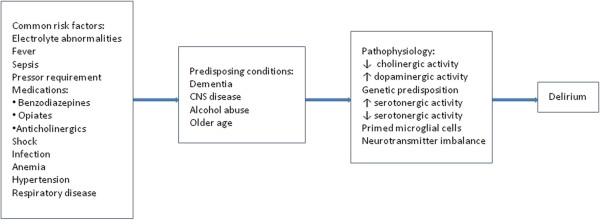
“Other risk factors for delirium included electrolytes imbalance, shock, infection, sepsis, fever, anaemia, hypertension and respiratory diseases (Cavallazzi et al. 2012).”
BackgroundDelirium after Cardiac Surgery: A Pilot Study from a Single Tertiary Referral Center
Kumar, A. K., Jayant, A., Arya, V. K., Magoon, R., & Sharma, R. (2017) · Annals of Cardiac Anaesthesia · doi:10.4103/0971-9784.197841 · Cited by 55
“[9] There is also apprehension that in specialized intensive care, the incidence of this complication is higher.[10] This study was motivated to generate epidemiologic data regarding this complication in our health system; in line with the development of risk models, this is designed to be a derivation cohort to give…”
ResultPsychological and neuropsychiatric implications of COVID-19
Mukaetova-Ladinska, E. B., & Kronenberg, G. (2020) · European Archives of Psychiatry and Clinical Neuroscience · doi:10.1007/s00406-020-01210-2 · Cited by 58
Hypotension and a positive fluid balance are associated with delirium in patients with shock
Nguyen, D. N., Huyghens, L., Parra, J., Schiettecatte, J., Smitz, J. E. J., & Vincent, J. (2018) · PLoS ONE · doi:10.1371/journal.pone.0200495 · Cited by 54
Aiello, G., Cuocina, M., la Via, L., Messina, S., Attaguile, G., Cantarella, G., Sanfilippo, F., & Bernardini, R. (2023) · Journal of Clinical Medicine · doi:10.3390/jcm12020435 · Cited by 45
Sahle, B. W., Pilcher, D. V., Litton, E., Ofori‐Asenso, R., Peter, K., McFadyen, J. D., & Bucknall, T. K. (2022) · Annals of Intensive Care · doi:10.1186/s13613-022-01080-y · Cited by 53
“adults, and 45 to 87% among patients admitted to an intensive care unit (ICU) [6, 7].”
BackgroundChen, T., Chen, C., Zhang, Z., Zou, Y., Peng, M., & Wang, Y. (2016) · Brain Behavior and Immunity · doi:10.1016/j.bbi.2016.04.004 · Cited by 48
“MV is one of the most relevant risk factors identified in observational studies (Cavallazzi et al., 2012).”
BackgroundLange, S., Mędrzycka-Dąbrowska, W. A., Tomaszek, L., Wujtewicz, M. A., & Krupa, S. (2023) · Frontiers in Public Health · doi:10.3389/fpubh.2023.1119526 · Cited by 47
“In the ICU, the most common form is hypoactive, which is characterized by reduced motor activity, reduced alertness and sleepiness (7, 12).”
BackgroundMethodUpdate on Severe Burn Management for the Intensivist
Lundy, J. B., Chung, K. K., Pamplin, J. C., Ainsworth, C., Jeng, J. C., & Friedman, B. C. (2016) · Journal of Intensive Care Medicine · doi:10.1177/0885066615592346 · Cited by 51
“Along with the multimodality agents mentioned earlier, we have found the use of quetiapine at doses up to 300 mg twice daily to be a helpful adjunct for delirium, a complication seen in 25% to 75% of ICU patients.(37) In our experience, medications are targeted according to the goal of therapy and titrated according t…”
Green, C., Bonavia, W., Toh, C., & Tiruvoipati, R. (2018) · Critical Care Medicine · doi:10.1097/ccm.0000000000003577 · Cited by 52
Bohart, S., Møller, A. M., & Herling, S. F. (2019) · Intensive and Critical Care Nursing · doi:10.1016/j.iccn.2019.04.010 · Cited by 45
Thomas, B., Lo, W. A., Nangati, Z., & Barclay, G. (2021) · Palliative Medicine · doi:10.1177/0269216321994440 · Cited by 41
Mufti, H. N., & Hirsch, G. M. (2017) · Journal of Critical Care · doi:10.1016/j.jcrc.2017.07.045 · Cited by 43
Copeland, C., Fisher, J. M., & Teodorczuk, A. (2017) · Age and Ageing · doi:10.1093/ageing/afx133 · Cited by 40
Pre-injury depression and anxiety in patients with orthopedic trauma and their treatment
Haupt, E. T., Vincent, H. K., Harris, A. B., Vasilopoulos, T., Guenther, R. T., Sharififar, S., & Hagen, J. E. (2018) · Injury · doi:10.1016/j.injury.2018.03.024 · Cited by 40
Insights into neurological dysfunction of critically ill COVID-19 patients
Deana, C., Verriello, L., Pauletto, G., Corradi, F., Forfori, F., Cammarota, G., Bignami, E. G., Vetrugno, L., & Bove, T. (2020) · Trends in Anaesthesia and Critical Care · doi:10.1016/j.tacc.2020.09.005 · Cited by 44
“among critically ill patients, with rates reported up to 75% [56,57].”
BackgroundZhou, Y., Yang, J., Wang, B., Wang, P., Wang, Z., Yang, Y., Liang, G., jing, X., Jin, X., Zhang, Z., et al. (2022) · Critical Care · doi:10.1186/s13054-022-03967-5 · Cited by 40
Ramnarain, D., Pouwels, S., Fernández‐Gonzalo, S., Navarra‐Ventura, G., & Balanzá‐Martínez, V. (2023) · Acta Psychiatrica Scandinavica · doi:10.1111/acps.13534 · Cited by 43
“In the ICU, delirium is a common phenomenon that presents with fluctuations in the level of consciousness and an acute decline in cognitive functioning.(28) Different studies report different incidence rates of delirium in the ICU, but approximately 75% of patients will develop delirium at some point during their ICU…”
BackgroundAssociation between delirium in the intensive care unit and subsequent neuropsychiatric disorders
Brown, K. N., Soo, A., Faris, P., Patten, S. B., Fiest, K. M., & Stelfox, H. T. (2020) · Critical Care · doi:10.1186/s13054-020-03193-x · Cited by 42
Hur, S., Ko, R., Yoo, J., Ha, J., Cha, W. C., & Chung, C. R. (2021) · JMIR Medical Informatics · doi:10.2196/23401 · Cited by 41
“Delirium, defined as acute brain dysfunction characterized by disturbances of awareness, attention, and cognition with a fluctuating course linked with an underlying medical condition, frequently occurs among patients admitted to intensive care units (ICUs) [1].”
BackgroundDelirium in ICU patients following cardiac surgery: An observational study
Simeone, S., Pucciarelli, G., Perrone, M., Rea, T., Gargiulo, G., Guillari, A., Castellano, G., Tommaso, L. D., Niola, M., & Iannelli, G. (2018) · Journal of Clinical Nursing · doi:10.1111/jocn.14324 · Cited by 46
Reflections on delirium – A patient’s perspective
Garrett, R. M. (2019) · Journal of the Intensive Care Society · doi:10.1177/1751143719851352 · Cited by 37
Diaphragm Neurostimulation Assisted Ventilation in Critically Ill Patients
Etienne, H., Morris, I. S., Hermans, G., Heunks, L. M. A., Goligher, E. C., Jaber, S., Morélot‐Panzini, C., Assouad, J., Gonzalez‐Bermejo, J., Papazian, L., et al. (2023) · American Journal of Respiratory and Critical Care Medicine · doi:10.1164/rccm.202212-2252cp · Cited by 37
Glynn, L. H., & Corry, M. (2015) · Intensive and Critical Care Nursing · doi:10.1016/j.iccn.2015.05.001 · Cited by 38
Martinez, F. E., Anstey, M., Ford, A. H., Roberts, B., Hardie, M. J., Palmer, R. N., Choo, L., Hillman, D. R., Hensley, M., Kelty, E. A., et al. (2017) · Trials · doi:10.1186/s13063-016-1751-0 · Cited by 37
“These include higher mortality (estimated as a 10% increase in the relative risk of death for each day of delirium) [6–10], more time on a ventilator [9–11], unplanned removal of tubes and catheters [10], increased use of physical restraints [11], increased requirement for tracheostomy, greater post-operative complica…”
BackgroundTeece, A., Baker, J. A., & Smith, H. (2021) · Journal of Clinical Nursing · doi:10.1111/jocn.15889 · Cited by 36
“Hyperactive delirium presents as psychomotor agitation, hypervigilance, a disordered sleep- wake cycle and the presence of hallucinations and delusions (Cavallazzi et al., 2012).”
BackgroundKöşkderelioğlu, A., Önder, Ö., Gücüyener, M., Altay, T., Kayalı, C., & Gedizlioğlu, M. (2016) · Geriatrics and gerontology international/Geriatrics & gerontology international · doi:10.1111/ggi.12806 · Cited by 36
Lung Purinoceptor Activation Triggers Ventilator-Induced Brain Injury
González-López, A., López-Alonso, I., Pickerodt, P. A., von Haefen, C., Amado‐Rodríguez, L., Reimann, H. M., Niendorf, T., Kuebler, W. M., Albaiceta, G. M., Francis, R. C. E., et al. (2019) · Critical Care Medicine · doi:10.1097/ccm.0000000000003977 · Cited by 34
Delirium in the Critically Ill Child: Assessment and Sequelae
Paterson, R., Kenardy, J. A., Young, A. D., Dow, B. L., & Long, D. A. (2017) · Developmental Neuropsychology · doi:10.1080/87565641.2017.1374961 · Cited by 33
Incidence of Delirium in Critically Ill Cancer Patients
Sánchez‐Hurtado, L. A., Hernández-Sánchez, N., Moral-Armengol, M. D., Guevara-García, H., García-Guillén, F. J., Herrera‐Gómez, Á., & Ñamendys-Silva, S. A. (2018) · Pain Research and Management · doi:10.1155/2018/4193275 · Cited by 31
“Older critically ill patients may have a rate of more than 80% [9].”
BackgroundSantos, E. J. F., Cardoso, D., Neves, H. L., Cunha, M., Rodrígues, M. A., & Apóstolo, J. (2017) · The JBI Database of Systematic Reviews and Implementation Reports · doi:10.11124/jbisrir-2017-003391 · Cited by 30
Javaherforooshzadeh, F., Janatmakan, F., Shafaeebejestan, E., & Jorairahmadi, S. (2021) · PubMed Central · doi:10.30476/ijms.2020.82860.1146 · Cited by 29
Liberation From Mechanical Ventilation in the Cardiac Intensive Care Unit
Shahu, A., Banna, S., Applefeld, W. N., Rampersad, P. P., Alviar, C. L., Ali, T., Luk, A. C., Fajardo, E. C., van Diepen, S., & Miller, P. E. (2023) · JACC Advances · doi:10.1016/j.jacadv.2022.100173 · Cited by 36
Alcohol Withdrawal Syndrome in Critically Ill Patients: Identification, Assessment, and Management
Sutton, L., & Jutel, A. (2016) · Critical Care Nurse · doi:10.4037/ccn2016420 · Cited by 36
Delirium as a complication of the surgical intensive care
Praško, J. P., Horáček, R., Krnacova, B., & Látalová, K. (2016) · Neuropsychiatric Disease and Treatment · doi:10.2147/ndt.s115800 · Cited by 31
Londoño, E. M. C., Gil, I. C. M., Hernández, K. U., Ramírez, C. R., Gómez, M. L. Á., Peña, R. A. C., Vèlez, C. A. A., Penagos, S., Parra, M. E., & Franco, J. G. (2018) · Intensive and Critical Care Nursing · doi:10.1016/j.iccn.2017.12.010 · Cited by 27
Matsumoto-Miyazaki, J., Ushikoshi, H., Miyata, S., Miyazaki, N., Nawa, T., Okada, H., Ojio, S., Ogura, S., & Minatoguchi, S. (2017) · The American Journal of Chinese Medicine · doi:10.1142/s0192415x17500161 · Cited by 26
Risk factors and outcomes of critically ill patients with acute brain failure: A novel end point
Singh, T. D., O’Horo, J. C., Gajic, O., Sakusic, A., Day, C. N., Mandrekar, J. N., Kashyap, R., Reddy, D. R., & Rabinstein, A. A. (2017) · Journal of Critical Care · doi:10.1016/j.jcrc.2017.08.028 · Cited by 25
“The prevalence of delirium ranges from16% to 87% in ICU patients [2], with an incidence of up to 83% in mechanically ventilated patients as compared to 20% in non-ventilated patients”
BackgroundAlterations in Neurotrophins in Alcohol-Addicted Patients during Alcohol Withdrawal
Malewska-Kasprzak, M., Skibińska, M., & Dmitrzak‐Węglarz, M. (2024) · Brain Sciences · doi:10.3390/brainsci14060583 · Cited by 24
“…Sci. 2024 , 14 , 583 2 of 16 nausea, vomiting, dry mouth, accelerated heart rate, hypertension, dilated pupils, feeling anxiety, irritability, excessive sweating, insomnia, depressive states, seizures, and delirium [6,7], which appear on the third or fourth day after stopping alcohol consumption.”
BackgroundTerry, K. J., Anger, K. E., & Szumita, P. M. (2015) · Journal of Intensive Care · doi:10.1186/s40560-015-0119-y · Cited by 24
Yu, I., Griffin, C. A., Phillips∥, P. C., Strauss, L. C., & Perlman, E. J. (1995) · PubMed · Cited by 30
Álvarez, E., Garrido, M. A., Tobar, E. A., Prieto, S. A., Vergara, S. O., Briceño, C. D., & González, F. J. (2017) · Journal of Critical Care · doi:10.1016/j.jcrc.2017.03.016 · Cited by 24
Lee, H. Y., Chung, S., Hyeon, D., Yang, H.-L., Lee, H., Ryu, H. G., & Lee, H. (2024) · npj Digital Medicine · doi:10.1038/s41746-024-01335-x · Cited by 29
Huth, S. F., Cho, S., Robba, C., Highton, D., Battaglini, D., Bellapart, J., Suen, J. Y., Bassi, G. L., Taccone, F. S., Arora, R. C., et al. (2021) · Frontiers in Neurology · doi:10.3389/fneur.2021.664599 · Cited by 27
Structural Brain Changes in Delirium: An Integrative Review
Kalvas, L. B., & Monroe, T. B. (2019) · Biological Research For Nursing · doi:10.1177/1099800419849489 · Cited by 26
Lin, C., Tu, H., Jie, Z., Zhou, X., & Li, C. (2020) · Annals of Pharmacotherapy · doi:10.1177/1060028020951954 · Cited by 23
Pharmakotherapie von psychiatrischen Akut- und Notfallsituationen: Allgemeine Prinzipien
Messer, T., Pajonk, F., & Müller, M. J. (2015) · Der Nervenarzt · doi:10.1007/s00115-014-4148-x · Cited by 22
Ji, H.-M., Han, J., Hi-Won, B., & Won, Y. (2017) · BMC Musculoskeletal Disorders · doi:10.1186/s12891-017-1738-3 · Cited by 21
“Delirium in the ICU care is an extremely frequent complicating the results of surgery [28] leading to poorer function and increased mortality [29].”
BackgroundGao, S., Liang, X., Pan, Z., Zhang, X., & Zhang, L. (2024) · Intensive and Critical Care Nursing · doi:10.1016/j.iccn.2024.103888 · Cited by 20
Wang, M., Kuo, Y., Kuo, L.-C., Liang, H.-P., Cheng, Y., Yeh, Y.-C., Tsai, M.-T., Chan, W.-S., Chiu, C., Chao, A., et al. (2023) · Journal of Clinical Anesthesia · doi:10.1016/j.jclinane.2023.111121 · Cited by 20
Askgaard, G., Hallas, J., Fink‐Jensen, A., Molander, A., Madsen, K. G., & Pottegård, A. (2016) · Drug and Alcohol Dependence · doi:10.1016/j.drugalcdep.2016.02.016 · Cited by 21
Mohebbi, N., Moslemi, R., Khalili, H., Mohammadi, M., & Mehrabi, Z. (2020) · Journal of Research in Pharmacy Practice · doi:10.4103/jrpp.jrpp_19_124 · Cited by 23
Assessing and Managing Delirium in Surgical and Internal Medicine: an Overview
Kırpınar, İ. (2016) · Bezmialem Science · doi:10.14235/bs.2016.508 · Cited by 22
“Inflammatory mechanisms: Certain recent studies support the roles of cytokines such as interleukin-1 and interleukin-6, and tumor necrosis factor alpha in delirium (17-20).”
BackgroundMinella, F. C. O., Neto, S. A. A. D. M., Osaku, É. F., Costa, C. R. L. D. M., & Giancursi, T. (2022) · Research Society and Development · doi:10.33448/rsd-v11i10.32696 · Cited by 19
“…multifatorial, caracterizada por perturbação da consciência, acompanhada de: alterações na cognição, perda de memória, agitação e alucinações; com desenvolvimento ao longo de um curto período (horas ou dias) e curso flutuante (Girard et al., 2008, Cavallazzi et al., 2012, Patel et al., 2018).”
BackgroundRapolthy‐Beck, A., Fleming, J., Turpin, M. J., Sosnowski, K., Dullaway, S., & White, H. T. (2023) · American Journal of Occupational Therapy · doi:10.5014/ajot.2023.050230 · Cited by 21
“An additional factor that negatively influences outcome is the presence of delirium (Brummel et al., 2014; Cavallazzi et al., 2012), a reversible condition, for which treatment can enhance the return to higher levels of functional independence (Alvarez et al., 2017).”
High prolactin levels are associated with more delirium in septic patients
Nguyen, D. N., Huyghens, L., Schiettecatte, J., Smitz, J. E. J., & Vincent, J. (2016) · Journal of Critical Care · doi:10.1016/j.jcrc.2015.12.021 · Cited by 19
“Aberrant stress hormone response and disturbance of the neurotransmission system (including dopamine hyperactivity, cholinergic and serotoninergic deficiency) working in concert with hypotension, hypoxia, and excessive brain inflammation are important risk factors in the pathogenesis of cognitive dysfunction or deliri…”
BackgroundSullinger, D., Gilmer, A., Jurado, L. V., Zimmerman, L. H., Steelman, J., Gallagher, A., Dupre, T., & Acquista, E. (2016) · Annals of Pharmacotherapy · doi:10.1177/1060028016668627 · Cited by 19
“However, it is associated with negative outcomes.(8) The objective of this study was to analyze the effect of a delirium treatment protocol implementation utilizing nonpharmacological and pharmacological interventions on delirious days in the surgical trauma intensive care unit (STICU).”
BackgroundLavrentieva, A., Depetris, N., & Rodini, I. (2017) · Europe PMC (PubMed Central) · Cited by 19
Cooper, E., Wake, E., Cho, C., Wullschleger, M., & Patel, B. M. (2021) · ANZ Journal of Surgery · doi:10.1111/ans.17064 · Cited by 19
“This opposes the well-reported relationships between longer ICU LOS and increased frequency of these complications .(24,25) Although PCA rates remained stable, use of regional anaesthesia increased, both of which occurred despite decreasing ISS.”
Postoperative Delirium after Reconstructive Surgery in the Head and Neck Region
Taxis, J., Spoerl, S., Broszio, A., Eichberger, J., Grau, E., Schuderer, J. G., Ludwig, N., Gottsauner, M., Spanier, G., Bundscherer, A., et al. (2022) · Journal of Clinical Medicine · doi:10.3390/jcm11226630 · Cited by 26
Delirium in elderly patients: association with educational attainment
Martins, S. P. V., Paiva, J. A., Simões, M. R., & Fernandes, L. P. N. S. (2016) · Acta Neuropsychiatrica · doi:10.1017/neu.2016.40 · Cited by 21
Deep Learning–Based Recurrent Delirium Prediction in Critically Ill Patients
Lucini, F. R., Stelfox, H. T., & Lee, J. (2023) · Critical Care Medicine · doi:10.1097/ccm.0000000000005789 · Cited by 20
Smischney, N. J., Seisa, M. O., Heise, K. J., Schroeder, D. R., Weister, T. J., & Diedrich, D. A. (2016) · Journal of Intensive Care Medicine · doi:10.1177/0885066616679606 · Cited by 21
Metadata
- Authors
- Cavallazzi, R., Saad, M., & Marik, P. E.
- Affiliations
- University of Louisville (US)
- Eastern Virginia Medical School (US)
- Corresponding author
- Marik, Paul E
- Venue
- Annals of Intensive Care
- Publisher
- Elsevier BV
- Published
- 2012
- Volume
- 2
- Issue
- 1
- Pages
- 49
- ISSN
- 2110-5820 (ISSN-L)
- PMC
- PMC3539890
- OpenAlex
- W2121044961
- Cited by
- 275
- References
- 96
- Citations by year
- 2026: 11 · 2025: 22 · 2024: 17 · 2023: 30 · 2022: 26 · 2021: 26 · 2020: 23 · 2019: 21 · 2018: 14 · 2017: 28 · 2016: 21 · 2015: 17 · 2014: 9 · 2013: 8 · 2012: 1
- FWCI
- 9.41
- Type
- journal article
- Language
- en
- Open access
- gold
- doi.org
- Licence
- cc-by
- www.elsevier.com/tdm/userlicense/1.0/ (tdm)
- www.elsevier.com/legal/tdmrep-license (tdm)
- creativecommons.org/licenses/by-nc-nd/4.0/ (vor, 5071 d)
- Locations
- Annals of Intensive Care (publishedVersion, cc-by)
- PubMed Central (publishedVersion, cc-by)
- PubMed (publishedVersion)
- Topics
- Health Sciences › Medicine › Critical Care and Intensive Care Medicine › Intensive Care Unit Cognitive Disorders
- Health Sciences › Medicine › Anesthesiology and Pain Medicine › Anesthesia and Sedative Agents
- Health Sciences › Medicine › Critical Care and Intensive Care Medicine › Nosocomial Infections in ICU
- Keywords
- delirium, intensive care unit, mechanically ventilated patients, hyperactive delirium, hypoactive delirium, mixed delirium, CAM-ICU, delirium diagnosis, mortality, non-pharmacological treatment, physical and occupational therapy, haloperidol, atypical antipsychotics, dexmedetomidine
About these checks
Registry, retraction, Cites and statistics results are computed, not judged, with one exception: a printed reference that no index lists is read once by a model before it counts as a citation error. Claims are extracted by a model and kept only when their quote appears verbatim in the text; each cited source is then checked, with a model’s help, for whether it says what the claim relies on. Those verdicts can be wrong — read the claim’s quote and the cited source before relying on one.
Statistics and arithmetic are recomputed, not judged.
Confidence bands are shown only for fields calibrated on our annotated test set. None is calibrated yet, so no band is shown.
What counts as a claim ›How we measure confidence ›How we check this ›
Are you an author, or do you see a problem with this page? Request a review
Data sources
Bibliographic data: Semantic Scholar, OpenAlex, Crossref.
Contains information from the Semantic Scholar Academic Graph Datasets, made available under the ODC Attribution License (ODC-BY 1.0).
Semantic Scholar’s data is described in: Kinney, R., et al. (2023). The Semantic Scholar Open Data Platform. arXiv:2301.10140.
