

The DOI matches its Crossref record; 76 of the 76 references it cites were found in a registry or an index.
Beyond intracranial pressure: optimization of cerebral blood flow, oxygen, and substrate delivery after traumatic brain injury
Open accessAbstract
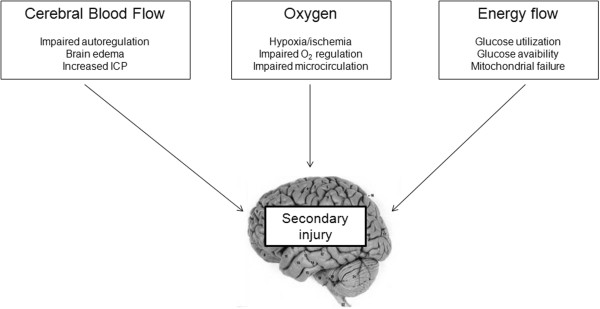
Monitoring and management of intracranial pressure (ICP) and cerebral perfusion pressure (CPP) is a standard of care after traumatic brain injury (TBI). However, the pathophysiology of so-called secondary brain injury, i.e., the cascade of potentially deleterious events that occur in the early phase following initial cerebral insult-after TBI, is complex, involving a subtle interplay between cerebral blood flow (CBF), oxygen delivery and utilization, and supply of main cerebral energy substrates (glucose) to the injured brain. Regulation of this interplay depends on the type of injury and may vary individually and over time. In this setting, patient management can be a challenging task, where standard ICP/CPP monitoring may become insufficient to prevent secondary brain injury. Growing clinical evidence demonstrates that so-called multimodal brain monitoring, including brain tissue oxygen (PbtO2), cerebral microdialysis and transcranial Doppler among others, might help to optimize CBF and the delivery of oxygen/energy substrate at the bedside, thereby improving the management of secondary brain injury. Looking beyond ICP and CPP, and applying a multimodal therapeutic approach for the optimization of CBF, oxygen delivery, and brain energy supply may eventually improve overall care of patients with head injury. This review summarizes some of the important pathophysiological determinants of secondary cerebral damage after TBI and discusses novel approaches to optimize CBF and provide adequate oxygen and energy supply to the injured brain using multimodal brain monitoring.
Overview
The claims and statistics of this paper haven’t been checked yet.
Run the check — free, no account needed. It reads the open-access text and checks the sources it cites.
Integrity signals
Registry
Cites
Statistics
Figures
Verification
Claims the paper makes
The claims and statistics of this paper haven’t been checked yet.
Run the check — free, no account needed. It reads the open-access text and checks the sources it cites.
Claims other papers make about this one
Each is checked against this paper’s own text: does it say what the citing paper says it does?
The source backs part of the claim, not all of it — or backs it for a different population, condition or comparison.
In the citing paper
“Regarding the general pathophysiology of TBI, the first stages of brain injury after head trauma are characterized by direct tissue damage and impaired regulation of cerebral blood flow (hypoperfusion or hyperperfusion) and metabolism (93,97).”
From Pituitary Dysfunction After Traumatic Brain Injury: A Clinical and Pathophysiological Approach (2015) · cites this paper as [93]
Experimental — accuracy not yet measured
Self-check
Percentages, sums and reported differences re-computed from the paper’s own numbers.
The self-check needs the paper’s full text.
Citations
Cites
Moderate and severe traumatic brain injury in adults
Maas, A. I., Stocchetti, N., & Bullock, R. (2008) · The Lancet Neurology · doi:10.1016/s1474-4422(08)70164-9 · Cited by 2,123
Raichle, M. E., & Mintun, M. A. (2006) · Annual Review of Neuroscience · doi:10.1146/annurev.neuro.29.051605.112819 · Cited by 1,630
A Trial of Intracranial-Pressure Monitoring in Traumatic Brain Injury
Chesnut, R. M., Temkin, N. R., Carney, N., DIKMEN, S. S., Rondina, C., Videtta, W., Petroni, G. J., Lujan, S., Pridgeon, J., Barber, J. K., et al. (2012) · New England Journal of Medicine · doi:10.1056/nejmoa1207363 · Cited by 1,353
Steiner, L. A., Czosnyka, M., Piechnik, S. K., Smielewski, P., Chatfield, D. A., Menon, D. K., & Pickard, J. D. (2002) · Critical Care Medicine · doi:10.1097/00003246-200204000-00002 · Cited by 783
Prevention of secondary ischemic insults after severe head injury
Robertson, C. S., Valadka, A. B., Hannay, H. J., Contant, C. F., Gopinath, S. P., Cormio, M., Uzura, M., & Grossman, R. G. (1999) · Critical Care Medicine · doi:10.1097/00003246-199910000-00002 · Cited by 748
Bergsneider, M., Hovda, D. A., Shalmon, E., Kelly, D. F., Vespa, P. M., Martin, N. A., Phelps, M. E., McArthur, D. L., Caron, M., Kraus, J. F., et al. (1997) · Journal of neurosurgery · doi:10.3171/jns.1997.86.2.0241 · Cited by 639
Vespa, P. M., Bergsneider, M., Hattori, N., Wu, H.-M., Huang, S., Martin, N. A., Glenn, T. C., McArthur, D. L., & Hovda, D. A. (2005) · Journal of Cerebral Blood Flow & Metabolism · doi:10.1038/sj.jcbfm.9600073 · Cited by 637
Juul, N., Morris, G. F., Marshall, S. B., _, _., & Marshall, L. F. (2000) · Journal of neurosurgery · doi:10.3171/jns.2000.92.1.0001 · Cited by 564
Blood lactate is an important energy source for the human brain.
van Hall, G., Stømstad, M., Rasmussen, P., Jans, Ø., Zaar, M., Gam, C., Quistorff, B., Secher, N. H., & Nielsen, H. B. (2009) · Journal of Cerebral Blood Flow & Metabolism · doi:10.1038/jcbfm.2009.35 · Cited by 522
Jespersen, S. N., & Østergaard, L. (2011) · Journal of Cerebral Blood Flow & Metabolism · doi:10.1038/jcbfm.2011.153 · Cited by 500
Cited by
Sorted by citations
Acute Management of Traumatic Brain Injury
Vella, M. A., Crandall, M. L., & Patel, M. B. (2017) · Surgical Clinics of North America · doi:10.1016/j.suc.2017.06.003 · Cited by 361
Pituitary Dysfunction After Traumatic Brain Injury: A Clinical and Pathophysiological Approach
Tanriverdi, F., Schneider, H. J., Aimaretti, G., Masel, B. E., Casanueva, F. F., & Kelestimur, F. (2015) · Endocrine Reviews · doi:10.1210/er.2014-1065 · Cited by 218
Evensen, K. B., & Eide, P. K. (2020) · Fluids and Barriers of the CNS · doi:10.1186/s12987-020-00195-3 · Cited by 179
Transcranial Doppler to Predict Neurologic Outcome after Mild to Moderate Traumatic Brain Injury
Bouzat, P., Alméras, L., Manhes, P., Sanders, L., Levrat, A., David, J., Cinotti, R., Chabanne, R., Gloaguen, A., Bobbia, X., et al. (2016) · Anesthesiology · doi:10.1097/aln.0000000000001165 · Cited by 98
Self-citationQuintard, H., Patet, C., Zerlauth, J.-B., Suys, T., Bouzat, P., Pellerin, L., Meuli, R. A., Magistretti, P. J., & Oddo, M. (2015) · Journal of Neurotrauma · doi:10.1089/neu.2015.4057 · Cited by 88
Self-citationSekhon, M. S., Smielewski, P. S., Bhate, T. D., Brasher, P. M. A., Foster, D., Menon, D. K., Gupta, A. K., Czosnyka, M., Henderson, W. R., Gin, K. G., et al. (2016) · Resuscitation · doi:10.1016/j.resuscitation.2016.05.019 · Cited by 87
Hypertonic Lactate to Improve Cerebral Perfusion and Glucose Availability After Acute Brain Injury*
Carteron, L., Solari, D., Patet, C., Quintard, H., Miroz, J., Bloch, J., Daniel, R. T., Hirt, L., Eckert, P., Magistretti, P. J., et al. (2018) · Critical Care Medicine · doi:10.1097/ccm.0000000000003274 · Cited by 81
Self-citationBouzat, P., & Oddo, M. (2014) · Current Opinion in Critical Care · doi:10.1097/mcc.0000000000000072 · Cited by 81
Self-citationBouzat, P., Marques-Vidal, P. M., Zerlauth, J.-B., Sala, N., Suys, T., Schoettker, P., Bloch, J., Daniel, R. T., Levivier, M., Meuli, R. A., et al. (2014) · Critical Care Medicine · doi:10.1097/ccm.0000000000000720 · Cited by 75
Self-citationTranscranial Doppler after traumatic brain injury
Bouzat, P., Oddo, M., & Payen, J. (2014) · Current Opinion in Critical Care · doi:10.1097/mcc.0000000000000071 · Cited by 74
Self-citationRecommendations for the use of multimodal monitoring in the neurointensive care unit
Citerio, G., Oddo, M., & Taccone, F. S. (2015) · Current Opinion in Critical Care · doi:10.1097/mcc.0000000000000179 · Cited by 69
Self-citationGodoy, D. A., Brasil, S., Iaccarino, C., Paiva, W. S., & Rubiano, A. M. (2023) · Critical Care · doi:10.1186/s13054-023-04427-4 · Cited by 65
Godoy, D. A., Lubillo, S., & Rabinstein, A. A. (2018) · Neurosurgery Clinics of North America · doi:10.1016/j.nec.2017.12.001 · Cited by 63
A Review of Monitoring Methods for Cerebral Blood Oxygen Saturation
Zhong, W., Ji, Z., & Sun, C. (2021) · Healthcare · doi:10.3390/healthcare9091104 · Cited by 59
Neuropathophysiological Mechanisms and Treatment Strategies for Post-traumatic Epilepsy
Sharma, S., Tiarks, G., Haight, J. A., & Bassuk, A. G. (2021) · Frontiers in Molecular Neuroscience · doi:10.3389/fnmol.2021.612073 · Cited by 58
Zhou, T. E., Rivera, J. C., Bhosle, V. K., Lahaie, I., Shao, Z., Tahiri, H., Zhu, T., Polosa, A., Dorfman, A. L., Beaudry‐Richard, A., et al. (2016) · American Journal Of Pathology · doi:10.1016/j.ajpath.2016.08.004 · Cited by 54
Multimodal neuromonitoring for traumatic brain injury: A shift towards individualized therapy
Makarenko, S., Griesdale, D. E. G., Gooderham, P. A., & Sekhon, M. S. (2016) · Journal of Clinical Neuroscience · doi:10.1016/j.jocn.2015.05.065 · Cited by 53
Multimodality Neuromonitoring in Adult Traumatic Brain Injury
Smith, M. (2017) · Anesthesiology · doi:10.1097/aln.0000000000001885 · Cited by 51
Giammattei, L., Starnoni, D., Maduri, R., Bernini, A., Abed‐Maillard, S., Rocca, A., Cossu, G., Simonin, A., Eckert, P., Bloch, J., et al. (2020) · Acta Neurochirurgica · doi:10.1007/s00701-020-04222-y · Cited by 48
Self-citationVinciguerra, L., & Bösel, J. (2016) · Neurocritical Care · doi:10.1007/s12028-016-0361-8 · Cited by 45
Kirkman, M. A., & Smith, M. (2016) · Anesthesiology Clinics · doi:10.1016/j.anclin.2016.04.007 · Cited by 40
Lafrenaye, A. D., Krahe, T. E., & Povlishock, J. T. (2014) · Journal of Cerebral Blood Flow & Metabolism · doi:10.1038/jcbfm.2014.122 · Cited by 37
Coggan, J. S., Calì, C., Keller, D. X., Agus, M., Boges, D. J., Abdellah, M., Kare, K., Lehväslaiho, H., Eilemann, S., Jolivet, R., et al. (2018) · Frontiers in Neuroscience · doi:10.3389/fnins.2018.00664 · Cited by 36
Neuroprotective effects of lactate and ketone bodies in acute brain injury
Plourde, G., Roumes, H., Suissa, L., Hirt, L., Doche, É., Pellerin, L., Bouzier‐Sore, A., & Quintard, H. (2024) · Journal of Cerebral Blood Flow & Metabolism · doi:10.1177/0271678x241245486 · Cited by 35
Pharmacotherapy optimization for rapid sequence intubation in the emergency department
Engstrom, K., Brown, C. S., Mattson, A. E., Lyons, N., & Rech, M. A. (2023) · The American Journal of Emergency Medicine · doi:10.1016/j.ajem.2023.05.004 · Cited by 38
Zhou, L., Liu, H., Zhang, B., Wei, C., Zhou, S., Huang, X.-Y., Zhong, X., Zhang, L., Bi, W., Liu, J., et al. (2024) · Advanced Functional Materials · doi:10.1002/adfm.202314330 · Cited by 34
Bogossian, E. G., Diosdado, A., Barrit, S., Barajraji, M. A., Annoni, F., Schuind, S., & Taccone, F. S. (2022) · Neurocritical Care · doi:10.1007/s12028-022-01613-0 · Cited by 34
Payen, J., Richard, M., Francony, G., Audibert, G., Barbier, E., Bruder, N. J., Dahyot‐Fizelier, C., Geeraerts, T., Gergelé, L., Puybasset, L., et al. (2020) · BMJ Open · doi:10.1136/bmjopen-2020-040550 · Cited by 30
Self-citationYounsi, A., Fischer, J., Habel, C., Riemann, L., Scherer, M., Unterberg, A. W., & Zweckberger, K. (2020) · European Journal of Trauma and Emergency Surgery · doi:10.1007/s00068-020-01419-9 · Cited by 29
Hakimi, R., Alexandrov, A. V., & Garami, Z. F. (2019) · Neurologic Clinics · doi:10.1016/j.ncl.2019.09.006 · Cited by 28
How much oxygen for the injured brain – can invasive parenchymal catheters help?
Leach, M. R., & Shutter, L. (2021) · Current Opinion in Critical Care · doi:10.1097/mcc.0000000000000810 · Cited by 27
Martin, C., Thony, F., Rodiere, M., Bouzat, P., Lavagne, P., Durand, M., & Chavanon, O. (2016) · European Journal of Cardio-Thoracic Surgery · doi:10.1093/ejcts/ezw369 · Cited by 26
Self-citationBurnol, L., Payen, J., Francony, G., Skaare, K., Manet, R., Morel, J., Bosson, J., & Gergelé, L. (2021) · Neurocritical Care · doi:10.1007/s12028-021-01240-1 · Cited by 24
Self-citationNeurological Critical Care: The Evolution of Cerebrovascular Critical Care
Chang, C. W. J., Provencio, J. J., & Shah, S. D. (2021) · Critical Care Medicine · doi:10.1097/ccm.0000000000004933 · Cited by 25
Bogossian, E. G., Battaglini, D., Fratino, S., Minini, A., Giannì, G., Fiore, M., Robba, C., & Taccone, F. S. (2023) · Neurocritical Care · doi:10.1007/s12028-023-01680-x · Cited by 23
Novel index for predicting mortality during the first 24 hours after traumatic brain injury
Kim, H., Lee, H., Kim, Y.-T., Son, Y., Smielewski, P. S., Czosnyka, M., & Kim, D. (2019) · Journal of neurosurgery · doi:10.3171/2018.7.jns18995 · Cited by 22
Iaccarino, C., on behalf of the Traumatic Brain Injury Section of the Italian Society of Neurosurgery (SINch) and the Neuroanesthesia and Neurocritical Care Study Group of the Italian Society of Anesthesia, A., Lippa, L., Munari, M., Castioni, C. A., Robba, C., Caricato, A., Pompucci, A., Signoretti, S., Zona, G., et al. (2021) · Journal of Neurosurgical Sciences · doi:10.23736/s0390-5616.21.05383-2 · Cited by 22
Godoy, D. A., Rubiano, A. M., Paranhos, J. L. D. R., Robba, C., & Lazaridis, C. (2023) · Journal of Critical Care · doi:10.1016/j.jcrc.2023.154260 · Cited by 22
AI-Based Decision Support System for Traumatic Brain Injury: A Survey
Rajaei, F., Cheng, S., Williamson, C. A., Wittrup, E. M., & Najarian, K. (2023) · Diagnostics · doi:10.3390/diagnostics13091640 · Cited by 24
Contribution of CT-Scan Analysis by Artificial Intelligence to the Clinical Care of TBI Patients
Brossard, C., Lemasson, B., Attyé, A., de Busschère, J.-A., Payen, J., Barbier, E., Grèze, J., & Bouzat, P. (2021) · Frontiers in Neurology · doi:10.3389/fneur.2021.666875 · Cited by 29
Self-citationLubillo, S., Parrilla, D., Blanco, J. R., Morera, J., Domínguez, J., Belmonte, F., López, P., Molina-Díaz, I., Ruiz, C., Clemente, F. J., et al. (2017) · Journal of neurosurgery · doi:10.3171/2017.1.jns161840 · Cited by 20
Lactate infusion as therapeutical intervention: a scoping review
van Gemert, L. A., de Galan, B. E., Wevers, R. A., ter Heine, R., & Willemsen, M. A. A. P. (2022) · European Journal of Pediatrics · doi:10.1007/s00431-022-04446-3 · Cited by 19
Ritiu, S. A., Rogobete, A. F., Săndesc, D., Bedreag, O. H., Păpurică, M., Popovici, S. E., Toma, D., Ivaşcu, R., Velovan, R. R., Garofil, D. N., et al. (2022) · Cells · doi:10.3390/cells11121880 · Cited by 20
Abookasis, D., Volkov, B., & Mathews, M. S. (2013) · Journal of Biomedical Optics · doi:10.1117/1.jbo.18.11.116007 · Cited by 18
Cerebral Metabolism and the Role of Glucose Control in Acute Traumatic Brain Injury
Blanco, M. M. B., Prashant, G. N., & Vespa, P. M. (2016) · Neurosurgery Clinics of North America · doi:10.1016/j.nec.2016.05.003 · Cited by 18
Carteron, L., Patet, C., Solari, D., Messerer, M., Daniel, R. T., Eckert, P., Meuli, R. A., & Oddo, M. (2017) · Frontiers in Neurology · doi:10.3389/fneur.2017.00325 · Cited by 18
Self-citationAnalgosedation of adult patients with elevated intracranial pressure
Herzer, G., Mirth, C., Illievich, U. M., Voelckel, W., & Trimmel, H. (2017) · Wiener klinische Wochenschrift · doi:10.1007/s00508-017-1228-5 · Cited by 17
Godoy, D. A., Videtta, W., & Napoli, M. D. (2017) · Neurologic Clinics · doi:10.1016/j.ncl.2017.06.002 · Cited by 17
Lang, E. W., Kasprowicz, M., Smielewski, P. S., Pickard, J. D., & Czosnyka, M. (2014) · Neurocritical Care · doi:10.1007/s12028-014-0074-9 · Cited by 16
Mannitol Improves Brain Tissue Oxygenation in a Model of Diffuse Traumatic Brain Injury*
Schilte, C., Bouzat, P., Millet, A., Boucheix, P., Pernet‐Gallay, K., Lemasson, B., Barbier, E., & Payen, J. (2015) · Critical Care Medicine · doi:10.1097/ccm.0000000000001137 · Cited by 15
Self-citationNarayan, S. W., Castelino, R. L., Hammond, N. E., & Patanwala, A. E. (2020) · Journal of Critical Care · doi:10.1016/j.jcrc.2020.03.006 · Cited by 16
Non-pharmacological interventions for traumatic brain injury
Davis, C. K., Arruri, V. K., Joshi, P., & Vemuganti, R. (2024) · Journal of Cerebral Blood Flow & Metabolism · doi:10.1177/0271678x241234770 · Cited by 14
Pressure, perfusion, and compartments
Ivatury, R. R. (2014) · The Journal of Trauma: Injury, Infection, and Critical Care · doi:10.1097/ta.0000000000000240 · Cited by 12
Baltazar, G. A., Pate, A. J., Panigrahi, B., Sharp, A., Smith, M. L., & Chendrasekhar, A. (2015) · Brain Injury · doi:10.3109/02699052.2015.1004558 · Cited by 12
Hu, Y., Wu, Y., Tian, K., Lan, D., Chen, X., Xue, M., Liu, L., & Li, T. (2015) · Journal of Surgical Research · doi:10.1016/j.jss.2015.01.038 · Cited by 12
Brain Perfusion and Oxygenation
Lipp, L. L. (2014) · Critical Care Nursing Clinics of North America · doi:10.1016/j.ccell.2014.04.008 · Cited by 12
Kofman, I., & Abookasis, D. (2015) · Journal of Biomedical Optics · doi:10.1117/1.jbo.20.10.106009 · Cited by 12
Hess, D. C. (2015) · Springer eBooks · doi:10.1007/978-3-319-15063-5 · Cited by 12
Kung, W., Tzeng, I., & Lin, M.-S. (2020) · Applied Sciences · doi:10.3390/app10051847 · Cited by 10
Cammarota, G., Verdina, F., Lauro, G., Boniolo, E., Tarquini, R., Messina, A., Vita, N. D., Sguazzotti, I., Perucca, R., Corte, F. D., et al. (2020) · Journal of Clinical Monitoring and Computing · doi:10.1007/s10877-020-00523-w · Cited by 10
Electrographic Seizures in the Critically Ill
Holla, S. K., Krishnamurthy, P. V., Subramaniam, T., Dhakar, M. B., & Struck, A. F. (2022) · Neurologic Clinics · doi:10.1016/j.ncl.2022.03.015 · Cited by 10
Shochat, A., & Abookasis, D. (2015) · Neurophotonics · doi:10.1117/1.nph.2.1.015001 · Cited by 10
Abookasis, D., Volkov, B., Shochat, A., & Kofman, I. (2016) · Neurophotonics · doi:10.1117/1.nph.3.2.025003 · Cited by 10
Hypothermie thérapeutique en traumatologie crânienne grave
Bouzat, P., Francony, G., Oddo, M., & Payen, J. (2013) · Annales Françaises d Anesthésie et de Réanimation · doi:10.1016/j.annfar.2013.09.004 · Cited by 8
Self-citationDiez mandamientos fisiológicos a lograr durante el traumatismo craneoencefálico grave
Godoy, D. A., Badenes, R., & Murillo-Cabezas, F. (2021) · Revista Española de Anestesiología y Reanimación · doi:10.1016/j.redar.2020.09.005 · Cited by 7
Barrit, S., Barajraji, M. A., Hadwe, S. E., Witte, O. D., Torcida, N., André, J., Taccone, F. S., Schuind, S., & Bogossian, E. G. (2022) · Brain Sciences · doi:10.3390/brainsci12070887 · Cited by 7
Chauzy, A., Bouchène, S., Aranzana‐Climent, V., Clarhaut, J. A., Adier, C., Grégoire, N., Couet, W. R., Dahyot‐Fizelier, C., & Marchand, S. (2022) · Antibiotics · doi:10.3390/antibiotics11101293 · Cited by 7
Nout‐Lomas, Y. S. (2015) · doi:10.1002/9781118993712.ch32 · Cited by 6
Lactate shuttling as an allostatic means of thermoregulation in the brain
Kane, D. A., Foo, A. C. Y., Noftall, E. B., Brebner, K., & Marangoni, D. G. (2023) · Frontiers in Neuroscience · doi:10.3389/fnins.2023.1144639 · Cited by 5
Kasprowicz, M., Hendler, M., Ziółkowski, A., Nasr, N., & Czosnyka, M. (2024) · Acta Neurochirurgica · doi:10.1007/s00701-024-06209-5 · Cited by 5
Godoy, D. A., & Napoli, M. D. (2016) · Revista Brasileira de Terapia Intensiva · doi:10.5935/0103-507x.20160036 · Cited by 5
Stroh, J. N., Foreman, B. P., Bennett, T. D., Briggs, J. K., Park, S., & Albers, D. J. (2024) · Frontiers in Physiology · doi:10.3389/fphys.2024.1381127 · Cited by 4
Current Therapeutic Modalities, Enzyme Kinetics, and Redox Proteomics in Traumatic Brain Injury
Zachariah, P., Rebecca, A. P., Jonathan, W., Cho, J., Henderson, M., & Tanea, T. (2014) · InTech eBooks · doi:10.5772/57306 · Cited by 4
The disturbances of cerebral microcirculation in severe head injury
Trofimov, A. O., Kalentyev, G. V., Voennov, O. V., Yuriev, M., Trofimova, S. Y., & Agarkova, D. I. (2015) · Regional blood circulation and microcirculation · doi:10.24884/1682-6655-2015-14-2-4-15 · Cited by 4
Simulation of Decompressive Craniectomy for Ischaemic Stroke Treatment: A Conceptual Modeling Study
Nadzri, A. N., Mokhtarudin, M. J. M., Naim, W. N. W. A., & Payne, S. J. (2021) · IEEE-EMBS Conference on Biomedical Engineering and Sciences · doi:10.1109/iecbes48179.2021.9398811 · Cited by 4
Zaytoun, T. M. (2017) · Journal of Medical Science And clinical Research · doi:10.18535/jmscr/v5i4.66 · Cited by 4
Imaging Guidance for Therapeutic Delivery: The Dawn of Neuroenergetics
Alambyan, V., Pace, J., Sukpornchairak, P., Yu, X., Alnimir, H., Tatton, R., Chitturu, G., Yarlagadda, A., & Ramos-Estébanez, C. (2020) · Neurotherapeutics · doi:10.1007/s13311-020-00843-4 · Cited by 3
Nguyen, T. K., Park, S., Park, J., Sodager, A., George, T. M., & Gandjbakhche, A. (2024) · Bioengineering · doi:10.3390/bioengineering11040385 · Cited by 3
Wang, Z., Zhang, R., Han, Z., Wang, J., Wu, R., Zhao, W., Zhang, X., Bao, J., Yang, W., & Zhang, Z. (2024) · Journal of Clinical Neuroscience · doi:10.1016/j.jocn.2024.110884 · Cited by 3
Intracranial Pressure as a Dynamic Predictor of Traumatic Brain Injury Outcomes: A Scoping Review
Kanter, J. H., Osorio, R. C., Espin, A. T., Davis, A. M., Foreman, B. P., Okonkwo, D. O., Manley, G. T., & Hinson, H. E. (2025) · Journal of Neurotrauma · doi:10.1177/08977151251380581 · Cited by 3
Monitoring Brain and Spinal Cord Metabolism and Function
Pandin, P., Renard, M., Bianchini, A., Desjardin, P., & Obbergh, L. J. V. (2014) · Open Journal of Anesthesiology · doi:10.4236/ojanes.2014.46020 · Cited by 4
Huang, K. T., Chavakula, V., & Gormley, W. B. (2017) · World Neurosurgery · doi:10.1016/j.wneu.2017.03.145 · Cited by 3
Management of Severe Traumatic Brain Injury: A Practical Approach
Godoy, D. A., Khan, A. A., & Rubiano, A. M. (2019) · Springer eBooks · doi:10.1007/978-3-030-28072-7_13 · Cited by 3
Aly, A., & Farmawy, M. S. E. D. (2020) · Research and Opinion in Anesthesia and Intensive Care · doi:10.4103/roaic.roaic_7_18 · Cited by 3
Ten physiological commandments for severe head injury
Godoy, D. A., Badenes, R., & Murillo-Cabezas, F. (2021) · Revista Española de Anestesiología y Reanimación (English Edition) · doi:10.1016/j.redare.2020.09.007 · Cited by 3
Rosa, S. D., Carton, F., Grecucci, A., & Feraco, P. (2025) · NeuroSci · doi:10.3390/neurosci6030073 · Cited by 2
Kung, W., Wang, Y., Tzeng, I., Chen, Y.-T., & Lin, M.-S. (2021) · Brain Sciences · doi:10.3390/brainsci11040428 · Cited by 2
Moslehi, A., Yadollahi, F., Dehkordi, A. H., Kabiri, M., & Salehitali, S. (2021) · Journal of Complementary and Integrative Medicine · doi:10.1515/jcim-2020-0195 · Cited by 2
Shahzad, T., Saleem, S., Marwala, T., & Ouahada, K. (2021) · IEEE Access · doi:10.1109/access.2021.3108636 · Cited by 2
Actualización en el tratamiento del síndrome de hipertensión intracraneana
González-Johnson, L., Zomosa, G., Cecchi, B. V., Maldonado, F., Baabor, M. G., & Romero, C. M. (2022) · Revista médica de Chile · doi:10.4067/s0034-98872022000100078 · Cited by 2
Multimodal Monitoring Technologies for Pathophysiology and Management of Traumatic Brain Injury
Chen, Y., Chen, Q., Sun, J. H., Zhang, L., Tan, L., & Feng, H. (2019) · Journal of Translational Critical Care Medicine · doi:10.4103/jtccm.jtccm_2_18 · Cited by 2
Olsen, E., Witonsky, S. G., Wong, D., van Galen, G., Feary, D., Agne, G. F., Gold, J. R., Kopper, J. J., Madrigal, R., Ruby, R. E., et al. (2024) · Wiley eBooks · doi:10.1002/9781119617228.ch32 · Cited by 2
Monitoring of Acute Traumatic Brain Injury In Adults To Prevent Secondary Brain Damage
Bothe, M. K., & Stover, J. F. (2014) · Future Neurology · doi:10.2217/fnl.13.78 · Cited by 1
Kang, M., & Park, H. (2016) · Europe PMC (PubMed Central) · Cited by 1
Long, L., & Wang, L. (2024) · Journal of Biobased Materials and Bioenergy · doi:10.1166/jbmb.2024.2433 · Cited by 1
Neurosonology for Unconscious or Neurocritically Ill Patients
Lee, S., Ahn, J. H., & Hong, J. M. (2019) · Journal of Neurosonology and Neuroimaging · doi:10.31728/jnn.2019.00048 · Cited by 1
Bouzat, P., & Taccone, F. S. (2025) · Anaesthesia Critical Care & Pain Medicine · doi:10.1016/j.accpm.2025.101491 · Cited by 1
Self-citationPhysiological Brain Monitoring
Smith, M. (2014) · ASA Refresher Courses in Anesthesiology · doi:10.1097/asa.0000000000000002
Management of Head Trauma in the Neurocritical Care Unit
Roux, P. L. (2019) · Cambridge University Press eBooks · doi:10.1017/9781107587908.017
Transcranial Doppler (TCD/TCCS) and Traumatic Brain Injury (TBI): Is There a Role?
Bouzat, P., & Banco, P. (2021) · Springer eBooks · doi:10.1007/978-3-030-81419-9_41
Self-citation
Metadata
- Authors
- Bouzat, P., Sala, N., Payen, J.-F., & Oddo, M.
- Affiliations
- Centre Hospitalier Universitaire Vaudois (CH)
- Université Joseph Fourier (FR)
- Corresponding author
- Oddo, Mauro
- Venue
- Annals of Intensive Care
- Publisher
- Elsevier BV
- Published
- 2013
- Volume
- 3
- Issue
- 1
- Pages
- 23
- ISSN
- 2110-5820 (ISSN-L)
- PMC
- PMC3716965
- OpenAlex
- W2104099050
- Cited by
- 126
- References
- 76
- Citations by year
- 2026: 5 · 2025: 9 · 2024: 13 · 2023: 9 · 2022: 11 · 2021: 17 · 2020: 9 · 2019: 6 · 2018: 3 · 2017: 8 · 2016: 11 · 2015: 12 · 2014: 11 · 2013: 2
- FWCI
- 7.62
- Type
- journal article
- Language
- en
- Open access
- gold
- doi.org
- Licence
- Locations
- Annals of Intensive Care (publishedVersion, cc-by)
- Europe PMC (PubMed Central) (publishedVersion, cc-by)
- PubMed Central (publishedVersion, cc-by)
- PubMed (publishedVersion)
- IRIS (submittedVersion)
- SERVAL (Université de Lausanne) (submittedVersion, other-oa)
- Topics
- Health Sciences › Medicine › Clinical Neurology › Traumatic Brain Injury and Neurovascular Disturbances
- Health Sciences › Medicine › Clinical Neurology › Traumatic Brain Injury Research
- Health Sciences › Medicine › Clinical Neurology › Intracerebral and Subarachnoid Hemorrhage Research
- Keywords
- traumatic brain injury, secondary brain injury, cerebral blood flow, cerebral oxygen delivery, intracranial pressure, cerebral perfusion pressure, multimodal brain monitoring, cerebral oxygenation, cerebral microdialysis, transcranial Doppler, cerebral hypoxia
About these checks
Registry, retraction, Cites and statistics results are computed, not judged, with one exception: a printed reference that no index lists is read once by a model before it counts as a citation error. Claims are extracted by a model and kept only when their quote appears verbatim in the text; each cited source is then checked, with a model’s help, for whether it says what the claim relies on. Those verdicts can be wrong — read the claim’s quote and the cited source before relying on one.
Statistics and arithmetic are recomputed, not judged.
Confidence bands are shown only for fields calibrated on our annotated test set. None is calibrated yet, so no band is shown.
What counts as a claim ›How we measure confidence ›How we check this ›
Are you an author, or do you see a problem with this page? Request a review
