

The DOI matches its Crossref record; 102 of the 133 references it cites were found in a registry or an index.
Photodegradation and photostabilization of polymers, especially polystyrene: review
Open accessAbstract
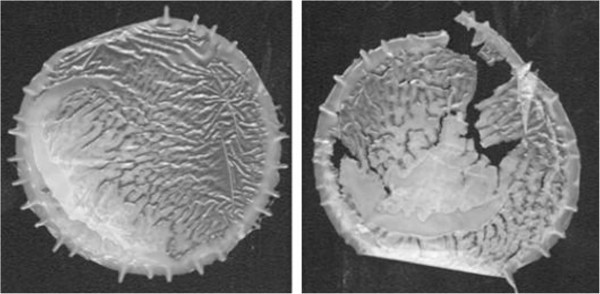
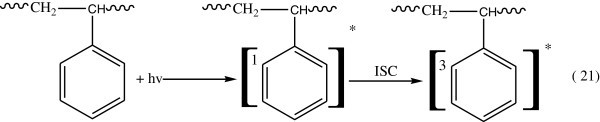
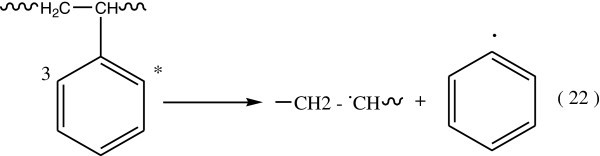
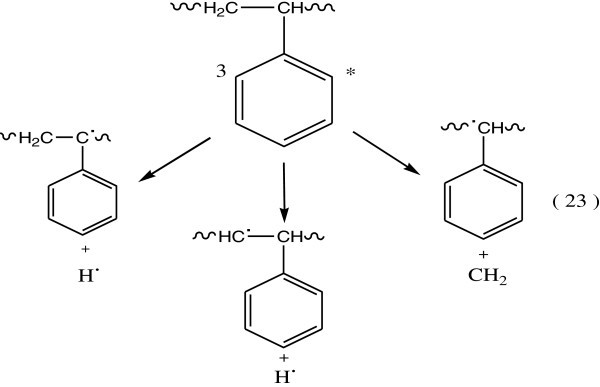
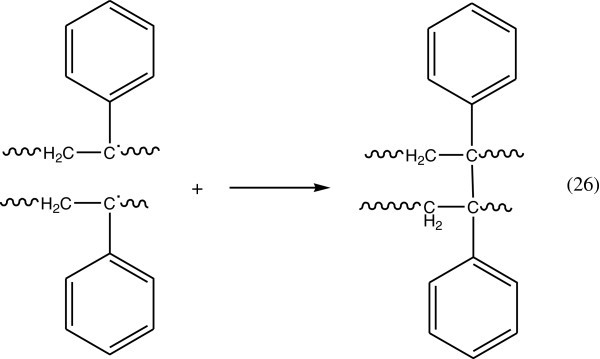
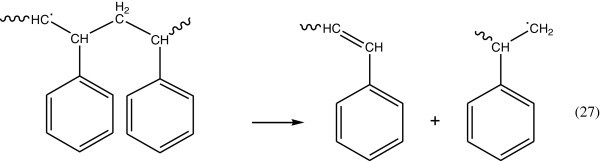
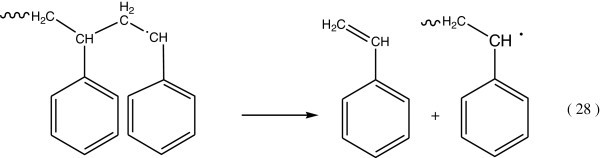
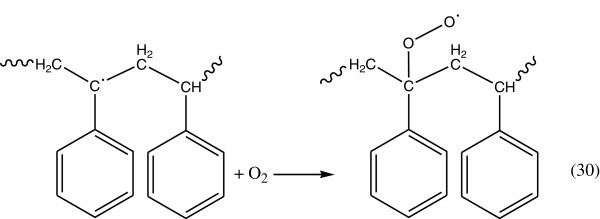
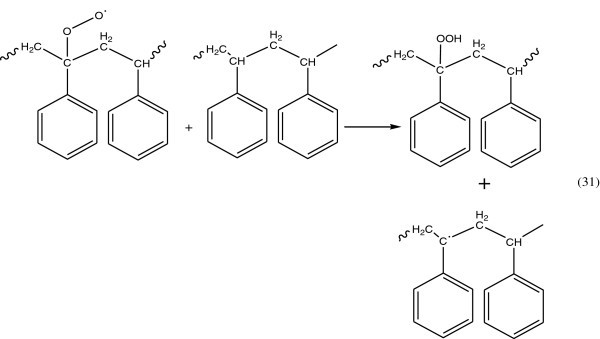
Exposure to ultraviolet (UV) radiation may cause the significant degradation of many materials. UV radiation causes photooxidative degradation which results in breaking of the polymer chains, produces free radical and reduces the molecular weight, causing deterioration of mechanical properties and leading to useless materials, after an unpredictable time. Polystyrene (PS), one of the most important material in the modern plastic industry, has been used all over the world, due to its excellent physical properties and low-cost. When polystyrene is subjected to UV irradiation in the presence of air, it undergoes a rapid yellowing and a gradual embrittlement. The mechanism of PS photolysis in the solid state (film) depends on the mobility of free radicals in the polymer matrix and their bimolecular recombination. Free hydrogen radicals diffuse very easily through the polymer matrix and combine in pairs or abstract hydrogen atoms from polymer molecule. Phenyl radical has limited mobility. They may abstract hydrogen from the near surrounding or combine with a polymer radical or with hydrogen radicals. Almost all synthetic polymers require stabilization against adverse environmental effects. It is necessary to find a means to reduce or prevent damage induced by environmental components such as heat, light or oxygen. The photostabilization of polymers may be achieved in many ways. The following stabilizing systems have been developed, which depend on the action of stabilizer: (1) light screeners, (2) UV absorbers, (3) excited-state quenchers, (4) peroxide decomposers, and (5) free radical scavengers; of these, it is generally believed that excited-state quenchers, peroxide decomposers, and free radical scavengers are the most effective. Research into degradation and ageing of polymers is extremely intensive and new materials are being synthesized with a pre-programmed lifetime. New stabilizers are becoming commercially available although their modes of action are sometimes not thoroughly elucidated. They target the many possible ways of polymer degradation: thermolysis, thermooxidation, photolysis, photooxidation, radiolysis etc. With the goal to increase lifetime of a particular polymeric material, two aspects of degradation are of particular importance: Storage conditions, and Addition of appropriate stabilizers. A profound knowledge of degradation mechanisms is needed to achieve the goal.
Overview
The claims and statistics of this paper haven’t been checked yet.
Run the check — free, no account needed. It reads the open-access text and checks the sources it cites.
Integrity signals
Registry
Cites
Statistics
Figures

Verification
Claims the paper makes
The claims and statistics of this paper haven’t been checked yet.
Run the check — free, no account needed. It reads the open-access text and checks the sources it cites.
Claims other papers make about this one
Each is checked against this paper’s own text: does it say what the citing paper says it does?
The source backs part of the claim, not all of it — or backs it for a different population, condition or comparison.
In the citing paper
“Physical and chemical changes in polymers can be caused by environmental factors including light (photo-oxidation), heat (photothermal oxidation), mechanical abrasion, moisture, chemical conditions or biological activity (fungi, bacteria, yeasts, algae, and their enzymes) 24,37,38 .”
From Environmental Deterioration of Biodegradable, Oxo-biodegradable, Compostable, and Conventional Plastic Carrier Bags in the Sea, Soil, and Open-Air Over a 3-Year Period (2019) · cites this paper as [38]
Experimental — accuracy not yet measured
Self-check
Percentages, sums and reported differences re-computed from the paper’s own numbers.
The self-check needs the paper’s full text.
Citations
Cites
MacKnight, W. (1976) · Science · doi:10.1126/science.191.4233.1260-a · Cited by 9,566 · cited 1×
“…degradation of polymers, which include processes such as chain scission, crosslinking and secondary oxidative reactions, and takes place via radical processes , similar to thermal oxidation reactions (Ranby and Rabek 1981; Carlsson et al. 1976; Mc Kellar & Allen 1979; Rnby and Lucki 1980).”
Comprehensive Chemical Kinetics
Bamford, C., & Tipper, C. F. H. (1976) · doi:10.1016/s0069-8040(03)80001-8 · Cited by 1,705 · cited 1×
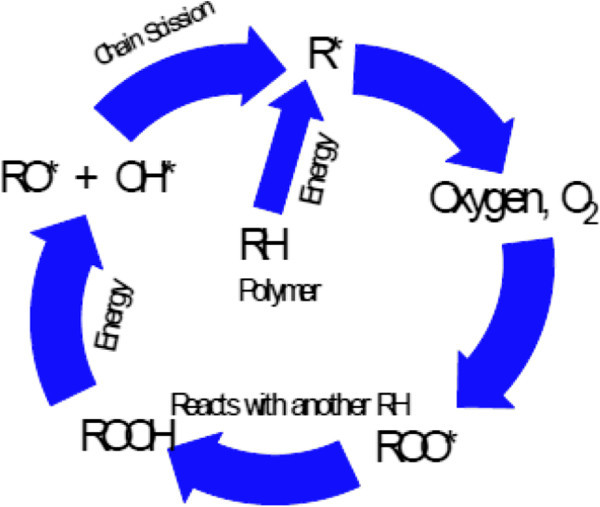
“Photooxidative degradation includes the following steps: (Rabek 1994; Rabek 1974; Guillet 1972a, 1972b).”
Physical properties of polymers handbook
Mark, J. (2007) · Springer eBooks · doi:10.1007/978-0-387-69002-5 · Cited by 1,670
Mechanistic implications of plastic degradation
Singh, B., & Sharma, N. (2008) · Polymer Degradation and Stability · doi:10.1016/j.polymdegradstab.2007.11.008 · Cited by 1,569 · cited 1×
“Its hardness, hydrophobic nature and chemical composition cause it to persist in nature without any decomposition for long period of time thus cause environmental pollution Singh and Sharma (2008).”
Thermal characterization of polymeric materials
Turi, E. (1981) · Choice Reviews Online · doi:10.5860/choice.35-0290 · Cited by 1,472 · cited 4×
“from electronically excited carbonyl group to dissolved molecular oxygen Heskins and Guillet (1968). The quenching of [(1)O2] is also necessary for effective stabilization. Nickel chelates have been proven to be very effective quenchers for the excited state of [(1)O2] Schmitt and Hirt (1963).”
InfluentialPolymer Science and Technology
Fried, J. (1995) · Chemistry International · doi:10.1515/ci.2010.32.3.32a · Cited by 1,105
Physical properties of polymers handbook
(1996) · Choice Reviews Online · doi:10.5860/choice.34-2186 · Cited by 1,056 · cited 2×
“The decomposition of hydroperoxide in polymer to non radical derivatives was first demonstrated Carlsson and Wiles (1974). Many metal complexes of sulphur containing ligands such as dialkylthiocarbonate and dialkylthiophosphate not only decompose hydroxide in PE film but are also effective in UV stabilization (as UV a…”
Polymer Degradation and Stability
Peacock, A. J., & Calhoun, A. (2006) · doi:10.3139/9783446433434.009 · Cited by 607 · cited 1×
“Industrially, the yellow discoloration is an important adverse effect of the ageing of polystyrene, e.g. during exposure outdoors (Geuskens et al. 1978a, 1978b; Weir 1978; Lucki and Rnby 1979; Rnby and Lucki 1980).”
Synthesis and Characterization
Behrens, S., Bönnemann, H., Modrow, H., Kempter, V., Riehemann, W., Wiedenmann, A., Odenbach, S., Will, S., Thrams, L., Hergt, R., et al. (2009) · doi:10.1007/978-3-540-85387-9_1 · Cited by 555
Polymer Degradation and Stabilization
Hawkins, W. (1984) · Der Umweltschutz · doi:10.1007/978-3-642-69376-2 · Cited by 492
Effects of increased solar ultraviolet radiation on materials
Andrady, A. L., HAMID, S. H., Hu, X., & Torikai, A. (1998) · Journal of Photochemistry and Photobiology B Biology · doi:10.1016/s1011-1344(98)00188-2 · Cited by 429 · cited 2×
“Thus the life of thermoplastics for outdoor applications becomes limited due to weathering Andrady et al. (1998). When polystyrene is subjected to UV irradiation in the presence of air, it undergoes a rapid yellowing and a gradual embrittlement.”
Polymer Weathering: Photo-Oxidation
Feldman, D. (2002) · Journal of Polymers and the Environment · doi:10.1023/a:1021148205366 · Cited by 383 · cited 5×
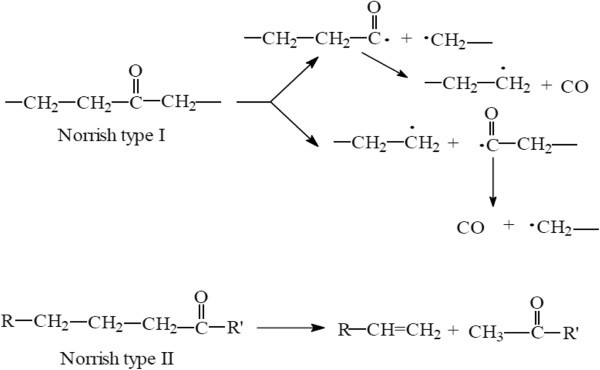
“On exposure to light, these ketone groups absorb photons of appropriate energy, break carbon–carbon bonds, and scission the polymer backbone (Rabek 1995; Feldman 2002) as shown in the Figures 3 and 4 (Grassie and Scott 1985):”
InfluentialScott, G. (2000) · Polymer Degradation and Stability · doi:10.1016/s0141-3910(99)00182-2 · Cited by 330
Degradation and stabilization of polymers
Scott, G. (1969) · doi:10.1016/s0014-3057(69)80012-1 · Cited by 306
Unusual photoreactivity of zinc oxide irradiated by concentrated sunlight
Dindar, B., & Icli, S. (2001) · doi:10.1016/s1010-6030(01)00414-2 · Cited by 285
Stabilization of polymeric materials
Zweifel, H. (1998) · doi:10.1016/s0151-9107(99)80080-4 · Cited by 266
Physiological and pathophysiological aspects of ceramide
Gulbins, E., & Li, P. L. (2005) · American Journal of Physiology-Regulatory, Integrative and Comparative Physiology · doi:10.1152/ajpregu.00416.2005 · Cited by 249
Photostabilization of coatings. Mechanisms and performance
Pospíšil, J., & Nespurek, S. (2000) · doi:10.1016/s0079-6700(00)00029-0 · Cited by 226
Photocatalytic degradation of polystyrene plastic under fluorescent light.
Shang, J., Chai, M., & Zhu, Y.-F. (2003) · Environmental Science and Technology · doi:10.1021/es0209464 · Cited by 212 · cited 1×
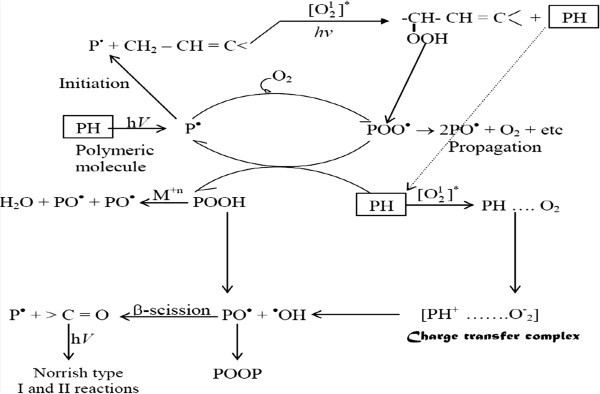
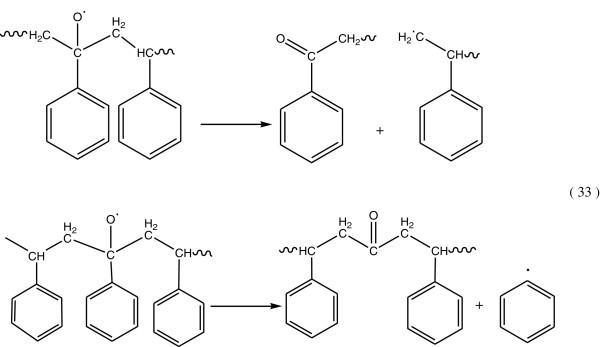
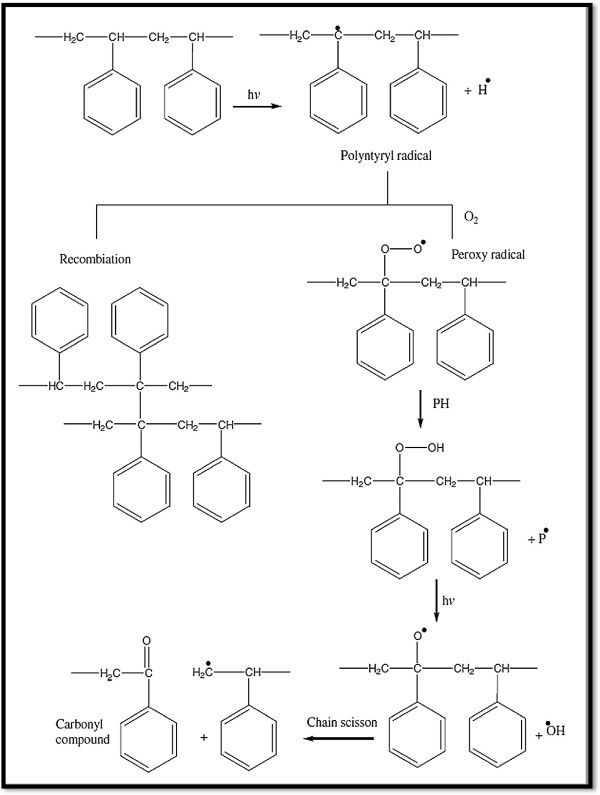
“Alkoxy polymer radicals produced during the photolysis of hydroperoxide groups may decompose by β-scission reaction and to form a cetophenone and chain aliphatic ketone (Figure 23) (Kuzina and Mikhailov 1998; Geuskens et al. 1978a, 1978b).”
Durability of Building Materials and Components
de Freitas, V. P., & Delgado, J. (1980) · doi:10.1007/978-3-642-37475-3 · Cited by 194
Boustead, I. (1998) · doi:10.1016/s0969-806x(97)00256-9 · Cited by 180 · cited 2×
“Irradiation of polystyrene by UV. and visible light with wavelength (λ< 400) nm., leads to the formation of radicals whose nature is dependent on the spectral composition of the light and irradiation condition Kuzina and Mikhailov (1993).”
Polymer Degradation and Stabilization
Nguyen, T. (2008) · doi:10.1002/9783527619870.ch15 · Cited by 168 · cited 8×
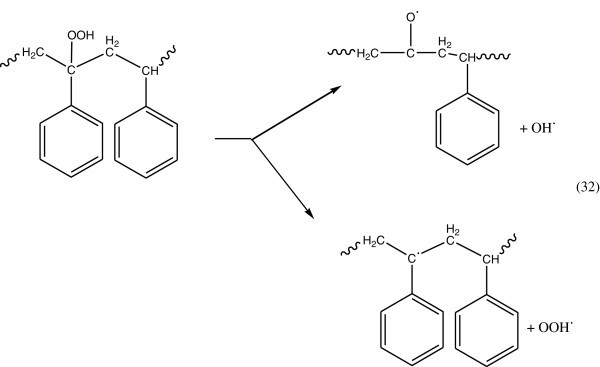
“Figure 3 The β scission in polymer molecule, Grassie and Scott (1985). similar to the abstraction of hydrogen from the polymer molecule:”
InfluentialHandbook of Free Radical Initiators
Denisov, E. T., Denisova, T. G., & Pokidova, T. (2003) · doi:10.5860/choice.41-0318 · Cited by 163 · cited 2×
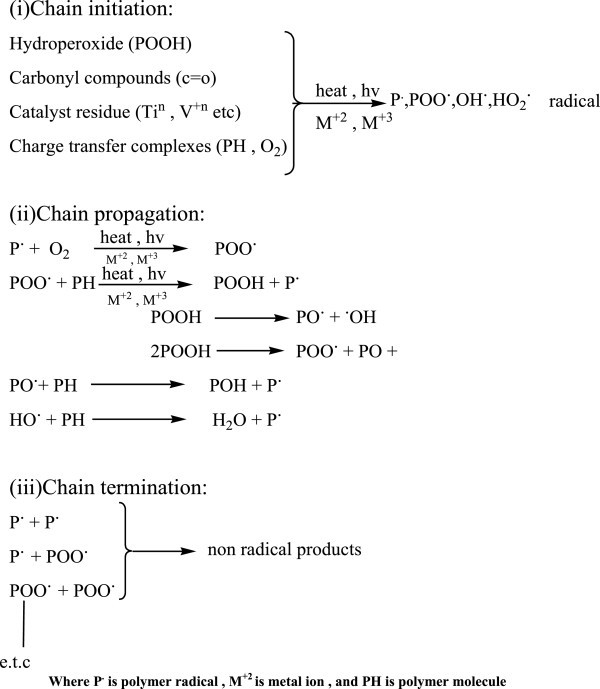
“C C C H 1 O 2 C OOH C C (4) (II) The free radical mechanism of oxidation The radical mechanism of photooxidation of polymers proceeds through a chain reaction similar to that for homogeneous liquid phase oxidations Kochi and Wiley (1973), Geuskens & David (1979a, 1979b).”
Andrady, A. (2005) · Wiley eBooks · doi:10.1002/0471721557 · Cited by 152
Handbook of Polymer Degradation
Billingham, N. (2001) · doi:10.1016/s0141-3910(01)00195-1 · Cited by 133 · cited 1×
“In recent years, the use of polymeric materials has rapidly increased but it is well established that rapid photodegradation of these materials is possible when they are exposed to natural weathering (Guillet 1985; Hamid 2000; Rabek 1996; Bottino et al. 2003).”
Geuskens, G., Baeyens-volant, D., Delaunois, G., Lu-Vinh, Q., Piret, W., & David, C. (1978) · European Polymer Journal · doi:10.1016/0014-3057(78)90051-4 · Cited by 124 · cited 2×
“Industrially, the yellow discoloration is an important adverse effect of the ageing of polystyrene, e.g. during exposure outdoors (Geuskens et al. 1978a, 1978b; Weir 1978; Lucki and Rnby 1979; Rnby and Lucki 1980).”
Factors affecting accelerated testing of polymer photostability
Pospíšil, J., Pilař, J., Billingham, N., Marek, A., Horak, Z., & Nespurek, S. (2006) · Polymer Degradation and Stability · doi:10.1016/j.polymdegradstab.2005.01.049 · Cited by 118 · cited 1×
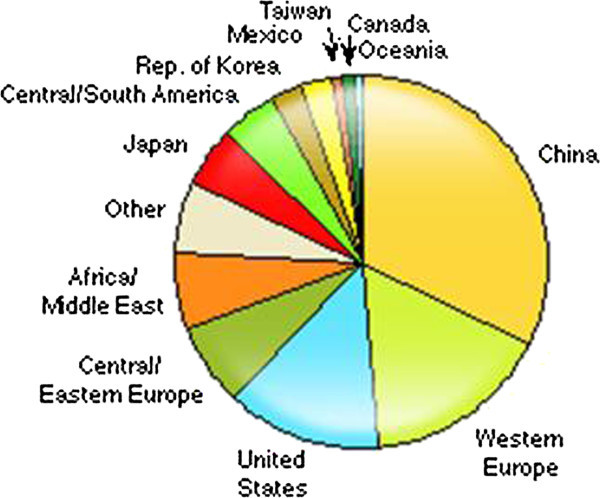
“The manufacturers of paints, plastics, contact lenses, and cosmetics have a great interest in offering products that remain unaltered for long periods under conditions of light exposure (Galdi et al. 2010; Pospisil et al. 2006; Bojinov & Grabchev 2005; Goldshtein and Margel 2011), (Figure 1).”
Studies on the photooxidation mechanism of polymers. I. Photolysis and photooxidation of polystyrene
Rabek, J., & Rånby, B. (1974) · Journal of Polymer Science Polymer Chemistry Edition · doi:10.1002/pol.1974.170120203 · Cited by 111
Polystyrene/graphite nanocomposites: effect on thermal stability
Uhl, F. M., & Wilkie, C. (2002) · doi:10.1016/s0141-3910(02)00003-4 · Cited by 109
Mechanism of the photo-initiation process in polyethylene
Amin, M. U., Scott, G., & Tillekeratne, L. M. (1975) · European Polymer Journal · doi:10.1016/0014-3057(75)90179-2 · Cited by 108 · cited 1×
“These are thus key intermediates in the oxidation of polymers Amin et al. (1975).”
Degradation of styrene-g-cassava starch filled polystyrene plastics
Kiatkamjornwong, S., Sonsuk, M., Wittayapichet, S., Prasassarakich, P., & Vejjanukroh, P.-C. (1999) · Polymer Degradation and Stability · doi:10.1016/s0141-3910(99)00082-8 · Cited by 101 · cited 4×
“Polystyrene losses its mechanical and tensile properties due to effect of UV light and heat Kiatkamjornwong et al. (1999). UV light induces the production of radicals by oxidation.”
InfluentialComparing the effect of nanofillers as thermal stabilizers in low density polyethylene
García, N., Hoyos, M., Guzmán, J., & Tiemblo, P. (2008) · Polymer Degradation and Stability · doi:10.1016/j.polymdegradstab.2008.10.011 · Cited by 99
Accelerated photodegradation of poly(vinyl chloride)
Torikai, A., & Hasegawa, H. (1999) · doi:10.1016/s0141-3910(98)00125-6 · Cited by 95
Reinforcement of elastomers by fillers: Review of period 1967–1976
Voet, A. (1980) · doi:10.1002/pol.1980.230150107 · Cited by 89 · cited 1×
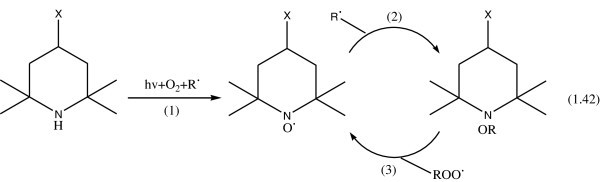
“model compound for HALS), during UV irradiation in the presence of oxygen (air) and radicals (R), produces hindered piperidinoxy radicals according to the reaction 1 Yousif et al. (2011b): Piperindoxy radicals react with alkyl radicals (R) to give a substituted hydroxypiperidine as shown in reaction 2 in Figure 34.”
Assessing the photo-degradation of geosynthetics by outdoor exposure and laboratory weatherometer
Suits, L., & Hsuan, Y. (2003) · Geotextiles and Geomembranes · doi:10.1016/s0266-1144(02)00068-7 · Cited by 84
The photooxidation of polymers. II. Photolysis of polystyrene
Grassie, N., & Weir, N. (1965) · doi:10.1002/app.1965.070090315 · Cited by 78 · cited 2×
“The electron spin resonance (ESR) spectra obtained during the UV, irradiation of polystyrene (PS) were interpreted as arise from radicals formed in reaction (8) Cozzen and Fox (1969); Grassie and Weir (1965).”
Mechanical and microstructure studies on the modification of CA film by blending with PS
Meenakshi, P., Noorjahan, S. E., Rajini, R., Venkateswarlu, U., Rose, C., & Sastry, T. P. (2002) · Bulletin of Materials Science · doi:10.1007/bf02704590 · Cited by 77 · cited 2×
“General purpose polystyrene is clear and hard which is used in packaging, laboratory ware, and electronics Meenakshi et al. (2002).”
Biodegradation characteristics of starch-polystyrene loose-fill foams in a composting medium.
Pushpadass, H., Weber, R., Dumais, J., & Hanna, M. (2010) · Bioresource Technology · doi:10.1016/j.biortech.2010.04.039 · Cited by 72 · cited 2×
“The type of the radicals formed during polystyrene photodegradation depends on the irradiation wavelength Ranby and Rabek (1975). The movement of polymer macromolecules in the solid state is restricted, but radicals can migrate along the polymer chain until they trapped by other radicals or by impurities.”
Importance of weathering factors other than UV radiation and temperature in outdoor exposure
Sampers, J. (2002) · Polymer Degradation and Stability · doi:10.1016/s0141-3910(02)00049-6 · Cited by 72
Photoinitiated degradation of polystyrene in the presence of low-molecular organic compounds
Kaczmarek, H., Kamińska, A., Swiatek, M., & Sanyal, S. (2000) · doi:10.1016/s0014-3057(99)00175-5 · Cited by 68
Light stabilisation of polymers by radiation-cured acrylic coatings
Decker, C., & Biry, S. (1996) · doi:10.1016/s0300-9440(96)00630-3 · Cited by 66
Changes in degree of polymerization in the thermal degradation of polystyrene
Guaita, M., Chiantore, O., & Costa, L. (1985) · doi:10.1016/0141-3910(85)90123-5 · Cited by 64
Gupper, A., & Kazarian, S. (2005) · doi:10.1021/ma0476590 · Cited by 63 · cited 1×
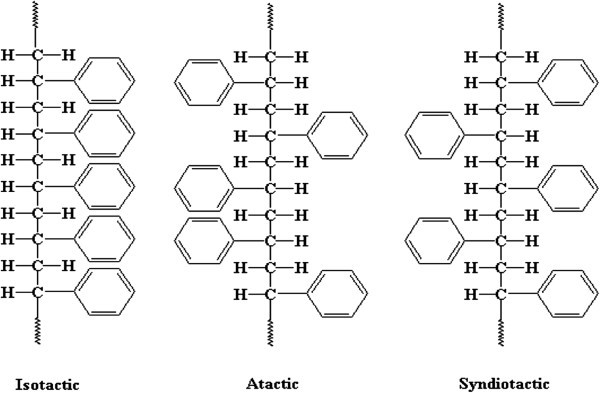
“It has the tendency to crystallize very quickly which gives it the favourable properties of high melting temperature and chemical resistance (Saitoh et al. 2003; Gupper and Kazarian 2005) (Figure 9).”
Bottino, F., Cinquegrani, A. R., Pasquale, G. D., Leonardi, L., & Pollicino, A. (2004) · doi:10.1016/j.polymertesting.2003.10.001 · Cited by 63
Intramolecular Triplet Energy Transfer in Poly(1‐vinylnaphthalene)
Cozzens, R., & Fox, R. (1969) · doi:10.1063/1.1671238 · Cited by 61
Initiation of Polypropylene Photooxidation. 2. Potential Processes and Their Relevance to Stability
Carlsson, D., Garton, A., & Wiles, D. (1976) · Macromolecules · doi:10.1021/ma60053a002 · Cited by 60 · cited 1×
“…degradation of polymers, which include processes such as chain scission, crosslinking and secondary oxidative reactions, and takes place via radical processes , similar to thermal oxidation reactions (Ranby and Rabek 1981; Carlsson et al. 1976; Mc Kellar & Allen 1979; Rnby and Lucki 1980).”
Geuskens, G., Baeyens-volant, D., Delaunois, G., Vinh, Q., Piret, W., & David, C. (1978) · doi:10.1016/0014-3057(78)90052-6 · Cited by 56 · cited 2×
“Industrially, the yellow discoloration is an important adverse effect of the ageing of polystyrene, e.g. during exposure outdoors (Geuskens et al. 1978a, 1978b; Weir 1978; Lucki and Rnby 1979; Rnby and Lucki 1980).”
Degradation and Stabilization of Polymers
Billingham, N. (2013) · doi:10.1002/9783527603978.mst0412 · Cited by 55 · cited 1×
“When polystyrene is subjected to UV irradiation in the presence of air, it undergoes a rapid yellowing and a gradual embrittlement Geuskens and David (1975). The mechanism of PS photolysis in the solid state (film) depends on the mobility of radicals in the polymer matrix and their bimolecular recombination.”
The photo-oxidation of polymers. A comparison with low molecular weight compounds
Geuskens, G., & David, C. (1979) · Pure and Applied Chemistry · doi:10.1351/pac197951020233 · Cited by 55 · cited 3×
“The end group of PS or ketonic impurities also absorb the light of wave lengths longer than 300 nm (Geuskens and David 1979a, 1979b; Klopffer 1975; George and Hodgeman 1977).”
Bagheri, R., Chakraborty, K., & Scott, G. (1982) · doi:10.1016/0141-3910(82)90002-7 · Cited by 54
New aspects of photodegradation and photooxidation of polystyrene
Rånby, B., & Lucki, J. (1980) · Pure and Applied Chemistry · doi:10.1351/pac198052020295 · Cited by 52 · cited 1×
“Industrially, the yellow discoloration is an important adverse effect of the ageing of polystyrene, e.g. during exposure outdoors (Geuskens et al. 1978a, 1978b; Weir 1978; Lucki and Rnby 1979; Rnby and Lucki 1980).”
New stabilizers for polystyrene based on 2‐thioacetic acid benzothiazol complexes
Yousif, E., Salimon, J., & Salih, N. (2012) · Journal of Applied Polymer Science · doi:10.1002/app.36307 · Cited by 51 · cited 1×
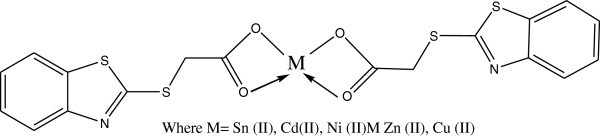
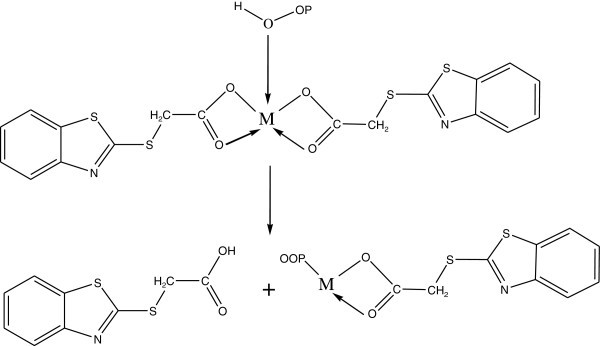
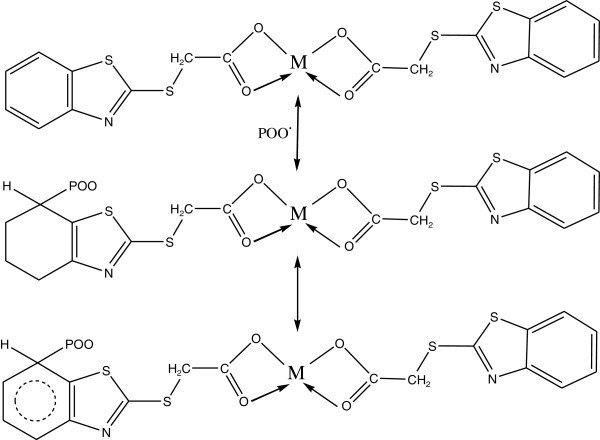
“Figure 41 Suggested process for photostabilization by benzothiazole complexes as peroxide decomposer, (Yousif et al. 2012).”
Self-citationPhotostabilisation mechanisms in polymers: A review
Wiles, D., & Carlsson, D. (1980) · doi:10.1016/0141-3910(80)90008-7 · Cited by 51
Mechanism of Ultraviolet Stabilization of Polymers
Heskins, M., & Guillet, J. (1968) · Macromolecules · doi:10.1021/ma60001a018 · Cited by 50
Valko, L., Klein, E., Kovarik, P., Bleha, T., & Simon, P. (2001) · doi:10.1016/s0014-3057(00)00239-1 · Cited by 43
Reactions of hydroxyl radicals with polystyrene
Weir, N. (1978) · doi:10.1016/0014-3057(78)90144-1 · Cited by 43 · cited 1×
“Industrially, the yellow discoloration is an important adverse effect of the ageing of polystyrene, e.g. during exposure outdoors (Geuskens et al. 1978a, 1978b; Weir 1978; Lucki and Rnby 1979; Rnby and Lucki 1980).”
Manzi-Nshuti, C., Chen, D., Su, S.-P., & Wilkie, C. (2009) · doi:10.1016/j.polymdegradstab.2009.03.021 · Cited by 42 · cited 2×
“2002), optical, electrical, magnetic and flammability properties of such a nanocomposite are much different from the polymer matrix itself Manzi-Nshuti et al. (2009).”
Kerber, R. (1983) · Berichte der Bunsengesellschaft für physikalische Chemie · doi:10.1002/bbpc.19830870933 · Cited by 42
Mechanistic aspects of polymer photostabilization
Padrón, A. J. (1989) · doi:10.1016/1010-6030(89)87103-5 · Cited by 41 · cited 1×
“Figure 31 The micro structure of carbon black particles, (Chirinos 1989).”
Fundamental processes in the u.v. degradation and stabilization of polymers
Guillet, J. (1972) · doi:10.1016/b978-0-408-70310-9.50012-5 · Cited by 41 · cited 1×
“Photooxidative degradation includes the following steps: (Rabek 1994; Rabek 1974; Guillet 1972a, 1972b).”
Microwave irradiation as an energy source in poly(ethylene terephthalate) solvolysis
an, A. K. (1998) · Journal of Applied Polymer Science · doi:10.1002/(sici)1097-4628(19980808)69:6 · Cited by 40
Yousif, E. A., Salimon, J., & Salih, N. A. (2011) · Journal of Saudi Chemical Society · doi:10.1016/j.jscs.2011.01.011 · Cited by 38
Self-citationLong-Term Properties of Polyolefins
Albertsson, A. (2013) · Advances in polymer science · doi:10.1007/b13502 · Cited by 38 · cited 1×
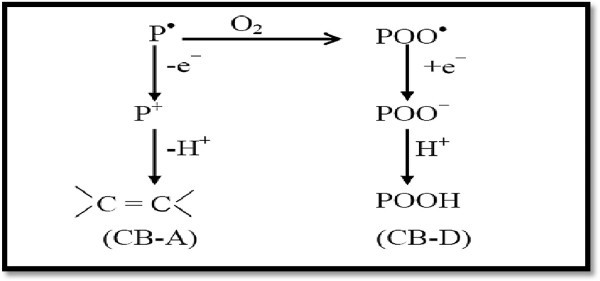
“Mayo (1978) because of efficient polymer alkyl radicals (P .”
Particle size distribution and morphology of in situ suspension polymerized toner
Yang, J., Wang, T.-J., He, H., Wei, F., & Jin, Y. (2003) · doi:10.1021/ie0301029 · Cited by 38
George, G., & Hodgeman, D. K. (1977) · doi:10.1016/0014-3057(77)90050-7 · Cited by 37 · cited 1×
“The end group of PS or ketonic impurities also absorb the light of wave lengths longer than 300 nm (Geuskens and David 1979a, 1979b; Klopffer 1975; George and Hodgeman 1977).”
Shao, Q., Wang, L.-Y., Wang, X.-J., Yang, M., Ge, S., Yang, X.-K., & Wang, J.-X. (2013) · doi:10.1016/j.solidstatesciences.2013.03.006 · Cited by 34 · cited 3×
“long period of time thus cause environmental pollution Singh and Sharma (2008). As waste plastic material has become a serious problem, recycling is receiving attention as a means of preserving the environment and reserving resources Pantano et al.”
InfluentialBojinov, V., & Grabchev, I. (2005) · doi:10.1016/j.jphotochem.2004.12.020 · Cited by 31
Photostabilizing activity of tertiary hindered amines
Kurumada, T., Ohsawa, H., Oda, O., Fujita, T., Toda, T., & Yoshioka, T. (1985) · doi:10.1002/pol.1985.170230520 · Cited by 31
Billingham, N. (1986) · Polymer · doi:10.1016/0032-3861(86)90057-1 · Cited by 30
Photodegradation of Polystyrene Films Containing UV-Visible Sensitizers #
Pinto, L. F., Goi, B. E., Schmitt, C. C., & Neumann, M. (2013) · doi:10.6000/1929-5995.2013.02.01.5 · Cited by 29 · cited 1×
“Many reviews have been published on photodegradation and photooxidation degradation of polystyrene (Pinto et al. 2013; Gijsman and Diepens 2009; Rabek 1995).”
Gejo, J. L., Manoj, N., Sumalekshmy, S., Glieman, H., Schimmel, T., Wörner, M., & Braun, A. (2006) · Photochemical and Photobiological Sciences · doi:10.1039/b611874g · Cited by 29
Negative Ionization Micro Electrospray Mass Spectrometry of Oligonucleotides and their Complexes
Greig, M. J., Gaus, H. J., & Griffey, R. H. (1996) · Rapid Communications in Mass Spectrometry · doi:10.1002/(sici)1097-0231(19960115)10:1 · Cited by 27
Allen, N., Chirinos-Padron, A., & Appleyard, J. H. (1982) · doi:10.1016/0141-3910(82)90029-5 · Cited by 27
The mechanism of photoprotection of polystyrene film by some ultraviolet absorbers
George, G. (1974) · doi:10.1002/app.1974.070180110 · Cited by 26
Photostabilising action of ortho-hydroxy aromatic compounds: A critical review
Allen, N. (1983) · doi:10.1016/0144-2880(83)90053-2 · Cited by 25 · cited 4×
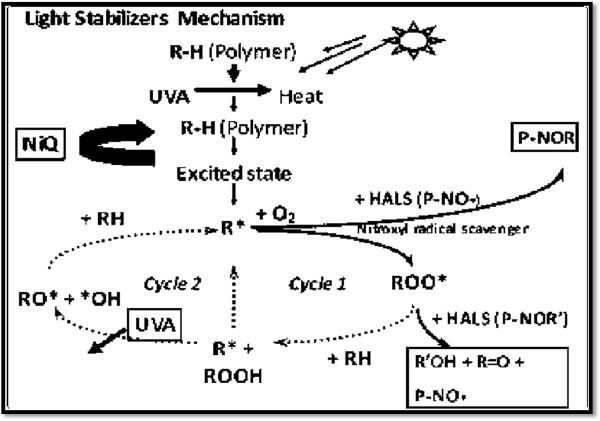
“(ii) Quenching of the singlet oxygen ((1)O2) Allen et al. (1984). (iii) Decomposion of the hydroperoxides (OOH) radical, to non radical inactive species Yousif (2010). (iv) Scavenging of radicals (alkylperoxy (ROO) and alkyloxy (RO) Allen et al.”
InfluentialPhoto-oxidation of polymers—2. Photo-chain reaction of peroxide radicals in polystyrene
Kuzina, S., & Mikhailov, A. I. (1998) · doi:10.1016/s0014-3057(97)00169-9 · Cited by 24 · cited 1×
“Alkoxy polymer radicals produced during the photolysis of hydroperoxide groups may decompose by β-scission reaction and to form a cetophenone and chain aliphatic ketone (Figure 23) (Kuzina and Mikhailov 1998; Geuskens et al. 1978a, 1978b).”
Schmitt, R. G., & Hirt, R. (1963) · doi:10.1002/app.1963.070070501 · Cited by 24
Effect of the chemical and physical properties of carbon black on its performance in polyethylene
Williams, F. R., Jordan, M. E., & Dannenberg, E. (1965) · doi:10.1002/app.1965.070090305 · Cited by 23
Recent advances in ion and electron spectroscopy of polymer surfaces
Gardella, J. (1988) · doi:10.1016/0169-4332(88)90025-6 · Cited by 23
The photo-oxidation of polymers—1. Initiation of polystyrene photo-oxidation
Kuzina, S., & Mikhailov, A. I. (1993) · doi:10.1016/0014-3057(93)90250-j · Cited by 22 · cited 1×
“Irradiation of polystyrene by UV. and visible light with wavelength (λ< 400) nm., leads to the formation of radicals whose nature is dependent on the spectral composition of the light and irradiation condition Kuzina and Mikhailov (1993).”
The action of carbon black in stabilizing polymeric materials
Szwarc, M. (1956) · doi:10.1002/pol.1956.120199323 · Cited by 22
Sun, G.-J., Jang, H.-J., Kaang, S., & Chae, K. (2002) · doi:10.1016/s0032-3861(02)00514-1 · Cited by 22
Photostabilization of macromolecules by excited state quenching
Wiles, D. (1978) · doi:10.1351/pac197850040291 · Cited by 21
Degradation studies on plasticized PVC films submited to gamma radiation
Vinhas, G., Souto-Maior, R., Lapa, C., & de Almeida, Y. D. (2003) · doi:10.1590/s1516-14392003000400012 · Cited by 20
Saitoh, A., Amutharani, D., Yamamoto, Y., Tsujita, Y., Yoshimizu, H., & Okamoto, S. (2003) · doi:10.1295/polymj.35.868 · Cited by 20 · cited 1×
“It has the tendency to crystallize very quickly which gives it the favourable properties of high melting temperature and chemical resistance (Saitoh et al. 2003; Gupper and Kazarian 2005) (Figure 9).”
The Effects of Hostile Environments on Coatings and Plastics
Garner, D. P., & Stahl, G. (1983) · doi:10.1021/bk-1983-0229 · Cited by 20 · cited 1×
“…degradation of polymers, which include processes such as chain scission, crosslinking and secondary oxidative reactions, and takes place via radical processes , similar to thermal oxidation reactions (Ranby and Rabek 1981; Carlsson et al. 1976; Mc Kellar & Allen 1979; Rnby and Lucki 1980).”
Senna, M., Abdel-hamid, H. M., & Hussein, M. A. (2002) · doi:10.1016/s0168-583x(01)00843-6 · Cited by 20
Yousif, E., Hameed, A., Salih, N., Salimon, J., & Abdullah, B. (2013) · SpringerPlus · doi:10.1186/2193-1801-2-104 · Cited by 18 · cited 1×
“Yousif and Haddad SpringerPlus 2013, 2:398 Page 3 of 32 http://www.springerplus.com/content/2/1/398 Polymer degradation can be caused by heat (thermal degradation), light (photodegradation), ionizing radiation (radio degradation), mechanical action, or by fungi, bacteria , yeasts, algae, and their…”
Self-citationPhotolysis and photooxidation in engineering plastics
Gijsman, P., & Diepens, M. (2009) · doi:10.1021/bk-2009-1004.ch024 · Cited by 16
Mechanism of photostabilization of polystyrene film by dihydroxyphenyl-pirazoles
Sastre, R., Catalina, F., Mateo, J., Claramunt, R., Santa-Maria, M. D., & Catalán, J. (1990) · doi:10.1002/pola.1990.080281312 · Cited by 13
Deterioration Mechanisms in Weathering of Plastic Materials
Blaga, A. (1980) · doi:10.1520/stp36112s · Cited by 12
Pantano, I. A. G., Díaz, M., Brandolin, A., & Sarmoria, C. (2009) · doi:10.1016/j.polymdegradstab.2009.01.015 · Cited by 11 · cited 3×
“A number of impurities and irregularities in polystyrene, such as hydroperoxides, aromatic carbonyl groups, olefin bonds and chain peroxide linkages, can be responsible for the photoinitiation of the radical oxidation of polystyrene Rabek (1987). Irradiation of polystyrene by UV.”
InfluentialOsawa, Z., Nagashima, K., Ohshima, H., & Cheu, E.-L. (1979) · doi:10.1002/pol.1979.130170703 · Cited by 10
Handbook of Hydroxybenzophenones
Martin, A. (2000) · doi:10.1007/978-94-011-4347-9 · Cited by 9
Entropy and enthalpy effects of 4-(phenylthio)-substituted phenols
Paulon, D. E., & Coronel, M. E. J. (1998) · Journal of the Chemical Society Perkin Transactions 2 · doi:10.1039/a707856k · Cited by 9
Allen, N., Chirinos-Padron, A., & Appleyard, J. H. (1984) · doi:10.1016/0141-3910(84)90015-6 · Cited by 8
Photo-stabilising effect of Ni compounds in photo-oxidative degradation of cis-1,4-poly(butadiene)
Lala, D., & Rabek, J. (1981) · doi:10.1016/0141-3910(81)90044-6 · Cited by 7
Antioxidants as Sources of Plastics Discoloration: Structural Effects
Pospíšil, J., Habicher, W., Zweifel, H., Pilař, J., Nespurek, S., & Piringer, O. (2002) · doi:10.1177/096739110201000103 · Cited by 6
Characterization of copolymeric poly(2-vinylimidazoline)
Hurndall, M. J., Spies, H. S., & Sanderson, R. (1995) · doi:10.1002/app.1995.070550105 · Cited by 6
Olson, D. R., & Schroeter, S. (1978) · doi:10.1002/app.1978.070220809 · Cited by 3 · cited 1×
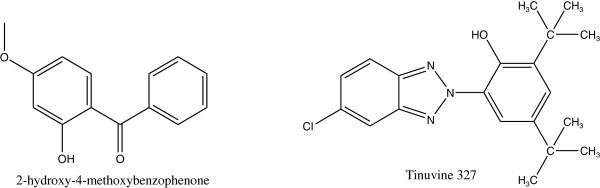
“It has been shown that urethane and silylated derivatives of hydroxybenzophenones are effective photostabilizers, but cannot photostabilize polymers by intramolecular proton transfer Olson and Schroeter (1978). These compounds can act as: (Senna et al.”
Photostabilization of poly(2,6-dimethyl-1,4-phenylene oxide) by nickel(II)thiopicoline anilide
Chandra, R. (1983) · doi:10.1016/0144-2880(83)90050-7 · Cited by 3 · cited 1×
“(Chandra 1983; Osawa et al. 1979).”
Research works printed but not linked: 49
- Abd MA, Abdul Zahra AAI, Shenta AA: Photostabilization of polystyrene films by anthraquinones derivatives and their complexes with copper (II), oxovanadium (IV) and nickel (II) ions. Journal of Basrah Researches 2009, 35(3):81-97.
- Aliwi SM: Photostabilization of low density polyethylene for green house application. Nat J chem 2001, 2: 280-302.
- Aliwi SM, AL-Ani RR, Awad DAJ: Photostabilization of polystyrene films by Nickel and Copper tetradentate Shiff base complexes. Iraqi journal polymer 2001, 5(1):15-30.
- Andrady AL: Advance Polymer Science.. 1997, 128: 49-94.
- Baloglu R, Fisch M: Polymer Degradation Stabilization. 1994, 45: 30-35.
- Beavan SW, Phillips D: Photostabilizing of macromolecule by excited state qyencher. Journal Photochem 1974, 3: 3149363. · DOI
- Bottino FA, Bottino G d P, Antonino P, Antonino R: Surface photostabilization of polystyrene by Tinuvin 1577. J of Appl Polym Sci 1999, 69(6):1251-1256. · DOI
- Bottino FA, Cinquegrani AR, Di Pasquale G, Leonardi L, Pollicino A: Chemical modification, mechanical properties and surface photooxidation of films of polystyrene. polymer testing. 2003, 12: 405-411.
- Bottino FA, Cinquegrani AR, Giovanna DD, Leonardi L, Antnino PA: Study on chemical modification, mechanical properties and surface photooxidation of films of polystyrene stabilized by hinderd amines (HAS), polymer testing. 2004, 23: 779-789.
- Cheremision NP: Hand Book of Engineering Polymeric Materials, chapter 8. New York; 1997. · DOI
- Dan E, Somersall AC, Guillet JE: Macromolecules, New York. 1973, 6: 228-230.
- Galdi A, Foltis P, Shah A: UV protecting composition and methods of use. Application: US patent; 2010:2010-118415.
- Geuskens G, David C: Polymer photodegradation: mechanisms and experimental methods. Pure Appl Chem 1979b, 51: 233-240. · DOI
- Gugumus F: Development in Polymer Stabilization-1. Edited by: Scott G. London: Applied Science Publishers Ltd; 1979:261.
- Gugumus F, Gachter R, Muller H (Eds): Plastics Additives. 2nd edition. Munich: Hanser; 1987:97-185.
- Guillet JE: Polymer photodegradation: mechanisms and experimental methods. Pure and ppl Chem 1972, 30: 135-144. · DOI
- Guillet J: Polymer Photophysics and Photochemistry. Cambridge University Press; 1985.
- Heller HJ: Photochemistry of dyed and pigmented polymers. Eurp Polymer J Supplement 1969, 99-105.
- Klopffer W: Polymer photodegradation: mechanisms and experimental methods. Eurpolym J 1975, 11: 203.
- Lamolla AA: Energy Transfer and Organic Photochemistry, chapter 2. In Technique of Organic Chemistry. Edited by: Lamolla AA, Turro NJ. New York: Wiley; 1969.
- Lawrence JB, Weir NA: Polymer photodegradation: mechanisms and experimental methods. J Polym Sci Al 1973, 11: 105-431.
- Mc Kellar JF, Allen NS: Photochemistry of Man-Made Polymers, Ltd. London 306 S: Applied Science Published; 1979:138.
- Mill TR, Richarason H, Mayo FR: J. Polym. Sci. Al. 1978, 11: 2899-2908.
- Patel P: Additive primer, blown films, cast films and extraction coating, PLACK conference. 2007, 16-20.
- Pospisil J, Habicher W, Zweifel H, Pilar J, Nespurek S, Piringer O: Polymer and polymer composites. AAA 2002, 10: 37-42.
- Potts JE: Plastic environmentally degradation, The Kirk-Othmer Encyclopedia of Chemical Technology. 3rd edition. 1991. Supp. Vol
- Rabek JF: Mechanism of Photophysical Process and Photochemical Reaction in polymers. New York: John Wiley and Sons; 1987.
- Rabek JF: Polymer photodegradation–mechanism and experimental methods. London: Chapman and Haal; 1993.
- Rabek JF: Polymer Degradation Mechanisms and experimental methods. Stocholm: Springer; 1994.
- Rabek JF: Polymer photodegradation-mechanisms and experimental methods. Cambridge: Chapman Hall; 1995. · DOI
- Rabek JF: Polymer photodegradation of polymers: physical characteristic and applications. Beelin: Springer- verlag; 1996. · DOI
- Rabek JF, Ranby B: Polymer photophysics and photochemistry: an introduction to the study of Photoprocess of macromolecules. J Polym Sci Al 1974, 12: 273-281.
- Rabek JF, Ranby B: Photodegradation, photooxidation and Photostabilization of Polymers. New York: John Wiley; 1975.
- Rabie ST, Mahran AM, Kamel EM, Abdel Hamid NH: Photodegradation of polystyrene stabilized with uracil derivative. Journal of applied sciences research 2008, 4(12):2015-2026.
- Ranby BG, Rabek JF: Photodegradation, Photooxidation and Photostabilization of Polymers. London: John Wiley & Sons; 1975:101-102.
- Ranby B, Rabek JF: Photodegradation, Photooxidation and Photostabilization of Polymers. Wiley periodicals, Inc; 1975b:165-184.
- Ruoko : Uv light induced degradation of polyethylene and polystyrene – spectroscopic and DSC study. Msc thesis: Tampere University of Technology; 2012.
- Safy Eldin NM, El-laithy SA: Photooxidative degradation of polystyrene of cover signals lamp of some automobile. Journal of applied polymer science 1994, 55: 47-54.
- Sastre R, Catalina F, Mateo JL, Claremunt R, Santa-Maria MD, Catalan J: Mechanism of photostabilization of polystyrene film by dihydroxypirazoles. J of Polym Sci Part A: Polym Chem 2003, 28(13):3661-3668. · DOI
- Schnabel W: Polymer Degradation: Principle and Practical Applications. Chapter 14. München: Hanser Int; 1981.
- Senna M, Hamid H, Hussein M: Nuclear instrument methods. Phys Res Section B 2002, 187: 48-55.
- Strlic M, Kolar J: Aging and stabilization of papers. Turjaška 1, 1000 Slovenia: Distributed by the National and university Library; 2005.
- Trozzolo AM, Winslow FH: Macromolecules. American chemical society publishing 1968., 98:
- Watson WF: Principles of polymer engineering rheology. Trans IRI 1953, 29: 29-32.
- Willis PB: Investigation of test method material properties and processes for solar cell in capsulation, eighth annual report. 1984.
- Wypych G: Handbook of material weathering. 4th edition. Toronto: Chemtec Publishing; 2008.
- Yousif E: Photostabilization of PVC by inorganic complexes. LAP LAMBERT academic publishing; 2010.
- Yousif E: Photostabilization of thermoplastic polymers. Germany: Lambert Academic Publishing; 2012.
- Yousif E, Salimon J, Salih N: Photostability of poly (vinyl chloride). VDM Verlag: Dr. Muller publisher; 2011b. B
Cited by
Sorted by citations
Degradation rates of plastics in the environment
Chamas, A., Moon, H., Zheng, J., Qiu, Y., Tabassum, T., Jang, J. H., Abu-Omar, M., Scott, S. L., & Suh, S. (2020) · ACS Sustainable Chemistry & Engineering · doi:10.1021/acssuschemeng.9b06635 · Cited by 3,463
Pathways for degradation of plastic polymers floating in the marine environment
Gewert, B., Plassmann, M. M., & MacLeod, M. (2015) · Environmental Science: Processes & Impacts · doi:10.1039/c5em00207a · Cited by 2,168
Plastic waste in the marine environment: A review of sources, occurrence and effects
Li, W. C., Tse, H. F., & Fok, L. (2016) · The Science of The Total Environment · doi:10.1016/j.scitotenv.2016.05.084 · Cited by 1,857
Emergence of Nanoplastic in the Environment and Possible Impact on Human Health
Lehner, R., Weder, C., Petri-Fink, A., & Rothen-Rutishauser, B. (2019) · Environmental Science & Technology · doi:10.1021/acs.est.8b05512 · Cited by 1,242
Adsorption behavior of organic pollutants on microplastics
Fu, L., Li, J., Wang, G., Luan, Y., & Dai, W. (2021) · Ecotoxicology and Environmental Safety · doi:10.1016/j.ecoenv.2021.112207 · Cited by 932
Metadata
- Authors
- Yousif, E., & Haddad, R.
- Affiliations
- Nahrain University (IQ)
- Corresponding author
- Yousif, Emad
- ORCID
- Yousif, Emad
- Venue
- SpringerPlus
- Published
- 2013-08-23
- Volume
- 2
- Issue
- 1
- Pages
- 398-398
- ISSN
- 2193-1801 (ISSN-L)
- PMC
- PMC4320144
- OpenAlex
- W2122404351
- Cited by
- 1,503
- References
- 133
- Citations by year
- 2026: 182 · 2025: 215 · 2024: 211 · 2023: 192 · 2022: 157 · 2021: 162 · 2020: 131 · 2019: 95 · 2018: 60 · 2017: 43 · 2016: 31 · 2015: 15 · 2014: 8 · 2013: 1
- FWCI
- 1.54
- Type
- journal article
- Language
- en
- Open access
- diamond
- doi.org
- Licence
- Locations
- SpringerPlus (publishedVersion, cc-by)
- Europe PMC (PubMed Central) (publishedVersion, cc-by)
- PubMed Central (publishedVersion, cc-by)
- PubMed (publishedVersion)
- Funders
- Al-Nahrain University
- Topics
- Physical Sciences › Materials Science › Polymers and Plastics › Polymer Science and PVC
- Physical Sciences › Chemistry › Organic Chemistry › Photopolymerization techniques and applications
- Physical Sciences › Chemistry › Organic Chemistry › Free Radicals and Antioxidants
- Keywords
- photodegradation, photostabilization, polystyrene, ultraviolet radiation, photooxidation, free radicals, yellowing, embrittlement, photolysis mechanism, polymer stabilizers, UV absorbers, radical scavengers, polymer aging, storage conditions
About these checks
Registry, retraction, Cites and statistics results are computed, not judged, with one exception: a printed reference that no index lists is read once by a model before it counts as a citation error. Claims are extracted by a model and kept only when their quote appears verbatim in the text; each cited source is then checked, with a model’s help, for whether it says what the claim relies on. Those verdicts can be wrong — read the claim’s quote and the cited source before relying on one.
Statistics and arithmetic are recomputed, not judged.
Confidence bands are shown only for fields calibrated on our annotated test set. None is calibrated yet, so no band is shown.
What counts as a claim ›How we measure confidence ›How we check this ›
Are you an author, or do you see a problem with this page? Request a review
