

Identification, characterization and comparative genomics of chimpanzee endogenous retroviruses
Open accessThe DOI matches its Crossref record; 50 of the 51 references it cites were found in a registry or an index; 9 of the 26 sources its claims cite were checked for support.
Abstract
Comparative analyses of orthologous regions of the human and chimpanzee genomes have revealed that a significant portion of INDEL variation between chimpanzees and humans is attributable to endogenous retroviruses and may be of evolutionary significance. We report here that the chimpanzee genome contains at least 42 separate families of endogenous retroviruses, all but two (CERV 1/PTERV1 and CERV 2) of which have orthologs in humans. Approximately 7% of all chimpanzee-human INDEL variation is associated with endogenous retroviral sequences.
Overview
CoChat Summary
## TL;DR
The paper systematically searched the chimpanzee genome and identified 425 full-length endogenous retroviruses grouped into at least 42 families, then compared them with human orthologs and other primates. It found that 40 of the 42 chimpanzee families have human orthologs, while 2 families are chimpanzee-specific and show evidence of recent activity after the chimpanzee-human split.
## Key findings
- The authors identified 425 full-length chimpanzee endogenous retroviruses and grouped them into at least 42 independent lineages/families.
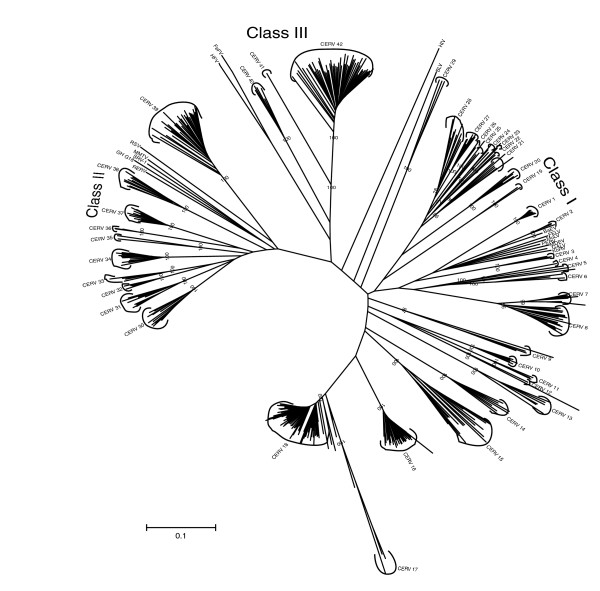
- Of these 42 families, 29 are class I, 10 class II, and 3 class III; the paper reports estimated ages ranging from about 0.8 to 145 million years.
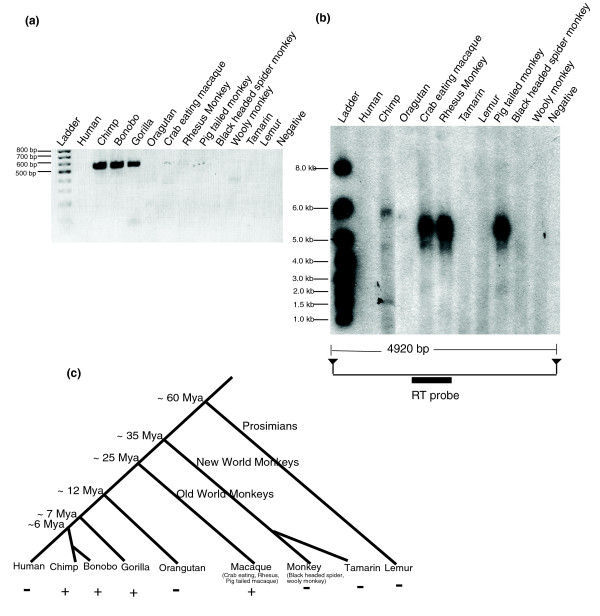
- 40 of the 42 families have human orthologs; the 2 without human orthologs are CERV 1/PTERV1 and CERV 2.
- Comparative gap analysis found 41 chimpanzee gap sequences and 31 human gap sequences with significant similarity to retroviral sequences; among these, 29 chimpanzee-side instances were novel insertions in chimpanzees and 12 were deletions in humans, while on the human side 8 were novel insertions in humans and 23 were deletions in chimpanzees.
## Methods
- The study used the 2.73 GB chimpanzee genomic sequence from Ensembl and first screened it with LTR_STRUC, which reported 2,056 putative endogenous retroviral hits, of which 97 encoded RT.
- The RT-positive hits were then analyzed with sequence alignment and iterative TBLASTN searches to identify more elements; after filtering and adding previously reported human RT sequences, the authors assembled 425 full-length elements.
- Families were defined by phylogenetic analysis of RT-region alignments using ClustalX and neighbor-joining trees with 1,000 bootstrap replicates; comparative analyses of human/chimp gaps used UCSC gap datasets, BlastX, and RepeatMasker.
## Limitations
- The authors explicitly state that 425 full-length elements is certainly an underestimate because they excluded sequences that could not be unambiguously identified as endogenous retroviruses.
- They note that LTR-divergence age estimates require caution because recombination and conversion can confound them; this is a limitation stated in the paper.
- Evident from the text: the comparative gap analysis was restricted to gap sequences >5,000 bp for the BlastX screen, so smaller INDEL-associated retroviral events would not have been captured in that specific analysis.
Model-written summary. Check it against the paper before relying on it.
Integrity signals
Registry
Cites
Statistics
Figures
![Figure 6 Structure of endogenous retroviral INDEL sequences (>5,000 bp) in humans and chimpanzees. (a) Characteristics of the remnant endogenous retroviral sequences (solo LTRs and/or fragmented elements) in humans. The asterisk indicates 29 chimpanzee specific endogenous retroviral insertions of which: 25 belong to the CERV 1/PTERV1 family (at genomic locations 5p12, 1q25, 12p13, 10q11, 3q11, 14q23, 2p11, 12p11, 4q13, 5q11, 3p22, 11p12, 13q12, 6q25, 7p14, 16p13, 7p21, 3q12, 12q12, 4p12, 5p14, 10q21, 7p14, 7p11, 5q12; 2 belong to the CERV 2 family (at genomic locations 3p24, 19q13); 1 belongs to the CERV 3 (HERVS71) family (at genomic location yp11]; and 1 belongs to the CERV 30 (HERVK10) family (at genomic location 12p13) (Table 3). (b) Characteristics of the remnant endogenous retroviral sequences (solo LTRs and/or fragmented elements) in chimps. The asterisk indicates 8 human specific endogenous retroviral insertions from the CERV 30 (HERVK10) family at genomic locations 22q11, 3q13, 3q27, 5q33, 6q14, 10q24, 11q22, 12q14 (Table 4).](https://figures.cochat.ai/paper-figures/fa6c1d6997f04e7d8278647ba77a1188/identification-characterization-and-comparative-genomics-of-chimpanzee-figure-6.jpg)
Verification
Claims the paper makes
5 Valid · 2 Not valid · 11 Not checked · 80 Own results and interpretations
The cited sources support only part of this claim — read each source’s verdict below.
In the paper
“With the exception of a few mutated copies, CERVs have the same canonical dinucleotides terminating the LTRs as have been reported for LTR retrotransposons/endogenous retroviruses in other species (TG/CA) [17-19].”
§ Identification, characterization and comparative genomics of chimpanzee endogenous retroviruses > Results and discussion > Endogenous retroviral families of the chimpanzee genome
What the sources say
- Partly supportedcites [17] Bowen NJ McDonald JF Genomic analysis of Caenorhabditis elegans reveals ancient families of retroviral-like elements. Genome Res 1999 9 924 935 10523521 10.1101/gr.9.10.924 sourceExperimental — accuracy not yet measured
The Structural Analysis section states that many LTR retrotransposons and retroviruses begin and end with the DIR TG...CA (crediting Dej et al. 1998) and that 'This DIR was found in nearly half of the Cer elements characterized' — so the source does support TG/CA being present in C. elegans elements and canonical in other species. However, Table 1 (Cer Protein Domains section) lists LTR end dinucleotides of tg/ct for Cer1, Cer1-1, Cer2-0 and Cer3-0, tg/ta for Cer4-0 and Cer7, ag/ca for Cer5-0 and at/tt for Cer5-1, i.e. roughly half the elements deviate, not 'a few mutated copies' as the citing sentence asserts. The claim therefore overstates the extent of conservation reported in this paper. (LLM, conf=0.78)
- Supportedcites [18] McCarthy EM Liu J Lizhi G McDonald JF Long terminal repeat retrotransposons of Oryza sativa. Genome Biol 2002 3 RESEARCH0053 12372141 10.1186/gb-2002-3-10-research0053 PMC134482 source
The Results and discussion reports that rice LTR retrotransposons consistently have TG at the 5′ end and CA at the 3′ end, except for a few mutated copies. The Background also describes TG and CA as typical canonical LTR-end dinucleotides. This supports the citation’s role as a precedent from another species; it does not need to establish the citing paper’s observation about CERVs. (LLM, conf=0.92)
- Supportedcites [19] McCarthy EM McDonald JF Long terminal repeat retrotransposons of Mus musculus. Genome Biol 2004 5 R14 15003117 10.1186/gb-2004-5-3-r14 PMC395764 source
The Results and discussion passage states that, apart from a few mutated mouse copies, LTR retrotransposons have the canonical TG/CA termini typically found in other species. This supports the cited comparison; the statement about CERVs is the citing authors’ own observation. (LLM, conf=0.92)
plain- Asserted: passes — The authors put it forward as true.
- Checkable: passes — It can be checked against evidence.
- Load-bearing: unclear — It is unclear whether the paper’s conclusions depend on it.
- Based: passes — The paper gives a reason why it holds.
- Partly supported
Every source the paper cites for this claim was checked and supports it.
In the paper
“results presented here and elsewhere [34] suggest that the number of endogenous retroviruses in chimpanzees may be higher than in humans.”
§ Identification, characterization and comparative genomics of chimpanzee endogenous retroviruses > Conclusion
What the sources say
- Supportedcites [34] Mikkelsen T Hillier LW Eichler EE Zody MC David JB Yang S Enard W Hellmann I Lindblad-Toh K Altheide TK Initial sequence of the chimpanzee genome and comparison with the human genome. Nature 2005 437 69 87 16136131 10.1038/nature04072 source
The Endogenous retroviruses discussion (section labelled “Nucleotide divergence.”; page unavailable) reports that chimpanzees have two retroviral families absent from humans, including one with over 200 copies. Together with its counts of lineage-specific insertions, this supports the citing sentence’s tentative suggestion that chimpanzees may have more endogenous retroviruses. (LLM, conf=0.84)
hedgedstates a possible cause- Asserted: passes — The authors put it forward as true.
- Checkable: passes — It can be checked against evidence.
- Load-bearing: passes — The paper’s conclusions depend on it.
- Based: passes — The paper gives a reason why it holds.
- Supported
The cited sources that could be checked couldn’t confirm or dispute this claim.
In the paper
“This distribution of CERV 2 elements among primates is identical to the above described distribution of CERV 1/PTERV1 elements [30].”
§ Identification, characterization and comparative genomics of chimpanzee endogenous retroviruses > Results and discussion > Two CERV families have no human orthologues
What the sources say
- Could not verifycites [30] Yohn CT Jiang Z McGrath SD Hayden KE Khaitovich P Johnson ME Eichler MY McPherson JD Zhao S Paabo S Eichler EE Lineage-specific expansions of retroviral insertions within the genomes of African great apes but not humans and orangutans. PLoS Biol 2005 3 e110 15737067 10.1371/journal.pbio.0030110 PMC1054887 sourceExperimental — accuracy not yet measured
The Results section, “Distribution of Pan troglodytes Endogenous Retrovirus 1 among Primates” (page unavailable), describes the distribution of PTERV1, including its absence in humans and Asian apes. Our copy does not describe CERV 2 or compare its distribution with PTERV1; searches for “CERV 2 elements distribution among primates” and “CERV2” found no such passage. (LLM, conf=0.75)
plain- Asserted: passes — The authors put it forward as true.
- Checkable: passes — It can be checked against evidence.
- Load-bearing: unclear — It is unclear whether the paper’s conclusions depend on it.
- Based: passes — The paper gives a reason why it holds.
- Could not verify
Every source the paper cites for this claim was checked and supports it.
In the paper
“is identical to the above described distribution of CERV 1/PTERV1 elements [30].”
§ Identification, characterization and comparative genomics of chimpanzee endogenous retroviruses > Results and discussion > Two CERV families have no human orthologues
What the sources say
- Supportedcites [30] Yohn CT Jiang Z McGrath SD Hayden KE Khaitovich P Johnson ME Eichler MY McPherson JD Zhao S Paabo S Eichler EE Lineage-specific expansions of retroviral insertions within the genomes of African great apes but not humans and orangutans. PLoS Biol 2005 3 e110 15737067 10.1371/journal.pbio.0030110 PMC1054887 source
In Results, under “Distribution of Pan troglodytes Endogenous Retrovirus 1 among Primates” (page not provided), Figure 2 describes the PTERV1 distribution, including its absence from humans and Asian apes. The citation supports the previously described PTERV1 distribution; the comparison with CERV 2 is the citing authors’ own statement. (LLM, conf=0.87)
plain- Asserted: passes — The authors put it forward as true.
- Checkable: passes — It can be checked against evidence.
- Load-bearing: unclear — It is unclear whether the paper’s conclusions depend on it.
- Based: passes — The paper gives a reason why it holds.
- Supported
A result the paper reports from its own data — it cites no other source for it, so there is none to check. The quote shows it is in the paper.
In the paper
“The CERV families 30 through 39 group with class II retroviruses (Figure 1; Additional data file 3).”
§ Identification, characterization and comparative genomics of chimpanzee endogenous retroviruses > Results and discussion > Endogenous retroviral families of the chimpanzee genome
plainstates an association- Asserted: passes — The authors put it forward as true.
- Checkable: passes — It can be checked against evidence.
- Load-bearing: unclear — It is unclear whether the paper’s conclusions depend on it.
- Based: passes — The paper gives a reason why it holds.
40 more claims
Create a free account to see all 98 claims and to verify the 2 references still open.
- Probably not a substantial claim. 10
- It may state two separate claims as one. 43
Citations
Cites
Basic local alignment search tool
Altschul, S. F., Gish, W., Miller, W., Myers, E. W., & Lipman, D. J. (1990) · Journal of Molecular Biology · doi:10.1006/jmbi.1990.9999 · Cited by 98,669 · cited 3×
“73 GB chimpanzee genomic sequence [12] using the TBLASTN program [40,48] to obtain an extensive set of endogenous retroviruses in the sequenced genome.”
MethodInfluentialGapped BLAST and PSI-BLAST: a new generation of protein database search programs
Altschul, S. (1997) · Nucleic Acids Research · doi:10.1093/nar/25.17.3389 · Cited by 73,302
Thompson, J. (1997) · Nucleic Acids Research · doi:10.1093/nar/25.24.4876 · Cited by 38,993 · cited 4×
“ClustalX [13] was used to build a multiple alignment of the RT domain of these 425 elements together with the RT domains of 16 previously described LTR retrotransposons/retroviruses representative of the three major classes of retroviral elements (Table 1).”
MethodInfluentialInitial sequencing and analysis of the human genome
International Human Genome Sequencing Consortium, Whitehead Institute for Biomedical Research, C. F. G. R., Lander, E. S., Linton, L. M., Birren, B., Nusbaum, C., Zody, M. C., Baldwin, J., Devon, K., Dewar, K., et al. (2001) · Nature · doi:10.1038/35057062 · Cited by 24,216 · cited 2×
“For example, retrotransposons comprise at least 60% of the human genome [3] and results presented here and elsewhere [34] suggest that the number of endogenous retroviruses in chimpanzees may be higher than in humans.”
Primer3 on the WWW for General Users and for Biologist Programmers
Rozen, S., & Skaletsky, H. (2003) · Bioinformatics Methods and Protocols · doi:10.1385/1-59259-192-2:365 · Cited by 15,013 · cited 1×
“Polymerase chain reaction Primers were designed in the conserved RT, gag, LTR and env regions of the CERV 2 element using the program PRIMER3 [53].”
MethodMEGA3: Integrated software for Molecular Evolutionary Genetics Analysis and sequence alignment
Kumar, S. (2004) · Briefings in Bioinformatics · doi:10.1093/bib/5.2.150 · Cited by 11,756 · cited 2×
“A neighbor joining tree was generated from the alignment using MEGA3 [49] with Jukes-Cantor model [22] and pairwise deletions as parameters and bootstrap values were obtained from 1,000 replicates.”
MethodImproved tools for biological sequence comparison.
Pearson, W. R., & Lipman, D. J. (1988) · Proceedings of the National Academy of Sciences · doi:10.1073/pnas.85.8.2444 · Cited by 11,227 · cited 1×
“Identification of the primer binding site A 100 bp region downstream of the 5' LTR of full-length elements was searched against the chimp tRNA database downloaded from [50,51] using the program FASTA [52].”
MethodEvolution of Protein Molecules
JUKES, T. H., & CANTOR, C. R. (1969) · Mammalian Protein Metabolism · doi:10.1016/b978-1-4832-3211-9.50009-7 · Cited by 11,032
tRNAscan-SE: A Program for Improved Detection of Transfer RNA Genes in Genomic Sequence
Lowe, T. M., & Eddy, S. R. (1997) · Nucleic Acids Research · doi:10.1093/nar/25.5.955 · Cited by 10,905
Initial sequencing and comparative analysis of the mouse genome
Mouse Genome Sequencing Consortium (2002) · Nature · doi:10.1038/nature01262 · Cited by 7,187 · cited 1×
“For example, >30% of the mouse genome [1], >50% of the maize genome [2] and >60% of the human genome [3] are composed of retrotransposon sequences.”
Background
Cited by
LTRharvest, an efficient and flexible software for de novo detection of LTR retrotransposons
Ellinghaus, D., Kurtz, S., & Willhoeft, U. (2008) · BMC Bioinformatics · doi:10.1186/1471-2105-9-18 · Cited by 1,641
“LTR_STRUC has been applied to the genomes of the fruitfly Drosophila melanogaster [12], Oryza sativa (rice) [13], Mus musculus (mouse) [14] and recently Pan troglodytes (chimpanzee) [15].”
MethodEffects of Retroviruses on Host Genome Function
Jern, P., & Coffin, J. M. (2008) · Annual Review of Genetics · doi:10.1146/annurev.genet.42.110807.091501 · Cited by 499
Studies of endogenous retroviruses reveal a continuing evolutionary saga
Stoye, J. P. (2012) · Nature Reviews Microbiology · doi:10.1038/nrmicro2783 · Cited by 350
High-resolution comparative analysis of great ape genomes
Kronenberg, Z. N., Fiddes, I. T., Gordon, D., Murali, S., Cantsilieris, S., Meyerson, O. S., Underwood, J. G., Nelson, B. J., Chaisson, M. J. P., Dougherty, M. L., et al. (2018) · Science · doi:10.1126/science.aar6343 · Cited by 350
“The chimpanzee and gorilla lineages carry an endogenous retrovirus, PtERV1, that is absent in orangutan and human genomes (29, 30).”
BackgroundLong-read sequence assembly of the gorilla genome
Gordon, D., Huddleston, J., Chaisson, M. J. P., Hill, C. M., Kronenberg, Z. N., Munson, K. M., Malig, M., Raja, A., Fiddes, I., Hillier, L. W., et al. (2016) · Science · doi:10.1126/science.aae0344 · Cited by 333
“PTERV1 is particularly notable in this regard because its 9- to 10-kbp fulllength insertions are specific to the gorilla lineage (18, 19); we found a 4.”
BackgroundCoevolution of retroelements and tandem zinc finger genes
Thomas, J. H., & Schneider, S. (2011) · Genome Research · doi:10.1101/gr.121749.111 · Cited by 220
“…contrast to the human-specific branch, new LTR retroelement families have arisen on the chimpanzee-and macaque-specific branches (Jern et al. 2006; Polavarapu et al. 2006; Rhesus Macaque Genome Sequencing and Analysis Consortium 2007), but the number of families is small, and we lack statistical…”
BackgroundAntiretroelement Activity of APOBEC3H Was Lost Twice in Recent Human Evolution
OhAinle, M., Kerns, J. A., Li, M. M. H., Malik, H. S., & Emerman, M. (2008) · Cell Host & Microbe · doi:10.1016/j.chom.2008.07.005 · Cited by 204
“This is plausible given that retroviral infections and retroelement amplifications are known to be distinct among even these two closely-related species (Jern et al., 2006; Polavarapu et al., 2006; Yohn et al., 2005).”
BackgroundViruses are essential agents within the roots and stem of the tree of life
Villarreal, L. P., & Witzany, G. (2010) · Journal of Theoretical Biology · doi:10.1016/j.jtbi.2009.10.014 · Cited by 206
“other primates (Andersson et al., 2002; Mayer and Meese, 2005; Polavarapu et al., 2006).”
Classification and nomenclature of endogenous retroviral sequences (ERVs)
Blomberg, J., Benachenhou, F., Blikstad, V., Sperber, G., & Mayer, J. M. (2009) · Gene · doi:10.1016/j.gene.2009.06.007 · Cited by 145
Kehrer‐Sawatzki, H., & Cooper, D. N. (2006) · Human Mutation · doi:10.1002/humu.20420 · Cited by 122
“Finally, a genomewide survey of endogenous retroviral positional variation between humans and chimpanzees has shown that 7% of all human-chimpanzee insertion/deletion variation is associated with endogenous retroviral sequences [Polavarapu et al., 2006].”
BackgroundSimian foamy virus infection in humans: prevalence and management
Khan, A. S. (2009) · Expert Review of Anti-infective Therapy · doi:10.1586/eri.09.39 · Cited by 78
Sequencing Primate Genomes: What Have We Learned?
Marques-Bonet, T., Ryder, O. A., & Eichler, E. E. (2009) · Annual Review of Genomics and Human Genetics · doi:10.1146/annurev.genom.9.081307.164420 · Cited by 64
“discovered after sequencing of the chimpanzee genome (Figure 6) (82, 122, 165).”
BackgroundZhuo, X., & Feschotte, C. (2015) · PLoS Pathogens · doi:10.1371/journal.ppat.1005279 · Cited by 67
“68 Many ancient CST events have been inferred by comparing ERV sequences across 69 species [21-28] .”
BackgroundThe Exposome in Human Evolution: From Dust to Diesel
Trumble, B. C., & Finch, C. E. (2019) · The Quarterly Review of Biology · doi:10.1086/706768 · Cited by 53
Structural divergence between the human and chimpanzee genomes
Kehrer‐Sawatzki, H., & Cooper, D. N. (2006) · Human Genetics · doi:10.1007/s00439-006-0270-6 · Cited by 65
“Approximately 7% of all insertion/deletion diVerences between human and chimpanzee genomes are attributable to the presence or absence of endogenous retroviral sequences (Polavarapu et al. 2006).”
BackgroundThe Source of Self: Genetic Parasites and the Origin of Adaptive Immunity
Villarreal, L. P. (2009) · Annals of the New York Academy of Sciences · doi:10.1111/j.1749-6632.2009.05020.x · Cited by 62
Evidence for Restriction of Ancient Primate Gammaretroviruses by APOBEC3 but Not TRIM5α Proteins
Perez-Caballero, D., Soll, S. J., & Bieniasz, P. D. (2008) · PLoS Pathogens · doi:10.1371/journal.ppat.1000181 · Cited by 45
“Curiously, these same two families of MLV-related retroviruses are absent from the human genome [1,30] for unknown reasons, while horizontal transfers, endogenization and extinction of these two families of viruses appears to have occurred during the past few million years in several other old world primate species.”
Holt, M. P., Shevach, E. M., & Punkosdy, G. A. (2013) · Frontiers in Oncology · doi:10.3389/fonc.2013.00287 · Cited by 53
Zhuo, X., Rho, M., & Feschotte, C. (2013) · Journal of Virology · doi:10.1128/jvi.00892-13 · Cited by 44
Macfarlane, C. M., & Badge, R. M. (2015) · Retrovirology · doi:10.1186/s12977-015-0162-8 · Cited by 47
“A full-length Type I provirus (HERV-K GC1) has previously been identified in chimpanzees and is absent from humans [26,28,36].”
BackgroundMethodEndogenous retroviruses of the chicken genome
Huda, A., Polavarapu, N., Jordan, I. K., & McDonald, J. F. (2008) · Biology Direct · doi:10.1186/1745-6150-3-9 · Cited by 41
“LTR_STRUC has proven effective at identifying novel LTR elements, including ERVs, in chimpanzee [8], mouse [9] and rice genome sequences [10].”
BackgroundSelf-citationChong, A. Y.-Y., Kojima, K. K., Jurka, J., Ray, D. A., Smit, A. F. A., Isberg, S. R., & Gongora, J. (2014) · Retrovirology · doi:10.1186/s12977-014-0071-2 · Cited by 35
“The use of the term CERV is one instance where it has been used to describe ERVs from Pan troglodytes (chimpanzee) as well as crocodilians [2,4,11], although alternative naming schemas for crocodilian ERVs (CrocERV, and the Repbase suffixes AMi/Ami, Crp, and Gav) are provided herein.”
Genome-Wide Detection and Characterization of Endogenous Retroviruses inBos taurus
García‐Etxebarria, K., & Jugo, B. M. (2010) · Journal of Virology · doi:10.1128/jvi.00106-10 · Cited by 41
“Taking into account that the numbers of ERV families described were 31 for humans (15), 42 for chimpanzees (29), 20 for mice (23), and 24 putative families for cows (this study), BoERVs may not be as scarce as previously stated.”
InfluentialIdentification of a receptor for an extinct virus
Soll, S. J., Neil, S. J. D., & Bieniasz, P. D. (2010) · Proceedings of the National Academy of Sciences · doi:10.1073/pnas.1012344107 · Cited by 32
“Endogenous γ-retroviruses are abundant in primate genomes and among them, chimpanzee endogenous retroviruses-1 and -2 (CERV1 and CERV2) and their relatives are the groups most closely related to the modern prototype γ-retrovirus, MLV (3, 4).”
BackgroundMultiple Groups of Endogenous Epsilon-Like Retroviruses Conserved across Primates
Brown, K. A., Emes, R. D., & Tarlinton, R. E. (2014) · Journal of Virology · doi:10.1128/jvi.00966-14 · Cited by 23
“; and one chimpanzee ERV lineage previously categorized only as “class I” (11).”
BackgroundBrown, K., Moreton, J., Malla, S., Aboobaker, A. A., Emes, R. D., & Tarlinton, R. E. (2012) · Virology · doi:10.1016/j.virol.2012.07.010 · Cited by 21
Characterization and potential functional significance of human-chimpanzee large INDEL variation
Polavarapu, N., Arora, G. S., Mittal, V. K., & McDonald, J. F. (2011) · Mobile DNA · doi:10.1186/1759-8753-2-13 · Cited by 19
“3-fold) (Table 3), predominately due to the expansion of two chimpanzee-specific endogenous retrovirus families (CERV 1/PTERV 1 and CERV 2) three to five million years ago [7,26,27].”
InfluentialSelf-citationChimpanzee-Specific Endogenous Retrovirus Generates Genomic Variations in the Chimpanzee Genome
Mun, S., Lee, J., Kim, Y., Kim, H., & Han, K. (2014) · PLoS ONE · doi:10.1371/journal.pone.0101195 · Cited by 14
“This result agrees with the result from a previous study [1].”
BackgroundMethodResultInfluentialViral symbiosis and the holobiontic nature of the human genome
Ryan, F. P. (2016) · Apmis · doi:10.1111/apm.12488 · Cited by 15
Guffanti, G., Bartlett, A. A., DeCrescenzo, P., Macciardi, F. M., & Hunter, R. G. (2019) · Current topics in behavioral neurosciences · doi:10.1007/7854_2019_112 · Cited by 17
Ryan, F. (2009) · Journal of the Royal Society of Medicine · doi:10.1258/jrsm.2009.090183 · Cited by 15
Jo, H., Choi, H., Choi, M., Song, N., Kim, J., Oh, J.-W., Seo, K., Seo, H. G., Chun, T., Kim, T., et al. (2011) · Virology · doi:10.1016/j.virol.2011.10.010 · Cited by 15
“Several previous studies classified ERVs on the basis of full-length characteristics (Huda et al., 2008; McCarthy et al., 2002; Polavarapu et al., 2006).”
BackgroundResultInfluentialZeng, F.-C., Zhao, Y., Zhang, Q.-J., & Gao, L. (2017) · Frontiers in Plant Science · doi:10.3389/fpls.2017.00402 · Cited by 13
“…(McCarthy and McDonald, 2003) is the best known of these programs, which has broadly been applied to numerous genomes, such as the Glycine max (Schmutz et al., 2010), Mus musculus (McCarthy and McDonald, 2004), Oryza sativa (Tian et al., 2009), and Pan troglodytes (Polavarapu et al., 2006).”
BackgroundSteinbiss, S., Kastens, S., & Kurtz, S. (2012) · Mobile DNA · doi:10.1186/1759-8753-3-18 · Cited by 13
“…candidates [15-17] according to fixed similarity thresholds (for example, the 80-80-80 rule [4]), by inferring family membership from phylogenies [19,20,28] or by using graph clustering algorithms based on stochastic flow [21], a method that does not require any arbitrary similarity threshold.”
BackgroundMartín-Peciña, M., Ruíz-Ruano, F. J., Camacho, J. P. M., & Dodsworth, S. (2018) · Zoological Journal of the Linnean Society · doi:10.1093/zoolinnean/zly077 · Cited by 12
ASPic-GeneID: A Lightweight Pipeline for Gene Prediction and Alternative Isoforms Detection
Alioto, T., Picardi, E., Guigó, R., & Pesole, G. (2013) · BioMed Research International · doi:10.1155/2013/502827 · Cited by 12
Endogenous retrovirus-mediated genomic variations in chimpanzees
Kim, Y., & Han, K. (2014) · Mobile Genetic Elements · doi:10.4161/2159256x.2014.990792 · Cited by 8
Genome-wide reexamination of endogenous retroviruses in Rattus norvegicus
García‐Etxebarria, K., & Jugo, B. M. (2016) · Virology · doi:10.1016/j.virol.2016.04.006 · Cited by 4
Comprehensive Identification and Characterization of HML-9 Group in Chimpanzee Genome
Chen, M., Yang, C., Zhai, X., Wang, C., Liu, M., Zhang, B., Guo, X., Wang, Y., Li, H., Liu, Y., et al. (2024) · Viruses · doi:10.3390/v16060892 · Cited by 4
“Among the 42 groups, excluding CERV1/PTERV1 and CERV2, all CERVs were found to display lineal homologues in humans [30,31].”
BackgroundMansfield, F., & Vaneechoutte, M. (2024) · Ideas in Ecology and Evolution · doi:10.24908/iee.2024.17.1.n · Cited by 2
Li, N., & Li, Q. (2015) · Pakistan Journal of Pharmaceutical Sciences · doi:10.36721/pjps/28/1(sup)/2015/189/375-382 · Cited by 2
Riboflavin transporter: evidence of a role as entry receptor for chimpanzee endogenous retrovirus
AbuEed, L., Miyake, A., Wanjala, N., Pramono, D., Abdillah, D. A., Imamura, M., Shimojima, M., Denner, J., Kawasaki, J., & Nishigaki, K. (2025) · Virus Evolution · doi:10.1093/ve/veaf031 · Cited by 1
“With the exception of chimpanzee endogenous retrovirus 1 (CERV1)/ Pan troglodytes endogenous retrovirus 1 and CERV2, all 40 ERV groups in chimpanzees are represented by lineal homologues in humans (Yohn et al. 2005; Polavarapu et al. 2006).”
van der Kuyl, A. C. (2026) · Pathogens · doi:10.3390/pathogens15010104 · Cited by 2
“An interesting OWM gammaretrovirus is Pan troglodytes endogenous retrovirus (PtERV1), also known as PtG1a or CERV1, which is, as its name suggests, found in chimpanzee and gorilla genomes, but not in Asian lesser apes and human DNA [29,74,85,86].”
The canine X chromosome is a sink for canine endogenous retrovirus transposition
Mariano, R., & vonHoldt, B. M. (2016) · Gene Reports · doi:10.1016/j.genrep.2016.05.003 · Cited by 1
Genome-wide characterization of endogenous retroviruses in snub-nosed monkeys
Wang, X., Wang, B., Liu, Z., Garber, P. A., & Pan, H. (2019) · PeerJ · doi:10.7717/peerj.6602 · Cited by 2
van der Kuyl, A. C. (2024) · Journal of Molecular Evolution · doi:10.1007/s00239-024-10225-5 · Cited by 2
“…themselves, instead of evolutionary distances, as a substitute for K have been employed in many LTR studies (Anderssen et al. 1997; Dangel et al. 1995; Grandi et al. 2016, 2017; Jern et al. 2006; Lebedev et al. 2000; Mager and Freeman 1995; Polavarapu et al. 2006; Sverdlov 2000; Yohn et al. 2005).”
Retroviral insertions contributed to the divergence of human and chimpanzee brainsPreprint
Gerdes, P., Karlsson, O., Garza, R., Atacho, D. A. M., Hsieh, P., Prajapati, B., Muralidharan, C., Adami, A., Davis-Hansson, C., Johansson, E. M., et al. (2025) · bioRxiv (Cold Spring Harbor Laboratory) · doi:10.64898/2025.12.12.693858 · Cited by 1
Comparing the Human and Chimpanzee Genomes
Uddin, M., Wildman, D. E., & Goodman, M. (2008) · Wiley eBooks · doi:10.1002/9780470015902.a0020743
Romano, C. M. (2009) · Digital Library of Theses and Dissertations (Universidade de São Paulo) · doi:10.11606/t.42.2009.tde-29012010-105745 · Cited by 2
Nucleotide Sequence Divergence between Humans and Chimpanzees
Chen, F., & Chuang, T. (2008) · Wiley eBooks · doi:10.1002/9780470015902.a0020751
COMPARATIVE AND FUNCTIONAL GENOMIC ANALYSIS OF
Thomas, J. W., & Choi, J. K. (2007)
Comparative and functional genomic analysis of human and chimpanzee retrotransposon sequences
Polavarapu, N. (2007) · SMARTech Repository (Georgia Institute of Technology)
Self-citationReview article Viruses as symbionts
Ryan, F. (2007) · DalSpace (Dalhousie University)
Vaneechoutte, M., Mansfield, F., Munro, S., & Verhaegen, M. (2024) · Nature anthropology · doi:10.35534/natanthropol.2024.10008
Hamazaki, Y., Akuta, H., Suzuki, H., Tanabe, H., Suzuki, T., Inoue, K., Ichiyanagi, K., Imamura, T., & Imamura, M. (2025) · BMC Genomics · doi:10.1186/s12864-025-12400-4 · Cited by 1
“Eight of the top 10 VERs belonged to the PTERV and CERV families, which are absent from the human genome [50, 58], and thus displayed Pan -specific expression.”
A hypothesis of ape and human evolution based on comparative biology and plate tectonics
Verhaegen, M., Munro, S., Bonne, K., Mansfield, F., & Vaneechoutte, M. (2026) · Academia Biology · doi:10.20935/acadbiol8310
Metadata
- Authors
- Polavarapu, N., Bowen, N. J., & McDonald, J. F.
- Affiliations
- Georgia Institute of Technology (US)
- Corresponding author
- McDonald, John F
- Venue
- Genome Biology
- Published
- 2006-06-28
- Volume
- 7
- Issue
- 6
- Pages
- R51-R51
- ISSN
- 1465-6906 (ISSN-L)
- 1474-760X
- PMC
- PMC1779541
- OpenAlex
- W2097937009
- Semantic Scholar
- 85abc0ba168061555fd73e7dfcb2632918cb72b8
- Cited by
- 60
- References
- 51
- Citations by year
- 2026: 3 · 2025: 3 · 2024: 4 · 2019: 6 · 2018: 2 · 2017: 1 · 2016: 4 · 2015: 3 · 2014: 4 · 2013: 3 · 2012: 3
- FWCI
- 7.77
- Type
- journal article
- Language
- en
- Open access
- gold
- doi.org
- Licence
- cc-by
- creativecommons.org/licenses/by/2.0/ (tdm)
- creativecommons.org/licenses/by/2.0/ (vor)
- Locations
- Genome biology (publishedVersion, cc-by)
- PubMed Central (publishedVersion, cc-by)
- PubMed (publishedVersion)
- SMARTech Repository (Georgia Institute of Technology) (submittedVersion)
- Funders
- Georgia Institute of Technology
- Topics
- Life Sciences › Biochemistry, Genetics and Molecular Biology › Genetics › Chromosomal and Genetic Variations
- Life Sciences › Biochemistry, Genetics and Molecular Biology › Genetics › Genomic variations and chromosomal abnormalities
- Life Sciences › Biochemistry, Genetics and Molecular Biology › Genetics › Genome Rearrangement Algorithms
- Keywords
- endogenous retroviruses, chimpanzee genome, retrotransposons, comparative genomics, human-chimpanzee divergence, primate evolution, transposable elements, bonobos, gorillas, Old World monkeys
- MeSH terms
- Animals, Pan troglodytes, Humans, Models, Genetic, Phylogeny, Retroelements, Endogenous Retroviruses, Genomics
About these checks
Registry, retraction, Cites and statistics results are computed, not judged, with one exception: a printed reference that no index lists is read once by a model before it counts as a citation error. Claims are extracted by a model and kept only when their quote appears verbatim in the text; each cited source is then checked, with a model’s help, for whether it says what the claim relies on. Those verdicts can be wrong — read the claim’s quote and the cited source before relying on one.
The claim verdicts this report counts are experimental: their accuracy is not yet measured.
A language model drew the claims from the paper on 2026-10-10, under version 3 of the claim definition (model deepseek-v4.1-flash, prompt extract-v3).
A second model labelled each claim on 2026-10-10 (model jev-1.13-20260917, definition revision gold-guideline-v0.2).
Cited sources are checked with a language model’s help (qwen3.8-omni-flash and gpt-6-sol).
Statistics and arithmetic are recomputed, not judged.
Confidence bands are shown only for fields calibrated on our annotated test set. None is calibrated yet, so no band is shown.
What counts as a claim ›How we measure confidence ›How we check this ›
Are you an author, or do you see a problem with this page? Request a review
Data sources
Bibliographic data: Semantic Scholar, OpenAlex, Crossref.
Contains information from the Semantic Scholar Academic Graph Datasets, made available under the ODC Attribution License (ODC-BY 1.0).
Semantic Scholar’s data is described in: Kinney, R., et al. (2023). The Semantic Scholar Open Data Platform. arXiv:2301.10140.
