

Computational challenges in the analysis of ancient DNA
Open accessThe DOI matches its Crossref record; 53 of the 53 references it cites were found in a registry or an index.
Abstract
High-throughput sequencing technologies have opened up a new avenue for studying extinct organisms. Here we identify and quantify biases introduced by particular characteristics of ancient DNA samples. These analyses demonstrate the importance of closely related genomic sequence for correctly identifying and classifying bona fide endogenous DNA fragments. We show that more accurate genome divergence estimates from ancient DNA sequence can be attained using at least two outgroup genomes and appropriate filtering.
Overview
The claims and statistics of this paper haven’t been checked yet.
Free: it reads the open-access text and checks the first 5 claims that cite a source we can check. Create a free account to check every claim.
Integrity signals
Registry
Cites
Statistics
Figures
Verification
Claims the paper makes
The claims and statistics of this paper haven’t been checked yet.
Free: it reads the open-access text and checks the first 5 claims that cite a source we can check. Create a free account to check every claim.
Claims other papers make about this one
Each is checked against this paper’s own text: does it say what the citing paper says it does?
The source backs part of the claim, not all of it — or backs it for a different population, condition or comparison.
In the citing paper
“Reads containing the alternate allele are less likely to map than reads containing the reference allele, creating a potentially strong bias against non-reference variation”
From Removing reference bias and improving indel calling in ancient DNA data analysis by mapping to a sequence variation graph (2020) · cites this paper as [9]
Experimental — accuracy not yet measuredThe source backs part of the claim, not all of it — or backs it for a different population, condition or comparison.
In the citing paper
“much of the DNA will typically have been degraded (i.e. fragmented) due to post-mortem enzymatic processes.”
From <tt>SAFARI</tt> : pangenome alignment of ancient DNA using purine/pyrimidine encodings (2025) · cites this paper as [2]
Experimental — accuracy not yet measuredThe cited source says what the claim attributes to it.
In the citing paper
“which can have a significant effect on population genetic inference and implications for many aDNA studies [9, 10]”
From Removing reference bias and improving indel calling in ancient DNA data analysis by mapping to a sequence variation graph (2020) · cites this paper as [9]
Self-check
Percentages, sums and reported differences re-computed from the paper’s own numbers.
The self-check needs the paper’s full text.
Citations
Cites
Basic local alignment search tool
Altschul, S. F., Gish, W., Miller, W., Myers, E. W., & Lipman, D. J. (1990) · Journal of Molecular Biology · doi:10.1006/jmbi.1990.9999 · Cited by 98,669 · cited 3×
“This last problem can be exacerbated by the heuristics used in fast database search programs, like BLAST [22].”
BackgroundMethodGapped BLAST and PSI-BLAST: a new generation of protein database search programs
Altschul, S. (1997) · Nucleic Acids Research · doi:10.1093/nar/25.17.3389 · Cited by 73,302 · cited 11×
“The reads are first aligned (with Mega BLAST) to the human, chimpanzee, rhesus and mouse genomes and the GenBank nonredundant and environmental databases.”
MethodInfluentialInitial sequencing and analysis of the human genome
International Human Genome Sequencing Consortium, Whitehead Institute for Biomedical Research, C. F. G. R., Lander, E. S., Linton, L. M., Birren, B., Nusbaum, C., Zody, M. C., Baldwin, J., Devon, K., Dewar, K., et al. (2001) · Nature · doi:10.1038/35057062 · Cited by 24,216 · cited 1×
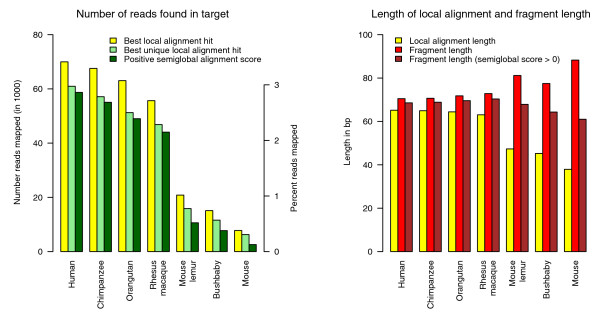
“By using only the increasingly more distantly related genome sequences of human [27], chimpanzee [28], orangutan, rhesus macaque [29], mouse lemur, bushbaby and mouse [30], we gauge how many Neandertal sequences could be identified if each of these genomes was the only one that was available.”
Improved tools for biological sequence comparison.
Pearson, W. R., & Lipman, D. J. (1988) · Proceedings of the National Academy of Sciences · doi:10.1073/pnas.85.8.2444 · Cited by 11,227 · cited 1×
“Several widely used local alignment programs provide fast comparison of sequences to large databases by requiring a short exact-matching sequence (seed) to start the alignment [22,33].”
MethodGenome sequencing in microfabricated high-density picolitre reactors
Margulies, M., Egholm, M., Altman, W. E., Attiya, S., Bader, J. S., Bemben, L. A., Berka, J., Braverman, M. S., Chen, Y.-J., Chen, Z., et al. (2005) · Nature · doi:10.1038/nature03959 · Cited by 7,693 · cited 1×
“To assess the biases introduced in the analyses of ancient DNA, we use a subset of the sequence data generated as part of the Neandertal genome project: 2.8 million reads from a 38,000-year-old Neandertal fossil bone [9,10,16] produced by shotgun 454 sequencing [26] on the GS FLX platform.”
MethodInfluentialInitial sequencing and comparative analysis of the mouse genome
Mouse Genome Sequencing Consortium (2002) · Nature · doi:10.1038/nature01262 · Cited by 7,187 · cited 2×
“5 substitutions per site [30].”
BackgroundA Greedy Algorithm for Aligning DNA Sequences
Zhang, Z., Schwartz, S., Wagner, L., & Miller, W. (2000) · Journal of Computational Biology · doi:10.1089/10665270050081478 · Cited by 5,478 · cited 3×
“The Mega BLAST method, used in this step, is intended for the comparison of longer, closely related sequences [24] and will inevitably fail to detect some of the more divergent reads.”
BackgroundMethodThe ENCODE Project Consortium (2007) · Nature · doi:10.1038/nature05874 · Cited by 5,223 · cited 1×
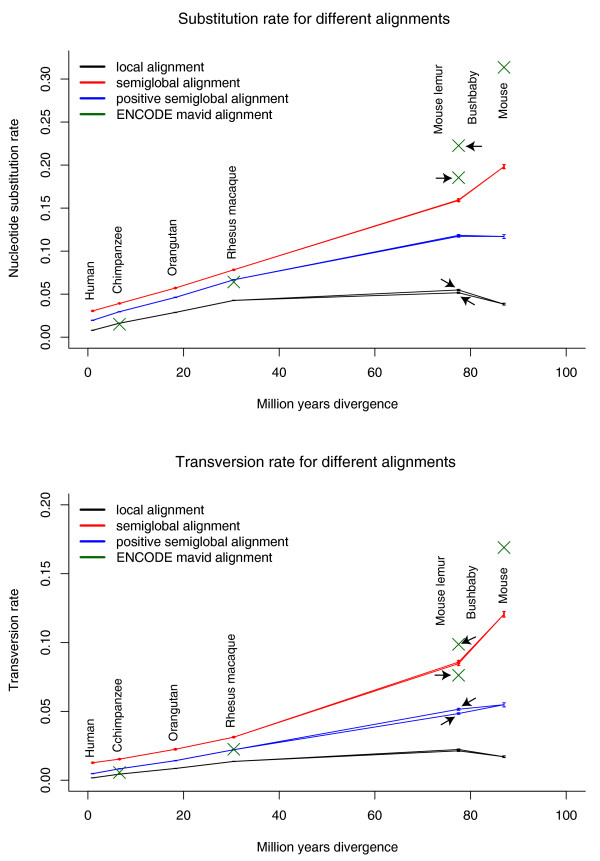
“For comparison, we also calculated the pairwise nucleotide differences between humans and several other species spanning an identical range of divergence using the data from randomly picked genomic regions provided by the ENCODE project [37].”
MethodEnvironmental genome shotgun sequencing of the sargasso sea
Venter, J. C., Remington, K., Heidelberg, J. F., Halpern, A. L., Rusch, D., Eisen, J. A., Wu, D., Paulsen, I., Nelson, K. E., Nelson, W., et al. (2004) · Science · doi:10.1126/science.1093857 · Cited by 4,376 · cited 1×
“…allow the detection of novel sequences and highly diverged regions between the target species and any comparison genome, recent studies indicate that currently available microbial sequence data are too incomplete to detect the full diversity naturally occurring in microbial communities [14,32].”
BackgroundA draft sequence of the Neandertal genome
Green, R. E., Krause, J., Briggs, A. W., Maricic, T., Stenzel, U., Kircher, M., Patterson, N., Li, H., Zhai, W., Fritz, M. H.-Y., et al. (2010) · Science · doi:10.1126/science.1188021 · Cited by 4,318 · cited 1×
“We also investigated the accuracy of the observed number of pairwise nucleotide differences in each of these comparisons ([31].”
ResultSelf-citation
Cited by
Items 101–155 of 155
CarpeDeam: a de novo metagenome assembler for heavily damaged ancient datasets
Kraft, L., Söding, J., Steinegger, M., Jochheim, A., Sackett, P. W., Fernàndez-Guerra, A., & Renaud, G. (2025) · Genome biology · doi:10.1186/s13059-025-03839-5 · Cited by 4
“Hydrolytic mechanisms cause the degradation of DNA molecules and deamination converts cytosines into uracil molecules.”
An empirical evaluation of genotype imputation of ancient DNAPreprint
Ausmees, K., Sánchez‐Quinto, F., Jakobsson, M., & Nettelblad, C. (2021) · bioRxiv (Cold Spring Harbor Laboratory) · doi:10.1101/2021.12.22.473913 · Cited by 3
Psonis, N., Vassou, D., Nafplioti, A., Tabakaki, E., Pavlidis, P., Stamatakis, A., & Poulakakis, N. (2024) · Forensic Science International Genetics · doi:10.1016/j.fsigen.2024.103060 · Cited by 3
Bailly, M. L., & de Araújo, A. J. G. (2016) · ASM Press eBooks · doi:10.1128/9781555819170.ch14 · Cited by 5
Vogel, N. A., Rubin, J. D., Swartz, M., Vlieghe, J., Sackett, P. W., Pedersen, A. G., Pedersen, M. W., & Renaud, G. (2023) · bioRxiv (Cold Spring Harbor Laboratory) · doi:10.1101/2023.04.04.535531 · Cited by 2
Armstrong, E. E., Curry, C., Solari, K. A., Morgan, S., Patterson, B. D., Agwanda, B. R., Parker, L. D., McInerney, N. R., Helgen, L. E., Helgen, K. M., et al. (2025) · bioRxiv (Cold Spring Harbor Laboratory) · doi:10.1101/2025.02.26.640359 · Cited by 2
<tt>SAFARI</tt> : pangenome alignment of ancient DNA using purine/pyrimidine encodings
Rubin, J., van Waaij, J., Kraft, L., Sirén, J., Sackett, P. W., & Renaud, G. (2025) · NAR Genomics and Bioinformatics · doi:10.1093/nargab/lqaf170 · Cited by 1
“However, this is not the case for ancient DNA (aDNA) samples. aDNA has several idiosyncrasies which make it particularly difficult to analyze [ 1 , 2 ].”
Simulation-based benchmarking of ancient haplotype inference for detecting population structure
Tretmanis, J. M., Jay, F., Ávila‐Arcos, M. C., & Huerta‐Sánchez, E. (2024) · Human Population Genetics and Genomics · doi:10.47248//hpgg2404010005 · Cited by 8
Comparing the Efficiency of Different Methods for Reliable Results in Ancient DNA NGS Workflow
Kovács, B., Gînguță, A., Kiss, P., Maár, K., Schütz, O., Varga, G. I. B., & Neparáczki, E. (2025) · DNA · doi:10.3390/dna5020026 · Cited by 4
“Additionally, due to the complex nature of aDNA, specialized bioinformatic analyses are required to handle the data effectively [4].”
Rogaev, E. I. (2025) · Russian Journal of Genetics · doi:10.1134/s1022795425700887 · Cited by 1
“Experience in studying most paleontological and archaeological samples indicates significant degradation of the extracted endogenous genomic DNA; for further bioinformatics analysis, it is customary to use DNA sequences with a length of 30–35 base pairs (bp) [9, 10].”
Zhu, Q., Zhang, J., Zhou, W., Liang, S.-A., Wang, S., Cai, X., Li, F., Li, J., Zhang, G., Feng, H., et al. (2026) · Science Advances · doi:10.1126/sciadv.aea0706 · Cited by 1
“His-torically, this research gap is largely attributed to technical limitations arising from low-coverage ancient DNA data ( 23 ).”
Genomics and the lost world: palaeontological insights into genome evolution
Organ, C. L. (2012) · Cambridge University Press eBooks · doi:10.1017/cbo9780511760174.002 · Cited by 4
An NGS approach to archaeobotanical museum specimens as genetic resources in systematics research
Smith, O., Palmer, S. A., Gutaker, R. M., & Allaby, R. G. (2016) · Cambridge University Press eBooks · doi:10.1017/cbo9781139236355.015 · Cited by 1
Rose, J., Gilbert, M. T. P., Outerbridge, M. E., & Morales, H. E. (2024) · Insect Conservation and Diversity · doi:10.1111/icad.12776 · Cited by 1
“Moreover, as low-depth samples include historical samples, we removed transitions as commonly done in ancient DNA analyses to counteract biases from post-mortem DNA damage (Prüfer et al., 2010).”
Computational Genomics and Its Applications to Anthropological Questions
Witt, K. E., & Villanea, F. A. (2024) · American Journal of Biological Anthropology · doi:10.1002/ajpa.70010 · Cited by 3
“There is little ancient DNA in archaeological remains to start, but it is also fragmented, with sequences of 100 base pairs, and shorter, being typical (Prüfer et al. 2010).”
Szuhai, I.-M., Bocicor, M. I., Pop, E.-L., Mircea, I.-G., & Mircea, C. (2019) · International Symposium on Symbolic and Numeric Algorithms for Scientific Computing (SYNASC) · doi:10.1109/synasc49474.2019.00027 · Cited by 1
“As a consequence, many computational methods that assist in DNA analysis have emerged [2], [7].”
BackgroundUnderstanding and improving high-throughput sequencing data production and analysis
Kircher, M. (2011) · Qucosa (Saxon State and University Library Dresden) · Cited by 3
Ancient DNA: a multifunctional tool for resolving anthropological questions
Simón, M. (2015) · LA Referencia (Red Federada de Repositorios Institucionales de Publicaciones Científicas) · Cited by 1
Ancient environmental genomics: An IntroductionPreprint
Nguyen, N. (2022) · Authorea · doi:10.22541/au.166012157.74707420/v2 · Cited by 1
Chen, H., Baetsen-Young, A. M., Thompson, A., Day, B., Lovis, W. A., & Wróbel, G. (2023) · Research Square · doi:10.21203/rs.3.rs-2592230/v1 · Cited by 1
Simulation-based Benchmarking of Ancient Haplotype Inference for Detecting Population StructurePreprint
Tretmanis, J. M., Jay, F., Ávila‐Arcos, M. C., & Huerta‐Sánchez, E. (2023) · bioRxiv (Cold Spring Harbor Laboratory) · doi:10.1101/2023.09.28.560049 · Cited by 1
“Ancient DNA is damaged by the passage of time resulting in deamination and fragmentation[1], which makes mapping ancient reads to modern references challenging.”
BackgroundDental calculus as a record of Pleistocene reindeer oral, digestive and dietary floraPreprint
Kellner, F. L., Brealey, J. C., Vogel, N. A., Bieker, V. C., Martin, S. L. F., Seiler, M., Philippsen, B., Veiberg, V., Pedersen, M. W., Guschanski, K., et al. (2025) · bioRxiv (Cold Spring Harbor Laboratory) · doi:10.1101/2025.08.02.668267 · Cited by 2
A comparative analysis dataset for improving genuine SNP identification in ancient maize aDNA
Chen, H., & Madzima, T. F. (2026) · Data in Brief · doi:10.1016/j.dib.2026.112623 · Cited by 1
Patterns of Archaic Hominin DNA in Modern Human Genomes
Vernot, B. (2015) · ResearchWorks at the University of Washington (University of Washington)
Ancient DNA in Physical Anthropology: A Review
Broida, J. E. (2011) · CU Scholar (University of Colorado Boulder)
Rapid detection of ancient human mitochondrial DNA variation using tetra-primer PCR amplification
Zhao, Y., Yu, C., Li, K., Zhang, Y., & Zhou, H. H. (2017) · ScienceAsia · doi:10.2306/scienceasia1513-1874.2017.43.240
An empirical evaluation of genotype imputation of ancient DNAPreprint
Ausmees, K., Sánchez‐Quinto, F., Jakobsson, M., & Nettelblad, C. (2021) · bioRxiv (Cold Spring Harbor Laboratory) · doi:10.1101/2021.12.22.473912 · Cited by 2
Ancient DNA and Paleoparasitology in Brazil
Iñiguez, A. M. (2021) · Springer eBooks · doi:10.1007/978-981-15-3354-9_12 · Cited by 2
A Mycobacterium tuberculosis komplex archaikus DNS kimutatása emberi csontvázmaradványokból
Pósa, A. (2017) · SZTE Repository of Dissertations (University of Szeged) · doi:10.14232/phd.3917
Psonis, N., Vassou, D., Nafplioti, A., Tabakaki, E., Pavlidis, P., Stamatakis, A., & Poulakakis, N. (2023) · SSRN Electronic Journal · doi:10.2139/ssrn.4647981
Themes and Knowledge Maps for the Study of the Origins of Human Languages
Jing-zhu, L. (2023) · Humanities and Social Sciences · doi:10.11648/j.hss.20231106.17
Feuerborn, T. R., Palkopoulou, E., van der Valk, T., von Seth, J., Munters, A. R., Pečnerová, P., Dehasque, M., Ureña, I., Ersmark, E., Lagerholm, V. K., et al. (2020) · Figshare · doi:10.6084/m9.figshare.13311231
Laurin, M. (2024) · Wiley eBooks · doi:10.1002/9781394284252.ch10
Genomic research of ancient pathogens in Central Asia
Musralina, L., Khussainova, E., Altynova, N., & Djansgurova, L. (2024) · Elsevier eBooks · doi:10.1016/b978-0-323-99886-4.00002-8
CarpeDeam: A De Novo Metagenome Assembler for Heavily Damaged Ancient DatasetsPreprint
Kraft, L., Söding, J., Steinegger, M., Jochheim, A., Sackett, P. W., Fernàndez-Guerra, A., & Renaud, G. (2024) · bioRxiv (Cold Spring Harbor Laboratory) · doi:10.1101/2024.08.09.607291
Towards More Robust Metagenome Profiling: Modeling and Analysis
Pusadkar, V. (2024) · University of North Texas Digital Library (University of North Texas) · doi:10.12794/metadc2356162
van Waaij, J., Hartmann, M. V., Sackett, P. W., & Renaud, G. (2026) · G3 Genes Genomes Genetics · doi:10.1093/g3journal/jkag099
“As these methods continue to be refined, they hold promise for enhancing the capabilities of forensic science, providing innovative and less invasive approaches to evidence collection and analysis (Butler 2015; Wells and Škaro 2023).”
Chen, H., Baetsen-Young, A. M., Thompson, A., Day, B., Madzima, T. F., Wasef, S., Casanovas, C. R., Lovis, W. A., & Wróbel, G. (2025) · eLife · doi:10.7554/elife.106818.1 · Cited by 1
Fifteenth century CE Bolivian maize reveals genetic affinities with ancient Peruvian maize
Chen, H., Baetsen-Young, A. M., Thompson, A., Day, B., Madzima, T. F., Wasef, S., Casanovas, C. R., Lovis, W. A., & Wróbel, G. (2025) · eLife · doi:10.7554/elife.106818 · Cited by 4
Chen, H., & Madzima, T. F. (2025) · bioRxiv (Cold Spring Harbor Laboratory) · doi:10.1101/2025.07.22.666096
Fifteenth century CE Bolivian maize reveals genetic affinities with ancient Peruvian maizePreprint
Chen, H., Baetsen-Young, A. M., Thompson, A., Day, B., Madzima, T. F., Wasef, S., Casanovas, C. R., Lovis, W. A., & Wróbel, G. (2025) · eLife · doi:10.7554/elife.106818.2
Gosling, A. L. (2012) · Otago University Research Archive (University of Otago)
Characteristics of Pyrosequencing Data – Analysis, Methods, and Tools
Balzer, S. (2013) · NVA (Nasjonalt vitenarkiv) · Cited by 1
Additional file 2 of KIN: a method to infer relatedness from low-coverage ancient DNA
Popli, D., Peyrégne, S., & Peter, B. M. (2024) · Figshare · doi:10.6084/m9.figshare.26562118
Additional file 3 of KIN: a method to infer relatedness from low-coverage ancient DNA
Popli, D., Peyrégne, S., & Peter, B. M. (2024) · Figshare · doi:10.6084/m9.figshare.26562121
Additional file 1 of KIN: a method to infer relatedness from low-coverage ancient DNA
Popli, D., Peyrégne, S., & Peter, B. M. (2024) · Figshare · doi:10.6084/m9.figshare.26562115
Rama, J. L. R., Ascencio, E., Ageitos, J. M. M., Feijoo-Siota, L., He, S., Daghighi, A., Casañola‐Martín, G. M., Munteanu, C. R., Yañez, S. R., Pazos, A., et al. (2026) · Advanced Intelligent Systems · doi:10.1002/aisy.202500587
Laurin, M. (2026) · Fossil Studies · doi:10.3390/fossils4010003
“For now, the oldest proven DNA sequence dates back about 500,000 years [32], and even if older DNA were preserved, verifying the authenticity of the sequences would be very difficult because the tests are based partly on comparisons with sequences of close relatives [33].”
Genetic affinities between the ancient Greek colony of Amvrakia and its metropolis
Psonis, N., Tabakaki, E., Vassou, D., Papadantonakis, S., Souleles, A., Nafplioti, A., Tsampazis, G. K., Papadopoulou, A., Xanthopoulos, K., Panailidis, P., et al. (2026) · Genome biology · doi:10.1186/s13059-026-03968-5 · Cited by 1
Roseman, C. C., & Weaver, T. D. (2026) · Cambridge University Press eBooks · doi:10.1017/9781316756492.021
Cowgill, L. W., & Maddux, S. D. (2026) · Cambridge University Press eBooks · doi:10.1017/9781316756492.017
Morelli, S., Nerini, M., Carnemolla, G., Cattaneo, C., Biehler‐Gomez, L., Mattia, M., & Pilli, E. (2026) · Forensic Science International Genetics · doi:10.1016/j.fsigen.2026.103591
Kraft, L., Sackett, P. W., & Renaud, G. (2026) · bioRxiv (Cold Spring Harbor Laboratory) · doi:10.64898/2026.08.20.745946
“Ancient DNA molecules are highly fragmented, often resulting in sequencing reads of 50bp or less [12].”
Ancient DNA preservation in the Caribbean
Ramos‐Madrigal, J., Iraeta-Orbegozo, M., Nägele, K., Nieves-Colón, M. A., Sandoval‐Velasco, M., Mylopotamitaki, D., de Armas, Y. C., Laffoon, J. E., Ali, Z., Antúnez, C. A., et al. (2026) · Royal Society Open Science · doi:10.1098/rsos.260217
“Using the slowest-decaying Caribbean sample (CAB_119) as a benchmark, we estimate that > 99.9% of fragments would fall below 30 bp after approximately 5300 years, rendering them unmappable [65 ].”
InfluentialA Pangenomic Approach to High-Resolution HLA Genotyping in Ancient DNAPreprint
Stanišić, N., Hämmerle, M., Kuhlwilm, M., & Gelabert, P. (2026) · Research Square · doi:10.21203/rs.3.rs-10446699/v1
Metadata
- Authors
- Prüfer, K., Stenzel, U., Hofreiter, M., Pääbo, S., Kelso, J., & Green, R. E.
- Affiliations
- Max Planck Institute for Evolutionary Anthropology (DE)
- Corresponding author
- Prüfer, Kay
- Venue
- Genome Biology
- Published
- 2010-05-06
- Volume
- 11
- Issue
- 5
- Pages
- R47-R47
- ISSN
- 1465-6906 (ISSN-L)
- 1474-760X
- PMC
- PMC2898072
- OpenAlex
- W2111310368
- Semantic Scholar
- 506fc88a35b715abf045c78cb4b9eb2e86791a7e
- Cited by
- 155
- References
- 53
- Citations by year
- 2026: 13 · 2025: 14 · 2024: 14 · 2023: 14 · 2022: 6 · 2021: 15 · 2020: 12 · 2019: 4 · 2018: 9 · 2017: 10 · 2016: 10 · 2015: 8 · 2014: 4 · 2013: 2 · 2012: 5
- FWCI
- 2.86
- Type
- journal article
- Language
- en
- Open access
- gold
- doi.org
- Licence
- cc-by
- creativecommons.org/licenses/by/2.0/ (tdm)
- creativecommons.org/licenses/by/2.0/ (vor)
- Locations
- Genome biology (publishedVersion, cc-by)
- PubMed Central (publishedVersion, cc-by)
- PubMed (publishedVersion)
- MPG.PuRe (Max Planck Society) (submittedVersion, cc-by)
- Max Planck Institute for Plasma Physics (submittedVersion)
- Funders
- Broad Institute
- Topics
- Life Sciences › Biochemistry, Genetics and Molecular Biology › Molecular Biology › Genomics and Phylogenetic Studies
- Life Sciences › Biochemistry, Genetics and Molecular Biology › Genetics › Forensic and Genetic Research
- Life Sciences › Biochemistry, Genetics and Molecular Biology › Genetics › Genetic diversity and population structure
- Keywords
- ancient DNA, extinct species, sequence filtering
- MeSH terms
- Animals, Base Sequence, Computer Simulation, DNA, Humans, Genetic Variation, Sequence Alignment, Sequence Analysis, DNA, Computational Biology, Databases, Nucleic Acid, Extinction, Biological
About these checks
Registry, retraction, Cites and statistics results are computed, not judged, with one exception: a printed reference that no index lists is read once by a model before it counts as a citation error. Claims are extracted by a model and kept only when their quote appears verbatim in the text; each cited source is then checked, with a model’s help, for whether it says what the claim relies on. Those verdicts can be wrong — read the claim’s quote and the cited source before relying on one.
Statistics and arithmetic are recomputed, not judged.
Confidence bands are shown only for fields calibrated on our annotated test set. None is calibrated yet, so no band is shown.
What counts as a claim ›How we measure confidence ›How we check this ›
Are you an author, or do you see a problem with this page? Request a review
Data sources
Bibliographic data: Semantic Scholar, OpenAlex, Crossref.
Contains information from the Semantic Scholar Academic Graph Datasets, made available under the ODC Attribution License (ODC-BY 1.0).
Semantic Scholar’s data is described in: Kinney, R., et al. (2023). The Semantic Scholar Open Data Platform. arXiv:2301.10140.
