

A novel mode of chromosomal evolution peculiar to filamentous Ascomycete fungi
Open accessThe DOI matches its Crossref record; 53 of the 53 references it cites were found in a registry or an index.
Abstract
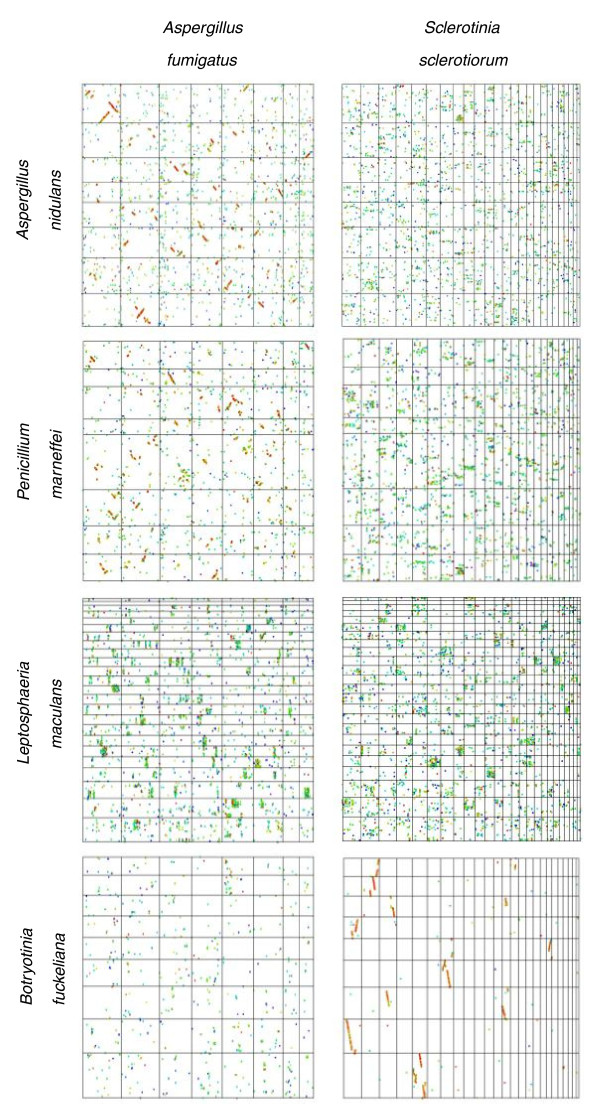
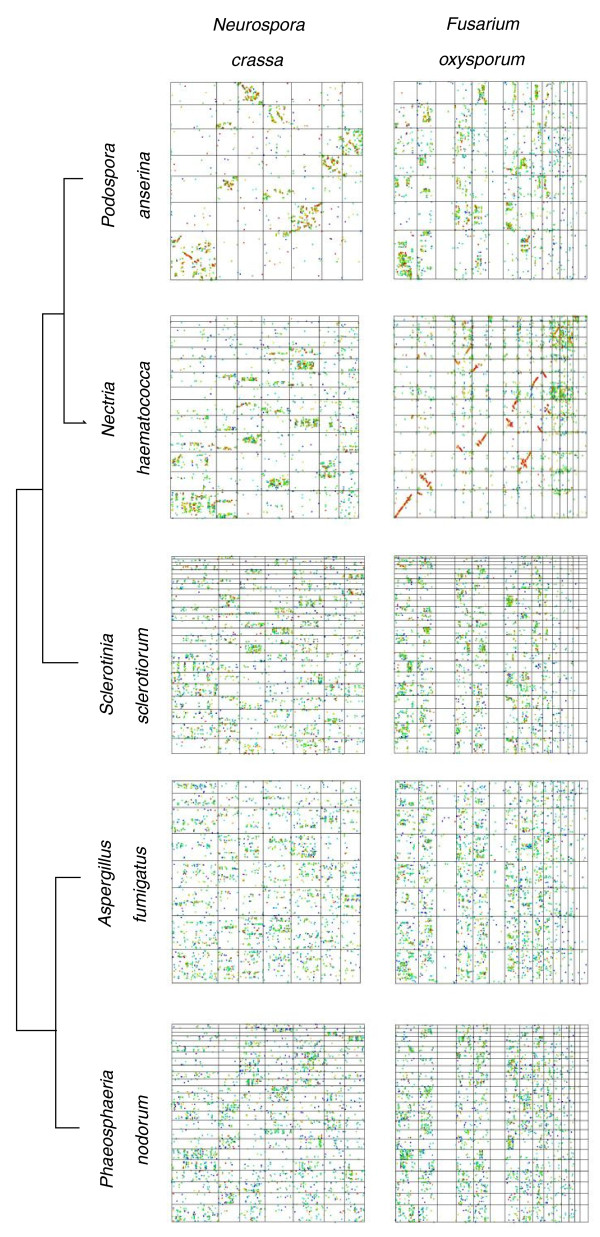
Background: Gene loss, inversions, translocations, and other chromosomal rearrangements vary among species, resulting in different rates of structural genome evolution. Major chromosomal rearrangements are rare in most eukaryotes, giving large regions with the same genes in the same order and orientation across species. These regions of macrosynteny have been very useful for locating homologous genes in different species and to guide the assembly of genome sequences. Previous analyses in the fungi have indicated that macrosynteny is rare; instead, comparisons across species show no synteny or only microsyntenic regions encompassing usually five or fewer genes. To test the hypothesis that chromosomal evolution is different in the fungi compared to other eukaryotes, synteny was compared between species of the major fungal taxa. Results: These analyses identified a novel form of evolution in which genes are conserved within homologous chromosomes, but with randomized orders and orientations. This mode of evolution is designated mesosynteny, to differentiate it from micro- and macrosynteny seen in other organisms. Mesosynteny is an alternative evolutionary pathway very different from macrosyntenic conservation. Surprisingly, mesosynteny was not found in all fungal groups. Instead, mesosynteny appears to be restricted to filamentous Ascomycetes and was most striking between species in the Dothideomycetes. Conclusions: The existence of mesosynteny between relatively distantly related Ascomycetes could be explained by a high frequency of chromosomal inversions, but translocations must be extremely rare. The mechanism for this phenomenon is not known, but presumably involves generation of frequent inversions during meiosis.
Overview
The claims and statistics of this paper haven’t been checked yet.
Free: it reads the open-access text and checks the first 5 claims that cite a source we can check. Create a free account to check every claim.
Integrity signals
Registry
Cites
Statistics
Figures
Verification
Claims the paper makes
The claims and statistics of this paper haven’t been checked yet.
Free: it reads the open-access text and checks the first 5 claims that cite a source we can check. Create a free account to check every claim.
Claims other papers make about this one
Each is checked against this paper’s own text: does it say what the citing paper says it does?
The cited source says what the claim attributes to it.
In the citing paper
“Chromosomal patterns of gene linkage evolve slowly in many lineages12,28–30”
From Ancient gene linkages support ctenophores as sister to other animals (2023) · cites this paper as [30]
Self-check
Percentages, sums and reported differences re-computed from the paper’s own numbers.
The self-check needs the paper’s full text.
Citations
Cites
Versatile and open software for comparing large genomes
Kurtz, S., Phillippy, A., Delcher, A. L., Smoot, M., Shumway, M., Antonescu, C., & Salzberg, S. L. (2004) · Genome Biology · doi:10.1186/gb-2004-5-2-r12 · Cited by 5,254 · cited 6×
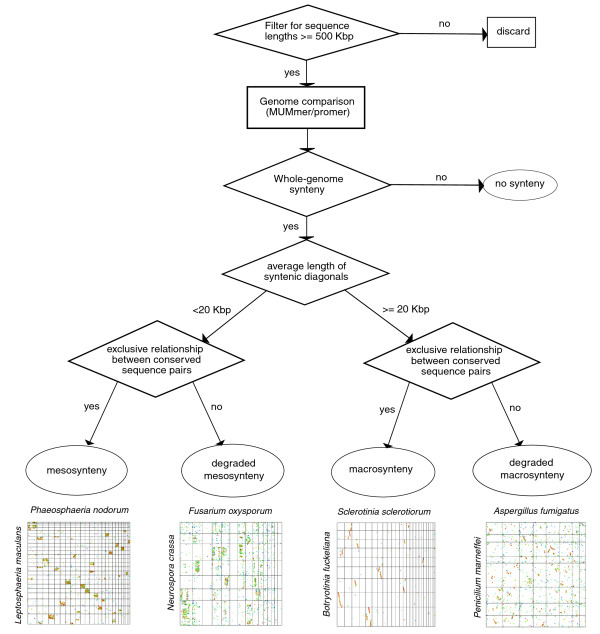
“Lengths of conserved regions in sequences A and B were derived from MUMmer outputs.”
MethodInfluentialComparative genomics reveals mobile pathogenicity chromosomes in Fusarium
Ma, L.-J., van der Does, H. C., Borkovich, K. A., Coleman, J. J., Daboussi, M.-J., Di Pietro, A., Dufresne, M., Freitag, M., Grabherr, M., Henrissat, B., et al. (2010) · Nature · doi:10.1038/nature08850 · Cited by 1,772
The genome sequence of the rice blast fungus Magnaporthe grisea
Dean, R. A., Talbot, N. J., Ebbole, D. J., Farman, M. L., Mitchell, T. K., Orbach, M. J., Thon, M., Kulkarni, R., Xu, J.-R., Pan, H., et al. (2005) · Nature · doi:10.1038/nature03449 · Cited by 1,660 · cited 2×
“It was not surprising, therefore, when initial comparisons between fungal genome sequences failed to find extensive evidence of interspecific macro- or microsynteny [17-22] and, with the exception of the aspergilli, even between species from the same genus [23-25].”
BackgroundThe amphioxus genome and the evolution of the chordate karyotype
Putnam, N. H., Butts, T., Ferrier, D. E. K., Furlong, R. F., Hellsten, U., Kawashima, T., Robinson-Rechavi, M., Shoguchi, E., Terry, A., Yu, J.-K., et al. (2008) · Nature · doi:10.1038/nature06967 · Cited by 1,580
Genomic sequence of the pathogenic and allergenic filamentous fungus Aspergillus fumigatus
Nierman, W. C., Pain, A., Anderson, M. J., Wortman, J. R., Kim, H. S., Arroyo, J., Berriman, M., Abe, K., Archer, D. B., Bermejo, C., et al. (2005) · Nature · doi:10.1038/nature04332 · Cited by 1,391 · cited 1×
“It was not surprising, therefore, when initial comparisons between fungal genome sequences failed to find extensive evidence of interspecific macro- or microsynteny [17-22] and, with the exception of the aspergilli, even between species from the same genus [23-25].”
BackgroundGenome sequencing and analysis of Aspergillus oryzae
Machida, M., Asai, K., Sano, M., Tanaka, T., Kumagai, T., Terai, G., Kusumoto, K.-I., Arima, T., Akita, O., Kashiwagi, Y., et al. (2005) · Nature · doi:10.1038/nature04300 · Cited by 1,245 · cited 1×
“It was not surprising, therefore, when initial comparisons between fungal genome sequences failed to find extensive evidence of interspecific macro- or microsynteny [17-22] and, with the exception of the aspergilli, even between species from the same genus [23-25].”
BackgroundGenome sequencing and analysis of the versatile cell factory Aspergillus niger CBS 513.88
Pel, H. J., de Winde, J. H., Archer, D. B., Dyer, P. S., Hofmann, G., Schaap, P. J., Turner, G., de Vries, R. P., Albang, R., Albermann, K., et al. (2007) · Nature Biotechnology · doi:10.1038/nbt1282 · Cited by 1,173 · cited 1×
“It was not surprising, therefore, when initial comparisons between fungal genome sequences failed to find extensive evidence of interspecific macro- or microsynteny [17-22] and, with the exception of the aspergilli, even between species from the same genus [23-25].”
BackgroundEmergence of a new disease as a result of interspecific virulence gene transfer
Friesen, T. L., Stukenbrock, E. H., Liu, Z., Meinhardt, S., Ling, H., Faris, J. D., Rasmussen, J. B., Solomon, P. S., McDonald, B. A., & Oliver, R. P. (2006) · Nature Genetics · doi:10.1038/ng1839 · Cited by 750 · cited 2×
“Furthermore, many filamentous fungi can acquire genetic material by lateral gene transfer, which can increase their rate of evolution [14-16].”
BackgroundSelf-citationSchoch, C. L., Sung, G.-H., López-Giráldez, F., Townsend, J. P., Miadlikowska, J., Hofstetter, V., Robbertse, B., Matheny, P. B., Kauff, F., Wang, Z., et al. (2009) · Systematic Biology · doi:10.1093/sysbio/syp020 · Cited by 674 · cited 2×
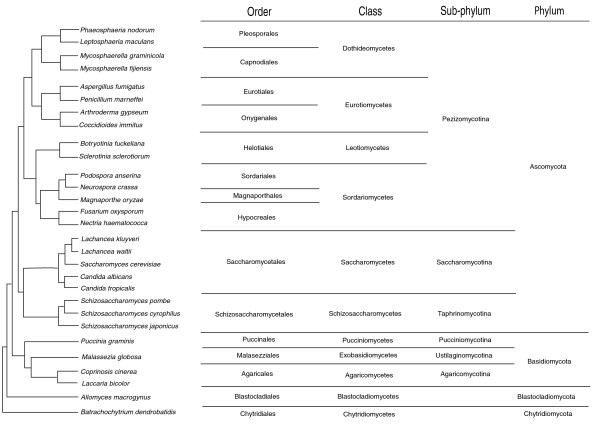
“Phylogenetic data (Figure 1; Table 1) were inferred from previous publications [1,28,54,55].”
BackgroundMethodPérigord black truffle genome uncovers evolutionary origins and mechanisms of symbiosis
Martin, F., Kohler, A., Murat, C., Balestrini, R., Coutinho, P. M., Jaillon, O., Montanini, B., Morin, E., Noel, B., Percudani, R., et al. (2010) · Nature · doi:10.1038/nature08867 · Cited by 659 · cited 1×
“These include comparisons between the Pezizomycetes Tuber melanosporum and the Eurotiomycetes Coccidioides immitus [46] and the Sordariomycetes P.”
Background
Research works printed but not linked: 1
- Goodwin SB Ben M'Barek S Dhillon B Wittenberg A Crane CF Van der Lee TAJ Grimwood J Aerts A Antoniw J Bailey A Bluhm B Bowler J Bristow J Brokstein P Canto-Canche B Churchill A Conde-Ferràez L Cools H Coutinho PM Csukai M Dehal P Donzelli B Foster AJ Hammond-Kosack K Hane J Henrissat B Kilian A Koopmann E Kourmpetis Y Kuo A Finished genome of Mycosphaerella graminicola reveals stealth pathogenesis and dispensome structure. PLoS Genetics -D-10-00112R2 2011 PMC3111534 21695235
Cited by
Items 101–189 of 189
An acidophilic fungus promotes prey digestion in a carnivorous plant
Sun, P.-F., Lu, M., Liu, Y., Shaw, B. J. P., Lin, C.-P., Chen, H., Lin, Y., Hoh, D. Z., Ke, H., Wang, I.-F., et al. (2024) · Nature Microbiology · doi:10.1038/s41564-024-01766-y · Cited by 11
“https://doi.org/10.1038/s41564-024-01766-y rearrangements, which appear to be a hallmark of mesosynteny observed in various fungal taxa 41 .”
InfluentialCeratocystidaceae exhibit high levels of recombination at the mating-type (MAT) locus
Simpson, M. C., Coetzee, M. P. A., van der Nest, M. A., Wingfield, M. J., & Wingfield, B. D. (2018) · Fungal Biology · doi:10.1016/j.funbio.2018.09.003 · Cited by 11
Wang, B., Liang, X., Gleason, M. L., Hsiang, T., Zhang, R., & Sun, G. (2020) · BMC Genomics · doi:10.1186/s12864-020-6732-8 · Cited by 11
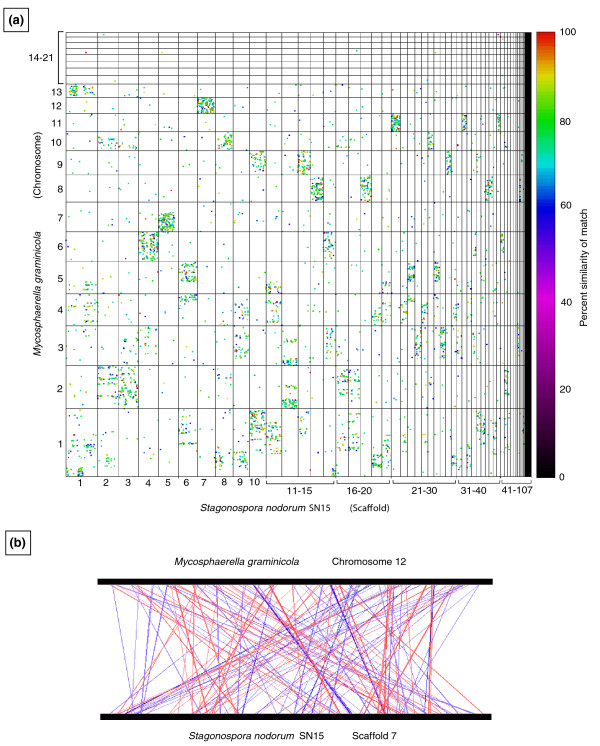
“4b) revealed a high degree of micro-mesosynteny (genome segments having a similar gene content but shuffled order and orientation), likely due to intrachromosomal rearrangements [23]; this level of rearrangement appears to be among the most striking between closely related genera anywhere in the Dothideomycetes [24].”
BackgroundSources of Fungal Genetic Variation and Associating It with Phenotypic Diversity
Taylor, J. W., Branco, S., Gao, C. D., Hann-Soden, C., Montoya, L., Sylvain, I., & Gladieux, P. (2017) · ASM Press eBooks · doi:10.1128/9781555819583.ch30 · Cited by 11
Clavé, C., Dheur, S., Ament‐Velásquez, S. L., Granger‐Farbos, A., & Saupe, S. J. (2024) · PLoS Genetics · doi:10.1371/journal.pgen.1011114 · Cited by 10
Thynne, E., McDonald, M. C., & Solomon, P. S. (2017) · Fungal Genetics and Biology · doi:10.1016/j.fgb.2017.10.005 · Cited by 10
Zhang, X., Leahy, I., Collemare, J., & Seidl, M. F. (2024) · Genome Biology and Evolution · doi:10.1093/gbe/evae228 · Cited by 8
“For instance, studies that focused on sections Nigri (Theobald et al. 2018), Flavi (Kjærbølling et al. 2020) using a customized SMURF approach have detected on average 82 and 70 BGCs, respectively.”
InfluentialDemené, A., Laurent, B., Cros‐Arteil, S., Boury, C., & Dutech, C. (2022) · Peer Community Journal · doi:10.24072/pcjournal.127 · Cited by 8
SPECTROSCOPIC STUDIES OF NOVEL MICROBIAL RHODOPSINS FROM FUNGI AND BACTERIA
Fan, Y. (2011) · The Atrium (University of Guelph) · Cited by 8
Tremble, K., Lamartinière, E. B., Bradshaw, A. J., Arzú, R. F., Vilgalys, R., Hoffman, J. I., & Dentinger, B. C. (2023) · bioRxiv (Cold Spring Harbor Laboratory) · doi:10.1101/2023.09.05.556370 · Cited by 8
“…that hybridization of heteroploid parental species can lead to sexually viable aneuploid hybrids (Inderbitzin et al. 2011; Shoji et al. 2015), and that the distinct lack of intraspecific genomic synteny, termed mesosyteny, is a diagnosable characteristic of both sexual and asexual…”
Rodríguez, A. N. (2010) · Circunstancia: revista de ciencias sociales del Instituto Universitario de Investigación Ortega y Gasset · Cited by 7
11 Phylogenomics Enabling Genome-Based Mycology
Stajich, J. (2015) · Springer eBooks · doi:10.1007/978-3-662-46011-5_11 · Cited by 7
“mesosynteny (Hane et al. 2011) and presents a curious but currently unexplained evolutionary pattern that has only been observed in the”
BackgroundThe renaissance of comparative biochemistry
Smith, S. D., Angelovici, R., Heyduk, K., Maeda, H. A., Moghe, G. D., Pires, J. C., Widhalm, J. R., & Wisecaver, J. H. (2019) · American Journal of Botany · doi:10.1002/ajb2.1216 · Cited by 7
“In contrast, the chromo somes of fungi rearrange rapidly, and a comparison of fungal ge nomes showed little to no conservation of gene order (macro or microsynteny) between species of the major fungal taxa (Hane et al., 2011).”
BackgroundQuenu, M., Treindl, A. D., Lee, K. D., Takemoto, D., Thünen, T., Ashrafi, S., Winter, D. J., Ganley, A. R. D., Leuchtmann, A., Young, C. A., et al. (2022) · Journal of Fungi · doi:10.3390/jof8070670 · Cited by 6
“Most studies of genome structure have focused either on variation within a species [37,38] or across widely divergent taxa [39].”
BackgroundVariable genome evolution in fungi after transposon-mediated amplification of a housekeeping gene
Dhillon, B. D. S., Kema, G. H. J., Hamelin, R. C., Bluhm, B. H., & Goodwin, S. B. (2019) · Mobile DNA · doi:10.1186/s13100-019-0177-0 · Cited by 6
“musae, respectively, whereas the Cercospora and Sphaerulina genomes had eight genes that were in mesosynteny [24] with the P.”
BackgroundSelf-citationPlett, J. M., Sabotič, J., Vogt, E., Snijders, F., Kohler, A., Nielsen, U. N., Künzler, M., Martin, F. M., & Veneault‐Fourrey, C. (2022) · Environmental Microbiology · doi:10.1111/1462-2920.16115 · Cited by 6
Goodwin, S. B. (2013) · Wiley eBooks · doi:10.1002/9781118735893.ch6 · Cited by 5
Self-citationWIT, P. J. G. M. D., van der Burgt, A., Ökmen, B., Stergiopoulos, I., Abd-Elsalam, K. A., Aerts, A. L., Bahkali, A. H., Beenen, H. G., Chettri, P., Cox, M. P., et al. (2015) · PLoS Genetics · doi:10.1371/journal.pgen.1005775 · Cited by 5
Self-citationExtreme genome scrambling in cryptic Oikopleura dioica speciesPreprint
Plessy, C., Mansfield, M. J., Bliznina, A., Masunaga, A., West, C., Tan, Y., Liu, A. W., Grašič, J., Pisula, M. S. D. R., Sánchez-Serna, G., et al. (2023) · bioRxiv (Cold Spring Harbor Laboratory) · doi:10.1101/2023.05.09.539028 · Cited by 5
“This design, combined with the surprisingly recent divergence times estimated for O. dioica , allowed us to study genome scrambling on a finer time scale than previous studies (Drosophila 12 Genomes Consortium et al. 2007; Albertin et al. 2022; Hane et al. 2011).”
ResultIdentification and Characterization of a QTL for Growth of Fusarium circinatum on Pine-Based Medium
Swalarsk-Parry, B. S., Steenkamp, E. T., van Wyk, S., Santana, Q. C., van der Nest, M. A., Hammerbacher, A., Wingfield, B. D., & Vos, L. D. (2022) · Journal of Fungi · doi:10.3390/jof8111214 · Cited by 4
“This macrosynteny is commonly observed for chromosomes that evolve predominantly through homologous recombination [17].”
Evolution of Plant Pathogenicity in Fusarium Species
Ma, L., Kistler, H. C., & Rep, M. (2012) · Wiley eBooks · doi:10.1002/9781118308165.ch26 · Cited by 4
Syntenic mapping: A powerful tool for comparative genomics in plants
(2024) · Asian Journal of Agriculture and Biology · doi:10.35495/ajab.2023.338 · Cited by 3
Baalsrud, H. T., Byrtusová, D., To, T., Larsen, I. E., Bøe, V. A., Grønvold, L., Fu, J., Árnyasi, M., Shapaval, V., & Sandve, S. R. (2025) · G3 Genes Genomes Genetics · doi:10.1093/g3journal/jkaf207 · Cited by 3
Williams, A. (2013) · Murdoch University Research Portal · Cited by 3
Moolhuijzen, P., See, P. T., Hane, J. K., Shi, G., Liu, Z., Oliver, R. P., & Moffat, C. S. (2018) · BMC Genomics · doi:10.1186/s12864-018-5059-1 · Cited by 3
Self-citationOhm, R. A. (2020) · Springer eBooks · doi:10.1007/978-3-030-49924-2_9 · Cited by 2
Grandaubert, J., Balesdent, M., & Rouxel, T. (2013) · Biologie Aujourd hui · doi:10.1051/jbio/2013026 · Cited by 2
Self-citationHane, J. K. (2011) · Murdoch University Research Portal · Cited by 2
Self-citationEspíndola, A. S. (2013) · SHAREOK (University of Oklahoma; Oklahoma State University; Central Oklahoma University) · Cited by 2
Xylanase hyper-producer : the genome of the thermophilic fungus Thermomyces lanuginosus
Mchunu, N. P. (2014) · DUT Open Scholar (Durban University of Technology) · doi:10.51415/10321/1116 · Cited by 2
Non-vertical genomics in fungal evolution
Ortiz, N., & Ángel, M. (2019) · Tesis Doctorals en Xarxa (Consorci de Serveis Universitaris de Catalunya) · Cited by 2
Population Genomics of Cercospora beticola
Potgieter, L. (2021) · MACAU: Open Access Repository of Kiel University (University Library Kiel) · Cited by 2
Grandaubert, J. (2013) · theses.fr (ABES) · doi:10.70675/7d20bd48z8a8az45f9za829z4977a15087a4 · Cited by 2
“Chronogram of major classes in Ascomycota, with a focus on Dothideomycetes.”
BackgroundInfluentialSheng, H., & Leger, R. J. S. (2026) · bioRxiv (Cold Spring Harbor Laboratory) · doi:10.64898/2026.04.30.721964 · Cited by 2
“%) despite ~180 MY of divergence, indicating long-term preservation of gene order within this lineage, a pattern uncommon in fungi(Hane et al. 2011).”
Identification and structural characterization of pseudogenes in Fusarium graminearum
Rau, D., Posadinu, C. M., Murgia, M. L., Fois, D., & Porceddu, A. (2025) · Scientific Reports · doi:10.1038/s41598-025-13718-5 · Cited by 1
“Indeed, based on evidence that F graminear . um relocated genes map preferentially to these regions, Zhao et al. and Hane et al. 45,46 have proposed that these sites are a source of gene innovation and recombination 60 .”
Dettman, J. R., Kim, N. E., & Dadej, K. (2026) · Microbial Genomics · doi:10.1099/mgen.0.001686 · Cited by 1
Genomic overview of closely related fungi with different Protea host ranges
Aylward, J., Wingfield, B. D., Dreyer, L. L., Roets, F., Wingfield, M. J., & Steenkamp, E. T. (2018) · Fungal Biology · doi:10.1016/j.funbio.2018.10.001 · Cited by 1
“Although several inversions and rearrangements were detected, the lengthy aligned portions indicated macrosynteny between the two genomes (Hane et al., 2011).”
Fungal Plant Pathogenesis Mediated by Effectors
WIT, P. J. G. M. D., Testa, A. C., & Oliver, R. P. (2017) · ASM Press eBooks · doi:10.1128/9781555819583.ch37 · Cited by 1
Self-citationGenome structure and pathogenicity of the fungal wheat pathogen Mycosphaerella graminicola
M’Barek, S. B. (2011) · doi:10.18174/178712 · Cited by 1
Effector gene prediction from fungal pathogen genome assemblies
Testa, A. C. (2016) · eSpace (Curtin University) · Cited by 1
Ohm, R. A., Feau, N., Henrissat, B., Schoch, C. L., Horwitz, B. A., Barry, K., Condon, B. J., Copeland, A., Dhillon, B. D. S., Glaser, F., et al. (2013) · PLoS Pathogens · doi:10.1371/annotation/fcca88ac-d684-46e0-a483-62af67e777bd · Cited by 1
Self-citationCaracterização molecular de um receptor acoplado a uma proteína G (GPCR) de Aspergillus fumigatus
Filho, A. P. D. C. (2021) · Digital Library of Theses and Dissertations (Universidade de São Paulo) · doi:10.11606/d.17.2021.tde-08092021-113412 · Cited by 1
Martelossi, J., Vujovic, J., Huang, Y., Tatti, A., Xu, K., Puliga, F., Chen, Y., Rota‐Stabelli, O., Ghiselli, F., Zhang, X., et al. (2025) · Genome Research · doi:10.1101/gr.280368.124 · Cited by 1
Buiate, E. A. S. (2015) · UKnowledge (University of Kentucky)
Vos, L. D. (2012) · UpSpace Institutional Repository (University of Pretoria)
Comparative genomics of Dothideomycete fungi
van der Burgt, A. (2014) · doi:10.18174/301336
Rech, G. E. (2014) · Gredos (University of Salamanca) · doi:10.14201/gredos.124203
(2021) · Molecular Plant-Microbe Interactions · doi:10.1094/mpmi-34-9
Wang, B., Liang, X., Gleason, M. L., Hsiang, T., Zhang, R., & Sun, G. (2020) · Figshare · doi:10.6084/m9.figshare.12186354
Martelossi, J., Vujovic, J., Huang, Y., Tatti, A., Xu, K., Puliga, F., Chen, Y., Rota‐Stabelli, O., Ghiselli, F., Zhang, X., et al. (2024) · bioRxiv (Cold Spring Harbor Laboratory) · doi:10.1101/2024.11.26.625401
Saud, Z., Kortsinoglou, A. M., Kouvelis, V. N., & Butt, T. (2021) · Figshare · doi:10.6084/m9.figshare.13663044
Bertazzoni, S., Jones, D., Phan, H. T. T., Tan, K., & Hane, J. K. (2021) · Figshare · doi:10.6084/m9.figshare.14676749
Self-citationBertazzoni, S., Jones, D., Phan, H. T. T., Tan, K., & Hane, J. K. (2021) · Figshare · doi:10.6084/m9.figshare.14676740
Self-citationWang, B., Liang, X., Gleason, M. L., Hsiang, T., Zhang, R., & Sun, G. (2020) · Figshare · doi:10.6084/m9.figshare.12186375
Bertazzoni, S., Jones, D., Phan, H. T. T., Tan, K., & Hane, J. K. (2021) · Figshare · doi:10.6084/m9.figshare.14676725
Self-citationSaud, Z., Kortsinoglou, A. M., Kouvelis, V. N., & Butt, T. (2021) · Figshare · doi:10.6084/m9.figshare.13663041
Bertazzoni, S., Jones, D., Phan, H. T. T., Tan, K., & Hane, J. K. (2021) · Figshare · doi:10.6084/m9.figshare.14676758
Self-citationBertazzoni, S., Jones, D., Phan, H. T. T., Tan, K., & Hane, J. K. (2021) · Figshare · doi:10.6084/m9.figshare.14676722
Self-citationBertazzoni, S., Jones, D., Phan, H. T. T., Tan, K., & Hane, J. K. (2021) · Figshare · doi:10.6084/m9.figshare.14676716
Self-citationSaud, Z., Kortsinoglou, A. M., Kouvelis, V. N., & Butt, T. M. (2021) · Figshare · doi:10.6084/m9.figshare.13663050
Bertazzoni, S., Jones, D., Phan, H. T. T., Tan, K., & Hane, J. K. (2021) · Figshare · doi:10.6084/m9.figshare.14676746
Self-citationBertazzoni, S., Jones, D., Phan, H. T. T., Tan, K., & Hane, J. K. (2021) · Figshare · doi:10.6084/m9.figshare.14676731
Self-citationSaud, Z., Kortsinoglou, A. M., Kouvelis, V. N., & Butt, T. (2021) · Figshare · doi:10.6084/m9.figshare.13663038
Bertazzoni, S., Jones, D., Phan, H. T. T., Tan, K., & Hane, J. K. (2021) · Figshare · doi:10.6084/m9.figshare.14676737
Self-citationSaud, Z., Kortsinoglou, A. M., Kouvelis, V. N., & Butt, T. M. (2021) · Figshare · doi:10.6084/m9.figshare.13663047
Wang, B., Liang, X., Gleason, M. L., Hsiang, T., Zhang, R., & Sun, G. (2020) · Figshare · doi:10.6084/m9.figshare.12186366
Saud, Z., Kortsinoglou, A. M., Kouvelis, V. N., & Butt, T. (2021) · Figshare · doi:10.6084/m9.figshare.13663053
Bertazzoni, S., Jones, D., Phan, H. T. T., Tan, K., & Hane, J. K. (2021) · Figshare · doi:10.6084/m9.figshare.14676743
Self-citationBertazzoni, S., Jones, D., Phan, H. T. T., Tan, K., & Hane, J. K. (2021) · Figshare · doi:10.6084/m9.figshare.14676734
Self-citationSaud, Z., Kortsinoglou, A. M., Kouvelis, V. N., & Butt, T. (2021) · Figshare · doi:10.6084/m9.figshare.13663059
Dall’Alba, G. (2025) · cIRcle (University of British Columbia) · doi:10.14288/1.0442322
Wang, B., Liang, X., Gleason, M. L., Hsiang, T., Zhang, R., & Sun, G. (2020) · Figshare · doi:10.6084/m9.figshare.12186384
Wang, B., Liang, X., Gleason, M. L., Hsiang, T., Zhang, R., & Sun, G. (2020) · Figshare · doi:10.6084/m9.figshare.12186363
Bertazzoni, S., Jones, D., Phan, H. T. T., Tan, K., & Hane, J. K. (2021) · Figshare · doi:10.6084/m9.figshare.14676719
Self-citationSaud, Z., Kortsinoglou, A. M., Kouvelis, V. N., & Butt, T. (2021) · Figshare · doi:10.6084/m9.figshare.13663056
Bertazzoni, S., Jones, D., Phan, H. T. T., Tan, K., & Hane, J. K. (2021) · Figshare · doi:10.6084/m9.figshare.14676761
Self-citationÉtude génomique de l'agent de lutte biologique Pseudozyma flocculosa
Lefebvre, F. (2015)
Zaccaron, A. Z., Lassagne, A., Søndreli, K. L., Sudermann, M. A., Alcalá-Briseño, R. I., Grünwald, N. J., Weisberg, A. J., & LeBoldus, J. M. (2026) · Microbial Genomics · doi:10.1099/mgen.0.001603
“This refers to extensive gene shuffling but conserved gene content between homologous chromosomes [89, 90].”
Nneji, L. M., Oladipo, S. O., Oyebanji, O. O., Ayoola, A. O., Omotoso, O., Nneji, I. C., & Adelakun, K. M. (2026) · Scientific Data · doi:10.1038/s41597-026-06646-0
“While inter-synteny is often conserved to maintain critical regulatory functions, disruptions that have been increasingly documented in other taxa, such as bryozoans and cephalopods, are thought to contribute to speciation and adaptation 64–66 .”
Hossain, M., Gray, N., Misiun, P., Gagalova, K., Furuki, E., Clarke, K., Lenzo, L., Golzar, H., Shankar, M., Phan, H. T. T., et al. (2026) · Scientific Reports · doi:10.1038/s41598-026-43646-x
Self-citationImpact phénotypique des réarrangements chromosomiques et évolution des génomes de levures
Fleiss, A. (2018) · theses.fr (ABES) · doi:10.70675/ef380bd2z14d5z4771za3e2z82b040f5da53
“K. capsulata possède un cluster de gènes similaires aux gènes crnA, niaD, et niiA d’Emericella nidulans (aussi appelé Aspergillus nidulans), un champignon filamenteux du subphylum Pezizomycotina des Ascomycètes, chez qui ces gènes sont responsables de l’assimilation des nitrates (Johnstone et al., 1990).”
InfluentialSaud, Z., Luo, Y., Wood, M. J., Boostrom, I., MacLachlan, B. J., Stanton, R. J., Wang, C., & Butt, T. M. (2026) · Frontiers in Cellular and Infection Microbiology · doi:10.3389/fcimb.2026.1800461
Gajendran, V. P., Mukherjee, P., Periakaruppan, J., Manimaran, G., Krishnan, K. S., Rajasekaran, R., Dananjeyan, B., & Rangasamy, A. (2026) · Discover Plants. · doi:10.1007/s44372-026-00932-2
“The most endophytes are Pezizomycotina, and they are mesosynthetic; this facilitates rapid genetic evolution [198, 199].”
Camus‐Kulandaivelu, L., Bocs, S., Gomes, M., Debuchy, R., López, D. P., Tan, J. S., Lee, Y. P., Mercière, M., Vaillant, A., Klopp, C., et al. (2026) · Fungal Biology · doi:10.1016/j.funbio.2026.101890
Vittorelli, N., de la Vega, R. C. R., Snirc, A., Levert, E., Gautier, V., Lalanne, C., Filippo, E. D., Gladieux, P., Guillou, S., Zhang, Y., et al. (2023) · doi:10.1371/journal.pgen.1010347.r006
Metadata
- Authors
- Hane, J. K., Rouxel, T., Howlett, B. J., Kema, G. H., Goodwin, S. B., & Oliver, R. P.
- Affiliations
- Commonwealth Scientific and Industrial Research Organisation (AU)
- Biologie et gestion des champignons phytopathogènes (FR)
- The University of Melbourne (AU)
- Wageningen University & Research (NL)
- Agricultural Research Service (US)
- Curtin University (AU)
- Corresponding author
- Oliver, Richard P
- Venue
- Genome Biology
- Published
- 2011-05-24
- Volume
- 12
- Issue
- 5
- Pages
- R45-R45
- ISSN
- 1465-6906 (ISSN-L)
- 1474-760X
- PMC
- PMC3219968
- OpenAlex
- W2144272188
- Cited by
- 169
- References
- 53
- Citations by year
- 2026: 8 · 2025: 3 · 2024: 8 · 2023: 6 · 2022: 9 · 2021: 31 · 2020: 12 · 2019: 7 · 2018: 16 · 2017: 15 · 2016: 10 · 2015: 6 · 2014: 14 · 2013: 15 · 2012: 6
- FWCI
- 4.80
- Type
- journal article
- Language
- en
- Open access
- gold
- doi.org
- Licence
- cc-by
- creativecommons.org/licenses/by/2.0/ (tdm)
- creativecommons.org/licenses/by/2.0/ (vor)
- Locations
- Genome biology (publishedVersion, cc-by)
- Europe PMC (PubMed Central) (publishedVersion, cc-by)
- PubMed Central (publishedVersion, cc-by)
- PubMed (publishedVersion)
- Socio-Environmental Systems Modeling (acceptedVersion)
- HAL (submittedVersion, other-oa)
- Minerva Access (University of Melbourne) (submittedVersion, cc-by)
- Murdoch University Research Portal (submittedVersion)
- Purdue e-Pubs (Purdue University System) (submittedVersion)
- eSpace (Curtin University) (submittedVersion, cc-by)
- Data Archiving and Networked Services (DANS) (submittedVersion, other-oa)
- Topics
- Life Sciences › Biochemistry, Genetics and Molecular Biology › Molecular Biology › Fungal and yeast genetics research
- Life Sciences › Biochemistry, Genetics and Molecular Biology › Genetics › Genome Rearrangement Algorithms
- Life Sciences › Biochemistry, Genetics and Molecular Biology › Genetics › Chromosomal and Genetic Variations
- Keywords
- karyotype evolution, synteny, chromosomal inversions, filamentous ascomycetes, Dothideomycetes, fungal genome evolution, gene order conservation, chromosomal rearrangements
- MeSH terms
- Algorithms, Ascomycota, Chromosome Mapping, Chromosomes, Chromosome Inversion, Meiosis, Phylogeny, Species Specificity, Genome, Fungal, Conserved Sequence, Evolution, Molecular, Genomics, Synteny, Databases, Genetic
About these checks
Registry, retraction, Cites and statistics results are computed, not judged, with one exception: a printed reference that no index lists is read once by a model before it counts as a citation error. Claims are extracted by a model and kept only when their quote appears verbatim in the text; each cited source is then checked, with a model’s help, for whether it says what the claim relies on. Those verdicts can be wrong — read the claim’s quote and the cited source before relying on one.
Statistics and arithmetic are recomputed, not judged.
Confidence bands are shown only for fields calibrated on our annotated test set. None is calibrated yet, so no band is shown.
What counts as a claim ›How we measure confidence ›How we check this ›
Are you an author, or do you see a problem with this page? Request a review
Data sources
Bibliographic data: Semantic Scholar, OpenAlex, Crossref.
Contains information from the Semantic Scholar Academic Graph Datasets, made available under the ODC Attribution License (ODC-BY 1.0).
Semantic Scholar’s data is described in: Kinney, R., et al. (2023). The Semantic Scholar Open Data Platform. arXiv:2301.10140.
