

A novel mode of chromosomal evolution peculiar to filamentous Ascomycete fungi
Open accessThe DOI matches its Crossref record; 53 of the 53 references it cites were found in a registry or an index.
Abstract
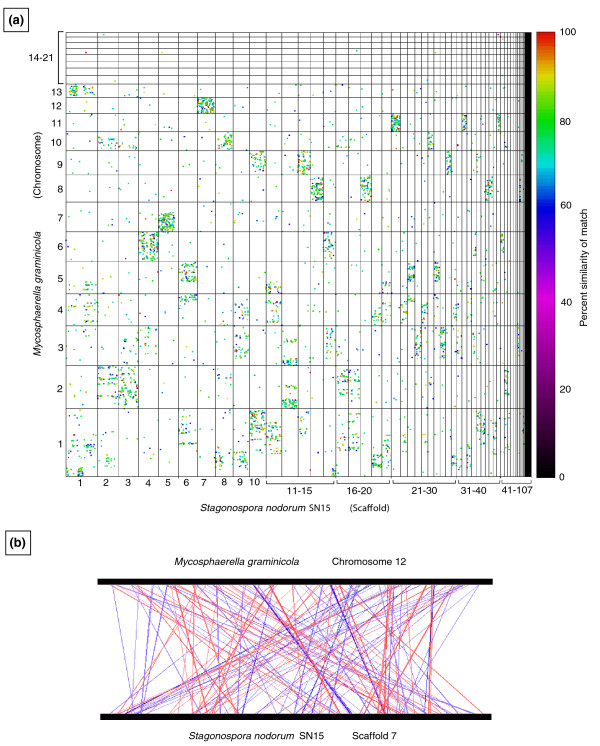
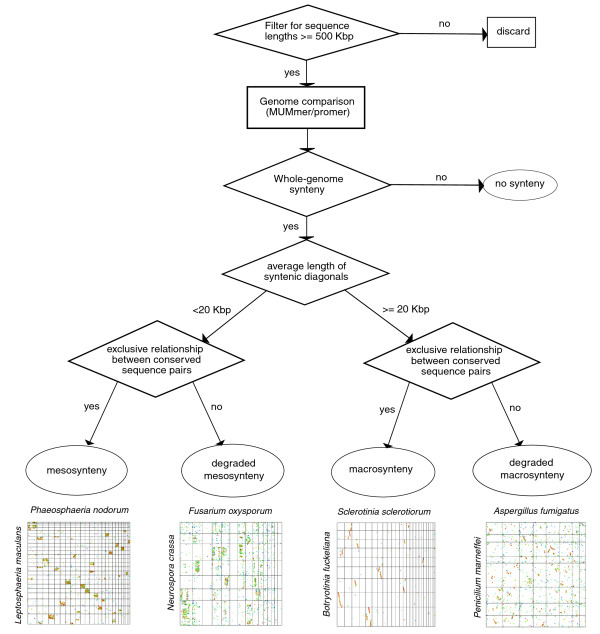
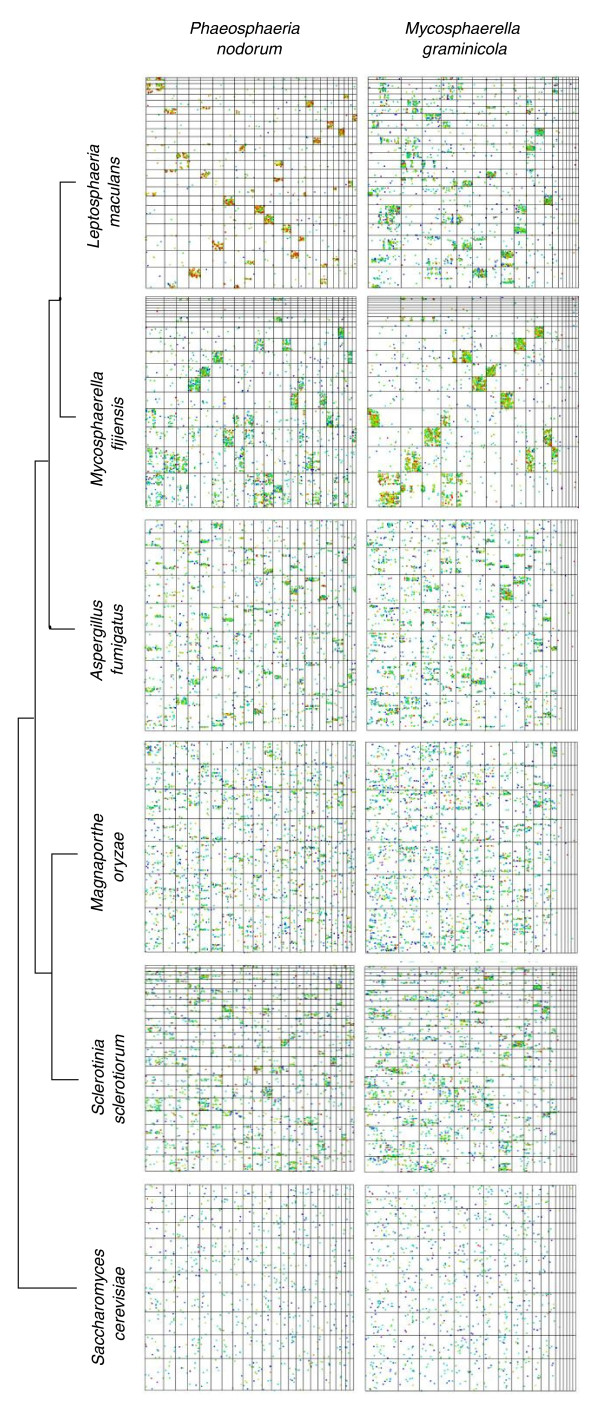
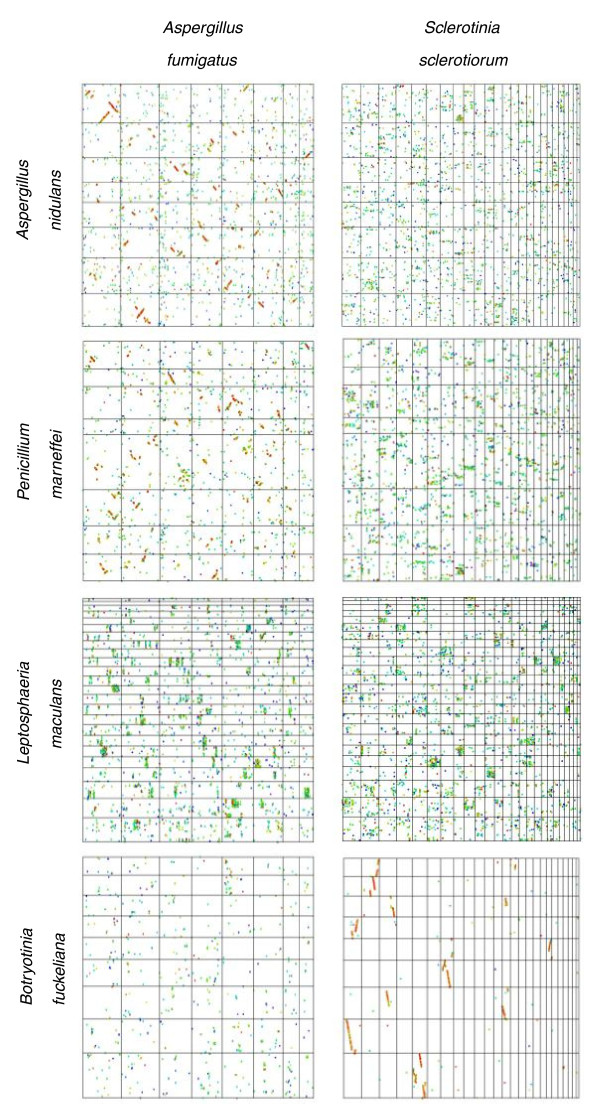
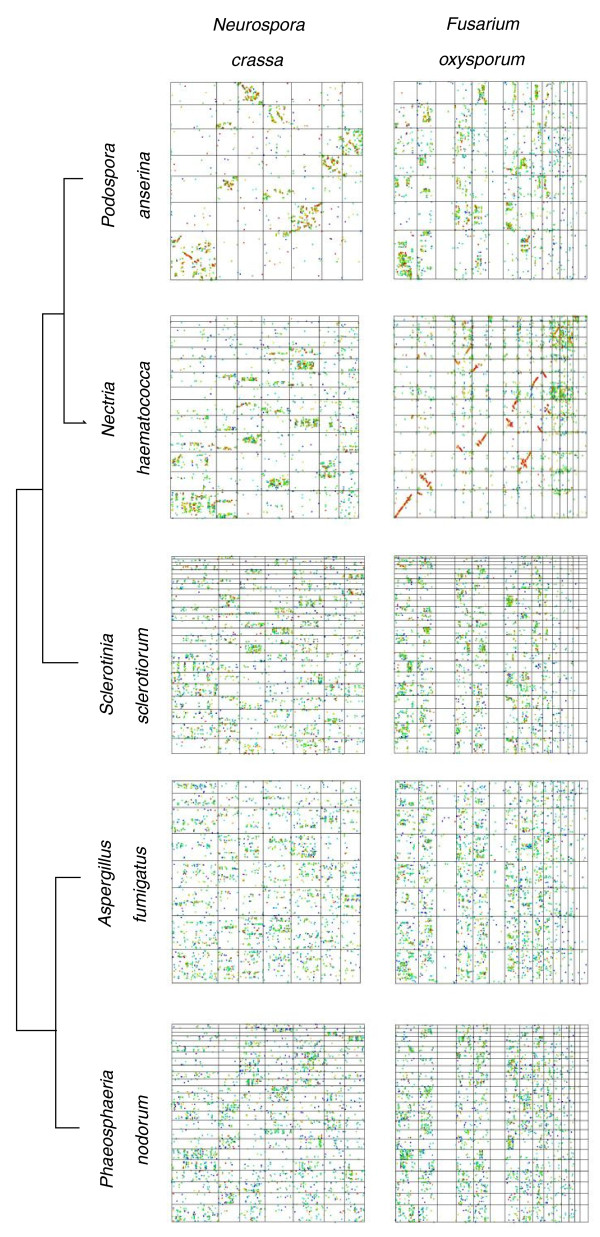
Background: Gene loss, inversions, translocations, and other chromosomal rearrangements vary among species, resulting in different rates of structural genome evolution. Major chromosomal rearrangements are rare in most eukaryotes, giving large regions with the same genes in the same order and orientation across species. These regions of macrosynteny have been very useful for locating homologous genes in different species and to guide the assembly of genome sequences. Previous analyses in the fungi have indicated that macrosynteny is rare; instead, comparisons across species show no synteny or only microsyntenic regions encompassing usually five or fewer genes. To test the hypothesis that chromosomal evolution is different in the fungi compared to other eukaryotes, synteny was compared between species of the major fungal taxa. Results: These analyses identified a novel form of evolution in which genes are conserved within homologous chromosomes, but with randomized orders and orientations. This mode of evolution is designated mesosynteny, to differentiate it from micro- and macrosynteny seen in other organisms. Mesosynteny is an alternative evolutionary pathway very different from macrosyntenic conservation. Surprisingly, mesosynteny was not found in all fungal groups. Instead, mesosynteny appears to be restricted to filamentous Ascomycetes and was most striking between species in the Dothideomycetes. Conclusions: The existence of mesosynteny between relatively distantly related Ascomycetes could be explained by a high frequency of chromosomal inversions, but translocations must be extremely rare. The mechanism for this phenomenon is not known, but presumably involves generation of frequent inversions during meiosis.
Overview
The claims and statistics of this paper haven’t been checked yet.
Free: it reads the open-access text and checks the first 5 claims that cite a source we can check. Create a free account to check every claim.
Integrity signals
Registry
Cites
Statistics
Figures
Verification
Claims the paper makes
The claims and statistics of this paper haven’t been checked yet.
Free: it reads the open-access text and checks the first 5 claims that cite a source we can check. Create a free account to check every claim.
Claims other papers make about this one
Each is checked against this paper’s own text: does it say what the citing paper says it does?
The cited source says what the claim attributes to it.
In the citing paper
“Chromosomal patterns of gene linkage evolve slowly in many lineages12,28–30”
From Ancient gene linkages support ctenophores as sister to other animals (2023) · cites this paper as [30]
Self-check
Percentages, sums and reported differences re-computed from the paper’s own numbers.
The self-check needs the paper’s full text.
Citations
Cites
Versatile and open software for comparing large genomes
Kurtz, S., Phillippy, A., Delcher, A. L., Smoot, M., Shumway, M., Antonescu, C., & Salzberg, S. L. (2004) · Genome Biology · doi:10.1186/gb-2004-5-2-r12 · Cited by 5,254 · cited 6×
“Lengths of conserved regions in sequences A and B were derived from MUMmer outputs.”
MethodInfluentialComparative genomics reveals mobile pathogenicity chromosomes in Fusarium
Ma, L.-J., van der Does, H. C., Borkovich, K. A., Coleman, J. J., Daboussi, M.-J., Di Pietro, A., Dufresne, M., Freitag, M., Grabherr, M., Henrissat, B., et al. (2010) · Nature · doi:10.1038/nature08850 · Cited by 1,772
The genome sequence of the rice blast fungus Magnaporthe grisea
Dean, R. A., Talbot, N. J., Ebbole, D. J., Farman, M. L., Mitchell, T. K., Orbach, M. J., Thon, M., Kulkarni, R., Xu, J.-R., Pan, H., et al. (2005) · Nature · doi:10.1038/nature03449 · Cited by 1,660 · cited 2×
“It was not surprising, therefore, when initial comparisons between fungal genome sequences failed to find extensive evidence of interspecific macro- or microsynteny [17-22] and, with the exception of the aspergilli, even between species from the same genus [23-25].”
BackgroundThe amphioxus genome and the evolution of the chordate karyotype
Putnam, N. H., Butts, T., Ferrier, D. E. K., Furlong, R. F., Hellsten, U., Kawashima, T., Robinson-Rechavi, M., Shoguchi, E., Terry, A., Yu, J.-K., et al. (2008) · Nature · doi:10.1038/nature06967 · Cited by 1,580
Genomic sequence of the pathogenic and allergenic filamentous fungus Aspergillus fumigatus
Nierman, W. C., Pain, A., Anderson, M. J., Wortman, J. R., Kim, H. S., Arroyo, J., Berriman, M., Abe, K., Archer, D. B., Bermejo, C., et al. (2005) · Nature · doi:10.1038/nature04332 · Cited by 1,391 · cited 1×
“It was not surprising, therefore, when initial comparisons between fungal genome sequences failed to find extensive evidence of interspecific macro- or microsynteny [17-22] and, with the exception of the aspergilli, even between species from the same genus [23-25].”
BackgroundGenome sequencing and analysis of Aspergillus oryzae
Machida, M., Asai, K., Sano, M., Tanaka, T., Kumagai, T., Terai, G., Kusumoto, K.-I., Arima, T., Akita, O., Kashiwagi, Y., et al. (2005) · Nature · doi:10.1038/nature04300 · Cited by 1,245 · cited 1×
“It was not surprising, therefore, when initial comparisons between fungal genome sequences failed to find extensive evidence of interspecific macro- or microsynteny [17-22] and, with the exception of the aspergilli, even between species from the same genus [23-25].”
BackgroundGenome sequencing and analysis of the versatile cell factory Aspergillus niger CBS 513.88
Pel, H. J., de Winde, J. H., Archer, D. B., Dyer, P. S., Hofmann, G., Schaap, P. J., Turner, G., de Vries, R. P., Albang, R., Albermann, K., et al. (2007) · Nature Biotechnology · doi:10.1038/nbt1282 · Cited by 1,173 · cited 1×
“It was not surprising, therefore, when initial comparisons between fungal genome sequences failed to find extensive evidence of interspecific macro- or microsynteny [17-22] and, with the exception of the aspergilli, even between species from the same genus [23-25].”
BackgroundEmergence of a new disease as a result of interspecific virulence gene transfer
Friesen, T. L., Stukenbrock, E. H., Liu, Z., Meinhardt, S., Ling, H., Faris, J. D., Rasmussen, J. B., Solomon, P. S., McDonald, B. A., & Oliver, R. P. (2006) · Nature Genetics · doi:10.1038/ng1839 · Cited by 750 · cited 2×
“Furthermore, many filamentous fungi can acquire genetic material by lateral gene transfer, which can increase their rate of evolution [14-16].”
BackgroundSelf-citationSchoch, C. L., Sung, G.-H., López-Giráldez, F., Townsend, J. P., Miadlikowska, J., Hofstetter, V., Robbertse, B., Matheny, P. B., Kauff, F., Wang, Z., et al. (2009) · Systematic Biology · doi:10.1093/sysbio/syp020 · Cited by 674 · cited 2×
“Phylogenetic data (Figure 1; Table 1) were inferred from previous publications [1,28,54,55].”
BackgroundMethodPérigord black truffle genome uncovers evolutionary origins and mechanisms of symbiosis
Martin, F., Kohler, A., Murat, C., Balestrini, R., Coutinho, P. M., Jaillon, O., Montanini, B., Morin, E., Noel, B., Percudani, R., et al. (2010) · Nature · doi:10.1038/nature08867 · Cited by 659 · cited 1×
“These include comparisons between the Pezizomycetes Tuber melanosporum and the Eurotiomycetes Coccidioides immitus [46] and the Sordariomycetes P.”
BackgroundBorkovich, K. A., Alex, L. A., Yarden, O., Freitag, M., Turner, G. E., Read, N. D., Seiler, S., Bell-Pedersen, D., Paietta, J., Plesofsky, N., et al. (2004) · Microbiology and Molecular Biology Reviews · doi:10.1128/mmbr.68.1.1-108.2004 · Cited by 621 · cited 1×
“It was not surprising, therefore, when initial comparisons between fungal genome sequences failed to find extensive evidence of interspecific macro- or microsynteny [17-22] and, with the exception of the aspergilli, even between species from the same genus [23-25].”
BackgroundA class-wide phylogenetic assessment of Dothideomycetes
Schoch, C. L., Crous, P. W., Groenewald, J. Z., Boehm, E. W. A., Burgess, T. I., de Gruyter, J., de Hoog, G. S., Dixon, L. J., Grube, M., Gueidan, C., et al. (2009) · Studies in Mycology · doi:10.3114/sim.2009.64.01 · Cited by 610 · cited 2×
“Phylogenetic data (Figure 1; Table 1) were inferred from previous publications [1,28,54,55].”
BackgroundMethodRouxel, T., Grandaubert, J., Hane, J. K., Hoede, C., van de Wouw, A. P., Couloux, A., Dominguez, V., Anthouard, V., Bally, P., Bourras, S., et al. (2011) · Nature Communications · doi:10.1038/ncomms1189 · Cited by 525
Self-citationEnhanced graphic matrix analysis of nucleic acid and protein sequences.
Maizel, J. V., & Lenk, R. P. (1981) · Proceedings of the National Academy of Sciences · doi:10.1073/pnas.78.12.7665 · Cited by 466 · cited 1×
“Dot plots are a well-established method of representing sequence comparisons [26].”
MethodAlignment-free genome comparison with feature frequency profiles (FFP) and optimal resolutions
Sims, G. E., Jun, S.-R., Wu, G. A., & Kim, S.-H. (2009) · Proceedings of the National Academy of Sciences · doi:10.1073/pnas.0813249106 · Cited by 400 · cited 1×
“A more complete understanding of both the mechanism and results of evolution can be obtained by comparing entire genomes [2].”
BackgroundThe genome sequence of the model ascomycete fungus Podospora anserina
Espagne, E., Lespinet, O., Malagnac, F., Da Silva, C., Jaillon, O., Porcel, B. M., Couloux, A., Aury, J.-M., Ségurens, B., Poulain, J., et al. (2008) · Genome Biology · doi:10.1186/gb-2008-9-5-r77 · Cited by 352 · cited 1×
“It was not surprising, therefore, when initial comparisons between fungal genome sequences failed to find extensive evidence of interspecific macro- or microsynteny [17-22] and, with the exception of the aspergilli, even between species from the same genus [23-25].”
BackgroundHost-specific toxins: effectors of necrotrophic pathogenicity
Friesen, T. L., Faris, J. D., Solomon, P. S., & Oliver, R. P. (2008) · Cellular Microbiology · doi:10.1111/j.1462-5822.2008.01153.x · Cited by 338 · cited 1×
“nodorum has been linked to the expression of a suite of necrotrophic effectors [33-36] (formerly called host-specific toxins), some of which appear to have been acquired by lateral gene transfer [14,16].”
BackgroundSelf-citationLegume genome evolution viewed through the Medicago truncatula and Lotus japonicus genomes
Cannon, S. B., Sterck, L., Rombauts, S., Sato, S., Cheung, F., Gouzy, J., Wang, X., Mudge, J., Vasdewani, J., Schiex, T., et al. (2006) · Proceedings of the National Academy of Sciences · doi:10.1073/pnas.0603228103 · Cited by 331 · cited 1×
“Comparisons of vertebrate and flowering plant species within taxonomic families often have shown extensive macrosynteny [3-8].”
BackgroundMulti-locus phylogeny of Pleosporales: a taxonomic, ecological and evolutionary re-evaluation
Zhang, Y., Schoch, C. L., Fournier, J., Crous, P. W., de Gruyter, J., Woudenberg, J. H. C., Hirayama, K., Tanaka, K., Pointing, S. B., Spatafora, J. W., et al. (2009) · Studies in Mycology · doi:10.3114/sim.2009.64.04 · Cited by 296
Hane, J. K., Lowe, R. G. T., Solomon, P. S., Tan, K.-C., Schoch, C. L., Spatafora, J. W., Crous, P. W., Kodira, C., Birren, B. W., Galagan, J. E., et al. (2007) · The Plant Cell · doi:10.1105/tpc.107.052829 · Cited by 262 · cited 8×
“An example is the quinate cluster, which is conserved across species of the Ascomycetes [21,44].”
BackgroundInfluentialSelf-citationYun, S.-H., Arie, T., Kaneko, I., Yoder, O. C., & Turgeon, B. G. (2000) · Fungal Genetics and Biology · doi:10.1006/fgbi.2000.1226 · Cited by 257 · cited 1×
“oxysporum [47] and Penicillium marneffei [48]) a known sexual stage.”
BackgroundAcquisition of prokaryotic genes by fungal genomes
Marcet-Houben, M., & Gabaldón, T. (2010) · Trends in Genetics · doi:10.1016/j.tig.2009.11.007 · Cited by 241 · cited 2×
“The Pezizomycotina exhibit repeatinduced point mutation and higher frequencies of lateral gene transfer compared to other fungi [15,51].”
BackgroundNew developments in pathogenicity and virulence of necrotrophs
Oliver, R. P., & Solomon, P. S. (2010) · Current Opinion in Plant Biology · doi:10.1016/j.pbi.2010.05.003 · Cited by 206 · cited 1×
“nodorum has been linked to the expression of a suite of necrotrophic effectors [33-36] (formerly called host-specific toxins), some of which appear to have been acquired by lateral gene transfer [14,16].”
BackgroundSelf-citationSnTox3 Acts in Effector Triggered Susceptibility to Induce Disease on Wheat Carrying the Snn3 Gene
Liu, Z., Faris, J. D., Oliver, R. P., Tan, K.-C., Solomon, P. S., McDonald, M. C., McDonald, B. A., Nunez, A., Lu, S., Rasmussen, J. B., et al. (2009) · PLoS Pathogens · doi:10.1371/journal.ppat.1000581 · Cited by 206
Self-citationStagonospora nodorum : cause of stagonospora nodorum blotch of wheat
SOLOMON, P. S., LOWE, R. G. T., TAN, K., WATERS, O. D. C., & OLIVER, R. P. (2006) · Molecular Plant Pathology · doi:10.1111/j.1364-3703.2006.00326.x · Cited by 166 · cited 1×
“Stagonospora, Septoria) nodorum is a major pathogen of wheat [27].”
BackgroundSelf-citationWittenberg, A. H. J., van der Lee, T. A. J., Ben M'Barek, S., Ware, S. B., Goodwin, S. B., Kilian, A., Visser, R. G. F., Kema, G. H. J., & Schouten, H. J. (2009) · PLoS ONE · doi:10.1371/journal.pone.0005863 · Cited by 164 · cited 2×
“The mechanism of lateral gene transfer is not well understood, but recent evidence suggests that the sequence transferred can be very large, even up to the size of entire chromosomes [49,52].”
BackgroundSelf-citationFriesen, T. L., Zhang, Z., Solomon, P. S., Oliver, R. P., & Faris, J. D. (2008) · Plant Physiology · doi:10.1104/pp.107.108761 · Cited by 160 · cited 1×
“nodorum has been linked to the expression of a suite of necrotrophic effectors [33-36] (formerly called host-specific toxins), some of which appear to have been acquired by lateral gene transfer [14,16].”
BackgroundSelf-citationAkagi, Y., Akamatsu, H. O., Otani, H., & Kodama, M. (2009) · Eukaryotic Cell · doi:10.1128/ec.00135-09 · Cited by 153
Genomic evidence of repeat-induced point mutation (RIP) in filamentous ascomycetes
Clutterbuck, A. J. (2010) · Fungal Genetics and Biology · doi:10.1016/j.fgb.2010.09.002 · Cited by 150 · cited 1×
“The Pezizomycotina exhibit repeatinduced point mutation and higher frequencies of lateral gene transfer compared to other fungi [15,51].”
BackgroundConidial anastomosis tubes in filamentous fungi
Gabriela Roca, M., Read, N. D., & Wheals, A. E. (2005) · FEMS Microbiology Letters · doi:10.1016/j.femsle.2005.06.048 · Cited by 146 · cited 1×
“Fungi are capable of fusing with other fungal species through either conidial or hyphal anastomosis tubes [53].”
BackgroundLiu, Y., Leigh, J., Brinkmann, H., Cushion, M. T., Rodríguez‐Ezpeleta, N., Philippe, H., & Lang, B. F. (2008) · Molecular Biology and Evolution · doi:10.1093/molbev/msn221 · Cited by 124 · cited 1×
“Phylogenetic data (Figure 1; Table 1) were inferred from previous publications [1,28,54,55].”
MethodIncorrect use of the term synteny
Passarge, E., Horsthemke, B., & Farber, R. A. (1999) · Nature Genetics · doi:10.1038/70486 · Cited by 123 · cited 1×
“synteny [40] that does not involve the retention of colinearity as found in both macro- and microsynteny.”
BackgroundExtensive macrosynteny between Medicago truncatula and Lens culinaris ssp. culinaris
Phan, H. T. T., Ellwood, S. R., Hane, J. K., Ford, R., Materne, M., & Oliver, R. P. (2006) · Theoretical and Applied Genetics · doi:10.1007/s00122-006-0455-3 · Cited by 109 · cited 1×
“Comparisons of vertebrate and flowering plant species within taxonomic families often have shown extensive macrosynteny [3-8].”
BackgroundSelf-citationInsights from human/mouse genome comparisons
Pennacchio, L. A. (2003) · Mammalian Genome · doi:10.1007/s00335-002-4001-1 · Cited by 101 · cited 1×
“Comparisons of vertebrate and flowering plant species within taxonomic families often have shown extensive macrosynteny [3-8].”
BackgroundParkin, I. A. P., Lydiate, D. J., & Trick, M. (2002) · Genome · doi:10.1139/g01-160 · Cited by 90
Wide genome comparisons reveal the origins of the human X chromosome
Kohn, M., Kehrer‐Sawatzki, H., Vogel, W., Graves, J. A. M., & Hameister, H. (2004) · Trends in Genetics · doi:10.1016/j.tig.2004.09.008 · Cited by 84 · cited 1×
“Comparisons of vertebrate and flowering plant species within taxonomic families often have shown extensive macrosynteny [3-8].”
BackgroundOrganization and Regulation of the Qa (Quinic Acid) Genes in Neurospora crassa and Other Fungi
Giles, N. H., Geever, R. F., Asch, D. K., Ávalos, J., & Case, M. E. (1991) · Journal of Heredity · doi:10.1093/jhered/82.1.1 · Cited by 83
Estimation of Synteny Conservation and Genome Compaction Between Pufferfish (Fugu) and Human
McLysaght, A., Enright, A. J., Skrabanek, L., & Wolfe, K. H. (2000) · Yeast · doi:10.1002/(sici)1097-0061(200004)17:1<22::aid-yea5>3.0.co;2-s · Cited by 78
Variation in electrophoretic karyotype between strains of Septoria nodorum
Cooley, R., & Caten, C. E. (1991) · Molecular and General Genetics MGG · doi:10.1007/bf00282442 · Cited by 76 · cited 1×
“Its genome, which is believed to comprise 14 to 19 chromosomes [29], was assembled as 107 nuclear scaffolds [21].”
BackgroundConservation, duplication, and loss of the Tor signaling pathway in the fungal kingdom
Shertz, C. A., Bastidas, R. J., Li, W., Heitman, J., & Cardenas, M. E. (2010) · BMC Genomics · doi:10.1186/1471-2164-11-510 · Cited by 72
Ascomycota has a faster evolutionary rate and higher species diversity than Basidiomycota
Wang, H., Guo, S., Huang, M.-R., Thorsten, L. H., & Wei, J. (2010) · Science China Life Sciences · doi:10.1007/s11427-010-4063-8 · Cited by 70 · cited 1×
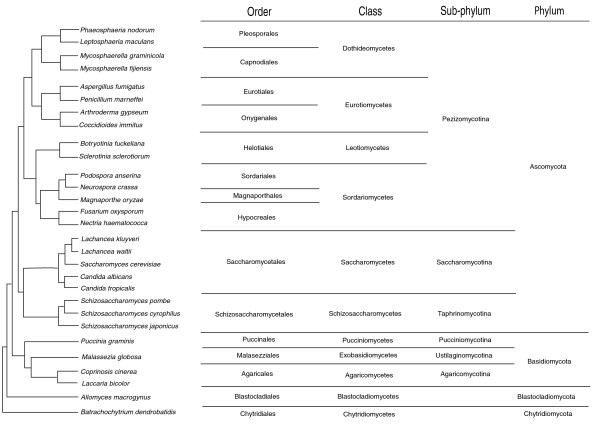
“Filamentous fungi reflect approximately 400 million years of evolutionary history, comparable to that of the vertebrates but approximately four times longer than that of the flowering plants [13] (Figure 1; Table 1).”
BackgroundMarande, W., López‐García, P., & Moreira, D. (2009) · Environmental Microbiology · doi:10.1111/j.1462-2920.2009.02023.x · Cited by 69 · cited 1×
“Evolutionary diversity within the filamentous ascomycete fungi is much higher than in flowering plants or vertebrate animals [12].”
BackgroundFisher, M. C., Hanage, W. P., de Hoog, S., Johnson, E., Smith, M. D., White, N. J., & Vanittanakom, N. (2005) · PLoS Pathogens · doi:10.1371/journal.ppat.0010020 · Cited by 68 · cited 1×
“oxysporum [47] and Penicillium marneffei [48]) a known sexual stage.”
BackgroundRecent Fungal Diseases of Crop Plants: Is Lateral Gene Transfer a Common Theme?
Oliver, R. P., & Solomon, P. S. (2008) · Molecular Plant-Microbe Interactions · doi:10.1094/mpmi-21-3-0287 · Cited by 63 · cited 2×
“Furthermore, many filamentous fungi can acquire genetic material by lateral gene transfer, which can increase their rate of evolution [14-16].”
BackgroundSelf-citationSynteny between Brachypodium distachyon and Hordeum vulgare as revealed by FISH
Ma, L., Vu, G. T. H., Schubert, V., Watanabe, K., Stein, N., Houben, A., & Schubert, I. A. (2010) · Chromosome Research · doi:10.1007/s10577-010-9166-3 · Cited by 62 · cited 1×
“Macrosynteny has been exploited to assist genetic mapping and gene cloning; examples include the use of the Arabidopsis genome to find genes in canola [9], and rice/Brachypodium synteny to locate genes in wheat and barley [10].”
MethodBringans, S., Hane, J. K., Casey, T. M., Tan, K., LIPSCOMBE, R. J., Solomon, P. S., & Oliver, R. P. (2009) · BMC Bioinformatics · doi:10.1186/1471-2105-10-301 · Cited by 56 · cited 1×
“Expressed sequence tag and proteomic data have refined the annotations to a set of 12,194 genes [30-32].”
BackgroundSelf-citationCasey, T. M., Solomon, P. S., Bringans, S., Tan, K., Oliver, R. P., & LIPSCOMBE, R. J. (2009) · PROTEOMICS · doi:10.1002/pmic.200900474 · Cited by 31 · cited 1×
“Expressed sequence tag and proteomic data have refined the annotations to a set of 12,194 genes [30-32].”
BackgroundSelf-citationA sequence based synteny map between soybean and Arabidopsis thaliana
Shultz, J. L., Ray, J. D., & Lightfoot, D. A. (2007) · BMC Genomics · doi:10.1186/1471-2164-8-8 · Cited by 26
Chibana, H., Oka, N., Nakayama, H., Aoyama, T., Magee, B. B., Magee, P. T., & Mikami, Y. (2005) · Genetics · doi:10.1534/genetics.104.034652 · Cited by 25
Tan, K., Heazlewood, J. L., Millar, A. H., Oliver, R. P., & Solomon, P. S. (2009) · Mycological Research · doi:10.1016/j.mycres.2009.01.004 · Cited by 25 · cited 1×
“Expressed sequence tag and proteomic data have refined the annotations to a set of 12,194 genes [30-32].”
BackgroundSelf-citationEstimation of synteny conservation and genome compaction between pufferfish (Fugu) and human
McLysaght, A., Enright, A. J., Skrabanek, L. A., & Wolfe, K. H. (2000) · Yeast · Cited by 21
Genomics of industrial Aspergilli and comparison with toxigenic relatives
Machida, M., Terabayashi, Y., Sano, M., Yamane, N., Tamano, K., Payne, G. A., Yu, J., Cleveland, T. E., & Nierman, W. C. (2008) · Food Additives & Contaminants Part A · doi:10.1080/02652030802273114 · Cited by 17 · cited 1×
“It was not surprising, therefore, when initial comparisons between fungal genome sequences failed to find extensive evidence of interspecific macro- or microsynteny [17-22] and, with the exception of the aspergilli, even between species from the same genus [23-25].”
BackgroundShuai, Y., Zhang, S., Chen, J., & Su, A. (2010) · Science China Earth Sciences · doi:10.1007/s11430-010-4011-2 · Cited by 7
Research works printed but not linked: 1
- Goodwin SB Ben M'Barek S Dhillon B Wittenberg A Crane CF Van der Lee TAJ Grimwood J Aerts A Antoniw J Bailey A Bluhm B Bowler J Bristow J Brokstein P Canto-Canche B Churchill A Conde-Ferràez L Cools H Coutinho PM Csukai M Dehal P Donzelli B Foster AJ Hammond-Kosack K Hane J Henrissat B Kilian A Koopmann E Kourmpetis Y Kuo A Finished genome of Mycosphaerella graminicola reveals stealth pathogenesis and dispensome structure. PLoS Genetics -D-10-00112R2 2011 PMC3111534 21695235
Cited by
Genome evolution in filamentous plant pathogens: why bigger can be better
Raffaele, S., & Kamoun, S. (2012) · Nature Reviews Microbiology · doi:10.1038/nrmicro2790 · Cited by 732
Ohm, R. A., Feau, N., Henrissat, B., Schoch, C. L., Horwitz, B. A., Barry, K. W., Condon, B. J., Copeland, A. C., Dhillon, B., Glaser, F., et al. (2012) · PLoS Pathogens · doi:10.1371/journal.ppat.1003037 · Cited by 613
“This formula is similar to that described previously [27] with modifications and the result is a fraction of 1.”
BackgroundMethodResultInfluentialSelf-citationEvolution and genome architecture in fungal plant pathogens
Möller, M., & Stukenbrock, E. H. (2017) · Nature Reviews Microbiology · doi:10.1038/nrmicro.2017.76 · Cited by 432
Fungal evolution: diversity, taxonomy and phylogeny of the Fungi
Naranjo‐Ortiz, M. A., & Gabaldón, T. (2019) · Biological Reviews · doi:10.1111/brv.12550 · Cited by 394
“Mesosynteny has only been described in pezizomycotina, and seems to be particularly strong in members of the Dothideomycetes (Hane et al., 2011).”
BackgroundGostinčar, C., Ohm, R. A., Kogej, T., Sonjak, S., Turk, M., Zajc, J., Zalar, P., Grube, M., Sun, H., Han, J., et al. (2014) · BMC Genomics · doi:10.1186/1471-2164-15-549 · Cited by 363
“All of the parameters were the same as described by Hane et al. [187], except that instead of discarding scaffolds <500 kbp, only scaffolds <200 kbp were discarded.”
Metadata
- Authors
- Hane, J. K., Rouxel, T., Howlett, B. J., Kema, G. H., Goodwin, S. B., & Oliver, R. P.
- Affiliations
- Commonwealth Scientific and Industrial Research Organisation (AU)
- Biologie et gestion des champignons phytopathogènes (FR)
- The University of Melbourne (AU)
- Wageningen University & Research (NL)
- Agricultural Research Service (US)
- Curtin University (AU)
- Corresponding author
- Oliver, Richard P
- Venue
- Genome Biology
- Published
- 2011-05-24
- Volume
- 12
- Issue
- 5
- Pages
- R45-R45
- ISSN
- 1465-6906 (ISSN-L)
- 1474-760X
- PMC
- PMC3219968
- OpenAlex
- W2144272188
- Cited by
- 169
- References
- 53
- Citations by year
- 2026: 8 · 2025: 3 · 2024: 8 · 2023: 6 · 2022: 9 · 2021: 31 · 2020: 12 · 2019: 7 · 2018: 16 · 2017: 15 · 2016: 10 · 2015: 6 · 2014: 14 · 2013: 15 · 2012: 6
- FWCI
- 4.80
- Type
- journal article
- Language
- en
- Open access
- gold
- doi.org
- Licence
- cc-by
- creativecommons.org/licenses/by/2.0/ (tdm)
- creativecommons.org/licenses/by/2.0/ (vor)
- Locations
- Genome biology (publishedVersion, cc-by)
- Europe PMC (PubMed Central) (publishedVersion, cc-by)
- PubMed Central (publishedVersion, cc-by)
- PubMed (publishedVersion)
- Socio-Environmental Systems Modeling (acceptedVersion)
- HAL (submittedVersion, other-oa)
- Minerva Access (University of Melbourne) (submittedVersion, cc-by)
- Murdoch University Research Portal (submittedVersion)
- Purdue e-Pubs (Purdue University System) (submittedVersion)
- eSpace (Curtin University) (submittedVersion, cc-by)
- Data Archiving and Networked Services (DANS) (submittedVersion, other-oa)
- Topics
- Life Sciences › Biochemistry, Genetics and Molecular Biology › Molecular Biology › Fungal and yeast genetics research
- Life Sciences › Biochemistry, Genetics and Molecular Biology › Genetics › Genome Rearrangement Algorithms
- Life Sciences › Biochemistry, Genetics and Molecular Biology › Genetics › Chromosomal and Genetic Variations
- Keywords
- karyotype evolution, synteny, chromosomal inversions, filamentous ascomycetes, Dothideomycetes, fungal genome evolution, gene order conservation, chromosomal rearrangements
- MeSH terms
- Algorithms, Ascomycota, Chromosome Mapping, Chromosomes, Chromosome Inversion, Meiosis, Phylogeny, Species Specificity, Genome, Fungal, Conserved Sequence, Evolution, Molecular, Genomics, Synteny, Databases, Genetic
About these checks
Registry, retraction, Cites and statistics results are computed, not judged, with one exception: a printed reference that no index lists is read once by a model before it counts as a citation error. Claims are extracted by a model and kept only when their quote appears verbatim in the text; each cited source is then checked, with a model’s help, for whether it says what the claim relies on. Those verdicts can be wrong — read the claim’s quote and the cited source before relying on one.
Statistics and arithmetic are recomputed, not judged.
Confidence bands are shown only for fields calibrated on our annotated test set. None is calibrated yet, so no band is shown.
What counts as a claim ›How we measure confidence ›How we check this ›
Are you an author, or do you see a problem with this page? Request a review
Data sources
Bibliographic data: Semantic Scholar, OpenAlex, Crossref.
Contains information from the Semantic Scholar Academic Graph Datasets, made available under the ODC Attribution License (ODC-BY 1.0).
Semantic Scholar’s data is described in: Kinney, R., et al. (2023). The Semantic Scholar Open Data Platform. arXiv:2301.10140.
