

A novel mode of chromosomal evolution peculiar to filamentous Ascomycete fungi
Open accessThe DOI matches its Crossref record; 53 of the 53 references it cites were found in a registry or an index.
Abstract
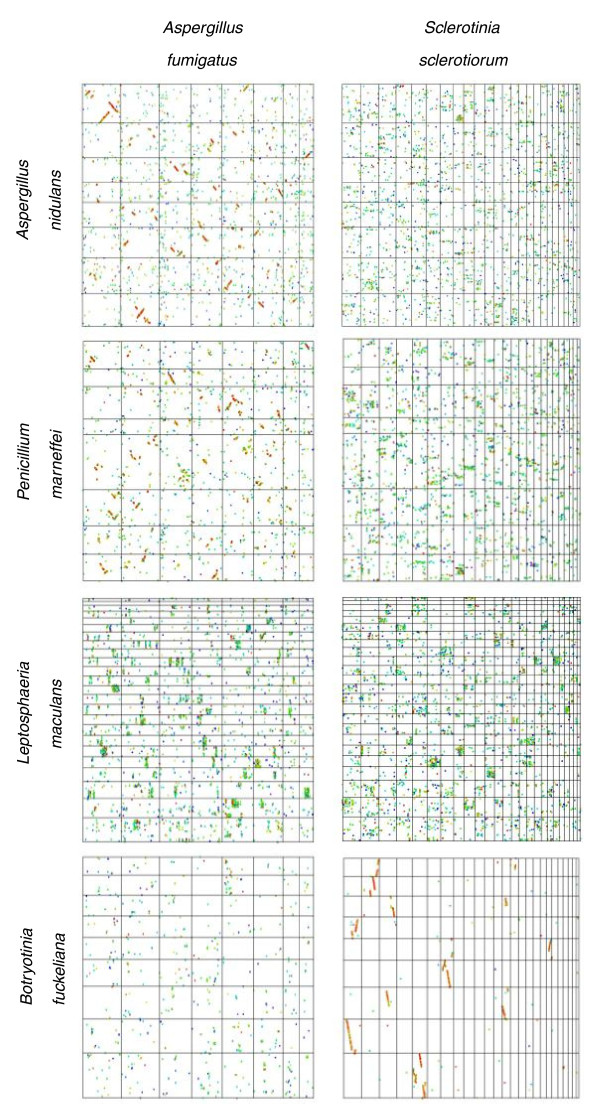
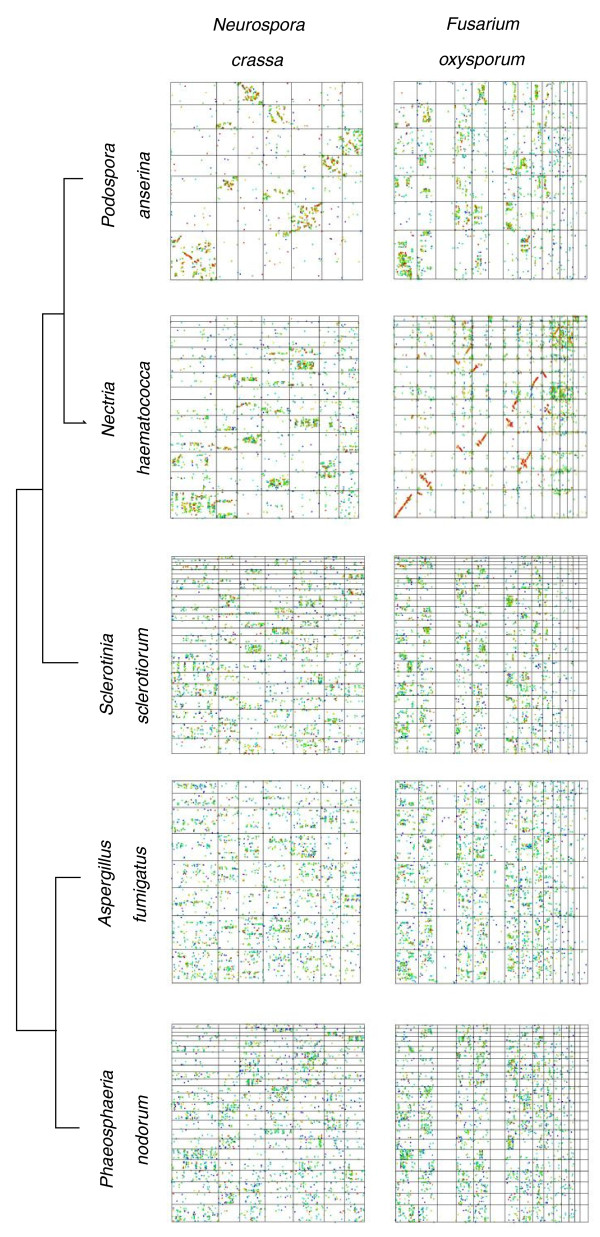
Background: Gene loss, inversions, translocations, and other chromosomal rearrangements vary among species, resulting in different rates of structural genome evolution. Major chromosomal rearrangements are rare in most eukaryotes, giving large regions with the same genes in the same order and orientation across species. These regions of macrosynteny have been very useful for locating homologous genes in different species and to guide the assembly of genome sequences. Previous analyses in the fungi have indicated that macrosynteny is rare; instead, comparisons across species show no synteny or only microsyntenic regions encompassing usually five or fewer genes. To test the hypothesis that chromosomal evolution is different in the fungi compared to other eukaryotes, synteny was compared between species of the major fungal taxa. Results: These analyses identified a novel form of evolution in which genes are conserved within homologous chromosomes, but with randomized orders and orientations. This mode of evolution is designated mesosynteny, to differentiate it from micro- and macrosynteny seen in other organisms. Mesosynteny is an alternative evolutionary pathway very different from macrosyntenic conservation. Surprisingly, mesosynteny was not found in all fungal groups. Instead, mesosynteny appears to be restricted to filamentous Ascomycetes and was most striking between species in the Dothideomycetes. Conclusions: The existence of mesosynteny between relatively distantly related Ascomycetes could be explained by a high frequency of chromosomal inversions, but translocations must be extremely rare. The mechanism for this phenomenon is not known, but presumably involves generation of frequent inversions during meiosis.
Overview
The claims and statistics of this paper haven’t been checked yet.
Free: it reads the open-access text and checks the first 5 claims that cite a source we can check. Create a free account to check every claim.
Integrity signals
Registry
Cites
Statistics
Figures
Verification
Claims the paper makes
The claims and statistics of this paper haven’t been checked yet.
Free: it reads the open-access text and checks the first 5 claims that cite a source we can check. Create a free account to check every claim.
Claims other papers make about this one
Each is checked against this paper’s own text: does it say what the citing paper says it does?
The cited source says what the claim attributes to it.
In the citing paper
“Chromosomal patterns of gene linkage evolve slowly in many lineages12,28–30”
From Ancient gene linkages support ctenophores as sister to other animals (2023) · cites this paper as [30]
Self-check
Percentages, sums and reported differences re-computed from the paper’s own numbers.
The self-check needs the paper’s full text.
Citations
Cites
Versatile and open software for comparing large genomes
Kurtz, S., Phillippy, A., Delcher, A. L., Smoot, M., Shumway, M., Antonescu, C., & Salzberg, S. L. (2004) · Genome Biology · doi:10.1186/gb-2004-5-2-r12 · Cited by 5,254 · cited 6×
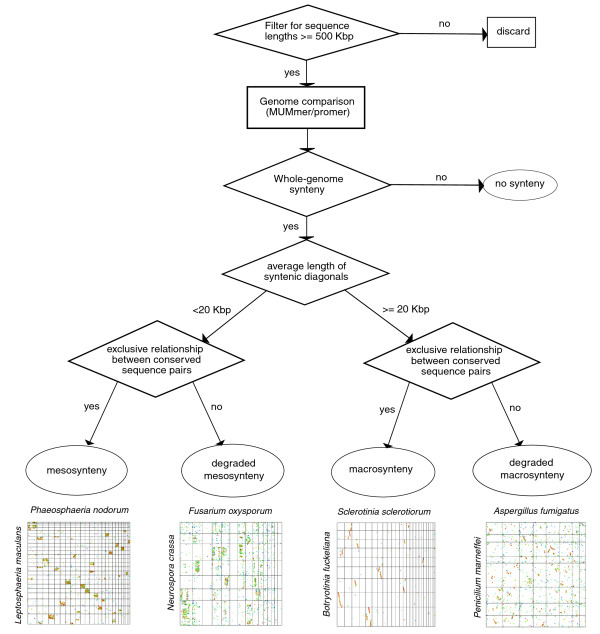
“Lengths of conserved regions in sequences A and B were derived from MUMmer outputs.”
MethodInfluentialComparative genomics reveals mobile pathogenicity chromosomes in Fusarium
Ma, L.-J., van der Does, H. C., Borkovich, K. A., Coleman, J. J., Daboussi, M.-J., Di Pietro, A., Dufresne, M., Freitag, M., Grabherr, M., Henrissat, B., et al. (2010) · Nature · doi:10.1038/nature08850 · Cited by 1,772
The genome sequence of the rice blast fungus Magnaporthe grisea
Dean, R. A., Talbot, N. J., Ebbole, D. J., Farman, M. L., Mitchell, T. K., Orbach, M. J., Thon, M., Kulkarni, R., Xu, J.-R., Pan, H., et al. (2005) · Nature · doi:10.1038/nature03449 · Cited by 1,660 · cited 2×
“It was not surprising, therefore, when initial comparisons between fungal genome sequences failed to find extensive evidence of interspecific macro- or microsynteny [17-22] and, with the exception of the aspergilli, even between species from the same genus [23-25].”
BackgroundThe amphioxus genome and the evolution of the chordate karyotype
Putnam, N. H., Butts, T., Ferrier, D. E. K., Furlong, R. F., Hellsten, U., Kawashima, T., Robinson-Rechavi, M., Shoguchi, E., Terry, A., Yu, J.-K., et al. (2008) · Nature · doi:10.1038/nature06967 · Cited by 1,580
Genomic sequence of the pathogenic and allergenic filamentous fungus Aspergillus fumigatus
Nierman, W. C., Pain, A., Anderson, M. J., Wortman, J. R., Kim, H. S., Arroyo, J., Berriman, M., Abe, K., Archer, D. B., Bermejo, C., et al. (2005) · Nature · doi:10.1038/nature04332 · Cited by 1,391 · cited 1×
“It was not surprising, therefore, when initial comparisons between fungal genome sequences failed to find extensive evidence of interspecific macro- or microsynteny [17-22] and, with the exception of the aspergilli, even between species from the same genus [23-25].”
BackgroundGenome sequencing and analysis of Aspergillus oryzae
Machida, M., Asai, K., Sano, M., Tanaka, T., Kumagai, T., Terai, G., Kusumoto, K.-I., Arima, T., Akita, O., Kashiwagi, Y., et al. (2005) · Nature · doi:10.1038/nature04300 · Cited by 1,245 · cited 1×
“It was not surprising, therefore, when initial comparisons between fungal genome sequences failed to find extensive evidence of interspecific macro- or microsynteny [17-22] and, with the exception of the aspergilli, even between species from the same genus [23-25].”
BackgroundGenome sequencing and analysis of the versatile cell factory Aspergillus niger CBS 513.88
Pel, H. J., de Winde, J. H., Archer, D. B., Dyer, P. S., Hofmann, G., Schaap, P. J., Turner, G., de Vries, R. P., Albang, R., Albermann, K., et al. (2007) · Nature Biotechnology · doi:10.1038/nbt1282 · Cited by 1,173 · cited 1×
“It was not surprising, therefore, when initial comparisons between fungal genome sequences failed to find extensive evidence of interspecific macro- or microsynteny [17-22] and, with the exception of the aspergilli, even between species from the same genus [23-25].”
BackgroundEmergence of a new disease as a result of interspecific virulence gene transfer
Friesen, T. L., Stukenbrock, E. H., Liu, Z., Meinhardt, S., Ling, H., Faris, J. D., Rasmussen, J. B., Solomon, P. S., McDonald, B. A., & Oliver, R. P. (2006) · Nature Genetics · doi:10.1038/ng1839 · Cited by 750 · cited 2×
“Furthermore, many filamentous fungi can acquire genetic material by lateral gene transfer, which can increase their rate of evolution [14-16].”
BackgroundSelf-citationSchoch, C. L., Sung, G.-H., López-Giráldez, F., Townsend, J. P., Miadlikowska, J., Hofstetter, V., Robbertse, B., Matheny, P. B., Kauff, F., Wang, Z., et al. (2009) · Systematic Biology · doi:10.1093/sysbio/syp020 · Cited by 674 · cited 2×
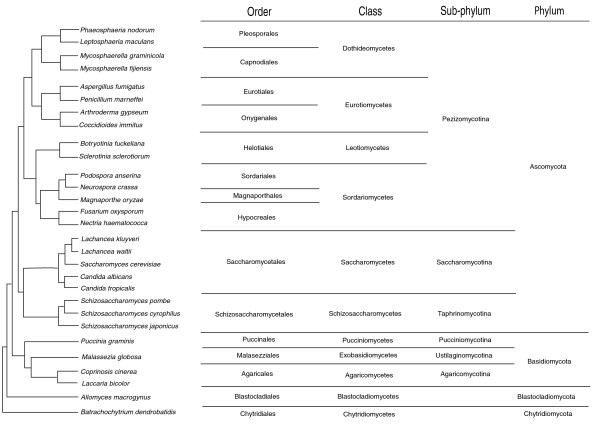
“Phylogenetic data (Figure 1; Table 1) were inferred from previous publications [1,28,54,55].”
BackgroundMethodPérigord black truffle genome uncovers evolutionary origins and mechanisms of symbiosis
Martin, F., Kohler, A., Murat, C., Balestrini, R., Coutinho, P. M., Jaillon, O., Montanini, B., Morin, E., Noel, B., Percudani, R., et al. (2010) · Nature · doi:10.1038/nature08867 · Cited by 659 · cited 1×
“These include comparisons between the Pezizomycetes Tuber melanosporum and the Eurotiomycetes Coccidioides immitus [46] and the Sordariomycetes P.”
Background
Research works printed but not linked: 1
- Goodwin SB Ben M'Barek S Dhillon B Wittenberg A Crane CF Van der Lee TAJ Grimwood J Aerts A Antoniw J Bailey A Bluhm B Bowler J Bristow J Brokstein P Canto-Canche B Churchill A Conde-Ferràez L Cools H Coutinho PM Csukai M Dehal P Donzelli B Foster AJ Hammond-Kosack K Hane J Henrissat B Kilian A Koopmann E Kourmpetis Y Kuo A Finished genome of Mycosphaerella graminicola reveals stealth pathogenesis and dispensome structure. PLoS Genetics -D-10-00112R2 2011 PMC3111534 21695235
Cited by
Genome evolution in filamentous plant pathogens: why bigger can be better
Raffaele, S., & Kamoun, S. (2012) · Nature Reviews Microbiology · doi:10.1038/nrmicro2790 · Cited by 732
Ohm, R. A., Feau, N., Henrissat, B., Schoch, C. L., Horwitz, B. A., Barry, K. W., Condon, B. J., Copeland, A. C., Dhillon, B., Glaser, F., et al. (2012) · PLoS Pathogens · doi:10.1371/journal.ppat.1003037 · Cited by 613
“This formula is similar to that described previously [27] with modifications and the result is a fraction of 1.”
BackgroundMethodResultInfluentialSelf-citationEvolution and genome architecture in fungal plant pathogens
Möller, M., & Stukenbrock, E. H. (2017) · Nature Reviews Microbiology · doi:10.1038/nrmicro.2017.76 · Cited by 432
Fungal evolution: diversity, taxonomy and phylogeny of the Fungi
Naranjo‐Ortiz, M. A., & Gabaldón, T. (2019) · Biological Reviews · doi:10.1111/brv.12550 · Cited by 394
“Mesosynteny has only been described in pezizomycotina, and seems to be particularly strong in members of the Dothideomycetes (Hane et al., 2011).”
BackgroundGostinčar, C., Ohm, R. A., Kogej, T., Sonjak, S., Turk, M., Zajc, J., Zalar, P., Grube, M., Sun, H., Han, J., et al. (2014) · BMC Genomics · doi:10.1186/1471-2164-15-549 · Cited by 363
“All of the parameters were the same as described by Hane et al. [187], except that instead of discarding scaffolds <500 kbp, only scaffolds <200 kbp were discarded.”
Ancient gene linkages support ctenophores as sister to other animals
Schultz, D. T., Haddock, S. H. D., Bredeson, J. V., Green, R. E., Simakov, O., & Rokhsar, D. S. (2023) · Nature · doi:10.1038/s41586-023-05936-6 · Cited by 362
Extensive chromosomal reshuffling drives evolution of virulence in an asexual pathogen
de Jonge, R., Bolton, M. D., Kombrink, A., van den Berg, G. C. M., Yadeta, K. A., & Thomma, B. P. H. J. (2013) · Genome Research · doi:10.1101/gr.152660.112 · Cited by 346
“quent inversions during meiosis rather than interchromosomal rearrangements (Hane et al. 2011).”
BackgroundInfluentialde Wit, P. J. G. M., van der Burgt, A., Ökmen, B., Stergiopoulos, I., Abd-Elsalam, K. A., Aerts, A. L., Bahkali, A. H., Beenen, H. G., Chettri, P., Cox, M. P., et al. (2012) · PLoS Genetics · doi:10.1371/journal.pgen.1003088 · Cited by 285
Self-citationThe Fungal Tree of Life: from Molecular Systematics to Genome-Scale Phylogenies
Spatafora, J. W., Aime, M. C., Grigoriev, I. V., Martin, F., Stajich, J. E., & Blackwell, M. (2017) · Microbiology Spectrum · doi:10.1128/microbiolspec.funk-0053-2016 · Cited by 264
Condon, B. J., Leng, Y., Wu, D., Bushley, K. E., Ohm, R. A., Otillar, R., Martin, J., Schackwitz, W., Grimwood, J., MohdZainudin, N., et al. (2013) · PLoS Genetics · doi:10.1371/journal.pgen.1003233 · Cited by 246
“We and others [72,73,74] have recently introduced the term mesosyteny [1] to describe organizational conservation between species.”
BackgroundThe birth, evolution and death of metabolic gene clusters in fungi
Rokas, A., Wisecaver, J. H., & Lind, A. L. (2018) · Nature Reviews Microbiology · doi:10.1038/s41579-018-0075-3 · Cited by 220
Yin, Z., Liu, H., Li, Z., Ke, X., Dou, D., Gao, X., Song, N., Dai, Q., Wu, Y., Xu, J., et al. (2015) · New Phytologist · doi:10.1111/nph.13544 · Cited by 199
Stagonospora nodorum: From Pathology to Genomics and Host Resistance
Oliver, R. P., Friesen, T. L., Faris, J. D., & Solomon, P. S. (2012) · Annual Review of Phytopathology · doi:10.1146/annurev-phyto-081211-173019 · Cited by 183
Self-citationGenome Sequencing and Comparative Genomics of the Broad Host-Range Pathogen Rhizoctonia solani AG8
Hane, J. K., Anderson, J. P., Williams, A. H., Sperschneider, J., & Singh, K. B. (2014) · PLoS Genetics · doi:10.1371/journal.pgen.1004281 · Cited by 175
“solani AG8, AG1-1A and AG3 exhibited widespread co-linearity or macrosynteny [35] (Figure 3, Supporting Table S3).”
BackgroundSelf-citationErratum: Evolution and genome architecture in fungal plant pathogens
Möller, M., & Stukenbrock, E. H. (2017) · Nature Reviews Microbiology · doi:10.1038/nrmicro.2017.143 · Cited by 172
Grandaubert, J., Lowe, R. G., Soyer, J. L., Schoch, C. L., Van de Wouw, A. P., Fudal, I., Robbertse, B., Lapalu, N., Links, M. G., Ollivier, B., et al. (2014) · BMC Genomics · doi:10.1186/1471-2164-15-891 · Cited by 171
“the conservation within chromosomes of gene content but not order or orientation, between the members of the species complex [45].”
BackgroundSelf-citationBertazzoni, S., Williams, A. H., Jones, D. A., Syme, R. A., Tan, K.-C., & Hane, J. K. (2018) · Molecular Plant-Microbe Interactions® · doi:10.1094/mpmi-06-17-0135-fi · Cited by 170
Self-citationFungal evolution: cellular, genomic and metabolic complexity
Naranjo‐Ortiz, M. A., & Gabaldón, T. (2020) · Biological Reviews · doi:10.1111/brv.12605 · Cited by 159
OcculterCut: A Comprehensive Survey of AT-Rich Regions in Fungal Genomes
Testa, A. C., Oliver, R. P., & Hane, J. K. (2016) · Genome Biology and Evolution · doi:10.1093/gbe/evw121 · Cited by 158
“Key words: fungi, genome evolution, two-speed genome, repeat-induced point mutation, isochore.”
BackgroundSelf-citationShapiro, B. J., Leducq, J., & Mallet, J. (2016) · PLoS Genetics · doi:10.1371/journal.pgen.1005860 · Cited by 158
“For example, HGT among close (introgression) or distant species of fungi, and even between fungi and bacteria, together with chromosomal rearrangements, have substantially shuffled fungal genomes and contributed to the emergence of new phytopathogenic [54,55] and brewing species [33,56].”
BackgroundEvolution, selection and isolation: a genomic view of speciation in fungal plant pathogens
Stukenbrock, E. H. (2013) · New Phytologist · doi:10.1111/nph.12374 · Cited by 148
SimpleSynteny: a web-based tool for visualization of microsynteny across multiple species
Veltri, D., Malapi‐Wight, M., & Crouch, J. A. (2016) · Nucleic Acids Research · doi:10.1093/nar/gkw330 · Cited by 146
“…to collinearity of gene order at the whole-chromosome scale, microsynteny describes a small number of genes exhibiting collinearity across a given sub-chromosomal region and mesosynteny is characterized by the conservation of gene content within a chromosome in the absence of collinearity (2).”
A Tale of Genome Compartmentalization: The Evolution of Virulence Clusters in Smut Fungi
Dutheil, J. Y., Mannhaupt, G., Schweizer, G., Sieber, C. M. K., Münsterkötter, M., Güldener, U., Schirawski, J., & Kahmann, R. (2016) · Genome Biology and Evolution · doi:10.1093/gbe/evw026 · Cited by 148
“Key words: genome architecture, effector proteins, gene duplication, repeat sequences, selection interference, gene cluster.”
BackgroundHighly flexible infection programs in a specialized wheat pathogen
Haueisen, J., Möller, M., Eschenbrenner, C. J., Grandaubert, J., Seybold, H., Adamiak, H., & Stukenbrock, E. H. (2018) · Ecology and Evolution · doi:10.1002/ece3.4724 · Cited by 135
Zajc, J., Liu, Y., Dai, W., Yang, Z., Hu, J., Gostinčar, C., & Gunde‐Cimerman, N. (2013) · BMC Genomics · doi:10.1186/1471-2164-14-617 · Cited by 129
“All parameters were the same as described in [74] except that instead of discarding scaffolds less than 500 kbp only scaffolds less than 200 kbp were discarded.”
MethodBioinformatic prediction of plant–pathogenicity effector proteins of fungi
Jones, D., Bertazzoni, S., Turo, C. J., Syme, R. A., & Hane, J. K. (2018) · Current Opinion in Microbiology · doi:10.1016/j.mib.2018.01.017 · Cited by 119
“producing mesosyntenic patterns of conservation) [14], and potential for lateral gene transfer [16].”
BackgroundSelf-citationSmall genome of the fungus Escovopsis weberi , a specialized disease agent of ant agriculture
de Man, T. J. B., Stajich, J., Kubicek, C. P., Teiling, C., Chenthamara, K., Atanasova, L., Druzhinina, I. S., Levenkova, N., Birnbaum, S. S. L., Barribeau, S. M., et al. (2016) · Proceedings of the National Academy of Sciences · doi:10.1073/pnas.1518501113 · Cited by 120
“2A) revealed a high degree of micro mesosynteny, indicating that genome segments have a similar gene content but shuffled order and orientation, likely due to intrachromosomal rearrangements (38).”
BackgroundPattemore, J., Hane, J. K., Williams, A., Wilson, B. A. L., Stodart, B. J., & Ash, G. J. (2014) · BMC Genomics · doi:10.1186/1471-2164-15-660 · Cited by 109
“A low level of intra-chromosomal rearrangement is also observed, however this is similar to levels of degraded macrosynteny between other Pezizomycotina species of the same genus, such as previously observed between the Aspergilli [26].”
BackgroundSelf-citationXu, X., Su, Z.-Z., Wang, C., Kubicek, C. P., Feng, X., Mao, L., Wang, J., Chen, C., Lin, F., & Zhang, C. (2014) · Scientific Reports · doi:10.1038/srep05783 · Cited by 101
Accessory Chromosomes in Fusarium oxysporum
He, Y., Yu, H., & Ma, L. (2020) · Phytopathology · doi:10.1094/phyto-03-20-0069-ia · Cited by 99
“…to identify ACs, such as the commonly used “elimination of the core” method, which maps the genome sequences to the reference genome (Ma 2014), and synteny analysis between chromosomes of closely related genomes (DeIulio et al. 2018; Hane et al. 2011; Williams et al. 2016; Zhang et al. 2020).”
MethodStukenbrock, E. H., & Croll, D. (2014) · Fungal Biology Reviews · doi:10.1016/j.fbr.2014.02.001 · Cited by 94
Moolhuijzen, P., See, P. T., Hane, J. K., Shi, G., Liu, Z., Oliver, R. P., & Moffat, C. S. (2018) · BMC Genomics · doi:10.1186/s12864-018-4680-3 · Cited by 87
“a mechanism that can drive evolution of virulence in pathogens [62] and over time produces a mesosyntenic conservation pattern [41].”
BackgroundSelf-citationTkavc, R., Matrosova, V. Y., Grichenko, O., Gostinčar, C., Volpe, R. P., Klimenkova, P., Gaidamakova, E. K., Zhou, C. L. E., Stewart, B. J., Lyman, M. G., et al. (2018) · Frontiers in Microbiology · doi:10.3389/fmicb.2017.02528 · Cited by 85
“The genome alignments of contigs longer than 100 kbp were calculated with the PROmer algorithm, as implemented in MUMmer 3.23, and plotted with theMUMmerplot utility (Kurtz et al., 2004) as described by Hane et al. (2011).”
BackgroundMethodInfluentialThe Fungal Tree of Life: From Molecular Systematics to Genome-Scale Phylogenies
Spatafora, J. W., Aime, M. C., Grigoriev, I. V., Martin, F. M., Stajich, J., & Blackwell, M. (2017) · ASM Press eBooks · doi:10.1128/9781555819583.ch1 · Cited by 86
Chang, T., Salvucci, A. E., Crous, P. W., & Stergiopoulos, I. (2016) · PLoS Genetics · doi:10.1371/journal.pgen.1005904 · Cited by 83
“However, significant differences were detected at the individual CAZYme family level, including when the CAZyme distribution profiles of the three Sigatoka species were compared with the distribution profiles of five hemibiotrophic fungi from the Capnodiales clade that were included in the group of 16 Dothideomycetes…”
BackgroundInfluentialLefebvre, F., Joly, D. L., Labbe, C., Teichmann, B., Linning, R. M., Belzile, F. J., Bakkeren, G., & Bélanger, R. R. (2013) · The Plant Cell · doi:10.1105/tpc.113.113969 · Cited by 79
A molecular genetic toolbox for Yarrowia lipolytica
Bredeweg, E., Pomraning, K., Dai, Z., Nielsen, J., Kerkhoven, E. J., & Baker, S. (2017) · Biotechnology for Biofuels · doi:10.1186/s13068-016-0687-7 · Cited by 78
“Genomic instability has been documented in chromosomal changes in yeasts [2], induced in Candida albicans by centromere removal [3], and observed in the fragmentary gene order conservation of filamentous Ascomycetes [4].”
BackgroundSyme, R. A., Martin, A., Wyatt, N. A., Lawrence, J. A., Muria‐Gonzalez, M. J., Friesen, T. L., & Ellwood, S. R. (2018) · Frontiers in Genetics · doi:10.3389/fgene.2018.00130 · Cited by 74
“(2016) also confirm that a phenomenon known as ‘mesosynteny,’ the conservation of gene content but not order in chromosomes across widely divergent fungal genera (Hane et al., 2011), does not occur between Pyrenophora species.”
BackgroundChen, J., Klosterman, S. J., Hu, X., Dai, X., & Subbarao, K. V. (2021) · Annual Review of Phytopathology · doi:10.1146/annurev-phyto-020620-121925 · Cited by 72
Shi‐Kunne, X., Faino, L., van den Berg, G. C. M., Thomma, B. P. H. J., & Seidl, M. F. (2018) · Environmental Microbiology · doi:10.1111/1462-2920.14037 · Cited by 74
“Previously, a particular mode of chromosomal evolution was reported to occur in particular clades of filamentous Ascomycete fungi, with genes that are conserved within homologous chromosomes but with randomized orders and orientations (Hane et al., 2011).”
BackgroundInfluentialJones, D., Rozano, L., Debler, J. W. J., Mancera, R. L., Moolhuijzen, P., & Hane, J. K. (2021) · Scientific Reports · doi:10.1038/s41598-021-99363-0 · Cited by 68
Self-citationTorriani, S. F. F., Penselin, D., Knogge, W., Felder, M., Taudien, S., Platzer, M., McDonald, B. A., & Brunner, P. C. (2014) · Fungal Genetics and Biology · doi:10.1016/j.fgb.2013.11.001 · Cited by 63
Sources of Fungal Genetic Variation and Associating It with Phenotypic Diversity
Taylor, J. W., Branco, S., Gao, C. D., Hann-Soden, C., Montoya, L., Sylvain, I. A., & Gladieux, P. (2017) · Microbiology Spectrum · doi:10.1128/microbiolspec.funk-0057-2016 · Cited by 62
Fragmentation of an aflatoxin‐like gene cluster in a forest pathogen
Bradshaw, R. E., Slot, J. C., Moore, G. G., Chettri, P., WIT, P. J. G. M. D., Ehrlich, K. C., Ganley, A. R. D., Olson, M. A., Rokas, A., Carbone, I., et al. (2013) · New Phytologist · doi:10.1111/nph.12161 · Cited by 61
The Architecture of Metabolism Maximizes Biosynthetic Diversity in the Largest Class of Fungi
Gluck‐Thaler, E., Haridas, S., Binder, M., Grigoriev, I. V., Crous, P. W., Spatafora, J. W., Bushley, K. E., & Slot, J. C. (2020) · Molecular Biology and Evolution · doi:10.1093/molbev/msaa122 · Cited by 60
“Fungal genomes experience frequent reorganization and changes in gene composition that underlies large-scale differences in chromosomal macro- and microsynteny among species (Hane et al. 2011; Grandaubert et al. 2014; Shi-Kunne et al. 2018).”
BackgroundGuo, L., Yu, H., Wang, B., Vescio, K., DeIulio, G. A., He, Y., Berg, A., Zhang, L., Edel‐Hermann, V., Steinberg, C., et al. (2021) · Molecular Plant-Microbe Interactions · doi:10.1094/mpmi-03-21-0063-r · Cited by 58
“…been initially acquired horizontally mediates unique host-fungal interactions (Armitage et al. 2018; DeIulio et al. 2018; Galazka and Freitag 2014; Hane et al. 2011; Ma et al. 2010, 2013; van Dam et al. 2016; Vlaardingerbroek et al. 2016a and b; Williams et al. 2016; Yang et al. 2020; Zhang et…”
The promise and pitfalls of synteny in phylogenomics
Steenwyk, J. L., & King, N. (2024) · PLoS Biology · doi:10.1371/journal.pbio.3002632 · Cited by 59
Pan-Parastagonospora Comparative Genome Analysis—Effector Prediction and Genome Evolution
Syme, R. A., Tan, K., Rybak, K., Friesen, T. L., McDonald, B. A., Oliver, R. P., & Hane, J. K. (2018) · Genome Biology and Evolution · doi:10.1093/gbe/evy192 · Cited by 56
Self-citationCan fungal endophytes fast-track plant adaptations to climate change?
Suryanarayanan, T. S., & Shaanker, R. U. (2021) · Fungal Ecology · doi:10.1016/j.funeco.2021.101039 · Cited by 50
Fungal Gene Cluster Diversity and Evolution
Slot, J. C. (2017) · Advances in genetics · doi:10.1016/bs.adgen.2017.09.005 · Cited by 57
Yan, X., Gu, T., Yi, Z., Huang, J., Liu, X., Zhang, J., Xu, X., Xin, Z., Hong, Q., He, J., et al. (2016) · Environmental Microbiology · doi:10.1111/1462-2920.13413 · Cited by 54
“…sequence comparison of the genome sequences revealed high degrees of macrosynteny (i.e., chromosomes with similar gene contents, orders and orientations) (Hane et al., 2011) between strains Y57 and SRS2, with an average amino acid sequence similarity of more than 80% (Supporting Information Fig.”
BackgroundMartínez‐Soto, D., Yu, H., Allen, K. S., & Ma, L. (2022) · Molecular Plant-Microbe Interactions · doi:10.1094/mpmi-08-22-0166-sc · Cited by 51
Genomic evidence for intraspecific hybridization in a clonal and extremely halotolerant yeast
Gostinčar, C., Stajich, J., Zupančič, J. Č., Zalar, P., & Gunde‐Cimerman, N. (2018) · BMC Genomics · doi:10.1186/s12864-018-4751-5 · Cited by 48
Syme, R. A., Tan, K., Hane, J. K., Dodhia, K. N., Stoll, T. M., Hastie, M. L., Furuki, E., Ellwood, S. R., Williams, A., Tan, Y., et al. (2016) · PLoS ONE · doi:10.1371/journal.pone.0147221 · Cited by 45
“Comparison of the chromosomes of filamentous ascomycetes have shown that related chromosomes tend to conserve gene content, but with shuffled gene order [37].”
BackgroundSelf-citationSun, B., Xiao, J., He, S., Liu, L., Murphy, R. W., & Huang, D. (2013) · PLoS ONE · doi:10.1371/journal.pone.0060029 · Cited by 43
“This pattern indicates a single HGT event and not multiple independent transfers to them [30].”
BackgroundTrichez, D., Steindorff, A. S., Soares, C. E. V. F., Formighieri, E. F., & de Almeida, J. R. M. (2019) · FEMS Yeast Research · doi:10.1093/femsyr/foz034 · Cited by 42
Bhattarai, K., Bhattarai, K., Kabir, M. E., Bastola, R., & Baral, B. (2021) · Advances in genetics · doi:10.1016/bs.adgen.2020.11.006 · Cited by 40
Chung, C., Lee, T. J., Akiba, M., Lee, H., Kuo, T., Liu, D., Ke, H., Yokoi, T., Roa, M. B., Lu, M. J., et al. (2017) · Molecular Ecology · doi:10.1111/mec.14359 · Cited by 38
“Within each linkage group, gene collinearity is no longer apparent, suggesting high levels of intrachromosomal rearrangements which have been observed in different fungal groups (Hane et al., 2011; Figure 2b).”
BackgroundMagain, N., Miądlikowska, J., Mueller, O., Gajdeczka, M. T., Truong, C., Salamov, A. A., Dubchak, I. L., Grigoriev, I. V., Goffinet, B., Sérusiaux, E., et al. (2017) · Molecular Phylogenetics and Evolution · doi:10.1016/j.ympev.2017.08.013 · Cited by 37
“Fast evolving intergenic spacers in syntenic regions of genomes where collinearity, including gene orientation, is conserved across a broad array of fungal genera, families and orders (Hane et al., 2011), are likely to provide the homologous fast-evolving phylogenetic markers that are needed to discover, delimit and d…”
BackgroundGenomic Analysis of the Insect-Killing Fungus Beauveria bassiana JEF-007 as a Biopesticide
Lee, S. J., Lee, M. R., Kim, S., Kim, J. C., Park, S. E., Li, D., Shin, T. Y., Nai, Y., & Kim, J. S. (2018) · Scientific Reports · doi:10.1038/s41598-018-30856-1 · Cited by 37
Extreme genome scrambling in marine planktonic Oikopleura dioica cryptic species
Plessy, C., Mansfield, M. J., Bliznina, A., Masunaga, A., West, C., Tan, Y., Liu, A. W., Grašič, J., Pisula, M. S. D. R., Sánchez-Serna, G., et al. (2024) · Genome Research · doi:10.1101/gr.278295.123 · Cited by 42
“7; Drosophila 12 Genomes Consortium 2007; Hane et al. 2011; Albertin et al. 2022; Damas et al. 2022).”
BackgroundEspíndola, A. S., Schneider, W. L., Hoyt, P. R., Marek, S. M., & Garzón, C. D. (2015) · International Journal of Data Mining and Bioinformatics · doi:10.1504/ijdmb.2015.069422 · Cited by 36
“Decoy e-probes were generated by reversing the DNA sequence of pathogen specific e-probes, which should convert them into non-specific e-probes, but could match naturally occurring DNA inversions, found in genetically variable populations of some fungi (Hane et al., 2011).”
BackgroundAncient cis-regulatory constraints and the evolution of genome architecture
Irimia, M., Maeso, I., Roy, S. W., & Fraser, H. B. (2013) · Trends in Genetics · doi:10.1016/j.tig.2013.05.008 · Cited by 37
Biology of B. sorokiniana (syn. Cochliobolus sativus) in genomics era
Gupta, P. K., Vasistha, N. K., Aggarwal, R., & Joshi, A. K. (2017) · Journal of Plant Biochemistry and Biotechnology · doi:10.1007/s13562-017-0426-6 · Cited by 32
Zaccaron, A. Z., Chen, L., Samaras, Α., & Stergiopoulos, I. (2022) · Microbial Genomics · doi:10.1099/mgen.0.000819 · Cited by 32
“This pattern is common within Dothideomycetes [22, 23] and indicates that gene content of both species is conserved within chromosomes, although the order of genes is not well conserved. of the 14 chromosomes present in each species, nine (i.e. Chr1, Chr2, Chr5, Chr6, Chr7, Chr8, Chr9, Chr11, and…”
Bertazzoni, S., Jones, D., Phan, H. T. T., Tan, K., & Hane, J. K. (2021) · BMC Genomics · doi:10.1186/s12864-021-07699-8 · Cited by 30
“Leveraging these resources, comprehensive analyses of its genomic landscape and genomebased processes contributing to pathogenic adaptations have extended to transposable elements (TE) and gene repeats [1, 24, 25], repeat-induced point mutations (RIP) [24–26], mesosynteny [27], and multiple comparative genomics studie…”
BackgroundSelf-citationEvolutionary and functional patterns of shared gene neighbourhood in fungi
Marcet‐Houben, M., & Gabaldón, T. (2019) · Nature Microbiology · doi:10.1038/s41564-019-0552-0 · Cited by 30
Evolutionary and Adaptive Role of Transposable Elements in Fungal Genomes
Grandaubert, J., Balesdent, M., & Rouxel, T. (2014) · Advances in botanical research · doi:10.1016/b978-0-12-397940-7.00003-3 · Cited by 30
Self-citationVos, L. D., Steenkamp, E. T., Martin, S. H., Santana, Q. C., Fourie, G., van der Merwe, N. A., Wingfield, M. J., & Wingfield, B. D. (2014) · PLoS ONE · doi:10.1371/journal.pone.0114682 · Cited by 29
“Macrosynteny represents the synteny of genes at the chromosomal level, with the backbone of genes on a chromosome being collinear [37].”
BackgroundPacheco‐Arjona, R., & Ramírez-Prado, J. H. (2014) · PLoS ONE · doi:10.1371/journal.pone.0104920 · Cited by 29
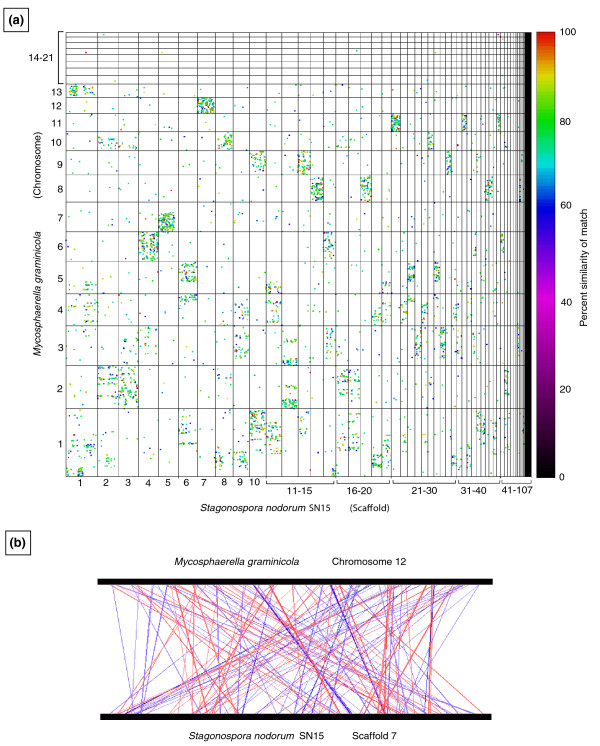
“This can be seen, in a large scale, in the comparative study between chromosome 12 of Mycosphaerella graminicola and scaffold 7 of Stagonospora nodorum, both of the class Dothideomycetes [14].”
ResultComparative genome analysis proposes three new Aureobasidium species isolated from grape juice
Onetto, C. A., Schmidt, S. A., Roach, M. J., & Borneman, A. R. (2020) · FEMS Yeast Research · doi:10.1093/femsyr/foaa052 · Cited by 29
Overview of genomic and bioinformatic resources for Zymoseptoria tritici
Testa, A. C., Oliver, R. P., & Hane, J. K. (2015) · Fungal Genetics and Biology · doi:10.1016/j.fgb.2015.04.011 · Cited by 28
Self-citationContrasting modes of macro and microsynteny evolution in a eukaryotic subphylum
Li, Y., Liu, H., Steenwyk, J. L., LaBella, A. L., Harrison, M., Groenewald, M., Zhou, X., Shen, X., Zhao, T., Hittinger, C. T., et al. (2022) · Current Biology · doi:10.1016/j.cub.2022.10.025 · Cited by 27
“The dense rectangular blocks of dots also imply conserved macrosynteny in which genes are conserved within homologous chromosomes but with randomized orders and orientations (also referred to as mesosynteny in fungi 6 ).”
Specialized plant biochemistry drives gene clustering in fungi
Gluck‐Thaler, E., & Slot, J. C. (2018) · The ISME Journal · doi:10.1038/s41396-018-0075-3 · Cited by 27
“Many fungal genomes tend to undergo extensive and frequent rearrangements [50, 51].”
BackgroundMethodInfluentialPhotochemical characterization of a novel fungal rhodopsin from Phaeosphaeria nodorum
Fan, Y., Solomon, P. S., Oliver, R. P., & Brown, L. S. (2011) · Biochimica et Biophysica Acta (BBA) - Bioenergetics · doi:10.1016/j.bbabio.2011.07.005 · Cited by 27
“mesosynteny [33].”
Self-citationSaud, Z., Kortsinoglou, A. M., Kouvelis, V. N., & Butt, T. M. (2021) · BMC Genomics · doi:10.1186/s12864-021-07390-y · Cited by 26
Bradshaw, R. E., Sim, A. D., Chettri, P., Dupont, P., Guo, Y., Hunziker, L., McDougal, R. L., van der Nest, A., Fourie, A., Wheeler, D., et al. (2019) · Molecular Plant Pathology · doi:10.1111/mpp.12791 · Cited by 25
Fungal Plant Pathogenesis Mediated by Effectors
WIT, P. J. G. M. D., Testa, A. C., & Oliver, R. P. (2016) · Microbiology Spectrum · doi:10.1128/microbiolspec.funk-0021-2016 · Cited by 24
“This is most obviously illustrated by Leptosphaeria maculans , in which effector evolution is consistent with periodic episodes of transposon-induced RIP activity resulting in a highly compartmentalized genome (101, 102).”
BackgroundSelf-citationComparative Genomics of Cochliobolus Phytopathogens
Condon, B. J., Wu, D. L., Kraševec, N., Horwitz, B. A., & Turgeon, B. G. (2014) · Springer eBooks · doi:10.1007/978-3-662-44053-7_2 · Cited by 23
6 Pezizomycotina: Dothideomycetes and Arthoniomycetes
Schoch, C. L., & Grube, M. (2015) · Springer eBooks · doi:10.1007/978-3-662-46011-5_6 · Cited by 23
Phylogenomics and adaptive evolution of the Colletotrichum gloeosporioides species complex
Ma, Z., Liu, F., Tsui, C. K. M., & Cai, L. (2025) · Communications Biology · doi:10.1038/s42003-025-08024-9 · Cited by 25
Vittorelli, N., Snirc, A., Levert, E., Christophe, V. G., Lalanne, C., Filippo, E. D., de la Vega, R. C. R., Gladieux, P., Guillou, S., Zhang, Y., et al. (2023) · PLoS Genetics · doi:10.1371/journal.pgen.1010347 · Cited by 22
Zhang, M., Ren, Y., Jiang, W., Wu, C., Zhou, Y., Wang, H., Ke, Z., Gao, Q., Liu, X., Qiu, J., et al. (2020) · Environmental Microbiology · doi:10.1111/1462-2920.15308 · Cited by 22
Secreted biomolecules in fungal plant pathogenesis
Brown, N. A., & Hammond-Kosack, K. E. (2015) · Wiley eBooks · doi:10.1002/9781118958308.ch19 · Cited by 21
Situating Machine Intelligence Within the Cognitive Ecology of the Internet
Smart, P. R. (2017) · Minds and Machines · doi:10.1007/s11023-016-9416-z · Cited by 20
Pereira‐Santana, A., Gamboa-Tuz, S. D., Zhao, T., Schranz, M. E., Vinuesa, P., Bayona, A., Rodríguez‐Zapata, L. C., & Castaño, E. (2020) · PLoS Computational Biology · doi:10.1371/journal.pcbi.1008318 · Cited by 19
“A short-generation time, asexual reproduction, and lateral gene transfer, among other factors, might have contributed to reductions in synteny conservation within fungi [58].”
Foulongne‐Oriol, M., de Brito, M. R., Cabannes, D., Clément, A., Spataro, C., Moinard, M., Dias, E. S., Callac, P., & Savoie, J. (2016) · G3 Genes Genomes Genetics · doi:10.1534/g3.115.025718 · Cited by 19
Topological mixing and irreversibility in animal chromosome evolution
Schultz, D. T., Blümel, A., Destanović, D., Sarigol, F., & Simakov, O. (2026) · Science Advances · doi:10.1126/sciadv.adz5561 · Cited by 18
“The balancing act between dynamic rates of chromosomal fusions and translocations has had a substantial role in shaping distinct genomic organizations across animals ( 2 , 32 , 33 ).”
Jones, D., Rybak, K., Hossain, M., Bertazzoni, S., Williams, A., Tan, K., Phan, H. T. T., & Hane, J. K. (2024) · Communications Biology · doi:10.1038/s42003-024-07327-7 · Cited by 17
Self-citationÁcs-Szabó, L., Papp, L. A., Antunovics, Z., Sipiczki, M., & Miklós, I. (2018) · Scientific Reports · doi:10.1038/s41598-018-32525-9 · Cited by 17
9 Genomic and Comparative Analysis of the Class Dothideomycetes
Hane, J. K., Williams, A., & Oliver, R. P. (2011) · Springer eBooks · doi:10.1007/978-3-642-19974-5_9 · Cited by 17
Self-citationJones, D., Moolhuijzen, P., & Hane, J. K. (2021) · Microbial Genomics · doi:10.1099/mgen.0.000637 · Cited by 16
Self-citationEcological Genomics of Adaptation and Speciation in Fungi
Leducq, J. (2013) · Advances in experimental medicine and biology · doi:10.1007/978-94-007-7347-9_4 · Cited by 16
CSBFinder: discovery of colinear syntenic blocks across thousands of prokaryotic genomes
Svetlitsky, D., Dagan, T., Caspi, V. C., & Ziv-Ukelson, M. (2018) · Bioinformatics · doi:10.1093/bioinformatics/bty861 · Cited by 15
Oliver, R. P. (2024) · Elsevier eBooks · doi:10.1016/b978-0-12-822429-8.00013-3 · Cited by 14
Self-citationWhole-genome assembly of the coral reef Pearlscale Pygmy Angelfish (Centropyge vrolikii)
Fernández-Silva, I., Henderson, J., Rocha, L. A., & Simison, W. B. (2018) · Scientific Reports · doi:10.1038/s41598-018-19430-x · Cited by 14
Comparative Genomics of the Pine Pathogens and Beetle Symbionts in the Genus Grosmannia
Alamouti, S. M., Haridas, S., Feau, N., Robertson, G., Bohlmann, J., & Breuil, C. (2014) · Molecular Biology and Evolution · doi:10.1093/molbev/msu102 · Cited by 13
“In filamentous ascomycetes such structural changes may be attributed to relatively long divergence times or horizontal gene transfer (Hane et al. 2007; Desjardins et al. 2011; Hane et al. 2011; Klosterman et al. 2011).”
BackgroundTemplate-Based Modelling of the Structure of Fungal Effector Proteins
Rozano, L., Jones, D., Hane, J. K., & Mancera, R. L. (2023) · Molecular Biotechnology · doi:10.1007/s12033-023-00703-4 · Cited by 13
“Sequence similarity is low amongst many fungal effectors due to high genome plasticity, which plays an important role in fungal pathogenic fitness [5–7].”
Self-citationCissé, O. H., Ma, L., & Kovacs, J. A. (2024) · Microbiology and Molecular Biology Reviews · doi:10.1128/mmbr.00202-22 · Cited by 12
“This situation is reminiscent of Pezi zomycotina fungi where genes are conserved in homologous chromosomes but in a randomized order and orientation (called meso synteny) (202, 203).”
BackgroundComparative genomics of five Valsa species gives insights on their pathogenicity evolution
Sun, G., Xie, S., Tang, L. H., Zhao, C., Zhang, M., & Huang, L. (2022) · G3 Genes Genomes Genetics · doi:10.1093/g3journal/jkac312 · Cited by 13
“However, fungal present a very different pattern where microsyntenic regions with randomized orientation resulted from small local chromosomal rearrangements are more frequent in a mode of evolution called mesosynteny [22].”
Background
Metadata
- Authors
- Hane, J. K., Rouxel, T., Howlett, B. J., Kema, G. H., Goodwin, S. B., & Oliver, R. P.
- Affiliations
- Commonwealth Scientific and Industrial Research Organisation (AU)
- Biologie et gestion des champignons phytopathogènes (FR)
- The University of Melbourne (AU)
- Wageningen University & Research (NL)
- Agricultural Research Service (US)
- Curtin University (AU)
- Corresponding author
- Oliver, Richard P
- Venue
- Genome Biology
- Published
- 2011-05-24
- Volume
- 12
- Issue
- 5
- Pages
- R45-R45
- ISSN
- 1465-6906 (ISSN-L)
- 1474-760X
- PMC
- PMC3219968
- OpenAlex
- W2144272188
- Cited by
- 169
- References
- 53
- Citations by year
- 2026: 8 · 2025: 3 · 2024: 8 · 2023: 6 · 2022: 9 · 2021: 31 · 2020: 12 · 2019: 7 · 2018: 16 · 2017: 15 · 2016: 10 · 2015: 6 · 2014: 14 · 2013: 15 · 2012: 6
- FWCI
- 4.80
- Type
- journal article
- Language
- en
- Open access
- gold
- doi.org
- Licence
- cc-by
- creativecommons.org/licenses/by/2.0/ (tdm)
- creativecommons.org/licenses/by/2.0/ (vor)
- Locations
- Genome biology (publishedVersion, cc-by)
- Europe PMC (PubMed Central) (publishedVersion, cc-by)
- PubMed Central (publishedVersion, cc-by)
- PubMed (publishedVersion)
- Socio-Environmental Systems Modeling (acceptedVersion)
- HAL (submittedVersion, other-oa)
- Minerva Access (University of Melbourne) (submittedVersion, cc-by)
- Murdoch University Research Portal (submittedVersion)
- Purdue e-Pubs (Purdue University System) (submittedVersion)
- eSpace (Curtin University) (submittedVersion, cc-by)
- Data Archiving and Networked Services (DANS) (submittedVersion, other-oa)
- Topics
- Life Sciences › Biochemistry, Genetics and Molecular Biology › Molecular Biology › Fungal and yeast genetics research
- Life Sciences › Biochemistry, Genetics and Molecular Biology › Genetics › Genome Rearrangement Algorithms
- Life Sciences › Biochemistry, Genetics and Molecular Biology › Genetics › Chromosomal and Genetic Variations
- Keywords
- karyotype evolution, synteny, chromosomal inversions, filamentous ascomycetes, Dothideomycetes, fungal genome evolution, gene order conservation, chromosomal rearrangements
- MeSH terms
- Algorithms, Ascomycota, Chromosome Mapping, Chromosomes, Chromosome Inversion, Meiosis, Phylogeny, Species Specificity, Genome, Fungal, Conserved Sequence, Evolution, Molecular, Genomics, Synteny, Databases, Genetic
About these checks
Registry, retraction, Cites and statistics results are computed, not judged, with one exception: a printed reference that no index lists is read once by a model before it counts as a citation error. Claims are extracted by a model and kept only when their quote appears verbatim in the text; each cited source is then checked, with a model’s help, for whether it says what the claim relies on. Those verdicts can be wrong — read the claim’s quote and the cited source before relying on one.
Statistics and arithmetic are recomputed, not judged.
Confidence bands are shown only for fields calibrated on our annotated test set. None is calibrated yet, so no band is shown.
What counts as a claim ›How we measure confidence ›How we check this ›
Are you an author, or do you see a problem with this page? Request a review
Data sources
Bibliographic data: Semantic Scholar, OpenAlex, Crossref.
Contains information from the Semantic Scholar Academic Graph Datasets, made available under the ODC Attribution License (ODC-BY 1.0).
Semantic Scholar’s data is described in: Kinney, R., et al. (2023). The Semantic Scholar Open Data Platform. arXiv:2301.10140.
